
Buying a used BMW in America is often treated like a gamble. Friends warn you about repair costs.
Internet forums overflow with horror stories. And yet, year after year, BMW remains one of the most searched luxury brands on the used market. There’s a good reason for that.
When properly maintained, many BMWs deliver a driving experience that few competitors can match, precise steering, balanced chassis tuning, and engines that feel alive even during mundane commutes.
The trick is knowing which models offer genuine long-term value and which ones are better left to collectors or mechanics.
With today’s depreciation curves, $20,000 can buy you everything from sporty coupes to luxury sedans and even SUVs, provided you focus on proven platforms and avoid overly complex trims.
Below are ten BMWs you can realistically find across the U.S. market that still make sense to own in 2026.
1. BMW 328i (2009–2013)
If reliability is your top priority, start here. The E90 328i uses BMW’s naturally aspirated inline-six, an engine widely praised for durability and smoothness.
Unlike later turbocharged models, it avoids many of the cooling and high-pressure fuel issues that plague newer BMWs.
On the road, it feels light, responsive, and balanced exactly what people mean when they talk about “classic BMW handling.”
Prices typically range from $8,000 to $14,000 depending on mileage and condition, leaving room in your budget for preventative maintenance. Timeless driving feel, strong reliability record, inexpensive parts availability.
After four years on the market, the 2010 BMW 3 Series remained the benchmark for entry-level luxury sedans. Numerous competitors attempted to replicate its formula, balanced handling, premium refinement, and strong performance, but none managed to fully duplicate it.
Since its 2006 debut, BMW steadily refined the model. For 2007, the 335i introduced a twin-turbocharged inline-six that quickly earned widespread acclaim. Coupe and retractable-hardtop convertible variants expanded the lineup.
In 2009, BMW addressed styling criticisms of the sedan and wagon’s taillights and added the 335d sedan, featuring a torque-rich and efficient turbodiesel inline-six. Improvements to the iDrive system, through additional physical controls and a clearer interface, further enhanced usability. These incremental upgrades reinforced the 3 Series’ position as a class leader.
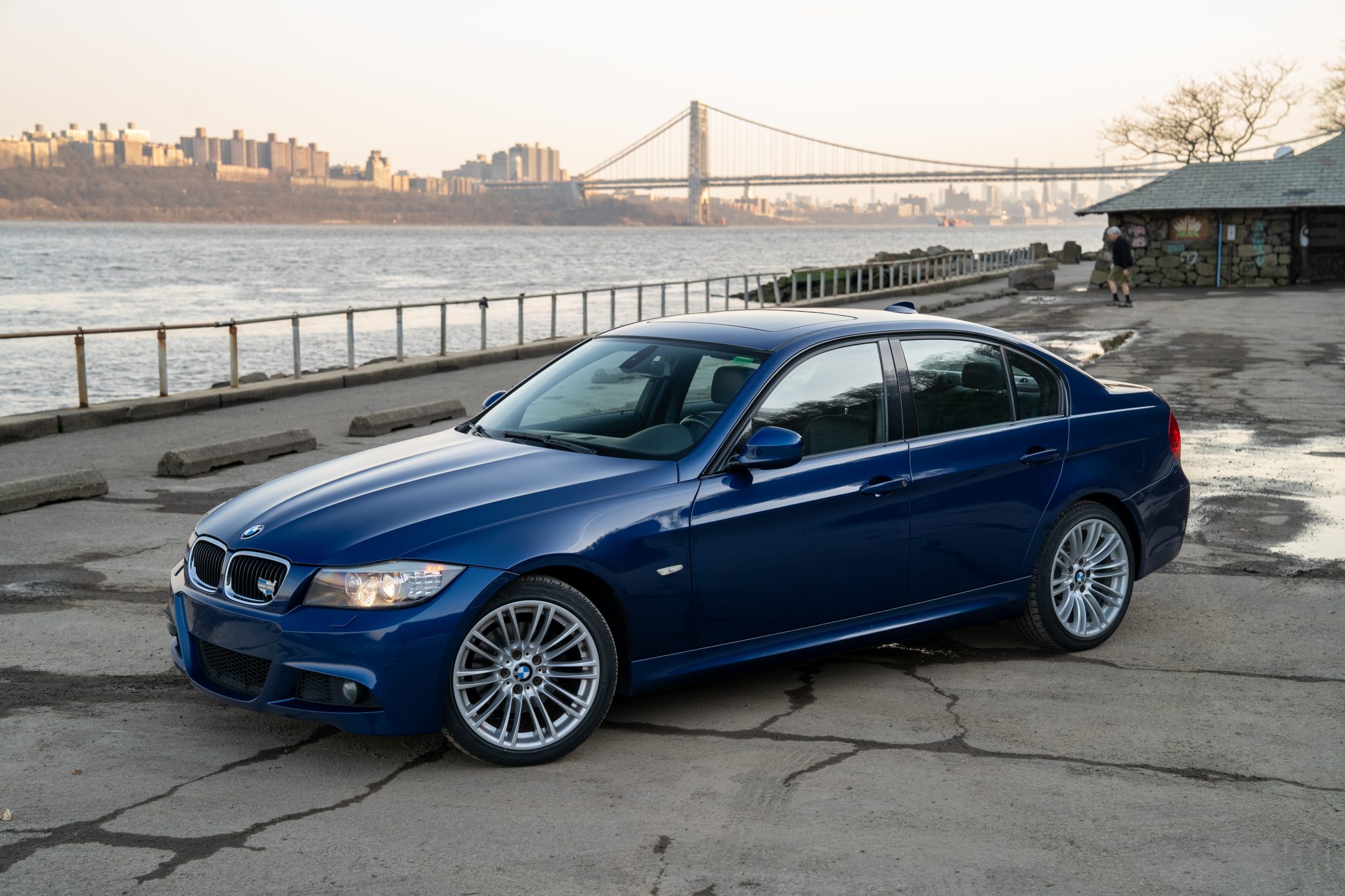
The underlying strength of the chassis remained the defining trait. Even with the base suspension, the 3 Series delivered a rare combination of responsive handling and ride comfort.
Models equipped with the Sport package elevated cornering capability to near sports-car levels while maintaining composure over uneven pavement. Performance metrics were impressive, but the subjective driving confidence exceeded the numbers.
The 3 Series had long been America’s best-selling luxury car, and it continued to hold that distinction. Rivals such as the Infiniti G37, Cadillac CTS, and Audi A4 offered competitive strengths, yet the BMW maintained a superior balance across key categories.
The 328i models use a 3.0-liter naturally aspirated inline-six producing 230 horsepower and 200 lb-ft of torque. The 335i employs a twin-turbocharged 3.0-liter inline-six rated at 300 horsepower and 300 lb-ft.
The 335d features a twin-turbocharged diesel inline-six delivering 265 horsepower and a substantial 425 lb-ft of torque. Gasoline models come standard with a six-speed manual transmission, with a six-speed automatic optional.
In testing, a manual 328i sedan reached 60 mph in 6.4 seconds. Convertible versions were slightly slower. The 335i consistently achieved 0–60 mph in just over five seconds, while the 335d completed the sprint in 5.9 seconds.
EPA fuel economy estimates for the 328i range from 17–18 mpg city and 25–28 mpg highway. The 335i with automatic transmission achieves 17/26 mpg city/highway, with slight reductions for manual or all-wheel-drive configurations. The 335d stands out at 23 mpg city and 36 mpg highway.
2. BMW 330i (2016–2018)
The F30 generation brought BMW firmly into the modern tech era. You’ll find Apple CarPlay, driver assistance features, and a quieter cabin than earlier 3 Series models.
The turbocharged four-cylinder provides quick acceleration while still returning respectable highway fuel economy.
For American buyers wanting something newer without breaking the bank, the 330i is one of the smartest picks under $20K.
Modern amenities paired with traditional BMW performance.
Many cars claim to be strong all-rounders, but the BMW 3 Series is one of the few that consistently justifies the label. It combines understated, premium styling with a solidly constructed and comfortable interior.
Buyers could choose between rear- and four-wheel drive, saloon, estate (Touring) and convertible body styles, along with plug-in hybrid and high-performance variants. Few executive cars offer such breadth while remaining engaging to drive.
The 3 Series lineage dates back to 1975, and the sixth-generation model (F30) arrived in 2011, receiving a mid-life update in 2015. By that stage, it accounted for roughly a quarter of BMW’s total global sales.
The executive saloon version is often found with high motorway mileage, yet its proportions and design have aged well. Narrow headlamps and a muscular rear end help even early cars appear relatively modern.
Inside, the cabin may not match the ornate detailing of the Mercedes-Benz C-Class or feel quite as solid as the Audi A4, but it offers a clean, driver-focused layout with extensive soft-touch materials and metallic trim accents.
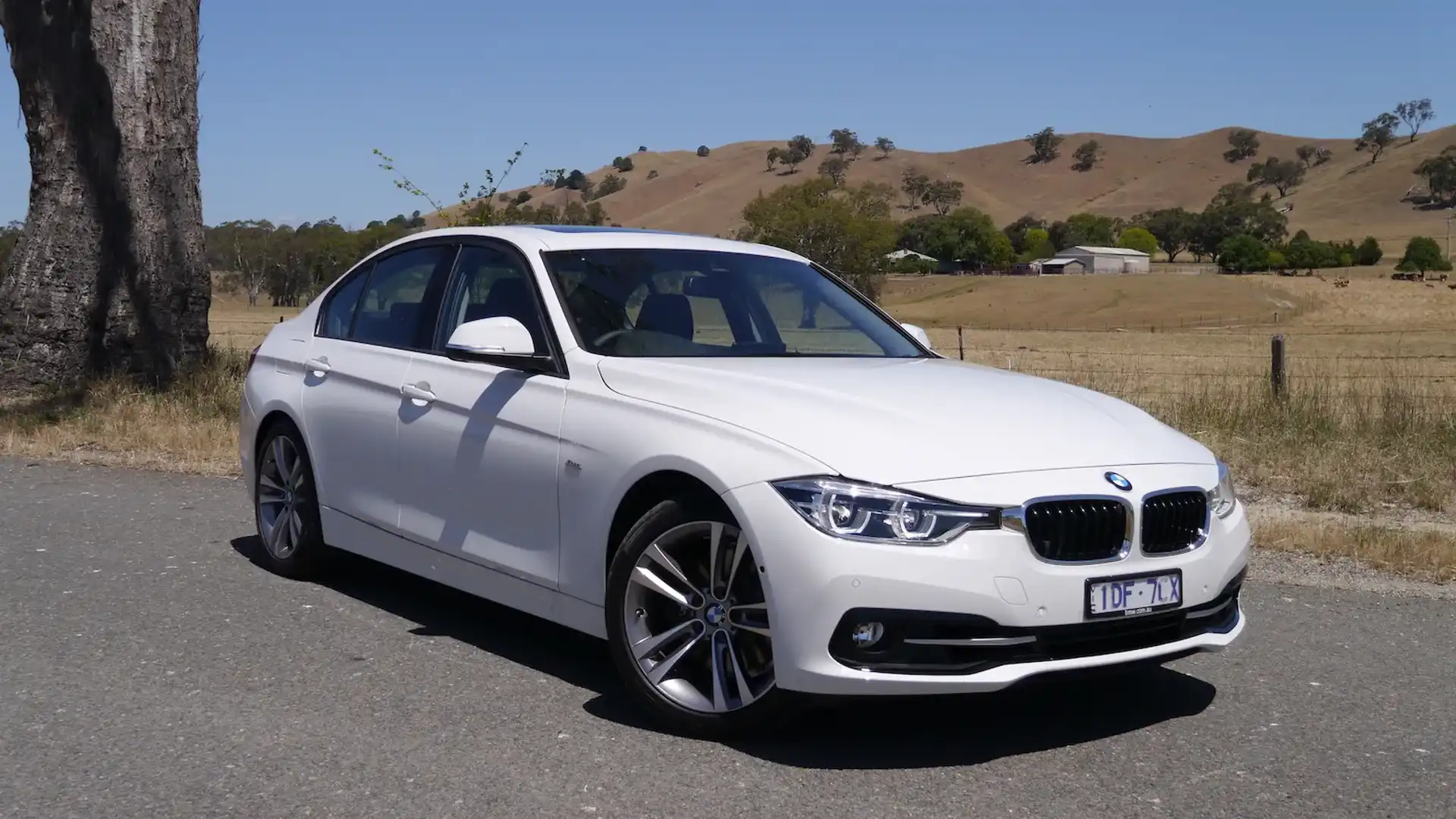
Controls are light and intuitive in urban use, and forward visibility is strong. Ride comfort is slightly firmer than some rivals, yet the 3 Series rewards drivers on twisting roads, particularly examples equipped with optional M Sport adaptive suspension.
Engine Options
The sixth-generation 3 Series offered an unusually broad engine range, 11 options following the 2015 facelift, spanning efficient four-cylinders to high-output performance models such as the BMW M3.
Among petrol engines, the 320i debuted in 2011 as a new turbocharged unit capable of returning over 50mpg under light throttle use. It suits lower-mileage drivers and provides better overall balance than the lower-powered 316i introduced in 2012.
For stronger performance without stepping up to the M3, the 335i delivered 306hp from a 3.0-litre inline-six. After the facelift, it was replaced by the 326hp 340i, which became the most powerful non-M 3 Series.
Lower-powered 316d and 318d variants arrived in 2013, though the 320d is generally considered the most desirable compromise. From 2015, the 335d gained strong appeal thanks to its 313hp output and substantial 630Nm of torque, while still achieving around 51mpg.
Hybrid offerings included the 2012 ActiveHybrid 3, producing 340hp but offering only a modest two-mile electric range and 48mpg economy. More compelling was the 2015 330e plug-in hybrid, delivering 252hp and an official fuel economy of up to 149mpg, along with an electric-only range of approximately 25 miles.
Its favorable company car tax treatment made it a common fleet choice. As with most plug-in hybrids, however, its efficiency advantage depends on regular charging; without it, conventional petrol models may prove more economical.
Across its range, the F30 3 Series successfully combined practicality, efficiency, and driver engagement, attributes that reinforce its long-standing reputation as a benchmark executive saloon.
Also Read: Top 10 Underrated Japanese Sports Cars That Are Not Supras
3. BMW 135i (2008–2013)
Compact, aggressive, and deceptively fast, the 135i is one of BMW’s best-kept secrets. Its turbocharged inline-six delivers massive torque, making it feel quicker than many modern cars.
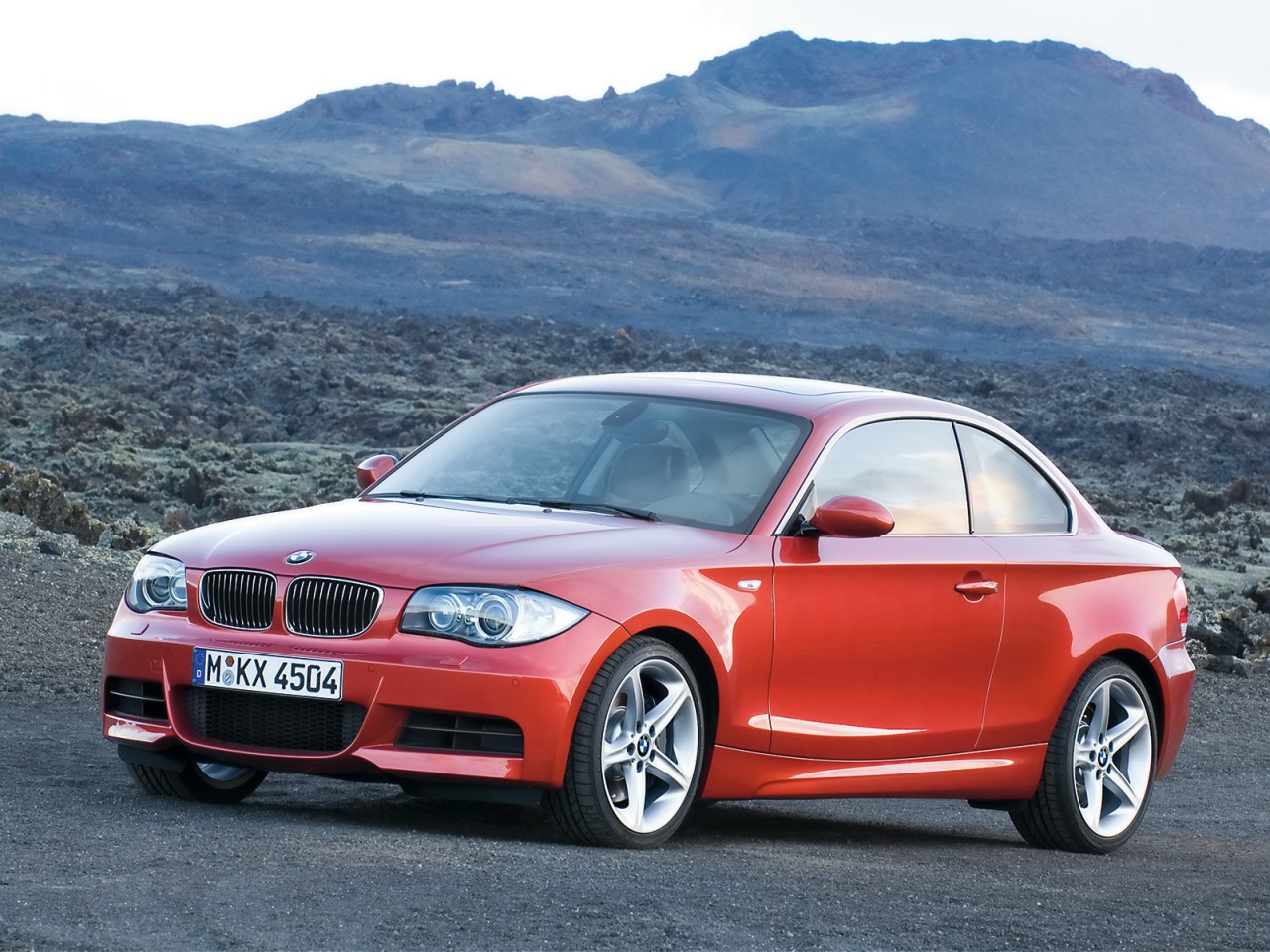
Short wheelbase plus rear-wheel drive equals serious fun on winding roads. Manuals are harder to find but worth hunting for.
Big power in a small package, true enthusiast character.
4. BMW 530i (2001–2003)
Often regarded as one of BMW’s greatest sedans ever built, the E39 530i blends comfort with remarkable road manners. Its inline-six engine is smooth and long-lasting, while the chassis still feels composed at highway speeds.
Yes, it’s older, but clean examples can be found well under $10K. Just plan on replacing suspension components and cooling parts if they haven’t already been addressed.
Among performance sedans, the E39-generation BMW M5 occupies rarefied ground. After extracting the full potential from naturally aspirated inline-six engines in the first two iterations of the M5, BMW’s M Division shifted strategy. Forced induction was not yet part of the formula, so displacement became the path forward.
The long-serving straight-six was retired in favor of a 4.9-liter naturally aspirated V8. That engine, internally known as the S62, delivered 400 horsepower exclusively to the rear wheels. The result was a sharply responsive, high-revving sports sedan that blended executive composure with genuine performance capability.
Market values have reflected its reputation: rather than depreciating into obscurity, the E39 M5 has appreciated over the past several years, placing it beyond the reach of many enthusiasts. For buyers priced out of the flagship, attention has increasingly shifted to more attainable variants within the same generation.
The E39 5 Series, introduced in 1995, marked a significant evolution for the nameplate. Since the early 1970s, the 5 Series had established itself as a benchmark executive sedan, combining premium construction with BMW’s characteristic driver engagement. It appealed to professionals seeking comfort and practicality during daily use, while retaining the ability to respond dynamically on demanding roads.
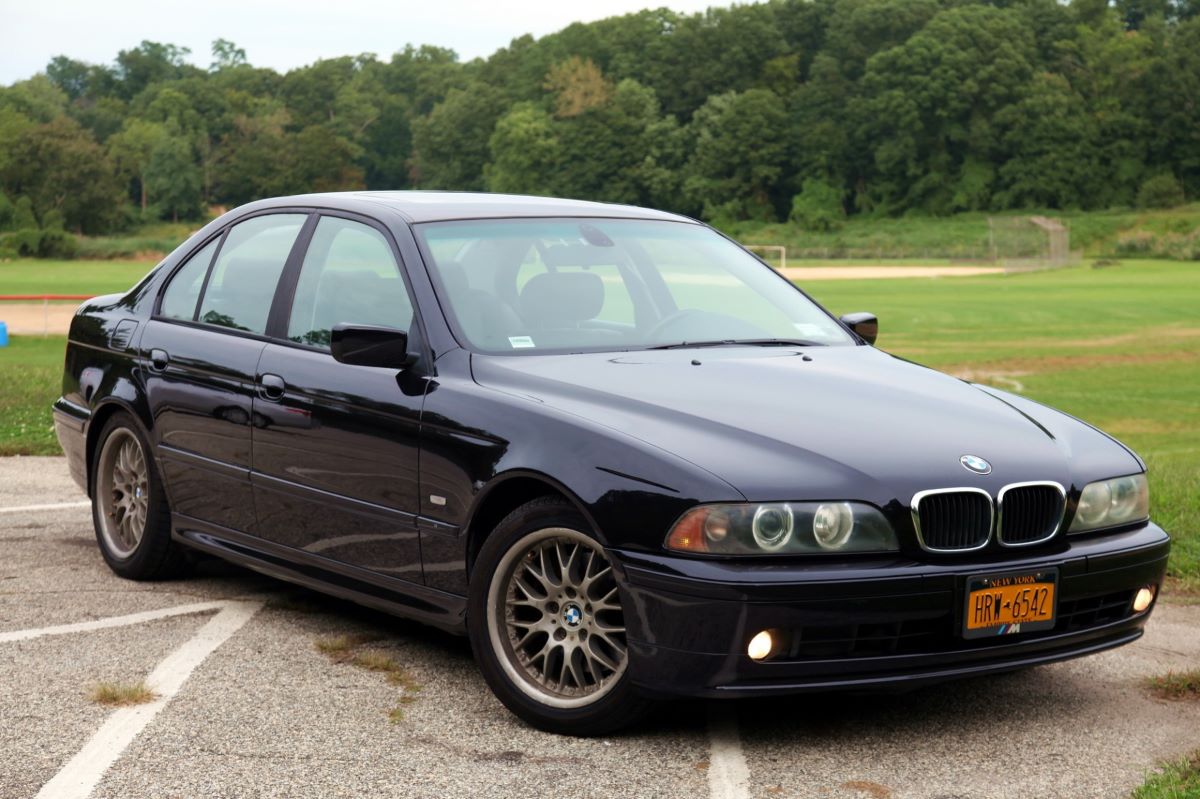
Visually, the E39 adopted smoother, more contemporary lines compared with its more angular predecessors. Under the surface, it incorporated improved safety systems and made extensive use of aluminum components to control weight. Engineering refinement was central to the program, with rack-and-pinion steering introduced to enhance precision and feedback.
A broad engine lineup supported the range. Entry-level models such as the 520i featured a 2.0-liter inline-six, while upper-tier variants included V8-powered 535i and 540i models, culminating in the M5. Positioned in the middle of the lineup was the 530i.
From 2000 onward, the 530i effectively replaced the 528i, which was discontinued in 2001. The key distinction lay in its enlarged 3.0-liter naturally aspirated inline-six engine, superseding the earlier 2.8-liter unit.
Output stood at 225 horsepower and 214 lb-ft of torque, delivered through either a five-speed manual or five-speed automatic transmission. Performance figures placed 0–60 mph between 7.1 and 7.4 seconds, with a top speed electronically limited to 128 mph.
Production of the 530i was relatively brief, concluding in 2003 when the E39 generation gave way to the E60 5 Series. Today, it represents a balanced alternative within the E39 family: retaining the chassis sophistication and inline-six character that defined the era, while remaining significantly more affordable than the increasingly collectible M5.
5. BMW 535i (2011–2014)
If you want luxury with serious straight-line speed, the F10 535i delivers. Its turbocharged inline-six makes passing effortless, while the cabin feels genuinely upscale.
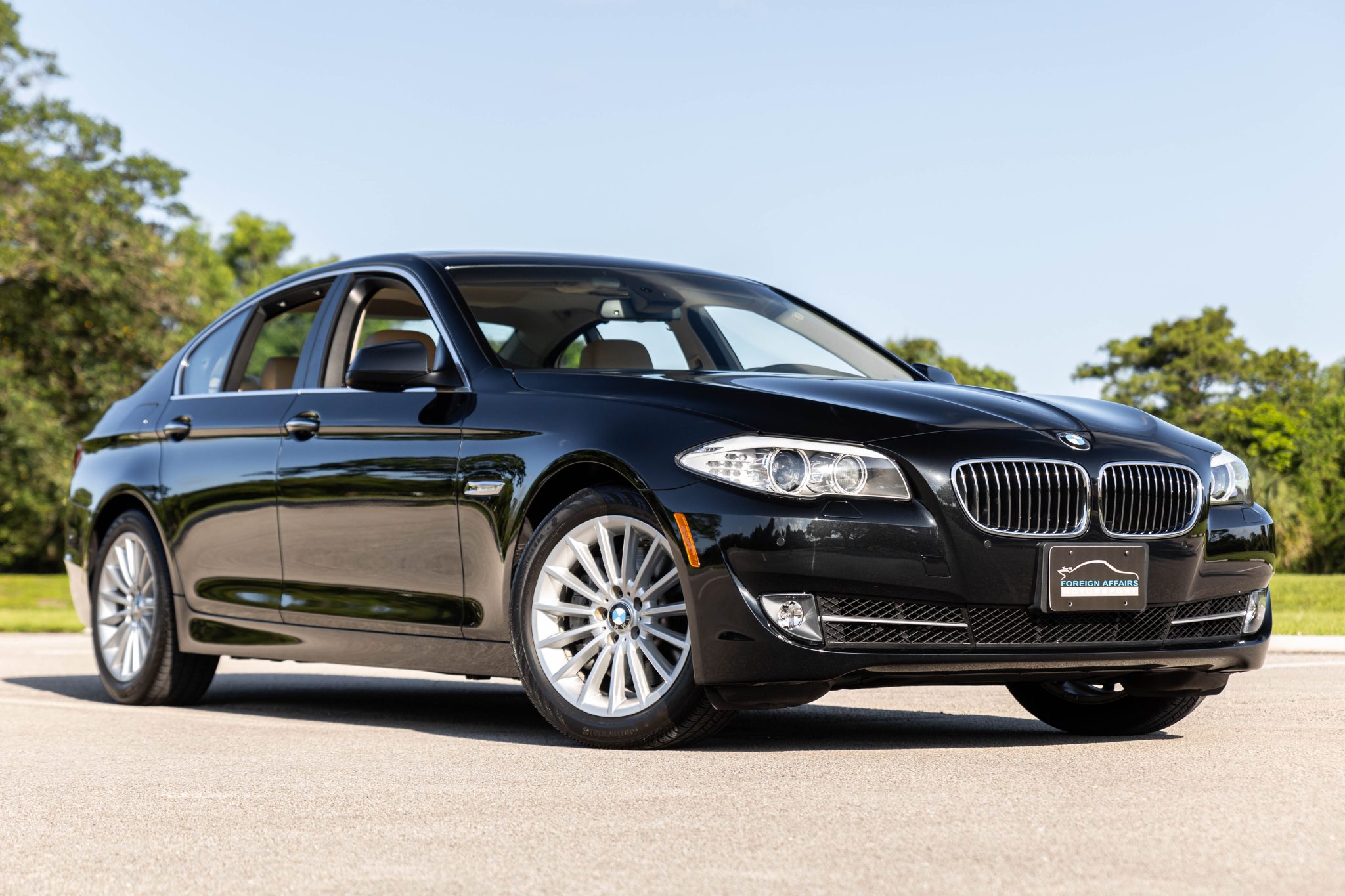
Depreciation has been steep, which benefits used buyers. Many examples now fall between $14K and $19K.
Executive comfort with muscle-car torque.
6. BMW X3 (2013–2016)
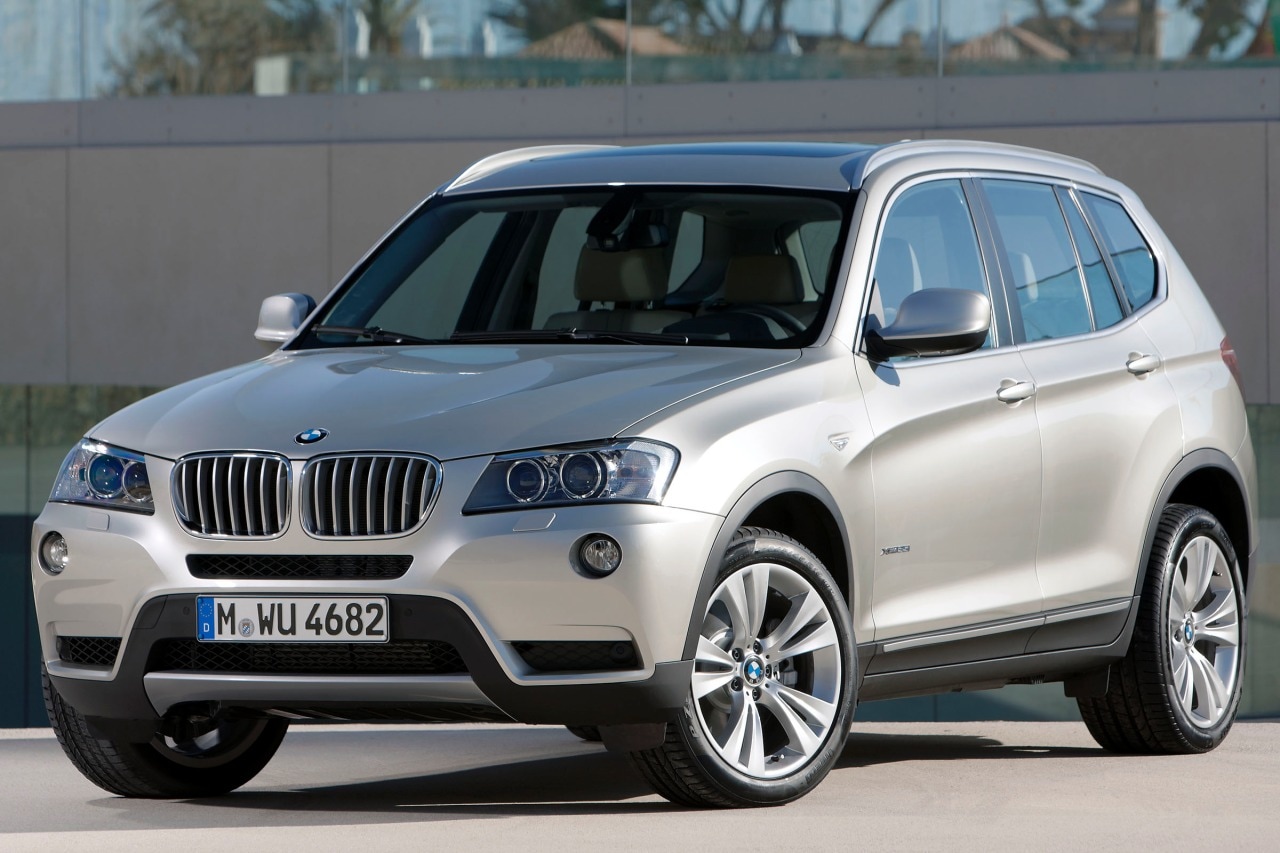
The F25 X3 is proof BMW can build a practical SUV without sacrificing driving enjoyment. With available all-wheel drive, it’s ideal for snowy states or family road trips.
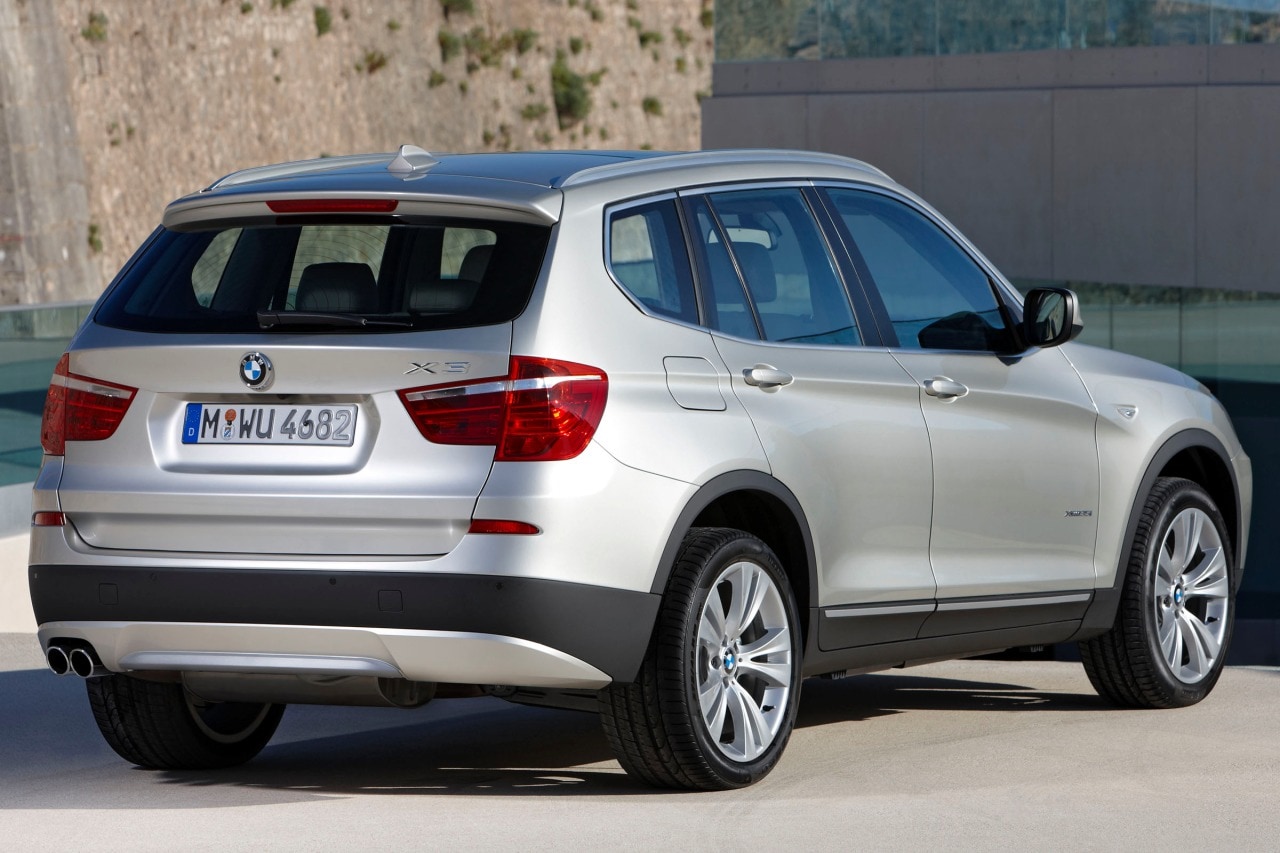
Interior quality is solid, cargo space is generous, and reliability is better than earlier BMW SUVs. Versatile daily driver with premium feel.
A four-cylinder engine in a BMW SUV might once have seemed out of place. For decades, the brand’s reputation rested heavily on naturally aspirated inline-six engines that delivered smoothness and strong performance. However, evolving efficiency standards and advancements in turbocharging technology have reshaped that formula.
For 2013, the BMW X3 replaced its base naturally aspirated inline-six with a turbocharged four-cylinder that matches the outgoing engine’s horsepower, improves torque output, and significantly enhances fuel economy. The result is a crossover that is not diminished by downsizing but meaningfully improved.
The xDrive28i model is equipped with a 2.0-liter turbocharged inline-four producing 240 horsepower and 260 lb-ft of torque. Power is routed through an eight-speed automatic transmission to BMW’s xDrive all-wheel-drive system.
Automatic stop-start technology is now standard, shutting the engine off at a standstill and restarting it when the brake pedal is released to reduce fuel consumption. While the restart can occasionally introduce mild vibration, the system contributes to tangible efficiency gains in urban driving.
BMW also introduced Eco Pro mode as part of the standard Driving Dynamics Control system. Eco Pro recalibrates throttle response, transmission behavior, and climate-control output to prioritize efficiency.
It also provides feedback through the iDrive interface to encourage economical driving habits. Though some may question the emphasis on efficiency in a performance-oriented luxury crossover, these features broaden the X3’s usability without undermining its character.
From a dynamic standpoint, the 2013 X3 remains one of the most engaging vehicles in the small luxury crossover segment. Its steering precision, body control, and composed ride quality reflect BMW’s sport-sedan heritage.
The turbocharged four-cylinder in the xDrive28i delivers 0–60 mph acceleration in 6.8 seconds, placing it squarely in the middle of the competitive set. EPA fuel economy is rated at 21 mpg city, 28 mpg highway, and 24 mpg combined.
For buyers seeking stronger performance, the xDrive35i features a 3.0-liter turbocharged inline-six producing 300 horsepower and 300 lb-ft of torque. Paired with the same eight-speed automatic and all-wheel-drive system, this variant accelerates to 60 mph in 5.6 seconds, making it the quickest vehicle in its class at the time.
Pricing positions the X3 toward the higher end of the compact luxury crossover market, overlapping with larger midsize SUVs such as the Acura MDX and Lexus RX 350. However, the X3’s interior space exceeds that of many traditional compact rivals, while maintaining more athletic driving dynamics.
Its combination of responsive handling, refined cabin materials, generous cargo capacity, and improved efficiency makes the 2013 BMW X3 a well-rounded and compelling choice. The move to a turbocharged four-cylinder is neither controversial nor compromising, it is a calculated evolution aligned with modern expectations.
Also Read: 10 Cars With the Best Outward Visibility for Older Drivers
7. BMW X5 (2011–2013)
The E70 X5 feels substantial in every sense. It offers strong highway manners, plenty of space, and impressive winter traction with xDrive.

Stick with the inline-six versions for better long-term ownership.
Luxury SUV presence at used-car prices.
8. BMW Z4 (2009–2013)
Looking for a weekend toy? The E89 Z4 offers convertible fun with better refinement than older BMW roadsters. Its retractable hardtop adds year-round usability, and prices remain surprisingly affordable.
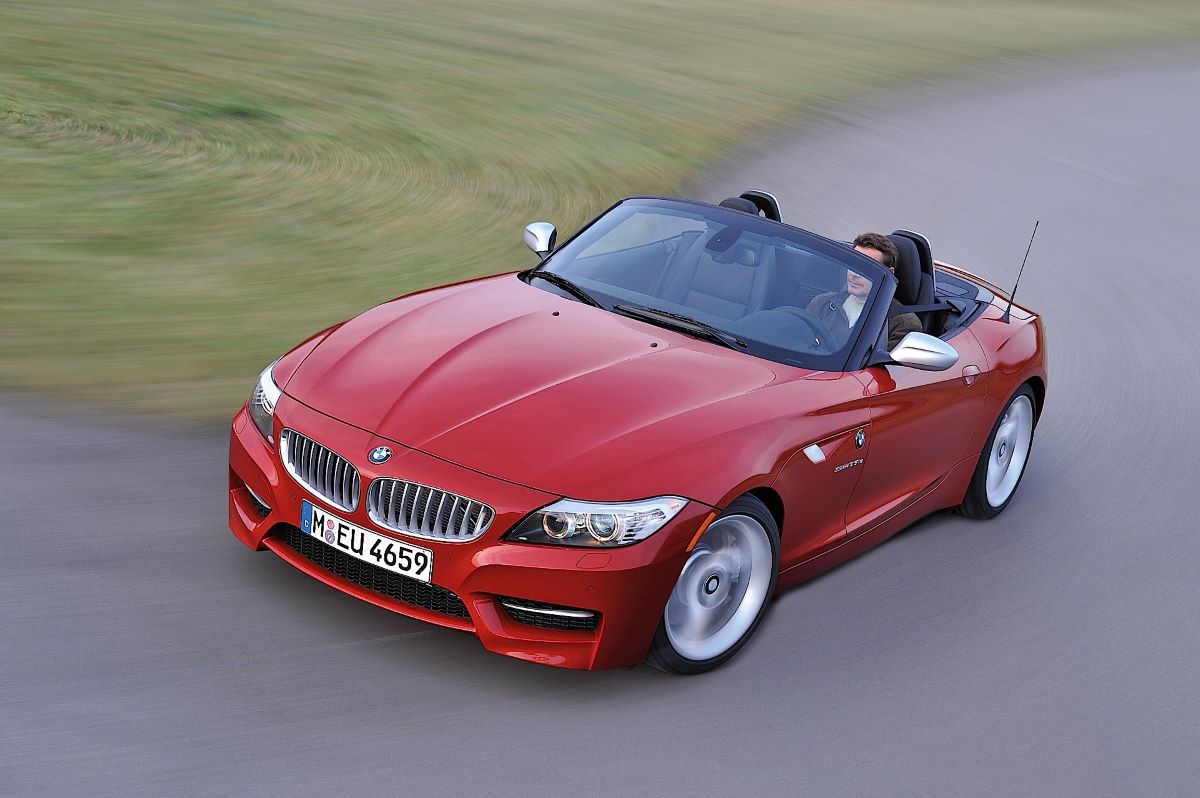
Stylish roadster thrills without modern-car pricing. The previous-generation BMW Z4, much like the Z3 before it, was often viewed as more of a fashionable “sporty” accessory than a serious performance machine. With the comprehensive redesign introduced for 2009, BMW repositioned the Z4 into the upper tier of luxury-performance roadsters.
The new model is more refined, slightly more spacious inside, and now features a power-folding hardtop. Pricing has increased accordingly, with a starting range between $45,000 and $50,000, placing it directly against established competitors such as the Mercedes-Benz SLK-Class and the Porsche Boxster.
In terms of performance, the Z4 largely meets expectations. The primary drawback is an electric power steering system that can feel somewhat artificial. Otherwise, the car delivers both speed and composure.
The sDrive30i is equipped with a naturally aspirated inline-six producing 255 horsepower, while the sDrive35i raises output to 300 horsepower through a twin-turbocharged inline-six. BMW estimates the turbocharged variant reaches 60 mph in 5.0 seconds, roughly matching the acceleration of the prior high-performance Z4 M.
The sDrive35i also offers an optional seven-speed dual-clutch automated manual transmission similar in concept to the M3’s M DCT gearbox. Compared with its predecessor, the 2009 Z4 is approximately six inches longer and about 350 pounds heavier.
The exterior design is striking, with subtle cues that recall the classic BMW 507 in its front-end treatment. The retractable hardtop significantly enhances versatility, allowing drivers to enjoy open-air motoring while retaining the refinement and insulation of a coupe when closed.
Inside, the cabin benefits from upgraded materials and improved fit and finish. BMW’s iDrive system is available for the first time in the Z4, and for 2009 it features meaningful revisions that make it more intuitive than earlier iterations.
From a value perspective, alternatives such as the Audi TT and the Nissan 370Z Roadster carry lower starting prices. However, the Z4 justifies its premium with enhanced luxury and engineering sophistication.
The SLK-Class remains competitive, while the Boxster and Cayman deliver sharper dynamics. Meanwhile, the Chevrolet Corvette Convertible offers greater raw power but lacks the Z4’s hardtop flexibility.
The rear-wheel-drive 2009 Z4 is offered with two engine options. The sDrive30i uses a 3.0-liter naturally aspirated inline-six generating 255 horsepower and 220 lb-ft of torque.
The sDrive35i employs a 3.0-liter twin-turbocharged inline-six rated at 300 horsepower and 300 lb-ft. Both trims come standard with a six-speed manual transmission. A seven-speed dual-clutch automated manual is optional on the turbocharged model, while the non-turbo variant can be equipped with a six-speed automatic.
BMW projects that the sDrive35i will accelerate from 0 to 60 mph in 5.0 seconds, with the base sDrive30i trailing by approximately one second.
9. BMW 328i Sports Wagon (2014–2016)
Wagons are rare in America, making the F31 especially appealing. It combines turbocharged performance with genuine cargo capacity and optional AWD.
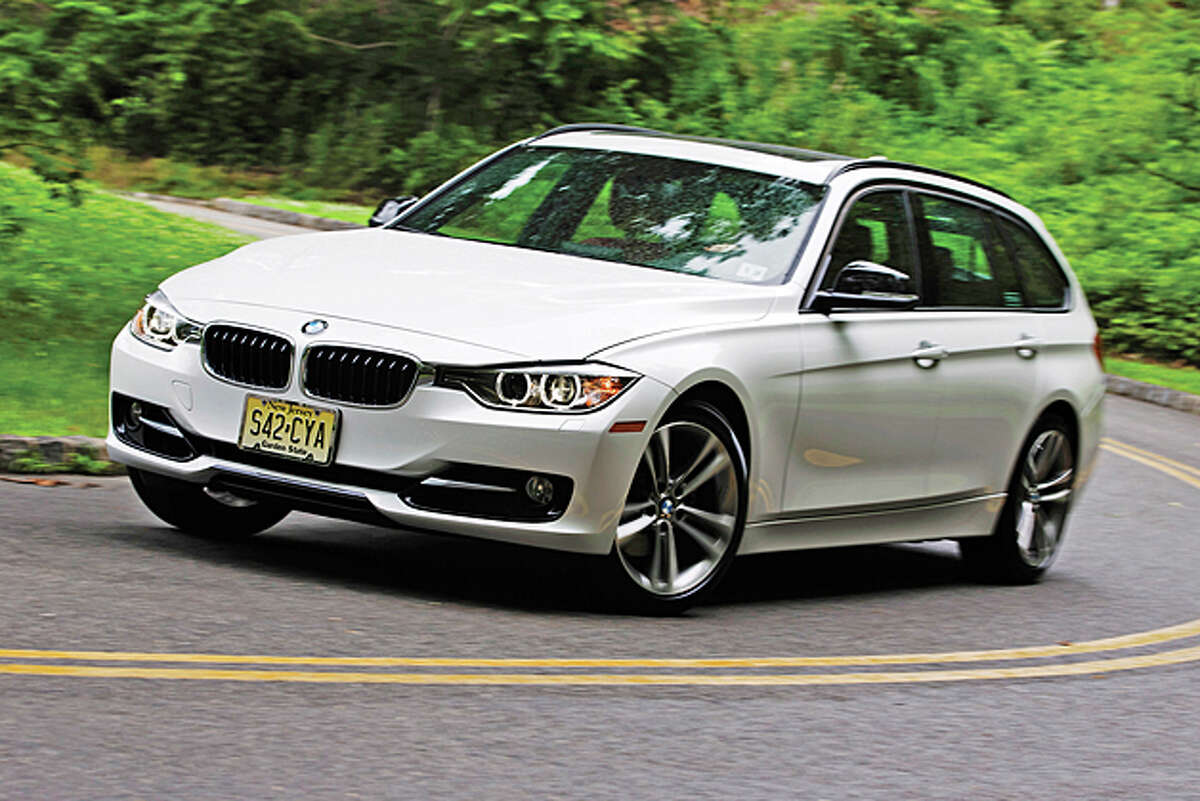
It’s the perfect blend of practicality and personality. Sleeper family hauler with sporty DNA.
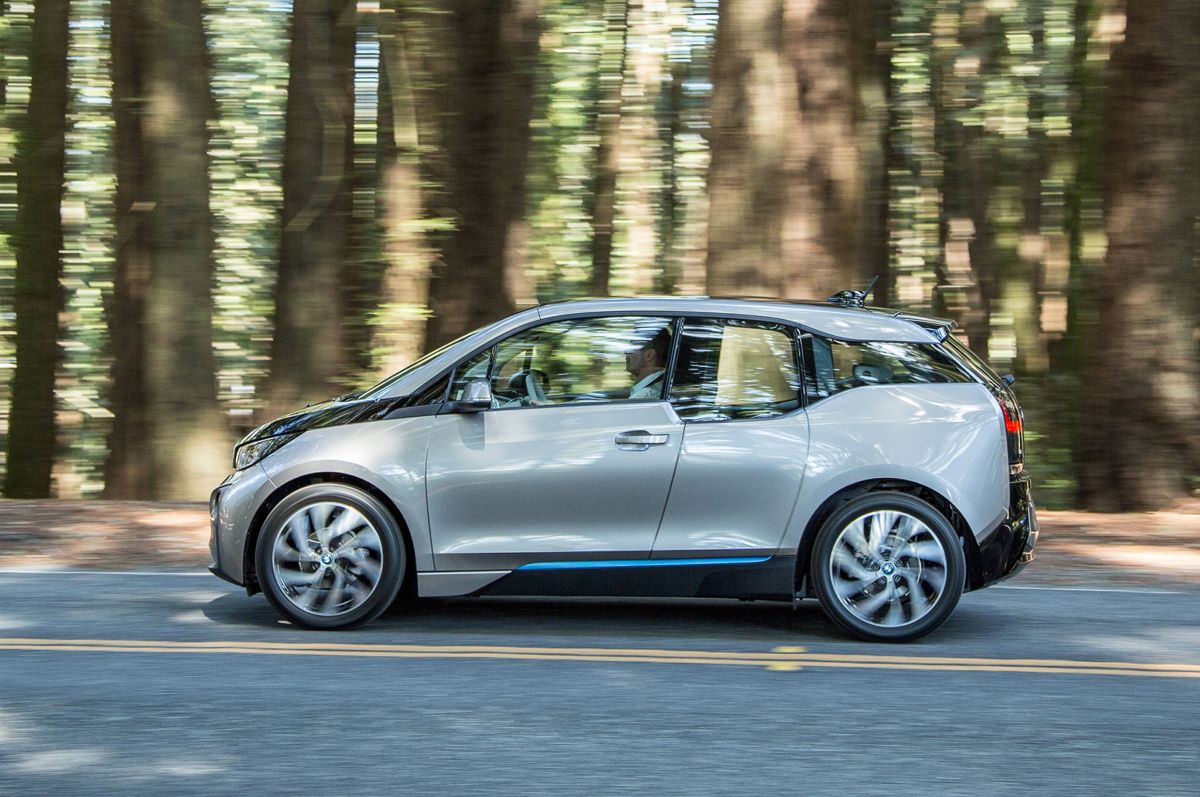
10. BMW i3 (2014–2018)
For city dwellers, the i3 is an underrated bargain. It’s lightweight, quick off the line, and extremely cheap to operate.
Many examples sell under $15K, making it one of the most affordable ways into BMW ownership. Ultra-low running costs and unique design.
A used BMW under $20,000 doesn’t have to be a financial nightmare. By choosing well-supported platforms, prioritizing service history, and budgeting for routine maintenance, you can enjoy genuine luxury and performance for compact-car money.
For 2018, BMW expands the i3 lineup with the introduction of the new i3s variant, which delivers sharper handling and quicker acceleration than the standard model.
The previous entry-level 60 Ah version has been discontinued. All 2018 i3 models receive subtle exterior updates, including revised front and rear bumpers and black windshield pillars replacing the former body-colored finish. Full LED headlights are now standard equipment.
Inside, the iDrive infotainment system has been updated, with an optional 10.3-inch display available. BMW also adds a dual-voltage (120V/240V) charging cord to the options list, increasing charging flexibility.
Even in its fifth model year, the BMW i3 remains one of the more technically ambitious vehicles on the road. BMW was among the first automakers to adopt carbon-fiber-reinforced plastic as the primary structural material in a mass-produced vehicle.
The resulting lightweight construction benefits both efficiency and agility, helping the i3 feel more responsive than many heavier battery-electric competitors.
The design remains polarizing. The exterior stands apart from conventional hatchbacks, while the interior presents a modern, upscale aesthetic with an open, airy layout. Rearward-hinged rear doors improve back-seat access but can prove inconvenient in tight parking situations.
The newly introduced i3s features a more powerful electric motor, sport-tuned suspension, and wider tires to enhance performance and cornering capability.
BMW continues to offer the Range Extender (REx) version, which incorporates a small gasoline engine acting solely as a generator. While it does not directly drive the wheels, it provides additional range once the battery is depleted, primarily serving to reduce range anxiety.
From a purely analytical standpoint, the i3 faces stiff competition. The Chevrolet Bolt EV and Nissan Leaf offer greater electric driving range at lower price points. Meanwhile, the Tesla Model 3 matches the i3’s premium feel and driving performance while delivering substantially more range.
However, the i3 distinguishes itself with its lightweight construction, nimble handling, and distinctive interior design. It remains a more emotionally engaging product than many rivals, prioritizing driving enjoyment and material innovation over maximum range.
Although the updated model gains approximately 122 pounds due to the larger battery, its balanced chassis and responsive steering remain largely unaffected. Acceleration to 60 mph is slightly slower with the increased battery capacity, but braking performance has improved compared to earlier versions.
While its 114-mile electric range does not lead the segment, the 2018 BMW i3 compensates with agile handling, efficient packaging, and a premium cabin environment. It carries a higher price than many comparable EVs, but in return offers a distinctive and thoughtfully engineered driving experience.
Whether you’re after a sporty coupe, refined sedan, versatile SUV, or even an electric commuter, these BMWs prove that smart shopping still delivers real value in today’s U.S. used-car market.
