As electric vehicles grow in popularity, one question remains central for drivers: how far can an EV actually travel on a single charge? Manufacturer estimates, such as EPA or WLTP ratings, often differ from real-world performance due to factors like speed, weather, terrain, and driving habits.
Some vehicles consistently exceed their official numbers, offering dependable performance for long commutes, road trips, or heavy-duty use. Models such as the Cadillac Escalade IQ, Chevrolet Silverado EV WT, and Porsche Taycan 4S Performance Battery Plus are known for reliable range that reduces range anxiety and enhances confidence on long drives.
Other popular EVs, including the Lucid Air Touring, MG4, and Tesla Model 3, sometimes deliver less than expected, requiring drivers to plan charging stops carefully. Understanding which EVs provide predictable range and which are more sensitive to real-world conditions helps buyers make informed decisions that align with their driving needs and lifestyle.
5 EVs With Reliable Real-World Range
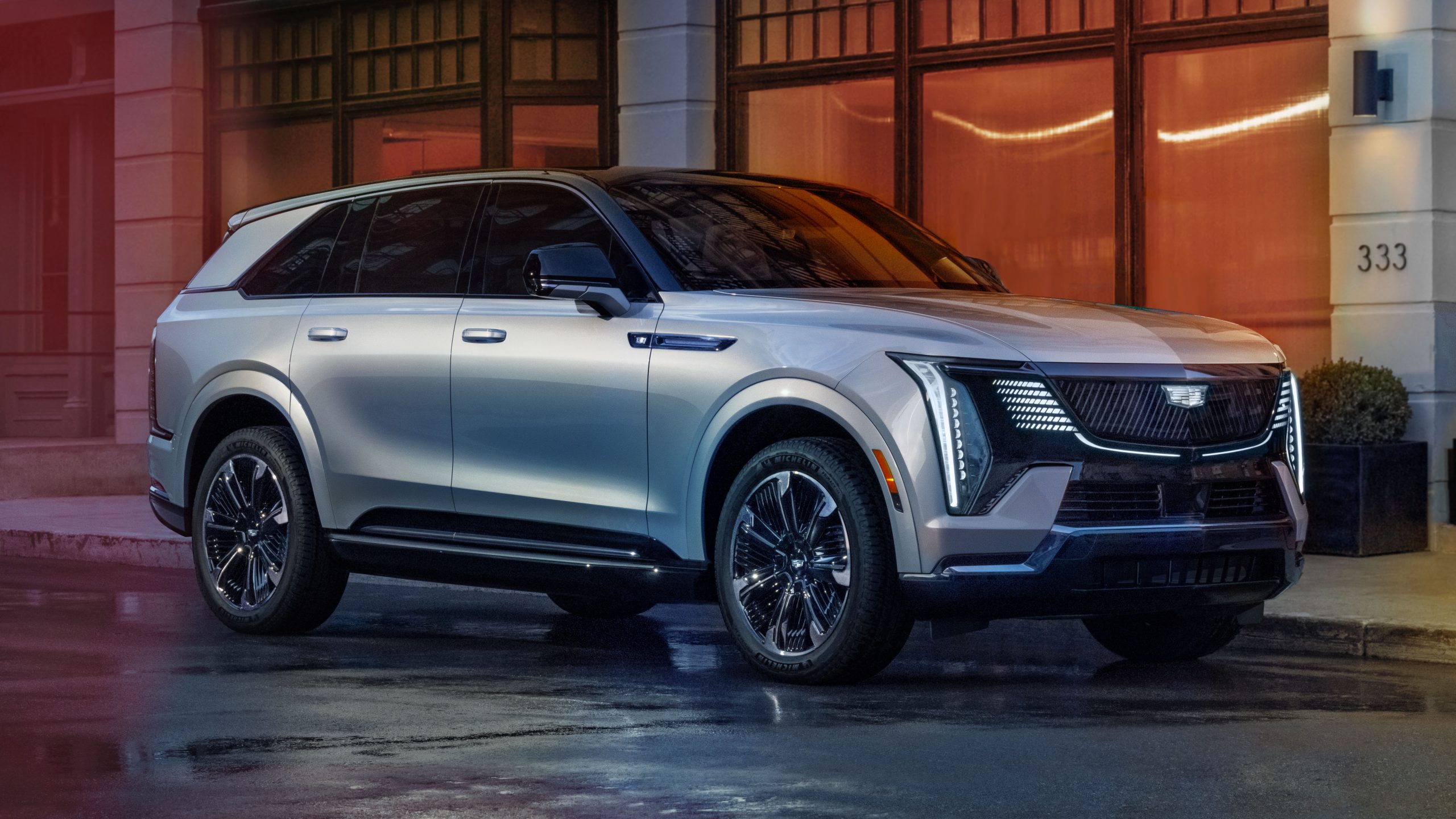
1. Cadillac Escalade IQ: Extreme Electric Range Wrapped in Monumental Luxury
The Cadillac Escalade IQ represents a bold step forward for large luxury electric SUVs, pairing striking size with exceptional real-world driving range. Although the EPA estimates its range at roughly 460 to 465 miles, independent testing paints a far more impressive picture.
In an Edmunds real-world EV range test, the Escalade IQ traveled an astonishing 558 miles on a single charge. This performance places it among the longest-range electric vehicles ever tested and reinforces its credibility as a true long-distance cruiser.
At the core of this capability is Cadillac’s enormous 205 kWh Ultium battery pack. It is one of the largest batteries installed in any passenger electric vehicle and provides enough stored energy to offset the Escalade IQ’s substantial weight and power demands.
Even during sustained highway driving, the vehicle delivers dependable range. Tests conducted at 70 mph show results near 415 miles, while a more aggressive 75 mph highway test still returned approximately 380 miles. For a vehicle of this scale, those numbers are notable.
Charging performance further strengthens the Escalade IQ’s road trip appeal. Its 800 volt electrical architecture supports DC fast charging at speeds up to 352 kW.
Under optimal conditions, the SUV can regain about 100 miles of range in as little as 10 to 15 minutes, with more than 300 miles added in under 45 minutes. Advanced thermal management helps maintain consistent charging and driving performance across a wide range of conditions.
The Escalade IQ’s physical presence is just as memorable as its range. While its dimensions are comparable to certain full-size pickup trucks, its proportions create a visual impact that feels even larger in person. The design features a bold front end, wide shoulders, and a clean, tapered profile that showcases Cadillac’s electric design language at its best.
Inside, the cabin reflects Cadillac’s highest level of craftsmanship outside of its ultra-limited halo models. Premium synthetic leather, tasteful metallic accents, and an expansive 55 inch curved display define the interior.
Some design choices feel less fitting for the price, such as touchscreen-controlled basic functions and a less refined sunroof shade. Third row legroom is also tighter than expected, leading Cadillac to introduce the longer Escalade IQL to better address passenger space needs.
From behind the wheel, the Escalade IQ is at its best when cruising. Its massive curb weight limits agility and contributes to long braking distances, though straight-line acceleration remains strong with up to 750 horsepower available. Like a towering animal encountered up close, the Escalade IQ feels imposing, luxurious, and slightly awkward in motion, yet impossible to ignore.
2. Chevrolet Silverado EV WT: A Long-Range Electric Workhorse Built for Real-World Demands
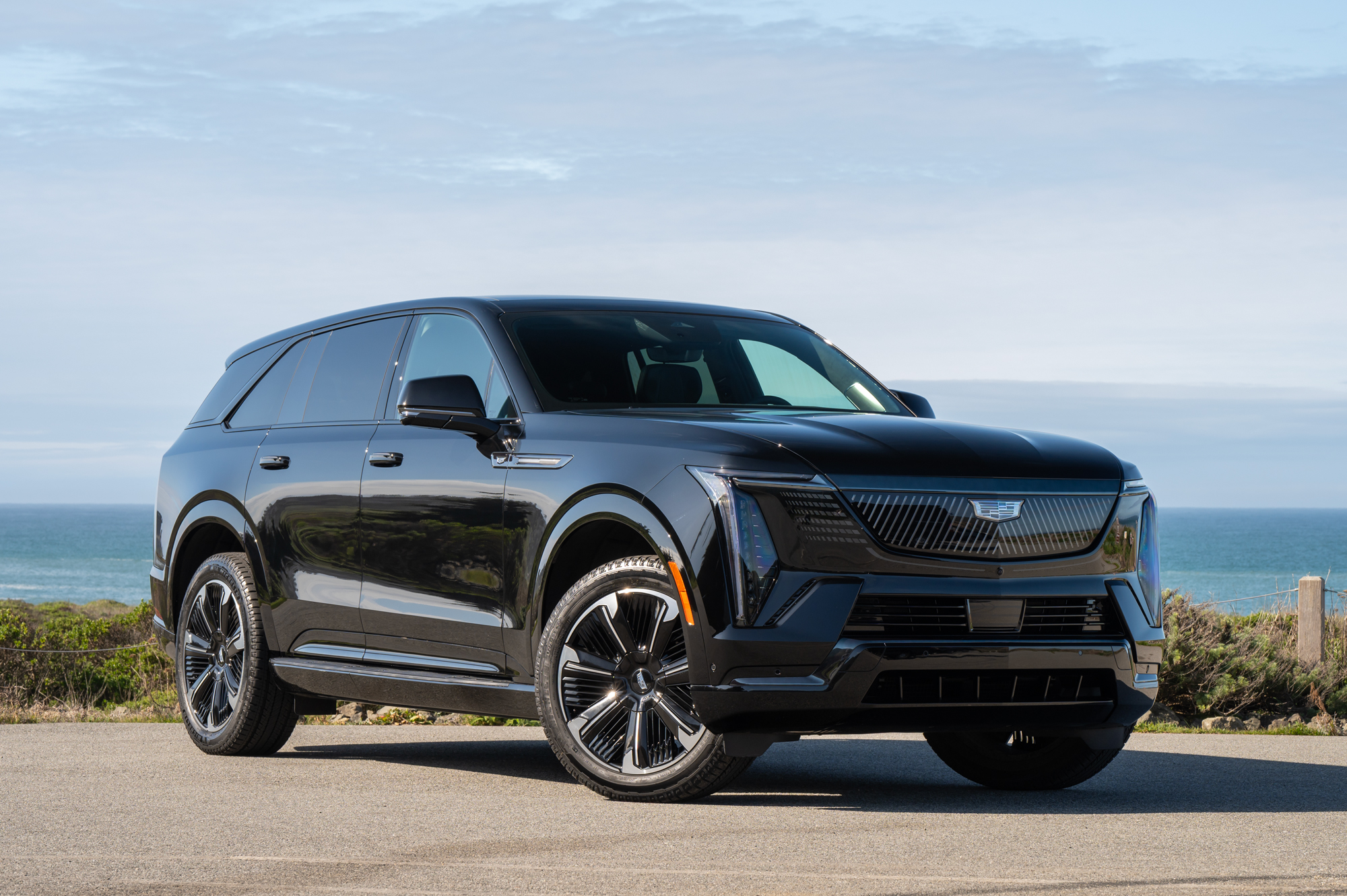
The Chevrolet Silverado EV WT proves that an electric pickup can deliver serious range without compromising its role as a true work truck. While its EPA-estimated range stands at roughly 492 to 493 miles, real-world testing shows the rating is conservative.
In an Edmunds range test, the Silverado EV WT traveled an impressive 539 miles on a single charge, outperforming its official estimate and setting a new benchmark among electric trucks. This kind of consistency makes it especially appealing for contractors, fleet operators, and long-distance drivers who depend on a predictable range.
The foundation of this performance is Chevrolet’s massive 205 kWh Ultium battery pack. Rather than relying on extreme lightweighting, the Silverado EV WT uses a “big tank” strategy, storing enough energy to offset its substantial curb weight of more than 8,400 pounds.
This approach allows it to outperform key rivals such as the Ford F-150 Lightning and Tesla Cybertruck in maximum driving range. Independent testing confirms that the truck’s EPA figures are not inflated, reducing range anxiety for daily work use.
Efficiency-focused engineering plays a major role. The WT trim is lighter and more aerodynamic than the upscale RST version, benefiting from a cleaner exterior design and lower rolling resistance tires. These choices help extract maximum distance from each kilowatt-hour.
Chevrolet engineers have also demonstrated the truck’s efficiency potential through controlled hypermiling tests, where a Silverado EV WT exceeded 1,000 miles on a single charge under ideal low-speed conditions. While not realistic for daily driving, the test highlights how carefully the truck minimizes energy loss.
Fast charging further enhances its usability. The Silverado EV WT supports DC fast charging at speeds up to 350 kW, allowing drivers to add around 100 miles of range in about 10 minutes. Combined with advanced thermal management that helps preserve range in colder conditions, the truck is well-suited for long routes and demanding schedules.
Performance remains strong despite the focus on efficiency. The WT trim delivers 510 horsepower through a dual-motor, all-wheel-drive setup, with estimated 0 to 60 mph times in the mid five-second range. Towing capacity reaches 10,000 pounds, with higher figures promised in future variants, while payload capacity tops out at 1,440 pounds.
Inside, the WT prioritizes durability over luxury. The cabin is spacious and easy to clean, designed to withstand daily job site use rather than impress with premium materials. Simple controls, practical storage, and a digital dashboard complete a truck that focuses squarely on function.
The Silverado EV WT sets a high standard for electric work trucks by pairing exceptional real-world range with fast charging, solid performance, and practical design.
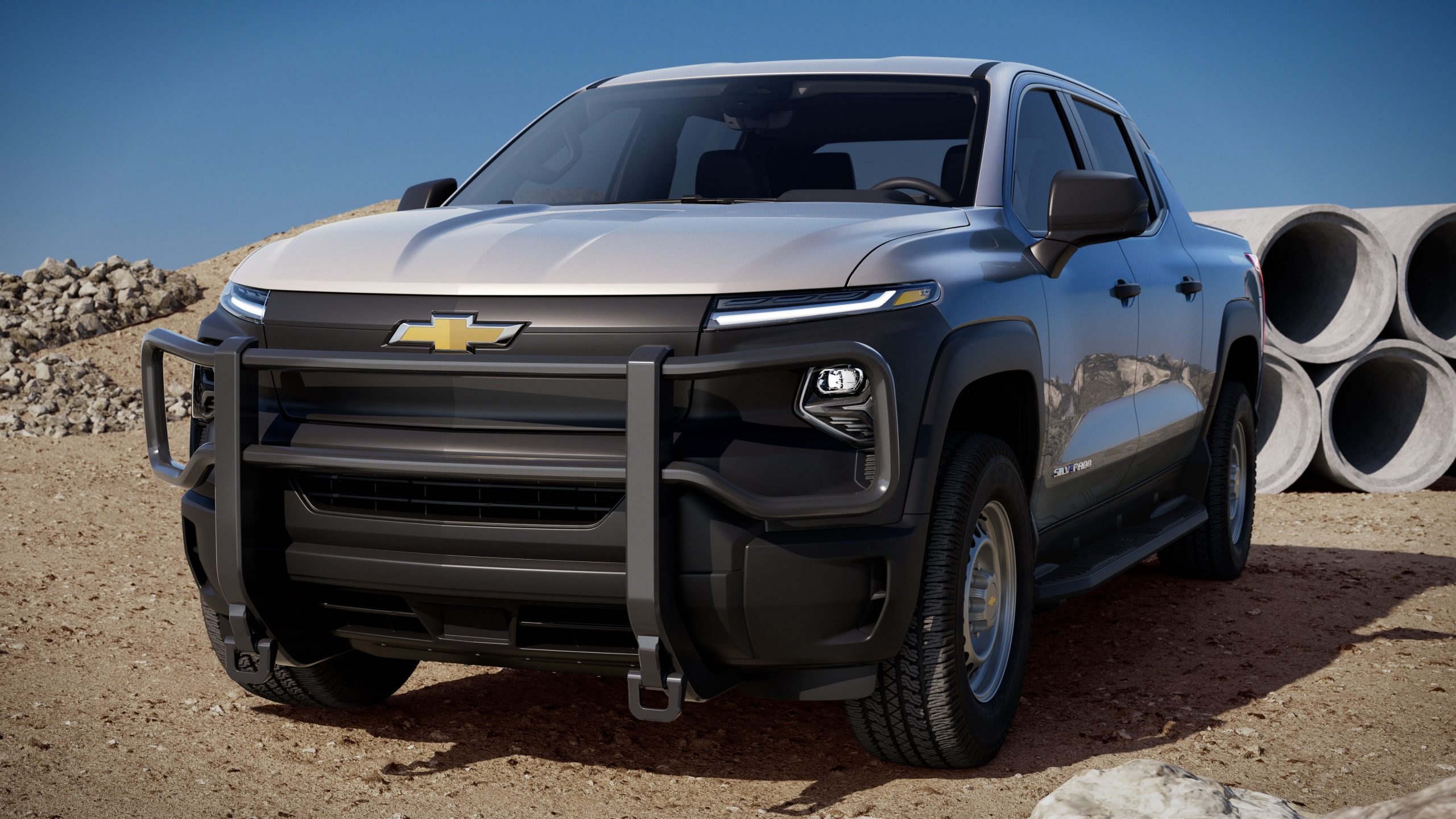
3. Mercedes-Benz EQE 350 Sedan: Aerodynamic Efficiency That Beats Its Range Ratings
The Mercedes-Benz EQE 350 Sedan stands out among luxury electric sedans for its ability to consistently exceed its official EPA range estimates in real-world driving. While the EPA highway rating lists the EQE 350 at around 260 miles, independent testing tells a more convincing story.
Consumer Reports recorded an impressive 332 miles of highway range, surpassing the estimate by more than 70 miles. Other real-world tests, including those by Edmunds, regularly show the EQE 350 crossing the 300-mile mark on a single charge, making it a dependable option for long-distance travel.
A major contributor to this strong performance is the EQE’s exceptional aerodynamic efficiency. With a drag coefficient of approximately 0.22, the sedan is among the most aerodynamically efficient production cars available.
This slippery shape significantly reduces energy consumption at highway speeds, where many electric vehicles lose efficiency. As a result, the EQE typically achieves between 3.0 and 4.0 miles per kilowatt-hour, allowing its battery to deliver more usable range than its size alone might suggest.
The EQE 350 is equipped with a large battery pack ranging from 90.6 kWh usable capacity to 96 kWh in newer model years. This battery is paired with an efficient powertrain available in rear-wheel drive or 4Matic all-wheel drive.
In the dual-motor configuration, the system can operate primarily as a front-drive setup when additional traction is not required, improving efficiency during steady cruising. Beginning with the 2024 model year, a heat pump became standard, helping reduce range loss when using climate control in colder weather.
Energy management technology further supports a consistent range. The EQE offers multiple regenerative braking modes, including an Intelligent setting that adjusts braking force based on traffic conditions, navigation data, and road topography.
This system helps maximize energy recovery without requiring constant driver input. The MBUX infotainment system also provides accurate range projections that adapt to driving style, allowing drivers to plan trips with confidence.
Charging capability is well-suited for road trips. The EQE 350 supports DC fast charging at up to 170 kW, enabling a 10 to 80 percent recharge in just over 30 minutes. Mercedes-Benz also provides integrated access to a wide public charging network, including Electrify America stations.
Beyond efficiency, the EQE 350 delivers a refined driving experience. With 315 horsepower, it offers smooth, quiet acceleration and a calm ride, especially when equipped with adaptive air suspension. While it prioritizes comfort over sportiness, the EQE 350 succeeds as a luxurious, long-range electric sedan with real-world performance that frequently outpaces its official ratings.
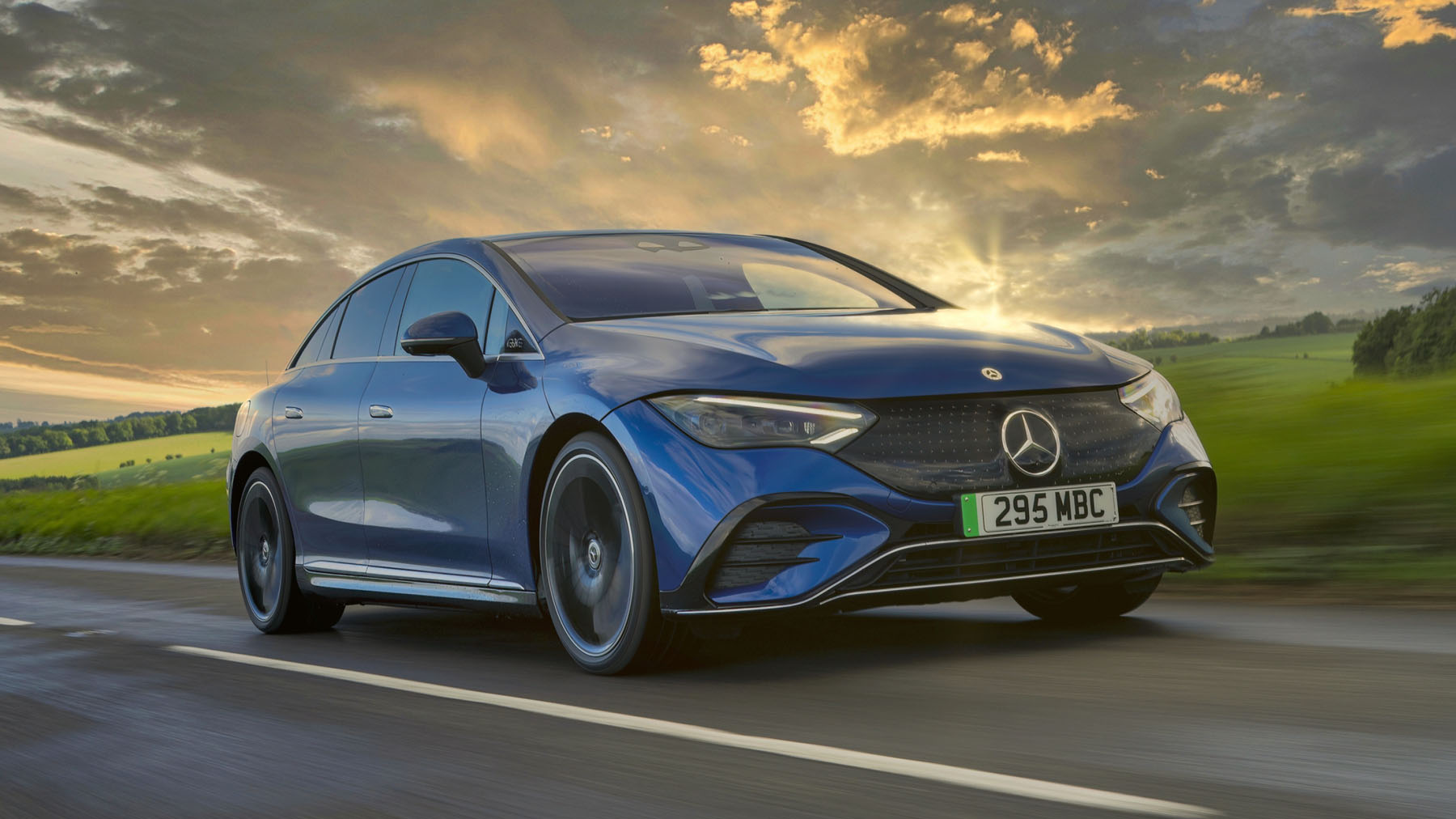
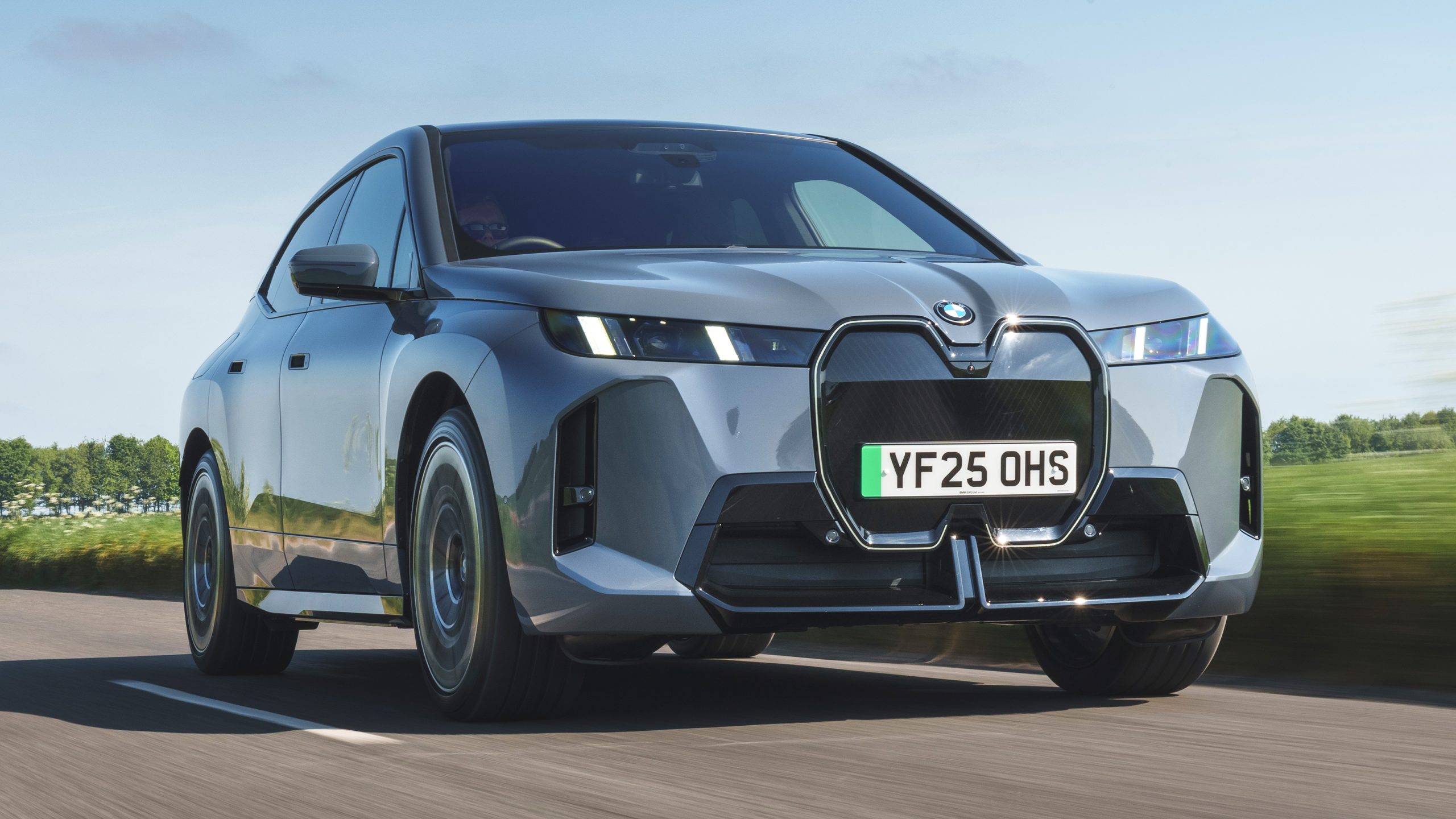
5. BMW iX xDrive50: Real-World Range Confidence in a High-Tech Electric SUV
The BMW iX xDrive50 has earned a strong reputation for delivering dependable real-world driving range, frequently outperforming its official EPA estimates.
While the EPA highway rating suggests a significantly lower figure, independent testing by Consumer Reports recorded an impressive 370 miles on a single charge, exceeding expectations by more than 60 miles. Across multiple tests and long-term ownership experiences, the iX xDrive50 regularly achieves between 300 and 360 miles, even in challenging conditions.
A key contributor to this performance is the vehicle’s large 105.2 kWh usable battery, housed within a total capacity of 111.5 kWh. This substantial energy reserve provides a strong foundation for extended driving without frequent charging stops.
Unlike some electric SUVs that rely solely on battery size, the iX pairs its capacity with strong efficiency. Real-world consumption figures typically range from 2.9 to 3.2 miles per kilowatt-hour, with some drivers reporting even better results in mixed driving scenarios.
Efficiency is further enhanced by careful aerodynamic design and advanced electric motors optimized for smooth, controlled power delivery. Despite its size and weight, the iX maintains steady energy use across highways, secondary roads, and urban driving. Cold-weather testing highlights this consistency.
In winter conditions, including sub-freezing temperatures and the use of winter tires, the iX has still delivered more than 300 miles of usable range. One long-term test covering nearly 150 miles in near-freezing weather used just 58 percent of the battery, translating to an efficient 2.8 miles per kilowatt-hour.
Equally important is BMW’s accurate range estimation. The onboard system provides realistic predictions that closely match actual results, helping drivers plan longer trips with confidence.
In real-world driving, predicted state-of-charge at arrival has proven impressively precise, often matching actual figures within a few percentage points. When errors do occur, they tend to be conservative, leaving more remaining range than expected.
Charging capability supports this long-range usability. The iX xDrive50 accepts DC fast charging at speeds up to 195 kW, allowing for quick replenishment during road trips. Combined with effective thermal management and reliable preconditioning through the My BMW app, charging and winter usability feel well integrated rather than stressful.
Beyond range, the iX delivers a calm and refined driving experience. Strong acceleration, confident handling, and a quiet cabin make long journeys comfortable, even on winding or mountainous routes. The spacious interior also accommodates passengers and cargo with ease, adding practicality to its technical strengths.
The BMW iX xDrive50 succeeds by balancing battery capacity, efficiency, and trustworthy range predictions, making it a dependable electric SUV for daily driving and extended travel in varied conditions.
5. Porsche Taycan 4S Performance Battery Plus: A Sports Sedan That Beats Its Range Numbers
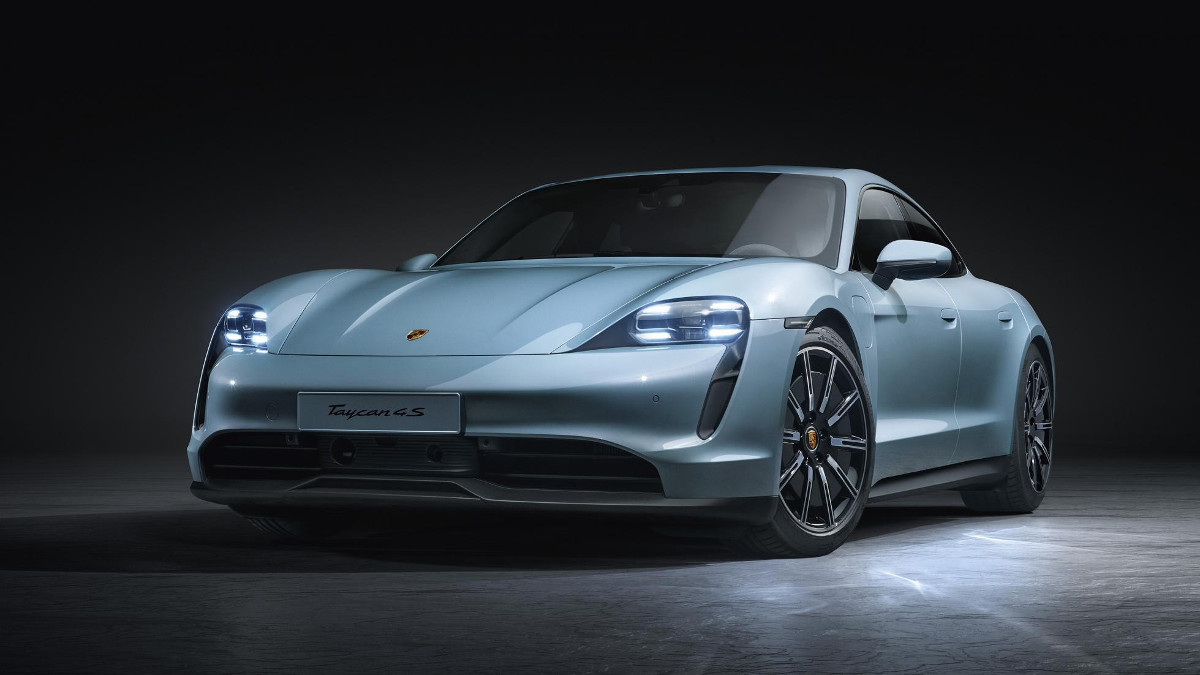
The Porsche Taycan 4S equipped with the Performance Battery Plus stands out as a rare example of a high-performance electric sports sedan that consistently exceeds its official range ratings in real-world driving.
While the EPA estimates its range at about 318 miles, independent testing has shown results as high as 364 miles, placing it well above expectations and challenging the notion that performance EVs must sacrifice efficiency. For the 2025 model year, Porsche’s extensive midcycle update transformed the Taycan’s range capability without dulling its driving character.
At the heart of this improvement is the Performance Battery Plus, which provides 97 kWh of usable energy within a 105 kWh total pack. Paired with refined electric motors and improved power electronics, the updated Taycan 4S delivers far better efficiency than earlier versions.
Real-world mixed driving often produces more than 330 miles of range, and highway testing at steady 75 mph speeds has confirmed similar results. Even with large 21-inch wheels, which typically reduce efficiency, the Taycan 4S continues to outperform its EPA figures by a meaningful margin.
Thermal management plays a major role in this consistency. Porsche’s 800-volt electrical architecture allows the battery and motors to operate in optimal temperature ranges, improving efficiency in both hot and cold conditions. This system also enables exceptionally fast charging.
With DC fast-charging capability up to 320 kW, the Taycan 4S can recharge from 10 to 80 percent in just 18 minutes. A short 15-minute stop can add well over 150 miles of range, making long-distance travel far more practical than its EPA numbers alone might suggest.
Equally important is Porsche’s accurate range estimation. The Taycan’s battery management system is widely praised for providing stable, realistic range readouts that do not fluctuate wildly with driving style or terrain. This reliability allows drivers to use the available range with confidence, rather than leaving large safety buffers.
Beyond efficiency, the Taycan 4S remains unmistakably a Porsche. It delivers explosive acceleration, precise steering, and powerful braking while maintaining a composed and comfortable ride in daily driving.
Standard air suspension balances performance and comfort, lowering the car at speed to improve aerodynamics and stability. The interior is driver-focused, blending high-quality materials with an intuitive digital layout that emphasizes control rather than gimmicks.
The 2025 Taycan 4S Performance Battery Plus proves that a performance-oriented EV can deliver both excitement and real-world usability. By pairing strong efficiency, fast charging, and honest range estimates with genuine sports-car dynamics, it succeeds as both a thrilling driver’s car and a capable long-distance electric sedan.
Also Read: 5 Cars for Littleton Mountain Commuting and 5 Winter-Ready Models
5 With Inconsistent Range
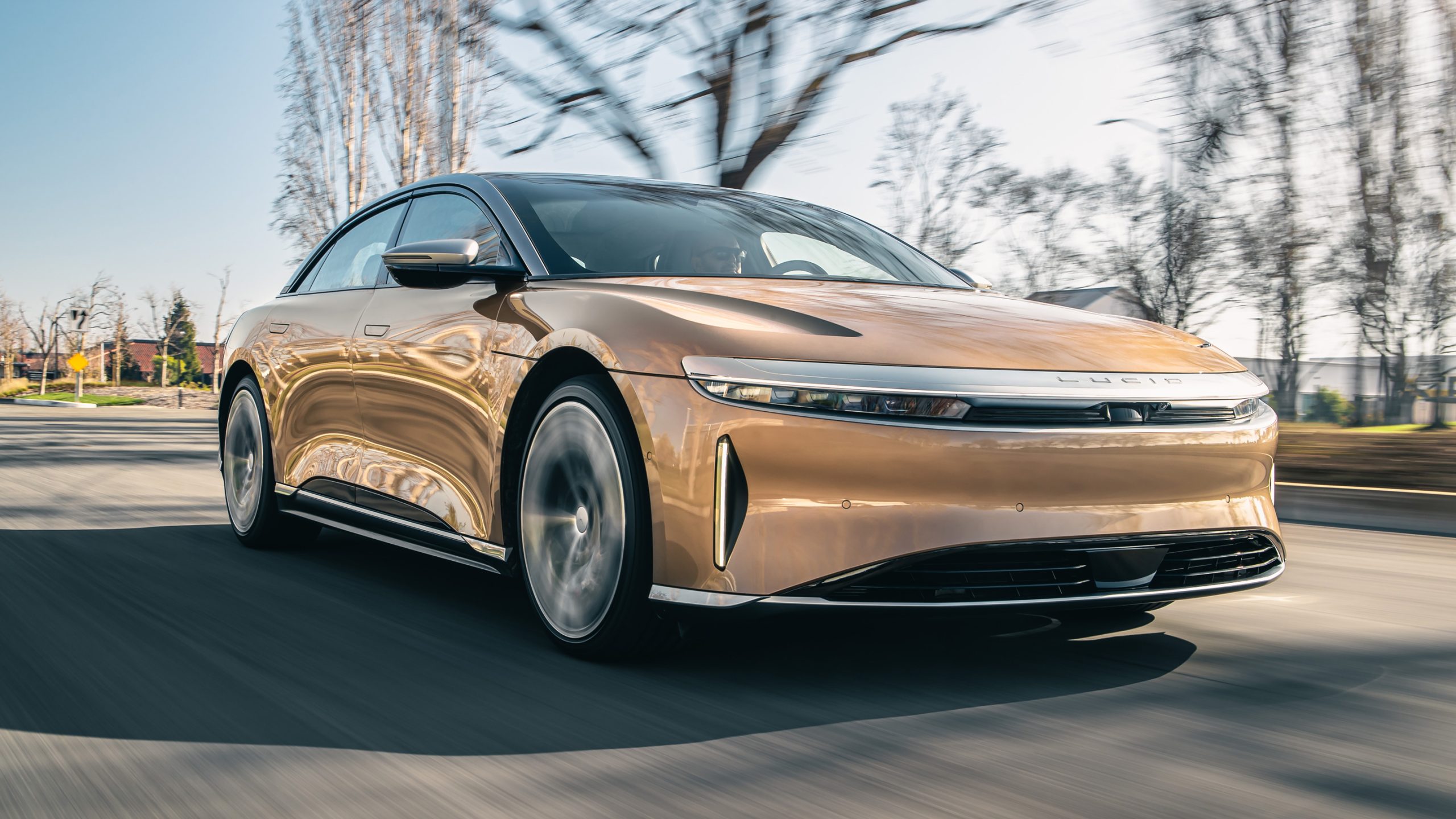
1. Lucid Air Touring: Real-World Range Factors
The Lucid Air Touring, while impressive on paper, often falls short of its EPA-estimated range of 406–431 miles in real-world driving. Forbes’ highway testing reported a 40-mile shortfall, highlighting several factors that affect actual performance.
One major factor is high-speed sensitivity. Air resistance increases exponentially with speed, and the Lucid Air is particularly affected above 70 mph. Efficiency can drop from 3.8 mi/kWh at 70 mph to 2.3 mi/kWh at 80 mph, meaning sustained speeds of 80–85 mph can reduce achievable range to roughly 75% of the EPA figure.
Environmental conditions and vehicle configuration also influence results. Cold temperatures impair battery chemistry and increase energy usage for cabin heating. For instance, at 30°F, efficiency can fall from a summer average of 4.0 mi/kWh to 2.8 mi/kWh, nearly a 30% drop.
Short city trips exacerbate this effect, as the electric heater draws significant power immediately. Wheel size further impacts range, with 20-inch or 21-inch wheels increasing rolling resistance and potentially reducing range by 20–50 miles compared to 19-inch wheels.
Testing methodology contributes to the discrepancy. Lucid uses the EPA’s 5-cycle test, which allows for a higher “unadjusted” range, creating a wider gap between advertised and real-world numbers. Additionally, the dashboard often shows a static estimate based on the EPA rating, rather than adjusting dynamically to driving habits, speed, or climate.
To achieve a range closer to EPA claims, drivers can monitor mi/kWh instead of relying on the dashboard estimate, precondition the battery and cabin while plugged in, and maintain speeds below 70 mph. Periodic full discharges and charges help recalibrate the Battery Management System for more accurate readings.
Understanding these factors makes it clear that the Lucid Air Touring’s advertised range represents ideal conditions, and real-world results depend heavily on speed, temperature, and driving behavior.
2. MG4: Why Real-World Range Falls Short of Official Figures
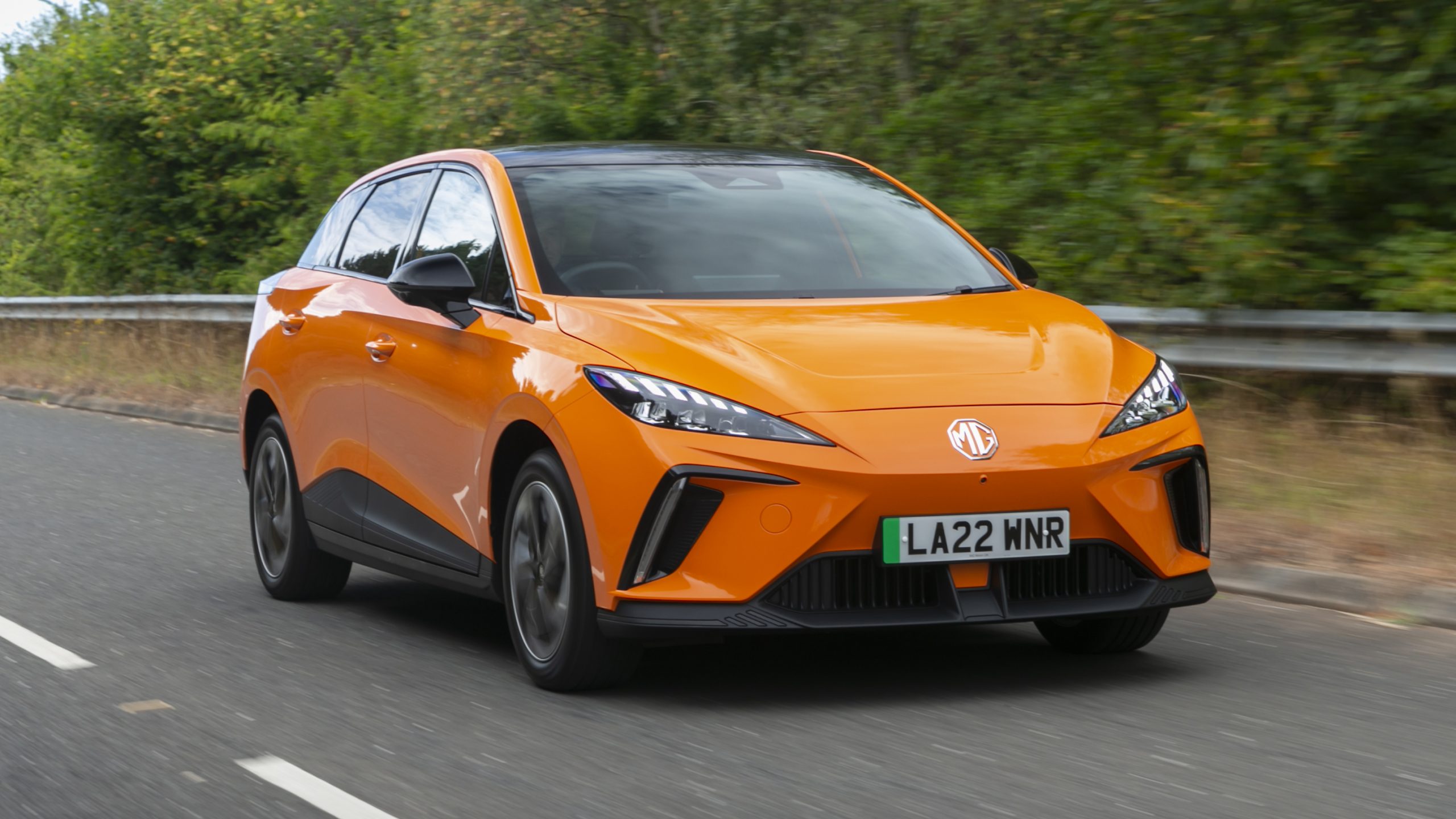
The MG4 has drawn attention for showing one of the largest gaps between official range claims and real-world results. Testing by the Australian Automobile Association found the MG4 delivered about 31 percent less distance than its lab-tested WLTP range.
This shortfall can be confusing for owners, but it is largely explained by how the car calculates and displays its remaining range, along with environmental and driving factors that heavily influence efficiency.
A major factor is the MG4’s dynamic range estimator, often called a “guess-o-meter.” Rather than using a fixed average, the system bases its range prediction on recent energy consumption.
If the car has been driven efficiently at low urban speeds and then transitions to motorway driving, the displayed range can drop quickly as the system recalculates for higher energy use. This sudden adjustment often feels worse than the actual loss of usable range.
Weather conditions, particularly cold temperatures, also play a significant role. Lithium-ion batteries are less efficient in winter, and real-world testing shows the MG4 can lose close to 30 percent of its range in cold conditions. When the battery is cold, the car must use energy to heat it to an optimal operating temperature, which reduces the energy available for driving.
High-speed driving further amplifies these effects. At motorway speeds around 110 km/h, aerodynamic drag increases sharply, often cutting range by 15 to 25 percent compared with city use. The WLTP test cycle emphasizes lower-speed driving, which does not accurately reflect sustained highway travel.
Climate control use adds another layer of range reduction. Cabin heating and air conditioning can immediately lower the displayed range by 10 to 15 percent, since EVs lack the waste heat of combustion engines.
Battery management also affects accuracy. MG4 models with LFP batteries require regular 100 percent charging to keep the battery management system properly calibrated.
Without this, drivers may see sudden percentage drops or unreliable range estimates. Because of these variables, many owners rely more on battery percentage than distance estimates, which tends to provide a clearer picture of the remaining energy.
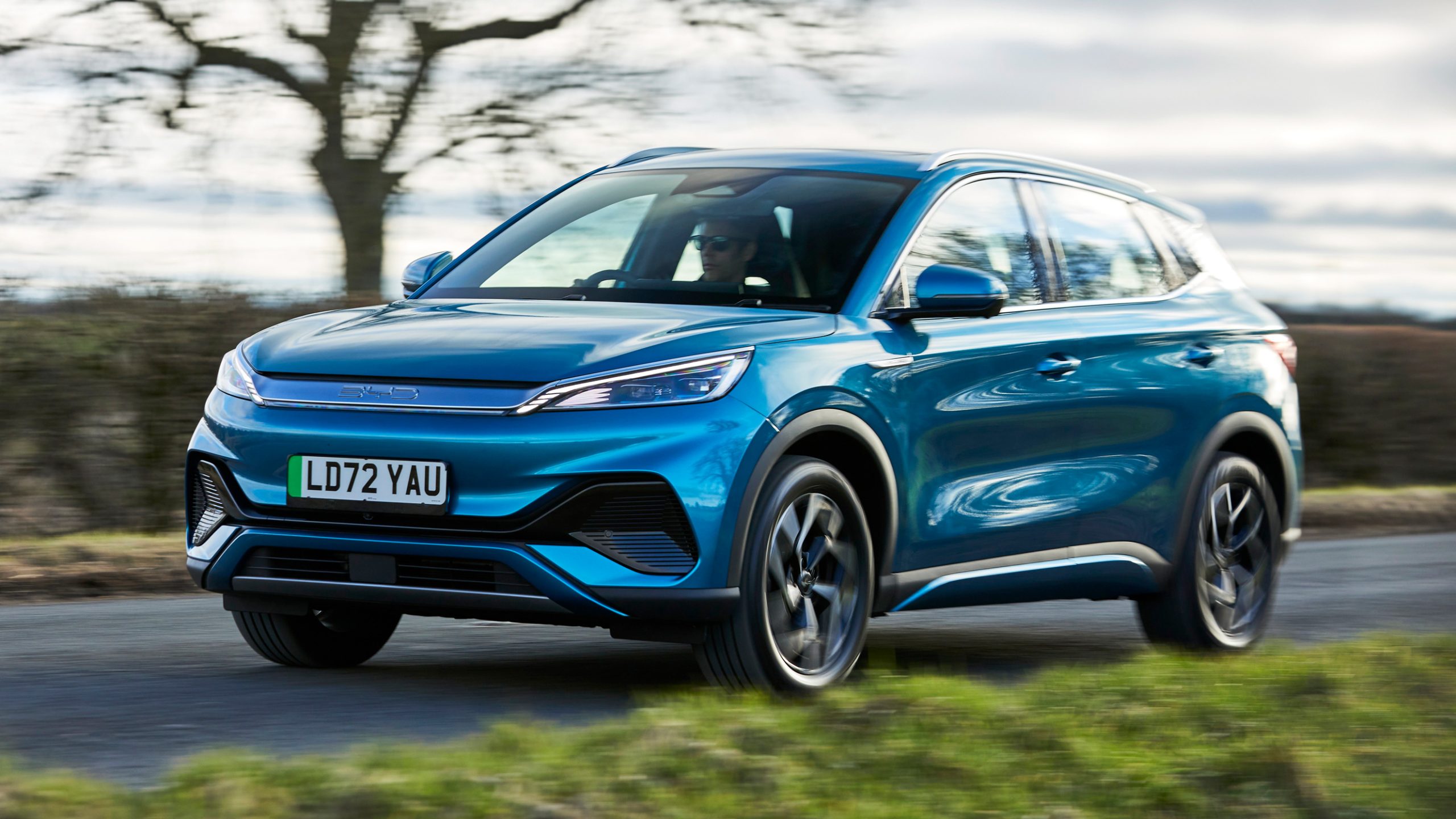
3. BYD Atto 3: Explaining the Gap Between Advertised and Real-World Range
The BYD Atto 3 has come under scrutiny for delivering significantly less driving range in real-world conditions than its official figures suggest. In testing conducted by the Australian Automobile Association, the Atto 3 achieved a range about 23 percent lower than its advertised 480 km lab-tested claim.
In everyday use, this often translates to a real-world range closer to 360–370 km, raising concerns for drivers who expect the vehicle to match its published specifications.
One of the main reasons for this discrepancy lies in the testing standards used to promote the vehicle. The 480 km figure is often derived from the older NEDC testing cycle, which is widely regarded as overly optimistic. More modern and realistic WLTP testing typically rates the Atto 3 at around 420 km, narrowing the gap but still leaving room for disappointment when compared with real-world driving results.
Driving conditions play a major role in reducing the achievable range. Sustained highway speeds between 100 and 120 km/h increase energy consumption due to aerodynamic drag and higher motor loads. Urban stop-and-go traffic, steep gradients, and frequent acceleration further drain the battery faster than the steady, low-speed patterns used in laboratory testing.
Climate and temperature also have a strong influence. In hot regions, heavy air-conditioning use can significantly reduce driving range, while cold weather impacts battery chemistry and requires additional energy for cabin and battery heating. Both extremes pull energy away from propulsion and shorten usable range.
Battery management behavior adds another layer of complexity. The Atto 3’s battery management system can sometimes provide optimistic or inconsistent range estimates. Owners are often advised to perform regular calibration charges, cycling the battery from a low state of charge to 100 percent, to help the system more accurately track available energy.
Driving habits further affect outcomes. Using Sport mode, aggressive acceleration, and low regenerative braking can sharply increase power consumption. To approach official range figures, drivers typically need to stay in Eco mode, apply gentle throttle inputs, and keep power demand relatively low.
While all electric vehicles experience some variation between lab-tested and real-world range, the BYD Atto 3 stands out for the size of its shortfall, making realistic expectations and informed driving habits especially important for owners.
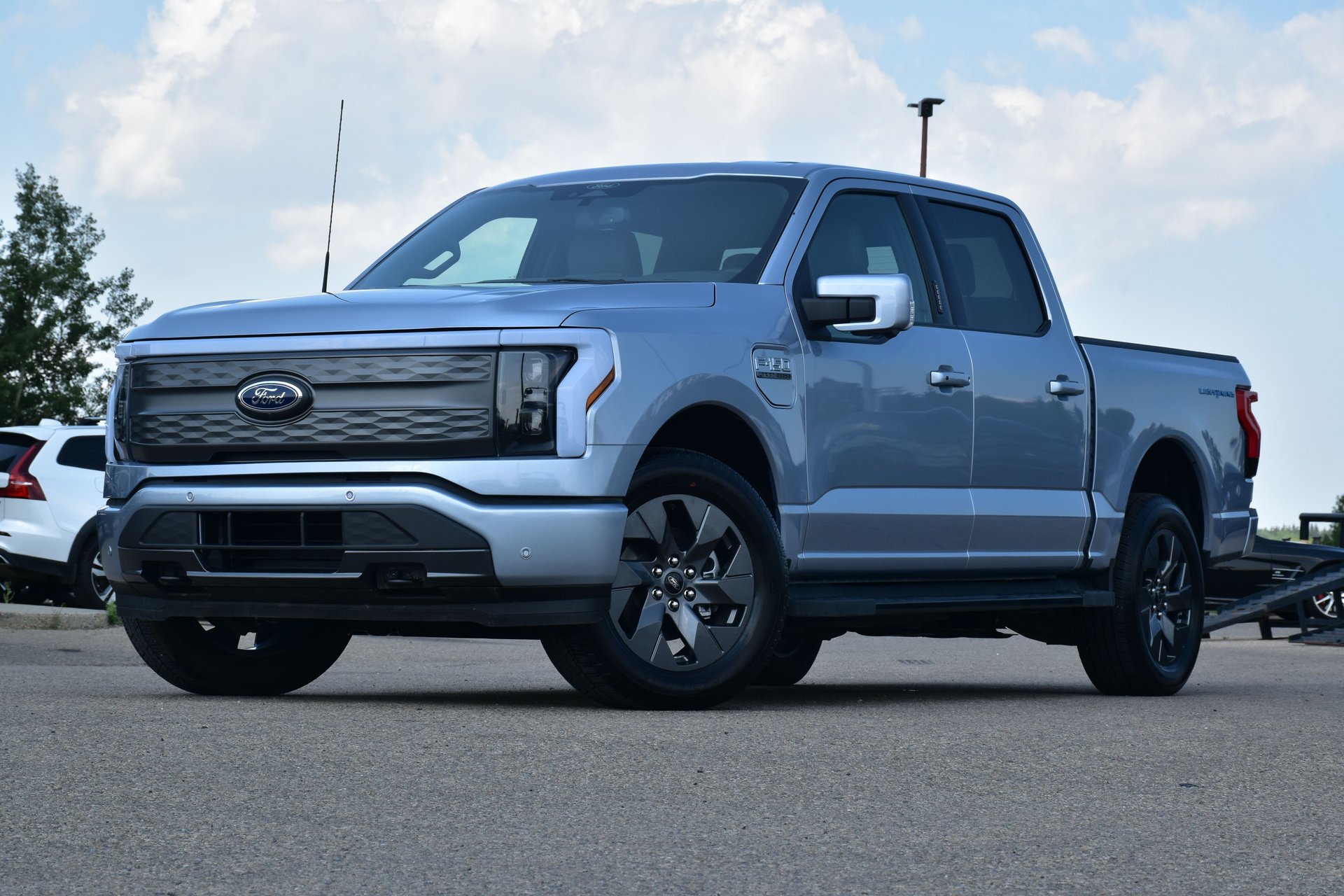
4. Ford F-150 Lightning Lariat Extended Range: Understanding Real-World Range Shortfalls
The Ford F-150 Lightning Lariat Extended Range often falls short of its advertised 320-mile EPA range, with Consumer Reports recording just 270 miles in a real-world test. The discrepancy stems from differences between the EPA’s combined-cycle methodology and actual driving conditions, particularly highway travel, temperature extremes, and payload use.
A key factor is aerodynamics. The F-150’s large, boxy shape creates significant wind resistance at highway speeds. The EPA highway test uses lower average speeds, but cruising at 70–75 mph can reduce range by 20–25 percent, while driving at 80 mph further cuts efficiency. This “brick effect” makes real-world highway numbers substantially lower than lab estimates.
Temperature also plays a major role. Unlike gasoline trucks, the Lightning relies on battery power to heat the cabin and maintain optimal battery temperatures. Cold weather slows electrolyte fluid, with owners reporting a 15–30 percent range loss below 40°F, and up to 50 percent in extreme sub-zero conditions. Many models lack a heat pump, instead relying on resistive heating, which is less energy-efficient.
Towing and payload further reduce driving range. Hauling a large, un-aerodynamic trailer can cut range by 50 percent or more, while carrying heavy gear in the truck bed may lower efficiency by roughly 25 percent. Even modest increases in mass require substantially more energy from the battery.
The vehicle’s dashboard range estimate, or “Guess-O-Meter,” adapts to recent driving patterns. After efficient city driving, switching to highway speeds can cause the estimated range to drop sharply, reflecting higher energy consumption.
To mitigate these losses, owners are advised to precondition the battery while plugged in via the FordPass app and prioritize energy-efficient strategies like using heated seats rather than cabin heat. Despite the shortfalls, the Lightning’s extended-range battery still provides practical utility for daily use, but understanding how speed, temperature, and load affect real-world performance is essential for planning longer trips.
This analysis highlights that advertised range figures are best viewed as idealized benchmarks rather than guaranteed outcomes under all conditions.
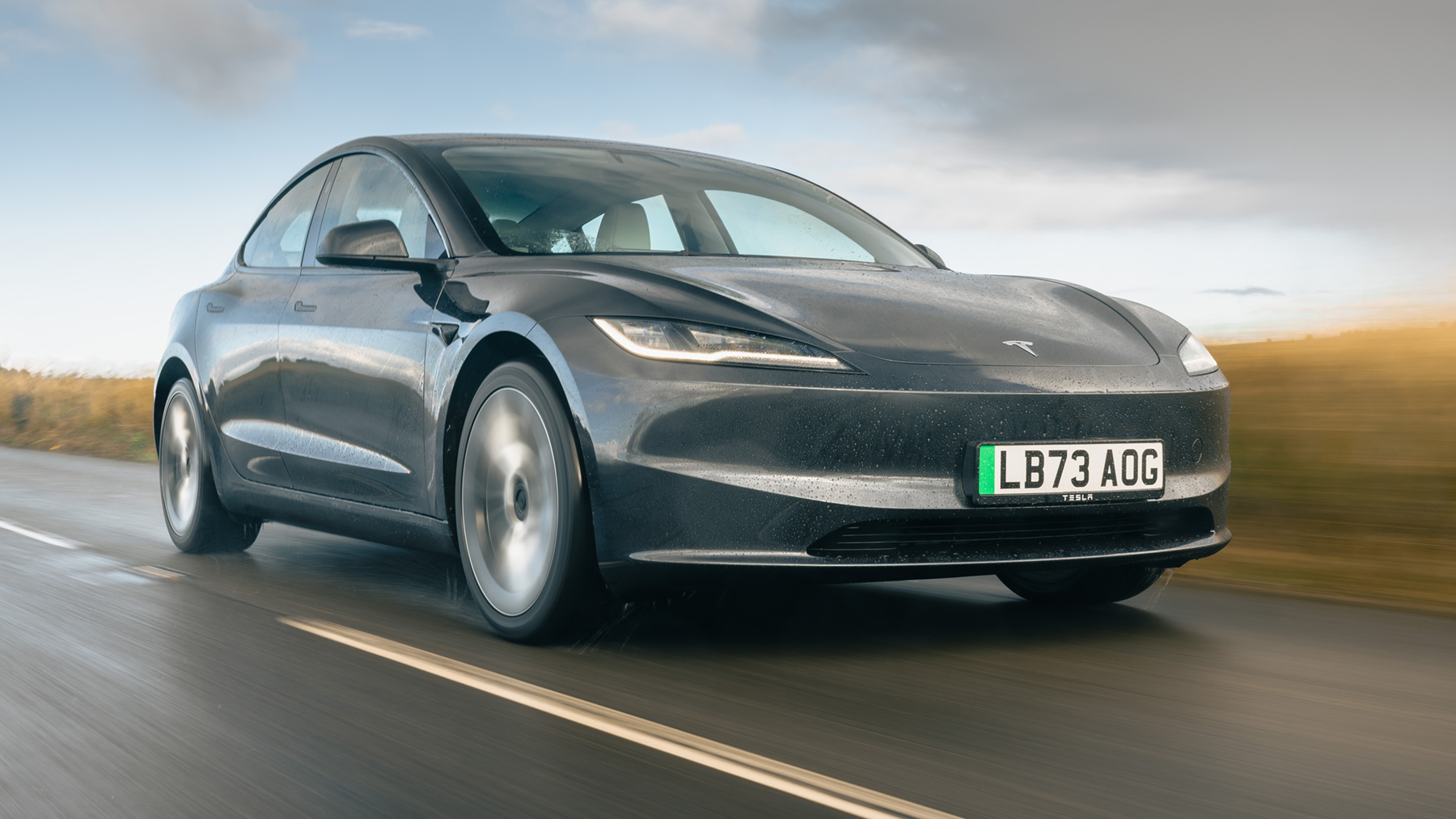
5. Tesla Model 3: Real-World Range Variability
The Tesla Model 3, despite its popularity, has shown inconsistencies in real-world range, with some tests reporting up to 14% less than the official EPA ratings. These discrepancies are largely due to differences between standardized lab testing and real-world driving conditions.
Aerodynamic drag at highway speeds is a primary factor. EPA highway tests are conducted at lower average speeds, whereas driving at 70–80 mph increases energy consumption significantly. Faster speeds exponentially drain the battery, often reducing range by 10–12% compared to the official figure.
Environmental conditions also affect performance. Cold weather can reduce range by 15–30% as energy is used to heat the cabin and battery pack, while extreme heat requires the air conditioning and battery cooling systems to operate continuously, further depleting charge.
Static power usage, or “phantom drain,” impacts range as well. Features like Sentry Mode, cabin preconditioning, and “Keep Climate On” consume energy even when the vehicle is parked, sometimes accounting for 1% or more of the battery per day.
Battery degradation and calibration can influence the displayed range. During the first year, the battery may lose 3–6% of its capacity, and if the car is rarely charged to full or drained too low, the Battery Management System may show inaccurate estimates that do not reflect the actual energy remaining.
Topography and payload also affect driving distance. Climbing hills requires more energy, and regenerative braking cannot fully recover what was spent. Heavier loads increase energy consumption, reducing the distance achievable on a single charge.
To obtain a more realistic range estimate, Tesla owners can use the Energy App or the in-car Trip Planner. These tools calculate projected range based on recent driving patterns, elevation changes, weather, and speed, giving a much more reliable assessment for trip planning.
These factors demonstrate that the Model 3’s advertised range should be considered an ideal benchmark rather than a guaranteed figure in everyday driving conditions.
Comparing EVs with reliable range to those with inconsistent performance shows the importance of battery management, efficiency, and realistic testing. Vehicles that exceed expectations, such as the BMW iX xDrive50 and Mercedes-Benz EQE 350, combine large, well-managed batteries with aerodynamic designs and accurate range estimators.
In contrast, models like the BYD Atto 3 and Ford F-150 Lightning are more affected by high speeds, extreme temperatures, and heavy loads, which can significantly reduce usable range.
For prospective EV owners, choosing vehicles with predictable range ensures convenience, flexibility, and confidence. Evaluating real-world performance, charging capability, and efficiency allows drivers to select EVs that deliver reliable distance, practical usability, and peace of mind in everyday driving.
Also Read: 10 Cars With Seats Designed for Long-Distance Comfort