
Throttle response is one of those traits you don’t truly appreciate until you drive a car that gets it right. Horsepower numbers look good on paper, but what actually makes a car feel quick around town or on a back road is how instantly it reacts when you press the accelerator.
That split-second between your right foot and the engine waking up can be the difference between “meh” and genuinely fun.
For American buyers shopping on a budget, this matters even more. Most affordable cars today are turbocharged, tuned for fuel economy, and saddled with conservative throttle mapping.
Yet there are still plenty of reasonably priced options, especially on the used market, that feel alert, eager, and surprisingly engaging.
Below are ten cars you can typically find under (or not far above) $20,000 used in the US that deliver immediate pedal response and a lively driving character without requiring exotic maintenance or premium-only lifestyles.
Some are sports cars, some are hot hatches, and a few are everyday coupes or sedans that simply feel better than they have any right to.
1. Mazda MX-5 Miata (ND)
Backed by Mazda engineering, the ND-generation Miata is practically a masterclass in throttle feel. Naturally aspirated engines are becoming rare, and this car reminds you why enthusiasts miss them.
There’s no turbo lag to mask or electronic smoothing to dilute your inputs. You press the pedal, the revs rise instantly, and the lightweight chassis responds right away.
Even the base 2.0-liter feels energetic because the car weighs so little. On twisty roads, that immediate reaction makes the Miata feel faster than its numbers suggest.
Used ND Miatas now regularly appear in the mid-teens, making them one of the most accessible ways to experience razor-sharp throttle response in America today.
Power comes from a lively four-cylinder engine most commonly paired with a precise six-speed manual transmission, though an automatic option is available. The Miata’s sharp, responsive handling transforms winding roads into an inherently rewarding experience.
The mid-range Club trim represents the most compelling balance between performance and equipment. It includes 17-inch wheels, a limited-slip rear differential, heated seats, and a nine-speaker Bose audio system.
Although an automatic transmission is offered elsewhere in the lineup, the six-speed manual is the preferred configuration, and it is the exclusive transmission available on the Club trim.
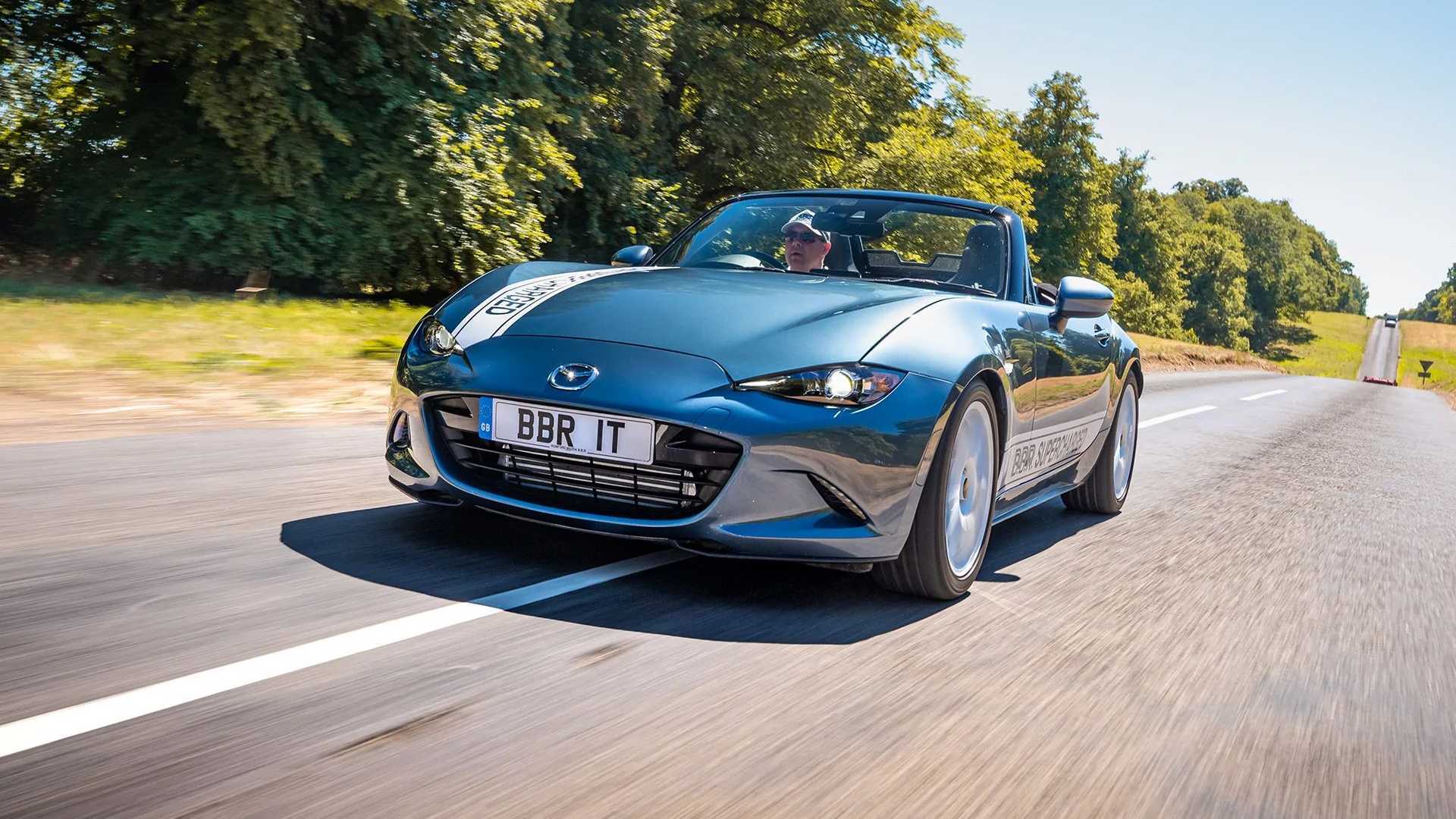
The Miata’s engine revs freely and provides sufficient output for genuinely engaging acceleration. Its high-revving character is best appreciated through the direct, well-defined action of the manual gearbox.
In testing, the soft-top model reached 60 mph in 5.7 seconds, while the marginally heavier hardtop RF required 5.8 seconds.
Ride quality is firm, and the car can feel unsettled over consecutive bumps. The Club trim’s stiffer suspension setup produces the firmest ride in the range, though no variant feels harsh to the point of discomfort.
Handling is a defining strength. The Miata responds quickly to steering inputs and transitions between directions with minimal delay.
Steering feel is light yet communicative, providing clear feedback about front-tire grip. Overall, the MX-5 Miata delivers a straightforward, highly engaging driving experience.
2. Ford Fiesta ST
The Fiesta ST proves that small cars can deliver big smiles, thanks to Ford performance tuning.
Yes, it’s turbocharged, but unlike many budget turbos, the Fiesta ST is mapped aggressively.
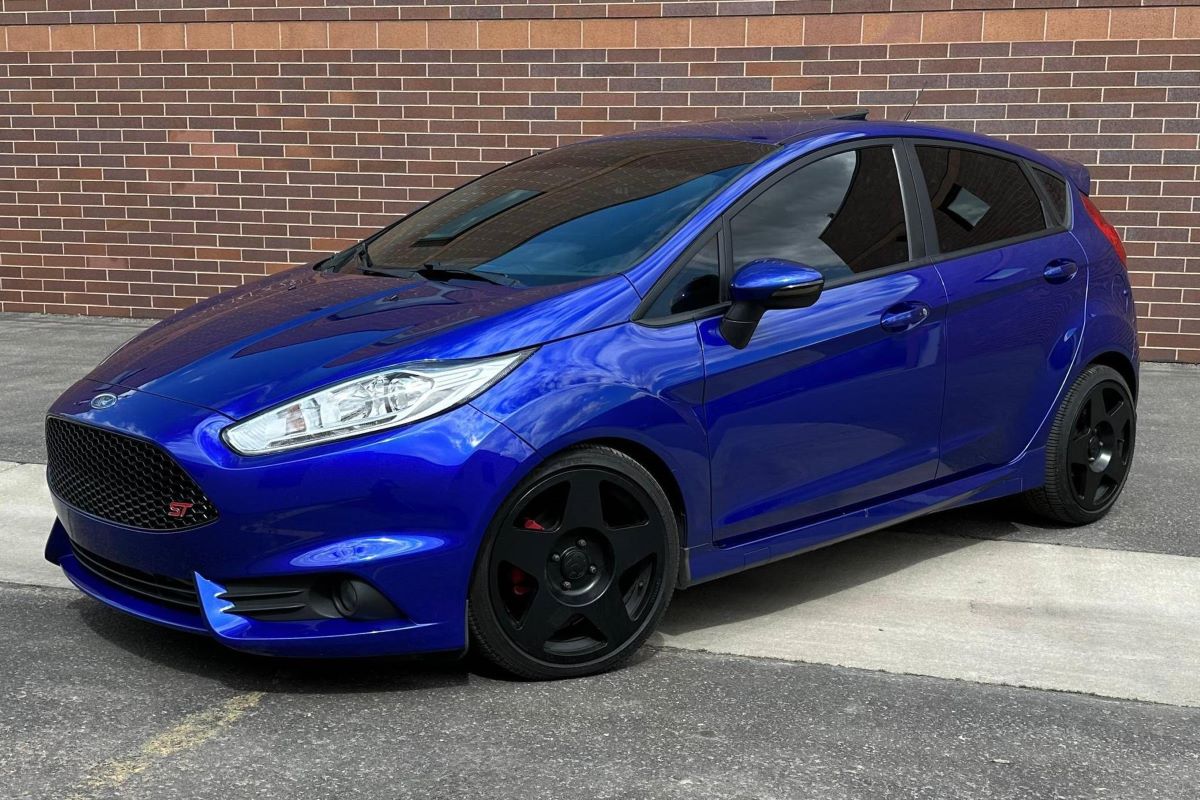
The throttle is sharp, boost comes on early, and the car feels eager even at low speeds. In Sport mode, the pedal becomes downright impatient.
Because it was sold in the US for several years and depreciated quickly, clean examples often land well under $15,000. For drivers who want instant response in a practical hatchback format, this is one of the best bargains around.
The Fiesta ST may not reach the extreme performance levels of the Ford Focus RS, but it delivers substantial driving enjoyment in its own right.
Equipped exclusively with a manual transmission, it offers an accessible and engaging driving experience.
The suspension setup is energetic without being punishing, and fuel efficiency remains respectable. Power comes from a responsive turbocharged 1.6-liter inline-four engine driving the front wheels through a six-speed gearbox.
Although the Fiesta ST provides affordable performance, it retains the basic interior materials and limited rear-seat space of the standard Fiesta.
Even so, this compact performance hatchback delivers a straightforward, skill-rewarding driving experience suitable for enthusiasts at any level. The current-generation Fiesta ST carries into the 2018 model year with minimal updates.
The Fiesta ST is powered by a 1.6-liter turbocharged inline-four producing 197 horsepower and 202 lb-ft of torque. It is paired with a six-speed manual transmission, the only available option.
While its 0–60 mph acceleration may not be class-leading, the vehicle compensates with high levels of driver engagement. On winding roads, empty parking lots, or rural backroads, the Fiesta ST proves consistently entertaining.
Despite its firm suspension tuning, overall ride comfort remains balanced, reflecting careful chassis calibration by Ford’s engineering team. The Fiesta ST represents an accessible performance car that emphasizes enjoyment without imposing a high cost of entry.
3. Volkswagen GTI (Mk7)
The Mk7 GTI represents peak modern hot hatch refinement from Volkswagen.
What sets this generation apart is its calibration. Throttle input feels natural and progressive, not artificially heavy or numb. Pair that with strong low-end torque, and the GTI jumps forward the moment you ask it to.
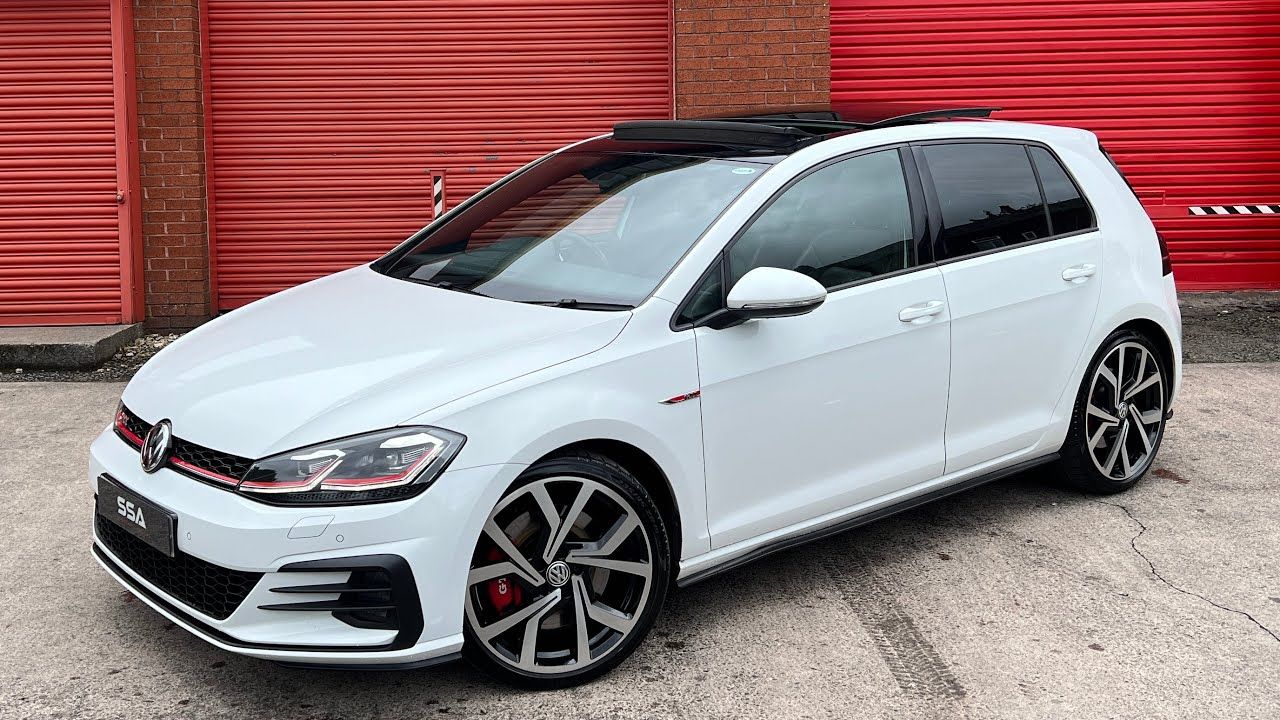
It’s also one of the few cars on this list that balances sharp response with genuine comfort and interior quality. For American commuters who still want weekend fun, a used Mk7 GTI in the $15K–$20K range is a very smart pick.
4. Honda Civic Si (10th Gen)
Honda has always excelled at making modest power feel exciting, and the Civic Si continues that tradition.
Although turbocharged, Honda tuned the Si for immediate response rather than peak output. The throttle feels crisp, especially in Sport mode, and the car builds speed smoothly without waiting on boost.
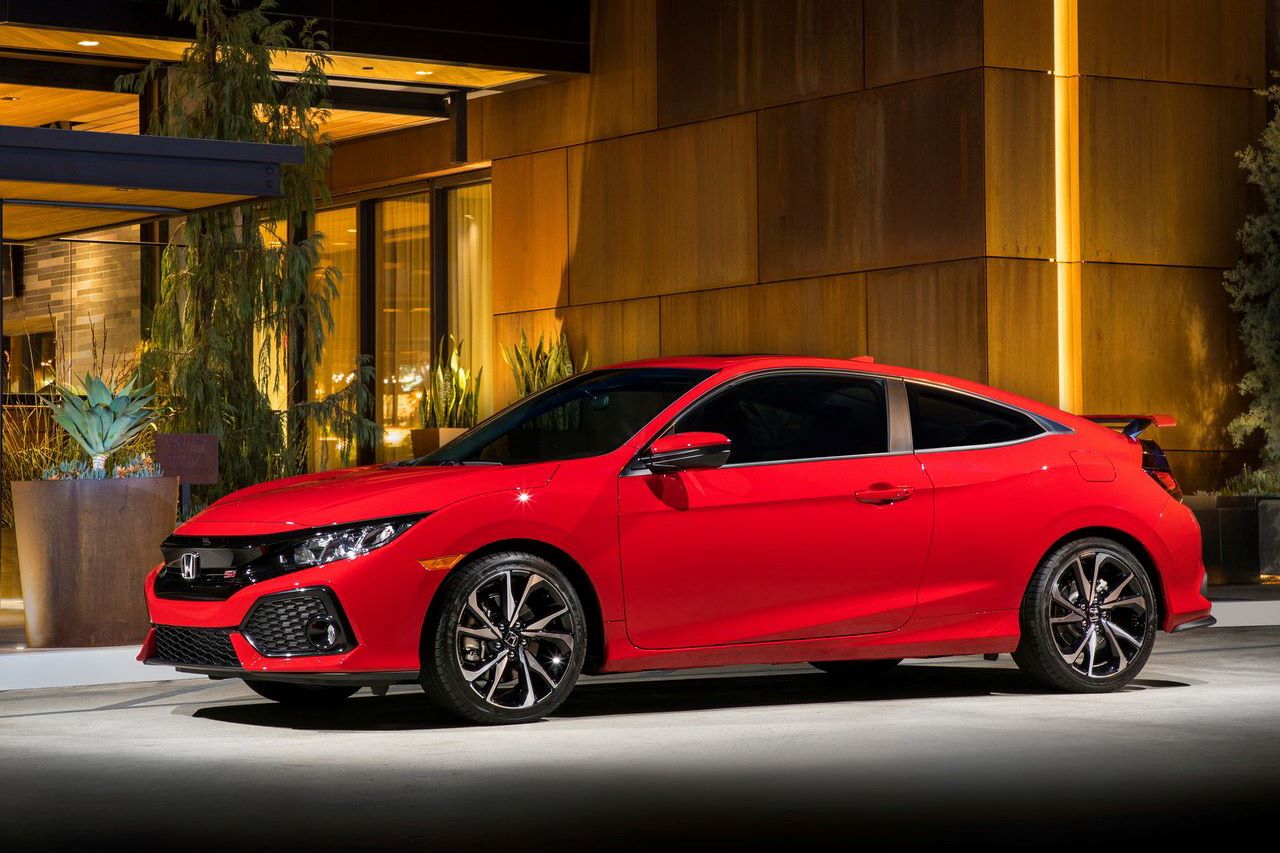
Add one of the best manual transmissions in the segment, and you get a sedan that feels alive even during normal errands. Used Si models are plentiful nationwide and typically fall between $17,000 and $20,000.
Honda’s Civic receives a comprehensive redesign for 2022, adopting a more mature exterior aesthetic, upgraded features, and a cleaner, more refined interior layout.
The lineup continues to offer a choice of four-cylinder engines, including a turbocharged 1.5-liter option. Front-wheel drive remains standard, as Honda has confirmed that all-wheel drive is not planned.
Technology updates are significant, including a larger infotainment screen, wireless smartphone integration, and enhanced driver-assistance systems. These upgrades strengthen the Civic’s position against competitors such as the Hyundai Elantra, Mazda 3, and Toyota Corolla.
The EX sedan represents the most balanced choice in the range. It includes features that justify its price increase, such as blind-spot monitoring, a power sunroof, dual-zone automatic climate control, heated exterior mirrors, and heated front seats.
It also comes standard with the more powerful 180-horsepower turbocharged four-cylinder engine. For hatchback buyers, the EX-L offers comparable equipment and adds leather upholstery.
Although the Civic is otherwise redesigned, its powertrain lineup carries over from the prior generation.
Entry-level models feature a 158-horsepower 2.0-liter four-cylinder engine. The upgraded option is a turbocharged 1.5-liter four-cylinder producing 180 horsepower. All versions are front-wheel drive.
The manual transmission previously offered on the Civic sedan has been discontinued for 2022, leaving a continuously variable automatic transmission (CVT) as the only option for sedan models. The hatchback retains availability of a six-speed manual.
During testing, the turbocharged Touring sedan reached 60 mph in 7.5 seconds, marginally slower than the previous-generation model. The manual-equipped Sport Touring hatchback performed slightly better, achieving 60 mph in 7.3 seconds.
The Civic retains the responsive handling, communicative steering, and balanced ride quality that distinguished its predecessor. Sport-oriented Si and high-performance Type R variants are forthcoming, both of which will include a manual transmission. Those models are reviewed separately.
5. MINI Cooper S (Hardtop)
Modern MINIs benefit from BMW underpinnings, and MINI pairs that with playful tuning.
The Cooper S feels snappy off the line, with throttle mapping that favors responsiveness over smoothness. It darts through traffic and tight roads with almost gokart-like urgency.
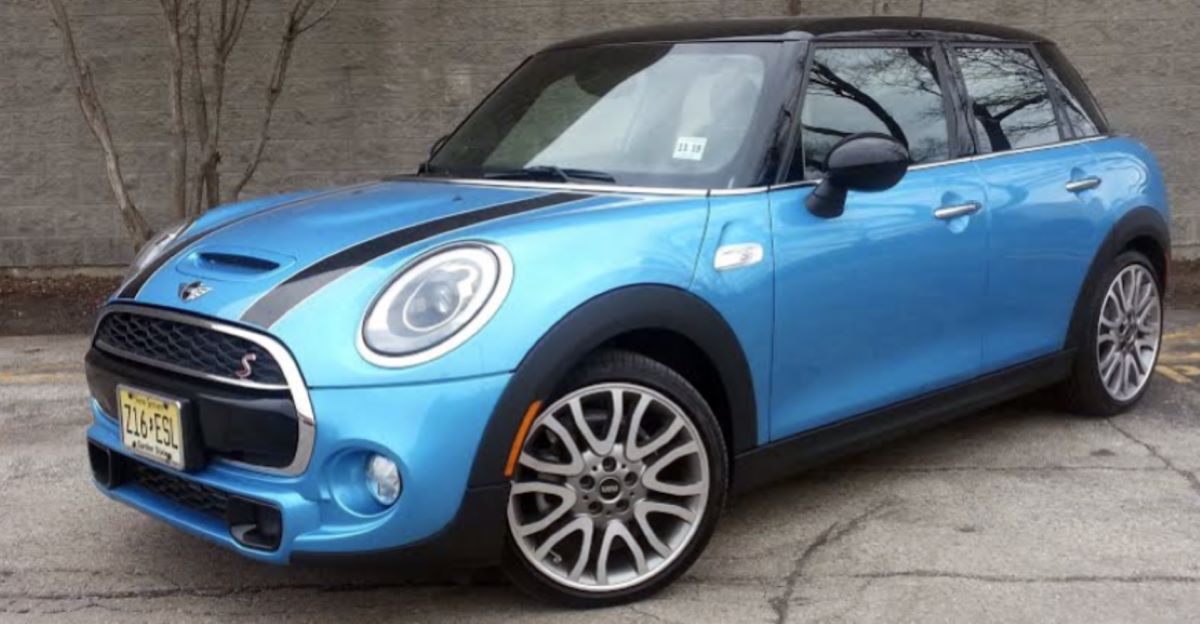
They’re easy to find on the used market, often under $18,000, and they offer a premium interior feel in a small, characterful package, just be mindful of maintenance costs compared to Japanese alternatives.
6. Subaru BRZ / Toyota 86
A joint effort between Subaru and Toyota, these twins are all about driver connection.
The naturally aspirated flat-four doesn’t produce massive power, but throttle response is immediate and linear. There’s no waiting for boost, just clean revs and predictable acceleration.
Because they’ve been around for over a decade, early models are now affordable, often dipping into the low-teens. For purists who value pedal feel and balance over raw speed, these coupes deliver.
Many contemporary sports cars have grown increasingly complex, yet the Subaru BRZ remains a comparatively straightforward alternative that emphasizes driving purity.
This lightweight, rear-wheel-drive coupe, closely related to the Toyota 86, prioritizes balance and engagement over outright speed.
Beyond its dynamic appeal, it offers a measure of practicality. Although the rear seats are small, folding them expands cargo capacity, making the BRZ more versatile than its compact proportions suggest.
While additional horsepower and torque would enhance its performance envelope, the car’s precise handling and consistent steering feedback secure its reputation as one of the most authentic driver-focused cars available.
The BRZ may not deliver class-leading acceleration or refinement, but few sports coupes offer comparable driving enjoyment at this price.
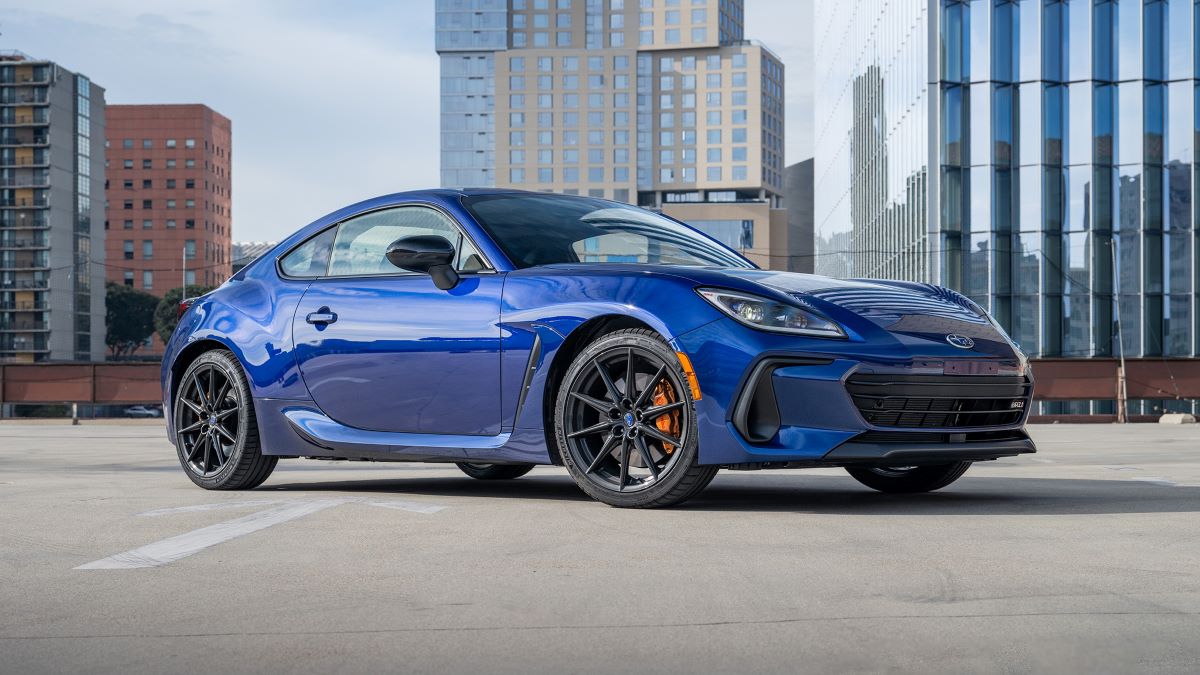
Entry-level pricing is similar to that of the Miata, yet the BRZ undercuts more expensive Mazda RF variants with retractable hardtops. Among available trims, the tS stands out as the most compelling option.
Although it carries the highest price, it includes performance-oriented equipment that many buyers would otherwise add. Standard features include adaptive dampers, upgraded front brakes, STI-tuned chassis enhancements, 18-inch wheels fitted with summer tires, and additional body bracing.
The tS also features unique exterior elements such as a revised front bumper and an adjustable rear wing. However, buyers seeking an automatic transmission must select another trim, as the tS is offered exclusively with a manual gearbox.
All BRZ models are powered by a naturally aspirated 2.0-liter flat-four engine. A six-speed manual transmission is standard, while a six-speed automatic is optional.
Manual-equipped models produce 205 horsepower and 156 lb-ft of torque, while automatic versions generate 200 horsepower and 151 lb-ft. The quickest example tested achieved a 0–60 mph time of 6.2 seconds.
The flat-four engine’s sound characteristics are less refined than some competitors, and additional power would better complement the chassis’ capabilities. Nevertheless, the BRZ’s balanced dynamics and communicative steering consistently encourage enthusiastic driving.
7. Hyundai Veloster Turbo
Hyundai quietly built a sleeper with the Veloster Turbo.
Its throttle tuning is aggressive for the class, giving the car a lively feel around town. While not as refined as a GTI, it feels quick on initial tip-in and makes daily driving more entertaining than most compact cars.
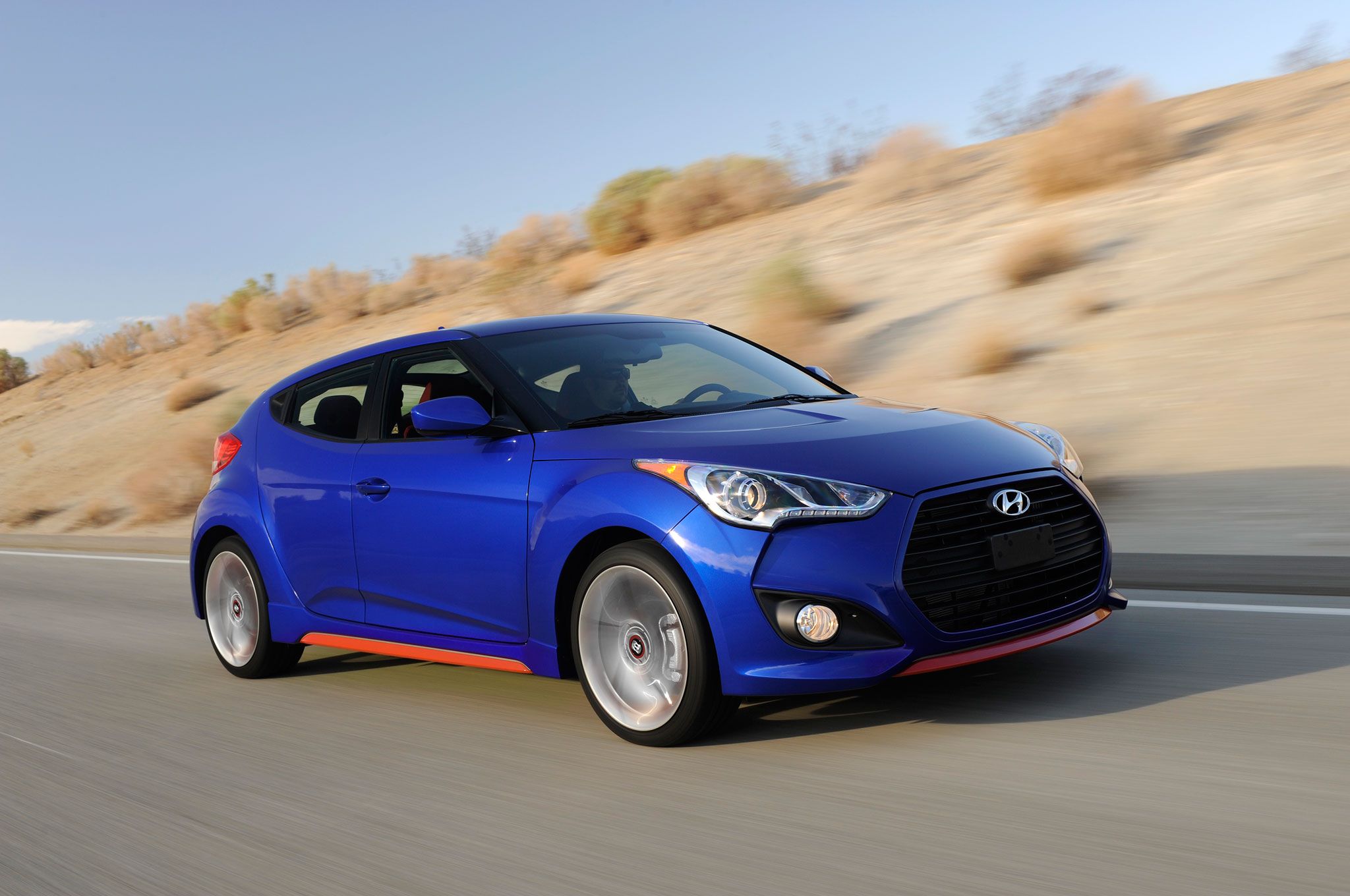
Used Veloster Turbos are widely available in the US, many priced between $12,000 and $16,000, making them one of the cheapest ways to get punchy throttle response.
The Veloster Turbo adopts its revised rear suspension and the carryover 201-horsepower turbocharged 1.6-liter inline-four from the Elantra GT Sport.
This updated suspension configuration delivers more polished handling and improved ride comfort compared with the original setup, even with the Turbo’s firmer anti-roll bars and dampers.
Reduced weight and high-grip tires enable the R-Spec to accelerate from 0 to 60 mph in 6.2 seconds, improving upon the 6.7-second time recorded by the 2016 model equipped with the same powertrain.
The Michelins contribute significantly to improved lateral performance, increasing skidpad grip to 0.95 g from the previous 0.85 g. Braking performance also improves, with a 70-to-0 mph stopping distance of 151 feet compared to 173 feet previously.
The Veloster R-Spec competes directly with the 205-horsepower Civic Si coupe (6.3 seconds to 60 mph, 0.97 g, and 159 feet) and the 220-horsepower Volkswagen GTI (5.7 seconds, 0.95 g, and 161 feet).
The 268-horsepower Subaru WRX remains the acceleration leader in the class, achieving 0–60 mph in 5.5 seconds, with earlier examples recording as quick as 5.0 seconds. However, the all-wheel-drive WRX ranks mid-pack in terms of cornering grip and braking performance.
8. Chevrolet Camaro V6 (6th Gen)
You don’t need a V8 to enjoy modern muscle from Chevrolet.
The sixth-generation Camaro V6 offers a naturally aspirated engine with surprisingly quick throttle response, especially compared to many turbo fours. It revs freely, sounds good, and feels immediate when merging or passing.
Because V6 Camaros don’t command collector prices, they’re often excellent used values, commonly landing around $18,000–$22,000.
The 2022 Chevrolet Camaro, offered in both coupe and convertible forms, prioritizes driving enjoyment above all else.
Its limited outward visibility and tight rear seating are evident compromises, but the focus remains on sharp handling, an engaging manual transmission, and a ride quality that is unexpectedly composed.
The standard engine is a 275-horsepower turbocharged four-cylinder, while available upgrades include a 335-horsepower V-6 and a 455-horsepower V-8, both delivering stronger acceleration and more distinctive exhaust notes.
However, when equipped with the optional 1LE package, it becomes the most track-focused of the trio. In terms of performance relative to cost, the 2022 Camaro remains a compelling value.
It introduces visual enhancements such as black-painted 20-inch wheels and satin-black exterior accents, along with interior upgrades including microsuede trim and, on SS models, more supportive Recaro front seats.
More significantly, the package incorporates performance-focused improvements: a dual-mode exhaust system, upgraded cooling components, larger brakes, a limited-slip differential, and revised suspension tuning.
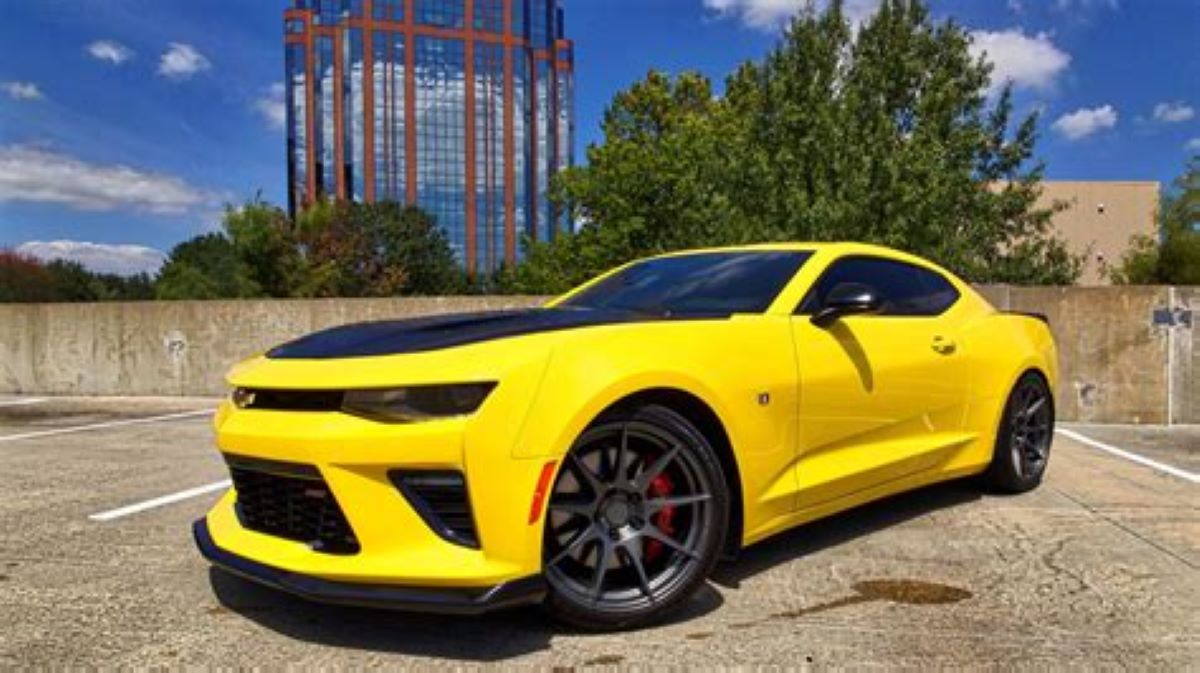
Although the 1LE package is available with the four-cylinder and V-6 engines, pairing it with the V-8-powered 1SS trim maximizes its capabilities. In that configuration, the six-speed manual transmission remains the preferred choice.
The base 275-horsepower turbocharged four-cylinder delivers respectable acceleration; a tested manual variant proved quicker than expected.
However, its throttle response can feel uneven, and its engine note lacks character. Stepping up to the 335-horsepower V-6 significantly enhances the Camaro’s personality, providing stronger performance and a more engaging sound.
The LT1 and SS trims feature Chevrolet’s 455-horsepower small-block V-8, generating 455 lb-ft of torque. Its abundant low-end thrust, linear power delivery, and forceful acceleration define the driving experience.
The optional dual-mode exhaust amplifies the effect, producing a pronounced bark at startup and a resonant tone under full throttle.
A six-speed manual transmission comes standard on most models, preserving the car’s enthusiast appeal. An eight-speed automatic is available with the four-cylinder, while a 10-speed automatic can be paired with the V-6 and V-8.
The Camaro’s chassis is a highlight. Its rigid structure supports precise handling and contributes to a solid, confidence-inspiring feel.
Ride quality strikes a balance between firmness and compliance, maintaining agility on winding roads while absorbing rough surfaces effectively.
When equipped with the 1LE package, the coupe’s capabilities extend beyond typical pony-car expectations, competing with significantly more expensive performance vehicles.
On track, 1LE models are composed and responsive, yet they remain livable on everyday roads. The electrically assisted steering offers consistent effort and accurate response, and braking performance is equally strong, with a firm pedal and reliable stopping power.
9. BMW 230i (2 Series)
BMW is known for sharp throttle calibration, and the 230i continues that tradition.
Despite being turbocharged, the 2 Series responds quickly thanks to strong low-end torque and precise pedal mapping. It feels premium yet athletic, blending comfort with genuine engagement.
Early 230i models are now entering the high-teens on the used market, offering a refined driving experience with real urgency underfoot.
A manual transmission is no longer available on the 2 Series, a change driven largely by limited buyer demand. The 230i is now offered exclusively with an eight-speed automatic transmission sending power to the rear wheels.
It is powered by a 2.0-liter turbocharged inline-four engine producing 255 horsepower and 295 lb-ft of torque. Those seeking additional performance or all-wheel drive must move up to the M240i xDrive.
Despite the absence of a manual option, the 230i remains lively. Its 2.0-liter engine delivers increased output compared with the previous version, and peak torque arrives as early as 1,550 rpm.
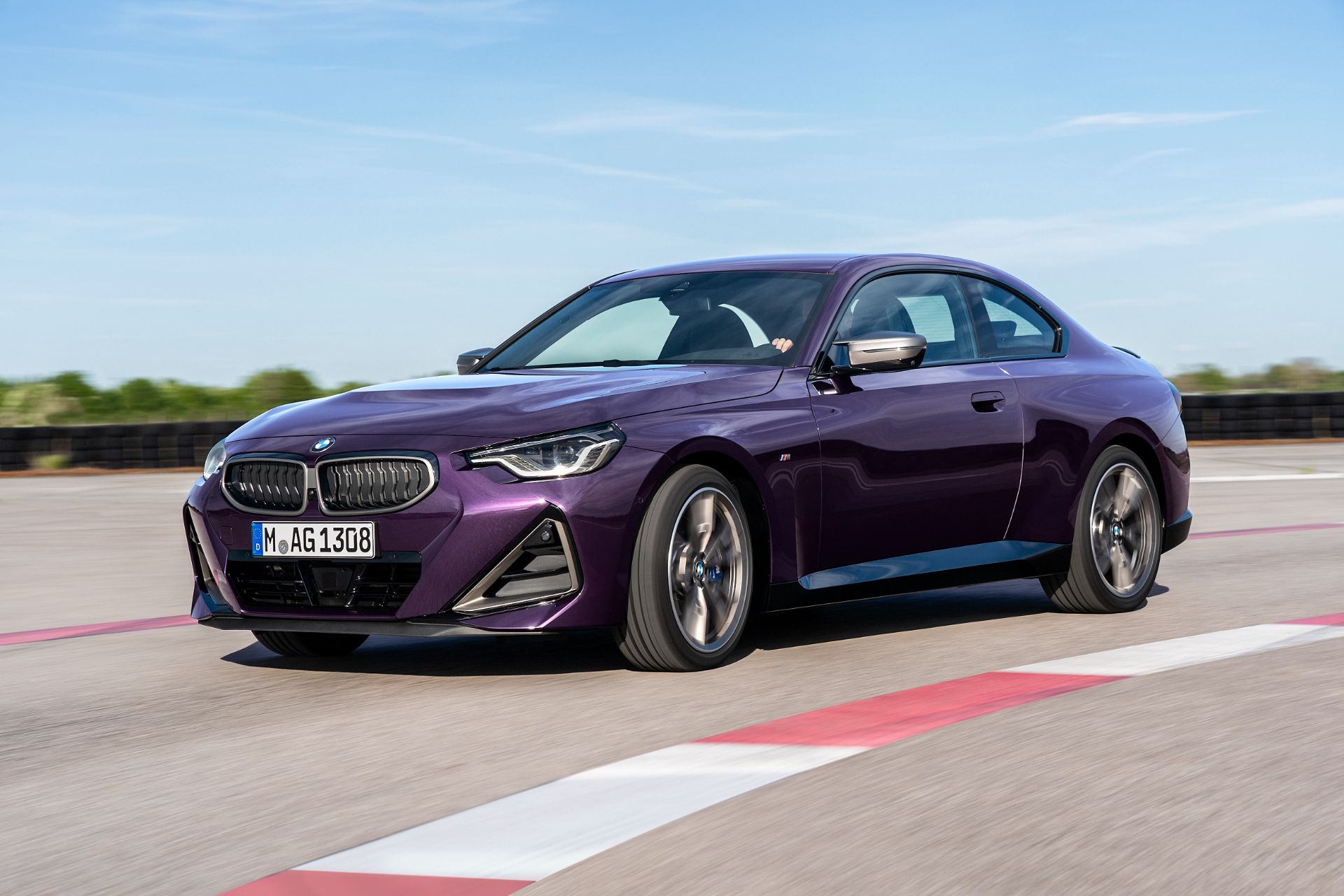
The strong low-end response enhances corner exit performance and makes the car feel particularly responsive during spirited driving. The eight-speed automatic is well-calibrated, especially in Sport mode, providing quick and decisive shifts that reduce the need for manual paddle input.
The optional Dynamic Handling Package, priced at $1,900, adds an M Sport rear differential and upgraded brakes.
The differential actively distributes torque to the outside rear wheel during cornering, improving agility and balance. The larger brakes offer confident stopping power without abrupt pedal response.
Standard driver-assistance features are somewhat limited. Adaptive cruise control, parking assist, and traffic jam assist are not included on the tested vehicle. However, blind-spot monitoring, lane-departure warning, automatic emergency braking, and rear cross-traffic alert are standard.
Rear-seat access is facilitated by mechanically released seatbacks that tilt forward, though the power sliding mechanism operates slowly. At 5 feet 9 inches, rear-seat space is adequate, though taller occupants may find it restrictive.
Cargo capacity measures 10 cubic feet in the trunk, which is modest. Folding rear seats provide additional flexibility, sufficient, in this case, to transport a motorcycle hitch carrier, but practicality remains limited, as expected from a two-door coupe.
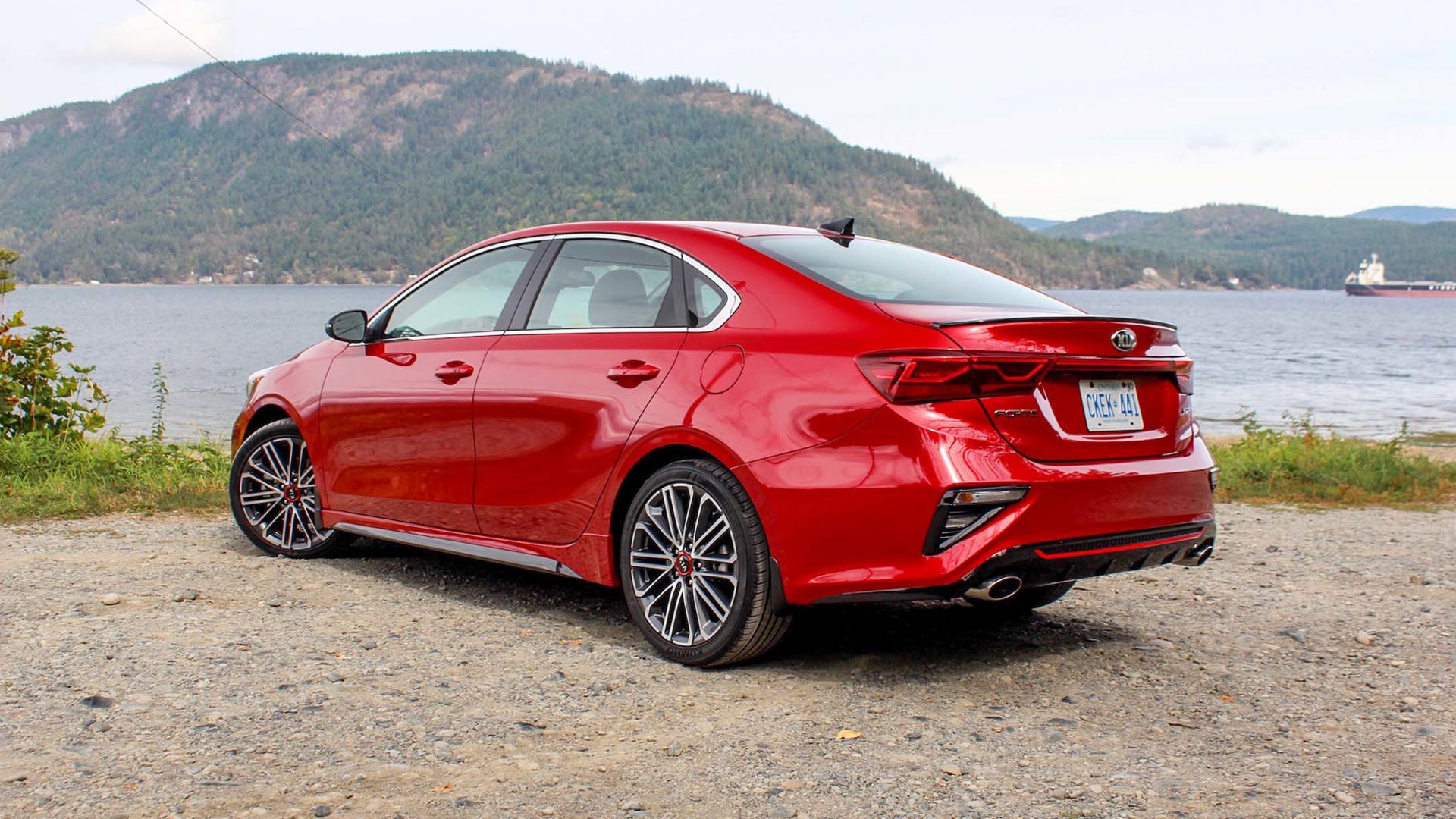
10. Kia Forte GT
Rounding out the list is an underrated option from Kia.
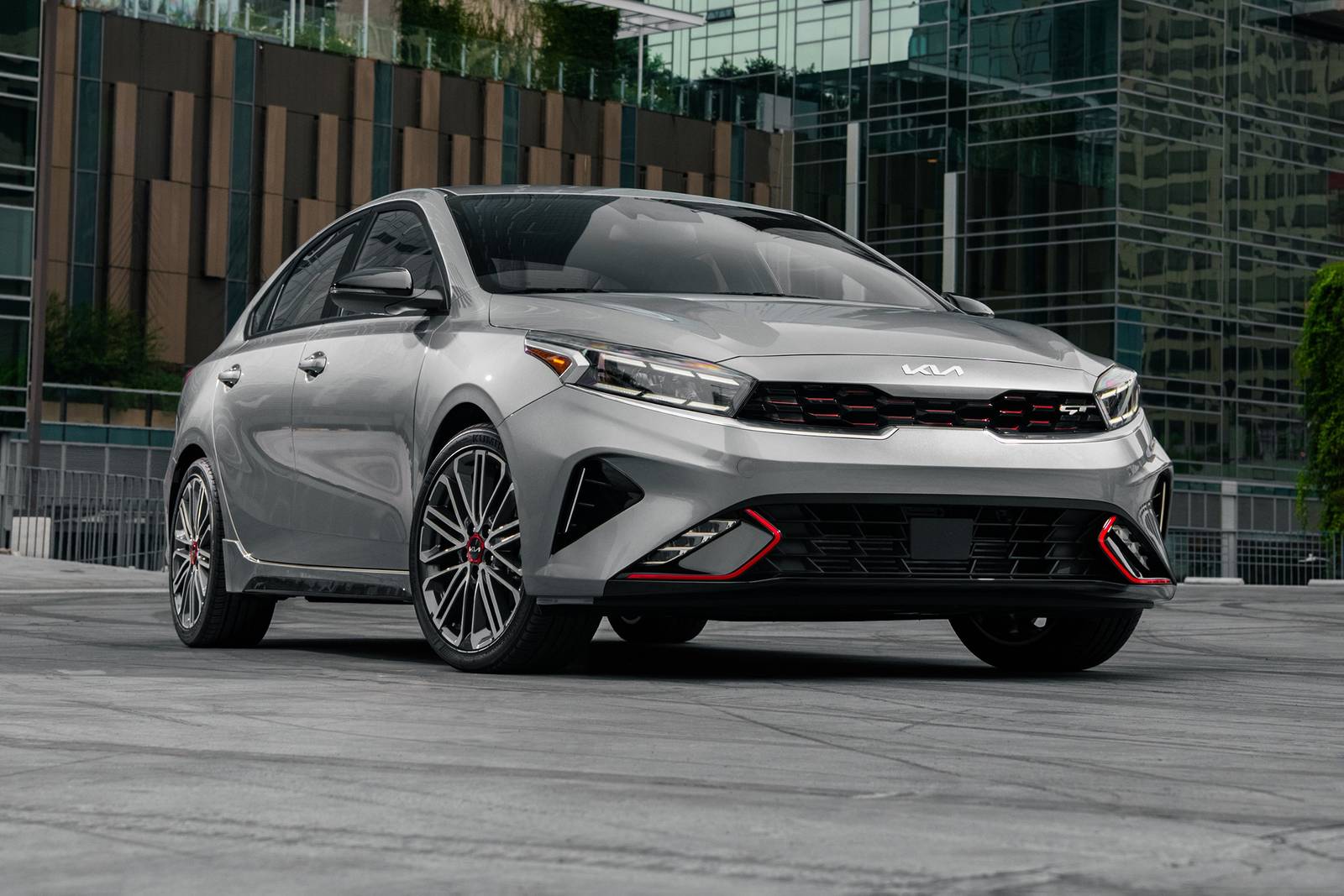
The Forte GT surprises drivers with its quick throttle response and sporty tuning. It’s not a hardcore performance car, but the pedal feel is sharp, making everyday acceleration feel more engaging than most compact sedans.
Because it flies under the radar, used Forte GTs are often very affordable, sometimes below $17,000, while still offering modern tech and warranty coverage on newer examples.
You don’t need supercar money, or even V8 power, to enjoy great throttle response. Many of these cars prove that smart engine tuning, lighter weight, and thoughtful pedal mapping matter just as much as headline horsepower.
For US buyers shopping used, these models offer an excellent blend of affordability, practicality, and that addictive “instant go” feeling every time you press the accelerator.
