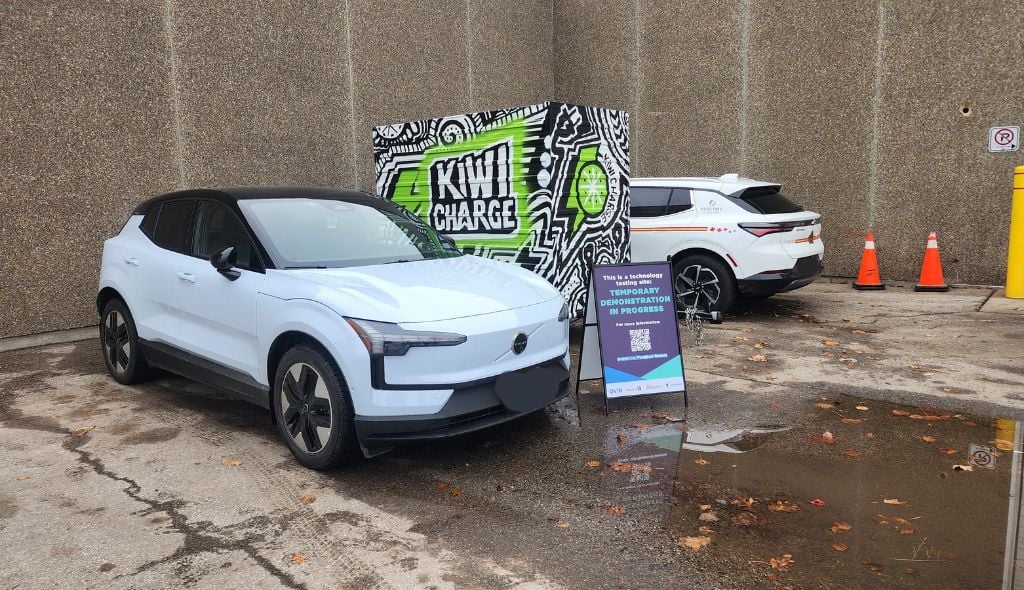
Kiwi Charge has secured $1.7 million in combined public and private funding to advance the development of autonomous, mobile EV charging robots aimed at multi-tenant residential buildings and automotive dealerships across Ontario.
Canadian robotics startup Kiwi Charge has launched an autonomous electric vehicle charging initiative supported by $1.7 million in total funding.
The Ontario Vehicle Innovation Network (OVIN) provided a $500,000 grant through its R&D Partnership Fund, while industry partners General Motors Canada and Pfaff Automotive contributed the remaining $1.2 million.
The company plans to debut its latest autonomous charging robot at the Canadian International AutoShow, running from February 13–22, alongside Project Arrow, Canada’s first zero-emissions concept vehicle.
Kiwi Charge has raised $1.7 million in combined public and private funding to develop mobile, AI-driven EV charging robots for residential buildings and dealerships.
The autonomous systems are designed for multi-tenant properties, where an estimated 30% of urban EV owners lack access to fixed charging infrastructure.
By relying on mobile robots rather than hardwired installations, the technology avoids costly electrical upgrades.
Kiwi Charge will showcase its latest prototype at the Canadian International AutoShow in February 2025.
In urban areas, approximately 30% of EV owners live in multi-tenant buildings, where installing permanent charging stations often requires expensive electrical retrofits.
Kiwi Charge’s solution blends robotic mobility, AI-based fleet intelligence, and on-demand charging into compact autonomous units.
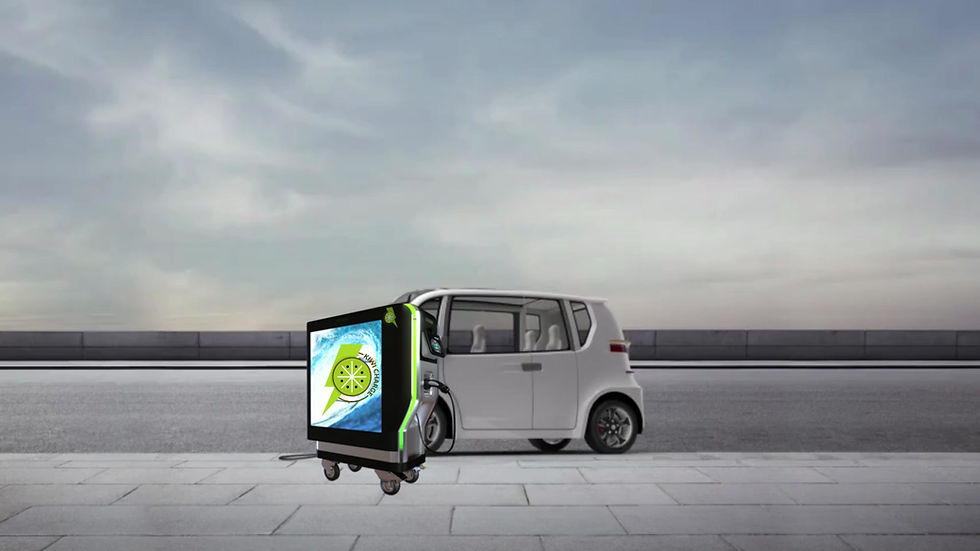
These mobile chargers function without rewiring parking garages and can dynamically serve multiple vehicles, improving utilization while helping to reduce strain on the electrical grid.
According to the company, its approach can electrify older buildings at roughly 40% of the cost associated with traditional fixed-charger installations.
The newly secured funding will be used to accelerate prototyping and testing of its flagship autonomous units, as well as to support pilot programs with real estate owners and automotive dealership partners.
In addition to residential use cases, Kiwi Charge is developing a manually operated mobile charging unit tailored for automotive dealerships.
This system is intended to keep EV inventory charged across busy sales lots without interrupting daily operations. The company says the objective is to improve vehicle turnover efficiency and simplify dealership fleet management.
The initiative draws on Ontario’s expanding AI and automotive innovation ecosystem to speed development. Kiwi Charge CEO Abdel Ali said support from OVIN and industry partners provides the foundation needed to bring the technology to market more quickly.
Regan Dixon, Senior Manager at the Canadian Technical Centres for GM Canada, said the investment underscores the automaker’s commitment to supporting the automotive startup ecosystem.
Dixon noted that GM’s involvement is aimed at encouraging broader EV adoption and improving the overall ownership experience.
Raed Kadri, Head of OVIN, said Ontario remains focused on helping homegrown companies accelerate next-generation EV charging solutions.
Claudia Krywiak, President and CEO of the Ontario Centre of Innovation, described Kiwi Charge as a clear example of the province’s momentum in electric and autonomous vehicle technologies.
Also Read: Top 10 Used Muscle Cars That Still Offer Heart-Pounding Performance