
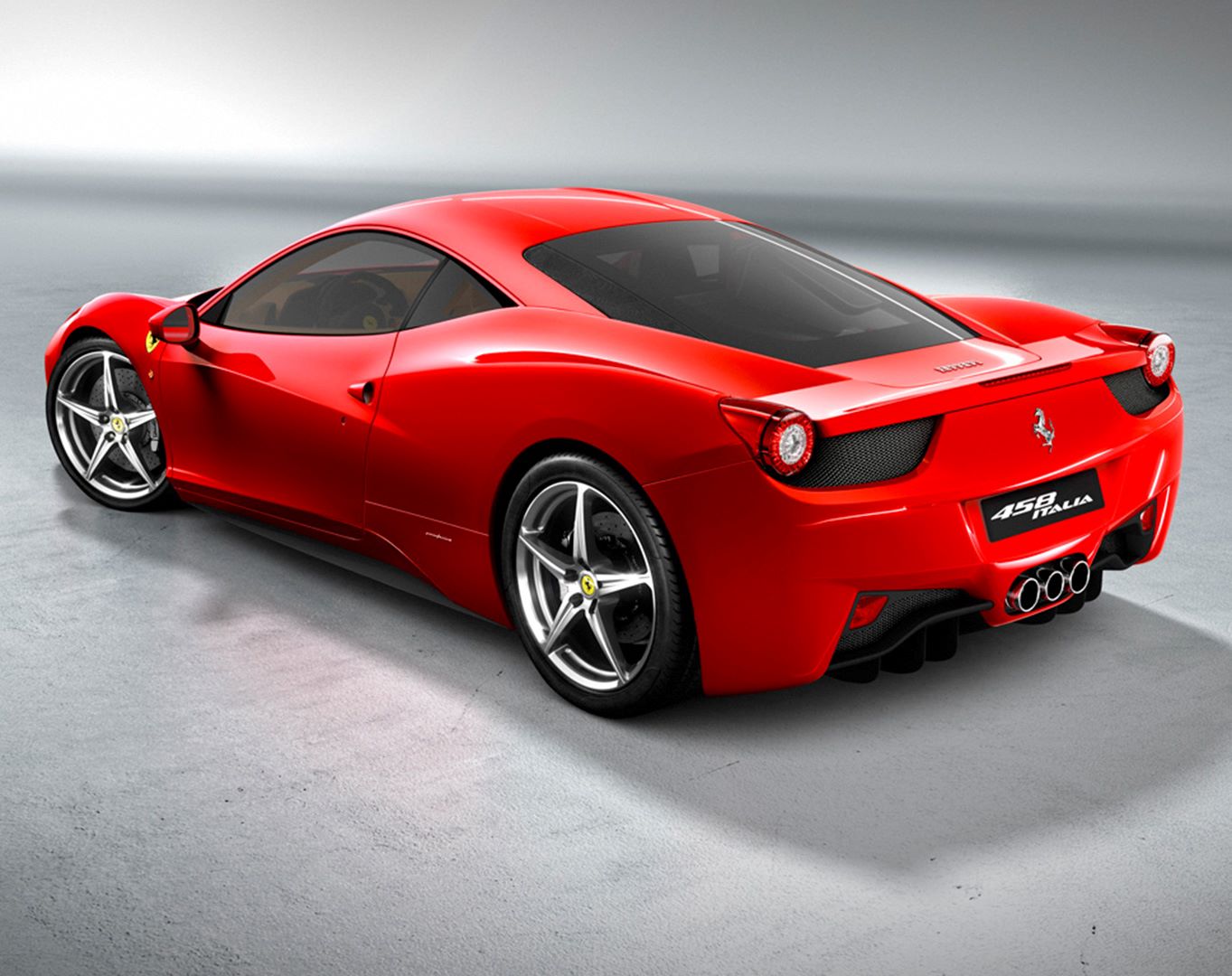
For decades, car enthusiasts treated exhaust systems as one of the easiest places to modify a vehicle’s personality. Louder, sharper, deeper, aftermarket setups promised instant drama.
But in recent years, something interesting has happened: manufacturers themselves have started investing enormous engineering effort into how their cars sound from the factory.
This isn’t accidental. Modern emissions rules, noise regulations, and electrification pressure mean authentic engine sound is becoming rarer.
When automakers do get it right, it’s usually the result of painstaking acoustic tuning, specialized headers, intake resonance mapping, and sometimes even exotic materials.
These aren’t just pipes bolted on, they’re carefully designed systems meant to complement the engine’s character.
For US buyers especially, where muscle cars meet European performance machines and Japanese legends coexist, some factory exhaust notes have become cultural touchstones.
These are the cars whose stock soundtracks are so well executed that changing them often feels like erasing part of their identity.
Here are ten cars whose factory exhaust notes deserve preservation.
1. Lexus LFA
The LFA remains one of the most acoustically celebrated cars ever built, and for good reason. Its naturally aspirated 4.8-liter V10 revs to 9,000 rpm and was co-developed with Yamaha’s musical instrument division.
That collaboration wasn’t marketing fluff; Yamaha literally tuned the intake and exhaust harmonics like an instrument.
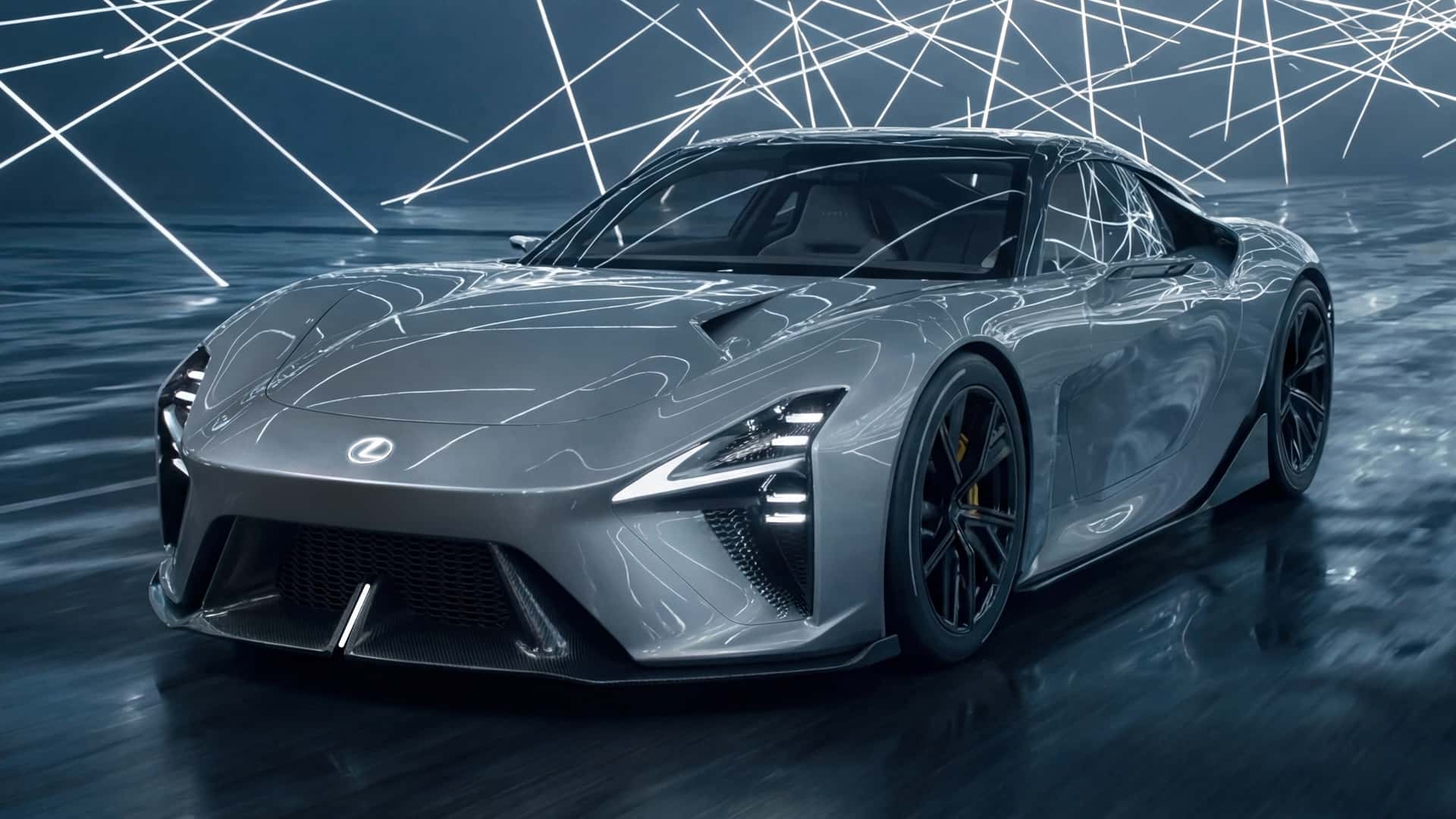
What makes the LFA special is how quickly it climbs through the rev range and how cleanly it transitions from a metallic growl into a Formula One–like scream. Titanium exhaust components keep mass low while preserving razor-sharp clarity at high rpm.
In the US market, where most supercars rely on turbocharging, the LFA stands apart. Modifying its exhaust usually sacrifices tonal balance for volume. Stock, it’s already perfect.
Toyota’s much-anticipated GR GT is expected to dominate attention today, given that it is effectively a near-production 641-horsepower V-8 sports car. However, Lexus has also confirmed that a new LFA is in development.
This forthcoming model will share the same fundamental architecture as the GR supercar but will be powered entirely by an electric drivetrain. In practical terms, it represents a production iteration of the Lexus Sport Concept revealed earlier this year.
Concrete specifications remain scarce. The LFA Concept made its debut alongside the GR GT during an event held near Fuji Speedway in Japan, yet Lexus has not disclosed any technical details about the electric powertrain beyond confirming that it will be fully battery-powered.
The company has stated that the vehicle will adopt the same aluminum body structure as its GR counterpart. The close engineering relationship between the two models prompts questions about how the battery pack will be packaged.
The most plausible configuration appears to be a “T-shape” battery layout, likely occupying the space used by the engine bay and transmission tunnel in the internal combustion version.
The tight linkage between the two vehicles is further underscored by one of the limited specifications Lexus has provided: a 107.3-inch wheelbase, matching that of the GR GT exactly.
2. Porsche 911 GT3
The modern GT3 is one of the last high-revving naturally aspirated performance cars sold in America. Its 4.0-liter flat-six doesn’t chase brute loudness, it delivers mechanical precision.
Porsche engineers design the exhaust to emphasize induction noise, valve train texture, and the unique boxer rhythm.
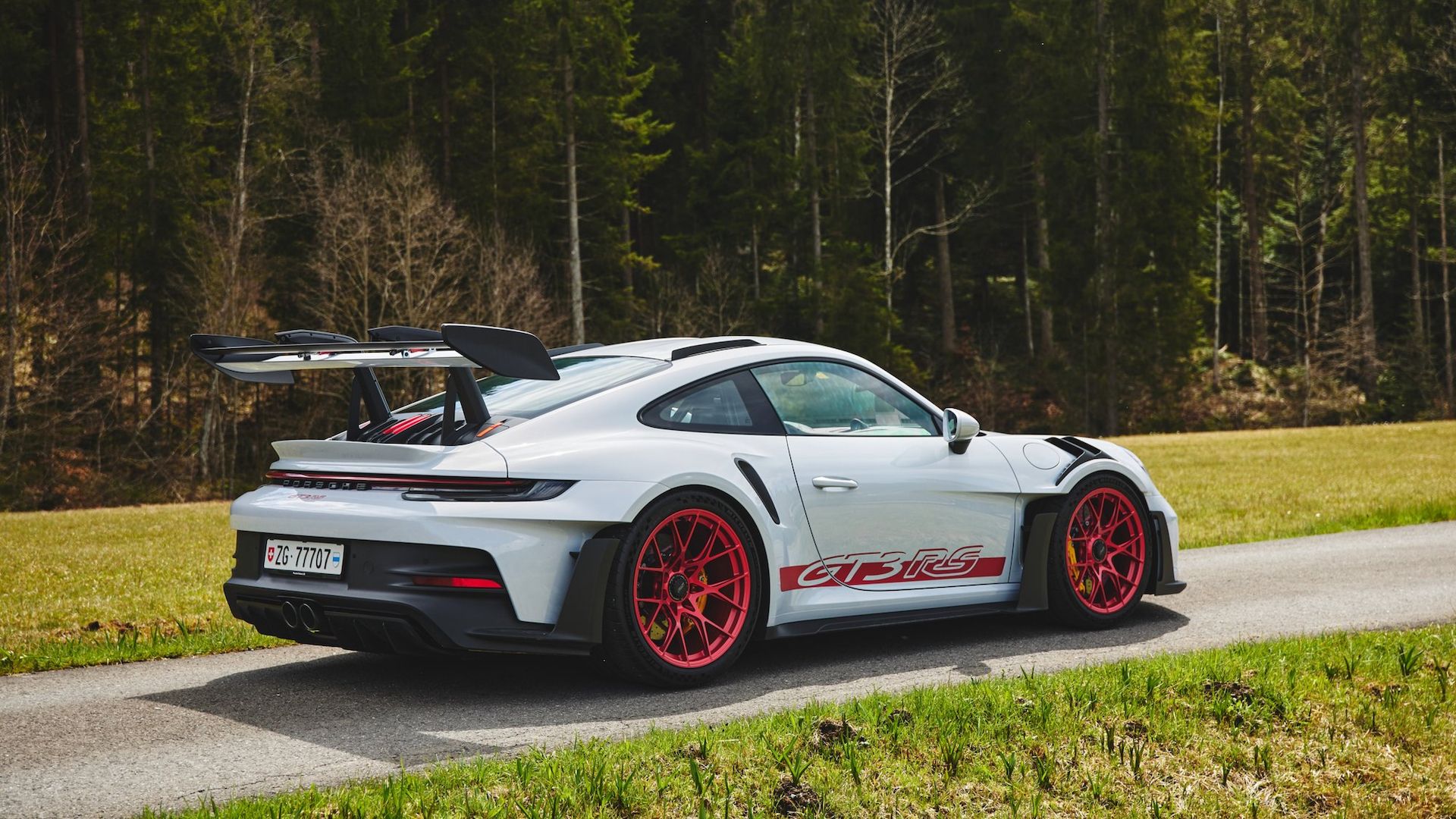
From idle chatter to an 9,000-rpm redline howl, every frequency feels intentional.
For track-day drivers in the US, this matters. Many aftermarket systems trigger drone on highways or fail sound limits at circuits. The factory setup manages to be aggressive at speed and civilized on long drives, an incredibly hard balance to achieve.
3. Ferrari 458 Italia
Before turbocharging took over Ferrari’s lineup, the 458 Italia represented the peak of naturally aspirated V8 expression.
Its flat-plane crank V8 produces a piercing, motorsport-derived wail that builds intensity with every gear change.
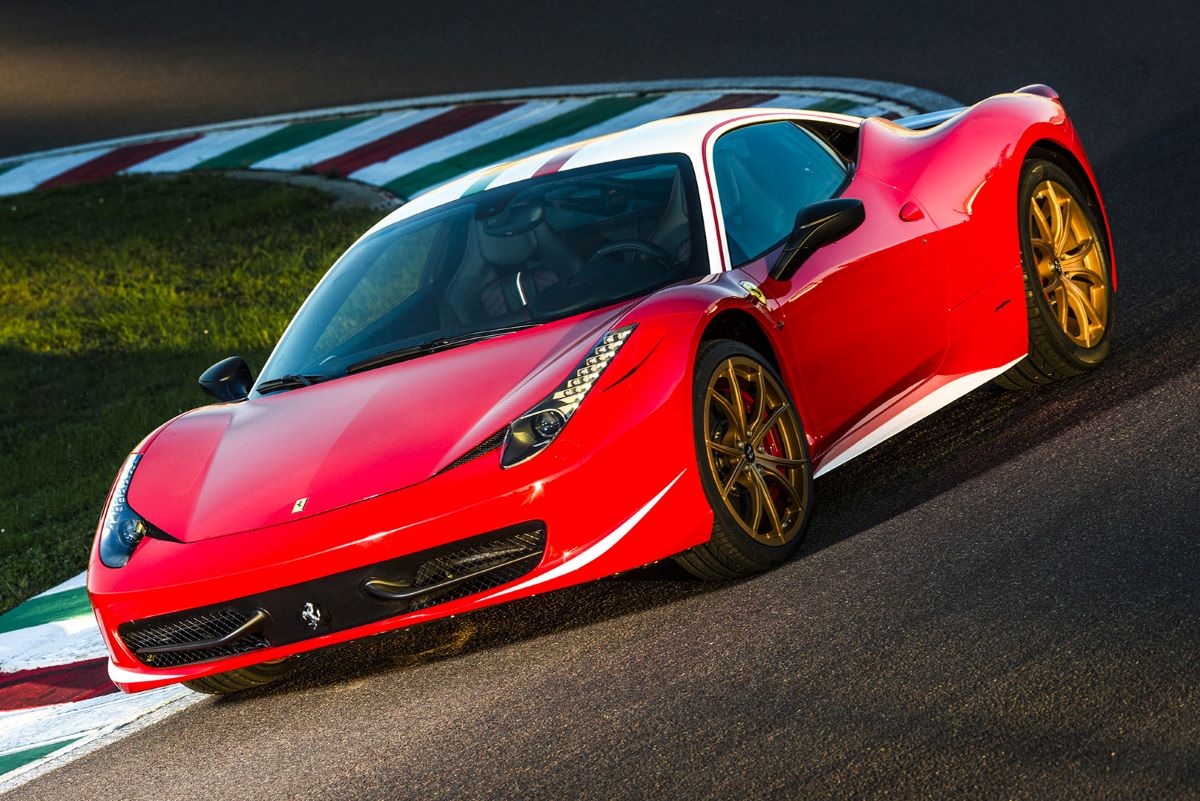
Unlike many V8s that emphasize low-end rumble, the 458 thrives on upper-rpm theatrics. The factory exhaust preserves this character without introducing harshness or artificial pops.
In the US used market, clean 458 examples are becoming collectibles largely because they represent a disappearing era. Swapping the exhaust might add volume, but it rarely improves what’s already one of Maranello’s finest soundtracks.
Styled by Pininfarina, powered by a naturally aspirated V8 mounted just behind the cabin and delivering a genuinely electrifying driving experience, the Ferrari 458 Italia stands as the defining supercar of the early 2010s.
The F430’s successor is so accomplished that used values have remained resilient, which is precisely why now is the time to buy before it achieves full modern classic recognition and transitions into a prohibitively expensive collector’s piece.
Admittedly, those newer models deliver greater power outputs and superior acceleration figures on paper, yet the 458 remains capable of running them close. Crucially, because it predates the hybrid era, it offers a raw, sensory-rich experience that contemporary alternatives struggle to replicate.
A 0-62mph sprint of 3.3 seconds and a 210mph top speed confirm that it is still exceptionally fast. Its Getrag-developed dual-clutch transmission complements the charismatic 4.5-litre V8 perfectly, producing 542bhp and 398lb ft of torque.
Eighty percent of the Ferrari’s peak power is available from just 3250rpm, though drivers are unlikely to shift that early given that this high-revving V8 pulls relentlessly to 9000rpm
While the sensational V8 and crisp transmission provide theatre in abundance, it is the 458’s chassis balance and dynamic precision that confirm its status as a genuine driver’s car, and one markedly more refined than some of Ferrari’s more affordable predecessors.
Regardless of whether the dampers are set to ‘bumpy road’ mode (a useful feature on Britain’s uneven surfaces), body control remains taut and composed. The steering, though light and quick, delivers accurate feedback and clear communication.
The 458 exhibits exceptional agility, rivalled only by the Noble M600, yet the Ferrari rides with notably greater compliance.
Braking performance is equally formidable, courtesy of carbon-ceramic discs supplied by Brembo. Owners should nevertheless be prepared to allocate around £10,000 when replacement becomes necessary.
High-mileage examples can be found for under £100,000, but increasing the budget to approximately £125,000 broadens the selection significantly, offering more varied colour schemes, interior finishes and cars supported by a full main dealer service history.
For those intending to spend substantial time on circuit, carbon bucket seats and Alcantara trim are advisable. Conversely, it is wise to avoid exterior carbon elements if possible, as stone chips and debris can result in costly repairs.
Buyers seeking a more grand touring character should opt for leather upholstery and comfort seats. Enthusiasts drawn to open-top motoring will likely favour the 458 Spider, which commands a modest premium over the coupé.
Whichever variant you choose, the 458 represents a landmark supercar that has depreciated to comparatively attainable levels, making it difficult to ignore.
Why not secure this indulgent Ferrari, programme the sat-nav for the North Coast 500 and savour its capabilities all the way to John O’Groats.
4. Chevrolet Corvette Z06
America’s supercharged monster brings something different: raw, muscular authority. The C7 Z06’s LT4 V8 combines deep bass at idle with an explosive roar under throttle.
Chevrolet tuned the factory performance exhaust with active valves, allowing the car to behave politely in Touring mode and transform into a full-blown muscle car in Track mode.
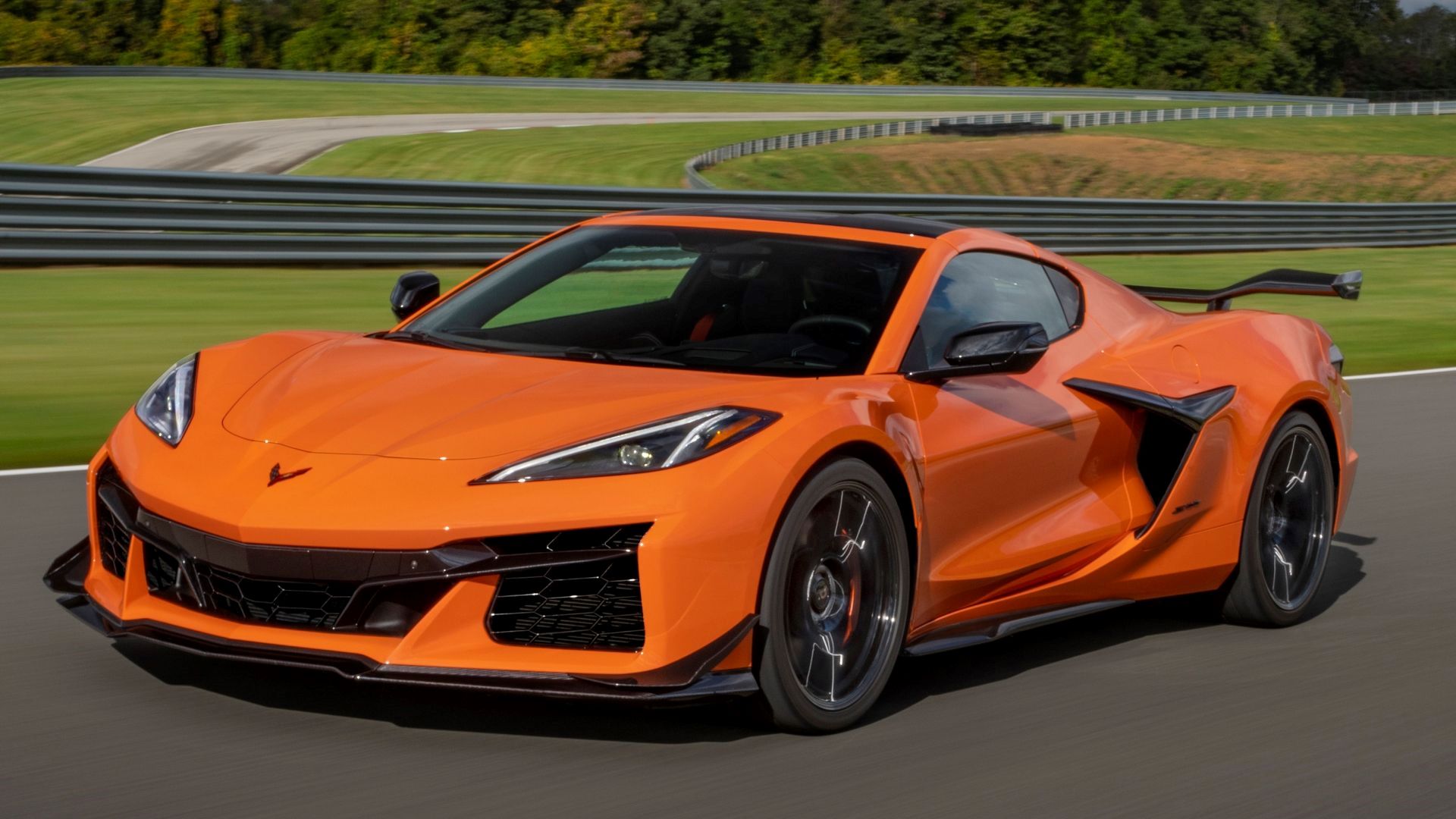
This adaptability makes it one of the best stock exhaust systems ever fitted to a US performance car.
Owners often chase louder setups, but many eventually return to stock because it delivers power, presence, and daily livability in one package.
5. Dodge Challenger SRT Hellcat
The Hellcat doesn’t whisper. Its supercharger whine layered over a thunderous V8 exhaust note defines modern American excess.
What’s impressive is how Dodge preserved classic muscle-car aggression while integrating contemporary valve control.
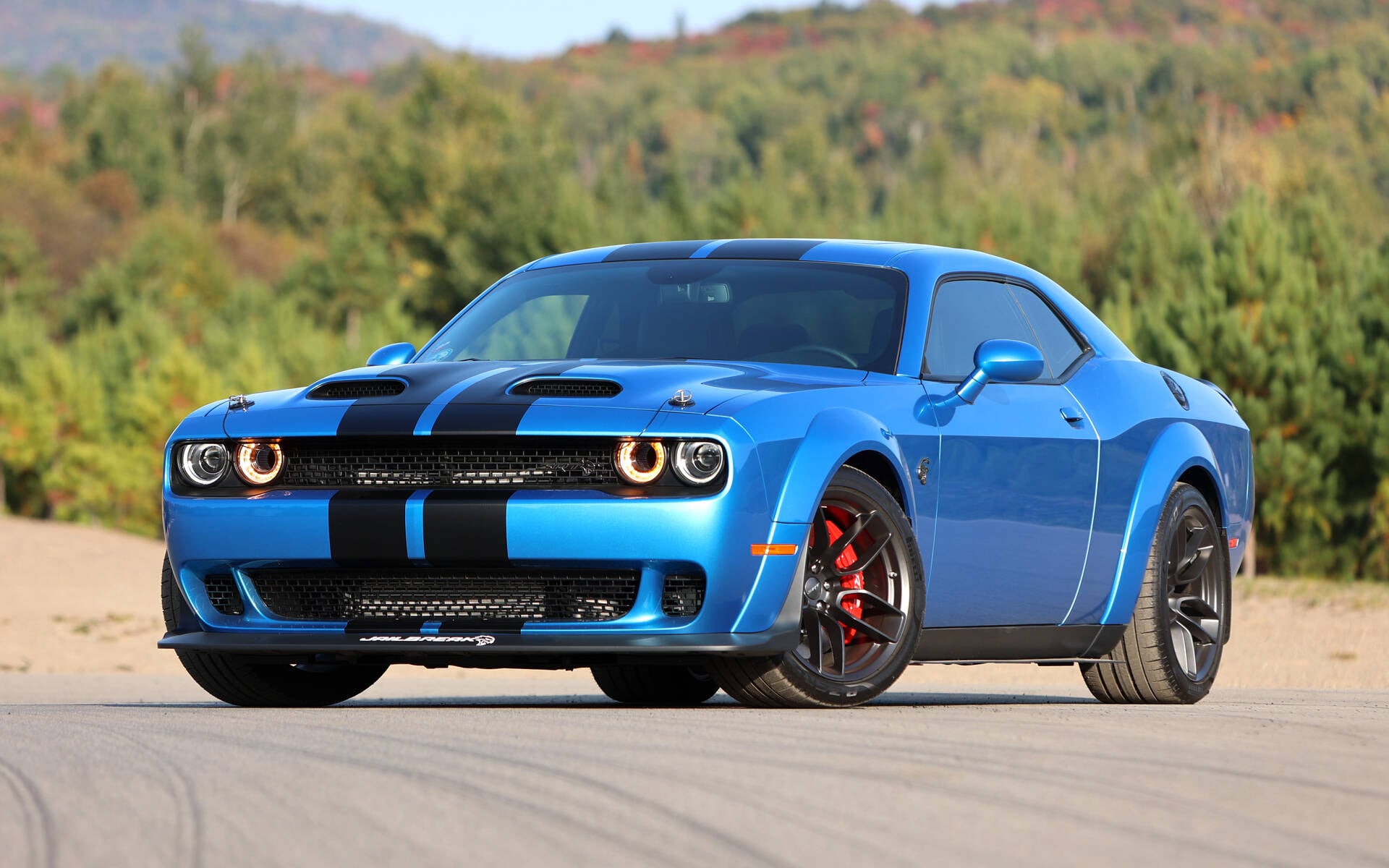
At full throttle, it sounds apocalyptic. At cruising speeds, it settles down enough for real-world commuting.
In the US, where straight-line performance culture thrives, the Hellcat’s factory exhaust already delivers the drama buyers want, no aftermarket needed.
The Dodge Challenger SRT Hellcat is a machine seemingly engineered to annihilate rear tires. It stands among the final coupes to carry unapologetic American V-8 muscle beneath its hood.
Even the most restrained variant in the Challenger SRT Hellcat range produces a formidable 717 horsepower from its supercharged 6.2-liter V-8. Yet that is only the starting point.
In the Hellcat Redeye, output from the same basic engine climbs to 797 horsepower. At the top of the hierarchy sits the most extreme iteration, the Hellcat Redeye Widebody Jailbreak, delivering 807 horsepower.
Every Challenger SRT Hellcat variant pairs its prodigious output with either a six-speed manual gearbox or an eight-speed automatic transmission.
Power is sent exclusively to the rear wheels, a layout that readily transforms its enormous 12-inch-wide rear tires into plumes of smoke at the slightest provocation.
Although high-performance competitors such as the Chevrolet Camaro ZL1 and the Ford Mustang Shelby GT500 are better suited to road-course precision, the SRT Hellcat is imbued with the spirit of a prepped drag strip.
Its strengths lie in straight-line acceleration, delivered in overwhelming measure. More conventional versions of the Challenger, including all-wheel-drive, V-6, and smaller V-8 models, are evaluated separately.
6. BMW M3
BMW’s only V8-powered M3 remains beloved not just for its performance, but for its sound. The E92’s 4.0-liter naturally aspirated engine revs freely and produces a refined yet aggressive tenor that feels distinctly German.
Unlike many turbocharged successors, this M3 communicates every throttle input through sound. The factory exhaust avoids rasp and emphasizes midrange clarity, making it enjoyable on back roads and highways alike.
As E92 values rise in America, originality including exhaust, has become part of its appeal.
Like the latest M4 coupe, the M3 sedan is powered by a twin-turbocharged 3.0-liter inline-six engine. In standard form, it delivers 473 horsepower and 406 pound-feet of torque exclusively to the rear wheels, with a six-speed manual serving as the sole transmission option.
The M3 Competition raises output to 503 horsepower and 479 pound-feet of torque, but it is available only with an eight-speed automatic gearbox. Rear-wheel drive is standard on the Competition model, though buyers can opt for an all-wheel-drive system that incorporates a selectable rear-drive mode.
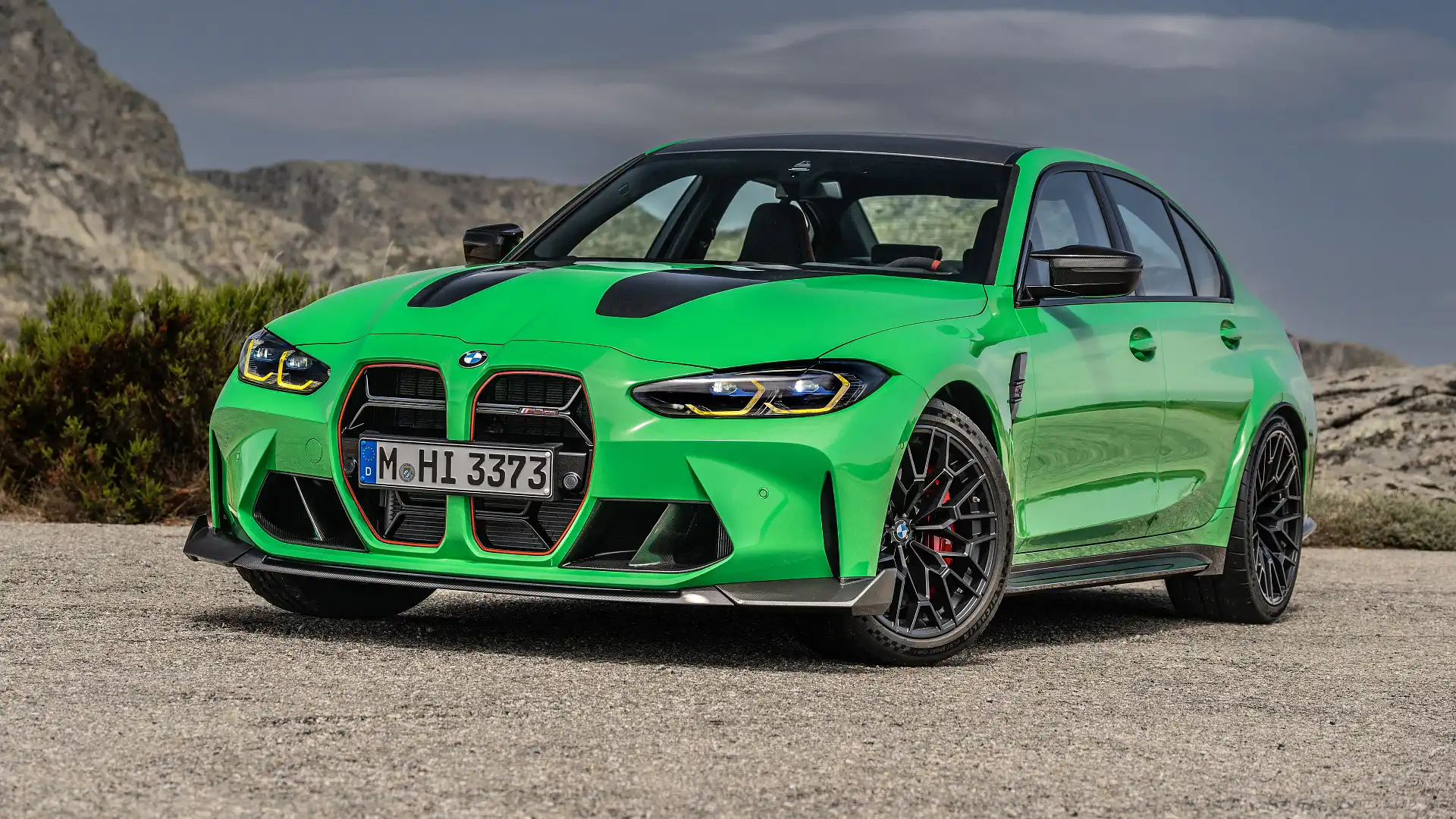
Every M3 variant comes equipped with adaptive dampers and a configurable brake-pedal feel. Buyers can also specify upgraded carbon-ceramic brakes, distinguished by their gold-painted calipers and enhanced stopping capability.
During our initial drive of both the standard M3 and the Competition version, each demonstrated an eagerness to execute dramatic drifts, a trait amplified by the available M Drift Analyzer included in the M Drive Professional package.
The manual transmission impressed with its precise and satisfying gear changes, while the engine delivered relentless, forceful acceleration.
That said, when measured against the more visceral Alfa Romeo Giulia Quadrifoglio, the M3 falls slightly short in terms of fully immersing the driver. At our test facility, a long-term M3 equipped with rear-wheel drive and the six-speed manual achieved a 0–60 mph time of 3.9 seconds.
For those prioritizing outright straight-line performance, the M3 Competition with the eight-speed automatic is the superior choice, recording a remarkable 2.8-second sprint from zero to 60 mph in our testing.
7. Ford Mustang Shelby GT350
Ford’s flat-plane-crank Voodoo V8 gives the GT350 a European-style scream wrapped in an American pony car body.
The factory active exhaust was engineered to showcase this unique firing order, producing a high-frequency howl uncommon in domestic performance cars. It’s one of the rare Mustangs where the stock setup already feels motorsport-inspired.
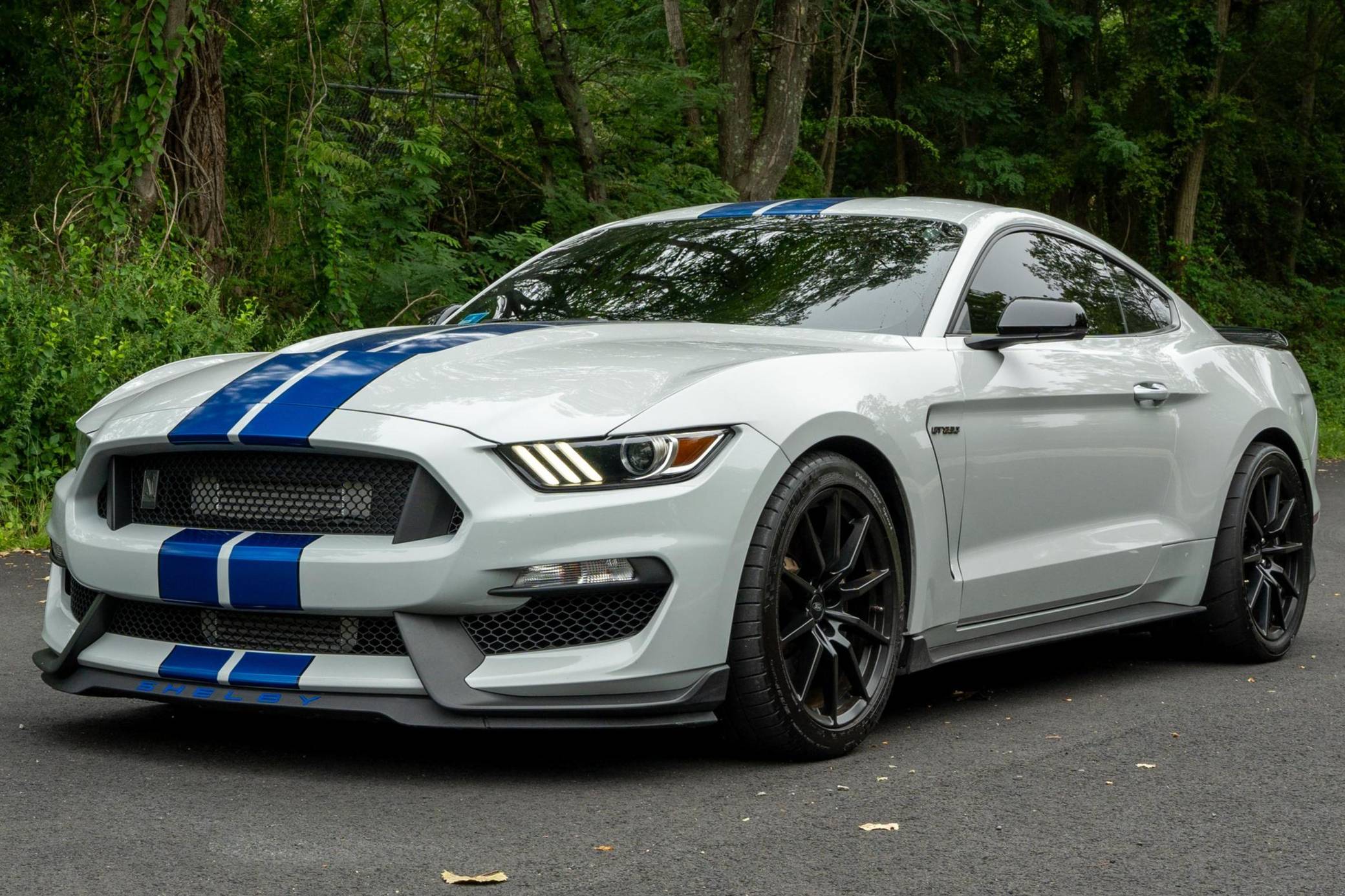
For US buyers who track their cars, keeping the factory system often means fewer noise complaints and better reliability, another reason it’s worth preserving.
Equally unforgettable is the ferocious soundtrack produced by Ford’s high-revving, 526-horsepower V-8, internally known as Voodoo. Mastering this engine demands patience and persistence, much like acquiring an intricate skill.
Its naturally aspirated design and pronounced power peak render it relatively subdued at lower engine speeds. Once past 4000 rpm, however, acceleration intensifies dramatically, building in a forceful surge all the way to its 8250-rpm redline.
The six-speed manual transmission complements the engine’s character, engaging each gear with mechanical precision and rewarding drivers who work methodically through the ratios.
The clutch pedal is light and progressive, offering smooth feedback without fatiguing the driver’s left leg during congested driving conditions.
In our evaluations, the GT350 accelerated from zero to 60 mph in 4.2 seconds, while the more track-focused R variant improved slightly on that figure at 3.9 seconds.
Both remain marginally behind the most powerful versions of the Chevrolet Camaro and Dodge Challenger in straight-line performance, yet they compete effectively with other premium rivals in their segment.
The Shelby GT350 pairs its electrifying exhaust note and exceptional circuit capability with a level of day-to-day usability that may surprise some drivers.
Strong mechanical grip, formidable braking performance, and communicative steering combine to deliver a cohesive and deeply engaging driving experience.
Across all variants, the Shelby’s chassis stands out for its balance and approachability, allowing drivers to explore its dynamic limits with confidence.
The electrically assisted steering feels most composed on smooth pavement at virtually any speed, though it can become unsettled over rough surfaces, where minor directional corrections may feel abrupt.
The brake pedal in our GT350 test vehicle required acclimatization, as its sharp initial bite delivered an aggressive response that felt overly sensitive in urban conditions. At higher speeds, however, that same immediacy translated into reassuring stopping performance.
8. Alfa Romeo Giulia Quadrifoglio
This Italian sports sedan blends turbocharged force with emotional delivery. Its Ferrari-derived V6 produces a sharp bark on upshifts and a rich growl under load.
Alfa tuned the factory exhaust to complement aggressive throttle mapping and rapid-fire gear changes. It feels alive in Dynamic mode without becoming tiring on long freeway drives.
Among luxury sport sedans sold in the US, few offer this level of personality straight from the showroom.
On this occasion, however, the dry mountain roads near Malibu provided proper conditions, and the QV delivered exactly the level of performance I had anticipated.
Paired with its exceptionally quick steering, the firm suspension setup and substantial Pirelli performance tires (245/35ZR19 at the front and 285/30ZR19 at the rear) generated tremendous grip and sharp turn-in response. Understeer is virtually absent, due in part to the torque-vectoring rear differential.
Even with the Pro Drive Mode selector set to Dynamic, the second-most aggressive setting, it is possible to coax the rear into oversteer, aided by the chassis balance and the engine’s considerable power output.
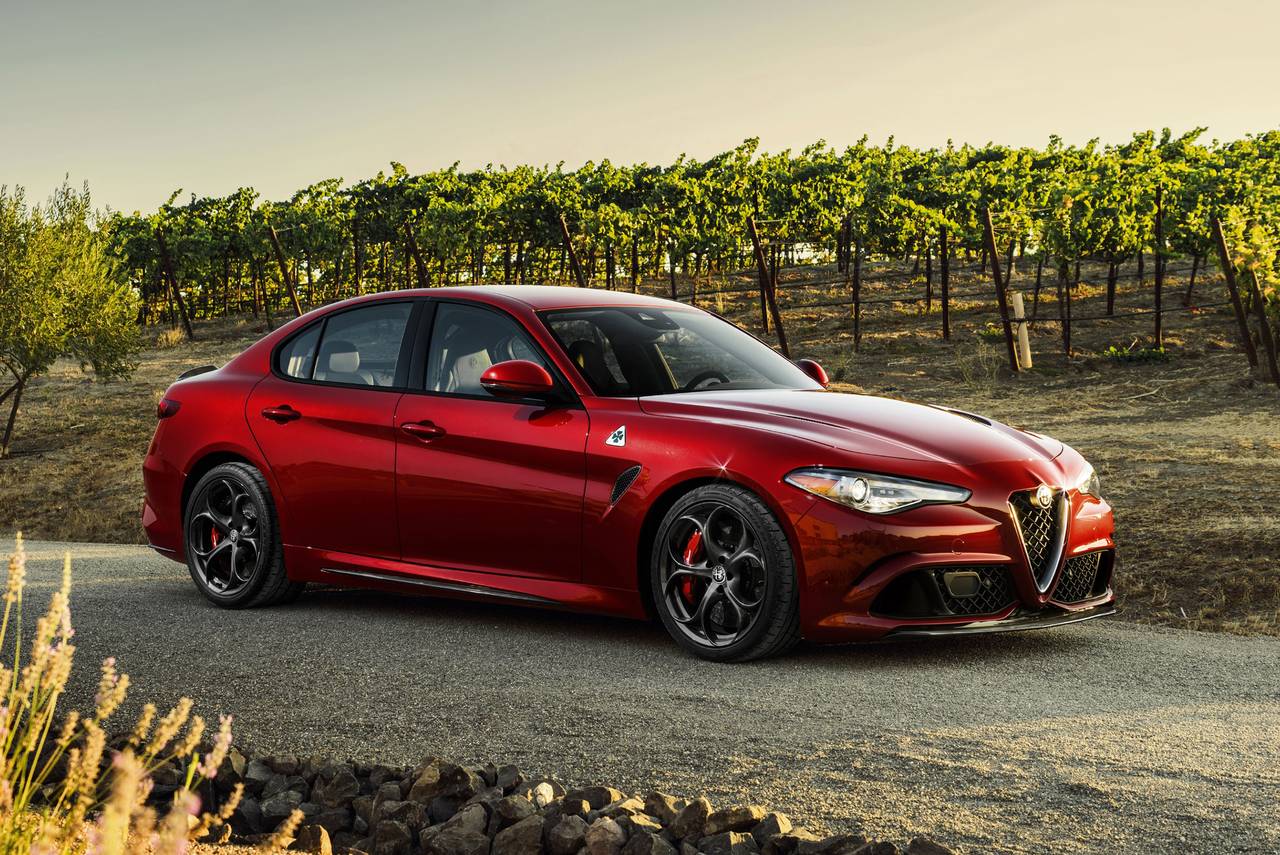
Selecting Race mode, which disables stability control systems, quickly reveals how demanding the QV can become at the limit. That setting is best reserved for track environments. Public roads are no place for sustained sideways antics.
After repeated hard runs along Southern California’s winding asphalt, the brakes maintained consistent performance throughout. The Giulia QV’s braking capability rivals that of a Porsche, which is notable given its nearly two-ton curb weight.
Such braking performance is essential, because the QV accelerates with remarkable urgency. Its twin-turbocharged 2.9-liter V-6, derived from Ferrari engineering and conceptually similar to the 488GTB’s V-8 with two cylinders removed, produces an extraordinary 174 horsepower per liter.
The compact six-cylinder delivers output well beyond what its displacement suggests. Alfa Romeo cites a 0-to-60-mph time of 3.8 seconds, a claim that aligns with the car’s real-world performance.
Turbo lag is minimal; throttle application builds boost rapidly, and the engine responds with an immediate surge that propels the car toward the next corner in a vivid blur of Rosso Competizione paint ($2,200) and the distinctive wail of its quad exhaust system.
9. Jaguar F-Type R
Jaguar leaned unapologetically into drama with the F-Type R. Its factory exhaust delivers thunderous crackles on downshifts and a deep V8 roar that feels theatrical in the best way.
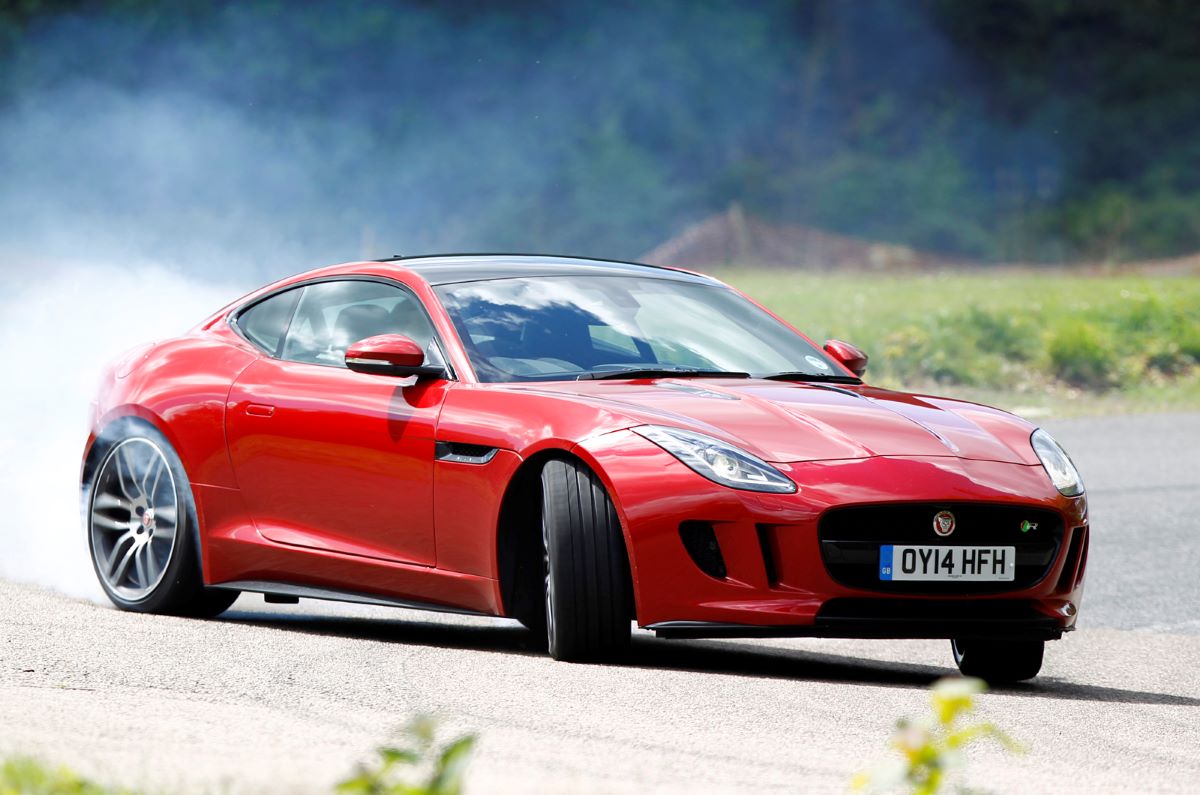
While some criticize its volume, that boldness is exactly what makes it special. In an era of increasingly muted performance cars, Jaguar chose emotion over restraint, and many US buyers appreciate that decision.
Beneath its bonnet, the F-type R houses a supercharged 5.0-liter V-8 producing an imposing 550 horsepower and 502 lb-ft of torque.
Opting for the SVR specification elevates performance further, with the uprated V-8 delivering 575 horsepower and 516 lb-ft of torque. Across the range, an eight-speed automatic transmission distributes power to all four wheels.
In our circuit testing, the F-type R coupe accelerated from zero to 60 mph in 3.4 seconds.
While that figure is undeniably strong, it falls slightly behind benchmarks set by the Mercedes-AMG GTS and the 2020 Porsche 911 Carrera S, both of which completed the sprint in 3.0 seconds.
With responsive, communicative steering, the F-type R and SVR provide a substantial dose of driver engagement and prove rewarding on twisting roads.
However, when evaluated against their well-regarded German competitors, their overall chassis refinement is less cohesive, gearshifts lack the same immediacy, and the ride can become harsh over imperfect surfaces.
10. Mazda RX-7
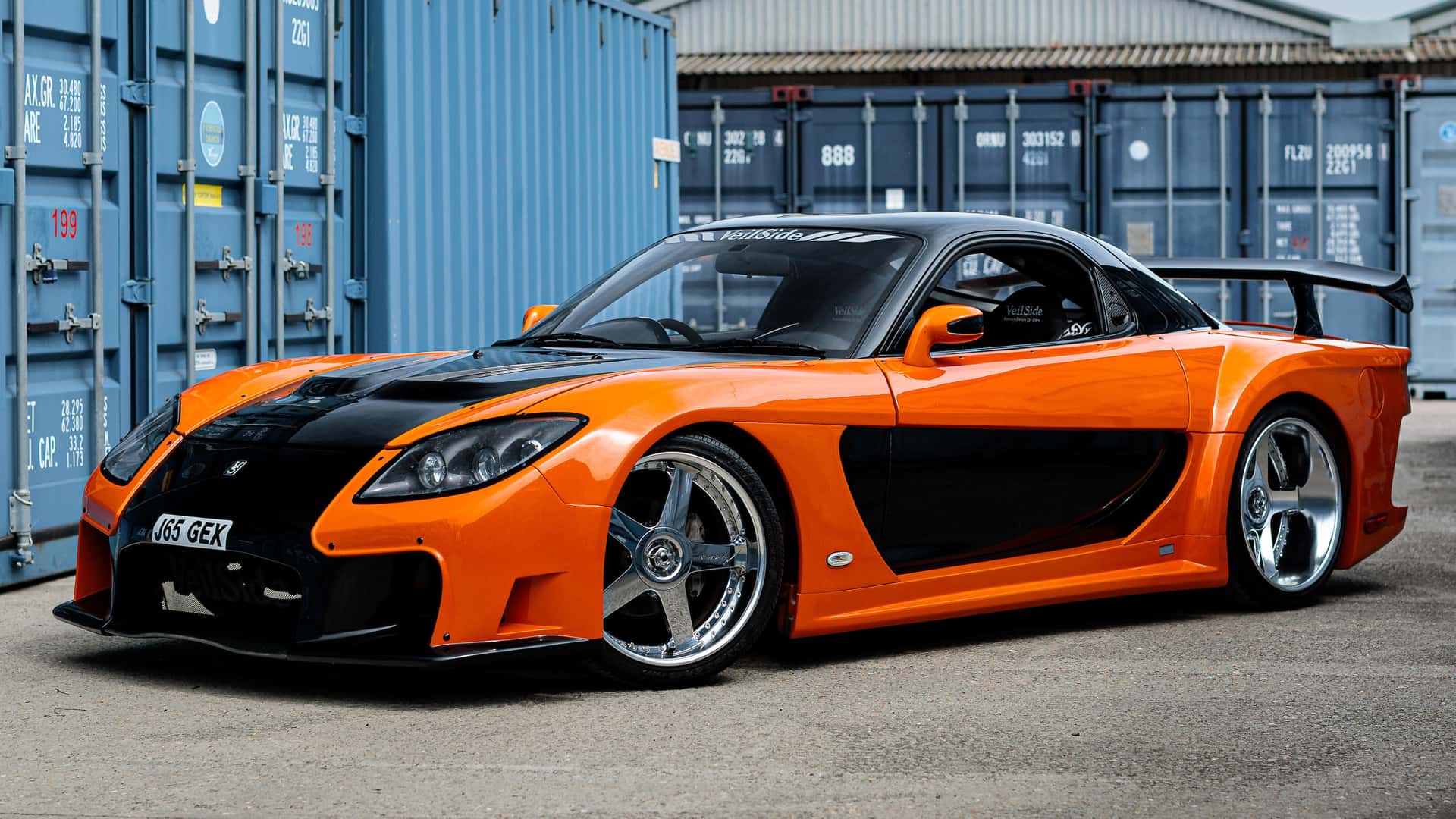
The rotary-powered RX-7 produces a sound unlike any piston engine: smooth, high-pitched, and almost turbine-like.
Mazda’s factory exhaust emphasized this uniqueness, allowing the sequential twin turbos to sing without overwhelming rasp.
In the US tuner scene, many RX-7s were heavily modified, but untouched examples reveal how refined the original system actually was.
Today, surviving FD RX-7s with stock exhaust setups are rare, and increasingly appreciated.
Factory exhaust notes like these aren’t accidents. They’re the result of engineering discipline, brand identity, and careful acoustic tuning.
As emissions regulations tighten and electrification accelerates, cars with genuine mechanical voices are becoming scarce.
For US enthusiasts, preserving these factory soundtracks isn’t about resisting modification, it’s about recognizing when manufacturers already got it right. In many cases, changing these systems doesn’t enhance the experience. It dilutes it.
