
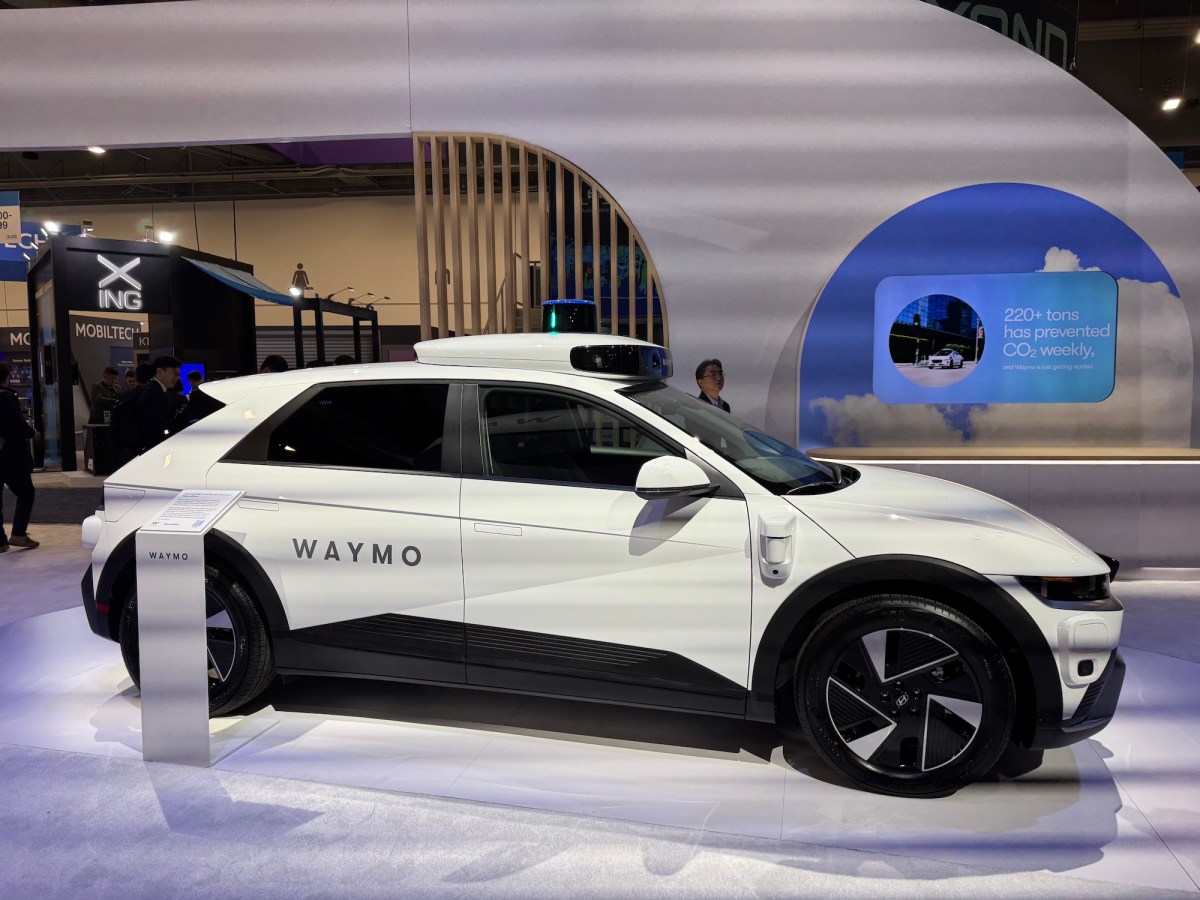
Hyundai Motor is reportedly in discussions to supply Waymo with 50,000 IONIQ 5 electric vehicles configured for autonomous operation by 2028.
If finalized, the agreement, estimated at approximately $2.5 billion, would signal a decisive shift toward industrial-scale deployment in the robotaxi sector.
According to Gasgoo, the vehicles would be manufactured at Hyundai’s Georgia-based Metaplant America (HMGMA) facility, dedicated to producing IONIQ 5 units for Waymo’s expanding fleet.
At an estimated transaction value of roughly $50,000 per vehicle, the arrangement would rank among the largest single vehicle procurement contracts in the history of autonomous mobility.
The reported scale of the order builds on groundwork laid in October 2024, when Hyundai and Waymo announced a multi-year strategic collaboration.
The objective was to integrate Waymo’s sixth-generation autonomous driving system, known as the Waymo Driver, into the Hyundai IONIQ 5 platform.
At that time, Hyundai Motor North America CEO Jose Munoz indicated that the HMGMA plant was prepared to allocate a meaningful number of vehicles for Waymo’s fleet operations.
The figure now being discussed, 50,000 units, clarifies what that commitment may entail in practical terms.
From a technical perspective, the IONIQ 5 represents a logical foundation for a robotaxi application. Built on Hyundai’s E-GMP architecture, it supports 800-volt fast charging, enabling a 10% to 80% recharge in approximately 18 minutes under optimal conditions.
For a commercial fleet designed to maximize utilization rates, minimizing charging downtime is operationally critical. Additionally, the 3,000mm wheelbase translates into a spacious passenger compartment, a relevant attribute in driverless service configurations.
The rationale for such a large order becomes clearer when examined in the context of Waymo’s current expansion trajectory.
Waymo recently secured a $16 billion funding round at a reported $126 billion valuation, the largest capital raise to date for an autonomous vehicle company.
The company intends to deploy that capital toward geographic expansion, targeting more than 20 additional cities this year, including international launches in Tokyo and London.
Operationally, Waymo is currently delivering in excess of 400,000 paid autonomous rides per week.
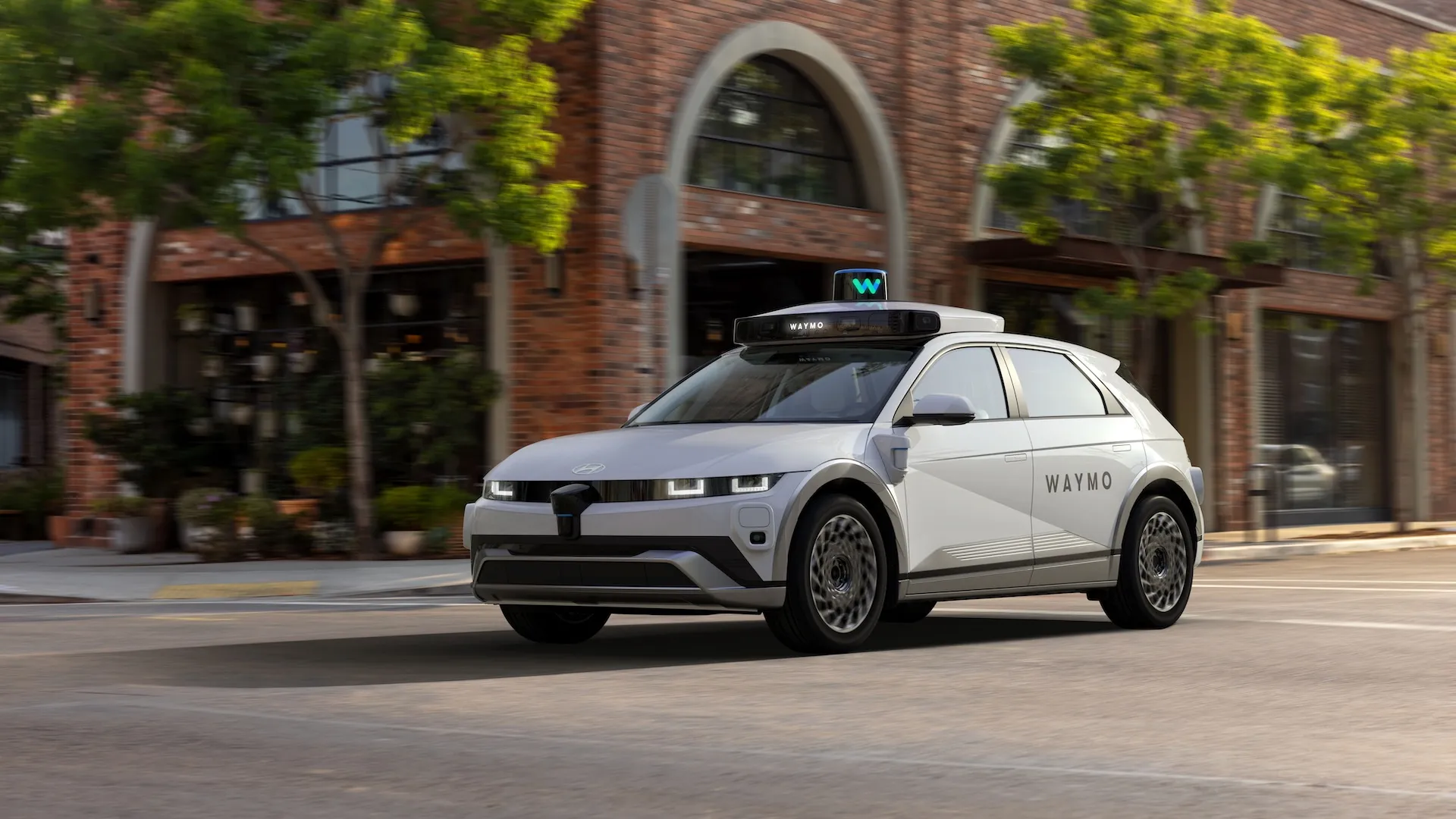
Despite that volume, its active fleet comprises roughly 2,500 vehicles, primarily based on the Jaguar I-PACE platform.
While Waymo has worked to expand its I-PACE fleet, Jaguar has discontinued production of the model, limiting its long-term viability as a scalable platform. This creates an immediate need for new manufacturing partners.
In addition to Hyundai, Waymo has aligned with Zeekr to develop the purpose-built “Ojai” robotaxi van. The Zeekr-built vehicles and the IONIQ 5 are expected to operate alongside the remaining I-PACE units.
However, should the 50,000-vehicle agreement materialize, the IONIQ 5 would likely serve as the high-volume backbone of Waymo’s fleet.
Waymo has methodically established partnerships with major global automakers.
In April 2025, it announced a collaboration with Toyota Motor Corporation to explore integrating the Waymo Driver into personally owned vehicles, an initiative that directly targets consumer-level autonomous offerings.
Meanwhile, several traditional automakers have distanced themselves from alternative autonomy platforms. Ford Motor Company CEO Jim Farley publicly dismissed discussions about licensing Tesla’s Full Self-Driving system, stating that Waymo’s approach “made more sense.”
Additionally, Tesla’s head of self-driving, Ashok Elluswamy, acknowledged that the company was “lagging a couple years” behind Waymo.
A high-volume supply agreement with Hyundai would further reinforce Waymo’s position as the autonomy partner of choice for established manufacturers navigating the transition toward driverless mobility.
Criticism from Tesla-aligned observers has often centered on scalability, arguing that while Waymo’s technology functions effectively, it lacks the ability to expand economically.
A 50,000-unit supply contract would materially weaken that argument.
Between the prospective Hyundai IONIQ 5 fleet, the Zeekr Ojai vans, the Toyota collaboration for consumer vehicles, and the $16 billion capital infusion, Waymo appears to be scaling across multiple dimensions simultaneously: fleet size, geographic footprint, vehicle architecture diversity, and potential retail applications.
Locating IONIQ 5 production at Hyundai’s Georgia facility offers additional strategic advantages. Domestic assembly positions the vehicles to qualify for U.S. manufacturing incentives while reducing exposure to tariff-related risks that could affect imported models such as the Zeekr-built vans.
The strategic question has shifted. The issue is no longer whether Waymo can scale operations to industrial levels. It is whether competing autonomous platforms can close the gap quickly enough to remain relevant.
Also Read: Top 11 Used RWD Cars Under $20K That Can Hang With a Chevelle
