Tencent Cloud has confirmed a new partnership with Tesla that will bring WeChat-linked functionality directly into Tesla vehicles sold in China.
The over-the-air software update will be deployed to more than one million Model 3 and Model Y units produced at Giga Shanghai.
The integration enables one-tap destination sharing from WeChat and introduces AI-driven service recommendations, signaling a notable shift in Tesla’s approach to China’s deeply integrated digital ecosystem.
This development strengthens ties between the two companies. Tencent acquired a 5% stake in Tesla in 2017, an investment valued at over $2.2 billion at the time.
However, this collaboration extends well beyond equity participation. It reflects Tesla’s adoption of localized software integration practices long embraced by Chinese electric vehicle manufacturers such as BYD, NIO, and XPeng.
WeChat Connectivity allows drivers to tap a shared location within a WeChat conversation and transmit it directly to the vehicle’s navigation system.
The address appears automatically on Tesla’s central display, eliminating the need for manual input. This resolves a longstanding usability limitation within Tesla’s comparatively closed in-car software framework in China.
Destination Services leverages Tencent’s artificial intelligence to generate contextual recommendations tied to the selected route. These may include nearby restaurants, parking options with pricing data, or charging stations.
The services are delivered through WeChat’s Mini Programme ecosystem, removing the need for separate app downloads. Transactions can be completed through WeChat Pay directly from the vehicle interface.
Tencent Cloud has indicated that further enhancements are under evaluation, including voice-to-text routing derived from WeChat conversations.
Tesla’s approach in China differs materially from its software model in Western markets. Rather than maintaining a fully self-contained platform, the company has formed partnerships with several domestic technology providers.
Baidu supplies high-definition, lane-level navigation data. NetEase and QQ Music power in-car entertainment features, including karaoke functionality.
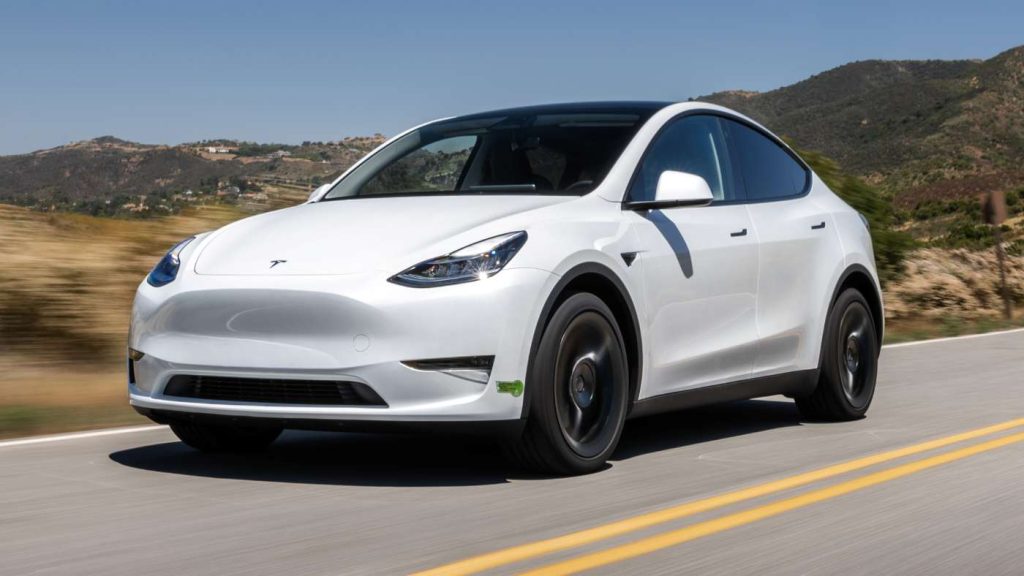
Voice assistant capabilities are supported by ByteDance and DeepSeek, particularly after Tesla integrated DeepSeek and Doubao AI systems in Chinese vehicles last year. Tesla’s Grok system cannot be deployed in China due to regulatory constraints.
The Tencent collaboration aligns with this broader strategy. Tencent’s Intelligent Automobile Cloud platform already supports nearly 40 automotive brands in China, including BMW.
Its WeScenario ecosystem, built on WeChat Mini Programmes, has been integrated into vehicles from Li Auto, Audi, Mercedes-Benz, and Geely for several years.
However, Tesla’s adoption comes relatively late. Tencent introduced WeChat vehicle integration in 2019, and by 2022 the system was already available across 15 automakers’ models, including Li Auto, Audi, and BMW.
In that context, Tesla is only now aligning with a functionality baseline that domestic competitors established earlier in the market cycle.
The timing of the partnership corresponds with mounting competitive challenges for Tesla in China.
The company reported its first annual decline in domestic sales in 2025. Wholesale deliveries from Giga Shanghai decreased 7% year-over-year, accelerating from a 3.2% drop between 2023 and 2024.
At the same time, BYD surpassed Tesla in global battery-electric vehicle sales for 2025. BYD is deploying advanced driver-assistance systems across its lineup, including entry-level models such as the Seagull, priced near $10,000.
XPeng continues expanding autonomous capabilities approaching Level 4 functionality, while Xiaomi reported 175% sales growth in 2025.
Chinese automakers increasingly differentiate themselves not only through hardware but through tightly integrated digital ecosystems.
Seamless access to WeChat Pay, Mini Programmes, Alipay, and local cloud services has become an expected baseline. Tesla’s historical preference for maintaining a proprietary software stack created friction in a market where the vehicle functions as an extension of the smartphone.
Compounding these pressures, Tesla’s Full Self-Driving ambitions in China remain constrained. Although the company recently initiated AI training capabilities within the country, regulatory authorities halted earlier claims that FSD approval was imminent.
From a strategic standpoint, this partnership represents a necessary correction. WeChat operates as more than a messaging application in China; it serves as a comprehensive digital infrastructure spanning payments, services, and daily transactions.
Tesla’s inability, until now, to allow direct WeChat location sharing into its vehicles constituted a meaningful usability gap relative to local competitors.
The integration brings Tesla closer to parity in software functionality. Whether it materially improves demand amid intensifying competition remains uncertain, but the shift indicates that Tesla recognizes the need for deeper localization in the world’s largest EV market.
Also Read: 10 Cars That Feel Faster Than Their Horsepower Numbers