
All wheel drive has become one of the most marketed features in the automotive world. Many drivers assume that if a vehicle carries an AWD badge, it will conquer snow without hesitation.
In reality, deep snow capability depends on far more than just power being sent to all four wheels. Ground clearance, tire choice, torque distribution systems, differential locking ability, weight balance, and driver control all play decisive roles when winter conditions become extreme.
Some vehicles are engineered specifically to operate in harsh climates. They combine intelligent torque vectoring systems with high ride height, durable suspension geometry, and mechanical differentials that can maintain forward motion even when traction is limited.
These machines are designed with real world winter performance in mind, often tested in subzero conditions and built to endure ice covered terrain, heavy drifts, and unplowed roads.
On the other hand, some AWD vehicles struggle when snow becomes deep or wet. Certain systems are reactive rather than proactive, waiting for slip before redistributing power.
Others rely heavily on electronic braking intervention instead of mechanical locking, which can reduce momentum in deep snow. Limited ground clearance and street focused tires further restrict performance when accumulation rises beyond a few inches.
This article explores both ends of the winter performance spectrum. First, we will examine five vehicles that are exceptionally capable in deep snow, demonstrating how proper engineering and design create true winter resilience.
Then we will analyze five AWD models that, despite their branding, can still become stuck when conditions grow challenging. Together, they reveal that winter dominance requires more than a drivetrain label.
Also Read: 10 Used Cars With Air Conditioning Systems That Rarely Last Past 5 Years
5 Cars That Are Unstoppable in Deep Snow
Deep snow capability is not accidental. Vehicles that excel in extreme winter environments share common characteristics. High ground clearance prevents snow from packing under the chassis.
Advanced all wheel drive systems distribute torque proactively, sending power to wheels with grip before slip becomes severe.
Locking or limited slip differentials maintain traction when one wheel loses contact. Equally important are properly sized tires with aggressive tread patterns designed for snow evacuation.
Weight distribution and throttle calibration also influence performance. Vehicles that allow controlled power delivery avoid spinning wheels excessively, preserving forward momentum.
Stability control systems tuned for snow provide assistance without cutting engine power too abruptly. Durable suspension components help maintain wheel articulation on uneven, frozen surfaces.
In this section, we highlight five vehicles that consistently prove capable in deep snow conditions. These models are not simply equipped with AWD for marketing purposes. They are engineered for harsh climates and demanding terrain.
Their design choices reflect real world winter testing and a commitment to maintaining mobility when roads are unplowed and weather conditions are severe.
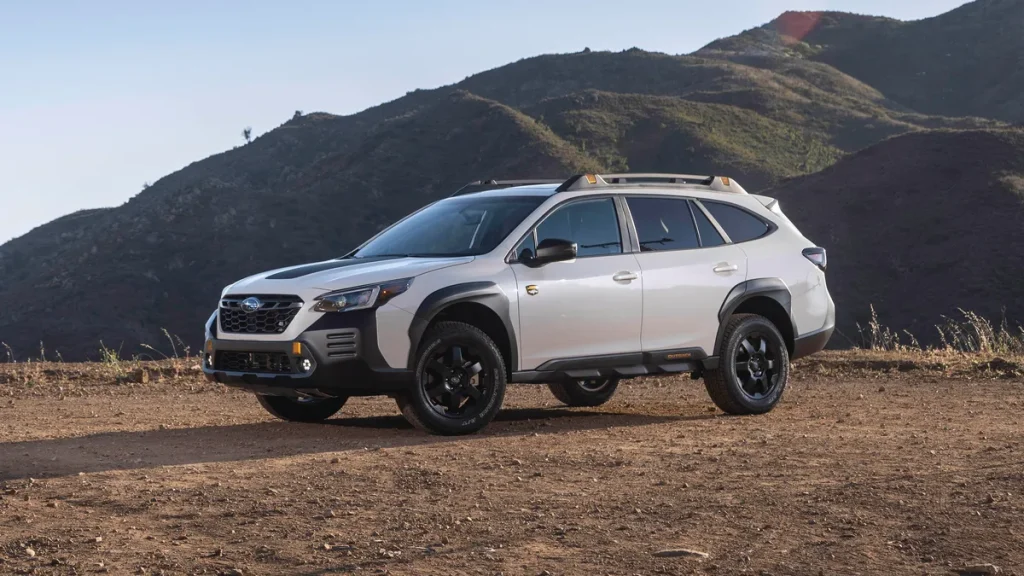
1. Subaru Outback Wilderness
The Subaru Outback Wilderness has earned a strong reputation for deep snow capability because it combines intelligent all wheel drive engineering with practical winter focused design.
Unlike many crossover based AWD systems that primarily react after slip occurs, Subaru’s symmetrical all wheel drive continuously distributes power to all four wheels. This proactive torque management allows the Outback Wilderness to maintain traction before wheels begin spinning excessively.
Ground clearance plays a decisive role in deep snow performance, and the Wilderness trim increases ride height beyond the standard Outback.
This additional clearance prevents snow from building up underneath the chassis, which can otherwise create resistance and reduce forward momentum. When snow accumulates beyond several inches, underbody clearance becomes just as important as drivetrain capability.
The X Mode system further enhances winter confidence. It adjusts throttle response, transmission mapping, and traction control calibration to optimize grip on slippery surfaces.
Rather than cutting engine power aggressively when wheel slip is detected, it allows controlled spin that helps maintain forward movement. This balance is crucial in deep snow, where momentum must be preserved.
The suspension setup is tuned to absorb uneven, frozen terrain without losing tire contact. Combined with appropriate winter tires, the Outback Wilderness becomes highly capable on unplowed roads and rural driveways. Its weight distribution also contributes to stability, helping prevent sudden loss of control when traction fluctuates.
I am writing about the Subaru Outback Wilderness because it demonstrates how thoughtful engineering creates genuine winter readiness. It is not simply an AWD vehicle for light snow. It is designed for environments where deep accumulation and harsh weather are regular realities.
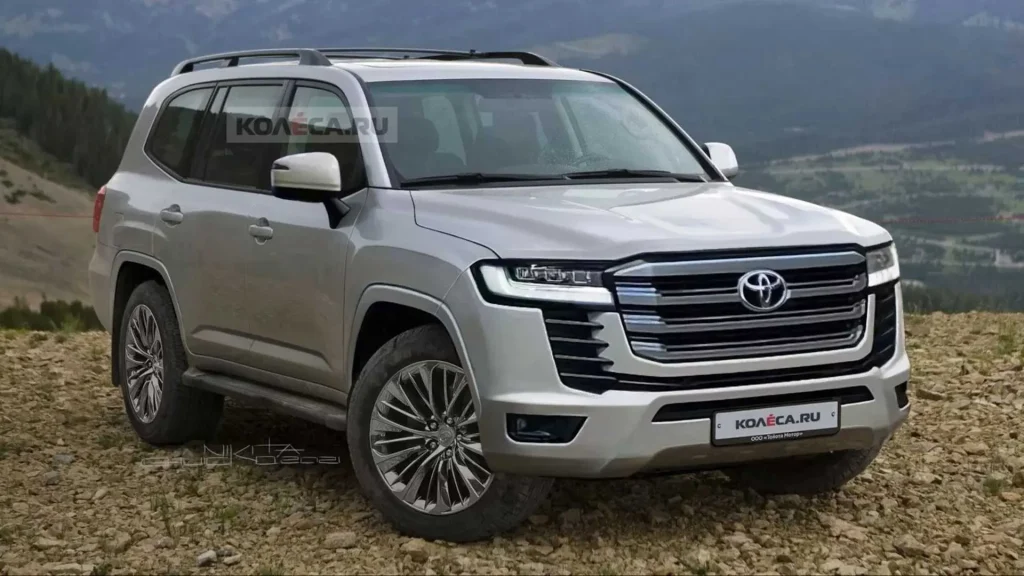
2. Toyota Land Cruiser
The Toyota Land Cruiser is widely recognized as one of the most capable vehicles in extreme conditions, including deep snow. Its reputation stems from decades of engineering refinement focused on durability and mechanical reliability.
Unlike many modern AWD crossovers, the Land Cruiser uses a full time four wheel drive system with a center locking differential, providing consistent power distribution across all wheels.
Locking differentials are especially valuable in deep snow. When one wheel loses traction, the system can mechanically ensure that power continues flowing to wheels with grip.
This mechanical advantage is more dependable than brake based traction control alone. In heavy snow where surfaces vary unpredictably, that reliability becomes critical.
Ground clearance is generous, allowing the Land Cruiser to drive through substantial accumulation without snow packing beneath the chassis. Its robust suspension design maintains wheel articulation on uneven, frozen terrain.
Combined with its substantial weight, the vehicle can press tires into the snow surface, improving grip when paired with proper winter tires.
The transfer case allows drivers to select low range gearing when necessary. Low range provides controlled torque delivery at reduced speeds, helping the vehicle maintain steady forward motion without excessive wheel spin. Stability systems are calibrated to support off road and winter use rather than restrict momentum.
I am including the Toyota Land Cruiser because it represents true winter engineering. It is built to operate in remote, harsh climates where snow can be deep and roads may not be cleared.
Its mechanical strength and locking differentials distinguish it from many AWD vehicles that rely primarily on electronic intervention.
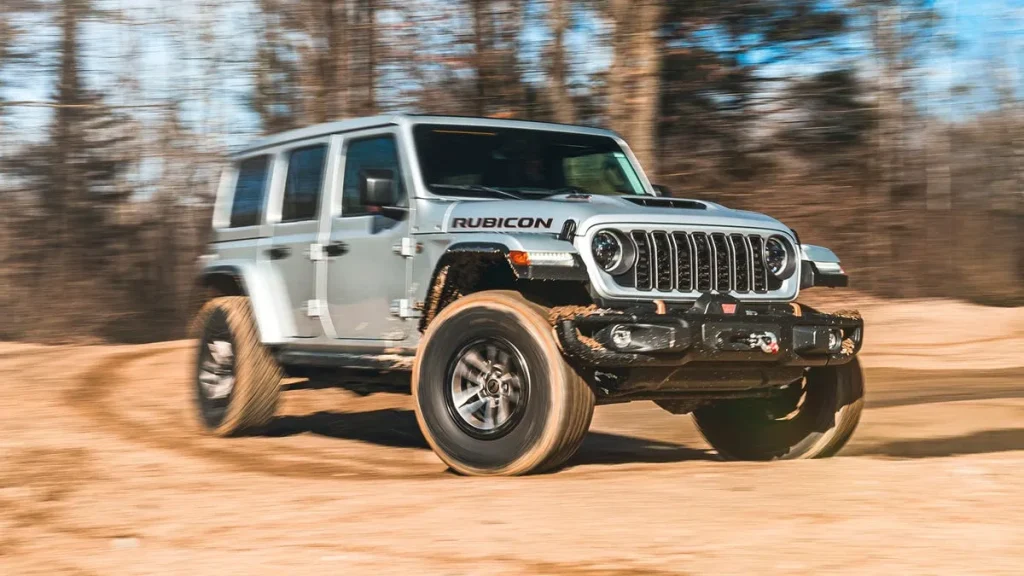
3. Jeep Wrangler Rubicon
The Jeep Wrangler Rubicon stands out as one of the most snow capable production vehicles due to its serious off road hardware. While many vehicles claim AWD capability, the Rubicon features true four wheel drive with selectable locking front and rear differentials.
This mechanical locking ability ensures that all four wheels can rotate together when traction becomes inconsistent.
In deep snow, locking differentials provide a decisive advantage. If one wheel is suspended or spinning freely, the locked system forces equal power distribution to the others. This prevents situations where torque is wasted on a single slipping wheel. Many crossover based AWD systems cannot replicate this mechanical certainty.
The Rubicon also offers high ground clearance and aggressive approach and departure angles. Snow drifts that would halt lower vehicles can often be pushed through with confidence. Solid axle suspension enhances durability and articulation, allowing tires to maintain contact with uneven snow packed terrain.
Low range gearing gives drivers precise control over torque output. Instead of accelerating aggressively and risking wheel spin, the Rubicon can crawl steadily through deep accumulation. Traction control systems are calibrated to work in harmony with mechanical locking rather than override it.
I am writing about the Jeep Wrangler Rubicon because it exemplifies capability beyond marketing labels.
It is engineered to tackle severe environments, including heavy snowfall and unplowed trails. In conditions where lesser AWD vehicles might lose momentum, the Rubicon continues forward with deliberate mechanical assurance.
4. Audi A4 Allroad Quattro
The Audi A4 Allroad Quattro blends everyday comfort with serious winter capability, making it one of the most balanced deep snow performers in the wagon segment. Unlike basic AWD systems that primarily engage after slip is detected, Audi’s Quattro system continuously distributes torque between the front and rear axles.
This proactive torque management allows the vehicle to anticipate traction loss and adjust power flow before excessive wheel spin occurs.
The Allroad variant benefits from increased ground clearance compared to the standard A4. While it is not a body on frame off roader, the added ride height prevents moderate snow accumulation from dragging against the underbody.
In deep snow, maintaining clearance is essential to preserve forward momentum and prevent resistance that can slow the vehicle dramatically.
Quattro’s ability to send torque instantly to the wheels with the most grip becomes especially valuable on uneven snow packed roads. If one side of the vehicle encounters ice while the other side maintains traction, the system compensates smoothly.
The electronic stability program is calibrated to allow controlled slip rather than cutting power abruptly, which is critical when climbing snow covered inclines.
Weight distribution also contributes to performance. Audi’s chassis balance allows consistent tire contact under acceleration and cornering. When paired with quality winter tires, the Allroad can navigate heavy snowfall confidently while maintaining road manners suited for daily commuting.
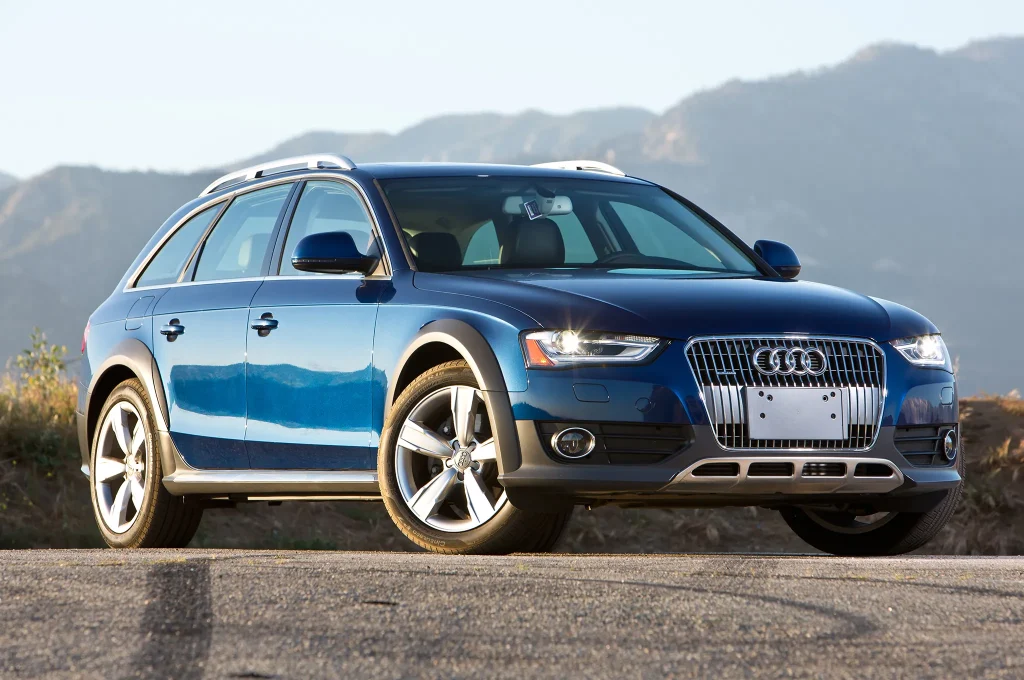
I am writing about the Audi A4 Allroad Quattro because it demonstrates that deep snow capability does not require extreme off road hardware. Through intelligent torque distribution and practical ride height, it delivers genuine winter performance in a refined, road focused package.
5. Ford F 150 with 4×4 and Rear Locker
The Ford F 150 equipped with four wheel drive and an available rear locking differential is exceptionally capable in deep snow conditions. Full size pickup trucks bring inherent advantages to winter performance when properly configured.
High ground clearance allows the F 150 to traverse snow depths that would immobilize lower vehicles. Its truck based frame and suspension are engineered for durability under heavy loads and uneven terrain.
The selectable four wheel drive system enables drivers to engage power to both axles when traction becomes limited. In deeper accumulation, shifting into low range provides precise throttle control and steady torque delivery.
Rather than spinning wheels aggressively, the vehicle can maintain controlled forward progress through challenging snow drifts.
The rear locking differential adds significant traction when one rear wheel loses grip. By mechanically ensuring both rear wheels rotate together, the system prevents torque from being wasted on a single spinning tire. This feature becomes especially important on snow covered hills or uneven surfaces where traction varies side to side.
Modern traction control and stability systems complement the mechanical hardware without interfering excessively. The F 150’s weight over the front axle, combined with appropriate winter tires and ballast in the bed if needed, can enhance overall grip. Its long wheelbase also contributes to stability in slippery conditions.
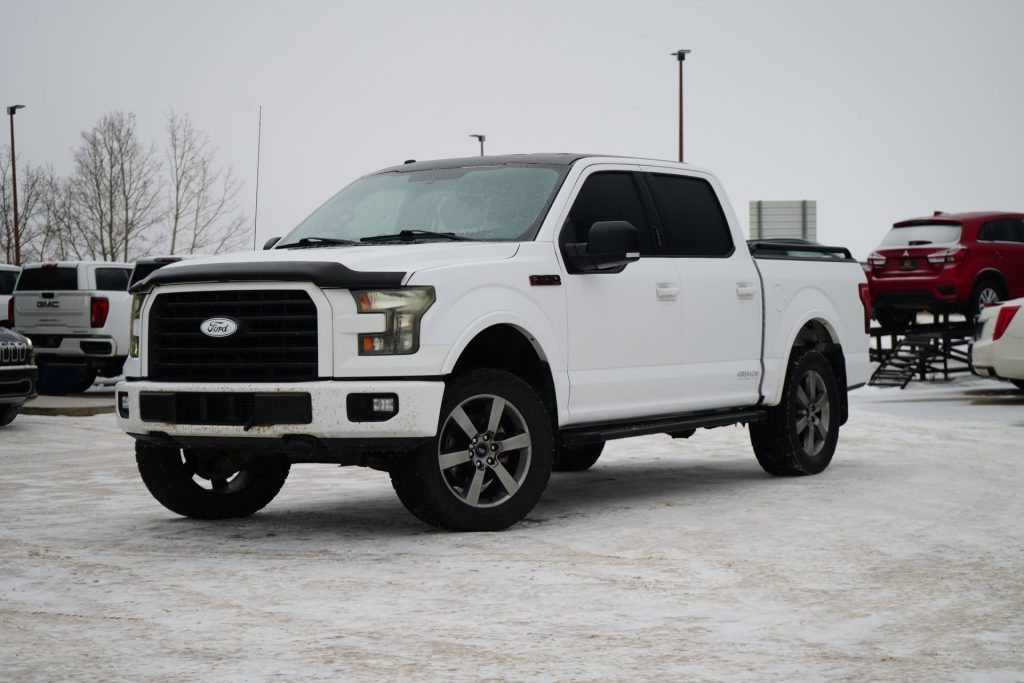
I am including the Ford F 150 with 4×4 and a rear locker because it highlights how proper configuration determines winter success.
Not all pickup trucks are equal in snow, but when equipped with locking differentials and low range gearing, the F 150 becomes highly effective in deep accumulation. It proves that serious winter performance requires mechanical support rather than relying solely on electronic traction management.
5 AWD Models That Get Stuck
All wheel drive alone does not guarantee deep snow capability. Many modern AWD systems are designed primarily for improved on road stability in rain or light snow rather than severe winter terrain.
These systems often rely heavily on electronic braking intervention instead of mechanical locking differentials. When snow becomes deep and resistance increases, such setups may struggle to maintain momentum.
Limited ground clearance is another common weakness. Even if power reaches all four wheels, snow packed under the chassis can act as a brake, preventing forward progress.
Street-oriented tyre compounds further limit traction when temperatures drop significantly. Without aggressive tread patterns designed for snow evacuation, wheels may spin without meaningful grip.
Some AWD systems operate reactively rather than proactively. They wait for wheel slip before redistributing torque, which can interrupt momentum.
In deep snow, preserving momentum is often more important than eliminating every trace of slip. Excessive traction control intervention may cut engine power at the worst possible moment.
In the next section, we will examine five AWD vehicles that, despite their branding, can struggle in deep snow due to design limitations, clearance constraints, or drivetrain calibration. These examples illustrate that winter dominance depends on engineering depth rather than the presence of an AWD badge alone.
1. Toyota RAV4 AWD
The Toyota RAV4 with standard AWD configuration is a practical and efficient crossover, but in deep snow conditions it can reveal clear limitations. Its AWD system is designed primarily for on road stability and light traction support rather than sustained operation in heavy accumulation.
In most versions, the system operates in a Front Wheel Drive dominant mode and sends torque to the rear only after front wheel slip is detected. This reactive behavior can interrupt momentum when snow becomes deep and resistance increases.
Ground clearance is modest compared to more off road focused vehicles. When snow accumulates beyond several inches, the underbody may begin to drag, creating resistance that reduces forward progress.
Even if the wheels maintain some traction, snow packed beneath the chassis can halt movement entirely. This limitation becomes more apparent in unplowed driveways or rural roads.
The RAV4’s traction control system is tuned conservatively. While this calibration enhances safety on icy pavement, it can cut engine power aggressively when wheel spin is detected. In deep snow, a small amount of controlled spin is often necessary to maintain forward motion. Excessive intervention may reduce the ability to power through heavier sections.
Tire choice also plays a decisive role. Many RAV4 models are delivered with all season tires optimized for efficiency and road comfort rather than snow evacuation. Without dedicated winter tires, grip diminishes significantly in colder temperatures.
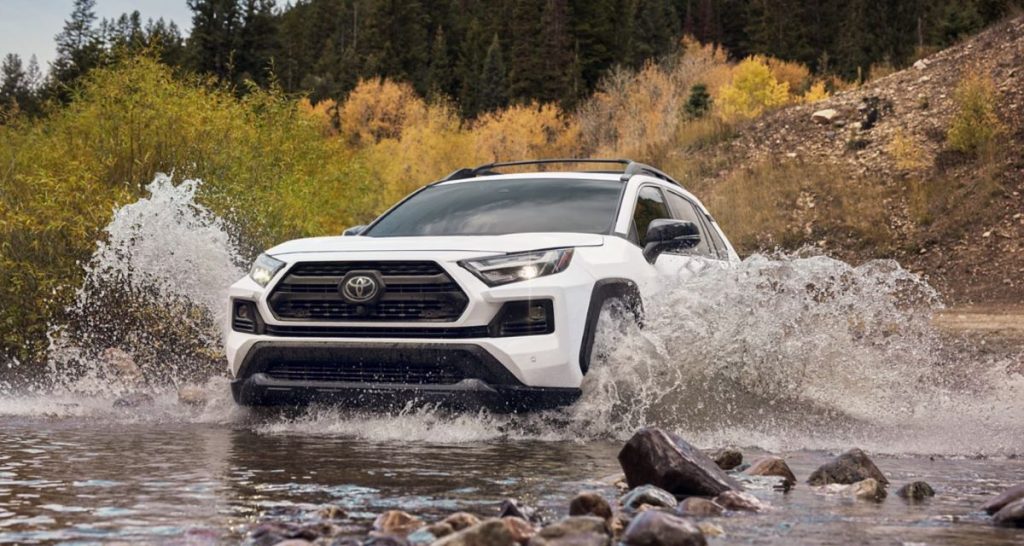
I am including the Toyota RAV4 AWD because it illustrates the difference between light duty AWD and deep snow capability. It performs well in typical winter commuting but can struggle when snow depth and resistance exceed what its design parameters anticipate.
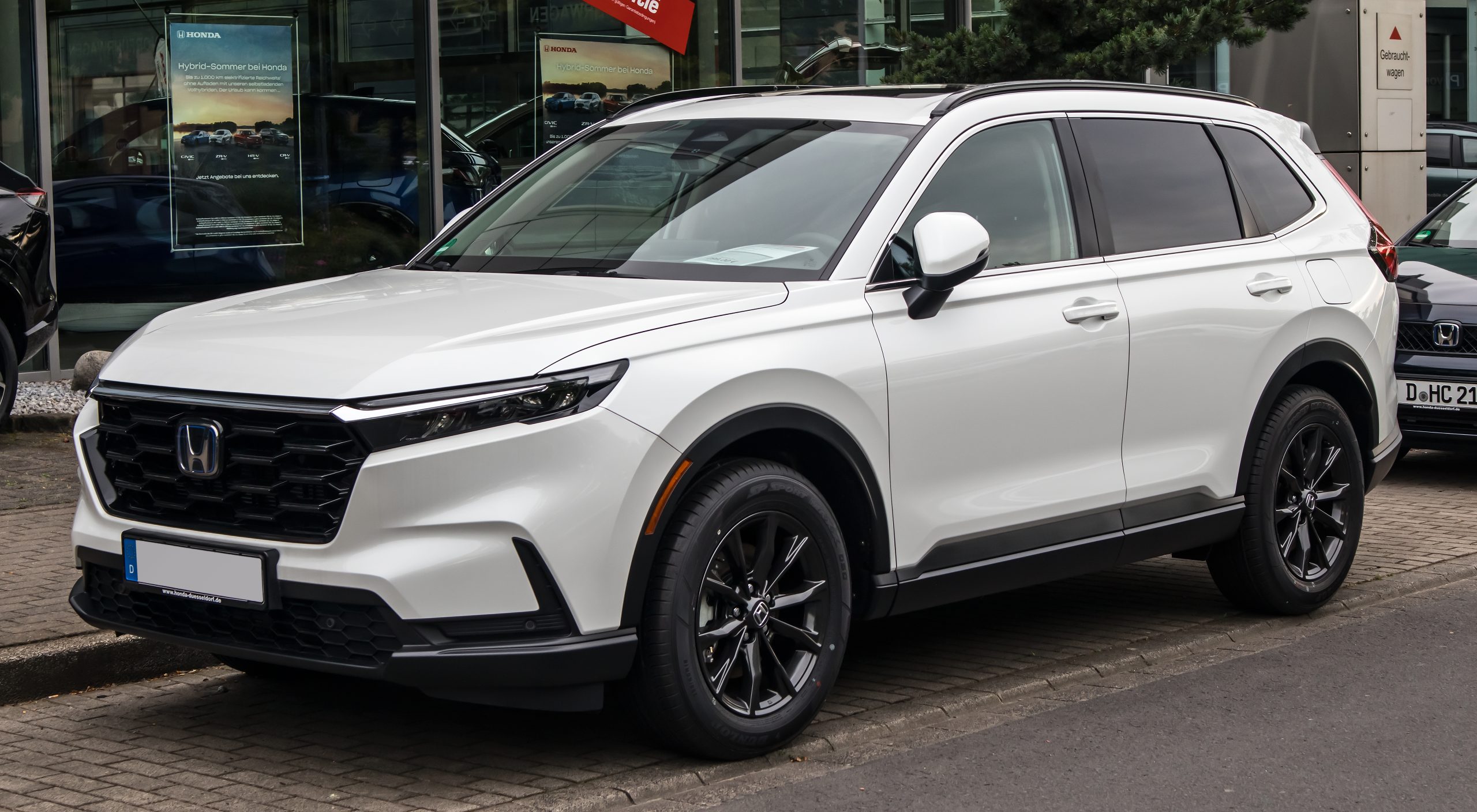
2. Honda CR V AWD
The Honda CR V with available AWD is another example of a crossover designed for everyday traction rather than severe winter terrain.
Its Real Time AWD system primarily powers the front wheels and engages the rear axle when slip is detected. While effective for rain soaked roads and light snowfall, this setup can become less effective in deep, heavy accumulation.
The system relies heavily on electronic control rather than mechanical locking differentials. When traction fluctuates rapidly, torque redistribution may not be immediate enough to preserve steady momentum. Deep snow demands continuous torque flow, and brief interruptions can cause the vehicle to bog down.
Ground clearance is similar to many compact crossovers, meaning snow depth quickly becomes a limiting factor.
Once accumulation begins to contact the underside of the vehicle, forward movement requires greater torque. Without low range gearing or mechanical locking capability, the CR V may struggle to push through dense drifts.
Traction control calibration tends to prioritize stability over momentum. If wheel spin increases beyond a narrow threshold, engine output can be reduced sharply. While this prevents uncontrolled slipping on ice, it can hinder progress in situations where moderate wheel spin would actually help maintain movement.
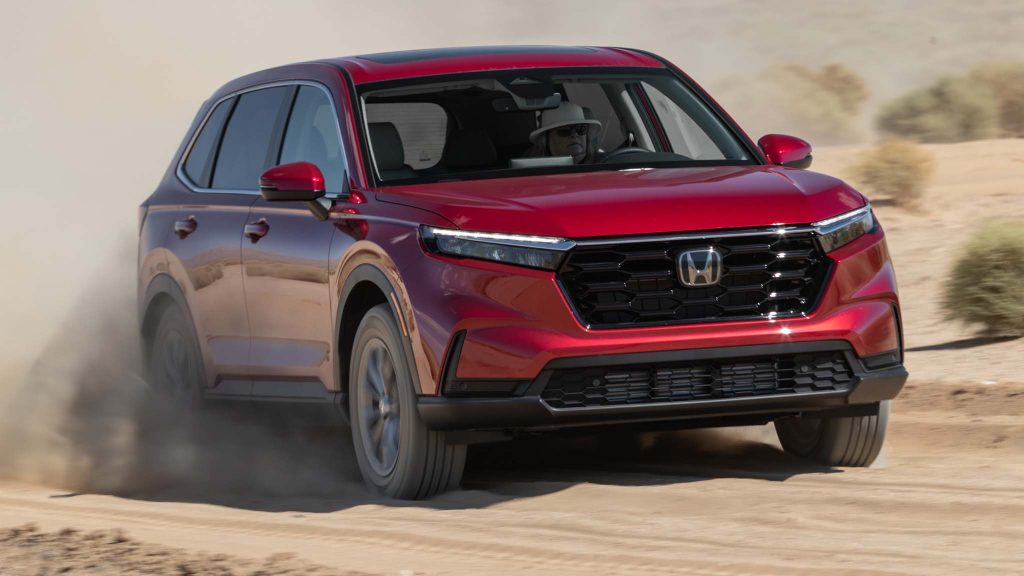
The CR V is also typically equipped with efficiency focused tires that emphasize fuel economy and quiet road manners. In deep snow, such tires may not provide sufficient bite.
I am writing about the Honda CR V AWD because it highlights the distinction between commuter oriented AWD and true winter engineering. It offers confidence in moderate conditions but can reach its limits when snowfall becomes heavy and terrain remains unplowed.
3. Nissan Rogue AWD
The Nissan Rogue equipped with AWD is marketed as an all weather capable crossover, yet deep snow exposes its practical limitations. Its system operates primarily as front wheel drive under normal conditions, sending torque rearward when slip occurs.
While this arrangement improves fuel efficiency, it can delay torque transfer in situations where immediate traction is essential.
Deep snow often requires steady, uninterrupted torque delivery. The Rogue’s reactive system may allow initial wheel spin before redistributing power.
During that momentary delay, forward momentum can be lost. In heavy accumulation, maintaining consistent traction is more effective than repeatedly correcting slip after it begins.
Ground clearance is modest, similar to other compact crossovers. As snow depth increases, resistance builds underneath the chassis. Without substantial ride height, the vehicle may become high centered when snow compacts under the body. This mechanical limitation is independent of drivetrain capability.
Electronic traction systems are tuned conservatively, cutting engine power to regain stability. In certain deep snow scenarios, this protective calibration may prevent the vehicle from powering through thicker sections. Without mechanical differential locking, torque can still be diverted to wheels with limited grip.
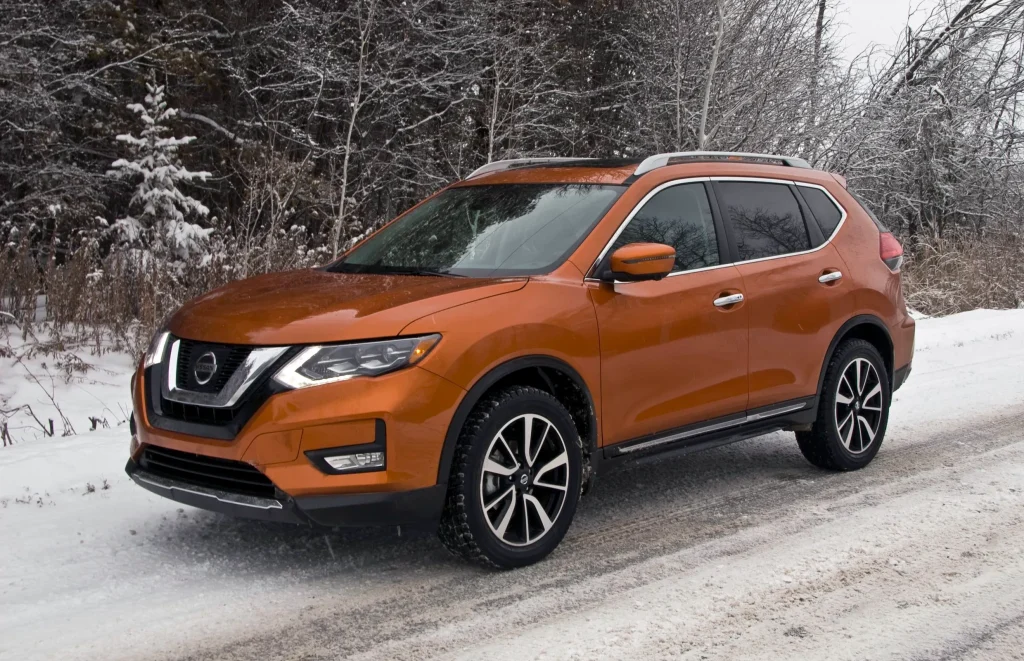
I am including the Nissan Rogue AWD because it reinforces an important lesson. AWD branding does not automatically equal deep snow dominance. While well suited for daily winter commuting, it is not engineered for sustained travel through heavy, unplowed accumulation.
4. Mazda CX 5 AWD
The Mazda CX 5 with AWD is widely praised for its responsive handling and refined driving experience, yet deep snow can expose the limits of its traction system.
Mazda’s predictive AWD technology is designed to monitor driving inputs and road conditions, transferring torque to the rear wheels when slip is anticipated. While this proactive feature improves stability on wet or lightly snow covered roads, it is not intended for sustained operation in heavy accumulation.
One of the main limitations lies in ground clearance. The CX 5 sits at a height comparable to many compact crossovers, which is adequate for moderate snowfall but restrictive when drifts become deep.
As snow builds beneath the chassis, forward progress becomes increasingly difficult. Without significant underbody clearance, even a capable AWD system can be rendered ineffective.
The vehicle lacks low range gearing or mechanical locking differentials. Torque distribution is managed electronically, and while effective in many everyday scenarios, it cannot replicate the traction consistency of a locked system in deep snow. If one wheel loses grip entirely, power may not be distributed as aggressively as needed to maintain steady motion.
Traction control calibration also prioritizes stability and smoothness. Excessive wheel spin triggers engine power reduction, which can interrupt momentum in thick snow. Maintaining forward motion often requires controlled spin, and conservative intervention can limit that ability.
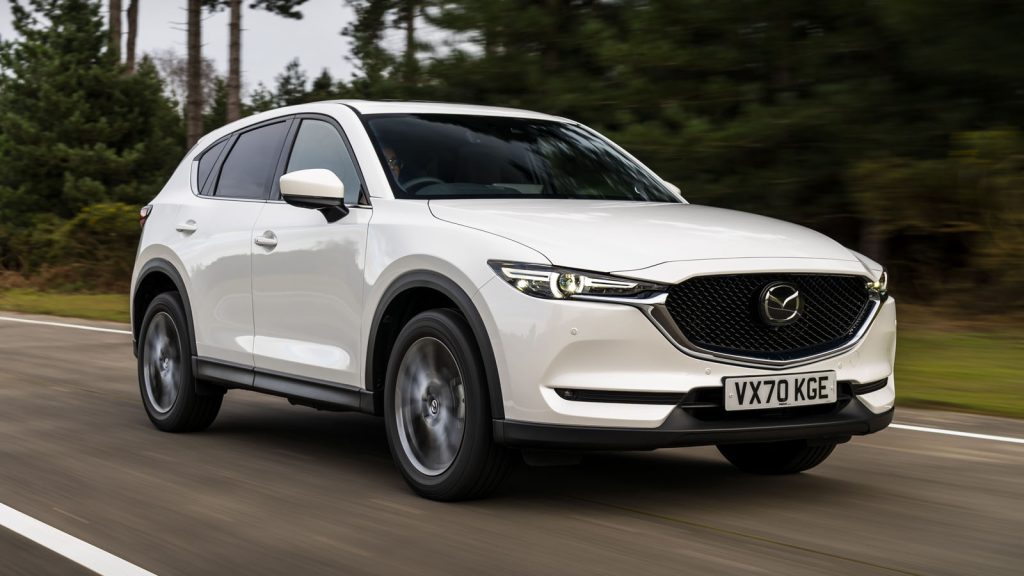
I am including the Mazda CX 5 AWD because it demonstrates how refined on road tuning does not always translate to severe winter performance. It excels in typical commuter conditions but may struggle when snow depth and density exceed its design focus.
5. Hyundai Tucson AWD
The Hyundai Tucson with AWD provides enhanced traction compared to its front wheel drive counterpart, yet it can face challenges in deep snow environments.
The AWD system is primarily front biased and engages the rear axle when slip is detected. While effective for light snow and rain, this configuration is optimized for efficiency rather than extreme winter terrain.
Ground clearance is moderate, similar to other compact crossovers. When snow accumulation becomes substantial, resistance under the vehicle increases significantly.
Without elevated ride height, the Tucson may experience drag from compacted snow beneath the chassis, limiting forward movement even if the wheels continue to turn.
Although some versions offer a center locking mode that temporarily splits torque evenly, this feature is generally intended for low speed, short duration use. It does not replace the capability of mechanical locking differentials found in more off road oriented vehicles.
Once one wheel loses consistent traction, electronic intervention attempts to compensate, but it may not maintain uninterrupted momentum.
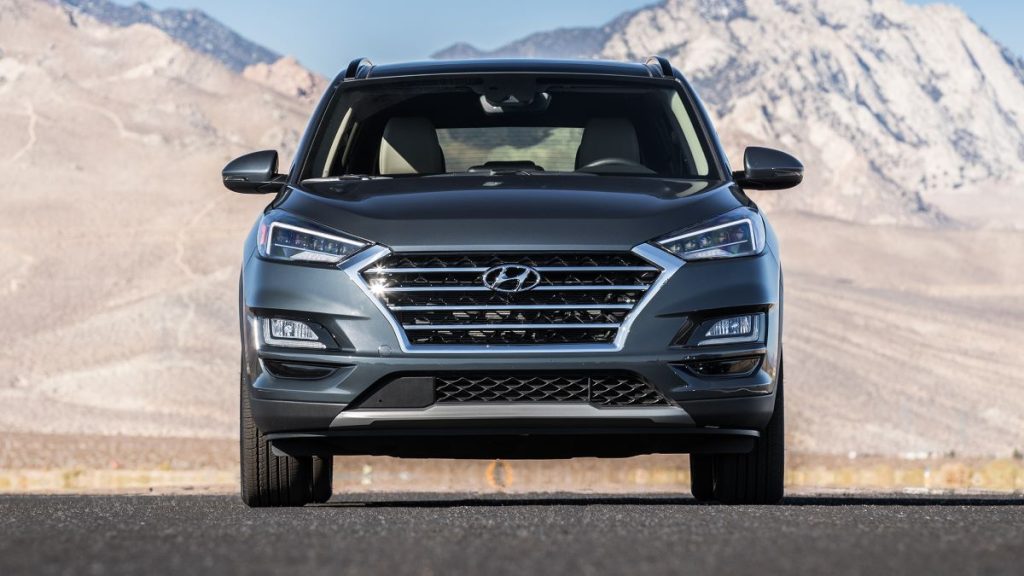
The traction control system is tuned conservatively to enhance safety. In deep snow, rapid engine power reduction can prevent the vehicle from pushing through heavier sections. Tire selection further influences performance. Factory-installed all-season tyres often prioritize quiet operation and fuel efficiency over aggressive snow grip.
I am writing about the Hyundai Tucson AWD because it highlights the gap between everyday AWD convenience and true deep snow resilience. While it provides confidence in routine winter driving, it lacks the mechanical advantages and clearance necessary for sustained travel through heavy, unplowed conditions.
Deep snow performance depends on far more than an AWD badge. Vehicles that are truly unstoppable in heavy winter conditions share key traits such as generous ground clearance, mechanical locking differentials, low range gearing, and intelligently calibrated traction systems that preserve momentum.
Models like the Subaru Outback Wilderness, Toyota Land Cruiser, Jeep Wrangler Rubicon, Audi A4 Allroad Quattro, and properly equipped Ford F 150 demonstrate how proactive torque distribution and durable hardware allow consistent forward movement even in unplowed, drift filled terrain.
These vehicles are engineered with harsh climates in mind and can maintain traction without excessive electronic intervention.
In contrast, several AWD crossovers such as the Toyota RAV4, Honda CR V, Nissan Rogue, Mazda CX 5, and Hyundai Tucson are primarily designed for everyday stability rather than extreme winter travel.
Their systems are often front wheel drive dominant and reactive, sending power rearward only after slip occurs. Limited ground clearance and conservative traction control calibration can further restrict performance when snow becomes deep.
Ultimately, real winter capability requires mechanical depth and thoughtful engineering. AWD improves safety in moderate conditions, but conquering deep snow demands clearance, torque control, and hardware designed specifically for severe environments.
Also Read: 10 Cars Where the Transmission Is Stronger Than the Engine
