
Morning commutes, grocery runs, school drop-offs, late-night drives home from work. Driving is not a rare event for most people. It is a daily routine that shapes how the day begins and how it ends. That reality makes one thing clear. Technology in cars should do more than look impressive on a showroom floor. It should make everyday driving easier, safer, and less stressful.
Automakers have spent the past decade packing vehicles with screens, sensors, and digital tools. Some features feel like gimmicks after the first week. Others quietly become indispensable. Once you get used to them, you wonder how you ever drove without them.
This page focuses on eight tech additions that truly improve daily driving. Not flashy extras designed for bragging rights. Not features you use once just to test them. These are practical systems that solve real problems, reduce mental fatigue, and add convenience where it matters most.
From advanced driver assistance systems that smooth out highway traffic to clever camera setups that simplify parking in tight spots, each example below highlights a specific vehicle and the technology that makes daily life behind the wheel better. Every car listed brings something valuable to the table, and none are repeated.
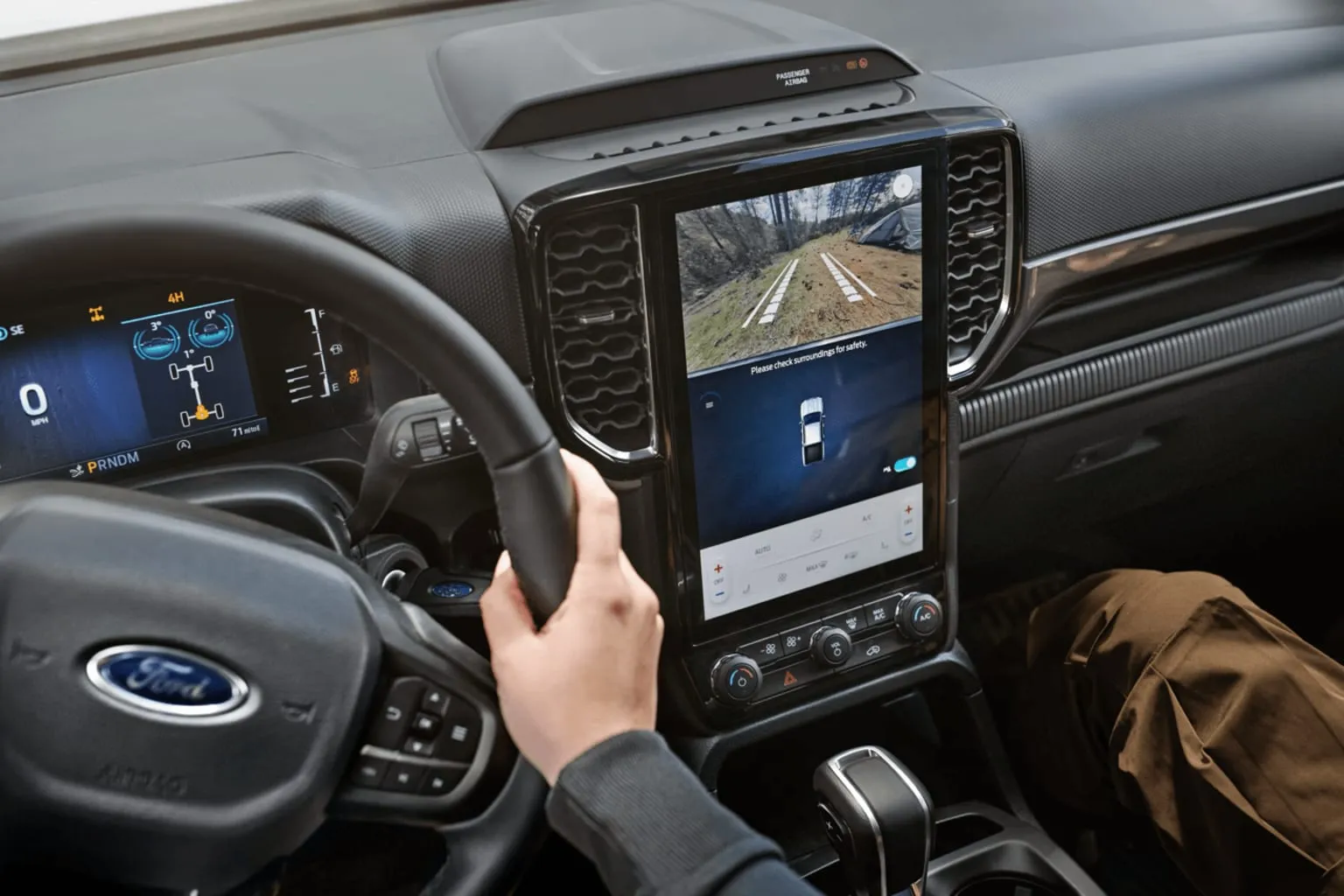
1. Ford Co-Pilot360 in the 2024 Ford Escape
A typical weekday drive frequently presents multiple hazards within a short distance. Traffic density increases without warning, vehicles brake abruptly, and other motorists may enter blind spots unexpectedly. Prolonged exposure to such conditions can lead to fatigue well before reaching one’s destination.
It is within these ordinary circumstances that modern driver assistance systems demonstrate their practical value. The 2024 Ford Escape, equipped with Ford Co-Pilot360, illustrates how integrated safety technology can improve routine commuting.
This suite incorporates several coordinated features designed to enhance driver awareness and response capability. The Blind Spot Information System, combined with Cross Traffic Alert, supports safer lane changes and reversing manoeuvres.
When another vehicle enters a blind area, the driver receives both visual and audible notification. While reversing from parking spaces with limited visibility, the system detects approaching traffic and issues timely warnings. Lane Keeping System adds another layer of protection by monitoring road markings. If the vehicle begins to drift unintentionally, subtle steering input helps maintain proper lane position.
Such correction is measured and does not interfere with deliberate steering actions. Pre-Collision Assist with Automatic Emergency Braking monitors traffic ahead and can initiate braking if a potential collision is detected. This intervention may reduce the impact severity or prevent an accident entirely.
A distinguishing quality of Ford Co-Pilot360 lies in its balanced operation. Alerts are noticeable yet not excessive, and steering adjustments feel natural rather than abrupt. The driver retains authority over the vehicle while benefiting from an expanded awareness of surrounding conditions. Confidence grows because assistance is available without creating a distraction.
Highway travel also benefits from available adaptive cruise control. This function regulates speed to maintain a safe following distance from vehicles ahead. During stop-and-go traffic, the system manages incremental acceleration and braking, reducing repetitive pedal input. As a result, physical strain during extended commuting is diminished.
Parking areas present their own challenges, particularly in crowded environments. Cross Traffic Alert proves useful when reversing from confined spaces where side visibility is restricted. Early warning tones and dashboard indicators can prevent minor collisions that lead to unnecessary expense.
Safety technology often gains full appreciation only after it averts a potential incident. Within the 2024 Ford Escape, Ford Co-Pilot360 is not merely an optional convenience. It serves as a practical support system that reduces driving stress and enhances daily road confidence.
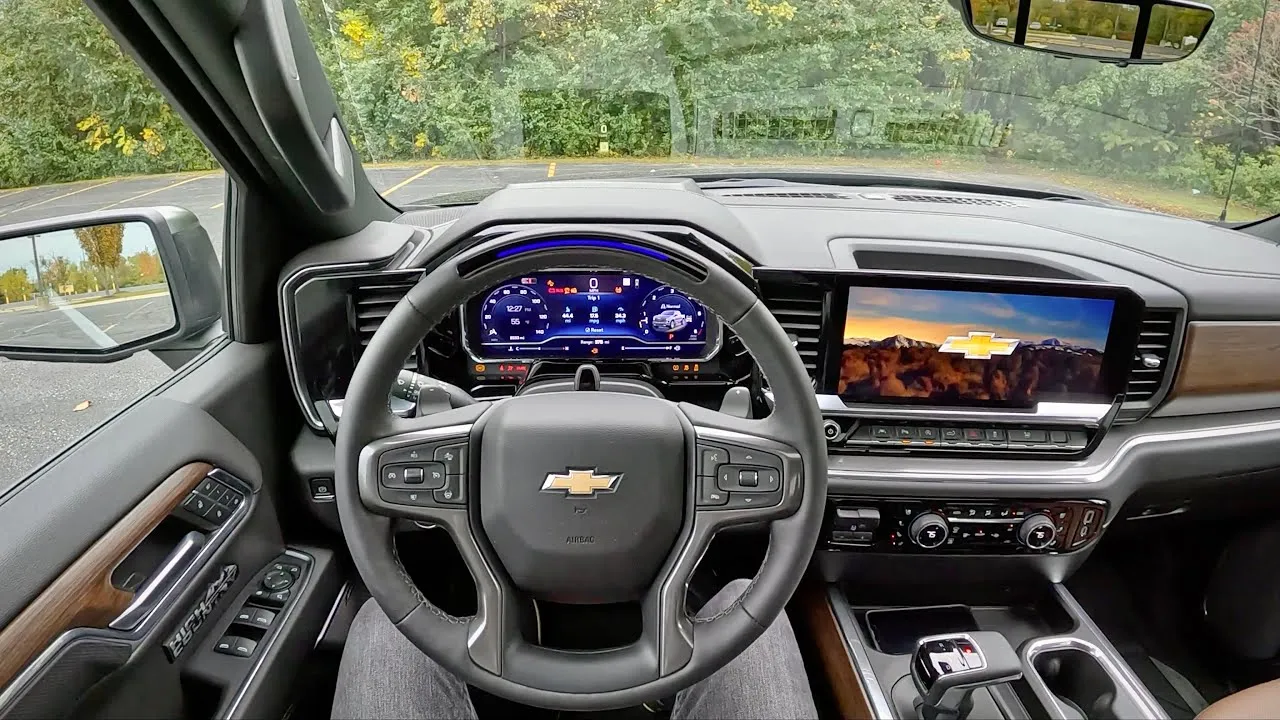
2. Super Cruise in the 2024 Chevrolet Silverado 1500
Extended highway travel often imposes physical and mental strain, even upon seasoned motorists. Maintaining a steady grip on the steering wheel, observing appropriate following distance, and making continuous speed adjustments demand sustained concentration.
After prolonged periods, this repetition may result in fatigue that affects alertness. Technological assistance designed to reduce such workload can materially improve both comfort and safety during long-distance journeys. The 2024 Chevrolet Silverado 1500, equipped with available Super Cruise, introduces an advanced driving support system intended for compatible highways.
This technology enables hands-free operation under defined conditions by integrating precision mapping data, radar sensors, and cameras. Unlike conventional cruise control systems that regulate speed alone, Super Cruise is capable of steering, accelerating, and braking while maintaining lane position.
A distinguishing element of this system is its driver monitoring capability. An interior camera observes the driver’s gaze to confirm sustained attention to the roadway. Should the driver’s focus deviate for an extended period, graduated alerts are issued.
This structure preserves driver accountability while reducing the mechanical burden associated with highway travel. The driver remains responsible for supervision, though relieved of constant minor corrections. Commuting on approved highways becomes more orderly with this system engaged.
Lane centering is maintained with measured precision, and the vehicle responds smoothly to gradual variations in traffic speed. Rather than holding the steering wheel continuously for extended distances, the driver may relax hand contact while maintaining vigilance.
During periods of congestion, Super Cruise adjusts speed in a controlled manner. It decelerates appropriately as traffic slows and accelerates progressively when conditions permit. This consistent modulation reduces abrupt movements and lessens physical strain. The effect is particularly beneficial during peak traffic hours, when repetitive braking and acceleration can be exhausting.
In addition to speed and steering management, the system may execute lane changes on certain mapped highways when the driver activates the turn signal. This capability assists with overtaking slower vehicles and maintaining traffic flow without abrupt manoeuvres.
For individuals who frequently travel on interstate routes, Super Cruise represents a practical enhancement rather than a novelty. Within the 2024 Chevrolet Silverado 1500, this technology demonstrates how structured automation can improve long-distance driving while maintaining firm attention to safety obligations.
Also Read: 10 Upcoming Safety Features That Will Become Mandatory
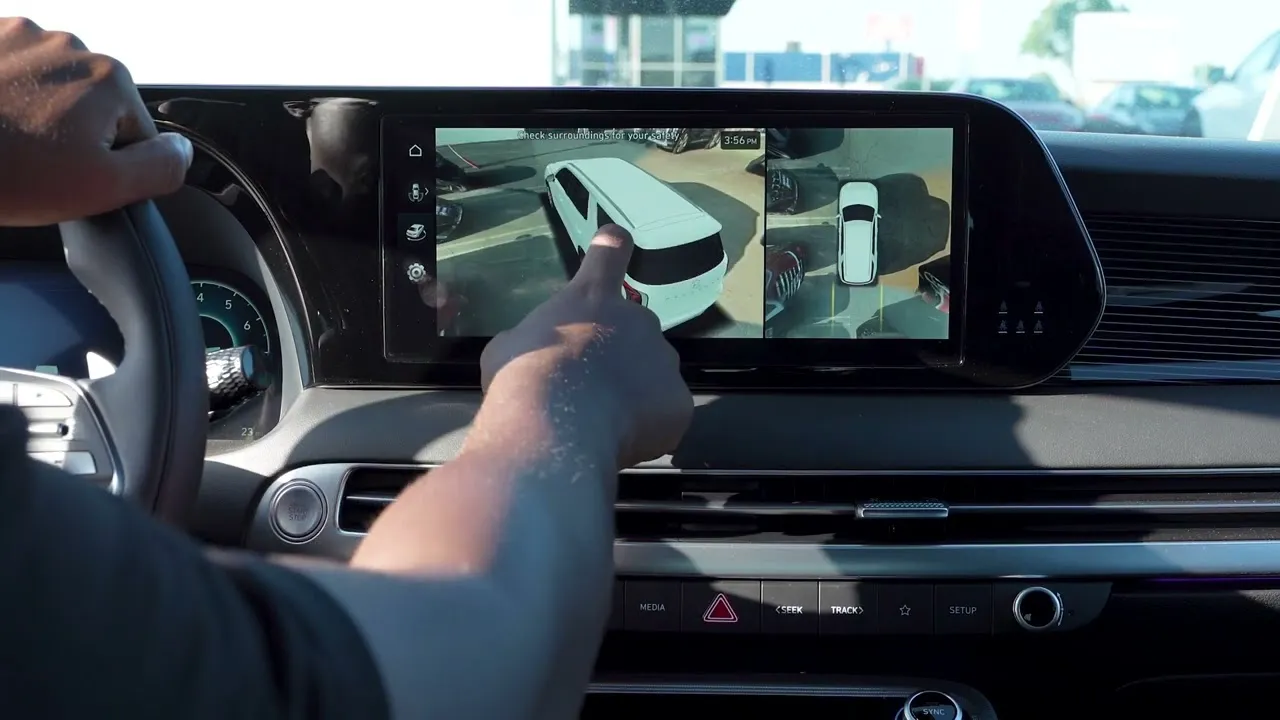
3. 360 Degree Camera System in the 2024 Hyundai Santa Fe
Urban parking environments frequently demand patience and careful judgment. Narrow residential garages, congested commercial car parks, and restricted driveways require drivers to maintain constant awareness of surrounding objects.
Minor miscalculations may result in scratched bumpers or damaged body panels. The 360 Degree Camera System installed in the 2024 Hyundai Santa Fe provides a structured technological response to these everyday challenges.
This system integrates multiple exterior cameras positioned around the vehicle to generate a composite overhead image. The result is a clear bird’s eye representation displayed on the central infotainment screen. Rather than depending solely on side mirrors or reversing sensors, the driver receives a comprehensive visual account of the immediate surroundings.
Curbs, pillars, adjacent vehicles, and other obstacles become plainly visible in real time. Reversing into confined spaces becomes considerably more manageable. The driver is able to observe rear clearance while simultaneously assessing lateral distance from nearby structures.
Parking, therefore, becomes a controlled procedure rather than an exercise in estimation. Parallel parking also benefits from this enhanced visibility. Instead of relying entirely on experience or repeated adjustments, the driver can position the vehicle with deliberate precision.
Households with children or pets gain an added measure of reassurance. Smaller objects that may remain hidden from conventional sight lines can be detected through the camera display. Before moving forward or backwards, the driver can confirm that the surrounding area is clear. This additional layer of observation supports safer manoeuvring in residential environments.
Routine errands often require swift parking decisions in busy areas. Under such conditions, mental effort increases as drivers attempt to gauge proximity to obstacles. The 360 Degree Camera System reduces this cognitive strain by presenting immediate visual confirmation.
Leaning forward or adjusting seating posture to check blind spots becomes less necessary, as the system updates continuously. When technology addresses common driving frustrations with clarity and simplicity, its value becomes evident.
Within the 2024 Hyundai Santa Fe, the 360 Degree Camera System transforms parking from a source of tension into a manageable and orderly process. Drivers approach confined spaces with improved awareness and steadier judgment.
4. Head Up Display in the 2024 Mazda CX-90
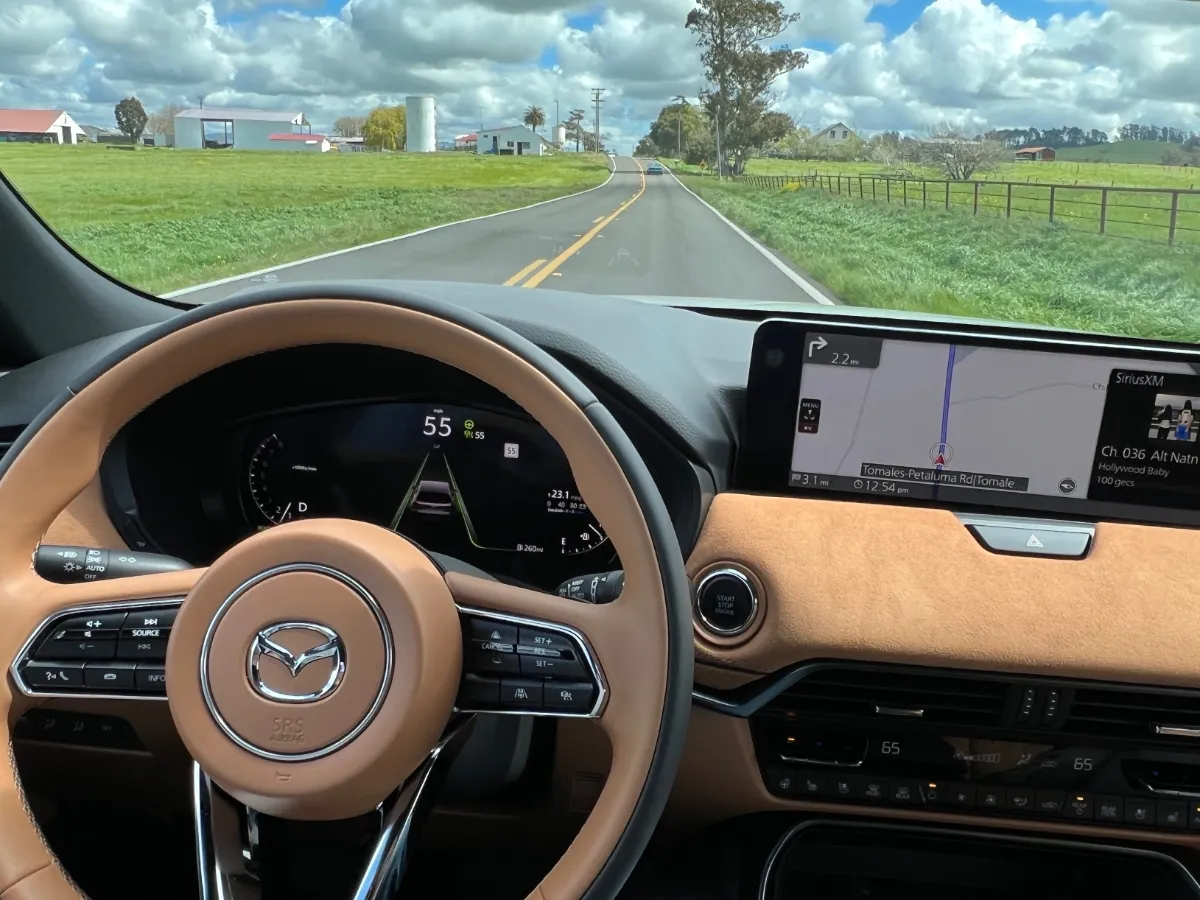
Driver attention remains a central factor in road safety. Even brief downward glances at instrument panels may reduce awareness of surrounding traffic conditions. The Head Up Display integrated into the 2024 Mazda CX-90 is designed to preserve forward focus while still delivering essential driving information.
Through projection technology, important data such as vehicle speed, navigation instructions, and driver assistance alerts appear directly on the windshield within the driver’s natural line of sight. This presentation creates the impression that information is suspended ahead of the vehicle rather than confined to a dashboard screen.
By positioning critical details closer to the driver’s primary visual field, the system reduces the need for repeated downward glances. Speed awareness becomes intuitive, and directional guidance can be followed without scanning the central display. Such refinement supports steadier attention during both short city trips and extended highway travel.
Extended journeys often lead to fatigue as drivers alternate their gaze between instruments and the roadway. The Head Up Display mitigates this pattern by centralising information presentation. Reaction time may improve when attention remains concentrated ahead rather than divided between multiple viewing points.
Urban driving conditions also benefit from this arrangement. Approaching intersections, the driver can observe changes in speed limits or upcoming turns without diverting attention from traffic signals and pedestrians. The display adjusts brightness automatically to maintain visibility during daylight hours while remaining comfortable for night driving.
Mazda has implemented this feature with restraint and clarity. The projected graphics avoid excessive distraction, and placement ensures that the windshield view remains unobstructed. Such disciplined integration enhances usability.
Within the 2024 Mazda CX-90, the Head Up Display exemplifies how thoughtful information management can strengthen both safety and convenience. By maintaining visual alignment with the roadway, the system supports a composed and attentive driving experience.
5. Digital Rearview Mirror in the 2024 Toyota Grand Highlander
Daily family use often places practical demands on a vehicle’s interior space. Groceries accumulate after routine shopping, travel bags are arranged for weekend journeys, and children occupy rear seating rows. Under such conditions, the conventional rearview mirror may lose effectiveness once the rear window is partially or completely obstructed.
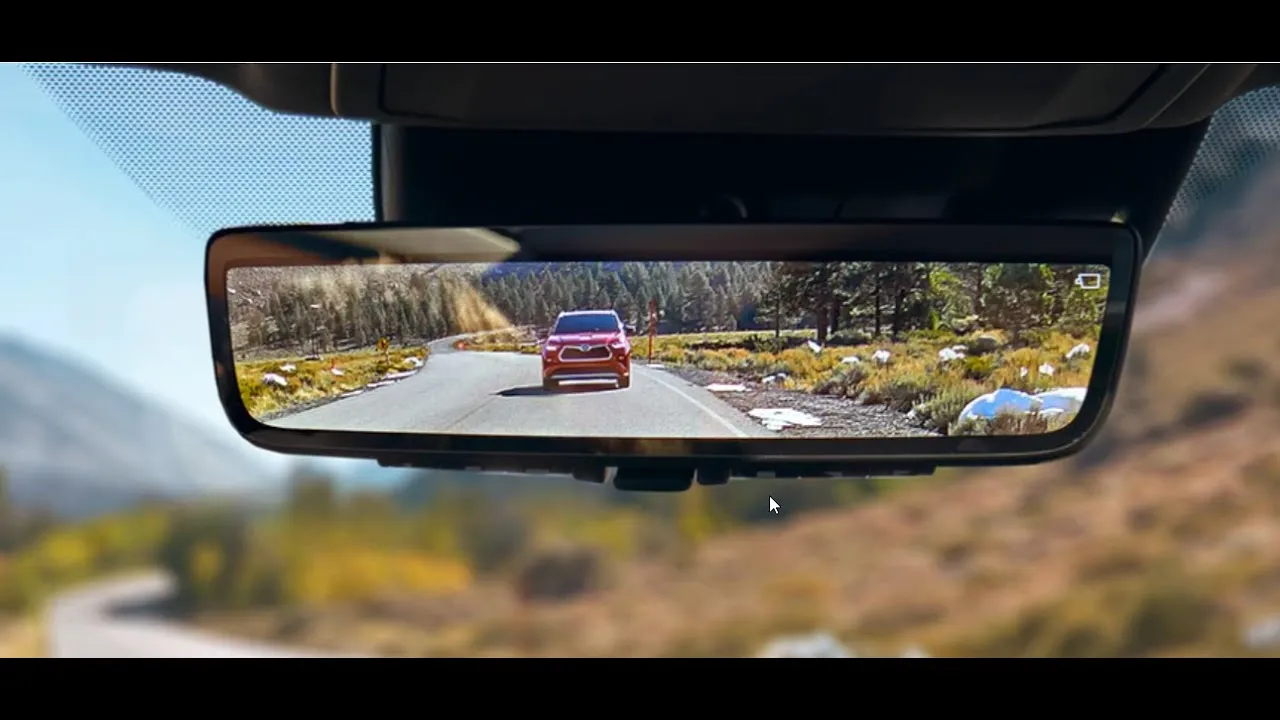
The digital rearview mirror incorporated into the 2024 Toyota Grand Highlander offers a structured response to this recurring limitation. Rather than depending solely on reflective glass, this system employs a rear-mounted camera to transmit a live video image onto the mirror surface.
With a simple control adjustment, the driver may alternate between a traditional reflective mode and a wide-angle digital display. Where luggage or passengers obstruct the rear window, the camera feed continues to provide a clear and uninterrupted view of traffic conditions behind the vehicle.
School transportation, holiday travel, and routine errands frequently result in a fully occupied cabin. In such instances, rear visibility through a standard mirror can be severely reduced. The digital configuration restores an unobstructed perspective, thereby improving awareness of approaching vehicles.
Enhanced clarity during lane changes or highway merging contributes to steadier decision-making. Adverse weather and lighting conditions also influence rear visibility. Glare from headlights at night or rainfall during daytime driving may impair reflective mirrors.
A camera-based system tends to preserve image sharpness under such circumstances. The field of view presented through the digital display is typically wider than that available through conventional reflection, thereby reducing blind spots directly behind the vehicle.
Confined parking structures provide another practical illustration of the feature’s value. Accurate judgment of distance is required when reversing into tight spaces. By delivering a consistent visual feed, the digital mirror allows drivers to assess rear clearance without altering posture or leaning forward for improved visibility.
Operational flexibility remains a central advantage. Should a driver prefer the traditional mirror function under certain conditions, it can be restored instantly. This adaptability recognises varying preferences and driving environments.
Within the 2024 Toyota Grand Highlander, the digital rearview mirror exemplifies a functional enhancement rooted in daily practicality. By preserving rearward visibility regardless of interior loading conditions, it addresses a common challenge faced by families. Such thoughtful integration demonstrates how technology can strengthen confidence and situational awareness during routine travel.
6. Remote Smart Parking Assist in the 2024 Hyundai Ioniq 5
Parking anxiety is a genuine concern for many drivers, particularly within densely populated urban centres. Restricted parking bays, congested shopping complexes, and narrow residential garages often create tension even for experienced motorists.
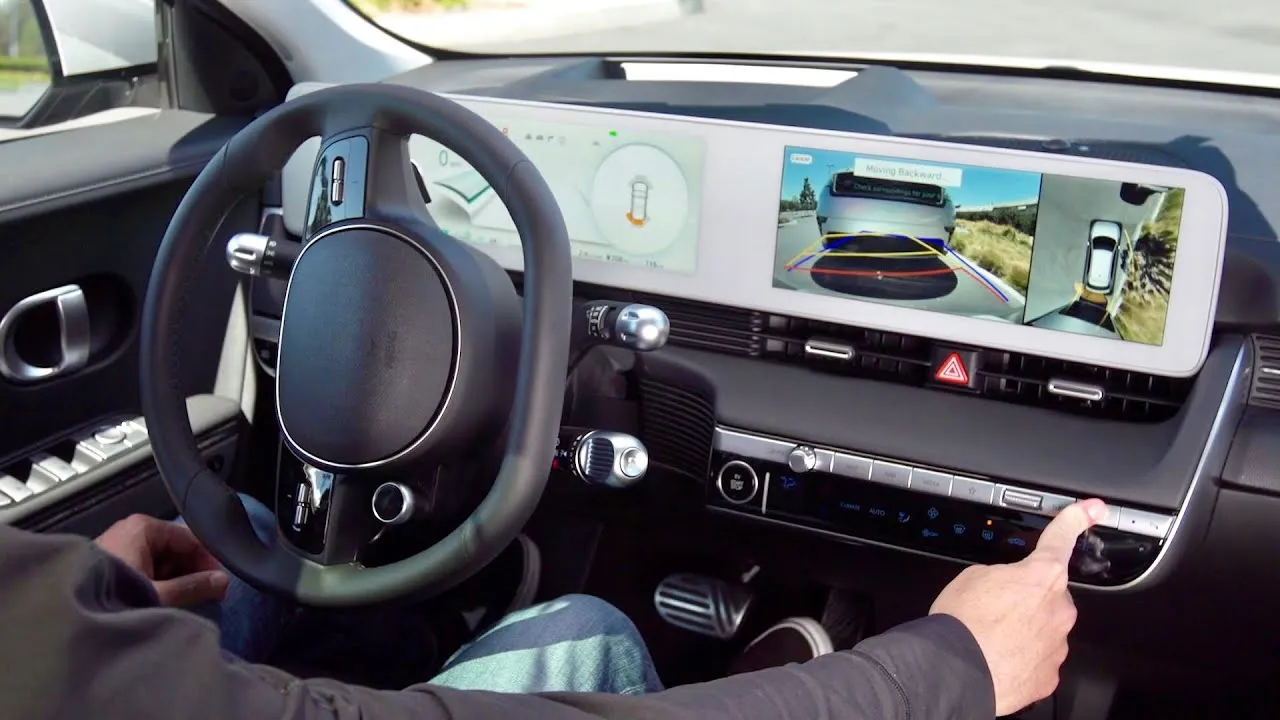
Remote Smart Parking Assist in the 2024 Hyundai Ioniq 5 presents a refined technological response to this common challenge, combining automation with practical supervision. This system permits the driver to exit the vehicle before manoeuvring into a confined space.
Using the electronic key fob, the driver can instruct the vehicle to move forward or backward while standing outside. Steering, braking, and controlled acceleration are managed by the vehicle at low speeds. The driver remains responsible for observation, yet avoids the discomfort associated with squeezing through a partially opened door.
Daily practicality defines the value of this feature. In many home garages, structural limitations restrict door clearance. Traditionally, drivers are compelled to park imperfectly or exit awkwardly. With Remote Smart Parking Assist, the vehicle can be positioned precisely within the designated space while the driver remains outside.
This approach reduces inconvenience and preserves both personal comfort and vehicle condition. Parallel parking on busy streets is equally demanding. Traffic pressure and limited spacing may cause hesitation. The Hyundai Ioniq 5 uses integrated sensors to identify suitable parking gaps and assist with steering alignment.
Remote functionality adds flexibility when space is limited on either side. By supervising the process externally, the driver gains clearer visibility of surrounding conditions. Safety provisions are central to the system’s operation.
Continuous environmental scanning ensures that obstacles are detected promptly. If a pedestrian, object, or unexpected hazard enters the vehicle’s path, automatic braking is activated immediately. This protective mechanism reinforces confidence while maintaining responsible use.
Electric vehicles are frequently associated with innovation, yet practical application determines lasting value. Remote Smart Parking Assist addresses a recurring daily inconvenience through measured automation. Rather than serving as a display feature, it provides a clear benefit in real-world situations.
Drivers who have previously avoided tight parking spaces due to fear of minor collisions will recognise the advantage offered here. The 2024 Hyundai Ioniq 5 demonstrates how carefully integrated technology can simplify routine driving tasks. By reducing tension in confined parking conditions, this system contributes to a calmer and more controlled driving experience.
7. Traffic Jam Assist in the 2024 BMW 5 Series
Urban commuting places considerable strain on drivers, particularly during peak traffic periods. Extended stop-and-go conditions demand constant braking, gradual acceleration, and steady steering adjustments. Such repetitive activity may appear minor at first, yet it contributes to fatigue and reduced concentration. Traffic Jam Assist in the 2024 BMW 5 Series was developed to reduce this burden while preserving driver responsibility.
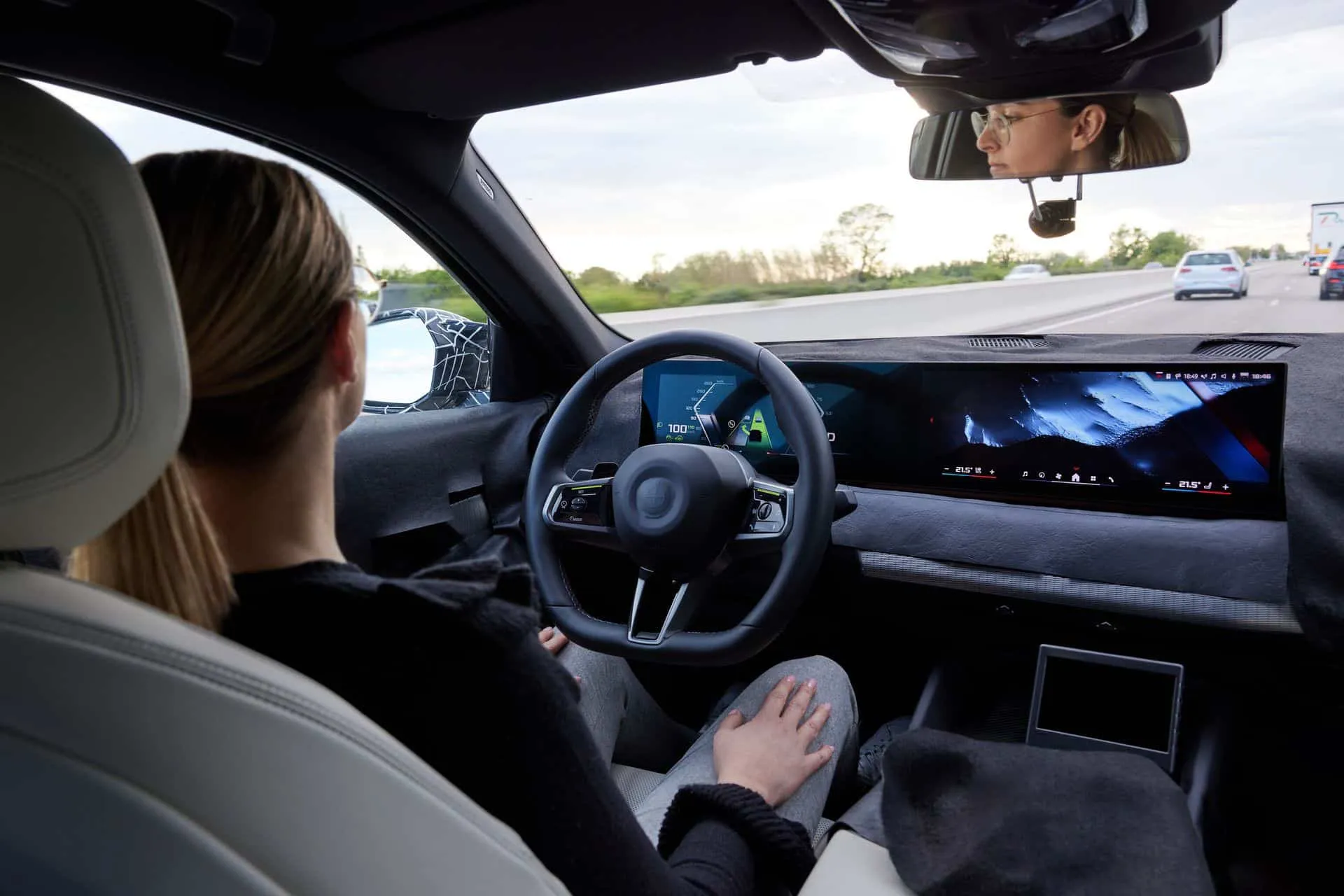
This system is engineered for low-speed highway congestion. It integrates adaptive cruise control with lane centering technology to regulate both speed and steering within defined parameters. When traffic slows to a crawl, the vehicle manages incremental forward movement with minimal driver input.
The driver is still required to supervise the process, keeping hands lightly on the steering wheel and remaining attentive to road conditions. One of the strengths of this feature lies in its measured responsiveness. Braking and acceleration are applied progressively rather than abruptly. Steering corrections are subtle and stable.
These qualities create a smoother experience that reduces physical strain, especially during prolonged congestion. Rather than repeatedly pressing pedals and adjusting steering position, the driver oversees a system that handles these actions consistently.
Commuters who encounter daily gridlock frequently report exhaustion from constant pedal operation. Traffic Jam Assist minimises such repetition by maintaining a predetermined following distance from the vehicle ahead. It also keeps the car centred within its lane through continuous monitoring. Minor steering adjustments occur automatically, allowing the driver to focus on situational awareness rather than mechanical input.
Driver attention monitoring is integrated into the system. If the driver’s focus moves away from the roadway, alerts are issued to prompt immediate correction. This safeguard ensures that convenience does not replace responsibility. The system operates as assistance rather than substitution.
During extended congestion, performance remains consistent. The vehicle accelerates gently when traffic progresses and slows predictably when vehicles ahead decelerate. This steady behaviour builds confidence in the technology and reduces commuting fatigue.
Within the 2024 BMW 5 Series, Traffic Jam Assist demonstrates how advanced driver support can address a persistent urban challenge with composure and precision.
Also Read: 12 Smart Charging Features Every EV Owner Should Know
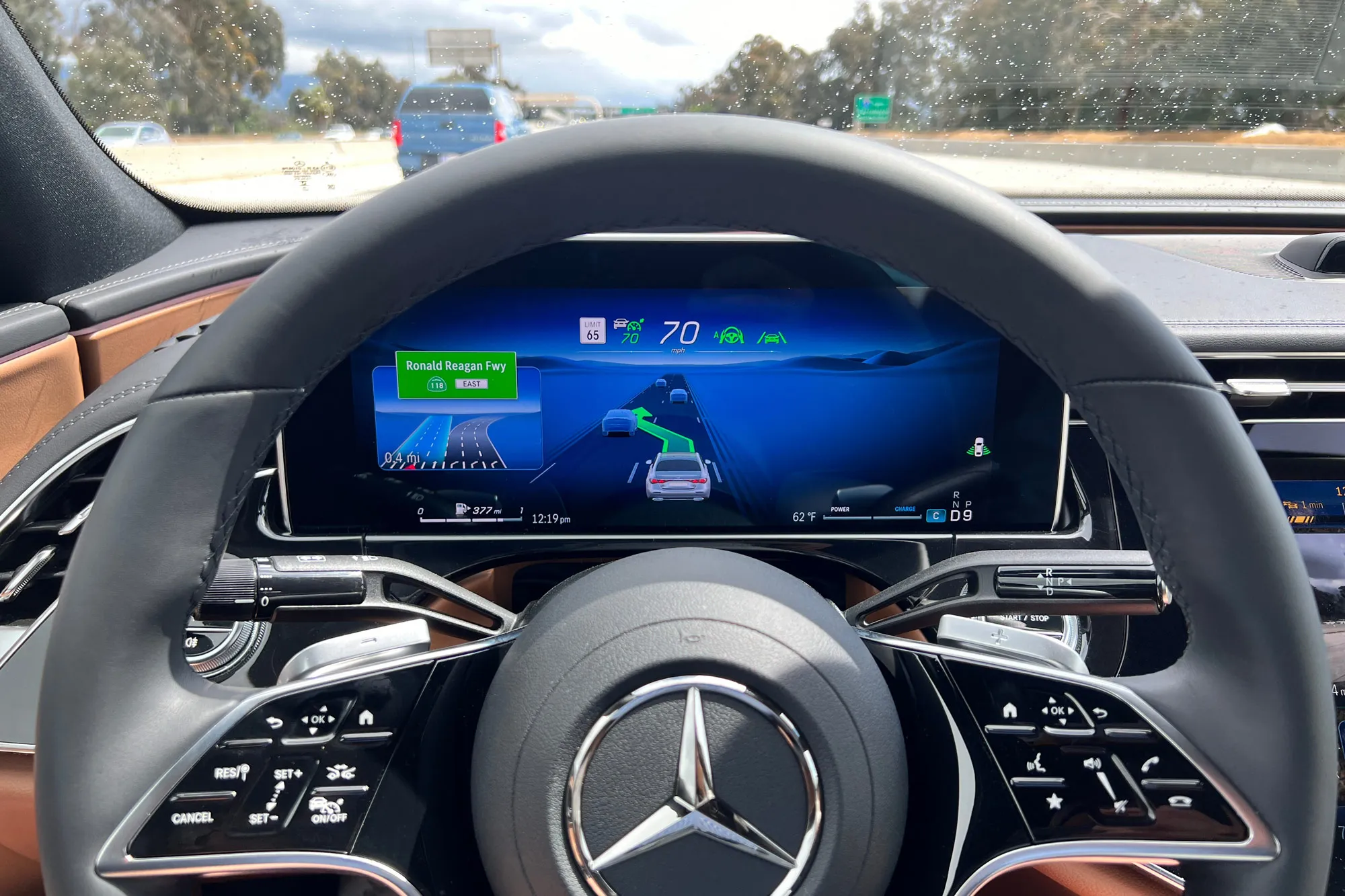
8. Augmented Reality Navigation in the 2024 Mercedes-Benz E-Class
Urban and intercity travel often present drivers with confusing junctions, multilane exits, and closely spaced turns. Missing a turning point may result in frustration, delayed arrival, or unsafe last-minute manoeuvres. Augmented reality navigation in the 2024 Mercedes-Benz E-Class seeks to resolve these challenges through enhanced visual guidance.
As a vehicle approaches a junction, the central display activates a live camera view of the road ahead. Digital directional arrows and markers are superimposed directly onto the image. Rather than interpreting a conventional map displayed on a separate screen, the driver receives instructions aligned precisely with visible road features.
This method reduces hesitation at complicated intersections. Where two similar turns appear within close proximity, the correct route is highlighted clearly. By aligning guidance with actual road markings and buildings, the system removes ambiguity. Such clarity assists drivers in maintaining lane discipline and steady speed without sudden corrections.
Daily commuting benefits from this approach as much as extended travel. Construction diversions, multilane roundabouts, and layered highway interchanges become easier to understand. Visual prompts appear at appropriate moments, guiding the driver through each manoeuvre with accuracy.
Driving requires constant mental processing. Traditional navigation systems demand translation of map symbols into physical action. Augmented reality shortens this process by presenting instructions directly within the driver’s visual frame. Reduced cognitive effort supports improved focus on surrounding traffic.
Night journeys and unfamiliar neighbourhoods also become less intimidating. Directional indicators overlay real structures and signage, reinforcing confidence in route selection. Drivers spend less time second-guessing and more time maintaining steady progress.
Within the 2024 Mercedes-Benz E-Class, augmented reality navigation illustrates how digital innovation can serve practical daily needs. By combining camera imaging with precise graphical guidance, the system strengthens clarity and contributes to safer, more assured travel.
