When it comes to sports cars, not all high-performance machines are created equal in daily life. Some blend speed, precision, and excitement with comfort, usability, and practicality, making them surprisingly well-suited for commuting, errands, and long drives.
Cars like the Porsche 911 (992), BMW M3 (G80), Chevrolet Corvette C8, Audi RS5 Sportback, and Volkswagen Golf R prove that you can enjoy adrenaline-pumping performance without sacrificing convenience or safety.
On the other end of the spectrum, certain exotic or track-focused vehicles prioritize thrills above all else. Cars such as the Lotus Emira, Alfa Romeo 4C, Dodge Challenger SRT Hellcat, Porsche 718 Cayman GT4 RS, and Ford Shelby GT500 deliver unparalleled driving engagement but demand high operating costs, compromise comfort, and present serious daily usability challenges.
For these machines, the road to exhilaration is best reserved for weekends, canyon runs, or track days. This guide explores which cars excel as daily drivers and which belong in the “weekend-only” category.
5 Sports Cars You Can Drive Daily
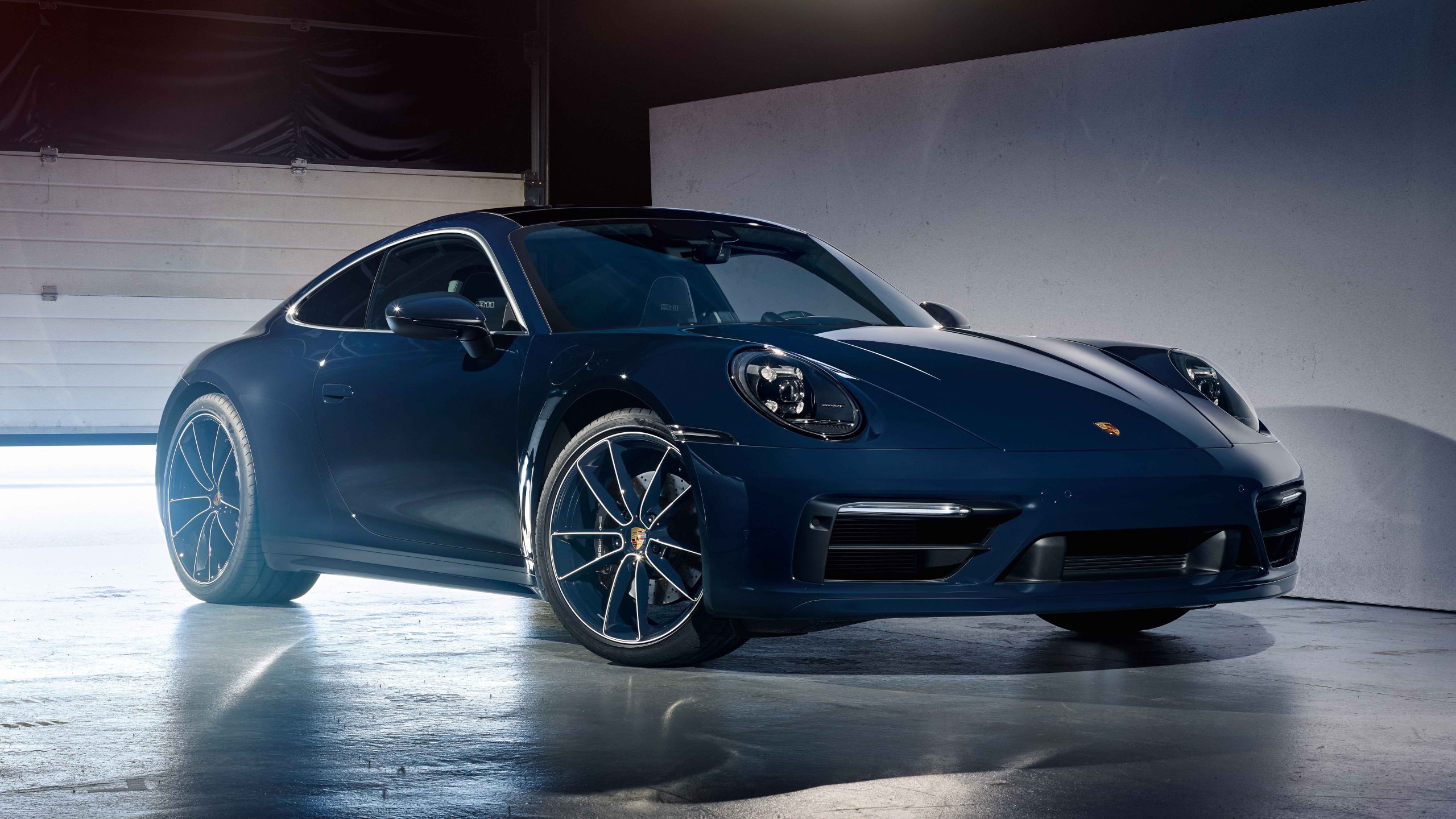
1. Porsche 911 (992 Generation): The Ultimate Everyday Supercar
The Porsche 911 (992 generation) continues to define what an “everyday supercar” should be, blending track-ready performance with comfort, practicality, and refinement. The 992 generation improves on its predecessors by offering a versatile suspension system (PASM), smooth PDK transmission, and advanced electronics, making it equally at home on city streets or a race circuit.
Despite its speed and performance capabilities, the 911 provides a surprisingly comfortable ride. In “Normal” mode, the suspension absorbs bumps and road imperfections with a level of compliance that rivals many luxury sedans.
Practical storage adds to its usability: a front trunk (“frunk”) can accommodate two duffel bags, a carry-on, and a backpack, while additional space behind the rear seats increases versatility.
Features like a front axle lift system and parking sensors make daily driving effortless, and the interior combines classic 911 elements, such as the five-ring instrument layout, with modern digital displays and a sleek 10.9-inch infotainment screen.
Performance remains a highlight of the 992. Its rear-biased layout and B6 3.0-liter twin-turbo flat-six engine deliver thrilling acceleration, with the Carrera S reaching 0-62 mph in 3.5 seconds and the Turbo S achieving 0-60 mph in 2.6 seconds. Turbo lag is minimal, and the engine provides smooth, immediate power throughout the rev range.
Steering is precise and feedback-rich, while high-speed stability is exceptional, allowing drivers to correct lines mid-corner with confidence. Porsche Stability Management (PSM) and the new “Wet Mode” enhance safety and control in all conditions, ensuring the car remains composed even in challenging weather.
Though slightly larger and more technologically complex than previous generations, the 992 retains the agility, balance, and character that make a 911 instantly recognizable. The interior emphasizes a horizontal design with retro toggle switches, preserving a sense of familiarity amidst the updates.
The 992 proves that Porsche has mastered the art of blending extreme performance with everyday usability. It is a car that excels on the track, comforts on the road, and adapts seamlessly to real-world driving, solidifying its reputation as the ultimate daily supercar.
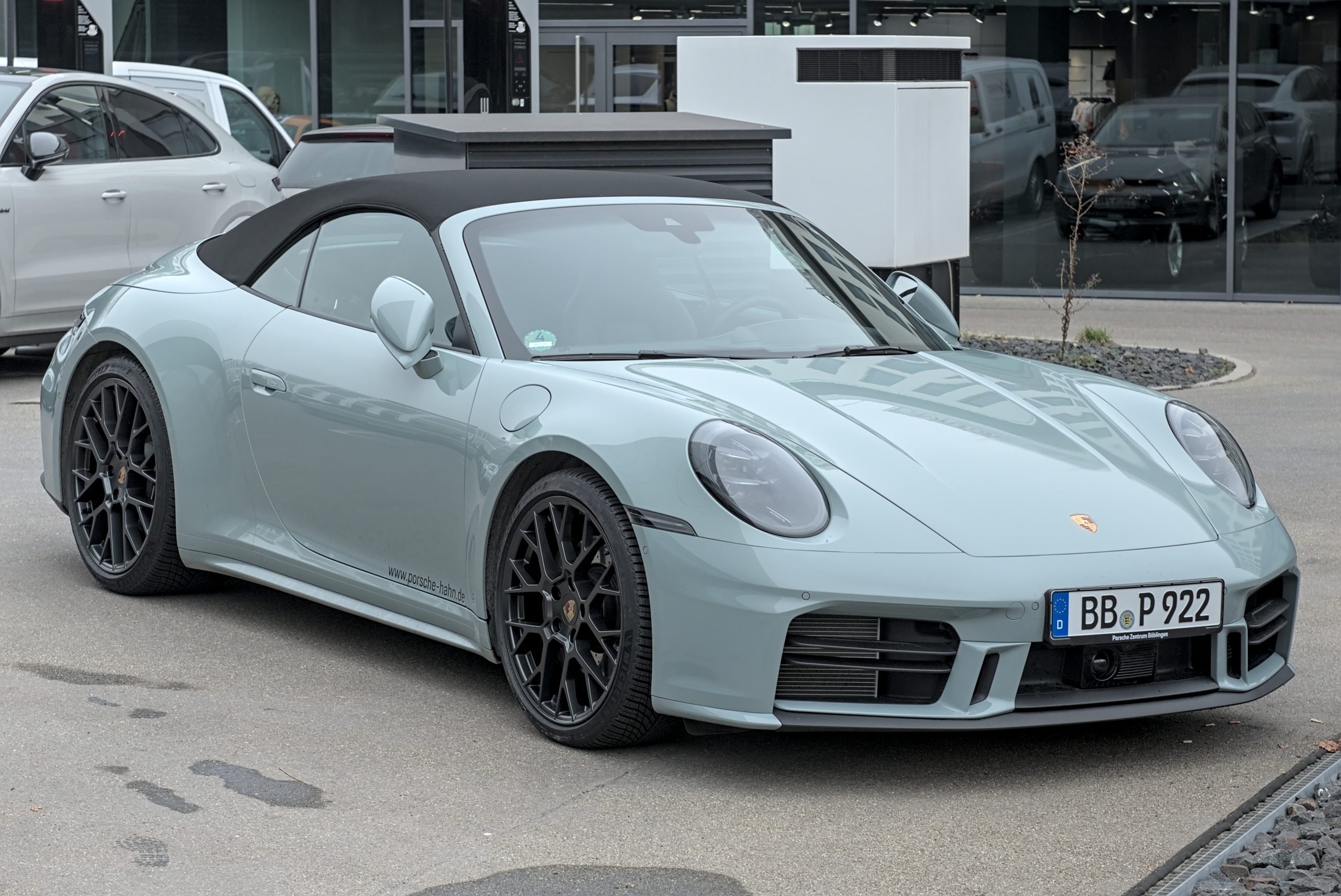
2. BMW M3 (G80): The Super Sedan That Does It All
The BMW M3 (G80) redefines what a high-performance sedan can be, blending supercar-level performance with everyday practicality. Built on the 3 Series chassis, it offers real back seats, a spacious trunk, and the latest iDrive infotainment system, making it a true “single-car solution” for enthusiasts.
With over 500 horsepower in the Competition variant and optional xDrive all-wheel drive, the G80 M3 delivers astonishing acceleration while remaining usable in daily life.
At its core is the S58 3.0-liter twin-turbo inline-six, which produces 473 hp in the standard M3 and up to 523 hp in the Competition. Torque delivery is impressively linear, ranging from 2,650 to 6,130 rpm, allowing effortless highway surges and predictable, controllable bursts on twisty roads.
With M xDrive, 0-60 mph can be achieved in just 3.2 seconds, while the AWD system provides remarkable traction in wet or slippery conditions. Unlike its predecessor, the G80 balances raw power with refined drivability, avoiding sudden spikes in torque while offering a “bottomless” feel during spirited driving.
Chassis and handling further enhance its versatility. Weighing around 1,730 kg, the M3 hides its mass through exceptional front-end grip and precise, planted steering.
The Adaptive M Suspension allows the car to perform dual roles: in Comfort mode, it absorbs bumps and provides a smooth, daily-driving experience; in Sport+, it transforms into a track-ready machine with razor-sharp responsiveness. Braking is adjustable with Comfort and Sport pedal settings, giving drivers fine control over stopping power for both city and track use.
The interior combines luxury and performance-focused ergonomics. A 14.9-inch curved display running iDrive 8.5 integrates augmented reality navigation and an M-specific configurable instrument cluster. M Carbon Bucket Seats, while highly supportive on track, can be tight for everyday use, but the red M1 and M2 steering wheel buttons make it effortless to switch from quiet commuter mode to full performance mode.
Practicality remains a strong suit: four adults can travel comfortably, luggage fits easily in the large trunk, and features like ventilated seats and a compliant suspension make daily driving comfortable.
Despite early criticism of its bold kidney grille and increased weight, the G80 has proven itself a mechanical triumph. Its ability to combine comfort, technology, performance, and all-weather usability makes it arguably the most complete M3 ever, bridging the gap between daily practicality and track-day exhilaration.
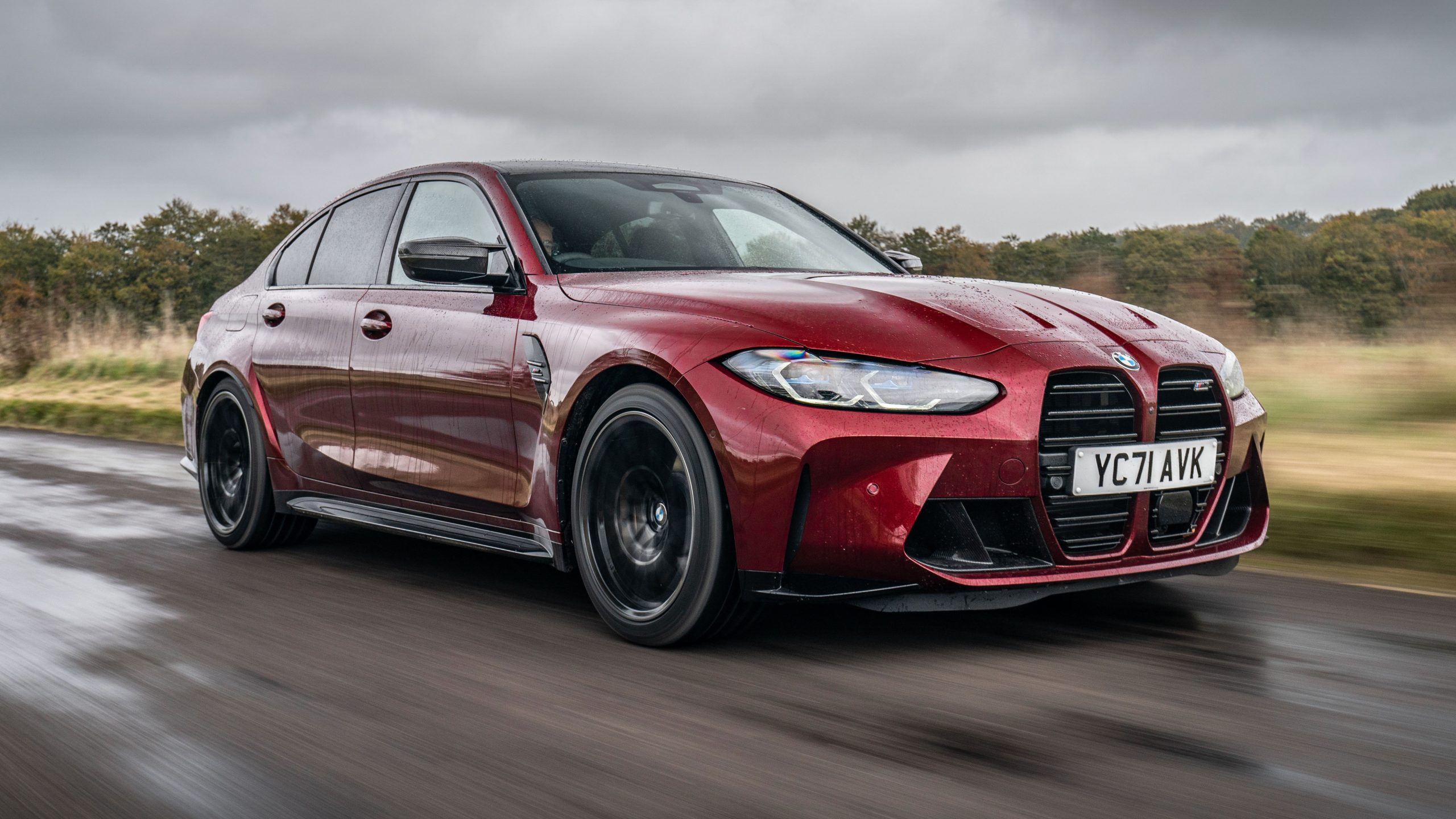
3. Chevrolet Corvette (C8): A Mid-Engine Supercar That Works Daily
The Chevrolet Corvette (C8) represents a major evolution for the Corvette by moving the engine to the middle while maintaining practicality. It provides dual storage areas, with a front trunk and a rear compartment offering a total of about 13 cubic feet of space, enough for two golf bags or luggage for a weekend trip.
Features such as the programmable front-lift system and multiple driving modes make the car easier to use on city streets and steep driveways without sacrificing comfort.
Ride quality is excellent for a high-performance vehicle. The optional Magnetic Ride Control suspension adapts to road conditions and can soften the ride to a very comfortable level in Tour mode. At the same time, it remains capable of aggressive cornering when desired.
Visibility is supported by a high-definition rear camera mirror and available blind-spot monitoring, which helps overcome the challenges of the mid-engine layout. The Corvette can be driven quietly and smoothly in Tour or Weather modes or switched to Performance mode for track-level capability.
The C8 is powered by a 6.2-liter pushrod V8 engine producing 490 horsepower and 470 pound-feet of torque. With the Z51 performance package, output increases slightly to 495 horsepower and adds an electronically limited-slip rear differential, upgraded brakes, and summer tires.
Power is delivered through an eight-speed dual-clutch automatic transmission with push-button controls and steering-wheel-mounted paddles. A manual transmission is not available. The car can accelerate from 0 to 60 mph in 2.8 seconds, complete a quarter-mile in 11.2 seconds, stop from 70 mph in 149 feet, and sustain over 1.0 g on the skidpad.
The interior is focused on the driver. It features a 14-inch reconfigurable gauge display, a large infotainment touchscreen, and materials such as leather, metal, and optional carbon-fiber trim. The coupe’s removable roof fits into the rear compartment, keeping the car practical. Standard technology includes Bluetooth, Wi-Fi, wireless Apple CarPlay and Android Auto, and a 10-speaker Bose system with an optional 14-speaker upgrade.
Safety features include automated emergency braking, lane-departure warning with lane-keeping assist, and optional blind-spot monitoring and rear cross-traffic alert.
Despite its low ground clearance and compact cabin, the Corvette balances extreme performance with usability, comfort, and modern technology. With a five-year or 60,000-mile powertrain warranty and a three-year or 36,000-mile limited warranty, the C8 proves that it can deliver both thrilling performance and daily practicality.
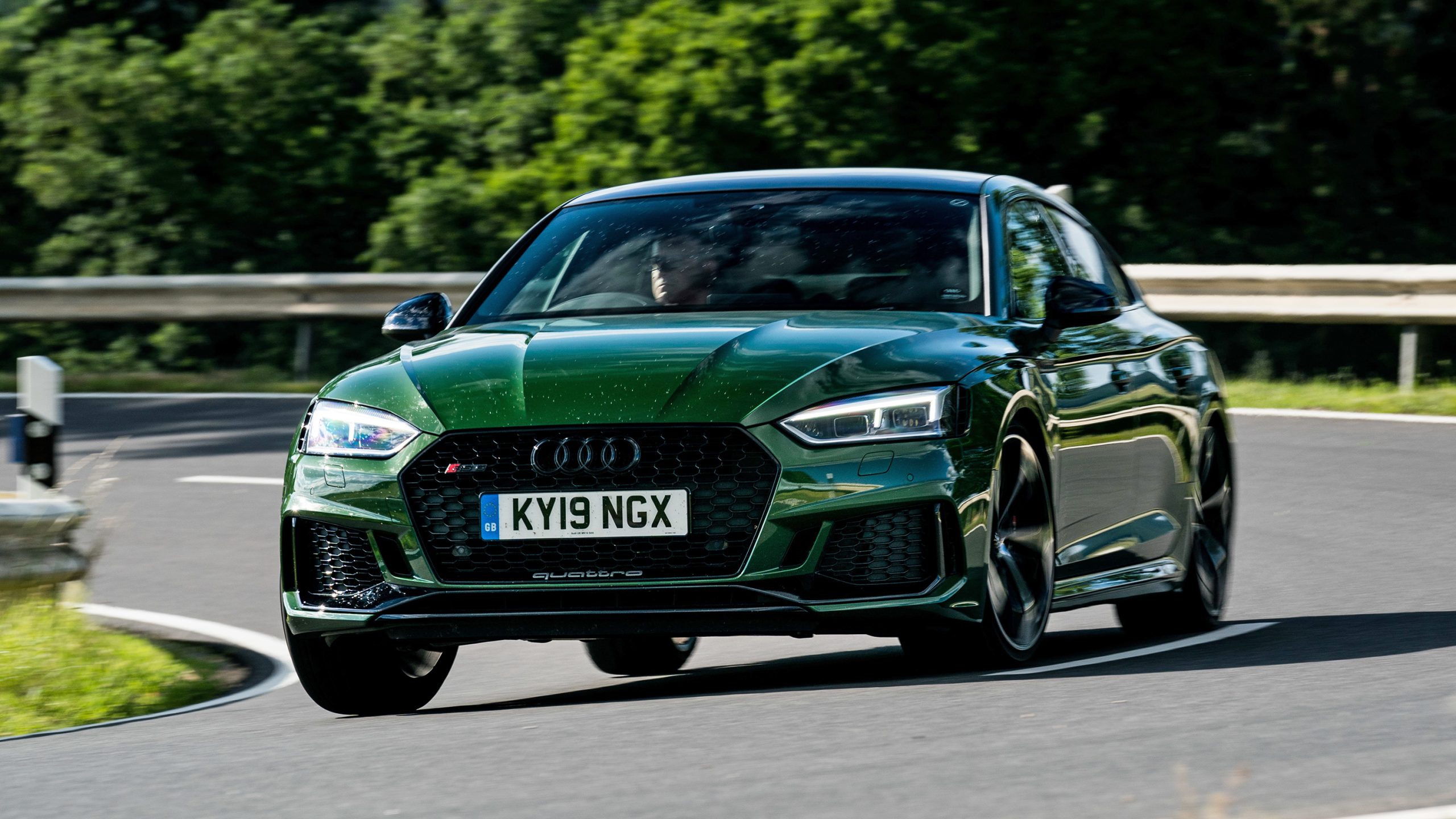
4. Audi RS5 Sportback: High-Performance Hatchback for All Seasons
The Audi RS5 Sportback is designed for drivers who need everyday practicality without sacrificing performance. Combining a hatchback’s utility with a twin-turbo V6 and Quattro all-wheel-drive, the RS5 Sportback performs confidently in all weather conditions, including snow, while offering a quiet, comfortable cabin that reduces stress during daily commutes. Its hatchback body provides versatility unmatched by typical sedans, and the rear seats can accommodate two passengers comfortably.
Power comes from a 2.9-liter twin-turbo V6 producing 444 horsepower and 443 pound-feet of torque. An eight-speed automatic transmission with paddle shifters sends power to all four wheels, with Quattro directing torque primarily to the rear when needed for more dynamic driving.
The RS5 accelerates from 0 to 60 mph in just 3.3 seconds, keeping pace with competitors such as the Alfa Romeo Giulia Quadrifoglio and BMW M3 Competition at low speeds. Adaptive dampers ensure a smooth ride in everyday settings while remaining precise and responsive in the sportiest Dynamic mode, offering well-controlled body motions and predictable handling.
Inside, the RS5 Sportback combines advanced technology with luxury. The cabin features a 12.3-inch digital gauge cluster and a single 10.1-inch touchscreen angled toward the driver. Apple CarPlay, Android Auto, and wireless charging are standard, with options for navigation and a high-end Bang & Olufsen stereo.
Seats are intricately stitched, heated, cooled, and equipped with massaging functions, with optional Alcantara and RS Design packages adding sporty red highlights. Ambient interior lighting, three-zone climate control, and a panoramic sunroof further enhance comfort.
Fuel efficiency is competitive for a performance vehicle, achieving an EPA-estimated 18 mpg in the city and 25 mpg on the highway, with real-world highway tests showing 26 mpg. Safety features include forward-collision warning, automated emergency braking, adaptive cruise control, lane-departure warning, and lane-keeping assist. Blind-spot monitoring and self-parking assist are available as options.
The RS5 Sportback is built to balance daily usability with high performance. Its hatchback design, all-wheel-drive traction, and adaptable suspension make it a competent daily driver, while the twin-turbo engine and precise handling deliver thrills on demand.
Competitive warranties, including a four-year or 50,000-mile limited and powertrain coverage, align with luxury rivals. Overall, the RS5 Sportback offers a unique blend of versatility, comfort, technology, and speed, making it an ideal choice for drivers seeking a practical car that does not compromise on excitement.
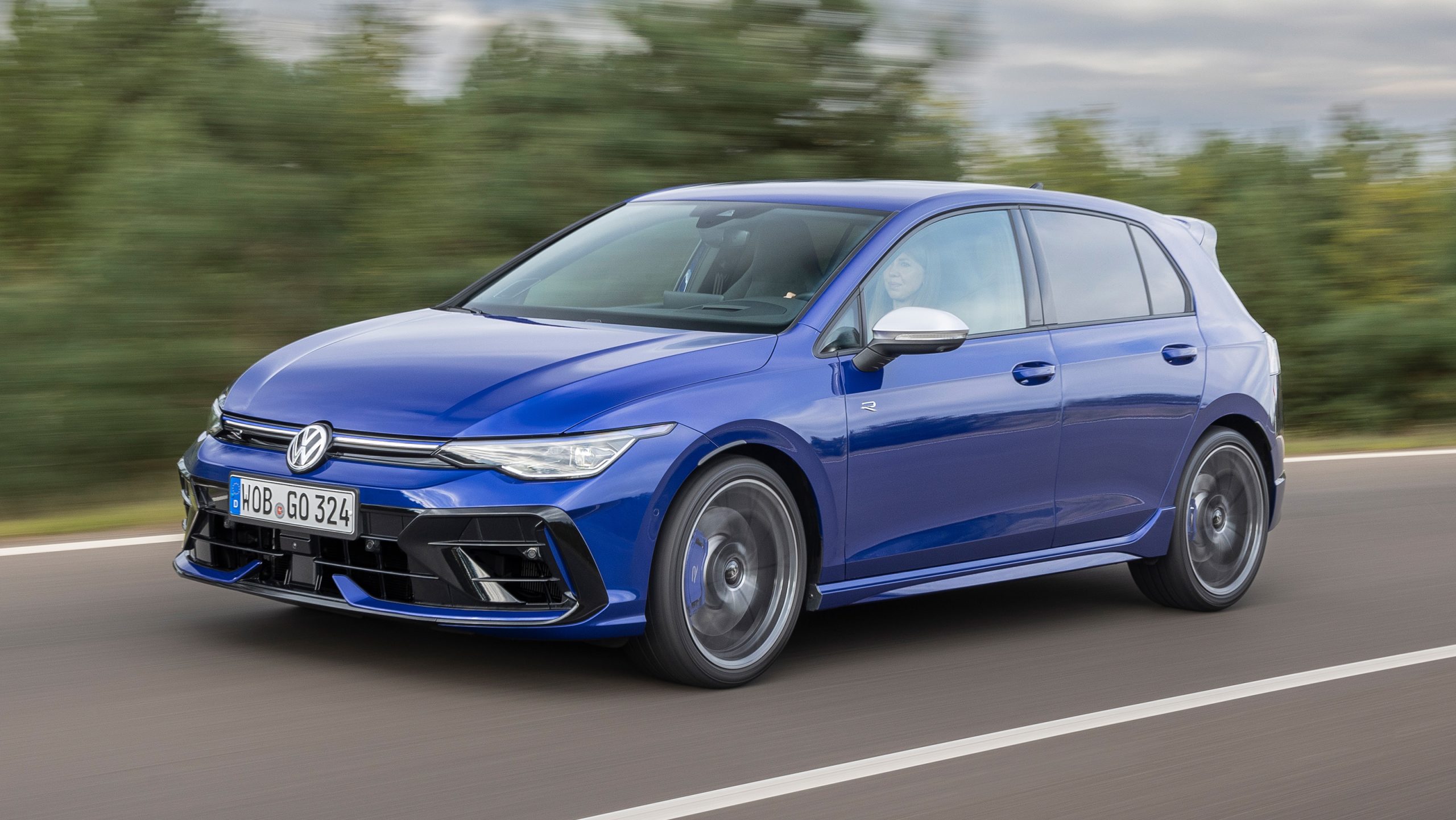
5. Volkswagen Golf R: The Sleeper Hatchback That Excels Daily
The Volkswagen Golf R is a high-performance hatchback that balances speed, practicality, and comfort. Often called a “sleeper,” it delivers 328 horsepower while maintaining the unassuming appearance of a standard Golf.
Its compact size makes it easy to park, while the five-seat, four-door hatchback layout offers 20 cubic feet of cargo space, making it highly versatile for daily life. Modern features such as heated and ventilated seats, a 12.9-inch touchscreen infotainment system, and adaptive driver-assistance technology enhance usability and convenience.
The Golf R is powered by a turbocharged 2.0-liter four-cylinder engine producing 328 horsepower and 310 pound-feet of torque. Power is routed through a seven-speed dual-clutch automatic transmission to the standard 4MOTION all-wheel-drive system, which includes a rear differential that actively distributes torque between the rear wheels for improved handling.
With these capabilities, the Golf R accelerates from 0 to 60 mph in 4.1 seconds and can complete a 0-to-150-to-0 speed test in just over 40 seconds, outperforming several rivals in real-world testing. Seven driving modes, including Comfort, Sport, Race, and the Special Nurburgring mode, allow the car to adapt seamlessly from relaxed commuting to spirited driving on challenging roads.
Ride quality is enhanced by adaptive dampers that provide a smooth, compliant experience for daily use while maintaining stability and precision in more aggressive settings. The cabin remains refined and driver-focused, with high-back sport seats, R-branded details, and intuitive controls.
Instrumentation includes a 10.2-inch digital driver display and a configurable head-up display, while the infotainment system supports Apple CarPlay, Android Auto, wireless charging, and a GPS lap timer with g-meter functionality.
Safety is comprehensive, with forward-collision warning, automated emergency braking, adaptive cruise control with lane-centering, and lane-keeping assist all standard. Additional features such as blind-spot monitoring are available to further enhance security. Fuel efficiency is strong for a performance hatchback, rated at 22 mpg city, 31 mpg highway, and achieving up to 34 mpg on tested highway runs.
The Volkswagen Golf R combines everyday practicality with impressive performance, handling, and technology. It is compact enough for city life, comfortable for long drives, and versatile for cargo needs, while still providing thrilling acceleration and precise handling when desired.
With competitive limited and powertrain warranties, along with two years of complimentary scheduled maintenance, the Golf R stands out as one of the most capable and well-rounded daily-driver performance cars in its segment.
Also Read: 5 Cars That Stay Quiet at City Speeds vs 5 That Don’t
5 That Are Only Good for Weekends
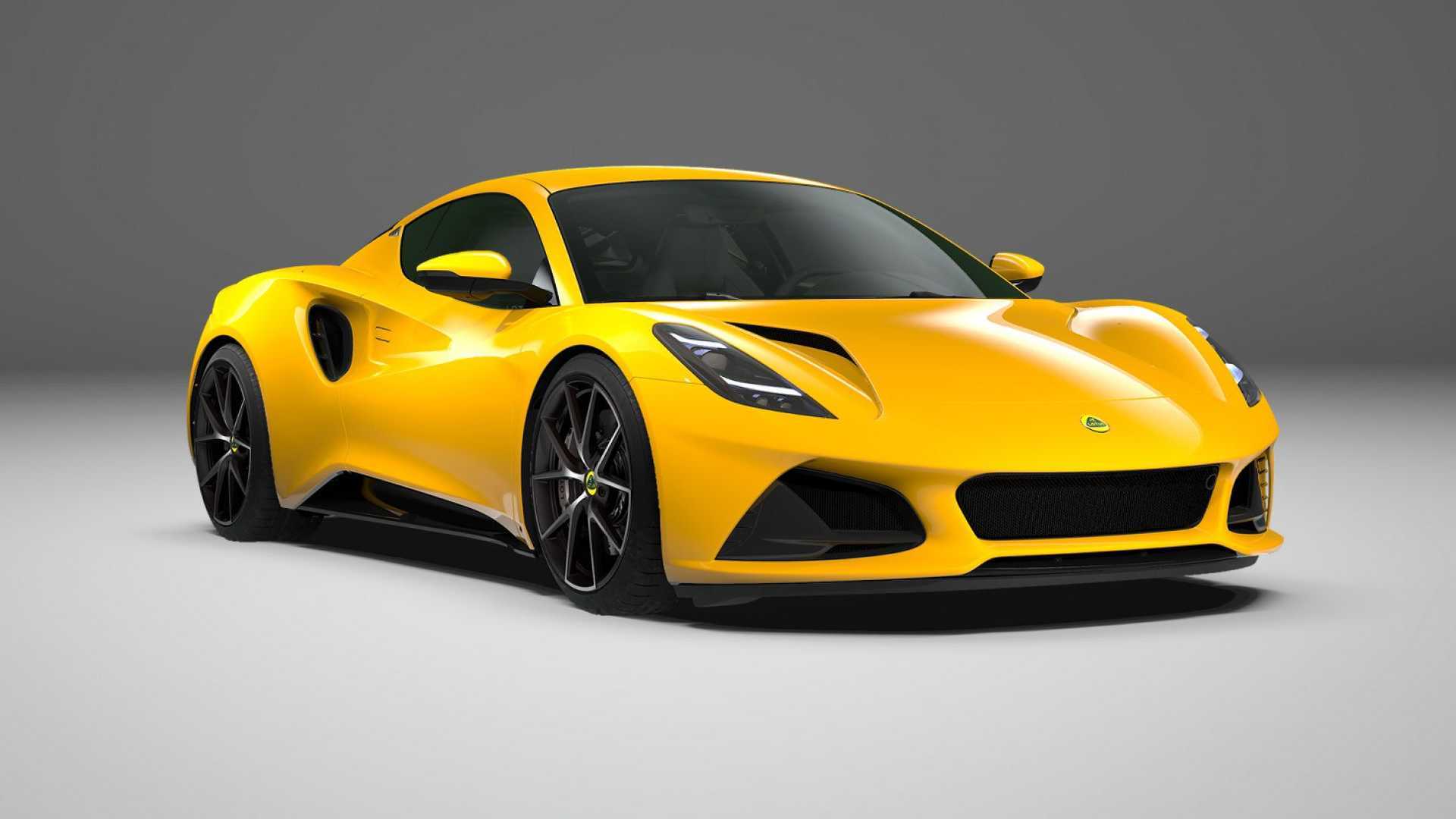
1. Lotus Emira: Stunning Performance Car Best Suited for Weekends
The Lotus Emira is a beautiful, lightweight sports car that emphasizes driving purity, but its practicality for daily use is limited. While Lotus markets it as a more “civilized” option, the Emira’s low ride height, mechanical controls, and compact storage make it better suited as a weekend toy rather than a primary commuter.
Cargo space is the most significant limitation. The Emira lacks a front trunk, and the rear boot behind the engine offers just 151 liters, which becomes extremely hot during driving, making it unsuitable for groceries or temperature-sensitive items. A cabin shelf provides 208 liters for soft bags, but accessing it requires lifting items over the seats, which is cumbersome for frequent errands.
Mechanical controls further challenge daily usability. The hydraulic steering provides exceptional feedback on winding roads, but is heavy and tiring in parking garages or city traffic. The V6 manual model features a stiff clutch and deliberate gearshift, demanding more focus and effort than a typical commuter car.
Urban maneuverability is also restricted. Ground clearance of 140mm makes speed bumps manageable but still risks scraping the front lip on steep driveways. Over-the-shoulder visibility is poor, complicating lane changes and tight merges, while the 10.9-meter turning circle reduces agility in confined spaces.
Running costs are high for daily use. The V6 engine averages 16 mpg city and 24 mpg highway, and specialized 20-inch performance tires and brakes wear quickly and are costly to replace. Routine maintenance is more frequent than in standard commuter cars, adding to long-term expenses.
Finally, the Emira’s exotic appearance often makes owners reluctant to use it for mundane trips. Its striking looks attract attention, which can make simple errands stressful and diminish the novelty of driving. Most owners reserve the Emira for spirited weekend drives or canyon runs, preserving its special character for occasions that truly exploit its performance and handling.
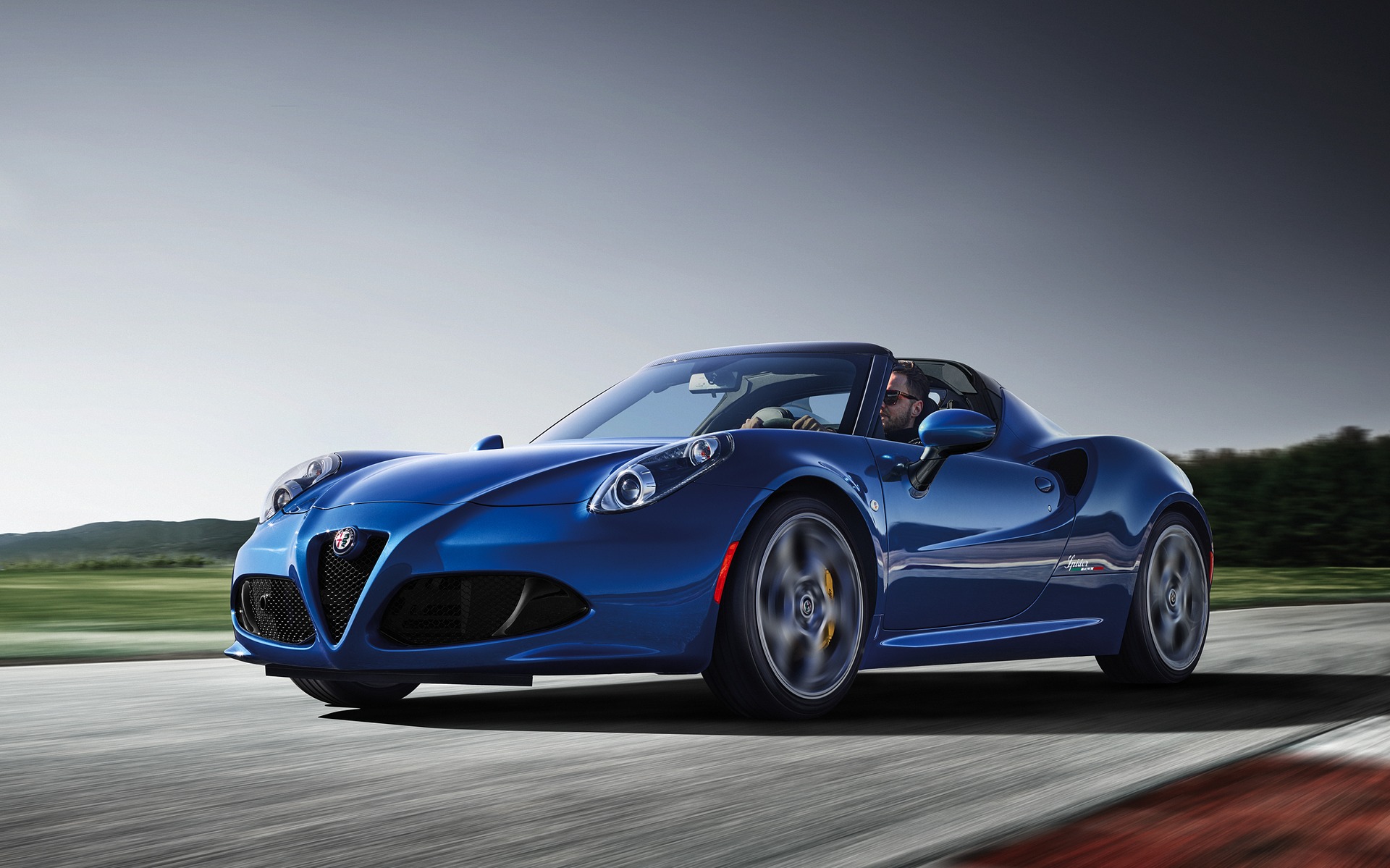
2. Alfa Romeo 4C: A Weekend-Only Track-Focused Gem
The Alfa Romeo 4C is a lightweight, mid-engine masterpiece often described as a “street-legal go-kart.” Its carbon fiber tub, minimal weight, and precise chassis deliver exhilarating performance on winding roads or the track. However, its extreme focus on driving purity makes it almost impossible to use as a daily driver.
Comfort is virtually nonexistent. The 4C lacks power steering, making low-speed maneuvers and parallel parking physically demanding. The interior is Spartan, with no glovebox, armrests, or effective sound insulation.
Infotainment is minimal, often comparable to a basic aftermarket radio, and is overwhelmed by the engine’s constant roar. Seating requires “falling” into the carbon fiber tub, making entry and exit difficult and awkward.
Ride quality and urban handling are equally unforgiving. The stiff, track-focused suspension transmits every bump and road imperfection to the driver, producing a harsh and sometimes unpredictable experience on imperfect pavement.
Rearward and over-the-shoulder visibility is very limited, and the absence of a backup camera in early models makes city driving and parking challenging. The dual-clutch transmission also lacks a creep function, requiring precise throttle input in stop-and-go traffic, which adds to the strain in everyday use.
Practicality is minimal. The rear trunk offers only 110 liters, and its location directly behind the engine exposes items to extreme heat, making grocery runs or transporting delicate items impractical. The car’s low ground clearance and wide carbon fiber sills further complicate daily errands.
The Alfa Romeo 4C is an event car. It excels when driven for pleasure on open roads or the track, providing an unfiltered, visceral connection between driver and machine. For routine commuting, errands, or city traffic, it is exhausting and impractical, cementing its status as a weekend-only toy for enthusiasts who value pure driving engagement over comfort or convenience.
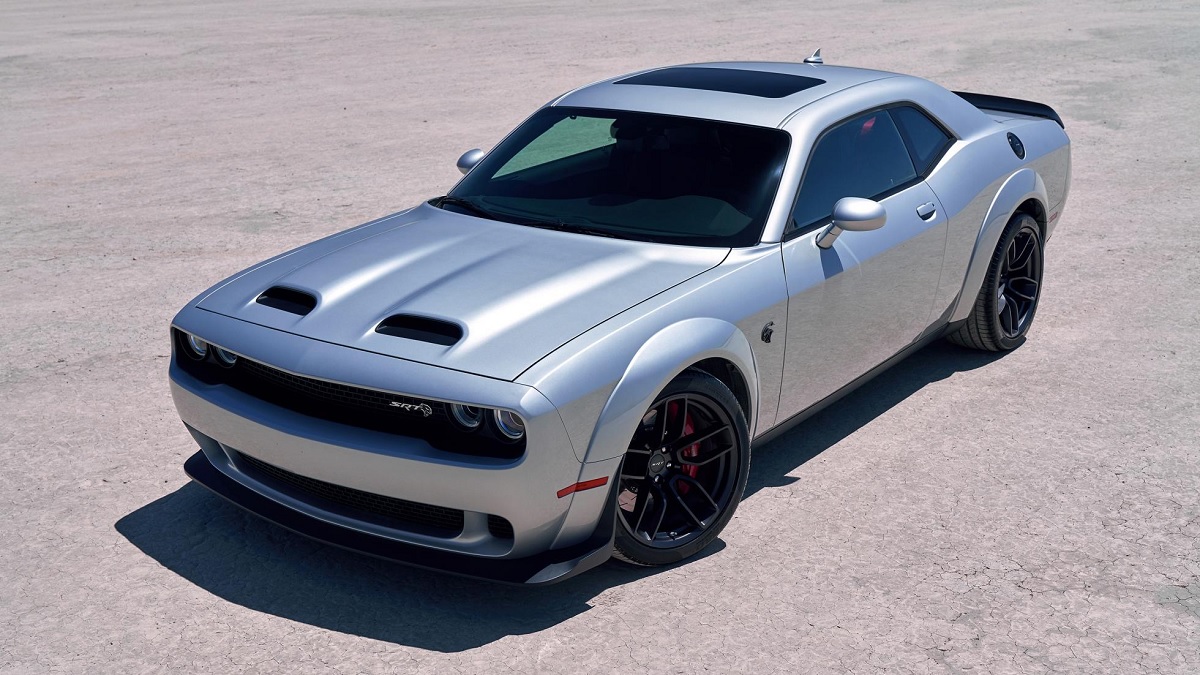
3. Dodge Challenger SRT Hellcat: A Weekend Muscle Car Icon
The Dodge Challenger SRT Hellcat is a modern American powerhouse, boasting over 717 horsepower and a commanding presence on the road. While it excels on wide-open highways and drag strips, its extreme performance, fuel demands, and sheer size make it a challenging choice for everyday driving. Many owners regard it as a weekend-only car due to the financial, physical, and safety considerations of commuting in traffic.
Daily operating costs are a major hurdle. The Hellcat’s city fuel economy ranges from 9 to 13 mpg, meaning frequent refueling that can cost $1.05–$1.25 per mile with premium gasoline.
High torque rapidly wears rear tires, requiring replacements one to two times per year at roughly $420 per corner for performance tires like Pirelli P Zeros. Insurance premiums are also steep, often between $3,200 and $5,800 annually, which can exceed monthly car payments for younger drivers.
Practicality is limited by the Challenger’s massive size and weight of over 4,500 pounds. Parking in urban areas can be difficult, especially with Widebody trims, while the high beltline and narrow windows reduce visibility and complicate lane changes. Front splitters are easily scraped on steep driveways or speed bumps, adding to daily stress.
The Hellcat’s extreme performance further complicates everyday use. Controlling 707+ horsepower on wet or icy streets requires constant attention, and its aggressive design attracts both law enforcement and potential thieves. Many owners find stop-and-go traffic to be “nerve-jangling” rather than exhilarating.
Preserving the car’s value is another consideration. With prices often between $80,000 and $100,000, exposing the Hellcat to potholes, road salt, and unpredictable urban traffic can jeopardize its long-term resale value. As a result, owners typically reserve it for special occasions, weekend drives, or track use rather than routine commuting.
While the Dodge Challenger SRT Hellcat delivers thrilling acceleration and a “stupid grin” for the first few miles, its heavy fuel consumption, challenging handling at lower speeds, large footprint, and high running costs make it far better suited as a weekend machine.
It excels in environments where its power can be fully appreciated and safely managed, reinforcing its status as an iconic, high-performance American muscle car best enjoyed outside the constraints of daily life.
4. Porsche 718 Cayman GT4 RS: A Track-Focused Machine Too Hardcore for Daily Driving
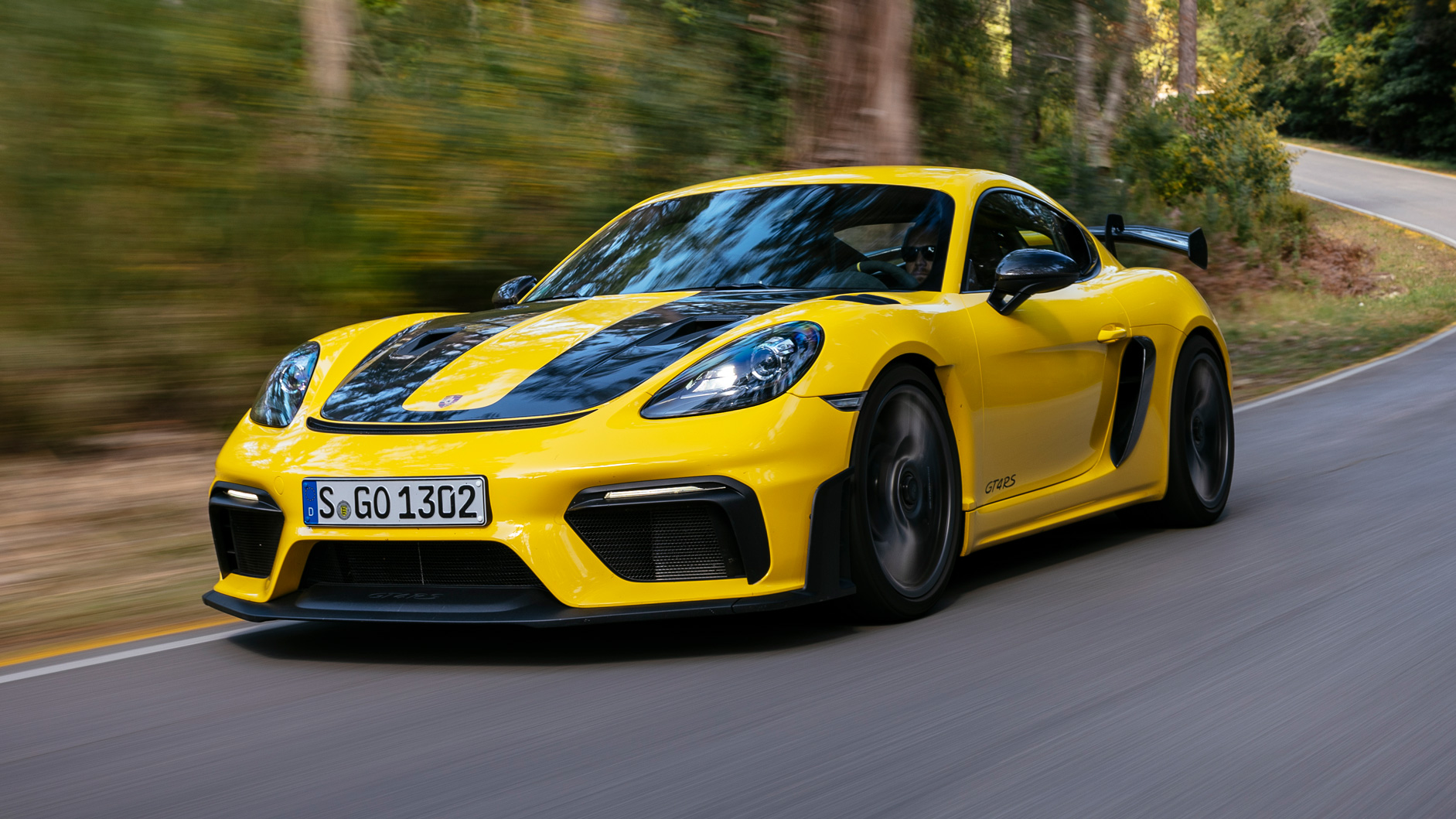
The Porsche 718 Cayman GT4 RS is an uncompromising track-oriented Porsche that delivers one of the most visceral driving experiences in the brand’s history. While it is street-legal, its extreme performance, noise, and unforgiving chassis make it highly impractical for daily commuting.
Designed for maximum precision and engagement, the GT4 RS excels on smooth tracks and canyon roads but punishes the driver on city streets, speed bumps, or pothole-laden highways.
Noise is the first barrier to daily usability. Unlike a standard Cayman, the GT4 RS relocates its air intakes to the rear quarter windows, placing them just inches from the driver’s ears.
Under heavy throttle, the carbon-fiber airbox generates 109 decibels of induction roar, making phone calls, podcasts, or hands-free conversations impossible without shouting. While exhilarating for short, spirited drives, this volume becomes physically fatiguing on longer commutes.
The suspension is equally extreme. Porsche replaced nearly every rubber bushing with rose-jointed metal-on-metal connections, producing surgical steering precision but transmitting every road imperfection directly to the driver.
The springs are roughly twice as stiff as those in a standard GT4, making rough city streets punishing rather than enjoyable. Adaptive suspension technology is minimal, so comfort is sacrificed entirely for performance.
Practicality suffers further due to the GT4 RS’s geometry and track-focused hardware. The car sits 30mm lower than a base Cayman, and even with the optional front-axle lift, the aggressive splitter is prone to scraping on steep driveways or speed bumps.
Fixed carbon-fiber bucket seats hold the driver at high lateral forces but do not recline, and climbing over high bolsters becomes physically tiring during routine errands. Visibility is also compromised, with rear-quarter windows replaced by air intakes, creating large blind spots that make lane changes in traffic stressful and risky.
The Porsche 718 Cayman GT4 RS is a weekend-only car. Its deafening intake, bone-jarring suspension, low ride height, and uncompromising ergonomics make it unsuitable for grocery runs, city streets, or commuting.
While it is a precision instrument that delivers unparalleled connection and excitement on the track, attempting to use it for everyday tasks is akin to using a scalpel to slice bread.
It works technically, but it is the wrong tool for the job. Enthusiasts buy the GT4 RS to experience raw performance and driver engagement, reserving it for spirited drives on mountain passes, racetracks, or open highways where its extreme capabilities can truly be appreciated.
5. Ford Shelby GT500: A Weekend Muscle Car Thrill Machine
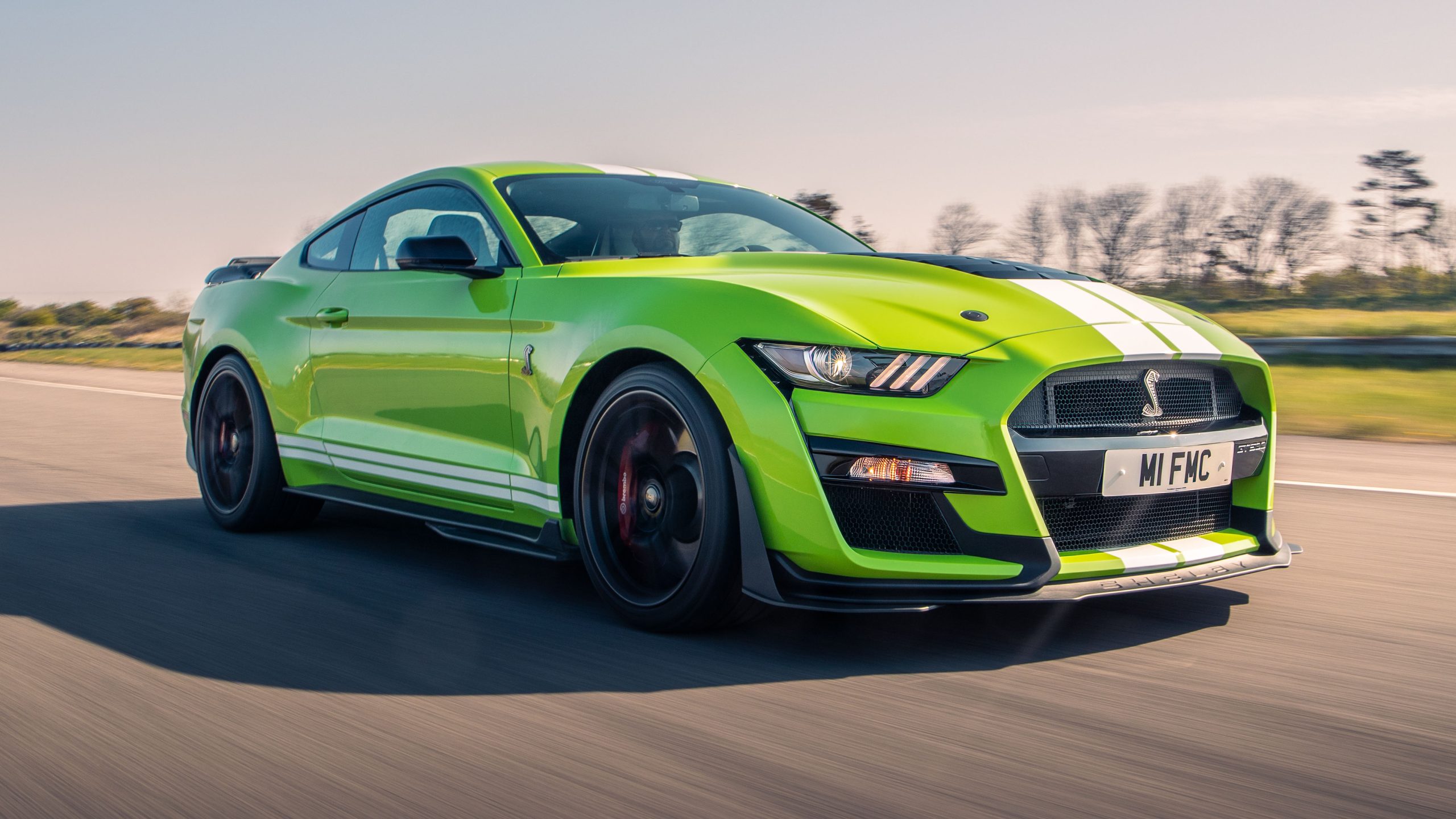
The Ford Shelby GT500 is a Mustang amplified to extreme levels, boasting 760 horsepower, aggressive aerodynamics, and track-ready engineering. While technically capable of daily driving due to its refined dual-clutch transmission and adjustable suspension, its practical limitations, high operating costs, and sensitivity to wear make it a car best reserved for weekends and spirited drives rather than routine commuting.
Daily operating costs are a significant barrier. The GT500 is notoriously fuel-thirsty, with an EPA rating of 12 mpg city and 18 mpg highway, and real-world use often drops the average to 13.6 mpg. Its 16-gallon tank provides only about 200 miles of range, forcing frequent fuel stops. Maintenance is also costly.
Routine synthetic oil changes run between $200 and $400, while high-performance tires, essential for the car’s immense power, can cost $1,000 to $1,500 per set and wear quickly under aggressive driving. Furthermore, not all Ford dealerships can service Shelby-specific components, leading to potential downtime of 30 to 40 days for specialized repairs.
Practicality and comfort challenges further limit its daily usability. The front splitter is extremely low, making steep driveways, speed bumps, and parking lots a constant threat for scraping and damage. Many GT500s are equipped with Recaro racing seats, which excel on the track but are confining and fatiguing for longer urban commutes, lacking power adjustments or climate control.
The exhaust and performance tires create a loud, immersive cabin environment that can be exhausting during stop-and-go traffic, even when the quieter exhaust mode is engaged.
Depreciation and collector status also discourage daily use. The GT500 is widely regarded as a future classic, with low-mileage, well-maintained examples frequently valued between $80,000 and $100,000. Daily driving quickly accumulates mileage, which can sharply reduce resale value. Owners often prefer to reserve the car for high-quality weekend miles, preserving both its mechanical integrity and market value.
The Ford Shelby GT500 delivers unparalleled muscle car excitement on open roads and track days. Its combination of extreme power, sharp handling, and aggressive aesthetics makes it a thrill to drive, but its fuel consumption, maintenance costs, limited practicality, and sensitivity to mileage make it impractical as a daily commuter.
For most enthusiasts, the GT500 is a weekend-only weapon designed for controlled, high-adrenaline enjoyment rather than the grind of Monday-to-Friday traffic.
Choosing a sports car for daily life requires balancing performance with practicality. Cars like the 911, M3, Corvette C8, RS5 Sportback, and Golf R prove that you can have both speed and comfort, offering features such as adaptive suspensions, all-wheel drive, usable cargo space, and advanced driver assistance. They are capable of handling traffic, errands, and long commutes without sacrificing the thrill of driving.
Conversely, weekend-only vehicles like the Emira, 4C, Hellcat, GT4 RS, and Shelby GT500 are purpose-built for raw performance, extreme handling, and track-level excitement. Their low ride heights, stiff suspensions, high fuel consumption, and limited practicality make them unsuitable for everyday use.
Enthusiasts reserve these cars for special drives, preserving their performance and novelty while enjoying them in environments that fully exploit their capabilities. Understanding these differences ensures the right car for the right lifestyle.
Also Read: 10 Cars With Windshields That Rarely Crack From Rock Chips