
When people shop used, they usually fixate on mileage, brand reputation, or fuel economy. Far fewer buyers stop to think about suspension design, yet it’s one of the biggest long-term cost drivers on any vehicle.
Complex multi-link setups, adaptive dampers, and air suspensions feel great on day one, but once bushings crack or control arms wear out, repair bills add up fast.
For U.S. drivers who want predictable ownership costs, simpler is often smarter.
Cars with basic MacPherson struts up front and torsion-beam or straightforward multi-link rear layouts tend to be easier to diagnose, quicker to repair, and far cheaper to keep on the road.
Parts are plentiful, independent shops know them well, and alignment jobs don’t require exotic procedures. Over five to ten years of ownership, that difference can easily mean thousands of dollars saved.
Below are 12 used cars that combine proven reliability with uncomplicated suspension hardware, practical choices for commuters, first-time buyers, or anyone who wants transportation that doesn’t punish their wallet.
1. Toyota Corolla (2009–2014)
Backed by Toyota’s conservative engineering, this generation of Corolla uses a classic front strut / rear torsion-beam setup.
That simplicity is exactly why mechanics like it. Shocks and struts are inexpensive, rear bushings last a long time, and alignments are straightforward.
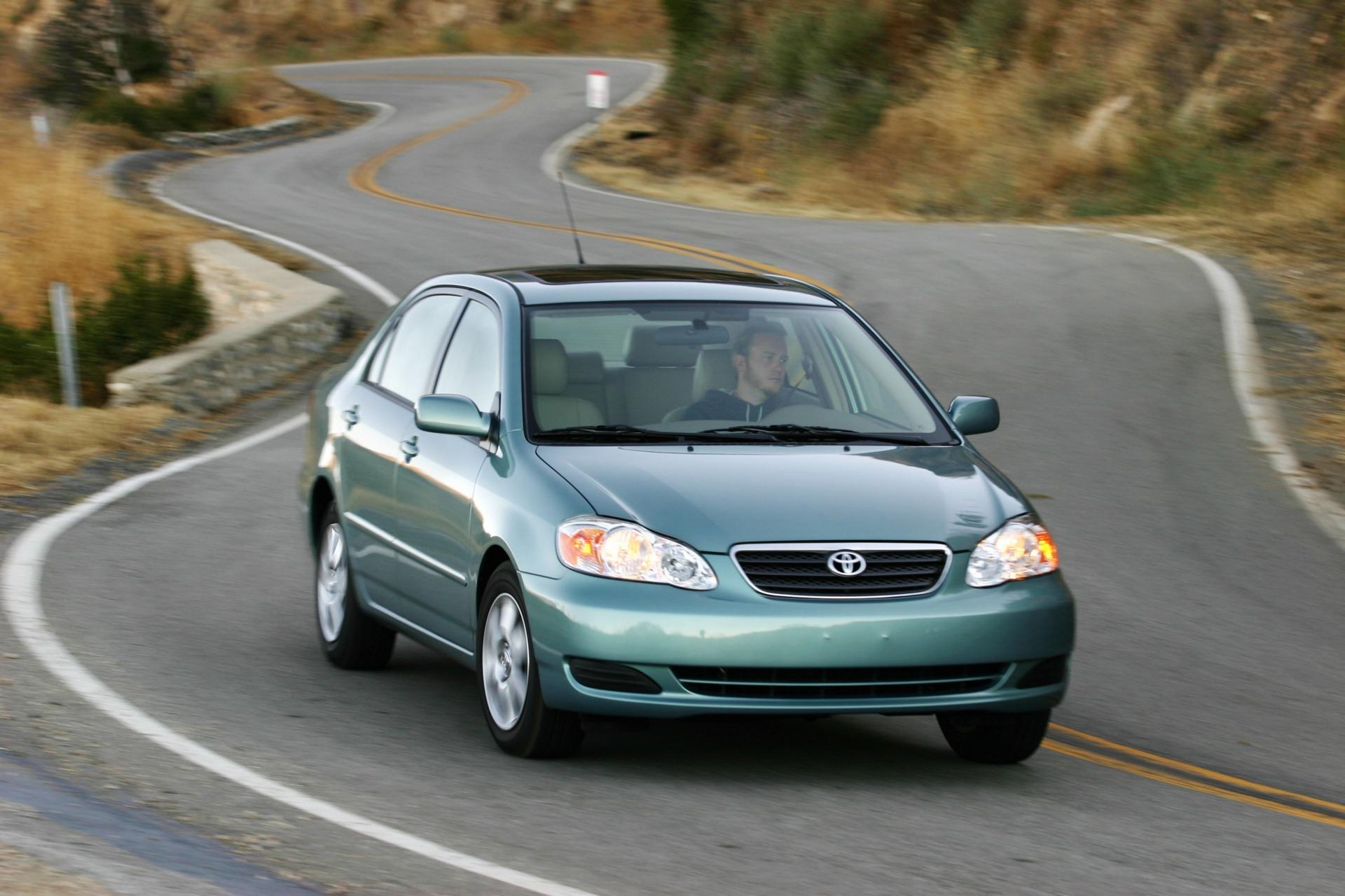
On the used market, these cars are everywhere, which keeps parts pricing competitive. Ride quality isn’t sporty, but it’s compliant enough for daily driving, and you’re unlikely to face surprise suspension repairs beyond routine wear items.
Toyota maintains that the model’s longevity is justified, citing annual sales approaching 400,000 units even late in its lifecycle. Regardless of perspective, the 2009 Corolla aligns closely with established brand expectations.
It excels as a highly refined, dependable economy car, but it does not attempt to deliver an unconventional or class-disrupting response to rivals such as the Honda Civic. Even in its sport-oriented trims, outright athleticism is not its defining trait. Understeer appears early and in a predictable manner.
While the chassis retains the light, maneuverable character typical of compact cars, it does not actively encourage enthusiastic exploration of winding roads or aggressive cornering maneuvers.
From a performance metrics standpoint, this restraint is unsurprising. Vehicles in this segment, including non-Si Civics, tend to produce closely grouped results in 0–60 mph acceleration, figure-eight testing, skidpad grip, and braking evaluations.
Toyota’s estimated acceleration figures reflect its moderate performance orientation: 0–60 mph in 10.3 seconds for the 1.8-liter paired with a four-speed automatic, under 10 seconds for the same engine with a five-speed manual, and 8.8 seconds for the larger 2.4-liter four-cylinder coupled with a five-speed automatic.
Both engines were newly introduced for this generation. The 2.4-liter unit, shared with the Toyota Camry, is exclusive to the XRS trim.
2. Honda Civic (2009–2011)
Built by Honda, the eighth-generation Civic pairs light weight with a basic independent rear suspension. Control arms, sway-bar links, and struts are all common service items with affordable replacements available nationwide.
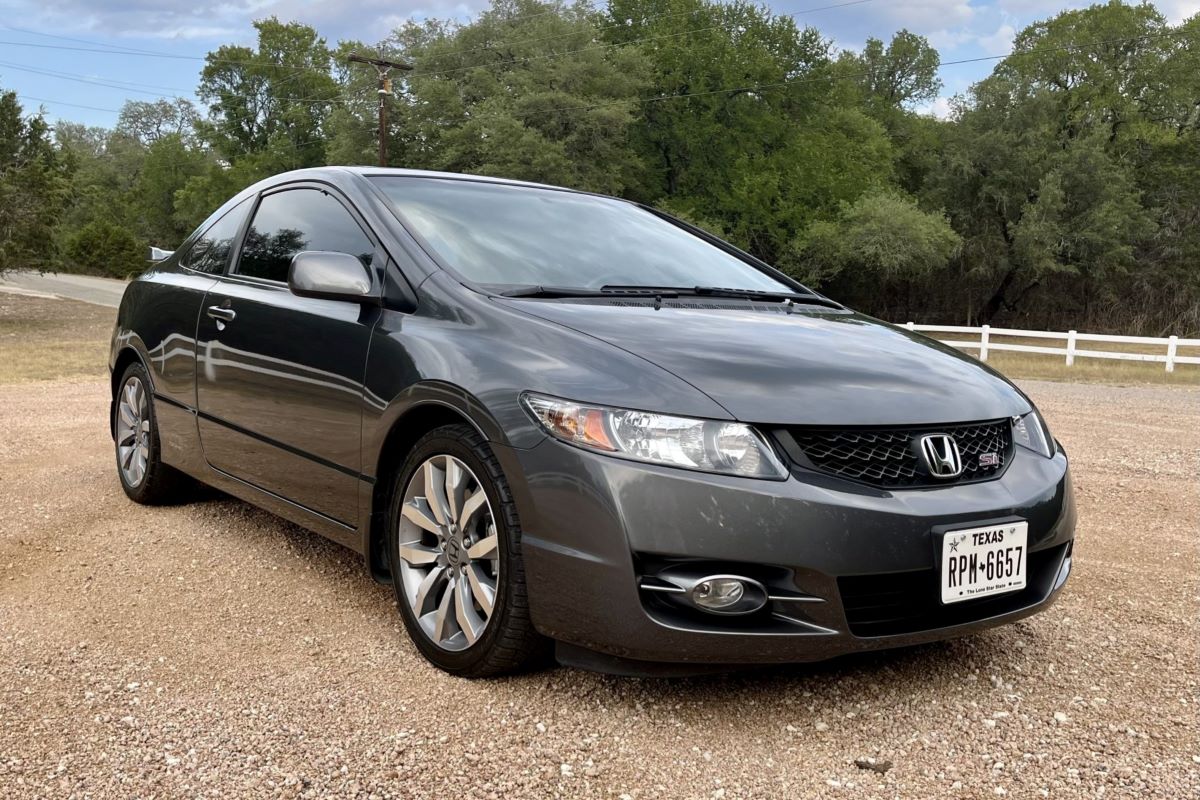
Civics also benefit from huge aftermarket support. If something does fail, you won’t be hunting for obscure components. For buyers who want something a bit sharper than a Corolla without higher complexity, this Civic hits a sweet spot.
3. Ford Focus (2012–2014)
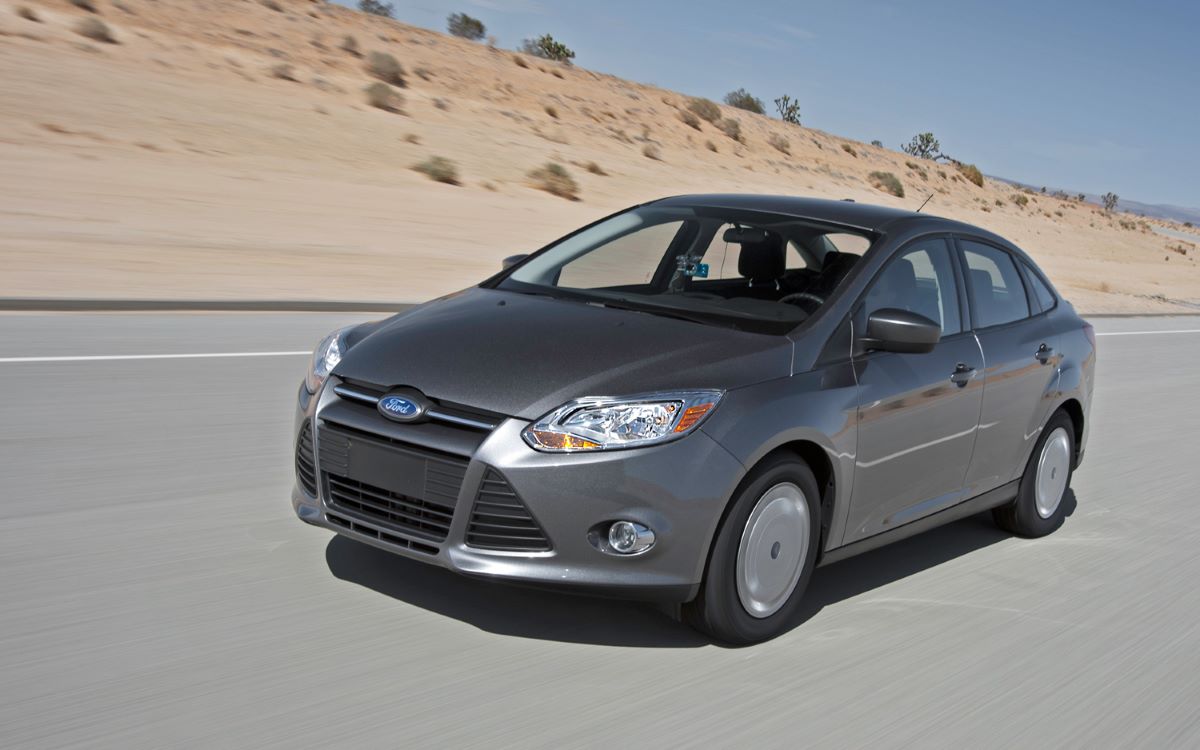
Ford gave the Focus a simple front strut design and a compact multi-link rear that’s still far less complicated than luxury competitors. The result is decent handling with manageable repair costs.
Suspension parts are cheap and widely stocked at U.S. auto parts chains. While you’ll want to avoid early automatic transmission issues on some trims, the suspension itself is refreshingly basic.
Regardless of engine selection, the Focus generally delivers performance that satisfies expectations within its class. Among the available petrol options, one in particular stands out, as discussed below.
The 114bhp 1.6 TDCi has proven especially popular. While not especially potent for a car weighing approximately 1380kg, its output aligns with modern emissions and fuel-efficiency demands.
In testing, it required 10.7 seconds to accelerate from rest to 60mph, and the same 10.7 seconds to progress from 30mph to 70mph. Those figures are consistent with its intended role as an efficient, everyday powertrain rather than a performance-focused unit.
Refinement is a strong suit. Engine noise is well contained, and at cruising speeds wind and tyre noise are effectively suppressed. This emphasis on isolation and quietness distinguishes the Focus within its segment.
A 103bhp variant of the 1.6 TDCi is available in Econetic form, alongside a base 94bhp version. The Econetic prioritises efficiency and delivers a compliant, quiet driving experience suited to steady, speed-limit-conscious travel.
The Duratorq diesel behaves similarly to the higher-output version: somewhat coarse at start-up, slightly reluctant when pulling away, and geared for relaxed, low-rev cruising rather than urgent acceleration.
The most powerful diesel offering is the 2.0-litre TDCi 163. Performance is strong, aided by a kerb weight comparable to the previous-generation model.
Although its effective power band is relatively narrow, with peak power arriving at 3750rpm, the closely spaced ratios of the smooth-shifting six-speed gearbox make it straightforward to keep the engine operating within its optimal range.
Petrol engines are equally competitive. The 1.6 Ecoboost 150 combines flexibility with commendable efficiency and contributes to a refined, relaxed driving character. However, the most noteworthy engine is the 1.0-litre three-cylinder Ecoboost.
In 123bhp form (a 99bhp version is also offered), it delivers impressive real-world economy, exceeding 50mpg in testing, while maintaining respectable performance.
Its efficiency rivals that of many diesels, yet it operates with greater smoothness and reduced noise. The engine significantly enhances refinement and represents a meaningful advancement for the model.
Additional petrol options include 84bhp, 103bhp, and 123bhp versions of a relatively conventional 1.6-litre unit. A 180bhp 1.6 Ecoboost sits below the performance-focused ST in Zetec-S trim.
While more responsive than the lower-output variants, it does not fully satisfy drivers seeking genuinely hot-hatch levels of pace. Even with the stronger Ecoboost engine, the Zetec-S delivers competent rather than exhilarating performance.
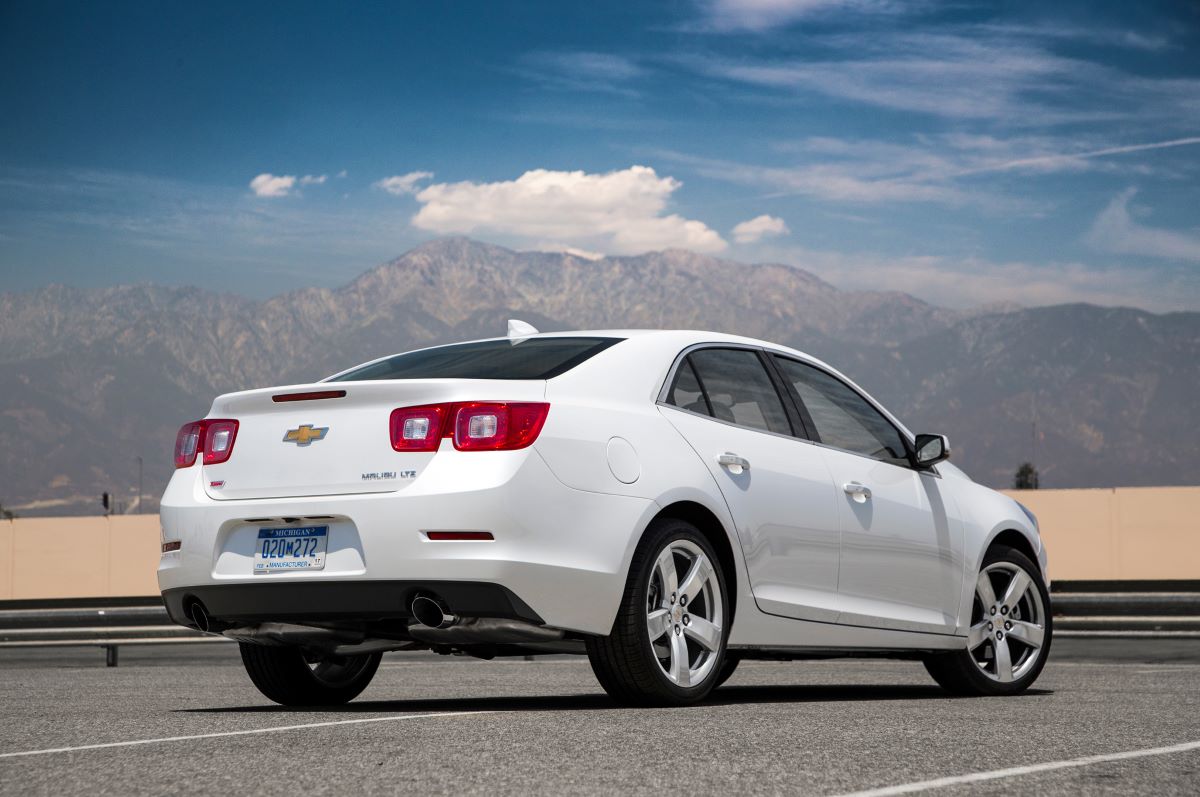
4. Chevrolet Malibu (2013–2015)
If you want something midsize, the Malibu from Chevrolet offers space without mechanical drama. Its suspension is tuned for comfort, using traditional struts and uncomplicated rear geometry.
This translates into lower labor hours when replacing shocks or bushings, something fleet operators appreciate, and private owners benefit from too. It’s not exciting, but it’s predictably affordable.
The previous-generation Malibu was competent in most areas but fell short of segment leadership. The fully redesigned 2013 model addresses those shortcomings with meaningful gains in refinement, available technology, and efficiency, positioning it as a credible contender in the midsize sedan class.
Improvements are most apparent in the cabin. Even lower trims benefit from extensive sound insulation, soft-touch surfaces, high-quality switchgear, and a more sophisticated overall presentation.
Aside from the base LS trim, a central touchscreen dominates the dashboard layout. While the interface is somewhat more complex than before, this reflects the broader feature set now available.
Dimensionally, the Malibu is wider than its predecessor, increasing shoulder and hip room. However, the slightly shorter wheelbase results in marginally reduced rear legroom compared with several rivals.
In practical terms, most occupants are unlikely to notice a significant difference. Overall interior space has improved, though very tall drivers may still limit rear-seat knee clearance.
Aerodynamic refinements further enhance efficiency, enabling the Malibu Eco to achieve an EPA-estimated 29 mpg combined. However, this figure is only marginally better than what four-cylinder versions of the Hyundai Sonata and Toyota Camry deliver.
More compelling options include the standard 197-horsepower 2.5-liter four-cylinder and the available 259-hp turbocharged 2.0-liter four-cylinder. Both engines provide stronger overall performance while maintaining competitive fuel economy, making them preferable choices for most buyers.
With these enhancements, the Malibu becomes a legitimate alternative to established segment leaders such as the Ford Fusion, Honda Accord, Kia Optima, and Volkswagen Passat. The redesigned model projects a more upscale character and improved overall polish.
All Malibu trims except the Eco are equipped with a 2.5-liter four-cylinder engine producing 197 horsepower and 191 lb-ft of torque.
The optional 2.0-liter turbocharged engine, available on the 3LT and 2LZ trims, generates 259 horsepower and 260 lb-ft of torque. EPA estimates are 21 mpg city, 30 mpg highway, and 24 mpg combined.
5. Mazda3 (2010–2013)
Mazda has always balanced driving feel with simplicity. The Mazda3 uses conventional struts and a modest multi-link rear that delivers better handling than most economy cars, without the maintenance burden of more exotic designs.
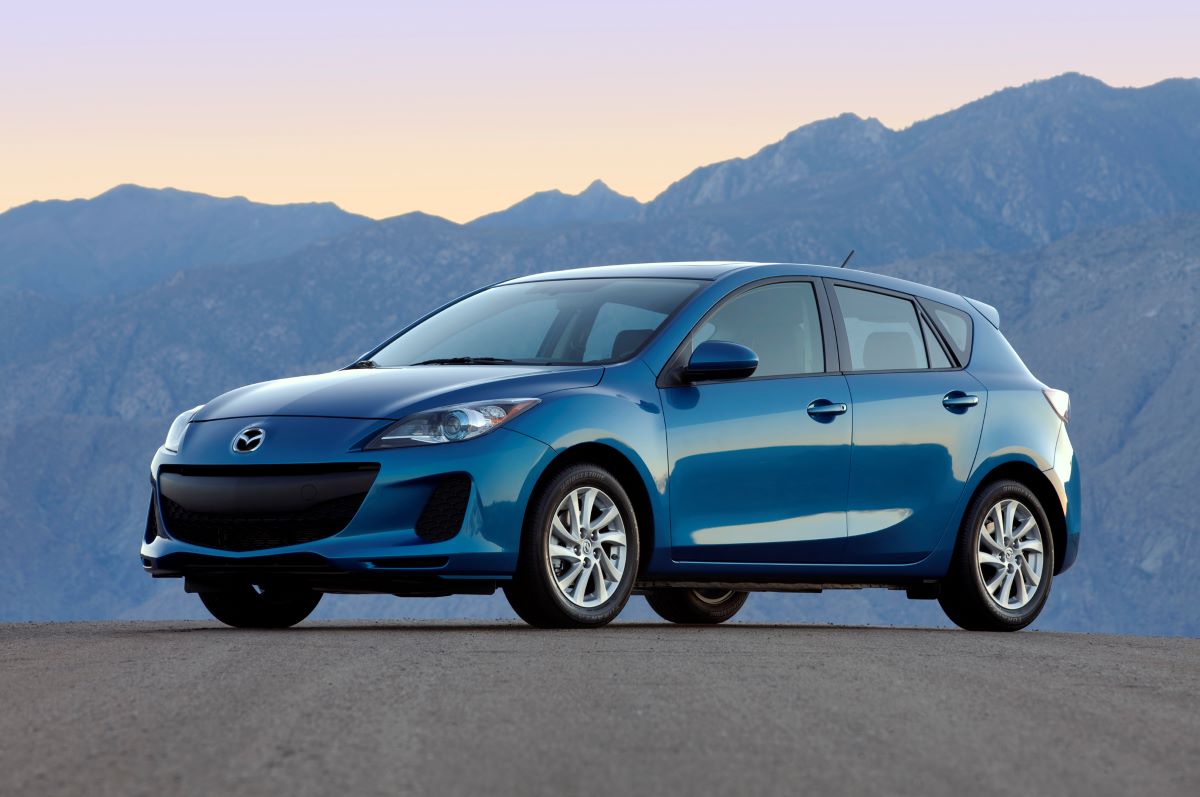
Owners often report long-lasting suspension components, and even when parts wear out, replacement costs stay reasonable. It’s a good option for drivers who still care about steering feedback.
As with most Mazda products, driving dynamics represent the Mazda 3’s principal strength. Steering is light yet precise, contributing to an agile feel, particularly on twisting roads.
The electro-hydraulic steering system provides a respectable level of feedback and delivers sharp responses to driver input. Body roll is well controlled, and the firmly tuned suspension maintains composure over mid-corner bumps, helping the car feel stable and planted even when the road surface is imperfect.
Even the entry-level 1.6-litre petrol engine offers a degree of sportiness, with respectable in-gear acceleration. The diesel range begins with an economical 1.6-litre unit producing 113bhp.
Above that sits a 2.2-litre turbodiesel offered in 148bhp and 182bhp forms. The more powerful version completes the 0–62mph sprint in 8.2 seconds and delivers strong mid-range torque, making overtaking straightforward.
The manual transmission stands out for its smooth, precise shift action, enhancing the car’s engaging character. By contrast, the older four-speed automatic transmission feels outdated and is best avoided.
It is worth noting that while lower-powered versions of the Mazda 3 excel as engaging everyday driver’s cars, the range-topping Mazda 3 MPS does not dominate its class.
Despite its substantial 256bhp output, it lacks the refinement and composure of rivals such as the Volkswagen Golf GTI. Additionally, its fuel consumption is comparatively high, diminishing its appeal relative to more balanced hot hatch alternatives.
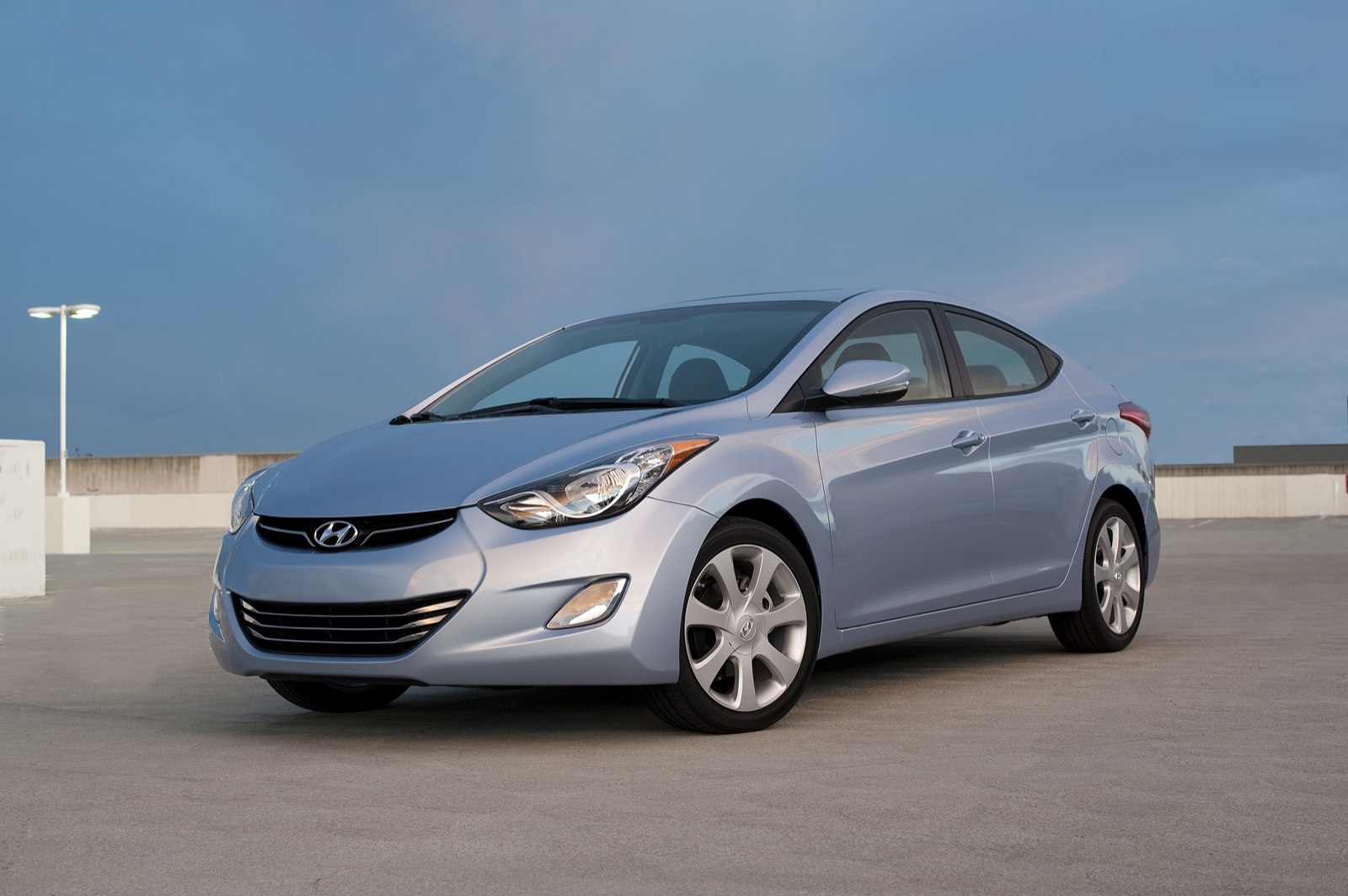
6. Hyundai Elantra (2011–2014)
During this period, Hyundai leaned hard into value. The Elantra’s suspension layout is textbook economy-car engineering: MacPherson struts in front and a torsion beam in back.
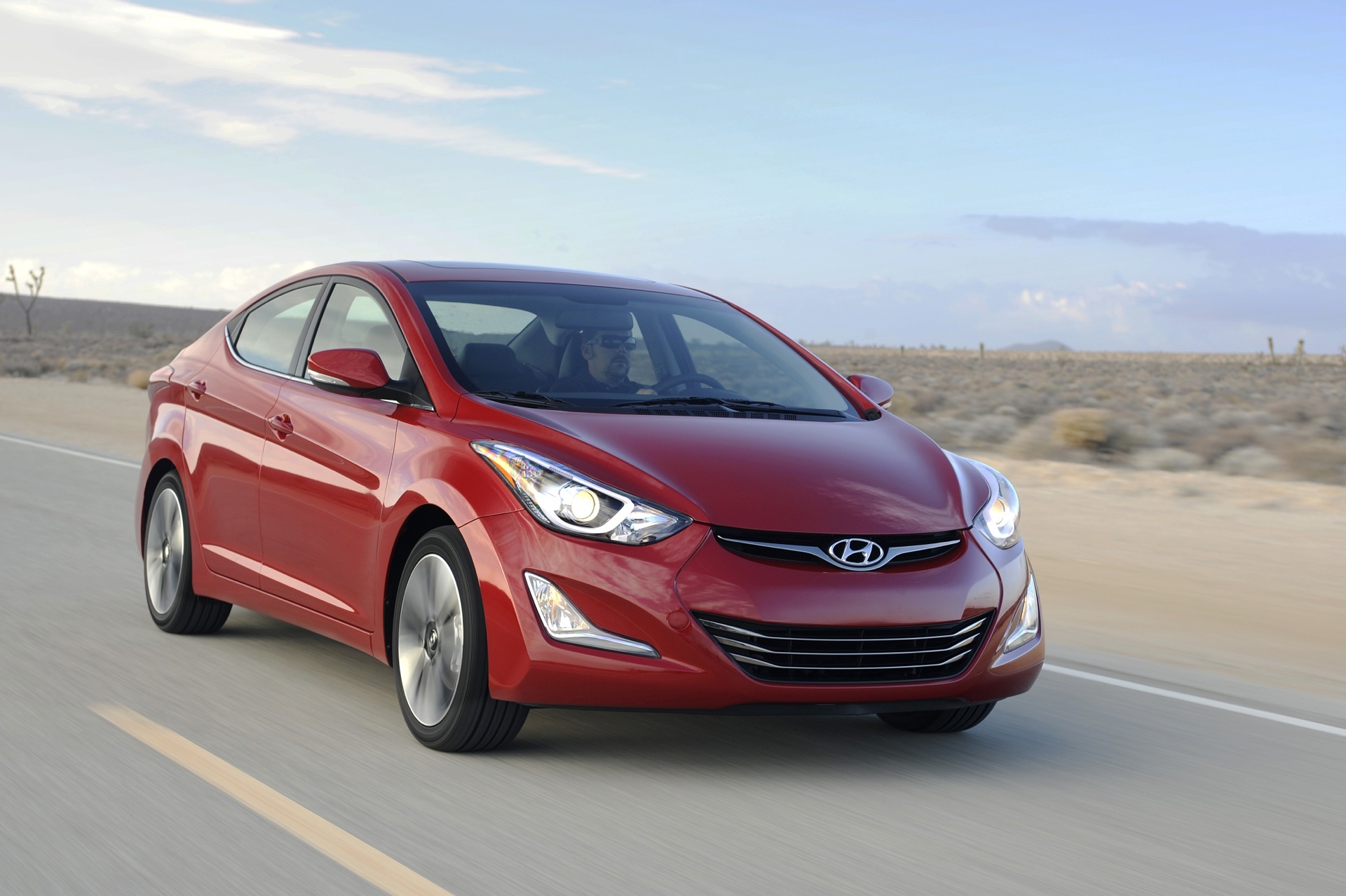
That setup keeps manufacturing, and repair, costs low. Independent shops know these cars well, and parts availability in the U.S. is excellent. If your goal is cheap, comfortable commuting, the Elantra makes sense.
For many years, the Elantra occupied a quiet position in the compact sedan segment, often overlooked despite its fundamental strengths.
With the complete redesign for 2011, that changed decisively. The new model abandons the conservative styling of its predecessor in favor of a far more distinctive exterior design, elevating its visual appeal and drawing greater attention from mainstream buyers.
Importantly, the transformation extends beyond aesthetics. The 2011 Elantra introduces a new 1.8-liter four-cylinder engine paired with either a six-speed manual or six-speed automatic transmission.
Unlike competitors such as the Chevrolet Cruze Eco or Volkswagen Jetta TDI, which require specific variants to achieve peak efficiency, every Elantra benefits from this efficient powertrain. The result is an EPA highway rating of 40 mpg across the range.
Although marketed within the compact class, the Elantra’s interior volume has expanded to the extent that the EPA categorizes it as a midsize car based on passenger space. Rear headroom, however, is somewhat tighter than in certain competitors.
The 2011 Elantra enters a highly competitive field that includes the Chevrolet Cruze, Volkswagen Jetta, Mazda 3, Ford Focus, and Honda Civic. Even so, its blend of distinctive styling, strong fuel economy, well-appointed interior, and competitive pricing positions it as a serious contender in the segment.
The 2011 Hyundai Elantra is powered by a newly developed 1.8-liter inline four-cylinder engine rated at 148 horsepower and 131 lb-ft of torque.
In California and other states adhering to similar emissions regulations, a PZEV (Partial Zero-Emissions Vehicle) version of the engine is offered, producing 145 horsepower and 130 lb-ft of torque.
GLS trims are equipped as standard with a six-speed manual transmission, with a six-speed automatic available as an option. The Limited trim includes the automatic transmission as standard equipment.
7. Kia Forte (2012–2015)
Sharing much of its hardware with Hyundai, the Forte from Kia offers similar advantages. Simple geometry, durable bushings, and affordable dampers keep ownership stress-free.
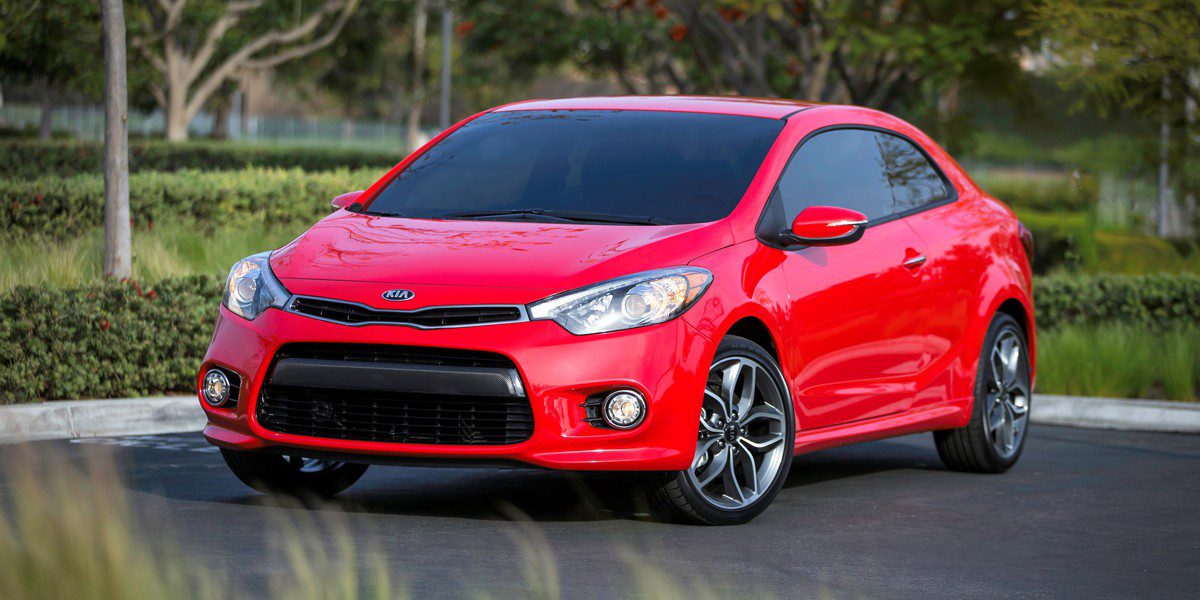
The Forte also tends to undercut rivals on the used market, which means you start saving before you even leave the dealership.
When the Forte first entered the market, it stood out as a well-executed compact car, offering styling, engineering competence, and build quality comparable to established Japanese rivals.
By 2012, however, competitors had advanced significantly, narrowing the gap. Even so, the Forte continued to present a compelling package.
Buyers seeking a sport-oriented option may gravitate toward the Koup, which combines assertive styling with firmer suspension tuning. Those prioritizing versatility will find the hatchback’s cargo capacity more accommodating.
Additional advantages include Kia’s lengthy warranty coverage, a generous list of standard features, and improved fuel economy when equipped with the optional Fuel Economy package.
That said, several newer entrants offer stronger overall appeal. The Hyundai Elantra delivers a more refined interior and superior fuel efficiency regardless of configuration.
The redesigned Ford Focus is widely regarded for its driving dynamics and technology, while the updated Mazda 3 and the Volkswagen Golf hatchback remain competitive alternatives. Nevertheless, for buyers seeking value, practicality, or modest sportiness, the 2012 Forte remains worthy of consideration.
The LX and EX trims are powered by a 2.0-liter four-cylinder engine producing 156 horsepower and 144 lb-ft of torque.
The sport-oriented SX variant upgrades to a 2.4-liter four-cylinder generating 173 horsepower and 168 lb-ft of torque. A six-speed manual transmission is standard on LX models and the Koup, while EX and SX trims come standard with a six-speed automatic, which is also available as an option on the LX.
In instrumented testing, an SX hatchback equipped with the automatic transmission accelerated from 0 to 60 mph in 8.8 seconds, aligning with similarly powered competitors.
The Koup demonstrates marginally stronger performance; with the manual transmission, it achieves 0–60 mph in 7.6 seconds.
8. Nissan Sentra (2010–2013)
Nissan built this Sentra for efficiency and low operating costs. Its suspension is basic but effective, prioritizing ride comfort over cornering theatrics.
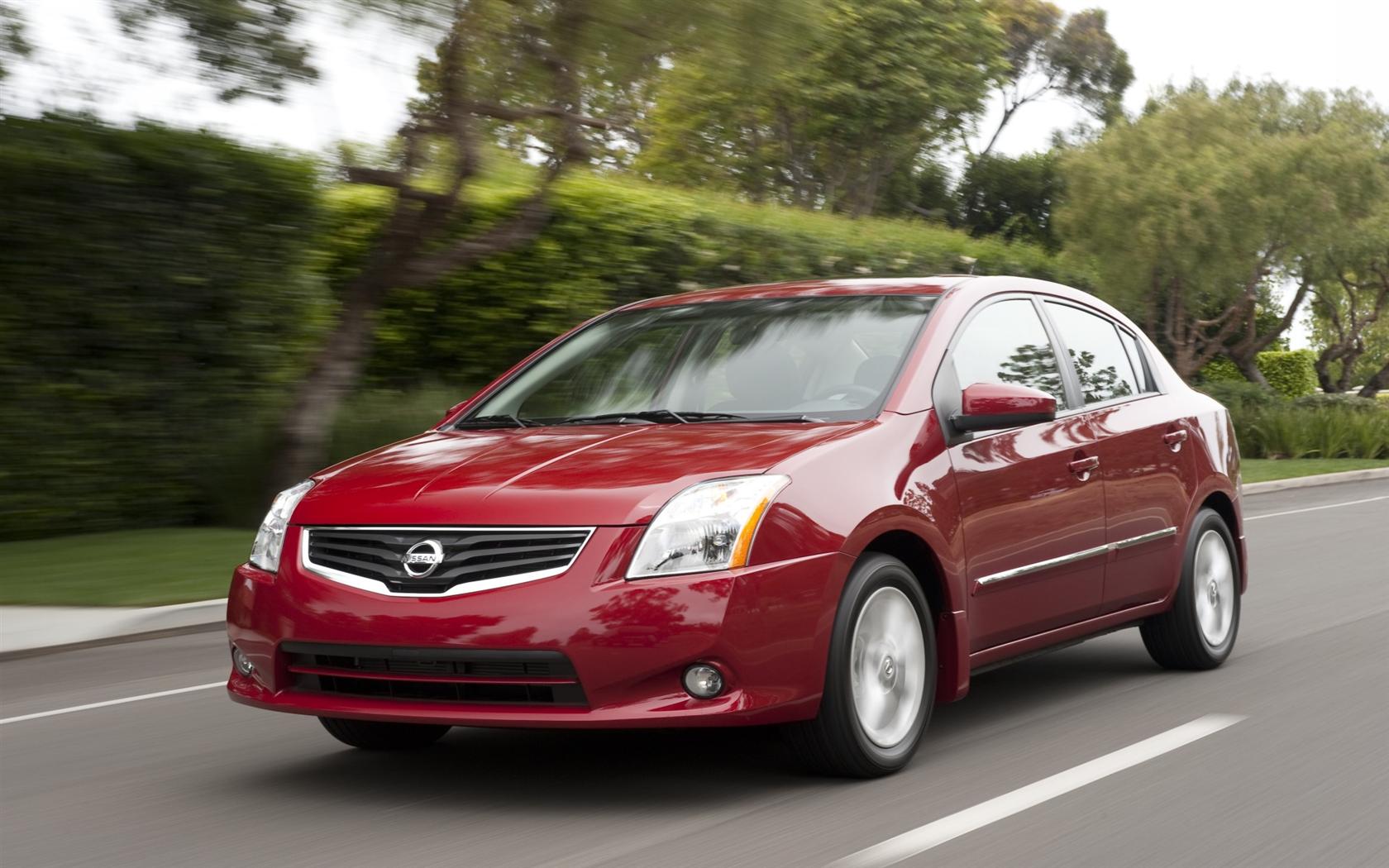
As long as you verify overall condition, suspension service is inexpensive and quick. For urban drivers dealing with potholes and speed bumps, that matters.
Despite this European platform connection, the interior retains Nissan’s familiar sporty-functional aesthetic, highlighted by orange instrument backlighting and a well-shaped steering wheel. However, while the packaging is commendable, the overall driving dynamics are less impressive when measured against evolving class standards.
Engine performance remains competitive. Most Sentra variants are equipped with a 2.0-liter four-cylinder engine generating 140 horsepower and delivering up to 34 mpg on the highway. The SE-R model upgrades to a 2.5-liter four-cylinder that trades a modest reduction in fuel economy for an additional 37 horsepower.
Handling, however, does not match the benchmark set by competitors such as the Honda Civic, Mazda 3, and Mitsubishi Lancer. Even the sport-focused SE-R models fall short of leading sport compacts, though they remain engaging enough for casual driving enthusiasm.
Ride comfort also presents compromises, as the suspension can transmit noticeable impact harshness. Softer-riding alternatives like the Hyundai Elantra and Toyota Corolla provide a more compliant experience.
Sentra 2.0 models use a 2.0-liter inline four-cylinder engine producing 140 horsepower and 147 lb-ft of torque. Power is delivered to the front wheels through either a continuously variable transmission (CVT) or, on the base 2.0 trim, a six-speed manual gearbox. E
SE-R models feature a 2.5-liter four-cylinder engine. The standard SE-R produces 177 horsepower and 172 lb-ft of torque and is paired exclusively with a CVT featuring manual shift control.
The SE-R Spec V increases output to 200 horsepower and 180 lb-ft of torque and is available only with a six-speed manual transmission. In testing, the Spec V accelerated from 0 to 60 mph in 6.7 seconds.
Fuel economy remains relatively reasonable given the performance: the SE-R achieves 24 mpg city, 30 mpg highway, and 26 mpg combined, while the Spec V returns 21 mpg city, 28 mpg highway, and 24 mpg combined, with premium fuel required for the latter.
9. Subaru Impreza (2012–2014)
All-wheel drive comes standard here, but Subaru kept the suspension surprisingly simple. Front struts and a straightforward rear design mean you don’t pay luxury-car prices just because power goes to all four wheels.
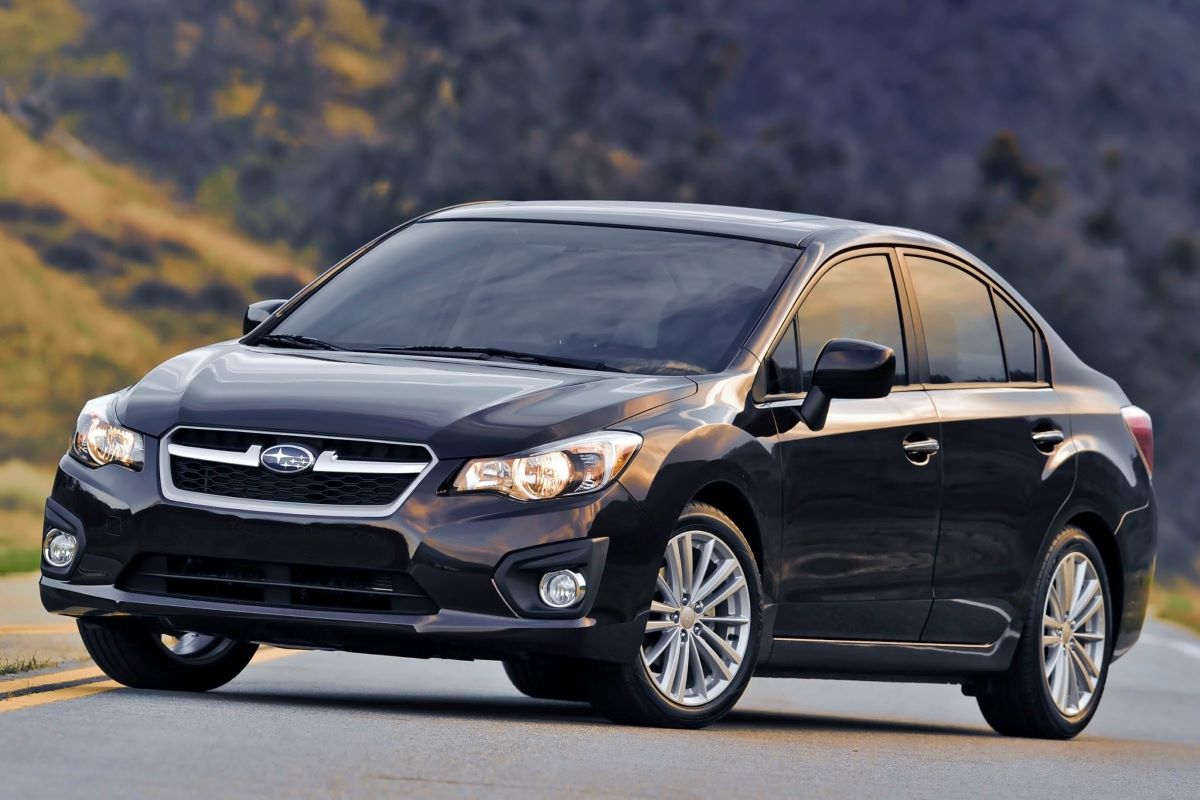
It’s a practical choice for snowy regions, combining traction with relatively low suspension maintenance.
10. Volkswagen Jetta (2011–2014)
From Volkswagen, this Jetta generation moved away from overly complex rear setups in favor of a torsion-beam design on many trims. Purists complained, but owners benefited.
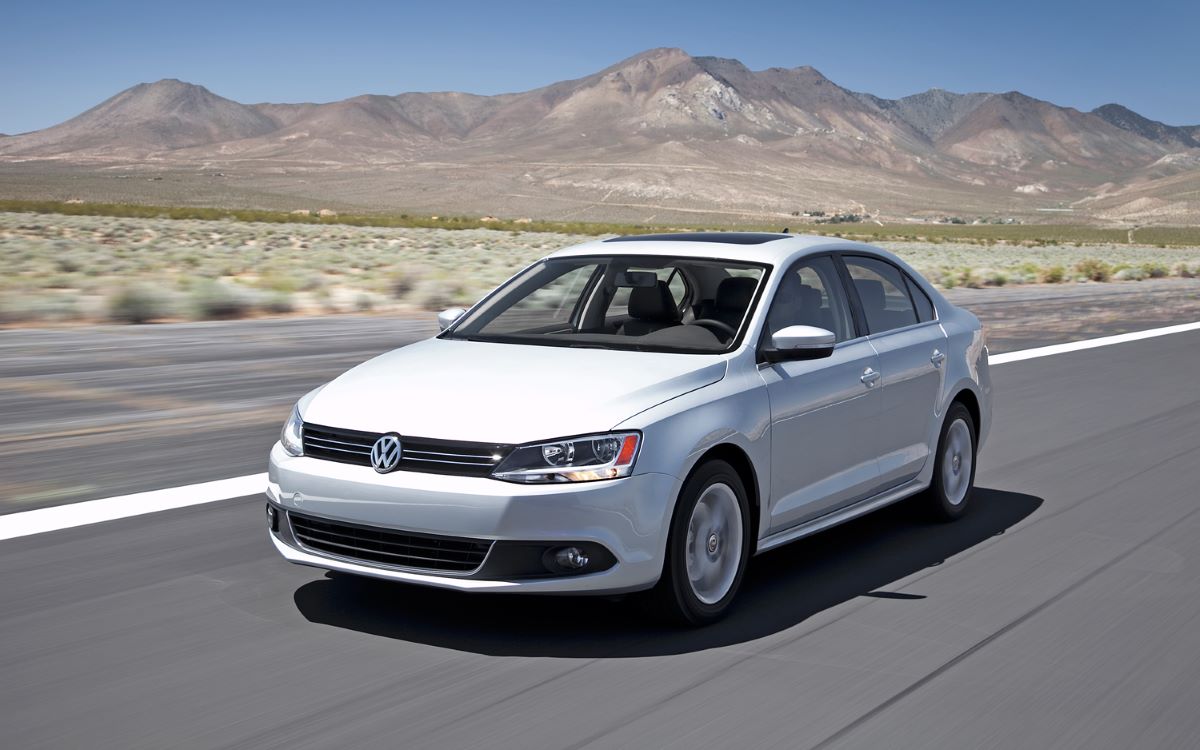
The simplified rear suspension reduced parts count and labor time, making this one of the cheaper European sedans to keep aligned and riding smoothly in the U.S.
11. Buick LaCrosse (2012–2015)
Buick targets comfort, and the LaCrosse reflects that with traditional struts and a cushioned ride. While larger than compact sedans, it avoids adaptive dampers or air suspension found in some luxury rivals.
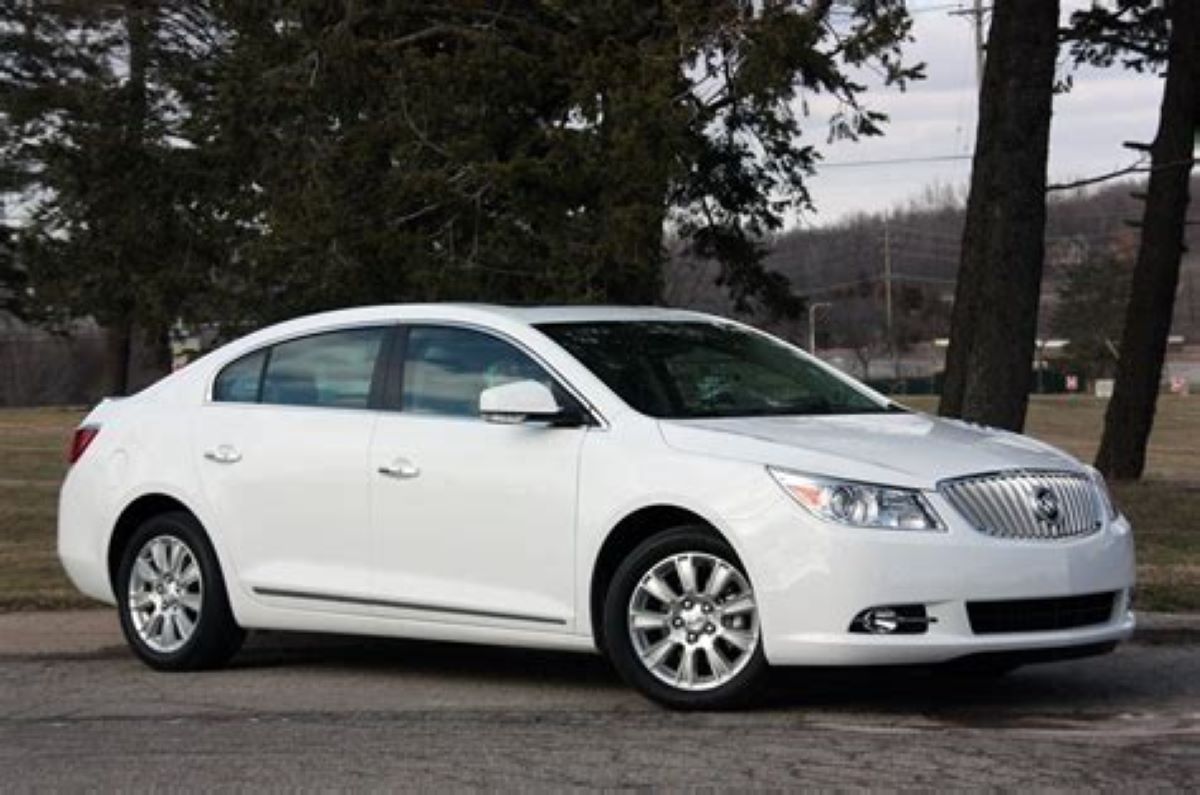
That restraint keeps long-term repair costs reasonable, especially for drivers who want a quieter, more refined experience without premium maintenance bills.
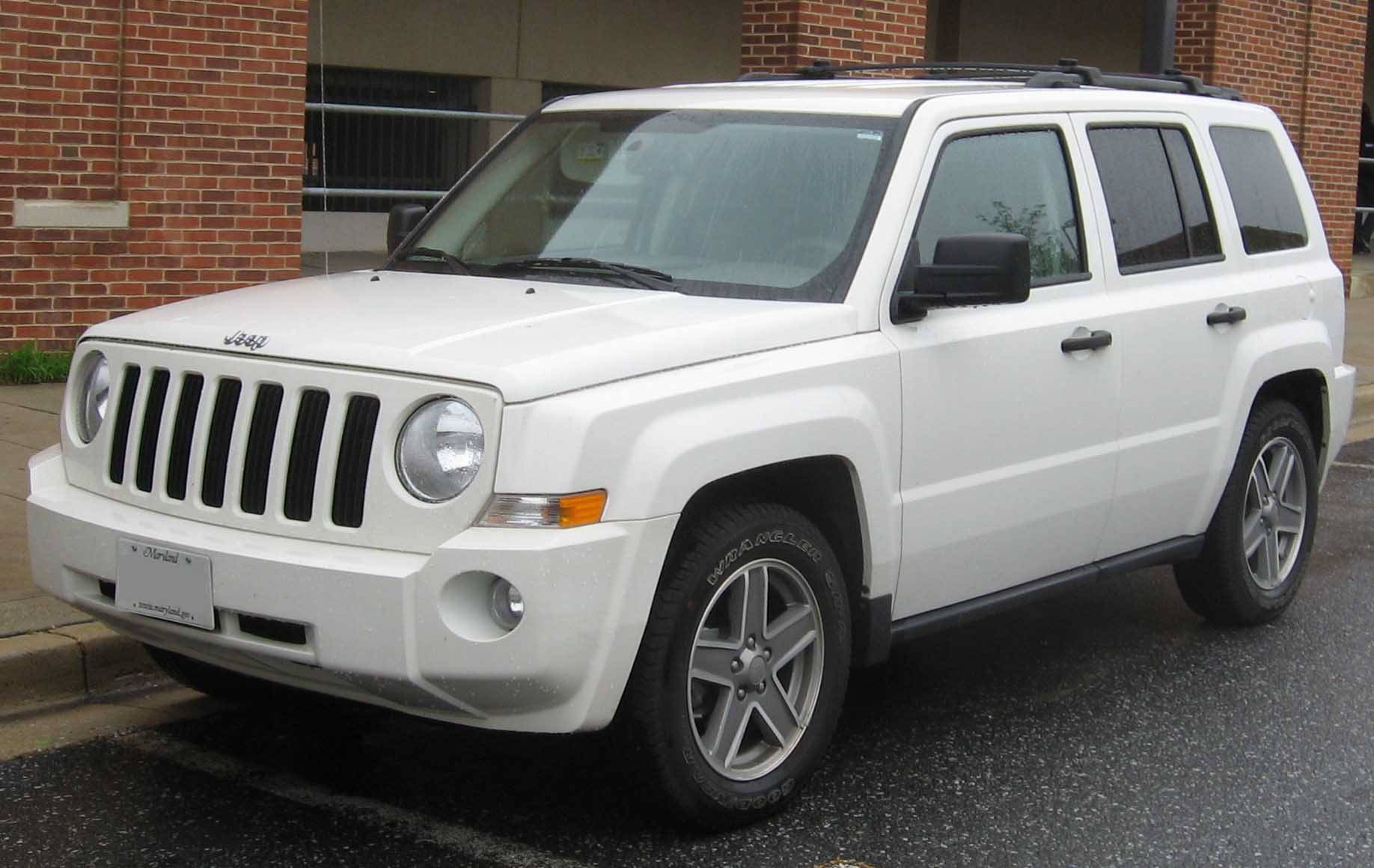
12. Jeep Patriot (2012–2016)
If you need light SUV capability, the Patriot from Jeep sticks to old-school simplicity. Its suspension is rugged rather than sophisticated, making it easy to service at almost any shop.
It won’t rival modern crossovers for ride quality, but for rough roads or mild trails, its basic design holds up, and saves money when components wear.
Buying used doesn’t have to mean gambling on repair costs. If you focus on vehicles with conservative suspension engineering, you dramatically reduce the risk of expensive surprises.
The cars listed above won’t impress at a racetrack, but they excel where it counts for most Americans: dependable daily use, easy servicing, and predictable ownership expenses.
If your goal is to keep transportation costs under control, start by avoiding over-engineered suspensions.
Simple layouts, proven platforms, and abundant parts availability are still some of the smartest choices in the used market, and they quietly save you money every single year.
