For cyclists, hatchbacks occupy a rare sweet spot. They’re compact enough for city life, efficient enough for daily commuting, yet flexible enough to haul serious gear.
A big advantage over sedans is the vertical cargo opening and fold-flat rear seats, features that often make the difference between wrestling with a bike rack or simply rolling your bicycle straight into the car.
If you ride frequently, interior bike transport has real benefits. Your bike stays protected from weather, theft risk drops, and you don’t sacrifice fuel economy or deal with noisy external racks.
The challenge is finding a modern hatchback with enough length, height, and usable cargo geometry to fit a road, gravel, or even some mountain bikes without removing wheels.
The following eight new hatchbacks sold in the US stand out for their interior packaging and bike-friendly layouts. In most cases, fitting a bike requires folding the rear seats and turning the front wheel slightly, but not removing it.
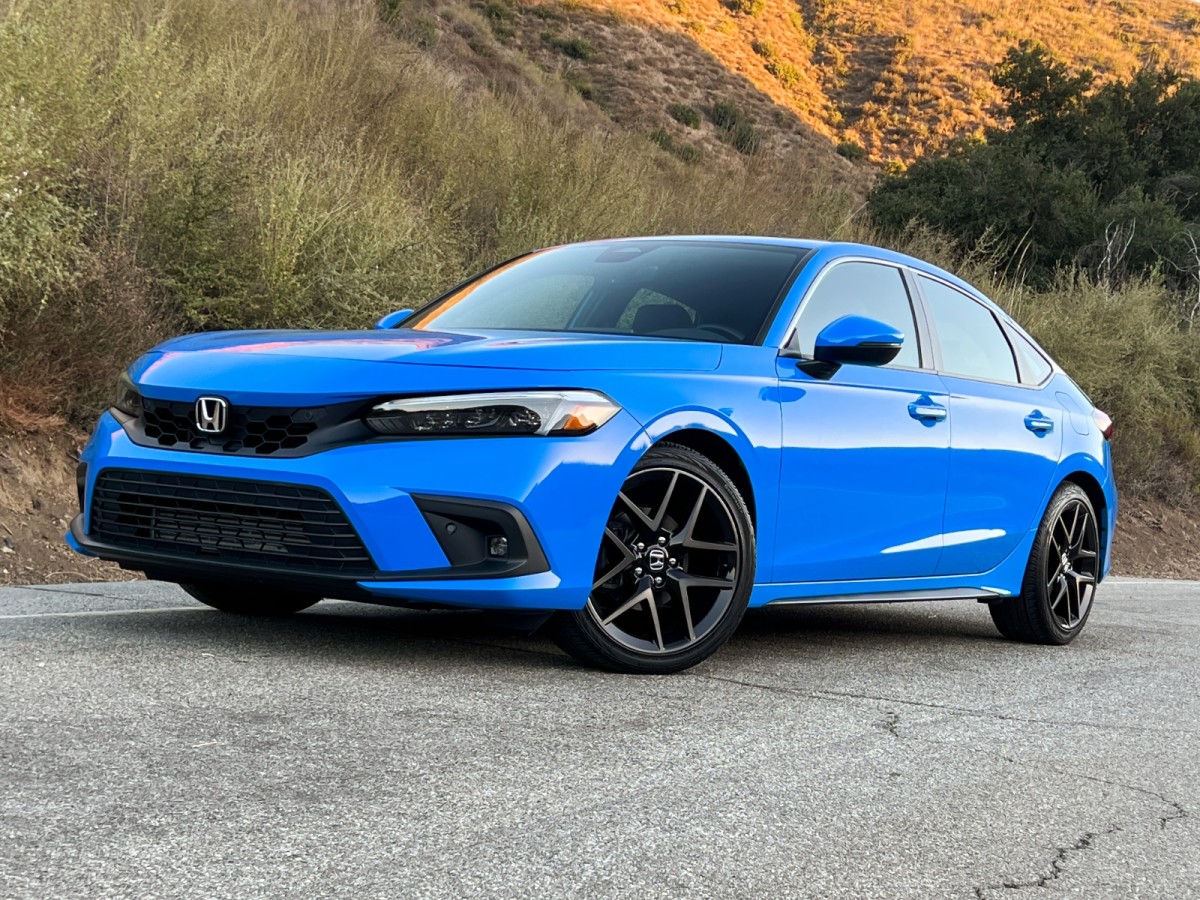
1. Honda Civic Hatchback
The current Civic Hatchback is one of the most intelligently packaged compact cars on sale. With the rear seats folded, it offers a long, flat load floor and a wide hatch opening that makes sliding in a road or hybrid bike surprisingly easy.
What sets the Civic apart is its low liftover height and nearly rectangular cargo aperture.
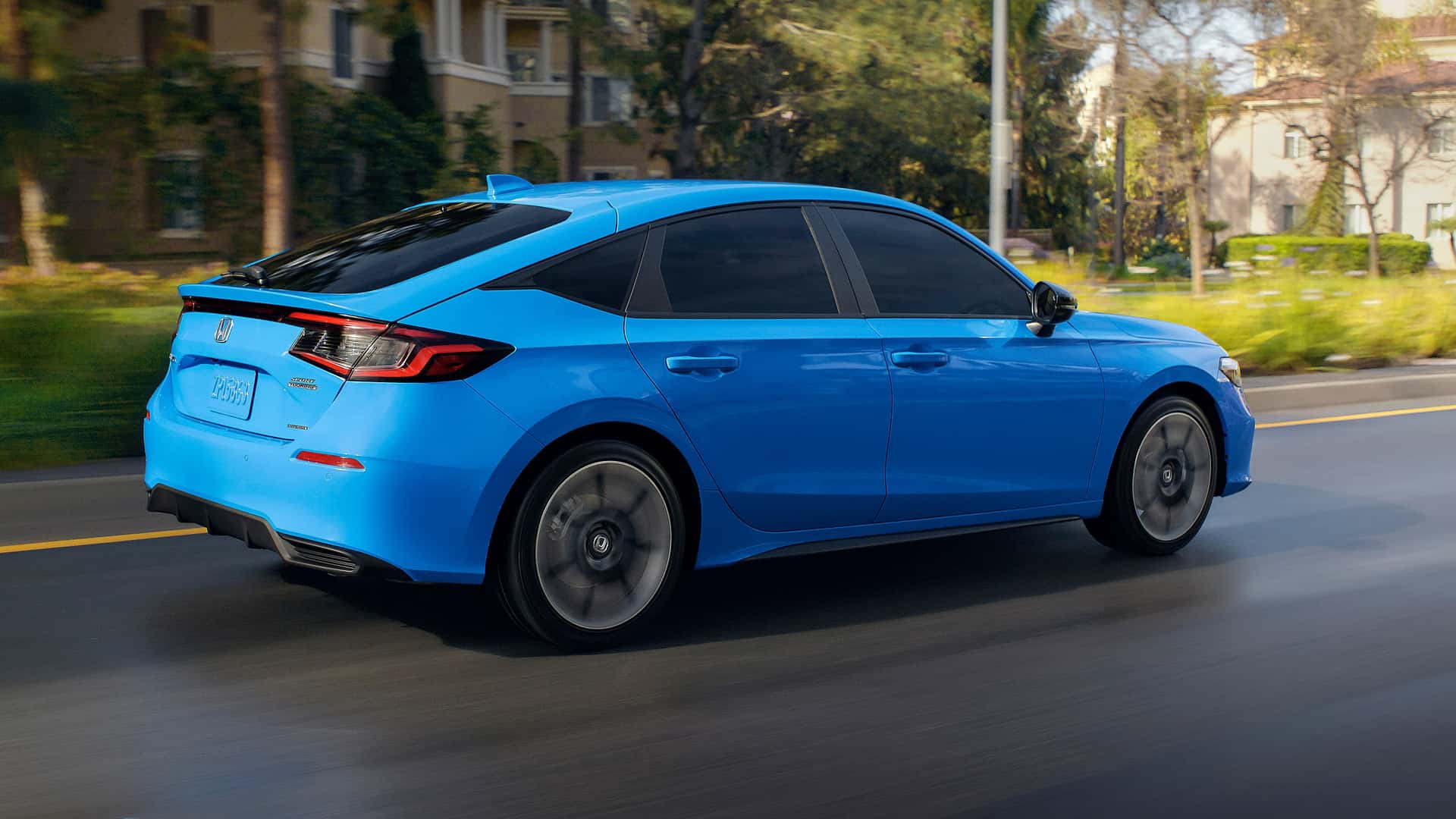
You don’t have to angle the bike aggressively, and the roofline stays high enough toward the back to avoid handlebar interference. Many riders report fitting 56–58cm road bikes straight in with only minor front-wheel turning.
Beyond cargo, the Civic also delivers excellent ride quality, strong fuel economy, and modern driver assistance tech, making it a genuinely good daily driver that just happens to be bike-friendly.
The Civic is offered exclusively with Honda’s e:HEV hybrid system, producing 181bhp. That output provides ample performance for most drivers. In testing, the Civic reached 0–60mph in 6.8 seconds, making it comfortably quicker than any version of the Toyota Corolla.
At low speeds, the Civic can operate solely on electric power, driven by its motor. When required, the 2.0-litre petrol engine engages primarily as a generator, supplying electricity to the motor that propels the wheels.
Under heavy acceleration, the petrol engine becomes more audible as revs rise, though it remains less intrusive than the 1.5-litre hybrid unit found in the Honda HR-V. Wind noise is well suppressed at speed, but tyre noise is more pronounced. Consequently, the Civic is not quite as quiet at 70mph as an equivalent Corolla or Volkswagen Golf.
Ride comfort depends partly on wheel size. In Elegance trim with 17-inch alloy wheels, the Civic matches the Corolla and Golf for compliance, combining effective bump absorption with stable body control.
Although not quite as eager to change direction as the Leon, the Civic remains engaging to drive. It offers strong grip levels, and its steering is precise and naturally weighted, allowing accurate placement through corners and maintaining driver confidence.
2. Mazda3 Hatchback
Mazda’s compact hatch leans premium, but it doesn’t forget utility. The Mazda3 Hatchback provides a deep cargo well and a long floor once the rear seats are down, allowing most road and gravel bikes to fit diagonally without wheel removal.
The opening is slightly narrower than some rivals, so you’ll usually need to guide the handlebars carefully.
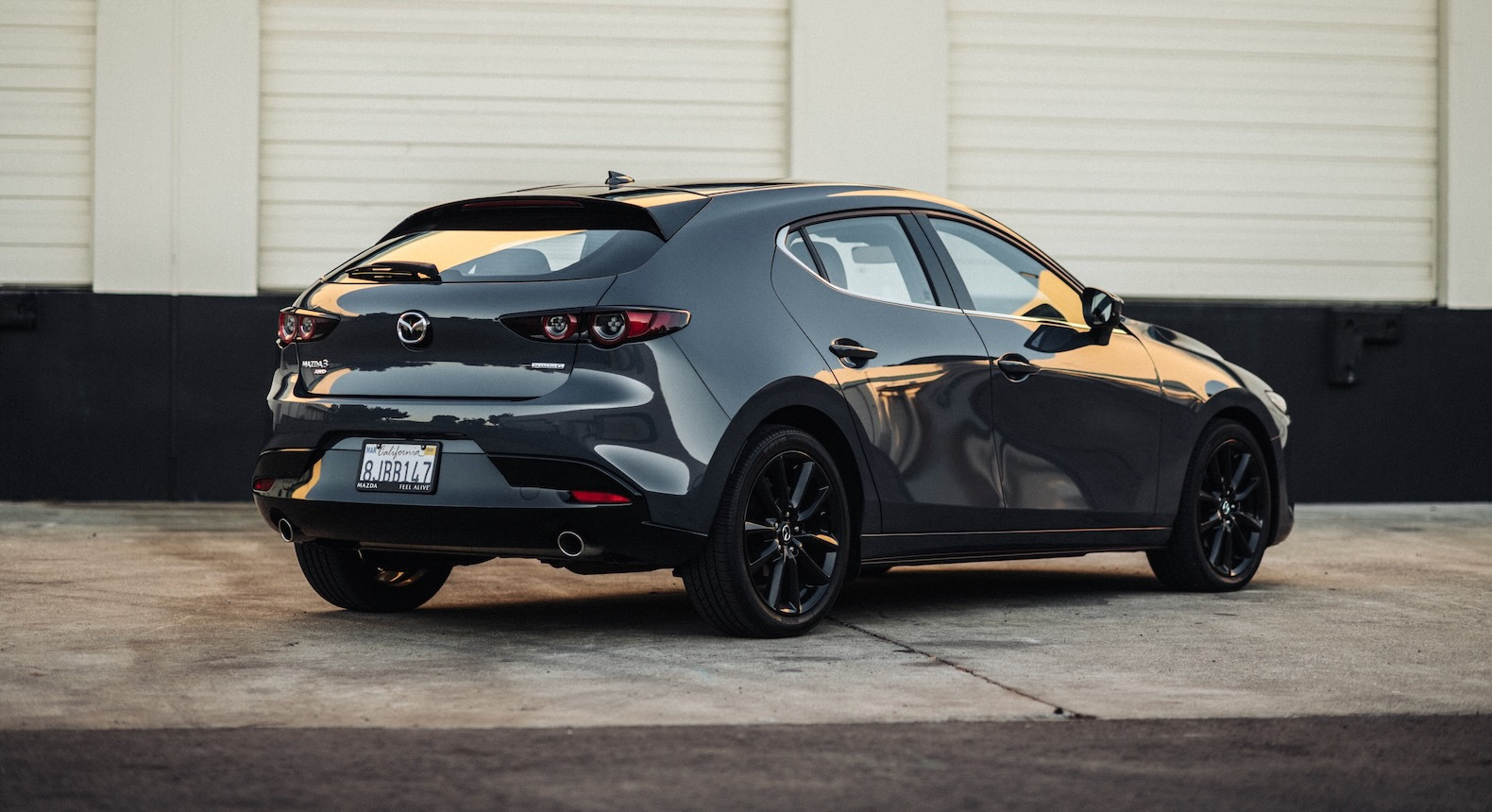
Still, the payoff is a quieter cabin, upscale materials, and available all-wheel drive, rare in this segment.
If you value driving feel and interior quality as much as bike-hauling ability, the Mazda3 is a compelling choice.
The Mazda 3’s entry-level engine, branded e-Skyactiv G, is a 138bhp 2.5-litre four-cylinder petrol unit. Recently introduced to the range, it requires more effort to build speed than most turbocharged competitors.
However, its freer-revving nature and improved low-end response compared with its predecessor mean it feels more responsive than before. This is the version we would recommend.
A more powerful alternative is the 183bhp 2.0-litre e-Skyactiv X. Despite the higher output figure, it often feels less energetic in everyday driving.
The reason lies in its slower-revving character and long gearing, which is calibrated to prioritise fuel efficiency. As a result, it lacks a sense of urgency.
Both engines can be paired with either a six-speed manual or a six-speed automatic transmission. The manual stands out for its precise, well-weighted shift action and contributes positively to the driving experience.
The automatic, by contrast, diminishes driver engagement. It does not deliver power as smoothly and can hesitate to downshift when rapid acceleration is requested, making it the less desirable choice.
3. Toyota Corolla Hatchback
The Corolla Hatchback focuses on efficiency and reliability, but its cargo layout is more capable than you might expect.
Fold the rear seats and you get a flat, usable space that accommodates most road bikes without removing wheels, especially if you load the bike slightly angled.
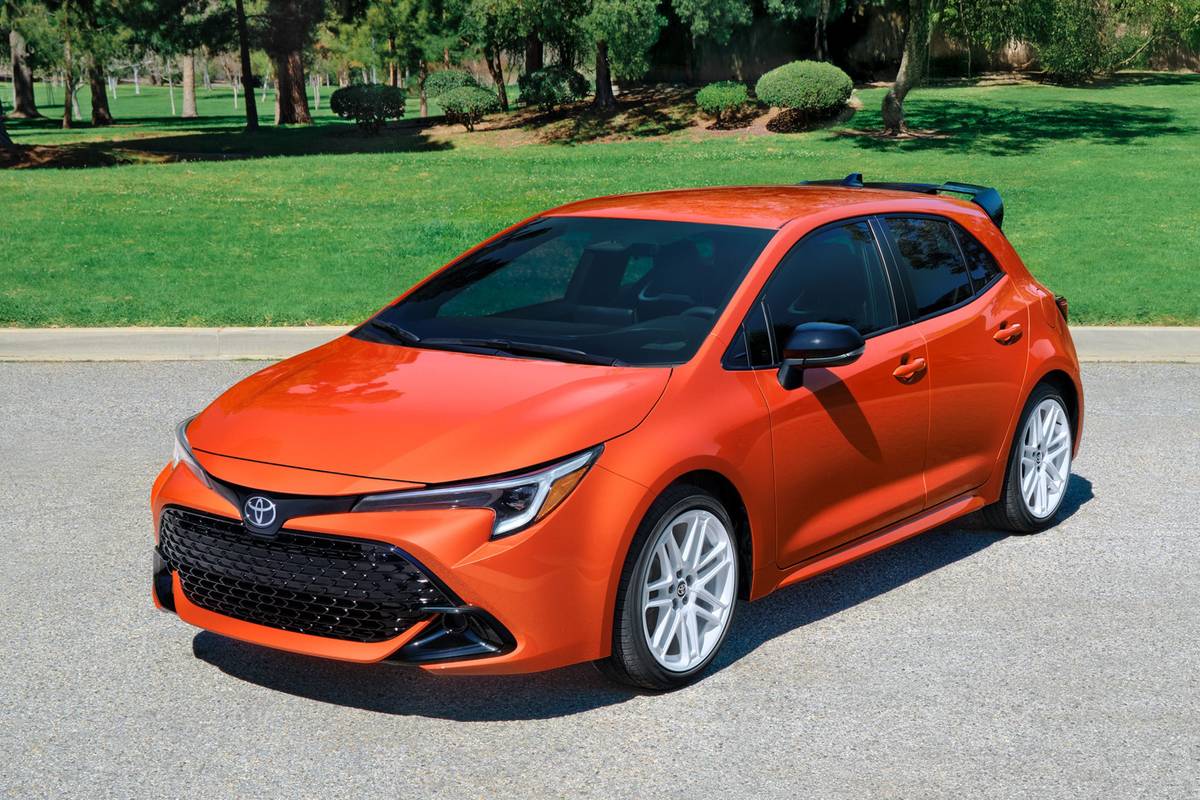
While the cargo area isn’t class-leading in volume, Toyota’s clever packaging keeps the roofline from tapering too aggressively, preserving headroom for handlebars.
For riders who prioritize low ownership costs and long-term dependability, this hatchback quietly gets the job done.
4. Volkswagen Golf GTI
The Golf GTI blends hot-hatch performance with genuine practicality. Its boxy rear profile and deep cargo floor make it one of the easiest compact hatches for bike transport.
With the rear seats folded, the GTI provides enough length for full-size road bikes to slide in straight, and the hatch opening is tall enough to avoid awkward lifting angles.
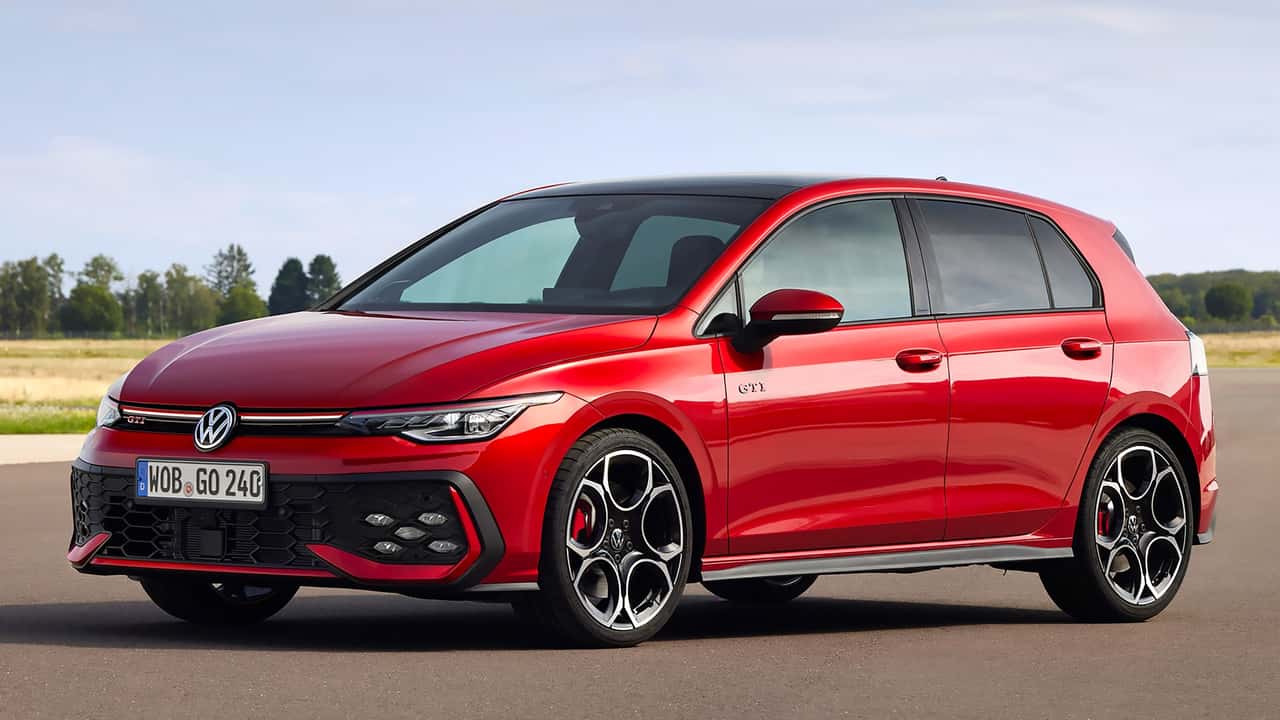
For many cyclists, this is a near-perfect balance: quick on twisty roads, comfortable on long drives, and spacious enough for weekend rides.
It also offers one of the best driving experiences in the segment, which is a nice bonus if your routes to trailheads involve winding highways.
One clear omission in the Mk8.5 GTI’s cabin is the golf ball–style manual gearlever. With the facelift, the six-speed manual transmission has been removed, leaving the seven-speed dual-clutch DSG automatic as the sole option.
Although lower-tier Golfs can still be specified with a manual, very few buyers selected the three-pedal Mk8 GTI. From a commercial perspective, continuing to offer it made little sense.
That said, Volkswagen’s DSG transmission remains highly competent. Aside from minor clunkiness at low speeds during manoeuvres, shifts are rapid and smooth.
The EA888 2.0-litre turbocharged petrol engine is a familiar and proven unit, appearing in models ranging from the Volkswagen Polo GTI to the Porsche Macan.
While not especially sonorous, it delivers strong, largely lag-free performance across a broad rev range and maintains a sense of eagerness throughout.
The exhaust produces a subtle burble through the twin tailpipes, with occasional pops on the overrun when driven enthusiastically.
Some digital sound enhancement is present and adjustable via drive modes, but it complements rather than overwhelms the engine’s natural tone.
Performance has improved meaningfully. Thanks to a 19bhp increase over the pre-facelift GTI and the DSG’s swift shifts and launch control, the updated model achieved a 0–60mph time 0.9 seconds quicker than the manual 2021 version previously tested.
Where the earlier car struggled for traction off the line, the new GTI launches cleanly and accelerates decisively through the gears. It surpasses the Ford Focus ST in straight-line performance and approaches the pace of the Honda Civic Type R.
The standard GTI is not the most potent variant. The Volkswagen Golf GTI Clubsport gains an additional 34bhp and a more aggressive calibration for enhanced performance.
An optional Akrapovič sports exhaust, available within the Race Package, introduces a sharper, more pronounced exhaust note with amplified pops and crackles.
Even the Edition 50 version, despite its additional output, delivers power in a controlled rather than frenetic manner. Acceleration remains strong, supported by substantial mid-range torque and sustained top-end performance similar to the Clubsport.
Braking capability is equally reassuring. Repeated stops from 80mph produced no noticeable fade, and wet conditions increased stopping distances from 70mph by only around 10 metres. Pedal feel is progressive, with initial travel followed by predictable, confidence-inspiring response.
5. Subaru Impreza Hatchback
Standard all-wheel drive and a tall roofline make the Impreza Hatchback especially appealing for cyclists who deal with snow, gravel roads, or muddy trail access.
Cargo length with seats folded is generous, and the rear opening is wide and upright, ideal for loading bikes without scraping knuckles or bumping derailleurs.
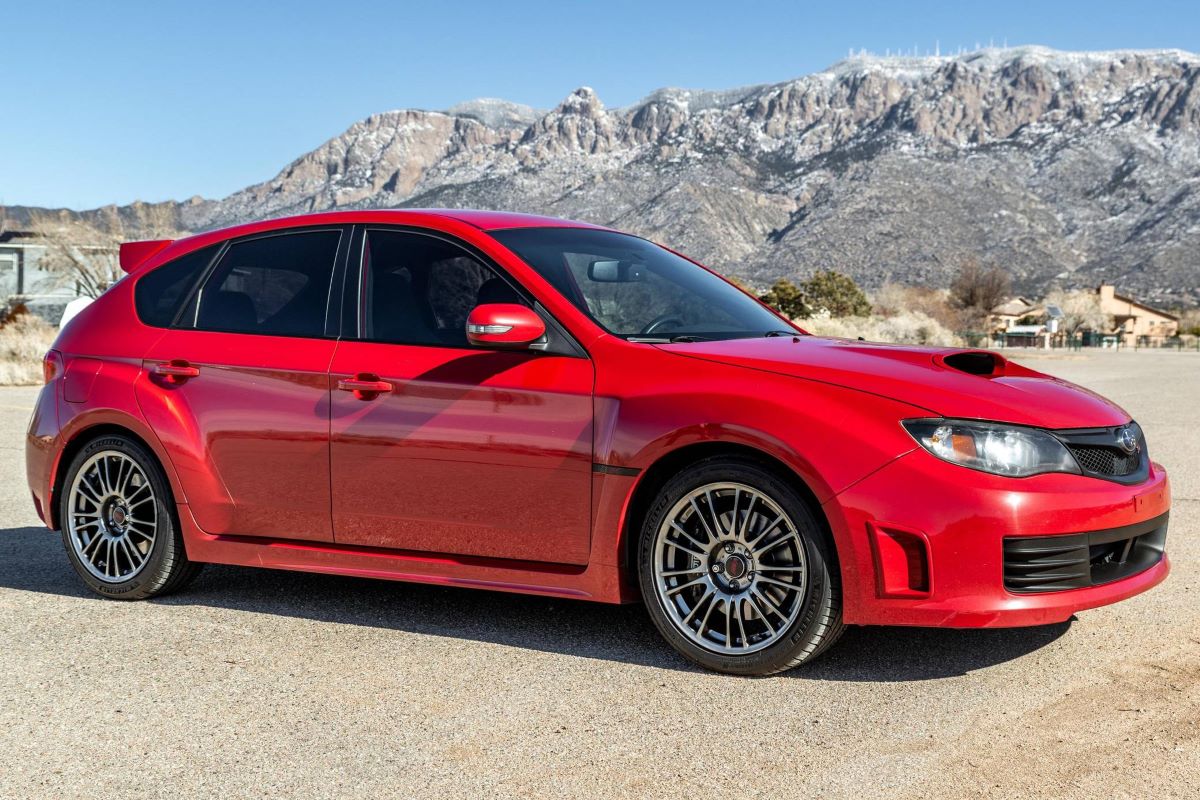
Many riders can fit a bike in with minimal maneuvering, even with chunkier tires.
The Impreza isn’t the sportiest option here, but it excels in poor weather and rough conditions, which matters if your rides don’t stop when winter arrives.
Subaru drivers are known for acknowledging one another on UK roads, a small but telling indication of the brand’s niche appeal in this market.
Globally, the Impreza ranks as one of Subaru’s lower-volume models. Despite modest sales, however, it remains arguably the brand’s most recognisable nameplate, largely due to its celebrated history in the World Rally Championship.
The Impreza prioritises safety and all-weather capability, but it falls behind key competitors in several other areas.
Strengths include a spacious cabin, distinctive styling that makes it easy to identify in a crowded car park, and a solid reliability reputation.
On the downside, it is relatively thirsty, lacks driving engagement, and faces rivals that are typically more affordable and more accomplished overall.
The most recent generation was sold from 2016 to 2022. Compared with earlier iterations, it offers increased interior space.
Two petrol engines are offered: a 1.6-litre and a 2.0-litre. While the 2.0-litre delivers higher output, it still does not feel genuinely quick.
As a naturally aspirated engine, unlike the turbocharged units common among rivals, its power delivery is smooth and linear but lacks urgency.
Nevertheless, it is capable of maintaining pace with traffic in urban and motorway conditions. The 1.6-litre version is noticeably slower, with weaker low-end torque, making the 2.0-litre the preferable option.
Subaru’s CVT automatic transmission does little to enhance performance perception. At gentle speeds it operates unobtrusively, but firm acceleration inputs cause engine revs to rise sharply before settling.
6. MINI Cooper
Don’t let the playful styling fool you, the four-door MINI has a surprisingly workable cargo area once the rear seats are down.
You’ll usually need to load bikes diagonally, but the vertical hatch and low cargo floor make it easier than expected.
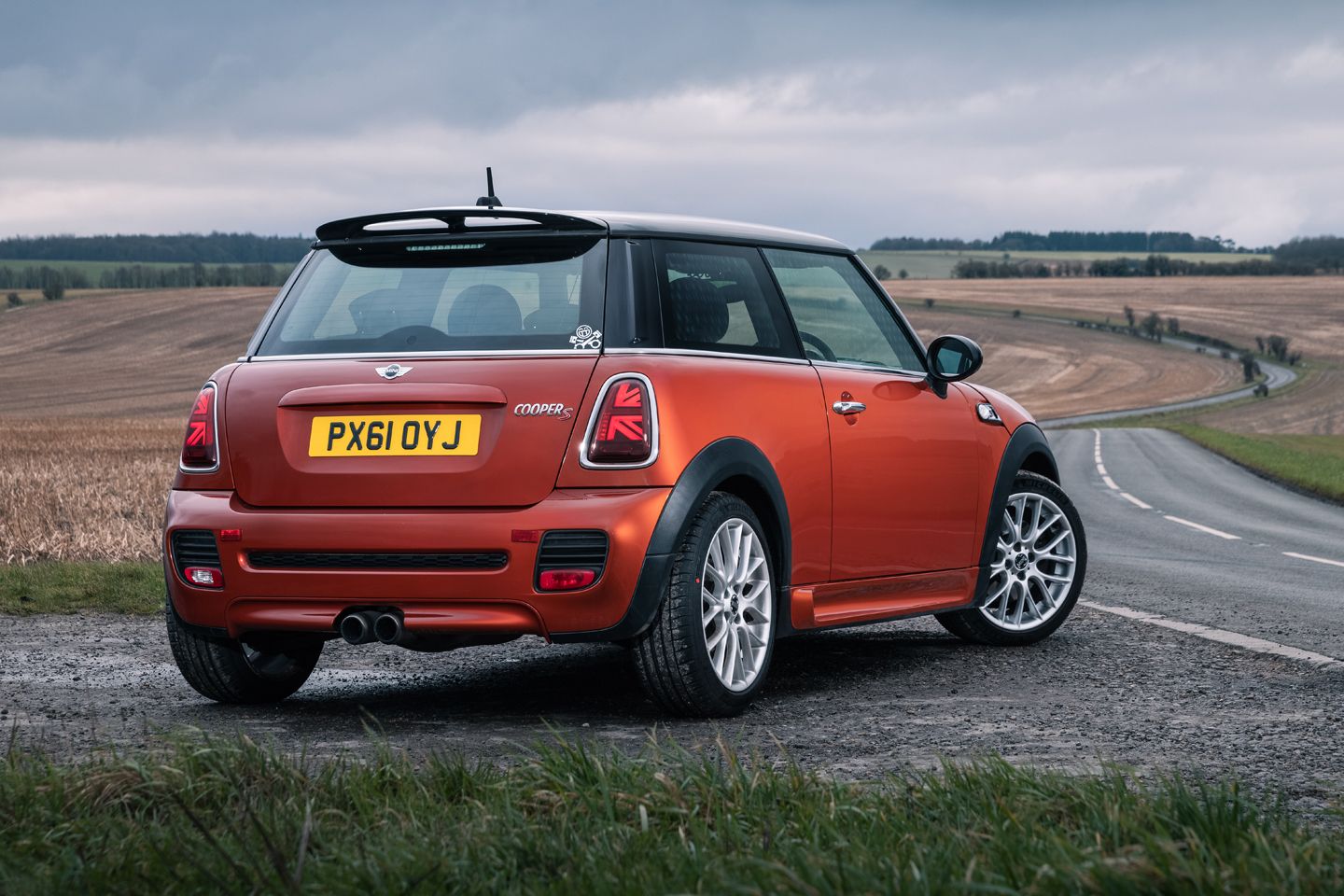
Road bikes fit more comfortably than wide-handlebar mountain bikes, though careful positioning solves most issues.
This is a niche choice, but for urban cyclists who want something compact, distinctive, and fun to drive, the MINI still earns a spot.
The 2022 Cooper remains one of the most recognisable small cars on the market, defined by distinctive styling, sharp handling characteristics, and extensive customization options. It is available as a three-door Hardtop, five-door Hardtop, and Convertible.
Buyers can select either a 134-hp turbocharged three-cylinder engine or a 189-hp turbocharged four-cylinder, with the latter better complementing the car’s inherently playful chassis.
For 2022, Mini introduced a facelift that includes revised front and rear bumpers, an updated grille design, new wheel options, and additional exterior colors.
Interior trim has been revised, and the infotainment system now features a standard 8.8-inch display across the lineup. A digital instrument cluster, lane-departure warning, and SiriusXM satellite radio are also now standard.
After a temporary absence, the six-speed manual transmission returns, though it is limited to three-door Cooper and Cooper S Hardtop models.
Pricing ranges from $24,250 for the Cooper Hardtop to $33,250 for the Cooper S Convertible. With the manual transmission reinstated, the Cooper S Hardtop paired with the six-speed manual represents the most engaging configuration.
Although the five-door Hardtop offers added practicality, the three-door remains the purer expression of the model, and interior space is limited in either form. Beyond drivetrain choice, customization possibilities are extensive.
The standard powertrain is a turbocharged 1.5-liter three-cylinder engine producing 134 horsepower. In a lightweight vehicle of this size, it delivers lively performance. All versions are front-wheel drive and benefit from direct, responsive steering.
The Cooper S models upgrade to a 2.0-liter turbocharged four-cylinder generating 189 horsepower. In testing, the S accelerated from 0 to 60 mph in 6.2 seconds, over a second quicker than the three-cylinder variant.
While the automatic transmission shifts effectively, the manual transmission provides the most satisfying driver involvement. The firm suspension tuning enhances agility and cornering precision but can result in a harsh ride over uneven pavement.
7. Toyota Prius
The latest Prius redesign brought sharper styling and better performance, but it remains a hatchback at heart.
Fold the rear seats and you get a long cargo floor capable of carrying most road bikes without wheel removal.
The roofline slopes more than traditional hatches, so you may need to angle handlebars downward.
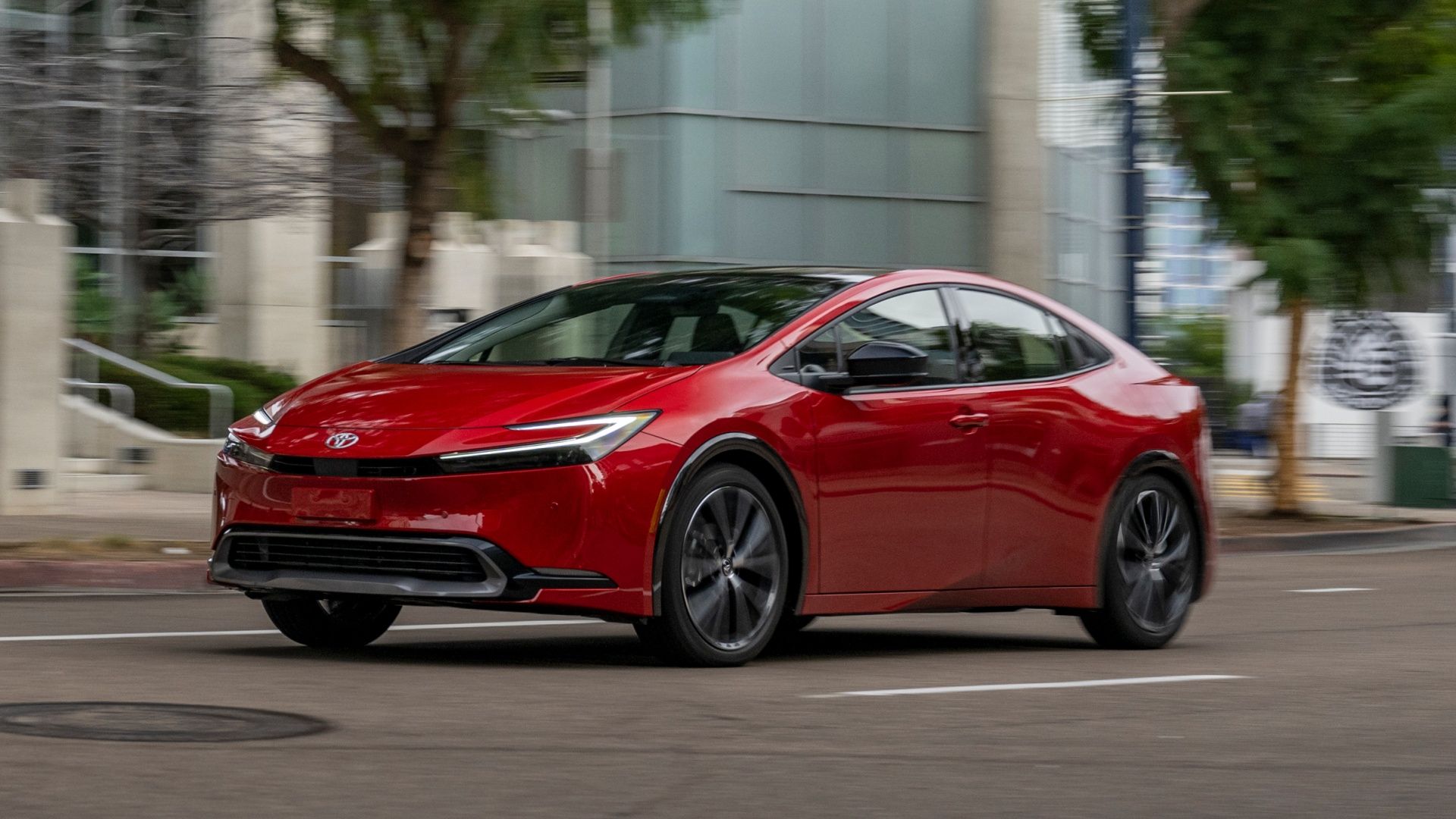
Still, the Prius rewards you with exceptional fuel economy, making it ideal for cyclists who drive long distances to races or group rides.
For efficiency-focused riders, it’s hard to argue with the numbers. The styling may have evolved, but the fundamental purpose remains unchanged: the Prius continues to prioritise efficiency above all else.
Unlike many rivals, there is only one powertrain available, a plug-in hybrid combining a 2.0-litre four-cylinder petrol engine with a permanent-magnet synchronous electric motor.
Total system output is 220bhp and 140lb ft of torque, enabling a 0–62mph time of 6.8 seconds, which is notably brisk for a model traditionally associated with economy rather than performance.
The battery pack has a usable capacity of 13.6kWh and delivers up to 53 miles of electric-only range, provided the car is fitted with 17-inch wheels rather than the larger 19-inch alloys. That level of electric range is substantial for a PHEV and will appeal particularly to high-mileage urban drivers.
Official fuel economy figures are striking. Under WLTP testing, which begins with a fully charged battery, the Prius is rated at between 403.6 and 565.0mpg.
While technically accurate within the testing framework, such numbers are not representative of real-world use once the battery charge is depleted. Actual consumption will vary significantly depending on charging frequency and driving patterns.
8. Chevrolet Bolt EUV
While technically edging into subcompact crossover territory, the Bolt EUV behaves like a tall hatchback, and that works in cyclists’ favor.
Its upright rear design creates excellent vertical clearance, and the flat cargo floor easily accommodates full-size bikes. Many owners report fitting bikes straight in without touching either wheel, especially road and gravel setups.
As an all-electric option, the Bolt EUV also appeals to riders looking to cut fuel costs entirely while still enjoying easy bike transport.
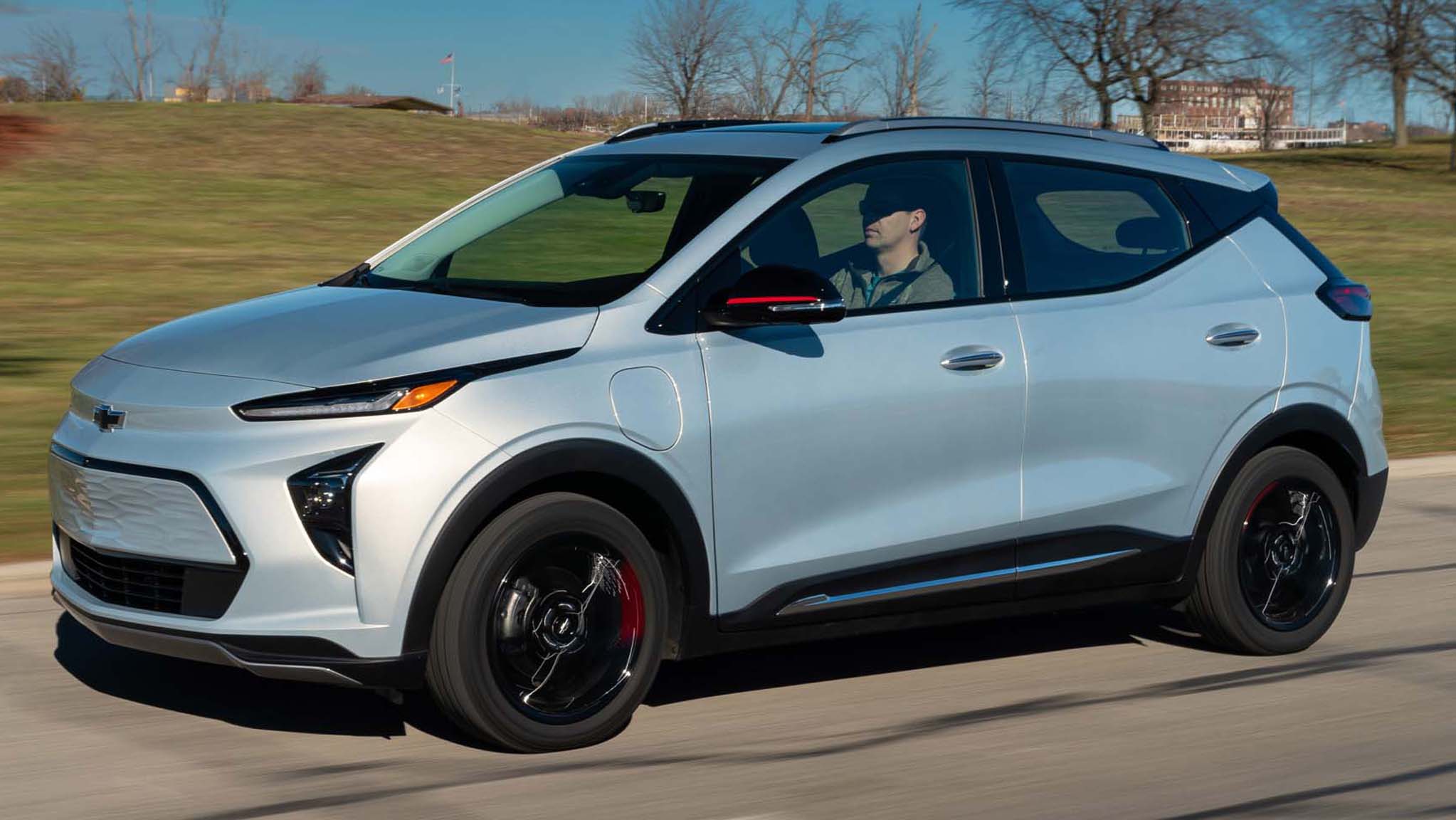
Modern hatchbacks have quietly become some of the best vehicles for cyclists. Smart interior packaging, fold-flat rear seats, and taller cargo openings mean you no longer need a roof rack or hitch carrier just to bring one bike along.
The electric SUV segment is expanding rapidly, and the Bolt EUV represents Chevrolet’s first entrant in this category. Derived from the Chevrolet Bolt EV hatchback, the EUV shares its platform and powertrain but offers slightly increased dimensions.
It sits among the more affordable EVs on the market and competes with models such as the Ford Mustang Mach-E and Volkswagen ID.4.
General Motors CEO Mary Barra has confirmed that 2023 will be the final model year for the Bolt EUV. Chevrolet’s future electric SUV portfolio will instead focus on the Chevrolet Blazer EV and Chevrolet Equinox EV.
As the larger member of Chevrolet’s small EV lineup, the Bolt EUV offers incremental gains in space over the hatchback, but it still trails pricier rivals in rear-seat room and cargo capacity.
In testing, the EUV demonstrated solid straight-line performance, responsive steering, and well-calibrated brakes. Chevrolet’s available Super Cruise hands-free driving system performed impressively.
Drawbacks include a somewhat unsettled ride over rough surfaces and the absence of an all-wheel-drive option. Nonetheless, with a base price below $40,000, the Bolt EUV remains a compelling choice for first-time EV buyers.
All 2023 models use a 65.0-kWh underfloor lithium-ion battery paired with a single front-mounted permanent-magnet motor, driving the front wheels.
Output is rated at 200 horsepower and 266 lb-ft of torque. In testing of a prior model year, acceleration to 60 mph took 6.7 seconds, with the quarter mile completed in 15.2 seconds at 92.5 mph.
Charging options include DC fast charging, which can add up to 95 miles of range in approximately 30 minutes. A 240-volt Level 2 charger replenishes the battery in roughly seven hours, while a 120-volt household outlet adds about four miles of range per hour.
EPA-estimated range stands at 247 miles for the 2022 model, and the 2023 version is expected to deliver similar results. While this is competitive with the rear-wheel-drive Mustang Mach-E, it falls short of the ID.4 Pro RWD’s 280-mile rating.
Interior dimensions are largely unchanged from the previous year. Legroom is adequate in both rows, though rear headroom trails that of the Mustang Mach-E.
Although interior materials may feel budget-oriented, the Bolt EUV includes competitive technology for its class. A 10.2-inch touchscreen serves as the central interface, complemented by a customizable 8.0-inch digital gauge display.
If you primarily ride road or gravel, nearly all of these models will handle your setup without removing wheels. Mountain bikes with wide bars may require slight angling, but even those typically fit with a bit of patience.
The real takeaway is this: you don’t need a bulky SUV to carry a bike inside your car. Today’s compact and midsize hatchbacks offer a cleaner, more efficient solution, while still delivering comfort, safety tech, and everyday usability.