
The electric vehicle revolution is well underway, but not every EV is flying off dealer lots. While some models command premium prices and waiting lists, others are lingering in showrooms and that’s creating unprecedented opportunities for savvy buyers. These overlooked electric vehicles aren’t sitting unsold because they’re inferior products.
Rather, a perfect storm of factors including rapid depreciation, range anxiety misconceptions, shifting consumer preferences, and the arrival of newer models has created a buyer’s market for certain EVs.
The reality is that many of these vehicles represent exceptional value propositions. They offer proven technology, comprehensive warranty coverage, and performance that rivals or exceeds their gasoline counterparts, all at significantly reduced prices.
The used EV market has matured considerably, with better charging infrastructure, more transparent battery health reporting, and a growing understanding that range numbers often exceed real-world needs.
For buyers willing to look past badge prestige or the allure of the latest model, these dealer lot dwellers offer compelling transportation solutions. Many feature luxury appointments, cutting-edge technology, and driving dynamics that make daily commuting genuinely enjoyable.
The key is understanding why they’re available, what they offer, and how to evaluate whether their strengths align with your needs. This article explores ten such vehicles that deserve a second look EVs that might not be generating headlines but could be perfect for your driveway.
1. Nissan Leaf (2020-2022 Models)
The Nissan Leaf holds the distinction of being the world’s best-selling electric vehicle for years, yet recent model years are now readily available on used car lots at surprisingly attractive prices.
This accessibility stems from several factors, but it absolutely doesn’t reflect the vehicle’s fundamental capability as a practical, reliable electric commuter car.
The Leaf’s depreciation curve has been steeper than many competitors, primarily due to the rapid advancement of EV technology and the introduction of Nissan’s newer Ariya crossover.
Additionally, the Leaf uses passive air cooling for its battery rather than the liquid cooling systems found in most competitors, which has raised concerns about long-term battery degradation in hot climates. However, for buyers in moderate climates or those with garage parking, this concern is largely academic for daily driving needs.
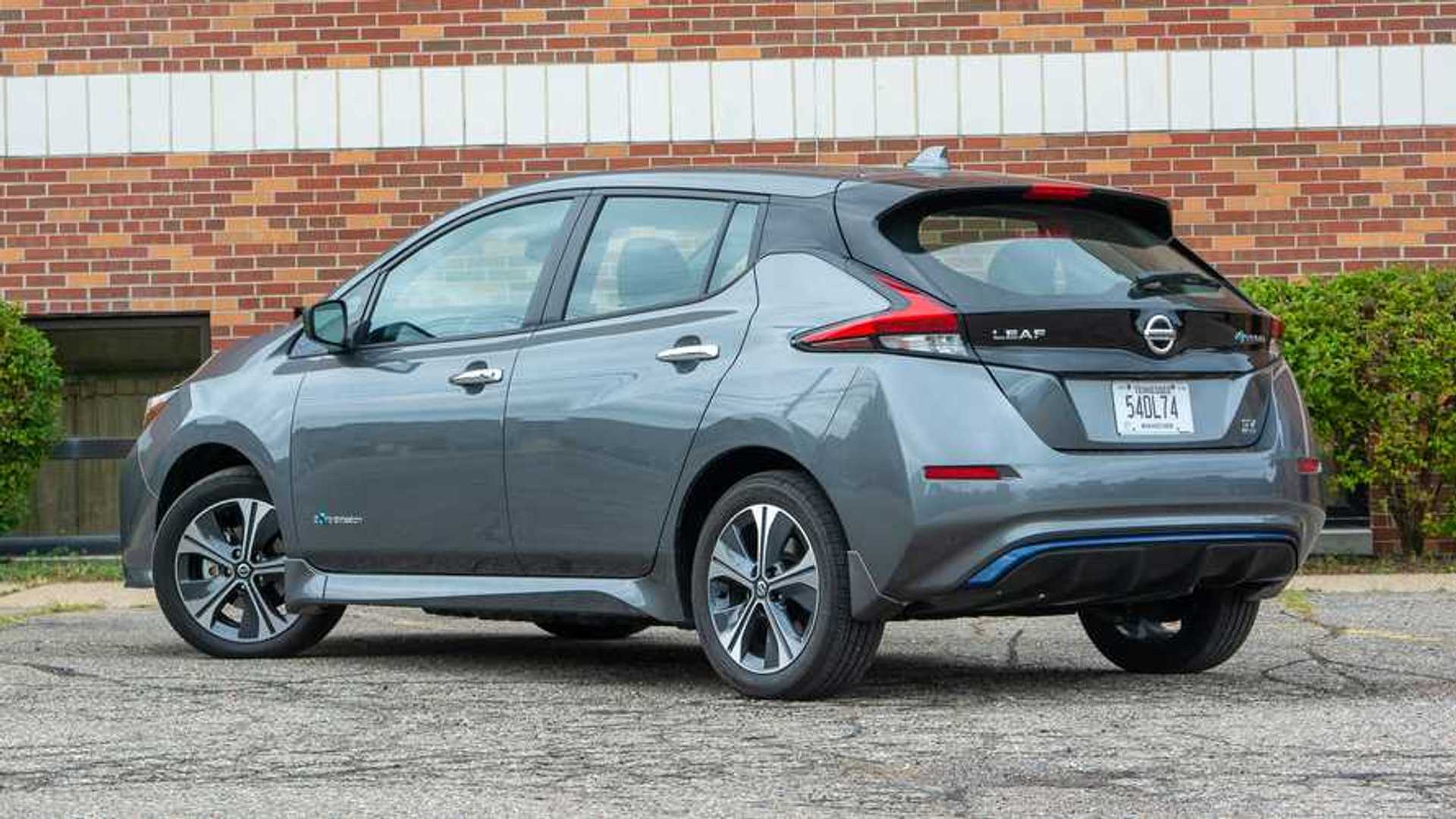
What makes the 2020-2022 Leaf such an attractive proposition is the sheer value it represents. These models come with either a 40 kWh battery (150-mile range) or the Leaf Plus’s 62 kWh pack (226-mile range), both of which are more than adequate for the vast majority of daily driving scenarios.
The EPA estimates that the average American drives fewer than 40 miles per day, meaning even the standard Leaf offers nearly four days of driving on a single charge for typical users.
The CHAdeMO fast-charging standard, while less common than CCS in North America, still provides adequate fast-charging capability for occasional road trips, and the vast majority of charging happens at home overnight anyway.
For buyers seeking an affordable, practical electric vehicle for commuting and local errands, the readily available Nissan Leaf represents one of the best value propositions in the entire used car market.
2. Chevrolet Bolt EV and EUV (2020-2023 Models)
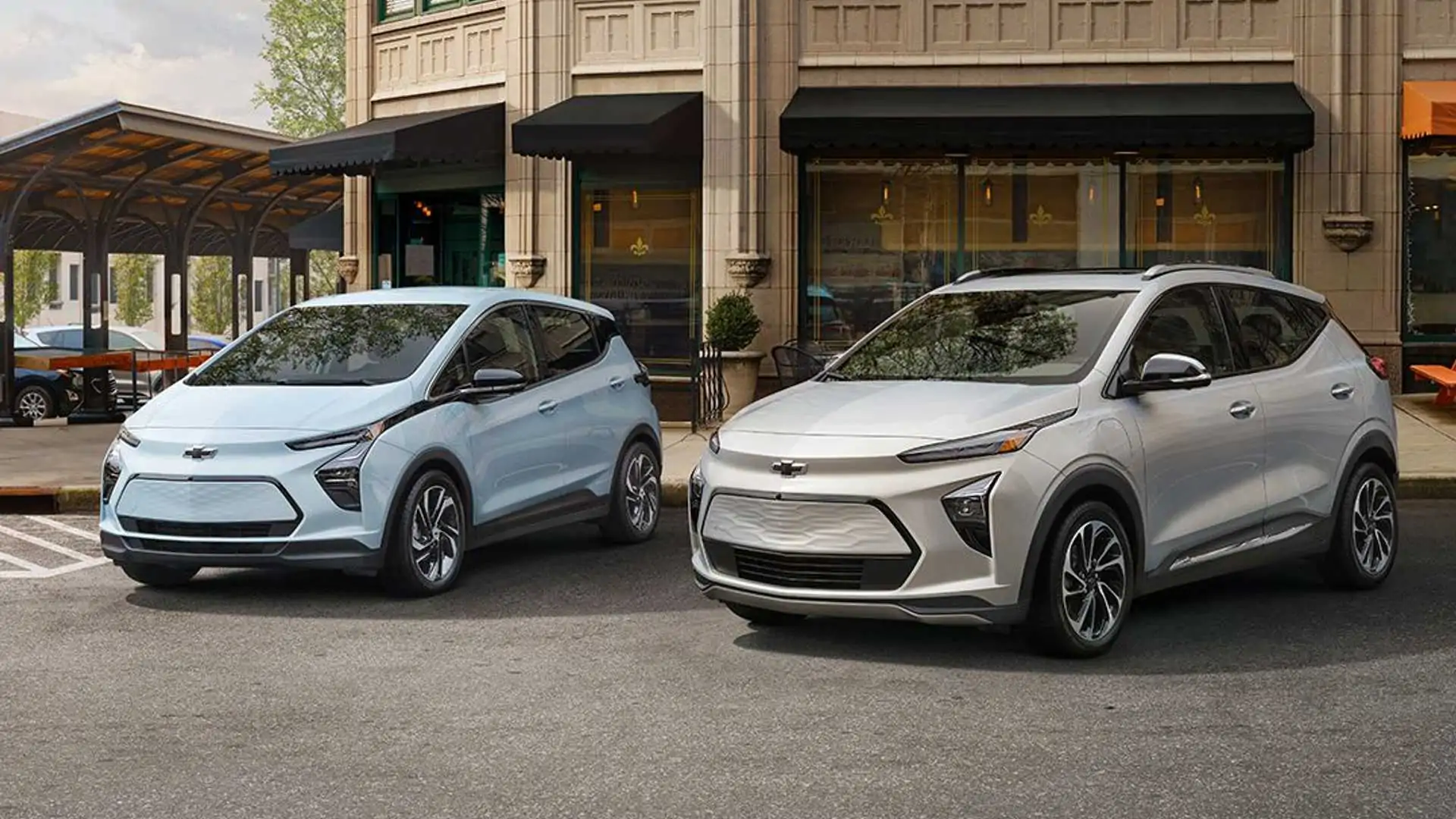
The Chevrolet Bolt EV and its slightly larger sibling, the Bolt EUV, have experienced a complicated market journey that’s created exceptional buying opportunities.
These vehicles offer genuinely impressive specifications 259 miles of range in the EV and 247 in the EUV, peppy acceleration, and comprehensive technology packages yet they’re sitting on lots with significant price reductions.
The primary factor affecting Bolt availability has been General Motors’ decision to discontinue the model to focus on its Ultium-based EV platform, which powers vehicles like the Blazer EV and Equinox EV.
This discontinuation has created uncertainty among buyers, who worry about parts availability and long-term support. However, GM has committed to supporting the Bolt through its service network, and the company’s size ensures parts production will continue for the foreseeable future.
Additionally, the 2020-2022 Bolts were subject to a major battery recall due to potential fire risk, though GM replaced the affected battery packs with new units, effectively giving these vehicles brand-new batteries with fresh warranty coverage.
This recall resolution actually makes affected vehicles more attractive, as buyers essentially get new batteries without the new car price.
The Bolt’s driving characteristics are exemplary for an affordable EV. The 200-horsepower motor provides brisk acceleration, making highway merging and urban driving effortless.
The regenerative braking system can be adjusted to enable one-pedal driving, where lifting off the accelerator provides enough deceleration to bring the car to a complete stop in most situations. This not only extends range but creates a uniquely smooth, controlled driving experience.
The Bolt’s efficiency is outstanding, achieving approximately 4 miles per kWh in mixed driving, making it one of the most energy-efficient EVs available.
This translates to remarkably low operating costs electricity equivalent to less than $1 per gallon of gasoline in many markets. Combined with minimal maintenance requirements and current pricing that can dip below $20,000 for well-maintained 2020 models, the Bolt represents extraordinary transportation value.
3. Hyundai Kona Electric (2019-2021 Models)
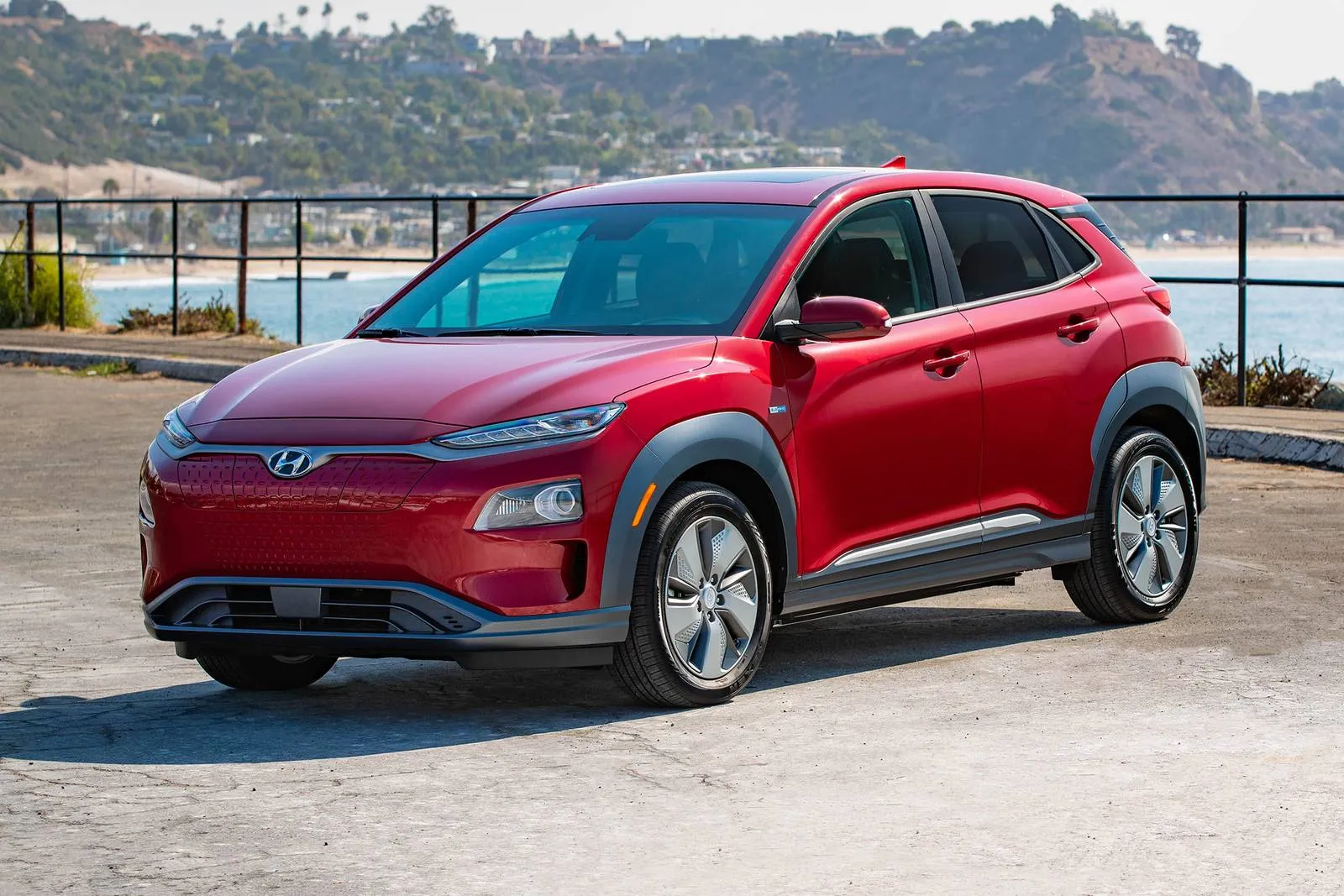
The Hyundai Kona Electric has earned numerous accolades from automotive journalists, yet earlier model years are now readily available as dealers make room for Hyundai’s expanding EV lineup, including the IONIQ 5 and IONIQ 6.
This availability creates opportunities for buyers who want a compact crossover with impressive range at a fraction of the original MSRP.
The Kona Electric’s 64 kWh battery delivers an EPA-estimated 258 miles of range, which was exceptional when new and remains competitive today.
Real-world testing consistently shows the Kona can achieve or exceed this figure with conservative driving, making it genuinely capable of handling longer trips without range anxiety.
The raised seating position and crossover styling appeal to buyers who want EV benefits without compromising the vehicle format they prefer.
What distinguishes the Kona Electric in the used market is Hyundai’s exceptional warranty coverage. Even as a used vehicle, the Kona carries Hyundai’s 10-year/100,000-mile electric battery warranty, providing remarkable peace of mind about the most expensive component.
This warranty transfers to subsequent owners, making it one of the best-protected used EV purchases available. The driving experience delivers unexpected enthusiasm.
The 201-horsepower electric motor provides spirited acceleration, pushing the Kona from 0-60 mph in approximately 6.4 seconds genuinely quick by mainstream standards.
The suspension tuning balances comfort and control effectively, and the Kona’s compact dimensions make it exceptionally maneuverable in urban environments while still offering adequate interior space and cargo capacity.
Build quality reflects Hyundai’s modern manufacturing standards, with solid construction, quality materials, and good reliability ratings.
The Kona Electric has avoided the major recalls that have affected some competitors, and owner satisfaction surveys consistently rate it highly for ownership experience. For buyers seeking a practical, well-equipped compact crossover with genuine long-range capability, the available Kona Electric represents one of the used EV market’s most compelling offerings.
4. Volkswagen ID.4 (2021-2022 Models)
Volkswagen’s entry into the mass-market EV segment, the ID.4, arrived with considerable fanfare as the German automaker’s first purpose-built electric vehicle for the U.S. market.
However, early production models are now appearing on dealer lots as VW refines the lineup and introduces updated versions with improved software and features.
These first-generation ID.4s offer substantial value for buyers willing to accept first-model-year quirks that have largely been addressed through software updates.
The ID.4’s design prioritizes interior space and comfort, with a wheelbase that maximizes passenger room while maintaining compact exterior dimensions.
The rear-wheel-drive configuration (AWD available on some trims) provides balanced handling and efficiency, with the 82 kWh battery delivering up to 275 miles of EPA-estimated range.
Real-world range typically exceeds 240 miles in mixed driving, making the ID.4 genuinely practical for both daily commuting and weekend getaways.
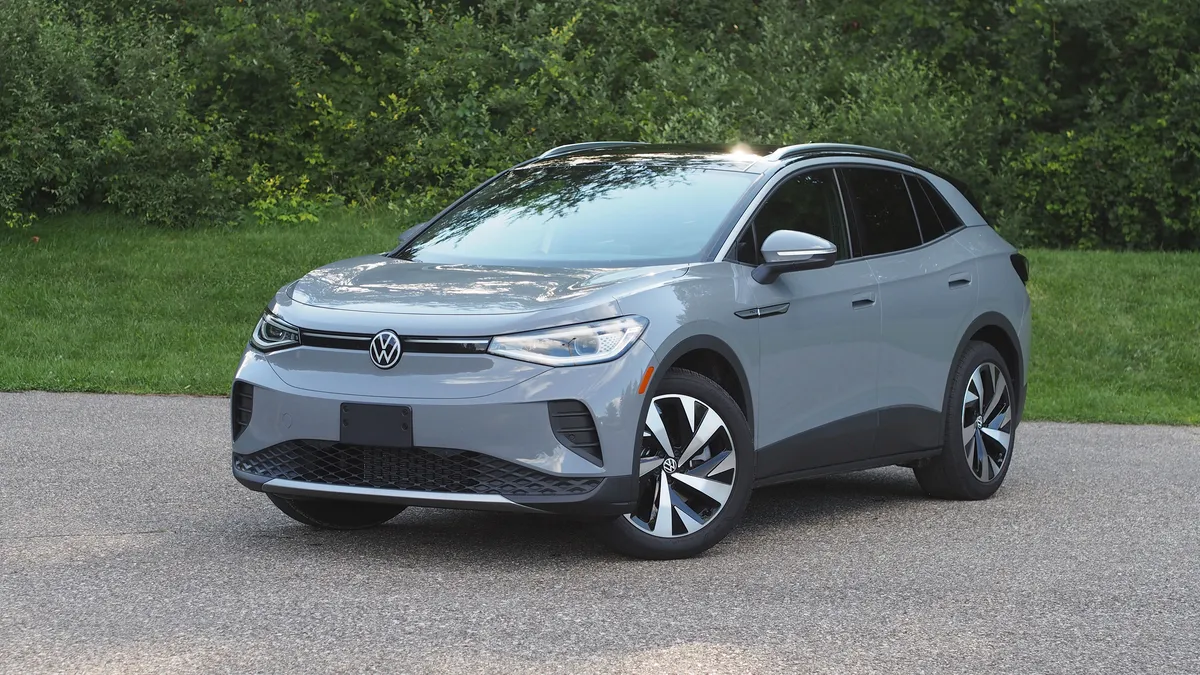
Initial criticisms focused on the infotainment system’s responsiveness and user interface logic, but Volkswagen has released multiple over-the-air software updates that have substantially improved system performance.
The physical controls are minimalist, which some users find frustrating, but the cabin ambiance is upscale, with excellent materials, comfortable seating, and impressive quietness at highway speeds.
The ID.4’s performance characteristics favor smooth, refined driving over outright sportiness. The 201-horsepower rear motor provides adequate acceleration, while the available dual-motor AWD version ups output to 295 horsepower for more spirited performance.
The ride quality is particularly noteworthy, with suspension tuning that absorbs road imperfections effectively while maintaining composure through corners.
Cargo capacity is excellent, with 30.3 cubic feet behind the rear seats expanding to 64.2 cubic feet with seats folded. The practical liftback design and low load floor make loading bulky items straightforward.
Standard equipment is generous, including LED lighting, panoramic sunroof, and comprehensive safety technology. For buyers seeking a practical, comfortable electric crossover with genuine versatility, the available first-generation ID.4 represents excellent value in today’s market.
Also Read: 10 Inline-Six SUVs That Offer Serious Value
5. Ford Mustang Mach-E (Select and Premium Trims, 2021-2022)
Ford’s bold reimagining of the Mustang nameplate as an electric crossover generated controversy among purists but created a genuinely compelling EV that’s now available in good numbers on the used market.
While GT and GT Performance Edition models command premium prices, the more accessible Select and Premium trims with standard-range batteries are readily available and represent exceptional value for buyers prioritizing practicality over maximum performance.
The Mach-E’s design is polarizing using the Mustang name for a family crossover offends traditionalists but the execution is undeniably attractive, with sleek proportions, distinctive lighting, and a stance that communicates performance even in base configurations.
The standard-range rear-wheel-drive model offers 247 miles of EPA-estimated range, while extended-range versions push that to 312 miles, providing genuine long-distance capability.
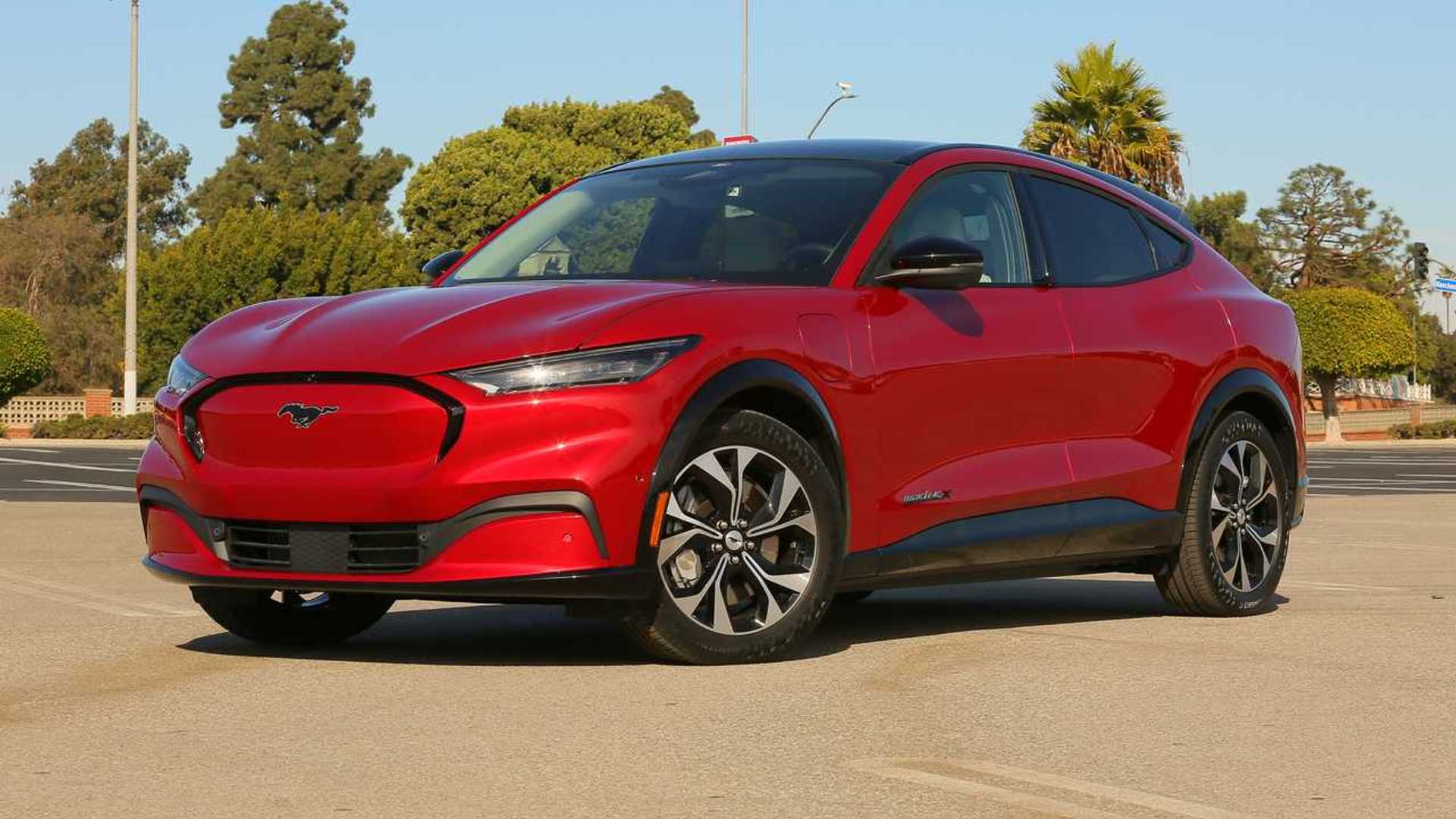
Driving dynamics exceed expectations for an electric crossover. Ford’s engineers prioritized engaging handling, with responsive steering, well-controlled body motions, and a driving character that feels distinctly sportier than competitors like the ID.4 or Kona Electric.
Even the base configuration offers 266 horsepower, providing brisk acceleration and confident highway passing ability. The AWD extended-range Premium produces 346 horsepower, delivering genuinely thrilling performance.
The interior showcases Ford’s modern design language, with a massive 15.5-inch vertically-oriented touchscreen dominating the dashboard. The SYNC 4A infotainment system is responsive and logically organized, with excellent smartphone integration and over-the-air update capability.
Ford has continuously refined the software, addressing early issues and adding features like improved charging route planning and enhanced one-pedal driving calibration.
Space utilization is impressive, with genuine adult comfort in both rows and a cargo area that accommodates family needs. The front trunk (frunk) adds valuable weatherproof storage for charging cables and other items.
Material quality is good throughout the cabin, with higher trims featuring upscale touches like Bang & Olufsen audio and heated/ventilated seats.
Charging performance is strong, with the Mach-E accepting DC fast charging at rates up to 150 kW, allowing 10-80% charging in approximately 38 minutes.
The vehicle includes complimentary charging credits for the FordPass Charging Network, which provides access to over 100,000 charging plugs across North America. Home charging on a 240-volt connection replenishes the battery overnight, and Ford offers home installation services through its dealer network.
The Mach-E benefits from Ford’s massive service infrastructure and the company’s commitment to electrification, with substantial investment in EV development and production capacity.
Reliability has generally been good, though some early vehicles experienced software glitches that have been largely resolved through updates. The warranty coverage is comprehensive, including 8-year/100,000-mile battery coverage that transfers to subsequent owners.
For buyers seeking an electric vehicle that combines practicality, engaging driving dynamics, advanced technology, and genuine brand heritage, the available Mustang Mach-E Select and Premium models represent some of the best value in the used EV market, particularly as prices have softened considerably from original MSRPs.
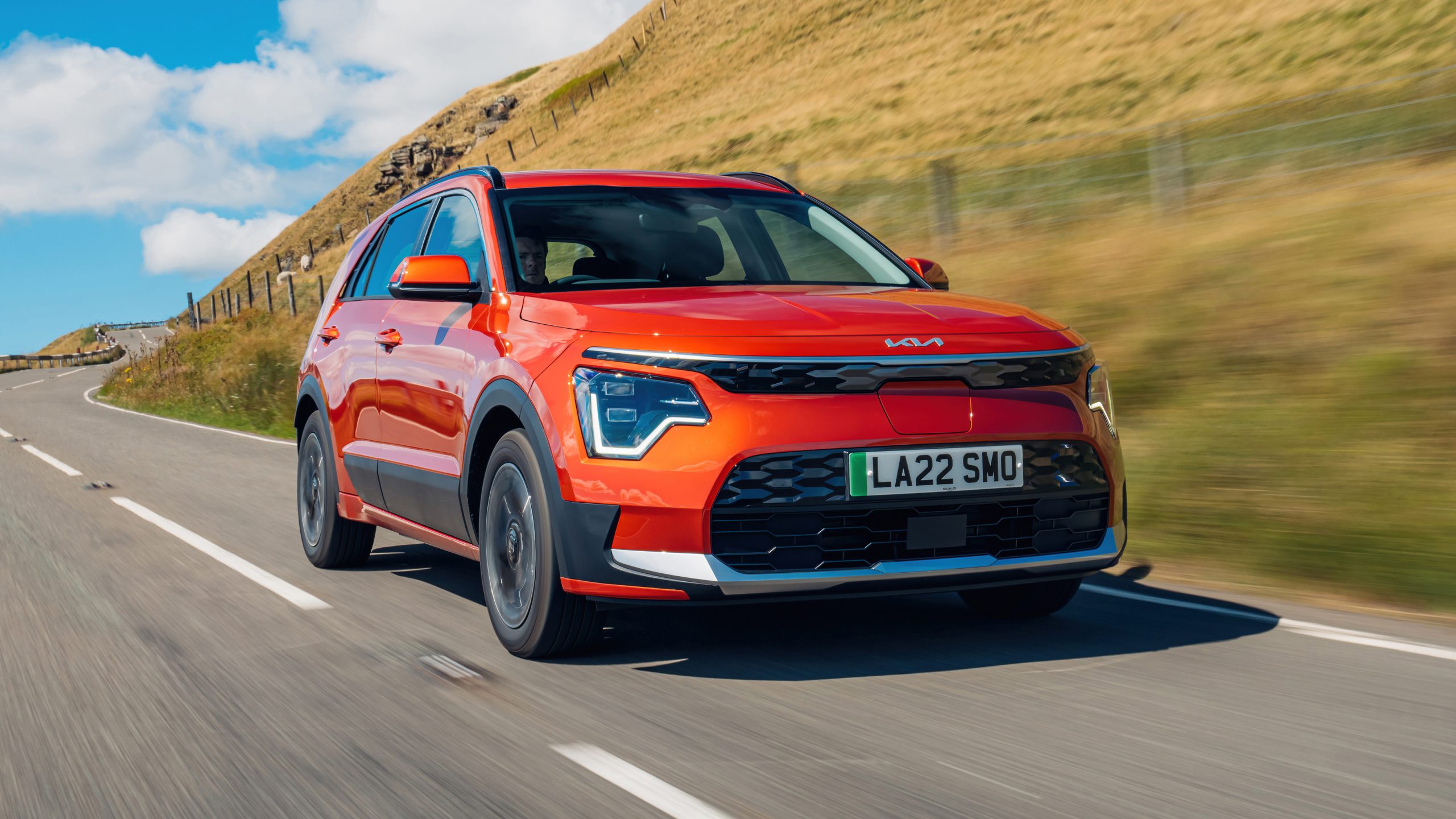
6. Kia Niro EV (2019-2022 Models)
Kia’s Niro EV has consistently received positive reviews for its practicality and efficiency, yet it remains under the radar compared to flashier competitors.
This relative obscurity has created excellent availability on used car lots, where the Niro EV offers Kia’s industry-leading warranty coverage combined with genuine 239-mile range capability in a sensible, well-executed package.
The Niro EV’s greatest strength is its normalcy. Unlike designs that scream “electric vehicle,” the Niro presents as a conventional compact crossover that happens to be electric.
This appeals to buyers who want EV benefits without making a styling statement. The proportions are conventional, the interior layout is familiar, and the operation is intuitive reducing the learning curve for first-time EV owners.
Efficiency is exceptional, with the Niro regularly achieving 4 miles per kWh or better in real-world driving. This frugality translates to minimal charging costs and maximum range from the 64 kWh battery pack.
The electric motor produces 201 horsepower, providing adequate acceleration without pretending to be a sports car. The driving experience prioritizes comfort and quietness, with Kia’s engineers delivering excellent refinement.
Technology features are comprehensive across the lineup, with standard items including adaptive cruise control, lane-keeping assist, blind-spot monitoring, and rear cross-traffic alert.
The infotainment system includes a responsive touchscreen with Apple CarPlay and Android Auto integration. Higher trims add premium features like a heads-up display, ventilated seats, and a premium Harman Kardon audio system.
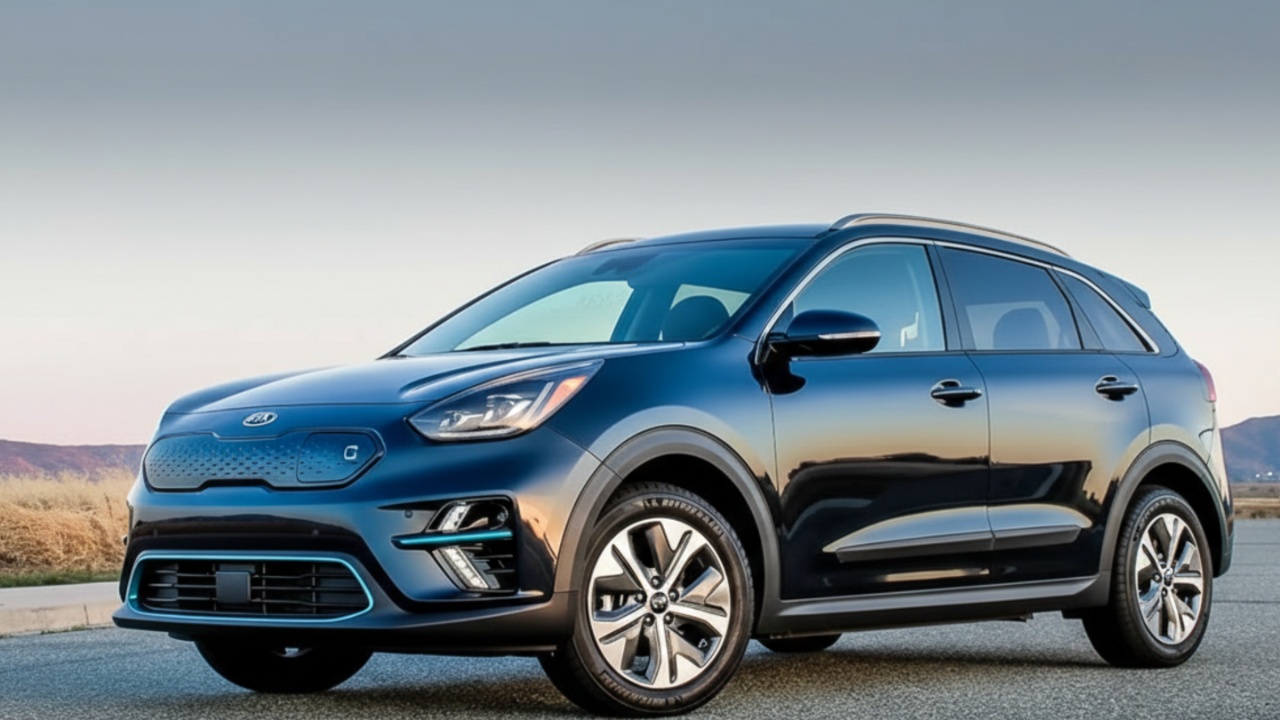
The warranty coverage is the Niro EV’s secret weapon. Kia’s 10-year/100,000-mile battery warranty provides extraordinary peace of mind, and this coverage fully transfers to subsequent owners.
Combined with Kia’s 5-year/60,000-mile basic warranty and 10-year/100,000-mile powertrain warranty (both of which also transfer), the Niro EV offers protection that far exceeds most competitors. This makes buying used significantly less risky, as major components remain covered.
Charging capability is solid, with CCS fast-charging at rates up to 100 kW, allowing 10-80% charging in approximately 47 minutes. While not the absolute fastest available, it’s perfectly adequate for road trip charging stops.
The Niro’s efficiency means these charging sessions replenish substantial range, and home charging overnight handles daily driving needs effortlessly.
Practical considerations are well addressed. Cargo space is generous at 19.4 cubic feet behind the rear seats, expanding to 54.5 cubic feet with seats folded.
The seat comfort is excellent for long drives, and the ride quality strikes an effective balance between comfort and control. Build quality reflects Kia’s modern manufacturing standards, with solid construction and quality materials throughout.
The Niro EV has proven reliable in owner surveys, with few significant issues reported. The simplicity of the EV drivetrain eliminates many maintenance concerns associated with conventional vehicles, and Kia’s expanding service network provides accessible maintenance when needed.
For buyers seeking a practical, efficient, well-protected electric crossover without unnecessary complexity, the available Kia Niro EV represents one of the smartest choices in the used EV market.
7. Audi e-tron and e-tron Sportback (2019-2021 Models)
Audi’s first dedicated electric vehicle, the e-tron, entered the market as a luxury crossover emphasizing refinement and premium materials over maximum range. Early depreciation has been steep typical for luxury vehicles creating opportunities for buyers to acquire genuine German luxury at substantially reduced prices.
These early e-trons offer exceptional build quality, advanced technology, and an upscale ownership experience at prices that now compete with mainstream EVs.
The e-tron’s design is conservatively handsome, eschewing the dramatic styling of some EV competitors for Audi’s traditional understated elegance.
The Sportback variant adds a sloping roofline for a more dynamic profile while sacrificing minimal practicality. Both versions exude quality, with panel gaps and finish quality that justify their original luxury positioning.
Range is the e-tron’s primary compromise, with EPA estimates of 222 miles for the standard e-tron and 218 miles for the Sportback. These figures are modest by modern EV standards, though real-world driving often exceeds EPA estimates.
The key consideration is matching this range to usage patterns for buyers with home charging and daily driving under 150 miles, the e-tron’s range is perfectly adequate, and the vehicle’s other qualities become more relevant.
Where the e-tron excels is in driving refinement and interior quality. The cabin is quintessentially Audi, with exceptional materials, precise build quality, and an ambiance that feels genuinely luxurious.
The dual-screen infotainment system (MMI touch response) provides haptic feedback and crisp graphics, controlling vehicle functions with impressive responsiveness. The Bang & Olufsen audio system delivers concert-hall sound quality, and the available air suspension provides magic-carpet ride quality.
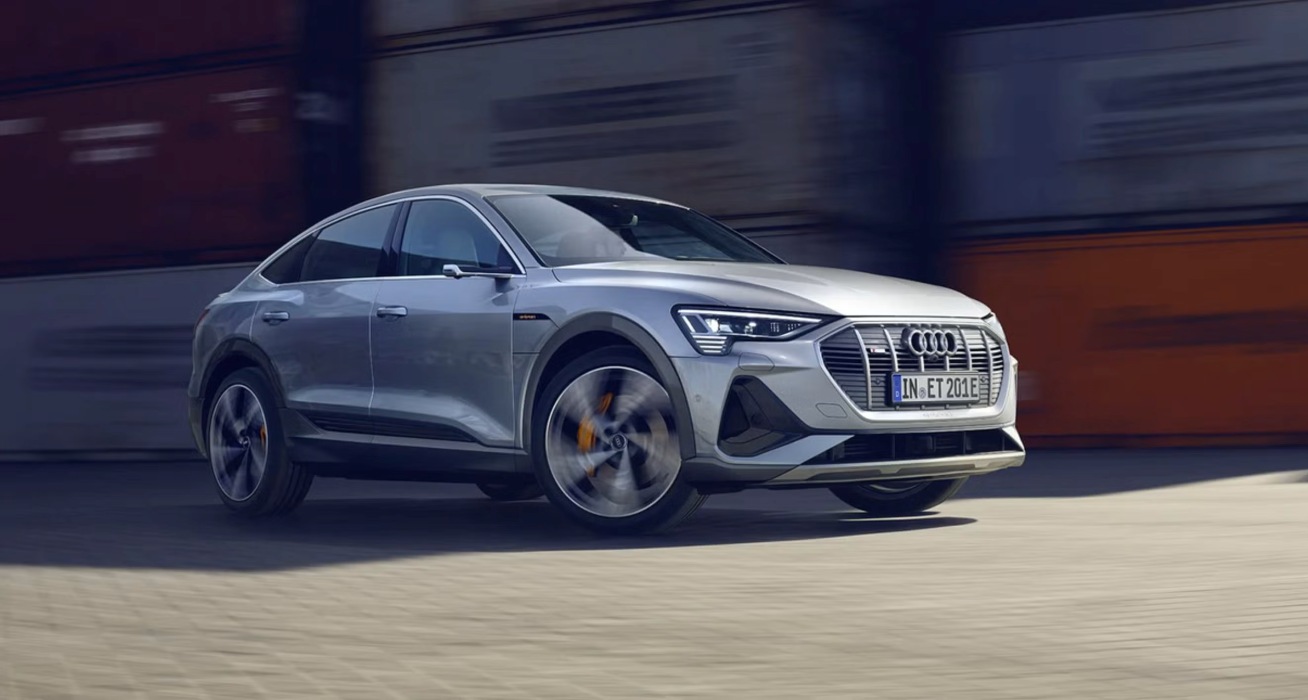
Performance is strong, with dual motors producing 402 horsepower (355 in base configuration) and Quattro all-wheel drive delivering confident handling in all conditions.
The e-tron accelerates from 0-60 mph in 5.5 seconds, providing genuinely thrilling performance when desired. The vehicle’s weight is substantial, but sophisticated suspension tuning and precise steering create surprisingly agile handling for such a large crossover.
Charging capability is competitive, with 150 kW DC fast-charging allowing 10-80% charging in approximately 30 minutes under ideal conditions.
Audi vehicles can access the Electrify America network with preferential pricing, and the vehicle’s route planning system intelligently integrates charging stops for longer journeys. Home charging on a 240-volt connection replenishes the battery overnight for daily use.
The e-tron’s practical considerations are well addressed. Cargo capacity is generous, seating is spacious and supportive, and the towing capacity of 4,000 pounds exceeds most EV competitors.
Build quality and reliability have generally been good, though Audi’s maintenance and repair costs can exceed mainstream brands. However, the simplified EV drivetrain eliminates many traditional maintenance items.
For buyers seeking genuine luxury, advanced technology, and refined driving dynamics in an electric package, the depreciated early e-tron represents exceptional value.
The range limitation is real but manageable for many use cases, and the ownership experience delivers premium satisfaction at prices that now seem remarkably accessible.
8. BMW i3 (2018-2021 Models)
BMW’s i3 stands as one of the most distinctive and innovative electric vehicles ever produced, yet its unconventional design and modest range have created abundant availability on the used market.
For buyers willing to embrace its unique character, the i3 offers a driving experience unlike anything else in the EV world, combining lightweight construction, premium materials, and BMW’s legendary driving dynamics in a surprisingly practical package.
The i3’s appearance polarizes opinions its tall, narrow proportions and short wheelbase create a profile that defies conventional automotive aesthetics.
However, this unusual design serves functional purposes, maximizing interior space while minimizing exterior footprint. The carbon fiber-reinforced plastic passenger cell reduces weight dramatically, contributing to efficiency and handling agility that belies the i3’s economy car dimensions.
Range specifications vary by model year, with 2018-2019 models offering 153 miles, while 2019-2021 versions with the larger 42.2 kWh battery provide 153-200 miles depending on configuration.
Some models include a small gasoline range extender, adding approximately 70 miles of emergency range, though the pure-electric versions are more common and better suited to the i3’s character. The modest range positions the i3 as an urban-focused vehicle rather than a road trip champion.
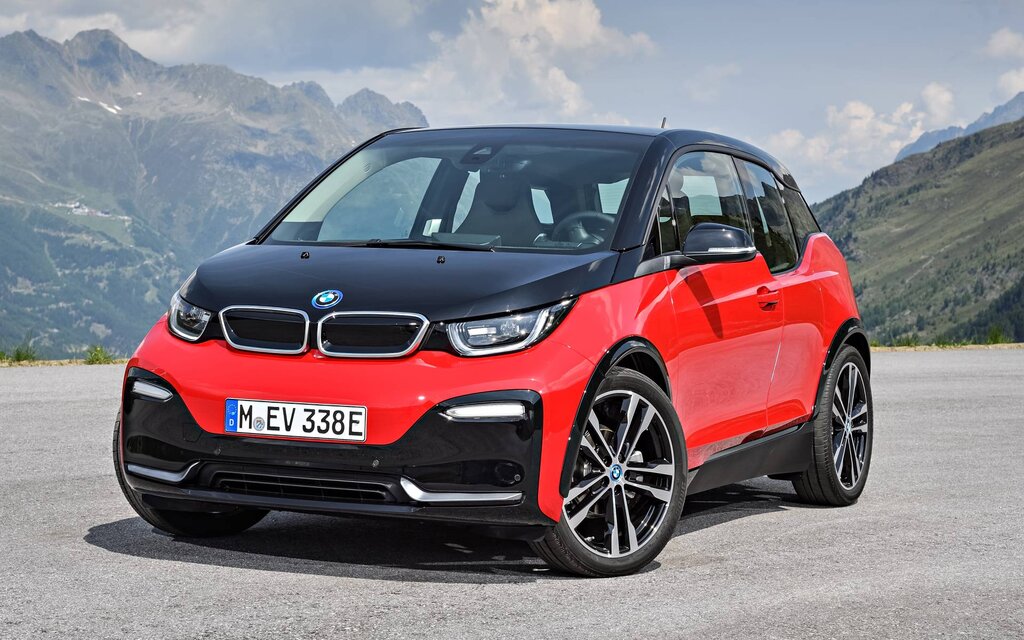
The driving experience is extraordinary. The i3’s lightweight construction (approximately 3,000 pounds) combined with rear-wheel drive and a low center of gravity creates handling that’s genuinely entertaining.
The 170-horsepower electric motor (181 hp in 2018+ models) provides brisk acceleration, and the narrow track width makes the i3 exceptionally maneuverable in tight urban environments. The turning circle is impressively compact, and the raised seating position provides excellent visibility.
Interior design showcases BMW’s commitment to sustainability and innovation. Renewable materials dominate the cabin, including eucalyptus wood trim, recycled plastic fabrics, and naturally tanned leather.
The minimalist dashboard features a floating infotainment screen, and the ambiance feels more concept car than production vehicle. Space efficiency is remarkable the compact exterior conceals a cabin that comfortably accommodates four adults, and the rear-hinged rear doors (no B-pillar) create excellent access.
For buyers seeking an electric vehicle that prioritizes urban maneuverability, engaging driving dynamics, and distinctive design over maximum range, the available i3 represents a unique proposition in the used EV market nothing else offers quite the same combination of character, efficiency, and BMW driving excellence at such accessible prices.
9. Jaguar I-PACE (2019-2020 Models)
Jaguar’s I-PACE arrived as one of the first premium electric crossovers, beating both Audi and Mercedes to market with a vehicle that emphasized performance and luxury.
The I-PACE earned numerous accolades, including World Car of the Year for 2019, yet steep depreciation typical of luxury brands has created exceptional buying opportunities for value-conscious shoppers willing to accept higher ownership costs in exchange for genuine premium credentials.
The I-PACE’s design remains striking and modern, with a coupe-like roofline, muscular proportions, and distinctive Jaguar design elements.
The exterior communicates performance intent, and the interior delivers on luxury expectations with premium leather, real metal accents, and build quality that justifies the original pricing.
The dual-screen infotainment system controls vehicle functions with reasonable responsiveness, though the software occasionally shows its age compared to newer competitors.
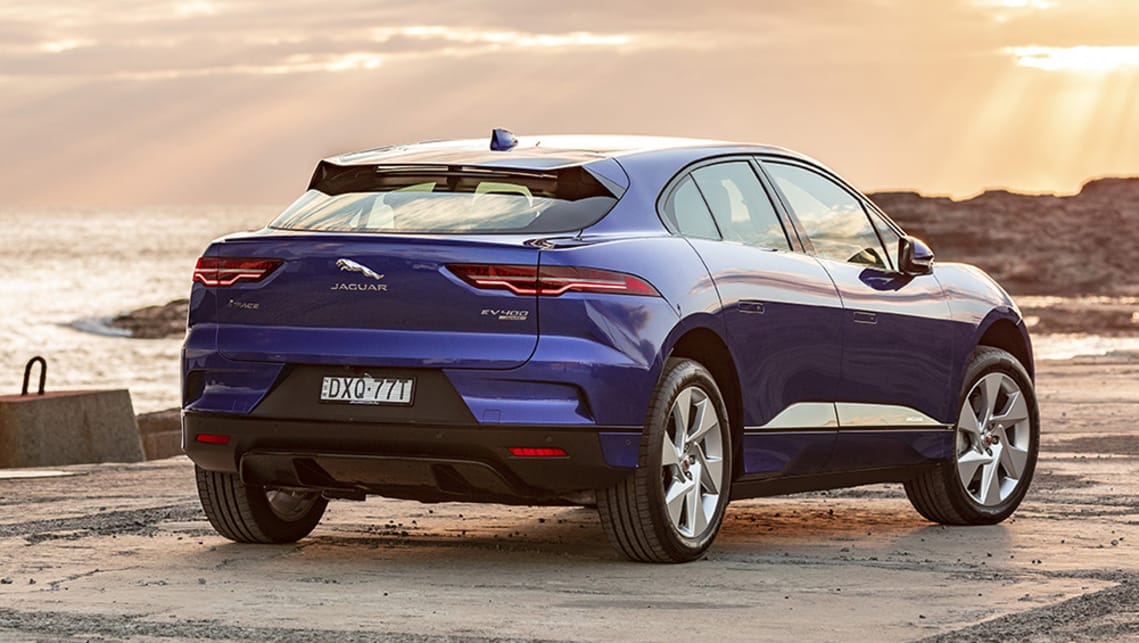
Performance is the I-PACE’s defining characteristic. The dual-motor all-wheel-drive system produces 394 horsepower and 512 lb-ft of torque, launching the I-PACE from 0-60 mph in just 4.5 seconds.
This acceleration feels genuinely thrilling, and the air suspension delivers handling that balances comfort with surprising agility. The I-PACE feels more like a sport sedan than a family crossover, rewarding enthusiastic driving with responsive dynamics and confident cornering.
Range from the 90 kWh battery is EPA-rated at 234 miles for 2019 models and 253 miles for 2020+ versions. Real-world range typically falls slightly below EPA estimates, particularly when exploiting the performance capabilities.
However, for buyers with home charging and typical daily commutes, this range proves adequate. The I-PACE’s efficiency is moderate at approximately 2.4 miles per kWh, reflecting the vehicle’s performance orientation and weight.
However, for buyers prioritizing driving experience, design distinction, and genuine luxury over maximum reliability or efficiency, the depreciated I-PACE represents remarkable value.
The warranty coverage (5-year/60,000-mile basic, 8-year/100,000-mile battery) provides some protection, and certified pre-owned examples may offer extended coverage. Few electric vehicles at similar used prices can match the I-PACE’s combination of performance, luxury, and distinctive character.
10. Porsche Taycan 4S (2020-2021 Models)
Porsche’s entry into the electric vehicle market, the Taycan, set new standards for performance and driving dynamics in an EV. While the flagship Turbo and Turbo S models command stratospheric prices even used, the more accessible 4S variant has depreciated substantially, creating opportunities to experience Porsche engineering at prices that now compete with well-equipped mainstream EVs though with correspondingly higher ownership costs.
The Taycan’s design is unmistakably Porsche, with low-slung proportions, distinctive lighting, and athletic stance that communicates performance even at rest.
The interior showcases Porsche’s commitment to driver focus, with excellent ergonomics, premium materials, and build quality that exceeds virtually all competitors.
The curved digital instrument cluster and multiple screens create a high-tech environment without sacrificing the intuitive controls Porsche owners expect.
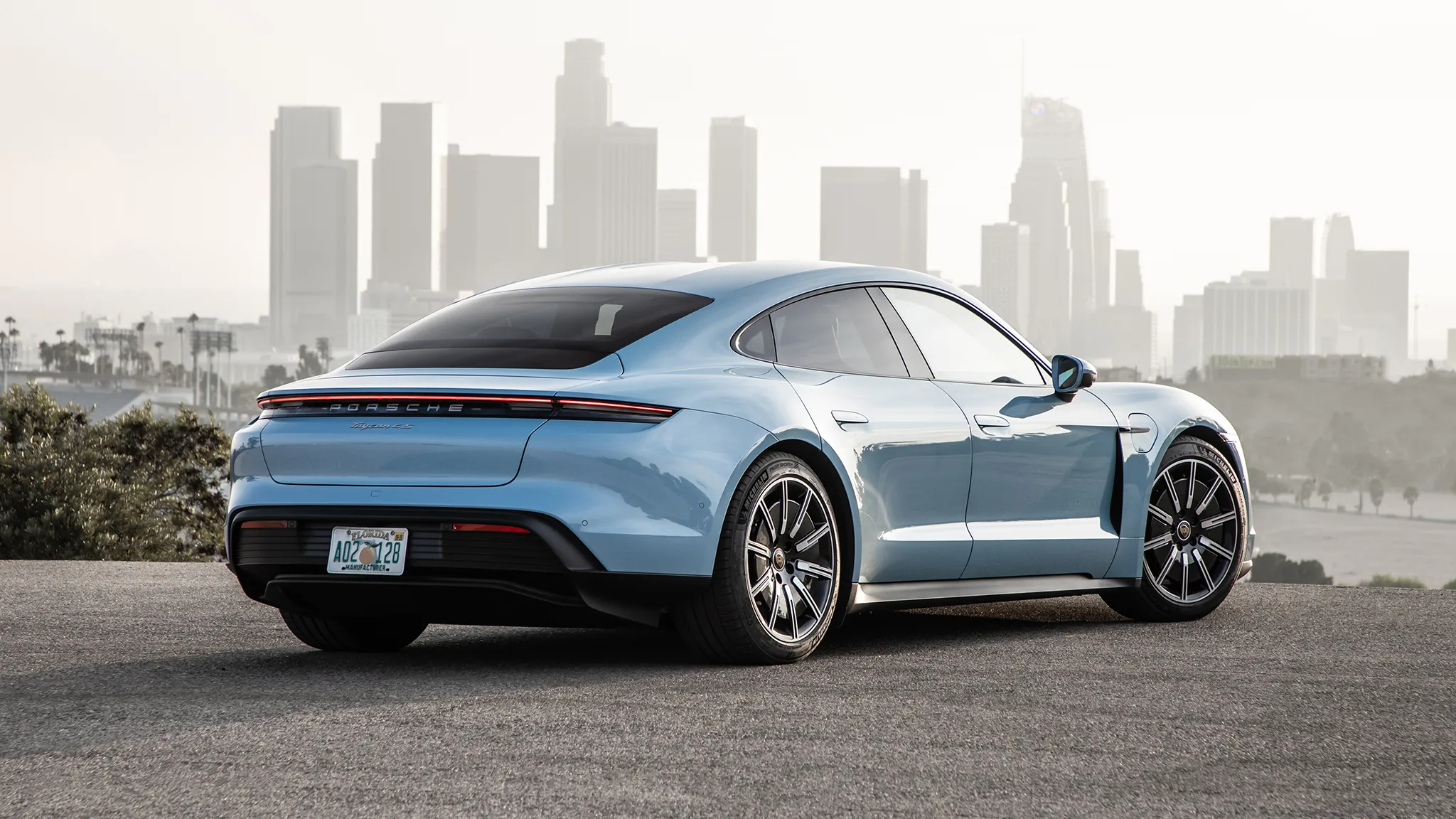
Performance is staggering. The Taycan 4S produces 522 horsepower (562 with overboost during launch control), launching from 0-60 mph in 3.8 seconds.
The acceleration is relentless and addictive, but what truly distinguishes the Taycan is its handling prowess. Porsche’s engineers created an electric vehicle that drives like a Porsche first and an EV second the steering is telepathically precise, the chassis balance is impeccable, and the vehicle rewards skilled driving with genuine engagement.
Range is the Taycan’s compromise, with EPA estimates of 199-227 miles depending on configuration and wheel choice. Real-world range typically falls below these figures, particularly when driving enthusiastically.
The Taycan is unabashedly a performance vehicle where range is secondary to driving experience. For buyers with home charging and realistic expectations about range, this limitation is manageable, though the Taycan is better suited to drivers who prioritize experience over maximum efficiency.
Charging capability is where the Taycan excels. The 800-volt electrical architecture enables DC fast-charging at rates up to 270 kW, the fastest of any vehicle in this article.
Under ideal conditions, the Taycan can charge from 5-80% in just 22.5 minutes, making road trips surprisingly practical despite the modest range. This charging speed represents a genuine technological advantage, and experiencing the Taycan’s charging capability is remarkable.
For enthusiasts seeking the ultimate electric driving experience buyers who prioritize precision engineering, thrilling performance, and Porsche’s legendary driving dynamics over practical considerations like maximum range or economy the depreciated Taycan 4S represents one of the most compelling performance vehicle values available.
No other EV at similar used prices delivers the same combination of acceleration, handling precision, and emotional engagement that defines the Porsche driving experience.
Also Read: 10 Used SUVs Known to Cross 500,000 Miles
