
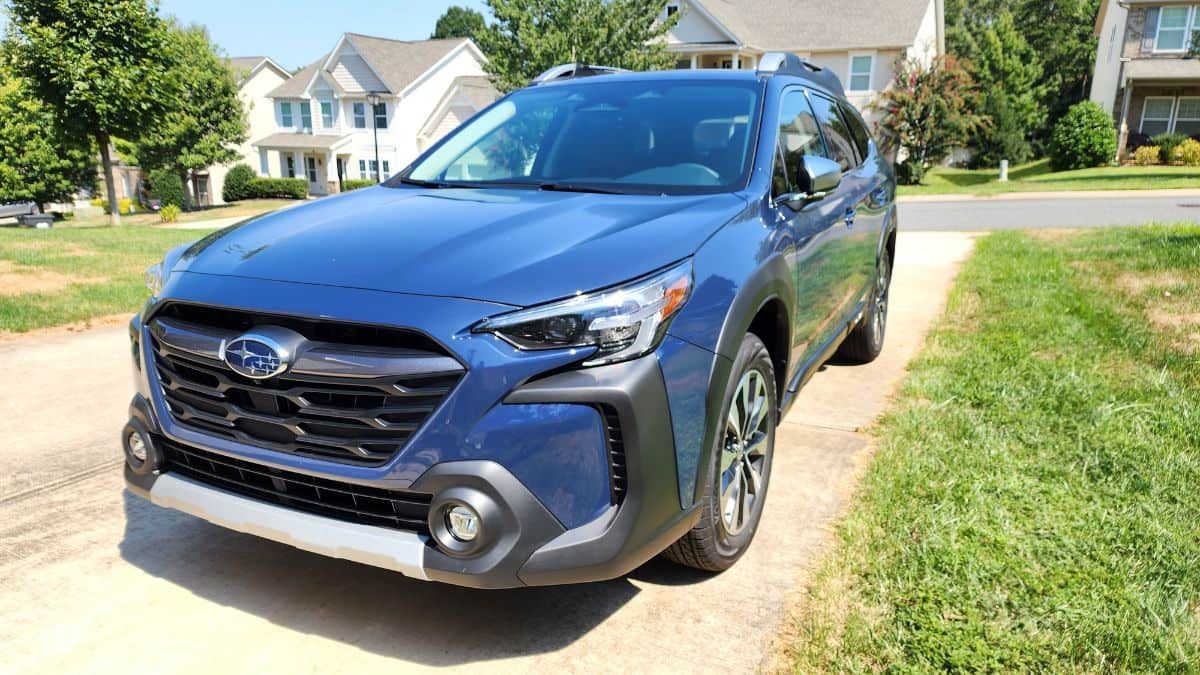
Weekend trail runs, beach days, muddy campsites, and bike-hauling road trips all have one thing in common: they leave your vehicle filthy. Sand embeds itself into carpet fibers.
Dog hair finds its way into seat seams. Mud dries inside wheel wells and along door sills. For outdoor enthusiasts, cleaning isn’t an occasional chore, it’s part of the ownership experience.
The good news is that not every vehicle turns post-adventure cleanup into a full Saturday project.
Some models are designed with rugged lifestyles in mind, offering rubberized flooring, wipe-clean upholstery, wide-opening cargo areas, and interior materials that don’t trap grime.
Others benefit from simple layouts, fewer crevices, and practical design choices that make a quick hose-down or vacuum session surprisingly painless.
If you spend your free time hiking, kayaking, camping, or hauling gear, these 12 vehicles stand out for being refreshingly easy to clean, without sacrificing comfort or daily usability.
1. Subaru Outback
The Outback has long been a favorite among hikers and campers, and its cleanability is part of that appeal.
Higher trims include all-weather floor mats and water-resistant upholstery that handles wet jackets and muddy boots with minimal complaint.
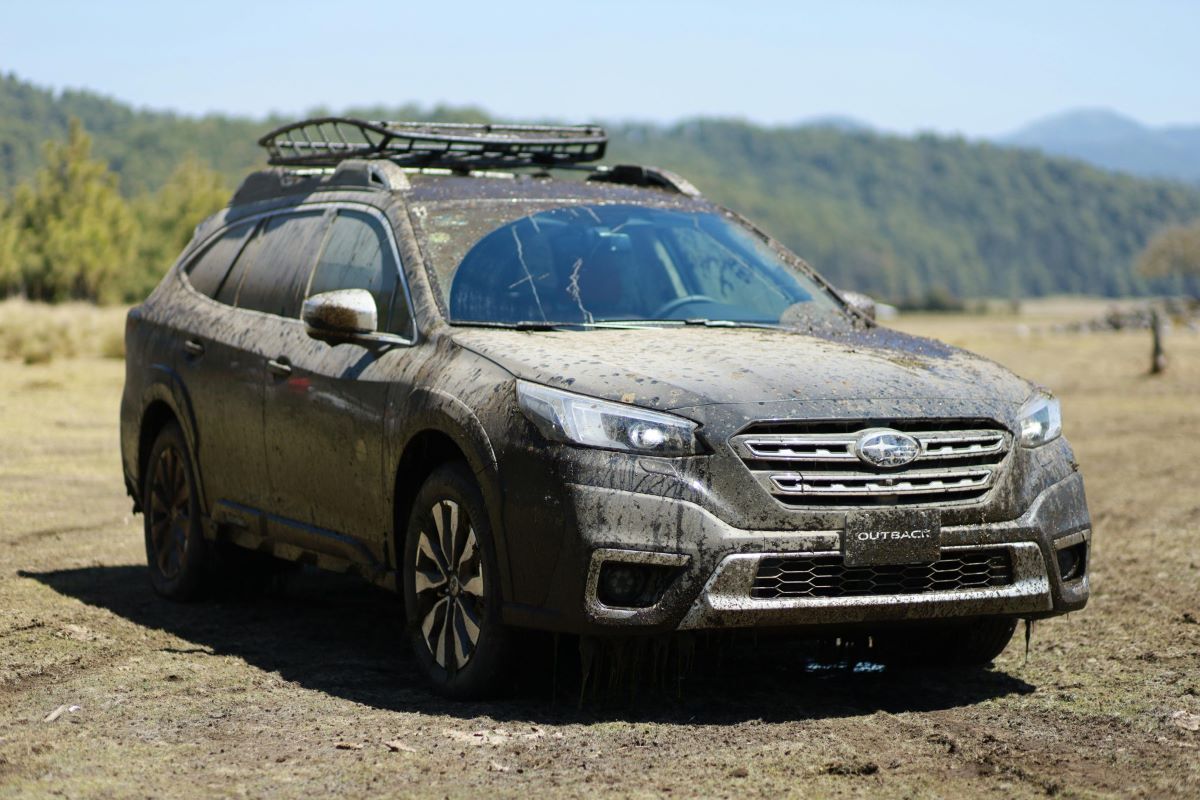
The low cargo floor and wide rear hatch make it easy to load bikes or coolers, while the flat-folding rear seats create a large, continuous surface that vacuums quickly.
Subaru’s rugged-oriented variants also add protective cladding and durable interior materials that don’t stain easily. For outdoorsy families who still want car-like comfort, the Outback strikes a rare balance.
Buyers can choose between a naturally aspirated four-cylinder and a turbocharged four-cylinder, but every Outback includes standard all-wheel drive and a continuously variable automatic transmission (CVT).
Competitors such as the Audi A4 Allroad and the Volvo V60 Cross Country present a comparable lifted-wagon aesthetic, though the Subaru delivers similar utility and capability at a substantially lower price point than those luxury alternatives.
The Outback range is powered by two flat-four engines. The standard unit is a 2.5-liter producing 182 horsepower, while an available 2.4-liter turbocharged engine generates 260 horsepower.
Both engines are paired with a continuously variable automatic transmission (CVT) engineered to simulate an eight-speed gearbox, an approach intended to reduce excessive engine drone. As with nearly all Subaru models, excluding the rear-drive BRZ sports coupe, every Outback features standard all-wheel drive.
In testing, the Outback equipped with the base engine exhibited modest acceleration and a transmission that responded lethargically. The turbocharged variant delivered noticeably stronger performance, though it shared similar transmission reluctance.
That said, typical Outback buyers are generally more focused on ride comfort and light off-road capability than outright speed. With 8.7 inches of ground clearance and standard all-wheel drive, the wagon handles poor weather conditions and uneven, muddy terrain with competence.
For enhanced off-road readiness, the Wilderness trim increases ground clearance to 9.5 inches and adds reinforced suspension components, protective skid plates, and a selectable drive mode system with Snow and Mud settings. On paved roads, the suspension provides a compliant, controlled ride, and steering is precise and stable at highway speeds.
However, the vehicle does not deliver athletic handling, a characteristic that may surprise drivers transitioning from performance-oriented Subaru models such as the WRX. In terms of towing, the standard engine supports up to 2700 pounds, while the turbocharged version raises capacity to 3500 pounds.
2. Toyota 4Runner
Old-school tough in the best way, the 4Runner’s interior is refreshingly simple. Its upright cabin design means fewer tight angles where dirt can hide, and many trims offer rubber cargo liners that can be removed and hosed off.
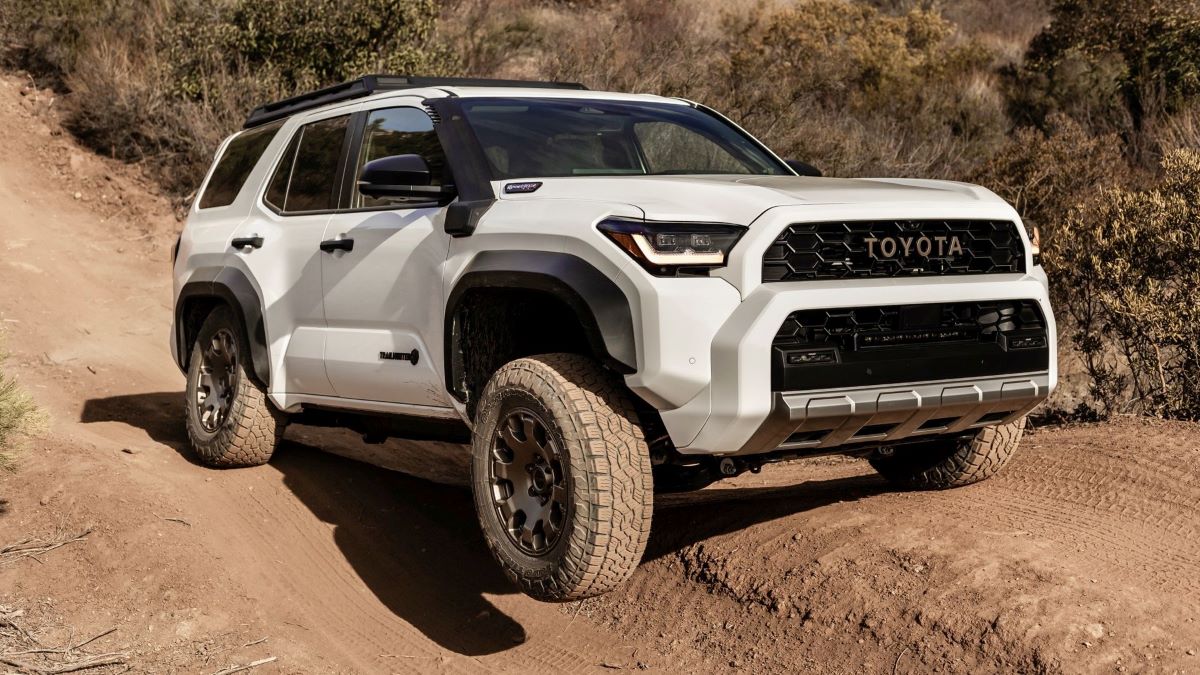
Because it’s body-on-frame, the underbody tolerates trail grime well, and the interior plastics are thick and resilient. After a weekend in the mountains, a quick vacuum and wipe-down usually restores things to showroom condition.
The 4Runner delivers performance that can best be described as sufficient. Acceleration is modest rather than brisk, yet the powertrain operates with a generally smooth character.
The engine and transmission work together without noticeable harshness, and the vehicle is fully capable of keeping pace with everyday traffic conditions.
Brake response can feel somewhat abrupt, and heavy pedal application produces a noticeable forward pitch, but these traits become predictable with familiarity.
When navigating curves, the 4Runner responds with reasonably quick turn-in and maintains a reassuring level of composure for a body-on-frame SUV. That said, crossover SUVs built on car-based platforms exhibit greater agility and sharper overall handling.
Where the 4Runner truly distinguishes itself is in off-road scenarios. For drivers who intend to venture onto trails, explore remote areas, or use the vehicle for adventure-oriented camping, its capabilities become a defining strength.
The available multimode four-wheel-drive system, generous ground clearance, and specialized TRD equipment enable it to tackle uneven, rocky terrain with confidence. For buyers prioritizing off-road durability and trail competence, the vehicle’s otherwise average on-road dynamics become far less consequential.
3. Honda CR-V
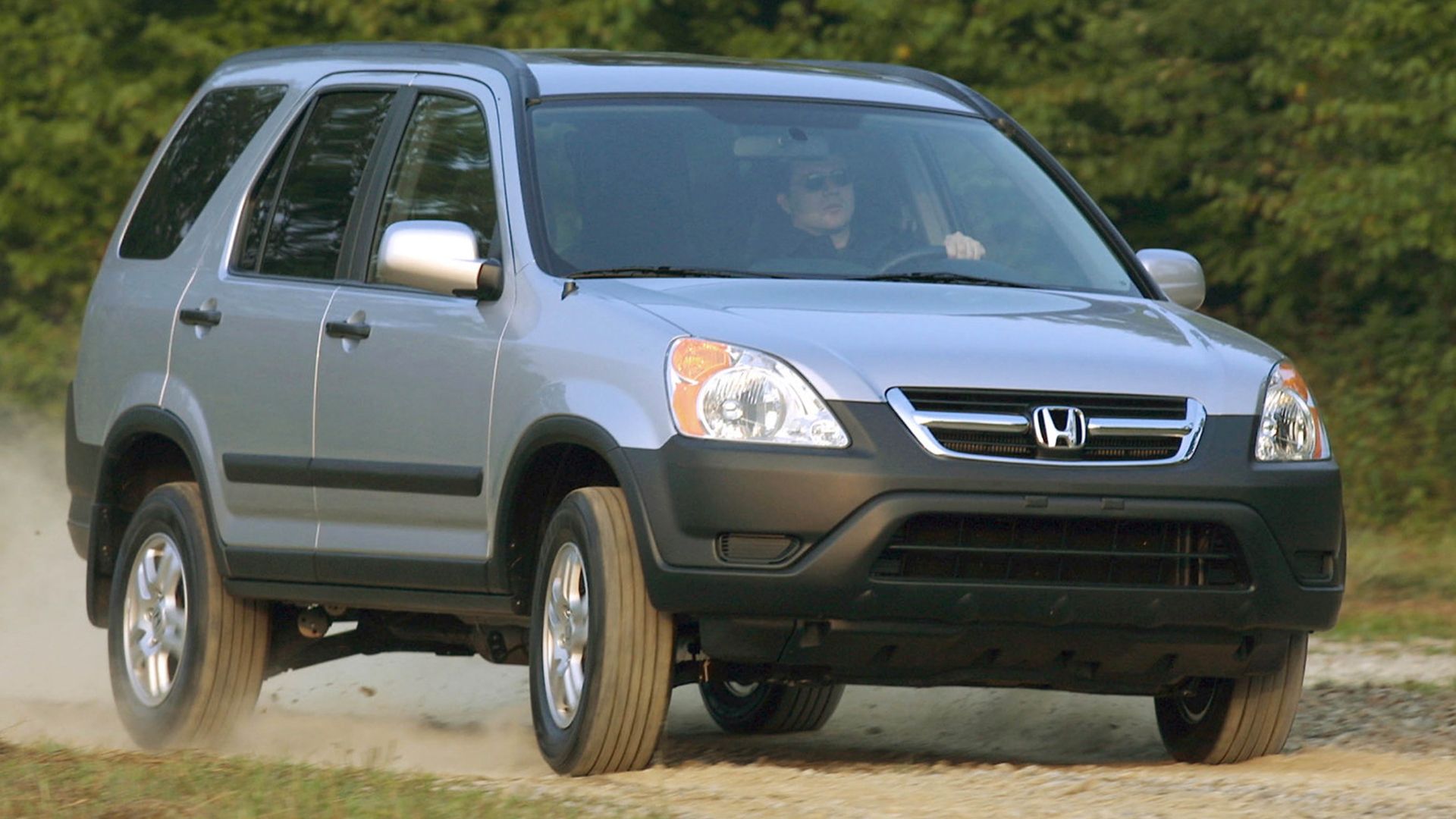
Don’t let its suburban reputation fool you, the CR-V is surprisingly adventure-friendly. Its cargo floor sits low, making it easy to lift muddy gear in and out, and the interior layout is clean and uncluttered.
Honda’s seat fabrics resist staining better than most, and the flat cargo area makes sweeping out sand or dog hair quick work. For outdoorsy drivers who also commute daily, the CR-V keeps cleanup simple without feeling utilitarian.
The CR-V is not engineered for outright performance, but within the compact SUV segment it presents itself as responsive and well controlled.
In testing, the hybrid Sport Touring variant reached 60 mph from a standstill in 8.0 seconds, which aligns with class norms. The standard 1.5-liter turbocharged engine delivers comparable acceleration, so buyers should anticipate similar real-world performance from non-hybrid models.
Brake performance is reassuring, particularly in urgent stopping scenarios, and modulation is predictable enough to allow smooth, progressive deceleration in routine driving.
The hybrid powertrain operates with notable refinement, and its simulated gear steps help create a more conventional driving feel under everyday conditions.
However, sustained climbs, such as extended mountain grades, require firmer throttle input to maintain pace. In cornering situations, the CR-V remains stable and composed, resisting excessive body motion.
Steering response is direct, with sufficient feedback to communicate road conditions without becoming overly sensitive. Overall ride comfort stands out as one of the vehicle’s most compelling attributes.
Outward visibility presents some compromises. Forward sightlines benefit from large front windows, while rearward visibility is more restricted; fortunately, the available parking camera system performs effectively.
The suite of advanced driver-assistance technologies functions competently, though competing models in the segment often provide a broader array of such features.
4. Ford Bronco
Few vehicles embrace mess quite like the Bronco. Available marine-grade vinyl seats and rubberized floors with drain plugs mean you can literally rinse the interior after a dirty trail ride.
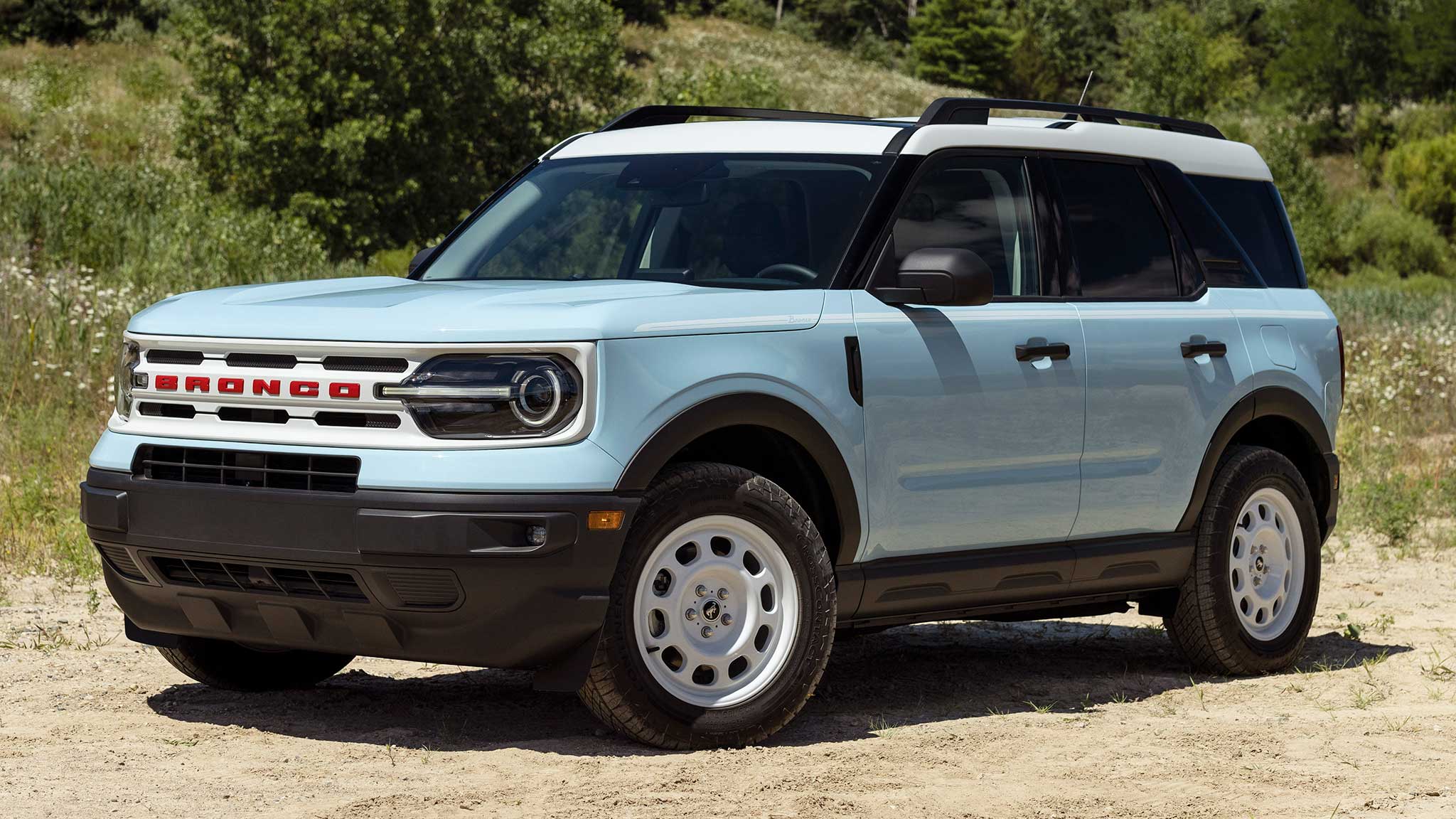
Removable doors and roof panels make deep cleaning easier than in almost any modern SUV, while hard plastics throughout the cabin resist scratches and stains.
If your adventures regularly involve mud, sand, or river crossings, the Bronco feels purpose-built.
Whether equipped with the turbocharged four-cylinder or the available turbo V6, the Bronco provides adequate and generally smooth power for everyday use. Both engines pair with a responsive 10-speed automatic transmission that shifts quickly and unobtrusively.
Under hard braking, the vehicle exhibits pronounced front-end dive, which is typical for body-on-frame, off-road-oriented SUVs.
More concerning is the extended stopping distance observed during emergency braking. From 60 mph, a full panic stop required 146 feet, a figure more commonly associated with heavy-duty pickup trucks.
It is worth noting that the test vehicle was fitted with the Sasquatch off-road package and its aggressive all-terrain tires. However, other Broncos evaluated with less extreme tire setups reduced the stopping distance by only about 10 feet, still longer than desirable.
The steering system stands out as a primary strength. The independent front suspension contributes to stable, confidence-inspiring steering feel, particularly at highway speeds.
While the Bronco does not aim to deliver sharp handling on winding roads, its steering precision and stability make extended freeway driving less fatiguing and more controlled.
5. Jeep Wrangler
Like the Bronco, the Wrangler treats dirt as part of the lifestyle. Many trims come with washable interiors, drain plugs, and durable seat materials that shrug off moisture.
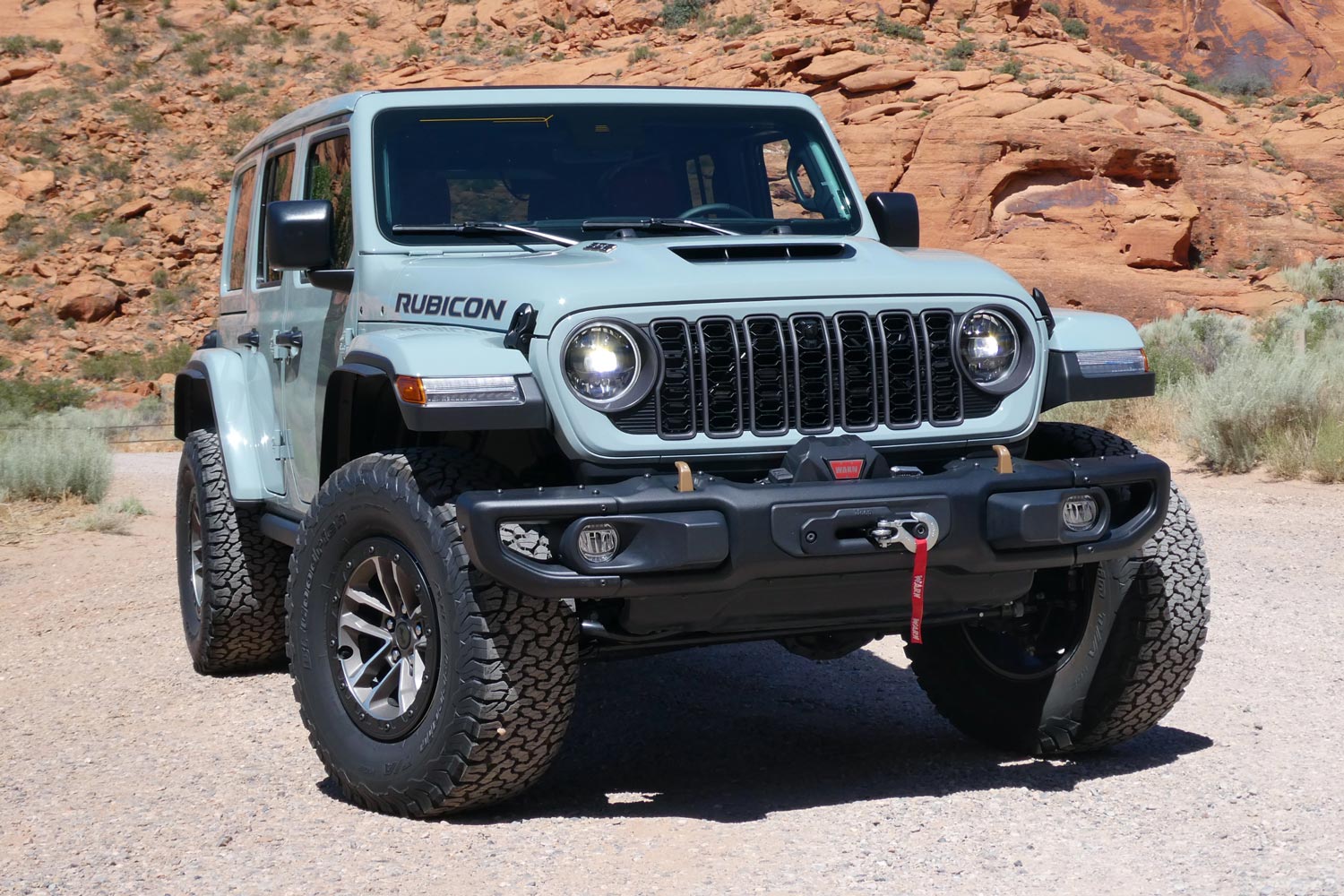
Its boxy shape helps too, flat panels and upright surfaces mean fewer hidden corners. After a weekend crawling over rocks or camping in dusty terrain, a hose, microfiber towel, and shop vacuum usually do the trick.
Among Wrangler variants, the most favorable fuel-economy profile belongs to the Wrangler 4xe. This version pairs a turbocharged four-cylinder engine with plug-in hybrid hardware, generating a combined 375 horsepower along with roughly 22 miles of all-electric driving range on a fully charged battery.
Consistent charging can significantly reduce gasoline consumption in daily use. However, once the battery’s charge is depleted, the 4xe returns approximately 20 mpg, a figure comparable to the standard V6-powered Wrangler rather than an improvement over it.
For those who prioritize output over efficiency, the Wrangler Rubicon 392 occupies the opposite end of the spectrum. In this configuration, Jeep installs a 6.4-liter (392-cubic-inch) V8 producing 470 horsepower.
Under full throttle, it accelerates from 0 to 60 mph in just 4.7 seconds. Notably, despite its substantial performance upgrade, the Rubicon 392 preserves the Rubicon trim’s formidable low-speed off-road capability, maintaining its trail-focused credentials.
The Wrangler, however, no longer operates without meaningful rivals. In addition to the long-standing Toyota 4Runner, the segment has expanded to include newer and more technologically advanced competitors.
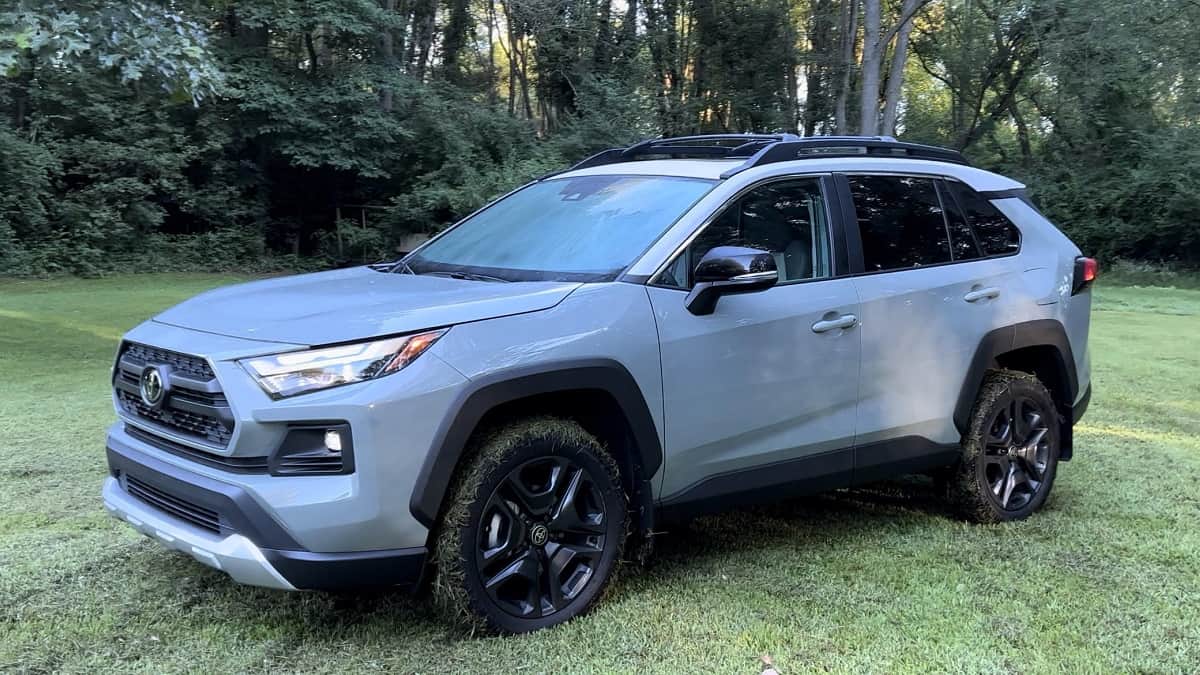
6. Toyota RAV4 Adventure
Toyota’s Adventure trim adds tougher interior materials and a more durable cargo floor compared to standard RAV4 models. The rear seats fold nearly flat, making it easy to sweep out dirt after transporting bikes or camping gear.
It’s not a hardcore off-roader, but for gravel roads, trailheads, and beach runs, the RAV4 Adventure delivers easy ownership with minimal cleanup drama.
The RAV4 delivers a serviceable but unremarkable performance profile. Its engine responds adequately in everyday urban driving, and routine passing or highway merging maneuvers occur without strain.
However, when rapid acceleration is required, the engine’s limited output becomes more apparent.
Steering performance is another area of concern. On-center feel is imprecise, and the steering lacks the feedback and weight typically associated with confident directional control. As a result, drivers may occasionally over- or under-correct due to the muted sense of input.
On the positive side, the available upgraded all-wheel-drive system enhances capability. It incorporates rear-axle torque vectoring along with more sophisticated traction management features, including selectable terrain modes and hill descent control.
Combined with adequate ground clearance, these systems provide the RAV4 Adventure with off-road competence that exceeds what is typical for most small SUVs.
7. Hyundai Santa Fe
The Santa Fe focuses on practicality. Its cargo area is wide and square, with optional all-weather mats that trap dirt before it reaches carpet.
Hyundai’s interior surfaces are easy to wipe down, and the seat materials resist odors, a major plus after hauling wet gear.
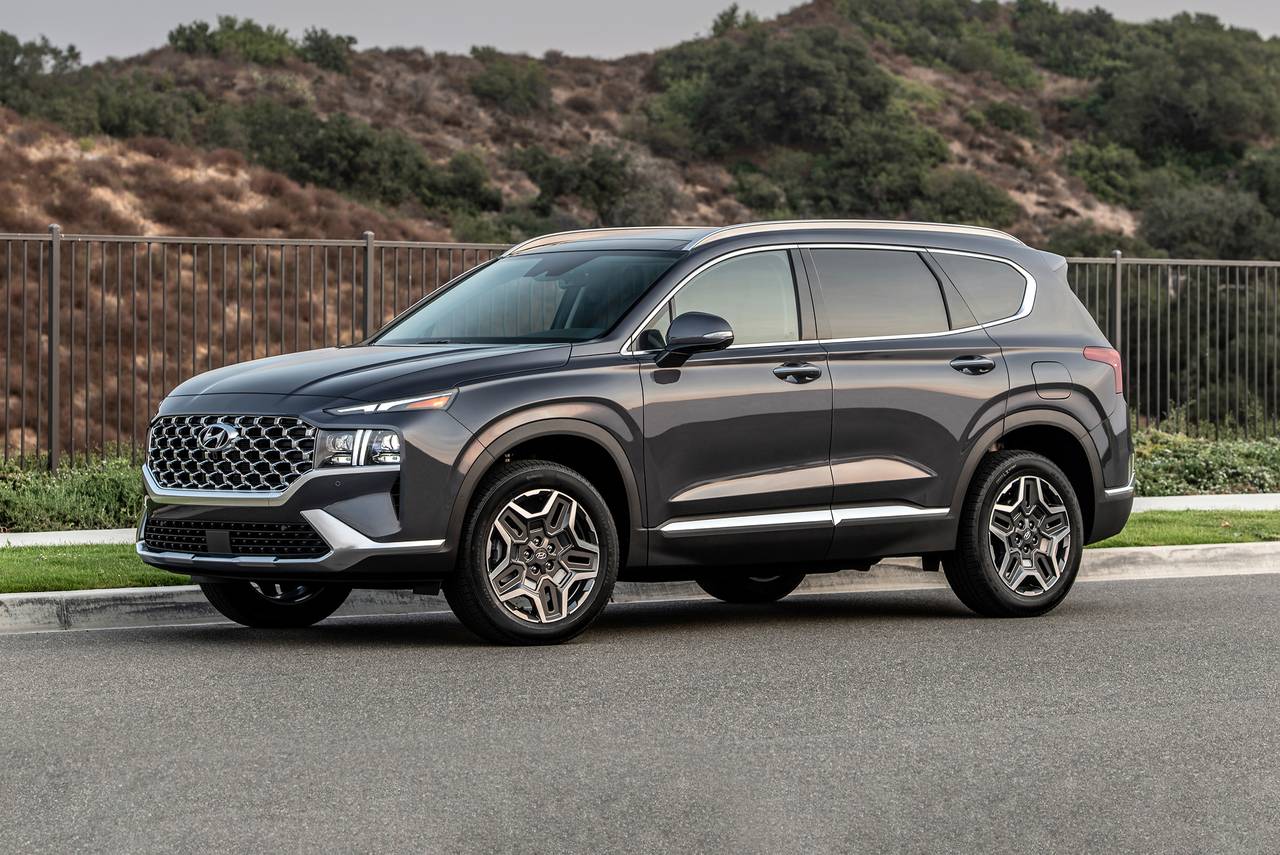
For families who mix outdoor adventures with school runs and grocery trips, it’s a low-stress companion.
The Santa Fe is offered with four distinct powertrains, now including both hybrid and plug-in hybrid configurations.
The standard setup features a 2.5-liter four-cylinder engine producing 191 horsepower. Buyers seeking stronger performance can select a turbocharged 2.5-liter variant rated at 277 horsepower.
Both gasoline engines are paired with a smooth-shifting eight-speed automatic transmission and are available with either standard front-wheel drive or optional all-wheel drive.
The hybrid model utilizes a turbocharged 1.6-liter four-cylinder engine combined with two electric motors, delivering a total output of 226 horsepower.
It operates through a six-speed automatic transmission and includes all-wheel drive as standard equipment. In instrumented testing, an XRT trim equipped with the base 2.5-liter engine required 9.6 seconds to accelerate from 0 to 60 mph, reflecting modest performance.
For buyers prioritizing stronger acceleration, the turbocharged version is the preferable choice. During evaluation of a fully equipped Calligraphy model with the turbocharged engine, a brisk 6.0-second 0–60 mph time was recorded.
In daily driving, the Santa Fe maintains a composed and stable ride quality. Steering response and handling provide sufficient feedback and control to satisfy drivers who value balanced dynamics, though the vehicle does not aim to deliver overt sportiness.
Those seeking a more engaging driving character in a midsize SUV may find alternatives such as the Chevy Blazer or Honda Passport more aligned with their expectations.
8. Kia Telluride
Despite its upscale image, the Telluride is remarkably practical. The third row folds flat, creating a massive cargo bay that’s easy to vacuum and organize.
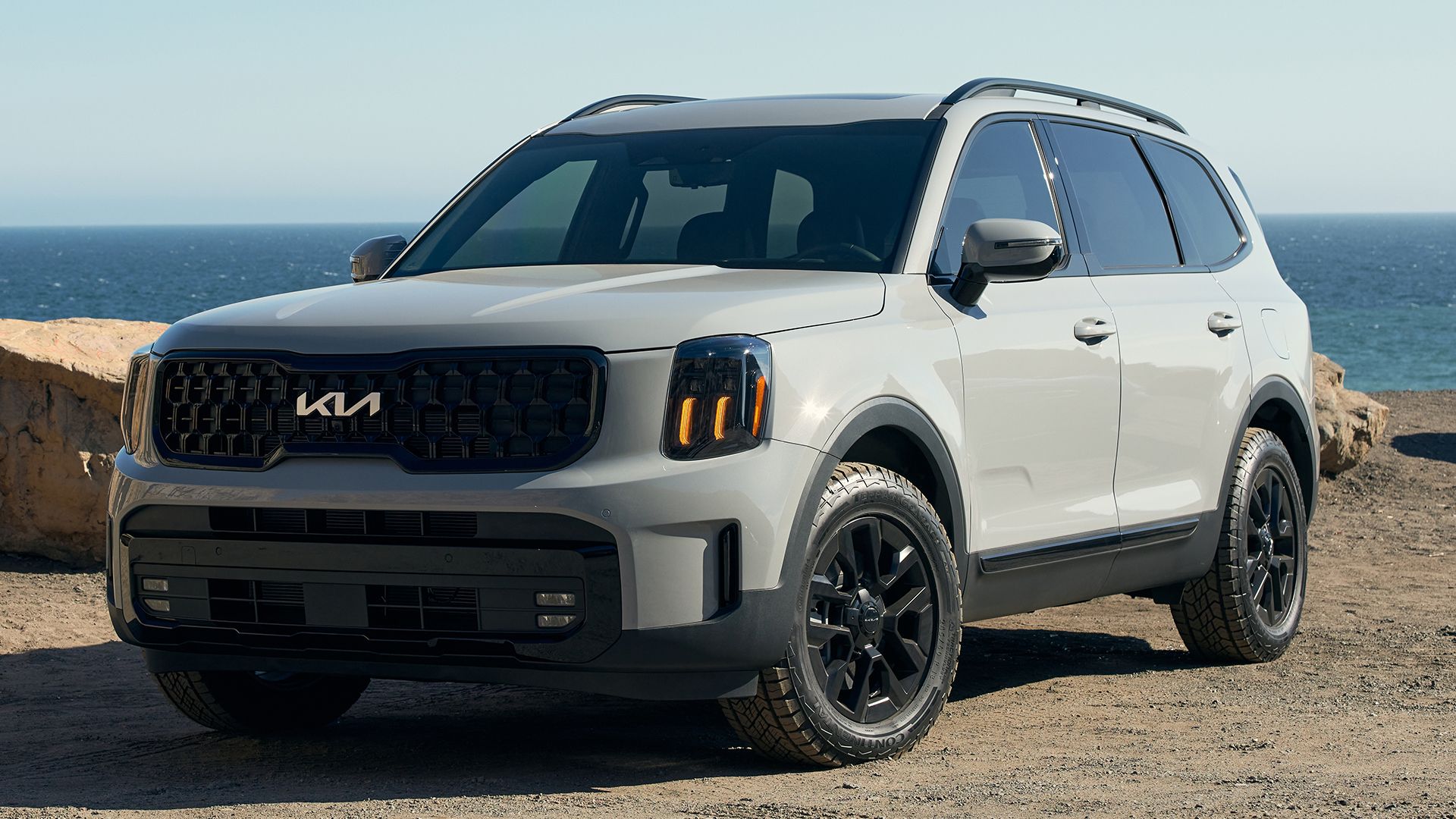
Its synthetic leather options clean quickly, and the interior trim resists scuffs better than expected. If your adventures involve kids, dogs, and a lot of gear, the Telluride keeps chaos manageable.
Every Telluride is powered by a naturally aspirated V-6 engine producing 291 horsepower and 262 lb-ft of torque. This powerplant is mated to an eight-speed automatic transmission that drives the front wheels as standard, while all-wheel drive is available on every trim level.
Ride quality trends toward the firm side. On rough or uneven pavement, impacts can unsettle the three-row SUV slightly from its line.
Buyers can opt for a self-leveling rear air suspension system, which helps maintain composure when carrying passengers or cargo.
Braking performance is strong, and the steering system delivers accurate responses with a well-weighted feel that enhances driver confidence.
For light off-road use, the Telluride offers up to 8.4 inches of ground clearance, supporting moderate trail capability beyond typical suburban duties.
9. Ford Maverick
The Maverick proves you don’t need a full-size truck to enjoy easy cleanup. Its composite bed can handle muddy bikes or firewood without worry, while the interior uses tough plastics designed for everyday abuse.
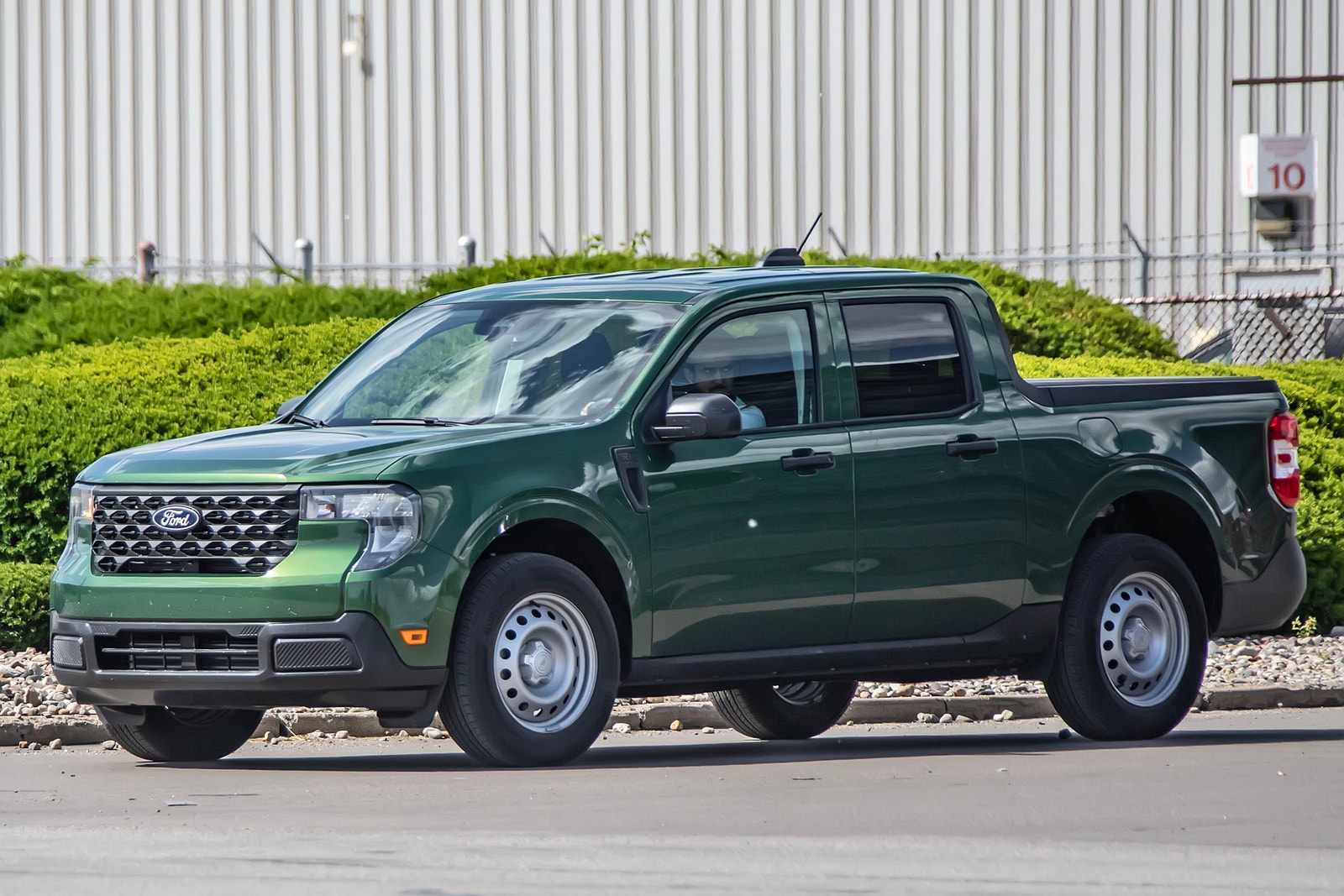
Because most dirty gear stays in the bed, the cabin remains cleaner by default. It’s an efficient solution for kayakers, cyclists, and DIY adventurers.
10. Chevrolet Colorado
Like any pickup, the Colorado benefits from separating people from dirty equipment. Toss muddy boots or coolers in the bed, rinse it out later, and keep the interior pristine.
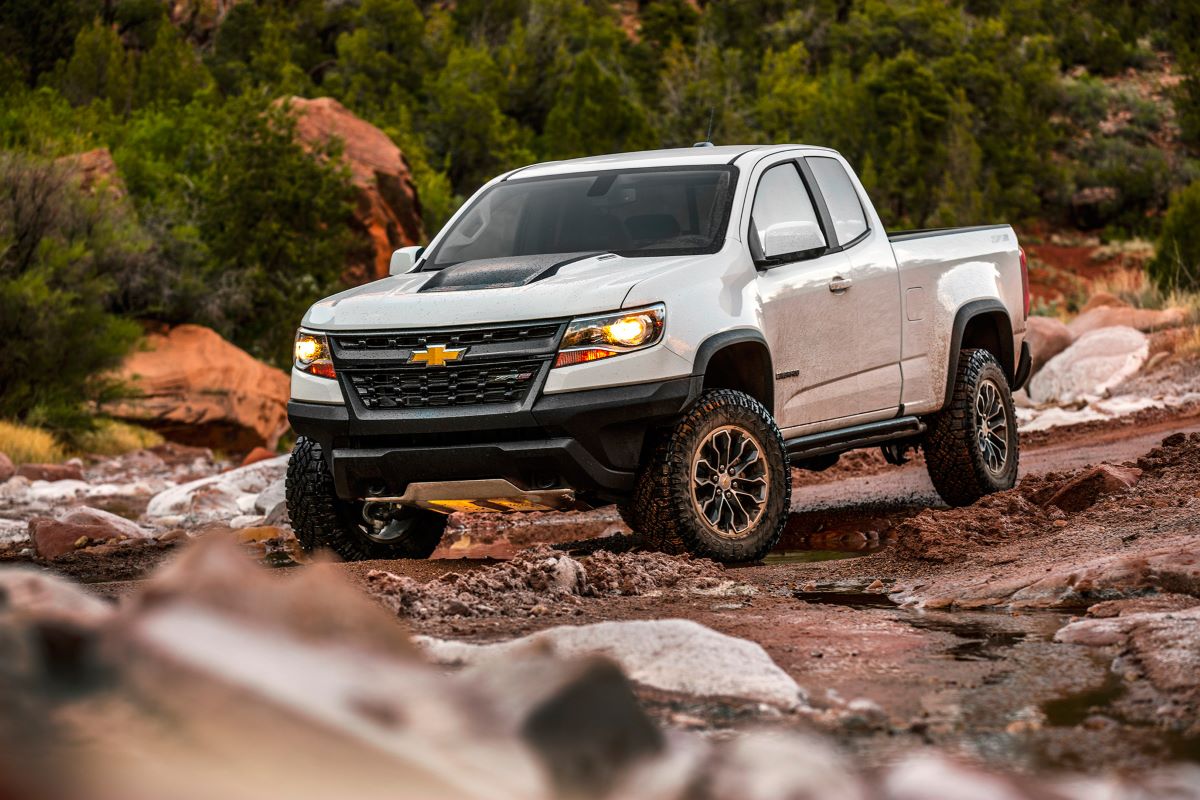
Inside, Chevy uses rugged materials that tolerate dust and spills. For anglers, climbers, or overlanders, this setup minimizes interior cleanup entirely.
Body-on-frame pickups such as the Colorado have evolved substantially in overall road manners and drivability.
Its 2.7-liter turbocharged four-cylinder responds promptly to throttle inputs and delivers strong low-end torque, a characteristic that benefits both urban driving and towing applications.
The automatic transmission operates with smooth, timely shifts, and the braking system supplies adequate stopping force in emergency situations while remaining easy to modulate for gradual, controlled deceleration.
Comprehensive testing has been conducted on both the more road-oriented Z71 and the highly off-road-focused ZR2 Bison, each equipped with the high-output version of Chevrolet’s 2.7-liter engine rated at 310 horsepower and 430 lb-ft of torque.
Even with the Bison’s sizable all-terrain tires, overall braking and handling performance remain competent rather than compromised. The extent of anticipated off-road use should guide trim selection, but in capability terms, the Colorado stands competitive with leading offerings from both Ford and Toyota.
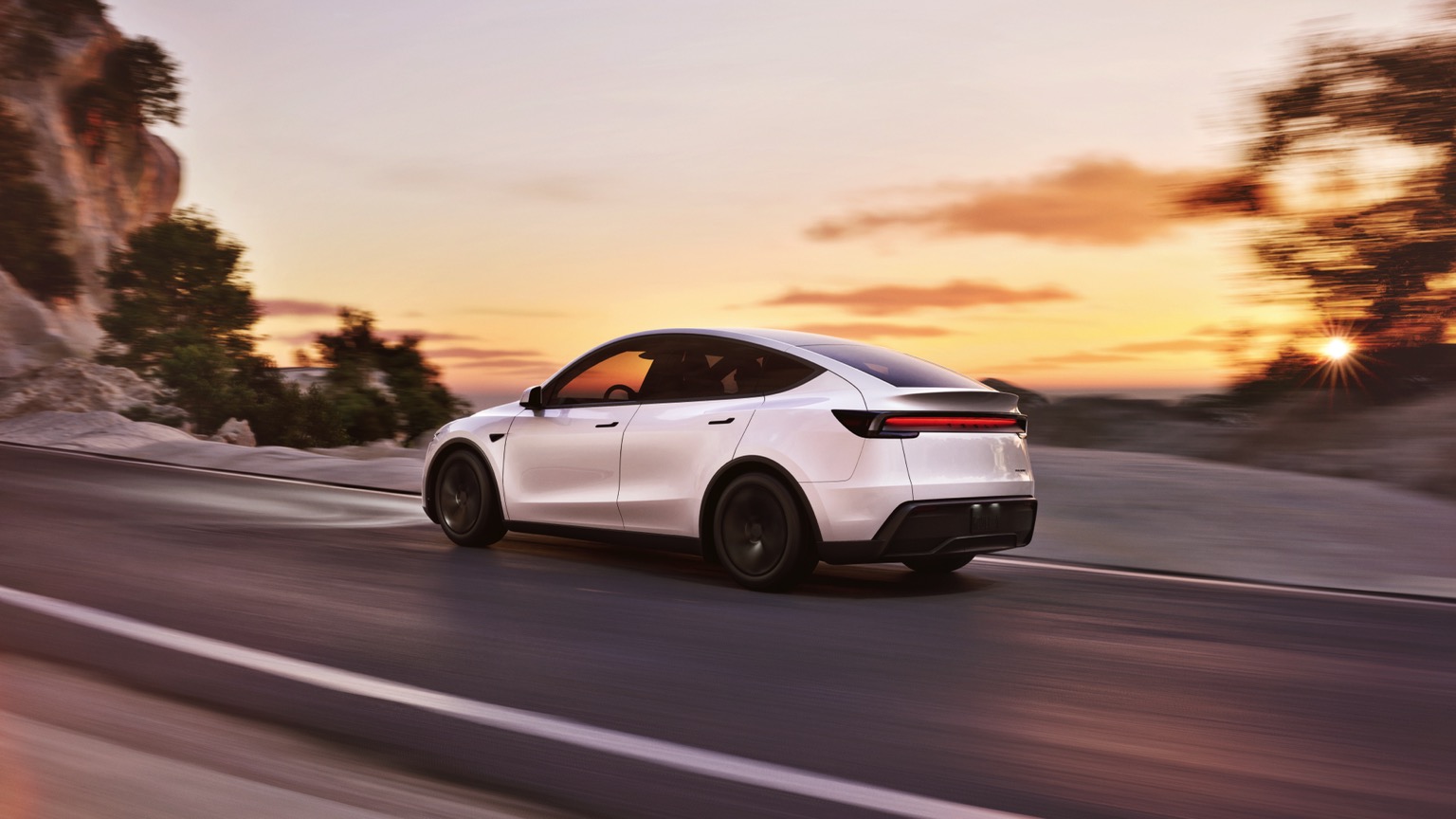
11. Tesla Model Y
Surprisingly capable for outdoor use, the Model Y’s vegan leather seats wipe clean instantly, and the flat rear cargo area is simple to vacuum.
With no engine bay clutter, Tesla also adds a front trunk, perfect for storing dirty shoes or wet towels away from the cabin. For eco-minded adventurers, it offers low running costs and effortless cleanup.
Additionally, despite riding on all-season tires, typically optimized for longevity rather than maximum grip, the test vehicle achieved a notably short 60–0 mph stopping distance of 112 feet. Both metrics exceed typical expectations and stand out within the EV segment.
Steering and handling are similarly commendable, particularly given the vehicle’s substantial curb weight.
Steering effort is light yet responsive, reacting quickly to driver inputs and maintaining a connected feel through corners. Body roll is well controlled for an SUV, contributing to overall composure. Urban drivability is particularly strong.
Drivers experienced with electric vehicles will value the adjustable regenerative braking system, which enables near one-pedal operation in most routine driving scenarios.
12. Mazda CX-50
Mazda designed the CX-50 specifically with outdoor lifestyles in mind. Its Meridian Edition includes tougher interior fabrics and durable cargo liners, while the wide hatch opening makes loading messy gear easier.
It also feels more refined than most adventure-oriented crossovers, making it appealing to drivers who want trail capability without sacrificing style.
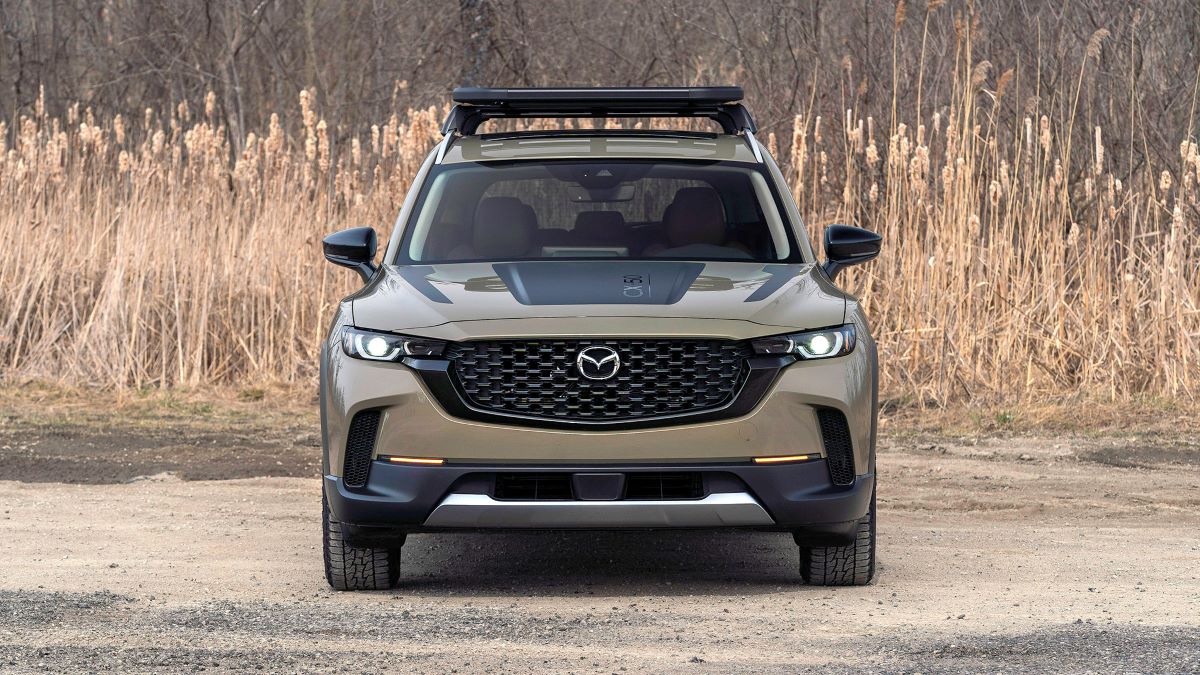
Outdoor adventures are supposed to be energizing, not followed by hours of scrubbing carpets and seat seams.
A new entry has been added to Mazda’s portfolio with the introduction of the 2023 CX-50 SUV. Positioned within the compact crossover segment, it competes directly with models such as the Hyundai Tucson, Nissan Rogue, and Toyota RAV4.
The CX-50 is offered with two versions of a 2.5-liter four-cylinder engine: a naturally aspirated configuration producing 187 horsepower and a turbocharged variant delivering 256 horsepower.
Every model is equipped with a six-speed automatic transmission and standard all-wheel drive. Mazda has also confirmed that a hybrid version is forthcoming, utilizing a Toyota-sourced powertrain.
The CX-50 rides on a platform shared with the Mazda CX-30 and the Mazda3, which contributes to its athletic driving character.
Although its overall dimensions are close to those of the Mazda CX-5, the CX-50 adopts a more rugged design language, marking a stylistic shift from the more refined aesthetic typical of Mazda’s other offerings.
The CX-50 spans a broad range of trims, from relatively straightforward configurations to near-luxury specifications.
The Turbo model represents the most compelling choice. It incorporates the 256-horsepower turbocharged engine and increases maximum towing capacity to 3,500 pounds.
All CX-50 models are powered by a 2.5-liter four-cylinder engine, though the turbocharged version producing 256 horsepower is the more desirable option; the naturally aspirated engine delivers 187 horsepower.
Consistent with Mazda’s brand philosophy, the CX-50 emphasizes responsive handling. During initial evaluation, it demonstrated engaging dynamics and precise steering while maintaining a compliant ride quality.
A hybrid variant will join the range later, utilizing a Toyota-derived system. It is expected to mirror the setup found in the RAV4 Hybrid, pairing a 2.5-liter four-cylinder engine with two electric motors for a combined 219 horsepower.
The vehicles above succeed because they respect real-world use: washable surfaces, logical cargo layouts, and materials that tolerate abuse.
Whether you prefer rugged SUVs, compact crossovers, or small pickups, choosing a vehicle that’s easy to clean saves time, preserves resale value, and makes spontaneous trips more enjoyable.
For American drivers who live for weekends outside, that practicality matters just as much as horsepower or infotainment screens.
