Midsize sedans offer a wide spectrum of driving experiences, from serene, quiet cabins to vehicles where road, tire, and wind noise are highly noticeable. Cabin acoustics can define comfort, making long drives more relaxing or more fatiguing, depending on engineering choices and materials.
Hybrids and electric models, such as the 2025 Toyota Camry Hybrid and Hyundai Ioniq 6, emphasize sound insulation, acoustic glass, and aerodynamic refinement, delivering hushed, composed interiors that rival luxury sedans.
Traditional gasoline-powered sedans or sport-focused trims, on the other hand, sometimes prioritize performance, styling, or cost-effectiveness over quietness. Models like the Nissan Altima, Chevrolet Malibu, and Hyundai Elantra N illustrate how wheel size, low-profile tires, and reduced sound-deadening measures can amplify road noise, creating a livelier but less insulated cabin environment.
Comparing these vehicles highlights the trade-offs between comfort, driving engagement, and engineering priorities for midsize sedans.
5 Midsize Sedans With Quiet Cabins
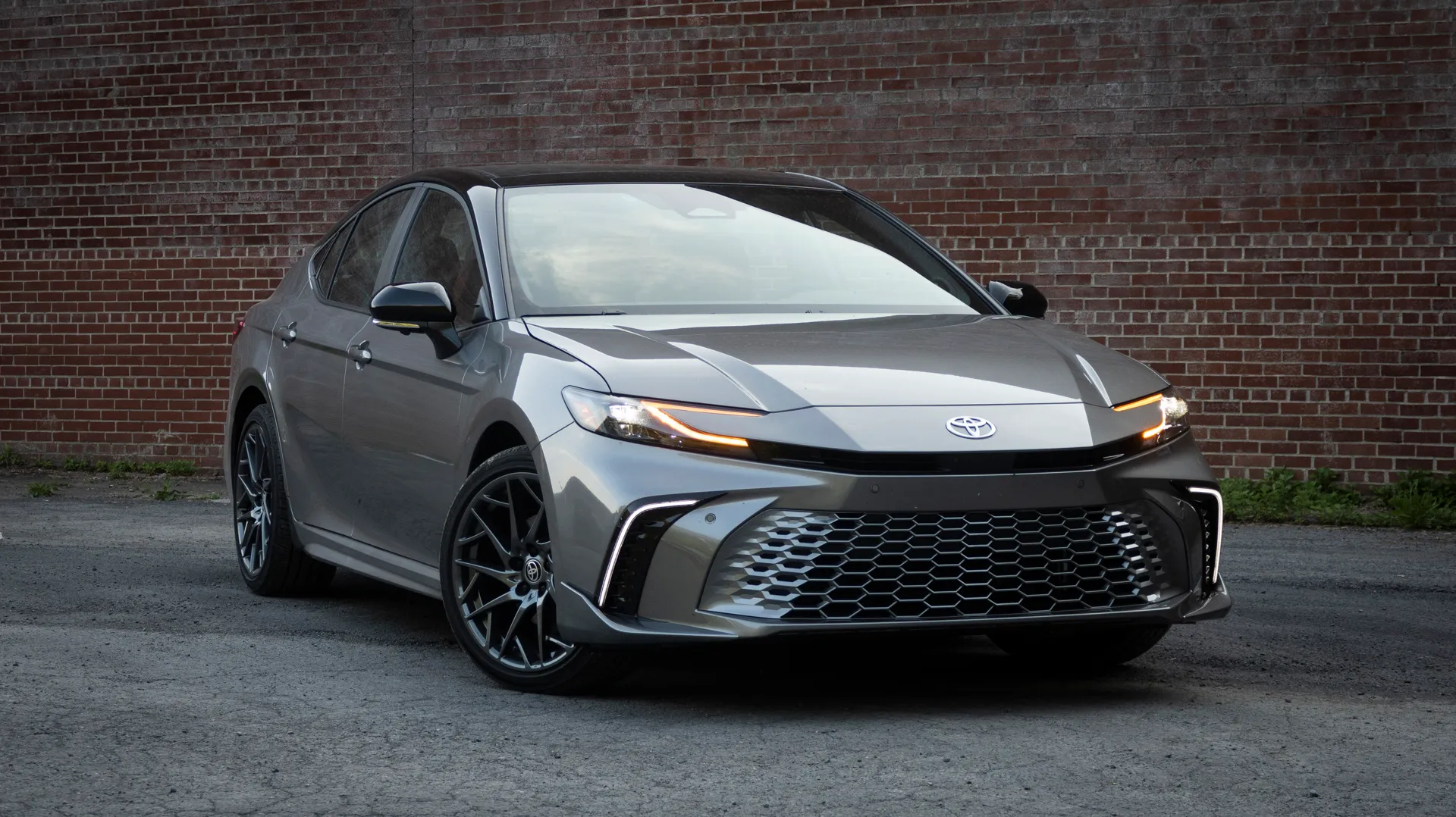
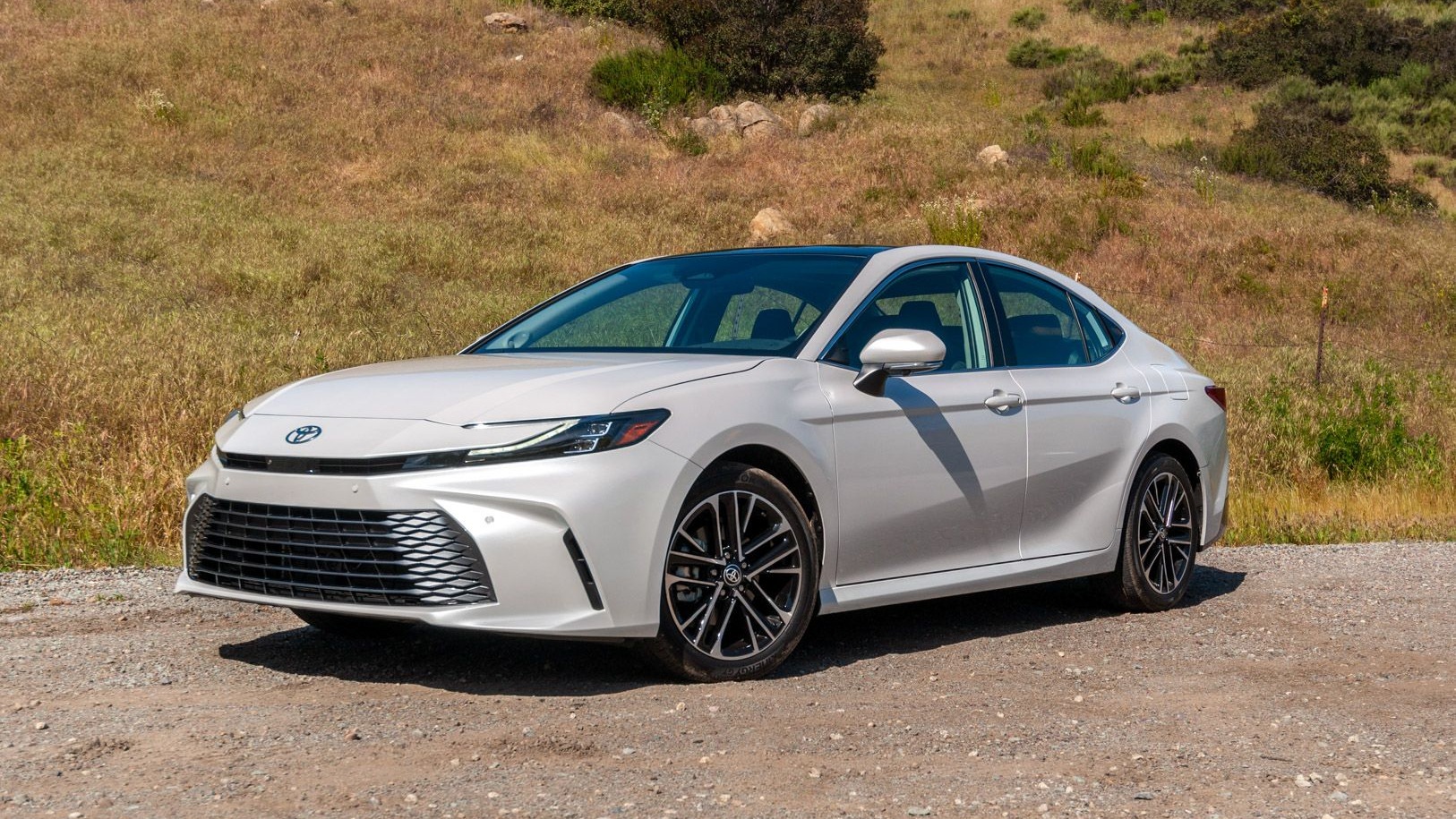
1. 2025 Toyota Camry Hybrid: Efficiency, Comfort and Everyday Practicality
The Toyota Camry enters its 11th generation with a major shift to a hybrid-only lineup, reinforcing its reputation as a practical and fuel-efficient midsize sedan. Extensively refreshed inside and out, the latest Camry introduces Toyota’s fifth-generation hybrid system, upgraded technology, and improved cabin refinement to remain competitive against electric rivals while appealing to buyers not ready to go fully electric.
One of the key strengths of the 2025 Camry Hybrid is its quiet cabin. The new 5th-generation Toyota Hybrid System frequently operates in electric-only mode at low speeds and during light throttle inputs, eliminating engine noise in urban driving.
All variants feature an acoustic laminated windshield, while higher grades such as XLE and XSE add thicker acoustic front-side glass to further reduce wind and road noise. Structural enhancements and additional sound insulation contribute to a more serene environment.
The 2.5-litre four-cylinder engine has been tuned for smoother operation, although it can sound loud and strained under hard acceleration due to the CVT transmission. At steady highway speeds, cabin noise is well contained, though some tyre noise becomes noticeable.
Power comes from a 2.5-litre petrol engine paired with an electric motor in a series-parallel hybrid configuration, producing a combined 170kW. The transition between petrol and electric power is seamless, with frequent EV driving moments when coasting or travelling at low speeds.
Real-world fuel use of about 4.6L per 100km is close to the claimed 4.0L per 100km figure, enabling a driving range exceeding 1,000km from the 50-litre fuel tank. The system requires 95 RON premium unleaded petrol.
Styling changes give the Camry a sharper, more contemporary appearance inspired by Lexus design cues. Slimmer LED headlights, C-shaped daytime running lights, and a revised grille modernise the exterior.
Inside, the dashboard layout is simplified with gloss black accents, fabric trims, and a more integrated 12.3-inch touchscreen on mid-spec grades and above. Importantly, Toyota retains physical dual-zone climate controls with tactile buttons and clear displays, enhancing usability while driving.
Interior materials are functional rather than luxurious. Fabric seats are supportive, and practical storage solutions include a deep centre console, multiple USB-C ports, and a Qi wireless charging pad. Rear passengers benefit from generous legroom, air vents, and a 524-litre boot, although minor cost-cutting details are visible in certain areas.
Technology upgrades include wireless Apple CarPlay and Android Auto, built-in navigation, and over-the-air updates. Toyota Connected Services are included for one year, with subscription fees required afterward for advanced features.
Safety is a major strength, with adaptive cruise control, lane-centring assist, blind-spot monitoring, and a 360-degree camera system fitted as standard. The Camry holds a five-star ANCAP safety rating.
Backed by a five-year unlimited kilometre warranty and affordable capped-price servicing at $255 per visit for five years, the 2025 Camry Hybrid remains a compelling, efficient, and practical choice in the shrinking midsize sedan segment.
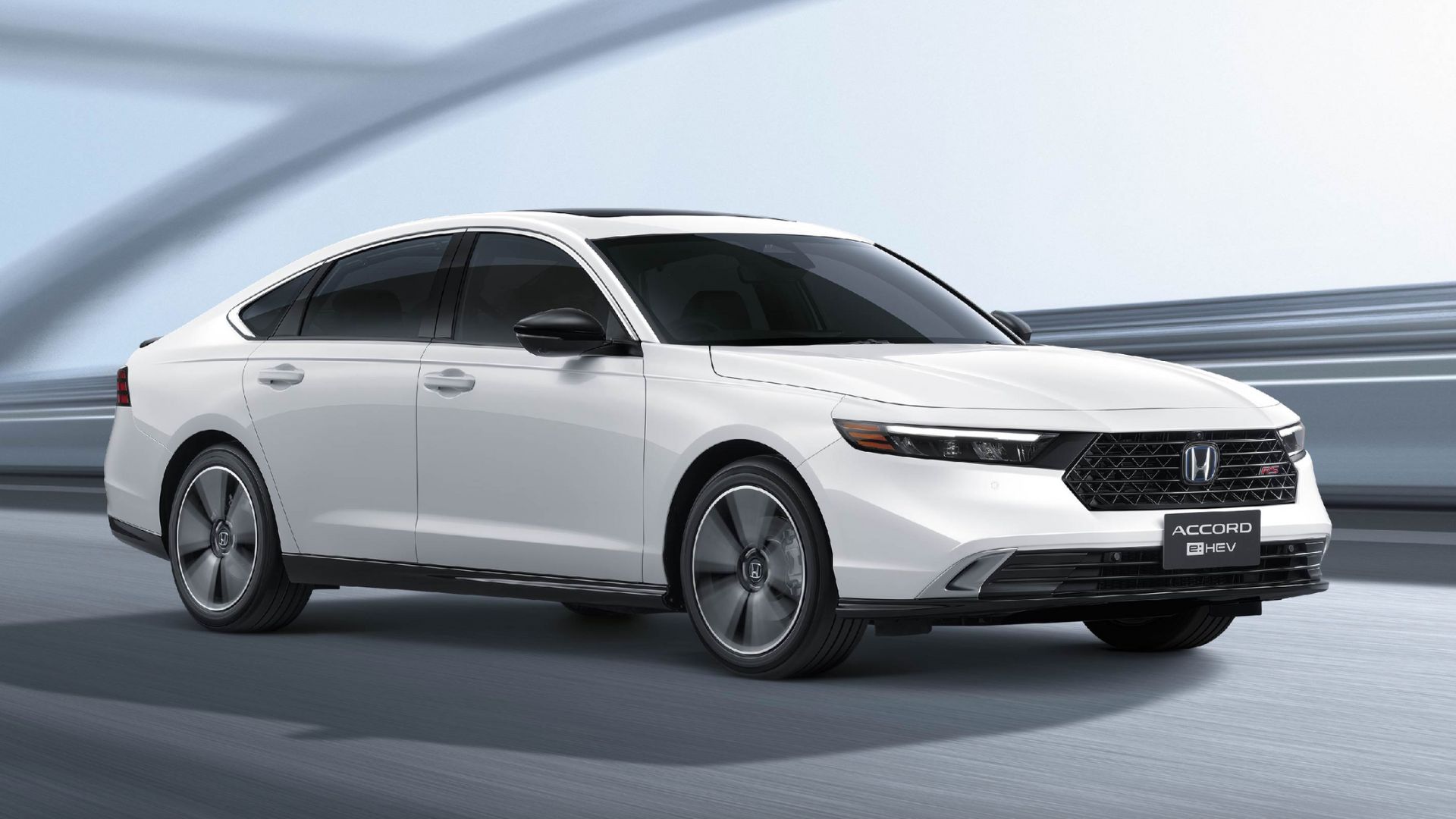
2. 2024–2025 Honda Accord Hybrid: Quiet Refinement Meets Everyday Performance
The Honda Accord continues to set the benchmark for refinement in the midsize sedan segment, particularly in hybrid form. Widely praised for its composed chassis and smooth ride quality, the Accord Hybrid delivers a near-luxury driving experience with impressive efficiency and advanced technology.
A defining trait of the 2024–2025 Accord Hybrid is its exceptionally quiet cabin. Its electric-first hybrid system allows the vehicle to operate without engine noise for extended periods, especially during low-speed and stop-and-go driving. This significantly reduces the mechanical sounds typically associated with gasoline engines.
When the 2.0-litre four-cylinder engine does engage, it operates smoothly and remains subdued under normal driving conditions. Additional measures such as acoustic laminated glass, enhanced sound-deadening materials, and Active Noise Cancellation help minimize road and wind noise. The aerodynamic body design further reduces wind intrusion at highway speeds, contributing to a calm and insulated atmosphere.
The hybrid powertrain combines a 2.0-litre four-cylinder engine with two electric motors to produce 204 horsepower. It is available on Sport, EX-L, Sport-L, and Touring trims, while lower LX and SE trims use a 192-horsepower turbocharged 1.5-litre engine paired with a CVT.
Performance testing shows the hybrid accelerating from 0 to 60 mph in 6.7 seconds, quicker than the nonhybrid model’s 7.3 seconds. Despite its efficiency focus, the Accord remains engaging to drive, with precise steering, controlled body motions, and a compliant suspension that absorbs road imperfections with confidence.
Fuel economy is another major advantage. According to the EPA, the hybrid achieves up to 51 mpg in the city and 48 mpg on the highway. While real-world highway results may vary, the hybrid still delivers strong efficiency and can travel hundreds of miles between fill-ups. The nonhybrid variant posts lower official ratings but performs competitively in highway testing.
Inside, the Accord features a sleek, modern cabin design shared with other Honda models, such as the Honda Civic and Honda CR-V, including a distinctive honeycomb air-vent trim. Front seats provide firm support, and the trunk offers 16.7 cubic feet of cargo space.
A 7.0-inch or 12.3-inch touchscreen is paired with a 10.2-inch digital instrument display, with wireless Apple CarPlay and Android Auto available on higher trims. Touring models add premium features such as a head-up display and a 12-speaker Bose audio system.
Safety is comprehensive, with Honda Sensing driver-assistance technology standard across the lineup. Warranty coverage includes three years or 36,000 miles of limited protection, five years or 60,000 miles for the powertrain, and one year of complimentary maintenance.
The 2024–2025 Accord Hybrid blends quiet sophistication, strong fuel economy, and confident handling, making it one of the most compelling choices in its class.
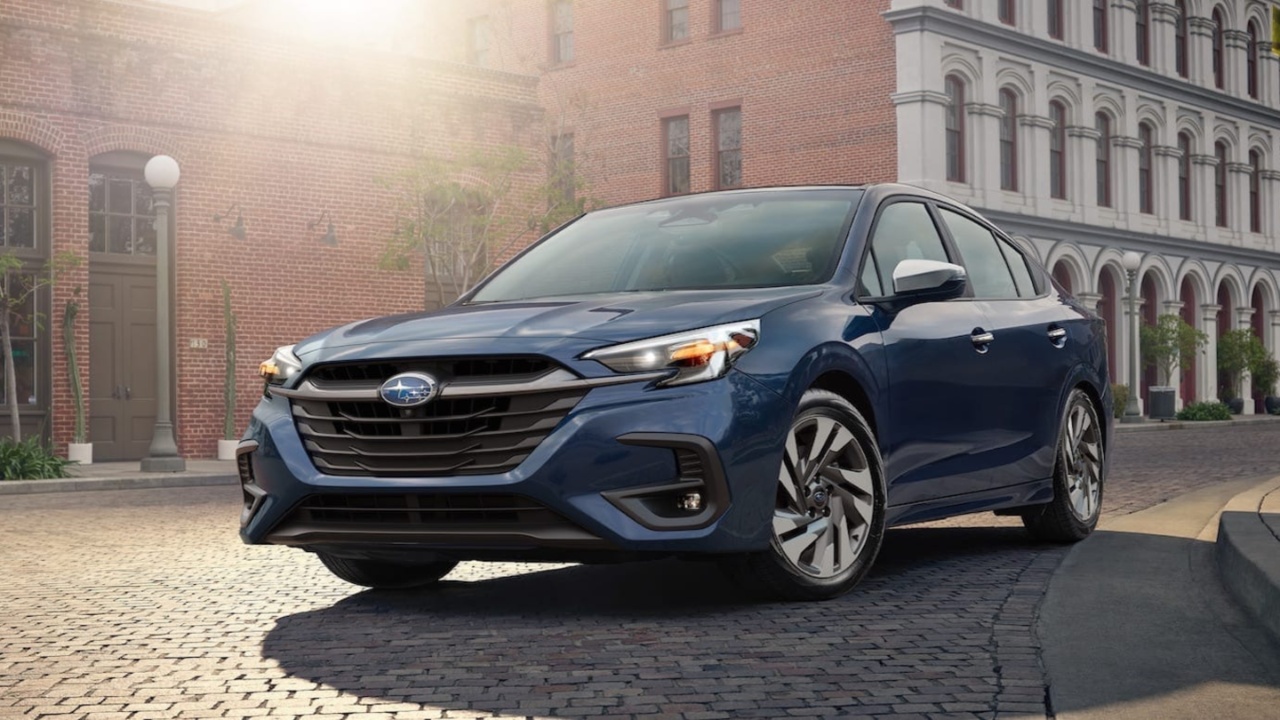
3. 2023–2025 Subaru Legacy: Quiet Confidence with All-Weather Capability
The Subaru Legacy stands out in the midsize sedan class for its serene cabin and standard all-wheel-drive system. Consistently ranked by Consumer Reports as one of the quietest vehicles in its segment, the Legacy blends long-distance comfort with year-round traction, making it a compelling choice for buyers who prioritize refinement and security over sportiness.
A major contributor to the Legacy’s quiet character is its use of acoustic engineering. An acoustic windshield and laminated side glass significantly reduce wind noise intrusion, while extensive sound-deadening materials throughout the body structure suppress road noise.
Built on the Subaru Global Platform, the chassis is designed for increased rigidity, which minimizes vibration and enhances ride comfort. The Lineartronic continuously variable transmission operates smoothly and avoids abrupt shifts, helping maintain a calm and composed driving experience. While the engine can become audible under hard acceleration, everyday driving remains impressively hushed.
The Legacy offers two engine options. The standard 2.5-litre horizontally opposed four-cylinder produces 182 horsepower, while Sport and Touring XT models feature a turbocharged 2.4-litre engine delivering 260 horsepower. All models come equipped with all-wheel drive and a CVT.
Performance varies notably between engines. Testing shows the naturally aspirated version reaching 60 mph in about 8.0 seconds, while turbocharged variants achieve significantly quicker times, with some trims dipping below 6.0 seconds.
Despite the stronger turbo performance, the Legacy emphasizes steady handling and ride compliance rather than excitement, especially compared to rivals such as the Honda Accord and Kia K5.
Fuel economy is competitive. The non-turbo model is rated at up to 27 mpg city and 35 mpg highway, while turbocharged versions return slightly lower figures. Real-world highway testing shows respectable efficiency for both powertrains, though some competitors, including certain trims of the Toyota Camry, achieve higher numbers.
Inside, the Legacy feels spacious, particularly in the rear seats. Materials are thoughtfully chosen, with cloth upholstery standard and leather available on higher trims. The front seats are comfortable and supportive, and upper trims offer a manual thigh extension for added comfort. The trunk is generous and competitive within the class.
Technology includes Subaru’s Starlink infotainment system, with either dual 7.0-inch screens or an available 11.6-inch vertical touchscreen. Apple CarPlay and Android Auto are standard. Safety is another strong suit, as every model comes with Subaru’s EyeSight driver-assistance suite, including automated emergency braking, adaptive cruise control, and lane-centring assist.
With its quiet cabin, standard all-wheel drive, and solid safety credentials, the 2023–2025 Subaru Legacy remains a practical and comfortable midsize sedan choice.
4. 2024–2025 Hyundai Ioniq 6: Streamlined Silence in an Electric Sedan
The Hyundai Ioniq 6 stands out in the EV market for its striking streamliner design and remarkably quiet cabin. As a fully electric vehicle, it eliminates internal combustion engine noise entirely, but Hyundai goes further by combining advanced aerodynamics, extensive sound insulation, and a refined chassis to create an environment that rivals some luxury sedans for serenity.
A key contributor to its quietness is aerodynamic efficiency. With a drag coefficient as low as 0.21, the sleek, swept-back body significantly reduces wind noise at highway speeds. The low nose, curved roofline, and carefully sculpted rear help minimize air turbulence, resulting in a calm, stable ride even at higher speeds.
Wind noise registers as a subdued background tone that fades easily into the driving experience. Extensive sound-deadening materials throughout the cabin further block road and external noise, while solid structural construction prevents rattles and vibrations.
Built on Hyundai’s E-GMP platform, shared with models such as the Hyundai Ioniq 5 and the Kia EV6, the Ioniq 6 benefits from a low center of gravity and balanced weight distribution. The suspension is tuned for comfort and composure, absorbing road imperfections effectively.
While larger wheels can introduce some tire slap over expansion joints, the ride remains smooth and controlled. A dedicated Quiet Mode allows front occupants to listen to audio while muting the rear speakers, enhancing passenger comfort during longer journeys.
The Ioniq 6 offers three powertrain configurations. A standard-range rear-wheel-drive version with a 53.0 kWh battery produces 149 horsepower. Extended-range rear-wheel-drive models use a 77.4 kWh battery and deliver 225 horsepower, while the all-wheel-drive variant produces 320 horsepower from dual motors.
Acceleration is brisk, particularly in the AWD model, though the car prioritizes daily drivability over outright performance. EPA-rated range varies from approximately 240 miles to as much as 342 miles, depending on battery size, drivetrain, and wheel choice.
Inside, the cabin combines modern design with practicality. A glass roof enhances the sense of openness, rear-seat space is generous, and the 11.2 cubic foot trunk is more usable than figures suggest, with foldable rear seats for added flexibility. Fast-charging capability is another strength, with charging speeds exceeding 220 kW under favorable conditions.
For buyers seeking a sedan rather than an SUV, the Ioniq 6 competes directly with the Tesla Model 3. Its blend of aerodynamic efficiency, strong range, refined ride quality, and exceptional quietness makes it one of the most distinctive and serene electric sedans available.
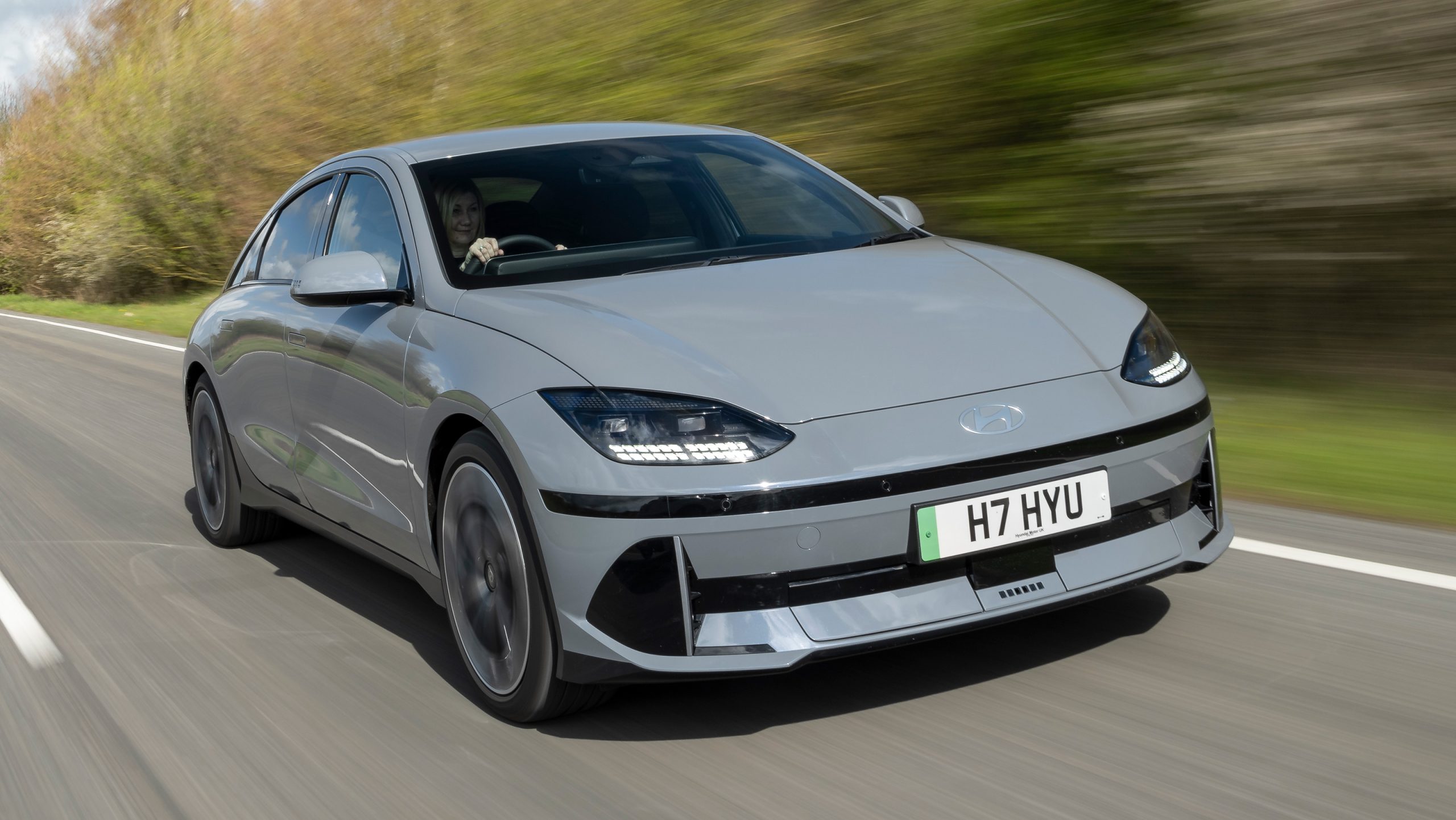
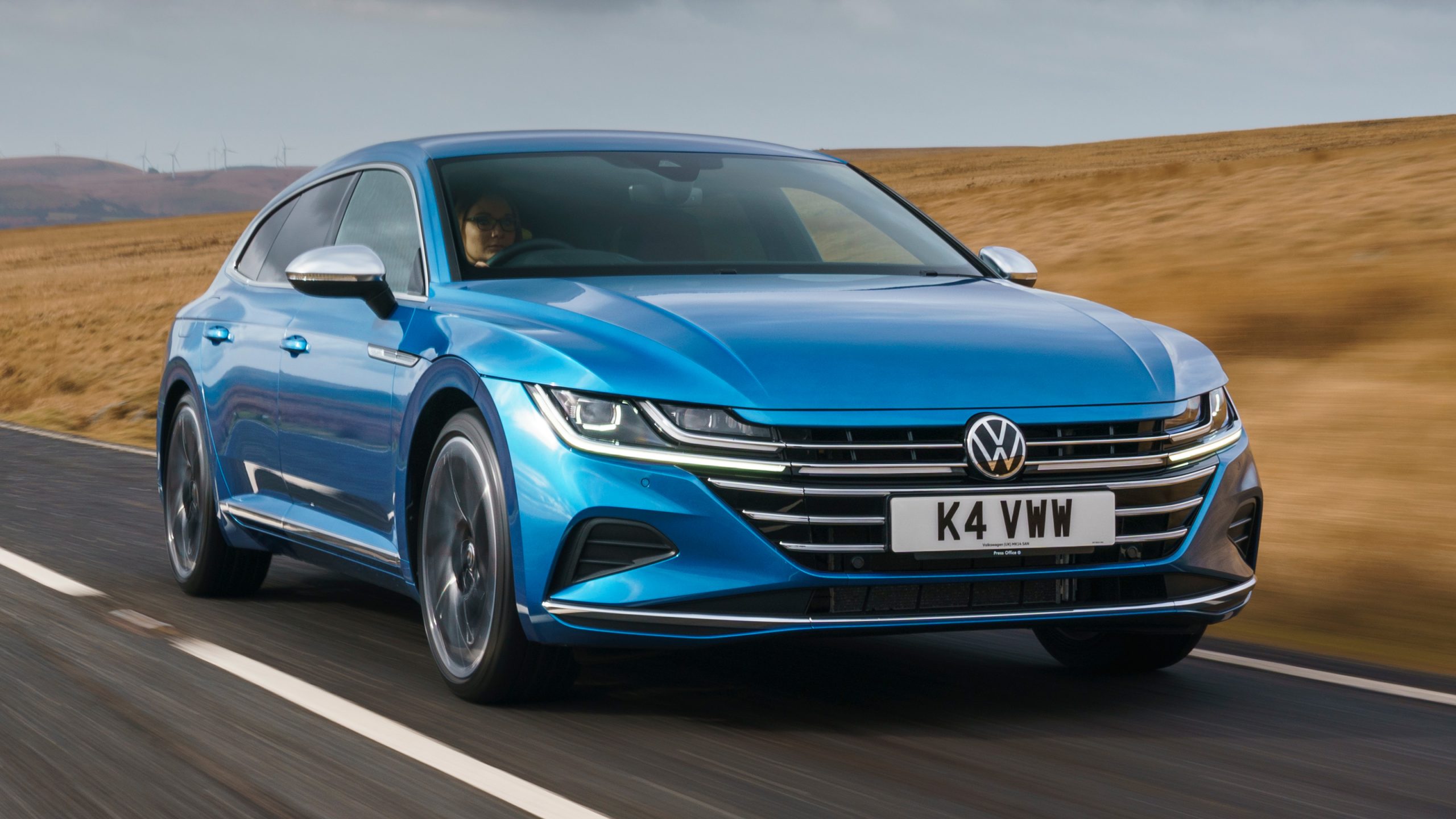
5. Volkswagen Arteon: A Whisper-Quiet Grand Tourer with Premium Ambitions
The Volkswagen Arteon may be nearing the end of its production run, but it remains one of Volkswagen’s most refined and visually striking offerings. Positioned as an upscale gran turismo rather than a direct replacement for the Passat CC, the Arteon was designed to compete with premium-badged rivals such as the Audi A5 Sportback and the BMW 4 Series Gran Coupe.
While it may not fully match their brand prestige, it impresses with space, comfort, and a notably quiet cabin.
A defining characteristic of the Arteon is its serene, vault-like interior. Volkswagen engineered the car with extensive sound-deadening measures to enhance long-distance comfort.
An available acoustic pack adds laminated, sound-insulated glass for the front windows, significantly reducing wind noise at motorway speeds. Structural insulation throughout the body further suppresses external disturbances, creating a composed and relaxing driving environment.
The suspension is tuned with comfort in mind, effectively filtering out harsh road surfaces and minimizing vibration. This refinement is especially noticeable during highway cruising, where road and tire noise remain subdued. The powertrains also contribute to the calm atmosphere.
Turbocharged petrol engines, particularly the TSI variants, are smooth and quiet under normal driving conditions. Even diesel options maintain respectable refinement. Together, these elements position the Arteon as a capable long-distance touring car rather than an outright performance machine.
Visually, the Arteon stands apart from Volkswagen’s traditionally conservative styling. Its bold front fascia, sweeping roofline, and wide stance give it a strong road presence. A mid-cycle facelift introduced updated lighting elements and the addition of a Shooting Brake estate variant, expanding its appeal. A high-performance Arteon R variant, producing over 300 horsepower, adds further diversity to the lineup.
Engine options have included a range of petrol and diesel outputs, paired with manual or DSG automatic transmissions. Select models offer Volkswagen’s 4Motion all-wheel-drive system, while a plug-in hybrid eHybrid variant broadens efficiency choices. Wheel sizes now start smaller than at launch, reflecting a shift toward comfort and efficiency rather than pure visual impact.
Inside, the Arteon offers generous passenger space and a large hatchback-style cargo area, reinforcing its practicality. Pricing has remained competitive relative to similarly sized premium rivals, strengthening its value proposition.
While it may not fully redefine the segment, the Volkswagen Arteon delivers impressive refinement, striking design, and a whisper-quiet cabin that elevates it beyond the typical midsize family car.
Also Read: 5 Cars That Are Unstoppable in Deep Snow vs 5 AWD Models That Get Stuck
5 With Excessive Road Noise
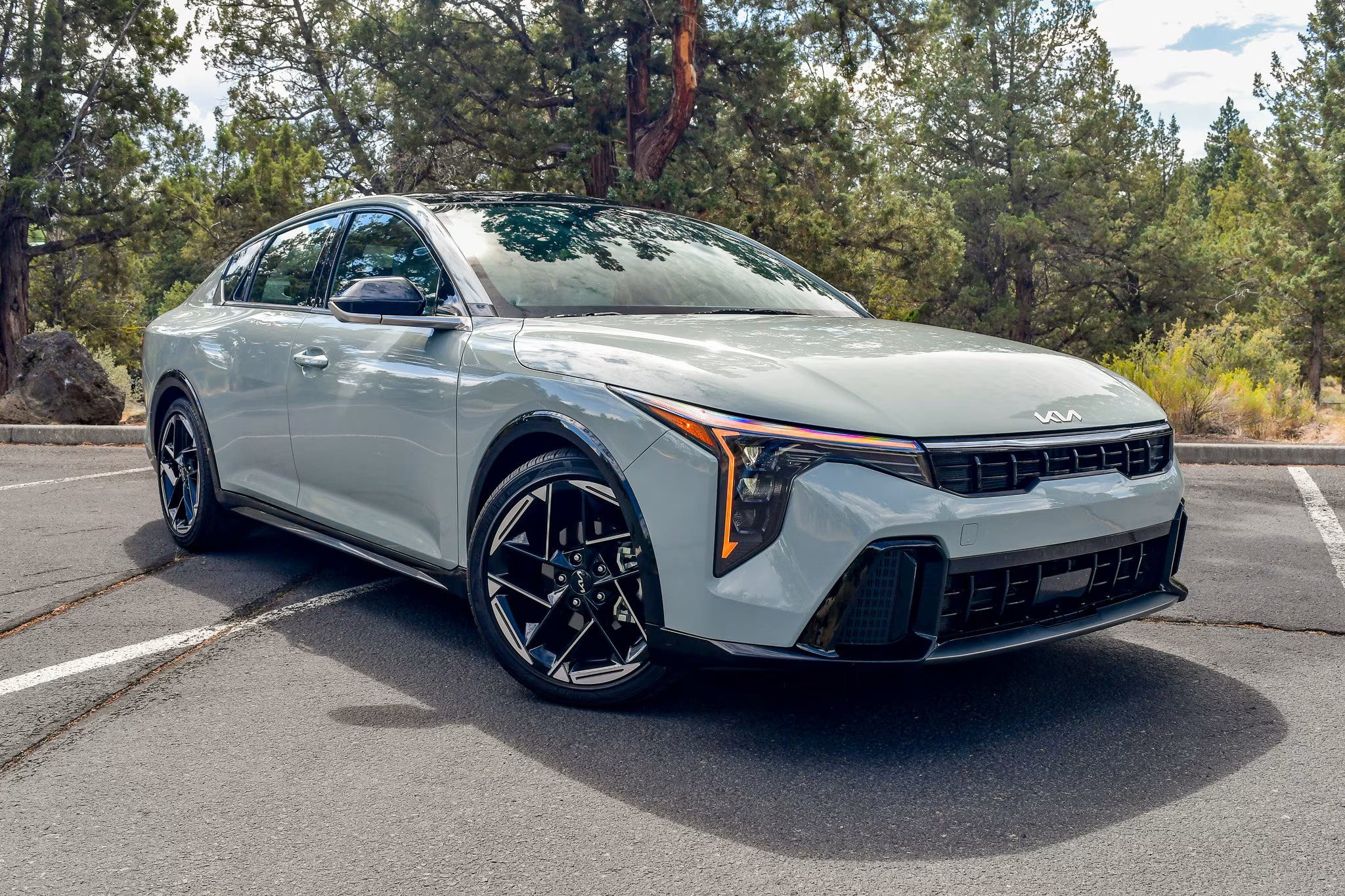
1. 2025 Kia K4 GT-Line: Sporty Intent, Compromised Refinement
The Kia K4 GT-Line trims promise sharper handling and bold styling, but they have drawn criticism for intrusive cabin noise. While lower trims of the K4 are generally more subdued, the sport-oriented engineering of the GT-Line introduces trade-offs that can significantly affect ride refinement. Some reviewers describe the road noise as intense enough to require raising voices or turning up the audio system to compensate.
A key contributor is the GT-Line’s standard 18-inch wheels fitted with low-profile tires. These tires have thin sidewalls that provide limited cushioning between the road and the chassis.
As a result, rough or textured pavement sends vibrations directly into the structure of the car, producing a persistent hum inside the cabin. On smooth asphalt, the effect is less noticeable, but on coarse surfaces such as chip seal, the noise can become overwhelming.
The suspension setup further influences the experience. Unlike base trims that use a torsion beam rear suspension, the GT-Line features a firmer independent multilink design. This configuration improves handling precision and cornering stability, but it also transmits impacts more directly into the interior. Drivers benefit from sharper responses, yet passengers may feel and hear more of the road.
Reviewers have also pointed to limited sound insulation in certain areas of the body structure. Even though some versions include a sound-absorbing windshield, critics suggest that broader acoustic treatment is lacking. Publications such as Autoblog and MotorTrend note that refinement falls short of competitors like the Honda Civic.
For many owners, the available Harman Kardon audio system becomes less of a luxury and more of a solution to mask road hum. The K4 GT-Line delivers style and technology, but buyers sensitive to noise may find its sporty setup comes at a noticeable acoustic cost.
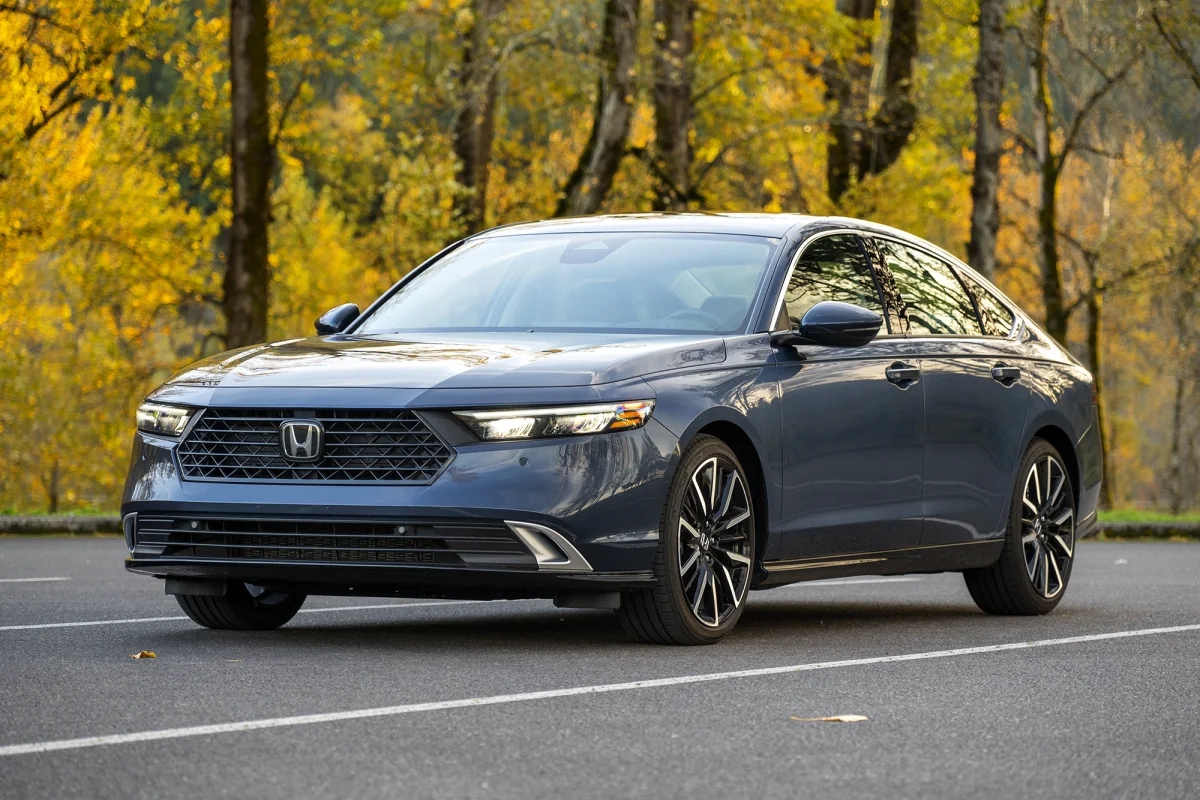
2. 2024 Honda Accord Sport-L: Sporty Ride with Noticeable Road Noise
The Honda Accord Sport-L delivers sharp handling and stylish design, but its Sport-L trim sacrifices some cabin quietness for a sportier profile. Sound tests show this model reaching up to 63 decibels, higher than the 58 dB typical of base or hybrid trims. Owners and reviewers frequently note that the road noise is particularly noticeable on rough or textured surfaces.
A major factor is the 19-inch alloy wheels paired with low-profile tires. The thinner tire sidewalls offer less cushioning, transmitting more road vibrations directly into the cabin. Many Sport-L models come with Hankook tires, which some drivers report as “thumping” over expansion joints. The wider tire contact patch also increases friction-based noise compared to the 17-inch tires on the quieter EX-L trim.
Honda’s engineering choices contribute as well. While all 2024 Accords include Active Noise Cancellation, the Sport-L lacks advanced acoustic treatments found on the top-tier Touring trim, such as specialized wheel resonators to reduce tire cavity noise. The focus on lightweight design for fuel economy and agility means less sound-deadening material in the floor and wheel wells, further amplifying road noise.
In real-world driving, the Sport-L remains fairly quiet on smooth, new asphalt. However, on older or rougher roads, the cabin noise becomes more pronounced, making it feel less refined than trims with taller tires.
Owners seeking a quieter experience have several solutions. Switching to premium, comfort-oriented tires like Michelin Defender 2 or Continental PureContact can significantly reduce hum. Aftermarket acoustic mats in the trunk and wheel wells help block structural vibrations, and downsizing to 17-inch wheels provides the added noise insulation of taller sidewalls.
The Sport-L delivers the sporty aesthetics and handling enthusiasts want, but prospective buyers should weigh the trade-off in cabin quietness and consider aftermarket or tire upgrades if a serene ride is a priority.
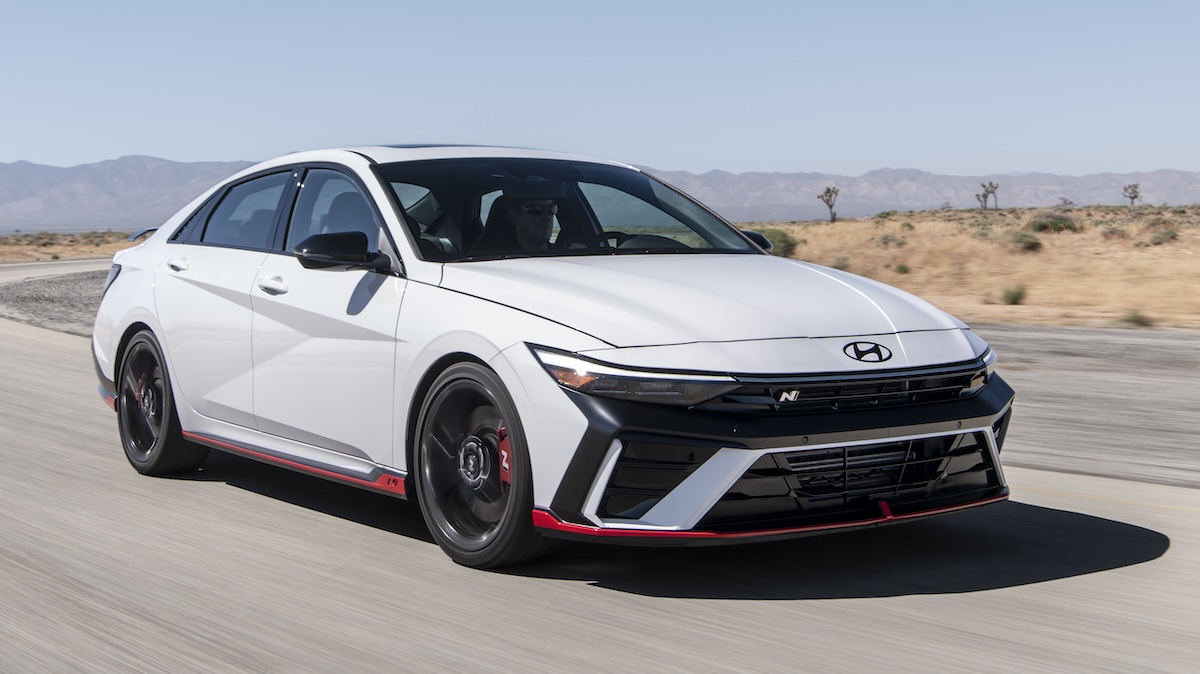
3. 2024–2025 Hyundai Elantra N: Performance-Oriented Cabin Noise
The Hyundai Elantra N is built as a high-performance, track-capable sedan, which results in noticeable cabin noise. Reviewers report that road, tire, and exhaust sounds are prominent, even in the quieter drive modes, reflecting the car’s focus on driving engagement rather than refinement.
A primary contributor is the Michelin Pilot Sport 4S tires. These high-performance tires use a sticky rubber compound for maximum grip. The large tread blocks produce a high-frequency hum at highway speeds, and the low-profile 19-inch wheels transmit road vibrations and surface irregularities directly into the cabin. Cold temperatures below 7°C (45°F) make the tires stiffer, creating additional chatter during tight turns or slow maneuvers.
The drivetrain and suspension also add to the cabin sound. The corner-carving e-LSD generates scrubbing noises while distributing power through the front wheels. The stiff chassis and firm suspension bushings are designed for precision handling, transferring mechanical and road vibrations into the interior rather than absorbing them.
Hyundai intentionally minimized sound insulation to reduce weight and maintain a high power-to-weight ratio. This allows the variable exhaust system to be louder, producing pops, bangs, and a constant roar in aggressive driving modes that can be heard clearly inside the cabin.
Aerodynamic features, including the rear wing, front lip, and side mirrors, can produce wind turbulence at higher speeds. The reduced insulation amplifies these effects, making sunroof and mirror-related wind noise more noticeable than in typical sedans.
The Elantra N delivers an engaging and athletic driving experience with sharp handling and strong acceleration. The trade-off is a cabin that allows road, tire, and exhaust noise to permeate, creating a lively and raw driving atmosphere that reflects the car’s track-focused design.
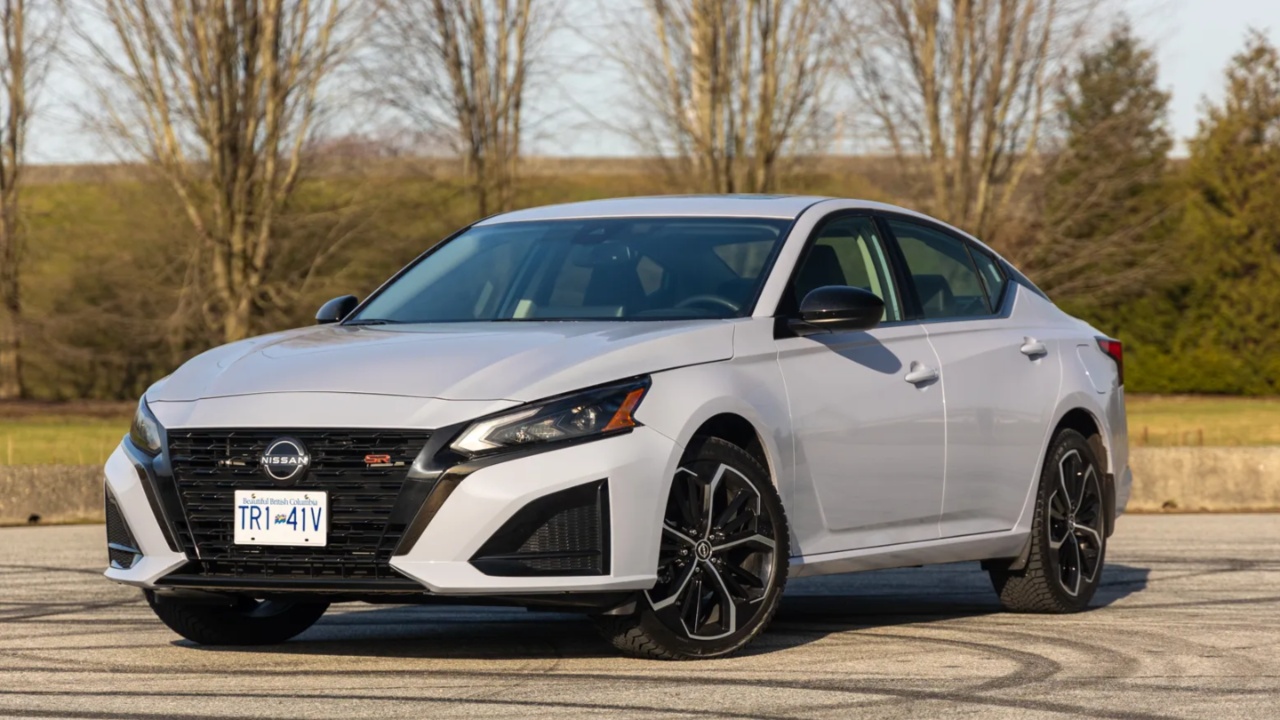
4. 2024 Nissan Altima: Cabin Noise and Refinement Challenges
The Nissan Altima has improved in comfort and handling over the years, yet it still trails rivals like the Camry and Accord in cabin refinement. Tests show interior noise reaching 54.9 decibels, slightly higher than the Camry Hybrid’s 53.9 decibels. Wind, road, and drivetrain sounds become particularly noticeable at highway speeds, exposing areas where insulation and mechanical design allow more intrusion than competitors.
A significant contributor to cabin noise is the tire and wheel configuration. Higher trims, such as the SR and SL, come with 19-inch wheels and low-profile tires. The thin sidewalls transmit road vibrations directly into the cabin, amplifying bumps and textured surfaces. Factory alignment problems can intensify the effect, producing a rhythmic humming or “helicopter-like” sound at higher speeds. Even brand-new tires are sometimes reported as loud, prompting some owners to switch to touring or premium compounds to reduce road hum.
Limited sound insulation in key areas also plays a role. While the Altima features an acoustic windshield and some front fender insulation, the rear wheel wells, trunk, and spare tire tub lack sufficient deadening. Road resonance travels through these lightly insulated zones, particularly over rough asphalt or poured concrete, making noise more noticeable inside the cabin.
The Continuously Variable Transmission (CVT) adds to the acoustic experience. Its constant RPM operation during acceleration creates a persistent droning sound. In some cases, a high-pitched whine occurs from the CVT when fluid is low or degraded, even on relatively new vehicles, further contributing to noise intrusion.
Aerodynamic factors also contribute. Turbulence around side mirrors or slightly imperfect seals at doors and windows can produce high-pitched wind whistles at highway speeds. Maintenance issues such as uneven tire wear or failing wheel bearings can amplify these sounds.
Owners seeking a quieter cabin often install sound-deadening materials in doors and trunks or apply rubberized coatings to wheel wells. Despite these challenges, the Altima provides a comfortable and practical ride, though it does not achieve the same refined, whisper-quiet experience as some competing mid-size sedans.
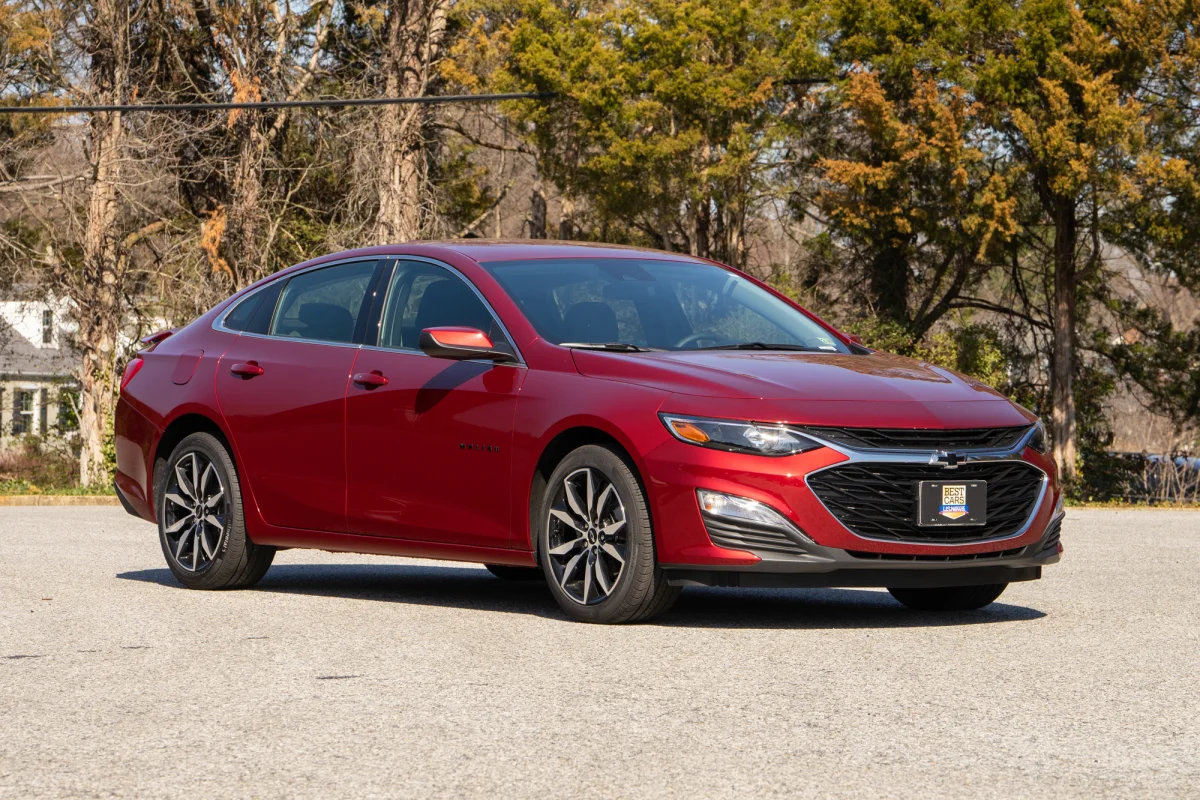
5. Chevrolet Malibu: Cabin Noise and Contributing Factors
The Chevrolet Malibu has been noted for a noisier cabin compared to modern competitors. Its base engine works harder to maintain highway speeds, producing more vibration and sound than newer hybrid sedans.
The Malibu’s design emphasizes cost-effectiveness and performance balance rather than advanced acoustic isolation, which results in a less refined driving environment than vehicles like the Toyota Camry or Honda Accord.
A key factor is minimal sound insulation. The doors, roof, and floor panels include fewer sound-deadening materials, allowing road and wind vibrations to enter the cabin. The effect is amplified with higher trim levels equipped with 19-inch wheels and low-profile tires, which have thinner sidewalls and harder rubber compounds.
These tires transmit more road texture and impact noise directly into the chassis. Standard low rolling resistance tires are also inherently louder than softer touring alternatives.
Several mechanical contributors worsen cabin noise. Over time, worn door and window seals can crack or shrink, letting wind create high-pitched whistles. Wheel bearings that begin to fail generate a low-frequency hum that intensifies with speed.
Misaligned wheels can cause tire cupping, producing rhythmic thumps or humming. Aerodynamic issues such as loose wheel well liners or underbody panels can rattle at high speeds, further adding to interior noise.
Owners seeking a quieter experience can take several effective measures. Upgrading to quiet-rated all-season or touring tires provides immediate improvement. Installing sound-deadening mats in doors and the trunk can replicate the insulation found in luxury models.
Maintaining and replacing door and window gaskets blocks wind intrusion. Regular tire rotations and alignment checks prevent uneven wear and reduce tire-related noise.
Despite these challenges, the Malibu remains a practical and well-equipped sedan. With proactive maintenance and targeted upgrades, many of the cabin noise issues can be mitigated, improving comfort on long drives.
Choosing a midsize sedan involves balancing comfort, refinement, and driving character. Sedans with advanced acoustic insulation, hybrid or electric powertrains, and careful aerodynamics provide a calm, quiet cabin that reduces fatigue on long journeys.
Vehicles designed with sportier suspensions, low-profile tires, or cost-focused engineering often transmit more road and wind noise into the interior, creating a rawer driving experience.
Buyers seeking serenity should prioritize models with laminated glass, additional sound-deadening materials, and efficient hybrid or electric systems, while those who enjoy engagement and performance may accept higher cabin noise as part of the ride.
Ultimately, awareness of how design choices affect cabin acoustics helps drivers select the right midsize sedan for their personal priorities, whether the goal is whisper-quiet comfort or a more spirited, connected road feel.
Also Read: 10 Cars Perfect for Freelancers Who Live in Coffee Shops