
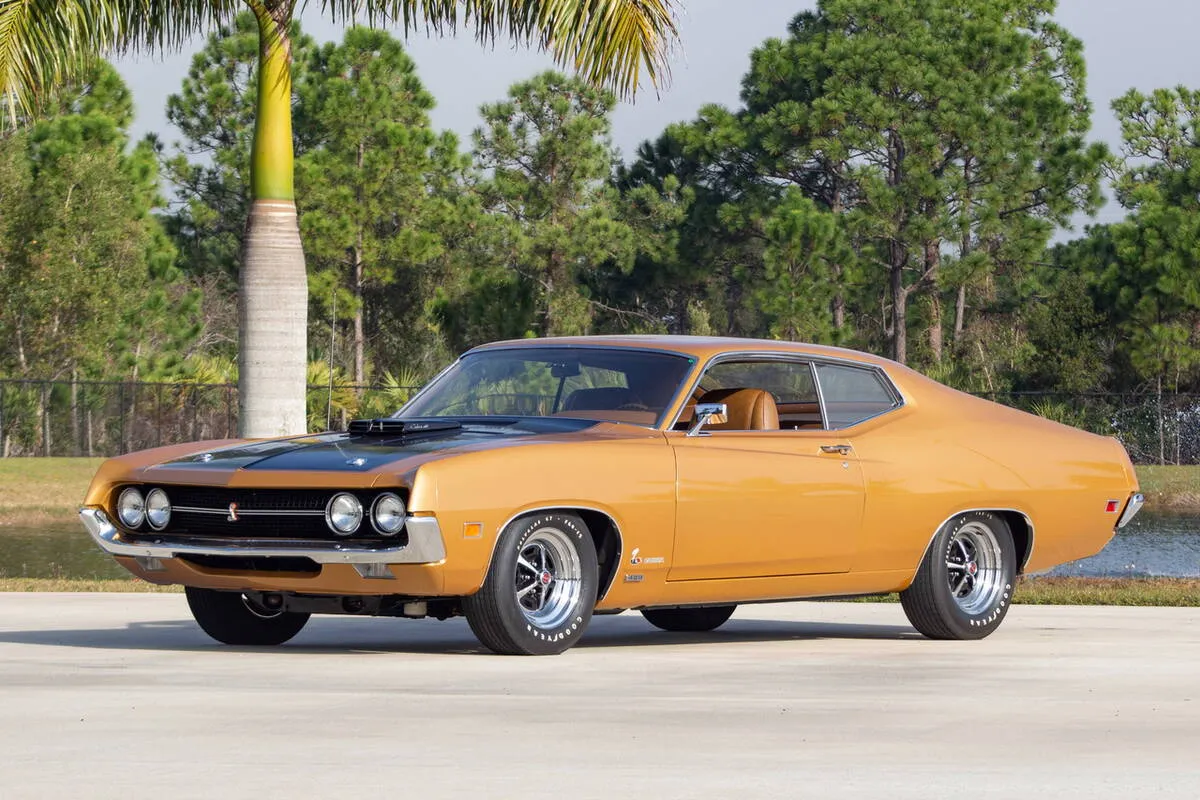
Legends like the Mustang, Camaro, and Charger tend to dominate every muscle car conversation. Their reputations are well earned, yet history has a funny way of pushing other deserving machines into the background.
While the spotlight stayed fixed on a handful of household names, several remarkable performance cars quietly delivered thrilling power, sharp styling, and serious street presence without receiving the lasting credit they deserved.
Some arrived at the wrong moment, overshadowed by flashier siblings. Others suffered from changing regulations, insurance crackdowns, or simple brand politics. A few were misunderstood, dismissed too quickly because they did not fit the traditional muscle car mold.
Years later, when enthusiasts take a closer look at specs, road tests, and production numbers, a surprising truth becomes clear. Quite a few so-called forgotten models were every bit as exciting as the icons that stole the headlines.
Revisiting these cars is not just about nostalgia. It is about giving credit where it belongs. Underestimated engines, bold design decisions, and creative engineering deserve recognition. These vehicles prove that muscle car history runs deeper than the greatest hits list most of us know by heart.
What follows are ten muscle cars that were far better than popular memory suggests. Each one had the ingredients for greatness. Some even had the numbers to prove it. All of them deserve a second look.
1. 1970 Ford Torino Cobra
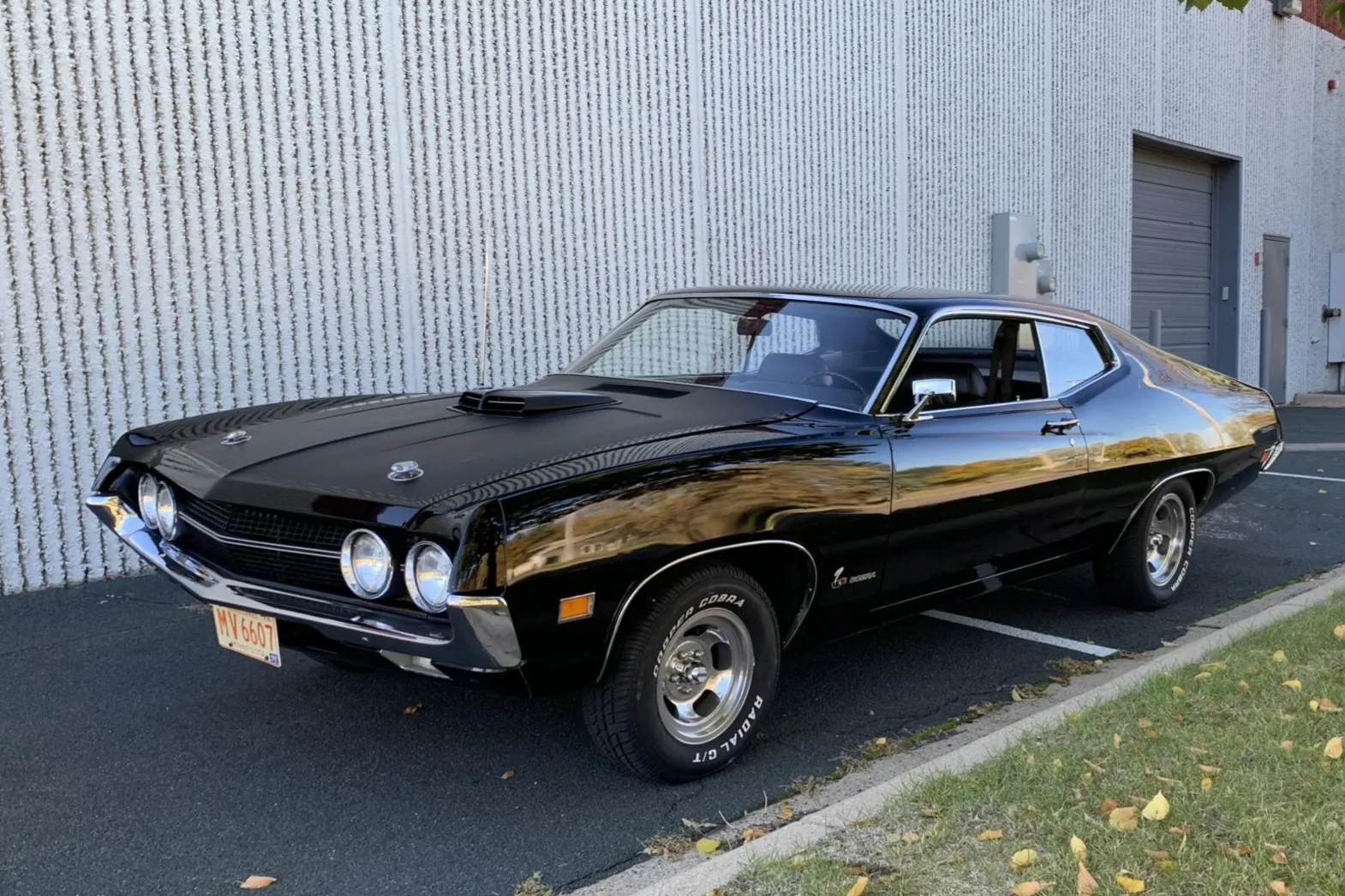
Picture a fastback body stretched long and low, hiding one of the most formidable engines Ford offered at the time. The 1970 Ford Torino Cobra did not enjoy the cultural staying power of the Mustang, yet it packed serious muscle beneath its sheet metal.
Buyers could order it with the 429 cubic inch Cobra Jet V8, an engine officially rated at 370 horsepower but widely believed to produce even more in real-world conditions.
Rather than relying on flashy gimmicks, this Torino leaned into raw presence. The SportsRoof design gave it an aggressive silhouette, while functional hood scoops and bold graphics made its intentions clear. Straight line acceleration impressed critics, with quarter mile times that put it squarely in competition with more famous rivals.
Insurance rates during the early 1970s, combined with tightening emissions standards, limited its long-term impact. That timing hurt its reputation. Had it arrived just a few years earlier, it might have enjoyed broader recognition.
Despite that, performance data tells a compelling story. The Cobra Jet engine delivered massive torque, and when paired with a four-speed manual transmission, it transformed the Torino into a street and strip contender.
Handling also improved compared to earlier midsize muscle offerings. Ford refined suspension tuning, giving drivers more confidence than expected from a car of its size. Enthusiasts who have restored and driven these cars today often remark that the Torino Cobra feels far more composed than its underappreciated status suggests.
Viewed with a fresh perspective, the 1970 Ford Torino Cobra stands as proof that muscle car greatness was never limited to one badge. It delivered power, style, and attitude in equal measure, even if history did not grant it the same spotlight.
2. 1969 Mercury Cyclone Cobra Jet
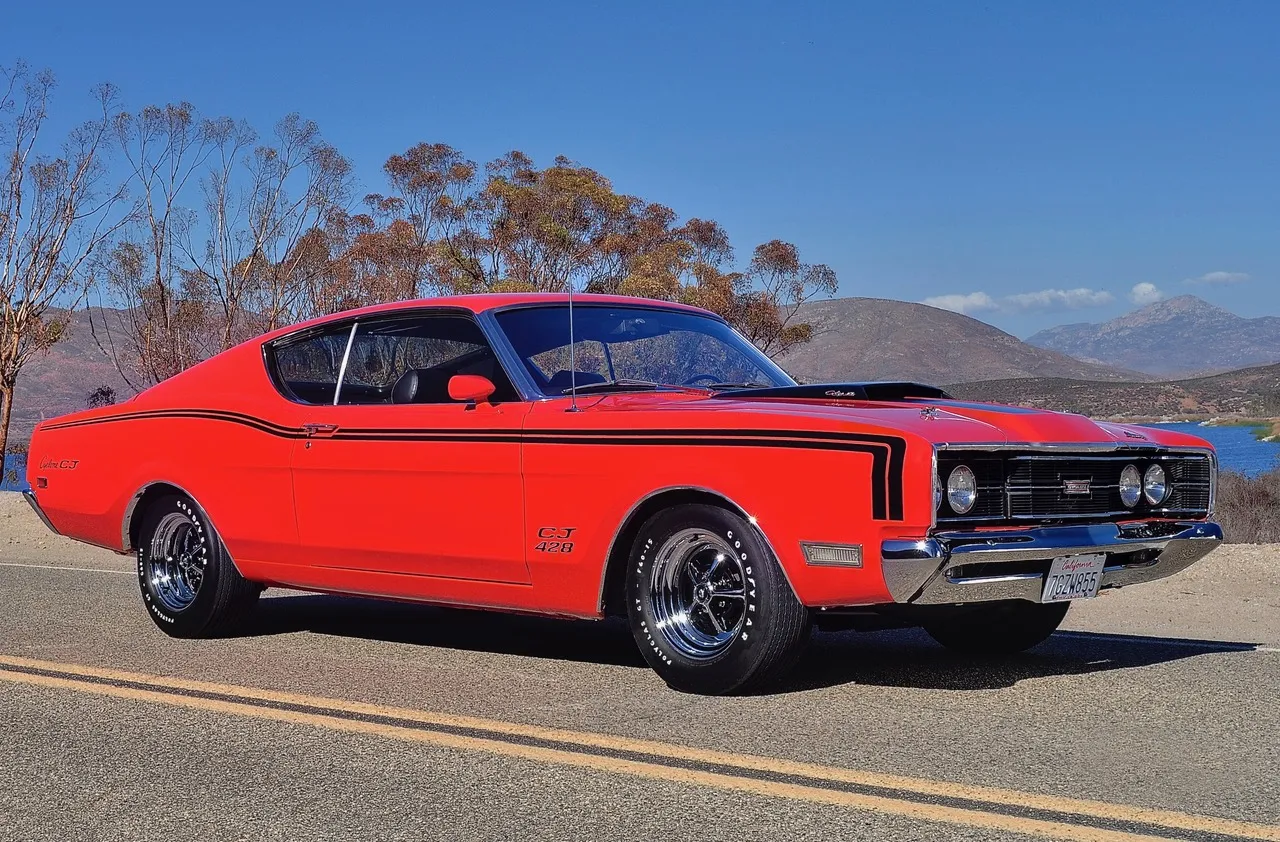
The 1969 Mercury Cyclone Cobra Jet presented itself with restraint and quiet confidence. Its bodywork featured clean contours, a disciplined grille design, and minimal ornamentation. To the casual observer, it resembled a well-appointed midsize coupe intended for respectable daily motoring rather than aggressive street performance.
That restrained presentation, however, concealed a formidable mechanical foundation. Beneath its bonnet rested Ford’s 428 Cobra Jet V8, an engine already earning a reputation for raw strength within performance circles. Officially rated at 335 horsepower, the 428 Cobra Jet was widely understood to produce far more than its published figure.
The engine delivered abundant torque at low revolutions, allowing the Cyclone to surge forward with urgency from a standing start. Acceleration in quarter-mile testing frequently rivalled, and at times surpassed, competitors that carried louder reputations and more flamboyant advertising campaigns.
When fitted with the Ram Air induction system, airflow improved, and throttle response sharpened, giving the car even greater authority during hard launches. Unlike certain muscle cars of the period that relied on bright decals, exaggerated stripes, and dramatic scoops to announce their presence, the Cyclone maintained composure in both styling and presentation.
Its interior reflected this measured approach. Occupants were greeted with upgraded trim materials, supportive seating, and a clear instrument layout that prioritised functionality. The driving environment was comfortable enough for regular commuting, yet sufficiently purposeful to satisfy an owner intent on weekend drag strip participation. This dual character enhanced its practical appeal.
Media attention during that era gravitated strongly towards the Ford Mustang and other high-visibility models within the same corporate family. Mercury, as a brand, did not command equal publicity, despite sharing essential engineering components.
That disparity in exposure contributed to the Cyclone Cobra Jet’s gradual retreat from popular memory. It was neither deficient in performance nor lacking in engineering credibility. Rather, it existed in the shadow of siblings that benefitted from more aggressive promotion and broader cultural presence.
Contemporary road tests offer clear evidence of the Cyclone’s capability. Recorded acceleration figures placed it firmly within the upper ranks of late 1960s American performance coupes. Braking performance proved reassuring for a vehicle of its size and output, while suspension tuning allowed for controlled handling during spirited driving.
Reviewers frequently expressed appreciation for its balanced character, observing that it delivered robust power without sacrificing civility. The 1969 Mercury Cyclone Cobra Jet stands as an example of disciplined engineering paired with restrained design. Its modest outward appearance concealed genuine strength and refined execution.
For those willing to look beyond badge prestige and marketing noise, it represented a serious performance machine dressed in a tailored suit rather than racing overalls.
Also Read: Top 10 Iconic GM Muscle Cars That Shaped American Performance
3. 1971 AMC Javelin AMX
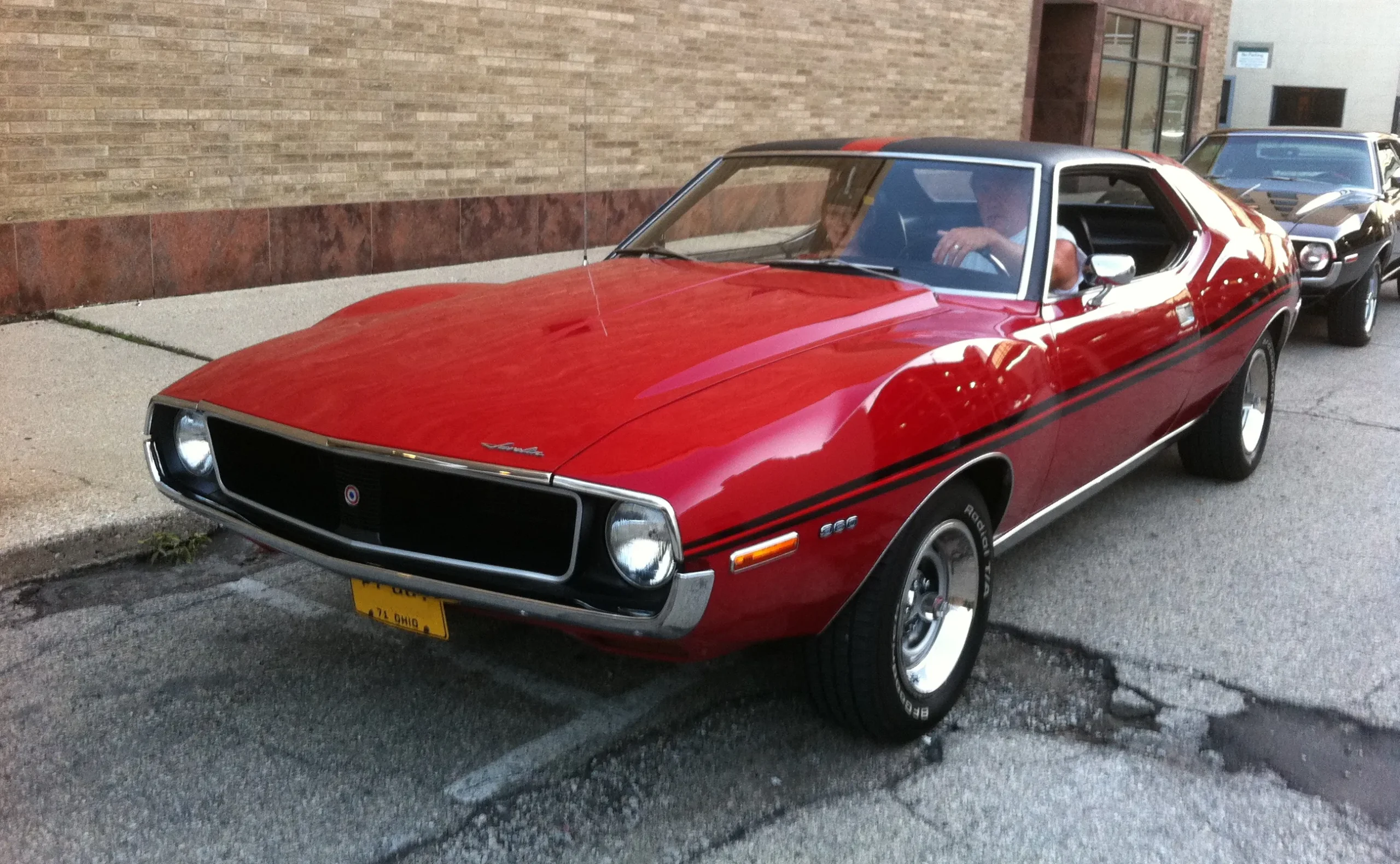
Bold exterior lines and pronounced wheel arches gave the 1971 AMC Javelin AMX a commanding presence on American roads. Produced by American Motors Corporation, a company frequently regarded as smaller and less influential than its Detroit rivals, this model demonstrated that engineering ambition was not limited to large manufacturers.
Its styling projected confidence, while its mechanical specification confirmed that appearance was supported by genuine performance capability. Beneath its sculpted bonnet, buyers could specify the formidable 401 cubic inch V8 engine rated at 330 horsepower.
That powerplant delivered strong acceleration, particularly in mid-range operation, where torque response felt immediate and assertive. Acceleration figures placed the vehicle withina competitive range of more widely promoted muscle cars.
Rather than focusing exclusively on straight-line performance, AMC invested in road racing development, participating actively in Trans Am competition. Success in that series strengthened the car’s credibility and contributed to improvements in suspension geometry and chassis rigidity.
Revisions introduced for the 1971 model year included a wider track and restyled front fascia, enhancing both stance and stability. These modifications improved cornering composure without creating excessive bulk. Inside the cabin, sport-oriented seating and upgraded instrumentation reflected attention to driver engagement.
Controls were positioned with clarity, and the entire ergonomics suggested deliberate design rather than improvisation. Public perception frequently categorizes AMC as an underdog manufacturer. Such branding limited broader commercial enthusiasm despite the Javelin AMX’s measurable capability.
Performance enthusiasts who experienced the 401-powered version, however, recognised its balanced character. It combined satisfying straight line speed with commendable handling behaviour, creating a driving experience that compared favourably with more established competitors.
Production numbers remained modest, which contributed to its relatively low profile within muscle car history. Scarcity, combined with authentic performance credentials, has gradually enhanced appreciation among collectors. The 1971 AMC Javelin AMX stands as evidence that innovation and bold execution were not confined to major corporations. Its legacy deserves renewed attention for delivering substance beyond expectation.
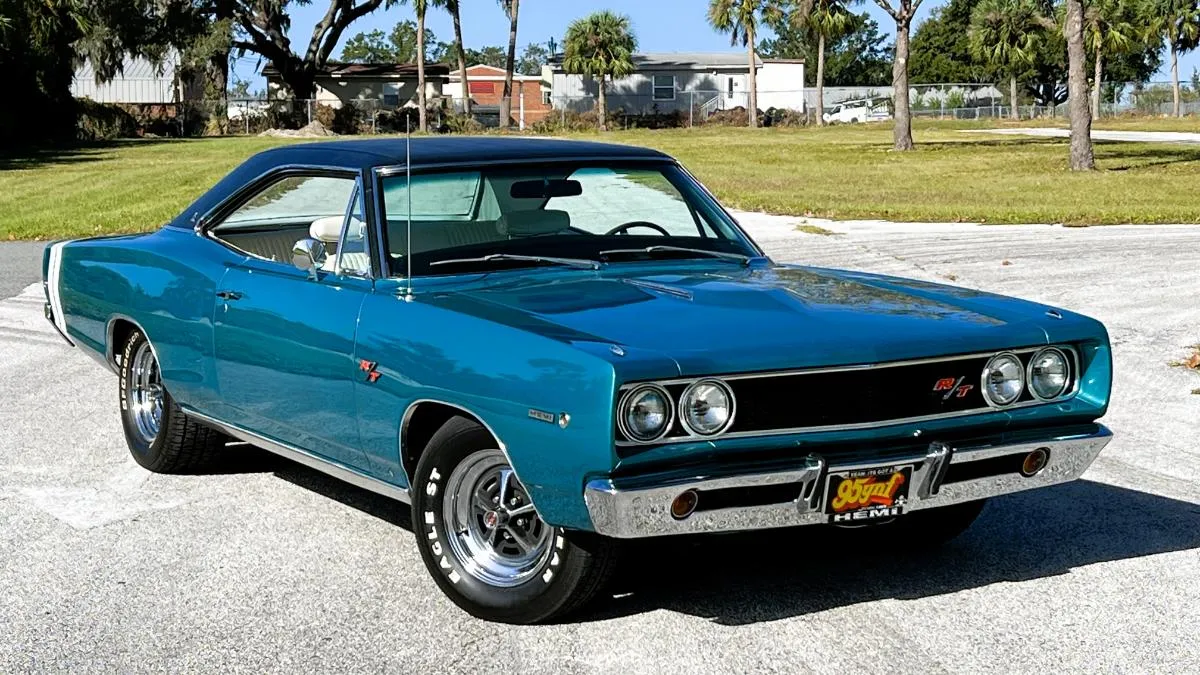
4. 1968 Dodge Coronet R/T
Presentation of the 1968 Dodge Coronet R/T reflected restraint rather than flamboyance. Clean body lines, subtle badging, and purposeful proportions created an image of quiet authority. Behind that measured exterior lay formidable mechanical capability.
Standard specification included the 440 cubic inch Magnum V8, rated at 375 horsepower, providing substantial torque and acceleration performance. For buyers seeking heightened performance, the optional 426 Hemi engine transformed the Coronet R/T into a formidable contender capable of exceptional quarter-mile times.
Despite these credentials, public recognition frequently gravitated toward the Dodge Charger, which received broader media exposure and cultural association. That imbalance contributed to the Coronet’s understated reputation.
Performance data from the period confirmed its strength. Straight-line acceleration placed it among the leading muscle cars of the late 1960s. Reinforced suspension components, upgraded braking systems, and performance-oriented axle ratios ensured that power delivery remained manageable.
Ride quality, while firm, retained enough compliance to permit comfortable everyday use. This dual capacity enhanced its practicality without diminishing excitement. Exterior styling avoided excessive ornamentation, which may have limited its appeal to buyers drawn toward more theatrical designs.
Nevertheless, this restraint appealed to individuals who valued capability over spectacle. The Coronet R/T projected confidence without reliance on dramatic embellishment. Retrospective evaluation reveals that the 1968 Dodge Coronet R/T combined serious engine options with dependable usability.
Its quieter public profile does not diminish its accomplishments. Instead, it illustrates how strong performers can be overshadowed when more visually assertive counterparts dominate attention. Renewed assessment confirms that this model merits greater recognition within muscle car heritage.
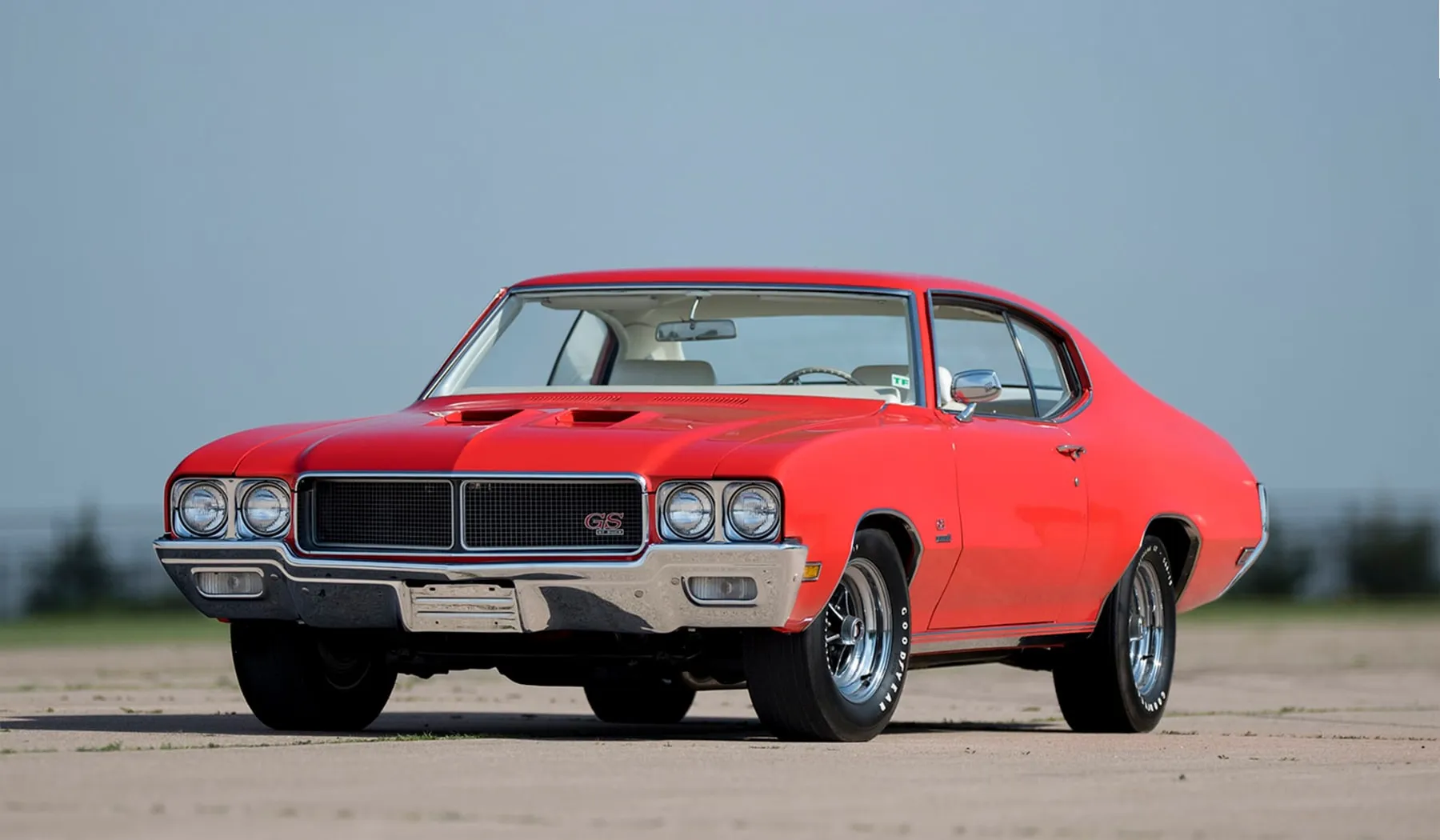
5. 1970 Buick GS 455
Refinement and formidable power found uncommon harmony within the 1970 Buick GS 455. Buick traditionally cultivated an image associated with comfort and mature styling, yet this model challenged that perception decisively.
Beneath its restrained exterior rested a 455 cubic inch V8 engine rated at 350 horsepower and an impressive 510 pound-feet of torque. Such torque output ranked among the highest figures available during that period, producing vigorous acceleration from a stationary start.
Quarter-mile performance demonstrated its competitive standing. Contemporary testing placed the GS 455 alongside respected muscle cars renowned for raw strength. Unlike certain rivals that sacrificed comfort for speed, Buick engineers pursued balance.
Suspension calibration delivered composed highway manners while preserving assertive straight line performance. This thoughtful approach broadened the vehicle’s appeal beyond purely aggressive driving. Interior appointments reflected Buick’s established reputation for quality.
Plush seating, refined trim materials, and carefully arranged instrumentation created an environment of comfort uncommon within high-output performance vehicles of the era. Drivers could enjoy substantial power without abandoning convenience or refinement.
Marketing emphasis at the time favoured brands more directly associated with youthful performance imagery, which limited broader attention toward Buick’s offering. Nevertheless, road tests frequently praised the GS 455 for its immense torque delivery and unexpectedly swift acceleration. Those assessments reveal that capability exceeded public perception.
Modern enthusiasts who encounter well-maintained examples often express surprise at the vehicle’s forceful character. Acceleration remains immediate and commanding, supported by solid chassis construction. The 1970 Buick GS 455 demonstrated that muscular performance need not abandon sophistication.
Its integration of refinement and strength secures its place as one of the era’s most undervalued achievements, deserving renewed recognition within American automotive history.
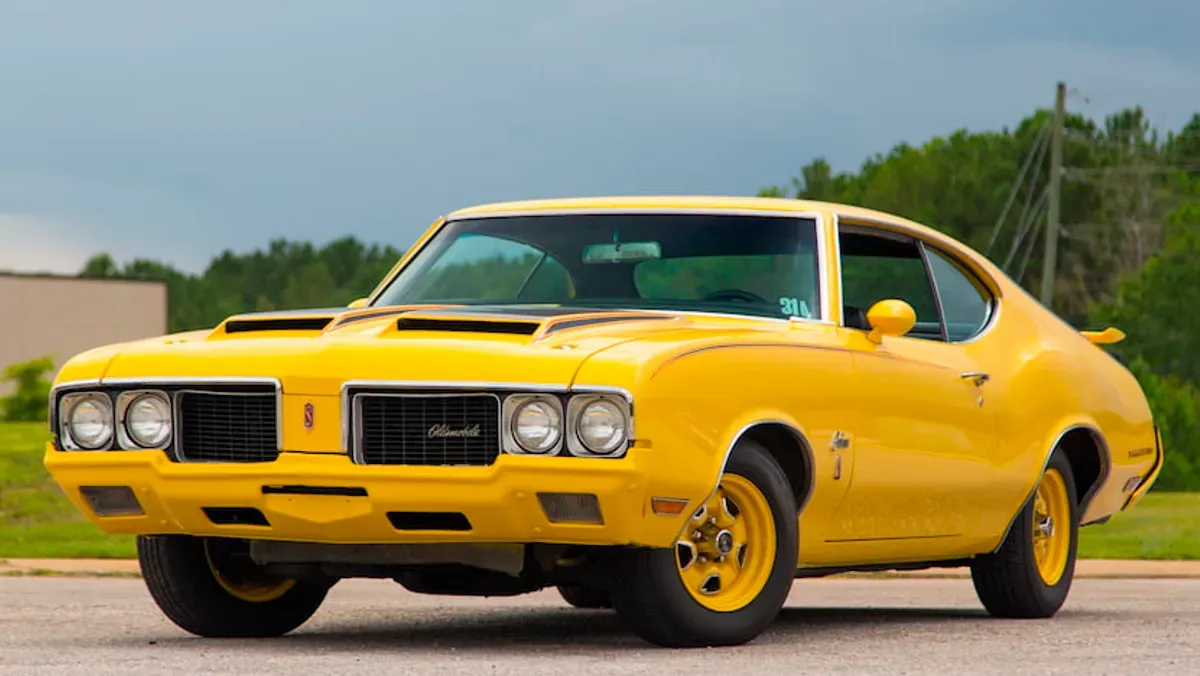
6. 1970 Oldsmobile Rallye 350
Bright yellow paint, color-matched bumpers, and bold decals made the 1970 Oldsmobile Rallye 350 impossible to ignore. Yet for all its visual punch, this car rarely gets mentioned alongside heavier hitters from the same era. That omission says more about branding than ability.
Beneath its striking exterior sat a high compression 350 cubic inch V8 producing 310 horsepower, paired with a performance-calibrated suspension that gave the car real attitude. Oldsmobile created the Rallye 350 during a time when insurance companies were beginning to penalize big-block muscle cars.
By focusing on a lighter, small block platform, the brand delivered respectable speed without pushing buyers into the highest insurance brackets. That strategy allowed drivers to enjoy strong acceleration and solid quarter-mile times without the financial burden tied to larger engines.
Engineering choices further strengthened its case. Revised suspension tuning improved responsiveness, while front disc brakes provided dependable stopping power. Drivers who have experienced a properly sorted example often comment on how balanced the car feels. It pulls with authority, yet it does not feel nose-heavy or clumsy through moderate curves.
Public perception at the time leaned toward cubic inch bragging rights. As a result, smaller displacement muscle cars were sometimes dismissed unfairly. The Rallye 350 suffered from that mindset. Even so, road tests from 1970 recorded performance numbers that stood close to some larger competitors, especially when considering its lower weight.
Styling also deserves attention. Integrated body colored Endura style bumpers gave it a cohesive appearance that still looks distinctive decades later. It projected confidence without copying anyone else’s formula.
Today, the 1970 Oldsmobile Rallye 350 stands as a reminder that muscle car excellence did not always require the largest engine available. Smart engineering, strong torque, and thoughtful design combined to create a machine that deserved far more respect than it received.
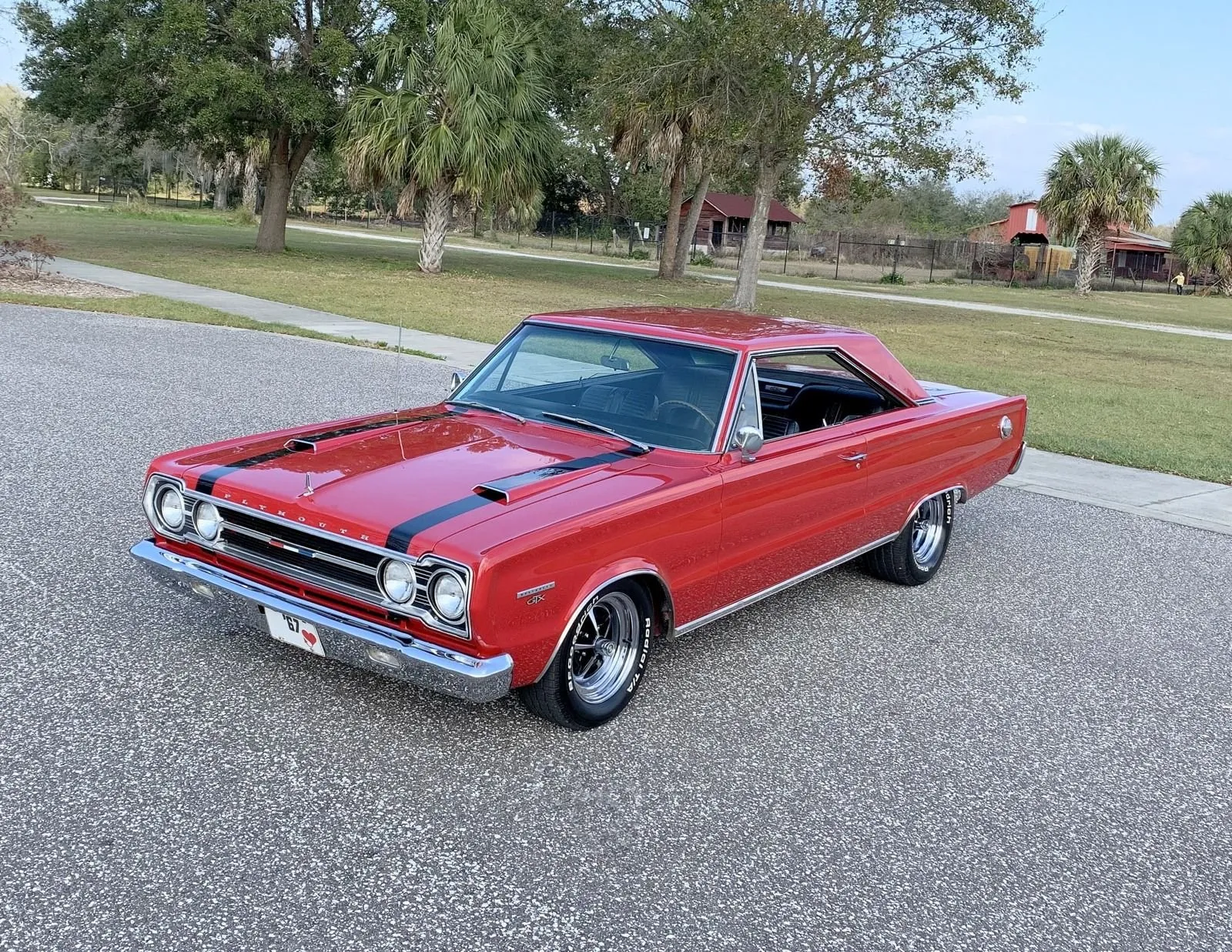
7. 1967 Plymouth GTX
Step into 1967 and consider the Plymouth GTX, a car marketed as a refined muscle machine rather than a stripped-down street racer. Standard power came from a 440 cubic inch Super Commando V8 rated at 375 horsepower. Buyers seeking ultimate performance could opt for the legendary 426 Hemi, pushing output into territory few competitors dared to match.
Plymouth positioned the GTX slightly above the Road Runner in terms of comfort and trim. Woodgrain accents, upgraded seating, and improved sound insulation gave it a more mature personality. That approach may have limited its raw image among younger buyers, yet it broadened its appeal.
Performance figures were impressive by any standard of the late 1960s. Quarter-mile times placed the GTX firmly within elite company. Torque delivery felt immediate, providing strong acceleration from low rpm. Heavy-duty suspension components and available performance axle ratios supported serious street credibility.
Media coverage often centered on flashier models or those with more aggressive marketing campaigns. As a result, the GTX never dominated headlines despite its capability. Those who drove it understood its appeal. It offered brute force wrapped in a more refined package, proving that muscle did not require minimalism.
Driving impressions highlight stable highway manners and confident straight-line performance. While it was not designed primarily as a corner carving machine, it handled better than critics sometimes acknowledged. Balanced weight distribution and solid chassis construction contributed to predictable road behavior.
Decades later, collectors have begun reassessing the 1967 Plymouth GTX. Appreciation continues to grow as enthusiasts recognize that it delivers serious power with added comfort. Its quieter reputation does not reflect its true capability. Instead, it underscores how marketing and image can overshadow genuine performance.
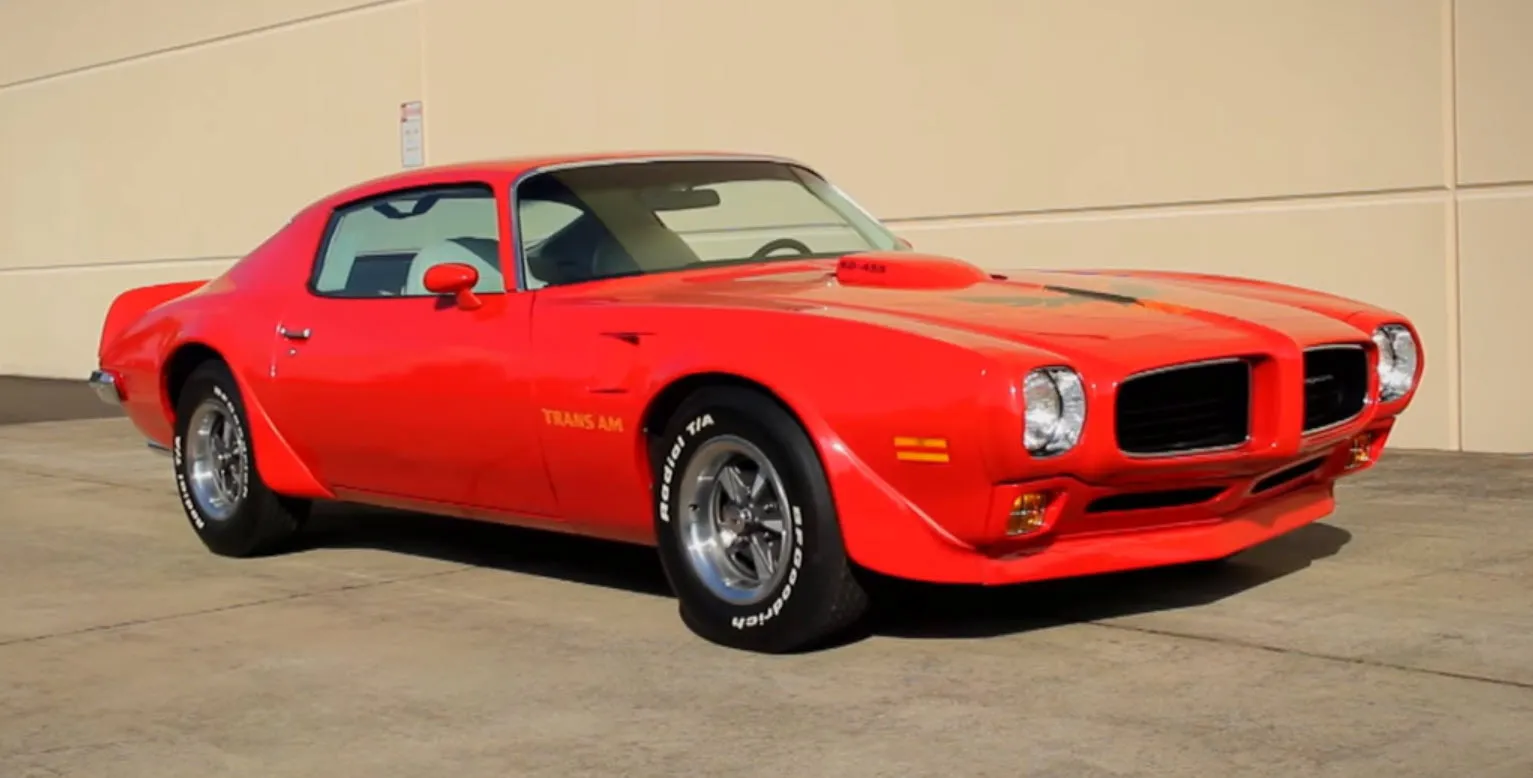
8. 1973 Pontiac Firebird Formula 455
Regulations tightened, and horsepower ratings began to decline by the early 1970s. Within that challenging climate, the 1973 Pontiac Firebird Formula 455 managed to preserve authentic muscle character. Powered by a 455 cubic inch V8 producing 250 net horsepower, it delivered strong real-world torque despite revised rating standards.
Styling changes for 1973 included a redesigned front fascia and energy-absorbing bumpers. Some critics dismissed these updates as heavy-handed. Yet beneath the updated exterior, the Formula retained performance-focused hardware. Suspension tuning remained firm, and optional Ram Air induction enhanced throttle response.
Drivers who experienced the Formula 455 during its production run often praised its mid-range strength. Acceleration felt forceful in everyday driving situations, not just during full throttle runs. That practical power made it enjoyable beyond short bursts of speed.
Public attention frequently gravitated toward earlier high-compression versions from the late 1960s. Consequently, later models like the 1973 Formula 455 were sometimes overlooked. Such comparisons ignored the broader context of emissions standards and insurance pressures shaping the industry at that time.
Handling characteristics also deserve recognition. With the right options, including upgraded sway bars and performance tires, the Formula offered confident road manners. Steering response felt precise enough to inspire trust without sacrificing comfort during longer drives.
Viewed today, the 1973 Pontiac Firebird Formula 455 represents resilience. It preserved muscle car spirit during a transitional era. Rather than fading quietly, it adapted and continued delivering satisfying performance. That perseverance makes it worthy of far greater appreciation than popular memory suggests.
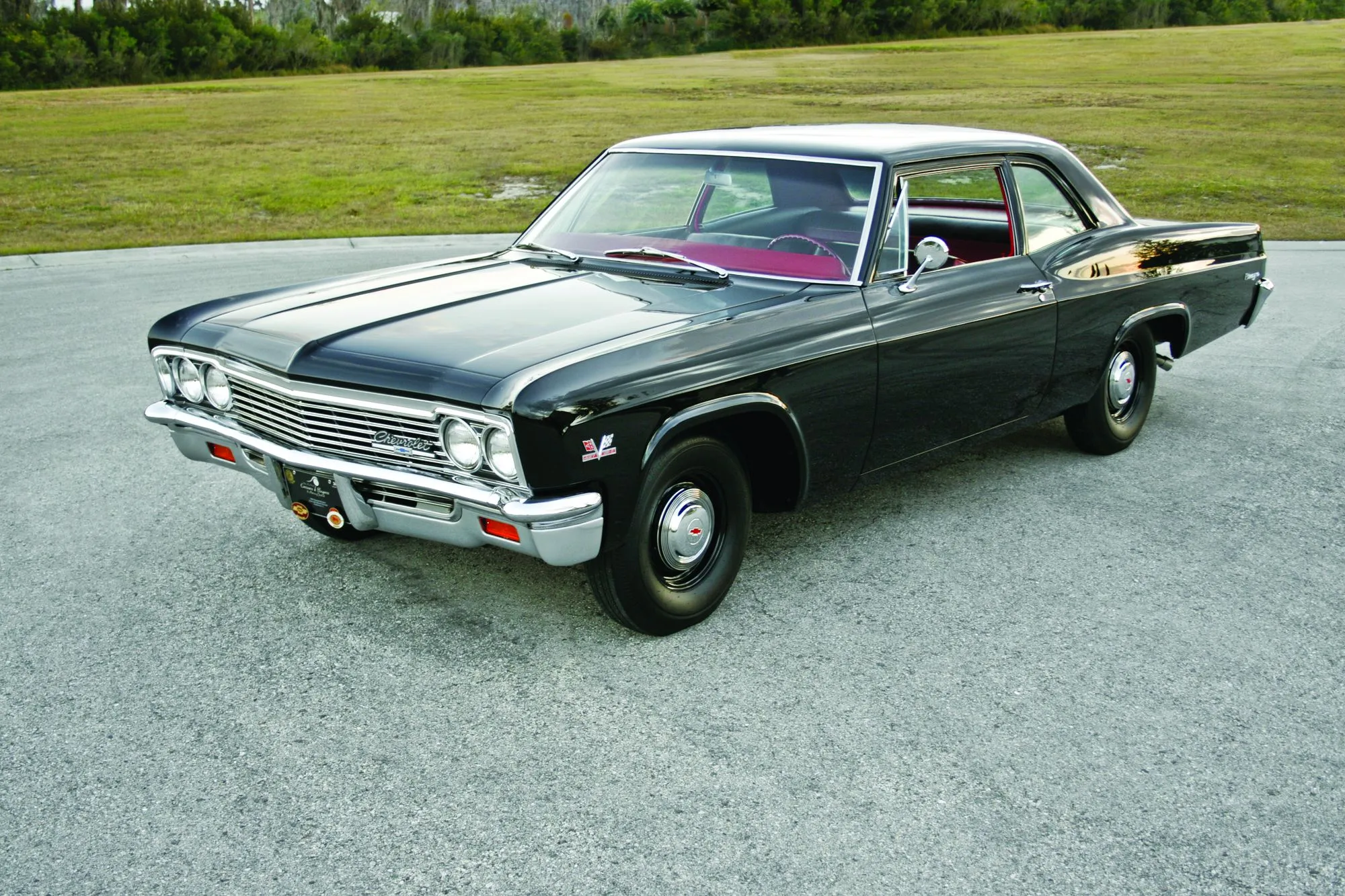
9. 1966 Chevrolet Biscayne L72
Few would expect a full-size sedan to earn muscle car credentials, yet the 1966 Chevrolet Biscayne L72 proved that appearances can deceive. Hidden beneath its conservative bodywork was the optional L72 427 cubic inch V8 producing 425 horsepower. Paired with a four-speed manual transmission, this large sedan became a formidable street presence.
Chevrolet offered the Biscayne primarily as a practical family vehicle. Choosing the L72 engine transformed it into a sleeper. Without flashy badges or stripes, it surprised competitors at stoplights and drag strips alike. Lightweight trim levels meant less mass compared to more luxurious full-size models, enhancing performance potential.
Acceleration figures reflected its power advantage. Period testing recorded quarter-mile times that rivaled smaller, purpose-built muscle cars. Torque delivery felt immediate, and high rpm capability added excitement uncommon in large sedans of the era.
Public memory often focuses on Camaros and Chevelles when discussing Chevrolet performance. As a result, the Biscayne L72 rarely receives its due recognition. That oversight ignores the thrill of piloting a full-size sedan capable of outpacing more glamorous coupes.
Driving dynamics naturally differed from midsize muscle cars. Its longer wheelbase provided stable highway behavior, while straight line performance remained its strongest attribute. For buyers seeking understated dominance, few options matched its combination of practicality and raw power.
Interest in sleeper cars has grown steadily among collectors. The 1966 Chevrolet Biscayne L72 fits that description perfectly. Its lack of visual drama once contributed to its obscurity. Today, that same subtlety enhances its appeal, proving that muscle could hide in unexpected places.
Also Read: Top 10 Used Muscle Cars That Still Offer Heart-Pounding Performance
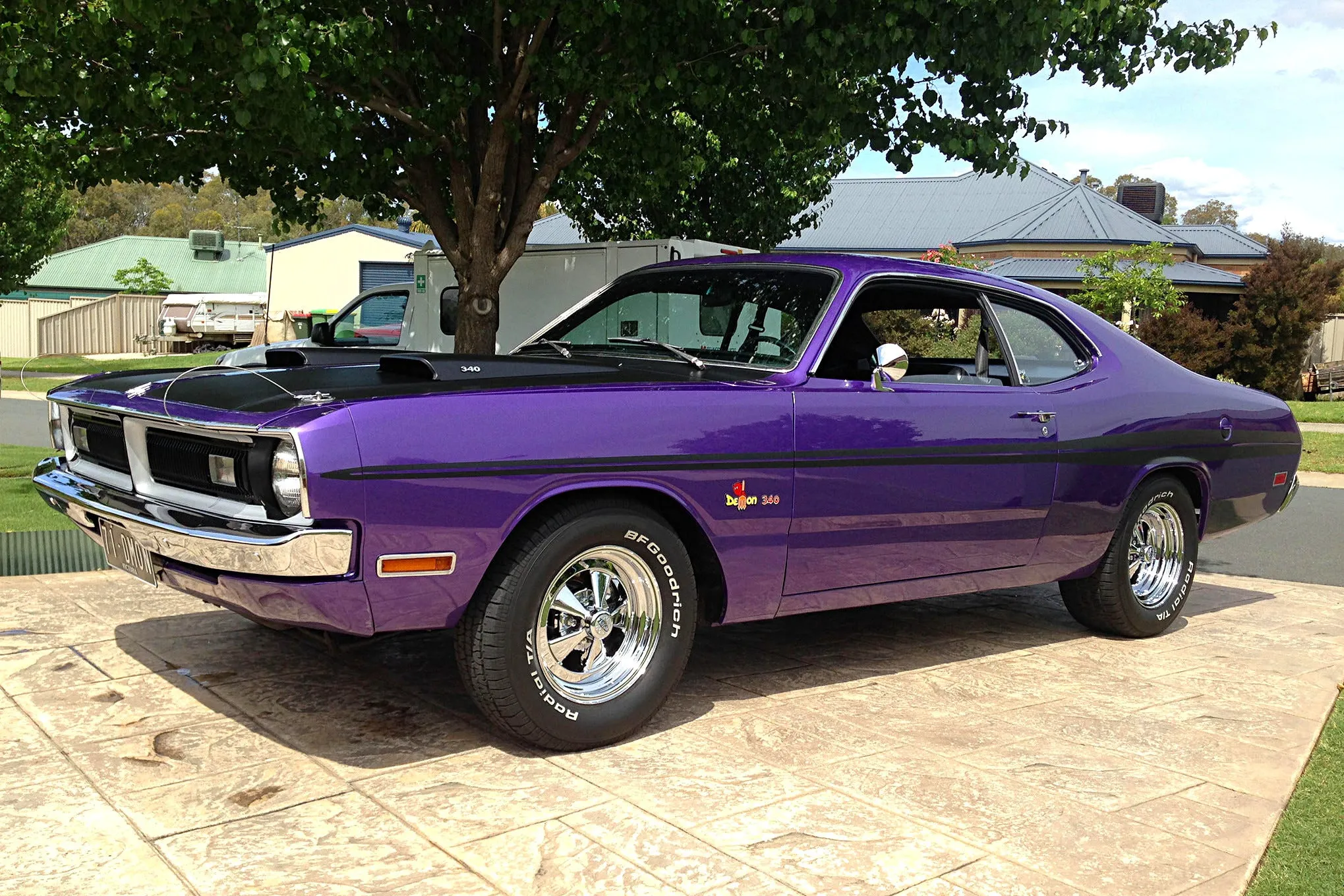
10. 1971 Dodge Demon 340
Controversial name aside, the 1971 Dodge Demon 340 delivered serious performance in a compact package. Equipped with a high-revving 340 cubic inch V8 producing 275 net horsepower, it offered lively acceleration without the bulk of larger muscle machines.
Compact dimensions gave the Demon an advantage in agility. Compared to heavier intermediates, it felt nimble and responsive. Enthusiasts appreciated the balance between power and weight, especially when paired with a four-speed manual transmission and performance axle ratios.
Styling featured bold graphics and an assertive hood treatment that matched its energetic personality. While not as widely promoted as other Dodge models, the Demon 340 developed a loyal following among drivers who valued quick reflexes over sheer size.
Insurance costs and tightening regulations influenced buyer decisions during the early 1970s. Smaller displacement performance cars like the Demon offered a practical alternative to big block bruisers. That practicality may have limited its headline-grabbing status, yet it broadened accessibility.
Road tests from the era recorded impressive acceleration for its class. Strong mid-range torque and a willingness to rev made it engaging in everyday driving scenarios. Suspension tuning provided adequate composure without sacrificing ride comfort entirely.
Looking back, the 1971 Dodge Demon 340 stands as proof that muscle car enjoyment did not depend solely on cubic inches. Its combination of manageable weight, solid horsepower, and spirited character delivered genuine excitement. While history often celebrates larger machines, this compact contender deserves renewed respect for doing more with less.
