Parents who swear they’ll never drive a minivan usually aren’t rejecting practicality, they’re rejecting the image.
The good news is that today’s automotive market offers plenty of family-friendly vehicles that deliver space, safety, and everyday usability without the sliding-door stigma.
Modern crossovers, SUVs, and even a few wagons now provide three rows, advanced driver-assistance tech, and flexible cargo layouts while still feeling stylish and engaging behind the wheel.
For U.S. families juggling school drop-offs, grocery runs, weekend sports, and road trips, the right vehicle needs to balance comfort, reliability, and value. The models below do exactly that.
Each offers strong safety credentials, real-world family usability, and enough personality to satisfy parents who refuse to blend into the carpool line.
Here are 10 of the best cars for parents who hate minivans.
1. Toyota Highlander
The Toyota Highlander has quietly become one of America’s go-to family SUVs. It offers three usable rows, a smooth ride, and Toyota’s reputation for long-term reliability.
Parents appreciate the efficient hybrid option, which delivers excellent fuel economy for a vehicle this size, especially helpful when you’re clocking endless miles for practices and playdates.
Inside, the Highlander focuses on comfort and simplicity. The infotainment system is intuitive, the driver-assistance suite comes standard, and there’s enough cargo room for strollers, sports gear, or a full Costco run. It’s a safe, sensible choice that doesn’t feel boring.
We can’t help but feel a degree of sympathy for the Toyota Highlander. Once the go-to three-row family SUV within Toyota’s portfolio, it now finds itself squeezed from both directions. The larger Grand Highlander has absorbed much of the demand for spacious family transport, while the compact RAV4 continues to dominate as the brand’s volume leader.
The redesign represents a clear stylistic break. This is not a subtle evolution of the existing model; it’s a wholesale reimagining. The 2027 Toyota Highlander adopts a smooth, grille-free front fascia that closely mirrors the forthcoming bZ Woodland.
At the rear, it shares a slim, full-width taillight treatment with that EV sibling, though the tailgate itself remains clean and distinct in execution. Along the sides, the sculpted surfaces evoke elements of the current Land Cruiser, giving the SUV a more squared, assertive presence.
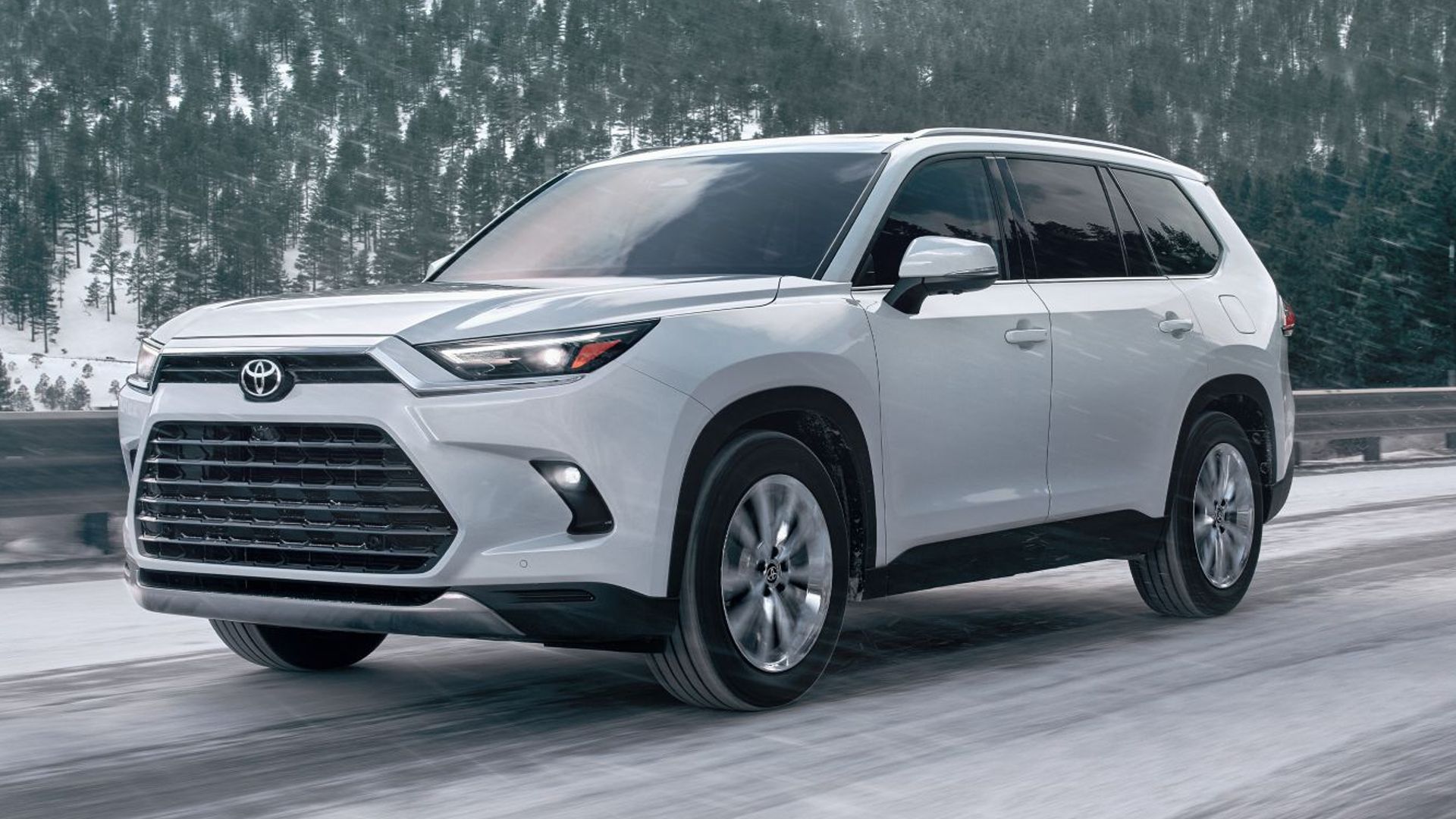
Dimensional changes reinforce the transformation. The length increases by nearly four inches compared to the outgoing model, excluding the extended front fascia seen on the XSE trim, while the wheelbase grows by a substantial 8.1 inches to accommodate the battery pack.
The result is a proportionally shorter rear overhang, visually reminiscent of the RAV4. Width expands by 2.3 inches, and height drops slightly by 0.8 inch, contributing to a lower, more planted stance. An available two-tone paint scheme further accentuates the vehicle’s stretched profile, drawing attention to its added length rather than its height.
The effect suggests that metaphorical middle child returning home with a mohawk and multiple new piercings. Describing it as conventionally attractive may be generous, but indifference will not be its problem.
2. Mazda CX-90
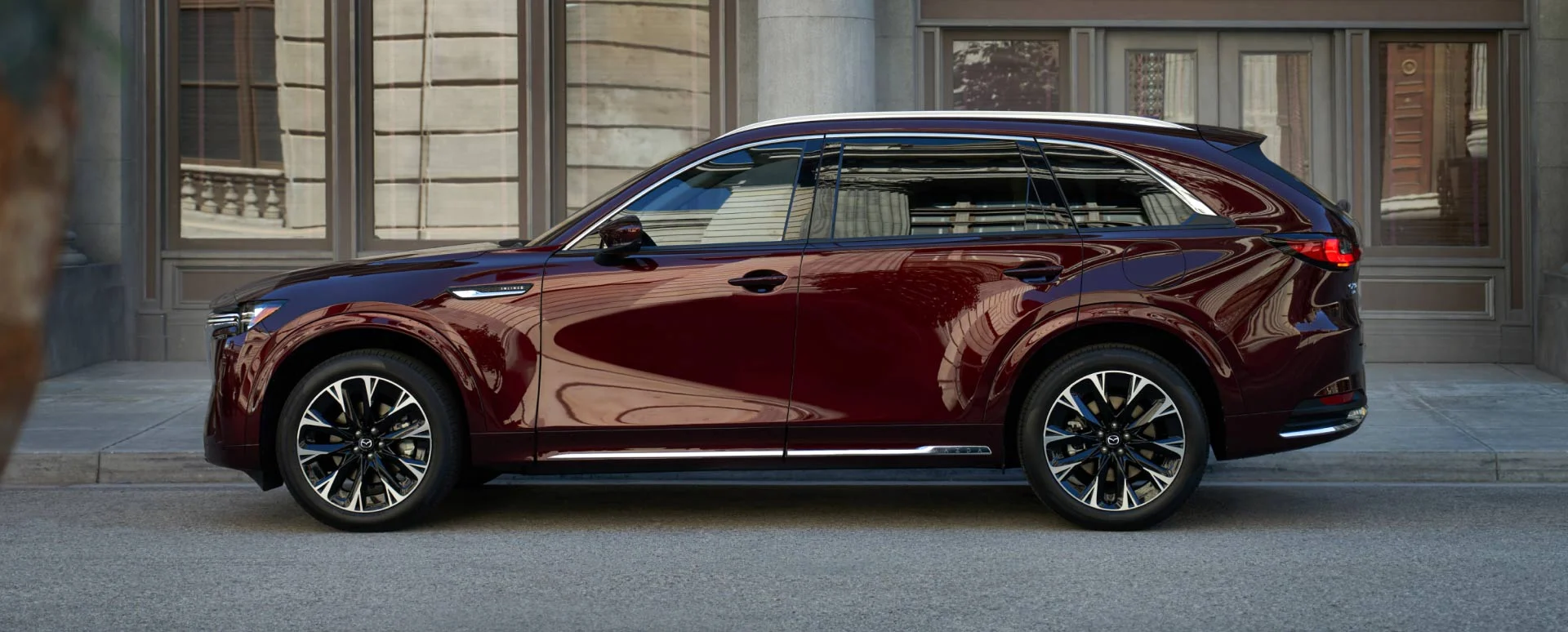
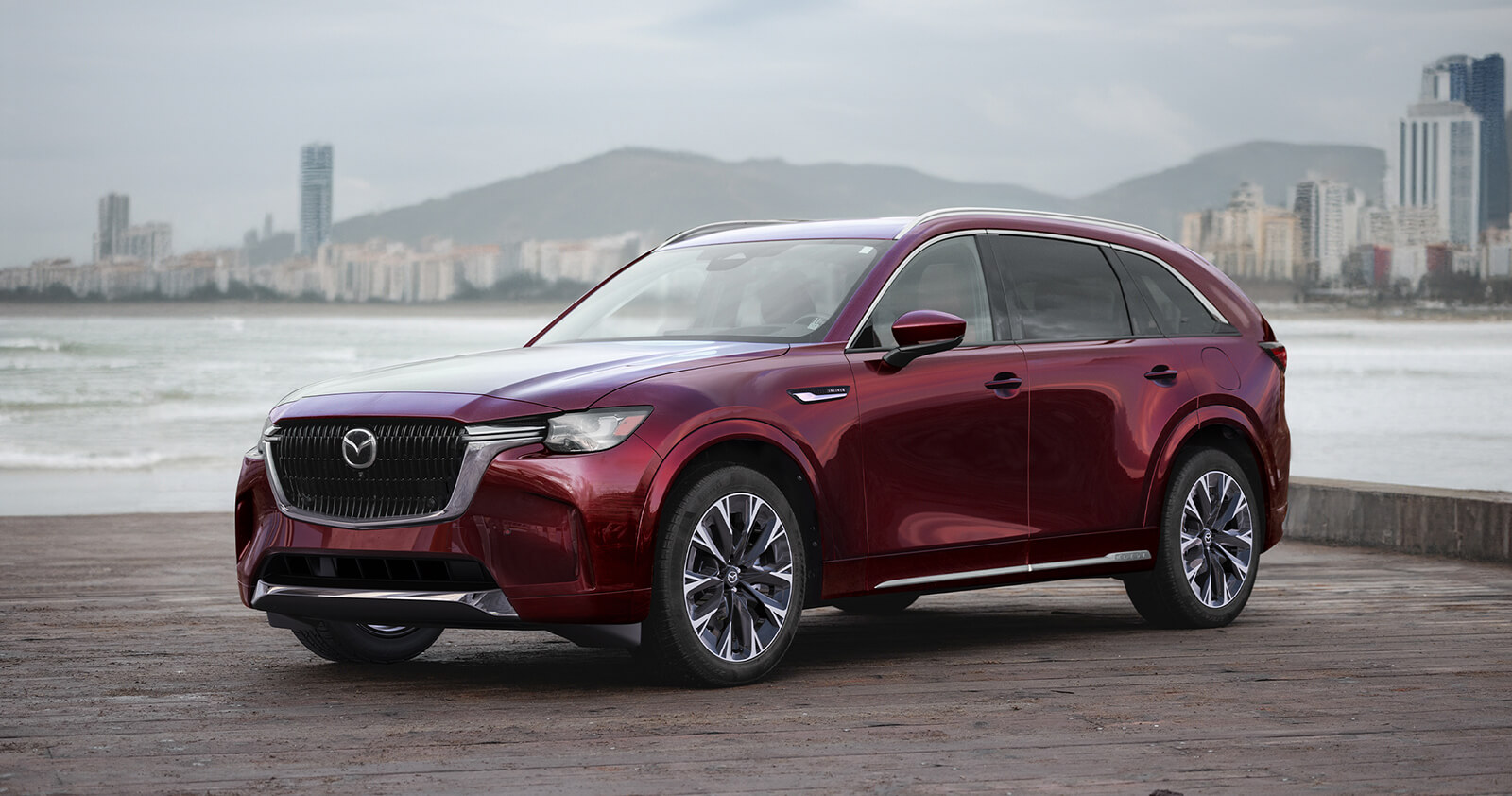
If you want something that feels premium without a luxury-brand price tag, the Mazda CX-90 stands out. Mazda leaned hard into upscale materials and sharp design, giving this three-row SUV a surprisingly refined interior.
What really separates it from the pack is how it drives. Steering feel and suspension tuning are noticeably more engaging than most family haulers, making school runs less dull.
Plug-in hybrid versions also appeal to parents who want to reduce fuel costs while keeping flexibility for longer trips.
Outright speed is rarely the primary concern for shoppers in the midsize three-row SUV segment, yet the CX-90 distinguishes itself by being noticeably quicker, more composed in corners, and more stable than the majority of its direct competitors. Our evaluation focused on the range-topping 340-horsepower variant.
On the test track, it delivered a 0-to-60-mph run in a solid 6.5 seconds, followed by strong midrange thrust and sustained high-rpm performance. In real-world driving scenarios, whether darting through gaps in traffic or merging onto the highway, the power delivery feels immediate and confident.
The eight-speed automatic transmission further enhances the experience. Gear changes occur with minimal interruption, maintaining smoothness without sacrificing responsiveness.
That said, the automatic engine stop-start system drew some criticism. While it can shut down the gasoline engine during steady cruising to improve efficiency, the transition back to active power is occasionally slower and more noticeable than ideal.
In keeping with Mazda’s brand identity, dynamic capability remains a core strength. The CX-90 exhibits steering that is well-calibrated in weight and feedback, contributing to a planted, assured feel when navigating curves.
Braking performance also stands out. Under emergency conditions, stopping distances are commendable. However, during everyday driving, the brake pedal’s sensitivity can make modulation difficult, sometimes complicating efforts to achieve consistently smooth stops.
3. Honda Pilot
The Honda Pilot is built for families who actually use all three rows. Its boxier redesign maximizes interior space, making the third row more comfortable for older kids and even adults in a pinch.
Honda’s thoughtful touches show up everywhere: wide-opening doors for easy car-seat installation, clever storage cubbies, and one of the simplest infotainment layouts on the market.
It’s not flashy, but it’s incredibly functional, exactly what many parents end up valuing most.
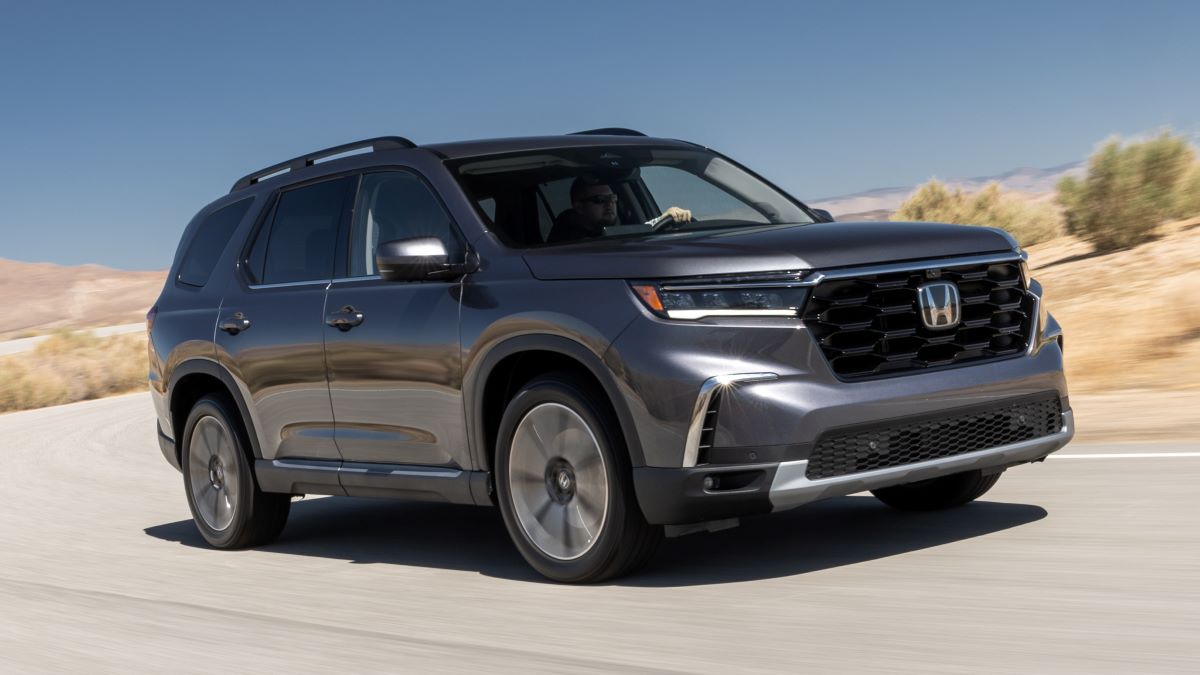
Behind the wheel, the Pilot delivers an experience that is somewhat inconsistent. The V6 emits an aggressive, throaty note under hard acceleration, but the actual forward progress does not fully match the auditory impression.
Performance remains squarely in the middle of the segment. At the test facility, our Pilot TrailSport evaluation model completed the 0–60 mph sprint in 7.8 seconds.
The automatic transmission tends to hunt for gears, particularly in urban driving conditions, which can make the powertrain feel restless. This calibration also contributes to a heightened sensitivity to throttle inputs when pulling away from a standstill, giving the impression of eagerness that may not always be warranted.
Brake operation is progressive in application, yet the pedal itself feels soft and somewhat devoid of feedback. In emergency braking scenarios, stopping distances measured longer than the class average.
For families seeking moderate off-pavement capability, the Pilot TrailSport stands out as one of the more competent three-row crossovers intended for light-duty trail use. Increased ground clearance enhances its ability to manage uneven terrain. The available all-wheel-drive system is another notable strength.
Beyond delivering improved traction in snow- or ice-covered conditions, it can actively vary torque distribution from the V6 to improve cornering composure and overall agility. Even so, the steering remains lightly weighted and offers minimal tactile feedback, providing little meaningful communication about surface conditions or front-end grip.
4. Subaru Ascent
Standard all-wheel drive makes the Subaru Ascent especially appealing for families in snowy or rainy regions. Subaru also loads every trim with advanced safety tech, which helps keep insurance costs down and peace of mind up.
The Ascent shines for outdoorsy parents. Roof rails, rugged styling, and generous cargo capacity make it easy to haul bikes, camping gear, or muddy soccer cleats.
It’s not the most luxurious option here, but it’s tough, practical, and confidence-inspiring in bad weather.
The 2023 Ascent is offered with a single powertrain configuration that provides sufficient performance for daily commuting and sustained highway travel, though it lacks a meaningful surplus of power.
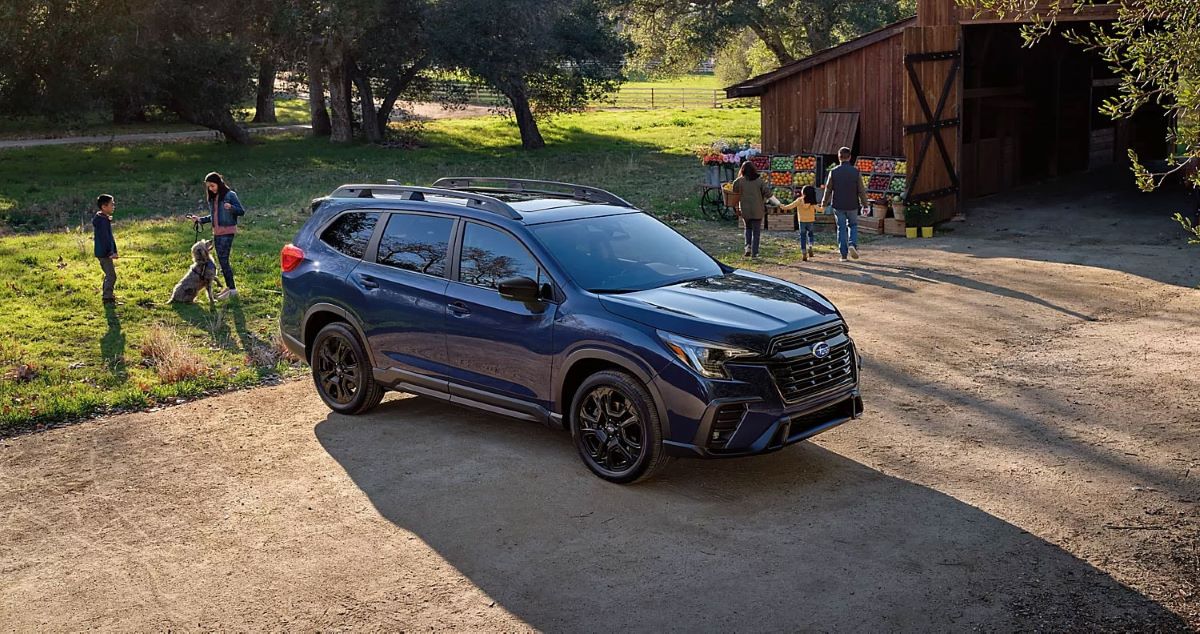
When carrying a full complement of passengers and cargo, the vehicle can begin to feel strained. Its continuously variable transmission (CVT) is calibrated to simulate the behavior of a traditional stepped automatic and pairs reasonably well with the turbocharged engine, delivering generally smooth and predictable operation.
Ride quality is composed and comfort-oriented, with suspension tuning that prioritizes isolation over athletic responsiveness. While the Ascent maintains respectable composure through turns, the steering effort is relatively light, and noticeable body roll emerges when cornering at higher speeds.
With 8.7 inches of ground clearance and standard all-wheel drive, the Subaru is equipped to handle light off-road conditions or unpaved routes. The inclusion of Subaru’s X-Mode traction management system, featuring Snow and Dirt settings, further enhances capability in low-traction environments.
Fuel efficiency for the 2023 Subaru Ascent aligns closely with segment norms for three-row SUVs. Although every trim level utilizes the same engine and transmission, EPA ratings vary slightly due to wheel size differences.
Entry-level trims are equipped with 18-inch wheels and tires, whereas higher trims feature larger 20-inch wheels. The base model achieves an EPA-estimated 20 mpg in city driving and 26 mpg on the highway. Upper trims are rated slightly lower, at 19 mpg city and 25 mpg highway.
5. Kia Telluride
Few vehicles have disrupted the family SUV market like the Kia Telluride. Its bold styling turns heads, while the interior feels far more expensive than its price suggests.
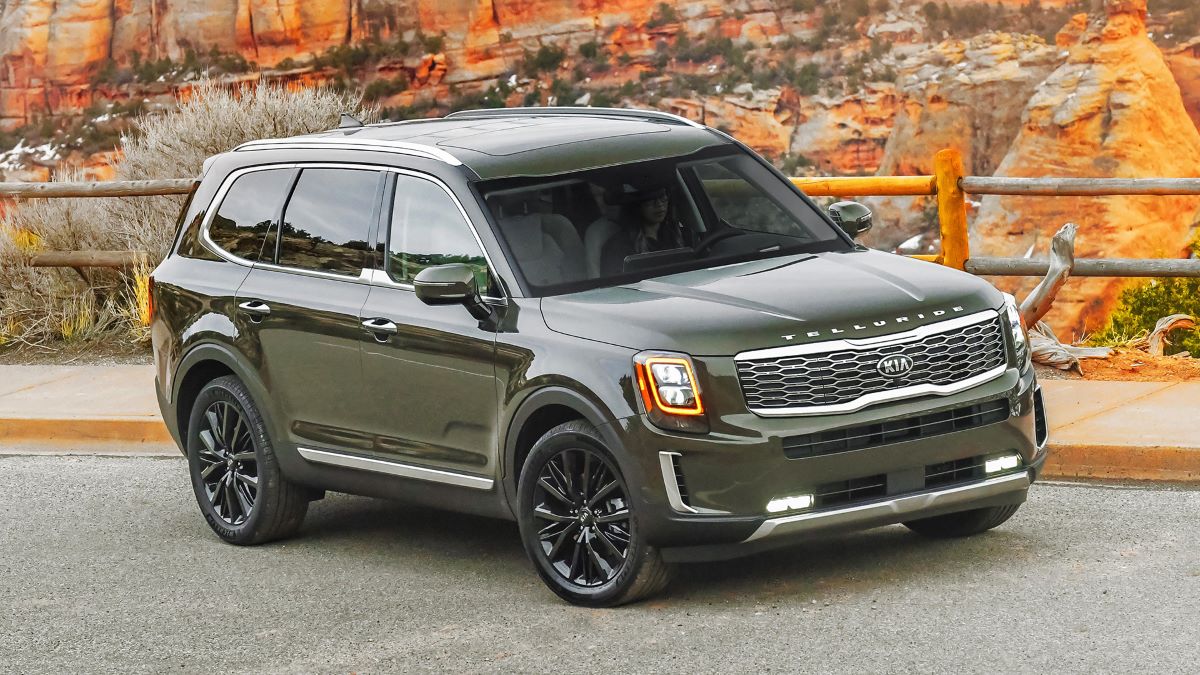
Parents love the wide seats, airy cabin, and long list of standard features. Even base trims come well-equipped, making it easier to stay on budget without sacrificing comfort. It’s proof that practical family vehicles can still have serious curb appeal.
The 2023 Telluride’s 3.8-liter V6 delivers competent performance for routine use, whether handling local errands or covering extended highway distances. Power delivery is smooth and predictable, complemented by an eight-speed automatic transmission that executes gear changes with minimal interruption.
The suspension system is well tuned to absorb road imperfections in both urban and highway settings, contributing to a ride quality that approaches entry-level luxury standards while maintaining mainstream practicality.
Although it is not engineered for aggressive cornering or performance driving, it maintains composure through sweeping bends and brings the vehicle to a halt with reassuring stability.
In terms of off-pavement capability, this Kia aligns with the broader crossover segment, offering limited but serviceable functionality. With 8 inches of ground clearance, expanded to 8.4 inches in X-Pro variants, along with an available all-wheel-drive system and optional all-terrain tires, it can manage seasonal access roads and moderate dirt paths without difficulty.
However, despite its adventure-oriented aesthetic, the Telluride is not equipped with more specialized hardware such as locking differentials, a low-range transfer case, or underbody skid plates. As a result, its capabilities remain oriented toward light-duty excursions rather than sustained or technical off-road travel.
6. Hyundai Palisade
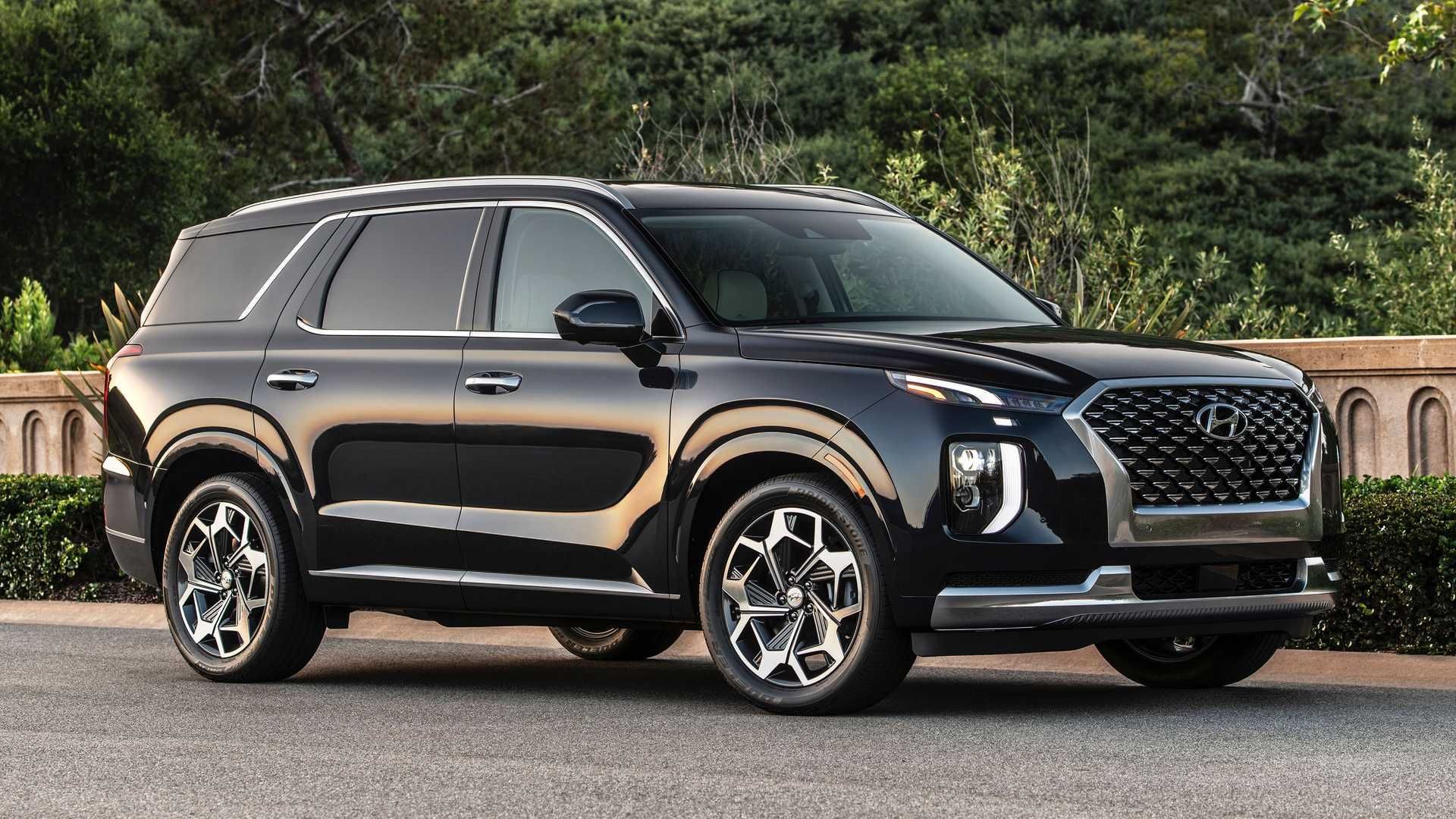
The Hyundai Palisade shares much of its DNA with the Telluride but leans more toward luxury. Soft-touch materials, quilted leather on higher trims, and a calm, quiet ride make it feel closer to a premium SUV.
For parents who spend long hours behind the wheel, the Palisade’s comfortable seating and smooth suspension make daily driving far less tiring. Add in strong warranty coverage, and it becomes a compelling long-term family investment.
While the Palisade does not position itself as a performance leader, it compensates with a balanced and capable overall profile. A 0–60 mph time of 7.6 seconds places it squarely within the segment average for three-row SUVs.
Highway overtaking maneuvers are executed with adequate reserve power, and emergency braking performance is both assertive and consistent. Under normal driving conditions, pedal modulation is straightforward, allowing for controlled and smooth deceleration.
Steering precision and cornering engagement are not standout attributes, yet the Hyundai maintains composure through bends and avoids feeling ungainly. The eight-speed automatic transmission contributes meaningfully to this refinement, delivering smooth and timely gear changes that make the Palisade equally accommodating in urban environments and on extended highway drives.
In day-to-day use, three-row SUVs are not always operating at full passenger capacity, and in those quieter moments, cabin refinement becomes more apparent. The Palisade performs well in this regard. Road and wind intrusion are kept to a minimum, and the climate control system operates efficiently without generating excessive noise.
Seat design is another strength. The front seats strike an effective balance between lateral support during cornering and long-distance comfort, making them broadly appealing to a wide range of occupants.
Available second-row captain’s chairs offer comparable cushioning and support, rivaling the quality of some competitors’ front seats. Even the third row is thoughtfully executed, featuring a contoured seat base that enhances comfort relative to many vehicles in the class.
7. Volvo XC90
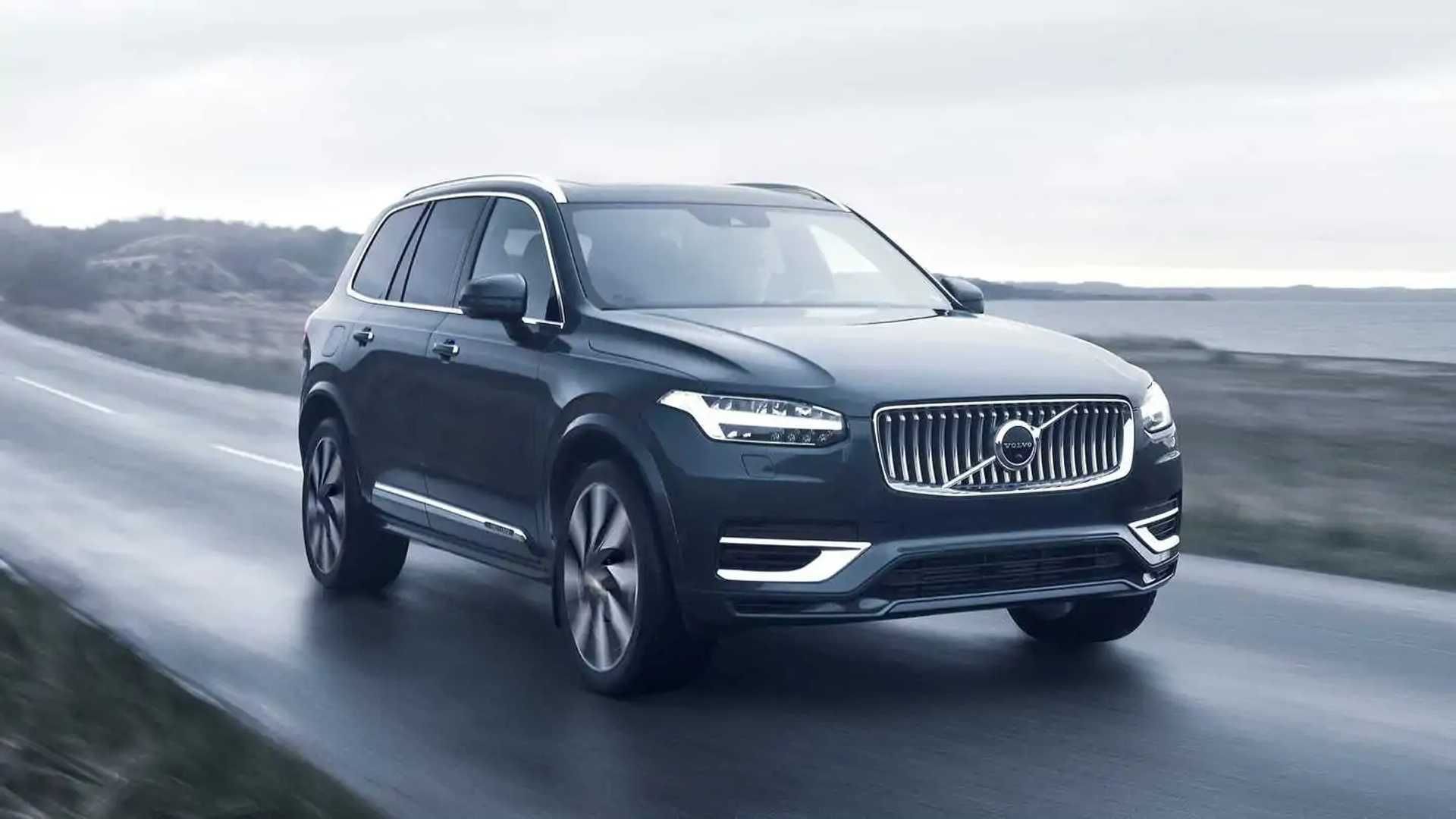
Safety-conscious parents often gravitate toward the Volvo XC90, and for good reason. Volvo’s driver-assistance systems are among the best in the business, and the cabin design is clean, modern, and refreshingly simple.
Plug-in hybrid versions allow short commutes on electric power alone, while still offering gas-engine range for road trips. It’s pricier than most rivals, but for families who prioritize safety and Scandinavian style, the XC90 delivers.
Both the standard B5 and the available B6 powertrains provide adequate strength for everyday commuting and assured freeway overtaking, with the B6 offering a slightly more energetic and responsive character. The XC90’s eight-speed automatic transmission operates with overall smoothness, though it can occasionally pause briefly when executing downshifts.
For a vehicle in this size class, the XC90 remains relatively easy to guide through tight spaces and maintains composed road manners. While some body lean is evident when cornering at higher speeds, it does not significantly detract from stability.
Ride quality depends largely on wheel selection: models equipped with the standard wheels deliver the most compliant and comfortable experience, whereas versions fitted with the optional 21-inch wheels transmit more pronounced impacts over larger road imperfections.
The base B5 configuration pairs a turbocharged 2.0-liter four-cylinder engine with a 48-volt mild-hybrid system producing 247 horsepower and 258 pound-feet of torque, while the B6 variant uses a similar setup tuned to 295 horsepower and 258 pound-feet of torque. All models are equipped with all-wheel drive and an eight-speed automatic transmission.
8. Ford Explorer
The Ford Explorer brings a more athletic feel to the three-row segment. Rear-wheel-drive-based architecture gives it better handling than many competitors, and there’s a wide range of trims, from efficient hybrids to sporty ST models.
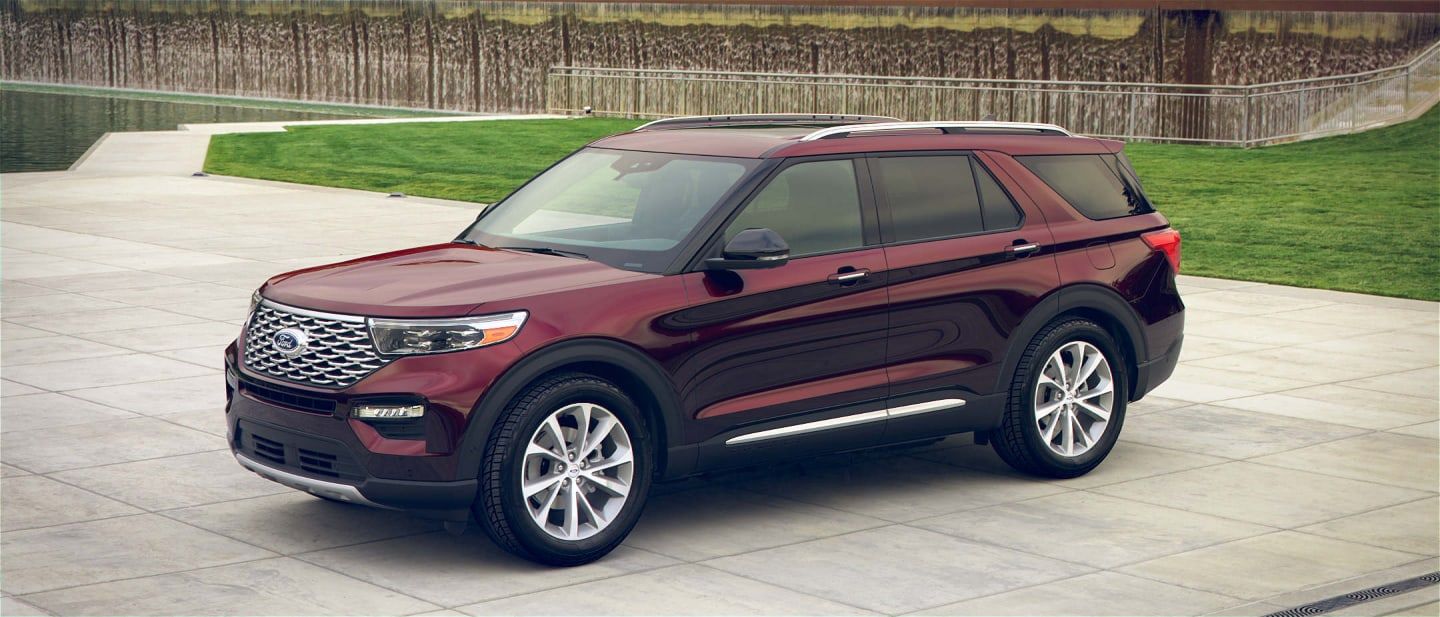
For U.S. families who want something familiar yet versatile, the Explorer remains a strong option. It balances towing capability, interior space, and tech features in a way that fits suburban life especially well.
9. Audi Q7
If you’re willing to go luxury, the Audi Q7 offers a refined driving experience wrapped in a sleek package. Its turbocharged engines provide strong acceleration, while the interior features crisp digital displays and high-quality materials.
The third row is best for kids, but for smaller families who occasionally need extra seating, the Q7 works beautifully. It’s ideal for parents who want their family car to still feel upscale and tech-forward.
A 261-horsepower turbocharged four-cylinder engine paired with a 12-volt hybrid system serves as the standard powertrain and delivers sufficient performance for the vast majority of drivers.
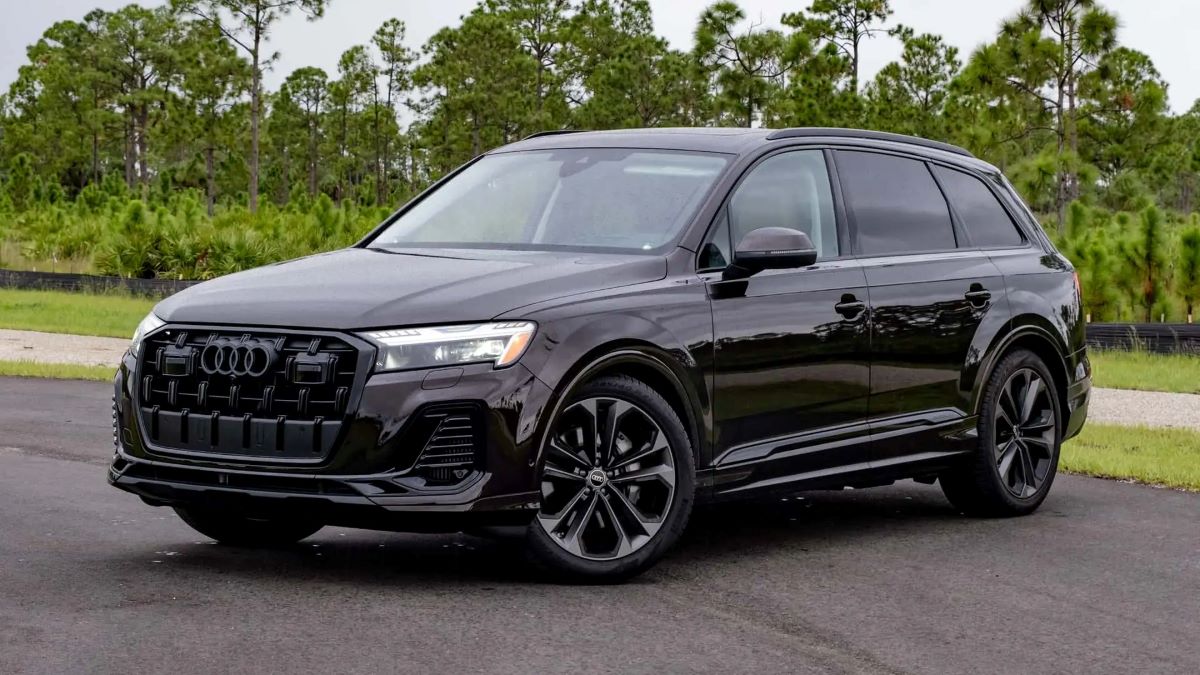
Those prioritizing stronger acceleration will gravitate toward the available turbocharged 3.0-liter V-6, which incorporates a 48-volt hybrid system and produces 335 horsepower. In our evaluation of a 2020 Q7 equipped with the turbocharged V-6, the SUV reached 60 mph in a brisk 5.0 seconds, marginally quicker than the mechanically related two-row Q8 SUV we previously tested.
When outfitted with the optional 21-inch wheels and performance tires, the Q7 defies its size, exhibiting a planted and athletic demeanor more reminiscent of an enlarged sport wagon than a traditional three-row SUV.
The available air suspension system offers adjustable ride settings that enhance both comfort and control, while optional four-wheel steering improves maneuverability and cornering response. The combined effect is an unexpectedly engaging driving experience on winding roads, without compromising overall ride quality, which remains notably smooth.
10. Acura MDX
The MDX is a smart pick for parents who want luxury without losing practicality. It drives more like a sport sedan than a three-row SUV, yet still offers space for kids, backpacks, and groceries.
Acura’s Super Handling AWD adds confidence in bad weather, while the interior balances premium materials with durable surfaces that survive real family use.
Choosing the right family vehicle doesn’t mean surrendering your identity to sliding doors and boxy silhouettes. These cars prove you can have safety, space, and kid-friendly features while still driving something that feels modern and enjoyable.
Earlier generations of the MDX were widely regarded as delivering strong value relative to their price point, an advantage not consistently shared by competitors such as the Audi Q7 or the Mercedes-Benz GLE.
That value-focused positioning continues with the 2022 Acura MDX, which arrives well-equipped even in its entry-level trim. Acura’s advanced all-wheel-drive system remains available, enhancing traction in low-grip conditions such as snow and ice while also improving cornering agility on dry pavement by actively distributing torque.
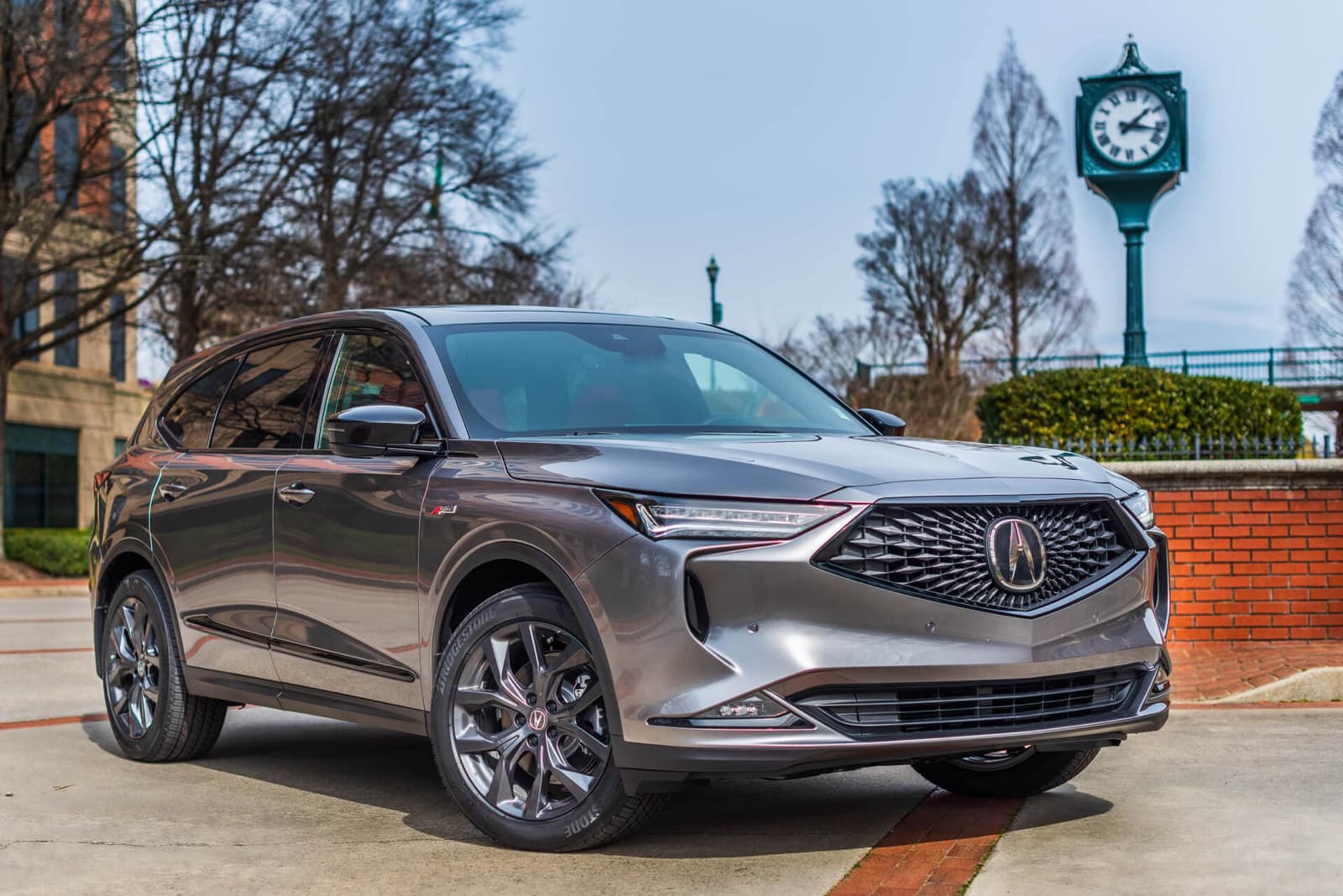
A significant addition for 2022 is the introduction of the MDX Type S. This performance-oriented variant features a turbocharged 3.0-liter V6 producing 355 horsepower, delivering notably stronger acceleration than the standard 290-horsepower engine, which can feel modest for a vehicle of this size.
The Type S also benefits from exclusive hardware upgrades, including a sport-tuned air suspension capable of adjusting ride height and larger, more capable brakes.
Not every revision represents a clear improvement. The prior MDX’s dual-screen infotainment setup drew criticism, and although the new model consolidates functions into a single display, the touchpad-based control interface remains frustrating in practice. Even so, this shortcoming does not overshadow the broader progress made.
Enhancements to ride comfort, cabin space, and exterior design—combined with the introduction of the higher-output Type S, reestablish the 2022 MDX as a competitive option within the luxury SUV segment.
Regarding ownership experience, our long-term evaluation of a 2022 Acura MDX SH-AWD Advance indicates that the redesigned interior provides greater space and improved overall comfort. However, the updated infotainment system continues to generate mixed reactions among drivers, proving nearly as divisive as the outgoing version.
From a dynamic standpoint, steering precision andhandling balance represent the MDX’s strongest attributes. The latest iteration of Acura’s Super Handling All-Wheel Drive system significantly enhances responsiveness and contributes to confident wet-weather traction.
he MDX maintains a compliant ride quality while still demonstrating the ability to navigate curves with composure that belies its size. Steering feel is accurate and natural, supporting both relaxed highway cruising and more deliberate cornering.
The standard V6 engine, while smooth and willing to rev, ultimately lacks the assertiveness expected in this class. In testing, an MDX Advance model recorded a 0–60 mph time of 7.5 seconds, trailing many rival luxury three-row SUVs, including the outgoing MDX generation.
The 10-speed automatic transmission does not consistently deliver the immediacy or refinement anticipated in a premium vehicle. By contrast, the MDX Type S, aided by its turbocharged engine and performance-focused tuning, offers a more energetic and engaging driving character.
Whether you prioritize fuel efficiency, luxury touches, all-weather capability, or simply a comfortable place for your growing family, there’s a minivan-free option that fits your lifestyle.