
Seat height rarely gets the same attention as horsepower or infotainment screens, yet it plays a decisive role in everyday comfort, especially for drivers who deal with knee stiffness, joint sensitivity, or reduced mobility.
In the U.S., where commuting distances are long and many households rely on a single do-everything vehicle, the ability to slide into a seat instead of dropping down or climbing up can make a measurable difference over years of ownership.
Knee-friendly vehicles usually sit in an ergonomic “sweet spot.” Sedans are often too low, forcing deep bends. Full-size SUVs and trucks can be too tall, requiring a climb.
The most comfortable options tend to be compact and midsize crossovers (plus a few thoughtfully designed sedans) that provide a natural hip-to-knee angle, wide door openings, and supportive seat cushions.
Below are eight models that consistently stand out for accessible seat heights and smart ergonomics, vehicles that make daily entry and exit easier while still fitting comfortably into American driving life.
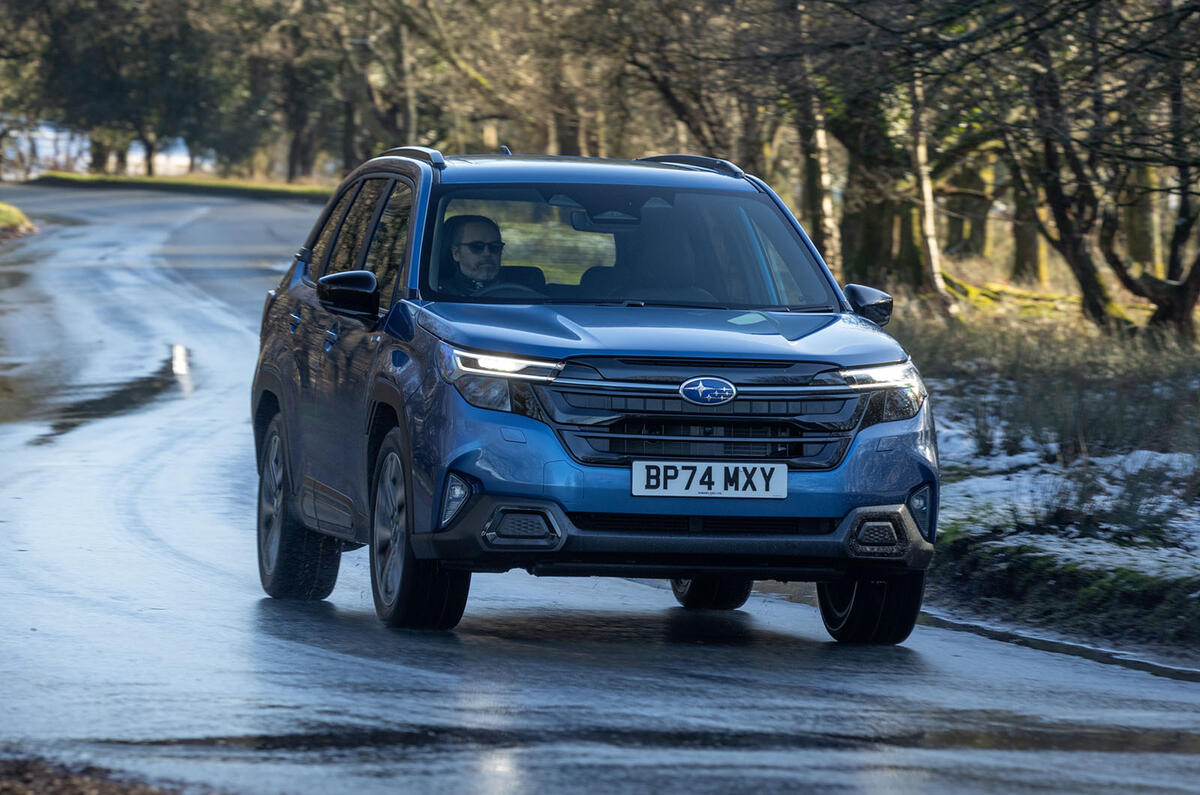
1. Subaru Forester
The Subaru Forester has quietly become one of the most knee-friendly vehicles in the compact SUV segment.
Its seat height lands right in the middle of the ideal range: high enough to avoid squatting, but low enough that most drivers don’t feel like they’re climbing aboard.
What really helps is the Forester’s upright seating position and unusually large door openings. You can pivot in and out rather than twisting your legs.
Subaru also favors firmer seat cushions, which prevent the deep “sink” that makes standing back up harder on the knees. For American buyers who also want year-round usability, standard all-wheel drive adds confidence without compromising accessibility.
Subaru’s compact SUV has traditionally prioritized practicality over excitement. While it has never stood out for speed or driving thrills, its spacious cabin, generous cargo capacity, and excellent outward visibility have consistently defined its appeal.
Wide-opening rear doors simplify child-seat installation, and strong safety ratings provide reassurance for families. These strengths were hallmarks of the outgoing model, and Subaru has ensured they remain integral to the redesigned 2025 Forester.
For 2025, Subaru has attempted to address long-standing criticisms of the Forester’s driving dynamics. The previous generation relied on a 2.5-liter flat-four engine that felt underpowered and strained under acceleration.
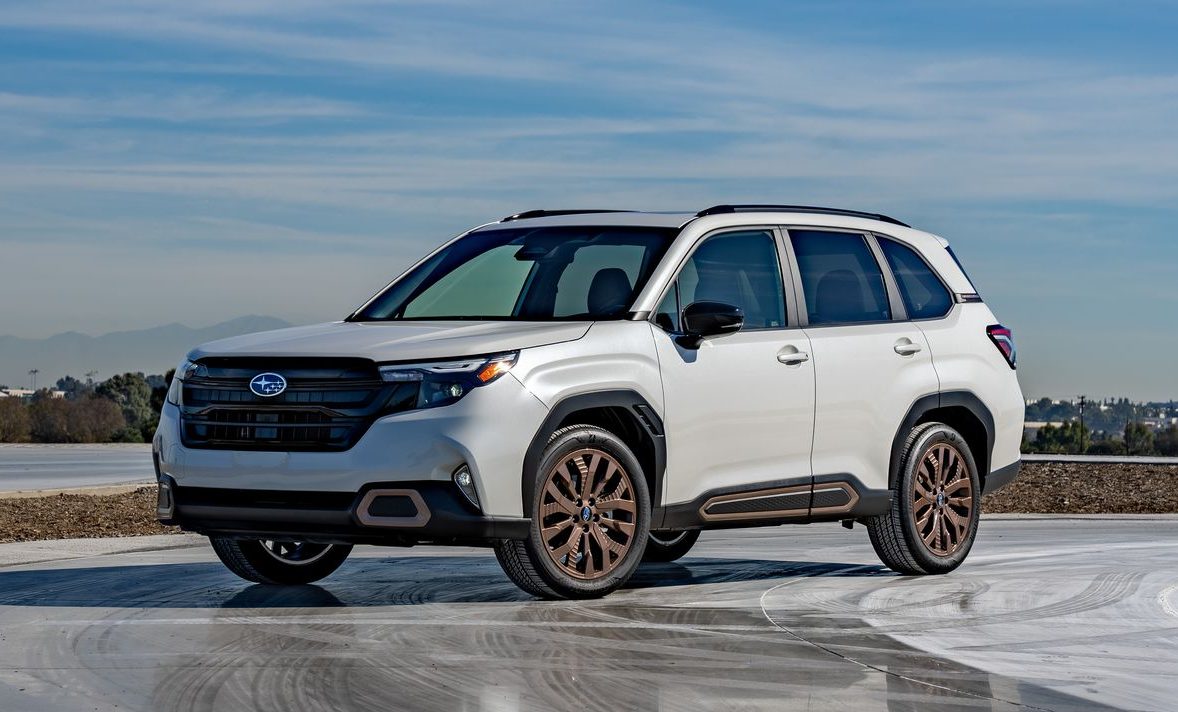
Although the updated version of this engine loses a small amount of horsepower and gains only a modest increase in torque, Subaru states that revisions to the drive mode calibrations and refinements to the standard continuously variable transmission improve responsiveness.
Independent testing suggests the new model is slightly slower than before. A newly introduced hybrid option enhances the powertrain lineup, though a plug-in hybrid variant is not expected in the near future.
Driver engagement has received additional attention. The 2025 Forester benefits from a steering rack sourced from the WRX sport sedan, standard active torque vectoring, and a chassis that is 10 percent stiffer than before. Subaru has also incorporated updated technology, including an available 11.6-inch touchscreen on higher trims.
While handling is likely improved, the in-cabin technology may still fall short compared to rivals that feature more advanced display systems. On the safety front, Subaru has enhanced its EyeSight suite of driver-assistance features, reinforcing the Forester’s appeal to both new and returning customers.
Overall, Subaru appears to have addressed many of the shortcomings associated with the fifth-generation model. The previous Forester was an easy recommendation for buyers prioritizing utility and safety, and the redesigned 2025 version continues that legacy—even if it remains more sensible than engaging.
2. Honda CR-V
The Honda CR-V remains a benchmark for practical ergonomics. Honda engineered the CR-V so that its hip point feels similar to sitting down in a chair at home, an underrated detail that minimizes knee strain.
Wide doors, modest seat bolsters, and a relatively flat floor make getting in and out feel natural.
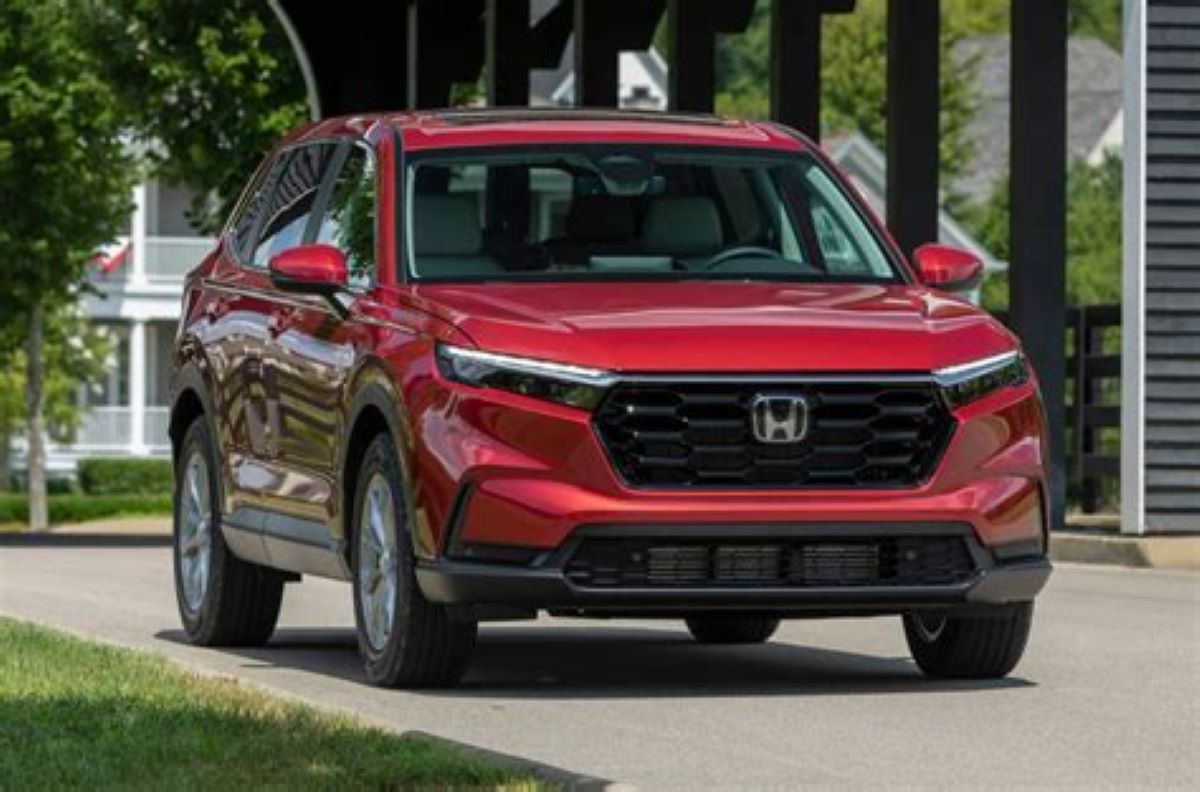
For drivers who make frequent stops, school runs, errands, or ride-share duty, the CR-V’s easy entry adds up to real comfort over time.
It’s also one of the roomiest compact SUVs inside, which means rear-seat passengers benefit from a similarly relaxed knee angle.
3. Hyundai Santa Fe
Moving up to midsize territory, the Hyundai Santa Fe offers a slightly higher seating position without crossing into “too tall” SUV territory. That extra height can be helpful for drivers who prefer a more upright posture but still want easy access.
Hyundai pairs this with broad, well-padded seats that distribute pressure across the thighs, useful for reducing joint fatigue on longer drives.
The Santa Fe also rides softly over rough pavement, an indirect but meaningful benefit for anyone with sensitive knees or hips. For families or empty nesters alike, it blends comfort, space, and accessibility.
We evaluated the Santa Fe XRT, the trim designed with added off-road capability. Equipped with a 277-horsepower engine and all-wheel drive, our test vehicle reached 60 mph from a standstill in 7.2 seconds, a result that aligns with expectations for a three-row SUV in this class.
The transmission delivers quick and seamless shifts, but initial acceleration and passing maneuvers reveal some hesitation and limited responsiveness.
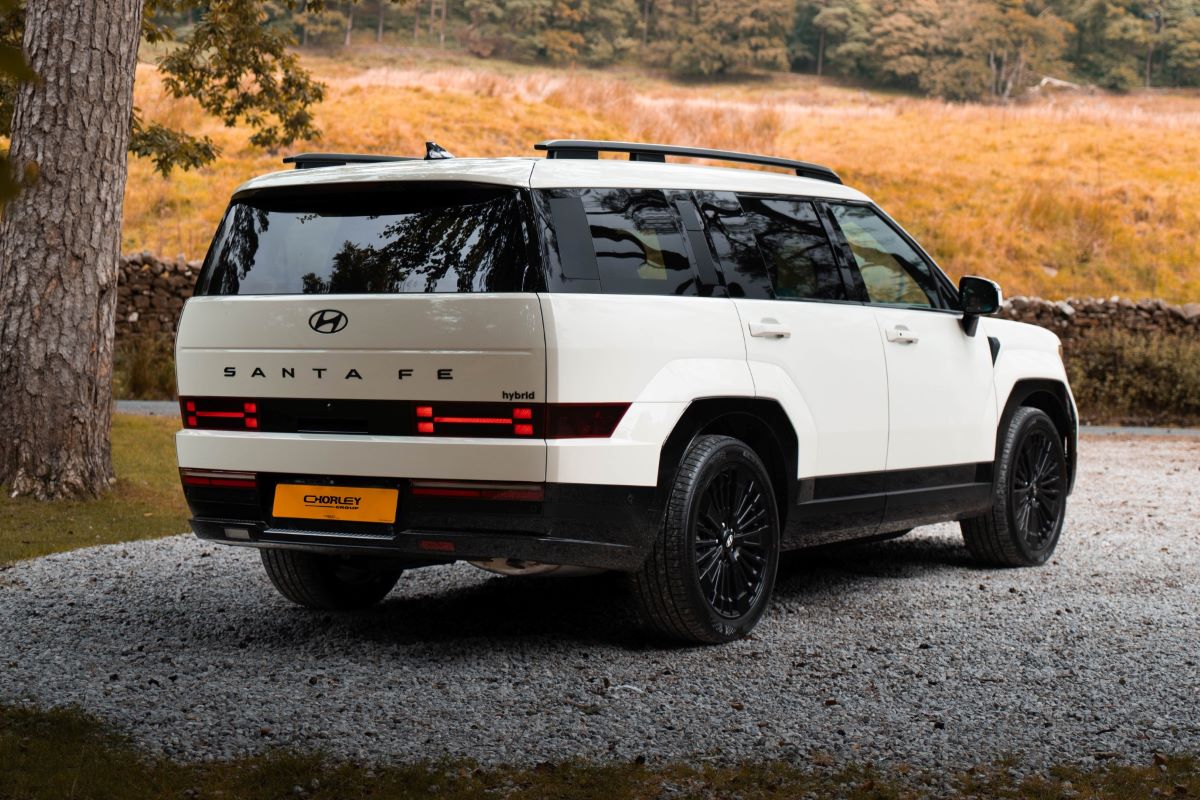
In corners, the Santa Fe remains composed and stable. Braking performance is generally strong, providing smooth and controlled stops. However, the XRT’s all-terrain tires contributed to slightly longer emergency stopping distances compared with typical versions of the SUV.
Visibility is somewhat compromised by thick roof pillars and a relatively small rear window. Hyundai offsets these limitations with available technology such as a surround-view camera system, a digital rearview mirror, and a blind-spot monitoring system that displays a live camera feed of adjacent lanes in the instrument cluster when the turn signal is engaged.
The suite of driver-assistance features performed well in testing. Adaptive cruise control operated smoothly, managing both deceleration and acceleration with refinement while maintaining effective lane-centering capability.
The system can also use navigation data to reduce speed for upcoming curves. Automatic lane changes are available as well, though their execution is deliberate rather than quick.
4. Toyota RAV4
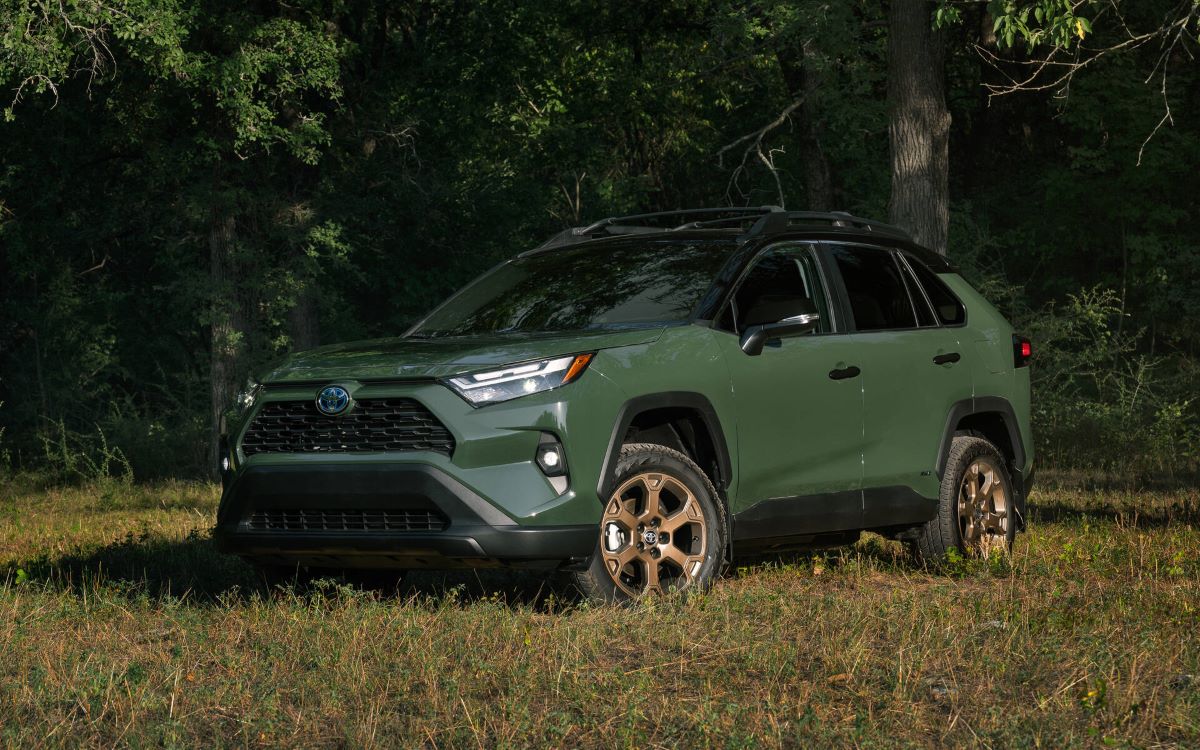
The Toyota RAV4 continues to be one of America’s best-selling vehicles, and its ergonomic design plays a role in that popularity.
Toyota positions the driver’s seat so most adults can exit almost at standing height, reducing the need to push upward forcefully with the knees.
Thin door sills and large openings help eliminate awkward leg movements, while the upright cabin layout prevents knees from crowding the dashboard.
For buyers who value long-term reliability alongside joint-friendly design, the RAV4 remains a safe, sensible choice.
The 2026 Toyota RAV4, long one of the most popular small SUVs on the market, has received a redesign that builds on the strengths of its best-selling predecessor.
The new model adopts a fully hybrid lineup, incorporating updated technology, improved performance, and refreshed styling. However, it is not an entirely clean-sheet redesign, so several of the previous generation’s advantages and shortcomings remain evident.
Although a RAV4 Plug-in Hybrid continues to be offered, this evaluation focuses on the standard hybrid model. Our team spent several weeks driving the RAV4 in typical real-world conditions, including daily commutes, school runs, and weekend travel.
Track testing was also conducted to supplement those impressions. Overall, we identified areas where the new RAV4 has improved, where it has remained largely unchanged, and where it still trails certain competitors in the highly competitive small SUV segment.
Now offered exclusively with hybrid power, it places an emphasis on efficiency without sacrificing adequate performance. Our front-wheel-drive test vehicle accelerated from 0 to 60 mph in 7.5 seconds, a time that compares favorably with many rivals, hybrid or otherwise.
The powertrain operates smoothly and delivers sufficient responsiveness for city driving, though turbocharged competitors offer a more engaging experience. Brake performance is generally smooth and progressive, though emergency stopping tests revealed some inconsistency.
Ride quality falls slightly short of expectations. While the suspension avoids harshness, competitors manage road imperfections with greater refinement. Steering is light and direct, which aids maneuverability in tight spaces, though the vehicle can feel somewhat unsettled during brisk acceleration.
Visibility is a strong point, aided by a relatively low hood and upright seating position. An available surround-view camera system enhances ease of parking but is not essential given the already favorable sightlines.
Toyota equips the RAV4 with a comprehensive suite of driver-assistance features, including adaptive cruise control and lane-keeping assist. Although hands-free driving capability is not offered, the included systems function smoothly and integrate seamlessly into everyday driving without becoming intrusive.
5. Mazda CX-5
Mazda leans toward sporty driving dynamics, but the Mazda CX-5 still delivers solid knee comfort. Its seat height is slightly lower than some rivals, yet high enough to avoid the deep bend associated with sedans.
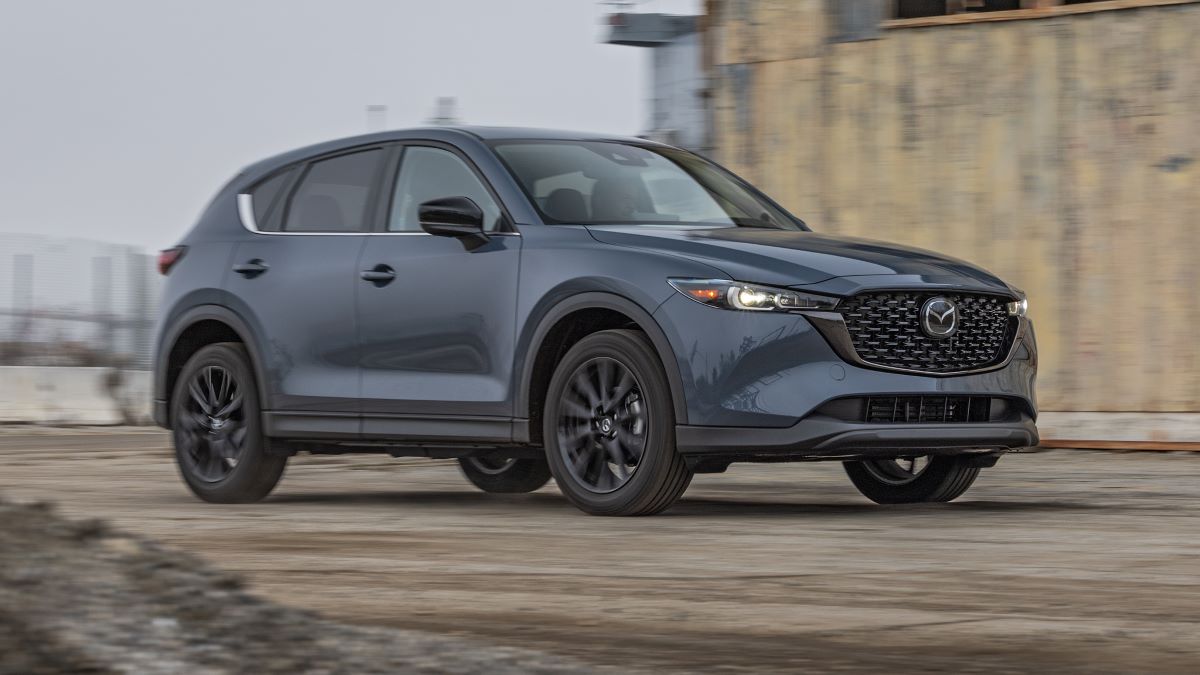
Supportive cushions and excellent steering-wheel adjustment allow drivers to fine-tune their position, keeping knees clear of the lower dash. The CX-5 is especially appealing for buyers who want a more engaging drive without sacrificing everyday ergonomics.
The CX-5’s standard 187-horsepower four-cylinder engine delivers strong throttle response at low speeds, making it feel more energetic in city driving than its output suggests. It pulls away from stoplights with eagerness and feels lively around town.
At higher speeds, however, such as during highway merging or passing maneuvers, the engine reveals its limitations and can feel somewhat strained. The available 256-horsepower turbocharged engine significantly improves acceleration and provides a more confident experience in those situations. Both powertrains are paired with a responsive six-speed automatic transmission and standard all-wheel drive.
The CX-5 does not need to be driven aggressively to showcase its strengths. Its precise steering and balanced cornering make it rewarding on winding roads, yet it also maintains impressive composure over rough pavement. Ride quality rivals that of crossovers in a much higher price bracket.
This balance between comfort and agility distinguishes it within its segment. Road imperfections are well isolated, cabin noise is subdued, and the suspension damping strikes an effective middle ground, neither overly firm nor overly soft.
On curving roads, the Mazda feels engaged and responsive. The electrically assisted steering offers consistent feedback, and in the Signature model we tested, the brake pedal provided reassuring feel with immediate yet controlled response, avoiding excessive sensitivity.
6. Toyota Camry
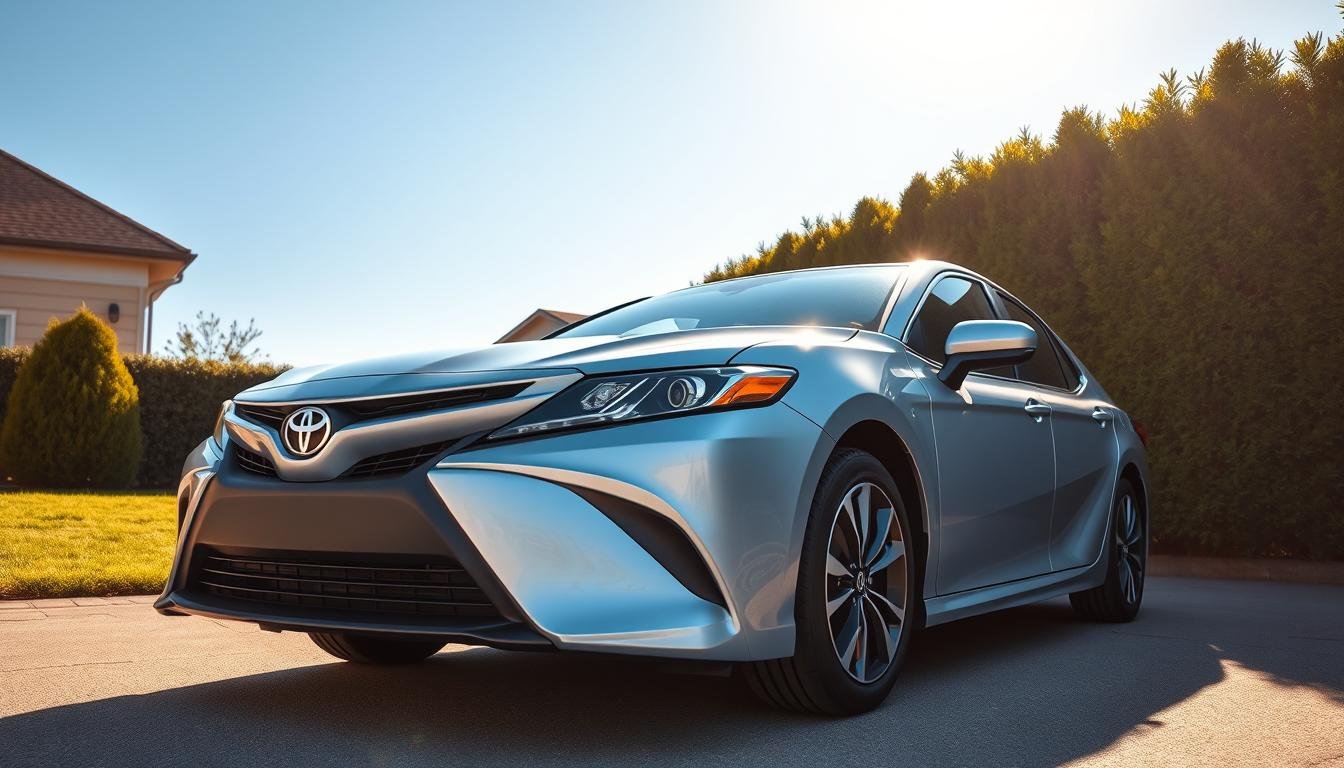
Not everyone wants an SUV, and among traditional sedans, the Toyota Camry stands out for relatively easy access. While lower than crossovers, its seat height is more forgiving than many sport-oriented competitors.
Toyota prioritizes gentle seat bolsters and wide door openings, allowing smoother entry and exit.
For drivers who prefer the fuel efficiency and handling of a sedan, but still want something kinder to their knees, the Camry remains one of the better options in the midsize category.
The standard four-cylinder engine is matched to a smooth-shifting eight-speed automatic transmission, but overall acceleration is underwhelming. A detuned version of this engine, paired with a battery and two electric motors, powers the Camry Hybrid. While this setup improves efficiency, it does little to enhance driving excitement compared with the base gasoline model.
The standout option in the lineup is the refined 301-horsepower V-6, available in the XLE, XSE, and TRD trims. This engine delivers strong, effortless performance and significantly elevates the Camry’s character.
Driving dynamics have improved to the point that the Camry is genuinely enjoyable behind the wheel. The ride remains composed, and handling is more responsive than expected for a midsize sedan in this class.
Steering effort is well calibrated, offering a reassuring weight in corners while remaining light and easy during low-speed maneuvers such as parking. Brake feel is generally firm and predictable, including in the hybrid model, where the system must blend traditional friction braking with regenerative braking to recharge the battery.
7. Kia Sportage
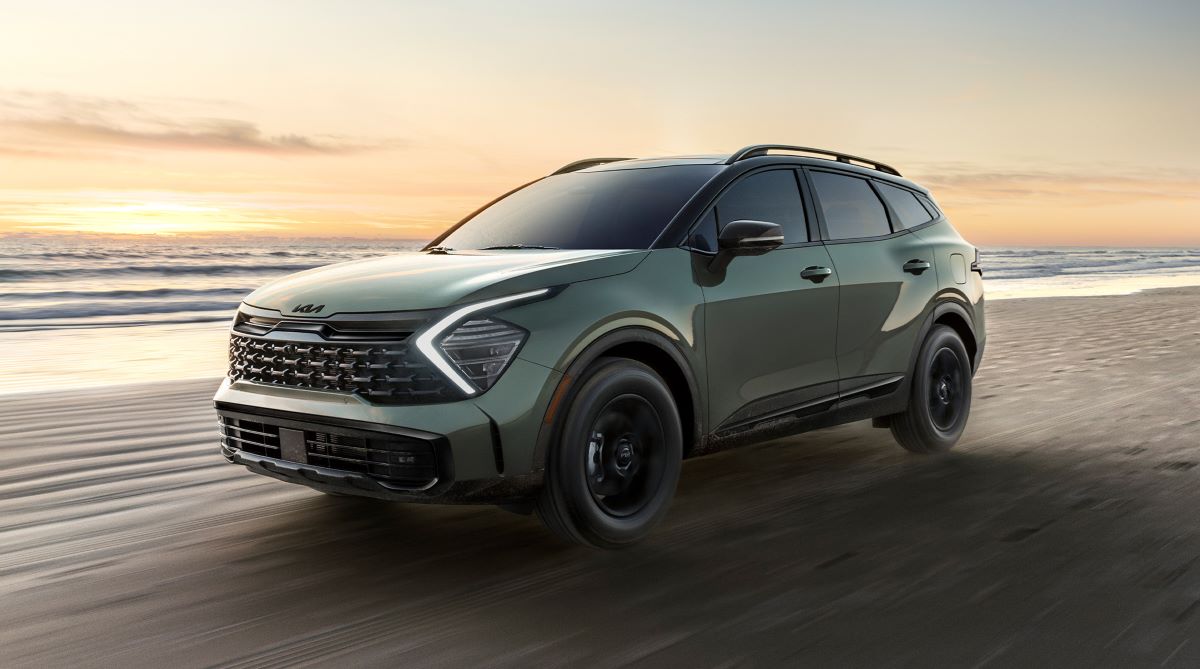
The latest generation Kia Sportage improved both ride comfort and cabin accessibility. Its seat height closely matches that of the CR-V and RAV4, but Kia adds slightly softer cushioning, which can be helpful for drivers who need better pressure distribution across their legs.
The step-in height feels natural, and rear passengers benefit from a relaxed knee angle as well, an important detail for households that regularly carry older family members.
In everyday driving, the Sportage does not stand out. The X-Pro trim we evaluated, equipped with all-terrain tires, softens on-road handling further, but the more significant drawback is its modest power output.
Our test vehicle required more than 9.5 seconds to accelerate from 0 to 60 mph, a notably slow result that trails class leaders by a considerable margin. As a result, passing maneuvers require advance planning. No alternative gasoline engines are offered unless buyers step up to the Sportage Hybrid, which is the more compelling choice.
Beyond its performance limitations, the Sportage delivers competent dynamics. Steering response is light and accurate, and braking performance is smooth and confidence-inspiring.
The suspension is tuned for comfort, effectively absorbing rough pavement and road imperfections. However, the soft setup can lead to noticeable vertical motion over undulating surfaces. Large windows provide strong outward visibility, and higher Prestige trims enhance this advantage with an available surround-view camera system.
The Sportage is also well equipped with driver-assistance technology. Available features include adaptive cruise control, blind-spot monitoring, a surround-view camera, and parking assist systems. In real-world use, these systems operate effectively and integrate smoothly into daily driving.
8. Ford Escape
Rounding out the list, the Ford Escape offers one of the easiest entry experiences in its class. Ford carefully positions the seats to encourage a simple pivot motion rather than a climb or drop.
The cabin’s generous width also reduces twisting during entry and exit, an often-overlooked contributor to knee and hip strain.
For American commuters who get in and out of their vehicle multiple times a day, these small ergonomic choices can have a meaningful cumulative impact.
While published seat-height numbers help, real-world comfort depends on several interacting factors. Ideally, your hips should sit slightly higher than your knees, which reduces pressure on the joint.
The updated, more rugged exterior styling injects fresh appeal into the three-year-old platform, and because the plug-in hybrid is offered exclusively in a fully loaded trim, it benefits from the largest displays and the latest features.
However, expansive digital screens cannot fully disguise the use of low-rent interior plastics. We have also found the seats to lack sufficient contouring and support. Taken together, these shortcomings may leave some buyers questioning the value proposition of spending roughly $40,000 on a 2024 Escape Plug-in Hybrid.
From a mechanical standpoint, the Escape PHEV delivers a balanced chassis and a comfortable ride. Passenger space is generous, and efficiency remains a key strength.
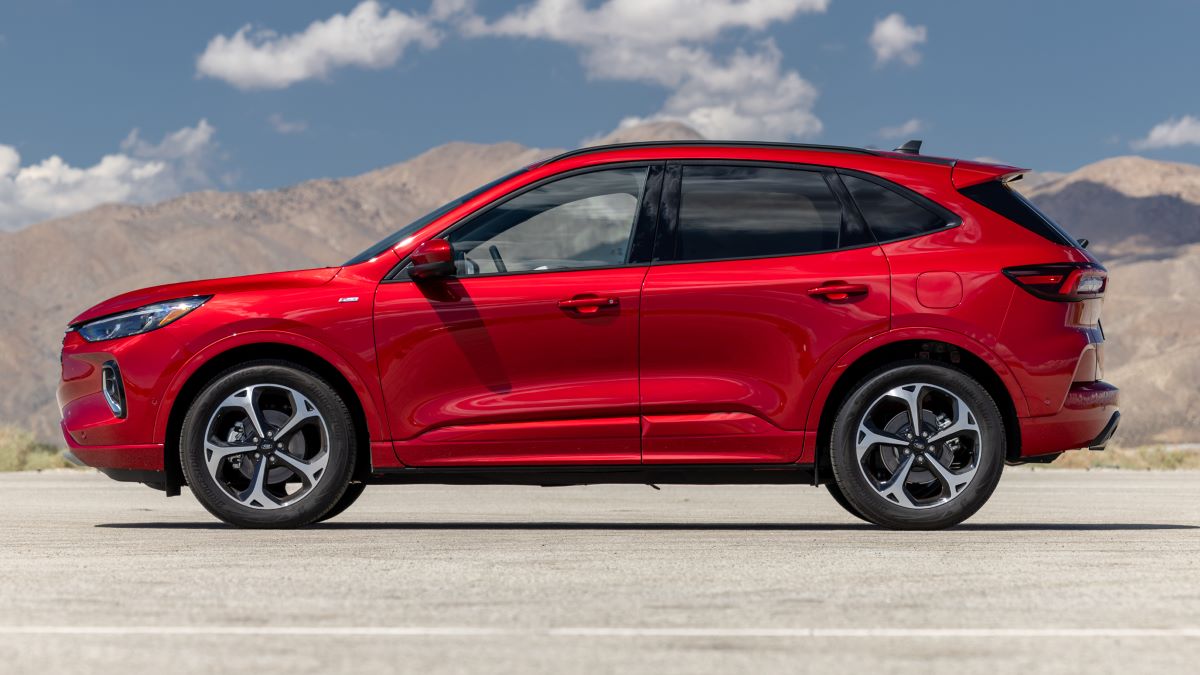
Performance, however, falls short of more powerful competitors such as the Toyota RAV4 Prime. The powertrain feels modest, traction from the tires can be easily overwhelmed, and the brake pedal provides limited feedback. Additionally, the absence of an all-wheel-drive option diminishes its appeal and contributed to its failure to advance to the finalist round in SUV of the Year evaluations.
The Escape PHEV performs best in its role as a semi-electric commuter. Its 37 miles of all-electric driving range ranks near the top of the segment, though the transition between electric and gasoline propulsion can feel unnecessarily complex.
As an accessible entry point into electrified ownership from a domestic brand, it has merit, but alternatives such as the RAV4 and Hyundai Tucson remain more compelling overall.
Power comes from a 2.5-liter naturally aspirated inline-four engine paired with an electric motor. Unlike some plug-in hybrid competitors, the Escape PHEV is available only with front-wheel drive; all-wheel drive is not offered. Combined system output totals 200 horsepower, enabling a 0–60 mph time of approximately 7.7 seconds, which is adequate for the class.
Although EPA figures for the 2024 model are pending, the mechanically similar 2023 version achieved 101 MPGe combined when operating on both electricity and gasoline, and 40 mpg combined when running solely on gasoline. The electric-only range was rated at 37 miles, with a total driving range of approximately 520 miles.
Charging capability is typical for a plug-in hybrid. A 240-volt Level 2 outlet can replenish the battery in roughly 3.5 hours, while a standard 110-volt household outlet requires approximately 10 to 11 hours. Fast-charging capability is not available. Prospective owners without reliable access to charging infrastructure may be better served by the conventional Escape Hybrid.
Firm but supportive cushions prevent excessive sinking. Wide doors and low sills minimize awkward leg angles. During a test drive, practice entering and exiting multiple times, don’t just focus on how the car feels once you’re already seated.
As SUVs continue to dominate the U.S. market, many manufacturers now design vehicles around this mid-height, chair-like seating position. The eight models above represent some of the smartest choices for drivers who prioritize joint comfort.
They combine practical ride heights, thoughtful cabin layouts, and supportive seating, subtle engineering decisions that can significantly reduce strain and improve daily quality of life over years of ownership.
