
The used performance sedan market in 2026 is something of a sweet spot. Five to eight years ago, automakers were aggressively chasing horsepower wars while still keeping real buttons, engaging steering, and relatively compact footprints.
Today, many of those same cars are landing on the secondhand market at prices that feel almost surreal compared to what they delivered new.
For buyers who want real speed without moving into a coupe or SUV, a used performance sedan remains one of the smartest plays.
You get four doors, usable rear seats, and a proper trunk, plus acceleration that can embarrass modern crossovers and even some new sports cars. Better yet, depreciation has already done much of the heavy lifting.
Below are 12 used performance sedans that still feel genuinely fast in 2026, combining strong powertrains, solid chassis tuning, and everyday livability. These are cars that don’t just look sporty, they still deliver when you put your foot down.
1. BMW M3 (F80, 2015–2018)
The F80-generation M3 marked BMW’s shift to turbocharging, and it paid off. With a twin-turbo inline-six producing 425 hp (444 hp in Competition trim), this sedan still feels explosive by modern standards.
Sub-4-second 0–60 times were common, and the chassis remains one of the most communicative in the segment.
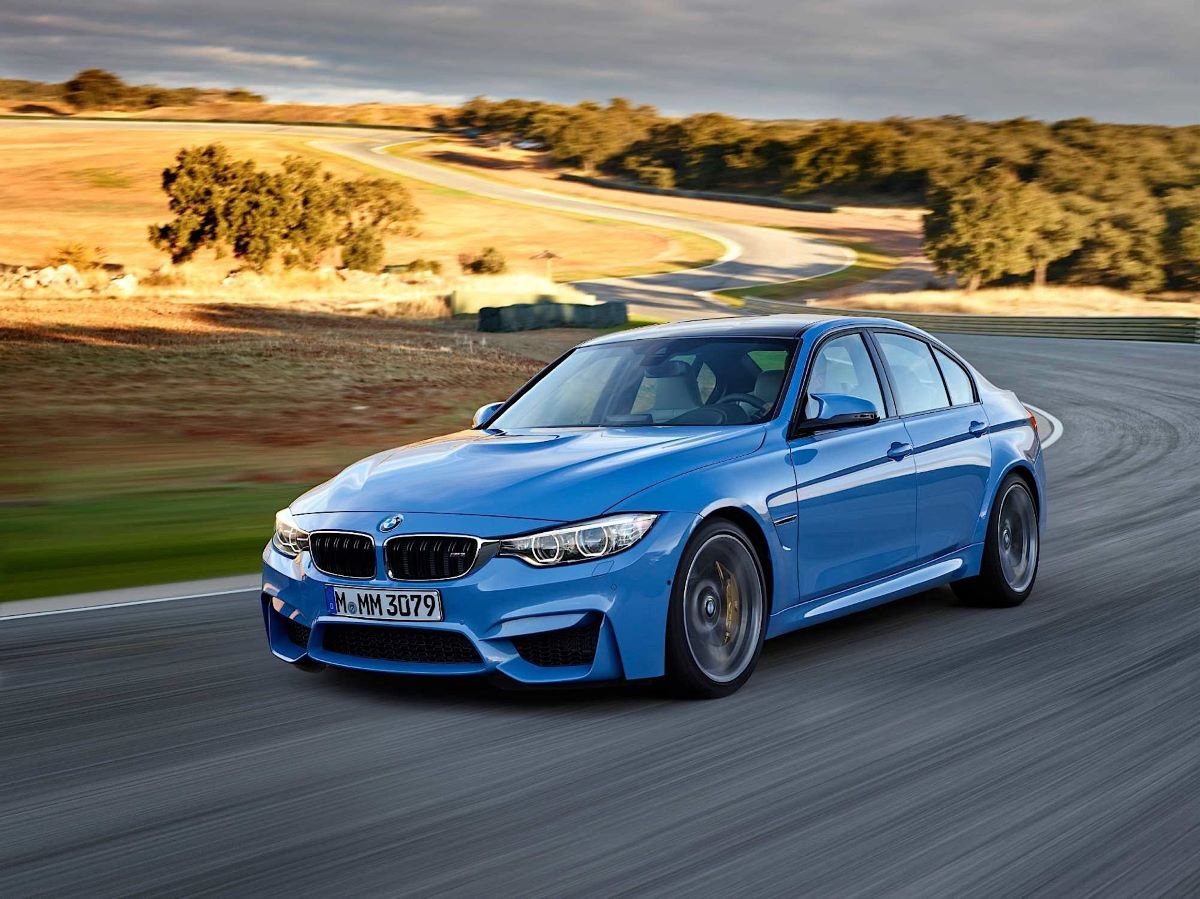
On today’s used market, clean examples are far more accessible than they once were, making this one of the most engaging driver’s sedans you can buy for the money. Just budget for premium maintenance, this is still a true M car.
For 2018, the BMW M3 receives standard LED headlights along with an updated iDrive multimedia interface. BMW also introduces a new CS variant featuring a more aggressive suspension calibration and increased output, though availability is limited to 550 units for the U.S. market. The two-door counterpart to the M3 is marketed as the M4.
The 2018 BMW M3 is offered in a single, well-equipped trim level. Standard equipment includes an adaptive suspension system, the active M differential, 18-inch alloy wheels, and 14-way power-adjustable heated M sport front seats.
Additional features include a 16-speaker Harman Kardon audio system, BMW’s iDrive infotainment system with an 8.8-inch display, integrated navigation, a rearview camera, and keyless entry with push-button start.
The M3 CS adds performance-oriented enhancements including a specially tuned adaptive suspension and recalibrated active M differential. It also incorporates visual upgrades such as a carbon fiber-reinforced plastic front splitter and rear diffuser.
Power for the 2018 BMW M3 comes from a 3.0-liter twin-turbocharged inline-six engine producing 425 horsepower and 406 lb-ft of torque. Opting for the Competition package raises output to 444 horsepower.
A six-speed manual transmission is standard, while a seven-speed dual-clutch automatic is available as an option. The M3 CS represents the most potent version in the lineup, delivering 453 horsepower and 443 lb-ft of torque. EPA fuel economy ratings are 17 mpg city and 25 mpg highway with the manual transmission, and 17 mpg city and 24 mpg highway with the automatic.
2. Audi S4 (B9, 2018–2020)
The B9 S4 quietly delivers big performance. Its turbocharged V6 makes 349 hp, but it’s the all-wheel-drive traction that makes this sedan feel deceptively quick in real-world driving. Launch it from a stoplight and it simply goes, no drama, no wheelspin.
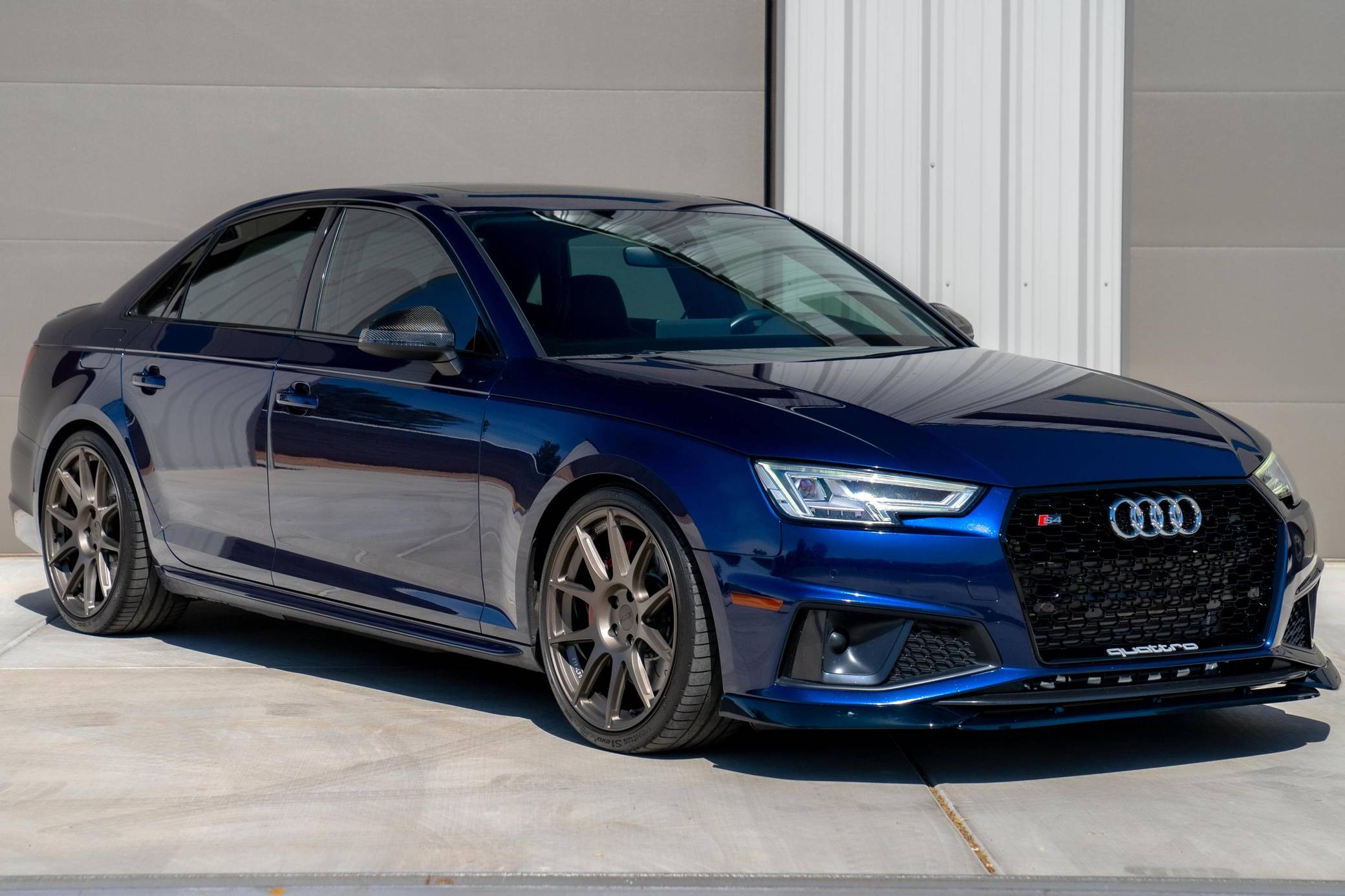
For U.S. buyers dealing with mixed weather or rough roads, the S4’s blend of speed and stability makes it a particularly compelling daily driver. It’s refined, quick, and far easier to live with year-round than many rear-wheel-drive rivals.
Every S4 is equipped with a 349-horsepower turbocharged 3.0-liter V-6 paired to an eight-speed automatic transmission and Quattro all-wheel drive. The example we evaluated proved quicker than most of its competitors.
However, two elements central to the character of a sports sedan, engine responsiveness and exhaust note, were less engaging than anticipated. Although the powertrain’s personality is somewhat restrained and no manual transmission is offered, the V-6 provides strong acceleration when called upon, transitioning smoothly from relaxed cruising to assertive performance.
The eight-speed automatic transmission is another highlight. Its shift logic is highly intuitive, responding so effectively to driver inputs that the inclination to take manual control via paddles was largely diminished, though not entirely absent.
The chassis stands out as the vehicle’s defining attribute. Body movements are tightly managed, and the suspension damping strikes a well-judged balance between sportiness and ride comfort, allowing the S4 to function equally well as a performance machine and a refined daily driver.
Steering accuracy, strong lateral stability, and substantial grip contribute to a high level of driver confidence, encouraging brisk acceleration through on-ramps while maintaining composure in everyday urban driving.
Braking performance is powerful and immediate, though modulation can be inconsistent. At lower speeds, the brakes feel overly sensitive, and the pedal feedback varies. On more demanding, winding roads, the pedal can feel somewhat soft, detracting slightly from the otherwise cohesive driving experience.
3. Mercedes-AMG C43 (2017–2020)
Sitting below the full C63, the C43 AMG still brings serious punch. Its twin-turbo V6 puts out up to 385 hp, paired with a sharp-shifting automatic and all-wheel drive.
The result is a sedan that feels brutally quick in everyday traffic while maintaining Mercedes’ upscale interior quality.
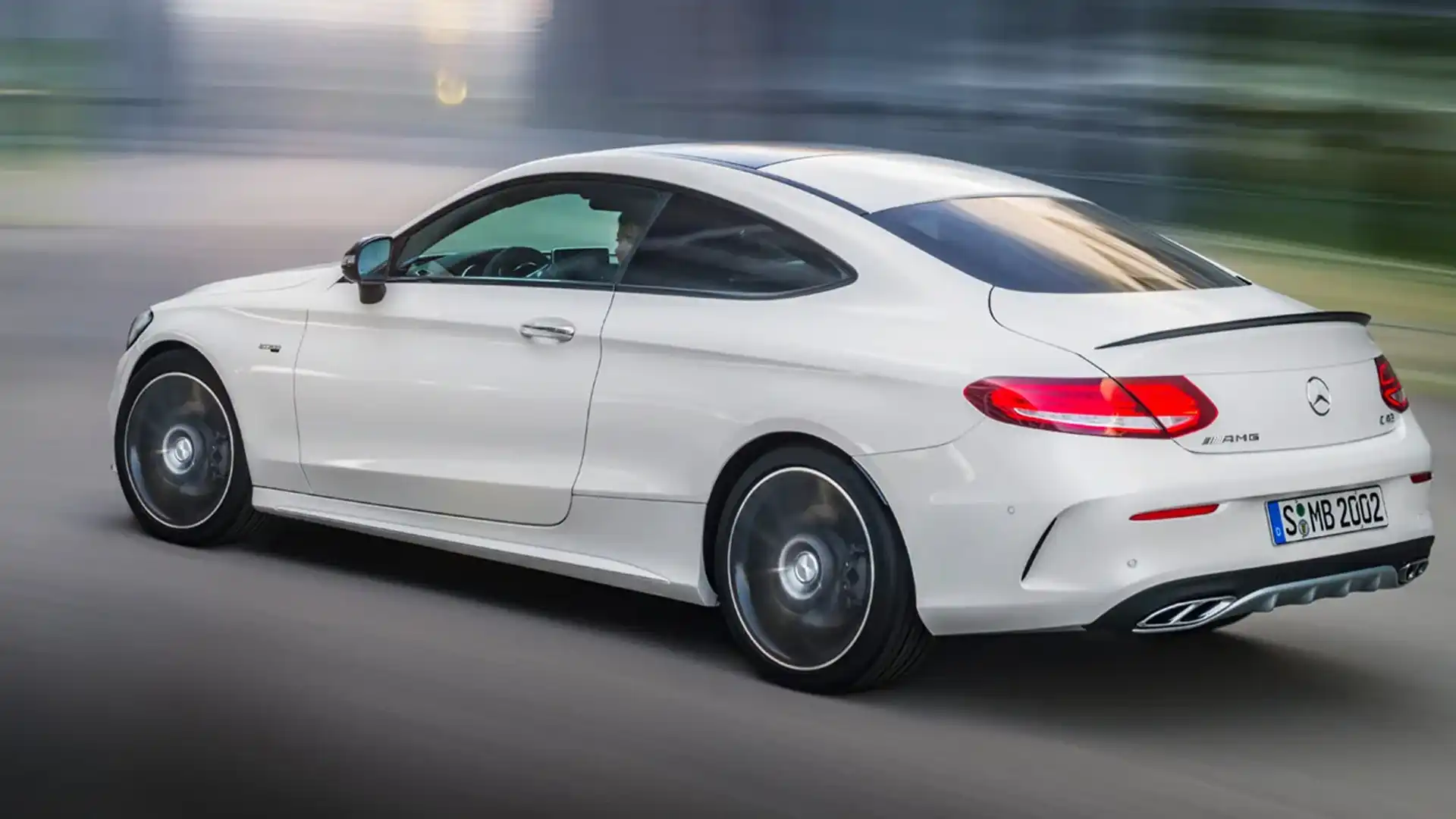
It doesn’t have the raw edge of a V8 AMG, but it’s faster than most drivers will ever need, and much easier to afford on the used market.
Inherited from the 2016 C450 sedan, the C43’s twin-turbocharged 3.0-liter V-6 remains a standout component. Delivering 385 horsepower, the engine is both strong and abundant in torque, and it works in concert with a nine-speed automatic transmission that executes shifts with notable speed and accuracy.
Although output increased from 362 to 385 horsepower, the 2019 C43 sedan recorded the same 4.1-second 0-to-60-mph time at our test facility as the 2017 version previously evaluated. Mercedes-AMG includes steering-wheel-mounted paddle shifters, but the nine-speed automatic proved sufficiently responsive and well-calibrated when left in automatic mode.
Consistent with its AMG designation, the C43 demonstrates strong dynamic capability on winding roads. Its steering is quick, direct, and precise, contributing to confident turn-in. The rear-biased all-wheel-drive system permits a measure of chassis rotation before channeling additional torque to the front wheels, enhancing balance and driver engagement.
4. Alfa Romeo Giulia Quadrifoglio (2017–2019)
If steering feel matters to you, few sedans here can touch the Giulia Quadrifoglio. Its Ferrari-derived twin-turbo V6 makes 505 hp, launching this compact four-door to 60 mph in roughly 3.8 seconds.
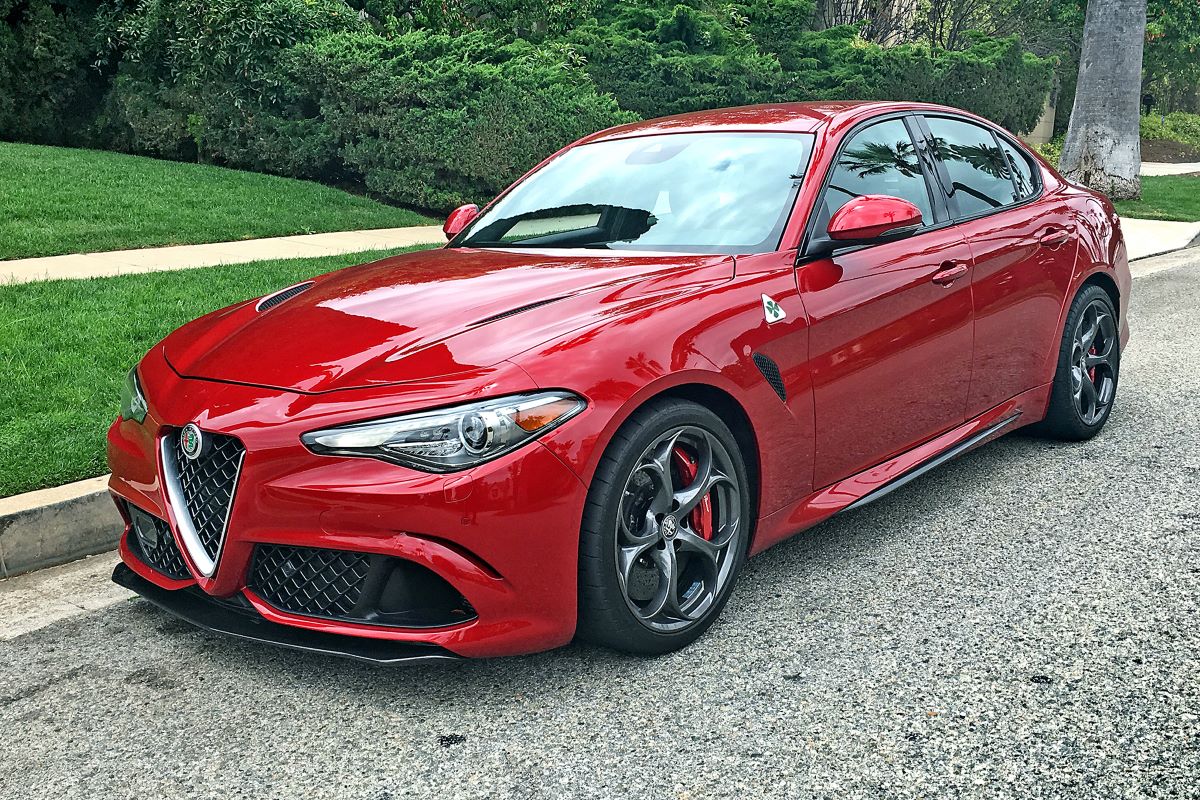
The car feels alive in corners, with razor-sharp turn-in and a playful rear end. Reliability concerns scared many buyers away when new, which now works in your favor: prices have dropped dramatically, making this one of the most thrilling bargains in performance sedans.
When I initially drove the car at Sonoma Raceway a year earlier, heavy rain prevented any meaningful assessment of the QV’s handling limits or cornering capabilities. Under those conditions, it was impossible to explore the chassis properly.
On this occasion, however, the mountain roads near Malibu were completely dry, allowing the QV to demonstrate the performance I had anticipated. Even in Dynamic mode, the second-most aggressive setting within the Pro Drive Mode selector, the rear of the car can be coaxed into rotation, a testament to the chassis balance and the engine’s substantial output.
Engaging Race mode, which disables stability control systems, transforms the QV into a far more demanding machine when driven at the limit. That configuration is best reserved for track use, as combining oversteer and public roads is ill-advised.
The test vehicle was equipped with optional carbon-ceramic Brembo brakes, priced at $5,500. As previously noted at Sonoma, pedal response is sensitive and requires careful modulation to avoid abrupt front-end dive.
Braking performance is exceptionally strong. After repeated hard runs on Southern California’s winding roads, the braking system exhibited no signs of fade or reduced effectiveness. The Giulia QV’s stopping capability rivals that of a Porsche, an impressive achievement considering its curb weight approaches two tons.
High-performance brakes are essential in a sedan of this caliber because the QV accelerates with remarkable urgency. The twin-turbocharged 2.9-liter V-6, derived from Ferrari engineering and conceptually related to the 488GTB’s V-8 with two cylinders removed, delivers extraordinary specific output of 174 horsepower per liter.
The compact six-cylinder engine performs well beyond what its displacement might suggest. Alfa Romeo claims a 0-to-60-mph time of 3.8 seconds, a figure that aligns with the car’s evident performance capability.
5. Cadillac CTS-V (2016–2019)
This is American muscle in a tailored suit. The CTS-V packs a supercharged 6.2-liter V8 producing 640 hp, more than many exotic cars. Straight-line speed is outrageous, and highway passing power feels endless.
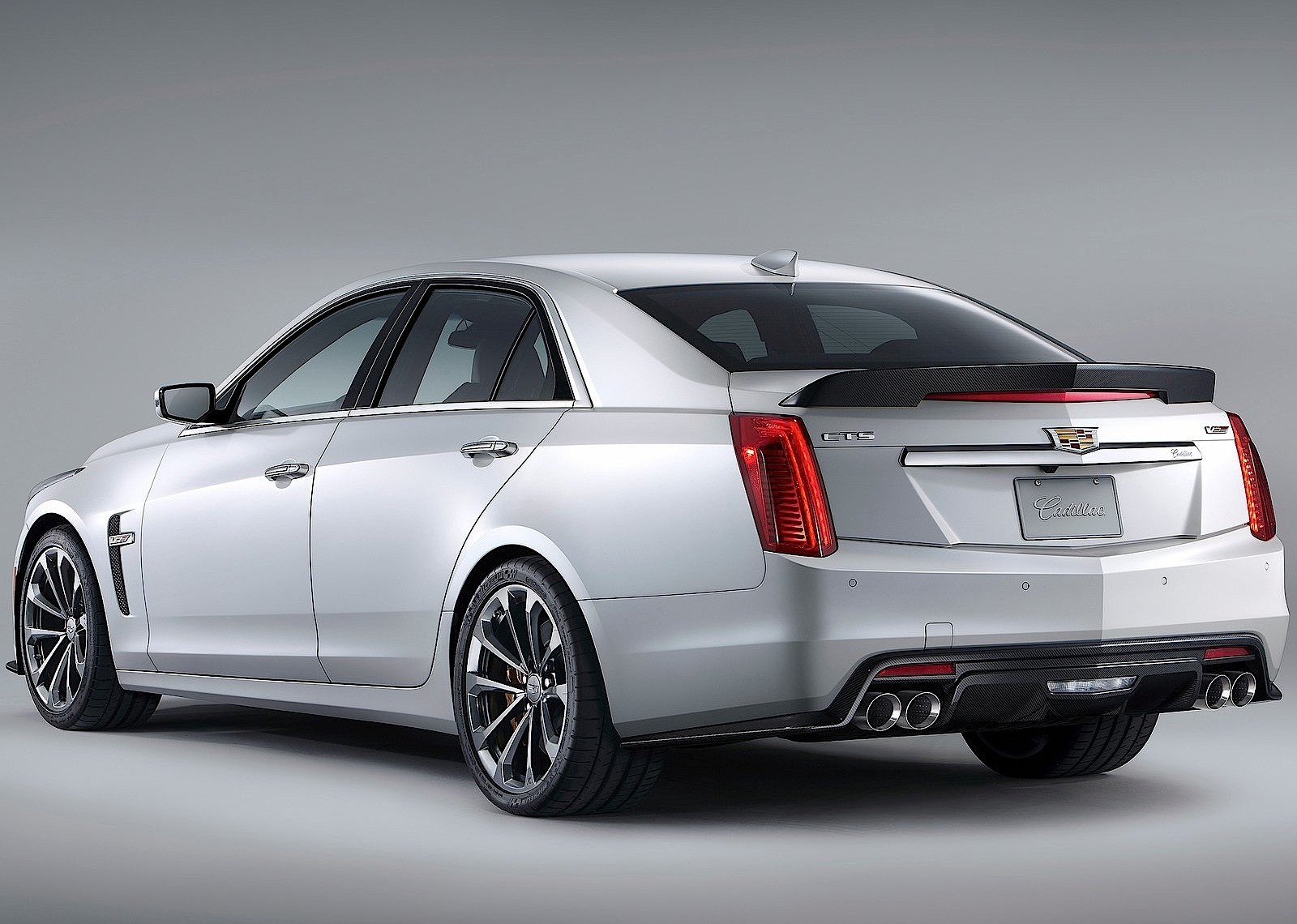
Despite its size, the CTS-V handles surprisingly well thanks to magnetic ride suspension and massive brakes. If you want supercar acceleration with four doors and a usable trunk, this remains one of the wildest used sedans you can buy.
The 2018 Cadillac CTS-V 4-door sedan is offered in V-Series CTS-V trim with a starting MSRP of $88,490. Classified as a mid-size vehicle by the EPA, it features a rear-wheel-drive layout and is powered by Cadillac’s LT4 supercharged 6.2-liter (376 cubic-inch) V8 engine.
This direct-injection gasoline powerplant produces 640 horsepower at 6,400 rpm and 630 lb-ft of torque at 3,600 rpm. The engine’s cooling system capacity is 11.9 quarts, underscoring its high-performance design.
Power is routed through an eight-speed automatic transmission with manual shift capability, identified by transmission order code M5U.
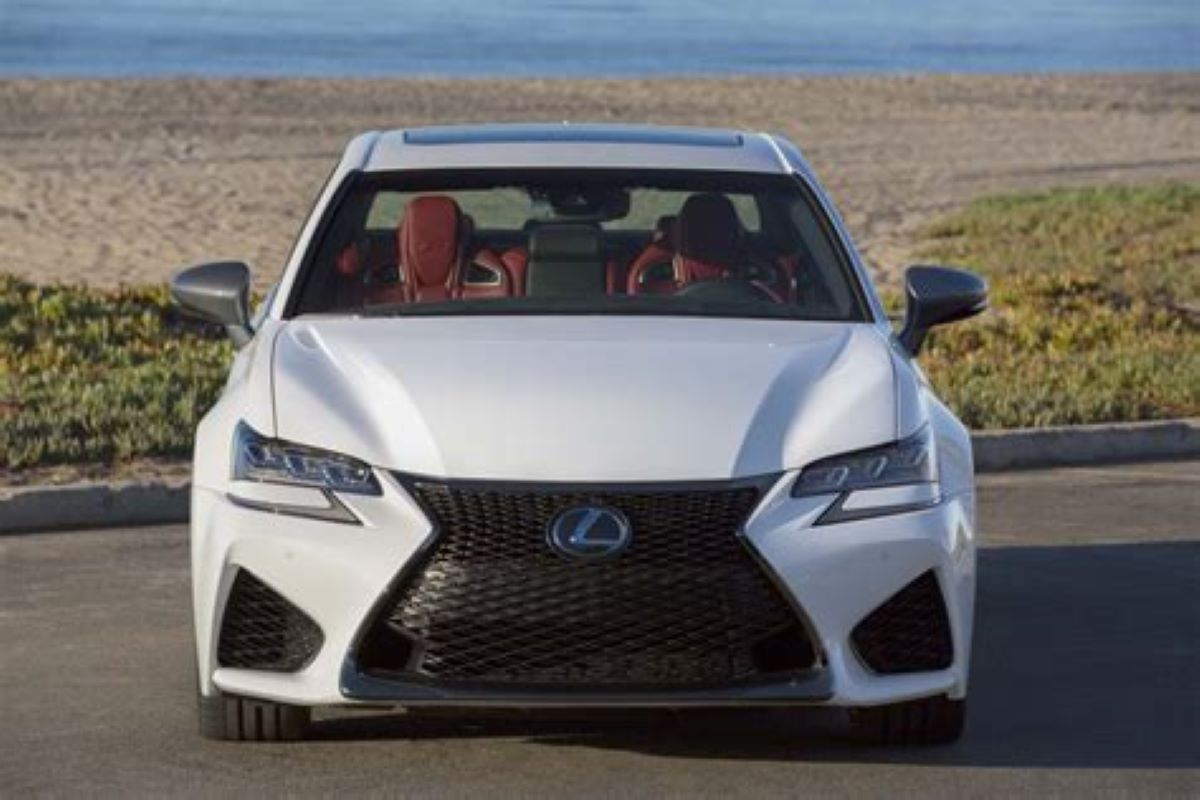
6. Lexus GS F (2016–2020)
The GS F took a different approach: naturally aspirated V8 power in an era dominated by turbos. Its 5.0-liter engine makes 467 hp and delivers linear, old-school acceleration with a soundtrack many newer cars simply can’t match.
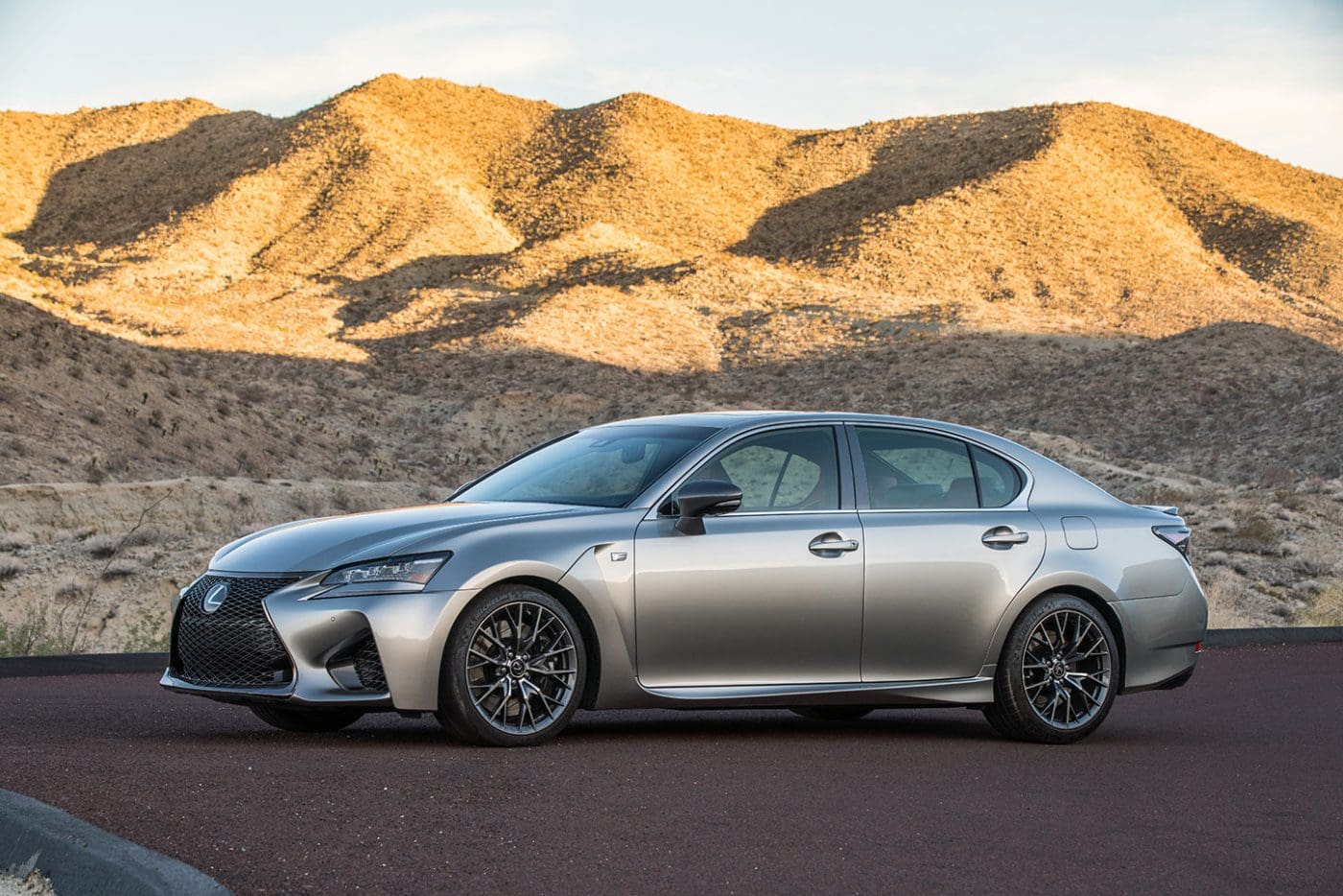
While not the lightest sedan here, it’s beautifully built and known for reliability, something that matters a lot when shopping used. For buyers who value durability alongside performance, the GS F is a standout.
In contrast to the standard GS, the GS F is offered with a single powertrain configuration. It features a 5.0-liter naturally aspirated V-8 engine delivering 467 horsepower and 389 lb-ft of torque, paired exclusively with an eight-speed automatic transmission that directs power to the rear wheels. In our most recent test, the GS F accelerated from 0 to 60 mph in 4.4 seconds and completed the quarter mile in 12.9 seconds at 113 mph.
Despite these respectable figures, the Lexus trails many of its German competitors, several of which achieve 0-to-60-mph times in the high three-second range. The primary limitation is the absence of an all-wheel-drive system, which gives rivals a traction advantage during hard launches.
However, most buyers are unlikely to focus on the marginal performance gap. Instead, they will appreciate the composed suspension tuning and the robust, rising soundtrack of the V-8 as they cruise confidently along the highway en route to their next stockholder meeting.
7. Tesla Model 3 Performance (2019–2022)
Electric torque changes the game. The Model 3 Performance rockets to 60 mph in just over three seconds, and it does so silently and effortlessly. There’s no waiting for boost, just instant shove.
Used prices have fallen sharply thanks to frequent new-car price cuts, making this one of the fastest sedans per dollar in America right now.
Charging infrastructure is widespread, and maintenance costs are relatively low compared to gas-powered performance cars.
Like most electric vehicles, the Model 3 accelerates in a smooth and nearly silent manner, with the electric motor delivering immediate and substantial torque from a standstill. Performance is brisk across the lineup and exceptionally quick in certain variants.
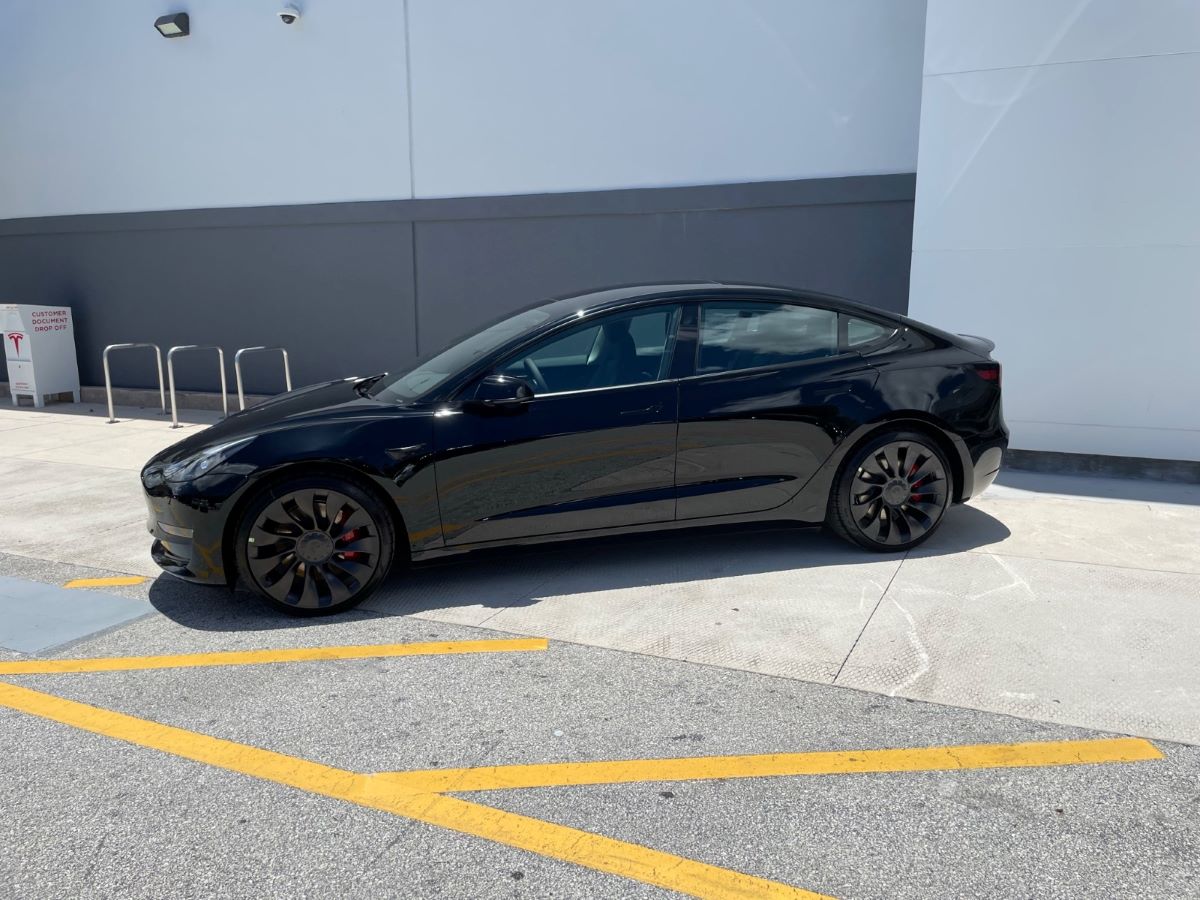
The rear-wheel-drive Long Range model we evaluated reached 60 mph from rest in 5.1 seconds. The Model 3 Performance variant is significantly quicker, achieving the same sprint in just 3.5 seconds, half a second faster than our long-term Model 3 Long Range.
Consistent with Tesla’s design philosophy, the Model 3 houses its battery pack beneath the floor. This placement lowers the center of gravity, enhancing stability and allowing the car to change direction with precision while maintaining composure through corners.
Steering response is accurate and appropriately weighted, and drivers can select from three different settings to adjust steering effort. Ride quality is firm but not punishing. However, in the absence of engine noise, road and tire sounds become more noticeable inside the cabin, particularly as the tires strike and resonate over uneven pavement surfaces.
8. Kia Stinger GT (2018–2021)
The Stinger GT surprised almost everyone. With a twin-turbo V6 producing up to 368 hp and rear-wheel-drive dynamics, it delivers real sports-sedan performance at mainstream prices.
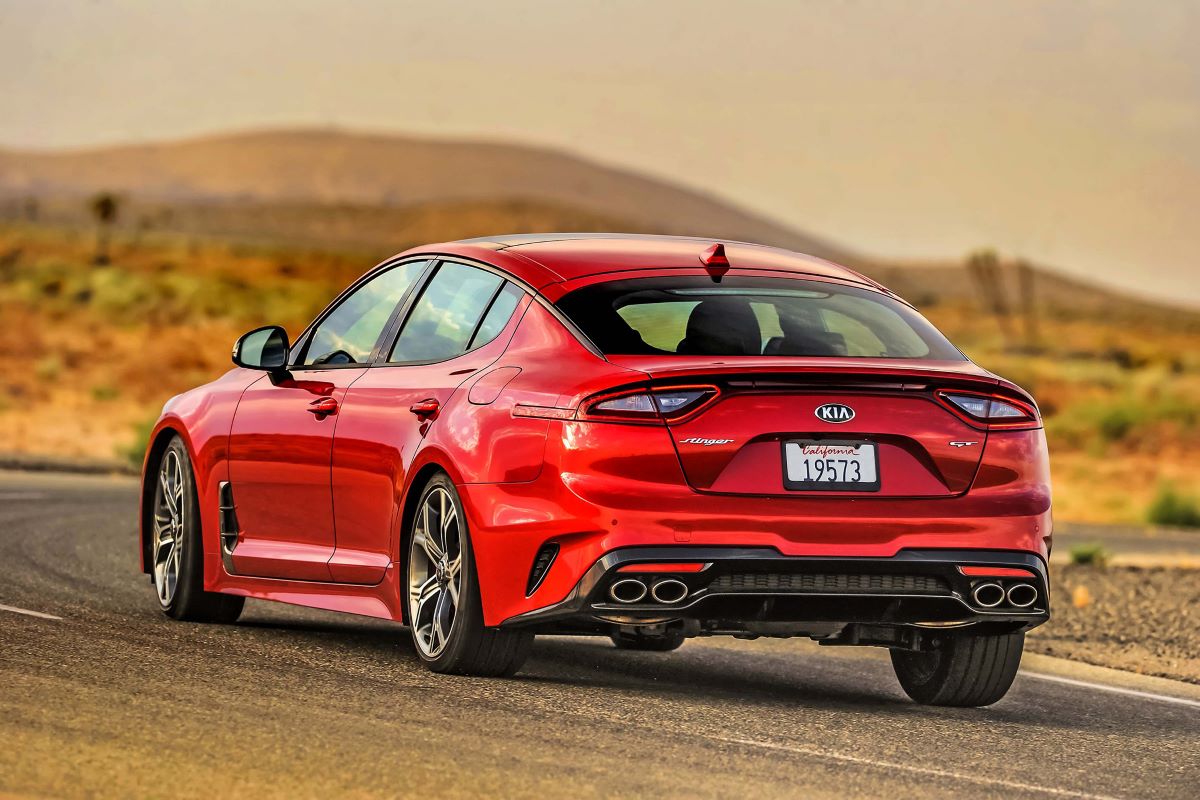
It’s also practical, with a large hatch-style trunk and comfortable rear seats. For buyers who want speed without luxury-brand repair bills, the Stinger remains one of the smartest used purchases in 2026.
The Stinger is offered with two turbocharged engine options: a 300-horsepower 2.5-liter turbocharged four-cylinder and a 368-horsepower twin-turbocharged 3.3-liter V-6. The V-6, in particular, delivers an engaging and energetic performance that appeals strongly to driving enthusiasts.
Both engines are mated to an eight-speed automatic transmission that executes swift shifts at redline and operates smoothly when left in automatic mode. The steering-wheel-mounted paddle shifters, however, could respond more crisply to driver inputs. Even so, for those primarily focused on straight-line acceleration, the V-6-powered Stinger GT provides satisfying results.
During track testing, the all-wheel-drive Stinger GT2 accelerated from 0 to 60 mph in 4.6 seconds, demonstrating strong launch performance. In everyday driving, the car remains composed and comfortable. When driven aggressively, however, it does not exhibit the same level of refinement as some more established rivals in the segment.
Under hard cornering on uneven pavement, we detected some movement from the rear suspension, including a noticeable lateral step. Additionally, pronounced fore-and-aft body motion accompanied maximum acceleration and braking runs.
The GT2 is equipped with Brembo brakes that deliver powerful and consistent stopping performance, aligning well with expectations for high-performance sedans in this class. Models without the Brembo system and fitted with less aggressive all-season tires offer less impressive dynamic capability.
9. Volvo S60 Polestar / Recharge
Volvo’s Polestar-tuned S60 blends turbocharging, supercharging, and electric assist for surprising performance. With outputs around 400+ hp depending on trim, it feels quick in a smooth, controlled way.
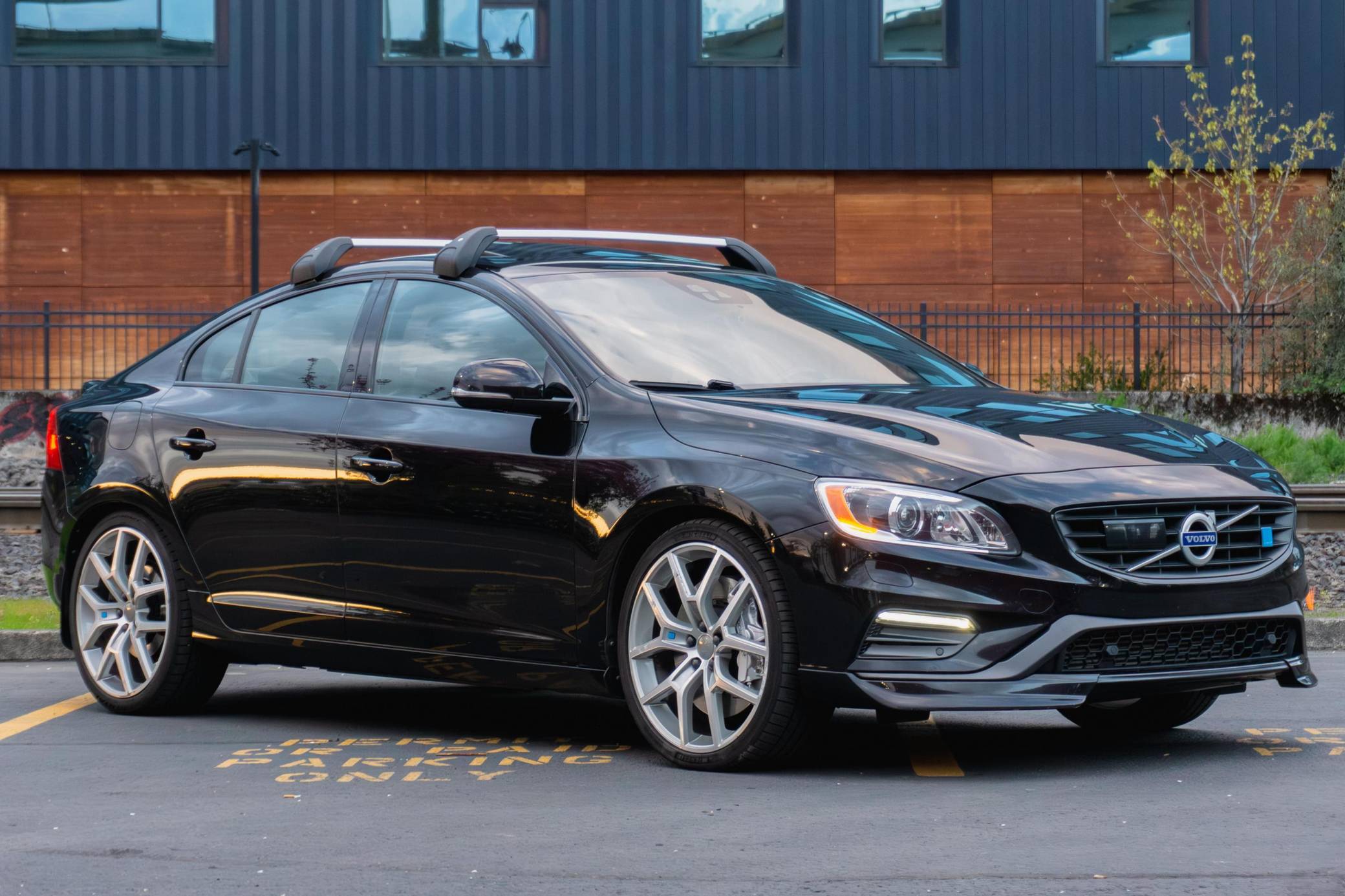
It won’t shout about its speed, but the instant electric torque and composed chassis make it an underrated sleeper in today’s used market, especially appealing to buyers who want performance without aggressive styling.
10. Dodge Charger Scat Pack (2017–2020)
Big, loud, and unapologetic, the Scat Pack Charger uses a 6.4-liter Hemi V8 making 485 hp. It’s not subtle, but it’s fast, and few sedans deliver this kind of visceral acceleration for the price.
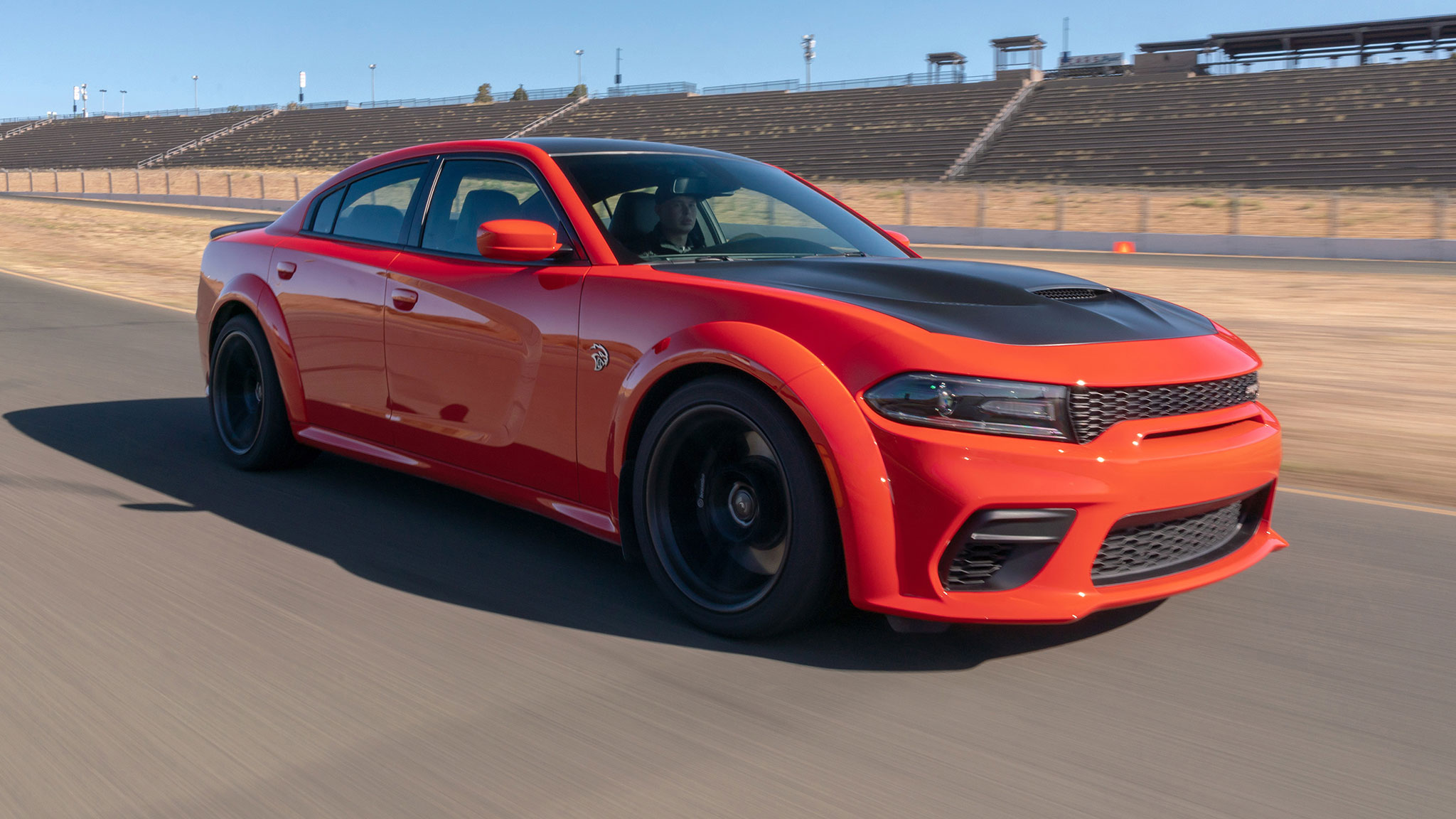
It also offers massive interior space, making it one of the rare cars here that can haul adults comfortably while still lighting up the rear tires on command.
For its intended mission, the Charger Daytona performs convincingly. Acceleration is forceful, the exhaust note is dramatic and unmistakable, and overall handling capability is commendable. While the steering calibration and low-speed throttle response detract somewhat from the experience, the car remains a compelling performance package.
Despite its substantial size and weight, the Charger Daytona delivers strong straight-line performance. Weighing approximately 4,400 pounds, it accelerated from 0 to 60 mph in 4.6 seconds at our test track, an impressive figure for a vehicle of this mass.
Gear changes are smooth under both light and heavy throttle application. However, low-speed throttle modulation can be inconsistent and overly sensitive. At highway speeds, passing power is abundant and readily accessible.
Braking performance is particularly noteworthy given the car’s size. Repeated heavy braking produced no measurable fade, demonstrating strong durability under stress. Around town, the pedal initially feels somewhat soft, but overall stopping distances are short and confidence-inspiring. In our simulated emergency stop from 60 mph, the Charger required only 102 feet to come to a halt.
Steering weight is appropriate, and the thick-rimmed steering wheel feels substantial in hand. However, feedback is limited. The system provides minimal communication about front tire grip or precise vehicle placement. Although Sport mode is said to increase steering firmness, the change is subtle and difficult to discern in practice.
Throttle calibration at initial input is overly abrupt. Even slight pedal movement can result in a sudden surge forward, requiring careful modulation in everyday driving.
Once underway, the car proves manageable in urban environments despite its size. On extended highway inclines, the engine maintains strong output, minimizing the need for frequent gear changes and ensuring consistent performance.
11. Genesis G70 3.3T (2019–2021)
The G70 3.3T delivers 365 hp in a compact luxury package, with sharp handling and a beautifully finished interior. It’s quick off the line and feels balanced in corners, often compared favorably to German rivals.
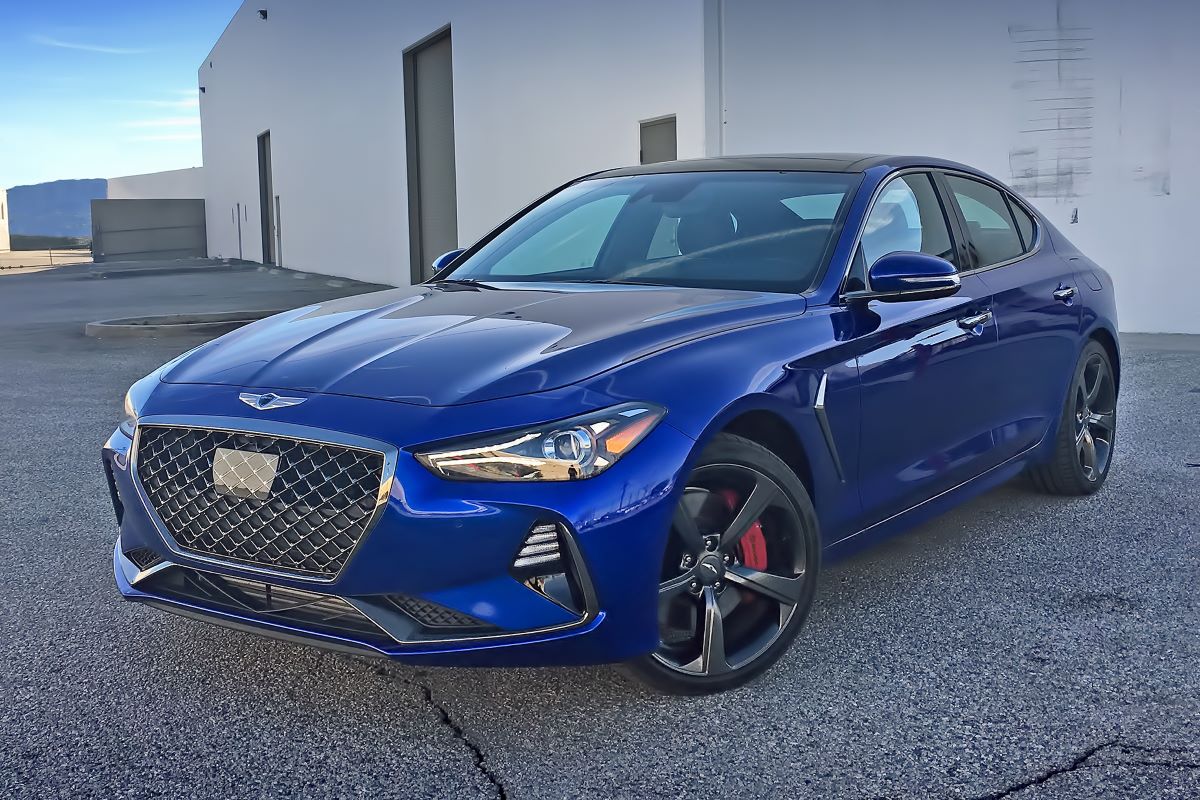
Because Genesis doesn’t carry the same brand cachet, depreciation is steeper, great news for used buyers looking for maximum performance per dollar.
The base G70 2.0T is powered by a turbocharged 2.0-liter four-cylinder engine producing 252 horsepower, 255 horsepower when equipped with the manual transmission.
In automatic-equipped models, power is routed to the rear wheels through an eight-speed automatic transmission. All-wheel drive is available as an option on most trims, though the manual variant we tested does not offer it.
Around town, the four-cylinder engine feels somewhat restrained, and overall acceleration performance is unremarkable. The light clutch pedal and vague shifter engagement further diminish driver involvement.
The driving experience changes significantly in the twin-turbocharged 3.3-liter V-6 version, which generates 365 horsepower and 376 lb-ft of torque. During our time with a rear-wheel-drive 3.3T model, the engine’s strong and immediate surge of power stood out, propelling the sedan from 0 to 60 mph in 4.7 seconds in our testing.
Regardless of engine choice, the G70 demonstrates a well-executed balance between ride comfort and handling precision. The suspension effectively absorbs surface imperfections while maintaining composure during spirited driving.
The 3.3T benefits from adaptive dampers that allow drivers to stiffen the ride when desired. Across all variants, steering response remains consistent, delivering accurate and informative feedback. Effort levels can be adjusted through the selectable drive modes, enhancing driver control and engagement.
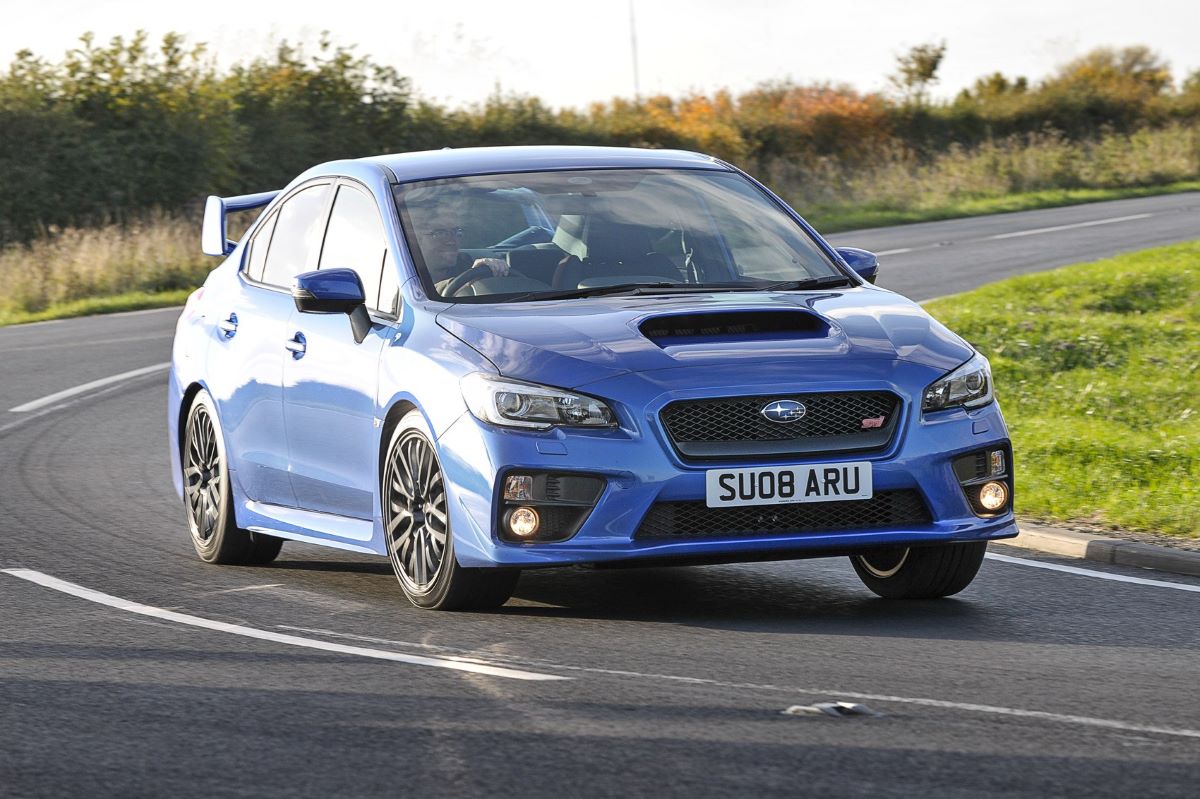
12. Subaru WRX STI (2016–2020)
The WRX STI is aging, but it still delivers raw, rally-inspired speed. Its turbocharged flat-four and all-wheel drive make it devastatingly quick on back roads and in poor weather.
It’s less refined than many sedans on this list, but for drivers who prioritize mechanical feel and year-round grip, the STI remains a uniquely engaging option.
In 2026, used performance sedans represent one of the best values in the automotive world. Many of these cars once cost $60,000, or far more, yet now trade hands for prices comparable to new economy SUVs.
They offer genuine speed, real practicality, and driving experiences that newer, heavier vehicles often struggle to replicate.
Whether you want turbocharged precision, V8 thunder, or electric immediacy, today’s used market has something that still feels fast every time you press the accelerator, and that’s exactly what makes this segment so compelling right now.
