
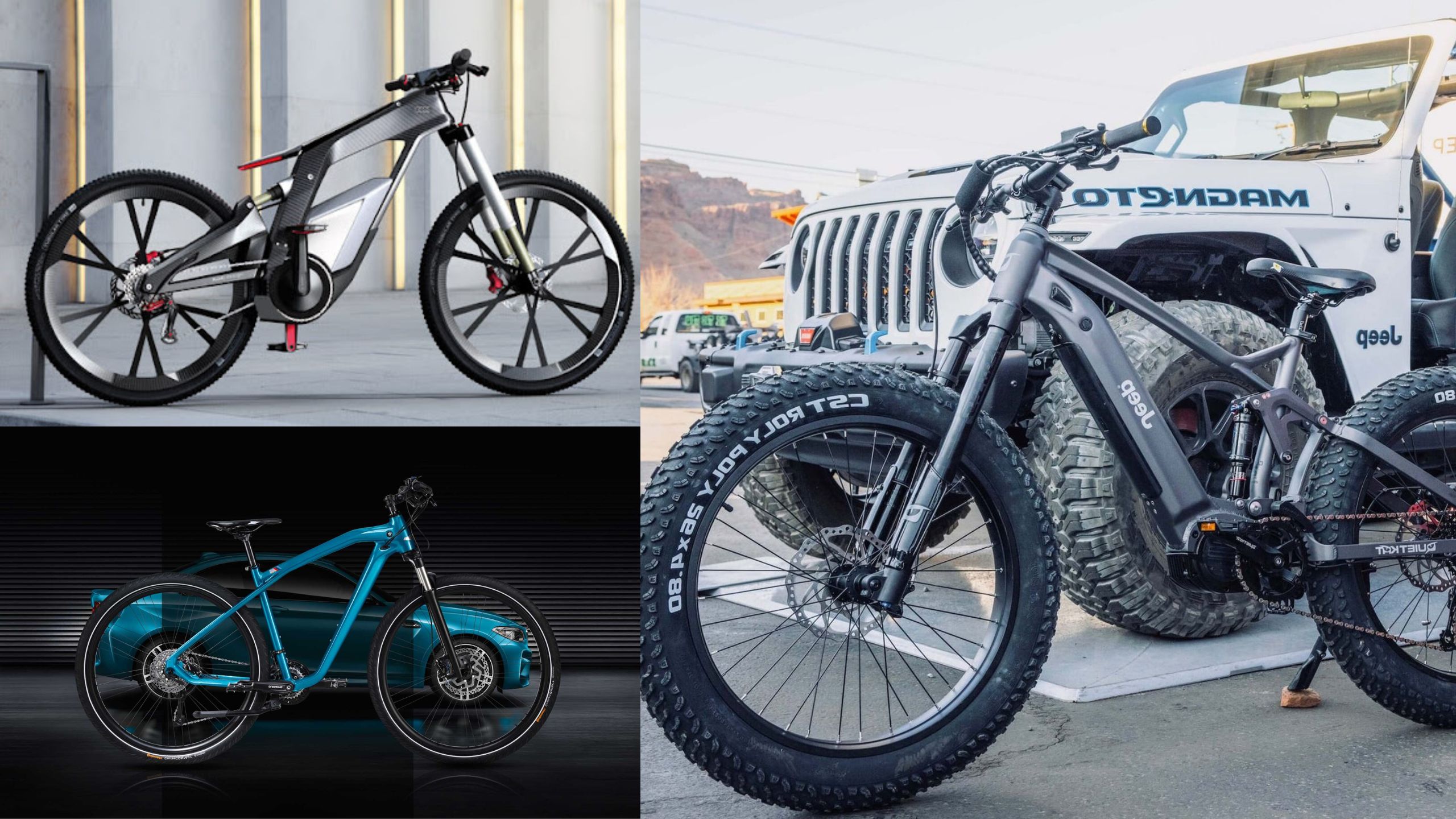
The world automotive luxury and innovation, manufacturers have always sought ways to stand out from the crowd. One of the most fascinating and niche trends to emerge over the decades is the pairing of a high-end automobile with its very own matching bicycle or scooter.
These aren’t random accessories thrown together for a marketing gimmick they are thoughtfully designed, meticulously crafted companions that share the same design DNA, color palettes, branding, and sometimes even materials as the vehicles they accompany.
From Italian supercar makers to German luxury giants and American muscle brands, the concept of offering a two-wheeled counterpart alongside a four-wheeled masterpiece has captured the imagination of collectors, enthusiasts, and lifestyle aficionados worldwide.
These packages speak to a broader philosophy: that a brand’s identity shouldn’t be confined to a single product but should extend into every aspect of an owner’s life and lifestyle.
Whether it’s a limited-edition Porsche bicycle that mirrors the curves of a 911, or a Bugatti carbon-fiber push bike that costs more than most people’s cars, these pairings represent the pinnacle of brand synergy.
This list celebrates ten of the most iconic, unusual, and downright extraordinary cars that came bundled or paired with a matching bike or scooter.
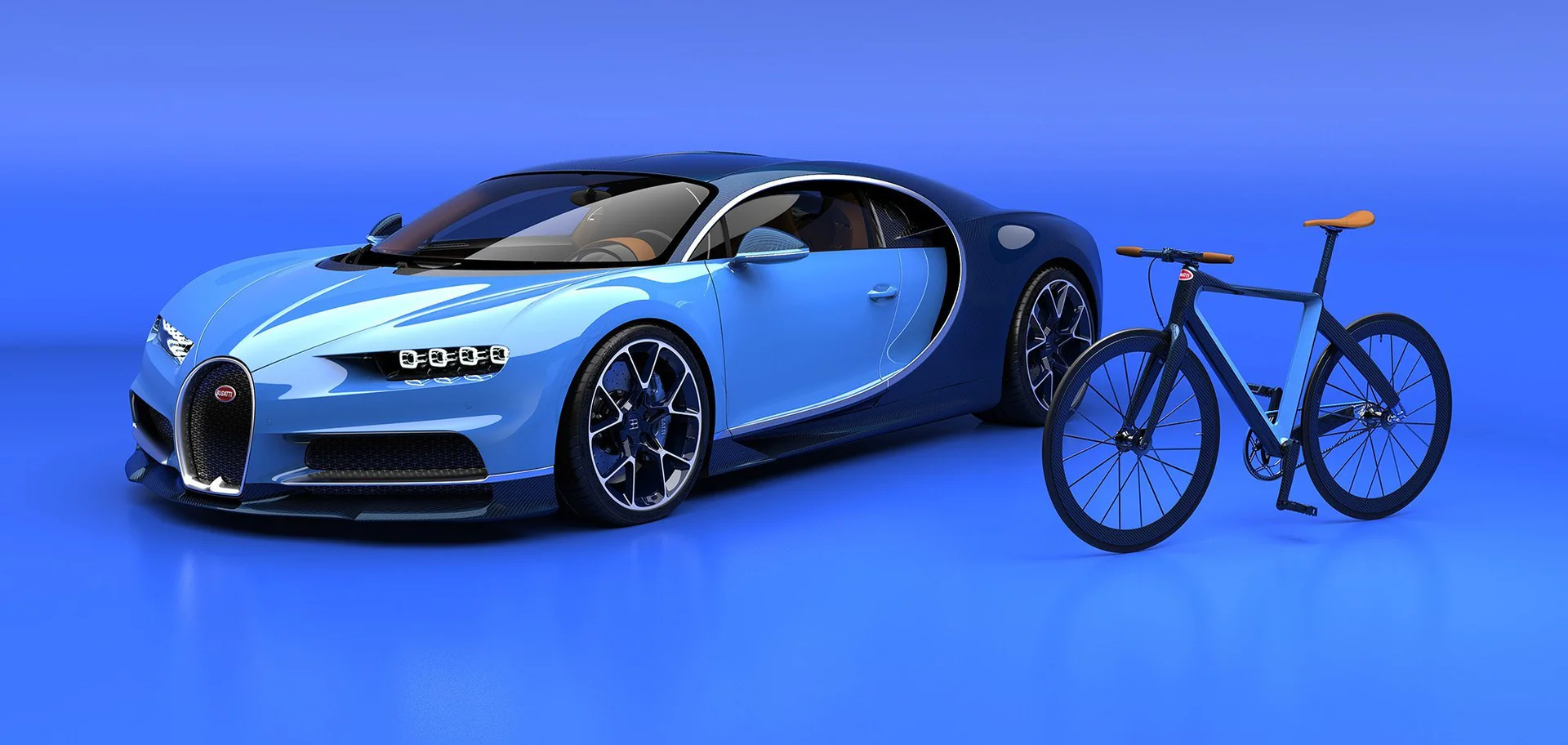
1. Bugatti Chiron and the Bugatti PG X Carbon Bicycle
When you spend over three million dollars on a hypercar, a matching bicycle might seem like an afterthought but Bugatti has never done anything by halves.
The Bugatti Chiron, one of the most breathtaking automobiles ever conceived by human engineering, was paired with an equally jaw-dropping two-wheeled companion: the Bugatti PG X Carbon Bicycle, developed in collaboration with legendary bicycle designer and manufacturer PG Bugatti.
The PG X is not just a bicycle it is a rolling sculpture. Constructed almost entirely from aerospace-grade carbon fiber, the same material used extensively throughout the Chiron’s body and interior components, the bicycle weighs in at a featherlight 6.8 kilograms.
Every line, every curve, every surface of the PG X echoes the dramatic, muscular aesthetic of the Chiron itself.
The signature Bugatti horseshoe grille motif appears subtly on the frame, and the color options are perfectly coordinated to match the dual-tone paint schemes available on the car.
What makes this pairing particularly extraordinary is the price tag. The PG X Carbon Bicycle retails for around $39,000, which means Bugatti’s matching bike costs more than many brand-new mainstream automobiles.
Yet for Chiron owners, this is entirely consistent with their lifestyle and expectations. The bicycle is hand-assembled with the same obsessive attention to detail that goes into every Chiron that rolls out of the Molsheim factory in France.
The Chiron itself produces 1,479 horsepower from its quad-turbocharged 8.0-liter W16 engine and can reach a top speed that was electronically governed at 261 mph in production form.
It accelerates from zero to 60 mph in under 2.5 seconds. Against such mind-bending performance statistics, a bicycle companion might seem paradoxical but that is precisely what makes the pairing so compelling and conversation-worthy.
Bugatti positioned the PG X as the perfect companion for owners who want to explore their surroundings whether the streets of Monaco, the hills of the French Riviera, or the paddock of a private racing circuit in a way that reflects their taste and status.
Several limited-edition Chiron variants, including the Chiron Sport and Chiron Pur Sport, were offered with bespoke versions of the bicycle finished in matching color schemes and badging.
The Bugatti Chiron and PG X pairing represents the very apex of the matching vehicle trend.
It is audacious, beautiful, almost comically expensive, and utterly on-brand for a manufacturer that has always believed there is no upper limit to how extraordinary a machine can be. For Bugatti, even a bicycle must be a statement.
2. Porsche 911 and the Porsche Bike RS
Porsche is a brand built on the philosophy that engineering and emotion are inseparable. It is no surprise, then, that when the Stuttgart-based marque decided to create a matching bicycle for its iconic 911 sports car, the result was something that went far beyond a simple co-branded accessory.
The Porsche Bike RS is a precision-engineered two-wheeled machine that embodies every principle the brand holds dear: lightweight construction, performance-focused design, and an unmistakable aesthetic identity.
The Porsche Bike RS was developed with serious cyclists in mind. It features a hand-crafted aluminum alloy frame with geometry tuned for responsive, aggressive riding much like the 911’s suspension setup is tuned for an almost telepathic connection between driver and road.
The componentry is top-shelf throughout, with Shimano Dura-Ace groupsets, hydraulic disc brakes, and carbon fiber finishing touches that keep the weight down to a genuinely impressive level for a performance road bicycle.
The design language is unmistakably Porsche. The color options align directly with the 911’s available palette, including iconic shades like Guards Red, Miami Blue, Racing Yellow, and the beloved GT Silver.
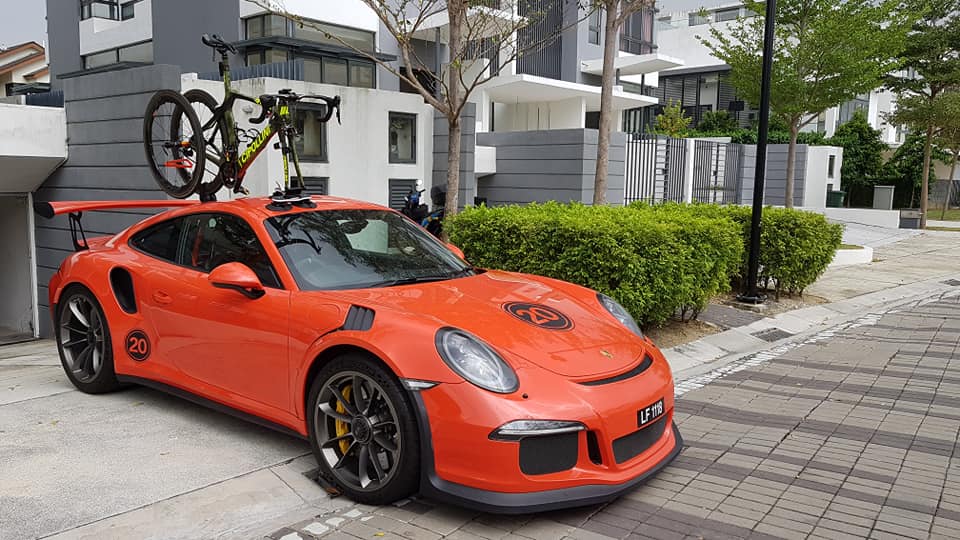
The geometry of the frame tubes echoes the sweeping, purposeful lines of the 911’s bodywork, and the Porsche crest appears on the head tube with quiet confidence rather than ostentatious branding.
Everything about the Bike RS communicates the same message as the car: this is a tool designed to deliver driving or in this case, riding pleasure at the highest possible level.
Porsche has offered multiple generations of branded bicycles over the years, including the Bike S for more casual riders and the Bike FS for off-road enthusiasts.
But the Bike RS remains the crown jewel of the range, positioned as the direct companion to the 911 in the same way that Carrera RS badges have historically denoted the most focused, driver-oriented variants of the sports car.
Several special 911 packages have included the Bike RS as a bundled offering, allowing customers to specify a complete lifestyle package that includes the car, the bicycle, matching luggage, and other branded accessories.
This holistic approach to ownership reflects Porsche’s understanding that their customers don’t just buy a car they buy into a world.
The Porsche 911 and Bike RS pairing is perhaps the most philosophically coherent on this list, because both machines share not just visual DNA but a fundamental commitment to the idea that performance and pleasure are the same thing. Riding the Bike RS feels like an extension of driving the 911 precise, rewarding, and deeply satisfying.
3. Mercedes-Benz SLS AMG and the Mercedes-Benz Bike
The Mercedes-Benz SLS AMG is a car of theatrical drama. With its gullwing doors, supercharged 6.2-liter V8 engine, and proportions that reference the legendary 300 SL of the 1950s, the SLS AMG was never intended to be a subtle machine.
It announced itself with presence and purpose, and the matching Mercedes-Benz bicycle developed alongside it carried that same theatrical confidence into the two wheels.
Mercedes-Benz partnered with renowned bicycle manufacturer Rotwild to create a range of bicycles that captured the spirit of the AMG performance division.
The result was a collection of road and mountain bikes finished in AMG’s signature matte silver and black color schemes, with design details that directly referenced the SLS including the distinctive gullwing door graphic rendered on the top tube of select models.
The bicycles were constructed using advanced carbon fiber technology, resulting in frames that were both stiff for efficient power transfer and light enough to feel genuinely quick on the road.
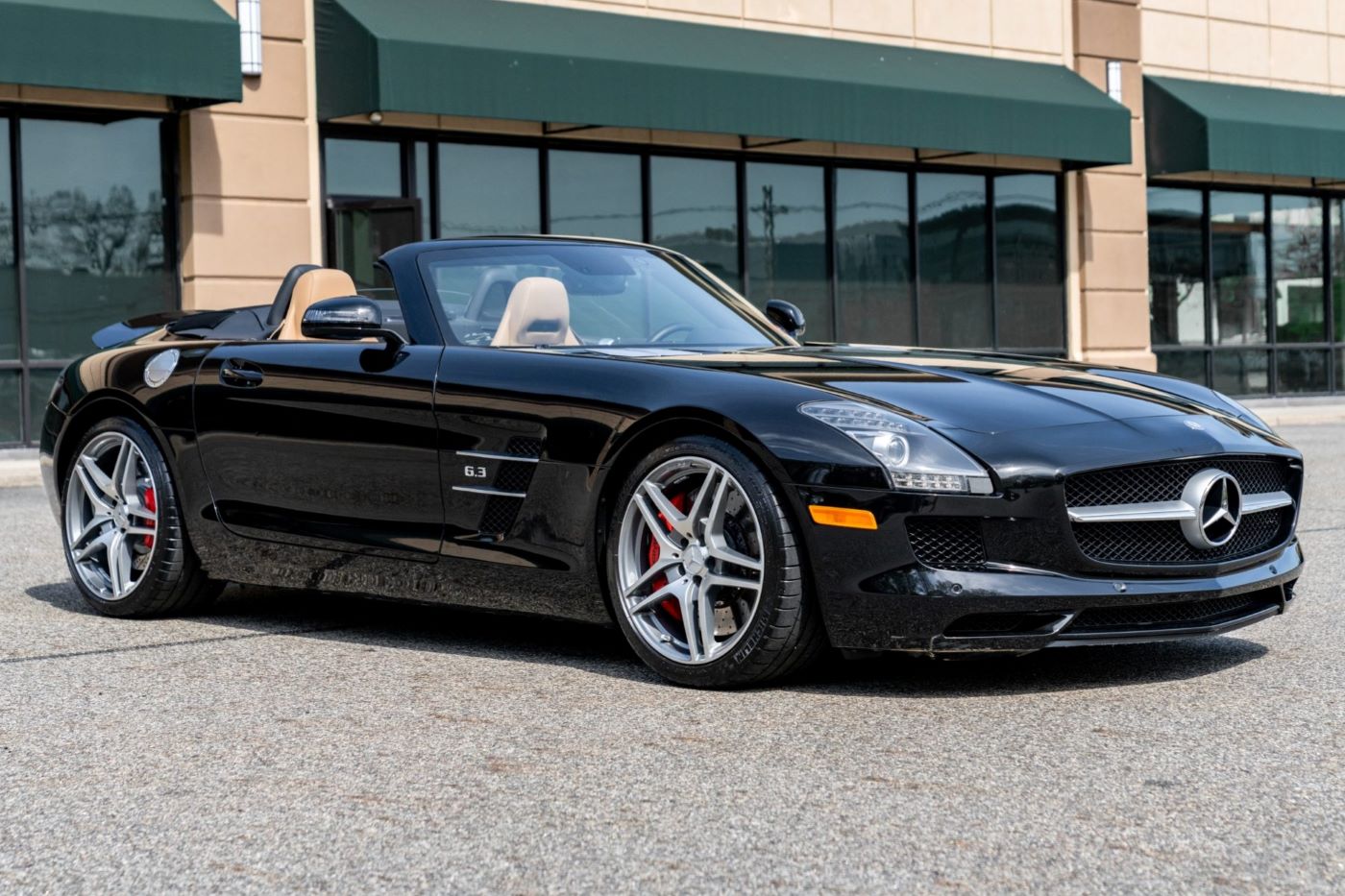
The AMG Performance Bike, as the top-tier model was known, featured premium components throughout and was marketed not just as a bicycle but as a performance instrument a framing device that was entirely deliberate and consistent with AMG’s broader brand messaging.
What made the SLS AMG and matching bicycle pairing particularly interesting was the occasion that brought them together most prominently.
At various motor shows and automotive events, Mercedes-Benz would display the SLS AMG alongside its bicycle companion, often using the pairing to communicate a broader message about the AMG lifestyle one that extended from track days in the car to weekend rides through the countryside on the bicycle.
The SLS AMG itself was a landmark car for Mercedes-Benz. Produced from 2010 to 2014, it served as the spiritual successor to the original 300 SL Gullwing and represented the AMG division’s first ground-up vehicle development rather than a modified production car.
Its naturally aspirated 6.2-liter M159 engine produced 563 horsepower and delivered one of the most sonorous exhaust notes in the modern automotive world. Pairing this car with a premium performance bicycle was a natural extension of the AMG ethos.
Both the SLS and the bicycle spoke to customers who wanted the very best, who valued engineering excellence, and who understood that true luxury is about the quality of the experience rather than the quantity of the features. The Mercedes-Benz SLS AMG and its matching Rotwild bicycle remain one of the most stylistically coherent pairings on this list.
4. Ferrari and the Ferrari Scuderia Bicycle
Ferrari is a name synonymous with passion, speed, and an almost religious devotion to performance. So when the Maranello manufacturer decided to extend its iconic brand into the cycling, the result was inevitably something spectacular.
The Ferrari Scuderia Bicycle collection, launched to complement several of the brand’s flagship road cars including the 458 Italia and later the 488 GTB, brought Ferrari’s racing DNA directly to the handlebars.
The Ferrari Scuderia Bicycle was developed in partnership with Italian bicycle manufacturer Bianchi and later with other specialist brands, reflecting Ferrari’s commitment to working only with the best partners in any field.
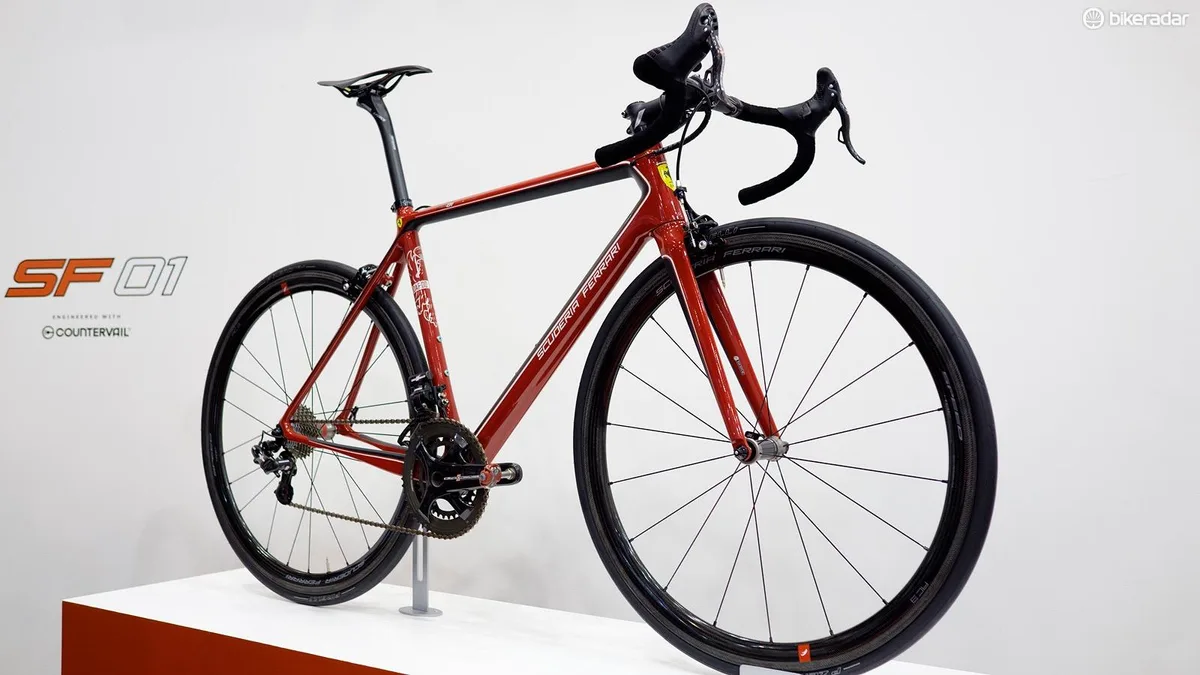
The frames were constructed from high-modulus carbon fiber, finished in Ferrari’s iconic Rosso Corsa red with the prancing horse logo and Scuderia Ferrari branding applied with impeccable precision.
The componentry matched the ambition of the frame. Top-tier Campagnolo groupsets, ceramic bearings, aerodynamic carbon wheels, and ergonomic handlebars designed for aggressive, race-ready positioning all contributed to a bicycle that was capable of performing at a genuinely high level, not just sitting prettily in a garage next to its automotive companion.
Ferrari has historically been cautious about licensing its brand, understanding that overexposure cheapens the mystique that makes the prancing horse so powerful.
The Scuderia Bicycle was therefore never a mass-market product but a carefully controlled limited offering, available through Ferrari’s official dealer network and accompanied by documentation and packaging befitting the brand’s heritage.
Several special editions of the Ferrari Scuderia Bicycle were released to coincide with specific car launches or racing milestones, including versions celebrating Formula One World Championship victories.
These limited editions carried additional provenance and collectability, making them sought-after objects in their own right rather than mere accessories.
The pairing of a Ferrari road car with the Scuderia Bicycle works on multiple levels. Both machines are Italian, both are obsessed with weight reduction and aerodynamic efficiency, and both are built to deliver an emotional experience that transcends mere transportation.
Riding the Scuderia Bicycle through the streets of Maranello or the hills of Tuscany while your Ferrari sits gleaming in the courtyard is precisely the kind of experience Ferrari’s lifestyle division was designed to facilitate. It is extravagant, beautiful, and unapologetically Italian.
Also Read: 5 Reasons to Buy a CPO Vehicle vs 5 Reasons to Buy From a Private Seller
5. Lamborghini Aventador and the Lamborghini Bicycle
Lamborghini has never been a brand interested in restraint. From the outrageous wedge-shaped styling of the Countach to the volcanic theatrics of the Aventador’s naturally aspirated V12, Sant’Agata Bolognese’s finest creations have always been about maximum impact.
It was therefore entirely predictable and entirely wonderful that when Lamborghini created a matching bicycle for the Aventador, the result was something that could never be mistaken for anything other than a Lamborghini product.
The Lamborghini bicycle, developed in collaboration with premium bicycle manufacturer Bianchi and later refined through Lamborghini’s own Squadra Corse motorsport division, is a carbon fiber road bike that looks like it was designed in the same wind tunnel as the Aventador itself.
Sharp angles, aggressive geometry, and a visual ferocity that sets it apart from every other bicycle on the road are its defining characteristics. The color options are pure Lamborghini: Giallo Orion yellow, Verde Mantis green, Arancio Borealis orange, and of course the deep, brooding blacks favored by the Aventador SV and SVJ variants.
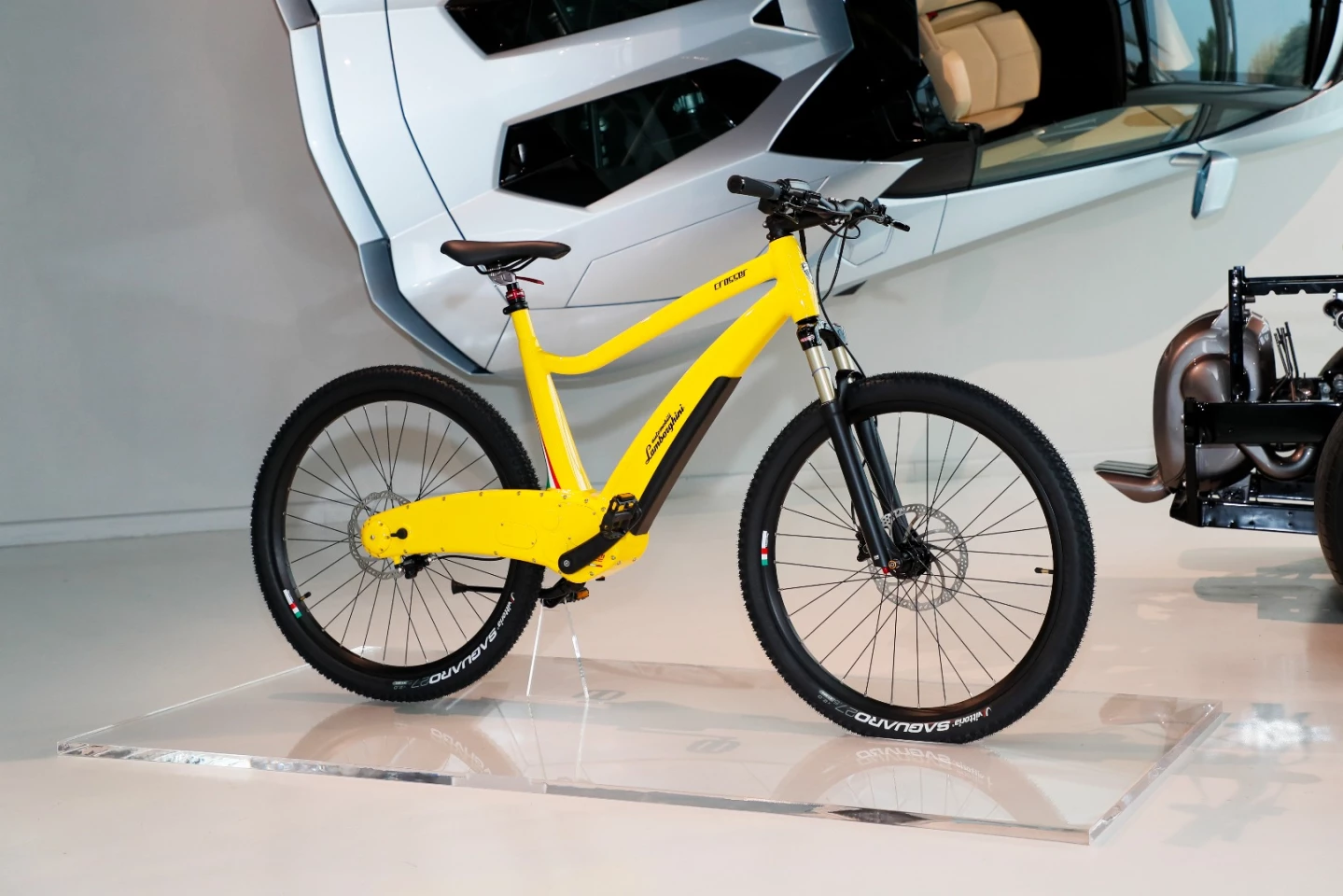
The Lamborghini shield logo appears prominently, as does the bull motif, and the visual impression is of a bicycle that has no interest in blending into its surroundings.
Performance credentials are taken seriously despite the theatrical packaging. The frame weighs approximately seven kilograms fully built, and the componentry Shimano Dura-Ace throughout ensures that the riding experience matches the visual promise.
The geometry is race-oriented, demanding commitment from the rider in the same way that an Aventador demands commitment from its driver.
Lamborghini has displayed the Aventador alongside its matching bicycle at numerous events, including the Geneva Motor Show and various Lamborghini Polo Storico gatherings, using the pairing to communicate a lifestyle proposition to customers who have achieved a level of success that allows them to own and enjoy both machines simultaneously.
The Aventador itself, powered by a 6.5-liter naturally aspirated V12 producing 730 to 770 horsepower depending on specification, is one of the last of a dying breed a pure, analog supercar in an era of electrification and turbocharging. Its matching bicycle carries the same philosophy: uncompromising, dramatic, and gloriously impractical in the best possible way.
6. MINI Cooper and the MINI Folding Bike
Not every car-and-bike pairing on this list involves seven-figure hypercars and five-figure bicycles. The MINI Cooper and its official matching folding bicycle represent a very different kind of partnership one rooted in urban practicality, playful design, and the democratic accessibility that has always been central to the MINI brand’s identity.
The MINI folding bicycle was developed in collaboration with Dahon, the world’s leading manufacturer of folding bikes, and then later with other specialist partners to create a product that perfectly captured the MINI spirit.
Compact, colorful, cleverly engineered, and surprisingly capable, the MINI folding bike was designed to live in the boot of a MINI Cooper, unfolded in seconds, and ridden through city streets with the same cheeky confidence as the car itself.
The color coordination between the MINI Cooper and its folding bike companion was meticulous. Iconic MINI colors including Chili Red, Electric Blue, Pepper White, and Midnight Black were all available on the bicycle to match the car’s exterior, with roof color accents replicated on the bike’s frame and handlebar grips.
The MINI logo appeared on the head badge and saddle, and the aesthetic was unmistakably on-brand fun, youthful, and slightly irreverent.
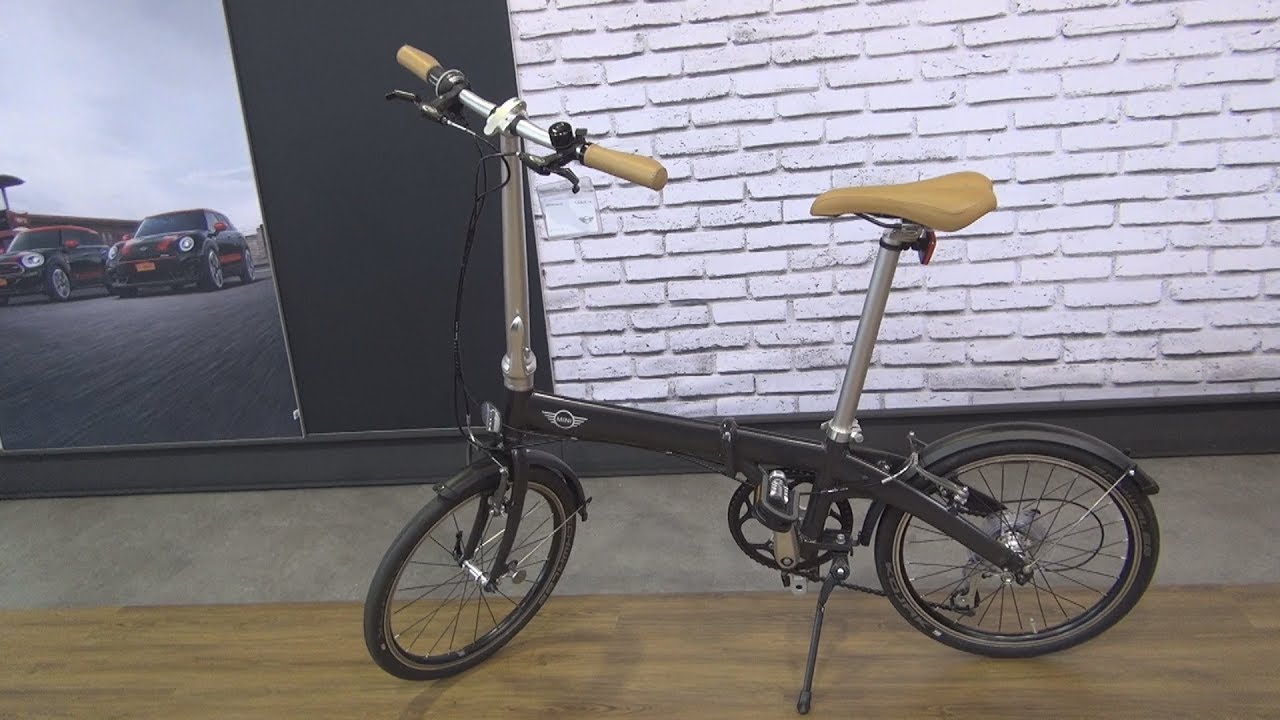
The folding mechanism was engineered to be as simple and quick as possible, reflecting MINI’s understanding that urban customers don’t want to wrestle with complicated machinery when they’ve just parked the car. Within fifteen seconds, the bicycle could be folded into a compact package and stowed in the MINI’s boot alongside shopping bags or weekend luggage.
MINI offered the folding bicycle as both a standalone retail product through its dealer network and as part of special edition packages tied to specific Cooper variants, including the MINI Cooper S, the MINI Paceman, and various special edition models.
Some packages included branded helmet, lock, and carrying bag accessories to complete the urban mobility ecosystem. The MINI Cooper and folding bike pairing is important because it democratizes the concept of matching car-and-bike ownership.
It proves that you don’t need to spend millions to participate in this fascinating automotive sub-culture. The MINI pairing is accessible, practical, joyful, and entirely consistent with the values that have made the MINI Cooper one of the most beloved and enduring small cars in automotive history.
7. Audi e-tron and the Audi e-bike Worthersee
Audi has always positioned itself as the most technologically progressive of the German premium triumvirate, and nowhere was this more apparent than in the creation of the Audi e-bike Worthersee a staggeringly advanced electric bicycle that was developed to showcase the same electrification technology underpinning Audi’s e-tron range of electric and hybrid vehicles.
Revealed at the Wörthersee Tour in Austria an annual gathering of modified Volkswagen Group vehicles that serves as a showcase for experimental and concept cars the Audi e-bike Worthersee was not a bicycle in any conventional sense.
It was a technological tour de force that blurred the boundaries between bicycle, motorcycle, and sports machine in ways that had never been attempted before.
The e-bike featured a carbon fiber monocoque frame of breathtaking construction quality, housing a 2.3 kWh lithium-ion battery pack that powered a 2.3 kW electric motor integrated into the rear hub.
This gave the Worthersee a power output equivalent to around 3 horsepower, modest by automotive standards but extraordinary for a bicycle and enabled speeds of up to 50 mph in its most aggressive riding mode.
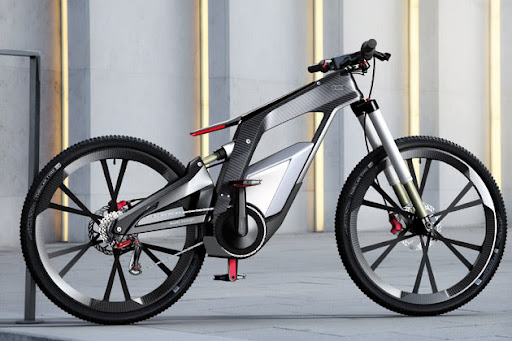
But what truly set the Worthersee apart was its suite of rider assistance and performance technologies. Gyroscopic stabilization allowed the bicycle to balance itself autonomously a feature that Audi described as analogous to its quattro all-wheel-drive system in terms of the confidence and control it gave the rider.
The bike also featured five distinct riding modes, including a wheelie mode that used the electric motor and gyroscopic sensors to hold a controlled front-wheel lift something that would have been unthinkable in a mainstream production bicycle.
The connection to the Audi e-tron was conceptual and technological rather than purely aesthetic, though the design language clean, angular, and confidently understated in that distinctly Audi way was clearly consistent with the broader e-tron visual identity.
Both the e-tron vehicle range and the Worthersee e-bike represented Audi’s argument that electric powertrains don’t compromise performance but enhance it.
While the Worthersee remained a concept rather than a production bicycle, Audi subsequently released more accessible e-bikes under the Audi Sport brand, carrying forward the technology and design philosophy in a more commercially viable format.
The pairing of the e-tron with the Worthersee concept remains one of the most intellectually ambitious and technically impressive entries on this list.
8. BMW 7 Series and the BMW Cruise M Bike
BMW has a long and distinguished history of motorcycles through its BMW Motorrad division, so it was perhaps inevitable that the Bavarian manufacturer would eventually bring that expertise to bear on the bicycles as well.
The BMW Cruise M Bike, developed to complement the flagship 7 Series luxury sedan, represents BMW’s most compelling statement in the matching car-and-bike space.
The 7 Series is BMW’s ultimate expression of luxury and technology. It is the car that BMW’s most senior and successful customers choose when they want the very best the brand can offer a limousine that combines extraordinary comfort with genuinely impressive dynamic capability, wrapped in an exterior that radiates quiet authority.
The BMW Cruise M Bike was designed to serve these customers by offering a two-wheeled companion that matched the 7 Series in every relevant dimension.
The Cruise M Bike features a hand-welded aluminum frame with geometry that prioritizes upright, relaxed riding a natural complement to the 7 Series’ focus on comfort and effortless progression rather than aggressive performance.
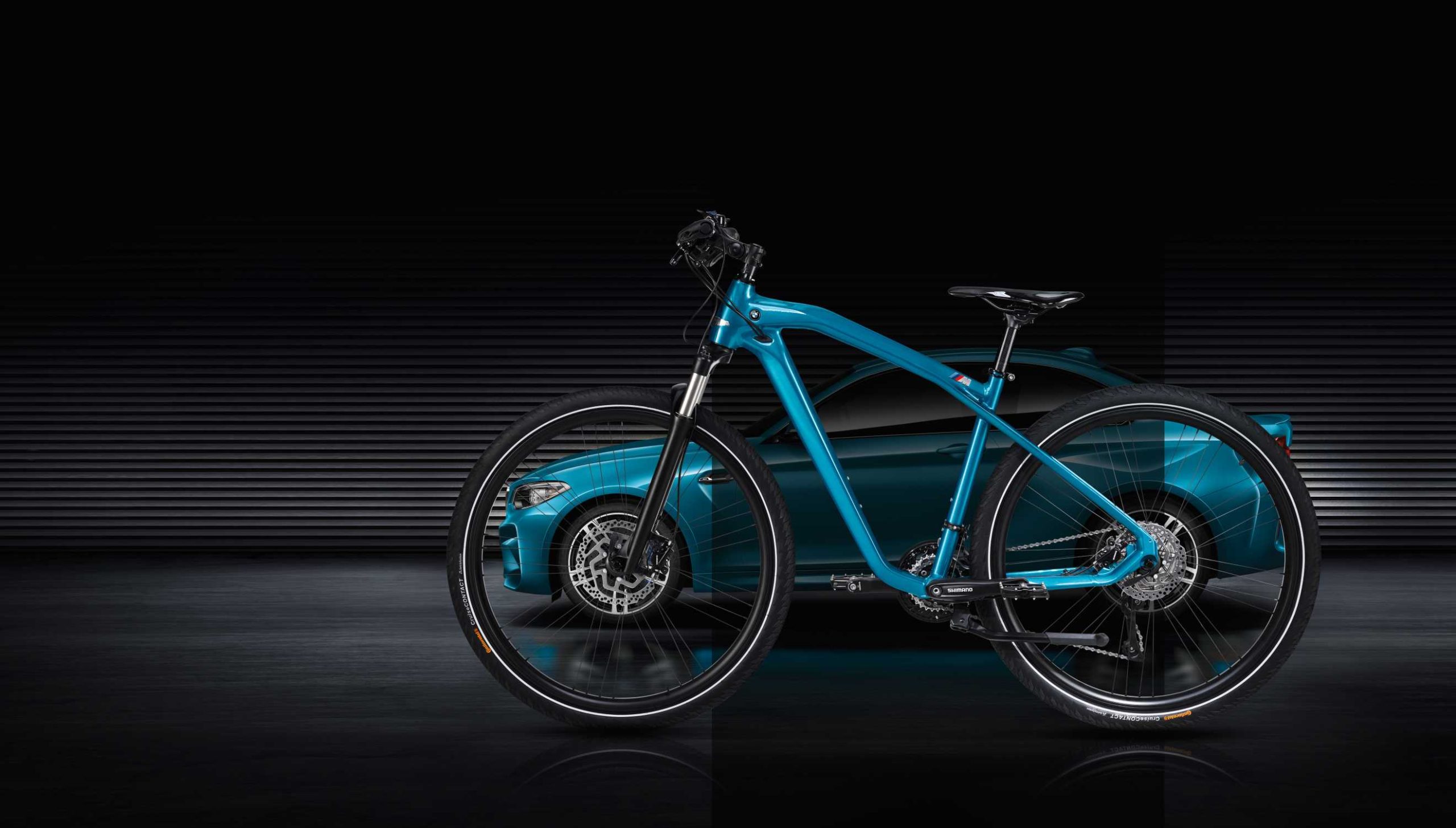
The specification includes an eight-speed internal hub gear system, hydraulic disc brakes, integrated lighting, and a belt drive system that eliminates the need for a greasy chain and reduces maintenance requirements a thoughtful touch for customers who are unlikely to want to get their hands dirty.
The design language draws directly from BMW’s automotive design vocabulary. The kidney grille motif, so central to BMW’s visual identity, appears on the head tube badge.
The color options align with 7 Series exterior colors including Bernina Grey Amber Effect, Dravit Grey Metallic, and various individual paint options.
The M Sport-badged variant features M-division blue, purple, and red accent striping on the frame the same tri-color that adorns BMW’s most performance-focused products.
BMW offered the Cruise M Bike through its BMW Lifestyle accessories program, available through dealers and the BMW online shop, with several special editions created to coincide with specific 7 Series generation launches.
The bicycle was frequently displayed alongside the 7 Series at motor shows and dealer events, reinforcing the message that BMW ownership is a holistic lifestyle experience rather than a simple transaction.
The BMW 7 Series and Cruise M Bike pairing works because it is philosophically coherent.
Both products serve the same customer with the same priorities: excellence in engineering, comfort in use, and an unmistakable brand identity that communicates success and discernment without shouting about it.
9. Vespa and the Vespa-Inspired Smart Car
This entry operates in slightly different territory from the others on this list because here it is the scooter manufacturer, rather than the car maker, that brings the matching aesthetic.
The partnership between Vespa and Smart represents one of the most charming and culturally resonant automotive pairings of the modern era, uniting two icons of European urban mobility under a shared philosophy of compact, stylish, practical transportation.
The Smart Fortwo and Vespa have always occupied the same cultural space: both are beloved symbols of European city life, both prioritize agility and style over size and speed, and both have devoted followings that extend far beyond the conventional automotive enthusiast community.
When Smart and Vespa formalized their relationship through co-branded special editions and coordinated lifestyle marketing, it felt less like a corporate partnership and more like a natural reunion of kindred spirits.
The Vespa-inspired Smart Fortwo editions featured color schemes and graphic treatments that directly referenced classic and contemporary Vespa scooter designs.
Vespa’s signature pastel color palette Azzurro Faro blue, Verde Relax green, Giallo Pastello yellow was applied to special Smart Fortwo models, while interior trim pieces and badging carried Vespa’s distinctive script logo and Italian heritage references.
On the Vespa side, complementary Smart-branded accessories and color coordination allowed owners of both vehicles to create a perfectly matched urban mobility pairing.
The combination of a Vespa Primavera or GTS scooter alongside a matching Smart Fortwo represented a complete solution for city living the scooter for nimble solo commuting through dense traffic, the car for carrying passengers, shopping, or going through inclement weather.
Both Vespa and Smart have histories that make this pairing feel particularly meaningful. Vespa was born in post-war Italy as a practical, affordable solution to urban mobility, and it grew into a global cultural icon.
Smart was created to address the specific challenges of European city driving parking scarcity, narrow medieval streets, and the environmental imperative of reduced emissions.
Both brands have evolved their products over decades while maintaining the core identity that made them beloved in the first place.
The Vespa and Smart pairing celebrates the joy of urban mobility in a way that few other car-and-two-wheeler combinations on this list can match. It is accessible, cheerful, culturally rich, and entirely appropriate for the cities in which both machines thrive.
10. Jeep Wrangler and the Jeep e-Bike
Our final entry takes the concept of matching car and bicycle into the great outdoors, where arguably it makes the most sense of all.
The Jeep Wrangler, the automotive world’s most iconic off-road vehicle, was paired with the Jeep e-Bike an electric mountain bicycle that shares the Wrangler’s fundamental character: rugged, capable, adventure-ready, and unmistakably branded.
The Jeep e-Bike was developed in partnership with QuietKat, a Colorado-based manufacturer of high-performance electric fat bikes designed for off-road adventure riding.
The collaboration produced a bicycle that was purpose-built to go wherever the Wrangler goes across trails, through forests, up mountain paths, and over terrain that would defeat most conventional bicycles within the first hundred meters.
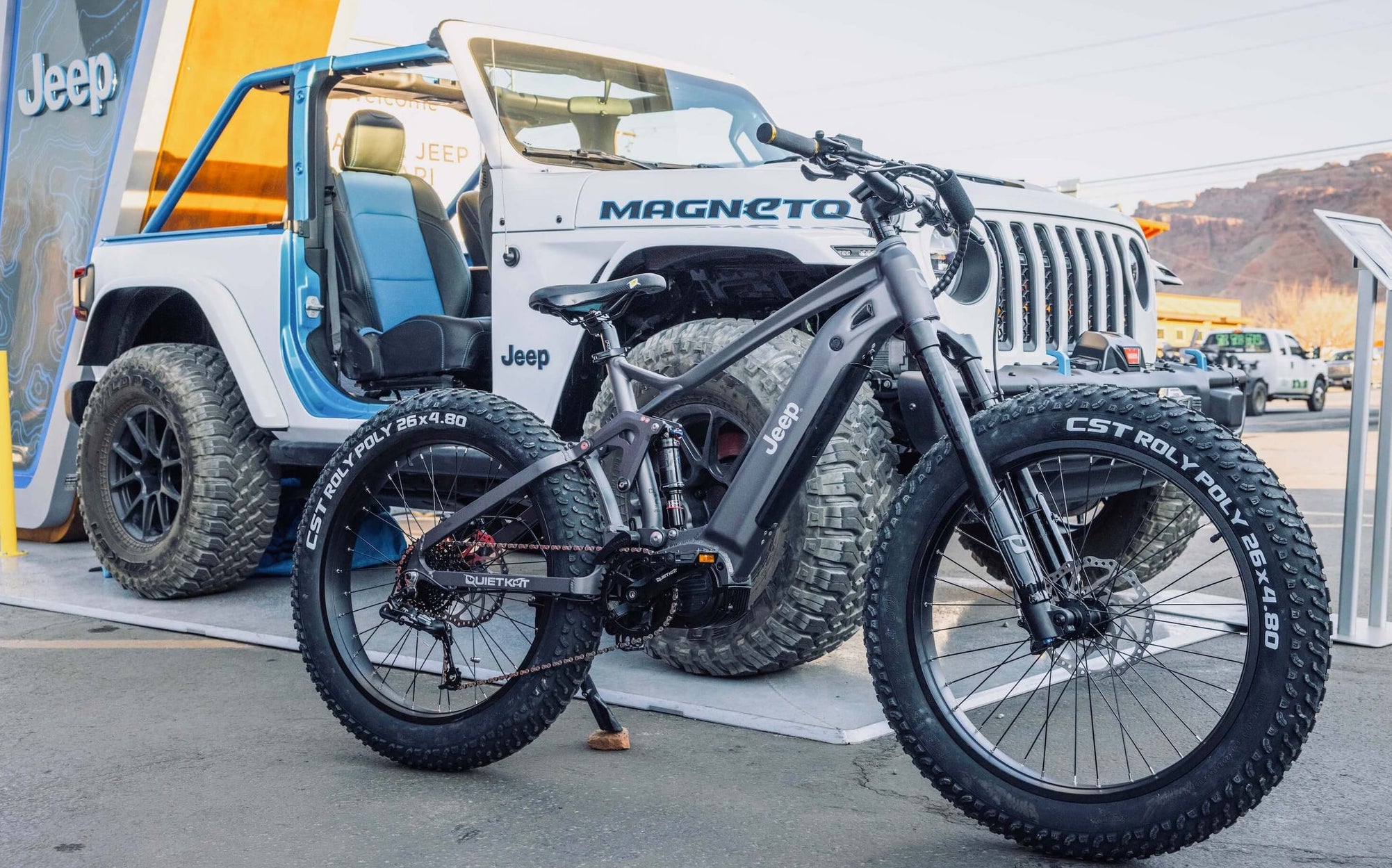
The frame is constructed from aircraft-grade aluminum alloy with geometry optimized for the aggressive demands of trail riding. Fat 4-inch tires provide the traction and stability needed for loose, uneven, or slippery surfaces.
The electric motor produces 750 watts of continuous power the legal maximum for e-bikes in most US states and drives the rear wheel through a purpose-built gearbox capable of handling the shock loads encountered in serious off-road riding.
The Jeep Wrangler and e-Bike pairing is perhaps the most functionally integrated and genuinely useful combination on this list.
Both machines exist to take their owners to places they couldn’t reach by other means, and together they form a remarkably complete adventure ecosystem.
It is a pairing built not on luxury or exclusivity but on the shared spirit of adventure that has defined the Jeep brand for over eight decades and that spirit is, ultimately, what makes it unforgettable.
Also Read: Top 10 Non Hybrid Cars That Get Over 40 Miles Per Gallon
