
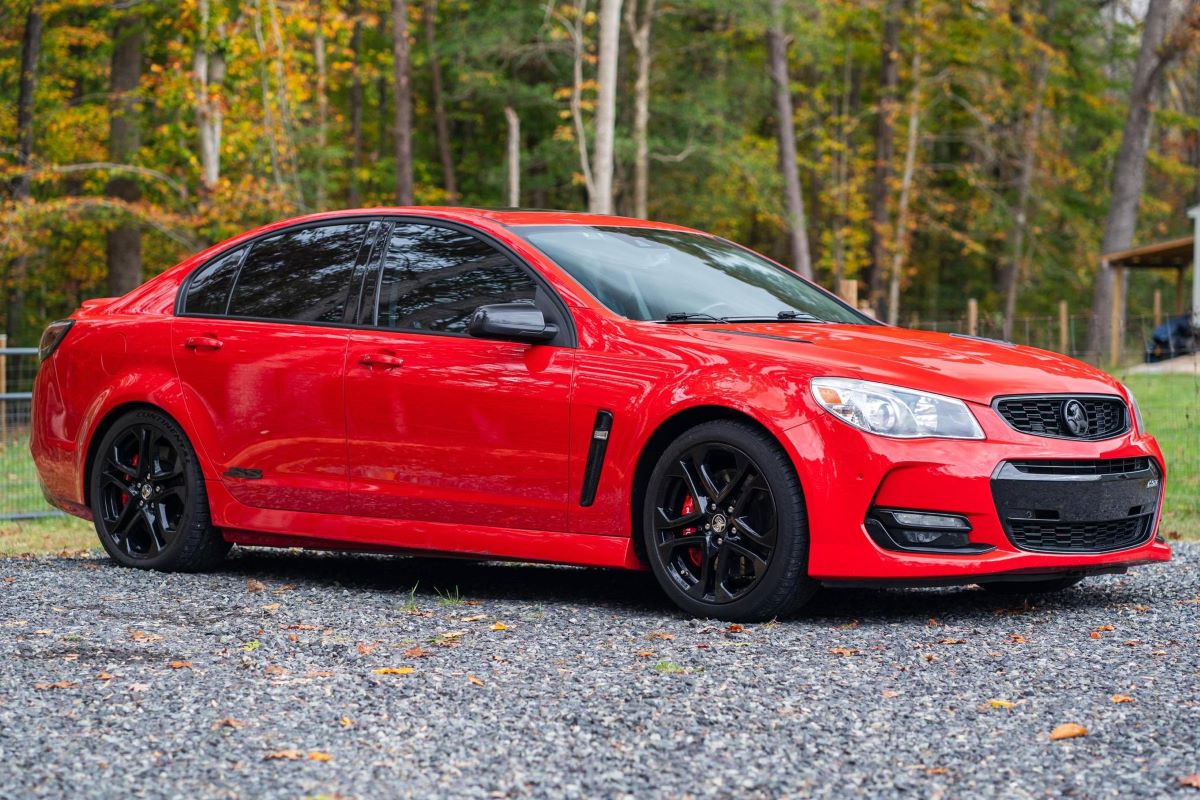
Speed has always been part of American car culture. From the golden era of muscle cars to modern supercharged V8 sedans, performance is usually associated with aggressive styling, wide stances, hood scoops, and aerodynamic body kits.
In the U.S., we’ve been conditioned to expect fast cars to look fast. But automotive history proves that appearances can be deceiving.
Some vehicles look ordinary. Some look outdated. A few even look awkward or downright unremarkable. Yet under the hood, they hide powertrains capable of humiliating sports cars at a stoplight.
These are not traditional performance icons in terms of design language. They’re sleeper vehicles, machines that blend into traffic but deliver serious acceleration.
Here are eight vehicles that are surprisingly fast despite their looks.
1. Toyota Camry TRD
For decades, the Toyota Camry has symbolized reliability and practicality in America. It’s a staple of suburban driveways, rental fleets, and daily commuting. The expectation is comfort and efficiency, not performance.
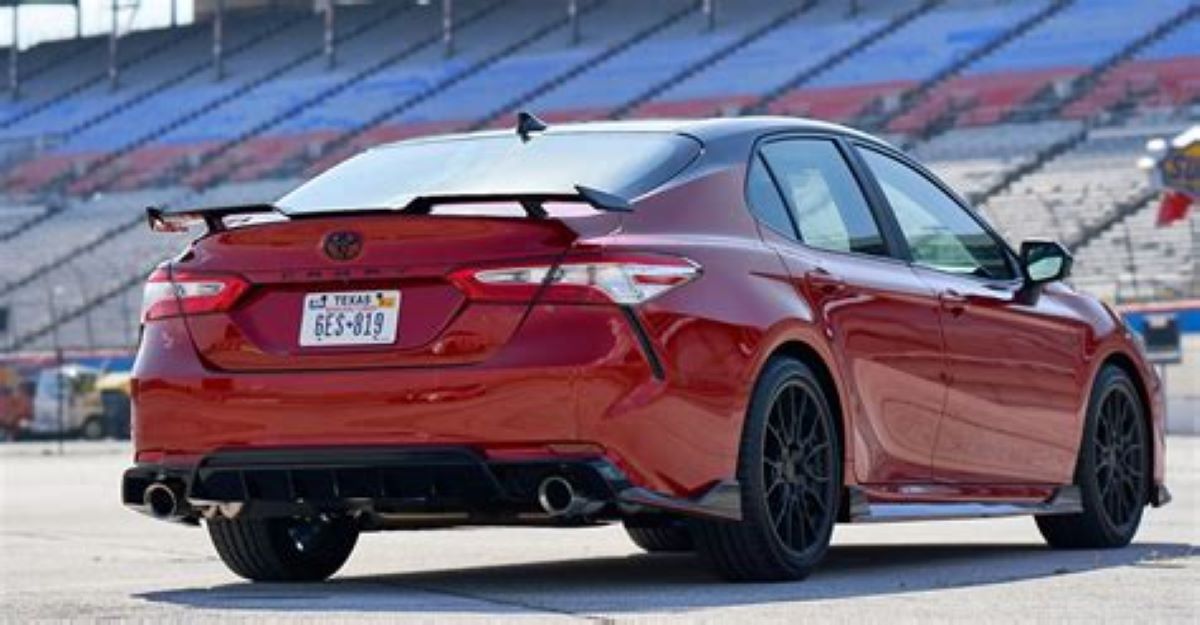
The TRD (Toyota Racing Development) variant changes that narrative. Powered by a 3.5-liter V6 producing 301 horsepower, the Camry TRD can sprint from 0–60 mph in the mid-five-second range.
That’s sports sedan territory. While the styling adds subtle aggressive elements like a rear spoiler and black wheels, at its core, it still resembles the same midsize sedan your neighbor drives.
In a market where midsize sedans are often dismissed as dull, the Camry TRD quietly delivers real-world performance without abandoning its everyday usability.
The standard four-cylinder engine is paired with a smooth-shifting eight-speed automatic transmission, but overall acceleration is underwhelming.
A detuned version of that same engine works in conjunction with a battery pack and two electric motors in the Camry Hybrid. While the hybrid setup improves efficiency, it delivers a driving experience that is no more engaging than the base gasoline powertrain.
The standout option in the lineup is the refined 301-horsepower V-6, available in the XLE and XSE trims as well as the sport-oriented TRD model. This engine transforms the Camry into a genuinely quick midsize sedan, offering strong, linear acceleration and a more satisfying performance profile.
Notably, the latest Camry has also improved in driving dynamics. The ride is composed and well controlled, while handling is more responsive than many would expect from a family sedan.
Steering feel strikes a well-judged balance, offering reassuring weight in corners while remaining light and easy to manage during low-speed maneuvers such as parking.
Brake performance is equally confidence-inspiring. The pedal feels firm and responsive, even in hybrid models where traditional friction braking must seamlessly integrate with regenerative braking to recharge the battery pack.
At very low speeds, however, the hybrid’s brake pedal can feel overly sensitive, making smooth parking maneuvers slightly more difficult. Despite this minor drawback, the Camry now delivers a far more polished and enjoyable driving experience than earlier generations.
2. Ford Taurus SHO
The Ford Taurus, particularly in its final generation, looked like a large, conservative American sedan. It didn’t scream performance. It didn’t look nimble. In fact, it looked heavy.
The SHO (Super High Output) trim told a different story. Equipped with a twin-turbocharged 3.5-liter EcoBoost V6 producing 365 horsepower and paired with all-wheel drive, the Taurus SHO could hit 60 mph in about 5.2 seconds.
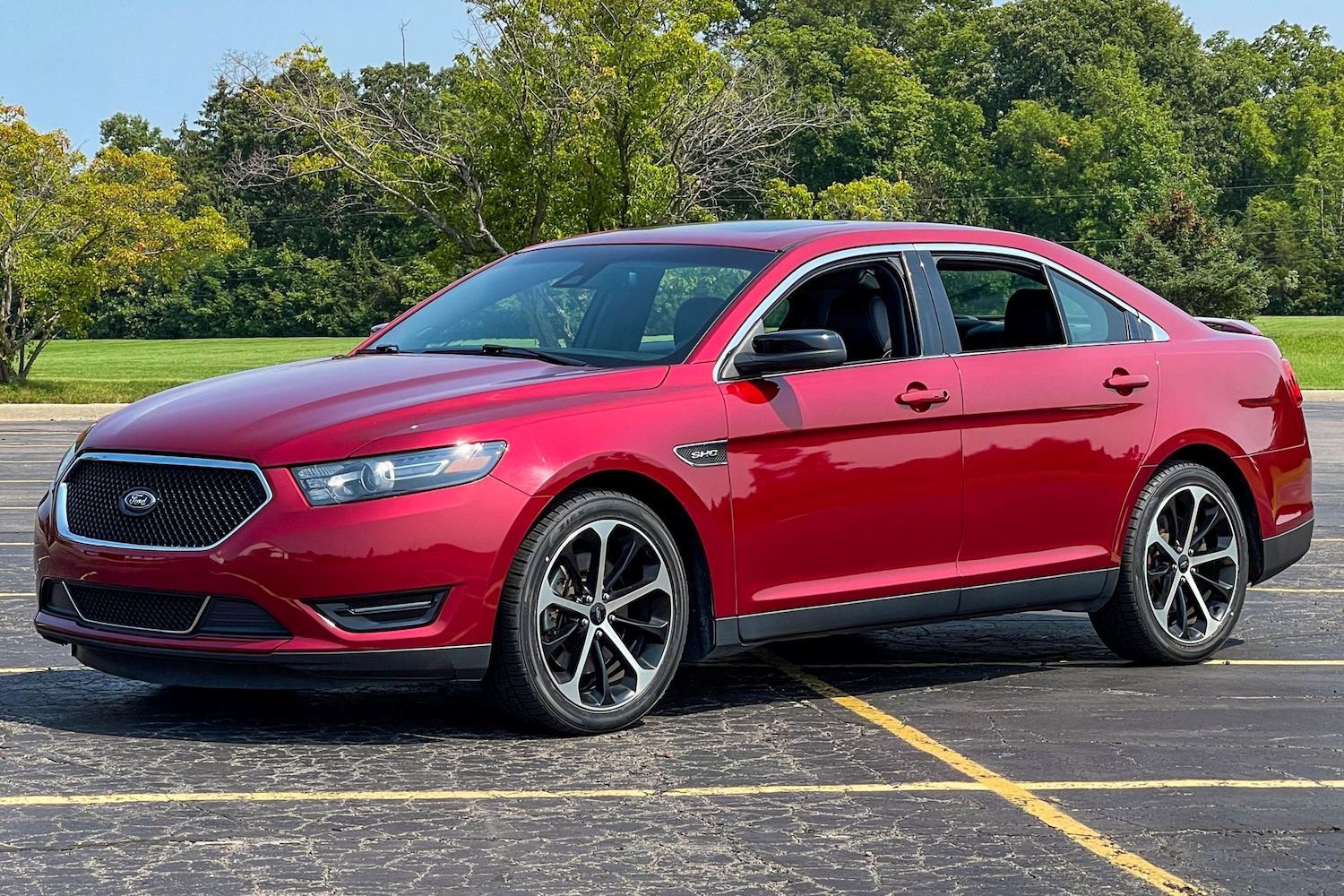
That’s comparable to many entry-level luxury sports sedans. To most observers, it appeared to be a typical fleet sedan or family car.
But under the hood was a twin-turbo setup capable of serious acceleration, making it one of the best modern American sleeper cars.
3. Chevrolet SS
At first glance, the Chevrolet SS looked like a rental-spec midsize sedan. It had understated lines and minimal badging. Nothing about its appearance suggested it housed a Corvette-derived engine.
Under the hood sat a 6.2-liter LS3 V8 producing 415 horsepower.
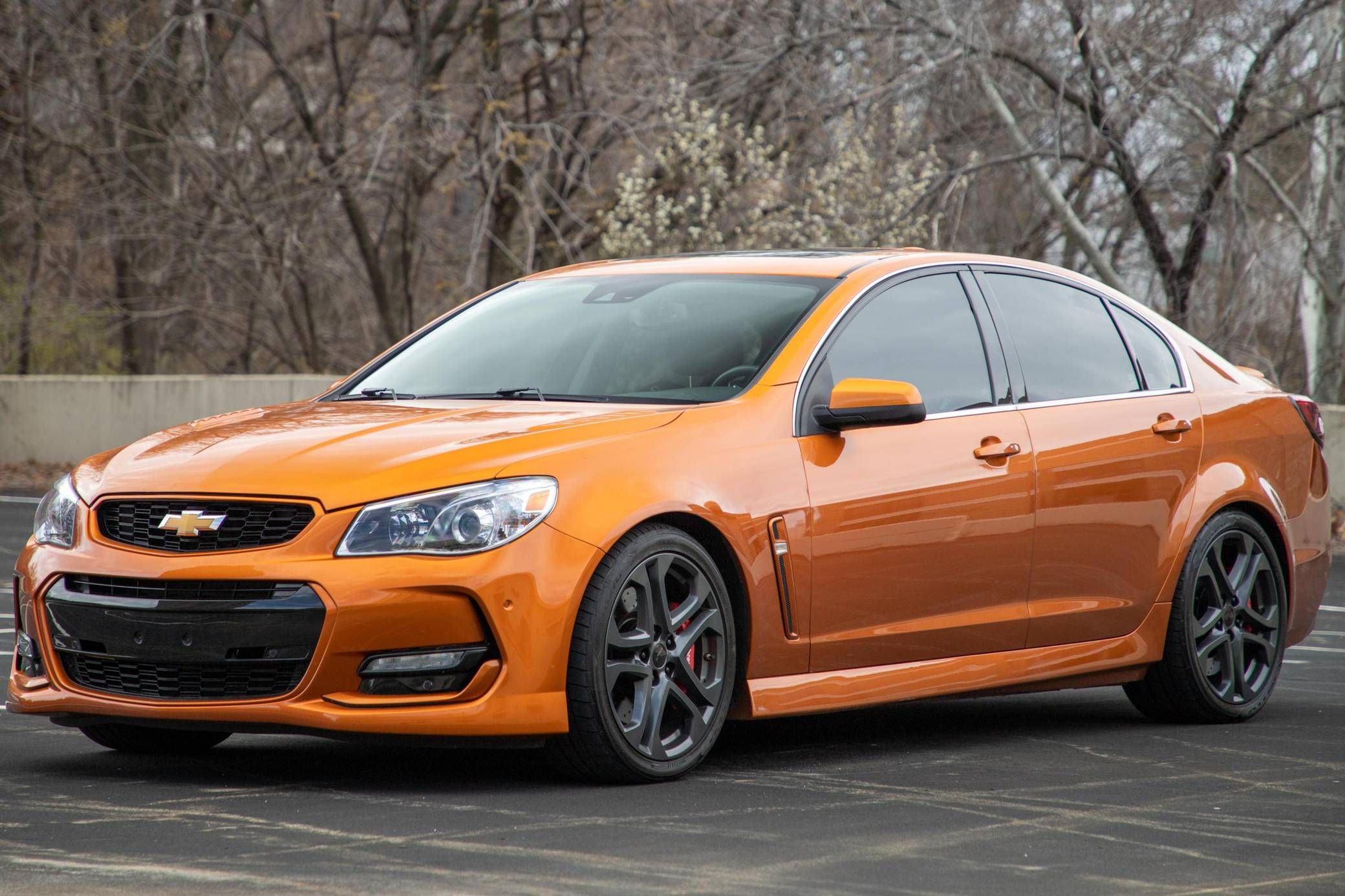
With rear-wheel drive and an available manual transmission, the SS was essentially a four-door muscle car in disguise. It could reach 60 mph in under five seconds.
For U.S. buyers who wanted muscle car performance without flashy styling, the Chevrolet SS was a near-perfect sleeper, although limited production numbers have since made it something of a cult classic.
There were no updates for the 2017 Chevrolet SS sedan in what marked its final model year. Production ended alongside the Australian-built Holden VF Commodore, upon which the SS was based. Chevrolet confirmed there would be no successor to the rear-wheel-drive performance sedan, effectively closing the chapter on this unique offering in the brand’s lineup.
The Chevrolet SS occupied a distinctive position within Chevrolet’s portfolio. Although it was the most expensive sedan in the automaker’s range, it also served as a performance-oriented model.
Other Chevrolet sedans at the time included the full-size Impala, midsize Malibu, compact Cruze, and subcompact Sonic. In Chevrolet’s broader performance lineup, the Camaro and Corvette coupes and convertibles were more widely recognized, but the SS delivered comparable performance in a more understated four-door package.
The rear-wheel-drive 2017 Chevrolet SS was powered by a 6.2-liter LS3 V-8 engine producing 415 horsepower at 5,900 rpm and 415 lb-ft of torque at 4,600 rpm. Buyers could choose between a Tremec TR6060 six-speed manual transmission or a GM Hydra-Matic six-speed automatic. Regardless of transmission, EPA fuel economy was rated at 14 mpg city and 22 mpg highway.
Performance-oriented hardware came standard, including Brembo four-piston front brake calipers and staggered 19-inch alloy wheels. Despite its performance credentials, the SS was offered in a single, well-equipped trim level. Options were limited primarily to exterior color, transmission selection, an available power sunroof, and a full-size spare tire.
Inside, the SS provided seating for five adults with standard leather upholstery. Front passengers were treated to supportive sport bucket seats, while Chevrolet’s MyLink infotainment system with integrated navigation came standard. The result was a full-size sedan that blended V-8 performance with everyday usability, albeit in a niche package that ultimately proved too specialized to continue.
4. Volvo S60 T8 Polestar Engineered
Volvo has long been associated with safety and Scandinavian minimalism, not blistering acceleration. The S60 sedan carries that refined, clean design language.
The T8 Polestar Engineered variant, however, combines a turbocharged and supercharged four-cylinder engine with electric motors to produce 455 horsepower.
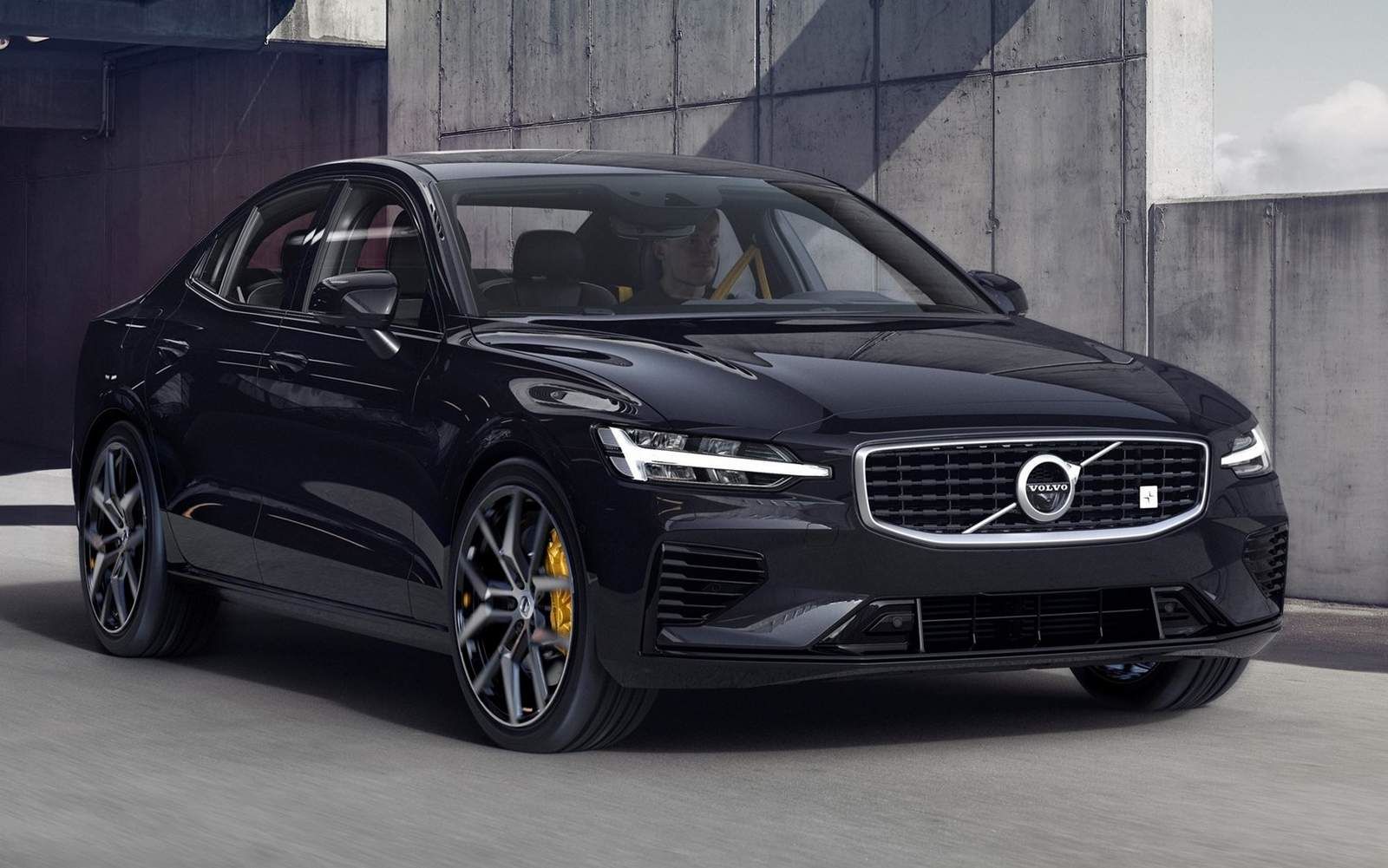
The result is a 0–60 mph time in the mid-four-second range. Its appearance remains subtle, aside from gold brake calipers and discreet badging.
To the average driver on an American highway, it looks like a luxury commuter. In reality, it delivers hybrid-assisted performance that rivals traditional V8 sedans.
Volvo rates the S60 Polestar Engineered at a combined 415 horsepower and 494 lb-ft of torque, generated by the collaboration between its turbocharged and supercharged gasoline engine and electric motor.
The result is strong off-the-line acceleration. In independent testing, MotorTrend recorded a 0–60 mph time of just 4.5 seconds. The immediate torque delivery makes the car feel genuinely quick from a standstill.
However, repeated hard launches quickly drain the relatively small 11.6-kWh battery pack. When the charge runs low, the electric assistance that defines the car’s character diminishes, which can be frustrating during extended spirited driving.
Volvo estimates the S60 Polestar Engineered can travel up to 22 miles on electric power alone, though using the car strictly in EV mode somewhat undermines its performance-focused identity.
The eight-speed automatic transmission occasionally hesitates, but it performs most smoothly when both the gasoline engine and electric motor are working together.
In Comfort mode, light throttle inputs rely exclusively on electric power. Press the accelerator more firmly, and the gasoline engine engages seamlessly. Once the battery is depleted, however, the engine operates continuously. At that point, much of the hybrid novelty fades, leaving behind the sound and feel of the turbocharged four-cylinder doing the bulk of the work.
Extended time behind the wheel revealed that driving the S60 Polestar Engineered effectively requires some adaptation. Without access to home charging, such as in apartment buildings without garage outlets, keeping the battery topped up can be challenging. In situations where external charging is not convenient, the vehicle’s onboard energy management features become essential.
Regenerative braking, activated via the “B” setting on the gear selector, helps recapture energy during deceleration. Additionally, selecting Charge mode through the infotainment system disables electric propulsion and uses the gasoline engine to replenish the battery.
Under favorable conditions, such as extended downhill driving, it is possible to restore approximately half a charge within 45 minutes to an hour. While not a substitute for plug-in charging, these features help maintain some electric assist when traditional charging options are unavailable.
5. Jeep Grand Cherokee Trackhawk
The Jeep Grand Cherokee is typically viewed as a family SUV or off-road vehicle. It’s boxy, tall, and heavy, hardly the profile of a drag-strip threat.
The Trackhawk version changes expectations dramatically. Powered by a supercharged 6.2-liter Hellcat V8 generating 707 horsepower, it can accelerate from 0–60 mph in about 3.5 seconds. That’s faster than many sports cars costing twice as much.
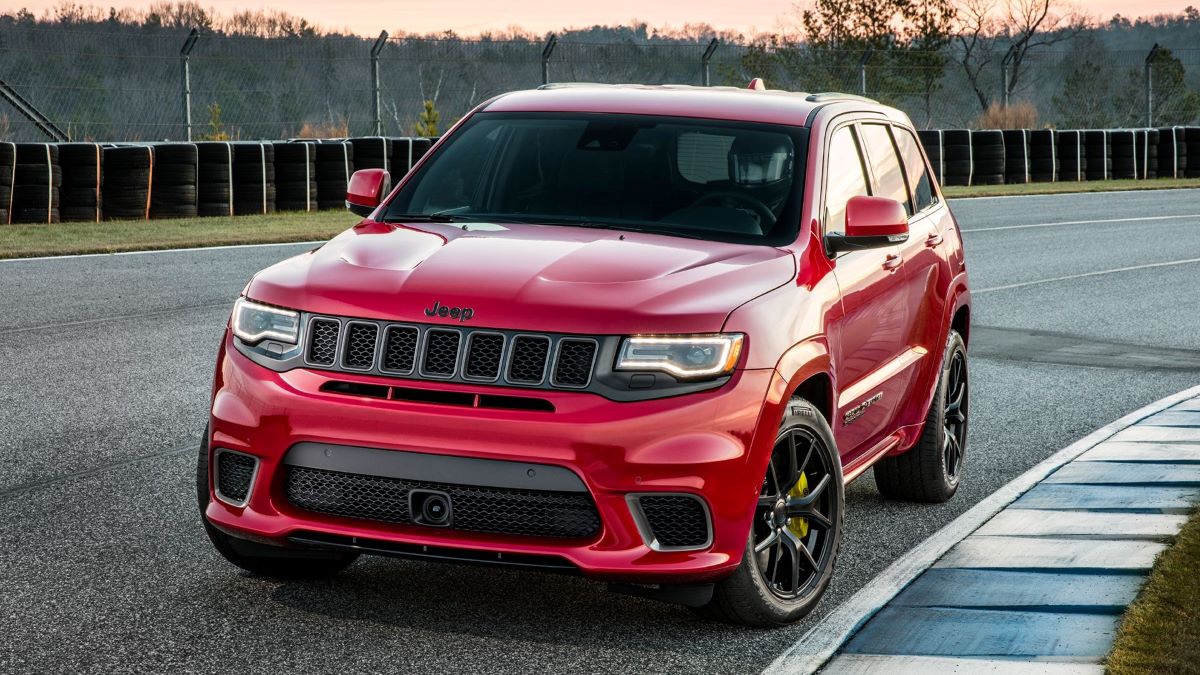
While subtle design cues hint at its capability, most people simply see a midsize SUV. Few expect it to outrun performance coupes in a straight line. It’s a textbook example of performance hiding in plain sight.
Before Dodge introduced its own Hellcat-powered SUV, now known as the Dodge Durango SRT Hellcat, Jeep had already claimed that territory.
The Grand Cherokee Trackhawk debuted with the same 6.2-liter supercharged V-8 found in the Dodge Challenger and Charger Hellcat models. At the time, it was the only other factory vehicle to receive the Hellcat engine. Output matched its Dodge counterparts, producing 707 horsepower and paired with the same eight-speed automatic transmission.
Where the Trackhawk distinguished itself, however, was in how effectively it delivered that power to the pavement.
The Dodge Challenger and Charger Hellcat models were rear-wheel drive, and with over 700 horsepower sent exclusively to the rear wheels, traction was often a limiting factor.
Hard launches frequently resulted in wheel spin unless the surface was properly prepared. The Jeep Trackhawk, by contrast, featured a full-time all-wheel-drive system. That drivetrain advantage allowed it to deploy all 707 horsepower with minimal wheel slip, giving it a clear edge in real-world acceleration.
As a result, the Trackhawk consistently achieved its claimed 0–60 mph time of 3.4 seconds. While Dodge quoted a 3.7-second sprint for its Hellcat sedans, those figures were more difficult to replicate under typical road conditions due to traction limitations. In practical terms, the Trackhawk became the quickest-accelerating factory vehicle powered by the Hellcat engine at the time.
Beyond stock performance, the Trackhawk also became a favorite among enthusiasts for its tuning potential. The supercharged 6.2-liter V-8 has proven capable of reliably exceeding 1,000 horsepower with relatively straightforward modifications.
Combined with its all-wheel-drive system, the platform provided a more manageable way to harness extreme power increases. The popularity of modified Trackhawks, along with continued demand for Hellcat-powered vehicles, did not go unnoticed.
Dodge eventually responded by launching its own high-performance SUV. The Durango SRT Hellcat arrived for the 2021 model year, roughly three years after the Trackhawk had established itself in the segment.
It featured an updated version of the Hellcat engine, now producing 710 horsepower while maintaining the same torque output. Like the Trackhawk, the Durango SRT Hellcat utilized an all-wheel-drive system to maximize traction and performance.
In effect, Dodge adopted the formula that had proven successful in the Jeep: supercharged V-8 power combined with all-wheel drive to deliver repeatable, supercar-level acceleration in an SUV package.
6. Mercedes-Benz E63 AMG Wagon
Station wagons are rare in the U.S., and when they do appear, they’re usually associated with practicality rather than speed. The Mercedes-Benz E63 AMG Wagon maintains that long-roof silhouette.
Yet beneath its conservative luxury exterior lies a twin-turbocharged V8 producing up to 603 horsepower in recent versions. With all-wheel drive, it can reach 60 mph in approximately 3.4 seconds.
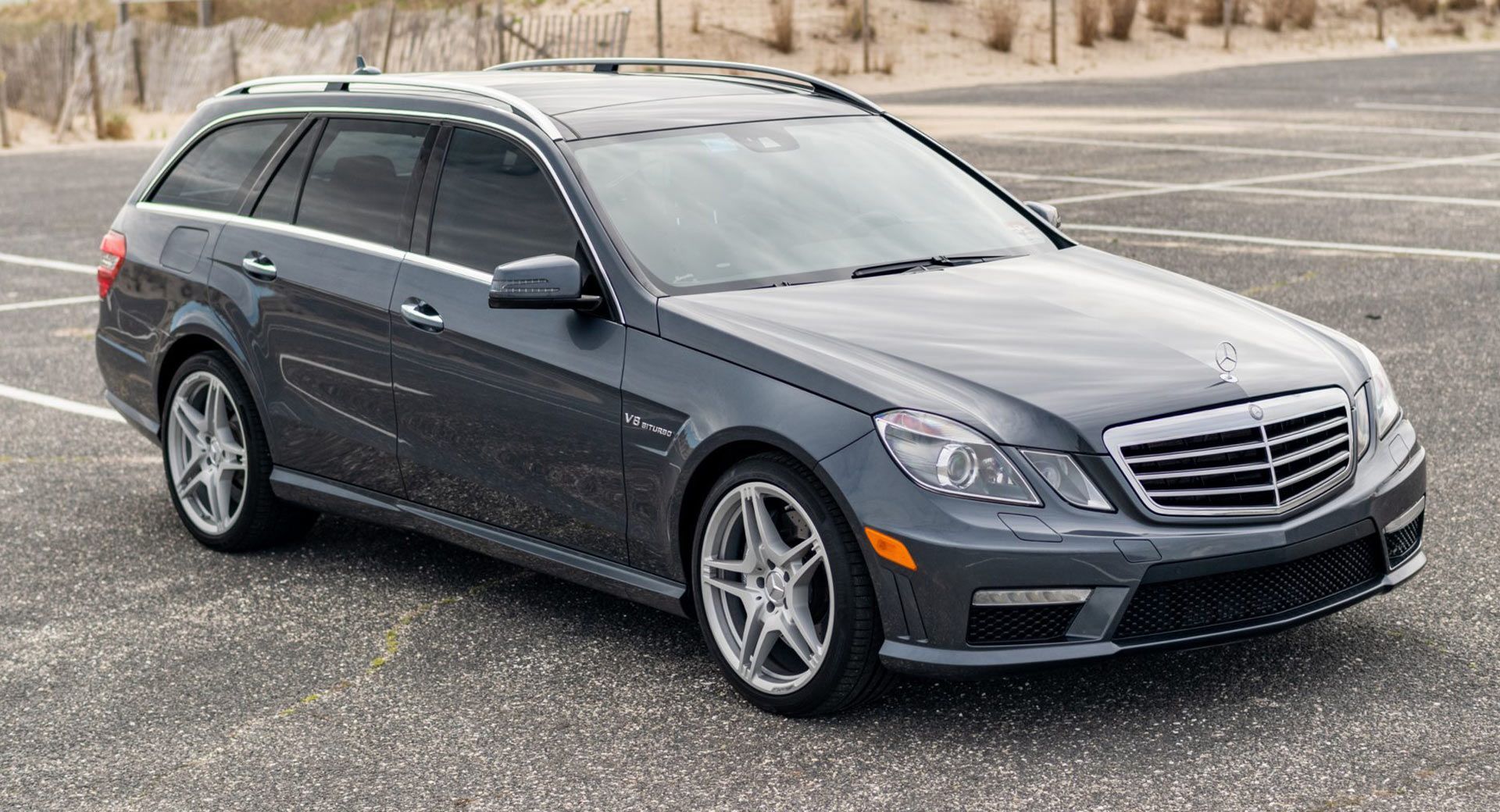
From a visual standpoint, it resembles a premium family hauler. On paper, it performs like a supercar. That contrast makes it one of the most surprising high-performance vehicles available in America.
The 2023 Mercedes-AMG E63 S Wagon takes the already formidable E63 Sedan formula and adds a significant dose of practicality. Under the hood sits a 4.0-liter twin-turbocharged V8 producing 603 horsepower and 627 lb-ft of torque, paired with AMG’s 4Matic+ all-wheel-drive system, which includes a selectable drift mode.
The result is explosive performance, including a 0–60 mph time of just 3.4 seconds. Inside, the cabin delivers the level of refinement expected from a high-end Mercedes product, blending performance-focused elements with premium materials and advanced technology.
Despite its niche appeal, the E63 S Wagon does not operate without competition. The Audi RS6 Avant occupies the same midsize luxury performance wagon space, and reports suggest that BMW may introduce an M5 Wagon in the future. Pricing reflects the exclusivity of this segment.
The E63 S Wagon starts at approximately $120,000 before destination charges, and a well-optioned example can approach $150,000. The Audi RS6 Avant begins at a similar price point, just above $121,000, and can climb past $145,000 when fully equipped.
On the road, the E63 Wagon balances supercar-level acceleration with everyday usability, though the compromise is evident in ride comfort. While Mercedes-AMG revised the suspension for the 2021 model year, the ride remains firm and can feel unsettled over uneven suburban pavement.
Buyers expecting the plush compliance of a traditional luxury wagon may find it harsher than anticipated. The Audi RS6 offers slightly better ride comfort, but neither vehicle prioritizes softness.
The trade-off for that firmness is exceptional composure during aggressive driving. The E63 Wagon resists body roll, maintains remarkable grip, and feels planted at speed.
Steering response is precise, and AMG’s configurable drive modes allow drivers to adjust steering weight, suspension stiffness, throttle sensitivity, and drivetrain behavior to suit different conditions.
With 4Matic+ distributing power effectively, traction is abundant, and acceleration is relentless. While a slightly more compliant setup would improve daily comfort, the overall driving experience remains intensely engaging.
There is a reason Mercedes-AMG imports only limited numbers of the E63 S Wagon to the United States. On paper, it occupies a narrow niche between performance sedans and high-performance SUVs.
Yet for enthusiasts who appreciate the blend of wagon practicality and V8 performance, it represents something increasingly rare. Demand in the U.S., while modest compared to SUVs, remains strong enough to justify its presence.
Visually, the E63 Wagon carries muscular proportions and aggressive styling cues that signal its performance potential. Inside, occupants benefit from generous cargo capacity rivaling many SUVs, along with an extensive suite of standard technology and luxury features.
Ultimately, it is the twin-turbocharged V8 that defines the experience. The powertrain delivers acceleration that feels almost excessive for a wagon, challenging conventional expectations of the body style.
The ride may lean toward the firm side, but in a vehicle that combines supercar performance with family-hauling practicality, that compromise is easier to accept. The 2023 Mercedes-AMG E63 S Wagon stands as a defiant, high-performance anomaly in a market dominated by crossovers, and for that alone, it earns distinction.
7. Chrysler 300 SRT8
The Chrysler 300 has always had a bold presence, but it doesn’t necessarily look quick. Its design is more about size and luxury than agility.
The SRT8 trim packed a 6.4-liter HEMI V8 with 470 horsepower. Rear-wheel drive and substantial torque allowed it to reach 60 mph in under five seconds.
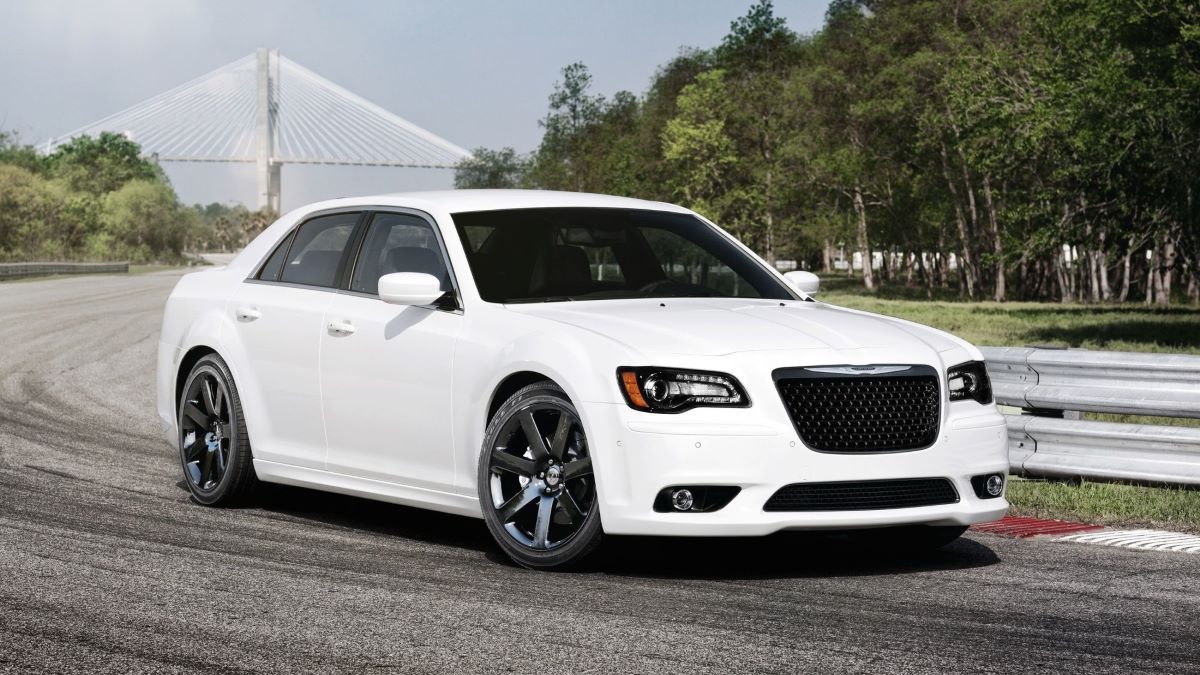
Many Americans see the 300 as a comfortable cruiser. The SRT8 version proves it can also function as a legitimate muscle sedan.
This executive sedan with Mercedes-derived underpinnings is far from ordinary, as it wears the high-performance SRT8 badge. That designation signals something important: beneath the hood sits a naturally aspirated Hemi V8.
Specifically, the Chrysler 300 SRT8 is powered by a 6.4-liter Hemi V8, an engine also found in several other performance-focused models from the era. In this application, it produces 470 horsepower (351 kW / 477 PS) and 470 lb-ft (637 Nm) of torque.
Those figures translate into a 0–60 mph sprint in the low four-second range, according to factory estimates. The limited-production 300C variant, capped at 2,200 units, delivered slightly sharper performance but shared similar core mechanicals.
In stock form, the 300 SRT8 required just over 12.5 seconds to complete the quarter mile. By modern standards, that figure may not seem particularly remarkable, especially when contemporary high-performance vehicles can eclipse it by several seconds without modification.
The 300 SRT8 is a discontinued sedan that debuted more than a decade ago. With aftermarket tuning, its performance potential increases significantly, allowing it to surpass its factory numbers with relative ease.
That raises an interesting question: is the Chrysler 300 SRT8 quick enough to challenge a Dodge Challenger SRT Hellcat?
The previous-generation Challenger SRT Hellcat featured a 6.2-liter supercharged V8 that produced over 700 horsepower in its standard configuration. Depending on the variant, output could exceed 800 horsepower in higher trims. The Hellcat’s forced-induction setup provides a substantial performance advantage over the naturally aspirated 6.4-liter in the 300 SRT8.
At the extreme end of Dodge’s muscle car hierarchy sat the Challenger SRT Demon 170. That model delivered up to 1,025 horsepower (765 kW / 1,040 PS) and 945 lb-ft (1,280 Nm) of torque when running on E85 fuel. Official performance figures included a quarter-mile time of 8.91 seconds at over 151 mph (243 kph) and a 0–60 mph time of just 1.66 seconds.
By comparison, the Chrysler 300 SRT8 cannot realistically compete with the Hellcat or Demon variants in outright acceleration. Nevertheless, as a naturally aspirated, rear-wheel-drive performance sedan from its era, the 300 SRT8 remains a compelling example of American V8 muscle in a four-door package.
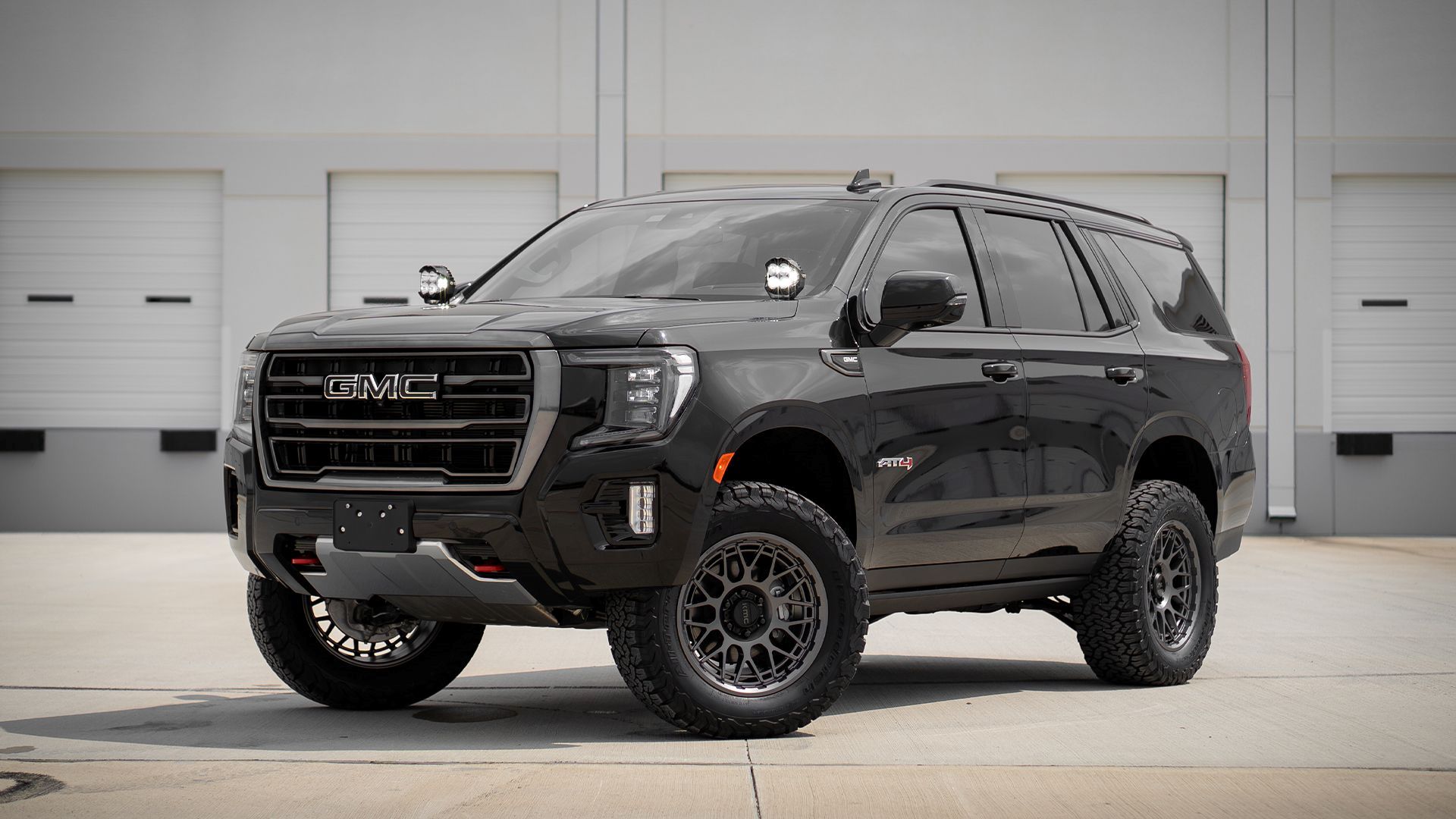
8. GMC Yukon Denali
Full-size SUVs are built for space, towing, and family duty. The GMC Yukon Denali fits squarely into that category, with imposing dimensions and a focus on comfort.
Recent Denali models equipped with the 6.2-liter V8 produce 420 horsepower. Despite weighing well over 5,500 pounds, the Yukon Denali can reach 60 mph in roughly six seconds, impressive for a vehicle of its size.
It may not compete with sports sedans, but few drivers expect a three-row luxury SUV to accelerate that quickly. In real-world driving, that power makes highway merging and towing effortless.
In the American market, performance often comes wrapped in visual drama. But not every fast vehicle wears its speed on its sleeve. Some blend into commuter traffic. Others look like family haulers. A few even resemble rental cars.
These eight vehicles challenge the assumption that speed must be accompanied by aggressive styling. They demonstrate that engineering and powertrains matter more than appearances.
For drivers who appreciate subtlety, sleeper vehicles offer a unique appeal: the ability to surprise without attracting unnecessary attention.
In a country where car culture celebrates both muscle and innovation, these understated machines prove that sometimes the fastest vehicle on the road is the one you least expect.
