Brake systems are one of the most critical safety components in any vehicle, but they’re also among the most predictable when it comes to maintenance. Pads wear out. Rotors thin.
Calipers eventually stick. For American drivers, the key question isn’t whether you’ll service your brakes, it’s how much it will cost when you do.
Some vehicles are engineered with simple, widely available braking components that keep overhaul costs low. Others use oversized rotors, specialty calipers, or integrated electronic systems that can drive bills sharply higher.
In the U.S. market, brake affordability typically comes down to three factors: parts availability, design simplicity, and aftermarket support.
Vehicles with conventional single-piston calipers, standard-sized rotors, and mechanical (rather than electronic) parking brakes tend to be far cheaper to service.
Models that share components across multiple trims, or even multiple brands, benefit from strong competition among parts suppliers, further lowering costs.
Below are ten vehicles sold in the United States that consistently rank among the most affordable when it comes to brake system overhauls.
These models balance durability, ease of service, and parts accessibility, making them practical long-term ownership choices.
1. Toyota Corolla
The Toyota Corolla has built its reputation on reliability and low ownership costs, and its brake system reflects that philosophy.
Most recent U.S.-spec Corollas use straightforward front disc and rear disc (or older rear drum) configurations with widely available components.
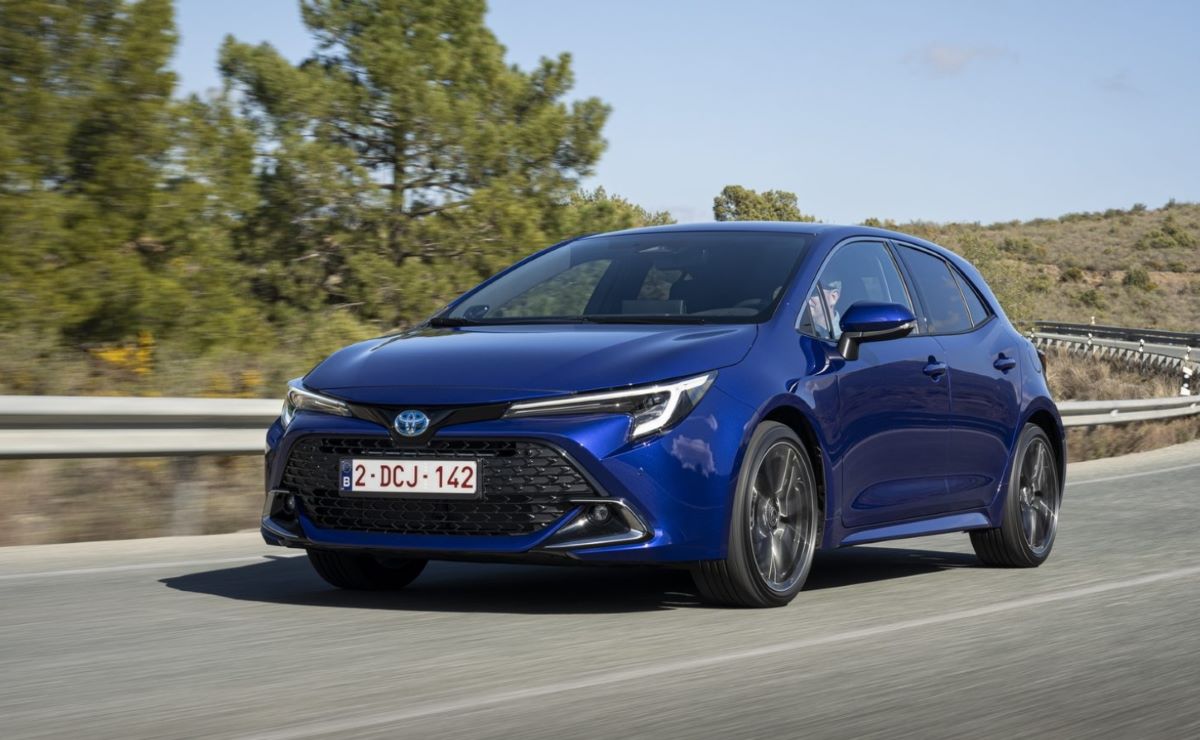
Pads and rotors are inexpensive due to the Corolla’s massive sales volume and parts interchangeability across model years.
Labor costs also remain modest because the brake system layout is conventional and easy to access. A full four-wheel brake job on a Corolla is typically well below the national average for compact cars.
The Toyota Corolla delivers efficient, entry-level performance with both gasoline and hybrid powertrains. The standard gasoline model uses a 2.0-liter Dynamic Force inline-four producing 169 horsepower and 151 lb-ft of torque, paired with a continuously variable transmission (CVT) driving the front wheels.
Acceleration from 0–60 mph occurs in approximately 8.0–8.2 seconds. Top speed is electronically limited to around 110–118 mph depending on trim. The Corolla emphasizes smooth throttle response and predictable handling rather than outright performance.
The Corolla Hybrid pairs a 1.8-liter four-cylinder engine with electric motors, producing a combined 138 horsepower. Front-wheel drive is standard, while electronic on-demand all-wheel drive (AWD) is available on select trims. The hybrid reaches 60 mph in roughly 9.0–9.5 seconds.
Fuel efficiency is a primary strength. The gasoline model averages approximately 31 mpg city and 40 mpg highway. The hybrid delivers around 44–50 mpg combined depending on drivetrain. Towing is not rated for U.S. models. The Corolla focuses on reliability, low operating costs, and balanced daily-driving performance.
2. Honda Civic
Like the Corolla, the Honda Civic benefits from enormous parts availability and a simple engineering approach.
Standard single-piston calipers and moderate rotor sizes keep replacement costs manageable.
Aftermarket suppliers produce high-quality brake components at competitive prices, which gives consumers flexibility.
The Civic’s popularity in the U.S. also means most independent repair shops are familiar with its brake layout, reducing labor time. The Civic remains one of the most economical compact cars to maintain.
The Honda Civic offers a balance of efficiency and responsive handling across its gasoline lineup. The standard engine in lower trims is a 2.0-liter naturally aspirated inline-four producing 158 horsepower and 138 lb-ft of torque, paired with a continuously variable transmission (CVT) driving the front wheels.
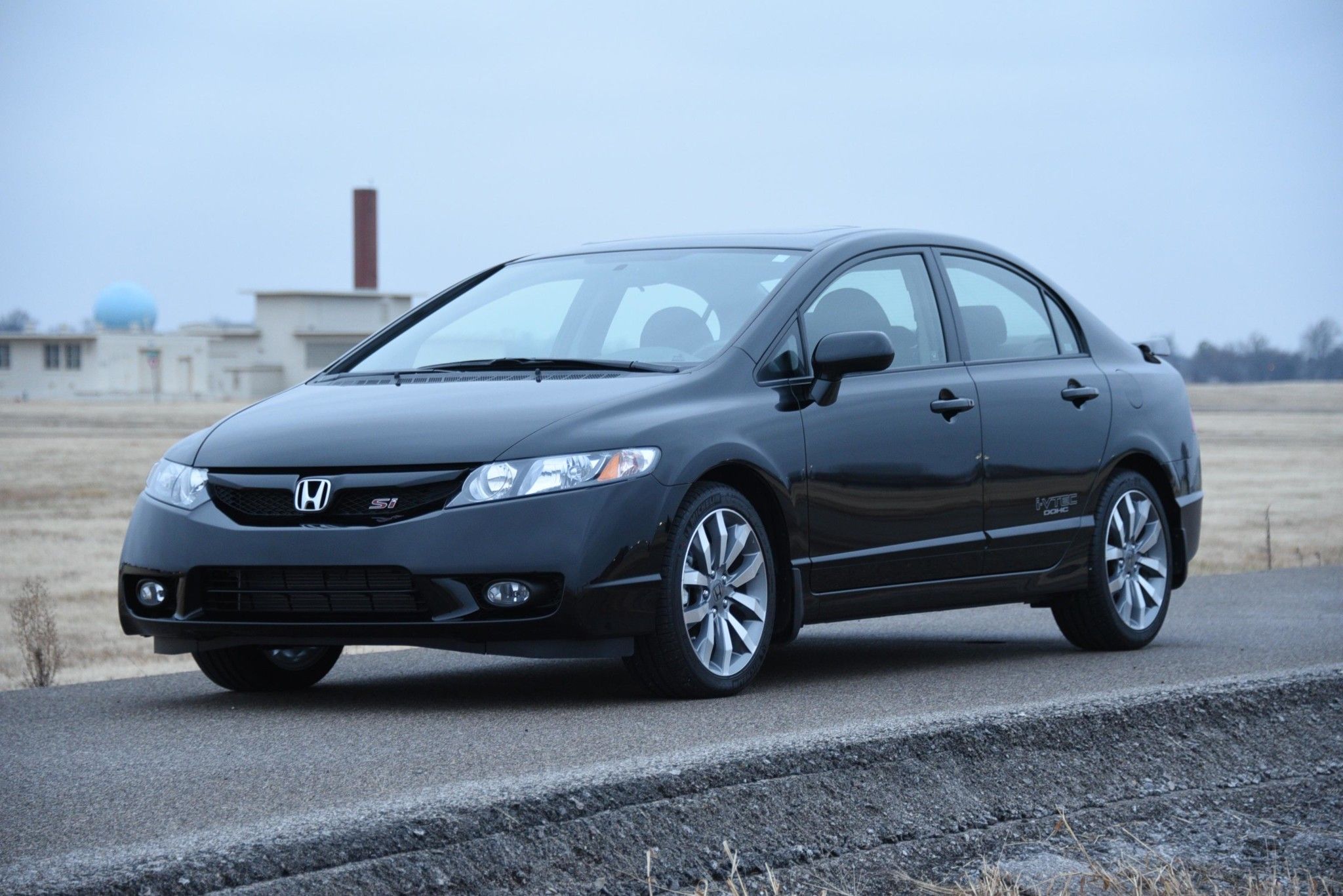
Higher trims feature a 1.5-liter turbocharged inline-four generating 180 horsepower and 177 lb-ft of torque. The turbo variant delivers stronger mid-range acceleration and improved passing performance while maintaining efficiency.
The 2.0-liter Civic accelerates from 0–60 mph in approximately 8.0–8.5 seconds, while the 1.5-liter turbo reduces that time to roughly 6.8–7.2 seconds. Top speed is electronically limited to around 115–125 mph depending on configuration.
Fuel economy averages about 31 mpg city and 40 mpg highway for the base engine, with turbo trims achieving roughly 33 mpg city and 42 mpg highway. The Civic is front-wheel drive only and emphasizes chassis balance, with independent rear suspension contributing to stable cornering. Ground clearance measures approximately 6.7 inches, and towing is not officially rated in the U.S. market.
3. Hyundai Elantra
The Hyundai Elantra has steadily improved in build quality while retaining low maintenance costs.
Its brake components are competitively priced, and Hyundai’s shared platform strategy across multiple models increases parts commonality.
The Elantra’s brake rotors are modest in size compared to sport-oriented competitors, keeping material costs down. For budget-conscious American buyers, this sedan offers a particularly cost-effective brake overhaul profile.
The Hyundai Elantra offers a range of powertrains spanning efficiency-focused trims to high-performance variants. The standard gasoline model is powered by a 2.0-liter naturally aspirated inline-four producing 147 horsepower and 132 lb-ft of torque, paired with an intelligent variable transmission (IVT) driving the front wheels.
Acceleration from 0–60 mph in the base configuration occurs in approximately 8.2–8.6 seconds. Top speed is electronically limited to around 115 mph. Fuel economy averages roughly 31 mpg city and 40 mpg highway.
The Elantra Hybrid combines a 1.6-liter four-cylinder engine with an electric motor, delivering a combined 139 horsepower and 195 lb-ft of torque through a 6-speed dual-clutch automatic transmission. It achieves approximately 50–54 mpg combined depending on trim and configuration.
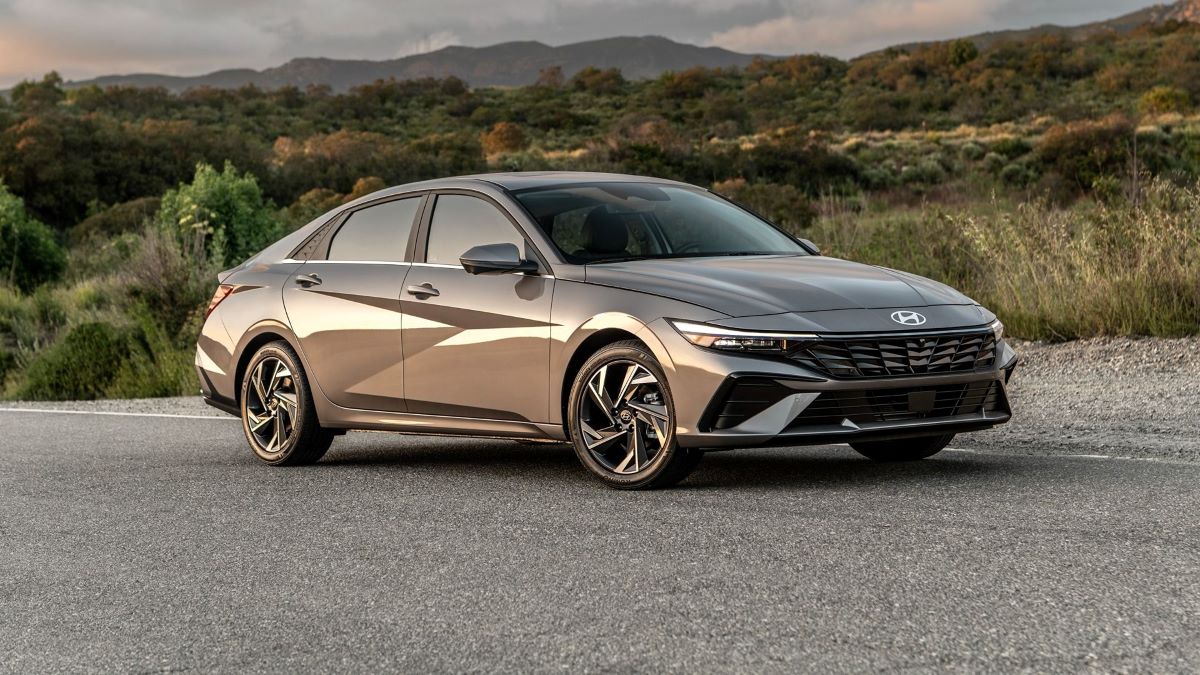
For performance-oriented drivers, the Hyundai Elantra N features a 2.0-liter turbocharged engine producing 276 horsepower (up to 286 hp with overboost) and 289 lb-ft of torque.
It accelerates from 0–60 mph in about 5.0–5.3 seconds. The Elantra lineup emphasizes efficiency, sharp styling, and, in N form, track-capable performance within the compact segment.
From a chassis perspective, the Elantra uses a MacPherson strut front suspension and torsion-beam rear setup on standard models, tuned for ride comfort and predictable daily handling. The Elantra N upgrades to a multi-link rear suspension, adaptive dampers, reinforced chassis components, and larger performance brakes.
Interior practicality remains a key strength. Rear legroom approaches midsize sedan territory, and trunk space exceeds 14 cubic feet, placing it among the more cargo-friendly options in its segment. Noise insulation and ride refinement have been improved over earlier generations.
Ownership costs are competitive, supported by Hyundai’s 5-year/60,000-mile basic warranty and 10-year/100,000-mile powertrain warranty, along with relatively low maintenance and insurance costs within the compact class.
4. Toyota Camry
As one of America’s best-selling midsize sedans, the Toyota Camry benefits from economies of scale.
Its brake system uses durable, conventional hardware designed for longevity rather than performance extremes.
Replacement pads and rotors are widely stocked across auto parts chains in the U.S., and pricing is competitive due to high demand. Even hybrid versions use accessible components that don’t significantly inflate brake service costs.
The Toyota Camry enters the 2025 model year as a fully hybrid lineup, eliminating the previous gasoline-only option. It is powered by a 2.5-liter four-cylinder engine paired with Toyota’s fifth-generation hybrid system, producing a combined 225 horsepower in front-wheel-drive form. All-wheel-drive models add a rear-mounted electric motor, increasing total output to 232 horsepower.
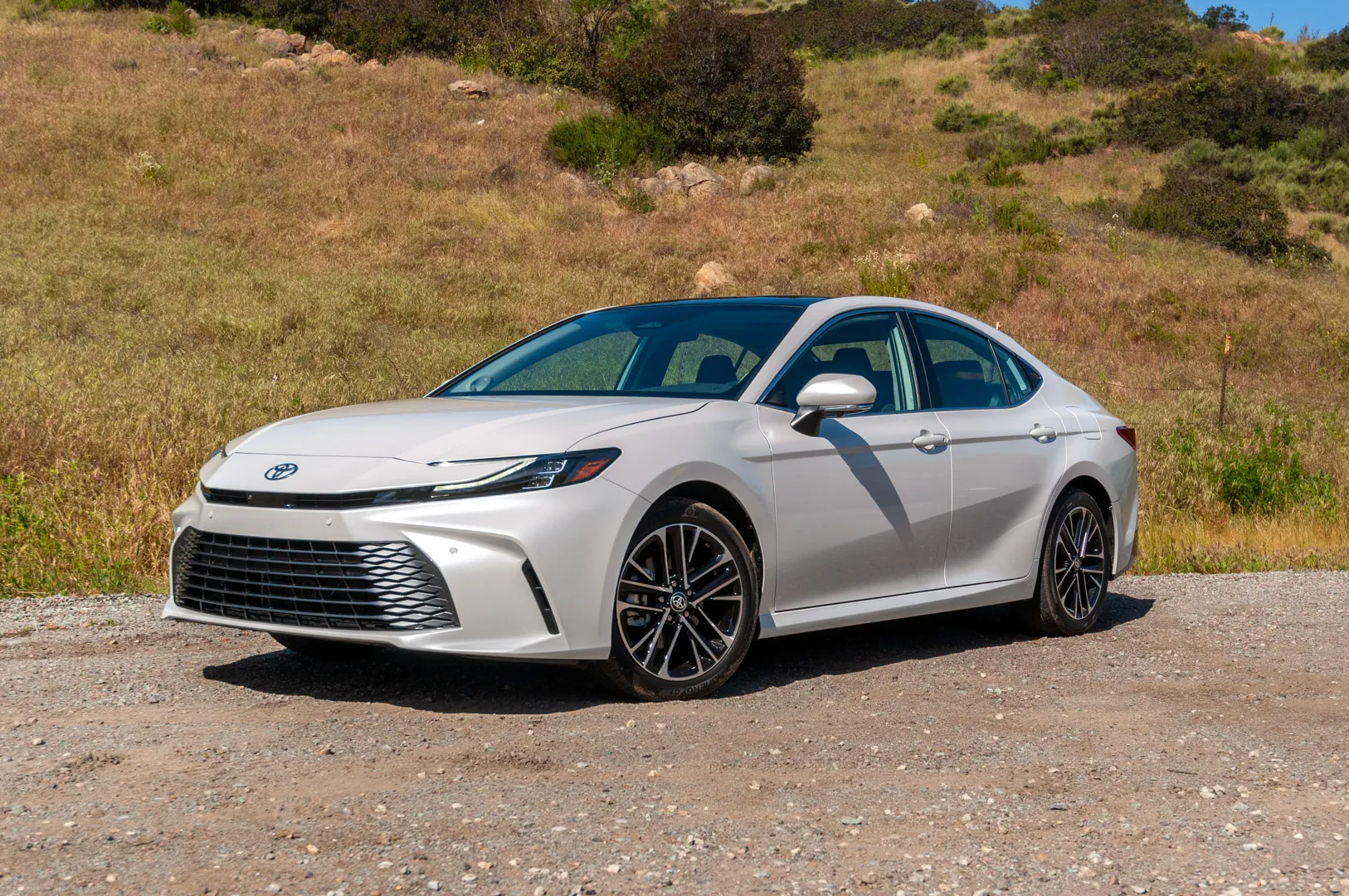
Acceleration from 0–60 mph occurs in approximately 6.8–7.1 seconds depending on drivetrain. Power delivery is managed through an electronically controlled continuously variable transmission (eCVT), prioritizing smoothness and efficiency over aggressive shift behavior. Top speed is electronically limited to roughly 115–120 mph.
Fuel economy is a key strength. Front-wheel-drive models achieve an estimated 44–51 mpg combined depending on trim, while all-wheel-drive versions deliver approximately 43–49 mpg combined. The AWD system operates electronically, engaging the rear motor when additional traction is required.
The Camry maintains a balanced chassis with independent suspension front and rear, offering stable handling and refined ride comfort. Towing is not rated for the U.S. market. Ground clearance measures about 5.4 inches, consistent with midsize sedan norms.
5. Honda Accord
The Honda Accord follows a similar formula to the Camry. Its braking hardware is robust yet uncomplicated, making overhauls straightforward.
The large U.S. market footprint ensures competitive parts pricing. Even higher trims avoid exotic brake configurations that would raise replacement expenses.
As a result, long-term owners generally report predictable and moderate brake service bills.
The Honda Accord offers two primary powertrains focused on efficiency and balanced performance. The standard engine is a 1.5-liter turbocharged inline-four producing 192 horsepower and 192 lb-ft of torque, paired with a continuously variable transmission (CVT) driving the front wheels.
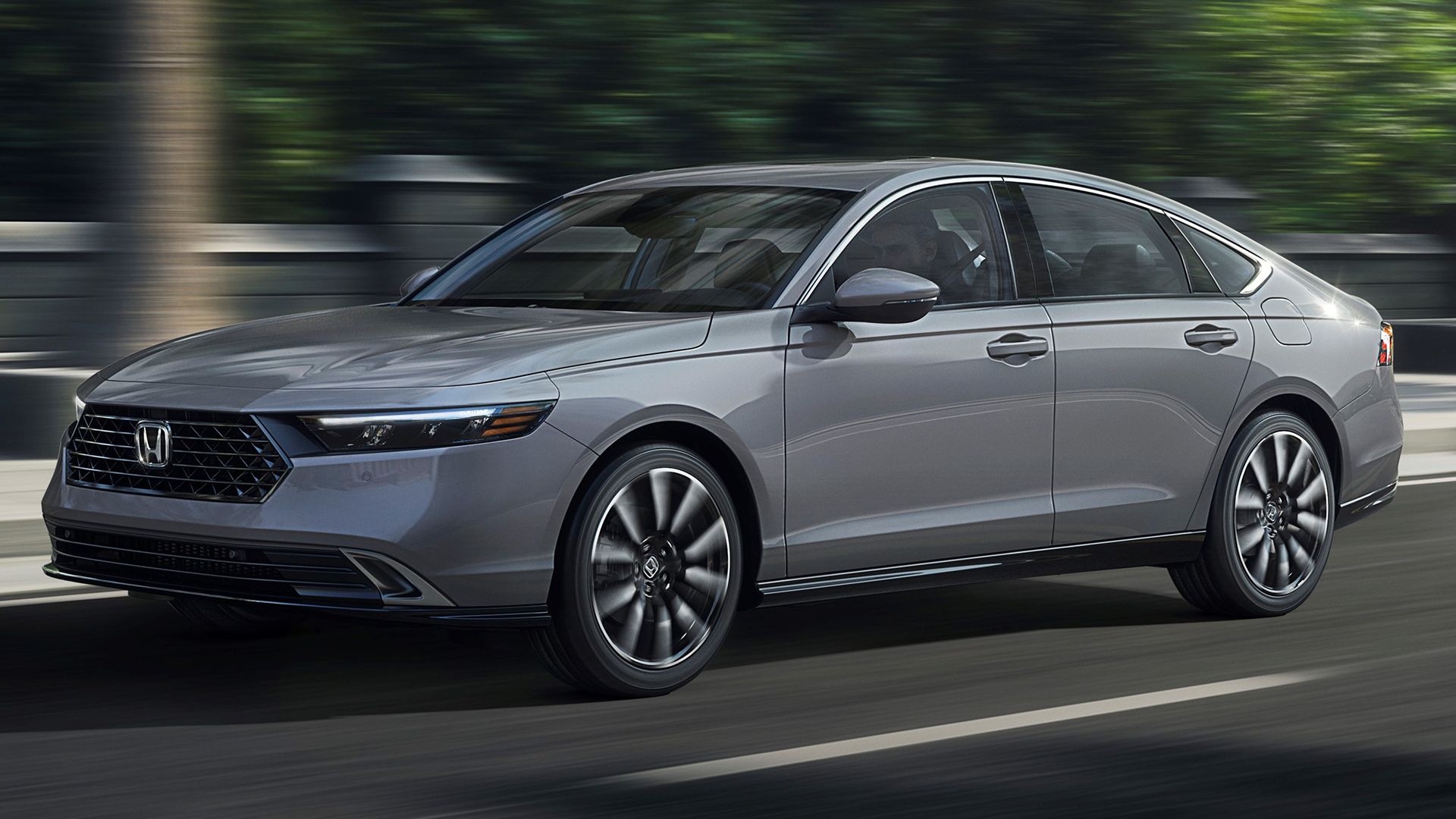
The hybrid variant combines a 2.0-liter Atkinson-cycle four-cylinder engine with a dual-motor hybrid system, generating a combined 204 horsepower and 247 lb-ft of torque. The hybrid setup delivers stronger low-end response and smoother acceleration compared to the turbo-only model.
Acceleration from 0–60 mph takes approximately 7.2–7.5 seconds with the 1.5T engine, while the hybrid achieves the sprint in about 6.6–6.8 seconds. Top speed is electronically limited to roughly 115–125 mph depending on configuration.
Fuel economy for the 1.5T averages around 29 mpg city and 37 mpg highway. The hybrid improves efficiency significantly, delivering approximately 44–48 mpg combined depending on trim.
The Accord uses independent front and rear suspension, contributing to stable handling and refined ride quality. Ground clearance measures approximately 5.3 inches, and towing is not officially rated in the U.S. market.
6. Ford Fusion
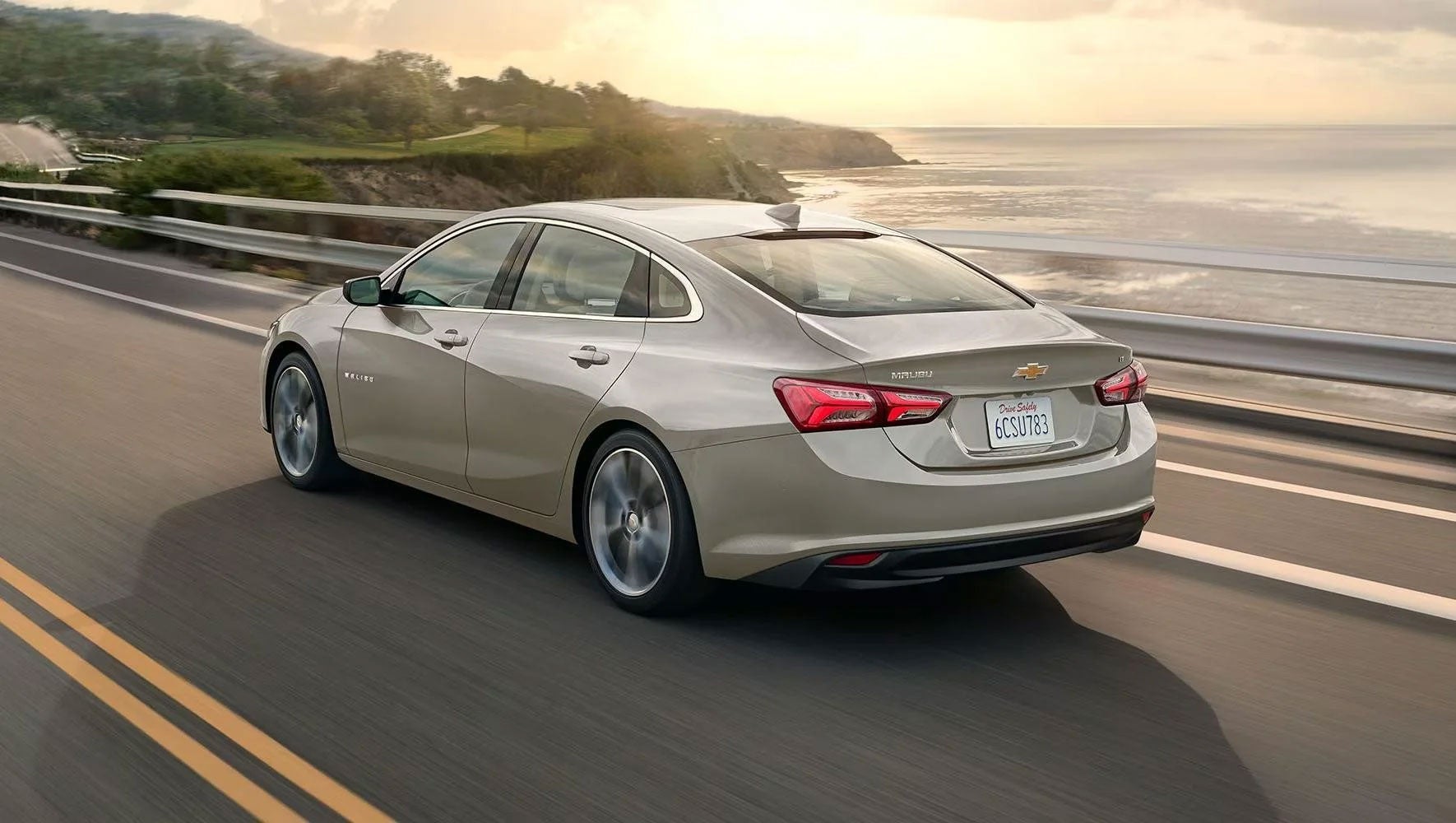
Although discontinued after the 2020 model year, the Ford Fusion remains common on American roads. Its brake system uses conventional calipers and rotors that are inexpensive and easy to source.
Because the Fusion shares engineering with other Ford products, many parts are interchangeable, further reducing cost pressures. Independent shops across the U.S. are well-versed in servicing its braking components.
The Ford Fusion was offered with multiple powertrains before its discontinuation after the 2020 model year. The standard engine was a 2.5-liter naturally aspirated inline-four producing 175 horsepower and 175 lb-ft of torque, paired with a 6-speed automatic transmission and front-wheel drive.
Optional turbocharged EcoBoost engines included a 1.5-liter (181 hp, 185 lb-ft) and a 2.0-liter (245 hp, 275 lb-ft), the latter available with all-wheel drive.
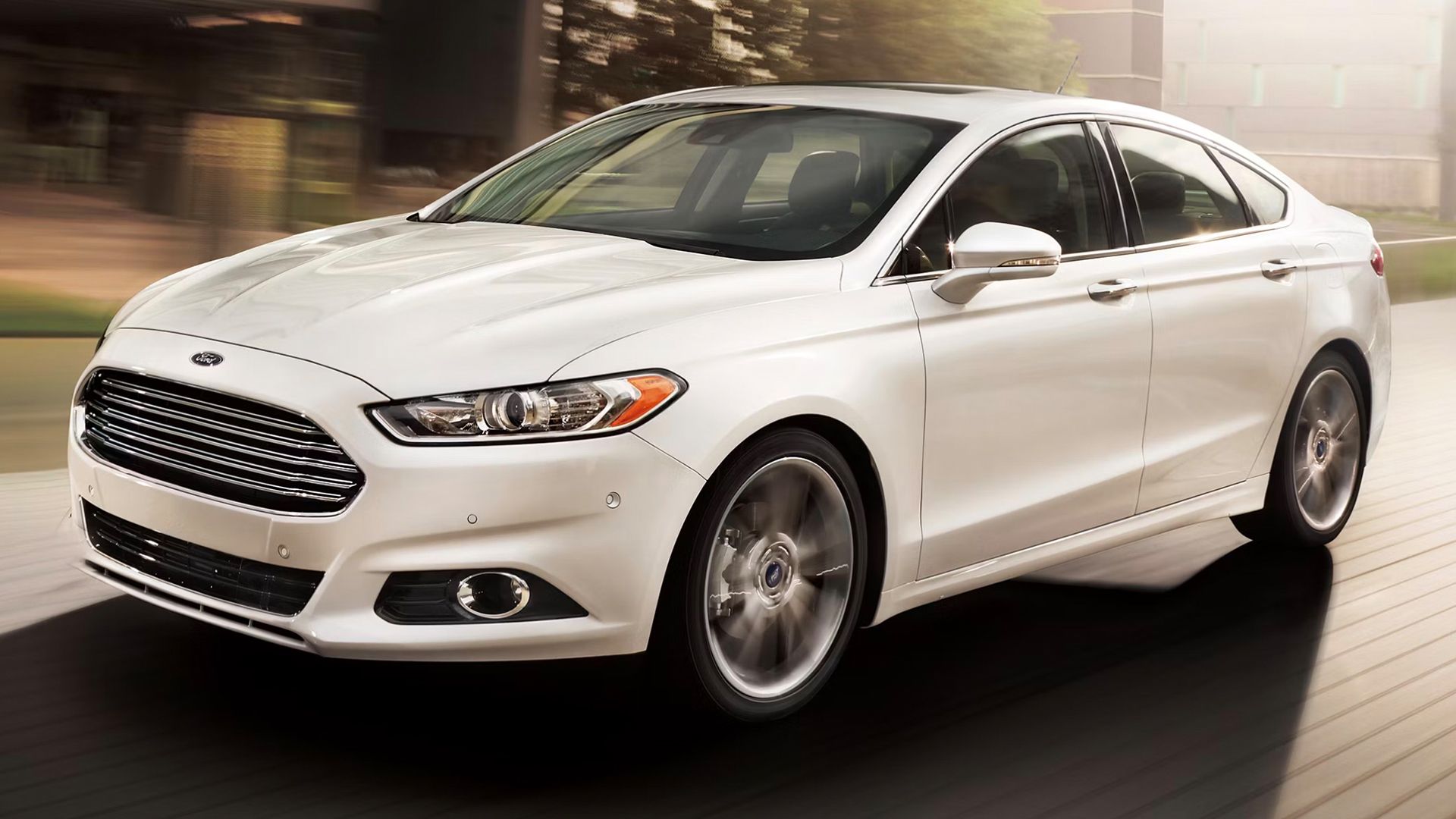
Acceleration varied by engine. The 2.5-liter model reached 60 mph in approximately 8.5–9.0 seconds, while the 2.0-liter EcoBoost reduced that time to around 6.5–6.8 seconds.
The Fusion Hybrid combined a 2.0-liter Atkinson-cycle engine with an electric motor for a total of 188 system horsepower, achieving 0–60 mph in roughly 8.0 seconds. Top speed was electronically limited to about 115–125 mph depending on trim.
Braking performance was competitive for the class, with four-wheel disc brakes featuring ABS, electronic brake-force distribution, and brake assist. Instrumented 60–0 mph stopping distances typically ranged between 120 and 130 feet.
Stability was supported by an independent front strut and rear multi-link suspension setup, along with electronic stability control and traction control systems. The Fusion delivered composed highway manners, controlled body roll, and predictable handling characteristics suited for daily driving.
7. Chevrolet Malibu
The Chevrolet Malibu is another midsize sedan with low brake overhaul costs. General Motors’ extensive parts network ensures strong aftermarket competition.
Standardized brake hardware and conservative rotor sizing prevent inflated material costs. For drivers prioritizing domestic brands, the Malibu offers an affordable maintenance profile.
The Chevrolet Malibu is powered by a 1.5-liter turbocharged inline-four engine producing 163 horsepower and 184 lb-ft of torque, paired with a continuously variable transmission (CVT) driving the front wheels. Earlier models offered a 2.0-liter turbocharged engine rated at 250 horsepower and 260 lb-ft, but recent model years focus exclusively on the smaller turbo unit.
Acceleration from 0–60 mph in the 1.5T model averages approximately 8.0–8.5 seconds. Top speed is electronically limited to around 115 mph. Fuel economy is rated at roughly 27 mpg city and 35 mpg highway, depending on trim and driving conditions.
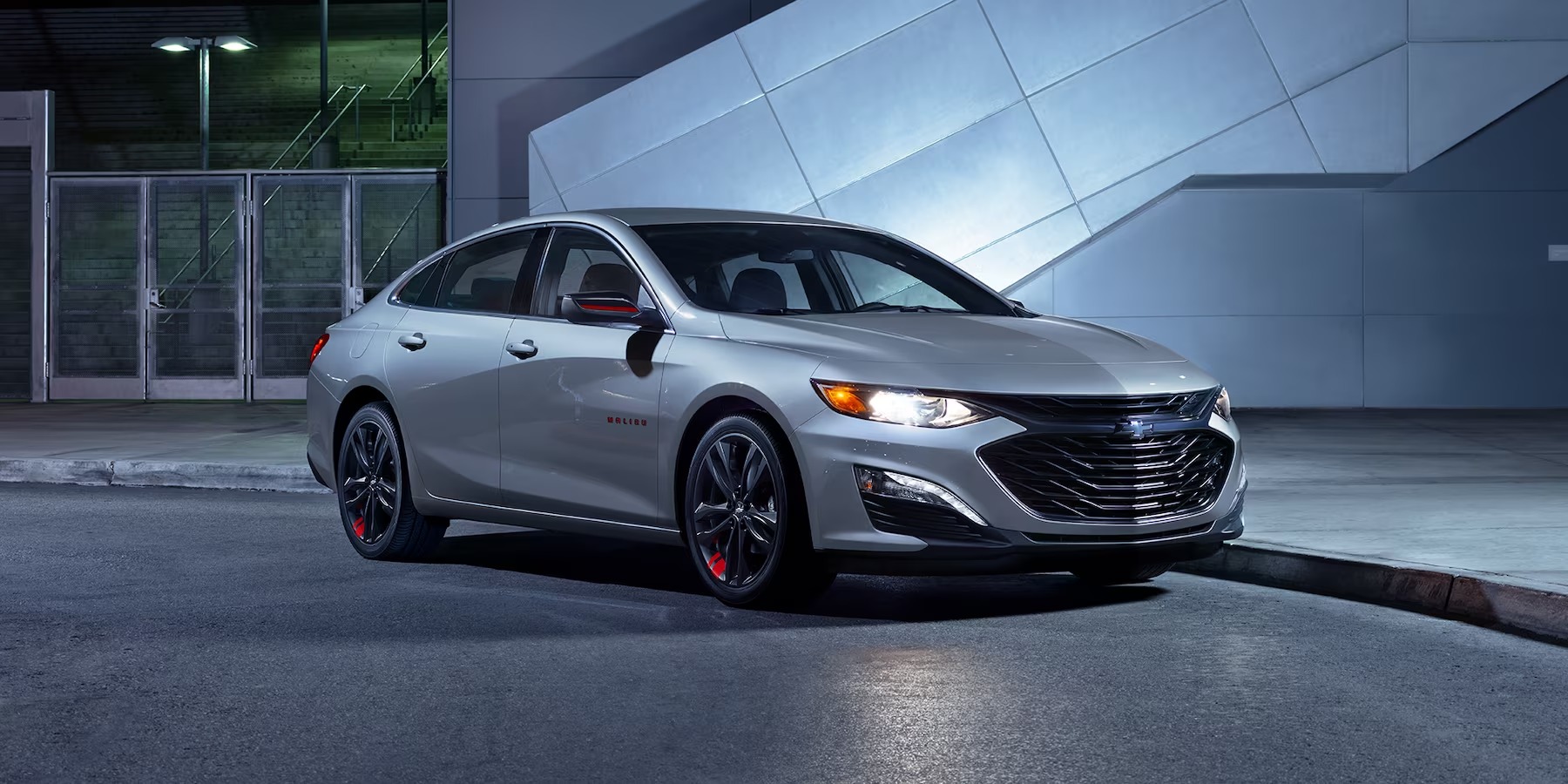
Braking performance is handled by four-wheel disc brakes with ABS, electronic brake-force distribution, and brake assist. Typical 60–0 mph stopping distances fall in the 125–130-foot range, reflecting adequate braking strength for the segment. Pedal feel is generally progressive, prioritizing smooth daily operation over aggressive bite.
The Malibu uses a front MacPherson strut suspension and a rear multi-link setup, contributing to stable highway cruising and controlled body motion. Electronic stability control and traction control systems are standard, assisting with directional stability in adverse conditions.
The chassis tuning emphasizes ride comfort and predictable handling rather than sporty dynamics. Ground clearance measures approximately 5.7 inches, consistent with midsize sedan norms.
8. Subaru Impreza
The Subaru Impreza stands out among compact all-wheel-drive vehicles for maintaining reasonable brake service costs.
Despite its AWD system, the brake components remain conventional and accessible. Parts are widely available in the U.S., and Subaru’s consistent platform design reduces variability across model years.
While slightly higher than some front-wheel-drive rivals, overhaul expenses remain below average for AWD vehicles.
The Subaru Impreza is powered by a 2.0-liter naturally aspirated flat-four (boxer) engine producing 152 horsepower and 145 lb-ft of torque, paired with a continuously variable transmission (CVT). Subaru’s Symmetrical All-Wheel Drive comes standard across the lineup, distinguishing it from most competitors in the compact segment.
Acceleration from 0–60 mph occurs in approximately 8.8–9.2 seconds, reflecting its efficiency-focused tuning rather than outright performance. Top speed is electronically limited to roughly 115 mph. Fuel economy averages around 27 mpg city and 34 mpg highway, depending on trim and driving conditions.
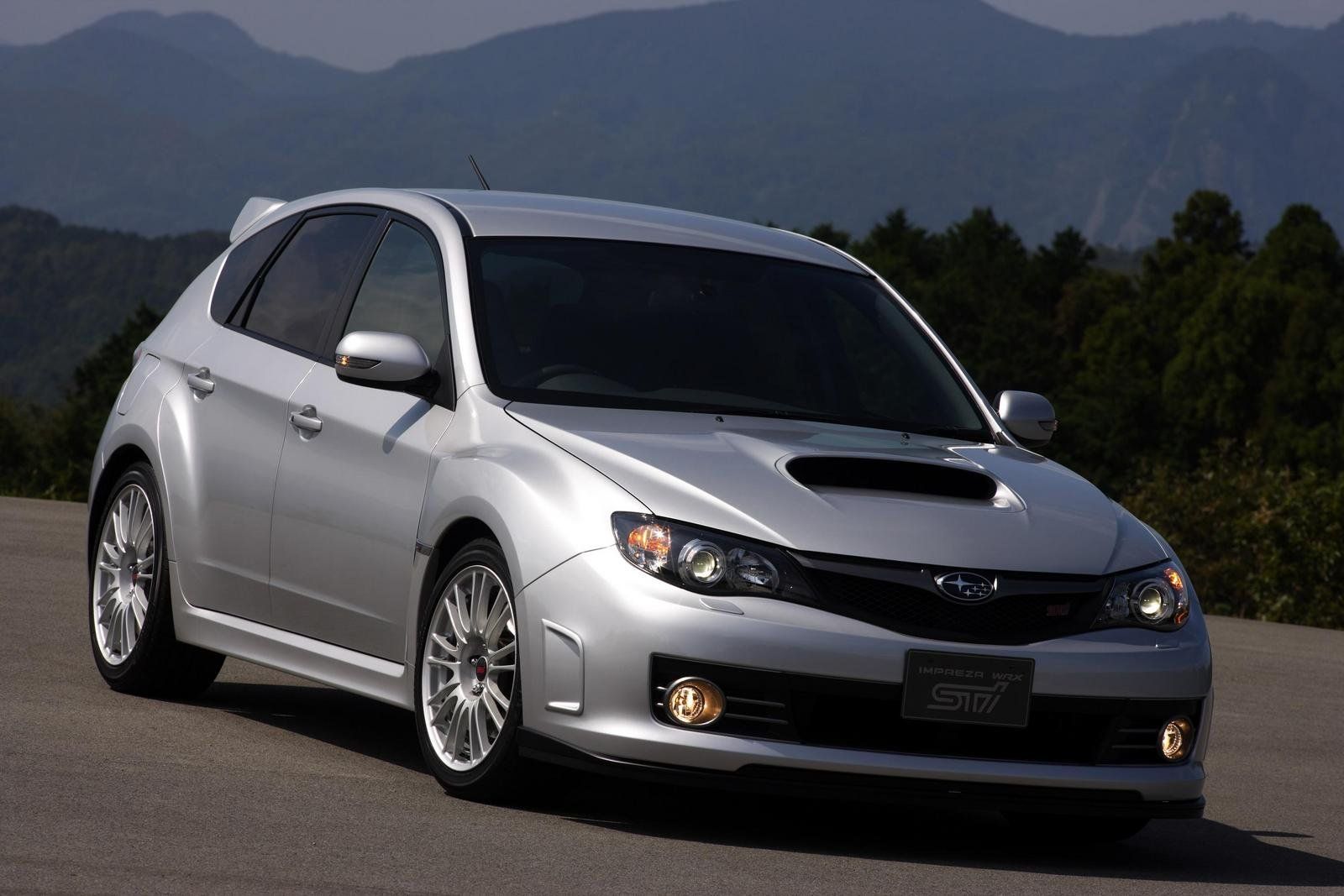
Braking performance is supported by ventilated front disc brakes and solid rear discs with ABS, electronic brake-force distribution, and brake assist. Typical 60–0 mph stopping distances measure in the 125–130-foot range, offering consistent and predictable deceleration. Pedal feel emphasizes smooth modulation for daily driving.
The Impreza uses a MacPherson strut front suspension and double-wishbone rear setup, contributing to stable cornering and balanced ride comfort.
Standard stability control and traction control systems enhance confidence in wet or snowy conditions. Ground clearance measures approximately 5.1 inches, maintaining a low center of gravity while benefiting from AWD traction.
9. Nissan Sentra
The Nissan Sentra is engineered with cost efficiency in mind. Its braking system avoids performance-oriented upgrades that would increase replacement expenses.
Pads and rotors are readily available at competitive prices nationwide. The Sentra’s straightforward design makes labor times predictable and affordable.
The Nissan Sentra is powered by a 2.0-liter naturally aspirated inline-four engine producing 149 horsepower and 146 lb-ft of torque, paired with an Xtronic continuously variable transmission (CVT) driving the front wheels. The powertrain is tuned for smooth daily operation and fuel efficiency rather than aggressive acceleration.
Acceleration from 0–60 mph occurs in approximately 8.5–9.0 seconds. Top speed is electronically limited to around 115 mph. Fuel economy averages roughly 29 mpg city and 39 mpg highway depending on trim and driving conditions.
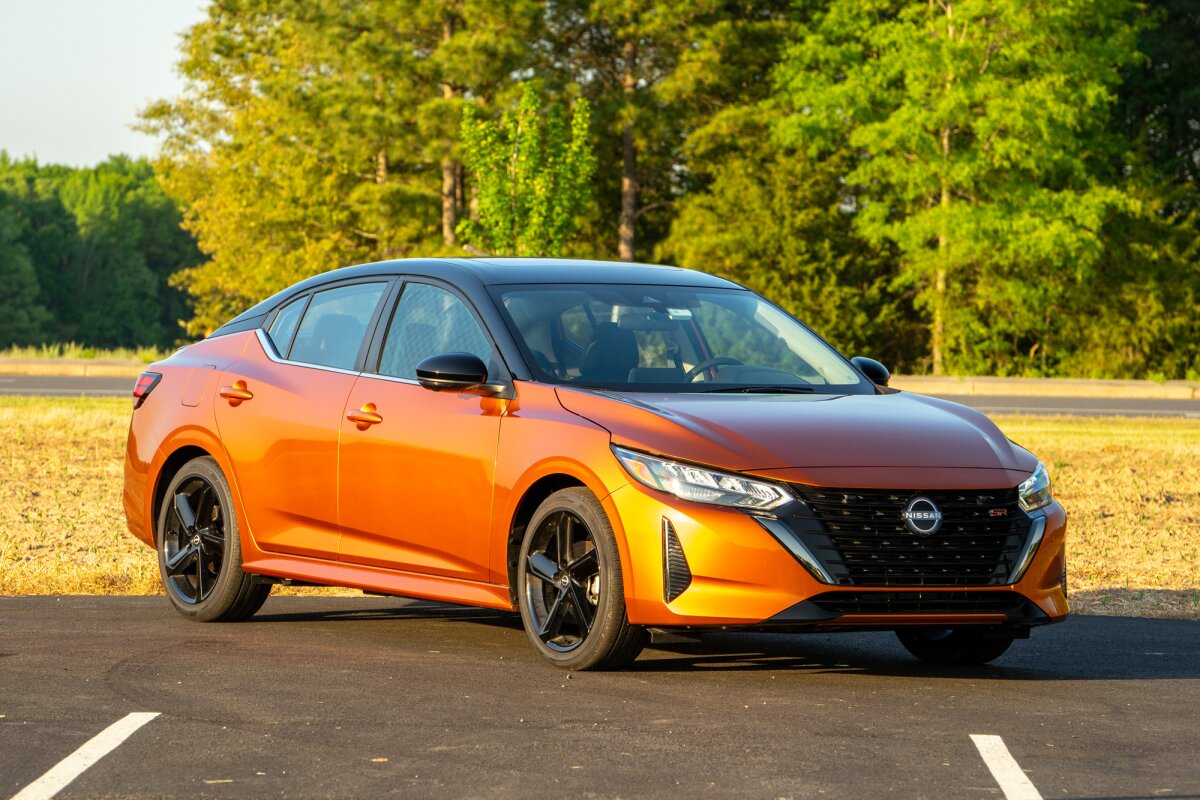
Braking performance is managed by ventilated front disc brakes and rear discs on higher trims (rear drums on base trims), supported by ABS, electronic brake-force distribution, and brake assist. Instrumented testing typically shows 60–0 mph stopping distances in the 125–130-foot range. Brake feel is progressive and stable under normal commuting conditions.
The Sentra uses an independent rear multi-link suspension paired with a front MacPherson strut setup, contributing to composed ride quality and controlled body movement.
Standard Vehicle Dynamic Control and traction control systems enhance stability during cornering and adverse weather. Ground clearance measures approximately 5.4 inches, consistent with compact sedan standards.
10. Kia Forte
The Kia Forte rounds out the list with a brake system that emphasizes simplicity and affordability. Sharing architecture with Hyundai models, the Forte benefits from cross-brand component availability.
Aftermarket support in the U.S. is strong, and repair procedures are uncomplicated. This keeps both parts and labor costs within a budget-friendly range.
What makes these vehicles particularly economical to overhaul is not just low sticker prices on pads and rotors, but also engineering decisions that avoid complexity.
The Kia Forte offers two primary gasoline powertrains, balancing efficiency with available performance. The standard engine is a 2.0-liter naturally aspirated inline-four producing 147 horsepower and 132 lb-ft of torque, paired with an intelligent variable transmission (IVT) driving the front wheels.
Acceleration from 0–60 mph in the base configuration occurs in approximately 8.2–8.6 seconds. Top speed is electronically limited to around 115 mph. Fuel economy averages roughly 27 mpg city and 35 mpg highway depending on trim and driving style.
The performance-oriented Forte GT features a 1.6-liter turbocharged inline-four delivering 201 horsepower and 195 lb-ft of torque, paired with either a 7-speed dual-clutch automatic or a 6-speed manual transmission. The GT accelerates from 0–60 mph in about 6.7–7.0 seconds, offering stronger mid-range response.
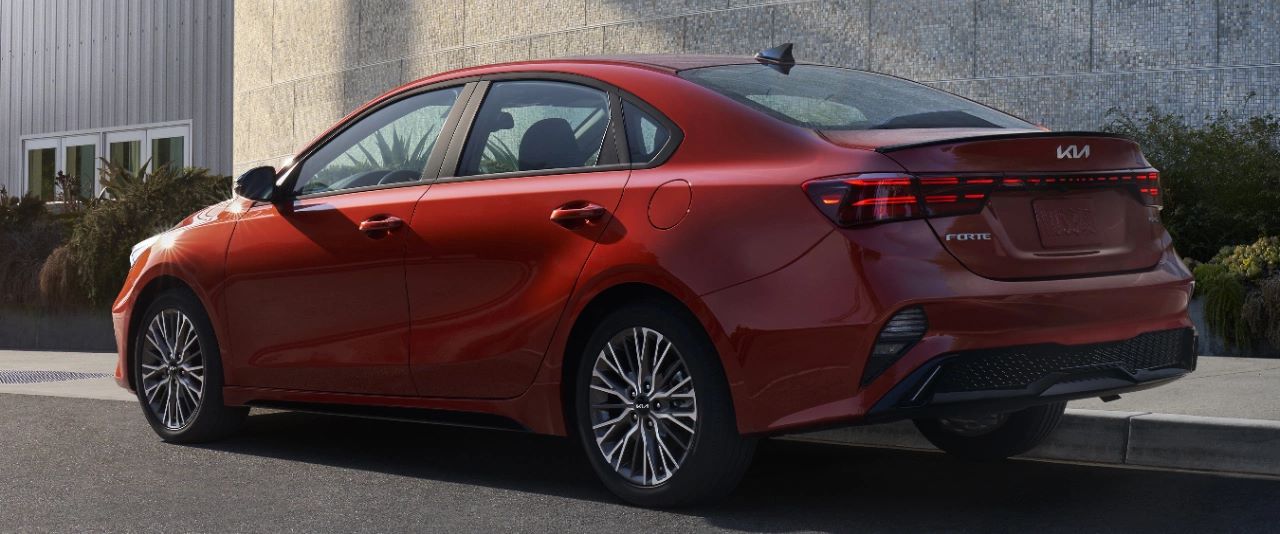
Braking performance is handled by four-wheel disc brakes on higher trims (rear drums on base models), with ABS, electronic brake-force distribution, and brake assist standard.
Typical 60–0 mph stopping distances fall in the 120–130-foot range. The Forte uses a front MacPherson strut suspension and rear torsion beam setup, emphasizing ride comfort and predictable handling. Stability control and traction control systems are standard, contributing to confident daily driving dynamics.
High-performance brake systems with multi-piston calipers, oversized ventilated rotors, or electronic integrated parking brakes can dramatically increase replacement costs.
In contrast, the models listed above rely on proven, standardized designs that prioritize reliability over aggressive performance metrics.
For American consumers evaluating long-term ownership costs, brake affordability is a meaningful metric. Over the lifespan of a vehicle, multiple brake services are inevitable.
The Kia Forte competes in the value-focused compact segment, emphasizing affordability, warranty coverage, and technology content rather than outright performance. It rides on a front-wheel-drive platform with a unibody structure and electric power steering tuned for light effort in urban driving.
Beyond engine output, the Forte’s curb weight typically ranges between 2,800 and 3,100 pounds depending on trim, contributing to manageable fuel consumption and stable highway behavior. The fuel tank capacity is approximately 14 gallons, providing a real-world driving range that can exceed 450 miles on highway-focused trips.
Interior practicality is a core strength. The Forte offers approximately 96 cubic feet of passenger volume and about 15.3 cubic feet of trunk space, placing it near the top of its class for cargo capacity. Rear legroom measures roughly 35.7 inches, making it suitable for adult passengers in short- to mid-range trips.
Safety technology is comprehensive for the segment. Standard and available driver-assistance features include Forward Collision-Avoidance Assist, Lane Keeping Assist, Blind-Spot Collision Warning, Rear Cross-Traffic Alert, and Smart Cruise Control on higher trims. The Forte has performed competitively in crash testing within its class.
Warranty coverage remains a key differentiator. Kia provides a 5-year/60,000-mile basic warranty and a 10-year/100,000-mile powertrain warranty, which exceeds many rivals in the compact sedan category. Overall, the Forte prioritizes value, long-term ownership confidence, and practical daily usability.
Choosing a model with accessible parts and uncomplicated hardware can save hundreds, if not thousands, of dollars over time.
Vehicles like the Toyota Corolla, Honda Civic, and Toyota Camry consistently demonstrate that dependable braking performance does not require expensive overhaul costs.
By favoring widely supported models with conventional engineering, U.S. drivers can ensure that routine brake maintenance remains predictable and affordable for years to come.