
Color sells cars. Everyone who has ever walked a dealership lot knows this to be true on some level, even if they cannot fully explain why one car stops them cold while another barely registers. A great color does something to a car that no spec sheet can replicate.
It changes the entire personality of the machine, sharpens its lines, and in the right circumstances, makes it something that collectors will pay a serious premium to own decades later. Here is something that a lot of buyers do not fully think about at the point of purchase: the color you choose on a new car is not just an aesthetic decision. It is a financial one.
Certain factory paint colors were produced in such limited quantities, either because the manufacturer offered them for only one model year, or because they were exclusive to a specific trim level, or because they were simply so unusual that most buyers passed on them at the time, that they have since become genuinely rare. Rare things get valuable.
That is not a complicated concept, but its application to factory paint colors is one of the most underappreciated angles in the collector car market. What separates a color that commands a premium from one that fades into obscurity? A few things tend to define it. Production rarity matters enormously. So does the color’s association with a particular version of a car that already has collector appeal.
The visual boldness of the shade plays a role, as does whether it looks as good today as it did when it was first offered. Some colors age beautifully. Others date a car immediately. The ones that hold their value tend to be the ones that still look absolutely right on the car they were made for, no matter how many years have passed.
This page covers eight real factory paint colors, each tied to specific cars and models, that have moved the needle on collector value in documented and meaningful ways. If you own one of these, read carefully. If you are shopping, pay close attention.
1. Plum Crazy Purple on the 2010 Dodge Challenger SRT8
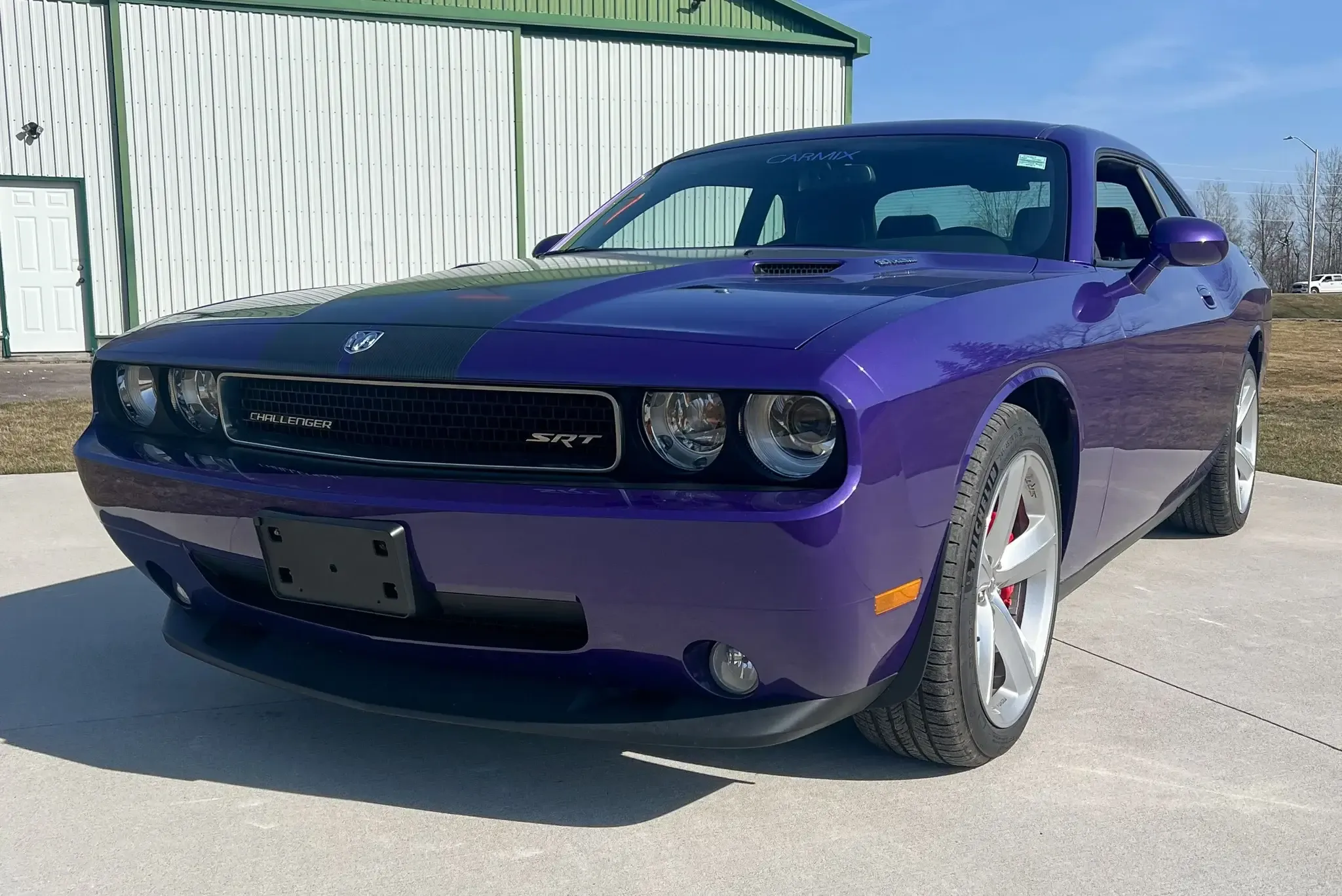
Some colors arrive at exactly the right moment in automotive history, and Plum Crazy Purple on the 2010 Dodge Challenger SRT8 is one of the cleanest examples of that happening. Dodge reintroduced this color as a throwback to the original muscle car era, and it landed with an impact that the brand almost certainly did not expect in terms of long-term collector interest and resale premiums.
Plum Crazy Purple is a vivid, saturated, almost electric shade of purple that sits somewhere between a classic grape and a metallic violet, depending on the lighting conditions. In direct sunlight, it punches with an intensity that makes nearly every other color in a parking lot look timid.
In shade or indoor lighting, it takes on a deeper, more dramatic quality that reads closer to blue-purple. Either way, it commands attention without apology, and on the muscular, wide-body shape of the 2010 Challenger SRT8, it reads as completely correct.
Dodge offered Plum Crazy Purple as a limited option during the 2010 model year as part of their throwback heritage color program. Production numbers for Challengers finished in this color were intentionally kept low, and that decision created the scarcity that now drives its collector value upward.
When examples of the 2010 Challenger SRT8 in Plum Crazy Purple come to market today, they consistently attract premiums above comparable cars finished in more standard colors like black, silver, or even the more common Hemi Orange. Part of what makes this color so effective from a value standpoint is its direct connection to Dodge’s muscle car heritage.
Plum Crazy was originally offered on 1970 and 1971 Dodge models, making the reissue on the 2010 Challenger feel intentional and historically resonant rather than arbitrary. Buyers who understood that connection at the time of purchase were getting something more than a paint code. They were getting a link to one of the most celebrated chapters in American automotive history.
Condition plays a role, as it always does with collector cars. Examples of the 2010 Dodge Challenger SRT8 in Plum Crazy Purple with low mileage, original paint in excellent condition, and documented ownership history command the strongest premiums.
But even higher-mileage examples tend to retain more value in this color than in standard options, which speaks to just how much the paint itself drives buyer interest in this specific case.
2. Laguna Seca Blue on the 2001 BMW M3 (E46)
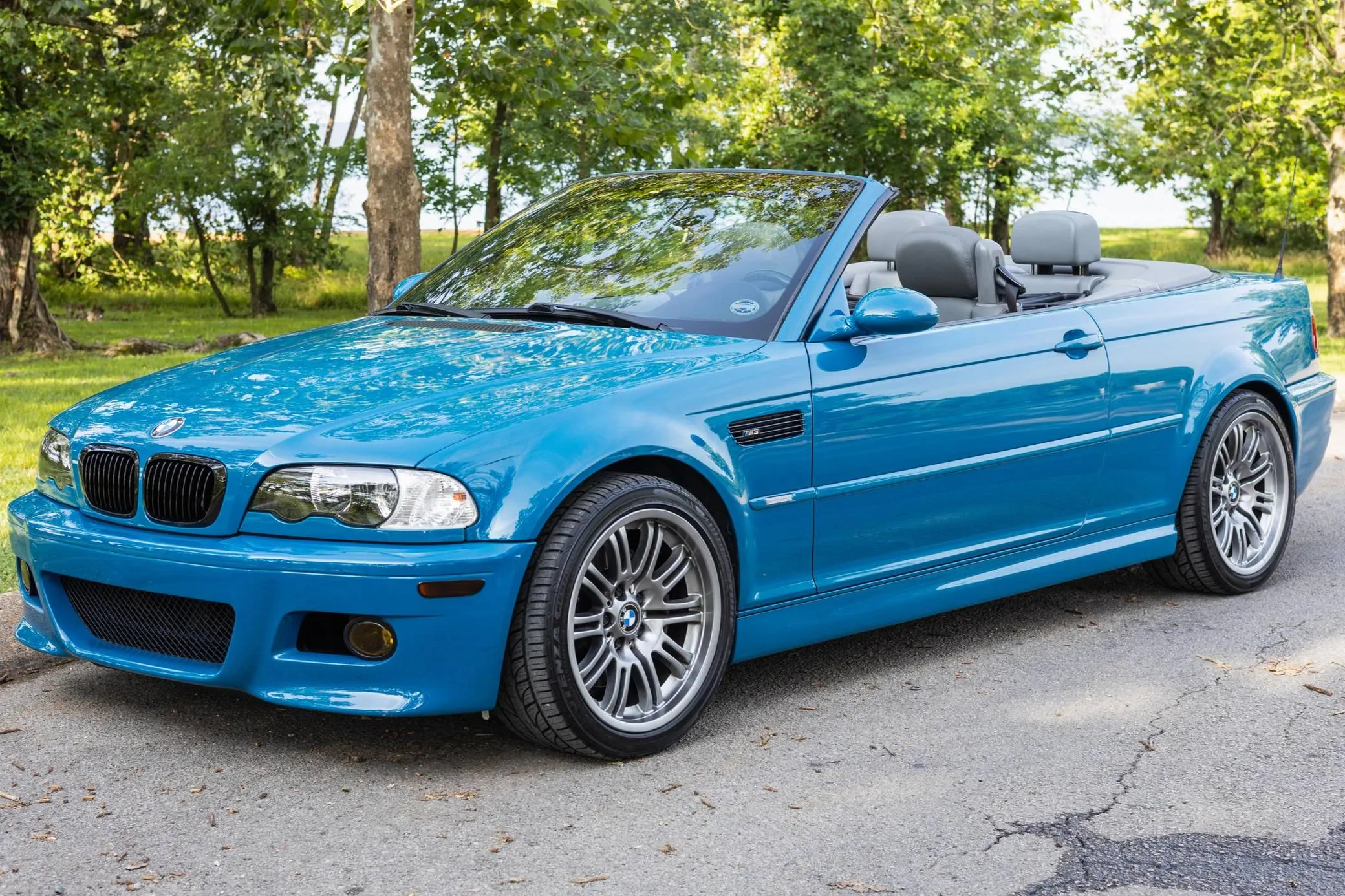
Precision-built performance cars attract serious collector attention when their color options are as thoughtfully executed as their engineering, and Laguna Seca Blue on the 2001 BMW M3 E46 stands as one of the best examples of a factory color becoming almost inseparable from the identity of a car it was paired with.
Laguna Seca Blue is a medium-bright, slightly metallic blue with a clarity that reads as distinctly sporty without being flashy. It takes its name from the famous racing circuit in California, a naming choice that was entirely on-brand for BMW’s motorsport division and immediately gave the color a competitive, purposeful association.
On the E46 M3’s sharp, clean body lines, the shade sits perfectly between elegant and aggressive, two qualities that define the E46 as one of the finest driver’s cars ever produced. BMW offered Laguna Seca Blue on the E46 M3 in limited quantities during the car’s production run.
Exact production figures for specific color breakdowns varied by market, but the color was never a high-volume option, and in the United States market in particular, examples finished in Laguna Seca Blue are meaningfully rarer than those in black, silver, or the more commonly seen Carbon Black Metallic. That scarcity has translated directly into a market premium that grows more pronounced with each passing year as surviving low-mileage examples become harder to find in clean, original condition.
Collector interest in E46 M3s has risen sharply over the past decade, and Laguna Seca Blue cars are consistently among the most sought-after at auction and in private sales. Part of this is purely visual: the color looks extraordinary on the E46 body, and photographs of it in good light tend to circulate widely among enthusiasts.
Purchasing a clean example of the 2001 BMW M3 E46 in Laguna Seca Blue with an unmodified original drivetrain and documented service history represents one of the strongest value propositions in the modern collector car market. It is a car, a color, and a moment in automotive engineering that aligned in a way that rarely repeats.
Also Read: Top 10 Underrated Japanese Sports Cars That Are Affordable
3. Gulf Orange on the 2017 Ford GT (Production Series)
When Ford brought back the GT for its second modern generation, it did so with a level of intention and historical awareness that extended all the way to the paint palette. Gulf Orange on the 2017 Ford GT production series is not just a color.
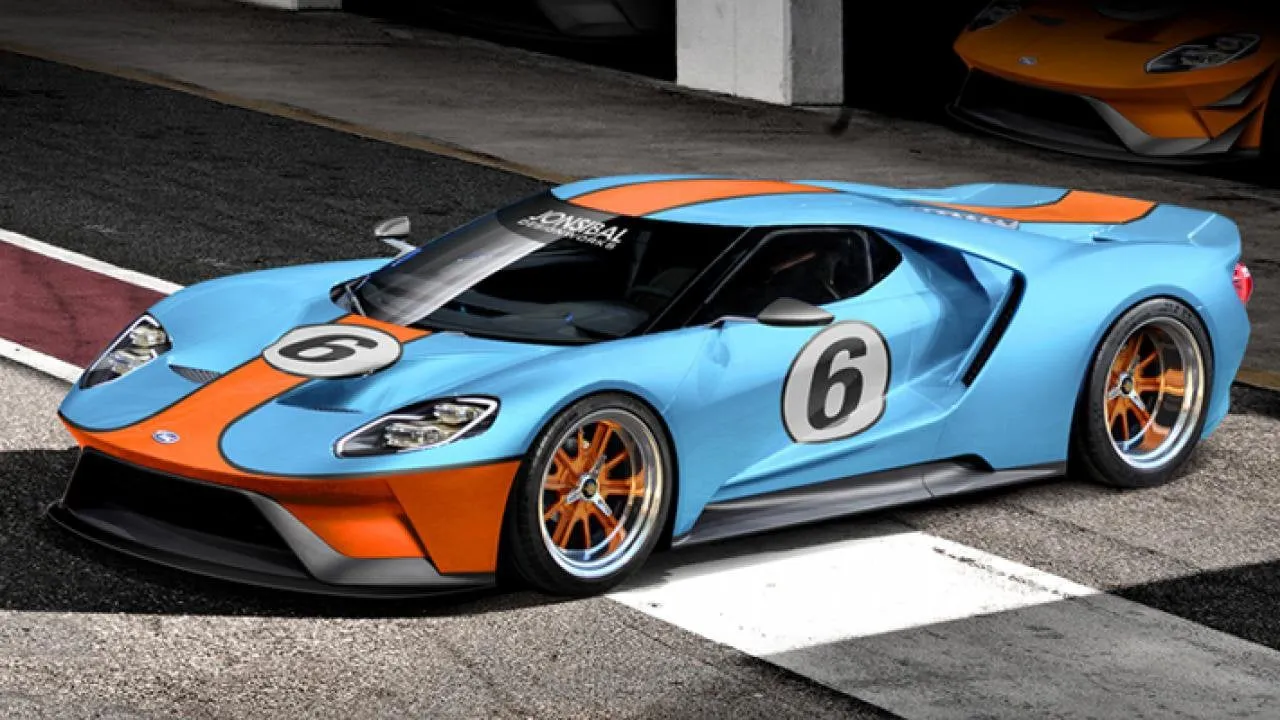
It is a direct reference to one of the most storied chapters in endurance racing history, and that backstory is a substantial part of what makes this paint option so financially charged for collectors. Gulf Oil’s iconic livery, a combination of light blue and orange, adorned some of the most famous GT40s and later GT cars during their successful campaigns at Le Mans throughout the late 1960s and into the 1970s.
When Ford offered Gulf Orange as a factory paint option on the 2017 GT production series, they were giving buyers the ability to recreate that visual connection in road-going form. For anyone with even a passing knowledge of racing history, seeing a 2017 Ford GT in Gulf Orange triggers an immediate and powerful association with motorsport achievement.
Ford GT production numbers for the second-generation car were already extremely limited by design. Ford capped production at roughly 1,000 cars per year across the initial production period, making any example of this car rare by default.
Within that already-limited production run, the Gulf Orange cars represent a subset that attracts even more intense collector interest, particularly examples optioned with the Heritage Edition package that added the full Gulf livery treatment with the contrasting blue stripe.
Values for the 2017 Ford GT in Gulf Orange have held at extraordinary levels since the cars first began appearing on the secondary market. Buyers who secured allocations at the original MSRP of approximately $450,000 found themselves in possession of cars that quickly traded at multiples above that price, particularly for low-mileage examples in Heritage Edition specification.
Gulf Orange without the full livery treatment still commands premiums over other standard color options, though the Heritage Edition package is where the most serious collector money tends to concentrate.
What makes this paint option genuinely special from a financial perspective is the triple layer of scarcity it represents: a limited production car, offered in a limited color, with a historically resonant backstory that connects it to one of the most celebrated racing programs in automotive history.
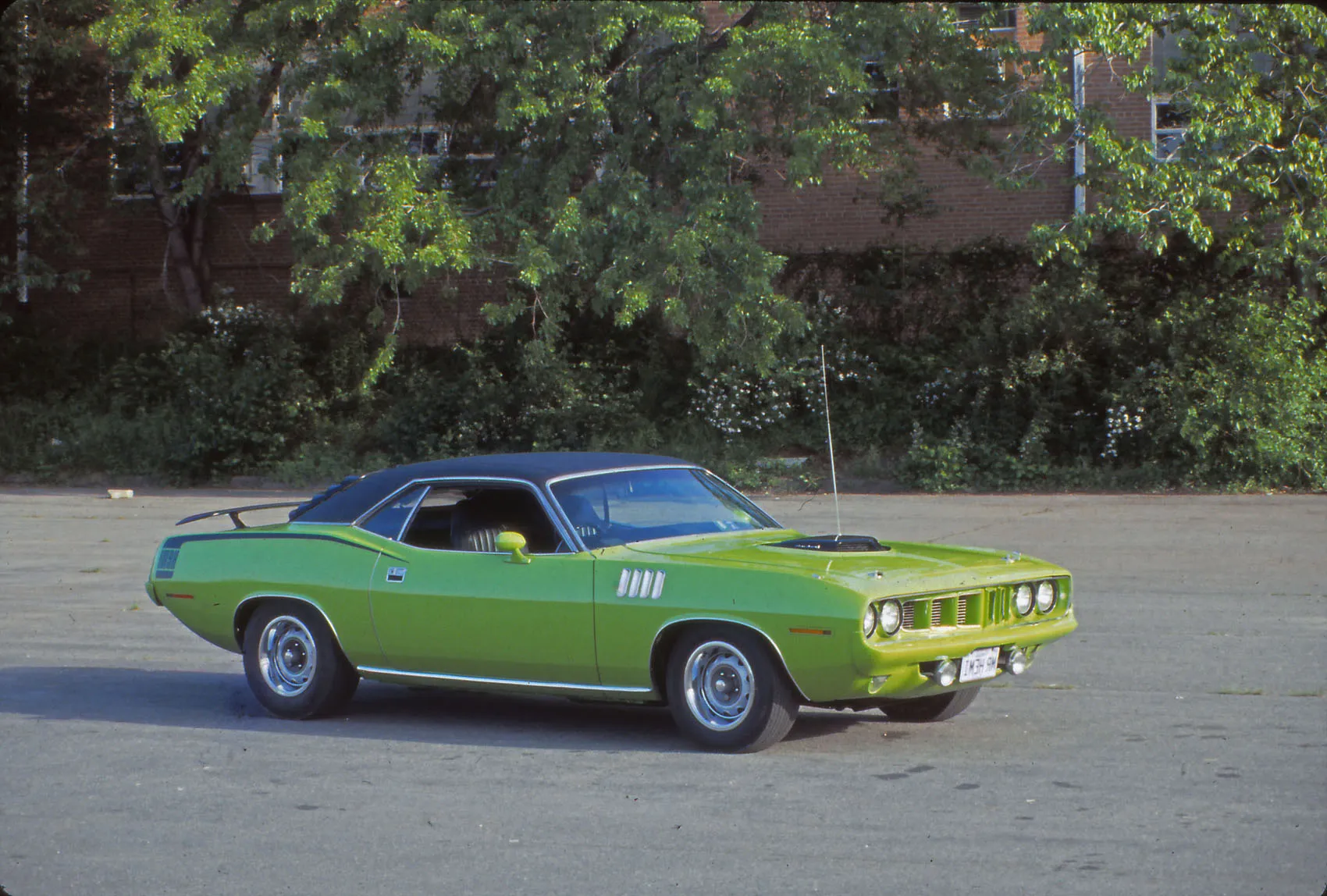
4. Lime Green on the 1971 Plymouth Barracuda ‘Cuda (440 Six Pack)
Certain factory colors become inseparable from the moment that produced, functioning almost like visual time capsules. Lime Green applied to the 1971 Plymouth Barracuda ‘Cuda 440 Six Pack fits that description with striking clarity.
Introduced during the height of American muscle car bravado, this color matched an era when boldness was not optional. Automakers were chasing attention as aggressively as they chased horsepower, and Lime Green delivered instant recognition that still commands respect decades later.
This particular shade emerged as part of Chrysler’s High Impact Color initiative, a short-lived but unforgettable palette meant to separate its performance cars from anything else on the road. Lime Green, sometimes labeled FY1 Lemon Twist in factory references and closely related to Sublime Green depending on timing and application, was engineered to stand out under sun, streetlights, or showroom bulbs.
The finish carried a sharp brightness that made body lines appear more aggressive and gave the Barracuda an almost animated presence. Few colors from that period manage to feel just as daring today, yet this one does without apology.
Rarity adds another layer of importance. Production totals for the 1971 Barracuda lineup dropped sharply as market pressure mounted from insurance costs and changing regulations. The ‘Cuda trim sat near the top of that shrinking range, while the 440 Six Pack engine option represented a narrow slice of buyers who wanted maximum street presence.
Choosing Lime Green narrowed that slice even further. Documented examples combining this engine, trim, and factory color exist in very small numbers, especially when originality remains intact. Collector response reflects that scarcity. Auction data and private sales repeatedly show High Impact Color cars pulling far stronger bids than identical models finished in quieter hues.
Lime Green sits near the top of that hierarchy, often rivaled only by Plum Crazy for visual impact and emotional appeal. Buyers view these colors as essential to the car’s identity rather than decorative extras, which explains why premiums can climb dramatically when the right combination appears.
Possession of an authenticated Lime Green 1971 ‘Cuda 440 Six Pack represents more than ownership of a desirable muscle car. It represents stewardship of a defining symbol from an era when American performance embraced excess with confidence. As surviving examples thin out, demand continues to strengthen, reinforcing this color’s place as both a cultural marker and a serious financial asset.
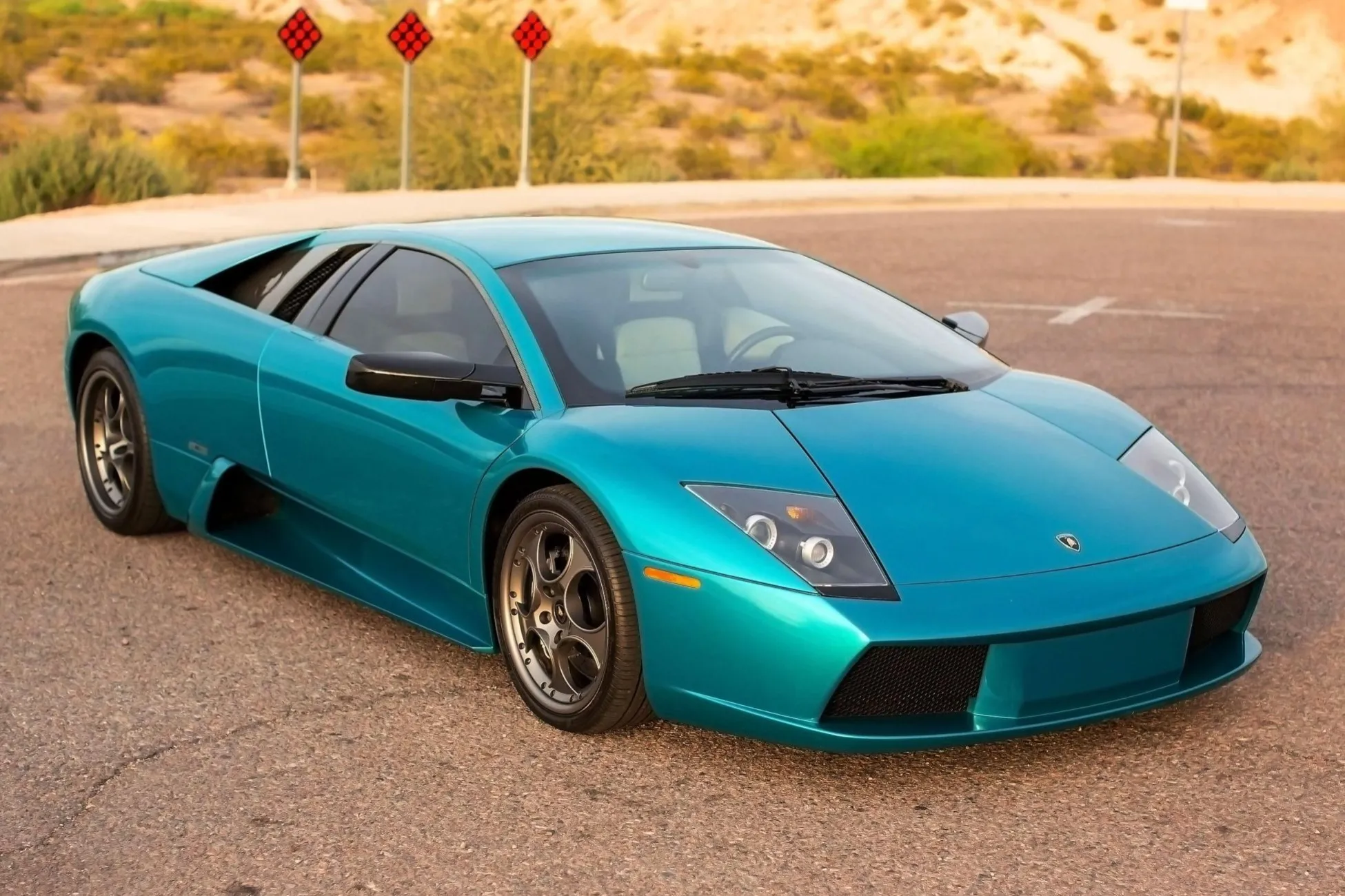
5. Acid Green on the 2003 Lamborghini Murcielago (First Year Production)
Bold is a word that gets used carelessly in automotive writing, but there is no other word that applies to Acid Green on the 2003 Lamborghini Murcielago first-year production cars. This is a color so aggressively vivid, so deliberately confrontational in its presence, that it forces every other car in its vicinity to recede into the background.
For collectors who understand what this shade means in the context of Lamborghini’s history, it is one of the most desirable paint options the brand has ever offered. Lamborghini’s Verde Ithaca, commonly referred to as Acid Green in enthusiast communities and among auction specialists, was offered during the early production period of the Murcielago.
It sat at the end of Lamborghini’s already dramatic color palette, a palette that has always been more willing than most manufacturers to offer colors that would simply not exist in mainstream production environments. On the Murcielago’s angular, aggressively styled body, Acid Green reads as intentional and completely correct, a car dressed exactly as the designer’s vision intended.
First-year production Murcielagos carry an additional layer of collector importance beyond their paint options. Being a 2003 example from the opening year of the model’s production run gives the car historical importance as the beginning of a chapter in Lamborghini’s history.
Pairing that first-year status with a rare and visually dramatic color option like Acid Green stacks multiple layers of collector appeal into a single car, which is precisely why these examples trade at premiums above later-production Murcielagos finished in more conventional colors.
Lamborghini’s production numbers for the Murcielago in any given year were modest by mainstream standards, and color options outside the most popular choices like black, silver, and the brand’s signature Arancio Borealis orange were selected by a small minority of buyers.
Acid Green was not a color that cautious buyers gravitated toward. That self-selecting rarity is now one of its greatest financial assets. Condition and originality are paramount when it comes to Lamborghini collector values.
Examples of the 2003 Murcielago in Acid Green with original, unrepainted bodywork in excellent condition command the strongest premiums. Repaints, regardless of how professionally executed, reduce collector value in this segment, because the story of an original factory finish is part of what buyers are paying for.
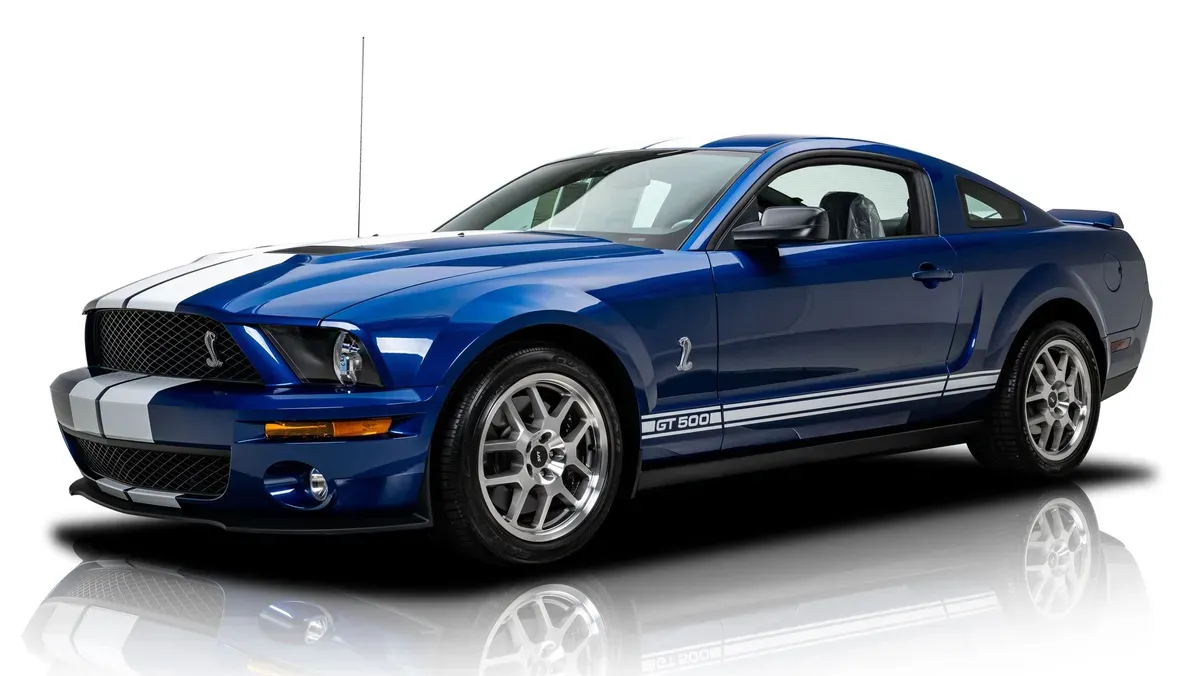
6. Grabber Blue on the 2008 Ford Shelby GT500 (40th Anniversary Edition)
Not every rare factory paint color comes from a limited-production exotic. Sometimes a mass-market performance car gets a color option so perfectly suited to its character that it becomes a collector item in its own right, and Grabber Blue on the 2008 Ford Shelby GT500 40th Anniversary Edition is exactly that situation playing out on a car that was already generating serious enthusiast attention.
Grabber Blue is a bright, saturated, medium-toned blue with a slightly metallic quality that gives it depth without compromising its visual punch. Ford chose it for the 40th Anniversary Edition of the Shelby GT500 as a deliberate nod to the heritage of the original Shelby cars from the late 1960s, when bright, bold colors were standard equipment on anything with a Shelby badge.
On the 2008 GT500’s muscular, long-hood silhouette, Grabber Blue looks entirely natural and historically grounded. Ford limited the 40th Anniversary Edition to specific production numbers, and within that production run, Grabber Blue was paired with specific interior and stripe options that made the package immediately identifiable and visually distinct from standard GT500 production cars.
Buyers who optioned these cars at the time were getting something more than a color upgrade. They were getting a documented, numbered edition that carried the full weight of the Shelby heritage program. Secondary market values for Grabber Blue 2008 Ford Shelby GT500 40th Anniversary Edition cars have held up robustly as the collector market for modern muscle cars has matured.
Low-mileage, unmodified examples with original documentation consistently attract serious buyer interest and sell at premiums above comparable GT500s in standard colors. Part of this is the color itself, which photographs extraordinarily well and looks even better in person. Part of it is the 40th Anniversary designation, which adds historical importance that standard production cars cannot share.
Ford’s decision to tie a heritage color to a heritage edition created a combination that resonates with exactly the kind of buyer who drives collector values upward: people who understand the history, appreciate the intentionality of the pairing, and are willing to pay accordingly for the right example.
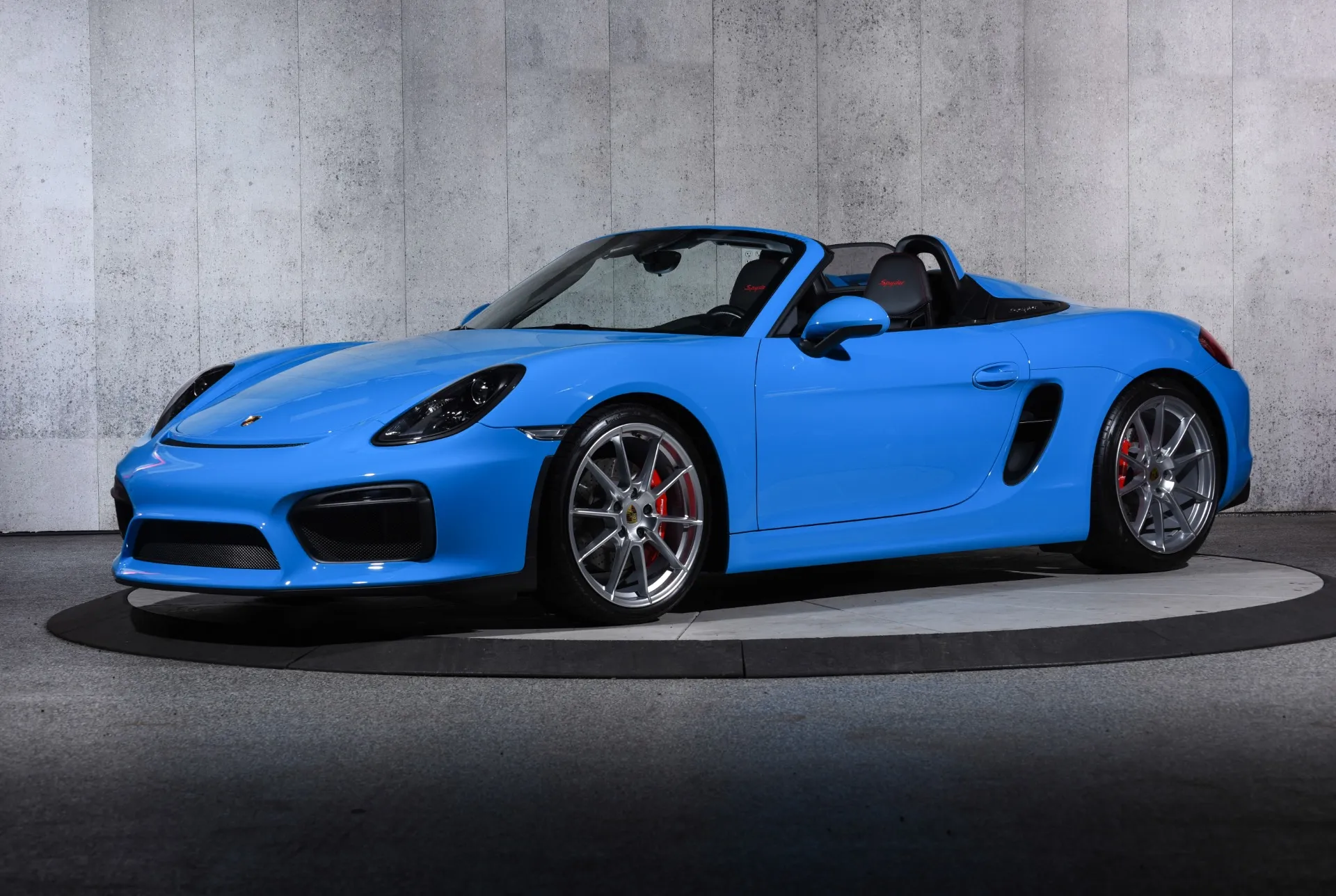
7. Voodoo Blue on the 2016 Porsche 718 Boxster Spyder (Special Wish Program)
Porsche’s Paint to Sample and Special Wish programs have shaped a modern chapter of factory customization that blends craftsmanship with long term financial appeal. Among recent examples, Voodoo Blue applied to the 2016 Porsche 718 Boxster Spyder through the Special Wish route stands out as a color choice that reshaped how collectors view modern-era Porsche exclusivity.
This shade did more than alter visual character. It created a specification that now carries weight in resale conversations, auction listings, and private collector circles. Voodoo Blue presents itself as a layered and expressive finish rather than a flat color. Under strong daylight, the paint delivers a vivid, electric presence that feels energetic without appearing loud.
As lighting softens, deeper tones surface, revealing hints of teal and navy that move subtly with angle and movement. This visual range gives the car a living quality, one that changes throughout the day and rewards close attention. Photographs often fail to capture their full depth, which only heightens interest among buyers who value paint that looks different in person than it does on a screen.
The Special Wish process allows buyers to request colors outside Porsche’s standard catalog, either pulled from archival references or mixed exclusively for a single order. Each request passes through a level of factory involvement that places the finish closer to a bespoke commission than a production option.
Because of this, quantities remain extremely low. A 2016 718 Boxster Spyder completed in Voodoo Blue through this channel exists in numbers small enough that finding an identical counterpart is highly unlikely. Scarcity at this level carries serious weight among buyers who seek distinction without aftermarket alteration.
Market behavior reflects that rarity. Collectors familiar with Porsche’s custom paint history recognize that factory-sanctioned colors with strong personality often outperform conventional finishes when the time comes to sell. Voodoo Blue fits that pattern precisely.
Its brightness, depth, and emotional pull place it among the most desirable modern Porsche hues ordered outside standard production. Buyers frequently view it as a safe premium rather than a gamble, especially when originality remains intact.
Paperwork plays a decisive role in protecting that premium. Original build sheets, dealer confirmations, and service records verifying the Special Wish request establish credibility that visual appeal alone cannot provide. When documentation aligns with the condition, the paint stops being just a color and becomes a defining asset that supports lasting value in a competitive collector market.
Also Read: Top 10 Cars That Sound Great With Their Factory Exhaust Systems
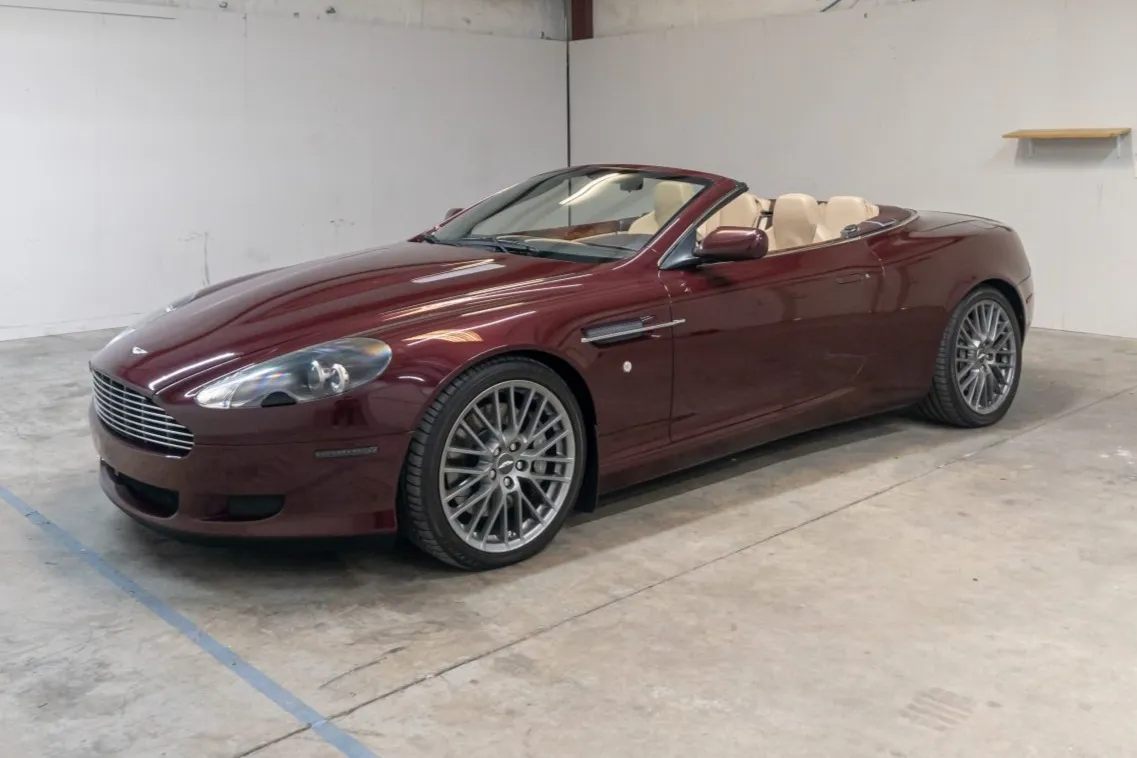
8. Burnt Orange Metallic on the 2006 Aston Martin DB9 Volante (Special Order)
Aston Martin has built its brand on elegance, restraint, and a very particular kind of British automotive confidence, which is precisely what makes Burnt Orange Metallic on the 2006 Aston Martin DB9 Volante special order so unusual and so collectible.
This is a color that sits well outside Aston Martin’s typical palette of silvers, blacks, greens, and deep blues, making it a genuine departure from the brand’s standard aesthetic and a sharp collector conversation piece.
On the DB9 Volante’s long, elegant lines and the particular interplay of light across its curved bodywork, the color manages to feel dramatic without sacrificing the inherent sophistication that makes Aston Martin cars so distinctively appealing.
Special order color specifications on Aston Martins from this production era were executed by Aston Martin’s in-house personalization team with a level of care and craftsmanship that is evident in the quality of the finish on surviving examples.
Unlike some mass-market special order colors that are essentially standard factory finishes with minor specification changes, Aston Martin’s bespoke color process produced genuinely unique results that carry the hallmarks of hand-applied finishing work.
Production numbers for the 2006 DB9 Volante in Burnt Orange Metallic are not publicly documented in a way that provides precise figures, but the car’s special order status and the unconventional nature of the color relative to Aston Martin’s typical buyer preferences mean surviving examples are genuinely rare.
When these cars surface at auction or in specialist dealer inventories, they attract collector attention from buyers who understand that bespoke color Astons from this generation occupy a specific and very desirable niche in the market.
Values for the 2006 Aston Martin DB9 Volante have been climbing steadily as early 2000s Astons move into collector territory, and special specification examples in rare colors lead that appreciation. Burnt Orange Metallic, combined with a well-specified interior, low mileage, and complete service history, creates the kind of complete package that sophisticated collectors pay serious premiums to secure.
It is a car that was ordered by someone with a specific and confident vision, and that confidence reads clearly in every photograph and in person at every viewing. That story, combined with genuine scarcity, is precisely what collector value is made of.
