
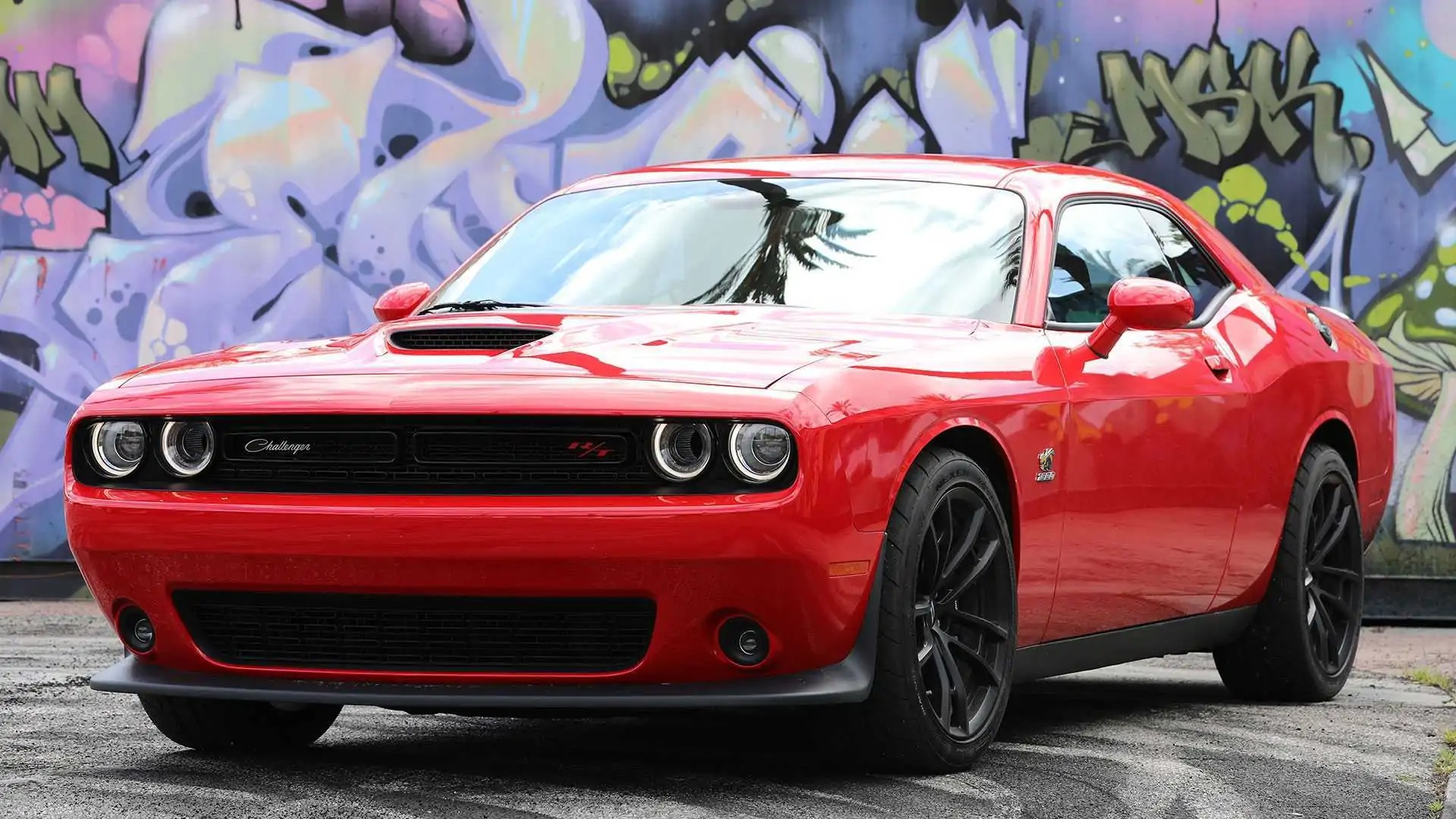
Modern muscle cars are no longer just about straight line dominance. For decades, the formula was simple: big engine, loud exhaust, soft suspension, and massive rear tires designed for burnouts instead of braking zones. That stereotype still exists in the minds of many enthusiasts. Yet the truth has quietly changed over the last decade.
Technology has reshaped the performance car landscape in dramatic ways. Advanced suspension systems, electronic differentials, adaptive dampers, and incredibly capable performance tires have transformed how modern muscle cars behave when the road begins to twist.
The new generation does not panic when faced with corners. In fact, many of them actively invite drivers to attack winding roads.
Manufacturers realized something important. Buyers wanted the emotion and drama of muscle cars, but they also wanted real driving capability. Track days, canyon drives, and fast highway sweepers have become part of modern car culture. Muscle cars had to evolve or risk becoming irrelevant.
The result is a fascinating new category of performance machines. These cars still deliver thunderous V8 power and aggressive styling, but they also bring composure, precision, and balance. They are capable of surprising drivers who expect old school handling compromises.
What makes this evolution even more impressive is how these cars remain accessible. Compared to European sports cars, modern muscle still offers huge performance for the money. That combination of affordability and capability has created some of the most exciting driver cars on sale today.
This article highlights six modern muscle cars that completely rewrite expectations when the road gets curvy. Each one proves that the era of one dimensional muscle is officially over. The straight line kings have learned how to dance.
Also Read: 10 Cars With Rear Hinged Doors That Are Surprisingly Practical
1. Ford Mustang Mach 1
The Mustang name has carried a complicated reputation for decades. Raw power was never the issue. Cornering credibility, however, was another story entirely. That perception began to change with the S550 generation, and the Mach 1 represents the most convincing proof that Ford has fully cracked the handling formula.
Instead of creating a completely new model, Ford approached the Mach 1 as a carefully engineered combination of their best performance components. The idea was simple but powerful.
Take proven hardware from higher performance variants, refine the chassis, and deliver a Mustang that feels genuinely at home on technical roads. The result feels less like a trim level and more like a greatest hits album of Mustang performance engineering.
The heart of the Mach 1 is the naturally aspirated 5.0 liter V8 producing 480 horsepower. That number is impressive on paper, yet the real story begins when the car approaches a series of corners. Power is no longer the dominant personality trait. Balance takes over the conversation.
One of the most important changes lies beneath the car. The Mach 1 borrows key cooling and suspension components from the Shelby GT350 and GT500. That means upgraded engine oil cooling, transmission cooling, and rear differential cooling.
While these upgrades sound track focused, they fundamentally change how the car behaves during aggressive driving. Consistency becomes a major advantage. The car feels just as confident after twenty minutes of hard driving as it does during the first five.
The steering deserves special attention because it represents a major shift in Mustang character. Older Mustangs often felt vague or disconnected when pushed.
The Mach 1 communicates clearly through the wheel, giving the driver useful information about front tire grip. This clarity builds confidence quickly, especially on unfamiliar roads. The car begins to feel predictable, and predictability is the foundation of speed in corners.
Weight distribution also plays a crucial role in the Mach 1 transformation. With a front engine V8 layout, perfect balance is never easy to achieve. Yet Ford has managed to create a chassis that rotates willingly without feeling unstable.
When entering a corner, the front end bites with surprising enthusiasm. Mid corner balance feels neutral rather than nose heavy, which is a dramatic departure from the Mustangs of the past.
Another key ingredient is the MagneRide adaptive suspension system. This technology constantly adjusts damping in real time based on road conditions and driving inputs. On smooth pavement, the car feels planted and controlled.
On rough surfaces, it absorbs imperfections without losing composure. This dual personality allows the Mach 1 to remain comfortable on daily drives while still delivering serious performance when pushed.
The Tremec six speed manual transmission adds another layer to the experience. Gear changes feel precise and mechanical, encouraging drivers to stay engaged.
Rev matching technology allows smooth downshifts during hard braking, which helps maintain stability when approaching tight corners. The gearbox does not simply transmit power. It becomes part of the rhythm of driving.
Tire selection also contributes heavily to the Mach 1’s cornering capability. The car comes equipped with Michelin Pilot Sport 4S tires, widely regarded as some of the best performance tires available. These tires offer tremendous grip without sacrificing road manners. They allow the chassis to fully express its capabilities.
Braking performance cannot be overlooked. Large Brembo brakes provide strong and consistent stopping power. Confidence under braking allows drivers to push deeper into corners before slowing down. That confidence changes how the entire car feels on a winding road.
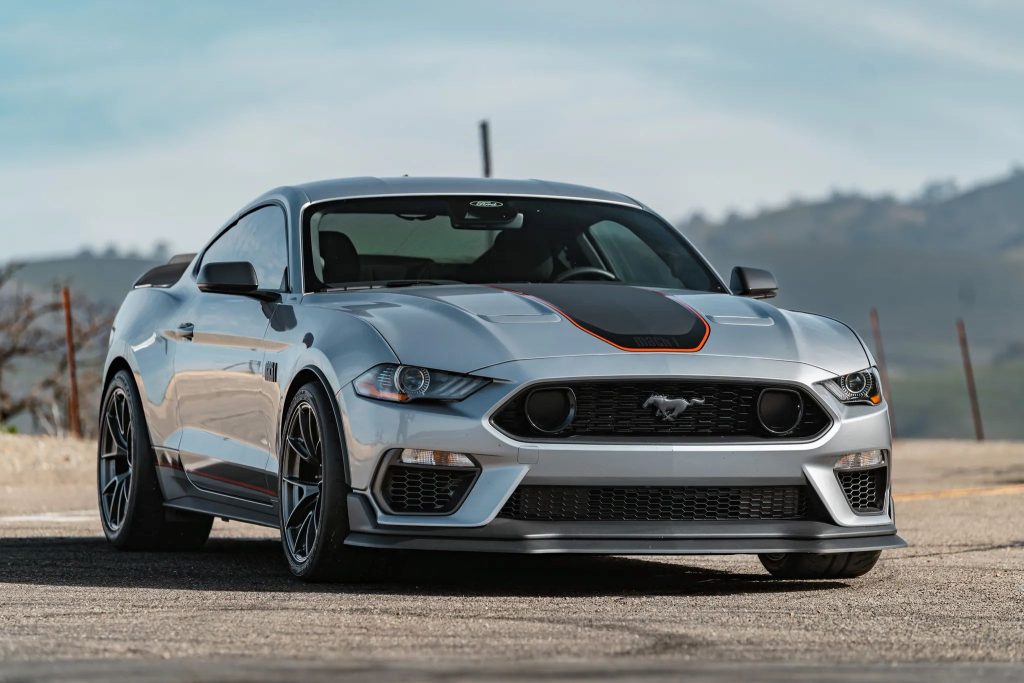
Aerodynamics play a subtle but important role. The Mach 1 features functional front splitters and rear spoilers that increase stability at speed. While the visual changes are modest, the effect becomes noticeable during fast sweeping corners. The car feels planted and secure rather than light or nervous.
Perhaps the most surprising aspect of the Mach 1 is how approachable it feels. Some high performance cars demand expert skill to unlock their potential. The Mach 1 encourages drivers to explore its limits without intimidation. It communicates clearly, reacts predictably, and rewards smooth inputs.
This combination of traits makes the Mach 1 far more than a straight line hero. It becomes a car that genuinely enjoys twisting roads. The transformation is not just technical. It is emotional. Drivers who once avoided corners in Mustangs now actively seek them out.
2. Chevrolet Camaro SS 1LE
If the Mustang Mach 1 represents evolution, the Camaro SS 1LE feels like rebellion. Chevrolet did not try to gently improve cornering ability.
Instead, they built a version of the Camaro that openly challenges sports cars far above its price range. The SS 1LE is not trying to be polite or versatile. It exists to prove that a muscle car can behave like a track weapon.
The transformation begins with the platform. The sixth generation Camaro moved to the Alpha chassis, the same architecture that underpins Cadillac sports sedans.
This decision changed everything. Compared to the previous generation, the car became lighter, stiffer, and dramatically more responsive. The foundation finally existed for serious handling capability.
The SS 1LE package takes this promising base and pushes it much further. Chevrolet approached the car with a clear mission. Every component needed to contribute to grip, precision, and durability during aggressive driving. Comfort and luxury were not the priority. Performance was the entire point.
At the center of the experience sits the 6.2 liter LT1 V8 producing 455 horsepower. The engine delivers deep reserves of torque across the rev range, which helps the car explode out of corners. Yet the power delivery feels controlled rather than overwhelming. Throttle response is immediate and predictable, making it easier to balance the car mid corner.
The real magic of the SS 1LE lies in its chassis tuning. Chevrolet equipped the car with Magnetic Ride Control, an adaptive suspension system capable of adjusting damping thousands of times per second.
The technology allows the Camaro to remain composed over rough pavement while maintaining incredible body control during hard cornering. It is the kind of dual personality normally found in far more expensive sports cars.
One of the standout components is the electronic limited slip differential. This system actively manages torque distribution between the rear wheels. When exiting a corner, the differential maximizes traction and stability.
Instead of struggling for grip, the car launches forward with confidence. Drivers feel encouraged to apply power earlier, which transforms the pace of corner exit.
Steering precision is another defining trait. The wheel feels direct and communicative, giving drivers a strong sense of connection with the front tires. This connection inspires confidence when approaching tight turns or fast sweepers. The car responds immediately to inputs, creating a sense of unity between driver and machine.
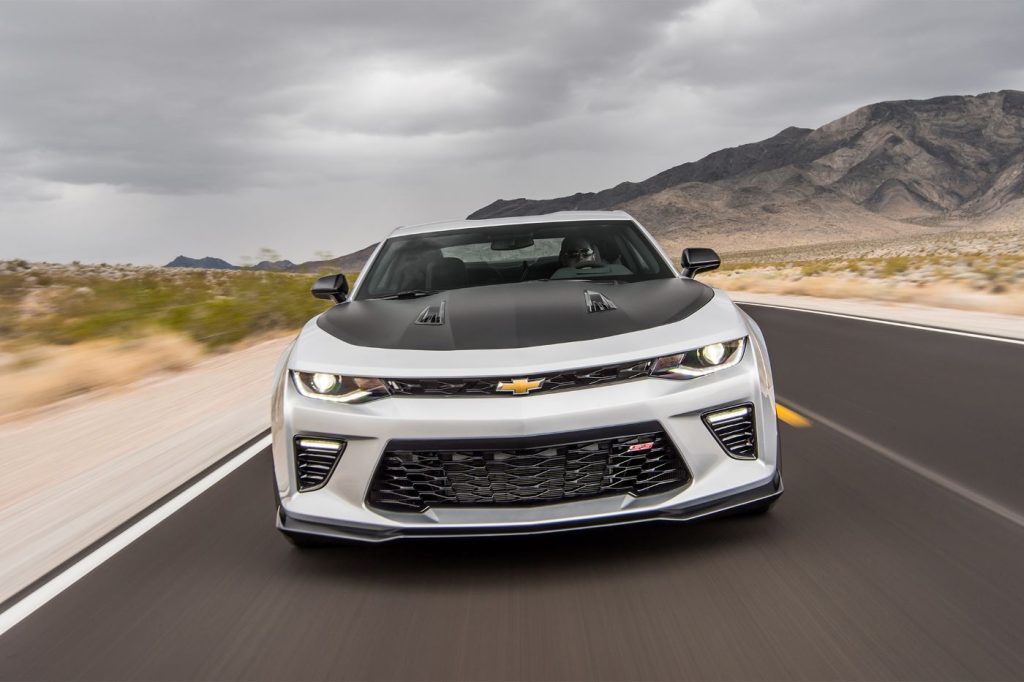
The braking system deserves recognition because it plays a critical role in cornering performance. Massive Brembo brakes provide exceptional stopping power and resistance to fade. During repeated hard braking, the pedal remains firm and consistent. This reliability allows drivers to push deeper into braking zones without fear.
The tire choice reinforces the car’s aggressive personality. Goodyear Eagle F1 Supercar tires deliver immense grip levels. These tires are designed with track use in mind, offering sticky compound and strong sidewalls. The result is remarkable cornering capability that feels far removed from traditional muscle car behavior.
Cooling upgrades ensure the car can sustain hard driving sessions. The SS 1LE includes additional cooling for the engine, transmission, and differential. This attention to durability means the car performs consistently even under demanding conditions.
Aerodynamics contribute to high speed stability. A front splitter and rear spoiler generate additional downforce, helping the car remain planted during fast corners. These components may appear subtle, but their effect becomes clear at speed.
The interior reflects the car’s focused purpose. Recaro sport seats hold the driver firmly in place during aggressive driving. This support allows better control and confidence when the road becomes challenging.
The most striking aspect of the Camaro SS 1LE is its attitude. It feels unapologetically performance oriented. Where many muscle cars attempt to balance comfort and speed, this car leans fully into the performance side of the spectrum.
This dedication transforms the driving experience. The SS 1LE does not merely tolerate corners. It attacks them with enthusiasm and precision. The result is a machine that surprises anyone who still believes muscle cars only excel in straight lines.
3. Dodge Challenger R/T Scat Pack Widebody
The Challenger has always been the heavyweight of the muscle car trio. It is bigger, wider, and more unapologetically retro than its rivals.
Because of that size, many enthusiasts assume it must be the least capable when the road turns twisty. On paper, that assumption seems logical. In reality, the Widebody Scat Pack tells a very different story.
To understand why this car surprises drivers, you need to start with the Widebody transformation itself. Dodge did not simply bolt on larger fender flares for visual drama. The widebody conversion significantly increases track width, allowing much larger tires and improved stability. This single change reshapes the entire personality of the Challenger.
Under the hood sits the legendary 6.4 liter HEMI V8 producing 485 horsepower. The engine delivers massive torque with a deep, thunderous soundtrack. Yet the real revelation comes when this power is paired with grip levels the standard Challenger never had. Instead of overwhelming the rear tires, the Widebody version puts power down with authority.
The most obvious upgrade appears at each corner of the car. Massive 305 section width tires dramatically increase the contact patch with the road. More rubber means more grip, and more grip means higher cornering speeds. Drivers immediately notice how planted the car feels during fast turns.
Suspension tuning plays a major role in the transformation. Dodge fitted the Widebody with Bilstein adaptive dampers that adjust based on driving mode. In comfort settings, the ride remains surprisingly compliant.
Switch to sport or track mode, and the car tightens dramatically. Body roll reduces, steering sharpens, and the Challenger begins to feel far more agile than its size suggests.
Steering feel is often overlooked when discussing muscle cars, yet the Widebody makes noticeable progress here. The steering is heavier and more direct than earlier Challengers. It provides useful feedback about grip levels, helping drivers judge how much speed they can carry into corners.
Braking performance is another critical improvement. Large Brembo brakes provide strong and consistent stopping power. Confidence under braking allows drivers to approach corners more aggressively. The car sheds speed with authority, preparing the chassis for the next turn.
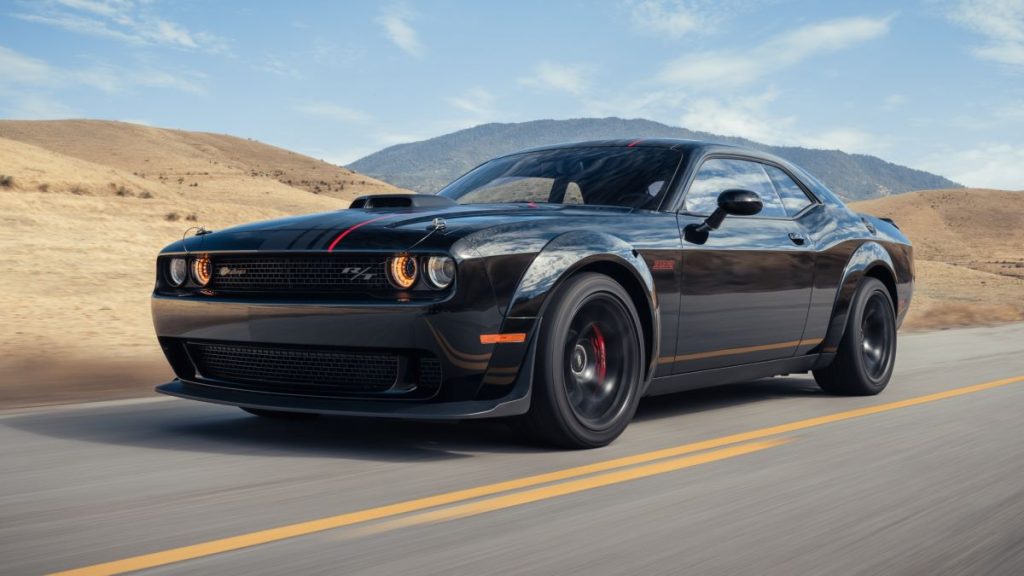
One of the most interesting aspects of the Widebody is how stable it feels at high speed. The wider stance lowers the car’s center of gravity effect and increases lateral stability. Fast sweepers feel secure rather than intimidating. The car settles into corners with a calm, controlled attitude.
The electronic stability and traction systems deserve recognition for their tuning. They allow a degree of playful movement without abruptly interrupting the experience. Drivers can explore the car’s limits while still benefiting from a safety net. This balance makes the car approachable despite its size and power.
Weight remains part of the Challenger’s identity, yet the Widebody uses that mass to its advantage. The car feels planted and predictable, especially during long sweeping corners. Instead of feeling clumsy, the weight contributes to a sense of stability.
Interior comfort also adds an interesting dimension. Unlike more track focused rivals, the Challenger remains spacious and relaxed. This makes long drives to scenic roads enjoyable rather than tiring. The car feels like a grand tourer that secretly learned how to corner.
The Widebody Scat Pack proves an important point about modern muscle. Handling is not only about lightweight agility. Stability, grip, and confidence also define real world cornering performance.
By combining huge tires, adaptive suspension, and powerful brakes, Dodge transformed the Challenger into a surprisingly capable cornering machine. It still feels big and dramatic, yet it now embraces winding roads instead of avoiding them.
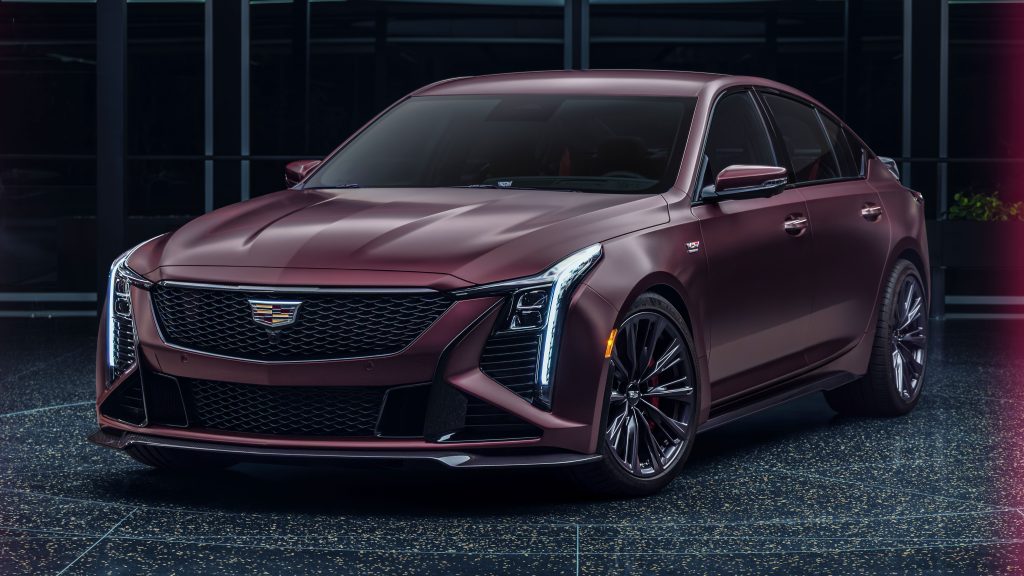
4. Cadillac CT5 V Blackwing
Muscle cars are usually associated with loud styling and retro attitude. The CT5 V Blackwing takes a completely different path. It hides extraordinary performance beneath a refined and understated exterior. At first glance, it looks like a luxury sedan. Behind the wheel, it behaves like a precision instrument built for serious driving.
The foundation of the car explains much of its capability. Cadillac engineered the CT5 V Blackwing using extensive track development and Nürburgring testing. The goal was ambitious. Create a car that blends American V8 power with the composure of elite European performance sedans. The result feels shockingly capable in corners.
Power comes from a supercharged 6.2 liter V8 producing 668 horsepower. That number sounds intimidating, yet the car delivers its performance in a remarkably controlled manner. Instead of feeling overwhelming, the power feels accessible and manageable. Throttle modulation becomes a precise tool rather than a source of anxiety.
The chassis tuning defines the driving experience. Cadillac’s Magnetic Ride Control system continuously adjusts suspension damping based on road conditions and driving inputs. The system reads the road surface and adapts in milliseconds.
This technology allows the car to remain comfortable on rough pavement while staying incredibly composed during aggressive driving.
Steering feedback stands out as one of the car’s strongest qualities. The wheel communicates subtle changes in grip and surface texture. Drivers gain a strong sense of connection with the front tires. This communication builds trust, which encourages confident corner entry.
Weight distribution plays an essential role in the car’s balance. The engine sits far back in the chassis, improving front to rear balance. This layout helps the car rotate naturally during corners. Instead of feeling nose heavy, the car feels neutral and poised.
The electronic limited slip differential works quietly in the background. It distributes torque between the rear wheels to maximize traction. When exiting corners, the car feels planted and stable. Power delivery becomes smooth and predictable, even under heavy acceleration.
Braking performance reinforces the car’s track ready character. Large Brembo carbon ceramic brakes provide immense stopping power and resistance to fade. Drivers can brake later and harder, which transforms how the car approaches corners.
The transmission options add personality to the driving experience. A precise manual gearbox is available, which is increasingly rare in high performance sedans. This choice adds engagement and control, allowing drivers to feel fully connected to the car.
Tire selection also contributes significantly to cornering capability. High performance Michelin tires provide impressive grip levels. Combined with the advanced suspension, they allow the car to carry remarkable speed through turns.
Aerodynamics quietly enhance stability. Subtle bodywork adjustments improve airflow and reduce lift at speed. The car remains planted during fast highway sweepers and high speed corners.
The interior adds another layer of contrast. Luxurious materials and advanced technology create a comfortable environment. This combination makes the car suitable for daily driving and long trips. Yet beneath the comfort lies serious performance capability.
The CT5 V Blackwing represents a modern interpretation of muscle. It retains the thunderous V8 soundtrack and rear wheel drive layout, but it wraps them in sophistication and precision.
This car proves that muscle does not need to shout to be effective. It can whisper quietly while delivering extraordinary cornering performance.
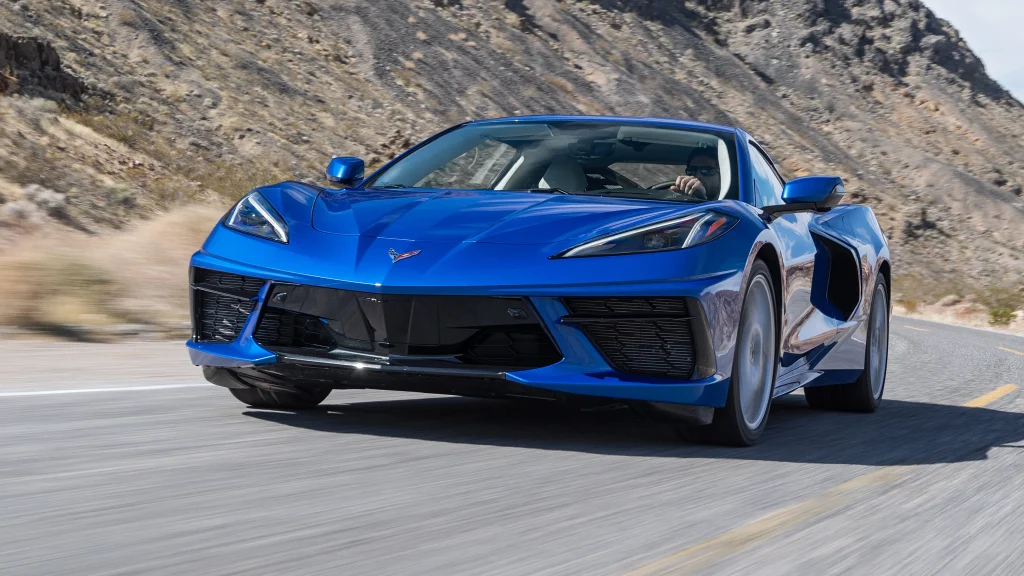
5. Chevrolet Corvette C8 Stingray
The Corvette has always lived close to the muscle car world, yet the C8 generation represents a dramatic shift in philosophy. Moving the engine behind the driver was not just a design experiment.
It was a declaration that American performance could compete with the world’s best sports cars on equal footing. This transformation also reshaped how the Corvette behaves in corners.
The mid engine layout is the defining feature of the C8 Stingray. By placing the engine closer to the center of the car, Chevrolet improved weight distribution dramatically. This layout allows the car to rotate more naturally through corners.
The front tires focus on steering while the rear tires focus on putting power down. The separation of duties creates balance and confidence.
Power comes from a naturally aspirated 6.2 liter V8 producing 495 horsepower with the performance exhaust. The engine delivers strong acceleration, yet the most important change lies in how that power is deployed. Instead of fighting for traction, the car launches out of corners with remarkable stability.
Corner entry behavior feels sharp and controlled. The front end responds quickly to steering inputs, allowing precise placement on the road. Drivers quickly gain confidence in the car’s ability to follow intended lines through tight bends.
The dual clutch transmission plays a major role in maintaining momentum. Gear changes occur in milliseconds, keeping the engine in its optimal power range. Smooth and rapid shifts allow drivers to focus on braking points and steering rather than managing gear changes.
Suspension tuning provides a blend of comfort and performance. The available Magnetic Ride Control system continuously adjusts damping based on driving conditions. This technology allows the car to absorb bumps while maintaining exceptional body control.
Grip levels remain impressive thanks to wide performance tires. The car feels planted during aggressive cornering, encouraging drivers to explore its limits. High speed sweepers feel stable and composed rather than nervous.
Braking performance matches the car’s performance ambitions. Large brakes provide strong stopping power and consistent pedal feel. Drivers can brake confidently before entering corners, knowing the car will respond predictably.
Visibility improves compared to previous generations, which helps drivers position the car accurately on winding roads. Confidence grows when drivers feel aware of their surroundings.
The driving position enhances the connection between driver and machine. Sitting low in the chassis creates a sense of being integrated with the car’s movements. This connection improves confidence during aggressive driving.
Aerodynamic design contributes to stability at speed. Careful airflow management helps keep the car planted during fast cornering. The car feels secure even during rapid direction changes.
Interior design reflects modern performance expectations. High quality materials and advanced technology create a comfortable environment. The car feels equally suitable for daily driving and weekend adventures.
The C8 Stingray represents a turning point in American performance engineering. It blends muscle car power with sports car precision in a way that feels completely natural.
This car proves that modern American performance has embraced global standards of handling and balance without sacrificing character.
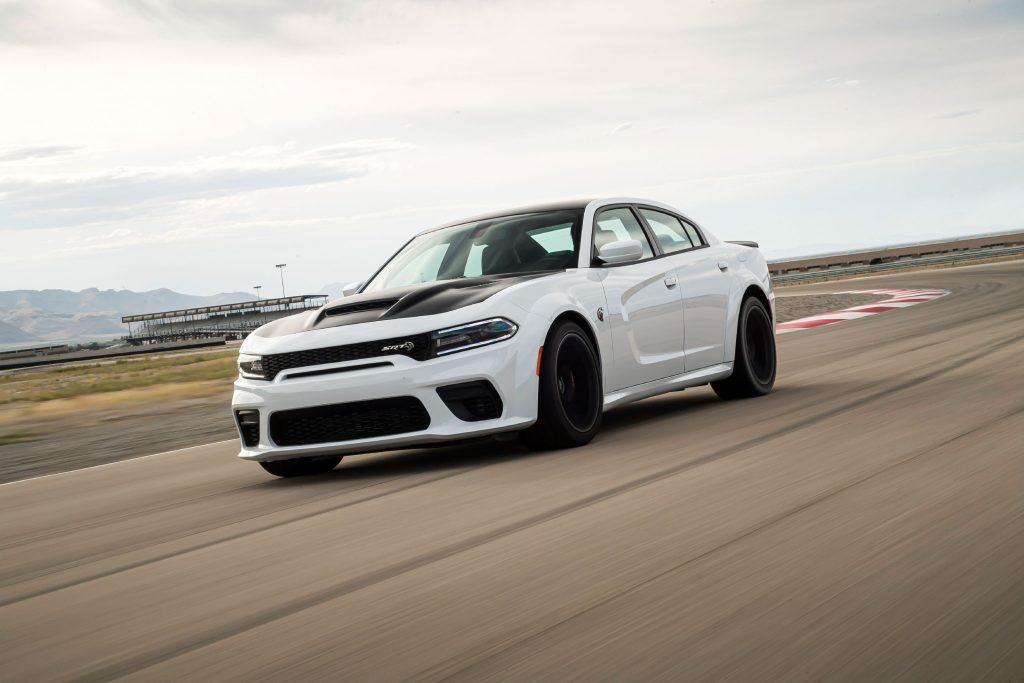
6. Dodge Charger SRT Hellcat Widebody
Ending this list with the Charger Hellcat Widebody feels almost poetic. A four door muscle sedan producing outrageous power should logically struggle in corners. The idea sounds absurd at first. Yet the Widebody transformation reshapes expectations and turns this giant performance sedan into something unexpectedly capable.
The Hellcat Widebody begins with sheer presence. It is large, loud, and unapologetically aggressive. Many drivers assume such a car would feel clumsy on winding roads. That assumption fades quickly once the car begins to move with purpose.
At the center of the experience sits the supercharged 6.2 liter HEMI V8 producing 717 horsepower. The engine dominates conversations about the car, but power alone does not explain its cornering ability. The real story begins with the Widebody upgrades that dramatically increase grip and stability.
Massive 305 width tires sit at all four corners, creating an enormous contact patch with the road. This extra grip transforms the car’s behavior during cornering. Instead of struggling for traction, the Charger feels planted and confident.
Track width increases significantly with the Widebody package. A wider stance improves lateral stability and reduces body roll. Fast sweeping corners feel calmer and more controlled than expected for a car of this size.
Suspension tuning plays a vital role in managing the car’s weight and power. Adaptive dampers adjust stiffness based on driving mode. In relaxed settings, the ride remains comfortable for daily driving. In performance modes, the chassis tightens noticeably and body control improves.
Steering precision has improved compared to earlier Charger models. The wheel feels heavier and more direct, giving drivers better feedback during cornering. This communication builds confidence when pushing the car on twisty roads.
The electronic limited slip differential helps manage the immense power output. Torque distribution between the rear wheels improves traction when exiting corners. Instead of spinning the tires excessively, the car accelerates forward with surprising composure.
Braking performance becomes essential in a car this powerful. Large Brembo brakes provide strong and consistent stopping power. Confidence under braking allows drivers to approach corners with greater speed and control.
Weight remains a defining characteristic of the Charger, yet the Widebody package uses that weight effectively. The car feels stable and planted rather than clumsy. Long sweeping corners highlight this stability and inspire confidence.
Interior comfort sets the Charger apart from most performance cars on this list. Spacious seating and everyday usability make long drives enjoyable. The car functions as a practical daily driver while hiding serious performance capability.
Technology also contributes to driver confidence. Multiple drive modes allow drivers to tailor the car’s behavior to different conditions. This flexibility makes the car approachable despite its extreme power.
The Charger Hellcat Widebody represents the most dramatic example of modern muscle evolution. It combines outrageous horsepower with genuine cornering capability in a practical four door package.
This car proves that size and practicality no longer exclude performance. Even a full size muscle sedan can embrace winding roads with confidence and control.
Also Read: Top 10 Luxury Cars With Physical Buttons Instead of Touchscreens
