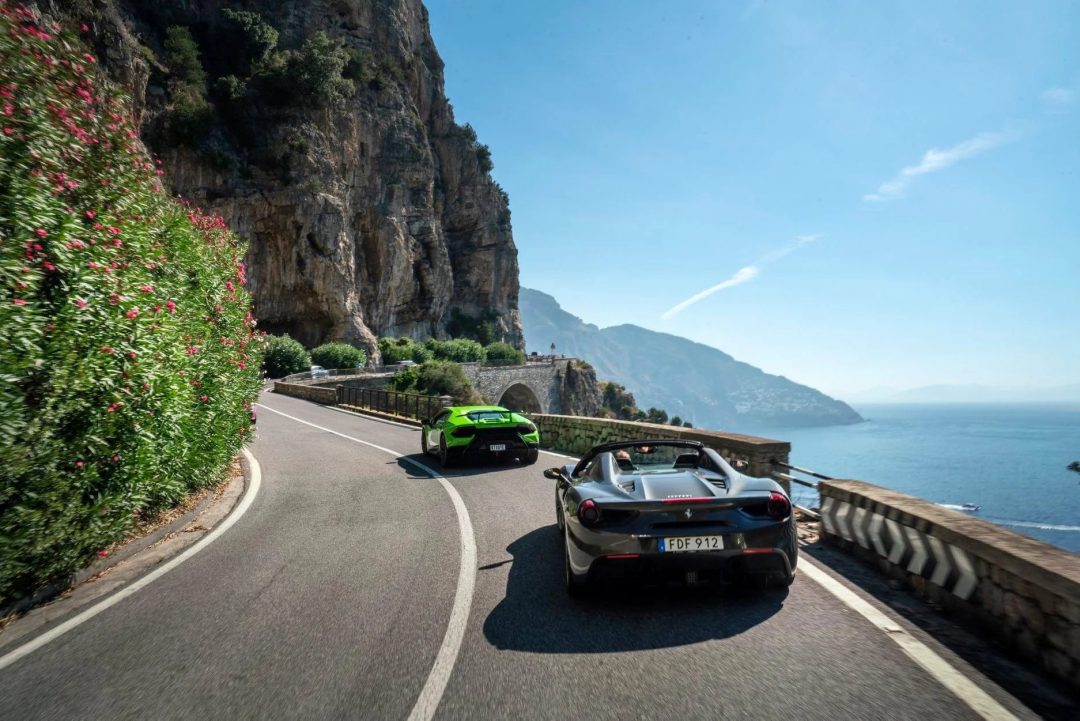
For many travelers, the journey itself is just as important as the destination. A scenic drive offers something that flights and trains cannot: immersion.
The sound of the engine, the changing landscape, the shifting light over mountains or coastline, these elements combine to create an experience that feels personal and unfiltered. While epic cross-country road trips can span weeks, there are certain roads around the world that deliver extraordinary views within the span of a single weekend.
The routes featured below are not simply highways connecting two cities. They are carefully engineered ribbons of asphalt carved into cliffsides, winding through alpine passes, or hugging dramatic shorelines. Each offers a concentrated dose of natural beauty, cultural context, and driving engagement that makes them ideal for a two- or three-day escape.
Here are six of the best scenic driving roads in the world that can realistically be enjoyed over a long weekend.
1. Pacific Coast Highway – California, USA
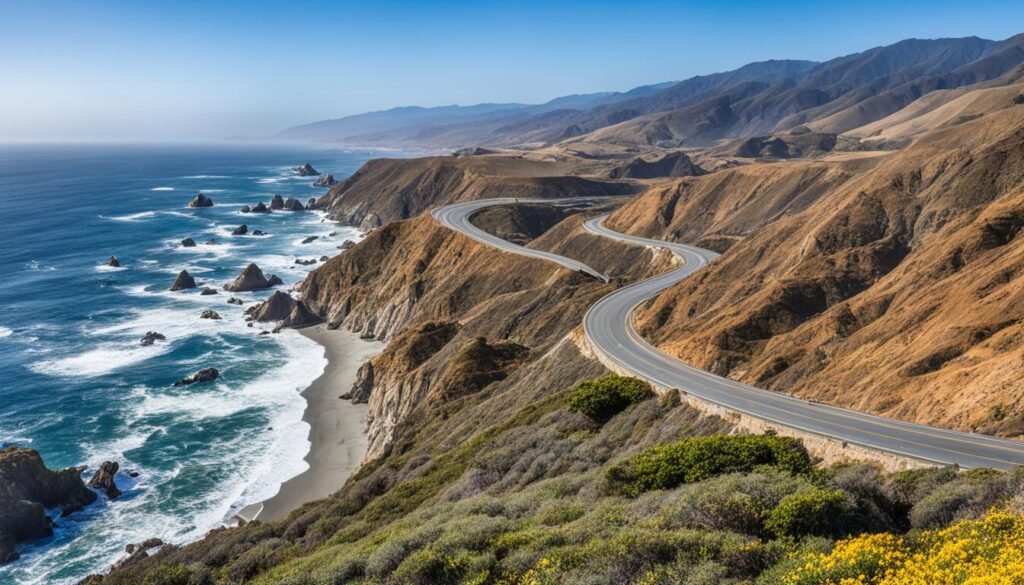
The Pacific Coast Highway – California, USA is not simply a transportation corridor; it is a living, shifting landscape carved between land and ocean. Officially designated as Highway 1 along much of its most dramatic stretch, the route threads its way along California’s rugged coastline, delivering uninterrupted views of the Pacific while weaving through cliffs, coastal forests, and small seaside towns.
What makes this highway remarkable is its constant visual rhythm. One moment, the road hugs steep bluffs that plunge into crashing surf hundreds of feet below.
The next, it curves gently through groves of cypress and redwood trees where filtered sunlight flickers across the pavement. The terrain feels sculpted rather than engineered, as though the asphalt simply followed the natural contour of the coastline.
The stretch through Big Sur is particularly iconic. Here, the highway narrows and twists across elevated bridges and carved cliff faces, offering panoramic ocean views that feel cinematic in scale.
The Bixby Creek Bridge rises above a canyon with graceful concrete arches, framing one of the most photographed scenes in American road travel. Farther south, pull-off viewpoints reveal jagged rock formations scattered across turquoise water, especially striking during late afternoon when sunlight reflects off the sea.
Driving the Pacific Coast Highway encourages a slower pace. Sharp curves and elevation changes demand attention, but they also reward patience. The route is less about speed and more about immersion. Windows down, ocean air mixes with the scent of salt and pine. Waves crash rhythmically against the shoreline, creating a soundtrack that blends with the hum of tires against pavement.
Beyond the scenery, the highway connects a series of distinct coastal communities. Monterey, Carmel-by-the-Sea, and Morro Bay each offer their own architectural charm and maritime character. Small cafés and roadside overlooks provide natural pauses in the journey, transforming the drive into a series of experiences rather than a single continuous stretch.
Sunrise and sunset bring dramatic changes in color. Morning fog often drapes the cliffs in a soft haze, while evening light paints the coastline in gold and amber tones. The Pacific Coast Highway stands as one of America’s defining scenic drives, a route where geography, engineering, and atmosphere converge into a singular weekend-worthy journey.
2. Amalfi Coast Road – Italy
The Amalfi Coast Road, Italy, officially known as Strada Statale 163, is a dramatic ribbon of pavement carved into the cliffs of southern Italy’s Sorrentine Peninsula. Stretching roughly 30 miles between Sorrento and Salerno, this coastal route compresses centuries of Mediterranean history, architecture, and natural beauty into a compact yet visually overwhelming driving experience.
What defines the Amalfi Coast Road is its verticality. The highway clings to steep limestone cliffs that rise sharply from the Tyrrhenian Sea, creating a layered landscape of rock, water, and pastel-colored villages stacked above the shoreline. At nearly every bend, the road reveals sweeping ocean views framed by terraced hillsides planted with lemon groves and olive trees.
The villages themselves appear almost suspended between sky and sea. Positano’s cascading buildings seem to tumble down the mountainside in a wash of peach, pink, and cream façades.
Amalfi’s historic cathedral anchors a tight cluster of narrow streets, while Ravello sits higher above the coastline, offering panoramic overlooks that feel cinematic in scale. Driving through these towns requires patience, as the road narrows and curves sharply around stone walls and tight switchbacks.
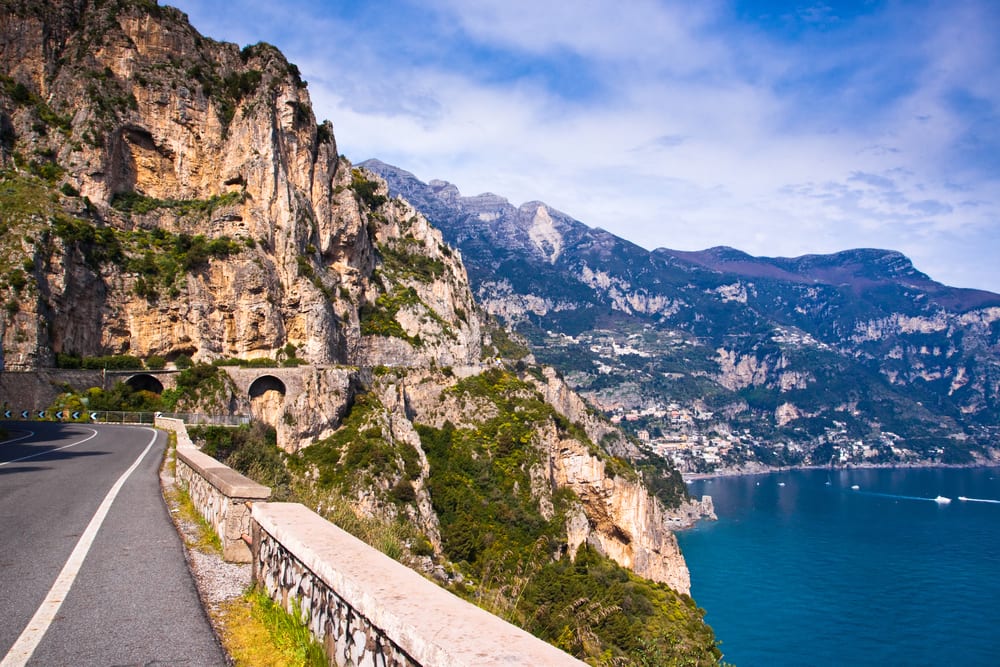
The Amalfi Coast Road is not engineered for speed. Its narrow lanes, blind corners, and sheer drop-offs demand deliberate, attentive driving. Yet this slower pace enhances the experience. With windows open, drivers catch hints of sea air mixed with citrus from roadside groves. The rhythm of the journey becomes about absorbing detail rather than covering distance.
Light plays a significant role in shaping the atmosphere. Morning sun illuminates the cliffs in soft gold, while late afternoon casts long shadows across the water, intensifying the contrast between the deep blue sea and pale rock faces. At sunset, the entire coastline glows in warm amber tones.
Despite its relatively short length, the Amalfi Coast Road offers a density of scenery rarely matched elsewhere. It blends natural grandeur with centuries-old architecture and Mediterranean culture, creating a weekend drive that feels immersive, intimate, and distinctly Italian from start to finish.
3. Great Ocean Road – Victoria, Australia
The Great Ocean Road, Victoria, Australia is one of the Southern Hemisphere’s most celebrated coastal drives, stretching approximately 150 miles along Australia’s southeastern shoreline. Built between 1919 and 1932 by returned soldiers as a memorial to those who served in World War I, the road carries both historical significance and extraordinary natural beauty.
The route begins near Torquay, west of Melbourne, and winds along the edge of the Southern Ocean, tracing cliffs, beaches, and forested hillsides. What distinguishes the Great Ocean Road is the sheer diversity of landscapes encountered within a relatively compact stretch. Drivers transition seamlessly from sweeping ocean vistas to dense temperate rainforest, then back to rugged coastal bluffs sculpted by wind and waves.
One of the most iconic landmarks along the drive is the Twelve Apostles, a series of towering limestone stacks rising from the ocean just off the shoreline. These formations, carved by centuries of erosion, stand dramatically against the horizon and shift in color depending on the angle of sunlight. Viewing platforms allow travelers to pause and absorb the scale of the scene without rushing past.
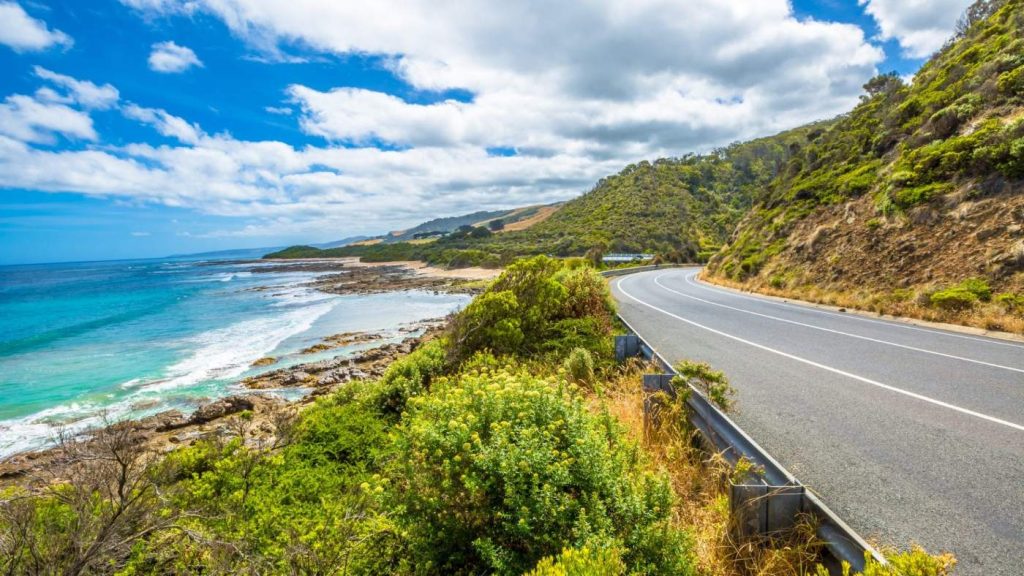
The road itself is engaging yet accessible, featuring gentle curves, elevation changes, and scenic lookouts positioned at strategic points. Unlike more technical mountain routes, the Great Ocean Road prioritizes panoramic immersion over sharp switchbacks. Its design encourages steady pacing, allowing drivers to appreciate the evolving coastline.
Wildlife adds an additional dimension to the experience. Kangaroos and koalas are often spotted in nearby eucalyptus forests, while seabirds circle above rocky cliffs. Small coastal towns such as Lorne and Apollo Bay provide natural stopping points for dining, beach walks, or overnight stays during a weekend trip.
Light conditions dramatically shape the drive. Early mornings bring mist rising off the ocean, while late afternoon casts golden tones across the limestone formations and coastal ridges. Stormy weather can intensify the atmosphere, with crashing waves adding movement and sound to the landscape.
The Great Ocean Road stands as a testament to both human craftsmanship and natural force — a coastal route where memorial history and raw ocean beauty converge into a compelling and unforgettable driving journey.
4. Trollstigen – Norway
Trollstigen, translated as “The Troll’s Path,” is one of Norway’s most famous mountain roads. Though relatively short in length, this serpentine route features steep gradients, dramatic switchbacks, and towering waterfalls cascading down surrounding cliffs.
Located in western Norway, Trollstigen climbs through eleven sharp hairpin turns while offering expansive views of deep valleys and rugged peaks. The road typically opens in late spring and closes in autumn due to snow conditions, making timing an essential consideration.
A weekend trip through this region allows travelers to pair Trollstigen with nearby fjords and mountain passes. The dramatic landscape feels almost otherworldly, especially under shifting Scandinavian light.
While the road demands attentive driving due to its tight turns and elevation changes, it remains accessible to most passenger vehicles during open months. The combination of engineering and untouched natural beauty creates a compact yet unforgettable driving experience.
The Trollstigen – Norway, translated as “The Troll’s Path,” is one of Scandinavia’s most dramatic mountain roads, a tightly coiled ascent that cuts through the steep terrain of western Norway.
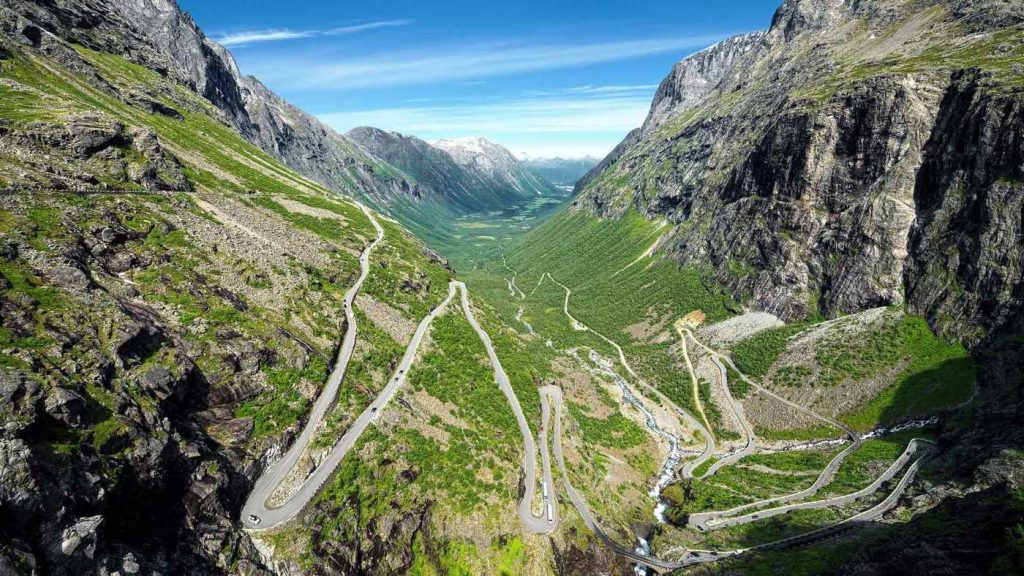
Though relatively short in distance, Trollstigen delivers an intense concentration of alpine scenery, sharp elevation changes, and precise engineering that makes it one of Europe’s most unforgettable driving experiences.
The road climbs through eleven tight hairpin bends as it ascends a steep mountainside, each turn revealing a broader and more expansive view of the valley below.
From certain vantage points, the switchbacks appear stacked almost vertically against the cliffs, creating a visual effect that feels both daring and deliberate. The gradient is steep, but the roadway is carefully constructed with stone guardrails that blend naturally into the surrounding rock.
Water plays a constant role in shaping the atmosphere. The Stigfossen waterfall cascades down the mountainside beside the road, sending mist into the air as it drops hundreds of feet into the valley.
In spring and early summer, snowmelt intensifies the waterfalls, adding both sound and motion to the landscape. Even in clear weather, the constant presence of rushing water enhances the sensory experience.
Trollstigen is typically open only from late spring to early autumn due to heavy snowfall in winter months. This seasonal accessibility adds to its allure. Driving it feels like entering a landscape that is temporarily revealed after months of isolation. The surrounding peaks, often capped with lingering snow even in summer, create a dramatic alpine backdrop.
At the summit, a modern viewing platform extends outward over the valley, offering a panoramic perspective of the serpentine road below. From this height, the route appears less like infrastructure and more like a ribbon woven into the mountain.
Unlike longer scenic highways, Trollstigen’s appeal lies in its intensity. Within a short stretch of pavement, it delivers steep climbs, cinematic viewpoints, and close interaction with Norway’s raw mountain terrain. The drive demands focus, but it rewards drivers with a uniquely immersive alpine experience shaped equally by engineering precision and natural grandeur.
5. Chapman’s Peak Drive – South Africa
Chapman’s Peak Drive, located near Cape Town, South Africa, offers one of the most concentrated scenic experiences in the world. Stretching just over five miles, the route is carved into the face of Chapman’s Peak, overlooking the Atlantic Ocean.
Despite its short distance, the drive delivers dramatic cliffside views and sweeping coastal panoramas. The road features numerous pull-off points where travelers can stop to photograph the coastline and surrounding mountains.
Because of its manageable length, Chapman’s Peak Drive fits easily into a weekend itinerary that includes exploring Cape Town, visiting nearby beaches, or hiking in Table Mountain National Park.
The contrast between steep rock formations and open ocean creates a powerful visual dynamic. Even a short drive along this route feels immersive and expansive, proving that scenic impact is not solely dependent on mileage.
The Chapman’s Peak Drive – South Africa is a compact yet visually powerful coastal route carved into the cliffs between Hout Bay and Noordhoek near Cape Town. Stretching just over five miles, this engineering feat delivers an outsized scenic impact, blending dramatic mountain faces with uninterrupted views of the Atlantic Ocean.
What makes Chapman’s Peak Drive exceptional is its intimate proximity to both rock and sea. The roadway is etched directly into the near-vertical granite slopes of Chapman’s Peak, with towering cliff walls rising on one side and open ocean stretching endlessly on the other. The sensation of driving along the edge of the continent is immediate and immersive.
The route features a series of gentle curves rather than aggressive switchbacks, allowing drivers to focus on absorbing the scenery rather than managing sharp turns.
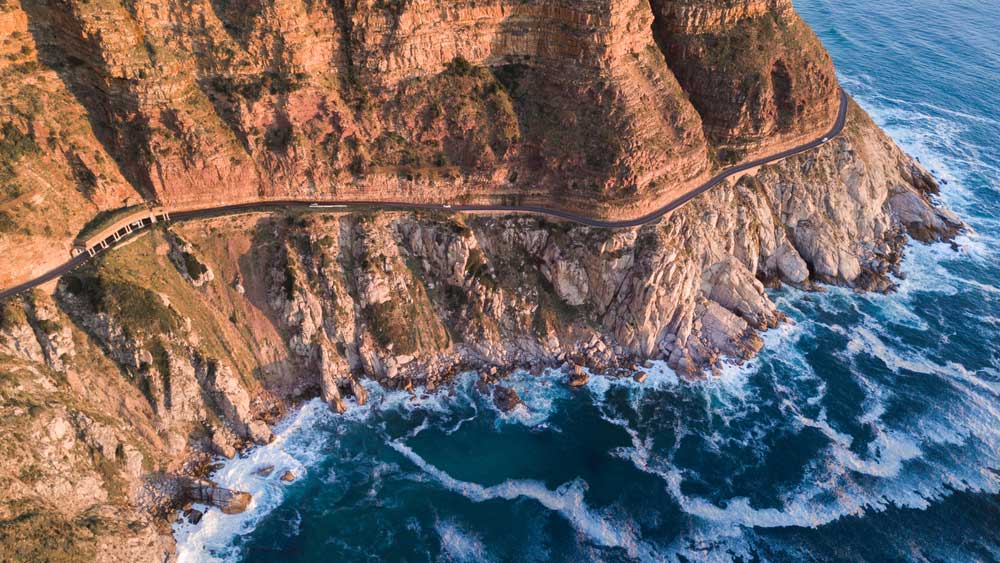
Numerous designated viewing points line the drive, offering safe pull-offs where travelers can step out and fully appreciate the sweeping coastal panorama. From these vantage points, the coastline appears sculpted by centuries of wind and water, with beaches unfolding in soft arcs below.
Lighting dramatically alters the character of the drive. In bright sunlight, the deep blue of the Atlantic contrasts sharply with the warm, textured granite cliffs. During late afternoon, golden tones sweep across the mountainside, enhancing the depth and contours of the terrain. On misty days, low clouds can drift across the road, adding an atmospheric layer that feels almost cinematic.
Despite its relatively short length, Chapman’s Peak Drive packs a density of visual drama rarely found in longer routes. The combination of ocean spray, sea breeze, and shifting light creates a dynamic environment that changes throughout the day. The road’s smooth surface and thoughtful engineering make it accessible while still maintaining a sense of adventure.
Often incorporated into a broader Cape Peninsula weekend itinerary, Chapman’s Peak Drive serves as a concentrated highlight rather than a lengthy journey. It stands as a testament to the harmonious balance between human construction and rugged natural beauty, offering one of Africa’s most striking coastal driving experiences in a single, unforgettable stretch of road.
6. Transfăgărășan Highway – Romania
The Transfăgărășan Highway – Romania is one of Europe’s most visually dramatic mountain roads, slicing through the Carpathian Mountains in a series of steep climbs, sweeping curves, and tightly coiled switchbacks.
Stretching approximately 56 miles, the highway connects the regions of Transylvania and Wallachia, but its appeal lies far beyond simple connectivity. It is a route defined by altitude, terrain, and spectacle.
Constructed in the 1970s, the Transfăgărășan ascends to over 6,500 feet at its highest point near Lake Bâlea. As drivers climb, the road transforms into a ribbon of asphalt twisting sharply against the mountainside. From elevated viewpoints, the switchbacks appear stacked in dramatic succession, resembling a coiled path carved directly into the alpine slopes.
The surrounding scenery is expansive and untamed. Steep ridgelines frame the horizon, while deep valleys stretch below. In summer months, green pastures and wildflowers soften the rugged terrain. Even during warmer seasons, patches of snow can linger along the higher elevations, adding contrast to the landscape. Waterfalls cascade down rocky cliffs, and glacial lakes punctuate the route with reflective blue surfaces.
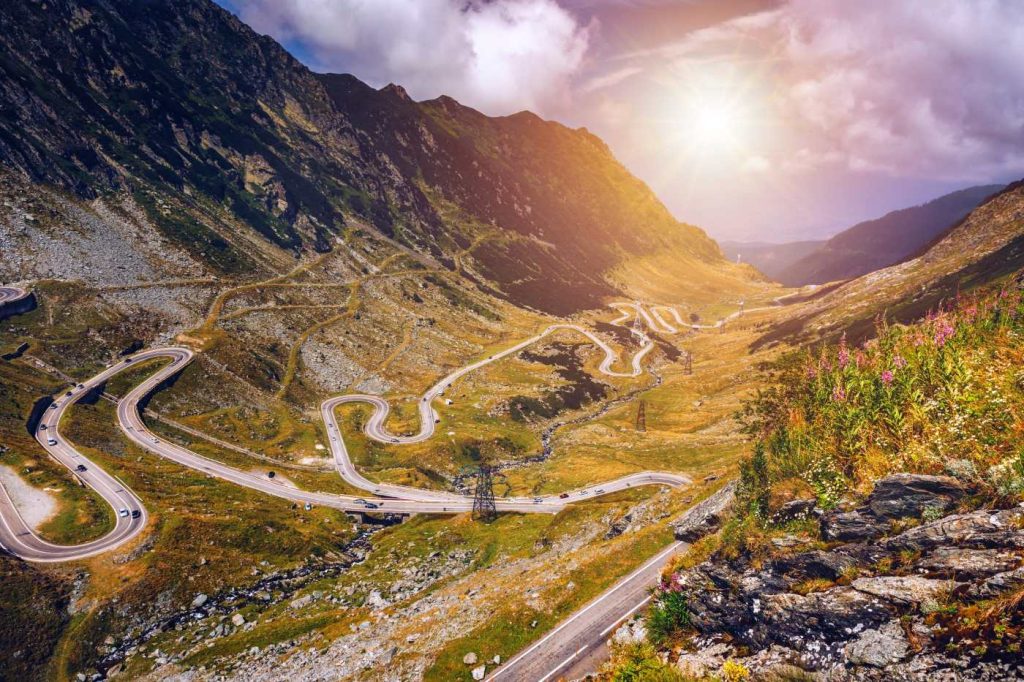
Unlike coastal scenic drives, the Transfăgărășan feels immersive in its elevation. The air grows cooler and thinner as the road climbs, and the changing altitude creates a constant shift in perspective. Hairpin turns demand attentive driving, but the engineering remains solid and manageable during open months.
The highway is typically closed in winter due to heavy snowfall, making it a seasonal experience. When open, it attracts drivers, motorcyclists, and enthusiasts drawn to its combination of technical curves and panoramic scenery.
The presence of historical landmarks nearby, including medieval towns and fortified castles, enhances the overall weekend experience. The Transfăgărășan is not merely a scenic corridor; it is a high-altitude journey through Romania’s mountainous heart, where engineering precision intersects with raw alpine grandeur in one of Europe’s most memorable driving landscapes.
The best scenic driving roads in the world are not necessarily the longest. They are defined by density of beauty, engineering ingenuity, and the emotional response they inspire. Each of the six routes listed above can be experienced over a long weekend while delivering views and memories that linger far beyond the trip itself.
Whether winding along California’s cliffs, navigating Norway’s mountain passes, or tracing Italy’s Mediterranean coastline, these roads remind us that sometimes the most meaningful journeys happen behind the wheel, one curve at a time.