
Vehicle theft in the United States has evolved dramatically over the past decade. While traditional methods like forced entry and hotwiring still exist, modern criminals increasingly rely on digital tools rather than crowbars.
Today’s vehicles are equipped with keyless entry systems, wireless connectivity, smartphone integration, and onboard computers, all of which provide convenience for drivers but also introduce new vulnerabilities.
According to recent U.S. crime data, vehicle theft remains a significant issue nationwide, particularly in urban and suburban regions. What has changed is how theft occurs.
Relay attacks can capture and amplify a key fob signal from inside your home. OBD (On-Board Diagnostics) port exploitation allows thieves to reprogram keys in minutes. Some criminals even use signal jammers or cloning devices to bypass factory security systems.
The good news is that while digital theft methods are sophisticated, preventative strategies are highly effective when implemented consistently. Below are nine practical and actionable ways to secure your vehicle from modern digital theft.
1. Use a Faraday Pouch for Your Key Fob
Using a Faraday pouch for your key fob is one of the simplest and most effective defenses against modern relay-style vehicle theft. As keyless entry systems have become standard across the U.S. auto market, so have techniques designed to exploit them. A Faraday pouch directly addresses one of the most common digital vulnerabilities: wireless signal interception.
Key fobs constantly emit low-power radio frequency signals so your vehicle can detect proximity and unlock automatically. In a relay attack, thieves use two devices, one placed near your home to capture the key’s signal and another near the vehicle to retransmit it.
The car interprets the relayed signal as legitimate, unlocks, and may even allow the engine to start. This can happen even if your keys are sitting safely inside your house.
A Faraday pouch blocks this communication entirely. It is lined with signal-shielding material that prevents radio frequencies from passing through. When your key fob is sealed inside the pouch, it becomes electronically invisible. The vehicle cannot detect it, and relay devices cannot amplify its signal.
For American households where vehicles are commonly parked in driveways or directly outside garages, this protection is particularly important. Many relay thefts occur overnight, when keys are stored near entry doors or windows, locations that allow signals to be captured more easily from outside.

Using a Faraday pouch requires no technical setup. Simply place your key fob inside and ensure the pouch is fully closed. To verify effectiveness, test by attempting to unlock your vehicle while the key remains inside the pouch. If the doors do not respond, the signal is successfully blocked.
For households with multiple vehicles, it is advisable to store all primary and spare key fobs in signal-blocking containers when not in use. Some drivers opt for larger Faraday boxes placed in central interior locations.
While no single security measure guarantees total protection, a Faraday pouch eliminates one of the easiest attack methods criminals rely on. It is inexpensive, portable, and highly effective, making it one of the most practical first steps in securing a keyless-entry vehicle against modern digital theft.
2. Disable Passive Keyless Entry If Possible
Disabling passive keyless entry, when your vehicle allows it, is a strategic way to reduce exposure to relay-style theft without sacrificing all remote convenience features.
Passive keyless entry systems are designed to unlock your vehicle automatically when the key fob is within close proximity. While this technology improves ease of access, it also requires the vehicle and key to maintain constant low-level communication, creating an opportunity for signal interception.
In a typical relay attack, criminals use radio signal amplifiers to extend the communication range between your key fob and your vehicle. Because passive entry systems are always “listening” for the key’s presence, thieves can trick the car into believing the key is nearby, even if it is inside your home. Once the vehicle unlocks, it can often be started and driven away without visible signs of forced entry.
By disabling passive entry through your vehicle’s settings menu, if supported by your manufacturer, you stop that continuous proximity-based handshake. In many models, drivers can turn off automatic unlocking while still retaining manual remote lock and unlock functions via the key fob buttons. This significantly reduces the window of opportunity for signal-based exploitation.
The process for disabling passive entry varies by brand and model. Some vehicles allow the feature to be toggled through the infotainment system, while others require changes via the driver information display or dealership configuration. Reviewing your owner’s manual or consulting your dealer can clarify available options.
For U.S. drivers who park vehicles in driveways, apartment complexes, or street-side locations near their residence, disabling passive entry can meaningfully lower theft risk. It is especially advisable in urban areas where relay attacks have been reported with increasing frequency.
While this step slightly reduces the convenience of automatic unlocking, it strengthens overall security by limiting unnecessary wireless communication.
When combined with other preventative measures, such as storing keys in Faraday pouches and maintaining updated vehicle software, disabling passive keyless entry forms part of a layered defense strategy against modern digital vehicle theft.
3. Install a Steering Wheel Lock
Installing a steering wheel lock remains one of the most practical and visible deterrents against vehicle theft, even in an era dominated by digital security systems. While modern thieves may rely on electronic tools to bypass keyless entry systems or reprogram keys, a mechanical barrier placed directly on the steering wheel introduces an immediate obstacle that cannot be ignored.
A steering wheel lock is designed to physically restrict wheel rotation, typically by extending beyond the wheel’s circumference and preventing it from turning fully.
Even if a thief manages to unlock the vehicle electronically or gain interior access through digital methods, the presence of a steering lock stops the vehicle from being driven away without additional time, tools, and effort. Most criminals prefer quick, low-risk targets. A visible physical barrier increases the likelihood that they will move on to an easier vehicle.
One of the strongest advantages of a steering wheel lock is its visual impact. Unlike software updates or signal-blocking measures that operate silently, a steering lock sends an immediate message.
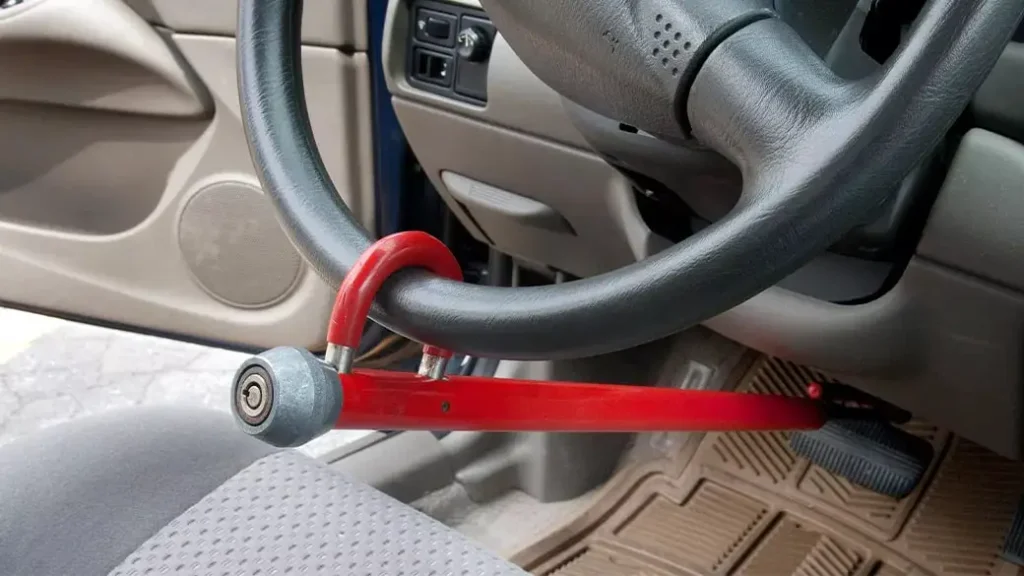
From outside the vehicle, it is clearly visible through the windshield. This visibility alone can deter opportunistic thieves conducting quick assessments of parked cars in residential neighborhoods, apartment complexes, or public parking lots.
Modern steering locks are typically lightweight, adjustable, and easy to install within seconds. Most models require extending the locking bar across the steering wheel and securing it with a key. Removing it takes minimal time for the owner but presents a significant inconvenience for unauthorized individuals.
For U.S. drivers in urban areas where vehicle theft rates remain elevated, combining digital protections with a mechanical deterrent creates layered security. Even if advanced electronic systems are compromised, the steering wheel lock remains an independent safeguard.
While it may seem traditional compared to today’s technology-driven solutions, a steering wheel lock addresses a fundamental principle of security: increasing time and effort required for theft reduces likelihood. In a landscape of evolving digital threats, adding a straightforward mechanical barrier continues to be a highly effective and affordable defense strategy.
4. Protect the OBD Port
Protecting the OBD port is an increasingly important step in defending your vehicle against modern digital theft methods. The OBD (On-Board Diagnostics) port, typically located beneath the dashboard on the driver’s side, was originally designed to give technicians access to vehicle diagnostic data. However, in the wrong hands, it can be used to reprogram keys or override certain security systems in a matter of minutes.
In many late-model vehicles sold in the United States, thieves who gain entry into the cabin, even without the original key, can plug a programming device into the OBD port and create a new key fob.
This method bypasses traditional hotwiring techniques and often leaves little visible damage, making recovery and insurance claims more complicated. Because the OBD port is standardized and easily accessible, it has become a target in organized vehicle theft operations.
Installing an OBD port lock is one of the most effective preventative measures. These devices physically cover or enclose the port, requiring a key or code to remove. By blocking direct access, an OBD lock forces thieves to spend additional time attempting to bypass it, a risk many are unwilling to take. Even a modest delay can be enough to deter theft entirely.
For drivers of high-demand vehicles or models frequently targeted in theft statistics, OBD protection is particularly valuable. It is also beneficial for vehicles parked in apartment complexes, public garages, or street-side locations where unauthorized access attempts are more likely.
In addition to physical locks, some manufacturers offer software-based protections that restrict key programming unless specific authentication procedures are followed. Checking with your dealership to confirm that your vehicle’s security software is up to date can add another layer of defense.
Ultimately, the OBD port is a legitimate service tool that unintentionally creates a vulnerability when left unprotected. By adding a physical barrier and ensuring proper electronic safeguards are in place, drivers can close off one of the most commonly exploited access points in modern vehicle theft.
5. Keep Vehicle Software Updated
Keeping your vehicle’s software updated is a critical yet often underestimated component of modern automotive security. Today’s vehicles function much like rolling computers, relying on interconnected control modules, wireless communication systems, infotainment platforms, and telematics units.
Just as smartphones and laptops require regular updates to patch vulnerabilities, vehicles also depend on software updates to correct security flaws and strengthen digital defenses.
Manufacturers periodically release firmware updates that address identified weaknesses in wireless communication protocols, remote access systems, and onboard control modules.
In some cases, vulnerabilities are discovered after vehicles are already on the road. Without updates, these weaknesses remain exploitable. Criminals who understand specific system flaws can target outdated software versions using tools designed to bypass authentication or intercept signals.

Many newer vehicles in the U.S. market support over-the-air (OTA) updates, allowing software improvements to be downloaded and installed automatically. Drivers should ensure that automatic updates are enabled and that notifications are not ignored. If your vehicle does not support OTA updates, routine dealership visits may be necessary to apply the latest patches.
Beyond theft prevention, software updates often improve system stability and performance. Updates may enhance keyless entry encryption, strengthen communication between the key fob and vehicle, or improve remote start security features. Some updates also address infotainment vulnerabilities that could otherwise allow unauthorized access to connected services.
Neglecting updates can leave your vehicle operating on outdated security architecture. Even if you use protective measures such as Faraday pouches or steering locks, unpatched software may still present digital entry points.
For U.S. drivers who rely on smartphone apps to lock, unlock, or track their vehicles, maintaining current software is especially important. Remote access features depend on secure encryption protocols, which are refined over time.
Ultimately, keeping vehicle software updated is a proactive measure that strengthens your overall security posture. It requires minimal effort yet closes potential gaps that criminals may attempt to exploit. In a connected automotive landscape, regular updates are not just about convenience, they are about maintaining digital resilience.
6. Use GPS Tracking Devices
Using GPS tracking devices adds an important recovery-focused layer to your vehicle security strategy. While preventative measures aim to stop theft before it occurs, a tracking system significantly improves the chances of locating and retrieving your vehicle if it is taken. In today’s landscape of organized and tech-enabled vehicle theft, rapid recovery can mean the difference between temporary disruption and permanent loss.
Modern GPS trackers use cellular networks and satellite positioning to provide real-time location data. Many systems allow owners to monitor their vehicle through a smartphone app, receive movement alerts, and set geofencing boundaries.
If the vehicle leaves a designated area without authorization, the owner receives an immediate notification. This early warning capability is especially useful for vehicles parked in apartment complexes, public garages, or street-side locations.
Factory-installed telematics systems offered by major automakers often include tracking services as part of subscription packages. These systems may also provide remote immobilization, allowing the engine to be disabled once the vehicle comes to a safe stop. Aftermarket GPS trackers offer similar functionality and can often be installed discreetly to reduce the likelihood of tampering.
For U.S. drivers, GPS tracking can also provide insurance advantages. Some insurers offer premium discounts for vehicles equipped with approved tracking or recovery systems. Additionally, documented tracking capabilities can streamline police reporting and insurance claims if theft occurs.

It is important to understand that GPS tracking does not prevent theft outright. However, it introduces accountability and increases risk for criminals. Vehicles that can be tracked are more difficult to conceal, transport, or resell. In many cases, stolen vehicles equipped with tracking systems are recovered quickly, sometimes within hours.
When selecting a tracking device, drivers should evaluate factors such as battery life, subscription costs, data security standards, and installation method. Professional installation may be advisable to ensure concealment and consistent performance.
Ultimately, GPS tracking strengthens your vehicle security plan by providing visibility and control after a breach. Combined with preventative digital and physical deterrents, it forms part of a layered defense approach tailored to the realities of modern automotive theft.
7. Avoid Storing Key Fobs Near Entry Doors
Avoiding the storage of key fobs near entry doors is a simple behavioral adjustment that can significantly reduce the risk of relay-based vehicle theft.
Many American households develop the habit of placing keys on a hook, console table, or counter near the front door for convenience. While practical, this location often places the key fob within close range of exterior walls, exactly where thieves attempt to capture its wireless signal.
Keyless entry systems continuously emit low-power radio signals so the vehicle can detect the presence of the key. In a relay attack, criminals use signal amplifiers positioned outside the home to intercept and extend that signal to the vehicle parked in the driveway or on the street.
If the key is stored near an exterior wall or window, the signal can often be captured more easily. The vehicle may unlock and even start without physical access to the original key.
By moving key fobs deeper into the interior of the home, you increase the physical distance between the key and potential interception devices. Even a few additional feet can significantly weaken the signal strength at the exterior wall. Storing keys in a central room, away from doors, windows, and garages, reduces exposure to relay amplification attempts.
This practice is particularly important for households with vehicles parked close to the home’s perimeter. Driveways that position vehicles within several feet of front doors are especially vulnerable. Apartment dwellers and townhouse residents should also be cautious, as vehicles parked directly outside shared walls can be targeted.
For enhanced protection, storing key fobs inside Faraday pouches or signal-blocking containers provides an additional layer of defense. However, even without specialized equipment, relocating keys away from entry points is a meaningful step.
Vehicle security often begins with small habits. Avoiding the placement of key fobs near entry doors does not require new technology or expense, only awareness. In combination with other preventative measures, this adjustment helps close a common vulnerability in modern keyless entry systems.
8. Lock Your Vehicle Even in Driveways
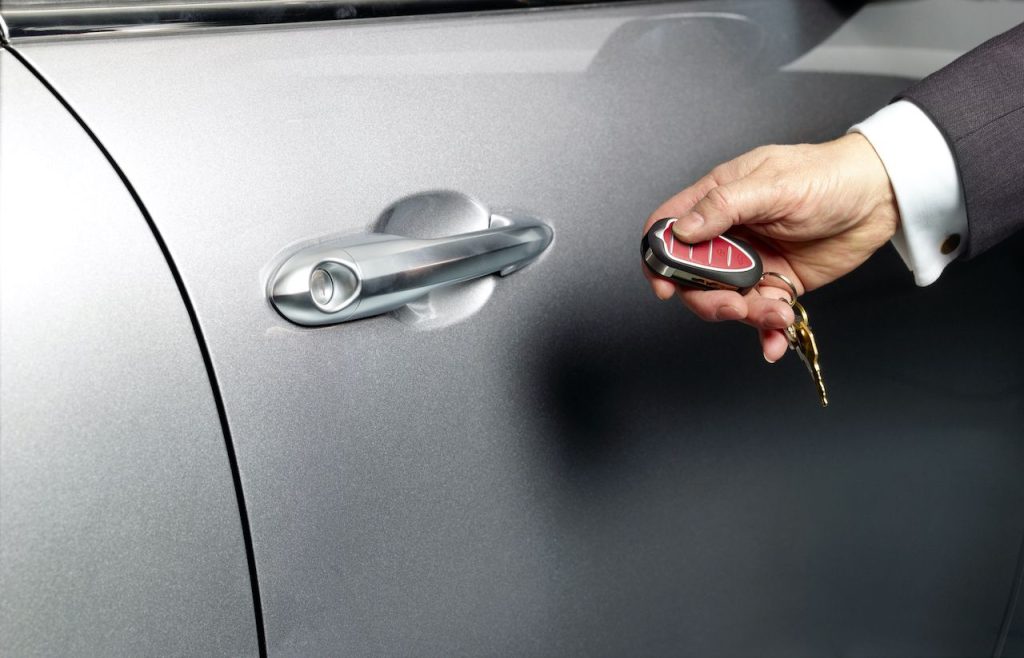
Locking your vehicle even when it is parked in your own driveway is one of the most fundamental yet frequently neglected security practices. Many drivers assume that proximity to their home provides sufficient protection. However, a significant portion of vehicle thefts and break-ins in the United States occur in residential neighborhoods, often because vehicles are left unlocked.
Modern vehicles with keyless entry systems sometimes create a false sense of security. Drivers may assume that the vehicle automatically locked after walking away, when in reality the system may not have engaged properly.
In other cases, owners intentionally leave vehicles unlocked for convenience, believing that a quiet suburban street is low risk. Unfortunately, opportunistic criminals routinely target residential areas precisely because vehicles are perceived as easy access points.
Leaving a vehicle unlocked eliminates the need for forced entry. Thieves often walk through neighborhoods at night checking door handles. If a vehicle opens without resistance, it becomes an immediate target. Even if the goal is not full vehicle theft, unlocked cars frequently result in stolen personal items, garage door openers, spare keys, or documents containing sensitive information.
9. Install a Secondary Immobilizer or Kill Switch
Installing a secondary immobilizer or kill switch adds a powerful layer of defense that operates independently from your vehicle’s factory security system.
While modern cars are equipped with built-in immobilizers designed to prevent unauthorized engine start, determined thieves using advanced programming tools can sometimes bypass or override those protections. A secondary system introduces an additional barrier that must be defeated before the vehicle can be driven away.
A kill switch works by interrupting a critical circuit required for engine operation, commonly the fuel pump, ignition system, or starter relay. Unless the hidden switch is activated in a specific way, the vehicle will not start, even if a thief has gained access and programmed a new key. Because the switch location is concealed and unique to the installation, it is extremely difficult to identify quickly.
Secondary immobilizers function similarly but may use coded keypads, RFID tags, or smartphone authentication sequences. These systems require an additional step beyond inserting a key or pressing the start button. Without completing that sequence, the engine remains disabled.
Vehicle theft not only causes inconvenience but can impact insurance premiums and claims processes. Some insurers require proof of preventative measures for premium reductions. Installing tracking systems or immobilizers may qualify for discounts.
Maintaining documentation of security upgrades can streamline claims if theft occurs. Photograph installed devices and retain receipts for records.
Modern vehicle security requires a proactive mindset. As convenience features expand, so do potential vulnerabilities. The key to preventing digital theft lies in layered defense: signal blocking, physical deterrence, software maintenance, and awareness.
No single solution guarantees absolute protection. However, implementing multiple preventative strategies dramatically reduces exposure to modern theft techniques. For U.S. drivers navigating increasingly sophisticated criminal tactics, preparation remains the strongest defense.
Digital vehicle theft may be evolving, but informed and proactive vehicle owners can stay ahead by combining technology, vigilance, and practical safeguards.