

Buying a used car can feel like walking through a minefield of decisions. You’re trying to balance budget constraints with reliability concerns, fuel economy with performance, and style with practicality. But here’s something that should never be negotiable: safety. Your life and the lives of your passengers depend on the protective technology built into whatever vehicle you choose to drive home.
Safety features have developed dramatically over the past two decades. What was considered cutting-edge in 2010 now seems almost primitive compared to today’s standards. Yet not all used cars come equipped with the same level of protection.
Some older models lack even basic safeguards that could prevent injuries during accidents, while certain newer used vehicles pack technology that actively works to avoid collisions altogether.
Understanding which safety features matter most helps you make smarter purchasing decisions. Some technologies provide real protection during crashes, absorbing impact energy and keeping occupants secure.
Others work proactively, warning you about hazards or even taking control to prevent accidents before they happen. Both types deserve your attention when shopping the used car market. Price tags on used vehicles vary wildly, and you’ll notice that cars with comprehensive safety equipment often cost more than comparable models lacking these features.
That premium represents genuine value. Medical bills from even minor accidents can dwarf the extra few hundred or thousand dollars you might spend on a safer vehicle. Insurance premiums often decrease when your car includes advanced safety systems, helping offset the initial cost difference.
Shopping for used cars means evaluating each vehicle individually. Two cars from the same year and model line might have completely different safety equipment depending on the trim levels and optional packages that original buyers selected. Knowing what to look for prevents you from accidentally purchasing a vehicle that puts you at unnecessary risk.
This guide examines eight essential safety features that should influence your used car buying decision. Each one offers genuine protection that could make the difference between walking away from an accident and facing serious injury. Let’s examine what really matters when your safety is on the line.
1. Electronic Stability Control (ESC)
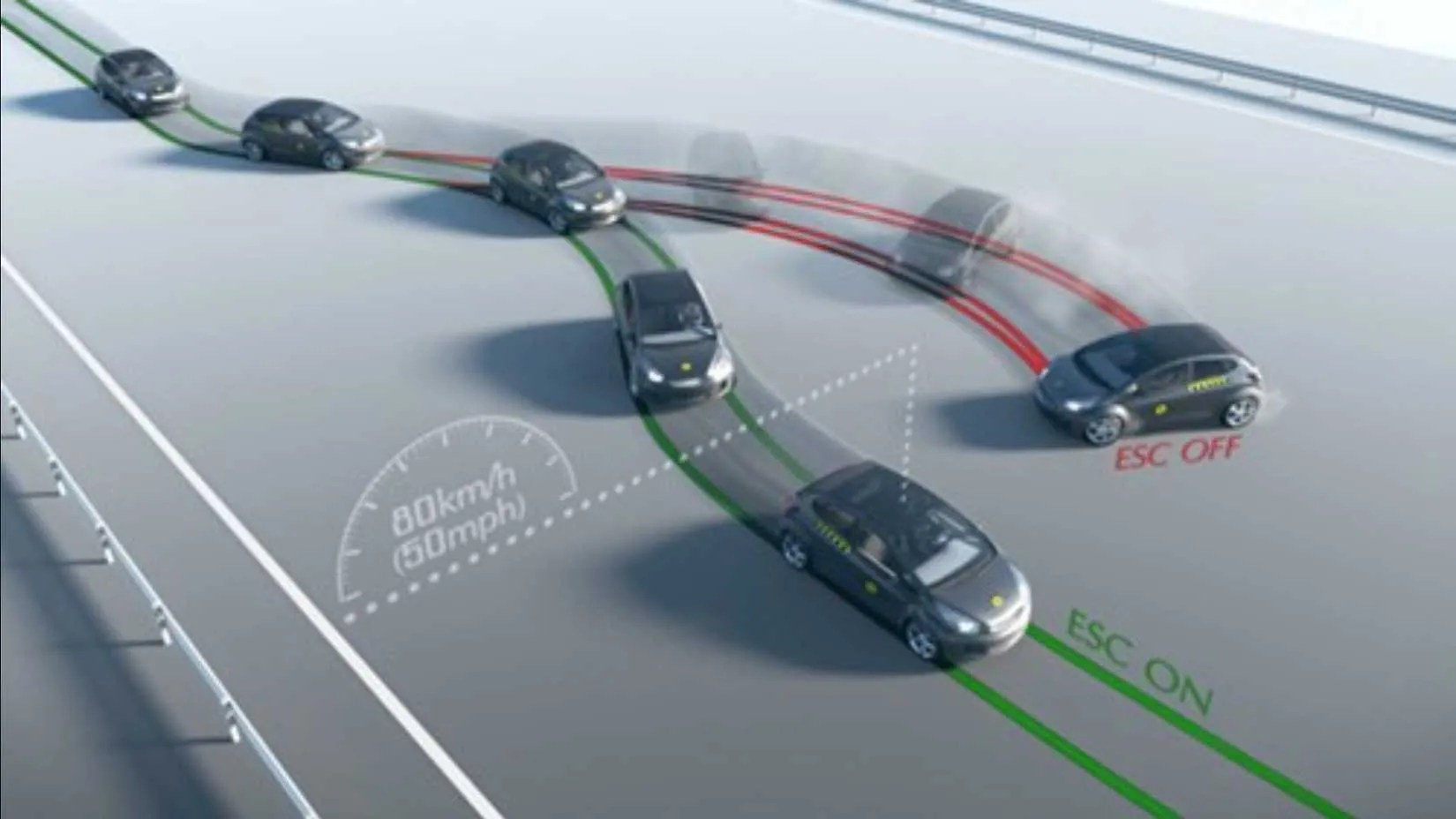
Picture yourself driving a 2018 Honda Accord LX on a rainy evening. Traffic moves steadily until the car ahead brakes suddenly, forcing you to swerve. Your wheels hit a puddle mid-turn, and for a split second, you feel the car start to slide.
Before panic fully sets in, the vehicle corrects itself, keeping you pointed in the right direction. That’s electronic stability control doing its job, and it’s exactly why this technology became mandatory on all new cars sold in the United States starting in 2012.
Electronic stability control systems work by monitoring dozens of data points every second. Sensors track your steering input, individual wheel speeds, lateral acceleration, and yaw rate (how quickly the car rotates around its vertical axis).
When the system detects a difference between where you’re steering and where the car is actually going, it intervenes immediately. Selective brake application at individual wheels helps bring the vehicle back in line with your intended path.
Physics makes cars behave unpredictably during emergency maneuvers. Overcorrecting during a skid often makes things worse, sending vehicles spinning in the opposite direction. ESC systems react faster than human reflexes, applying exactly the right amount of braking force at precisely the right wheels to maintain control.
Studies show ESC reduces single-vehicle crash risk by approximately 50% and rollover risk by even higher percentages. When shopping for used cars, ESC should be non-negotiable if you’re considering anything from 2012 or newer, since it’s standard equipment.
For older vehicles, check the window sticker or owner’s manual to confirm its presence. Some manufacturers included ESC as standard equipment years before the mandate, while others made it optional on lower trim levels. A 2010 Toyota Camry LE, for instance, came standard with ESC, but some budget-focused competitors from that era didn’t.
Testing ESC functionality during pre-purchase inspections proves difficult on dry pavement at legal speeds. Instead, verify the dashboard warning light illuminates briefly when you start the engine, then extinguishes after a few seconds.
That self-check confirms the system is active and ready. If the light stays illuminated or never appears, the system might be malfunctioning or disabled, which should either be repaired before purchase or used as negotiating leverage.
2. Advanced Airbag Systems
Airbags saved your life long before you knew it. That statement might sound dramatic, but crash statistics support it. Frontal airbags reduce driver fatalities in head-on crashes by about 29% and front passenger deaths by 32%. Yet not all airbag systems are created equal, and understanding the differences helps you choose a safer used vehicle.
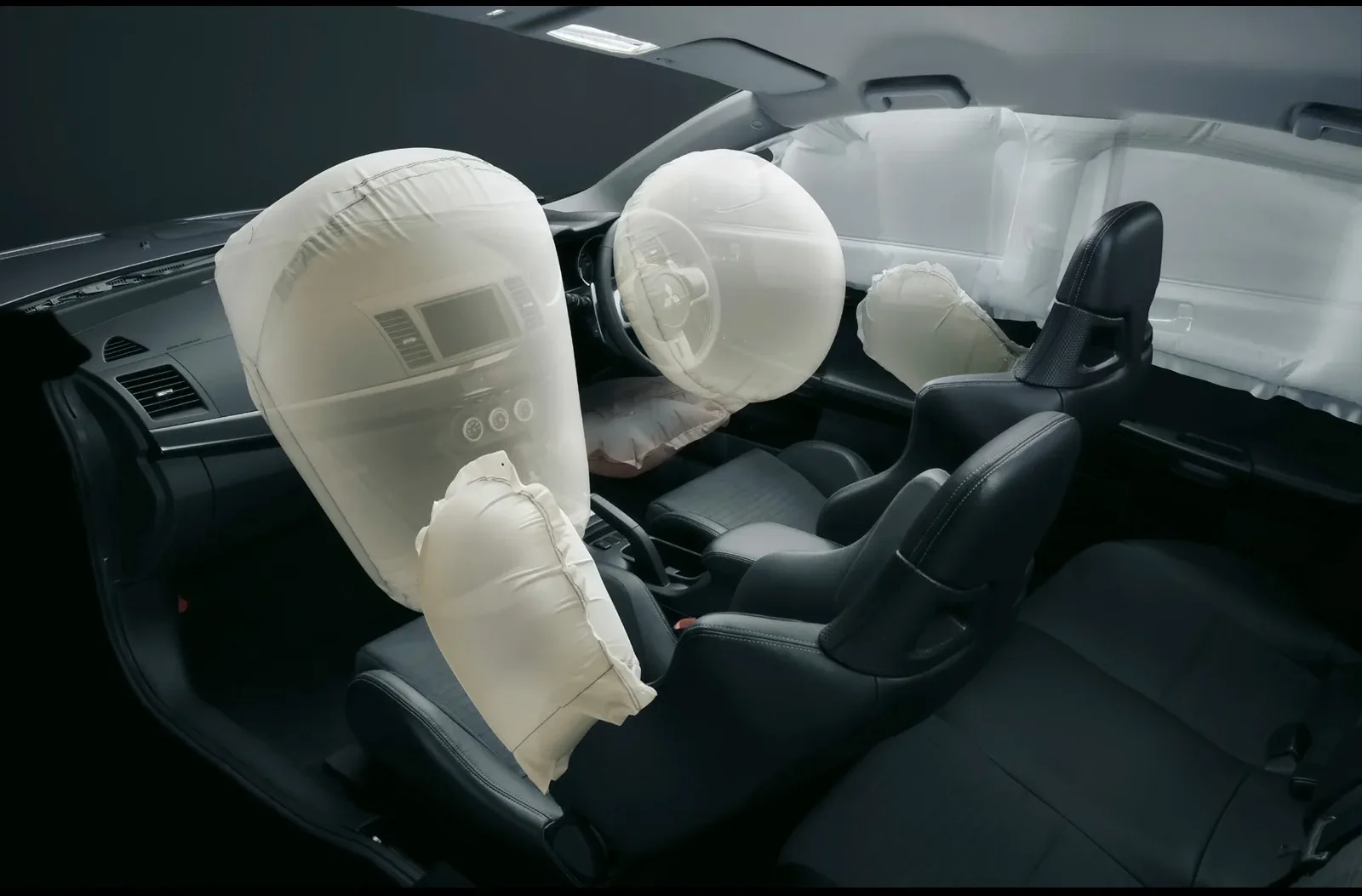
Basic frontal airbags became mandatory in all passenger vehicles by 1998, meaning even older used cars should have them. But airbag technology has progressed substantially since then. Modern systems include side curtain airbags that deploy from the roof lining to protect heads during side impacts and rollovers.
Side torso airbags built into seat backs shield ribs and internal organs. Knee airbags prevent lower leg injuries by cushioning the area beneath the dashboard. A 2019 Subaru Outback Premium illustrates comprehensive airbag coverage. It includes dual frontal airbags, front seat-mounted side airbags, side curtain airbags covering all rows, and a driver’s knee airbag.
That’s seven individual airbags working together to protect occupants from multiple impact directions. Compare that to a 2008 Chevrolet Malibu LS, which might only include frontal and front side airbags, leaving rear passengers more vulnerable during side collisions.
Checking airbag functionality before purchase is straightforward. Turn the ignition to the “on” position without starting the engine. Look for an airbag warning light on the dashboard that illuminates briefly, then extinguishes.
If the light stays on, flashes, or never illuminates, the airbag system has detected a fault. Common causes include previous deployment that wasn’t properly repaired, faulty sensors, or wiring issues. Any airbag warning light demands professional diagnosis before completing your purchase. Some used car buyers worry about airbag replacement costs if they deploy after an accident.
That’s a valid concern, since replacing all airbags in a modern vehicle can cost several thousand dollars. However, that expense pales compared to medical bills from injuries those airbags prevent. Insurance typically covers airbag replacement after accidents, making this a manageable concern rather than a reason to avoid vehicles with comprehensive airbag systems.
Also Read: 10 Sports Cars That Prove You Can Have Speed and Safety
3. Anti-Lock Braking System (ABS)
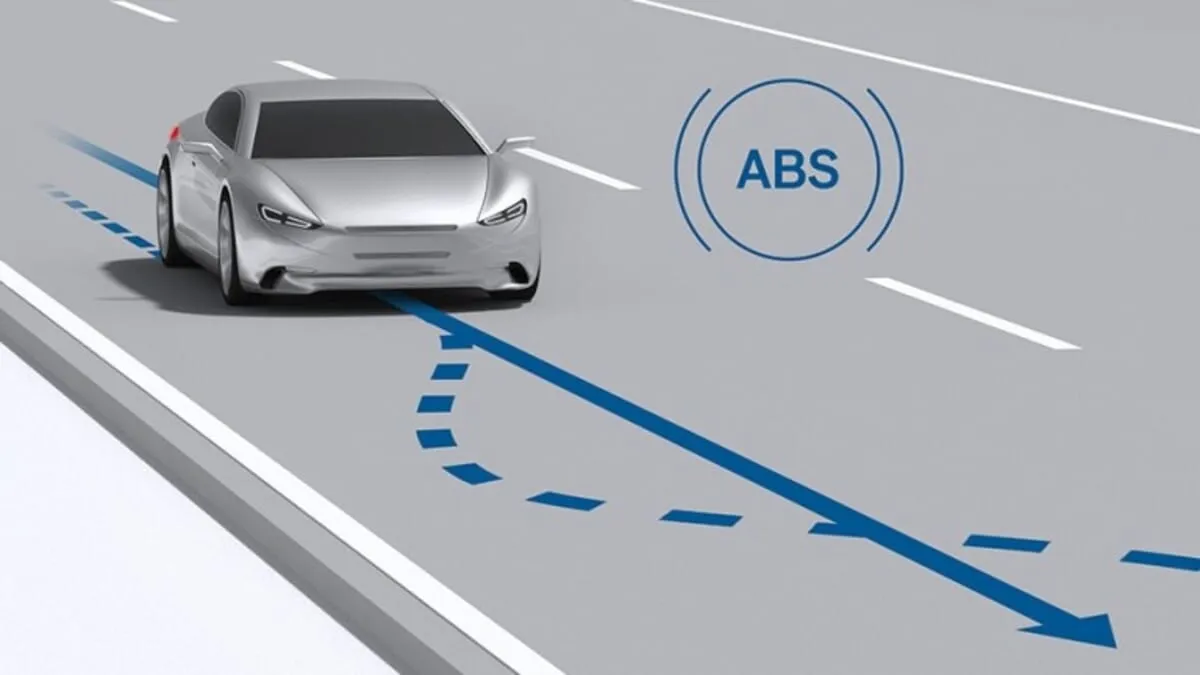
Slamming on the brakes during an emergency seems instinctive. Your brain screams “STOP,” and your foot mashes the pedal to the floor. Without anti-lock brakes, that reaction often makes things worse. Locked wheels slide across pavement instead of gripping it, destroying your ability to steer while barely slowing the vehicle. ABS prevents this dangerous scenario by maintaining wheel rotation even under maximum braking force.
Anti-lock braking systems became standard on most vehicles during the 1990s and early 2000s, though some budget models lacked them into the mid-2000s. When you brake hard in a vehicle equipped with ABS, you’ll feel rapid pulsing through the brake pedal as the system modulates brake pressure multiple times per second.
That pulsing sensation confuses some drivers who instinctively ease off the pedal, thinking something’s wrong. But that vibration confirms ABS is working correctly, maintaining optimal brake force at each wheel independently.
How does it work? Wheel speed sensors at each corner monitor rotation rates. When the system detects a wheel about to lock up (rotating slower than the others), it momentarily releases brake pressure at that specific wheel, allowing it to regain traction.
This happens so quickly that you maintain near-maximum braking force while preserving steering control. You can brake hard and steer around obstacles simultaneously, something impossible with locked wheels. A 2015 Ford Fusion SE demonstrates modern ABS integration.
During emergency braking on mixed surfaces (one side on wet pavement, the other on gravel), the system automatically adjusts brake force at each wheel to maintain straight-line stopping. Without ABS, the wheels with better traction would grab harder, potentially spinning the vehicle. With ABS, you stop in a controlled, predictable manner.
Testing ABS before buying is simple but requires caution. Find an empty parking lot, accelerate to about 20 mph, then brake firmly (not so hard that the ABS fails). You should feel that characteristic pedal pulsing.
If you don’t, either you didn’t brake hard enough to activate the system, or ABS isn’t functioning properly. Check the dashboard for an ABS warning light. Like other safety systems, it should illuminate briefly at startup, then turn off.
4. Backup Camera and Parking Sensors
Backing out of parking spaces sounds simple until something goes wrong. Limited rear visibility turns routine maneuvers into potential disasters. Children playing behind vehicles, shopping carts, concrete barriers, and other cars all hide in blind spots that mirrors can’t eliminate.
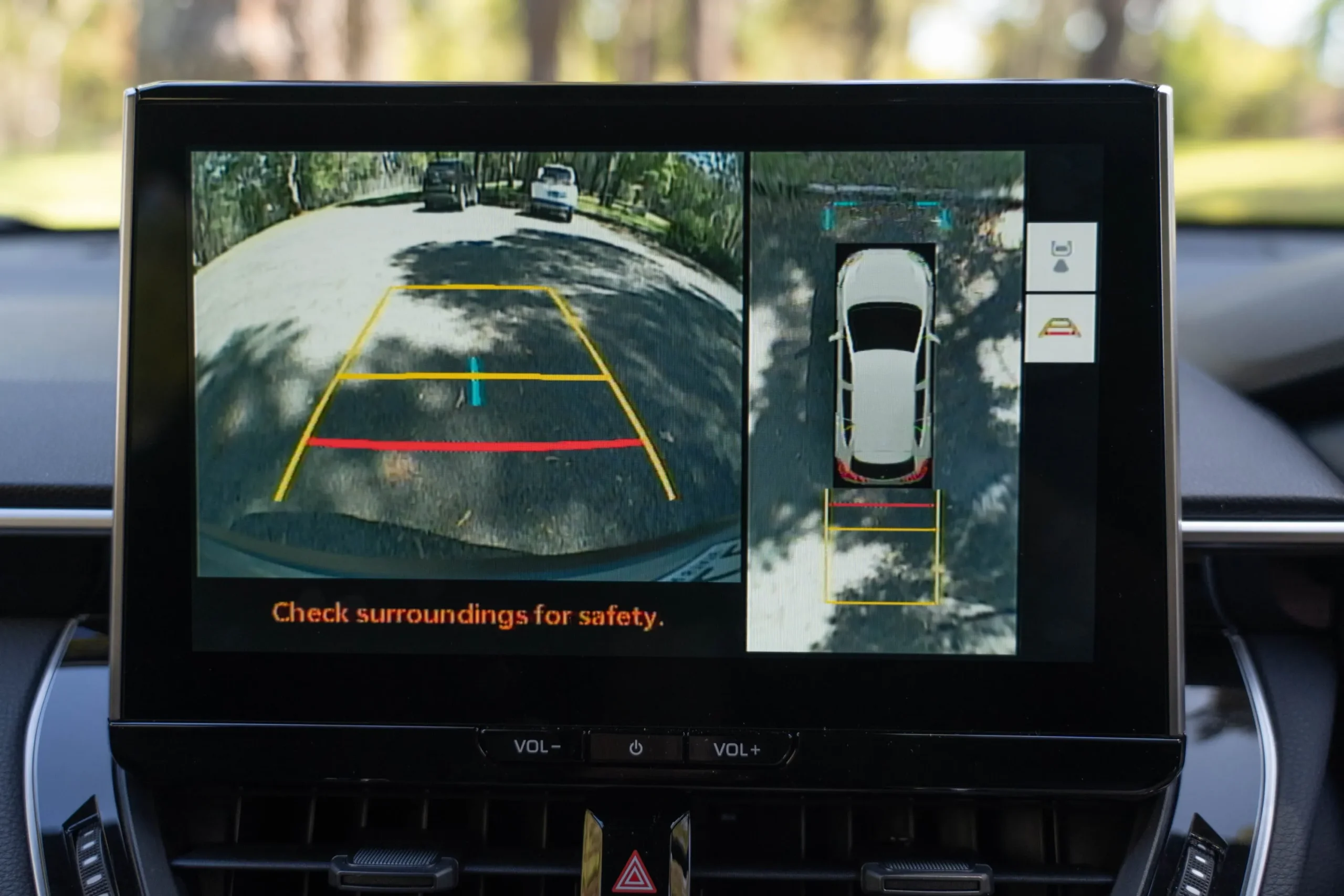
Backup cameras and parking sensors address these visibility gaps, and they’ve become so important that backup cameras became mandatory on all new vehicles sold in the United States starting in May 2018. Better systems overlay trajectory lines showing your projected path based on the current steering angle.
Some even include cross-traffic alert, warning when vehicles approach from either side as you back out of parking spaces. A 2017 Mazda CX-5 Grand Touring, for example, includes both a backup camera with dynamic guidelines and rear cross-traffic alert, creating a comprehensive rear awareness system.
Parking sensors use ultrasonic or electromagnetic technology to detect objects near your bumpers. As obstacles get closer, beeping increases in frequency until it becomes a solid tone when you’re about to make contact.
Front parking sensors help during nose-in parking and tight urban maneuvering, while rear sensors assist during backing. Four-sensor systems provide basic coverage, while eight or twelve-sensor configurations offer more precise distance information.
Statistics justify prioritizing these features. Backup cameras reduce backover accidents by approximately 17%, according to research data. That percentage might sound modest until you consider that backover accidents caused about 210 fatalities and 15,000 injuries annually before backup cameras became widespread.
Most tragic are accidents involving young children, who often appear in backup camera views but remain completely invisible in mirrors and over-the-shoulder checks. Parking sensors should be tested with various objects at different heights.
A small traffic cone will trigger sensors differently from a tall post. Quality systems detect both and provide accurate distance warnings. Malfunctioning sensors might not detect low objects (like small children) or might trigger false alarms from rain or snow accumulation.
During winter car shopping, clean snow from sensor locations before testing to ensure you’re evaluating the actual system performance, not weather interference.
5. Blind Spot Monitoring and Rear Cross-Traffic Alert
Changing lanes on the highway should feel routine, but that quick shoulder check doesn’t always reveal everything. Vehicles lurking in your blind spot can appear suddenly, turning a simple lane change into a terrifying near-miss or actual collision.
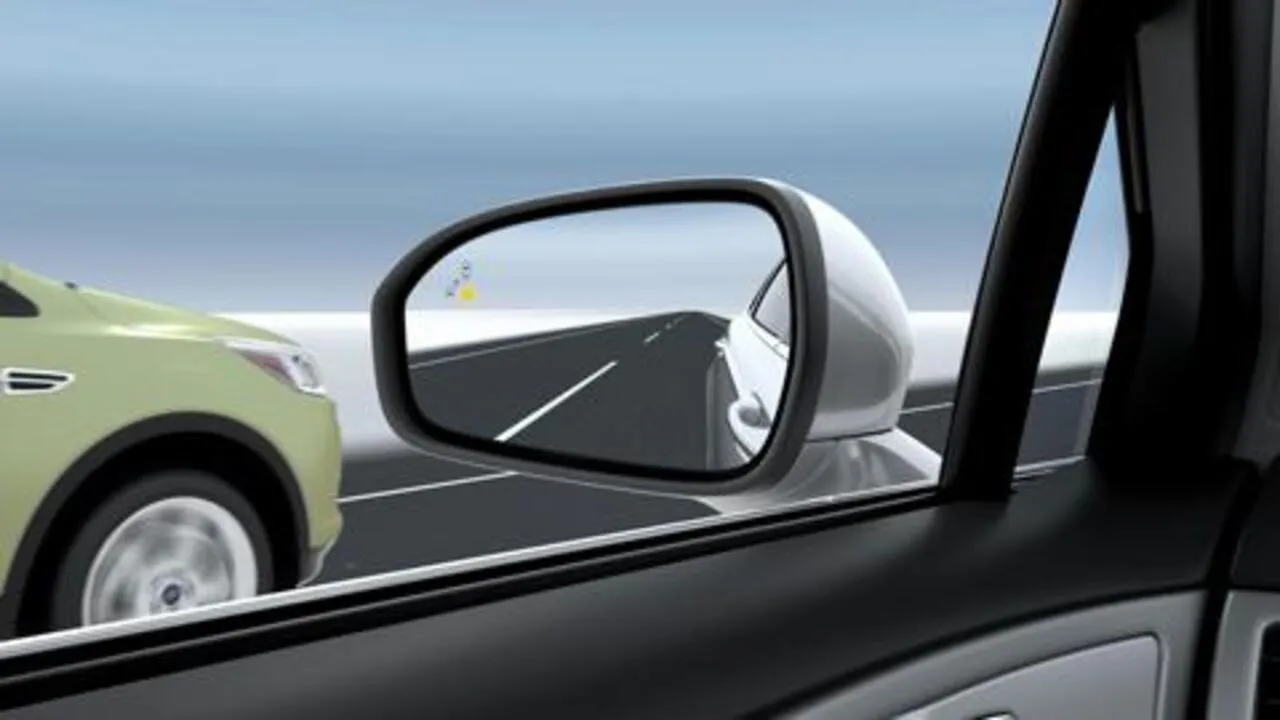
Blind spot monitoring systems use radar sensors mounted in the rear bumper or side mirrors to detect vehicles in adjacent lanes that your mirrors might miss, providing visual warnings and sometimes audible alerts when danger approaches.
A 2016 Nissan Altima 3.5 SL demonstrates how effective these systems work in real-world driving. Small warning lights illuminate in the corresponding side mirror when vehicles enter your blind spot zones. Try to change lanes with your turn signal active while another car occupies that space, and the warning light flashes more urgently while an audible chime sounds.
This multi-sensory alert grabs your attention even if you somehow missed the initial visual warning, giving you that critical split second needed to abort the lane change and avoid a collision. Blind spot detection zones typically extend from your rear bumper forward along both sides of the vehicle, covering areas roughly 10 to 12 feet laterally from your car.
Better systems adjust their sensitivity based on speed, expanding the detection zone at highway velocities where closing speeds between vehicles increase danger levels. Some luxury vehicles from 2015 onward included blind spot monitoring that worked even when towing trailers, extending coverage to account for the trailer’s width.
Rear cross-traffic alert functions as blind spot monitoring’s cousin, watching for approaching vehicles when you’re backing out of parking spaces. Imagine reversing out of a spot at a crowded shopping center where SUVs and trucks block your sightlines.
Your backup camera shows the area directly behind you, but it can’t see traffic approaching from either side until those vehicles are dangerously close. Rear cross-traffic alert sensors detect approaching vehicles up to 50 feet away in either direction, warning you to stop before pulling into their path.
False alarms occasionally occur with blind spot monitoring systems. Guardrails, concrete barriers, and even heavy rain can sometimes trigger warnings. Quality systems minimize these false positives through sophisticated signal processing.
During test drives, pay attention to whether the system seems overly sensitive, constantly alerting you about non-threatening objects. Excessive false alarms train drivers to ignore warnings, defeating the entire purpose of having the technology.
Installation dates matter when shopping for used cars with blind spot monitoring. Earlier systems from the late 2000s and early 2010s sometimes suffered reliability issues or limited detection ranges. By 2015, most manufacturers had substantially refined their systems.
A 2018 Toyota Camry LE, for instance, includes blind spot monitoring with rear cross-traffic alert as standard equipment, representing mature technology that’s been thoroughly debugged through years of real-world use.
6. Forward Collision Warning and Automatic Emergency Braking
Distracted driving causes thousands of preventable accidents annually. You glance at your phone for two seconds, and when you look up, the car ahead has stopped suddenly. Your brain recognizes danger, signals your foot to move, but those fractions of a second delay might be all it takes for a rear-end collision.
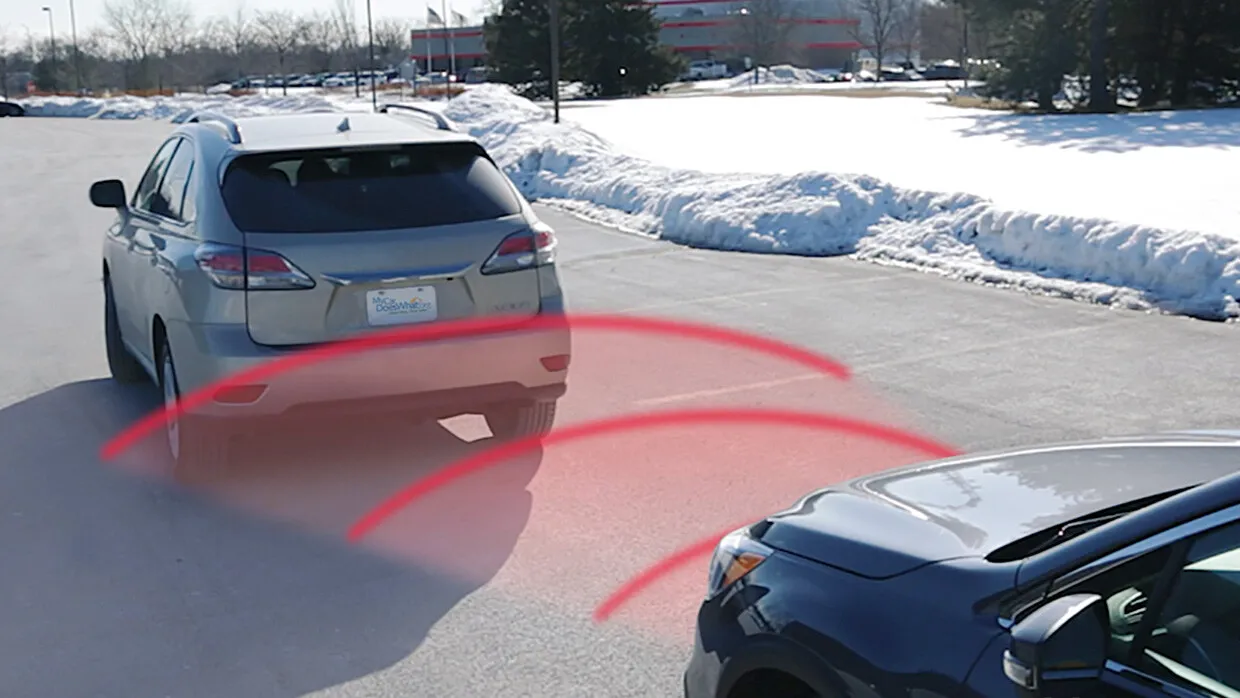
Forward collision warning systems act as your second set of eyes, monitoring the road ahead and alerting you to impending crashes before your own senses register the threat. Forward collision warning uses radar, cameras, or a combination of both to track vehicles, pedestrians, and obstacles ahead of your car.
When the system calculates that a collision is imminent based on your speed and closing distance, it issues warnings through visual dashboard alerts, audible chimes, and sometimes seat or steering wheel vibrations.
These multi-modal warnings cut through distractions, demanding your immediate attention. A 2017 Honda CR-V EX-L demonstrates this technology effectively, using a camera mounted behind the windshield to monitor traffic ahead and provide graded warnings as danger escalates.
Automatic emergency braking takes this concept further by actually applying the brakes if you don’t respond to collision warnings quickly enough. Systems vary in sophistication. Basic versions work only at low speeds, helping prevent parking lot fender-benders.
Advanced systems function at highway speeds, potentially preventing crashes entirely or reducing impact severity when collisions become unavoidable. Some systems detect pedestrians and cyclists in addition to vehicles, while others work only with four-wheeled obstacles.
A 2019 Hyundai Tucson SEL Plus showcases comprehensive automatic emergency braking. Its forward collision avoidance system operates from approximately 5 mph up to highway speeds, detecting vehicles, pedestrians, and even cyclists.
During testing by safety organizations, these systems have demonstrated the ability to prevent crashes entirely at speeds below 25 mph and reduce impact speeds by 10-15 mph at higher velocities where complete stops aren’t possible.
When evaluating used cars with these systems, understand their limitations. Forward collision warning and automatic emergency braking work best in clear weather with good visibility. Heavy rain, snow, fog, and direct sunlight can interfere with camera-based systems.
Dirty windshields that obscure camera lenses reduce effectiveness. Radar-based systems handle weather better but might struggle to detect stationary objects. Some early systems didn’t brake for stopped vehicles, only for moving traffic that subsequently stopped.
Testing automatic emergency braking during pre-purchase inspections is impractical and potentially dangerous. You can’t safely stage emergency braking scenarios on public roads. Instead, research the specific system in the vehicle you’re considering.
Look up its testing results from organizations like the Insurance Institute for Highway Safety (IIHS), which regularly evaluates these systems. Verify that the dashboard warning light for the system functions properly during startup self-checks.
7. Tire Pressure Monitoring System (TPMS)
Properly inflated tires might seem like basic maintenance rather than a safety feature, but underinflated tires cause thousands of crashes annually. Low tire pressure reduces handling precision, increases stopping distances, and can lead to catastrophic blowouts at highway speeds. Tire pressure monitoring systems alert you to pressure loss before it reaches dangerous levels, giving you time to address the problem safely.
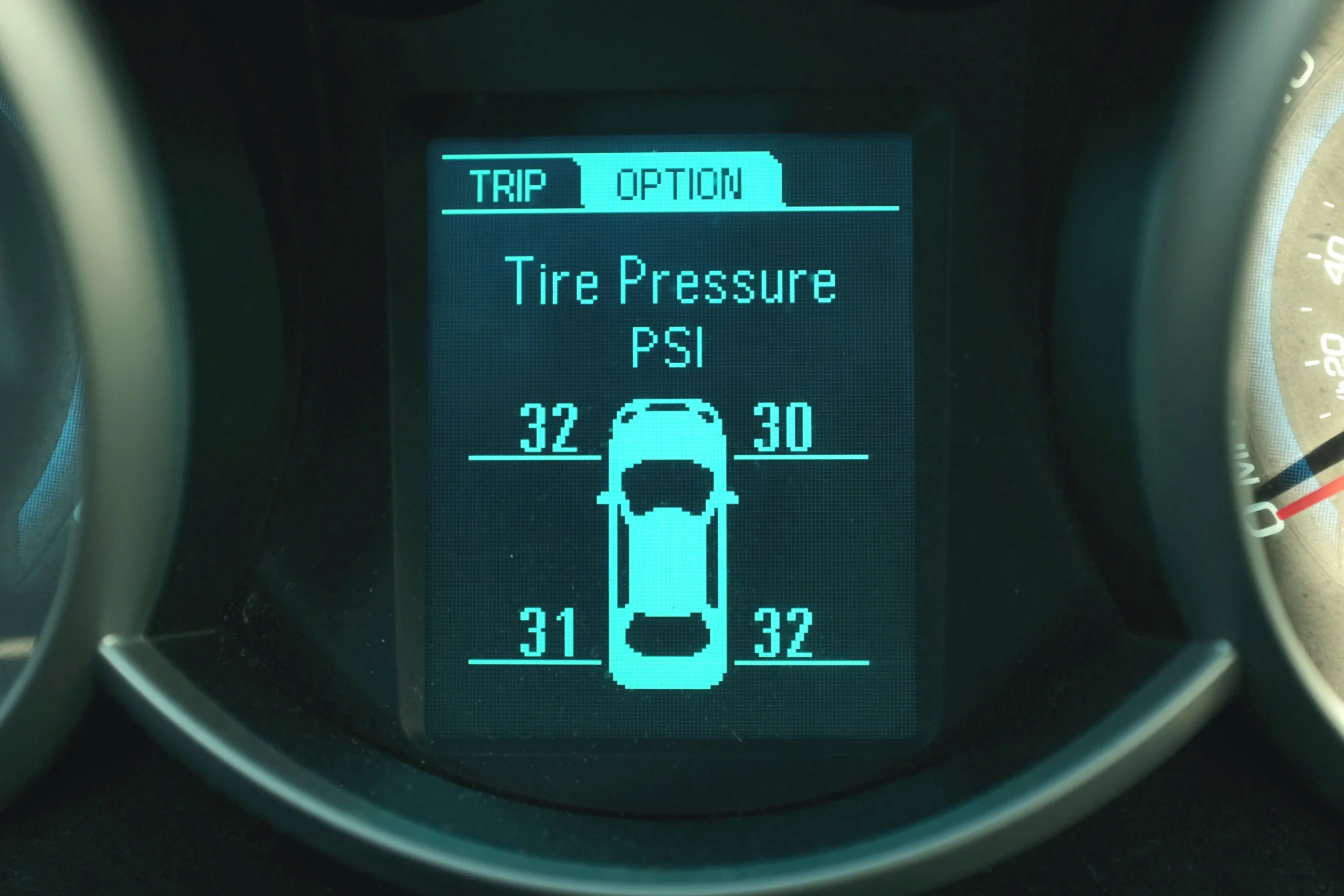
Two types of TPMS exist, with meaningful differences between them. Direct TPMS uses pressure sensors mounted inside each wheel that transmit real-time pressure readings to your dashboard. These systems display actual pressure numbers for each tire, letting you know exactly which tire needs attention and by how much.
Indirect TPMS doesn’t measure pressure directly but instead monitors wheel rotation speeds through your ABS sensors. When a tire loses pressure, its diameter decreases slightly, causing it to rotate faster than properly inflated tires. The system detects this speed difference and triggers a warning.
Direct TPMS provides more accurate and immediate information. A 2016 Chevrolet Malibu Premier uses direct TPMS, displaying individual tire pressures on the dashboard screen. You can see at a glance that your driver’s side front tire reads 30 psi while the others show 35 psi, prompting you to add air before the pressure drops enough to affect handling.
Indirect systems only warn after pressure loss exceeds certain thresholds, typically 25% below recommended levels, by which point handling might already be compromised. TPMS became mandatory on all new vehicles sold in the United States starting in 2008, meaning most used cars you’ll consider should include it. However, system functionality varies.
Earlier systems used dashboard warning lights that illuminated when any tire dropped below safe pressure, but didn’t indicate which tire had the problem. Drivers had to manually check all four tires with a pressure gauge. Modern systems display individual tire pressures, sometimes updating in real-time as you drive.
Cold weather affects TPMS warnings. Tire pressure decreases about 1 psi for every 10-degree drop in temperature. A tire properly inflated at 70 degrees might trigger low-pressure warnings when temperatures plunge to 20 degrees, even though nothing is actually wrong.
This seasonal effect is normal and doesn’t indicate TPMS malfunction. Simply add air to restore proper pressure levels for current temperatures. A 2017 Subaru Legacy 2.5i Premium includes this cold-weather information in its owner’s manual, helping prevent confusion when warnings appear on cold mornings.
Spare tire monitoring represents an advanced TPMS feature worth seeking in used cars. Some vehicles include a pressure sensor in the spare tire, alerting you if it loses pressure while stored in the trunk. Finding yourself stranded with a flat tire and a deflated spare is frustrating and potentially dangerous. Vehicles with five-sensor TPMS systems provide peace of mind that your spare is ready when needed.
Also Read: 10 Upcoming Safety Features That Will Become Mandatory
8. Advanced Headlight Systems
Driving after dark inherently carries more risk than daytime travel. Reduced visibility limits your ability to see hazards, judge distances, and detect pedestrians until they’re dangerously close. Advanced headlight systems help mitigate these risks through technologies that improve illumination while reducing glare for other drivers. When shopping for used cars, headlight quality deserves consideration equal to any other safety feature.
Adaptive headlights, also called curve-adaptive or dynamic headlights, physically rotate the bulb assemblies to follow your steering input through curves. Traditional fixed headlights point straight ahead regardless of where you’re turning, leaving the inside of curves dark while uselessly illuminating the outside.
Adaptive headlights pivot up to 15 degrees in the direction you’re steering, keeping the road ahead illuminated throughout corners. A 2015 Audi A4 Premium Plus demonstrates this technology beautifully. Drive a winding road at night, and you’ll notice the headlight beams sweeping through curves ahead of you, revealing obstacles and lane markings that would remain hidden with conventional lighting.
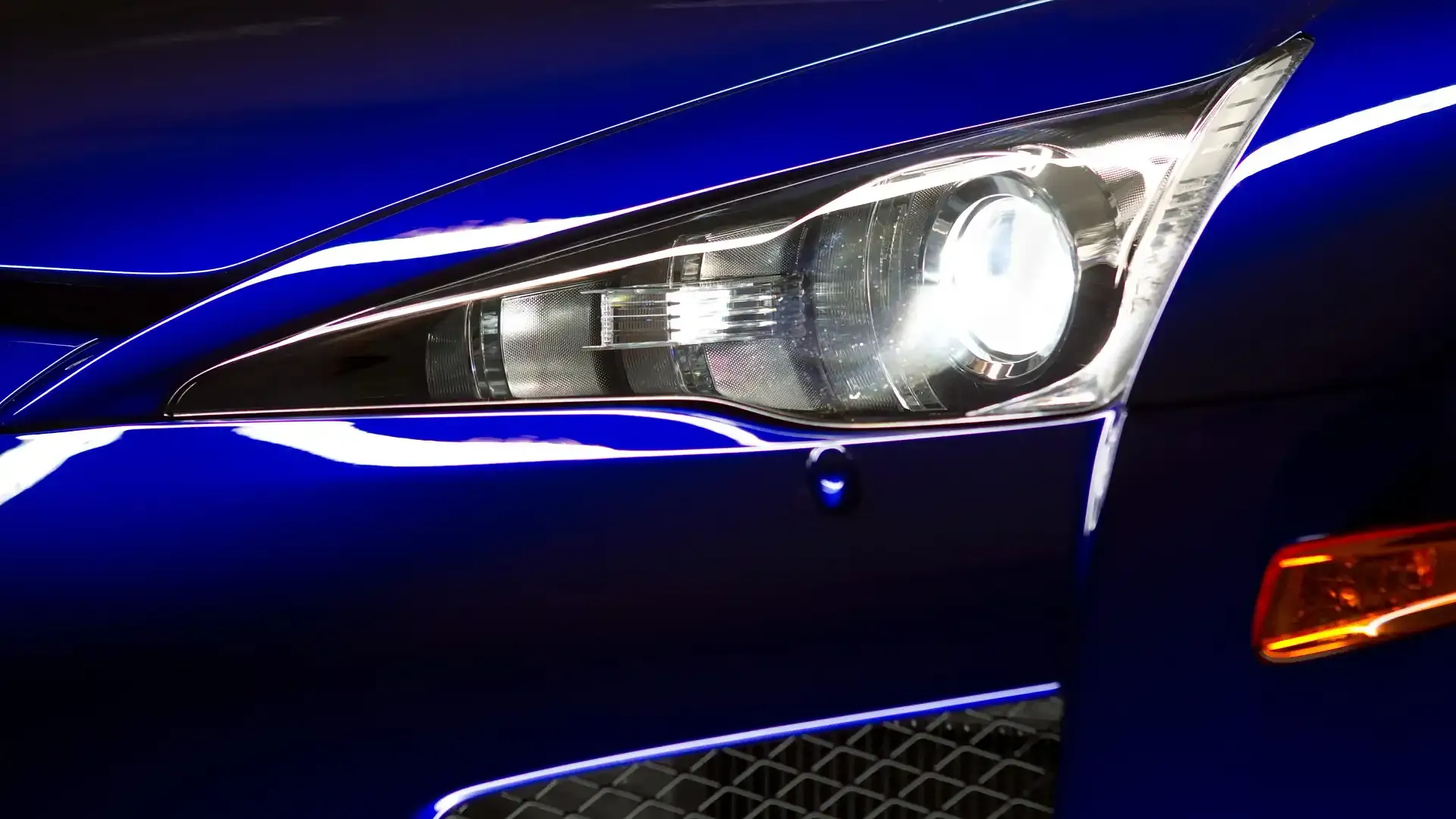
LED and HID headlights provide better illumination than traditional halogen bulbs while consuming less energy. LED headlights produce bright, white light that more closely mimics daylight, improving your ability to distinguish colors and details at night.
They also last much longer than halogen bulbs, potentially surviving the entire life of the vehicle. A 2018 Mazda6 Grand Touring includes LED headlights as standard equipment, providing excellent visibility along with distinctive styling that helps other drivers recognize your vehicle approaching.
High-intensity discharge (HID) headlights, also called xenon lights, appeared in many luxury and premium vehicles from the mid-2000s through the late 2010s. They produce very bright bluish-white light that illuminates greater distances than halogen bulbs.
However, HID bulbs are expensive to replace (often $100 or more per bulb), and the ballasts that power them can fail, requiring costly repairs. When considering used cars with HID headlights, verify both low and high beams function properly and ask about replacement history.
Headlight condition matters as much as technology. Plastic headlight lenses yellow and become hazy through years of UV exposure, dramatically reducing light output even with new bulbs. Before purchasing any used car, inspect the headlight lenses for clarity.
Minor hazing can be restored through polishing kits costing $20 to $30. Severe degradation requires lens replacement, potentially costing hundreds of dollars per side. Factor this into your negotiations if the vehicle you’re considering has clouded headlights requiring restoration or replacement.
