Some cars focus entirely on delivering a pure, analog driving experience, prioritizing mechanical connection, tactile feedback, and driver skill over electronic aids or automated systems. These vehicles celebrate engagement, precision, and responsiveness, offering the thrill of being truly connected to the machine.
From lightweight sports coupes to track-focused roadsters, they reward drivers who appreciate balance, sharp steering, and manual control. This list highlights ten standout examples, including nimble roadsters like the Mazda Miata, high-performance hot hatches such as the Toyota GR Corolla, and extreme track-oriented machines like the Caterham 620R.
Each car demonstrates how lightweight construction, manual transmissions, and minimal electronic intervention can create an exciting, immersive driving experience. These cars prove that performance is not only about speed but about the pure pleasure of feeling every turn, every shift, and every response from the road beneath the tires, keeping the spirit of hands-on motoring alive.
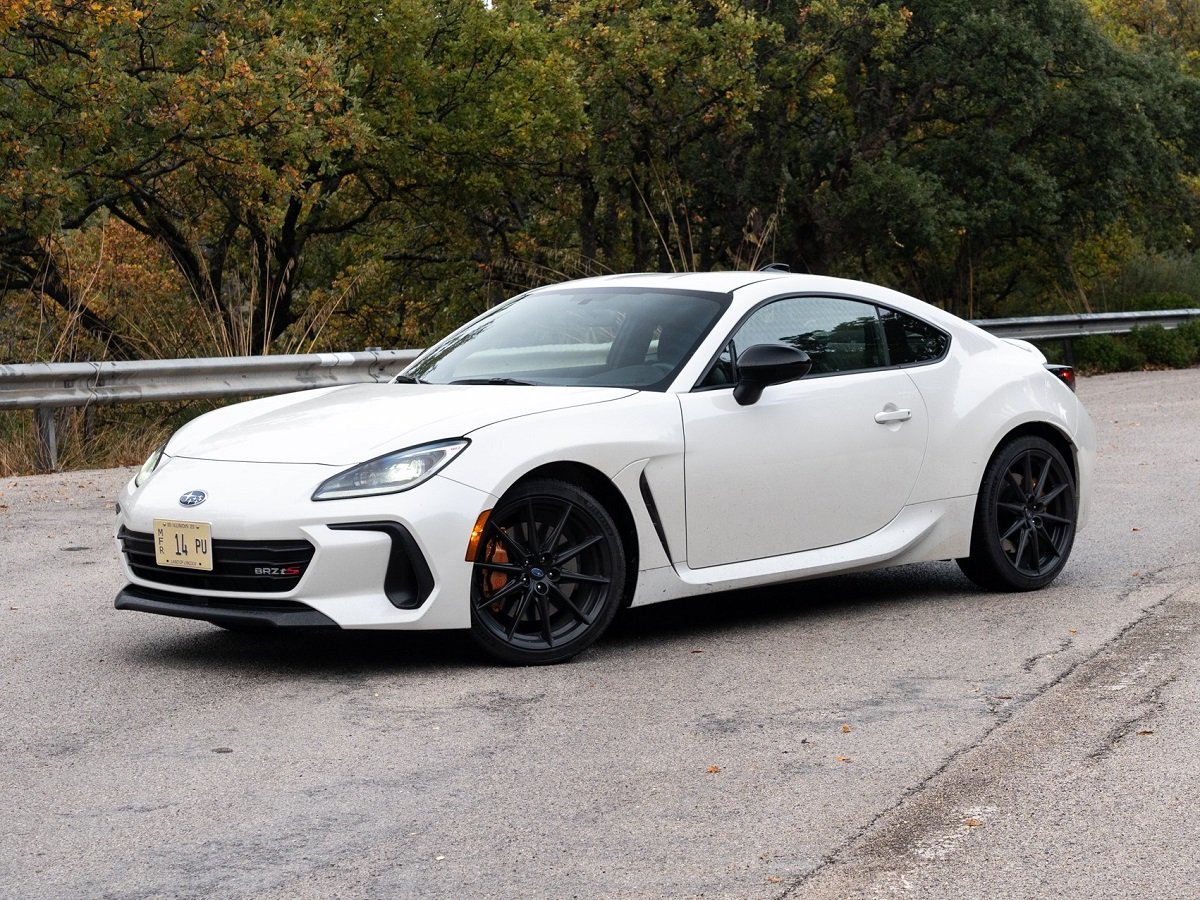
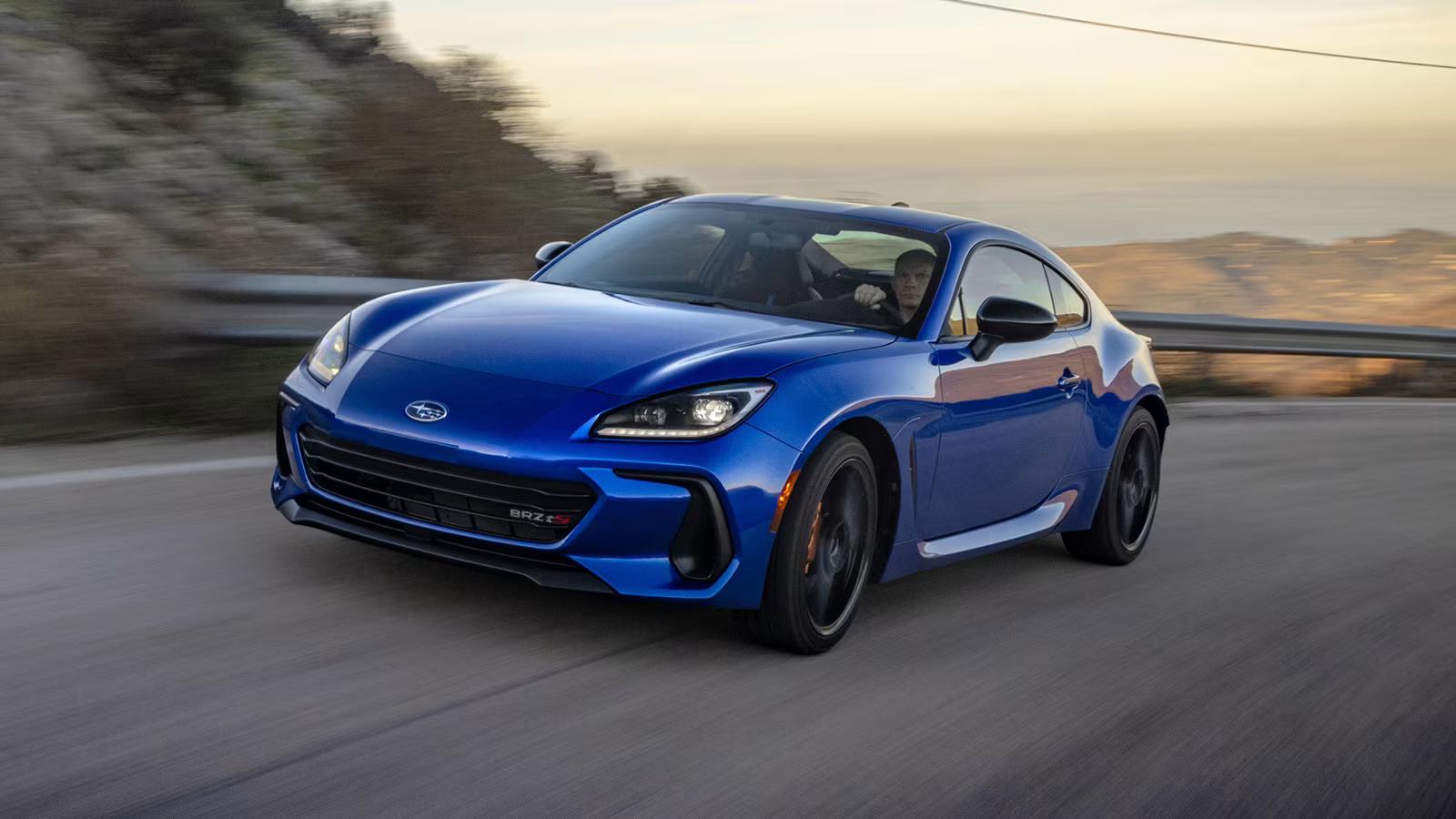
1. Subaru BRZ tS
The Subaru BRZ tS is a lightweight, driver-focused sports coupe designed to deliver a pure and engaging analog driving experience. Sharing its platform and drivetrain with the Toyota GR86, the BRZ tS emphasizes balance, handling precision, and mechanical connection rather than relying on excessive power, turbocharging, or heavy digital assistance.
With performance upgrades developed by Subaru’s STI (Subaru Tecnica International) division, the tS trim represents the sharpest and most track-ready version of the BRZ lineup.
At the heart of the BRZ tS is a naturally aspirated 2.4-liter flat-four boxer engine producing 228 horsepower and 184 lb-ft of torque. Power is sent exclusively to the rear wheels, maintaining the traditional rear-wheel-drive sports-car layout that enthusiasts value.
A six-speed manual transmission comes standard, reinforcing driver involvement, while a six-speed automatic is available as an option. The car achieves an estimated 0–60 mph time of about 5.8 seconds, with testing showing performance closer to 5.5 seconds.
One of the BRZ tS’s defining characteristics is its lightweight construction, weighing roughly 2,843 pounds, relatively light by modern sports-car standards. This low mass, combined with a low center of gravity from the boxer engine design, enhances agility and responsiveness.
The STI-tuned suspension with specialized dampers provides sharper handling and improved track capability, while Brembo brakes, a Torsen limited-slip differential, and 18-inch wheels fitted with Michelin Pilot Sport 4 tires further improve grip and control. Drivers can disable traction and stability control systems, allowing controlled oversteer and a playful rear-end character.
Inside, the BRZ tS follows a driver-centric philosophy. The cabin features a sporty layout with physical controls instead of touchscreen-heavy interfaces, helping maintain focus on driving. A 7.0-inch digital gauge cluster prioritizes the tachometer, while an 8.0-inch infotainment touchscreen supports Apple CarPlay and Android Auto.
The heavily bolstered front seats enhance support during aggressive cornering, though road noise is noticeable at highway speeds. Rear seats exist mainly for extra cargo space, complementing a modest but practical 6.3-cubic-foot trunk.
Fuel economy is respectable for a sports coupe, with EPA ratings around 20–21 mpg city and 27–30 mpg highway, while real-world highway testing achieved up to 37 mpg with the automatic transmission. Safety features include Subaru’s EyeSight system with forward-collision warning, emergency braking, and lane-departure warning, with additional driver aids available on automatic models.
The Subaru BRZ tS stands as a modern tribute to classic sports cars, prioritizing handling balance, driver feedback, and mechanical purity over luxury or raw horsepower.
2. Toyota GR Corolla
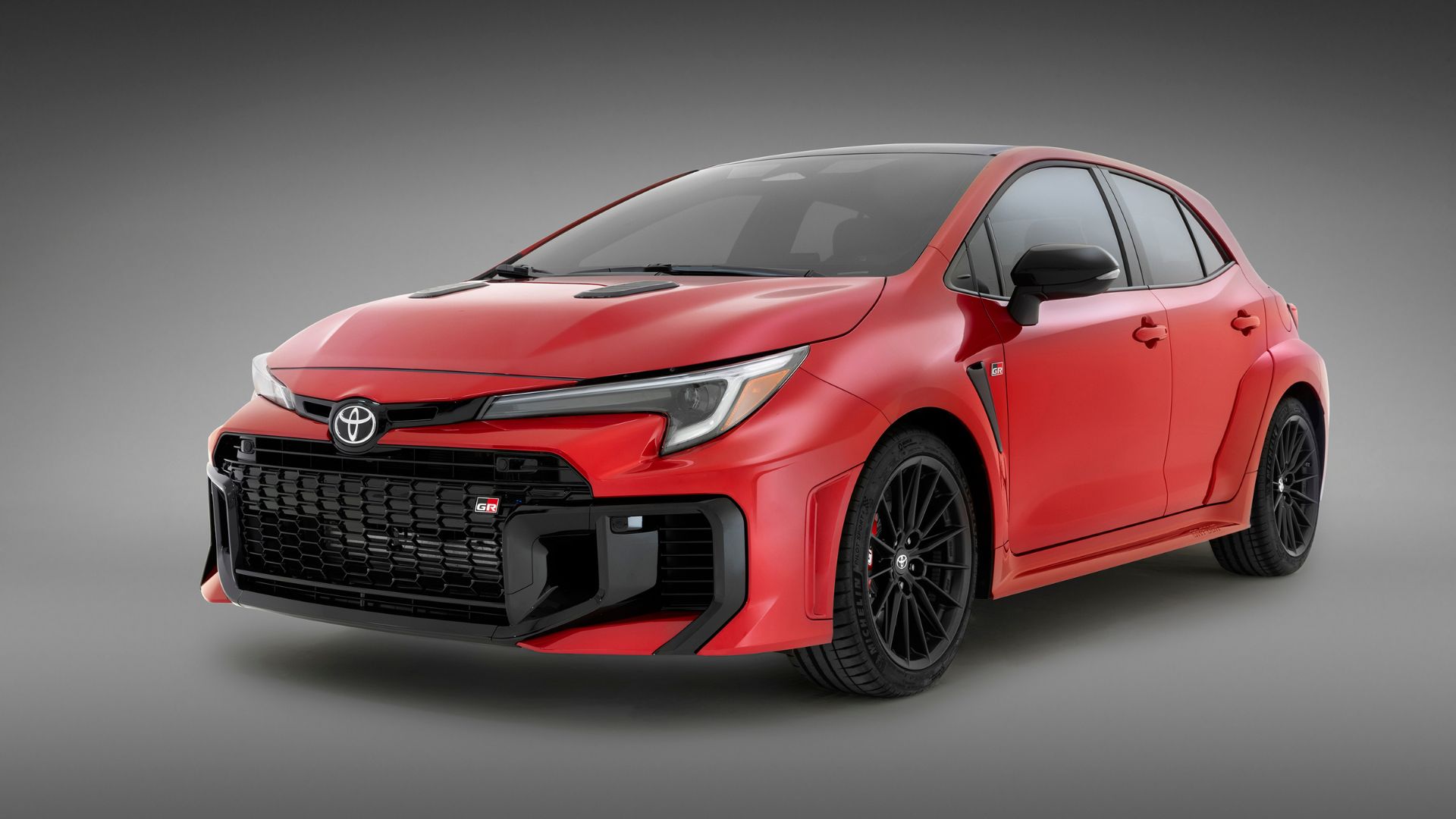
The Toyota GR Corolla is a high-performance hot hatch engineered to deliver rally-inspired excitement while maintaining everyday usability. Developed by Toyota’s Gazoo Racing division, the GR Corolla combines advanced engineering with an enthusiast-focused philosophy, emphasizing mechanical engagement, driver control, and raw performance rather than heavy electrification or excessive digital intervention.
With a remarkable output from a small engine and a sophisticated all-wheel-drive system, it stands as one of the most distinctive performance cars in its class.
At the center of the GR Corolla is a highly advanced 1.6-liter turbocharged inline-three engine (G16E-GTS), producing an impressive 300 horsepower and 295 lb-ft of torque, an extraordinary figure for an engine of its size.
Power is delivered through either a six-speed intelligent manual transmission with automatic rev-matching or an available eight-speed automatic transmission with paddle shifters. The car accelerates from 0–60 mph in about 5.0 seconds, making it both quick and responsive in real-world driving conditions.
A defining feature of the GR Corolla is Toyota’s GR-FOUR all-wheel-drive system, which allows drivers to manually adjust torque distribution between the front and rear wheels.
Three selectable modes include a 60:40 split for daily driving, a balanced 50:50 mode for maximum traction, and a rear-biased 30:70 setting designed for track performance and controlled oversteer. Torsen limited-slip differentials at both the front and rear further enhance grip, stability, and cornering confidence, giving the car a rally-bred personality.
Despite its performance focus, the GR Corolla retains a relatively analog driving experience. Physical buttons and tactile controls remain central to the cabin layout, ensuring intuitive operation during spirited driving.
The manual gearbox provides strong mechanical feedback, reinforcing the car’s hands-on character. Handling is confident and composed, with excellent cornering grip and stability on twisty roads, while the suspension balances track capability with everyday comfort.
Inside, the GR Corolla shares its foundation with the standard Corolla hatchback but adds sport seats, aluminum pedals, and performance-focused styling.
Rear-seat space is adequate, and practicality remains strong for a performance vehicle, with generous cargo capacity when the rear seats are folded. Technology includes an 8.0-inch infotainment display with wireless Apple CarPlay and Android Auto, plus available premium audio options.
Fuel economy is estimated at around 21 mpg city and 28 mpg highway with the manual transmission. Standard safety features include adaptive cruise control, lane-keeping assist, and automated emergency braking.
The Toyota GR Corolla blends everyday practicality with authentic rally-inspired performance, offering an engaging, driver-centered experience rarely found in modern performance hatchbacks.
3. Mazda Miata (MX-5)
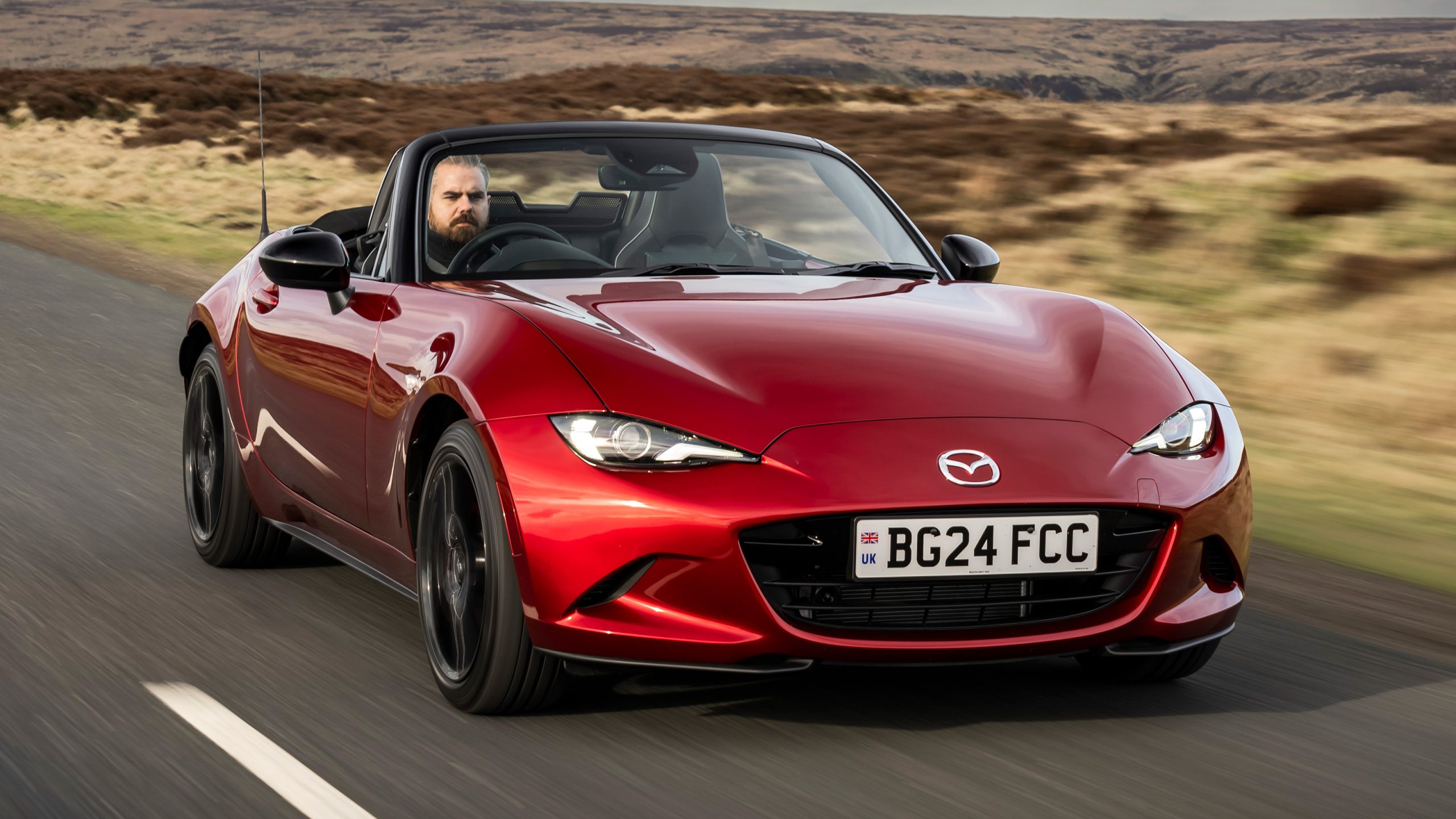
The Mazda Miata (MX-5) is widely regarded as one of the purest and most enjoyable driver’s cars ever built, proving that driving excitement does not depend on massive horsepower. Powered by a naturally aspirated 2.0-liter inline-four engine, the current Miata produces 181 horsepower and 151 lb-ft of torque, achieving an estimated 0–60 mph time of around 6.5 seconds.
While these figures may seem modest compared to modern performance cars, the Miata’s appeal lies in balance, lightweight engineering, and driver engagement rather than outright speed.
A defining characteristic of the Miata is its philosophy of “Jinba Ittai,” a Japanese concept meaning harmony between horse and rider. This idea shapes every aspect of the car’s design.
Weighing just over 2,300 pounds, the Miata is exceptionally light by modern standards, allowing it to feel agile, responsive, and connected to the road. Its near-perfect 50:50 weight distribution and rear-wheel-drive layout deliver predictable handling and excellent cornering stability, making twisty roads its natural environment.
The available six-speed manual transmission is often praised as one of the best in the industry, offering short, precise shifts that enhance driver involvement.
Steering feedback is sharp and communicative, giving drivers confidence and a strong sense of control. Rather than relying on high speeds for excitement, the Miata creates fun through momentum and handling precision, allowing spirited driving even at legal road speeds.
Inside, the cabin follows a minimalist, driver-focused approach. Controls are positioned for easy access, emphasizing physical interaction over digital complexity. The cockpit is compact and functional, providing comfort for everyday driving but limited storage and passenger space.
Cargo capacity is small at 4.6 cubic feet, making the Miata better suited for weekend trips than long-distance hauling. Road and wind noise are noticeable, especially in the soft-top version, though many enthusiasts consider this part of the authentic roadster experience.
The Miata is available in two main versions: a classic soft-top convertible for open-air driving and the Retractable Fastback (RF), which offers added refinement and coupe-like styling. Despite its small size and simplicity, the Miata delivers impressive fuel efficiency and strong reliability.
The Mazda Miata remains the benchmark affordable sports car, offering a timeless, analog driving experience centered on balance, feedback, and pure driving joy rather than raw power.
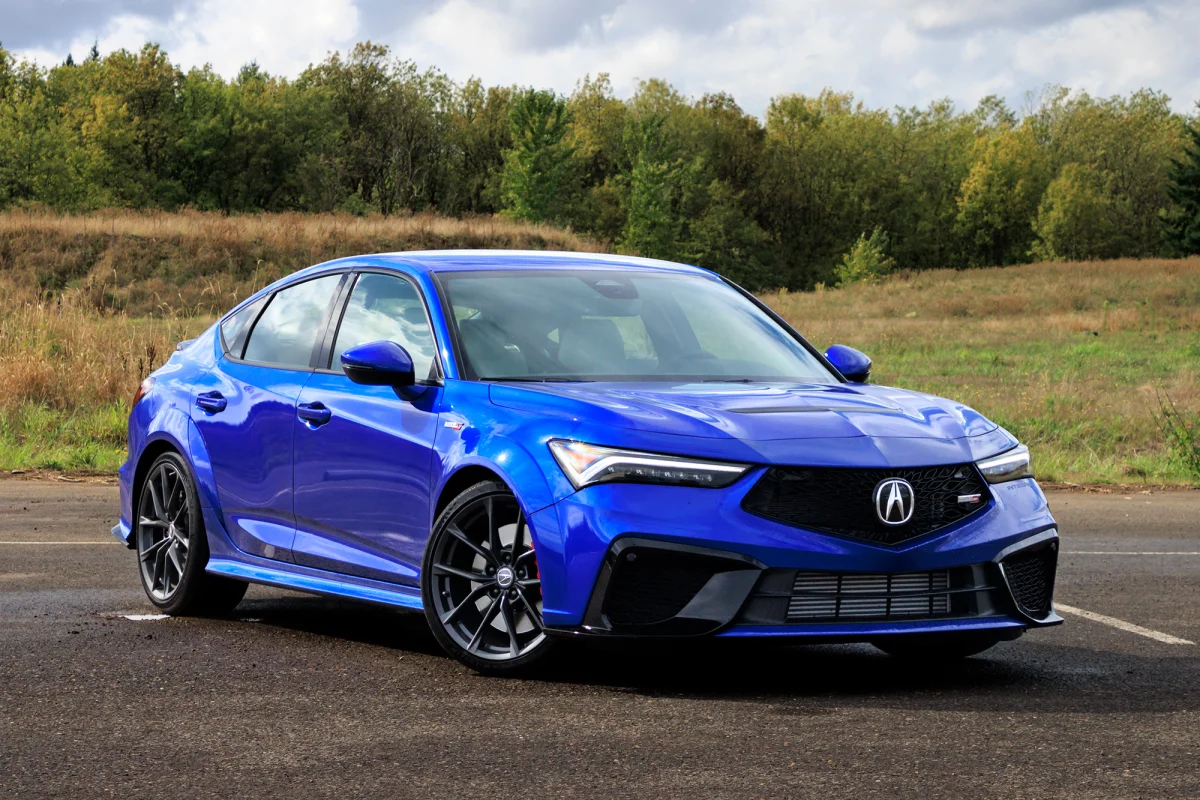
4. Acura Integra Type S
The Acura Integra Type S is a front-wheel-drive performance hatch that combines high-revving excitement with refined daily usability. Its 2.0-liter turbocharged VTEC inline-four engine produces 320 horsepower and 310 lb-ft of torque, propelling the car from 0–60 mph in just 5.2 seconds.
Unlike many modern performance cars, the Integra Type S is exclusively paired with a six-speed manual transmission with rev-matching, emphasizing analog driving engagement and a tactile, hands-on experience.
One of the standout features of the Type S is its helical limited-slip front differential, which, combined with a finely tuned suspension, allows it to handle the high power of a front-wheel-drive layout with minimal understeer.
Brembo four-piston brakes provide confident stopping power, while Michelin Pilot Sport 4S tires deliver excellent grip. Compared to its platform cousin, the Honda Civic Type R, the Integra Type S smooths out some of the harsher track-focused traits, offering a more polished street-driving experience without sacrificing performance.
The chassis benefits from a 2.8-inch wider stance, dual-axis strut front suspension, and adaptive dampers calibrated for more controlled rebound. These adjustments improve comfort over everyday roads while maintaining sharp steering response and precise cornering.
Skidpad testing shows 1.02 g of lateral grip, on par with the Type R and superior to most German rivals in its class. The Integra also weighs 3,212 pounds, making it lighter than similarly powered AWD competitors, preserving agility and driver feedback.
Inside, the cabin balances sportiness with refinement. Perforated, grippy seats provide support without being overly aggressive, and front chairs are 12-way power-adjustable with heating.
Acoustic improvements, including added insulation and a revised exhaust system, result in a quieter, richer interior compared with the Type R, while Sport+ mode still delivers an exciting exhaust note. A 16-speaker ELS Studio 3D audio system and a 9-inch touchscreen with a 10.2-inch digital instrument cluster integrate modern tech without detracting from the analog feel.
The Integra Type S succeeds by blending performance and livability. Its turbocharged VTEC engine offers exhilarating high-rev power, the manual gearbox ensures driver engagement, and the suspension and braking setup create a composed, responsive ride. Compared to the Civic Type R, it is a “grown-up” alternative, retaining thrilling dynamics while smoothing out extreme track-focused characteristics.
With strong handling, a refined interior, and a focus on mechanical feedback, the Acura Integra Type S is one of the most compelling front-wheel-drive hot hatches on the market, delivering a rewarding experience both on the street and on the occasional spirited drive.
5. Nissan Z
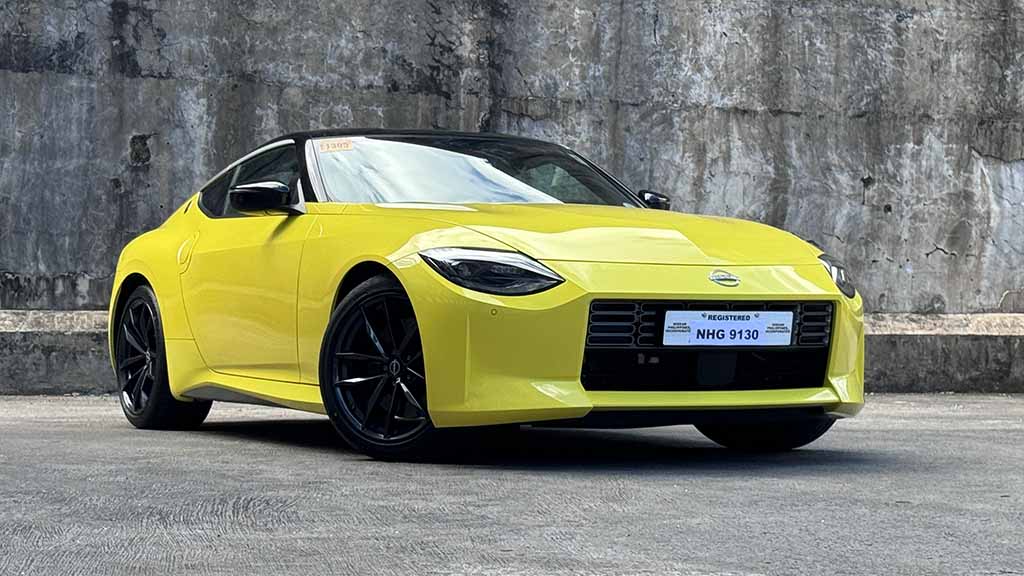
The Nissan Z continues the legendary lineage of the Datsun 240Z, blending classic rear-wheel-drive dynamics with modern performance and technology. The seventh-generation model is powered by a 3.0-liter twin-turbocharged V6 engine, delivering 400 horsepower and 350 lb-ft of torque.
This engine propels the Z from 0–60 mph in 4.5 seconds, making it a fast and capable sports car while retaining the analog, connected feel that enthusiasts value. Power is transmitted to the rear wheels via a six-speed manual gearbox with rev-matching and a performance clutch, complemented by a carbon-fiber driveshaft for enhanced drivetrain response.
The Z features a fully independent suspension on all four corners, paired with high-end Akebono brakes, which contribute to sharp handling and confident stopping power. Its rear-wheel-drive layout allows drivers to explore the car’s dynamic limits, especially when traction and stability controls are disabled.
On tight mountain passes or a racetrack, the Z offers a playful, responsive experience, with precise steering feel, balanced chassis behavior, and engaging gearshifts. Its handling is nimble yet composed, making it equally enjoyable for spirited driving or everyday use.
Design-wise, the Z retains cues from its iconic predecessors, with a long hood, low-slung body, and wide stance that visually communicate performance. Inside, the cabin combines modern amenities with driver-focused ergonomics.
Controls are placed intuitively, allowing the driver to remain connected to the car without distraction. Seats provide support for high-performance driving while remaining comfortable for daily use, and sound insulation strikes a balance between aural engagement and cabin refinement.
The Nissan Z excels in delivering a raw, rewarding driving experience. Its combination of twin-turbo power, rear-wheel-drive dynamics, and a manual transmission creates a car that is both accessible and thrilling.
Unlike some modern sports cars that prioritize electronics over engagement, the Z keeps the driver in control, rewarding skillful inputs with responsiveness and feedback. Its chassis allows confident cornering, while the brakes and suspension provide precision without harshness, making the car versatile across road and track conditions.
With 400 horsepower and a lightweight, well-balanced platform, the Nissan Z captures the spirit of classic sports cars while meeting contemporary performance expectations. It’s fast, fun, and analog at heart, a modern interpretation of a beloved icon that remains engaging for both enthusiasts and casual drivers alike.
Also Read: 5 Cars With Simple Dash Layouts vs 5 With Confusing Ones
6. Lotus Emira V6 SE
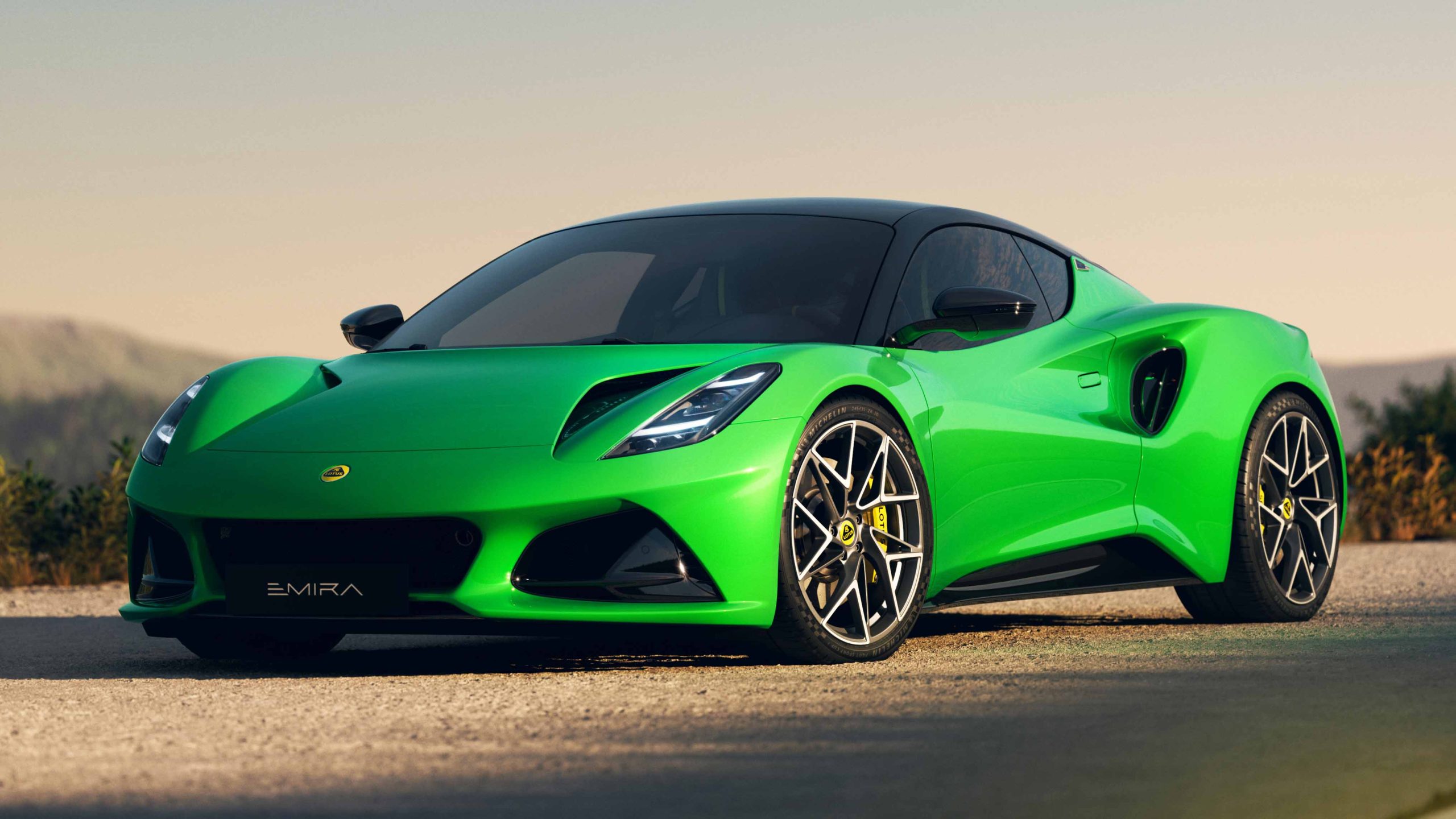
The Lotus Emira V6 SE embodies the brand’s philosophy of “adding lightness” to enhance performance, combining a lightweight chassis with a powerful, analog-focused powertrain. Weighing just 3,158 pounds, the Emira is powered by a supercharged 3.5-liter V6 engine sourced from Toyota, producing 400 horsepower and 316 lb-ft of torque.
This engine, paired with a six-speed manual gearbox and a limited-slip rear differential, delivers a visceral, connected driving experience, allowing the driver to fully exploit its potent performance. The car accelerates from 0–60 mph in 4.3 seconds, showcasing both its straight-line capability and dynamic handling.
The Emira’s driving character emphasizes mechanical engagement over electronic intervention. The manual gearbox features a visible linkage, requiring deliberate gear changes and providing a satisfying tactile experience.
Unlike modern electric-assisted systems, the hydraulic power steering offers direct, communicative feedback, enabling precise control and a go-kart-like connection to the road. Lotus also equips the Emira with a two-mode suspension: Tour mode for comfortable street driving and Sports mode for track-focused stiffness, giving it versatility across driving conditions.
Cornering performance is a highlight, aided by the lightweight bonded aluminum chassis and well-calibrated suspension geometry. The car responds instantly to driver inputs, offering high grip, precise turn-in, and balanced chassis behavior.
The supercharged V6 delivers linear throttle response, free of turbo lag, accompanied by a raw, emotive engine note that enhances the sensory experience. Brembo-style brakes and high-performance tires ensure stopping power matches the car’s acceleration, reinforcing driver confidence.
Inside, the Emira’s cockpit balances analog purity with modern comfort. Essential controls are within easy reach, and while digital screens are present, the driver remains central to the experience.
The interior offers premium materials and a comfortable seating position, making the car more usable for daily driving than earlier Lotuses like the Elise or Exige. However, practicality is limited: the boot holds approximately 151 liters, and there is no front trunk, constraining cargo options.
The Lotus Emira V6 SE is one of the last true analog sports cars, offering raw performance, precise handling, and a tactile driving experience rarely found in today’s market. It honors Lotus’s core principles while improving comfort and usability, making it a compelling alternative to rivals like the Porsche 718 Cayman.
For enthusiasts seeking a visceral, engaging sports car with modern refinement, the Emira V6 SE stands out as a final, emotional swan song for naturally aspirated, mechanically connected driving.
7. Porsche 718 Cayman GT4 RS
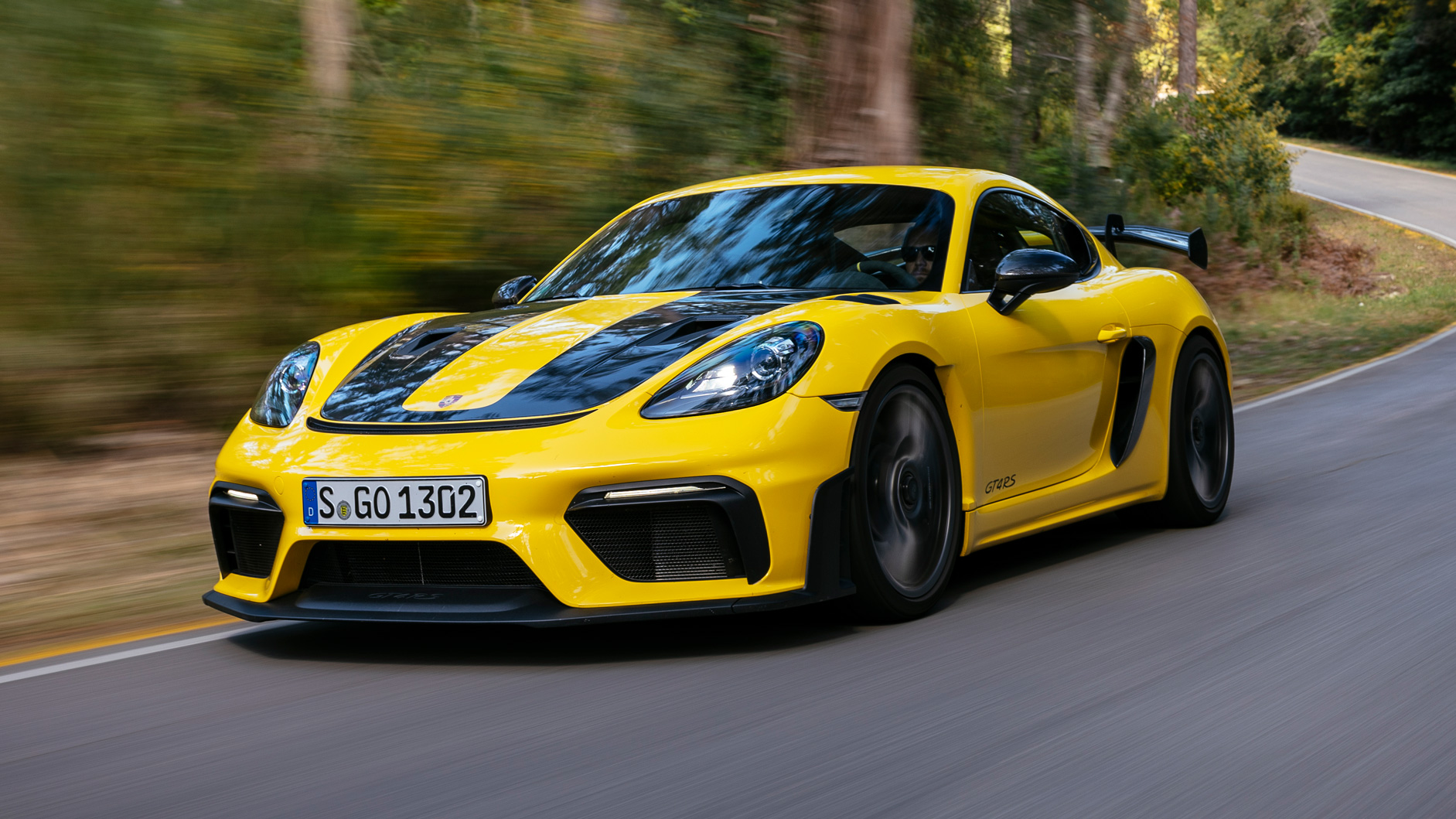
The Porsche 718 Cayman GT4 RS is a pinnacle of analog sports car engineering, offering a highly engaging driving experience through a combination of raw power, precise handling, and motorsport-inspired design. It is powered by a 4.0-liter naturally aspirated flat-six engine, producing 500 horsepower and 332 lb-ft of torque, with a redline of 9,000 rpm.
This mid-mounted engine is derived from Porsche’s GT3 R and RSR race programs, providing linear power delivery and a visceral mechanical soundtrack inside the cabin. Air intakes behind the driver amplify engine sound, enhancing the connection between car and driver.
Power is transmitted to the rear wheels via Porsche’s seven-speed PDK dual-clutch transmission, which allows extremely fast and precise gear changes. While a manual option is not available, the PDK provides excellent rev-matching and keeps the driving experience highly engaging.
Traction and cornering are enhanced by a mechanical, limited-slip differential and torque vectoring system, ensuring the car responds predictably at the limits. Coupled with Porsche Active Suspension Management (PASM) and adjustable ride height, the chassis delivers precise steering and exceptional road feel.
Aerodynamic features include a four-stage adjustable front splitter, a swan-neck rear wing, and underbody modifications that boost downforce by up to 25 percent compared to the standard GT4.
Extensive use of carbon fiber panels, thinner glass, and reduced sound insulation lowers weight and improves agility. Michelin Pilot Sport Cup 2 tires grip the road, while upgraded brakes with optional carbon-ceramic discs provide confident stopping power.
The interior is minimalist and driver-focused, with physical controls positioned for intuitive use. Ball-jointed components in the suspension and chassis provide precise mechanical feedback, allowing the driver to feel the road with remarkable clarity.
The 718 Cayman GT4 RS accelerates from 0 to 60 mph in 3.2 seconds, but its appeal extends beyond straight-line speed.
The combination of a high-revving engine, mid-engine balance, sharp steering, responsive suspension, and dramatic engine acoustics delivers one of the most thrilling driving experiences available today. Lightweight, agile, and finely tuned, the GT4 RS offers a connection to the car that few modern sports cars can match.
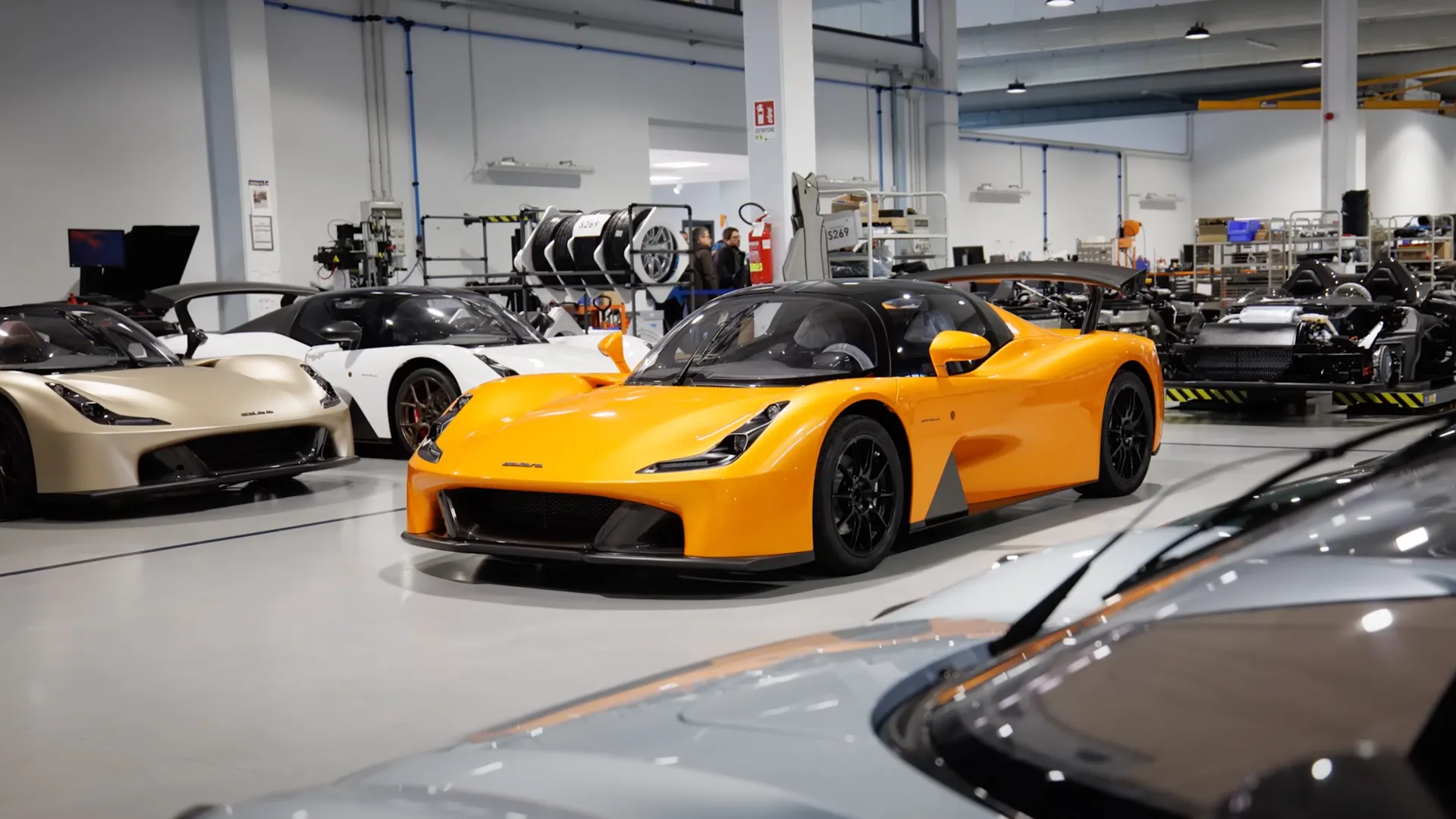
8. Dallara Stradale: Racing DNA for the Road
The Dallara Stradale is a street-legal supercar from the famed Italian race car manufacturer, built with the philosophy of “track first, street second.” Leveraging decades of motorsport expertise from IndyCar, Formula One, and endurance racing, Dallara has produced a car that feels more like a pure racing machine than a conventional sports car.
The Stradale is powered by a 2.3-liter turbocharged Ford inline-four engine producing 395 horsepower and 368 lb-ft of torque, paired with a six-speed manual gearbox or an automatic option. Rear-wheel drive, combined with a chassis weighing only 1,885 pounds, delivers a 0-60 mph sprint in just 3.2 seconds.
The car emphasizes an unfiltered, analog driving experience. Every element is designed for driver engagement, from the fixed seat and sliding pedal box to the unassisted steering rack that provides direct road feedback.
Aerodynamic efficiency comes from racing-derived underbody and wing designs rather than electronic systems. Optional components, including a full aero kit, adjustable suspension, and a large rear wing, enhance downforce, allowing the Stradale to generate over 820 kg of downforce at 174 mph.
The Stradale’s minimalism removes unnecessary luxuries such as infotainment, power steering, and heavy sound insulation, creating a raw, visceral connection between driver and machine. The lightweight carbon fiber structure ensures rigid body control and precise handling. Even with a turbocharged four-cylinder engine, the car feels alive and responsive, rewarding driver skill rather than relying on electronic aids.
On the road and track, the Stradale demonstrates remarkable composure. The suspension provides a firm but manageable ride, allowing the car to trace surfaces accurately and respond consistently to driver inputs. Steering is linear, predictable, and communicative, while the chassis exhibits superb balance through corners. Brakes, though initially grabby, provide excellent stopping power under high-speed conditions.
The Stradale is designed to maximize driver involvement rather than outright comfort or convenience. It offers a road experience comparable to high-end track cars like the Radical RXC Spyder but with enough compliance for street use. Limited production of just 600 units ensures exclusivity, with prices starting around €155,000 and rising with optional upgrades.
The Dallara Stradale translates the company’s illustrious racing pedigree into a street-legal package, combining extreme lightweight design, aerodynamic sophistication, and mechanical purity to deliver a thrilling, highly engaging driving experience that few modern sports cars can match.
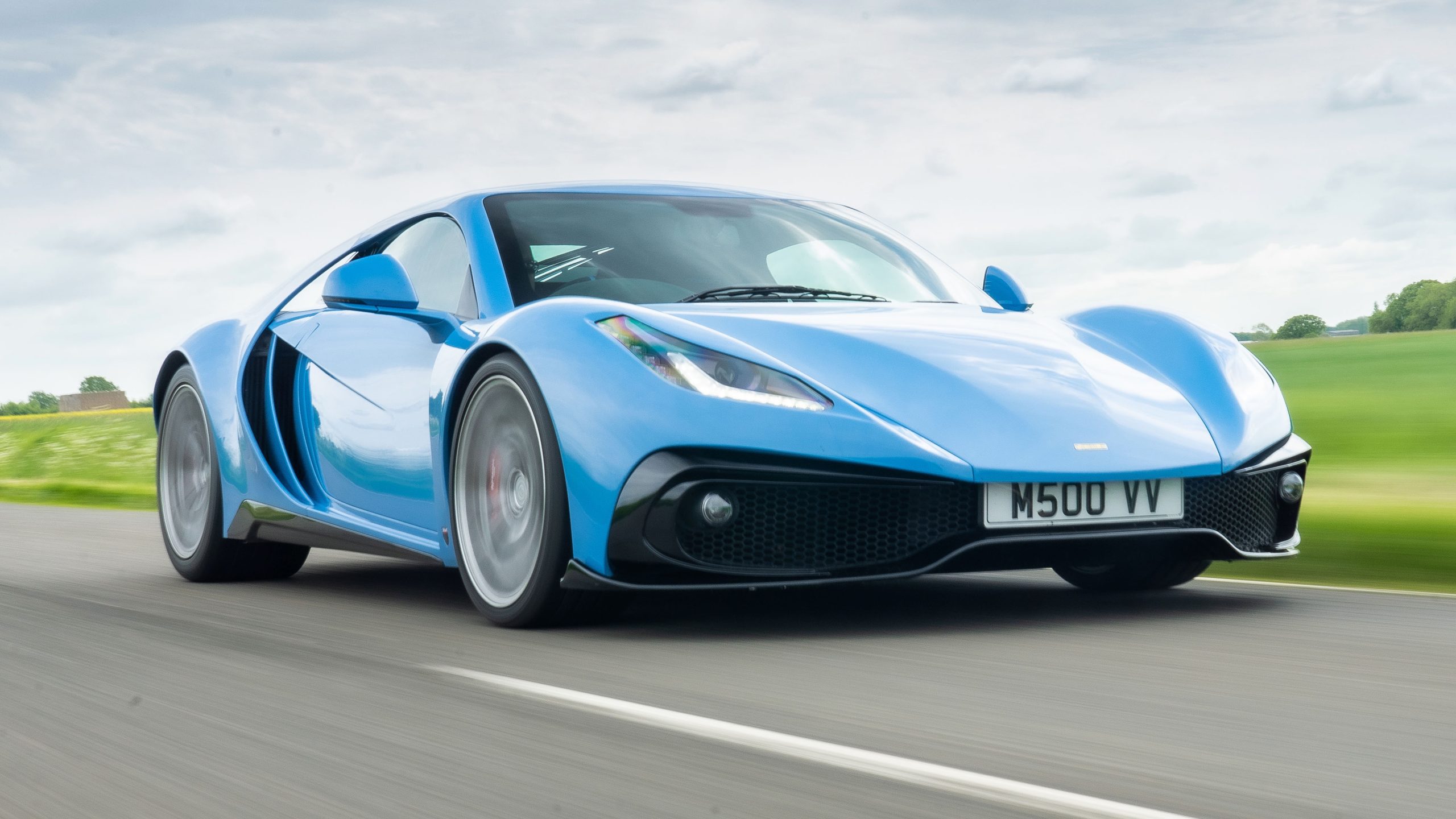
9. Noble M500: Pure Analog Driving
The Noble M500 is a British supercar designed to prioritize driver engagement over electronic intervention. Sitting between the extreme M400 and M600, it delivers 505 horsepower and 550 lb-ft of torque from a 3.5-liter twin-turbocharged Ford EcoBoost V6, the same engine used in the Ford Ranger Raptor.
Power is sent to the rear wheels via a six-speed Graziano gated manual gearbox, emphasizing tactile mechanical connection. Traction control is the only electronic aid, and drivers can switch it off entirely. The car weighs roughly 1,250 kg, thanks to a steel tubular chassis with a glass-reinforced plastic body, with optional carbon fiber components.
Noble designed the M500 as an analog supercar, deliberately avoiding modern technologies such as ABS, airbags, and electric power steering. Instead, it uses hydraulic steering to provide direct, unfiltered feedback.
The interior reinforces this purist approach, with toggle switches, a manual handbrake, Alcantara trim, and Recaro bucket seats, emphasizing functionality and driver focus over luxury. Some design elements are borrowed from other vehicles, like C7 Corvette headlights and Citroën C4 Picasso taillights, but these quirks do not detract from the driving experience.
Driving dynamics are the M500’s strongest attribute. Reviewers note its involving chassis and exceptional balance, with precise, communicative steering that rewards skillful input. Ride quality is surprisingly competent on imperfect surfaces, and despite the car’s analog nature, it maintains composure during aggressive cornering.
The lack of electronic intervention means the car demands attention and precision, providing a visceral sense of control that modern supercars rarely offer.
Performance matches its driver-focused ethos. The car reaches 0-60 mph in 3.2 seconds, with turbocharged, responsive power that delivers a linear and engaging driving experience. Exhaust notes, turbo whistles, and wastegate sounds reinforce its mechanical character, creating a pure analog auditory experience.
Priced at approximately $225,000 and hand-built in Leicester, England, the M500 competes in the “junior supercar” segment alongside the Porsche 911 GT3, Lotus Emira, and Maserati MC20. Production is limited to about 50 cars per year.
With its lightweight construction, raw mechanical focus, and driver-centered design, the Noble M500 stands out as a modern supercar that emphasizes pure, analog driving over electronic aids and automated systems.
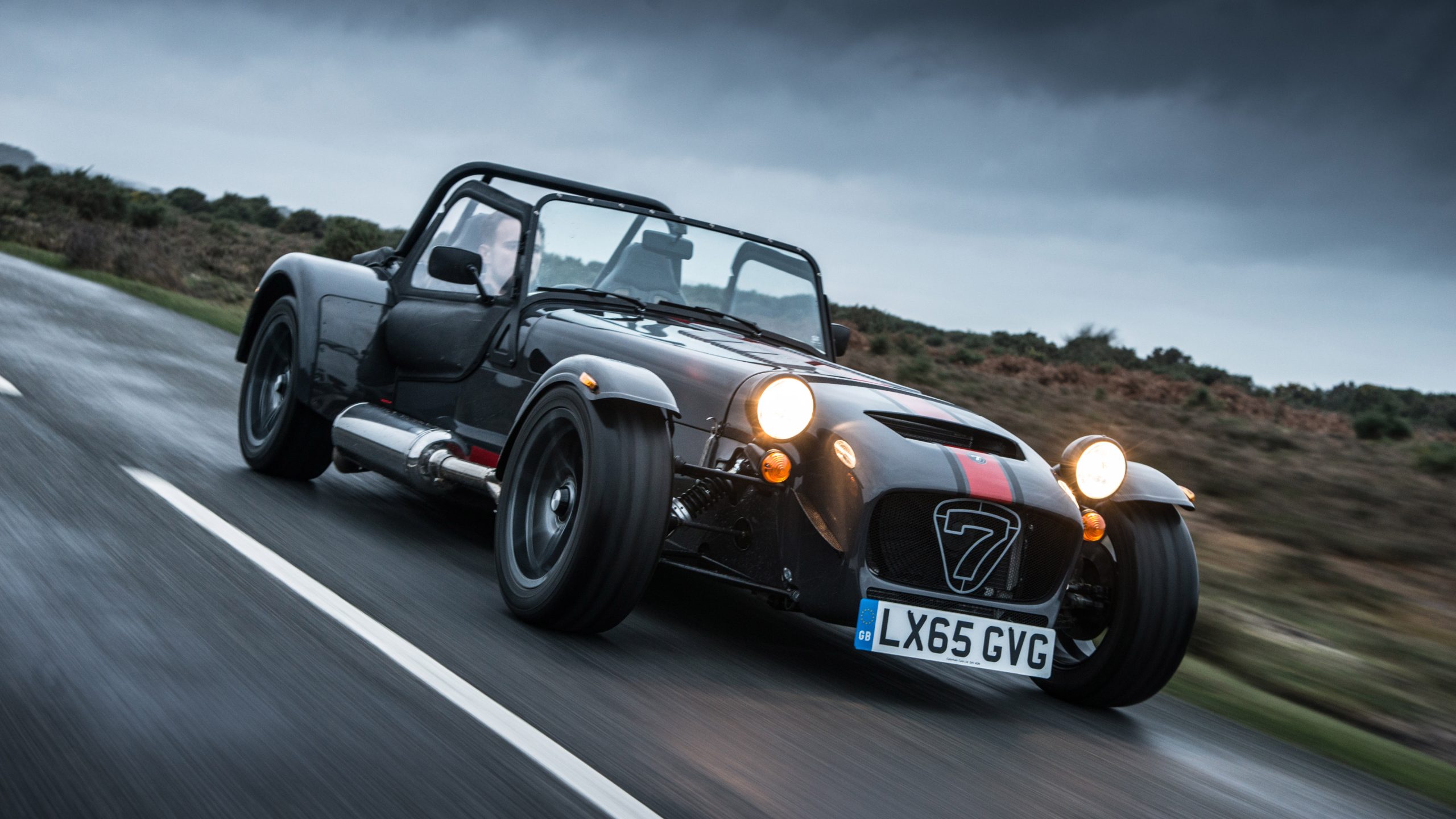
10. Caterham 620R – The Ultimate Analog Roadster
The Caterham 620R is the pinnacle of analog driving, a lightweight, no-frills sports car designed for pure engagement. Weighing just 1,200 pounds, it is powered by a 2.0-liter supercharged inline-four producing 310 horsepower and 219 lb-ft of torque, reaching 0-60 mph in 2.8 seconds.
With rear-wheel drive and a six-speed sequential gearbox, the 620R delivers immediate, unfiltered feedback, intentionally omitting electronic aids such as traction control, stability control, ABS, or airbags. This design ensures that the driver is fully immersed in the vehicle’s dynamics.
The car features adjustable racing dampers, a De Dion rear axle, and wide-track front suspension, providing optimum chassis balance for the extreme power-to-weight ratio of 580 hp per ton. Magnesium wheels wrapped in sticky 13-inch Avon ZZR tires, front dive planes, and serrated nose intakes improve aerodynamics and reduce lift, giving the car a distinctly race-oriented stance.
Carbon-fiber interior panels, seats, and aeroscreen keep weight low while emphasizing the minimalist, performance-focused ethos. The sequential gearbox allows rapid, precise shifts, reinforcing the visceral experience of controlling the high-revving engine.
Driving the 620R is intense and highly engaging. The unassisted steering offers direct, communicative feedback, while the supercharged engine produces a raw, aggressive sound unfiltered by cabin insulation. The car reacts instantly to driver input, rewarding skillful handling with extraordinary grip, cornering precision, and balance.
On narrow, twisty roads or the track, the 620R can reach its 150 mph top speed with a thrilling sense of connection rarely found in modern vehicles. Initially intimidating, its chassis and controls reveal themselves as intuitive and deeply rewarding with experience.
The 620R is the fastest road-going Caterham ever and a true analog masterpiece. Its acceleration and handling rival higher-powered supercars, including the Ariel Atom 3.5 and Radical SR3 SL. By focusing on light weight, mechanical simplicity, and maximum driver engagement, the 620R offers an unadulterated, visceral experience that exemplifies Caterham’s philosophy and sets the standard for pure driving enjoyment.
The ten cars on this list showcase the rewards of analog driving, emphasizing direct feedback, precise handling, and a focus on the driver. From the accessible Subaru BRZ tS to the thrilling Dallara Stradale and Caterham 620R, each model delivers engagement and excitement in a way that modern, tech-heavy cars rarely do. These vehicles encourage skill, sharpen reflexes, and provide memorable moments behind the wheel.
By prioritizing connection over convenience, they prove that driving is not just about speed or horsepower, but about feeling every corner, every throttle input, and every shift. Enthusiasts seeking an authentic, hands-on experience will find these cars deeply rewarding, preserving the essence of mechanical purity and driver-focused engineering in a world increasingly dominated by electronics.
Also read: Top 10 Cars That Came With a Matching Bike or Scooter