
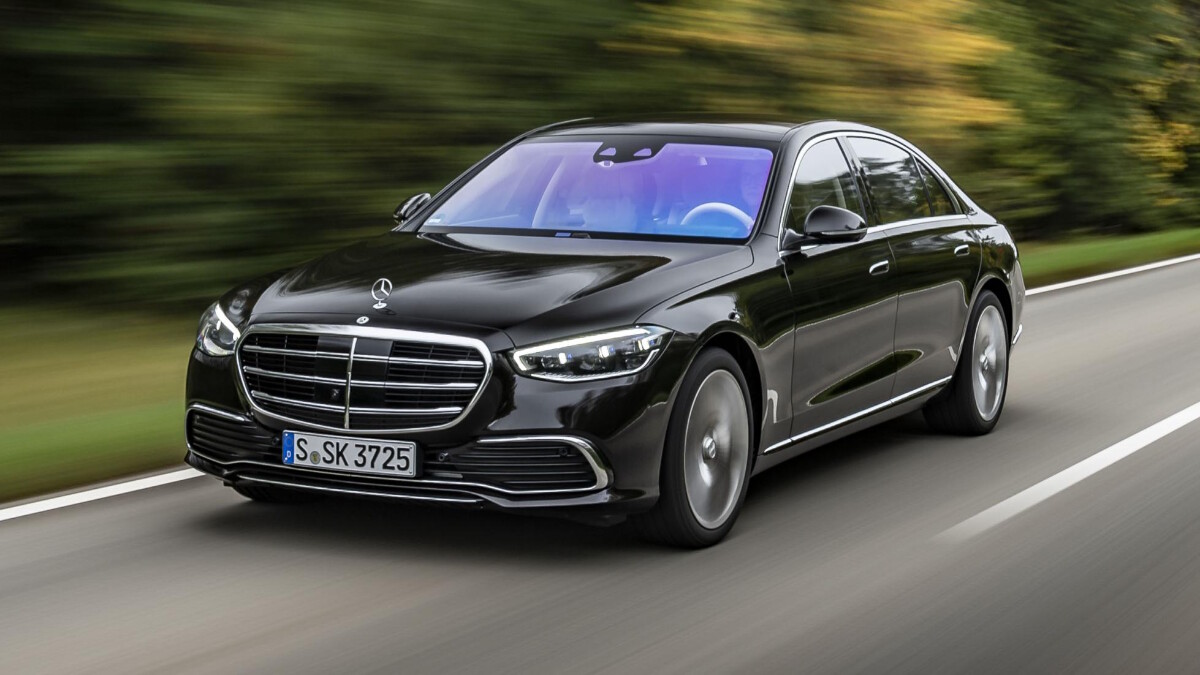
The way we interact with our vehicles is undergoing a profound transformation, and at the center of this revolution is Augmented Reality Head-Up Display (AR HUD) technology. Once confined to military fighter jets and commercial aviation cockpits, AR HUDs have made their way into the modern automobile with breathtaking sophistication.
Rather than forcing drivers to glance down at instrument clusters or fiddle with touchscreens, AR HUDs project critical driving information speed readings, navigation arrows, lane guidance, hazard warnings, and even adaptive cruise control data directly onto the windshield, seamlessly blending digital intelligence with the real-world view ahead.
Unlike conventional HUDs that merely display static information about the car, augmented reality HUDs allow the driver to be more connected and aware of his or her surroundings.
The result is a driving experience that feels less like operating a machine and more like piloting something futuristic. These next-generation HUDs overlay data from cameras and GPS to display elements onto the windshield that appear to float in the real world outside, with navigation arrows pointing at the next turn ahead and highlighting which lane the driver should be in.
From luxury sedans to cutting-edge electric SUVs, automakers are racing to deliver the most immersive and functional AR HUD experiences possible. This article examines the top 8 cars that are leading that charge vehicles where the windshield has truly become the ultimate interface between driver and road.
1. Mercedes-Benz S-Class
When it comes to pushing the boundaries of in-car technology, the Mercedes-Benz S-Class has always set the benchmark, and its augmented reality head-up display is no exception.
In 2021, Mercedes premiered its augmented reality head-up display on the luxury S-Class sedan, with the graphics projection equating to 77 inches of screen and integrating eye-tracking technology to keep icons in the driver’s field of view.
That system has since been refined and expanded, making the S-Class AR HUD one of the most talked-about and feature-rich implementations in the automotive world.
What sets the Mercedes-Benz S-Class AR HUD apart from almost everything else on the market is its sheer ambition. The system does not simply overlay speed and turn-by-turn directions onto the glass it creates an interactive, living digital environment that responds to the road ahead in real time.
The eye-tracking integration is particularly clever, as it ensures that no matter how the driver’s head moves, the critical information stays perfectly placed within their line of sight.
This eliminates the frustrating parallax issues that plagued earlier HUD generations, where tilting your head slightly would cause the projected image to seem to drift out of position.
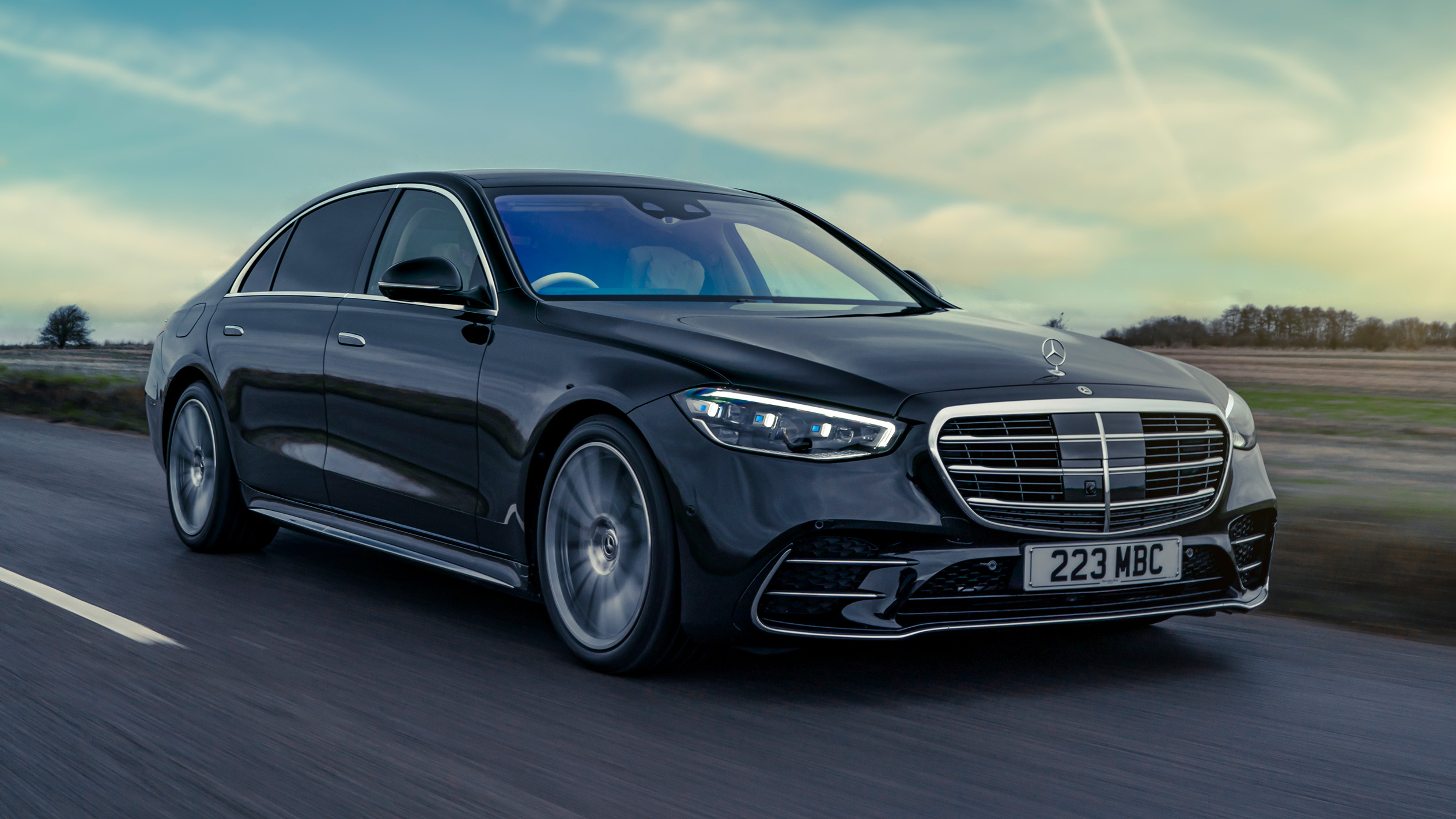
The AR HUD on the S-Class shows obvious things like vehicle speed, but it also adds augmented reality to “mark” vehicles ahead of you, almost like a fighter jet locking onto a target.
The Active Lane Keeping Assist graphic traces the outer edges of the lanes in red to ensure the driver doesn’t go over the road. The navigation system with augmented reality is equally ambitious directional arrows float in front of the vehicle and visually guide the driver toward their destination, with a particularly satisfying moment when an AR marker appears to signal that you have arrived, serenely floating in front of the destination itself.
Mercedes-Benz has noted that the AR HUD is currently available on the S-Class, the Mercedes-Maybach S-Class, the EQS Sedan, and the EQS SUV, with the company continuing to develop and refine the technology.
A Mercedes spokesperson explained that the AR HUD provides enhanced safety by projecting critical information directly onto the windshield, reducing the need for drivers to look away from the road. Looking even further ahead, Mercedes is experimenting with augmented reality glasses to offer a new driving experience, exploring a “Bring Your Own Device” approach so customers can bring their own equipment adapted to their eyesight and personal ecosystem.
For now, though, the S-Class remains the gold standard for production AR HUD technology, combining breathtaking scale, genuine intelligence, and a level of immersion that has to be seen to be believed.
2. BMW 7 Series
BMW has always prided itself on being the “Ultimate Driving Machine,” and the 7 Series takes that philosophy into the digital age with one of the most polished and driver-focused AR head-up display systems available in any production vehicle.
The Munich-based automaker has invested heavily in ensuring that its HUD technology enhances the driving experience without overwhelming or distracting the person behind the wheel a balance that is far harder to achieve than it sounds.
The BMW 7 Series AR HUD is widely praised for its exceptional image clarity and wide field of view. The system projects information at a virtual distance that feels naturally integrated with the road ahead, meaning the driver’s eyes do not need to constantly refocus between the dashboard and the windshield projection.
BMW’s engineers have paid particular attention to the color accuracy and contrast of the display, ensuring that the AR overlays remain clearly visible in a wide range of lighting conditions, from bright midday sun to the low-light glare of dusk and dawn, situations where older HUD systems would often wash out or become difficult to read.
BMW’s AR HUD pairs with the Panoramic Interaction Bar that spans the dashboard with back-lit touch zones, and together these systems turn highway exits or lane-merge arrows into floating guidance that overlays the windshield, transforming unfamiliar routes through the city into an experience resembling video game-like guidance.
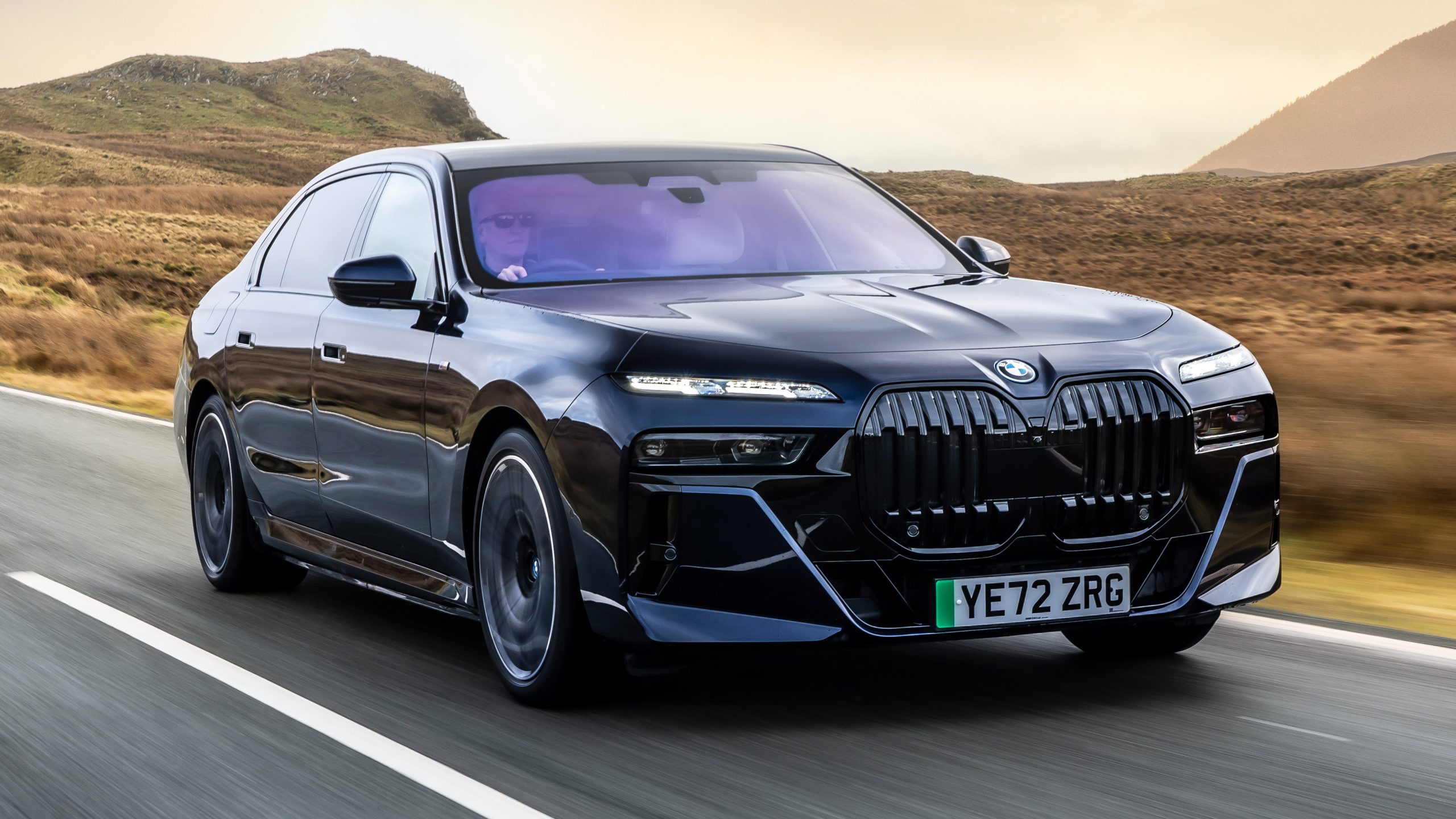
This integration with the broader vehicle architecture is one of the key strengths of BMW’s approach the AR HUD does not feel like a bolt-on feature, but rather a deeply embedded part of the car’s entire digital ecosystem.
Navigation guidance in the BMW 7 Series AR HUD is particularly impressive. Rather than a simple arrow pointing left or right, the system generates intuitive graphical cues that appear to be painted directly onto the road ahead, helping the driver identify exactly which lane to be in and precisely where to turn. Adaptive cruise control and lane-keeping data are also surfaced through the HUD in a clean, unobtrusive way.
The system is also highly customizable, allowing drivers to select which information they want displayed and at what prominence, so a driver who prefers a minimalist view can strip it back, while a tech enthusiast can have the full complement of AR features active at all times. The 7 Series AR HUD is the clearest example of BMW’s philosophy that technology should serve the driver, never the other way around.
3. Audi Q6 E-Tron
Audi has been one of the most aggressive pioneers of AR HUD technology in the automotive industry, and the Q6 E-Tron represents the company’s most ambitious deployment of the system yet.
The Q6 E-Tron features an optional augmented reality head-up display that is much larger than a typical display, showcasing driving information in the driver’s immediate line of sight.
There are also animations on the display that signal things like speed limit changes as the driver approaches a relevant sign, rather than just a static number changing as other automakers offer.
The scale of the Audi Q6 E-Tron’s AR HUD is genuinely extraordinary. Audi says the forward tilt of the 88-inch image plane in the Q6 E-Tron enhances the AR experience by aligning with the natural focus of the human eye.
The tilt combined with the large virtual image distance can make icons look like they’re floating up to 200 yards away. This is a fundamental advancement in HUD technology, because it means the driver’s eyes can remain focused on the road at the natural focal distance rather than constantly adjusting between near and far a fatigue-inducing process that older HUD systems required.

Audi’s HUD unit is highly customizable, allowing drivers to adjust everything from the orientation of the image on the windshield to the brightness.
Drivers can even turn off the AR functionality entirely if they prefer a simpler display. The system shows vehicle speed alongside navigation cues and manages to pack considerable functionality into a streamlined user interface that feels far less intrusive than some rival implementations.
The Q6 E-Tron’s AR HUD also integrates tightly with the car’s lane-keeping and driver assistance systems, surfacing relevant alerts in a contextually intelligent way.
When the driver is drifting toward a lane boundary, for example, the system highlights the road markings in a visually distinct manner without creating unnecessary alarm.
Audi is also exploring the next frontier of this technology the company is studying mixed and augmented reality glasses that could one day replace or complement the windshield-based HUD entirely. For now, the Q6 E-Tron sits at the cutting edge of what production AR HUD technology can deliver in an electric SUV package.
4. Genesis G90
The Genesis G90 is the flagship sedan from Hyundai’s luxury arm, and it makes a compelling case for itself as one of the most technologically sophisticated vehicles in its class, particularly when it comes to augmented reality head-up display capability.
The G90 features a Premium Augmented Reality Head-Up Display that projects crucial driving information in real-time, superimposing it over the view of the road on the windshield for increased awareness and safety. The sophisticated system delivers real-time navigation instructions, speed information, and driver assistance notifications.
What makes the Genesis G90’s AR HUD stand out is the way it marries cutting-edge technology with the brand’s defining philosophy of understated elegance.
Genesis has always positioned itself as a purveyor of serene, refined luxury, and the AR HUD has been tuned to reflect that character. The projections are clean and tasteful, with a visual language that complements the car’s interior design rather than competing with it.
Colors are carefully chosen for legibility across varied driving conditions, and the information hierarchy is logically structured so the most critical data speed, hazard alerts, and navigation is always given visual priority.
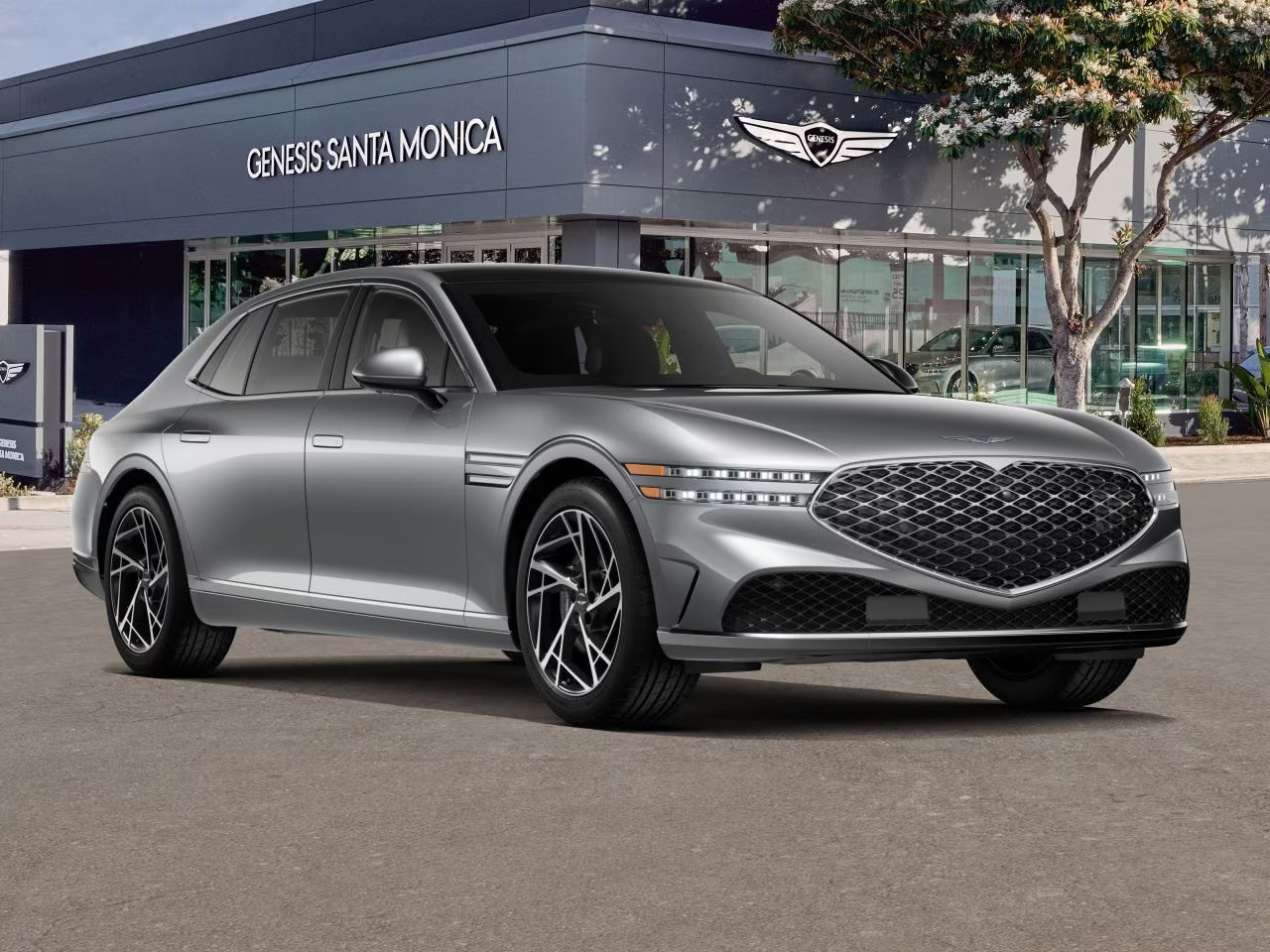
The G90’s AR HUD also communicates effectively with the vehicle’s suite of Advanced Driver Assistance Systems (ADAS), meaning the display is genuinely interactive and responsive to the driving environment rather than simply showing static data. When the lane-departure system detects the car drifting, visual cues appear in the HUD.
When adaptive cruise control is engaged, the system shows the following distance and target speed in a clear, easily interpretable format. The navigation overlays are particularly impressive, with large, confident directional graphics that feel naturally anchored to the road rather than floating awkwardly in mid-air.
The 3.5L twin-turbo V6 powering the G90 produces 375 horsepower, and a hybrid variant is available producing a combined 409 horsepower. In a car this powerful and refined, having an AR HUD that keeps the driver informed and confident without pulling their attention from the road is not just a luxury it is a genuine safety benefit.
The Genesis G90 proves that world-class AR HUD technology is no longer the exclusive domain of German automakers, and it does so with considerable style and sophistication.
Also Read: 8 Tips for Protecting Your Car Battery During Extreme Cold
5. Audi A8
The Audi A8 has long been the company’s technological showcase, the car where new ideas are tested, refined, and brought to market for the first time before cascading down through the rest of the lineup.
Inside the A8, the augmented reality HUD displays vital information like real-time traffic sign recognition, and the HUD provides augmented reality overlays on the windshield that ensure a safe journey. The car also uses AI-assisted parking that can handle tight spaces with minimal driver input.
The A8’s AR HUD is deeply integrated with Audi’s broader digital cockpit philosophy, which treats the entire interior as a cohesive technological environment rather than a collection of separate systems.
The Virtual Cockpit digital instrument cluster, the central touchscreen infotainment system, and the AR HUD all share a unified visual language and respond to each other in real time.
When a navigation instruction is active on the infotainment screen, for example, the corresponding AR guidance appears simultaneously on the windshield, creating a layered information experience that is always consistent and never contradictory.
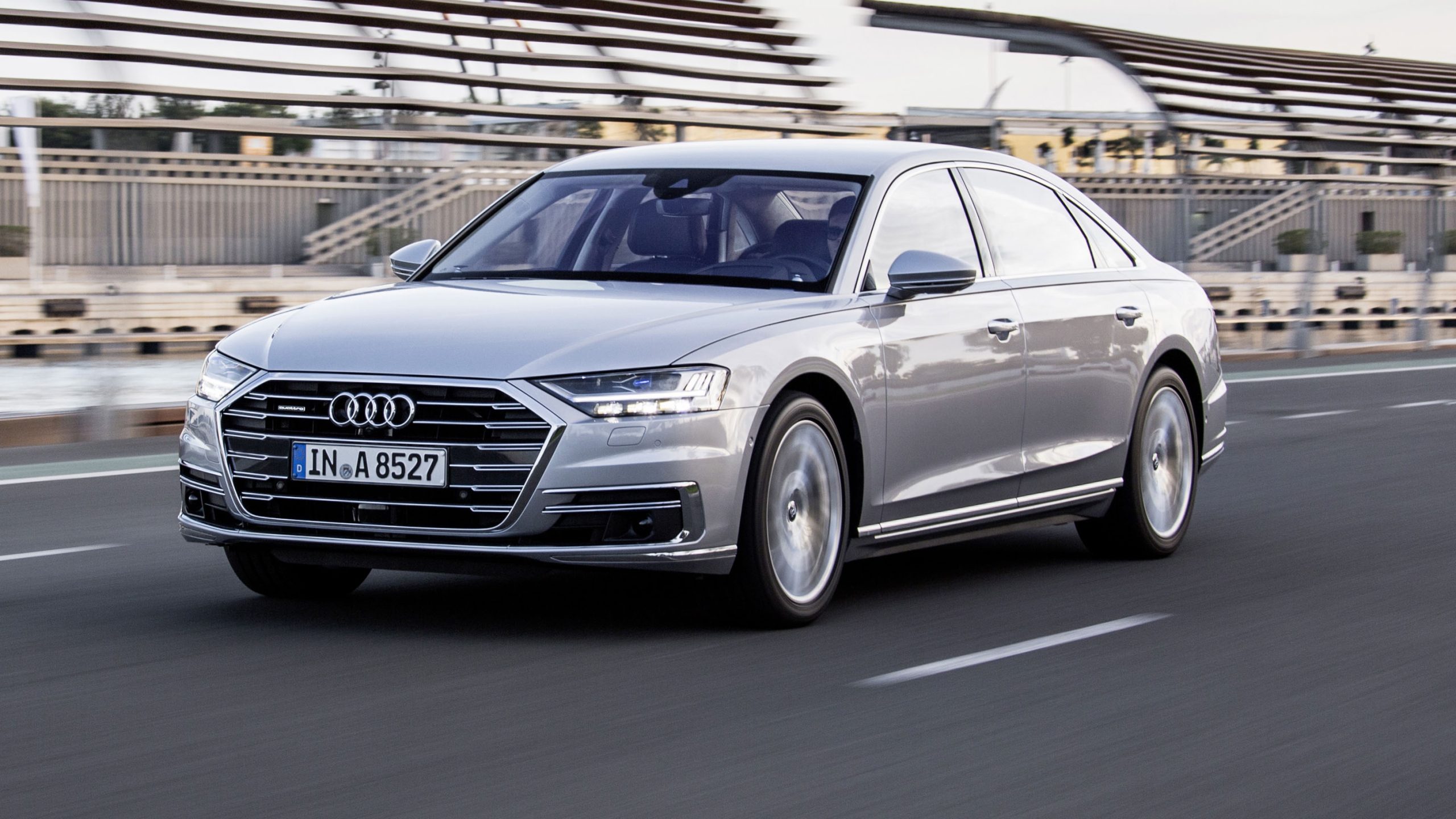
Traffic sign recognition is one of the A8’s most impressive AR HUD features. As the car’s forward-facing cameras detect speed limit signs, temporary restrictions, or road hazard warnings, that information is instantly surfaced in the HUD with contextual animations that draw the eye naturally.
This is not the same as simply reading a speed limit sign and displaying the number the system uses the AR overlay to create a moment of genuine communication between the car and the driver, making it clear that the vehicle has seen and processed a change in the road environment.
The A8 is powered by a 3.0-liter turbocharged V6 producing 335 horsepower, with a plug-in hybrid variant available producing up to 450 horsepower. Combined with Audi’s renowned quattro all-wheel drive system, this is a supremely capable and composed vehicle.
The AR HUD raises the driving experience further, ensuring that even during spirited driving on challenging roads, the driver always has access to the information they need without ever having to drop their gaze from the horizon.
For those who want the ultimate fusion of traditional Audi craftsmanship and forward-thinking digital technology, the A8 remains an exceptional choice.
6. Hyundai IONIQ 5
The Hyundai IONIQ 5 is one of the most celebrated electric vehicles of its generation, winning awards and critical acclaim across the automotive world, and its augmented reality head-up display is one of the features that helps it stand above the crowd in an increasingly competitive EV market.
What makes the IONIQ 5’s approach to AR HUD particularly interesting is the flexibility it offers the driver. The Hyundai IONIQ 5 features a heads-up display that allows the driver to choose between augmented reality and a simpler projection mode.
The augmented reality view shows a clean graphic containing the vehicle’s current speed and speed limit information where available, along with navigation arrows indicating which direction to follow. The system can be configured in a variety of ways, including adjusting the height of the heads-up display projection in the settings menu.
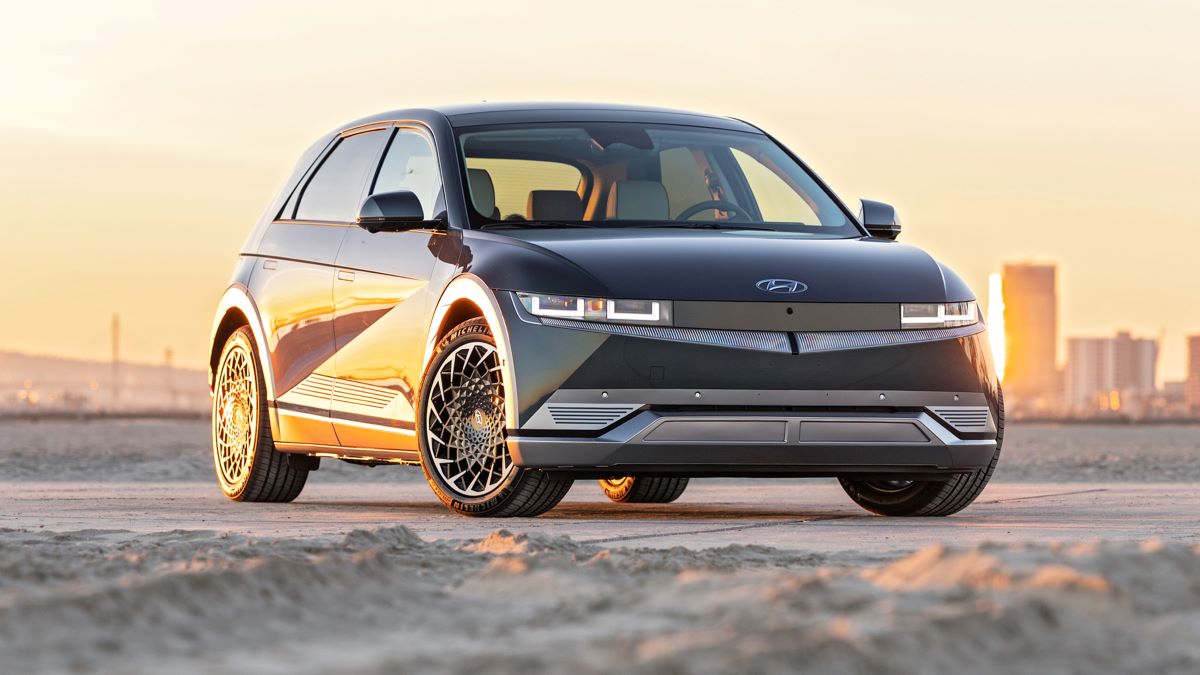
This flexibility is a smart design decision. Not every driver wants a fully immersive AR experience at all times, and Hyundai’s decision to make the system toggleable means the IONIQ 5 can accommodate both tech enthusiasts who want every available layer of digital information and more traditional drivers who simply want a clean, uncluttered view of the road.
The height adjustment feature is a practical touch that is often overlooked in discussions of AR HUD technology because drivers of different heights sit at different positions relative to the windshield, the ability to calibrate the projection height is essential for making sure the system actually works as intended for every individual.
The IONIQ 5 also benefits from Hyundai’s connected car technology. Select Hyundai models feature the Connected Car Navigation Cockpit, an over-the-air platform with a conversational voice assistant that updates itself monthly, so features grow over time without requiring a dealer visit.
This means the AR HUD experience on an IONIQ 5 purchased today may be meaningfully better in a year’s time as Hyundai pushes software updates that refine and expand the system’s capabilities.
In an era where cars are increasingly defined by their software as much as their hardware, this approach to continuous improvement gives the IONIQ 5 a compelling long-term ownership proposition.
7. Kia EV6
The Kia EV6 is proof that compelling AR head-up display technology is no longer restricted to six-figure luxury vehicles. This dynamic, boldly styled electric crossover brings genuine augmented reality HUD capability to a more accessible price point without compromising on the quality or functionality of the system a significant achievement that deserves considerable recognition.
The all-electric Kia EV6 brings a heads-up display with augmented reality in its GT-Line and higher trims. This advanced HUD projects crucial driving information, including speed, navigation directions, and lane guidance directly onto the windshield.
The AR features overlay real-time directions onto the road ahead, providing an intuitive and immersive driving experience that keeps the driver’s eyes focused where they belong on the road.
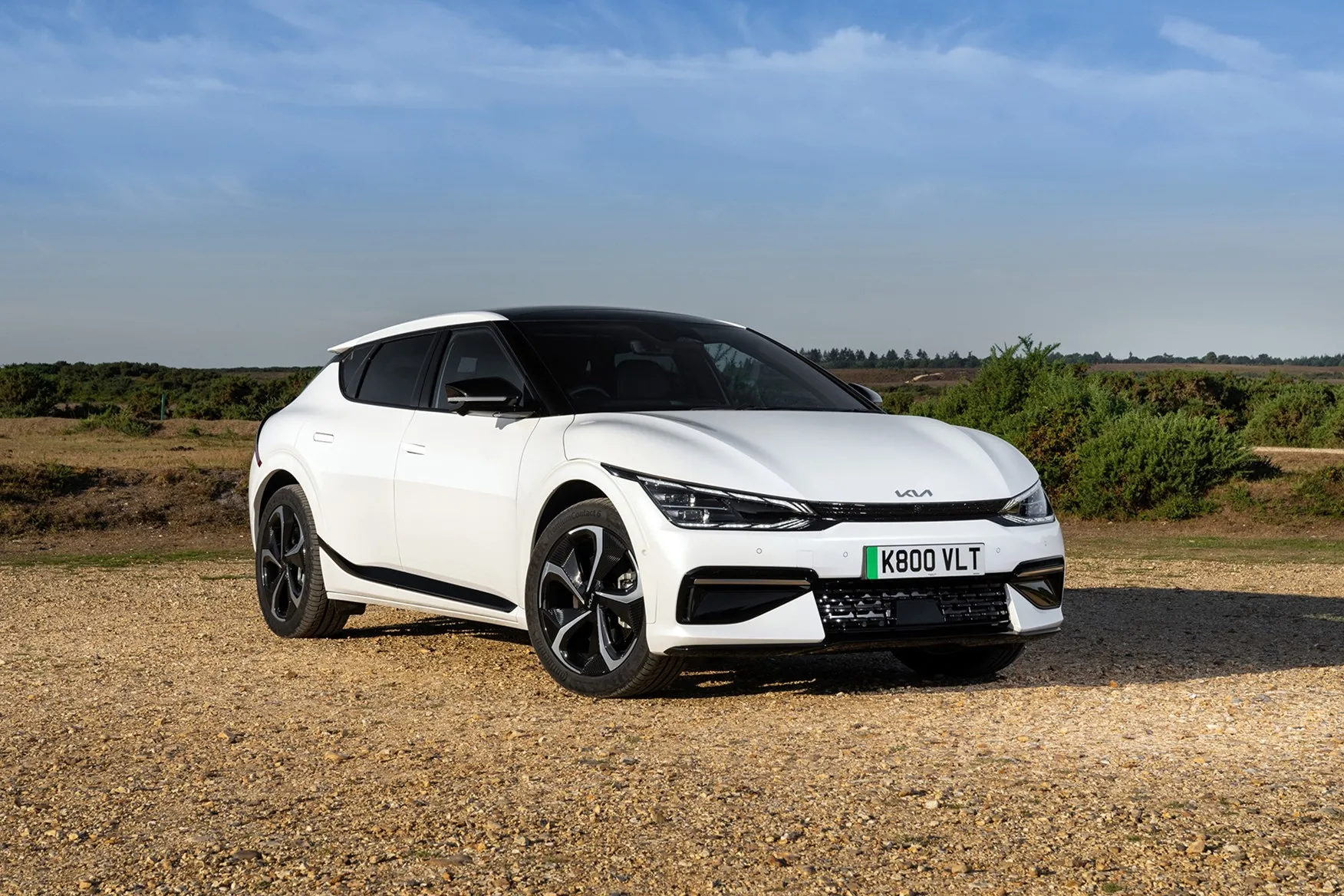
The visual execution of the EV6’s AR HUD is clean and confident. Navigation overlays are rendered with clear directional graphics that feel genuinely useful rather than gimmicky, and the lane guidance feature is particularly well implemented, rather than simply showing which lane the driver should be in as a piece of text, the system creates visual cues that relate directly to the road markings visible through the windshield, making the guidance feel immediate and instinctive.
Kia has also equipped the EV6 with Highway Driving Assist technology that works in tandem with the AR HUD to create a cohesive advanced driving assistance experience.
Kia’s Highway Driving Assist 3 can execute automatic evasive maneuvers within the driver’s lane if a drifting vehicle encroaches. Having relevant safety alerts and ADAS status information surfaced through the AR HUD means the driver is always aware of what the car’s systems are doing and what hazards have been detected, without needing to look away from the road at a critical moment.
With a range of up to 310 miles on a single charge and ultra-fast charging, the EV6 is not just a technology showcase it is a genuinely practical, long-range electric vehicle that happens to come with one of the best AR HUDs available at its price point.
8. Chevrolet Corvette
The Chevrolet Corvette occupies a unique place in this list. Unlike the European luxury sedans and premium electric vehicles that dominate discussions of AR HUD technology, the Corvette is an uncompromising American sports car a vehicle built first and foremost around performance, speed, and the pure joy of driving. Its approach to the head-up display reflects that philosophy in every detail.
The Corvette features a heads-up display that, while simpler than some rivals, is deeply purposeful. It includes rudimentary controls to adjust the positioning of the HUD on the windshield, which is super useful for getting the view tailored precisely to each individual driver.
In a car where the driver’s seating position and sightlines are engineered with extreme precision for maximum control and feedback, the ability to fine-tune the HUD placement is not a minor convenience it is an essential feature.
The Corvette’s HUD philosophy is rooted in the idea that a sports car driver needs accurate, instantly readable information without any visual clutter or cognitive distraction.
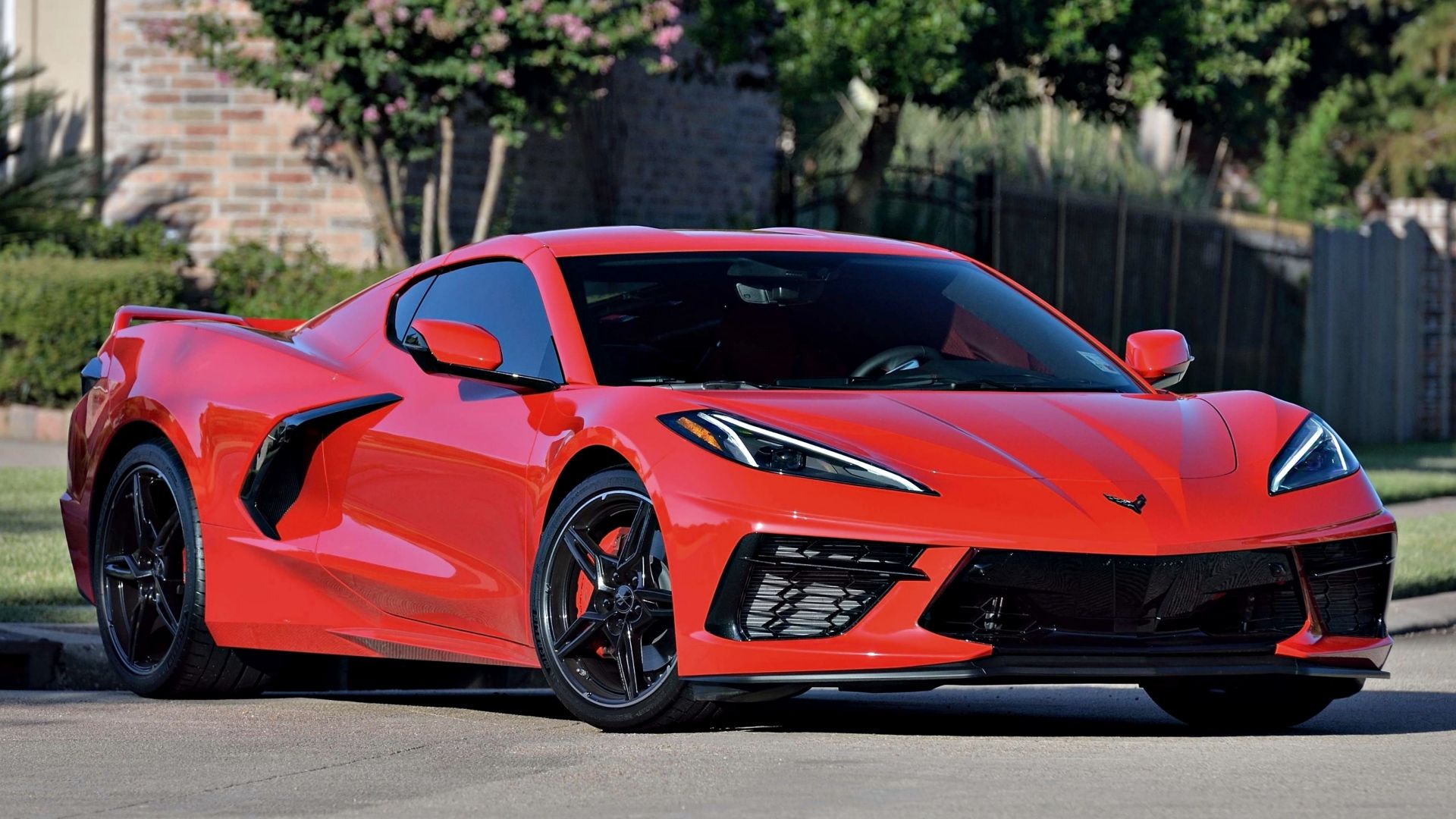
When you are pushing a mid-engine V8 supercar through a series of challenging corners at speed, you do not need AR arrows floating across your view of the apex you need your speed, gear, and g-force data presented in the clearest, most legible format possible. The Corvette’s HUD delivers exactly that.
Speed, RPM, gear selection, and performance data are presented in sharp, high-contrast graphics that can be read at a glance even under the physical stress of hard acceleration or heavy braking.
The display integrates with the Corvette’s performance driving modes, automatically adjusting what information is surfaced depending on whether the car is in touring mode, sport mode, or track mode.
In track mode, for example, the HUD prioritizes performance metrics that are most relevant to a driver pushing the car hard on a circuit. The positioning controls allow every driver regardless of height or seating preference to place the HUD precisely where their eye naturally falls when looking ahead, ensuring the system works perfectly for the individual rather than a generic average user.
The Corvette HUD is proof that sometimes the best technology is the technology that gets out of the way and simply does its job with quiet, ruthless efficiency letting the driver and the road take center stage.
Also Read: 5 Reasons to Buy a CPO Vehicle vs 5 Reasons to Buy From a Private Seller
