

A well-chosen coffee table book does more than decorate a living room. It reflects personality, passion, and curiosity. For car lovers, it can serve as a gateway to design history, motorsport triumphs, engineering breakthroughs, and cultural moments shaped by machines on four wheels.
Large-format photography, detailed archival images, and thoughtful commentary bring legendary vehicles to life in ways that online galleries simply cannot replicate. Unlike quick social media scrolls, coffee table books invite slow appreciation.
Turning a heavy page, studying the curve of a fender, or reading about the development of a groundbreaking engine creates a different experience. Guests notice these books immediately. Conversations begin. Stories follow. A single volume can spark debates about styling eras, performance benchmarks, and personal dream cars.
Selecting the right titles, however, requires intention. Some books focus narrowly on a single model. Others chronicle entire brands or racing series.
The best ones balance striking visuals with authoritative writing, offering depth without overwhelming casual readers. They celebrate machines such as the Porsche 911 Carrera RS 2.7, the Ferrari F40, and the Ford GT40 in ways that feel timeless.
What follows is a carefully curated list of eight coffee table books that belong in every enthusiast’s collection. Each selection delivers visual impact and meaningful substance. These are books you will return to, share proudly, and keep within reach whenever automotive inspiration is needed.
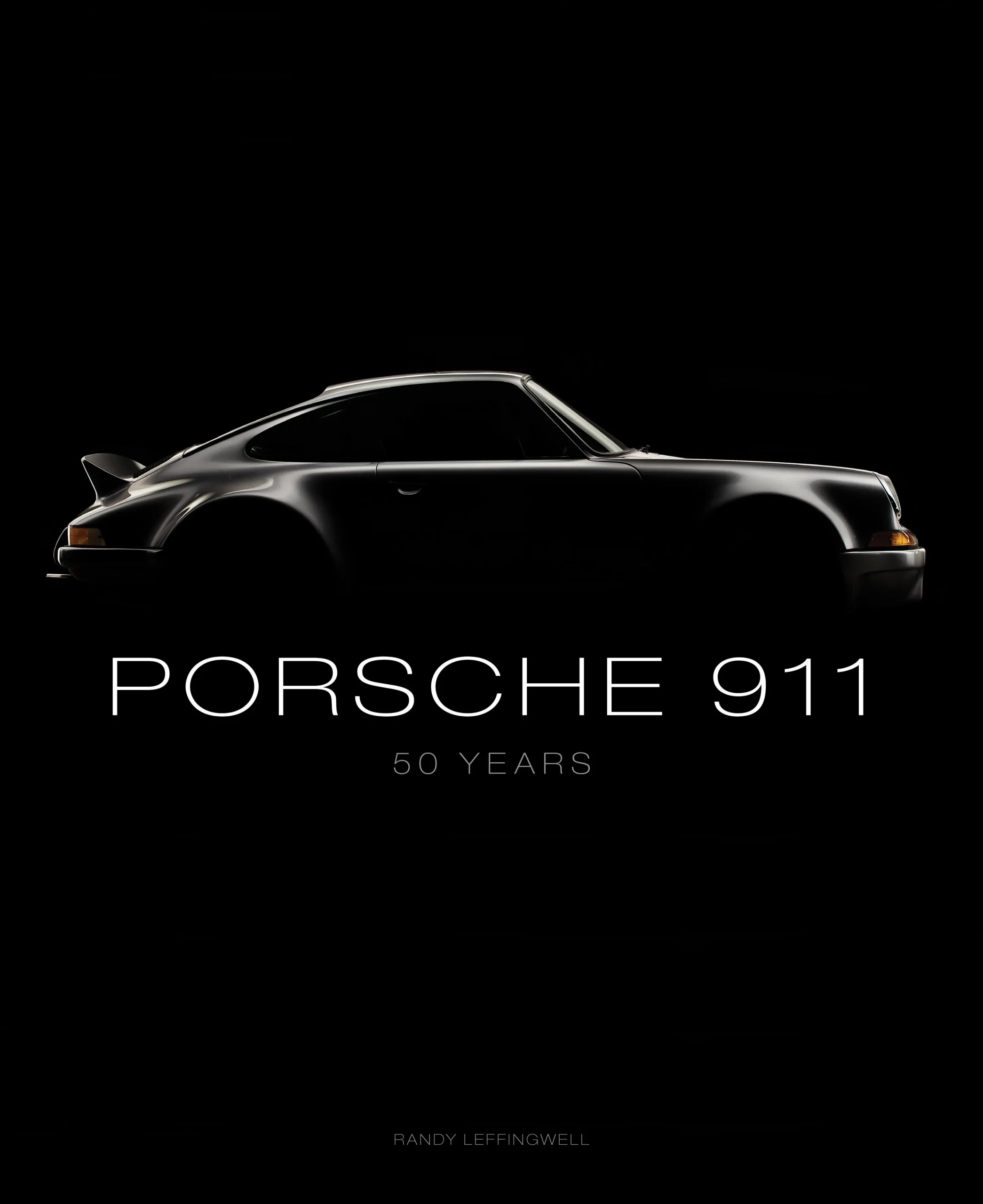
1. Porsche 911: 50 Years by Randy Leffingwell
Few cars command the loyalty inspired by the Porsche 911 Carrera RS 2.7 and its countless successors. Randy Leffingwell’s Porsche 911: 50 Years honours that legacy with authority and reverence. This book traces the model’s development from its early air-cooled origins to modern high-performance variants, presenting a rich visual archive that rewards both casual admirers and dedicated enthusiasts.
Large, vivid photographs dominate each chapter. Studio images highlight body lines and subtle design changes across generations. Archival racing photos showcase legendary moments at endurance events, where the 911 proved its resilience.
Readers gain a sense of continuity, observing how Porsche refined rather than reinvented its iconic silhouette. Each generation feels like a careful evolution rather than a departure, and the visual progression is one of the book’s strongest features.
Leffingwell’s writing strikes a careful balance between technical explanation and accessible storytelling. Engine evolutions, suspension refinements, and aerodynamic enhancements receive detailed attention. Yet the prose remains approachable, avoiding overly technical language that might deter newcomers.
Context accompanies each milestone, illustrating how regulatory demands, market expectations, and motorsport ambitions influenced design decisions. Special editions, including track-focused and limited-production variants, receive thoughtful coverage that highlights their place within the broader timeline.
Collectors value this volume not only for its content but also for its presentation. High-quality paper stock and durable binding ensure longevity. Displayed prominently, it signals deep appreciation for one of the most enduring sports cars ever produced. Guests often find themselves leafing through pages, pausing at the introduction of turbocharging or the debut of lightweight performance variants.
For anyone fascinated by engineering persistence and incremental perfection, this book delivers satisfaction. It captures the spirit of a machine that developed steadily without losing its identity. Porsche 911: 50 Years belongs on the shelf of every serious car enthusiast who respects heritage and innovation working in harmony.
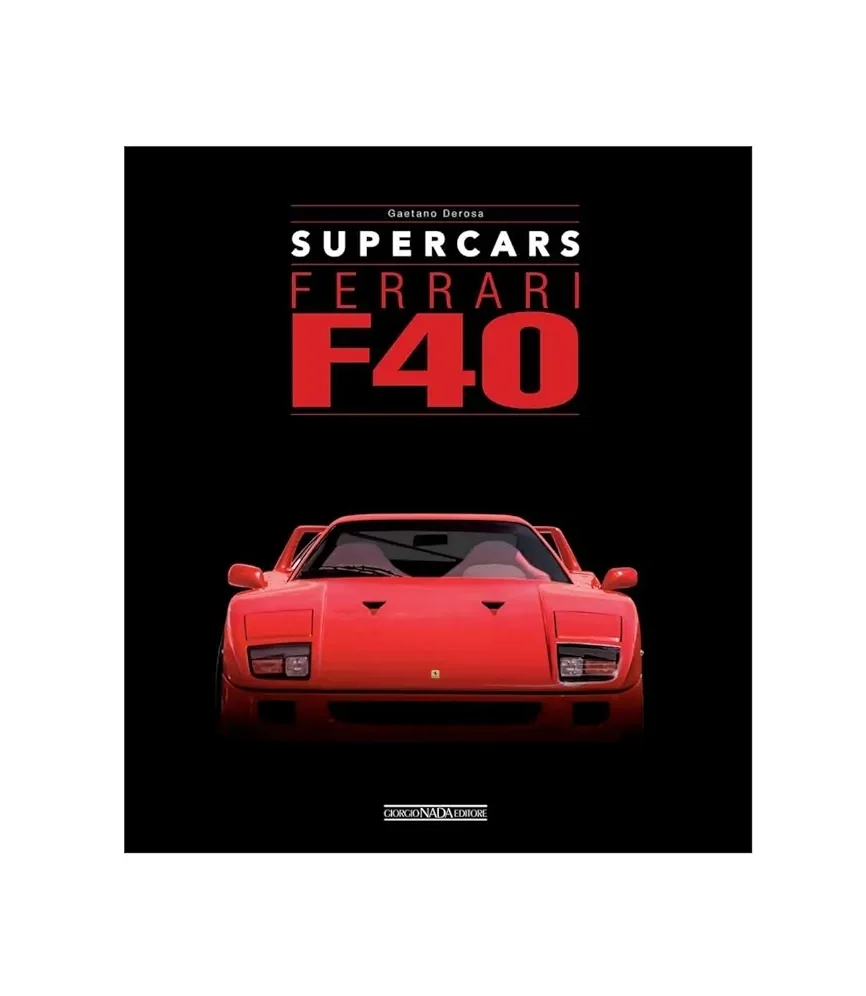
2. Ferrari F40 by Joe Sackey
Intensity defines the Ferrari F40, and Joe Sackey’s dedicated volume conveys that energy with precision. Commissioned during Enzo Ferrari’s final years, the F40 represented a bold statement about speed, purity, and technological ambition. Sackey’s book treats the subject with scholarly dedication, offering rare production details and deep research.
Photography takes center stage. Crisp images reveal carbon fiber panels, exposed rivets, and the raw cockpit stripped of unnecessary comforts. Readers observe how function dictates form. Twin turbochargers and aggressive aerodynamics appear less like styling flourishes and more like declarations of intent. Every visual reinforces the idea that the F40 existed to deliver performance above all else.
Sackey organizes the material chronologically, beginning with the development program and concluding with ownership insights. Production numbers, chassis records, factory documentation, and period correspondence appear throughout, providing substance beyond surface-level admiration.
This methodical structure allows readers to follow the car’s journey from concept to collector icon. Limited-production details and market reception also receive attention, adding depth to the historical account. Emotional weight accompanies the technical content.
Descriptions of early road tests and racing adaptations remind readers that the F40 was never designed to be polite. Its reputation for demanding respect from drivers remains part of its appeal. Sackey captures that reputation without exaggeration, relying instead on documented accounts and firsthand testimony.
Placed on a coffee table, this book communicates seriousness. It suggests that the owner appreciates automotive purity and historical context. Guests flipping through its pages quickly understand why the F40 continues to influence modern supercar design.
For admirers of analog performance and unfiltered driving experiences, the Ferrari F40 stands as an essential reference. It preserves the story of a car that embodied ambition without compromise and continues to inspire reverence decades after its debut.
Also Read: 10 Tips for Keeping Your Car Turbocharger Cool and Healthy
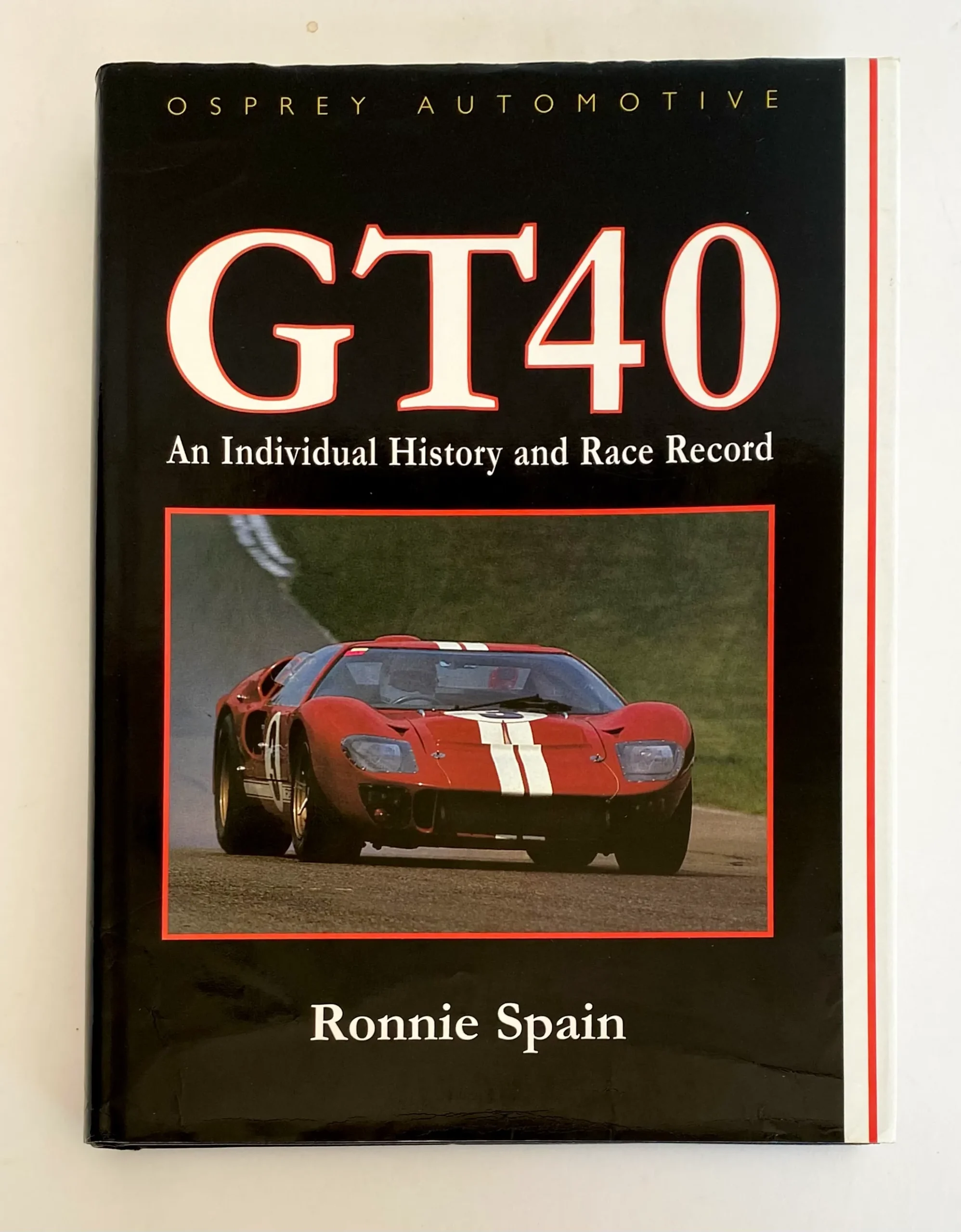
3. The Ford GT40: An Individual History and Race Record by Ronnie Spain
Racing triumph shaped the legend of the Ford GT40, particularly its battles against European dominance at the 24 Hours of Le Mans. Ronnie Spain’s comprehensive volume, The Ford GT40: An Individual History and Race Record, provides a detailed chronicle of each chassis, race entry, and engineering evolution associated with this remarkable machine.
Rather than retelling a simplified rivalry story, Spain builds his account from primary sources, race reports, and factory records, offering a disciplined examination of how ambition translated into execution. Structured as both a historical record and a visual tribute, the book documents the GT40’s relentless pursuit of endurance racing victory.
Spain traces development from early prototypes to championship-winning configurations, examining aerodynamic refinements, braking improvements, and engine upgrades along the way. The transition from smaller-displacement engines to the thunderous 7.0-litre V8 receives careful explanation, illustrating how power and reliability became decisive factors.
Readers gain clarity on how strategic decisions, driver pairings, and technical adjustments translated into competitive success on circuits defined by speed and stamina. High-resolution images depict pit lane tension, driver focus, and the unmistakable low-slung profile that became synonymous with American determination.
Technical diagrams accompany race summaries, giving readers insight into suspension revisions, cooling modifications, and bodywork changes that influenced performance outcomes. Photographs from practice sessions and podium celebrations create a sense of immediacy, grounding the story in authentic documentation rather than nostalgia.
Collectors appreciate the meticulous documentation of individual chassis histories. Ownership transfers, restoration notes, and verified competition results appear with careful citation. Spain’s chassis-by-chassis breakdown transforms the book into a reliable reference for historians and enthusiasts alike.
It becomes more than a coffee table showpiece; it serves as a detailed archive that supports serious research and informed discussion. Displayed prominently, it sparks conversation about innovation driven by rivalry. The GT40’s consecutive Le Mans victories reshaped perceptions of American engineering capability on the global stage.
Spain communicates that transformation clearly, grounding the story in documented fact rather than myth. Those who value motorsport heritage will find this volume indispensable. It preserves the determination behind a car that altered racing history and remains revered decades later.
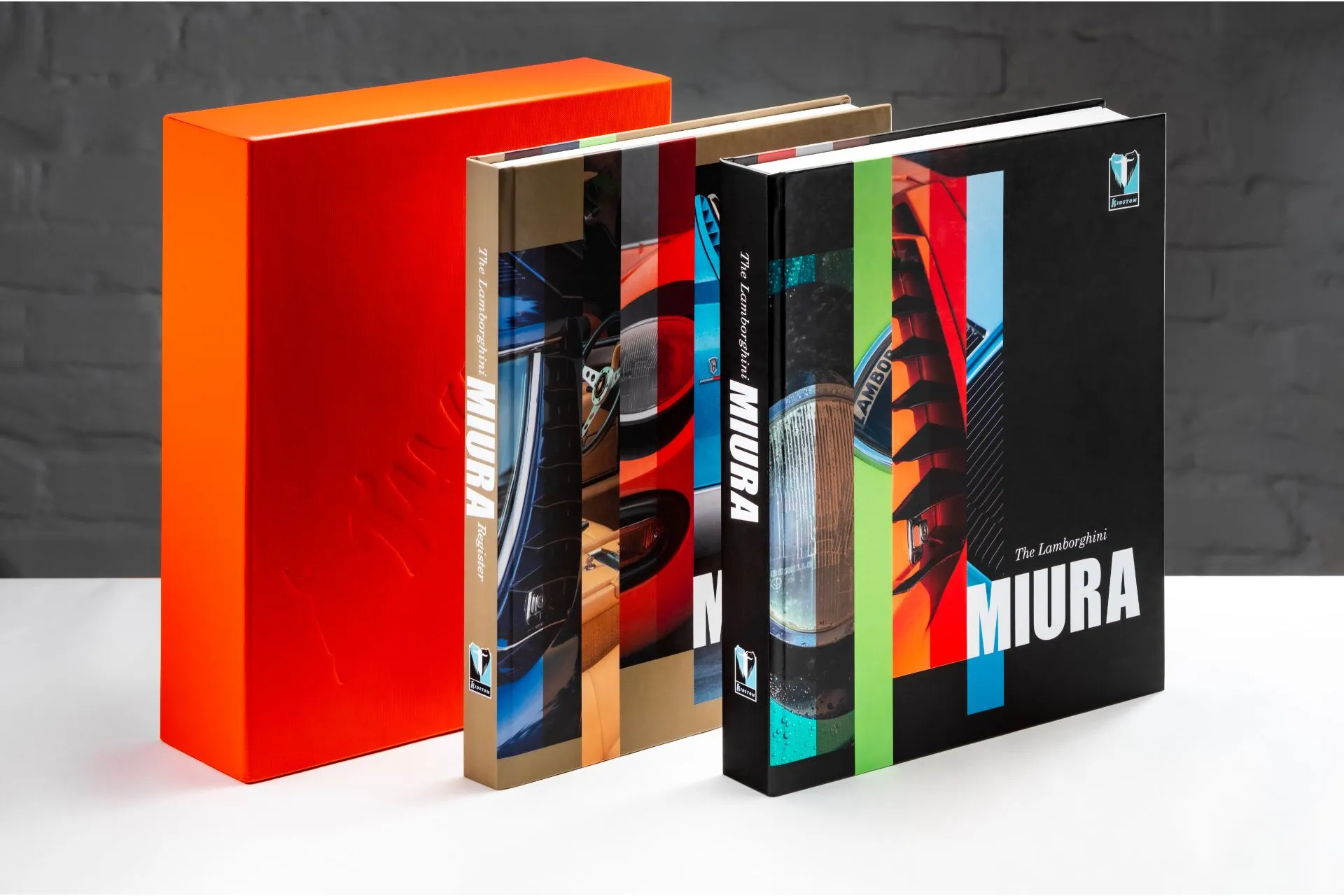
4. Lamborghini Miura by Simon Kidston
Design brilliance stands at the very heart of the Lamborghini Miura P400, and Simon Kidston’s dedicated volume celebrates that achievement with genuine elegance and scholarly care. Regarded by many serious automotive historians as the first true supercar, the Miura introduced mid-engine architecture to road-going exotics in a manner that was as dramatic as it was consequential. Its arrival in 1966 announced that Italian coachbuilding had entered an entirely new era of ambition.
Kidston approaches his subject with a discerning eye for artistry, elevating the work well beyond a conventional automotive record. Photographs emphasize the sweeping roofline, delicate headlight contours, and vibrant paint finishes that distinguished the Miura from every contemporary rival.
Studio lighting enhances each sculptural curve with admirable precision, reinforcing the car’s status as a work of functional art. Every image invites unhurried attention, encouraging readers to appreciate subtle design details that lesser photography would entirely miss.
Historical context enriches the visual presentation throughout the volume. Development accounts reveal how a determined and youthful team within Lamborghini pursued the mid-engine concept against considerable institutional resistance.
Readers learn about internal debates, early prototype construction, and the eventual public acclaim that greeted the completed car at the 1966 Geneva Motor Show. These accounts add genuine depth to the book and help explain why the Miura achieved legendary status with such remarkable speed.
Technical specifications receive thoughtful explanation without descending into overwhelming mechanical detail. V12 engine design, chassis construction methods, and period performance benchmarks all appear in digestible and well-considered segments.
Kidston maintains admirable clarity while preserving appropriate depth, ensuring that both seasoned enthusiasts and interested newcomers remain fully engaged throughout. Coffee table placement suits this book with particular distinction.
Its generous oversized format commands admiration from across any well-appointed room. Visitors frequently pause at the cover alone, drawn irresistibly by the Miura’s dramatic stance and exceptional colour photography. For true admirers of Italian design philosophy and daring mechanical engineering, the Lamborghini Miura P400 by Simon Kidston delivers both enduring beauty and authentic substance in equal measure.

5. Shelby Cobra Daytona Coupe by Pete Lyons
Raw ambition pulses through every page of Shelby Cobra Daytona Coupe by Pete Lyons. This book documents the creation of a car that rewrote American racing history, centring on the Shelby Cobra Daytona Coupe CSX2287 and its sister chassis that stormed European circuits.
From the outset, Lyons makes it clear that this was not merely an evolution of an existing platform but a calculated response to international competition at the highest level. Lyons presents a thorough and vivid account of how Carroll Shelby’s team transformed an already potent roadster into an aerodynamic weapon capable of challenging Ferrari’s dominance in GT racing.
Structured with journalistic clarity, the book traces the Daytona Coupe’s development from concept sketches to wind tunnel testing and competitive triumphs. The urgency behind the project becomes palpable as deadlines tighten and expectations rise. What emerges is a portrait of a small but fiercely committed group determined to outthink and outrun established European powerhouses.
Readers gain valuable insight into the design work of Peter Brock, whose aerodynamic vision shaped the coupe’s distinctive fastback silhouette. Lyons explains how Brock applied aerodynamic theory, still relatively novel in American racing circles at the time, to reduce drag and increase high-speed stability.
Photographs from private archives accompany technical commentary, illustrating body construction details, aluminum panel shaping, and race preparation procedures. These images do more than decorate the story; they provide tangible proof of experimentation, revision, and hands-on craftsmanship.
Lyons also pays careful attention to the drivers who piloted the Daytona Coupe, including Dan Gurney and Bob Bondurant. Personal reflections, period interviews, and race reports combine to create a vivid sense of tension and determination.
Mechanical details, engine tuning, cooling solutions, and chassis reinforcement receive thoughtful explanations that remain accessible to non-engineers while still satisfying technically minded readers. The human element remains central: courage, adaptability, and trust between driver and machine are recurring themes.
Collectors will appreciate the meticulous approach to chassis histories and race results. Each competition entry is recorded with precision, giving the volume archival value beyond its aesthetic appeal. Documentation of international races, including the Coupe’s critical role in securing the FIA GT Championship, adds historical depth and context.
The large-format presentation enhances its presence as a coffee table centrepiece, inviting guests to pause and absorb its rich visual content. For those drawn to stories of bold engineering and international rivalry, this book delivers both depth and drama.
The Shelby Cobra Daytona Coupe stands as a testament to what focused innovation can achieve when ambition meets opportunity, and Lyons captures that spirit with authority and restraint.
6. McLaren F1 by Mark Hughes
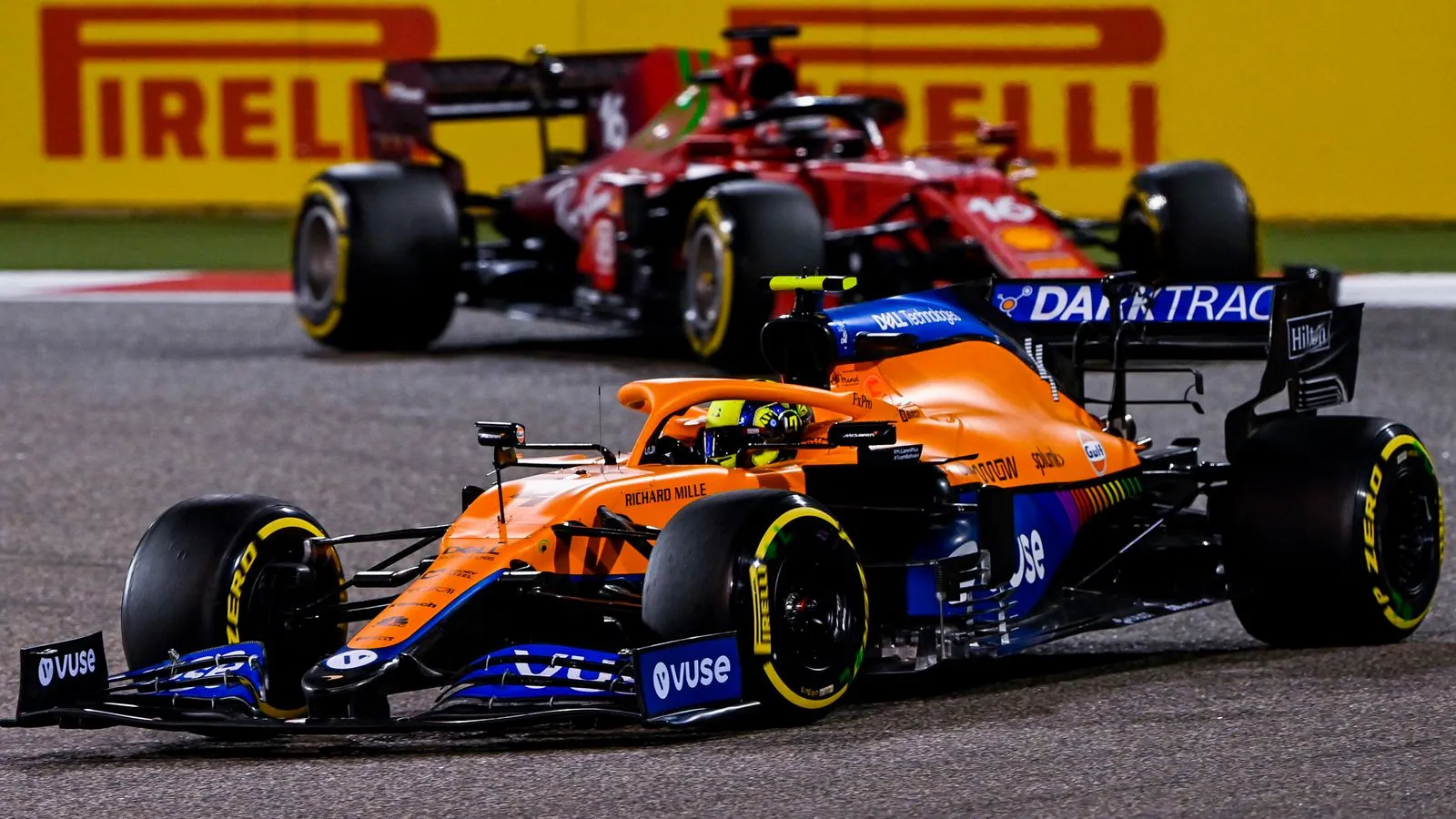
The McLaren F1 stands as one of the most exclusive road cars ever produced, and Mark Hughes approaches this subject with commendable analytical rigour and genuine admiration. Centred on Gordon Murray’s extraordinary vision, this volume documents how a single engineering ambition produced a vehicle that redefined performance expectations throughout the 1990s.
From the iconic central driving position to the gold-lined engine bay, every design feature receives thorough and careful documentation befitting a car of such exceptional standing. Hughes organizes the book firmly around the design philosophy that drove the McLaren F1 project from inception to completion.
Readers encounter detailed accounts of aggressive weight-saving measures, advanced carbon fibre construction techniques, and the bespoke BMW V12 engine developed exclusively for the vehicle. Rather than depending on exaggerated praise, the author supports every assertion with precise technical data and candid accounts drawn from development interviews, lending the work a scholarly credibility that distinguishes it from ordinary automotive literature.
Photography assumes a powerful role throughout the pages of this volume. Crisp, well-composed images reveal the interior arrangement, engine architecture, and aerodynamic surfaces with admirable clarity. Archival photographs capture testing sessions and record-setting high-speed runs that cemented the car’s reputation for precision engineering.
Each page demands deliberate attention from the reader rather than inviting casual browsing. The content remains firmly grounded in proper historical context throughout. Hughes addresses production numbers, individual customer specifications, and the limited racing variants that achieved victory at the 24 Hours of Le Mans.
Careful documentation of individual chassis histories adds considerable historical credibility, making the volume particularly appealing to serious collectors and automotive historians who demand accuracy above all else. Displayed prominently within a living space, McLaren F1 by Mark Hughes signals deep appreciation for engineering innovation and disciplined design thinking.
It communicates genuine respect for a vehicle that united extraordinary ambition with meticulous execution at every level. Enthusiasts who hold technical mastery in the highest regard will find this book an indispensable addition to their personal library.
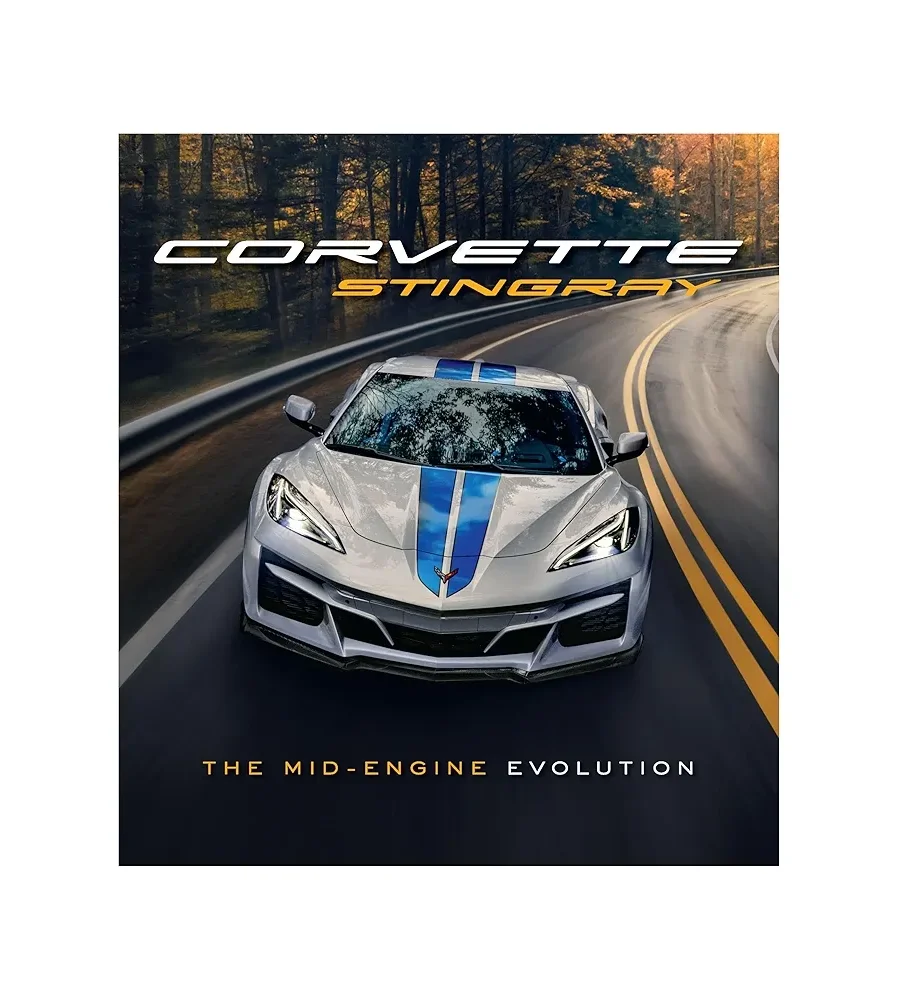
7. Corvette Stingray: The Mid-Engine Revolution by Tom Loeser
The Chevrolet Corvette Stingray C8 represents a defining moment in American automotive history, and Tom Loeser’s volume chronicles its development with enthusiasm firmly grounded in thorough research. By concentrating on the transition from front-engine tradition to mid-engine architecture, the book documents a consequential chapter in the long and celebrated life of the Corvette nameplate.
Loeser presents this engineering departure not merely as a technical decision but as a declaration of renewed ambition from a marque with deep national roots. For decades, the Corvette formula had remained largely consistent: big power up front, rear-wheel drive, attainable performance.
The C8 disrupted that formula. The content is structured around engineering milestones and the broader cultural reaction that greeted the C8 upon its public launch, capturing both industry surprise and consumer anticipation. Readers follow the internal debates that shaped the new model’s layout, learning how design teams carefully balanced inherited tradition with a bold appetite for progress.
Moving the engine behind the driver required a complete rethinking of chassis packaging, cooling systems, and weight distribution. Interviews conducted with engineers and senior designers provide a valuable perspective on the genuine challenges encountered throughout the development program, lending the account authenticity that purely external assessments cannot replicate.
Loeser does not gloss over problems or compromises; instead, he frames them as necessary steps in meaningful innovation. Visual presentation commands deserved attention throughout the volume. Studio photography highlights the C8’s sharp body lines, sculpted panels, and driver-focused cockpit with precision and purpose. The dramatic side air intakes and low stance are presented not as styling indulgences but as functional necessities.
Technical diagrams clarify the repositioned engine arrangement and thoroughly revised suspension geometry, explaining how the new architecture improves balance, traction, and cornering stability. Track photography conveys the car’s athletic presence without resorting to promotional language, allowing the engineering achievements to speak independently.
Images from proving grounds and test circuits reinforce performance claims with visual evidence. Careful attention to production details and trim variations adds considerable depth to the work, acknowledging that the C8 is not a single configuration but a platform capable of multiple interpretations.
Performance benchmarks, available option packages, and early customer reception data all appear with admirable clarity. Throughout, he maintains a respectful tone that honours Corvette tradition while acknowledging how bold a departure the C8 genuinely represents.
Positioned on a coffee table, this book invites substantive conversation about calculated risk and institutional renewal within the American automotive industry. It appeals particularly to readers who appreciate performance heritage and the courage required to reshape a beloved institution.
Corvette Stingray: The Mid-Engine Revolution offers a measured and well-researched account of progress achieved through deliberate and decisive engineering choices.
Also Read: Top 10 Tips for Negotiating the Best Price on a New Car in 2026
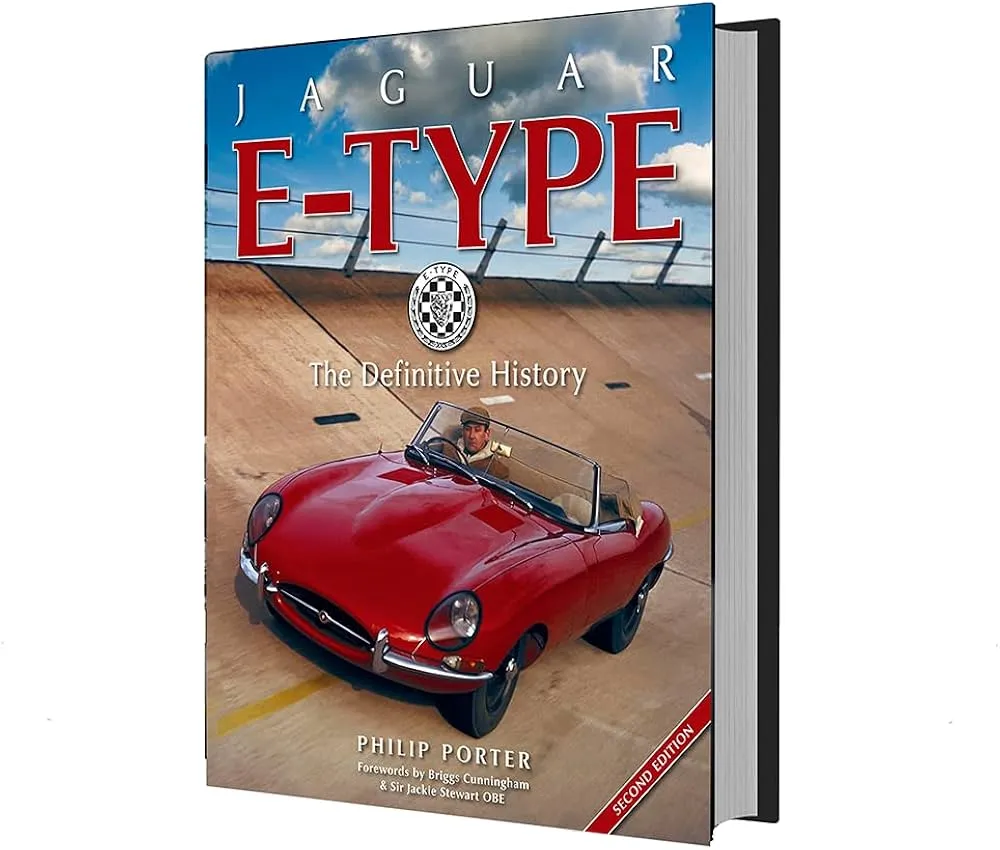
8. Jaguar E-Type: The Definitive History by Philip Porter
Elegance and engineering precision meet with equal authority within Philip Porter’s Jaguar E-Type: The Definitive History. Concentrating on the Series 1 3.8 Litre and its subsequent variants, this comprehensive work honours a car widely regarded as among the most beautiful machines ever to leave a production facility.
Porter brings a disciplined scholarly approach to a subject that has attracted considerable popular attention, combining meticulous historical documentation with refined and considered visual presentation throughout. Careful organization guides readers through the vehicle’s development phases, production changes, and competition entries in a logical and authoritative sequence.
Porter draws upon factory records, period road test reports, and firsthand interviews with those directly involved in the car’s creation to construct a reliable and well-substantiated account. Technical specifications appear alongside design commentary, producing a thorough portrait of the E-Type that satisfies both the technically inclined reader and the passionate admirer of classic automotive form.
Large-format images showcase the E-Type’s celebrated long bonnet, wire wheels, and graceful proportions with appropriate care and reverence. Photographs of restored examples are presented alongside archival racing images, providing both aesthetic appreciation and solid historical grounding within a single volume.
Attention to period interior trim options and mechanical components reflects the author’s sustained commitment to accuracy and thoroughness throughout. Discussion of market reception and broader cultural influence extends the scope of the book well beyond pure engineering analysis.
Porter explains persuasively how the E-Type reshaped international perceptions of British sports cars during the transformative decade of the 1960s. Production figures and detailed chassis identification guidance offer practical research value for serious collectors who require reliable reference material.
As a centrepiece within any room, this volume communicates deep admiration for timeless design and disciplined historical research. It rewards careful, attentive reading while remaining visually inviting to those who encounter it incidentally. Jaguar E-Type: The Definitive History belongs without question in the library of any reader who values artistic achievement supported by rigorous historical precision.
