
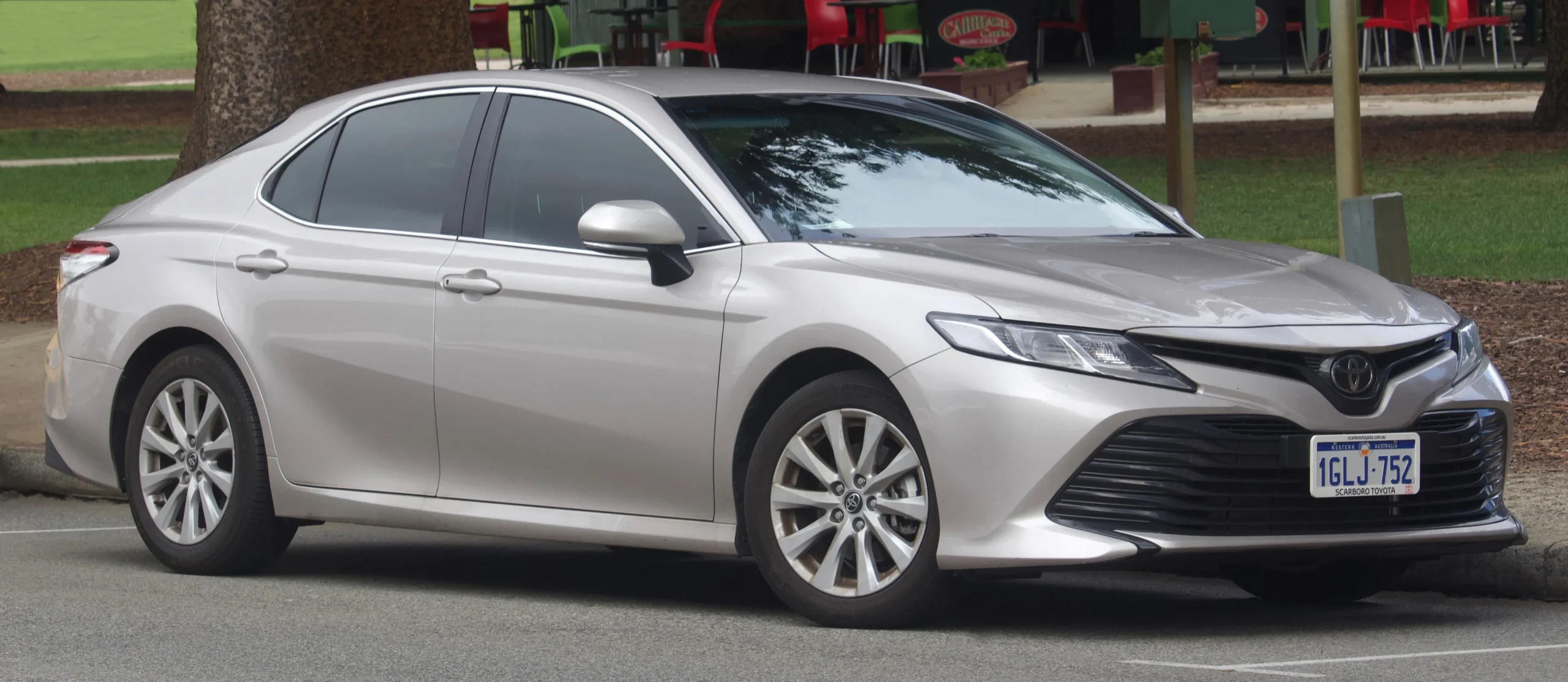
Buying a budget car to save money makes perfect sense on paper. Lower sticker price, modest insurance rates, reasonable fuel economy, and the comfortable assumption that a simple, affordable vehicle will not drain your wallet when it needs repairs.
That assumption holds up for some economy cars. For others, it falls apart completely the moment you start tracking what you actually spend, keeping the thing on the road.
Here is something that surprises a lot of car buyers: some vehicles that cost more to purchase are substantially cheaper to own and maintain than economy alternatives that appear more affordable at the dealership. This happens for several reasons that are worth understanding. Parts availability drives cost dramatically.
A vehicle with tens of millions of units on the road has spare parts available from dozens of competing suppliers, keeping prices competitive. A niche economy car with a limited production run might have parts supplied by only one or two sources, pushing prices up despite the car’s budget positioning.
Mechanical simplicity matters just as much. An economy car with a small turbocharged engine, dual-clutch transmission, and a complex all-wheel drive system has more failure points and more expensive service requirements than a larger vehicle using a proven naturally aspirated engine and a conventional automatic transmission that has been refined across decades of production.
Service interval length also compounds the cost difference across the years of ownership. A vehicle requiring oil changes every 5,000 miles costs more in routine service over a hundred thousand miles than one rated for 10,000-mile intervals.
Reliability data from sources including Consumer Reports, J.D. Power, and RepairPal consistently shows that certain vehicles above the entry-price threshold deliver lower annual repair costs and fewer unexpected shop visits than many economy competitors people assume will be cheaper.
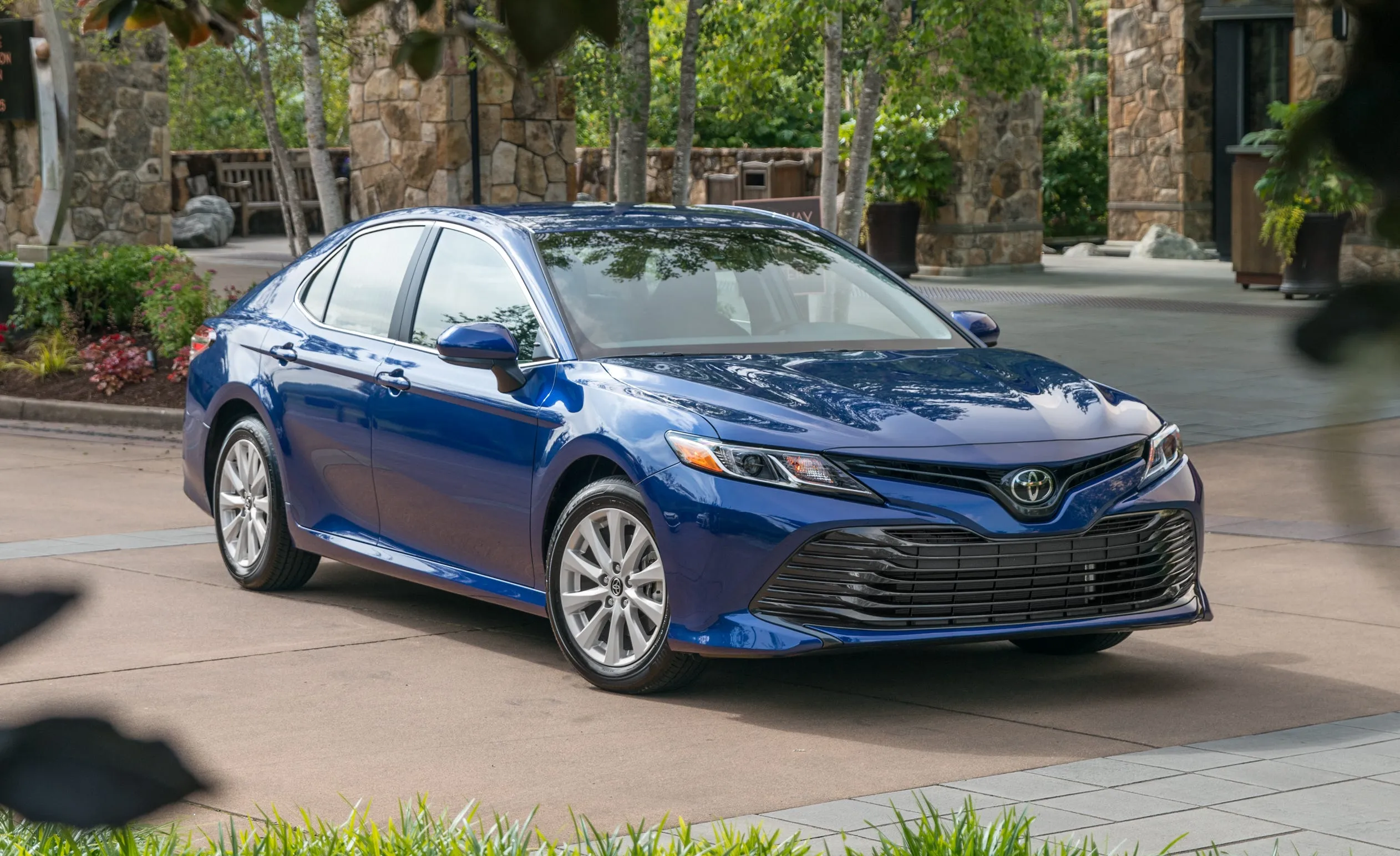
1. 2024 Toyota Camry XLE V6 (XV70 Platform)
Estimated price: about $36,000 – $39,000
At first glance, recommending a midsize V6 sedan as cheaper to maintain than economy compacts appears counterintuitive. A larger vehicle with a bigger engine is usually assumed to demand higher running expenses.
Toyota’s 2024 Camry XLE V6 on the XV70 platform repeatedly disproves that assumption through mechanical dependability, a mature parts supply network, and service intervals structured to keep routine expenses restrained across long ownership periods.
The 3.5 litre 2GR FKS V6 engine fitted to the Camry XLE has been in continuous development since 2005 and carries one of the strongest durability records in its class.
Years of refinement removed early production weaknesses, leaving a stable, naturally aspirated design that avoids turbochargers, high-pressure injectors, and intercooler systems that raise service bills in many smaller turbocharged economy cars.
Under standard driving conditions, oil service intervals extend to 10,000 miles, cutting routine workshop visits almost in half when compared with compact sedans requiring attention every 5,000 miles. Parts availability plays an equally important role in cost control.
The Camry’s long-standing sales volume in the United States ensures that nearly every aftermarket supplier produces compatible components. Brake pads, filters, sensors, belts, and major electrical parts are sold by multiple manufacturers, keeping prices competitive and reducing delays. Owners rarely face inflated pricing linked to limited supply or specialised sourcing.
Repair frequency reinforces the Camry’s advantage. Independent ownership data places annual repair spending near four hundred dollars, a figure that undercuts many economy-branded vehicles suffering higher fault rates and costlier imported components.
When assessed against vehicles such as the seventh-generation Volkswagen Golf, which carries pricier European parts and recurring intake and timing system concerns, the Camry XLE V6 emerges as the steadier and less demanding vehicle to maintain for cost-conscious private ownership.
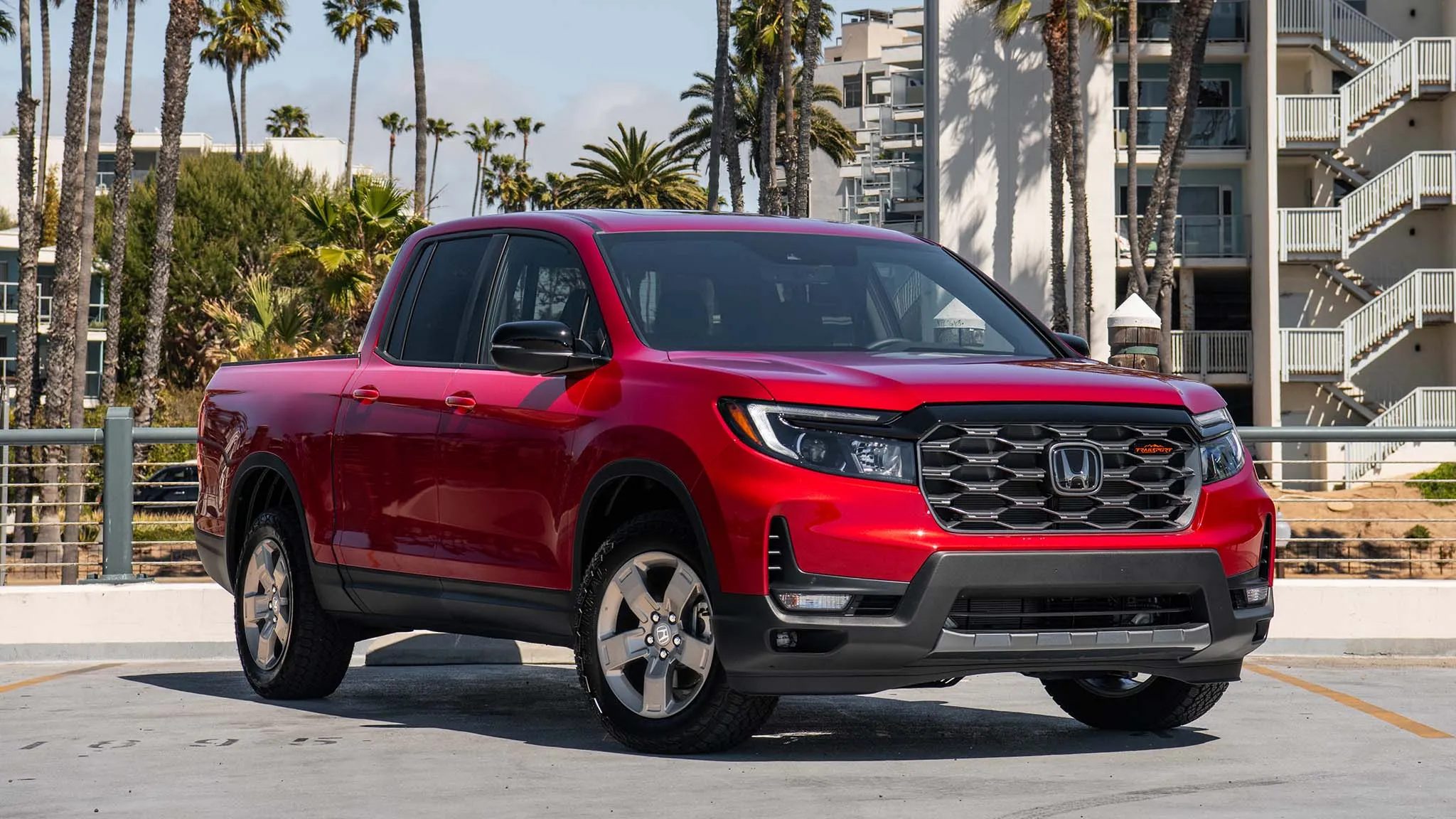
2. 2023 Honda Ridgeline RTL-E AWD (Second Generation)
Estimated price: about $44,000 – $47,000
Pickup trucks occupy a niche where buyers often expect size and capability to translate directly into high maintenance costs. The 2023 Honda Ridgeline RTL-E AWD disputes that belief by delivering utility without the expense profile normally associated with midsize pickups, and it does so while competing not only with other trucks but also with vehicles marketed as affordable daily drivers.
The Ridgeline’s unibody construction sets it apart from traditional body-on-frame pickups in ways that directly reduce ownership expenses. There is no separate ladder frame to inspect for corrosion or fatigue, no body mounts that wear and require replacement, and no conventional transfer case demanding periodic service. Honda’s intelligent All Wheel Drive system relies on a compact and durable design that avoids the complications found in part time four wheel drive setups.
Power comes from Honda’s 3.5-liter i-VTEC V6, a long-running engine family known for consistency and durability across millions of vehicles. The naturally aspirated design avoids turbocharger-related upkeep, while a timing chain removes the need for scheduled belt replacement.
Routine care is straightforward, consisting of regular oil changes, spark plugs at extended mileage intervals, and standard fluid services that remain predictable in both cost and frequency. Repair cost data places the Ridgeline below the midsize truck segment average and surprisingly close to many economy sedans once depreciation and maintenance are viewed together.
Honda’s widespread dealer network and strong aftermarket support keep parts pricing accessible, while the truck’s mechanical simplicity limits unexpected service visits. When compared with diesel-equipped alternatives such as the Ford Ranger Tremor, the Ridgeline’s advantage becomes clearer.
Diesel exhaust fluid, additional fuel filtration, injector servicing, and higher component repair costs steadily add expense, leaving the Ridgeline as the more economical long term ownership choice for cost-focused buyers seeking dependable utility.
Also Read: 10 Best Used Hybrids for People Who Drive 30,000 Miles a Year
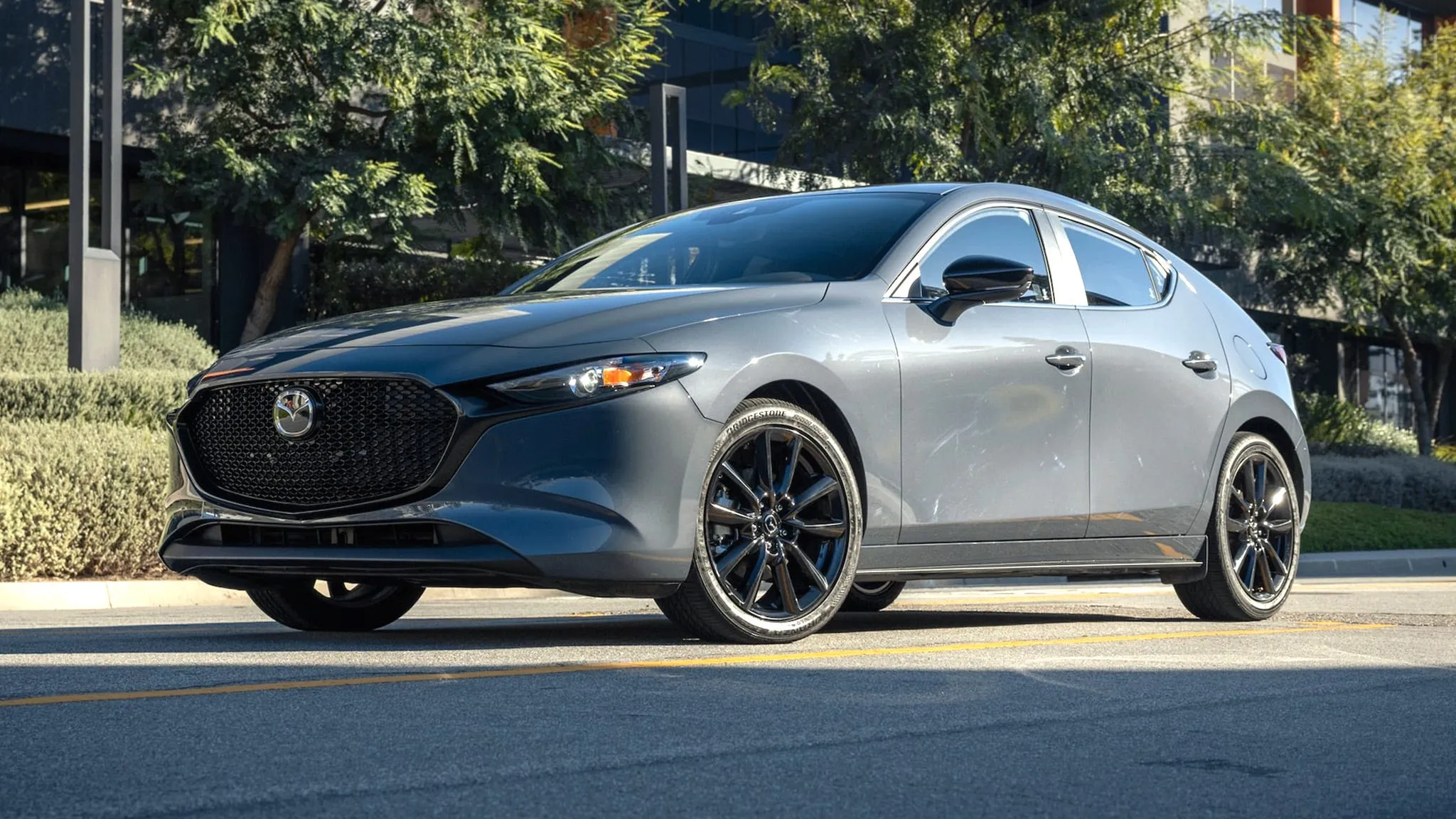
3. 2024 Mazda3 Sedan 2.5 Turbo Premium Plus AWD (BP Generation)
Estimated price: about $35,000 – $38,000
Mazda has built a reputation for engineering vehicles that deliver a driving experience well above their price class, and the 2024 Mazda3 Sedan 2.5 Turbo Premium Plus AWD on the BP generation platform demonstrates that premium engineering and affordable maintenance are not mutually exclusive.
This is a vehicle that feels and drives like a near-luxury product but maintains at costs that compare favorably with economy class alternatives that deliver far less refinement. Mazda’s Skyactiv-G 2.5T turbocharged engine is one of the better-engineered turbocharged four-cylinder units currently in production, with design choices that address the common reliability concerns of competing turbocharged engines.
Mazda specifies full synthetic oil with a 7,500-mile change interval, places the turbocharger in a thermally favorable location relative to the engine’s cooling circuit, and uses a robust timing chain rather than a belt, eliminating a scheduled replacement item that adds several hundred dollars to competing vehicles’ maintenance costs at specific mileage intervals.
i-Activ AWD, Mazda’s all-wheel-drive system used in the Mazda3 Turbo, is a compact, electronically controlled system that requires no scheduled fluid service beyond the manufacturer’s extended interval recommendations and adds minimal mechanical complication compared to more elaborate AWD systems. This simplicity keeps AWD-related maintenance costs modest across the ownership period.
Parts pricing for Mazda vehicles benefits from the brand’s shared platform strategy and its relationship with parent company Toyota’s supply chain infrastructure. Brake components, filters, and wear items for the Mazda3 are competitively priced relative to similarly specced European competitors.
A Mazda3 Sedan 2.5 Turbo owner spending for brake service, tire rotation, and scheduled fluid changes pays less per year in routine service than an equivalent European sport compact owner dealing with higher dealer service rates and European supply chain parts pricing.
Compare the Mazda3’s ownership costs against those of a Volkswagen Jetta GLI, a frequently cited sporty compact alternative. GLI owners report higher-than-average costs for timing chain service at higher mileage, DSG transmission service requirements, and electrical system repairs that the Mazda3’s simpler electrical architecture avoids.
Mazda’s reliability ratings consistently place it at or near the top of the compact sedan segment, and that reliability translates directly into lower unexpected repair costs across the ownership period.
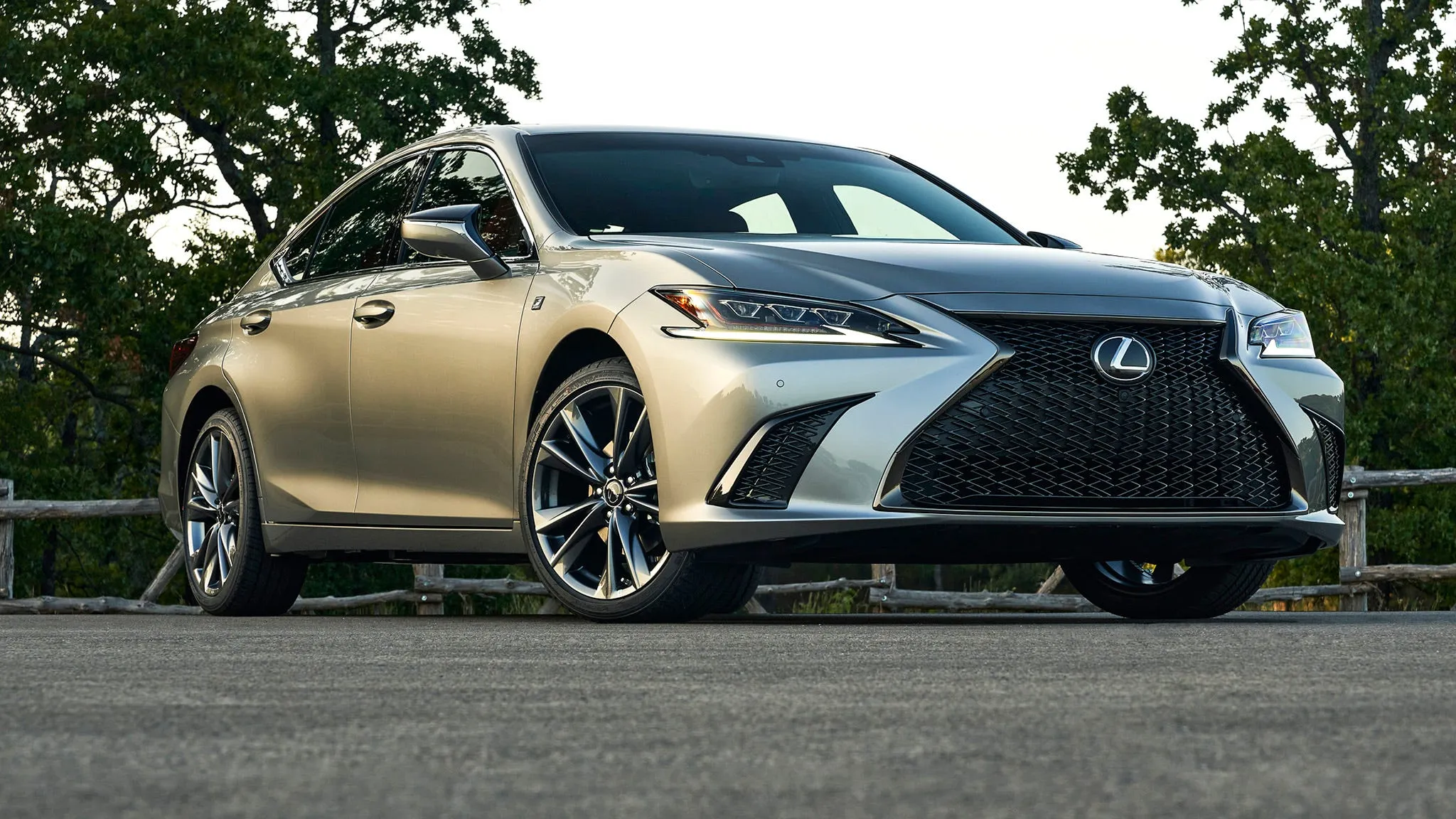
4. 2023 Lexus ES 350 FWD (Seventh Generation)
Estimated price: about $43,000 – $47,000
Lexus has long been associated with durability, yet many shoppers overlook how that durability translates into real ownership savings when compared with vehicles that cost far less upfront. When repair frequency, parts pricing, service intervals, and labor rates are evaluated together, the 2023 Lexus ES 350 FWD seventh generation often proves less expensive to maintain annually than several models marketed in the economy and near-economy segments.
The ES 350 is powered by Toyota’s 3.5-liter V35A-FXS V6, a refined evolution of the well-known 2GR engine family used across millions of Toyota and Lexus vehicles worldwide. This long development history has produced a drivetrain with predictable wear patterns and minimal chronic issues.
Assembly at Lexus’s Miyata, Japan, facility adds another layer of consistency, reinforcing the strong dependability scores the ES continues to earn in long-term owner surveys and industry reliability studies. Routine servicing further tilts the numbers. Oil change intervals extend to 10,000 miles under normal driving, reducing annual service visits compared with many lower-priced sedans that still require shorter intervals.
While Lexus dealer pricing is higher per visit, the quality of parts and workmanship lowers the likelihood of repeat repairs that quietly inflate costs elsewhere. Owners using independent shops with genuine Toyota components often reduce expenses further without sacrificing reliability.
Annual repair data highlights the difference. The ES 350 typically sits around the mid-five-hundreds in yearly repair costs, while several budget-positioned European sedans regularly climb well beyond that range due to higher failure rates and imported parts pricing. Ownership costs remain.

5. 2024 Subaru Forester Sport CVT AWD (Sixth Generation)
Estimated price: about $33,000 – $36,000
Subaru’s 2024 Forester Sport CVT AWD sixth generation sits at a price point that positions it above entry-level crossovers, but its maintenance cost profile tells a story that buyers who look only at sticker price systematically miss.
Subaru has invested heavily in addressing the reliability concerns of earlier generations, and the sixth-generation Forester reflects that investment in a vehicle whose ownership costs compare favorably against economy crossovers that seem cheaper until you calculate what they cost to keep running.
Subaru’s 2.5-liter FA25 naturally aspirated Boxer engine in the sixth-generation Forester Sport avoids the oil consumption issues that plagued earlier FB25 engines and delivers a reliability profile that has improved meaningfully based on Consumer Reports survey data from recent model years.
Naturally aspirated design eliminates turbocharger-related maintenance items, and Subaru’s Lineartronic CVT in this application has demonstrated durability across high-mileage Forester Sport examples that contradict the reputation for fragility that earlier CVT generations deserved.
Symmetrical All-Wheel Drive, Subaru’s full-time AWD system, requires periodic differential and transfer fluid service at 30,000-mile intervals, which adds modest cost compared to front-wheel-drive economy competitors but is offset by the system’s mechanical simplicity and proven durability compared to the more complicated and failure-prone AWD systems used in some economy crossover competitors.
Parts pricing for the Forester benefits from Subaru’s strong North American market presence and the extensive independent aftermarket support that the brand’s dedicated ownership community has generated. Brake components, suspension parts, and routine service items are competitively priced, and Subaru’s dealer network competes actively on service pricing in markets where multiple dealers are present.
Put the Forester Sport’s maintenance profile alongside a Chevrolet Trailblazer RS AWD, a frequently considered economy crossover competitor.
Trailblazer RS owners report higher-than-average costs for repairs related to its turbocharged three-cylinder engine, which carries reliability data that trails the Forester’s naturally aspirated alternative, and for electrical system issues that contribute to an annual repair cost average that exceeds the Forester’s despite the Trailblazer’s lower purchase price. Buyers who plan to keep their vehicle beyond 60,000 miles will generally find the Forester Sport a financially superior choice.
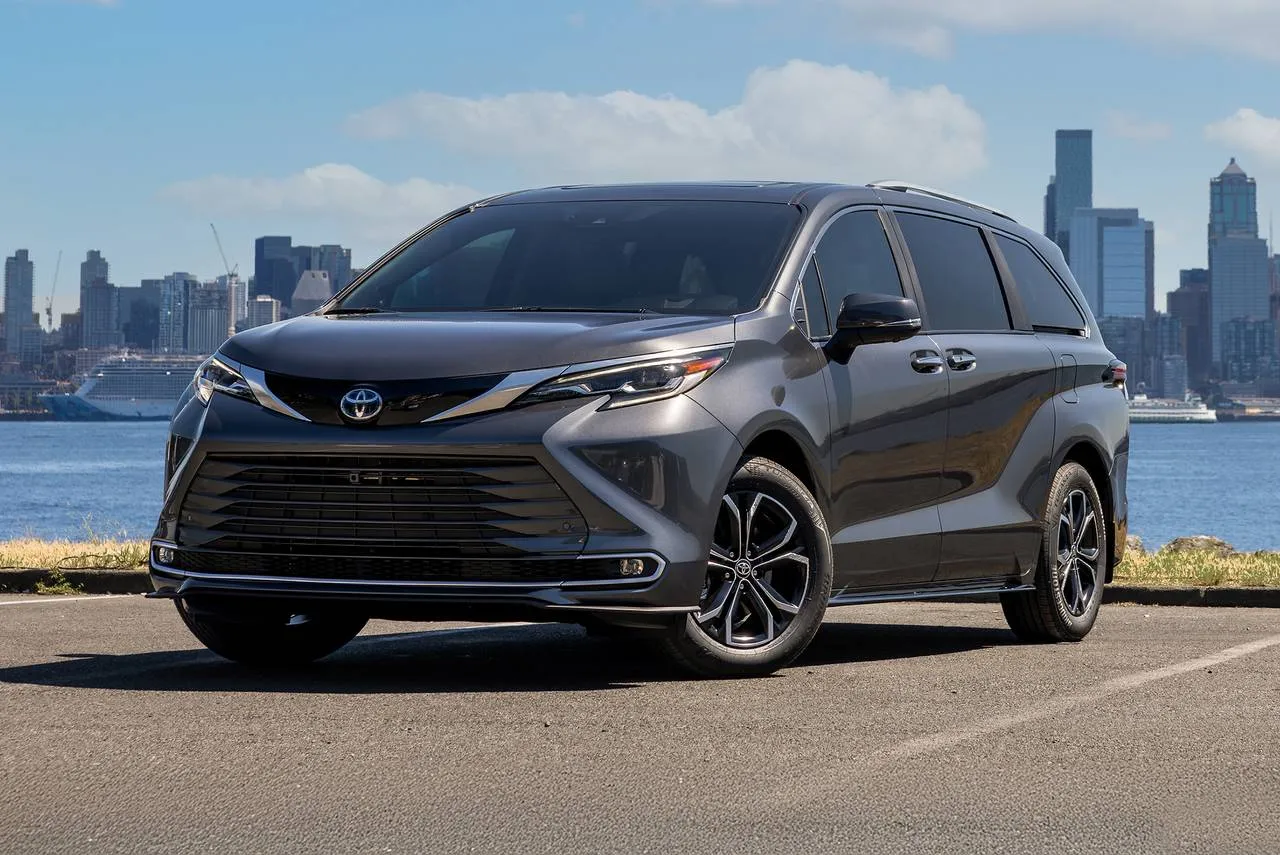
6. 2023 Toyota Sienna XSE AWD (Fourth Generation)
Estimated price: about $46,000 – $50,000
Minivans rarely attract attention for style, yet Toyota’s 2023 Sienna XSE AWD fourth generation stands out as one of the most financially sensible family vehicles available when long-term ownership costs matter more than sticker price. When compared with economy-focused three-row crossovers that families often place on the same shortlist, the Sienna XSE AWD delivers a lower and more predictable cost profile supported by real ownership data.
Toyota committed fully to hybrid technology for the fourth-generation Sienna, equipping every version with a 2.5-liter Dynamic Force four-cylinder engine paired to a hybrid transaxle. Combined system output reaches 245 horsepower, providing adequate performance for daily family use.
Removing a traditional automatic transmission eliminates several routine service requirements and replaces them with Toyota’s electronically controlled hybrid transmission, a design proven across millions of Toyota and Lexus vehicles. Brake longevity represents one of the clearest cost advantages.
Regenerative braking handles much of the slowing work, reducing reliance on friction brakes. Under typical mixed driving, pads and rotors often last between 60,000 and 80,000 miles, far beyond the 30,000 to 40,000-mile intervals common among non-hybrid three-row crossovers carrying similar passenger loads. Across extended ownership, this difference translates into hundreds of dollars retained.
Fuel efficiency strengthens the financial case. With combined ratings near 36 miles per gallon for the AWD version, families driving 15,000 miles per year often save between eight hundred and twelve hundred dollars annually compared with conventional crossovers returning 22 to 25 miles per gallon.
When measured against a Kia Carnival SX AWD, the Carnival’s lower initial price loses ground as time goes on. Higher fuel use, more frequent brake service, and repair trends favoring Toyota reliability allow the Sienna’s hybrid advantages to build steadily for families planning long ownership.
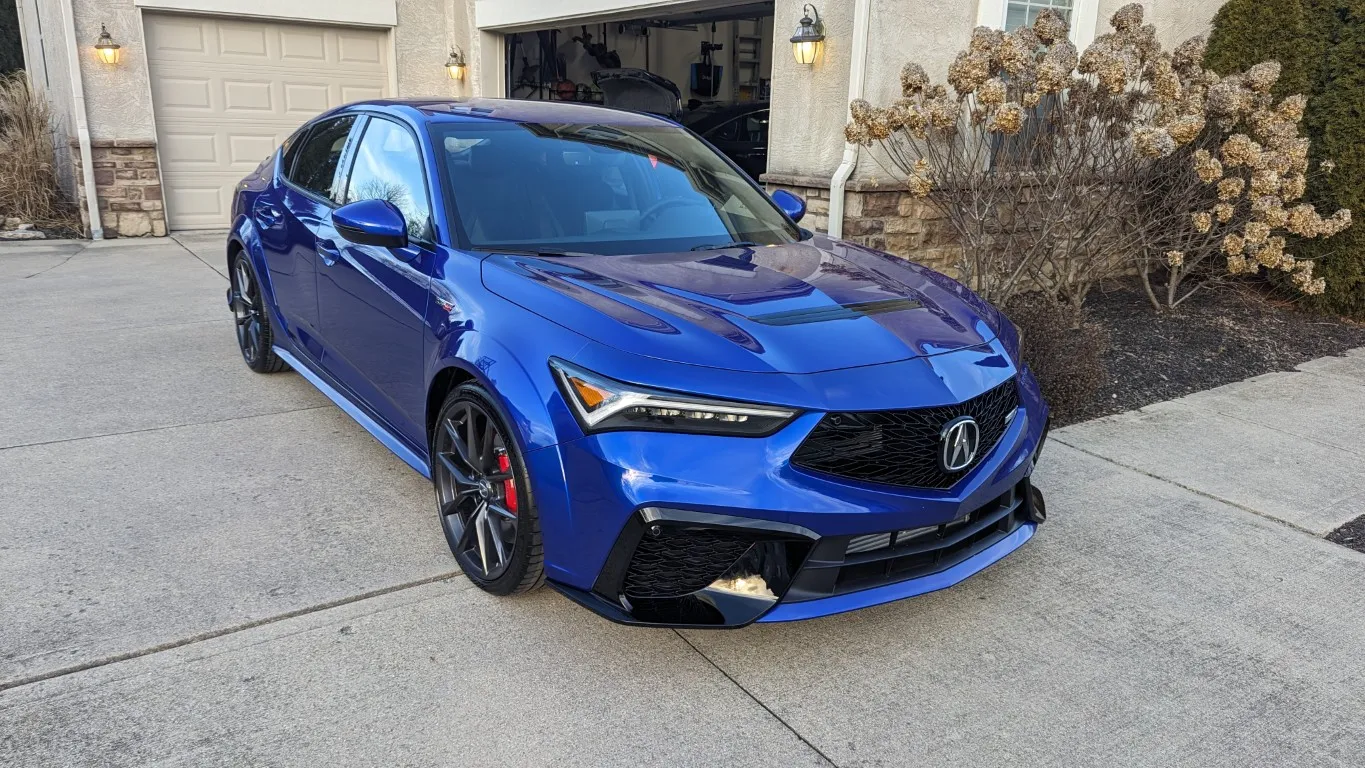
7. 2024 Acura Integra Type S Manual (DE5 Platform)
Estimated price: about $50,000 – $53,000
Acura’s performance image often leads buyers to assume that the 2024 Integra Type S Manual, built on the DE5 platform, will require high maintenance costs. Closer inspection shows a different ownership picture. When measured against several European sport compacts that appear in the same shopping conversation, the Integra Type S delivers lower yearly service expenses that build into meaningful savings across extended ownership.
At the center of this advantage sits Honda’s 2.0-liter K20C1 turbocharged engine. This powerplant traces its roots to the long-running K series family used in the Civic Type R and other high-output applications. Years of refinement have produced a turbo four cylinder that balances strong performance with durability.
Service pricing benefits from Honda’s large United States dealer footprint, where labor rates and parts costs remain more accessible than those tied to European brands. Filters, fluids, and brake components draw from Honda’s established North American supply system, keeping routine service affordable.
Transmission choice also matters. The six-speed manual requires fluid changes at roughly 45,000-mile intervals, a simple procedure that protects the gearbox without costly complications. Manual ownership also avoids the repair risks tied to modern dual clutch systems, which frequently carry repair bills reaching several thousand dollars when issues arise.
Warranty coverage remains competitive, yet Honda’s dependability record reduces the need for repeated dealer visits. Reliability data from Consumer Reports supports expectations of fewer unscheduled repairs.
When compared with a Mercedes-Benz A 35 AMG, the Integra Type S benefits from lower dealer labor rates, less expensive replacement parts, and a powertrain with a longer track record. Reduced annual service spending becomes a predictable outcome rather than an optimistic hope.
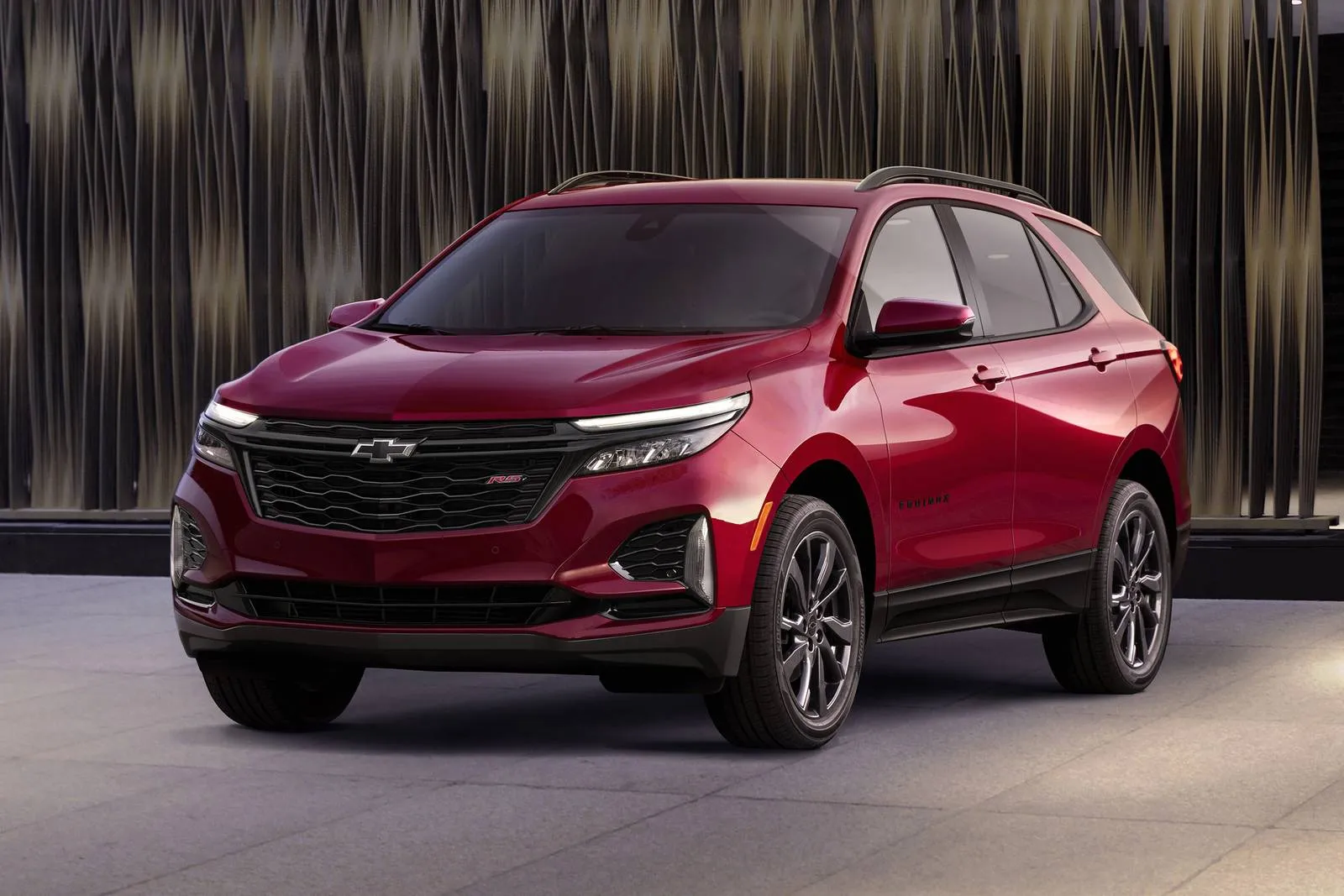
8. 2023 Chevrolet Equinox LT AWD (Third Generation)
Estimated price: about $30,000 – $33,000
Chevrolet’s 2023 Equinox LT AWD third generation occupies the highly competitive compact crossover segment, where a dozen alternatives compete aggressively on price and features. What distinguishes the Equinox LT AWD from several import economy alternatives in the same segment is a total ownership cost profile that consistently favors the Chevrolet when buyers look beyond the sticker price to what the vehicle actually costs per mile across an extended ownership period.
General Motors’ 1.5-liter turbocharged LFV engine in the Equinox LT AWD is a unit with sufficient production volume and North American market presence to support extensive independent parts supply competition that keeps service costs accessible.
Oil change intervals of 7,500 miles under normal driving conditions with a full synthetic oil specification reduce routine service frequency compared to economy import competitors on shorter intervals, and GM’s MyChevrolet app maintenance reminder system helps owners stay on schedule without overpaying for services they do not yet need.
Equinox LT AWD parts pricing reflects the domestic supply chain advantages of a vehicle built and sold in high volumes in North America. Brake components, suspension wear items, and routine service parts are available from a competitive field of aftermarket suppliers whose pricing keeps total service costs accessible at both dealer and independent shop service locations.
GM’s dealer network density across North America provides geographic service accessibility that reduces the cost premium sometimes associated with less common import brands in markets where dealer competition is limited.
AWD system simplicity on the Equinox LT, using a torque-on-demand rear axle engagement rather than a full-time AWD architecture, reduces AWD-related maintenance requirements and eliminates transfer case service intervals that add cost to more elaborate AWD systems.
Put the Equinox LT AWD against a comparable Hyundai Tucson SEL AWD, which carries slightly lower starting pricing. Tucson owners in the SEL trim with the 2.5-liter naturally aspirated engine report generally favorable maintenance costs, but Equinox owners in comparable AWD specifications have demonstrated competitive annual repair costs from RepairPal data that are close enough that the Equinox’s stronger North American parts ecosystem and dealer network density tip the long-term maintenance cost comparison in its favor for buyers in markets with limited import brand dealer competition.
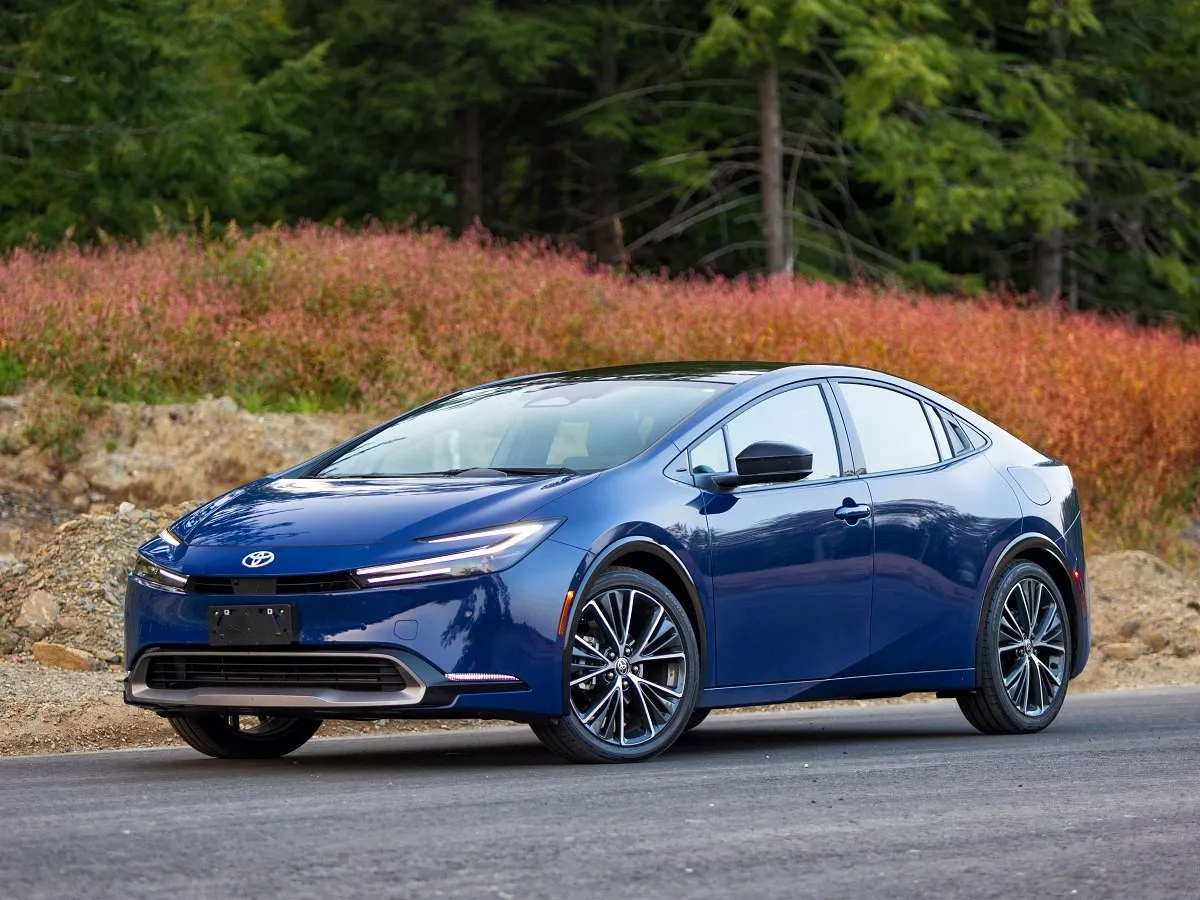
9. 2024 Toyota Prius XLE AWD-e (Sixth Generation)
Estimated price: about $33,000 – $36,000
Toyota’s 2024 Prius XLE AWD-e sixth generation does not fit the old idea of an entry-level economy car. Pricing places it above several traditional compact sedans that shoppers often compare against it. Value appears not at the dealership desk, but across years of daily use.
Exceptional fuel efficiency, reduced mechanical wear from hybrid operation, and Toyota’s long record of dependable hybrid systems combine to produce ownership expenses that steadily remain low. Fuel consumption forms the strongest advantage. The sixth-generation Prius XLE delivers around 52 miles per gallon combined in front-wheel drive form, with the AWD-e version returning slightly lower yet still impressive figures.
A driver covering 15,000 miles per year in an AWD-e model, averaging 49 miles per gallon, spends roughly nine hundred dollars less on fuel annually than a comparable compact sedan returning 33 miles per gallon at prevailing United States fuel prices. Over five years, fuel savings alone can exceed four thousand five hundred dollars.
Mechanical durability reinforces those savings. Toyota’s latest hybrid system benefits from years of refinement, resulting in a design that places minimal stress on major components. The hybrid transaxle uses sealed fluid intended to last the life of the unit under normal driving conditions, eliminating scheduled transmission service.
Regenerative braking reduces reliance on traditional friction braking, extending pad and rotor life far beyond what most gasoline-only sedans achieve. Brake replacement intervals often stretch well past 100,000 miles, lowering long-term service expenses. When measured against a conventional compact such as a Nissan Sentra SR equipped with a continuously variable transmission, cost differences become clearer.
Higher fuel usage, combined with documented CVT durability concerns increase projected ownership expenses for the non-hybrid alternative. In practical terms, many Prius XLE AWD-e owners recover the higher purchase price within three to four years through fuel and maintenance savings, after which the financial advantage continues to grow.
Also Read: Top 8 Used SUVs That Are Perfect for Large Families on a Budget
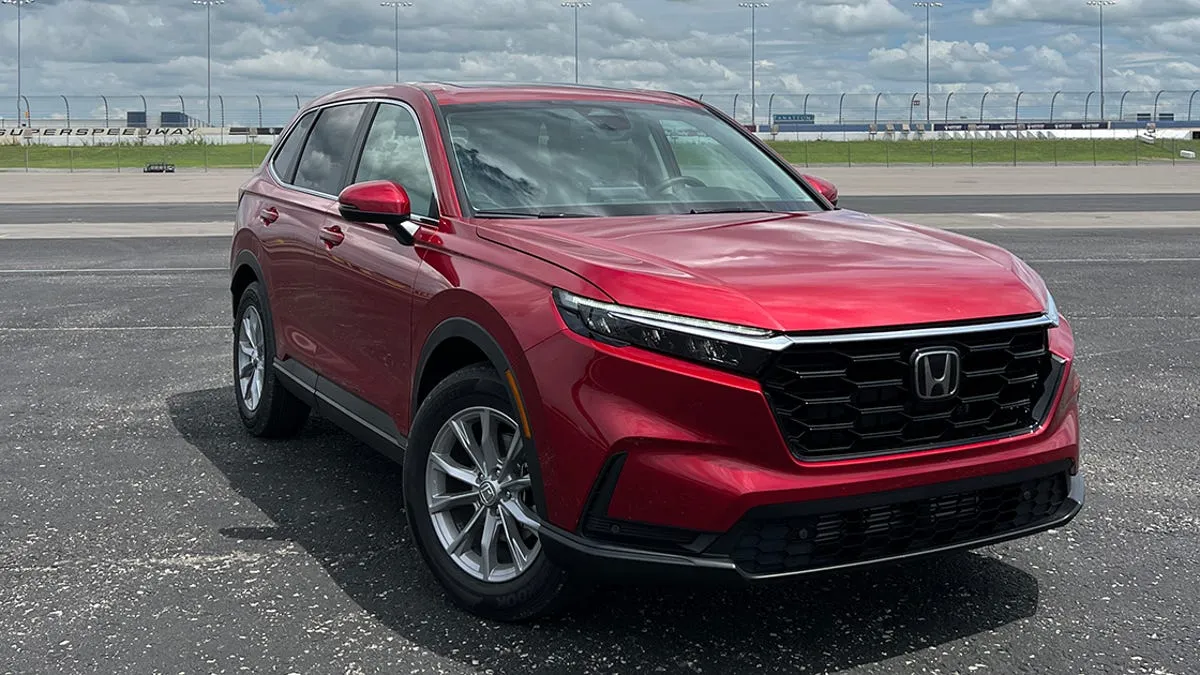
10. 2023 Honda CR-V Hybrid EX-L AWD (Sixth Generation)
Estimated price: about $37,000 – $40,000
Honda’s 2023 CR-V Hybrid EX-L AWD sixth generation closes out this list with a compact SUV that consistently demonstrates lower annual maintenance costs than several economy-positioned alternatives in the same segment, proving that a well-engineered hybrid system from a reliability-focused manufacturer can deliver better value than a simple, inexpensive conventional powertrain from a brand with less robust reliability data.
Honda’s two-motor hybrid system in the sixth-generation CR-V Hybrid uses a 2.0-liter Atkinson cycle four-cylinder engine paired with two electric motors in an arrangement that Honda has refined across multiple generations and millions of vehicles in its hybrid lineup.
This system eliminates the conventional automatic transmission, using a single fixed-ratio gear for direct drive at highway speeds and electric motor drive for city operation, producing a powertrain with fewer mechanical failure points than any conventional automatic transmission and requiring no transmission fluid service under Honda’s maintenance schedule.
Fuel economy of approximately 40 miles per gallon combined for the CR-V Hybrid EX-L AWD creates an immediate and ongoing cost advantage against conventional compact SUV competitors rated at 27 to 32 miles per gallon combined.
For buyers who cover an average American annual mileage of 13,500 miles, the fuel savings relative to a conventional compact SUV accumulate to $500 to $800 annually, depending on current fuel pricing, which contributes directly to the CR-V Hybrid’s total ownership cost advantage alongside its lower repair frequency.
Honda’s reliability record for the sixth-generation CR-V Hybrid reflects the maturity of its hybrid system and the manufacturing quality of its Alliston, Ontario production facility, with Consumer Reports reliability ratings that place it among the top compact SUVs in the category.
Parts pricing benefits from Honda’s extensive North American dealer and aftermarket network, keeping routine service costs accessible and competitive with conventionally powered competitors.
