
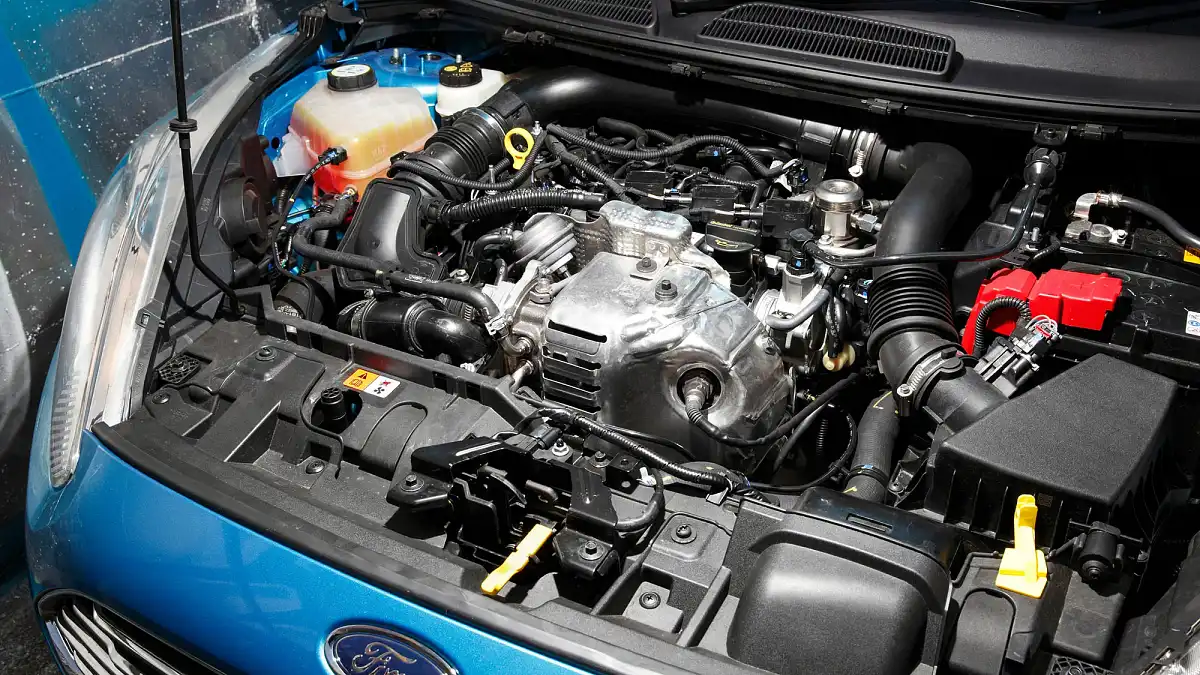
Small-displacement engines have long been associated with fuel efficiency and compact cars, but modern engineering has significantly expanded what these engines are capable of doing.
Advances such as turbocharging, direct fuel injection, stronger lightweight materials, and improved transmission programming have allowed smaller engines to produce torque figures that were once reserved for much larger powerplants.
In the United States, where towing capability is often a key buying consideration for trucks, SUVs, and even crossovers, this technological shift has become particularly noticeable.
While large V8 engines still dominate heavy-duty towing, many smaller engines can now handle light-duty towing tasks with surprising competence.
For the average American driver, “light towing” usually refers to pulling loads such as small camping trailers, jet skis, motorcycles, utility trailers, or small boats.
These loads generally fall within the 1,500 to 4,000-pound range, which does not require a heavy-duty pickup truck.
Manufacturers have responded by equipping smaller engines with strong low-end torque and pairing them with robust automatic transmissions, making them capable of towing while still maintaining excellent fuel economy during daily driving.
Importantly, towing capability is not determined by engine displacement alone. Cooling systems, transmission strength, chassis design, and suspension tuning also play significant roles.
However, the engines themselves are still the heart of the capability equation. Several small-displacement engines currently available in the American market demonstrate how efficient design can deliver impressive towing performance without the need for large cylinders.
Below are six notable small-displacement engines that prove size is no longer the sole determinant of towing capability.
1. Ford 2.3-Liter EcoBoost Inline-Four
Ford’s 2.3-liter EcoBoost inline-four represents a modern example of how small-displacement engines can deliver performance once associated with much larger powerplants. Introduced in the mid-2010s as part of Ford’s broader EcoBoost strategy, the turbocharged four-cylinder was developed to balance fuel efficiency with strong torque output.
The engine debuted in several Ford products during the 2015 model year, most prominently the redesigned Ford Mustang and the global Ford Ranger pickup, and it soon appeared across a wide range of vehicles including the Explorer, Bronco, and Lincoln luxury models. Its widespread adoption illustrates Ford’s commitment to downsized turbocharged engines capable of replacing traditional V6 units while maintaining real-world capability.
The development of the 2.3-liter EcoBoost traces its lineage to Ford’s earlier turbocharged four-cylinder experiments, particularly the 2.3-liter engines used in performance vehicles such as the 1980s Mustang SVO. However, the modern EcoBoost design reflects decades of advancements in turbocharging, direct fuel injection, and engine management.
Built on Ford’s modular global engine architecture, the aluminum-block inline-four features dual overhead camshafts and four valves per cylinder. Direct injection and a twin-scroll turbocharger allow the engine to deliver strong low-rpm torque, a characteristic essential for both performance driving and light towing duties.
Engineering details reveal why this compact engine punches well above its weight. The 2.3-liter EcoBoost produces between roughly 270 and over 300 horsepower depending on application, with torque figures typically exceeding 300 lb-ft. Such output is achieved through an integrated exhaust manifold, sophisticated cooling channels, and precise electronic wastegate control that optimizes boost pressure across the rev range.
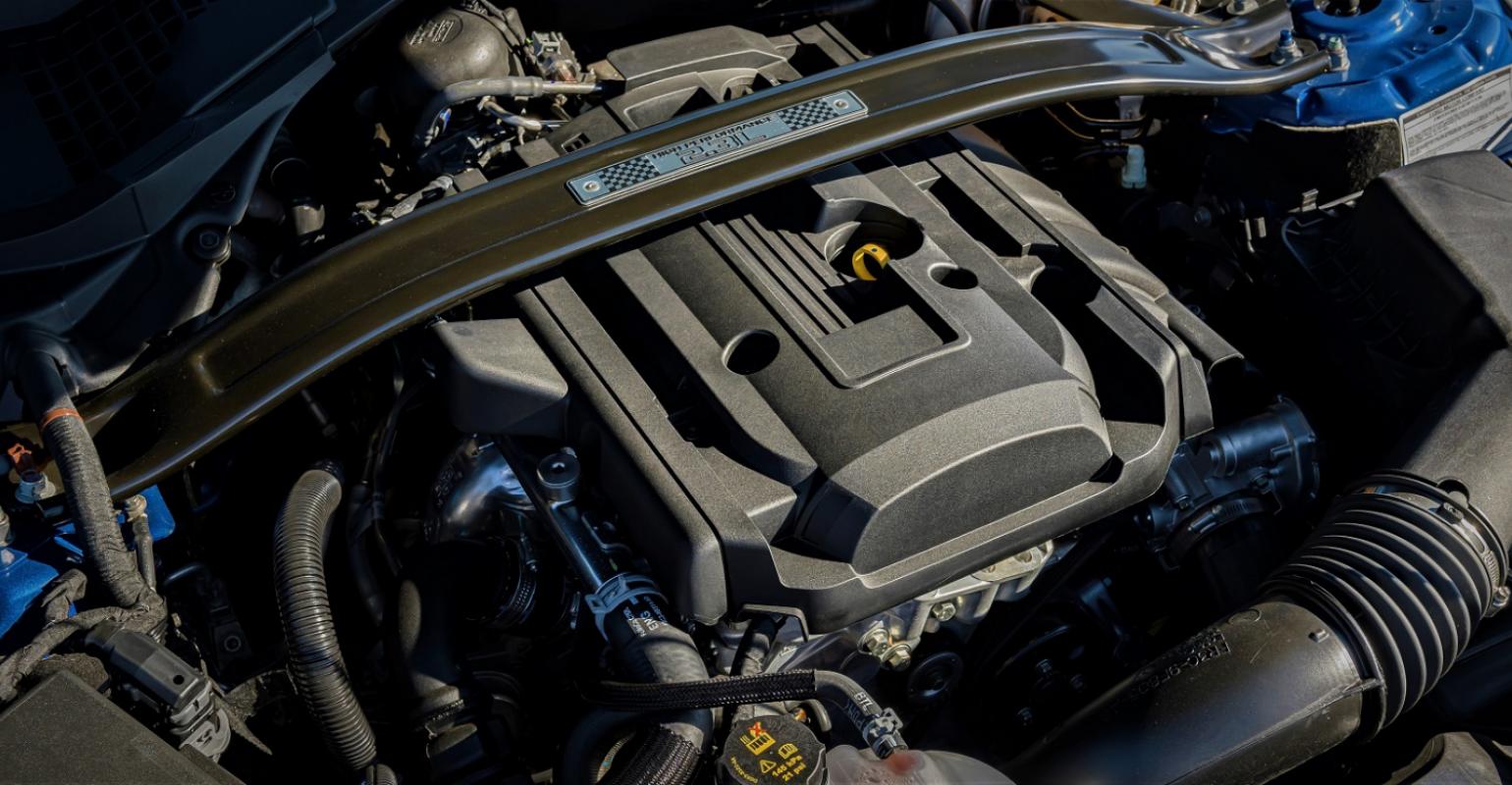
When paired with modern transmissions, such as Ford’s 10-speed automatic or six-speed manual, the engine works effectively in both rear-wheel-drive performance cars and body-on-frame trucks. In vehicles like the Ranger and Bronco, the longitudinal layout supports towing ratings that approach or exceed 7,000 pounds depending on configuration, demonstrating the engine’s versatility.
Design characteristics also play an important role in its success. Lightweight aluminum construction reduces mass over the front axle, improving handling in performance applications while contributing to better fuel efficiency in trucks and SUVs.
Advanced thermal management and variable cam timing help maintain reliability under heavy loads, including sustained towing or off-road use. The turbocharger’s ability to generate substantial torque at low engine speeds ensures that drivers do not need a large displacement engine to move trailers or equipment.
Historically, the 2.3-liter EcoBoost symbolizes a turning point in modern engine design. It demonstrates how downsizing and forced induction can deliver real capability rather than simply improved efficiency figures.
By providing the torque required for towing while maintaining the compact footprint of a four-cylinder engine, Ford’s 2.3-liter EcoBoost fits squarely within the theme of small-displacement engines that remain genuinely useful for light hauling tasks.
2. Toyota 2.4-Liter Turbocharged Inline-Four (T24A-FTS)
Toyota’s 2.4-liter turbocharged inline-four, known internally as the T24A-FTS, represents the company’s latest approach to downsized engines that maintain the torque and durability required for real-world utility.
Introduced in the early 2020s as part of Toyota’s new generation of turbocharged powertrains, the engine debuted in vehicles such as the Lexus NX and RX before expanding to models like the Toyota Crown, Highlander, Tacoma, and Land Cruiser. Its development reflects a broader industry trend in which manufacturers replace naturally aspirated V6 engines with smaller turbocharged units that deliver comparable performance while improving efficiency and emissions compliance.
The T24A-FTS was engineered as a modular, high-efficiency engine that could serve a wide range of applications, from luxury crossovers to rugged pickup trucks. Built around an aluminum block and aluminum cylinder head, the 2.4-liter engine features a dual overhead camshaft layout with four valves per cylinder.
Toyota combined this architecture with its advanced D-4ST fuel injection system, which uses both direct and port injection to optimize combustion under different operating conditions. A single twin-scroll turbocharger delivers pressurized intake air while minimizing lag, allowing the engine to produce strong torque from relatively low engine speeds, an essential trait for towing or hauling loads.
Output figures vary slightly depending on the vehicle application, but the engine typically produces around 275 horsepower and approximately 317 lb-ft of torque. Those numbers place it squarely in the territory previously occupied by larger V6 engines, demonstrating how modern turbocharging technology can significantly expand the capability of a compact four-cylinder.
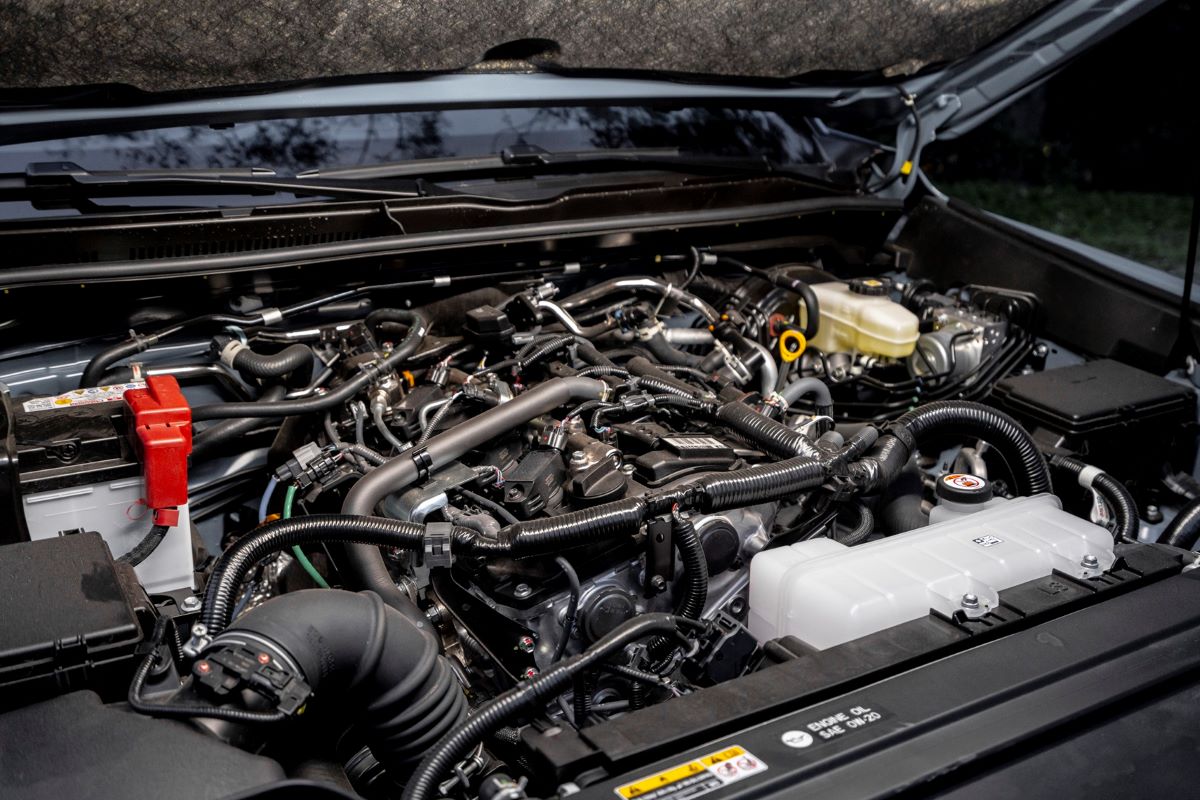
In truck applications such as the Toyota Tacoma and Land Cruiser, the T24A-FTS is mounted longitudinally and paired with robust transmissions designed for towing and off-road use. The resulting drivetrain combinations allow these vehicles to tow several thousand pounds while maintaining improved fuel efficiency compared with older six-cylinder setups.
Design characteristics emphasize durability and thermal stability, both critical when an engine is asked to pull trailers or carry heavy loads. The T24A-FTS uses a high-strength crankshaft, reinforced pistons, and carefully engineered cooling channels to manage the additional heat generated by turbocharging.
Variable valve timing on both the intake and exhaust sides improves responsiveness across the rev range, while an electronically controlled wastegate ensures consistent boost pressure. These engineering choices help the engine maintain strong torque delivery without sacrificing long-term reliability.
From a historical perspective, the T24A-FTS marks an important step in Toyota’s transition away from traditional naturally aspirated V6 engines. By producing substantial torque from a relatively small displacement, the turbocharged four-cylinder allows modern trucks and SUVs to retain towing capability without the weight and fuel consumption penalties of larger engines.
This balance of compact size, high torque output, and modern efficiency technologies makes the Toyota 2.4-liter turbocharged inline-four a clear example of how small displacement engines can still handle light towing duties effectively.
3. Honda 2.0-Liter Turbocharged Inline-Four (K20C)
Honda’s 2.0-liter turbocharged inline-four from the K-series family, commonly identified by the K20C engine code, represents one of the most technically refined small-displacement engines of the modern performance era.
Introduced in the mid-2010s, the engine first appeared in the 2015 Honda Civic Type R for global markets before expanding into mainstream models such as the Honda Civic Type R (U.S. market from 2017), the Accord 2.0T, and the Acura RDX.
Developed during a period when manufacturers were transitioning from naturally aspirated engines to downsized turbocharged powerplants, the K20C demonstrated that a compact four-cylinder could provide both high performance and the low-end torque necessary for practical uses such as light towing.
The K20C is derived from Honda’s long-running K-series engine architecture, which gained a reputation for durability and high-revving characteristics in earlier naturally aspirated forms.
For the turbocharged generation, Honda engineers significantly revised the design. The engine uses an aluminum block with reinforced cylinder walls and an aluminum cylinder head featuring dual overhead camshafts and four valves per cylinder.
Honda integrated its well-known VTEC variable valve timing system on the exhaust side in many variants, improving efficiency and responsiveness across the rev range. Direct fuel injection and a high-efficiency turbocharger allow the engine to produce strong torque from relatively low rpm, a major improvement over older naturally aspirated performance engines that relied primarily on high engine speeds.
Engineering output varies depending on application, but most versions of the K20C produce between 252 and more than 300 horsepower. Torque figures typically range from roughly 270 to 310 lb-ft, delivered early in the rev band thanks to the turbocharger’s boost characteristics.
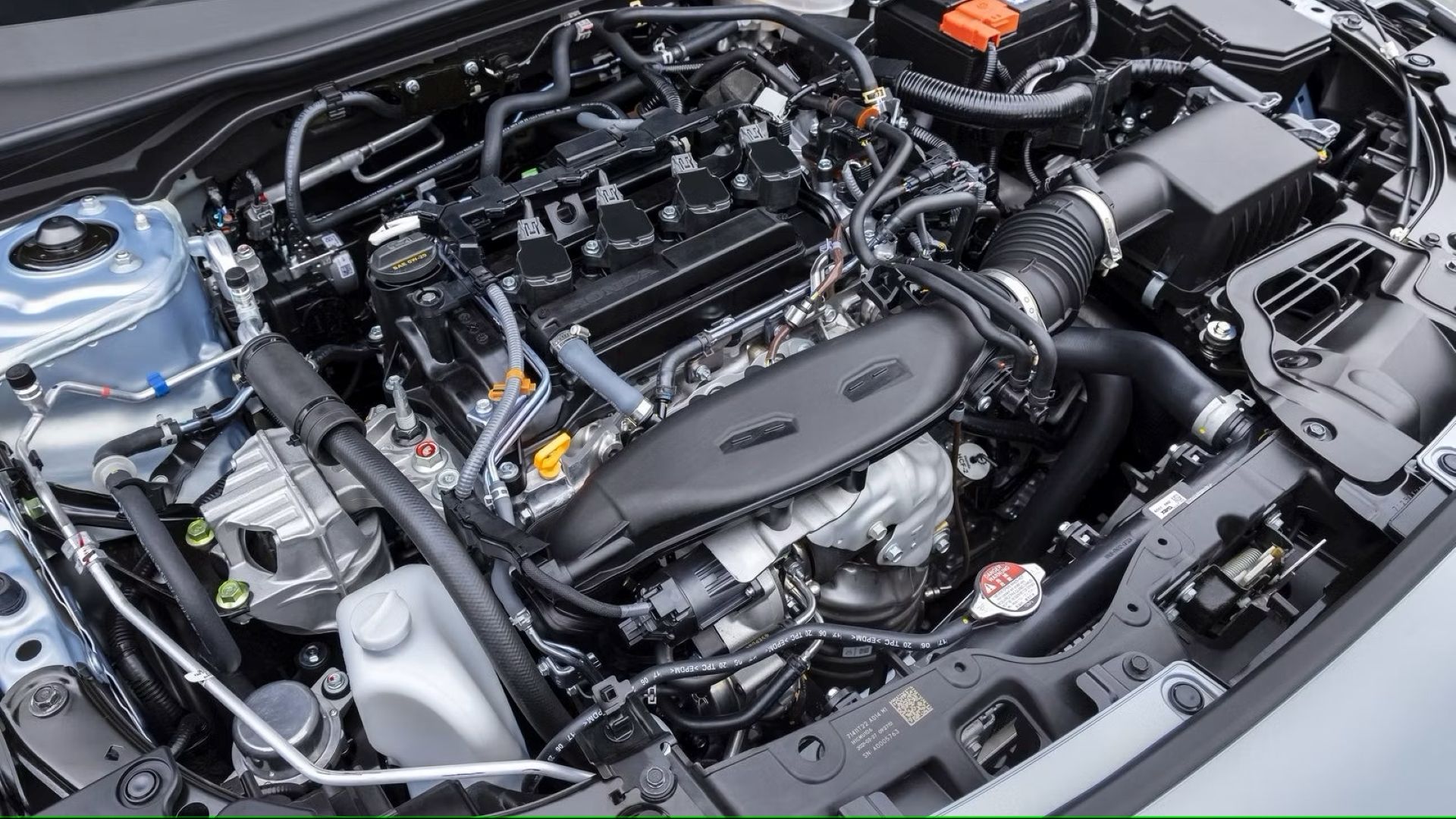
This strong mid-range torque is critical when an engine must move heavy loads or maintain steady power under strain. In vehicles such as the Honda Accord 2.0T, the engine is paired with a 10-speed automatic transmission and a front-wheel-drive layout, while the Civic Type R uses a six-speed manual gearbox optimized for performance driving.
Although the engine is most famous in sports-oriented applications, its torque curve and robust engineering make it capable of handling light towing duties when installed in properly rated vehicles.
Design characteristics emphasize both efficiency and durability. The K20C incorporates an integrated exhaust manifold that helps improve turbocharger response while reducing overall engine weight.
Advanced cooling passages, forged internal components in higher-output versions, and precise electronic boost control allow the engine to maintain consistent performance under demanding conditions. Honda also engineered the turbo system to deliver smooth, predictable power rather than abrupt boost spikes, improving drivability when hauling cargo or towing small trailers.
Historically, the K20C represents an important shift for Honda, a company long associated with naturally aspirated high-revving engines. By successfully combining turbocharging with the proven K-series architecture, Honda created a compact engine that offers the torque characteristics traditionally associated with larger engines.
This ability to produce strong pulling power from just two liters of displacement places the K20C squarely within the category of small engines capable of supporting light towing while still delivering the performance and efficiency expected in modern vehicles.
The K20C engine produces around 252 horsepower and 273 lb-ft of torque in many applications.
When installed in suitable vehicles with reinforced transmissions and cooling systems, it allows towing capacities around 3,500 pounds. That figure is sufficient for towing lightweight campers, small fishing boats, or utility trailers.
One advantage of Honda’s engineering approach is efficiency. Even when towing, the engine maintains relatively good fuel economy compared with larger six-cylinder alternatives.
This makes it appealing for drivers who want a vehicle capable of occasional towing but still efficient enough for daily commuting.
4. General Motors 2.7-Liter Turbo High-Output (TurboMax)
General Motors’ 2.7-liter Turbo High-Output inline-four, now marketed as the TurboMax, illustrates how modern turbocharged engines can deliver the pulling power once associated primarily with V6 and V8 configurations.
Introduced in 2019 for the Chevrolet Silverado 1500 and GMC Sierra 1500, the engine was developed as part of GM’s strategy to modernize its truck powertrains while improving efficiency and reducing overall engine weight.
Rather than positioning the engine as a basic entry-level option, GM engineered the 2.7-liter turbo four specifically for truck duty, focusing on strong torque delivery, durability, and towing capability within a compact displacement package.
The engine’s development stemmed from GM’s need to meet stricter fuel economy and emissions regulations while maintaining the work-oriented capabilities expected in full-size pickup trucks.
Engineers designed the powerplant from the outset as a truck engine rather than adapting an existing passenger car unit. The result is a robust inline-four built around a deep-skirt aluminum block with iron cylinder liners and a forged steel crankshaft designed to withstand heavy loads.
The engine uses dual overhead camshafts and four valves per cylinder, along with direct fuel injection and an electronically controlled twin-scroll turbocharger. This architecture allows the engine to produce substantial torque at low engine speeds, which is essential when towing or hauling cargo.
Output figures for the latest TurboMax configuration highlight the effectiveness of this design. The engine produces around 310 horsepower and up to 430 lb-ft of torque, a torque figure that rivals or exceeds some naturally aspirated V8 engines from previous decades. That torque arrives early in the rev range, providing the immediate pulling power needed for tasks such as towing trailers or transporting equipment.
In Chevrolet Silverado and GMC Sierra applications, the engine is paired with GM’s eight-speed automatic transmission and mounted longitudinally in a rear-wheel-drive or four-wheel-drive truck layout. Depending on configuration, trucks equipped with the 2.7-liter TurboMax can tow more than 9,000 pounds, demonstrating that a relatively small-displacement engine can still support serious utility work.
Several design features further emphasize durability and real-world usability. The engine incorporates GM’s Active Thermal Management system to maintain optimal operating temperatures under varying loads.
A piston oil cooling system helps manage heat generated during high boost conditions, while the turbocharger’s twin-scroll design improves throttle response and reduces lag. These technologies ensure that the engine remains responsive and reliable even when subjected to the sustained demands of towing or hauling.
Historically, the TurboMax marks an important evolution in pickup truck engineering. For decades, full-size trucks relied almost exclusively on larger naturally aspirated engines to deliver the torque required for work tasks.
GM’s 2.7-liter turbocharged inline-four demonstrates that modern turbocharging, advanced materials, and precise electronic control can produce comparable capability in a significantly smaller engine. Its combination of strong torque output, robust construction, and proven towing performance makes the TurboMax a clear example of how small displacement engines can still handle light towing duties with confidence.
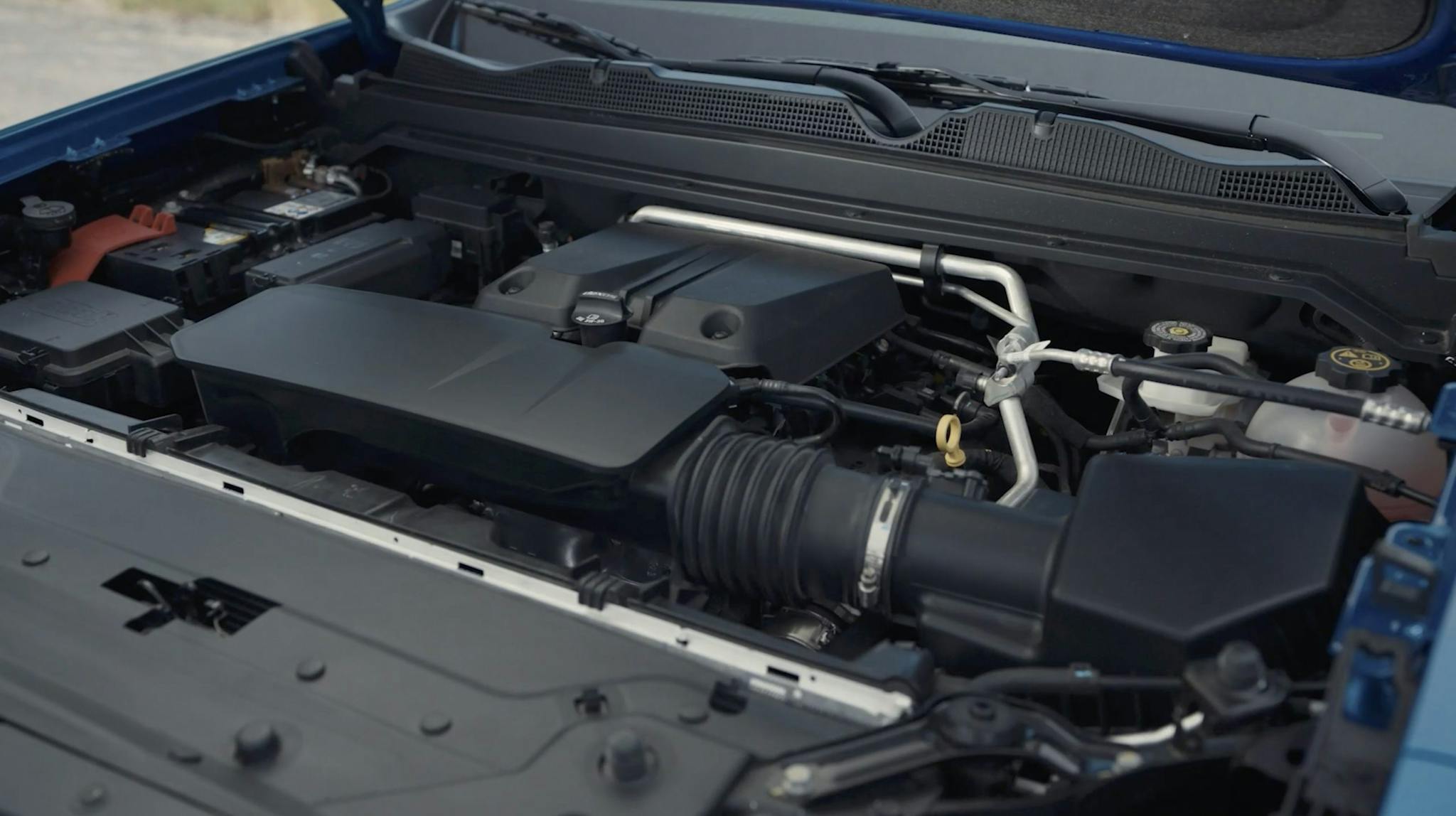
5. Hyundai/Kia 2.5-Liter Turbocharged Smartstream Engine
Hyundai and Kia have steadily improved their turbocharged engine lineup, and the 2.5-liter Smartstream turbo engine is among their most capable small-displacement offerings.
This engine powers vehicles such as the Kia Sorento, Hyundai Santa Cruz, and Hyundai Sonata N Line.
In many applications, the engine produces about 281 horsepower and 311 lb-ft of torque. Those numbers allow vehicles like the Kia Sorento to tow up to 3,500 pounds when equipped with the proper towing package.
The Hyundai Santa Cruz compact pickup offers similar capabilities. This engine uses advanced technologies such as multi-port and direct injection combined, a water-cooled turbocharger, and optimized combustion chamber design.
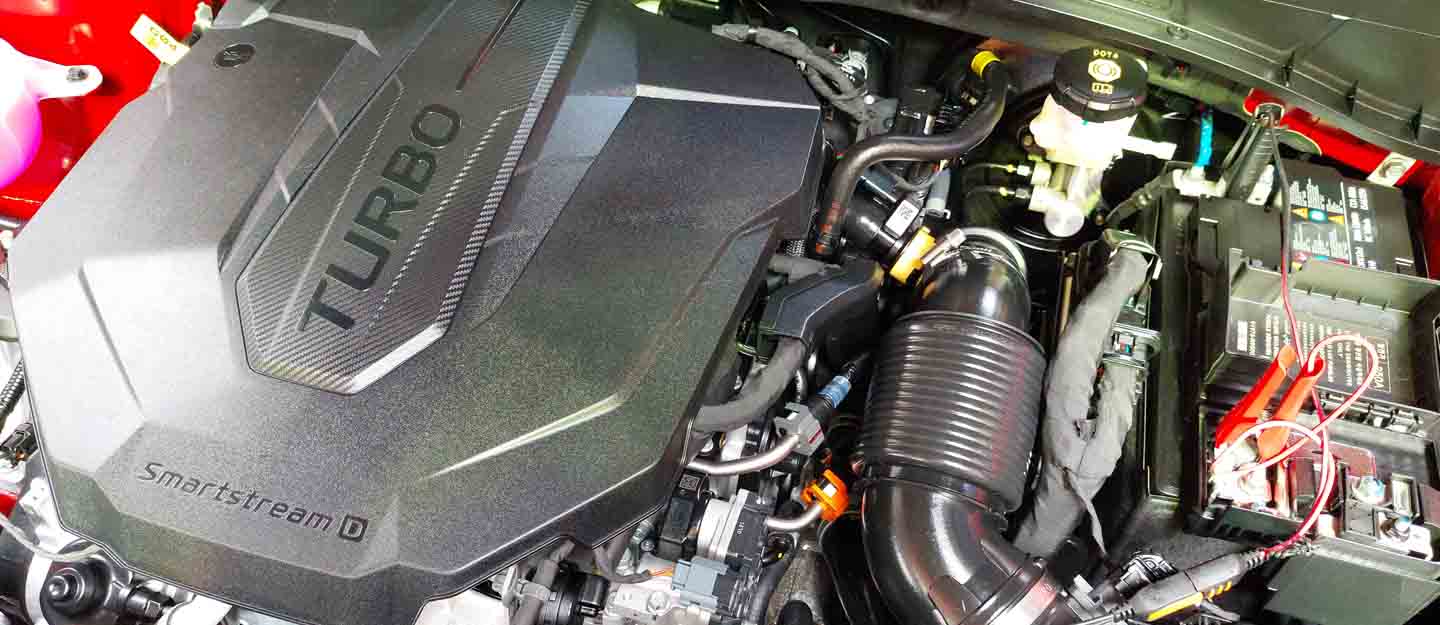
These features help the engine maintain strong torque while keeping emissions and fuel consumption under control.
For drivers who prefer compact trucks or midsize SUVs rather than full-size pickups, the Smartstream engine provides a capable alternative.
It shows how manufacturers outside the traditional American truck market are also embracing small engines that can still handle practical towing tasks.
6. Ford 1.5-Liter EcoBoost Inline-Three
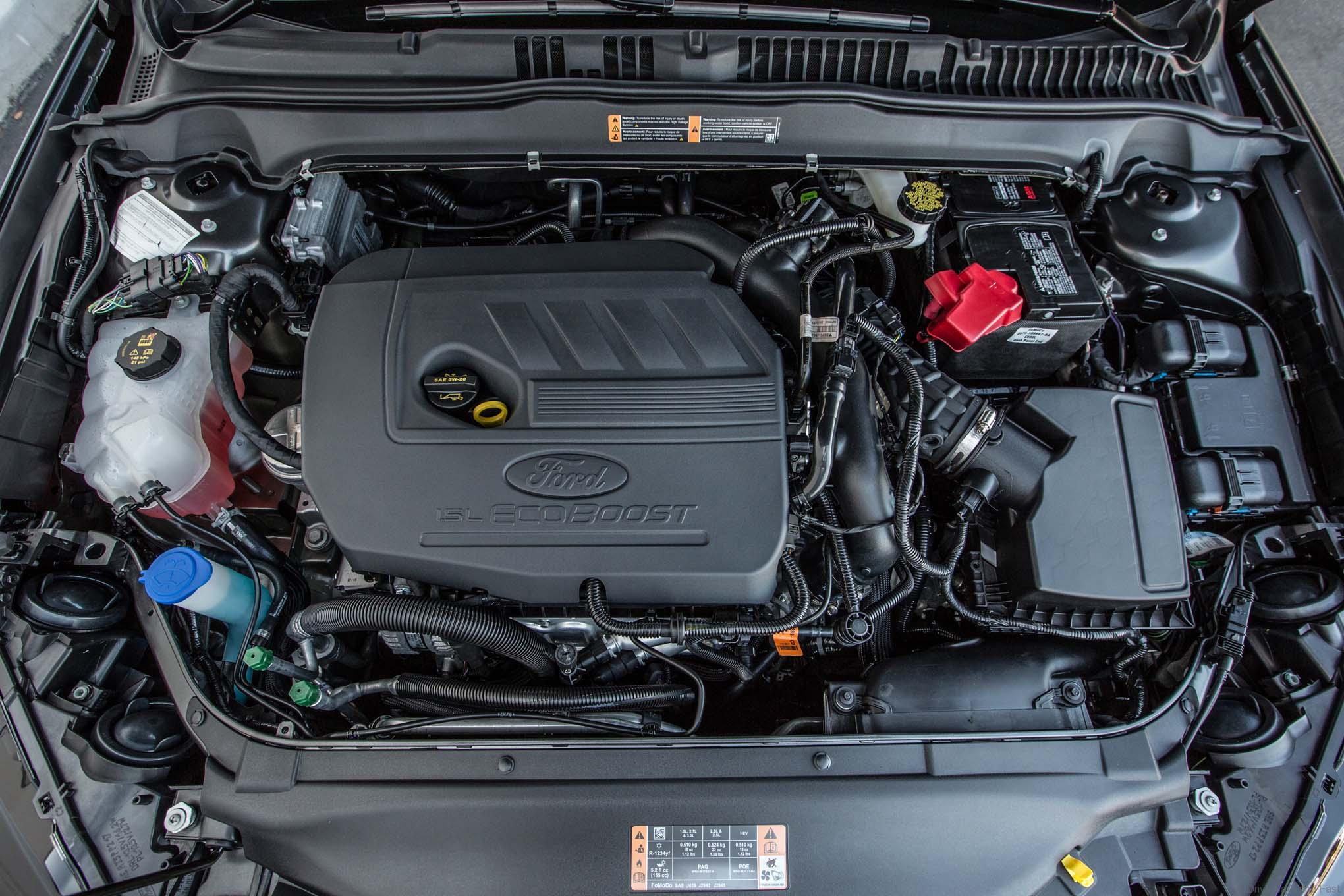
Ford’s 1.5-liter EcoBoost inline-three is a notable example of how modern engineering allows very small displacement engines to deliver useful real-world capability. Introduced in the late 2010s, the turbocharged three-cylinder was developed as part of Ford’s broader EcoBoost program aimed at downsizing engines while maintaining performance and torque.
The engine appeared in several global Ford models including the Escape, Bronco Sport, Focus, and various international crossovers. While modest in displacement, the 1.5-liter EcoBoost was designed to provide the type of low-end torque and efficiency that make compact SUVs practical for everyday driving tasks, including light towing.
The development of the 1.5-liter EcoBoost followed the success of Ford’s earlier 1.0-liter EcoBoost three-cylinder, but engineers recognized that certain vehicles, particularly compact SUVs, required additional power and torque. As a result, the 1.5-liter version was engineered with stronger internal components and a larger turbocharging system to support higher output. The engine uses an aluminum block and cylinder head, dual overhead camshafts, and four valves per cylinder
. Direct fuel injection and Ford’s advanced turbocharging technology allow the engine to generate significantly more torque than naturally aspirated engines of similar size. Many versions also incorporate cylinder deactivation technology, which can shut down one cylinder under light loads to improve fuel economy.
Engineering specifications help explain why this small engine remains capable in practical applications. In most North American configurations, the 1.5-liter EcoBoost produces roughly 180 horsepower and around 190 lb-ft of torque. While those numbers may appear modest compared with larger engines, the turbocharger delivers peak torque at relatively low engine speeds.
This characteristic is especially useful for small SUVs where drivers may occasionally tow lightweight trailers or recreational equipment. In vehicles such as the Ford Escape and Bronco Sport, the engine is paired with an eight-speed automatic transmission and a transverse front-wheel-drive-based layout, with available all-wheel drive systems for improved traction.
Design characteristics emphasize efficiency without sacrificing durability. The compact inline-three configuration reduces engine weight and overall vehicle mass, improving fuel economy and handling. Ford also engineered the engine with an integrated exhaust manifold and a carefully tuned turbocharger to reduce lag and maintain smooth power delivery.
Advanced cooling and lubrication systems help manage the additional thermal load created by turbocharging, ensuring consistent operation even when the engine is working harder under towing or heavy cargo conditions.
Historically, the 1.5-liter EcoBoost demonstrates how dramatically engine technology has evolved over the past decade. Only a generation ago, a three-cylinder engine of this size would have been associated with economy cars rather than utility vehicles.
Through turbocharging, direct injection, and precise electronic engine management, Ford transformed a compact engine into a versatile powerplant capable of supporting small crossovers that can tow light loads, typically around 2,000 pounds depending on vehicle configuration. This capability makes the 1.5-liter EcoBoost inline-three a clear example of how modern small-displacement engines can still provide meaningful utility beyond basic transportation.
The growing capability of small-displacement engines reflects a broader trend within the automotive industry.
Manufacturers are under increasing pressure to improve fuel efficiency and reduce emissions while still meeting consumer expectations for performance and utility.
Turbocharging, hybrid systems, and advanced engine management have become key tools in achieving this balance.
For American drivers, this means that towing capability is no longer limited to large V6 or V8 engines. Many crossovers, compact trucks, and midsize SUVs equipped with small turbocharged engines can now handle common recreational towing needs.
This allows buyers to select vehicles that are more efficient and easier to drive daily while still maintaining practical functionality.
That said, drivers must always respect manufacturer towing ratings and ensure their vehicles are properly equipped with the necessary towing packages.
Cooling upgrades, trailer brake controllers, and proper hitch equipment are essential for safe towing, regardless of engine size.
Small-displacement engines may not completely replace large engines for heavy-duty hauling, but they have already transformed the landscape of light towing.
As engine technology continues to evolve, it is likely that even smaller engines will gain the strength and durability needed to handle tasks that once required far more displacement.
