
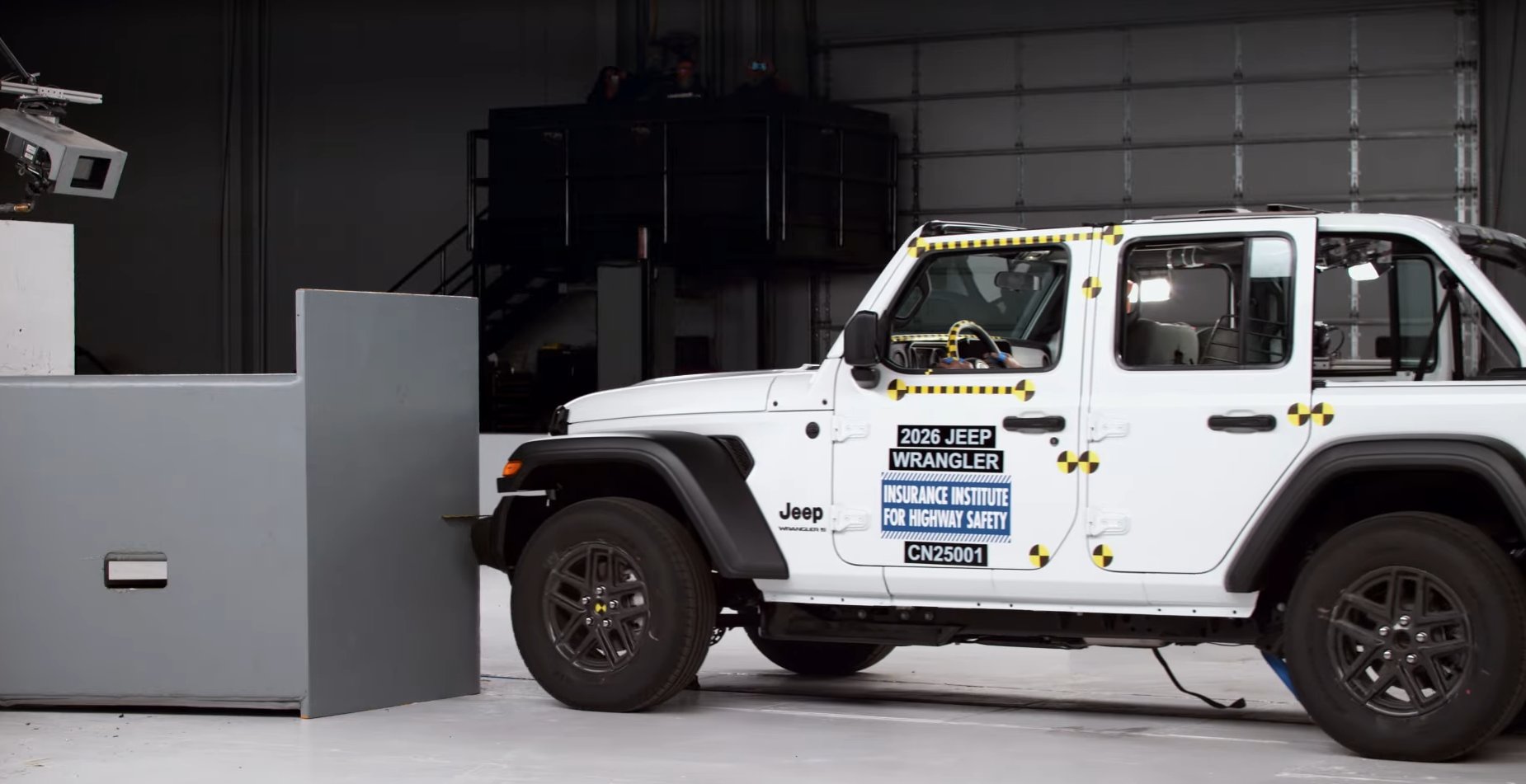
For years, the Jeep Wrangler has faced criticism for a safety issue that seemed unusual for such an iconic off-road vehicle: its tendency to tip over during certain crash tests.
Earlier evaluations by the Insurance Institute for Highway Safety (IIHS) revealed that some Wrangler models could roll onto their side during small overlap collisions. Now, according to the latest crash test results, the 2026 version of the Jeep Wrangler has finally resolved that problem.
In previous IIHS tests involving the 2019 and 2022 Wrangler models, the SUV tipped onto its passenger side after striking the barrier in a driver-side small overlap crash test.
These results raised concerns about the vehicle’s crash stability and resulted in lower safety ratings. The issue was especially notable because the Wrangler is one of the most recognizable off-road SUVs in the United States, widely praised for its durability and trail performance.
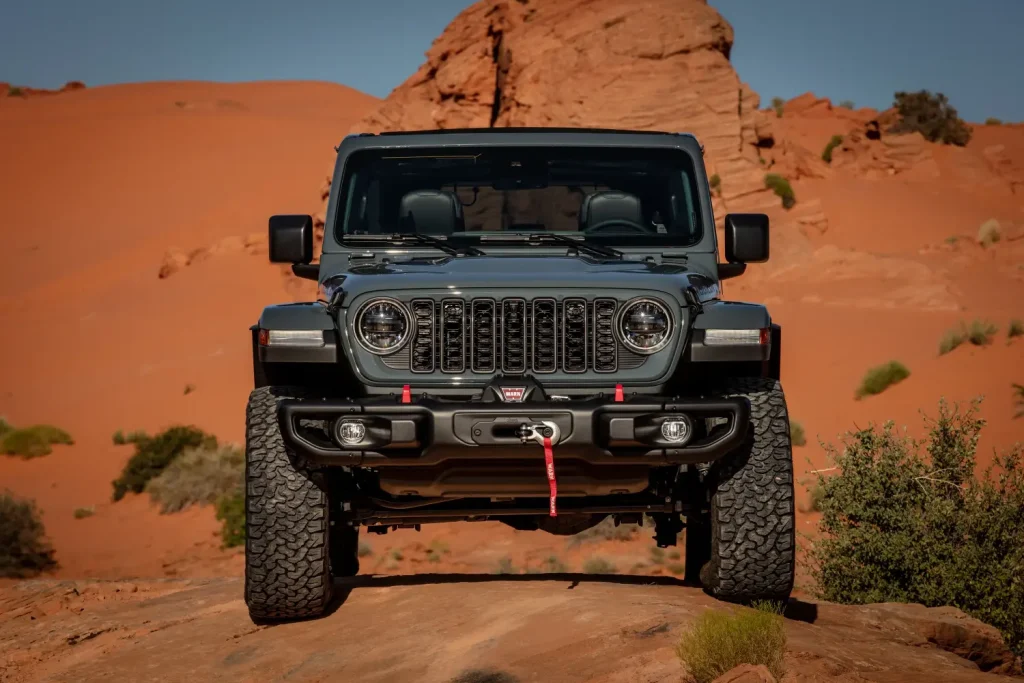
For the 2026 model year, Jeep introduced structural modifications designed to address the problem. Engineers reinforced the vehicle’s frame rails, a critical structural component that helps manage crash energy during impacts.
According to Jeep, the updated frame rail design now acts as a deflector when the front wheel and tire are pushed rearward during a collision. Instead of allowing the vehicle to rotate and tip, the reinforced structure redirects the crash forces through the chassis, helping the SUV remain upright.
| Model Year | Vehicle | Test Type | Result | Key Observation |
|---|---|---|---|---|
| 2019 | Jeep Wrangler | Driver-side Small Overlap | Marginal | Vehicle tipped onto passenger side after impact |
| 2022 | Jeep Wrangler | Driver-side Small Overlap | Marginal | Rollover behavior repeated despite earlier modifications |
| 2026 | Jeep Wrangler | Driver-side Small Overlap | Acceptable | Vehicle remained upright after frame rail reinforcement |
| 2026 | Jeep Gladiator | Driver & Passenger Small Overlap | Acceptable | Structural changes applied to shared platform |
The improvement was confirmed during the latest IIHS driver-side small overlap test. This time, the Wrangler remained upright throughout the collision, marking a significant change from earlier results. Because of the structural modifications, Wranglers built after October 2025 now earn an “acceptable” rating in the small overlap crash test.
The same frame rail updates were also applied to the Jeep Gladiator, which shares its platform and chassis architecture with the Wrangler. As a result, both vehicles benefit from the improved structural design and receive similar crash test ratings.
However, the vehicles still did not achieve the highest possible rating. In the passenger-side evaluation, the IIHS found a potential risk of injury to the front passenger’s right foot and lower leg due to intrusion into the passenger compartment. Because of this remaining concern, the result remains “acceptable” rather than the top “good” rating.
The IIHS small overlap crash test simulates a scenario where only a portion of a vehicle’s front corner strikes an object such as another car, a tree, or a utility pole. During the test, the vehicle hits a rigid barrier at 40 mph with just 25 percent of its front end making contact, making it one of the most demanding crash evaluations.
The Wrangler’s rollover reputation has partly been linked to its design. Like many off-road vehicles, it has a relatively short wheelbase and a high center of gravity, which can increase rollover risk in certain situations. Data from the National Highway Traffic Safety Administration estimated the Wrangler’s rollover risk at about 26.7 percent in 2020, higher than many conventional SUVs.
With the latest structural improvements, Jeep appears to have resolved one of the Wrangler’s most persistent safety criticisms while preserving the rugged design that has defined the vehicle for decades.
