
The early 1970s were not kind to American muscle. What had been a golden decade of displacement, horsepower wars, and tire-shredding performance came crashing into a wall of reality when the 1973 Arab oil embargo sent gasoline prices skyrocketing and reshaped the entire automotive world overnight.
Detroit’s greatest glory machines cars built around massive V8 engines that drank fuel like it was free suddenly became symbols of excess in an age of anxiety.
Insurance companies had already been bleeding muscle car buyers dry through surcharging premiums on high-performance vehicles, and new emissions regulations had quietly strangled output through the early years of the decade. Then the fuel crisis hit like a sledgehammer.
Yet not every muscle car died. Some nameplates found ways to adapt downsizing engines, rebranding their identity, or simply waiting out the storm until performance could return.
Others weren’t so fortunate, killed by corporate cost-cutting, collapsed sales figures, or the simple arithmetic that a gas-guzzling two-door coupe was impossible to justify in 1974 America. This is the story of ten iconic machines five that fought back and survived, and five that the fuel crisis quietly put in the ground.
5 Classic Muscle Cars That Survived the Fuel Crisis
These exceptionally adaptable vehicles feature downsized engines and revised chassis designs that successfully navigated 1970s emissions regulations and fuel economy demands, providing continued performance credibility through turbocharged efficiency or refined smaller-displacement powertrains that maintained enthusiast appeal despite dramatically changed market conditions and insurance industry pressure.
Their evolutionary engineering includes smog-legal V8 options and handling improvements that resisted complete extinction found in less adaptable nameplates while delivering models that survived into the 1980s maintaining recognizable lineage, adapted to catalytic converter requirements without abandoning performance entirely, and offered enough capability that enthusiasts continued purchasing despite horsepower figures decimated from late-1960s peaks.
1. Chevrolet Camaro
If there is one muscle car that deserves a medal for sheer stubbornness, it is the Chevrolet Camaro. Introduced in 1967 as General Motors’ answer to the wildly successful Ford Mustang, the Camaro had spent its first years as one of the baddest performance machines on American roads.
By the early 1970s, it was available with engines like the legendary LT1 350 small-block and the monstrous big-block 454, producing figures that made grown men weak at the knees. Then came the crisis, and everything changed.
What saved the Camaro was, paradoxically, a near-death experience. In 1972, GM almost cancelled the entire line due to a lengthy strike at the Van Nuys assembly plant. The decision was made to continue, and that gamble would define the car’s legacy. As the fuel crisis hit, Chevrolet pivoted aggressively.
The big-block engines were quietly dropped or reduced in output, and the focus shifted toward what marketers of the era awkwardly called the “personal luxury” and “sport” formula a car that looked fast, handled reasonably well, and didn’t necessarily need 450 horsepower to justify its existence.
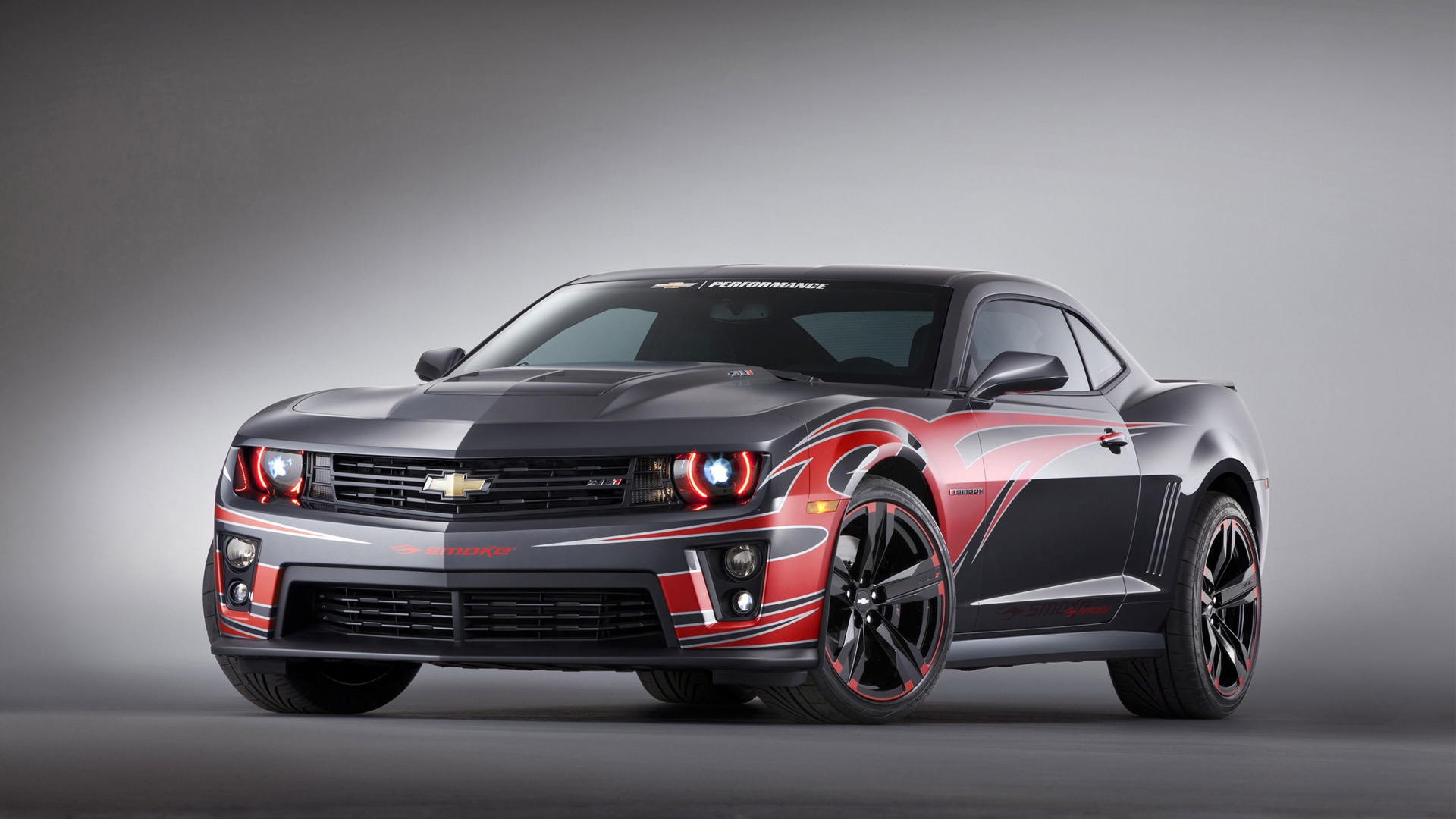
The second-generation Camaro, running from 1970 to 1981, became a masterclass in adaptation. The Z/28 package, which had been briefly discontinued in 1974 due to poor sales and tightening regulations, was resurrected in 1977 with a new emphasis on handling over outright drag strip performance.
This was a crucial strategic shift. Rather than trying to compete on power numbers that emissions and fuel economy rules made impossible, Chevrolet leaned into the Camaro’s long hood, wide stance, and European-influenced handling as its primary selling points.
The car’s styling also worked in its favor. The long, low, fastback silhouette of the second-generation car aged gracefully in a way that many of its contemporaries didn’t.
While Ford was struggling with the bloated, awkward Mustang II and Pontiac was compromising the Firebird’s identity, the Camaro maintained a visual integrity that kept customers loyal.
Sales actually climbed through the mid-to-late 1970s, even as muscle car sales industry-wide cratered. In 1979, Camaro set a production record with over 282,000 units built astonishing figures for a performance-oriented pony car in the middle of a fuel economy crisis.
The Camaro’s survival also owed much to its role in popular culture. The car appeared in the original Smokey and the Bandit orbit of car enthusiasm, became the default choice for anyone who wanted to look dangerous without committing to the full muscle car lifestyle, and embedded itself in the American consciousness as something more than transportation.
It was attitude on wheels, and attitude, unlike horsepower, wasn’t subject to EPA regulations. By the time the third generation arrived in 1982, the Camaro had successfully navigated one of the most treacherous decades in automotive history bruised, softened, but very much alive.
2. Ford Mustang
The Ford Mustang’s survival story is one of the most complicated, controversial, and ultimately triumphant in automotive history because surviving the fuel crisis required the Mustang to become, for a period, something that would make its original fans physically ill.
The Mustang II, introduced for the 1974 model year almost perfectly timed with the oil embargo, was smaller, lighter, and based on the humble Pinto platform. It was not a muscle car. Many argued, loudly and bitterly, that it was barely a car.
And yet, in the brutal context of 1974, it was exactly what Ford needed. The Mustang II sold 385,993 units in its first year the best first-year sales figure since the original 1964½ Mustang had taken America by storm a decade earlier.
Americans, suddenly confronted with gasoline lines and price shocks, wanted a small sporty-looking car with decent fuel economy. The Mustang II, for all its performance failures, delivered exactly that. It kept the Mustang name alive, kept dealer showrooms busy, and kept the brand equity of one of Ford’s most important nameplates from evaporating entirely.
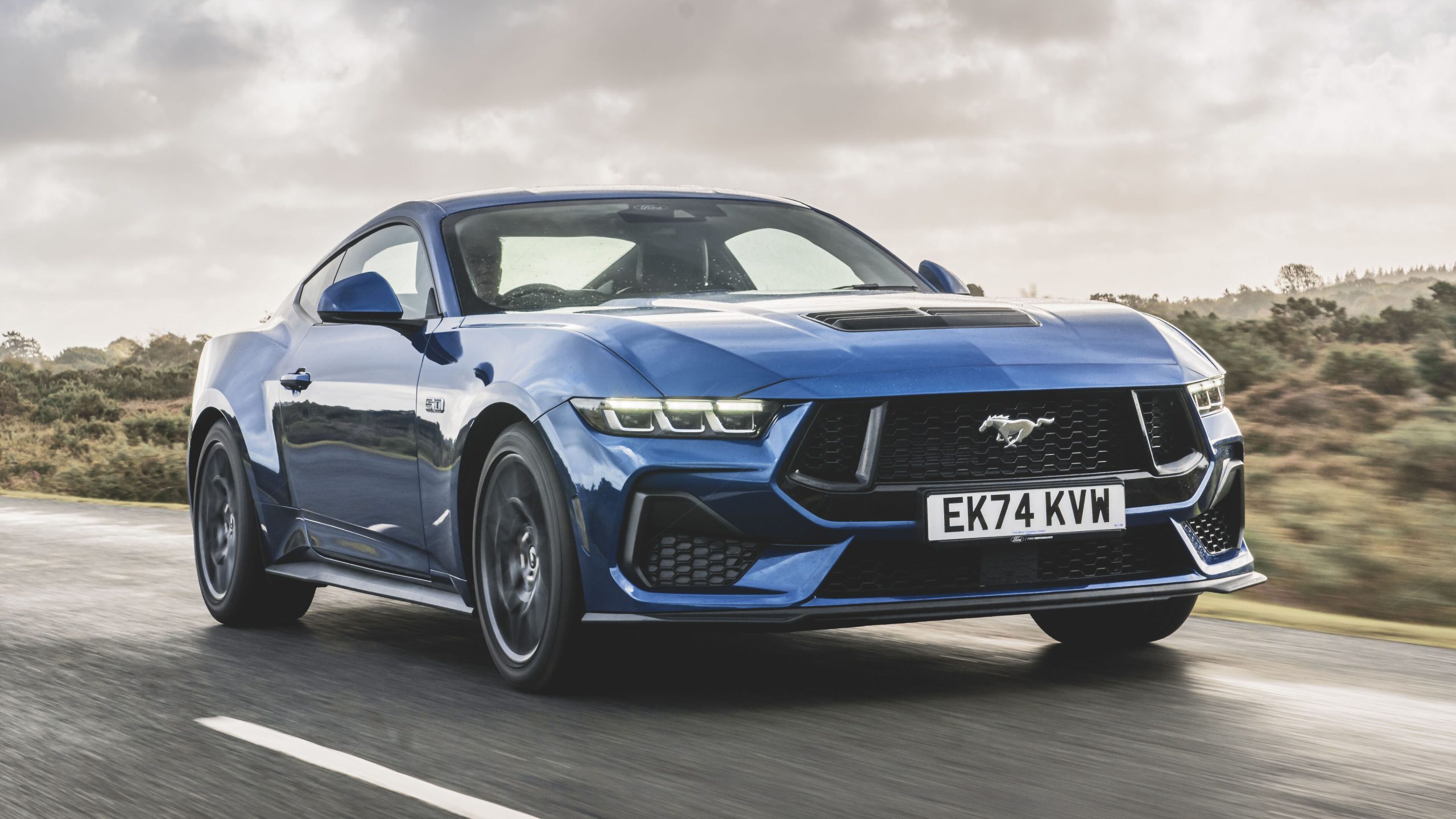
The compromises were severe. The base engine was a 2.3-liter four-cylinder the first four-cylinder Mustang in history. Even the optional V8 was a modest 302 cubic inch unit detuned to barely more than 130 horsepower in 1974.
The famous Mach 1 name was slapped on what was essentially a cosmetic package rather than a performance machine. Purists howled. The automotive press was merciless. Car and Driver famously savaged the Mustang II’s performance credentials in language that left little to the imagination.
But Ford played a longer game than its critics appreciated. By keeping the Mustang alive through the lean years, by maintaining the name in the market even in a compromised form, Ford preserved the option to revive real performance when conditions allowed.
And conditions did allow by 1979, the third-generation Fox-body Mustang arrived with a proper performance orientation and the return of serious V8 options. The 5.0-liter High Output engine that appeared in 1982 would go on to become one of the most celebrated V8s of the entire decade.
The Mustang’s willingness to transform, even at the cost of its dignity, is what ultimately saved it. A prouder approach insisting on maintaining performance purity in the face of economic reality would likely have resulted in cancellation.
Instead, Ford made the pragmatic choice, absorbed the criticism, and came out the other side with one of the most enduring automotive nameplates in history. The Mustang II is still controversial, still mocked at car shows, and still defended by a small but passionate group of enthusiasts. But without it, there might be no Mustang at all.
3. Pontiac Firebird
While its corporate sibling the Camaro was adapting through volume and cultural presence, the Pontiac Firebird chose a different survival strategy: it became a legend.
The Trans Am variant of the Firebird, long overshadowed by the Camaro in sales and by the muscle car establishment in reputation, emerged from the fuel crisis years as one of the most iconic American performance cars ever made largely thanks to a chicken, a movie, and a very specific shade of black and gold paint.
The Firebird’s path through the fuel crisis was not without difficulty. Output figures dropped steadily through the early 1970s as emissions regulations and corporate mandates squeezed performance from every engine in GM’s lineup.
The big-block 455 engine that had powered the most fearsome Trans Ams of the early decade survived longer in the Firebird than in most other GM vehicles, partly because Pontiac engineers were clever about working within the new rules, and partly because the Trans Am’s customer base was willing to pay for performance even when performance was becoming expensive to justify.
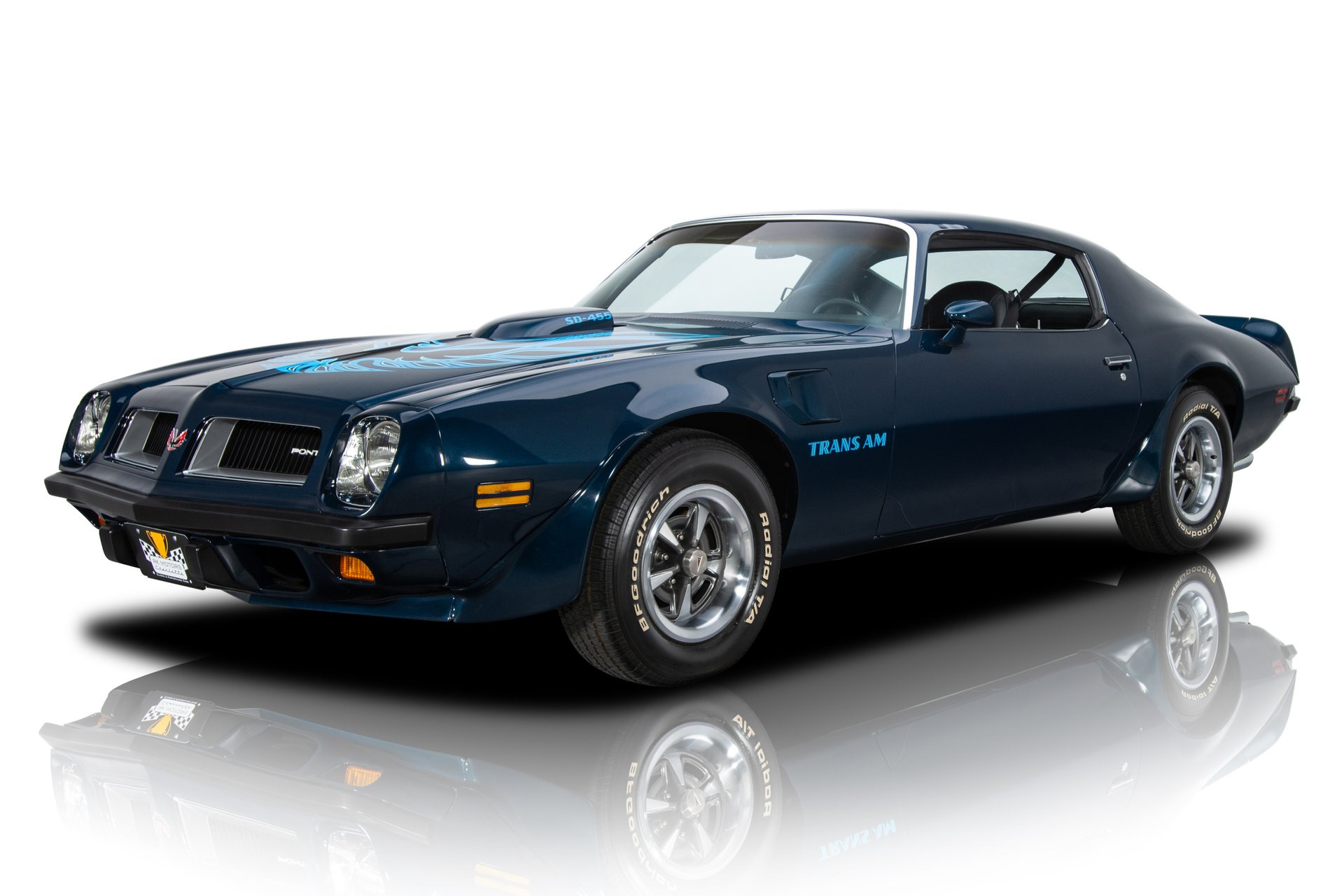
The turning point came in 1977, when Smokey and the Bandit introduced Burt Reynolds, a black-and-gold Trans Am, and the concept of outrunning authority across the American South into the national consciousness.
The film was a massive box office success, and its effect on Firebird sales was immediate and dramatic. Trans Am sales exploded. Suddenly, the Firebird wasn’t just surviving it was aspirational in a way that no amount of automotive journalism or performance specifications could manufacture.
Young Americans didn’t just want a Firebird; they wanted that Firebird, the one their hero drove with a cowboy hat and a grin. Pontiac was smart enough to capitalize aggressively.
The Special Edition package with the screaming chicken hood decal, the gold snowflake wheels, and the T-top roof became one of the defining automotive images of the late 1970s.
Production couldn’t keep pace with demand. The Trans Am became a cultural touchstone in a way that transcended its actual performance credentials which, by 1977 standards, were still genuinely impressive even in the emissions-strangled world.
The Firebird survived the fuel crisis not by pretending to be something it wasn’t, but by finding a new identity that was even more powerful than its original one.
It transformed from a performance car into a fantasy object, and in the economy of desire, that was worth more than any number of horsepower figures. It would continue through three more generations before finally ending production in 2002, leaving behind a legacy defined not by displacement figures but by a chicken on a hood and a mustached man with a smile.
4. Dodge Challenger
The original Dodge Challenger had one of the shortest and most spectacular first acts in muscle car history. Introduced in 1970, it immediately established itself as one of the most gorgeous pony cars ever designed, with Elwood Engel’s broad, long body and an engine lineup that ranged from sensible to genuinely terrifying.
The Hemi-powered Challenger R/T was a legitimate quarter-mile weapon, and the car’s styling was widely regarded as the most attractive of Chrysler’s E-body platform lineup, even prettier than its Plymouth Barracuda sibling.
And then the crisis came. Challenger sales had already been declining through 1971 and 1972 as the insurance surcharging and market cooling that preceded the embargo began biting into muscle car sales industry-wide.
By 1974, the Challenger had been so thoroughly decontented and emissions-strangled that it barely resembled its former self, and after that model year, Dodge quietly discontinued the nameplate entirely. The Challenger was dead. Or so it seemed.
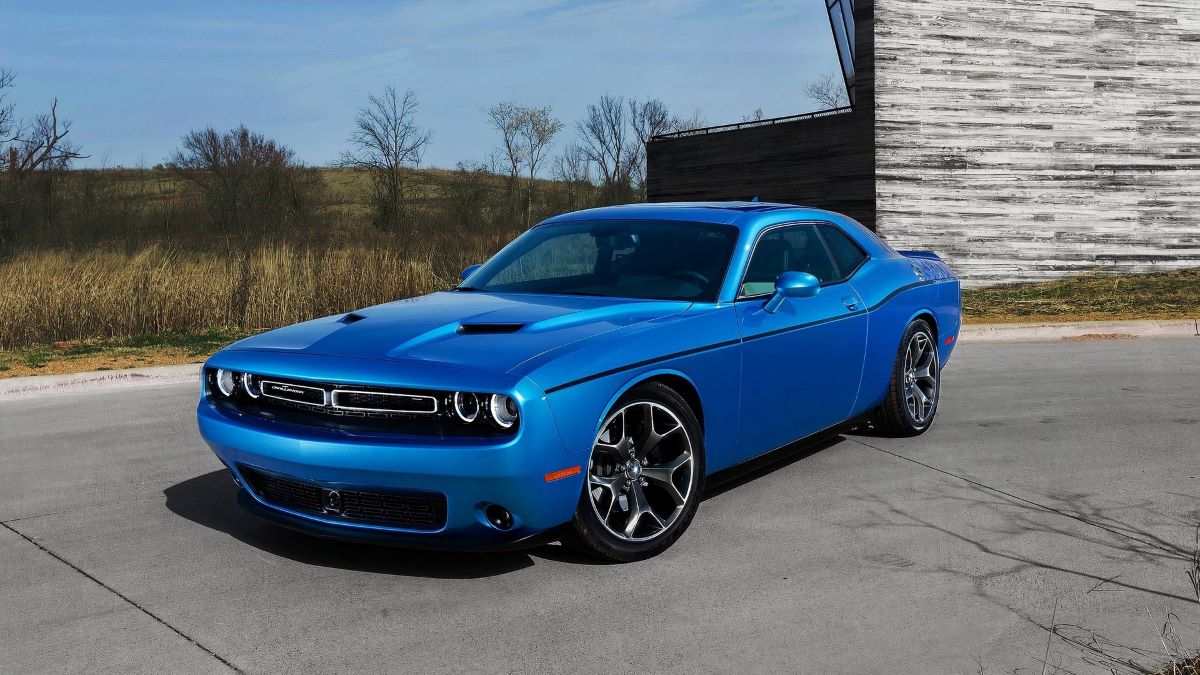
The name resurrected first as a rebadged Mitsubishi Galant in 1978 an act of branding desperation that true Challenger fans preferred to forget entirely. But the real resurrection came decades later.
In 2008, Dodge launched the third-generation Challenger built on the modern LX platform, with retro styling that deliberately referenced the gorgeous 1970 original. It was a bold gamble in a market that had seen retro-revival attempts fail before, but the new Challenger succeeded wildly, capturing a nostalgia market that had been waiting decades for exactly this.
What makes the Challenger’s story relevant to the fuel crisis era is what its discontinuation and eventual return reveals about the stakes involved. Chrysler simply didn’t have the resources or the institutional will to keep the Challenger alive through the lean years in the way that Ford kept the Mustang and GM kept the Camaro and Firebird.
The corporate financial pressures at Chrysler were more severe than at its domestic competitors, and when difficult decisions had to be made, the Challenger was expendable.
Its return in 2008 and subsequent production with supercharged Hellcat and Demon variants producing over 800 horsepower represents one of the most dramatic acts of automotive revenge on the fuel crisis era imaginable. The car that the energy crisis killed came back louder, faster, and more excessive than anything from 1970.
Also Read: Top 10 Retro Interior Fabrics That Were Popular in the 1970s
5. Chevrolet Corvette
If any American performance car was truly untouchable during the fuel crisis, it was the Chevrolet Corvette. Not because its performance was immune to the regulations and economic pressures that were destroying other muscle machines those forces hit the Corvette just as hard as everyone else. Horsepower figures dropped dramatically.
The glorious big-block 454 that had produced over 450 horsepower in 1970 was down to 270 by 1971, and the numbers kept falling. By 1975, the base Corvette was making a humiliating 165 horsepower. By any performance metric, it had been neutered.
And yet the Corvette survived, and it survived with its identity intact. The reason was simple: the Corvette occupied a unique position in American automotive culture that no regulations or fuel shortages could undermine. It was not merely a car.
It was a symbol of American engineering ambition, of a certain kind of freedom, of the idea that the country that had built the Arsenal of Democracy could also build the world’s greatest sports car. Cancelling the Corvette was simply unthinkable in a way that cancelling the Barracuda or the Torino was entirely thinkable.
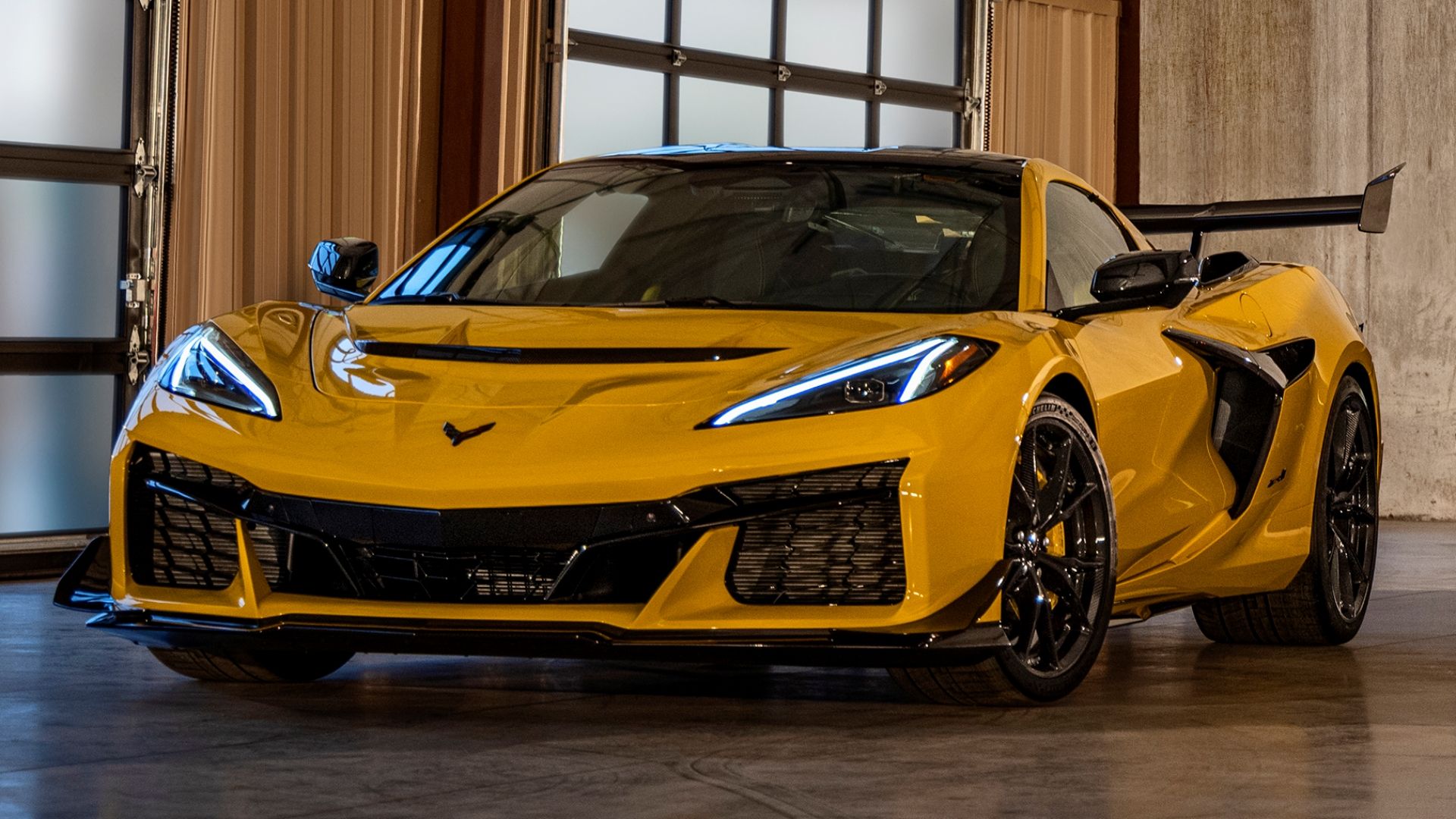
General Motors’ management understood this. Through the darkest years of the mid-1970s, the corporation maintained the Corvette even when it was losing money on each unit, even when the car’s performance had been so compromised it invited mockery.
The investment paid off spectacularly. When the C4 generation arrived in 1984 with proper performance numbers and modern engineering, it was building on an unbroken lineage that gave it credibility no competitor could manufacture overnight.
The 1990 ZR-1 with its LT5 V8 producing 375 horsepower arrived like a performance thunderbolt precisely because the Corvette had maintained its presence through the lean years.
The Corvette’s survival story is ultimately about the power of brand equity and the willingness of a corporation to protect that equity even at financial cost. It is the story of an icon recognizing its own iconography and refusing to compromise it even when compromise seemed rational.
Every other muscle car that survived did so by changing what it was. The Corvette survived by insisting, stubbornly and at significant expense, on remaining exactly what it had always been even when what it had always been could only produce 165 horsepower.
5 Classic Muscle Cars That Didn’t Survived the Fuel Crisis
These tragically discontinued vehicles suffered from inability to adapt to changing regulations and market conditions that destroyed muscle car viability, transforming legendary nameplates into casualties of emissions requirements, insurance surcharges, and fuel economy mandates as manufacturers abandoned performance entirely rather than engineering solutions allowing continued production through difficult transition years.
Their fatal vulnerabilities included excessive size and fuel consumption that could not meet new corporate average fuel economy standards, leading to abrupt cancellation during early 1970s despite strong heritage and enthusiast loyalty, complete inability to meet tightening emissions regulations without expensive re-engineering that manufacturers refused investing, and insurance industry targeting that made these vehicles uninsurable for young buyers destroying their core market.
1. Plymouth Barracuda
The Plymouth Barracuda has the melancholy distinction of being perhaps the most beautiful casualty of the fuel crisis era, a car whose styling was genuinely extraordinary and whose performance legacy was genuine and glorious and whose death was almost entirely the product of corporate accounting rather than any fundamental failure of the car itself.
The ‘Cuda, as the performance variant was known, had been one of the most feared drag strip machines of 1970 and 1971. A Hemi ‘Cuda could run the quarter mile in the low 13-second range from the factory, numbers that were extraordinary for a street-legal production car.
The problem was Chrysler’s finances. The company entered the 1970s in a structurally weaker position than GM or Ford, with less diversified revenue, thinner margins, and fewer resources to absorb the regulatory and economic shocks that the decade was delivering.
The Barracuda and the Challenger shared the E-body platform, and maintaining two separate pony cars with separate dealer networks and separate inventory was a luxury that Chrysler’s accountants increasingly identified as unsustainable. When sales of both cars fell simultaneously as the insurance surcharging and fuel crisis hit, the math became brutal.
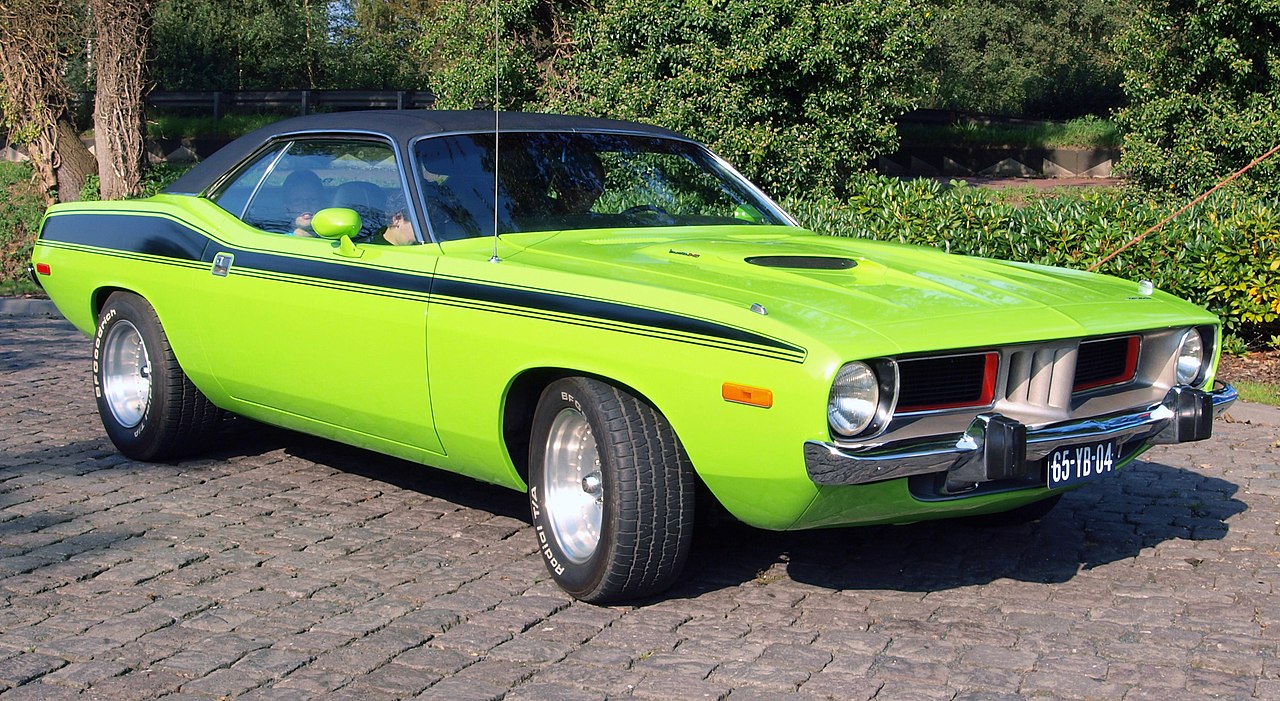
The Barracuda’s sales had already collapsed before the oil embargo from 18,690 units in 1970 to just 11,587 in 1971 to a catastrophic 7,650 in 1973. These were not the sales figures of a car with a viable future.
Plymouth dealers were selling fewer Barracudas in an entire year than some Ford dealerships sold Mustangs in a single month. The demographics of the performance car market were contracting rapidly, and the Barracuda was fighting for survival in an increasingly crowded and price-sensitive space.
After the 1974 model year, Plymouth discontinued the Barracuda entirely. There was no announcement, no special final edition, no ceremony — the car simply wasn’t in the 1975 model lineup.
Its passing was a quiet administrative decision, and that quiet somehow made it sadder. The ‘Cuda that had terrorized drag strips and graced magazine covers was gone, erased by a combination of economic forces that its engineers and designers had no control over.
Unlike the Challenger, which eventually earned a true revival, the Barracuda name has never returned to production in a meaningful way, remaining only in the memories of enthusiasts and the listings of collector car auctions where pristine Hemi examples now routinely sell for six figures a final, ironic tribute to a car whose original buyers could rarely afford to insure them.
2. Pontiac GTO
The Pontiac GTO holds a place in automotive history that few other cars can claim. John DeLorean’s creation, launched for the 1964 model year by stuffing a 389 cubic inch V8 into the intermediate Tempest body, is widely credited with creating the muscle car segment as a distinct category.
Everything that followed the Chevelle SS, the Road Runner, the Cobra Jet Mustang, all of it existed in a lineage that traced back to the GTO. To watch the car that had started the entire genre destroyed by the fuel crisis carried a particular weight of tragedy.
The GTO’s decline was not sudden. It had been losing momentum through the early 1970s as the muscle car market softened, insurance costs rose, and competitors multiplied.
The 1973 model year brought a significant downgrade the GTO was demoted from its own standalone model to an appearance package on the Pontiac LeMans, a cost-cutting measure that immediately communicated to the market that this was no longer a priority vehicle for Pontiac. The optics were terrible. The GTO had always represented Pontiac’s boldest ambitions; treating it as a cosmetic option package said the opposite.
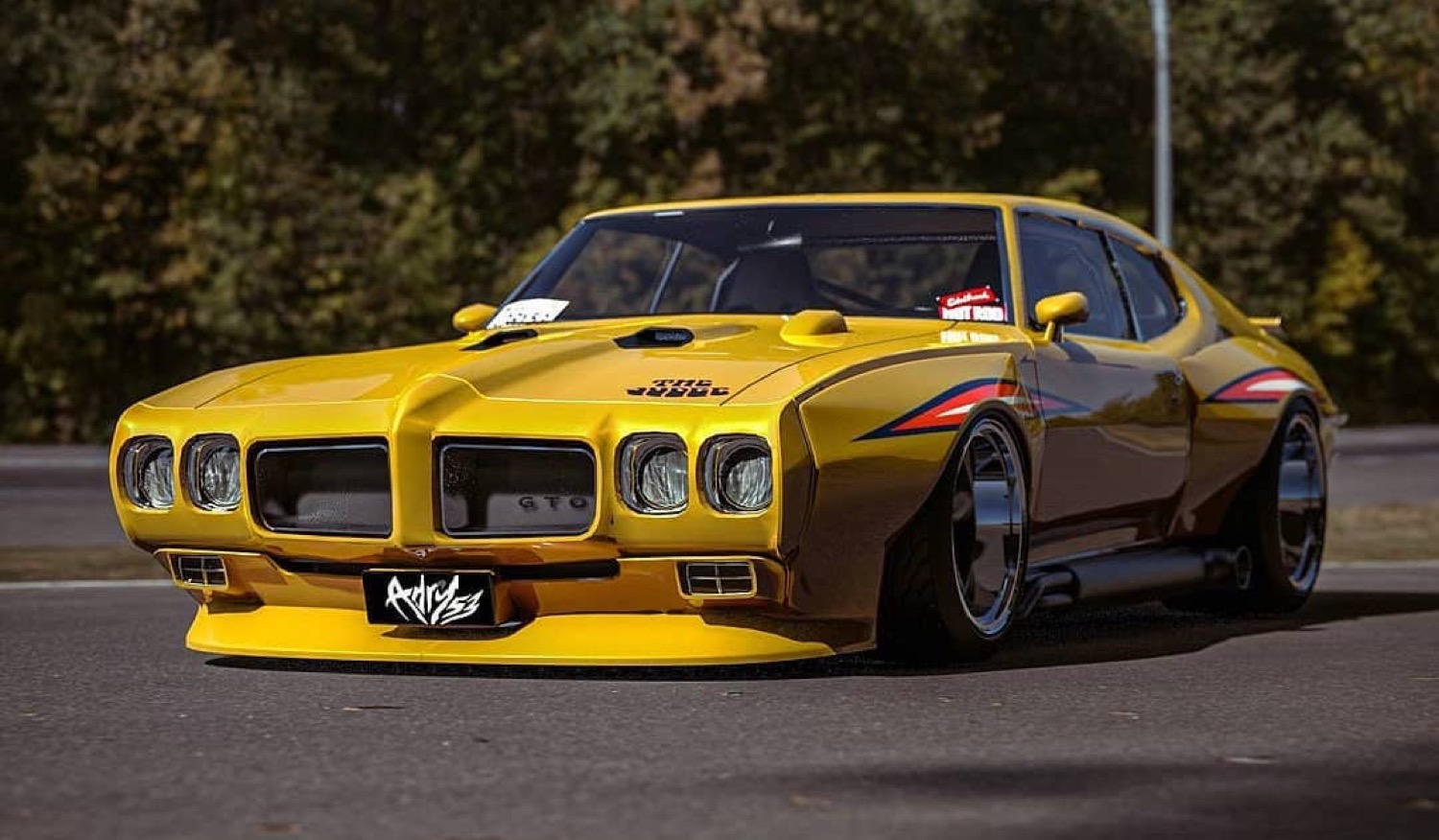
The 1974 GTO was based on the compact Ventura body a further downgrade that bewildered anyone who had known the car in its prime. The 350 cubic inch V8 available for 1974 produced 200 horsepower in a car that had once offered 370.
The proportions were wrong, the presence was gone, and the market responded accordingly. Only 7,058 GTOs were sold in 1974, and GM made the decision not to continue. The car that had launched American muscle was discontinued after just 10 years in production.
Pontiac would attempt a GTO revival in 2004 using the Australian Holden Monaro platform, but the car was widely dismissed as inauthentic a badge on an import body rather than a genuine American muscle machine.
It lasted just two model years before being discontinued again in 2006, a footnote that somehow added to rather than redeemed the original’s tragedy. The real GTO died in 1974, a victim of the same forces it had helped create, the performance car market ultimately consuming the car that had invented the genre.
3. Ford Torino Cobra
The Ford Torino occupies a complicated space in muscle car history it was never quite a pony car, never quite a full muscle car, but for a few years in the early 1970s, the Torino Cobra represented something genuinely thrilling.
The fastback body style was one of the most visually arresting shapes on American roads, with a long hood, sloping roofline, and dramatic proportions that made it look fast even at rest.
The 429 Cobra Jet engine available in the Torino delivered the performance to match the looks, and the car earned a devoted following among buyers who wanted something bigger and more imposing than the pony car alternatives.
But the Torino’s survival depended on a muscle car market that was evaporating simultaneously from multiple directions. Fuel costs hit the Torino particularly hard because its size and weight made it genuinely inefficient even by the standards of the era.
The intermediate muscle car the GTO, the Chevelle SS, the Torino Cobra occupied an awkward middle ground that the fuel crisis made untenable. Too big to excuse as a sporty compact, too performance-focused to reposition as practical family transportation, these cars had nowhere to go.
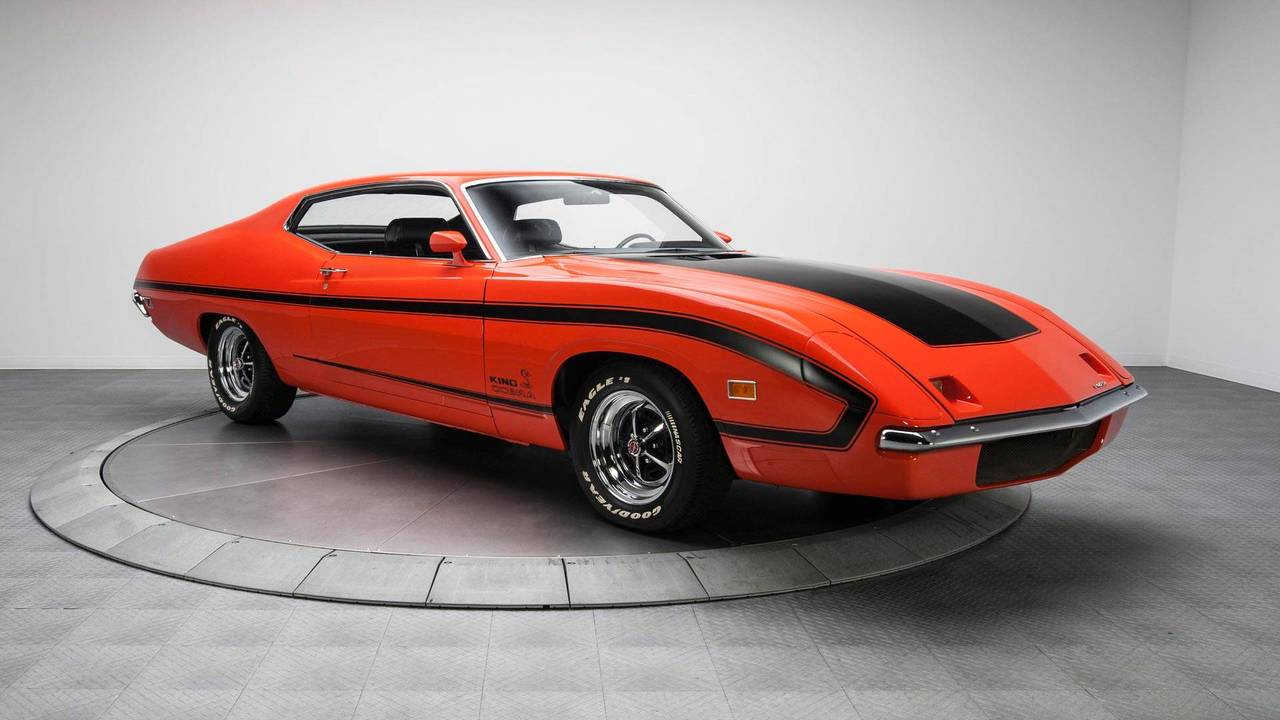
Ford’s solution was to pivot the Torino nameplate toward the personal luxury segment, softening the car’s edges, adding creature comforts, and backing away from the performance emphasis.
The Elite model that became the focus of Ford’s marketing for the Torino represented this shift perfectly more chrome, more padding, softer suspension, less power. It was a reasonable commercial decision and a death sentence for the Torino’s soul.
By 1976, the Torino nameplate was gone entirely, replaced by the Ford LTD II which completed the transition from performance icon to comfortable cruiser.
The Cobra variant that had made the car genuinely exciting in 1970 and 1971 existed only in the memory of enthusiasts and the paperwork of insurance companies that had spent those years charging its owners a premium for the privilege of speed.
The Torino Cobra’s story is the story of a car that was simply too much of everything the fuel crisis era didn’t want too large, too thirsty, too performance-focused and not enough of anything it needed to be.
4. Dodge Super Bee
The Dodge Super Bee was never the most glamorous muscle car. That role in Chrysler’s lineup belonged to the Charger, with its elegant fastback and Hollywood good looks.
The Super Bee was instead the working-class hero of the B-body platform stripped down, no-frills, focused entirely on delivering maximum performance at minimum cost.
It was the choice of the buyer who didn’t care about the interior trim or the dealer financing brochure, who simply wanted a 440 Magnum or a 426 Hemi under the hood and a straight line to the horizon.
That value proposition high performance at accessible prices was both the Super Bee’s identity and its vulnerability. As the costs of performance escalated through the early 1970s, the car’s fundamental promise became harder to keep.
Insurance surcharging hit the Super Bee’s core customer base young, male, urban buyers with modest incomes harder than any other demographic.
When a 20-year-old factory worker was being quoted insurance premiums that exceeded his car payment for the privilege of driving a Hemi, the economics of the Super Bee’s existence began to unravel.
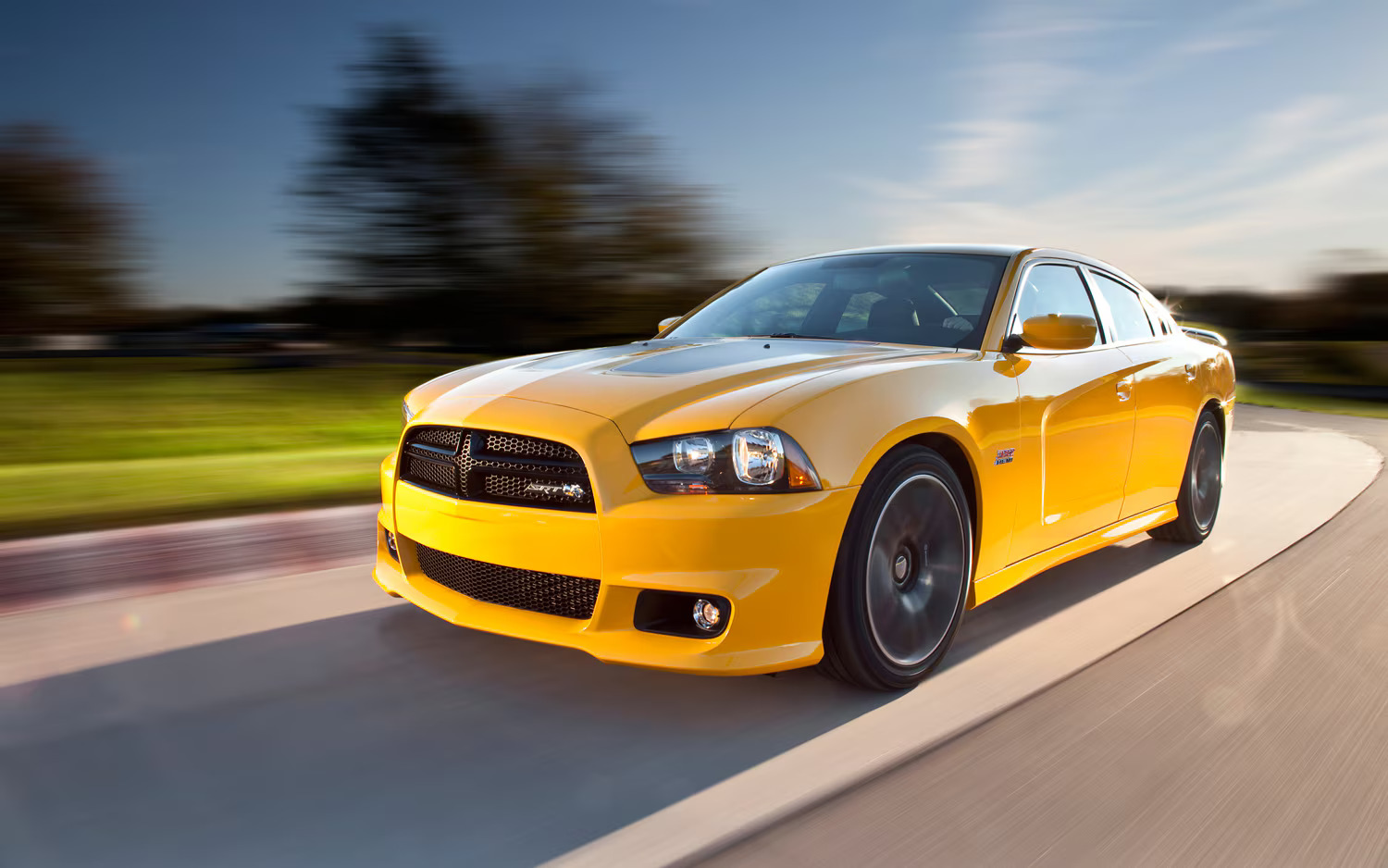
Dodge transferred the Super Bee nameplate to the Charger body for 1971, which addressed the styling criticism of the original B-body car but couldn’t address the fundamental market shifts that were destroying the affordable muscle car segment.
The 1971 Super Bee was actually a fine car, better looking than its predecessor, still available with serious power, still capable of embarrassing almost anything else on the road. But the market it had been built for was contracting rapidly, and the car’s sales reflected that reality.
By 1972, the Super Bee was discontinued. It returned briefly as a Dodge Coronet variant in 1976, a cosmetic package on a thoroughly ordinary car that cynically borrowed the name without any of the substance a common pattern in this era of muscle car nameplate abuse.
The original Super Bee’s story is ultimately the story of a car designed for a customer who could no longer afford to exist in the market the fuel crisis had created. When working-class buyers could no longer justify high-performance cars economically, the working-class muscle car had nowhere left to go.
5. AMC Javelin
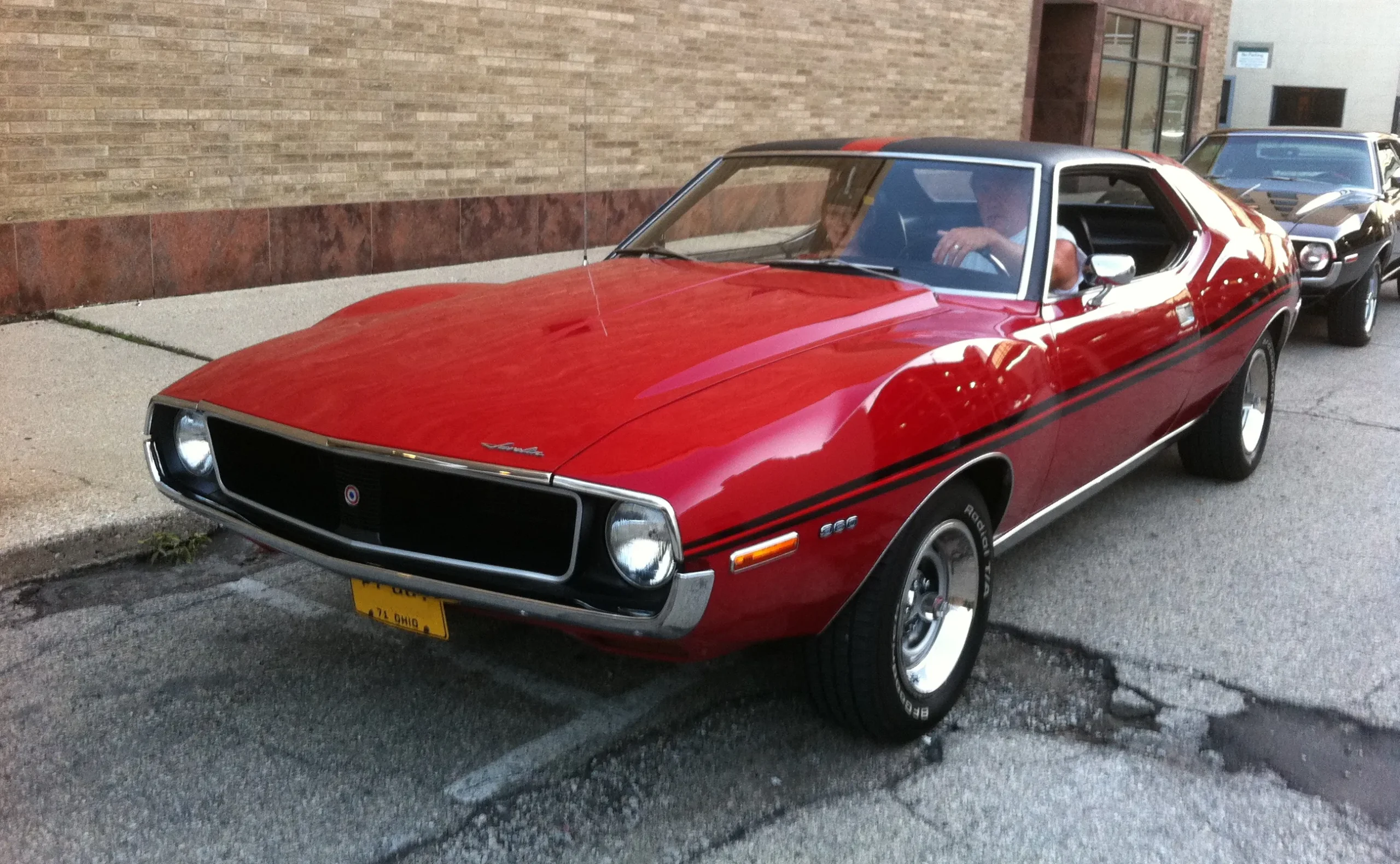
The AMC Javelin deserves far more recognition than it typically receives in the muscle car pantheon. American Motors Corporation’s answer to the pony car wars was, by any reasonable assessment, a genuinely excellent automobile particularly the second-generation 1971-1974 models styled by Dick Teague, which featured one of the most visually dynamic and original designs of the entire era.
The twin-venturi hood, the dramatically sculpted bodysides, and the optional Go Package with its bold graphics made the Javelin one of the most striking American cars of the early 1970s.
AMC even found success in Trans-Am racing, with Mark Donohue and Roger Penske delivering championship results that humiliated the larger manufacturers and proved the Javelin’s engineering credibility on the track. In a just world, this racing success would have translated to showroom heat and secured the car’s future. The world was not just.
American Motors’ fundamental problem was structural. As a small independent manufacturer without the scale, dealer network, or financial reserves of GM, Ford, or Chrysler, AMC had no margin for error.
Every model had to earn its place in the lineup, and in the fuel crisis environment, a performance-focused pony car with limited economies of scale was impossible to justify.
The resources required to update the Javelin’s emissions systems, develop more fuel-efficient engines, and maintain the model in a rapidly changing regulatory environment were simply beyond what AMC could commit.
After the 1974 model year, the Javelin was discontinued. AMC redirected its limited resources toward the Pacer and the Gremlin vehicles that, whatever their aesthetic limitations, at least addressed the fuel economy concerns that were now the market’s primary obsession.
The Javelin was sacrificed on the altar of corporate survival, and AMC itself would only survive until 1987 before being absorbed into Chrysler. The Javelin’s story is the most poignant of the fuel crisis casualties because it represents what was possible for a talented, creative, under-resourced competitor against entrenched corporate giants.
Given the resources of GM or Ford, the Javelin’s platform might have been evolved and sustained through the crisis years. Instead, it simply ran out of runway, and one of the most genuinely original American performance cars of its era ended not with a bang but with an accounting decision another small tragedy in the large catastrophe of the muscle car’s first death.
Also Read: 5 Classic Vans With Custom Murals That Defined 1970s Youth Culture
