
The 1980s was a decade that transformed the automobile industry in ways few could have predicted. As aerodynamics began creeping into automotive design philosophy, a peculiar transitional aesthetic emerged the boxy sedan.
Sharp angles, upright rooflines, slab-sided doors, and ruler-straight body panels defined an era where form followed function in the most literal sense. These weren’t cars trying to look fast; they were cars trying to look serious, substantial, and purposeful.
At the time, critics and enthusiasts debated whether these squared-off machines had any soul. Fast forward four decades, and the answer is a resounding yes. What was once considered plain, utilitarian, or even ungainly has aged into something deeply compelling.
The geometric purity of these designs now feels intentional architectural, even in a world drowning in swooping, organic, wind-tunnel-homogenized shapes.
Today’s collectors, restorers, and daily drivers have rediscovered these machines with genuine passion. Rising values, dedicated communities, and a flood of restoration parts all signal the same truth: the boxy sedans of the 1980s have graduated from forgotten transportation to beloved modern classics. Here are ten that earned that status more than any others.
1. Volvo 240 (1974–1993)
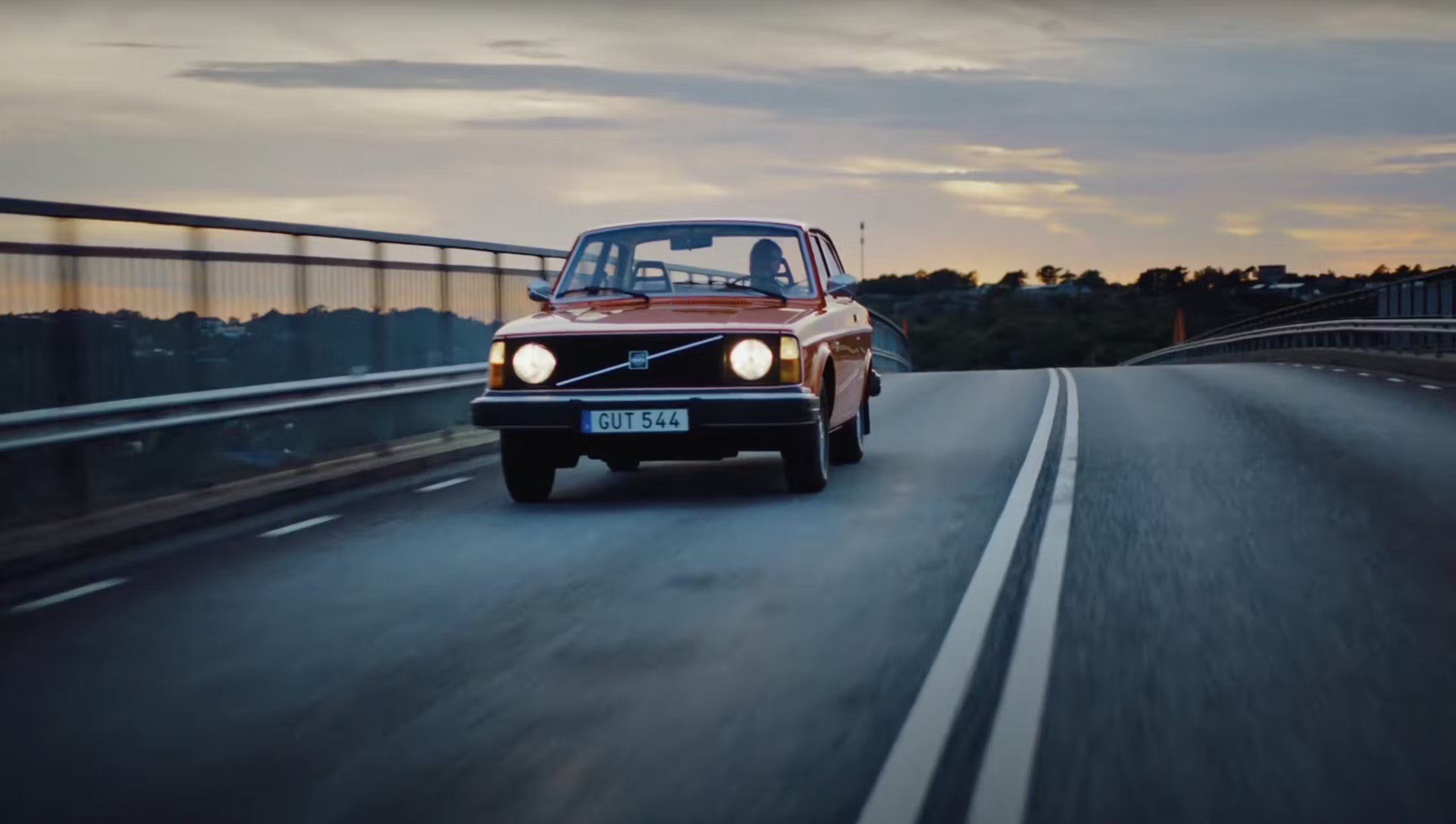
If there is a single vehicle that perfectly embodies everything the boxy 1980s sedan stood for, it is the Volvo 240. Produced across nearly two decades but peaking in cultural relevance during the 1980s, the 240 became a symbol of Scandinavian practicality, safety-first engineering, and a quietly stubborn refusal to follow automotive fashion trends.
It was boxy not by accident but by design Volvo engineers prioritized occupant space, structural rigidity, and crash safety over sleekness, and the result was a car that looked exactly like what it was: a tool built for living, not for showing off.
The 240’s silhouette is unmistakable. Vertical rear window, near-vertical windshield, perfectly flat hood, and doors that open like vault panels. The greenhouse the glassed-in area above the beltline is enormous, giving passengers a sense of space and visibility that modern vehicles, with their shrinking windows and thickening pillars, simply cannot replicate.
Sitting in a 240 feels honest. There’s no dashboard theater, no attempt to manufacture excitement. Just clear gauges, simple controls, and a sense that the car will outlast everything else in the parking lot.
Under the hood, the 240 was no sports car. The B21, B23, and B230 four-cylinder engines were workmanlike units built for longevity rather than power. The B230F, which powered most 1980s examples, produced around 114 horsepower sufficient for highway cruising but never breathtaking.
What these engines lacked in outright performance, they compensated for in sheer durability. Stories of 240s accumulating 300,000, 400,000, and even 500,000 miles without major mechanical overhaul are not mythology; they are documented reality, the product of simple engineering executed to extraordinarily high tolerances.
Volvo’s safety engineering was genuinely revolutionary for the era. The 240 featured a reinforced passenger cell with engineered crumple zones a concept Volvo had pioneered in earlier models and the car’s crash performance was consistently at the top of insurance industry tests throughout its production life.
It was one of the first vehicles to make safety a genuine selling point rather than a footnote, and that legacy resonates today among buyers who see the 240 not just as a classic car but as a philosophical statement.
The modern classic status of the 240 is now firmly established. Values have climbed steadily, with clean, well-maintained examples particularly wagons and the rarer GLT sport variants, commanding prices that would have seemed absurd a decade ago. The enthusiast community around the 240 is enormous, spanning continents and generations.
Young buyers are drawn to its honesty, its repairability, and its complete indifference to trends. It is a car that rewards patience and mechanical empathy, and its boxy perfection looks better with every passing year.
2. Mercedes-Benz W123 (1976–1985)
The Mercedes-Benz W123 is perhaps the most respected boxy sedan of the twentieth century a machine that defined what the word “quality” meant in the automotive world for nearly a decade.
Produced from 1976 through 1985, with the majority of its cultural dominance occurring squarely in the 1980s, the W123 was the car that cemented Mercedes-Benz’s reputation as the gold standard of engineering precision.
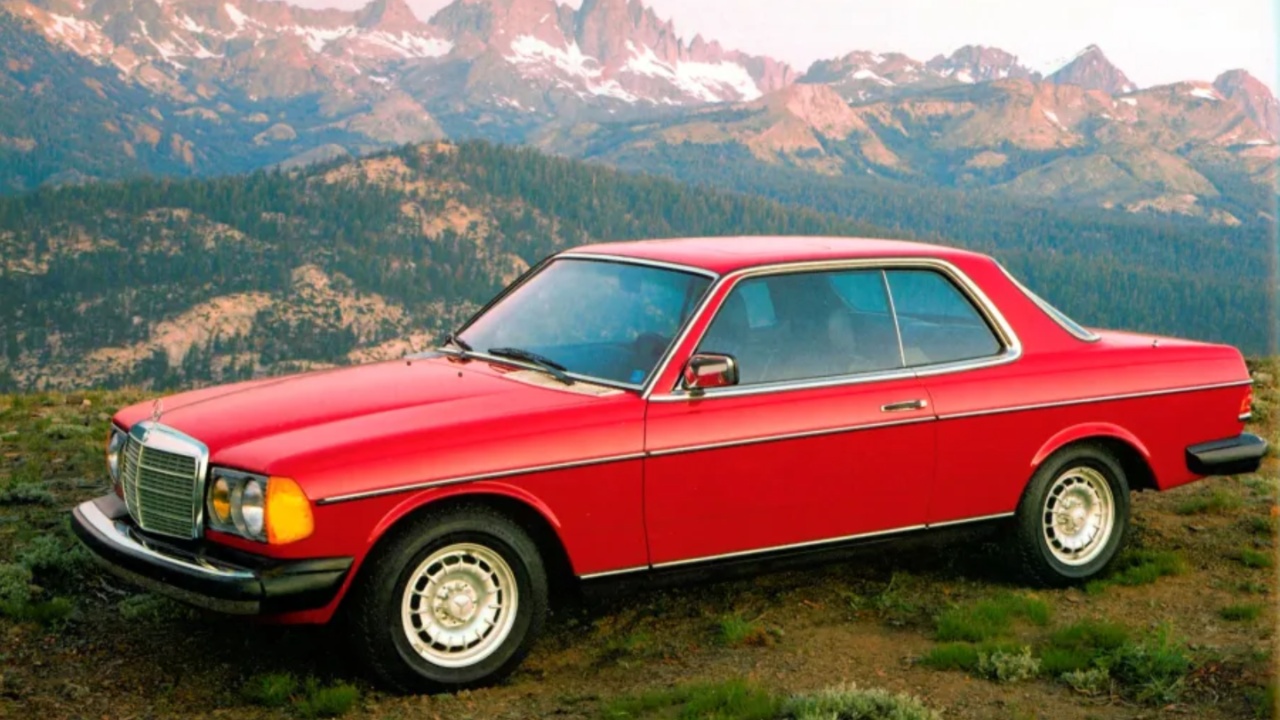
It was not glamorous in a flashy way. It was glamorous in the way a perfectly tailored suit is glamorous quietly, confidently, and without apology. The design language is a masterclass in disciplined geometry. Every panel is flat and purposeful.
The front end features the iconic three-pointed star sitting atop a broad, horizontal hood. The greenhouse is upright and generously proportioned.
The chrome detailing bumpers, window surrounds, door handles is substantial and solid, the kind of hardware that makes a satisfying thud when you close a door.
That door closure sound became a Mercedes cliché, but it started here, with the W123, where the engineers genuinely obsessed over the acoustic signature of a shutting door as a proxy for build quality.
Mechanically, the W123 was built with a philosophy that bordered on obsession. Components were over-engineered to a degree that modern manufacturers, operating under profit margin constraints, would consider impossible. The inline-six petrol engines particularly the 280E’s M110 unit were silky, refined, and extraordinarily durable.
But it was the diesel variants, especially the legendary OM617 five-cylinder turbodiesel, that secured the W123’s immortality. These engines, producing modest power figures but virtually indestructible internal components, have been documented running well beyond a million kilometers in commercial taxi service across Africa and the Middle East. They simply do not wear out under normal circumstances.
The W123’s interior represented the 1980s premium benchmark. Wool upholstery, genuine wood trim, analog gauges with clear typography, and a driving position that communicated control and authority. There was no wasted space, no decorative frivolity.
The ergonomics were studied and considered, placing every control exactly where an engineer’s logic suggested it should be. Modern luxury vehicles offer more features, more screens, and more ambient lighting, but they rarely offer the W123’s sense of architectural completeness.
Today, the W123 has become one of the most sought-after classics in the affordable luxury segment. Well-preserved examples, particularly in the rarer 280CE coupe or 300D turbodiesel configurations, have seen prices rise significantly as collectors recognize the combination of design integrity, mechanical longevity, and historical importance.
The W123 is not merely a car people collect it is a car people drive daily, restore lovingly, and hand down across generations. Its boxy perfection has aged into something timeless.
3. BMW E28 5 Series (1981–1988)
The BMW E28 5 Series occupies a unique position in automotive history: it is the car that defined what a sports sedan could be in the modern era, and it did so while wearing one of the most perfectly resolved boxy silhouettes ever penned.
Produced from 1981 through 1988, the E28 refined the already-excellent E12 formula into something sharper, more sophisticated, and more driver-focused, without sacrificing the upright, squared-off aesthetic that gave BMWs of the era their particular gravitas.
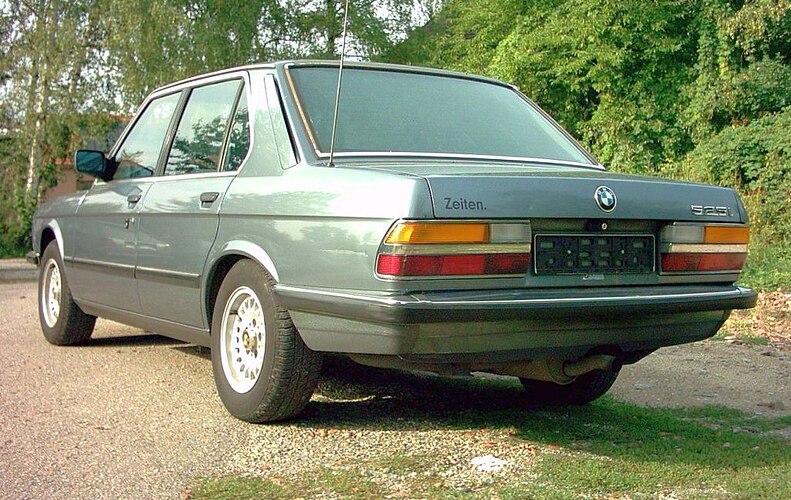
The design, overseen by Paul Bracq and refined under Claus Luthe, is a study in proportional excellence. The long hood, short rear deck, and precisely placed greenhouse create a stance that communicates purpose without aggression.
The kidney grilles are prominent but not overwhelming. The body panels are flat and taut, with crisp character lines that catch light in satisfying ways. There is no excess every surface exists for a reason, and that reason is usually aerodynamic efficiency or structural necessity dressed up in elegant clothing.
Under the hood, the E28 offered a range of engines that became legendary among driving enthusiasts. The 528i’s M30 inline-six was a jewel of mechanical smoothness, delivering power in a linear, addictive wave that rewarded drivers who worked through the rev range.
The 535i amplified these characteristics further, and the M5 introduced in 1985 as one of the world’s first genuine factory super sedans took the E28 platform to a level that shocked the performance world.
Powered by a hand-built version of the M88 inline-six from the M1 supercar, the E28 M5 produced 286 horsepower and could reach 100 km/h in under six seconds while looking, externally, almost indistinguishable from a standard 528i.
The driving experience of the E28 remains a benchmark. The steering hydraulic rack-and-pinion with carefully calibrated feedback communicates road surface and grip levels with an honesty that modern electric systems approximate but rarely match.
The chassis balance, with near-50/50 weight distribution and a well-sorted suspension geometry, rewards smooth, committed driving. The E28 is a car that teaches its driver rather than compensating for them.
Classic status for the E28, particularly M5 and 535i variants, has been firmly established for years. Values have risen considerably, especially for unmolested, low-mileage examples in desirable colors.
Even standard 528i models are now appreciated for their mechanical purity and design elegance. The E28 represents the last era of BMW engineering before corporate growth began introducing compromises, and enthusiasts recognize and value that authenticity deeply.
4. Audi 5000 / 200 (1977–1991)
The Audi 5000, known in European markets as the Audi 100, represents one of the most underappreciated design achievements of the 1980s. While Audi was simultaneously pioneering the aerodynamic front-wheel-drive revolution with the 1982 Audi 100’s 0.30 Cd coefficient, the 5000 series that preceded and overlapped it wore a more traditional boxy suit one that combined Germanic precision with a subtle elegance that distinguished it from both the Swedish utilitarianism of Volvo and the engineering theater of Mercedes.
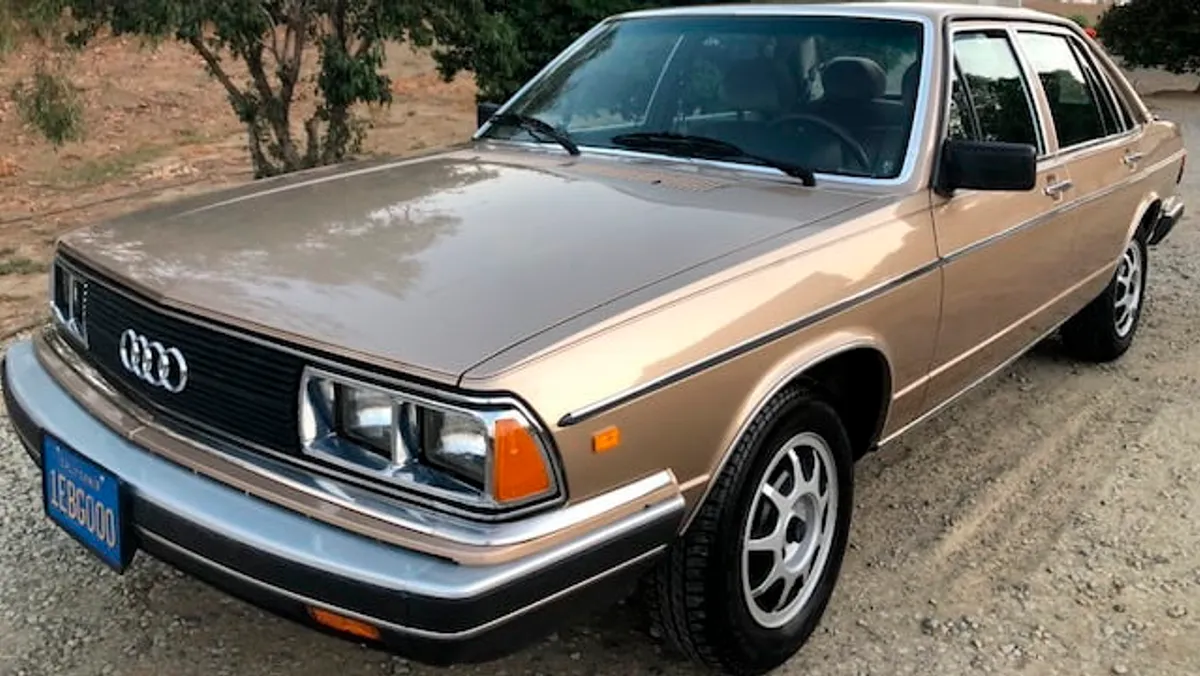
The C2 and early C3 generations of the 5000, which populated American and European roads through the early 1980s, feature beautifully proportioned boxy bodywork with a particularly distinctive front end.
The wide, low hood, slim pillars, and careful surface detailing give the car a sense of weight and quality that punched above its price point. The interior with its broad, sweeping dashboard, quality switchgear, and carefully considered ergonomics felt genuinely premium in ways that American domestic competitors of the era could not approach.
The Quattro all-wheel-drive system, introduced in the 5000 Quattro variant, transformed the car’s driving character entirely. In wet or wintry conditions, the Quattro 5000 was in a different category from any other sedan on the road, delivering traction and confidence that permanently altered buyer expectations about what a road car should be able to do.
The Quattro system’s introduction via the 5000 is now recognized as one of the most significant engineering decisions in modern automotive history, directly spawning the all-wheel-drive revolution that followed in virtually every manufacturer’s lineup.
The 5000 was unfairly tarnished in the mid-1980s by the infamous “unintended acceleration” controversy in the United States a scandal that investigation eventually attributed primarily to driver error but which devastated Audi’s American sales for years.
This injustice has since been widely acknowledged, and today’s collectors view the 5000 with the appreciation it always deserved. Well-maintained examples, particularly the turbocharged 5000CS Turbo Quattro, are now genuine collector pieces with devoted followings.
The combination of thoughtful engineering, design distinction, and historical importance both positive and cautionary gives the Audi 5000 a compelling narrative that modern classic collectors find irresistible. It is a car that rewards deeper knowledge and offers something genuinely different from the more obvious German classics of the era.
Also Read: 8 Reasons Hydrogen Is Becoming a Real Alternative to Diesel Trucks
5. Mercedes-Benz W126 S-Class (1979–1991)
If the W123 defined Mercedes engineering integrity, the W126 S-Class defined Mercedes engineering ambition. Produced from 1979 through 1991, the W126 was the flagship sedan of the world’s most respected automotive brand during an era when that distinction genuinely meant something.
It was the car in which heads of state were chauffeured, in which business titans conducted mobile boardrooms, and in which the very idea of automotive luxury was defined and refined for a generation.
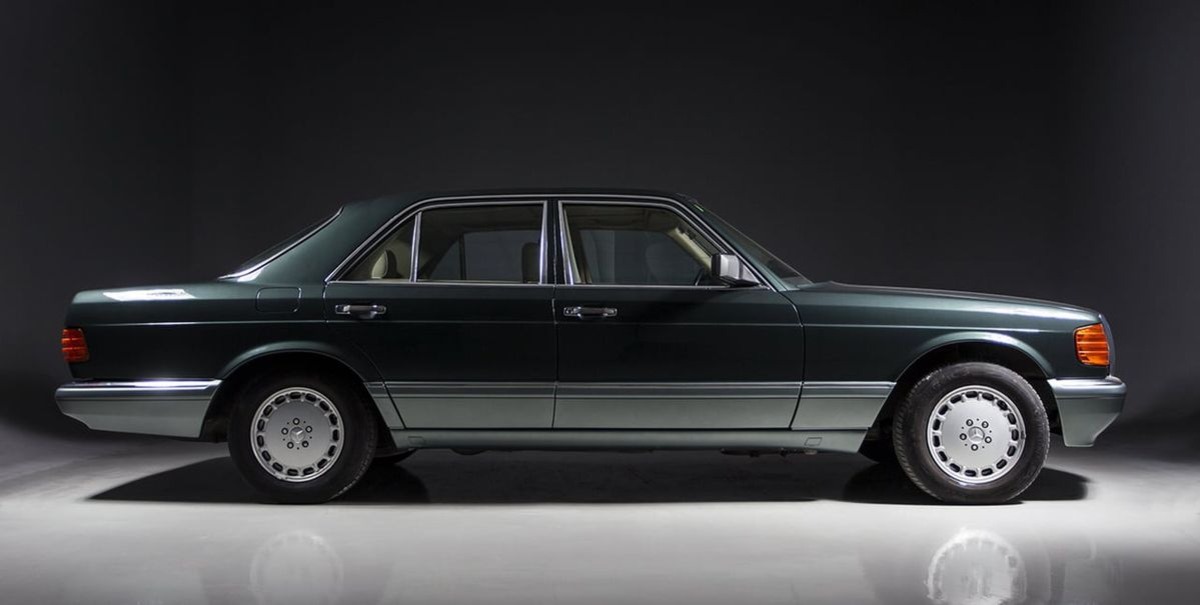
The W126’s design, styled by Bruno Sacco with his philosophy of “horizontal homogeneity and vertical affinity,” is the definitive expression of the upright, authoritative boxy sedan.
The proportions are imperial long hood, extended wheelbase, upright rear window, and a roofline that communicates dignity rather than sportiness.
The surface detailing is restrained to the point of austerity, with chrome deployed sparingly and purposefully. The result is a car that looks the same today as it looked in 1985: completely, permanently correct.
Mechanically, the W126 represented the state of the engineering art. The M116 and M117 V8 engines were smooth, quiet, and torque-rich delivered effortless performance in a way that felt more like a force of nature than a mechanical contrivance.
The 560SEL, with its 5.6-liter V8 producing 238 horsepower, could dispatch the 0–100 km/h sprint in around seven seconds while maintaining near-total silence inside the cabin. Fuel injection systems, developed by Bosch specifically for Mercedes applications, ensured smooth power delivery across the entire rev range.
The safety engineering in the W126 was as advanced as any production vehicle of its era. Crumple zones, reinforced passenger cells, early airbag technology, and anti-lock braking systems were either standard or available, and the car’s passive safety in period crash testing was exceptional.
Mercedes engineers reportedly spent more development time on the W126 than any previous model, and every hour of that investment is evident in how the cars have aged both mechanically and aesthetically.
The W126’s modern classic status is absolute. Among collectors worldwide, particularly in the United States, Europe, and the Gulf states, the 560SEL and the 500SEC coupe are objects of genuine desire. Values for clean, well-documented examples have been rising steadily for years.
The W126 is not merely a classic car it is a monument to a specific moment in industrial civilization when a large company decided that perfection, not profit margin, was the appropriate goal.
6. Toyota Cressida (1977–1992)
The Toyota Cressida occupies a fascinating position in the classic car world it was never the car that enthusiasts talked about when new, but it has become, with the passage of time, one of the most respected Japanese sedans ever exported to Western markets.
Produced across several generations with the third and fourth generations covering most of the 1980s, the Cressida was Toyota’s premium rear-wheel-drive offering for North American and global markets, and it delivered a level of quality, reliability, and understated elegance that was genuinely remarkable for its price point.
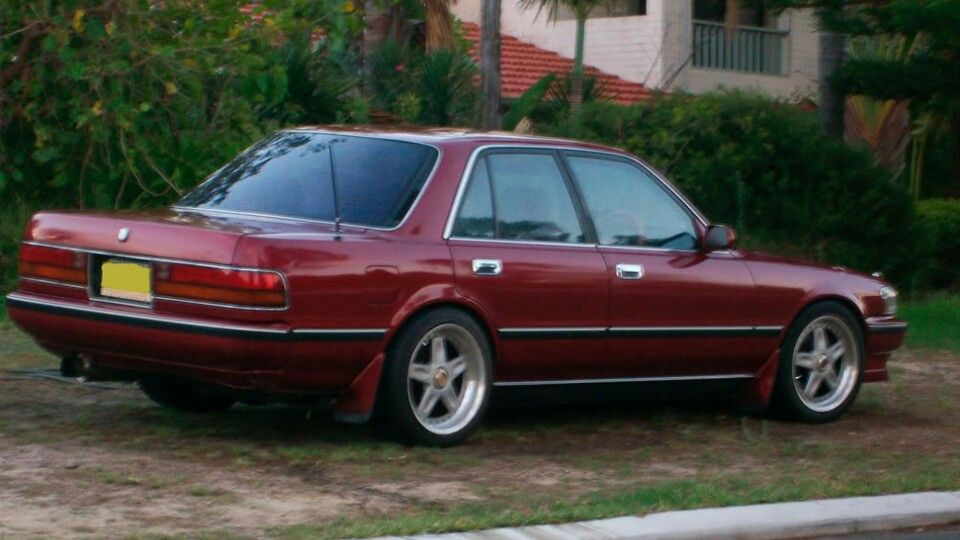
The 1980s Cressida’s styling is quintessentially boxy in the most refined sense. Clean, uncluttered panels, a formal roofline, and discreet chrome detailing give it a presence that echoes European luxury sedans without directly copying them.
Toyota designers managed something genuinely difficult: creating a car that looked expensive without resorting to visual noise or decorative excess. The result aged extraordinarily well, looking increasingly distinguished as the decades passed and the overwrought styling of contemporary competitors dated badly.
Under the hood, the Cressida’s 5M-GE and later 7M-GE inline-six engines were engineering highlights. Smooth, rev-happy, and torque-rich across the midrange, these engines gave the Cressida a driving character that surprised drivers expecting typical economy-car dynamics.
The 7M-GE in particular producing around 190 horsepower in its most potent tune delivered genuine performance wrapped in a quiet, effortless package that made highway driving a genuine pleasure.
The Cressida’s interior represented Toyota at its most ambitious. Quality materials, careful assembly, and sensible ergonomics combined with features power everything, often including a power sunroof, premium audio, and automatic climate control that made the car genuinely luxurious by the standards of the era.
The reliability record, meanwhile, was essentially perfect. Cressidas accumulated enormous mileage with minimal maintenance demands, earning a reputation for indestructibility that perfectly complemented the car’s premium positioning.
Today, the Cressida has developed a passionate following among Japanese car enthusiasts, tuning culture participants, and collectors who appreciate the combination of rear-wheel-drive dynamics, inline-six engines, and period-correct boxy elegance.
Drift culture particularly embraced the Cressida’s chassis and powertrain, driving demand for clean examples. Values for well-preserved, original-condition Cressidas have risen substantially, and the car’s reputation continues to grow among those who understand what it actually represents.
7. Jaguar XJ Series III (1979–1992)
The Jaguar XJ Series III is the anomaly on this list a boxy sedan that manages, against all logical expectation, to look genuinely beautiful. Designed by Sir William Lyons and refined through three series, the XJ’s long-running body style was already a decade old when the 1980s arrived, yet it remained competitive, desirable, and distinctly Jaguar in ways that newer designs from other manufacturers simply could not match.
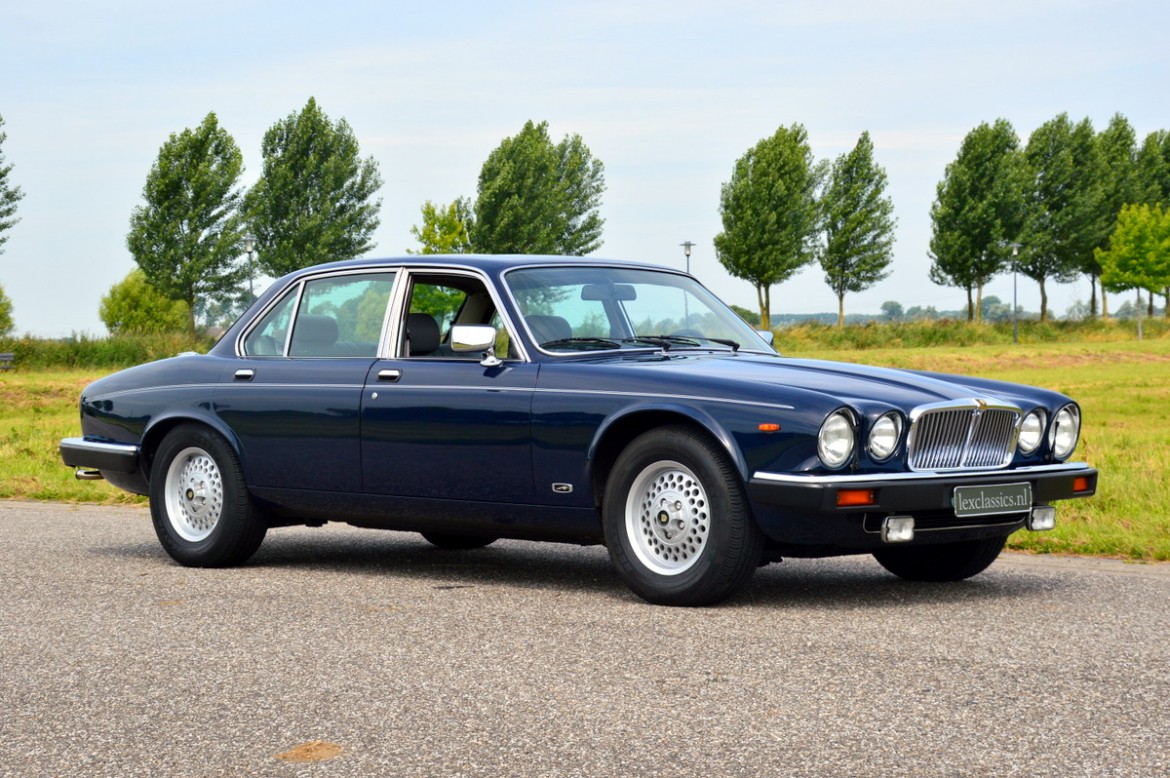
The Series III, with its Pininfarina-assisted refinements, represents the fullest expression of this extraordinary design. The XJ’s boxiness is of a particular, aristocratic variety.
The proportions impossibly long hood, compact greenhouse, short rear deck are sports car ratios applied to a full-size sedan, creating a visual tension that resolves into elegance rather than contradiction.
The chrome detailing, the wire wheel covers, the distinctive twin-headlamp front end, and the subtle rear haunches all contribute to a visual identity that is immediately recognizable and persistently beautiful.
Unlike the functional rectangles of Volvo or the engineering geometry of Mercedes, the XJ’s angles feel sculpted, as though the car grew into its shape rather than being designed into it.
Underneath the beautiful skin, the XJ offered two magnificent engine options that defined British engineering of the era: the 4.2-liter XK inline-six, a design with roots stretching back to 1948 but continuously developed into a refined, torque-rich unit of genuine character, and the magnificent 5.3-liter V12 a silky, whisper-quiet engine that remains among the greatest automotive powerplants ever produced.
The V12’s refinement was legendary; contemporary road testers used words like “supernatural” to describe the sensation of near-silent acceleration it provided.
The XJ’s interior was pure theater. Burr walnut veneer, Connolly leather, deep-pile carpets, and the smell of genuine organic materials created an environment that no amount of synthetic premium material could replicate.
The driving position was low and enveloping, and the ride quality on Jaguar’s sophisticated independent rear suspension was among the best regardless of price class. The XJ was not a car; it was an argument that civilization remained worth maintaining.
Modern classic status for the Series III XJ has been thoroughly established, with values for clean V12 examples reaching levels that reward patient collectors who acquired them during the long years of Jaguar’s reliability-driven depreciation.
The XJ Series III is now recognized as one of the great automotive designs of the twentieth century a boxy sedan that transcended the category entirely.
8. Pontiac Grand Prix (1988–2008, focusing on 1988 generation)
The 1988 Pontiac Grand Prix represented something genuinely new from General Motors a front-wheel-drive personal luxury coupe and sedan that managed to combine the boxy formal elegance of the era with a surprising degree of sporting intent.
While General Motors had struggled through much of the 1980s with badge-engineered mediocrity, the 1988 Grand Prix, riding on the new W-body platform, demonstrated that American manufacturers could still produce compelling, distinctive vehicles when the organizational will existed to do so.
The W-body Grand Prix’s styling was overseen by designers who understood that boxy didn’t have to mean boring. The car’s knife-edged surface creases, aerodynamically optimized roof treatment, and carefully resolved greenhouse proportions created a visual tension that felt genuinely sophisticated.
The interior, particularly in the Turbo Grand Prix and later GTP configurations, offered a driving-focused environment with clearly legible instrumentation, supportive seating, and materials quality that exceeded typical GM standards of the period.
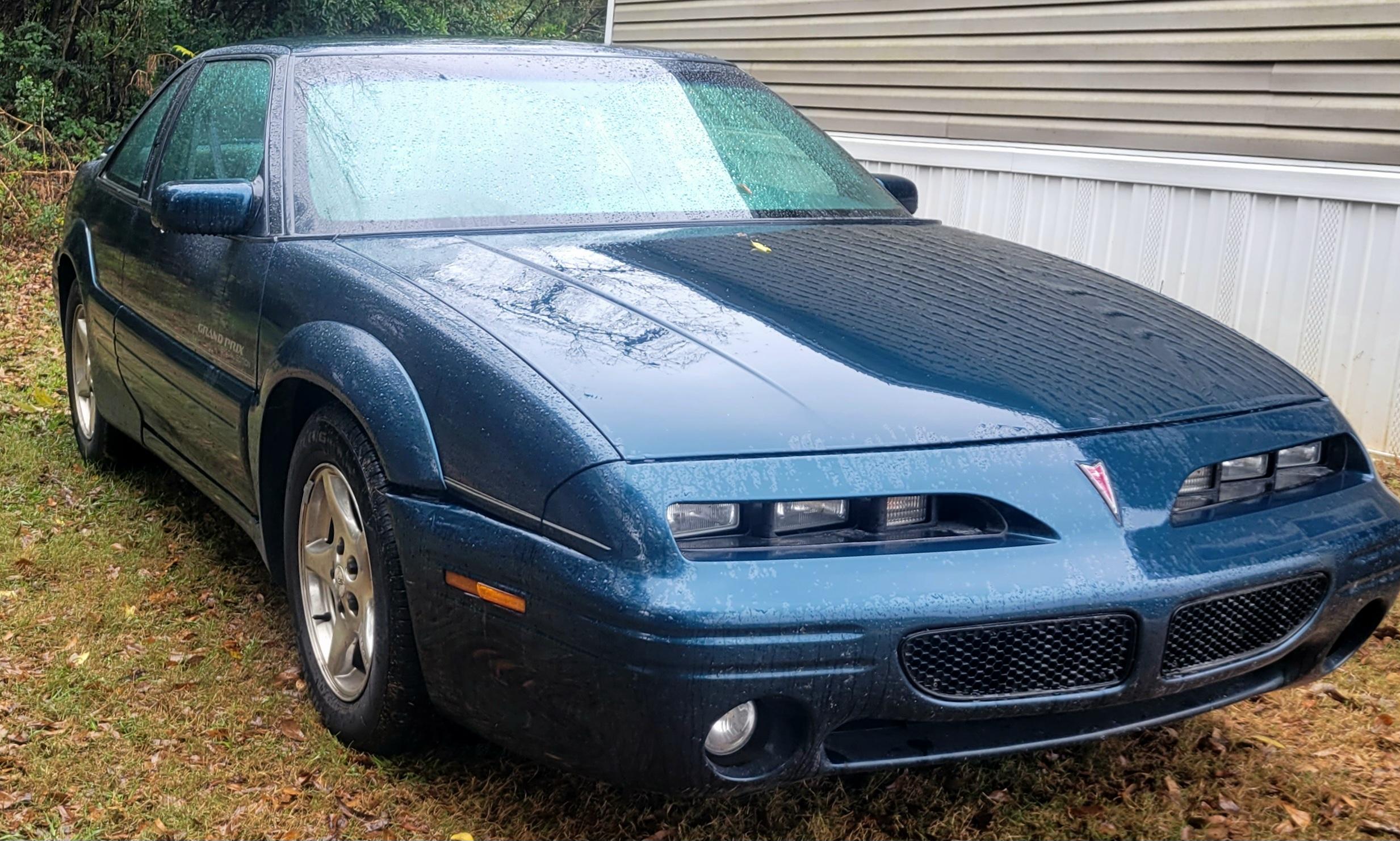
The turbocharged 3.8-liter V6 in the Grand Prix Turbo produced 250 horsepower a remarkable figure for an American front-wheel-drive sedan of 1989 and delivered performance that genuinely surprised sports sedan drivers from more prestigious European brands.
Handling, while never achieving the dynamic purity of a BMW or a Jaguar, was competent and entertaining, particularly in the firmer suspension configurations available on performance variants.
What makes the early W-body Grand Prix significant as a modern classic is its role as a transition marker the last era of American automobile design before the corporate compromises of the 1990s truly took hold, and a demonstration that American engineers and designers could produce something with genuine character when given the resources and freedom.
Collectors who grew up in the late 1980s and early 1990s are now in their prime earning years, and nostalgia is driving renewed appreciation for these machines. Clean examples are increasingly difficult to find, and values have begun the upward trajectory that precedes genuine classic status.
9. Honda Accord (Third Generation, 1986–1989)
The third-generation Honda Accord is one of the most important automobiles in American automotive history a car that permanently altered consumer expectations about what a Japanese import could offer and that arguably saved the American middle-class market from complacent domestic manufacturers who had forgotten how to build compelling products.
In its 1986–1989 form, the Accord wore one of the era’s most perfectly resolved boxy sedan bodies, combining Honda’s engineering precision with a design maturity that far exceeded what anyone expected from a Japanese manufacturer at the time.
The third-gen Accord’s styling is clean and purposeful without being anonymous. The squared-off roofline, formal trunk treatment, and carefully creased body panels create a formal silhouette that reads as thoroughly considered rather than merely functional.
Honda designers understood that American buyers wanted a car that looked substantial and serious, and they delivered exactly that a compact sedan that presented itself with the presence of something considerably larger and more expensive.
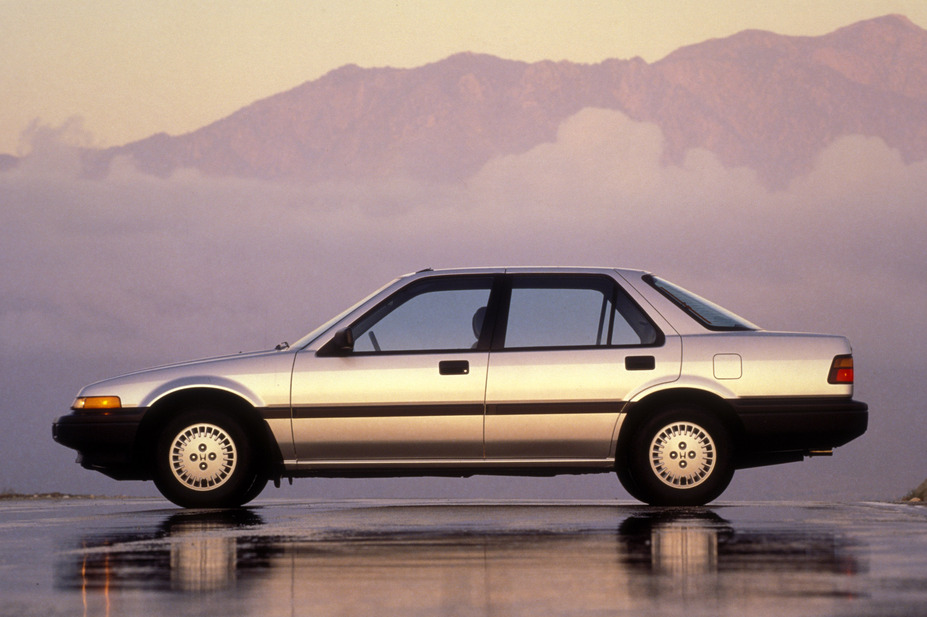
Honda’s engineering for the third-generation Accord was exceptional in ways that became apparent only over years of ownership. The 2.0-liter fuel-injected four-cylinder engine particularly in the EFI variants available from 1986 was smooth, responsive, and durable in ways that domestic competitors could not match.
The five-speed manual transmission had a mechanical precision that enthusiasts praised extravagantly, and the chassis tuning provided a driving experience that was genuinely engaging despite the car’s family-oriented positioning.
The interior quality of the third-gen Accord was the argument that Honda won decisively. Panel fit, materials quality, ergonomic precision, and long-term durability all exceeded what American or European manufacturers offered at comparable price points.
Driving a well-maintained third-gen Accord today is an exercise in appreciating how thoroughly Honda understood the relationship between design, engineering, and ownership experience.
The third-generation Accord’s modern classic status is now firmly established. Original, well-maintained examples particularly in the LXi specification with fuel injection and period-correct alloy wheels are sought by collectors who recognize the car’s historical importance and appreciate its clean, honest design integrity. As the survivors of heavy 1990s depreciation grow scarcer, values have begun rising appropriately.
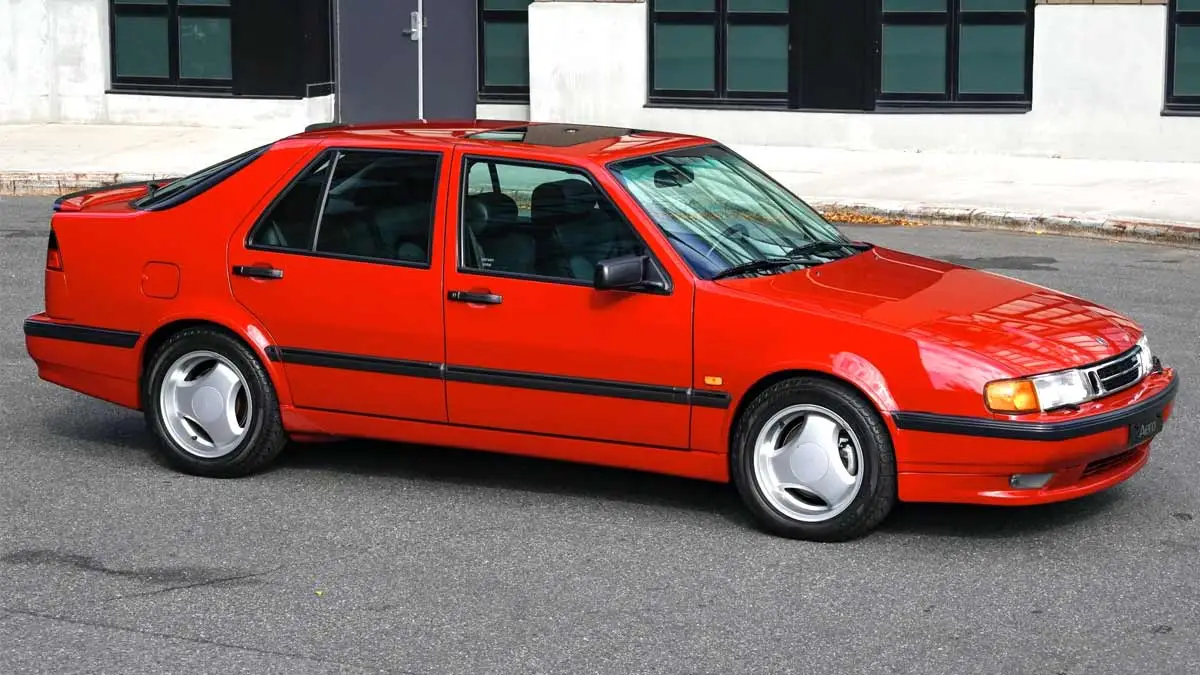
10. Saab 900 (1978–1994)
The Saab 900 is the boxy sedan for people who refuse to make ordinary choices a car that was always different, always slightly awkward, always genuinely interesting, and always more capable than it appeared.
Produced from 1978 through 1994, with the heart of its cultural moment occurring squarely in the 1980s, the 900 combined Saab’s aerospace engineering heritage, Scandinavian design philosophy, and a complete indifference to conventional automotive thinking into something that has aged into absolute classic status. The 900’s design is boxy in the most characterful possible way.
The distinctive three-door hatchback and four-door sedan both feature the prominent, curved hood that stretches forward to accommodate the longitudinally-mounted, front-wheel-drive drivetrain a layout that required Saab to install the engine backwards and underneath the transmission, a packaging solution so unusual that it required entirely custom tooling to service. The result is a car with a visual personality that is immediately recognizable and impossible to confuse with anything else ever manufactured.
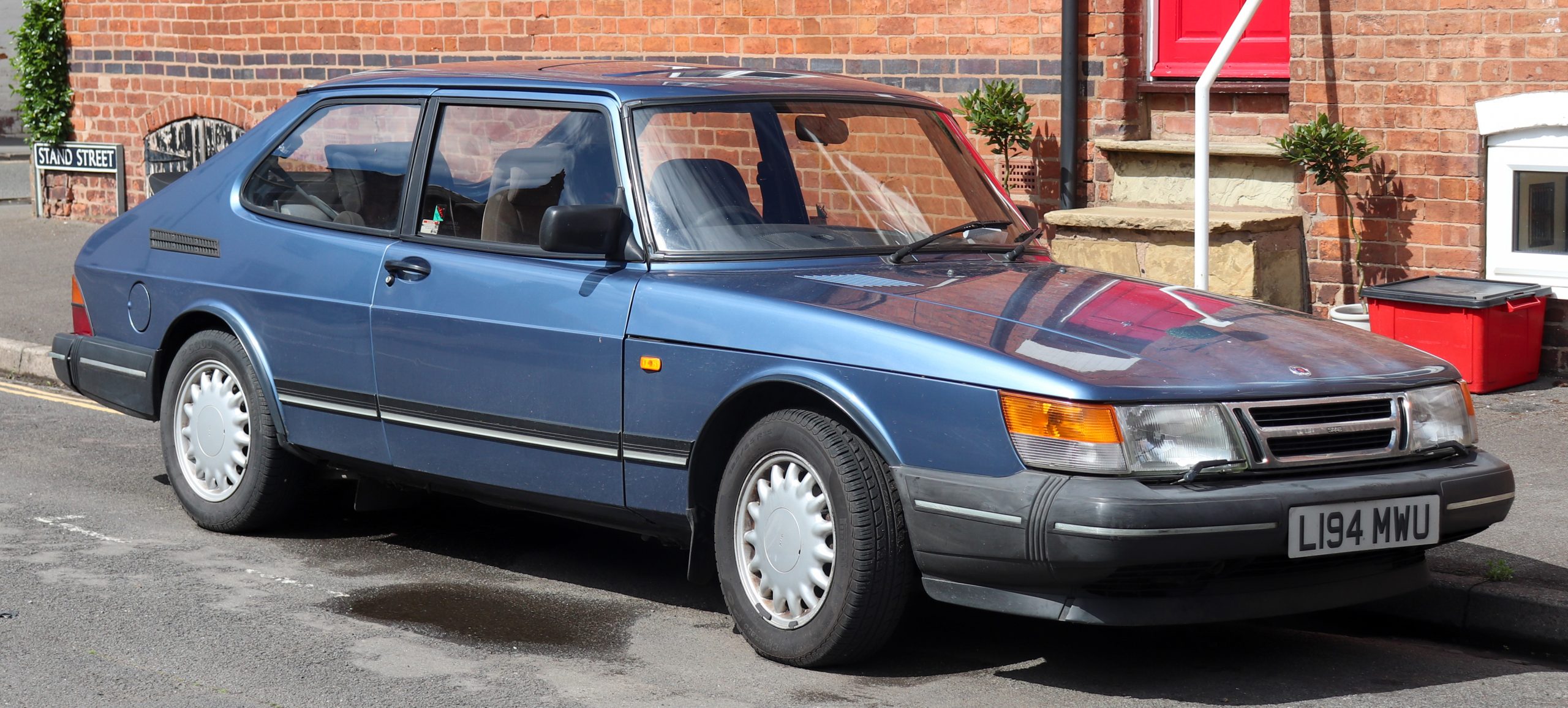
The turbocharged variants particularly the 900 Turbo, introduced in 1978 and developed throughout the 1980s were among the most exciting performance cars available at any price during their production era.
The 2.0-liter turbocharged four-cylinder, producing 145 to 185 horsepower depending on specification, delivered acceleration that embarrassed far more expensive sports cars, accompanied by the distinctive whoosh of boost building that became the definitive Saab sonic signature. The 900 SPG (Special Performance Group) of the late 1980s remains one of the most desirable Saab variants ever produced.
Saab’s safety engineering, like Volvo’s, was genuinely advanced for the era. The 900’s integrated head restraints, strong door beams, and carefully engineered crumple structure contributed to crash test performance that was consistently excellent.
The ignition key mounted in the center console positioned there to prevent knee injuries in frontal impacts, is perhaps the most famous example of Saab’s willingness to depart from convention when engineering logic demanded it.
The modern classic status of the 900 Turbo and SPG variants is now beyond question. Values for clean, well-maintained examples have risen dramatically, driven by enthusiast communities that recognize the 900 as one of the most genuinely distinctive automobiles ever produced.
Saab’s tragic demise in 2011 added historical poignancy to collector interest, and the 900 now occupies a permanent place in the canon of great automotive designs a boxy, peculiar, magnificent machine that proved difference was always worth preserving.
Also Read: Top 10 Brands Offering the Most Reliable Hands Free Driving Tech
