

The mid-1970s were a dark chapter in the story of American performance. The golden age of the muscle car that glorious, gasoline-soaked era of thundering big blocks, sky-high compression ratios, and factory horsepower ratings that made insurance actuaries weep had come to a grinding halt. Two seismic shocks reshaped the world almost overnight.
First, the 1973 Arab Oil Embargo sent fuel prices spiraling and forced American consumers to rethink their love affair with displacement. Second, the United States government tightened emissions regulations so severely that automakers had no choice but to strangle their engines with smog pumps, exhaust gas recirculation systems, and catalytic converters that robbed power at every turn.
Compression ratios fell off a cliff. The switch to SAE net horsepower ratings in 1972 made the numbers look even more depressing on paper. In this environment, where a 500-cubic-inch Cadillac V8 was embarrassingly producing just 190 horsepower, it seemed as though the great American V8 had been tamed forever.
And yet, not every engine rolled over and surrendered. A handful of remarkable V8s some big-block bruisers, some refined small-blocks held onto enough character, torque, and engineering integrity to remain genuinely compelling powerplants through the mid-decade gloom. These were the engines that kept the spirit of American performance alive when everything conspired against it. This is their story.
1. Chevrolet 350 Small-Block V8 (LT1 / L48)
If there is one American V8 engine that could survive any era, endure any regulation, outlast any cultural shift, and still emerge with its dignity intact, it is the Chevrolet 350 cubic-inch small-block.
Born in 1967 as a bored-out extension of the legendary 327, the 350 quickly became the backbone of General Motors’ performance strategy and, by the mid-1970s, it was arguably the last man standing in a field of increasingly neutered powerplants.
The Chevrolet 350 traces its roots to the original Chevy small-block introduced in 1955 one of the most consequential engine designs in automotive history.
Ed Cole’s engineering team created a lightweight, compact, and inherently efficient V8 that became the template for performance engines across the industry. When the 350 variant arrived, it retained the best qualities of that original architecture while adding the displacement needed to keep pace with the big-block brigade.
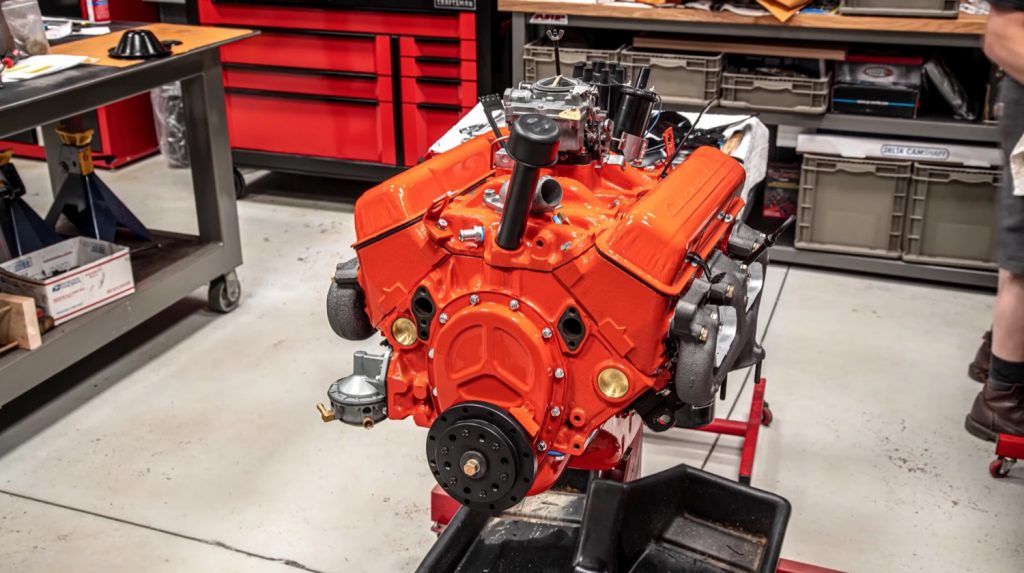
At its peak in 1970, the LT1 version of the 350 produced 370 horsepower in the Corvette a remarkable number for a small-block engine. That figure came from high-compression heads, a solid-lifter camshaft, and careful tuning that extracted every last revolution from the engine’s short 3.48-inch stroke. It was an engine that loved to rev, in stark contrast to the loping, torque-heavy big blocks that defined the muscle car era.
Then the regulations hit. Compression ratios dropped. Lead was being phased out of gasoline. Emissions hardware arrived in force. By the mid-1970s, the 350 was no longer the fire-breathing LT1 of Corvette glory.
The L48 variant, fitted to the Corvette and Camaro through the mid-decade years, was rated at around 165 horsepower net a number that sounds almost insulting given the engine’s heritage.
But here is the thing: those net ratings were measured under strict conditions that included all accessories running. The L48 350, even in its emissions-strangled state, produced usable, real-world performance that many contemporary rivals simply could not match.
Torque remained strong, the engine was mechanically reliable, and the fundamental architecture was so sound that it responded beautifully to even modest modifications. Corvette buyers who knew what they were doing could still extract genuine performance from the 350.
Moreover, the 350 small-block demonstrated a resilience that no other engine of the period could claim. It continued to serve the Corvette, Camaro, and Nova throughout the decade, and rather than dying, it evolved.
By the early 1980s, when the performance renaissance began, the 350 was one of the first engines to benefit returning with better breathing, improved fuel injection, and eventually the L98 and then the legendary LT1 of the C4 Corvette era. The mid-1970s were simply a chapter of patience for an engine that had decades of relevance still ahead.
2. Pontiac 455 Super Duty
In a decade when most manufacturers were frantically detuning their most powerful engines, Pontiac did something almost insane: it built a new, genuinely performance-oriented V8 specifically engineered to meet emissions standards while still producing serious power.
The result was the 455 Super Duty one of the last true muscle car engines ever to roll off an American assembly line, and arguably the most significant performance engine of the entire malaise era.
The Super Duty designation had deep roots at Pontiac, dating back to the early 1960s when it was applied to race-bred, purpose-built competition engines. When Pontiac engineering revived the name for 1973 and 1974, they did so deliberately and with real intent.
This was not a badge slapped on an ordinary engine for marketing purposes the 455 SD was a genuinely engineered high-performance unit, designed from the ground up to breathe freely through an era of tightening restrictions.

The engine featured round exhaust ports rather than the D-shaped ports of conventional Pontiac V8s, improving flow characteristics significantly. The cylinder heads were redesigned, the camshaft was chosen for a balance between emissions compliance and performance, and round intake ports improved efficiency. Forged internals added durability.
The result was an engine rated at 290 horsepower net in 1973, a figure that, in the context of that era, was extraordinary. Some independent tests suggested the true output was even higher than the official rating.
In the Pontiac Firebird Trans Am, the 455 Super Duty transformed what could have been a styling exercise into a genuine performance car. The Trans Am was already a striking machine visually, but with the SD under the hood, it had the substance to match the style.
Quarter-mile times in the low 13-second range were achievable, a figure that would have been impressive even in the pre-regulation era. Sadly, the 455 Super Duty lasted only two model years 1973 and 1974 before emissions pressures and the energy crisis forced Pontiac to retire it.
But its legacy is enormous. It proved that intelligent engineering could produce real performance even within regulatory constraints, and it gave the Trans Am an identity that would carry the car through the rest of the decade on reputation alone.
3. Chrysler 440 Six-Pack / 440 Magnum
The Chrysler 440 cubic-inch V8 was one of the great unsung heroes of the muscle car era, and as the 1970s progressed and its more celebrated sibling, the 426 Hemi, was retired, the 440 stepped forward to carry Mopar’s performance torch with considerable dignity.
Available in several configurations through the mid-1970s, the 440 remained one of the most torque-rich engines available to American buyers at a time when torque was increasingly the only real performance metric worth discussing.
The 440 had entered the scene in 1966 as the TNT (Torque and TuNed) variant, aimed at powering Chrysler’s full-size cars with authority. Engineers quickly recognized its potential and began feeding it to the performance-oriented B-body cars the Road Runner, the Super Bee, and the Charger where it proved devastatingly effective.
Unlike the Hemi, which demanded careful mechanical attention and premium fuel, the 440 was more civilized, more streetable, and crucially more affordable.

The Six-Pack version of the 440, featuring three two-barrel carburetors on an Edelbrock intake manifold, was the ultimate expression of the engine’s street-going performance potential. It produced 390 horsepower at its peak, and the torque curve was simply massive available from low rpm and extending through the rev range in a way that made the car feel unstoppable in real-world driving conditions.
By the mid-1970s, the 440 had been detuned from those heights. Compression dropped, the Six-Pack configuration was discontinued, and SAE net ratings replaced the optimistic gross figures of earlier years. But the 440 in the 1974 and 1975 Dodge Charger, Plymouth Road Runner, and other surviving B-body performance cars still offered more real-world grunt than almost anything else on the market.
The displacement advantage meant the engine produced torque even when strangled, and the solid engineering that Chrysler’s engineers had built into the bottom end meant it remained mechanically robust.
The 440 finally ceased production for passenger cars in 1978, making it one of the longest-surviving big-block V8s of the era. Its longevity was a testament to the fundamental soundness of its design.
4. Ford 460 V8 (385 Series)
Ford entered the 1970s with the 460 cubic-inch V8 from its 385-series engine family a big, brawny, unapologetically large-displacement unit that had been introduced in 1968 and would serve the Blue Oval through some of the most difficult years in automotive history.
While it was never primarily a muscle car engine in the same way as the 427 or 428 Cobra Jet, the 460 was an important powerplant that kept Ford’s performance identity alive through the mid-decade drought.
The 385 series engine family took its name from the 385-horsepower rating of the original 429 Thunder Jet. The 460 represented the largest displacement version of the family, featuring a 4.36-inch bore and a 3.85-inch stroke.
It was offered primarily in full-size Ford and Mercury products the Thunderbird, the Lincoln Continental, and the Ford LTD where it served as the premium powerplant for buyers who wanted effortless highway cruising rather than quarter-mile glory.
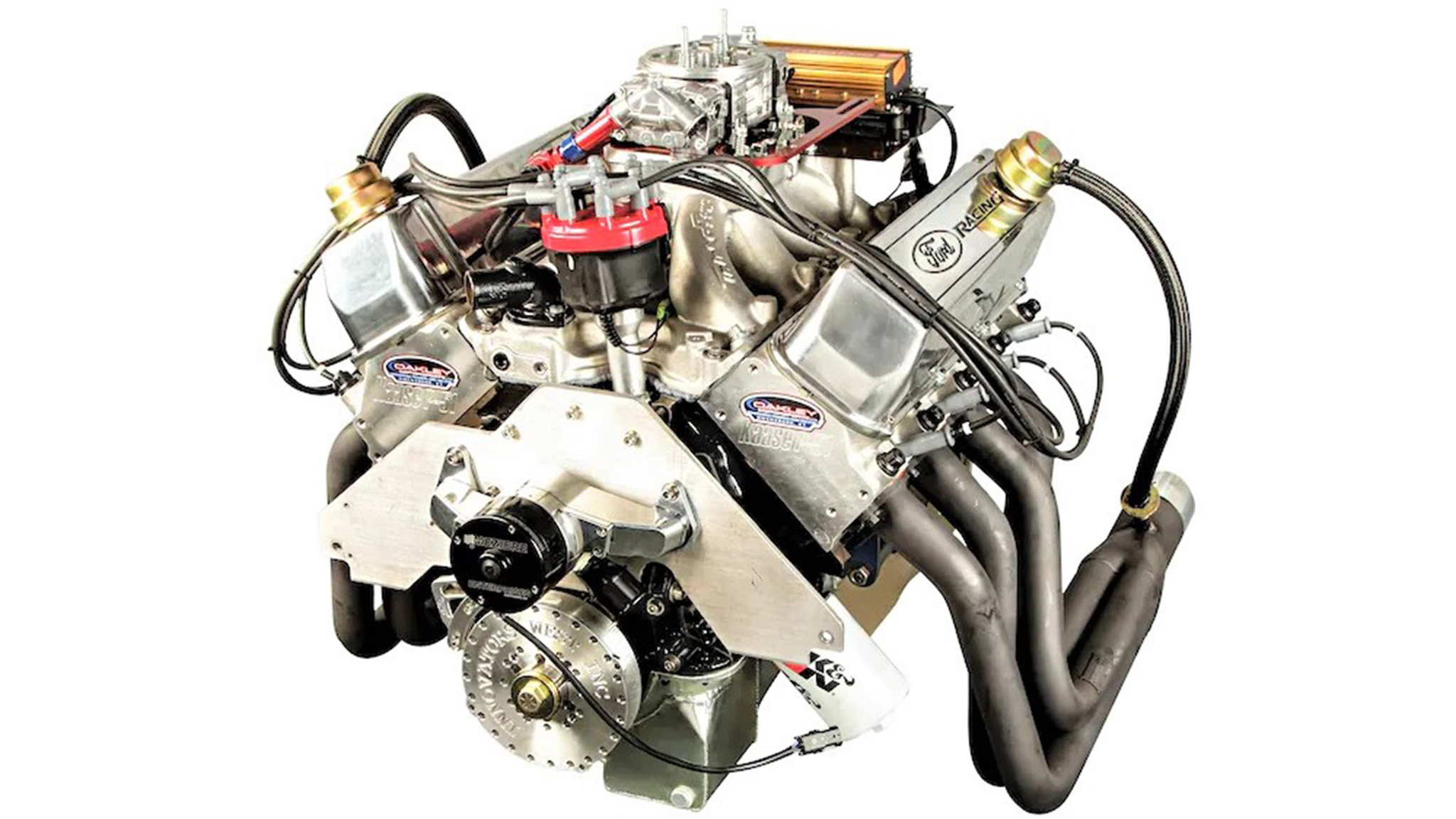
However, the 460 also found its way into performance applications, including a version of the Ford Mustang’s stablemate, the Ford Gran Torino, and various heavy-duty applications. In its most powerful passenger car configurations, the 460 produced figures that, while not as dramatic as the old 427 or the Cobra Jet, were still respectable by mid-1970s standards.
The engine’s massive displacement gave it a torque reserve that smaller, more sophisticated engines simply could not match. Through 1973, 1974, and 1975, the 460 continued to offer more real-world performance than its modest net horsepower ratings suggested.
An engine moving that much air through that much displacement, even with emissions hardware attached, moves with authority. The Lincoln Continental with the 460 under its hood was still a genuinely capable highway machine, covering ground with effortless composure.
The 460 would eventually be retired from passenger car duty as fuel economy regulations tightened further, but it survived in truck and van applications well into the 1990s a remarkable lifespan that speaks to the fundamental durability and engineering integrity of the design.
Also Read: Top 10 Cars With Smart Windows That Tint Automatically
5. Oldsmobile 455 Rocket
Oldsmobile’s 455 cubic-inch Rocket V8 is one of the most interesting engines of the entire muscle car era, partly because it was genuinely more powerful than official ratings suggested, and partly because it demonstrated a unique approach to performance engineering that set it apart from rival designs.
Where most big-block V8s of the era were oversquare with a bore wider than the stroke the Oldsmobile 455 was undersquare, with a longer stroke than bore.
This configuration created enormous torque, often at lower rpm than the competition, giving Olds-powered cars a character that was distinctive and immediately recognizable.
At its peak in 1970, the Oldsmobile 455 in the 442 was rated at 365 horsepower. Independent testing repeatedly revealed that the actual output was considerably higher some estimates placed it at well over 400 horsepower.
This tradition of underrating the engine’s output was partly deliberate, as Oldsmobile sought to manage the insurance implications that came with published high-horsepower numbers.
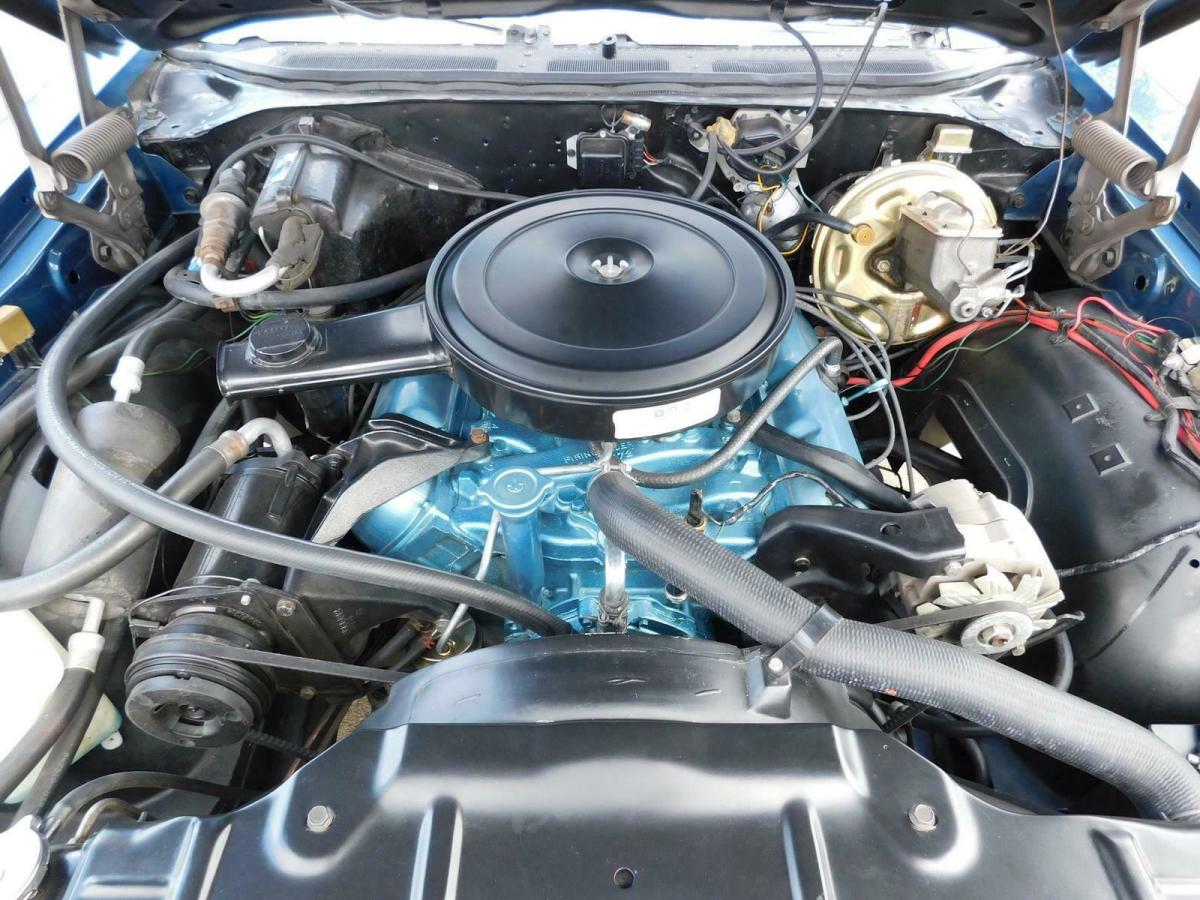
As the decade progressed, the 455 was subject to the same regulatory pressures that afflicted every other American V8. Compression ratios fell, unleaded fuel compatibility became mandatory, and the SAE net rating system made the numbers look worse.
By 1975, the Oldsmobile 455 was producing just 190 horsepower net a figure that represents one of the most dramatic falls from grace in automotive history, from an engine that was genuinely producing 400-plus horsepower just five years earlier. And yet, even at 190 horsepower net, the 455 Rocket retained something that smaller, less characterful engines did not: torque.
The undersquare configuration meant that the engine’s low-end grunt was still meaningful, still useful, still providing that sense of effortless performance that Oldsmobile owners expected. It was not the warrior it had been in 1970, but it was not completely defeated either.
Oldsmobile continued producing the 455 through the 1976 model year, making it one of the longest-surviving genuinely large-displacement passenger car engines of the decade.
6. AMC 401 V8
American Motors Corporation occupies a unique position in the story of American performance engines. As the smallest of the major American automakers, AMC lacked the resources to develop multiple engine families, tooling up instead for a single, versatile V8 architecture that could serve everything from economy-minded compact cars to genuine performance machines.
The 401 cubic-inch version of that architecture was the ultimate expression of AMC’s engineering ambitions a punchy, torquey, and surprisingly capable unit that outlasted many of its better-known rivals.
The AMC V8 family had evolved through the 1960s from the original 290 cubic-inch unit, growing progressively in displacement as market demands changed.
The 401 arrived in 1971, sharing basic architecture with the 360 and 390 but with a unique bore-and-stroke combination that gave it both displacement and a strong torque curve. It was offered in AMC’s performance-oriented vehicles the Javelin, the AMX, and the Matador as the top-of-the-line engine option.
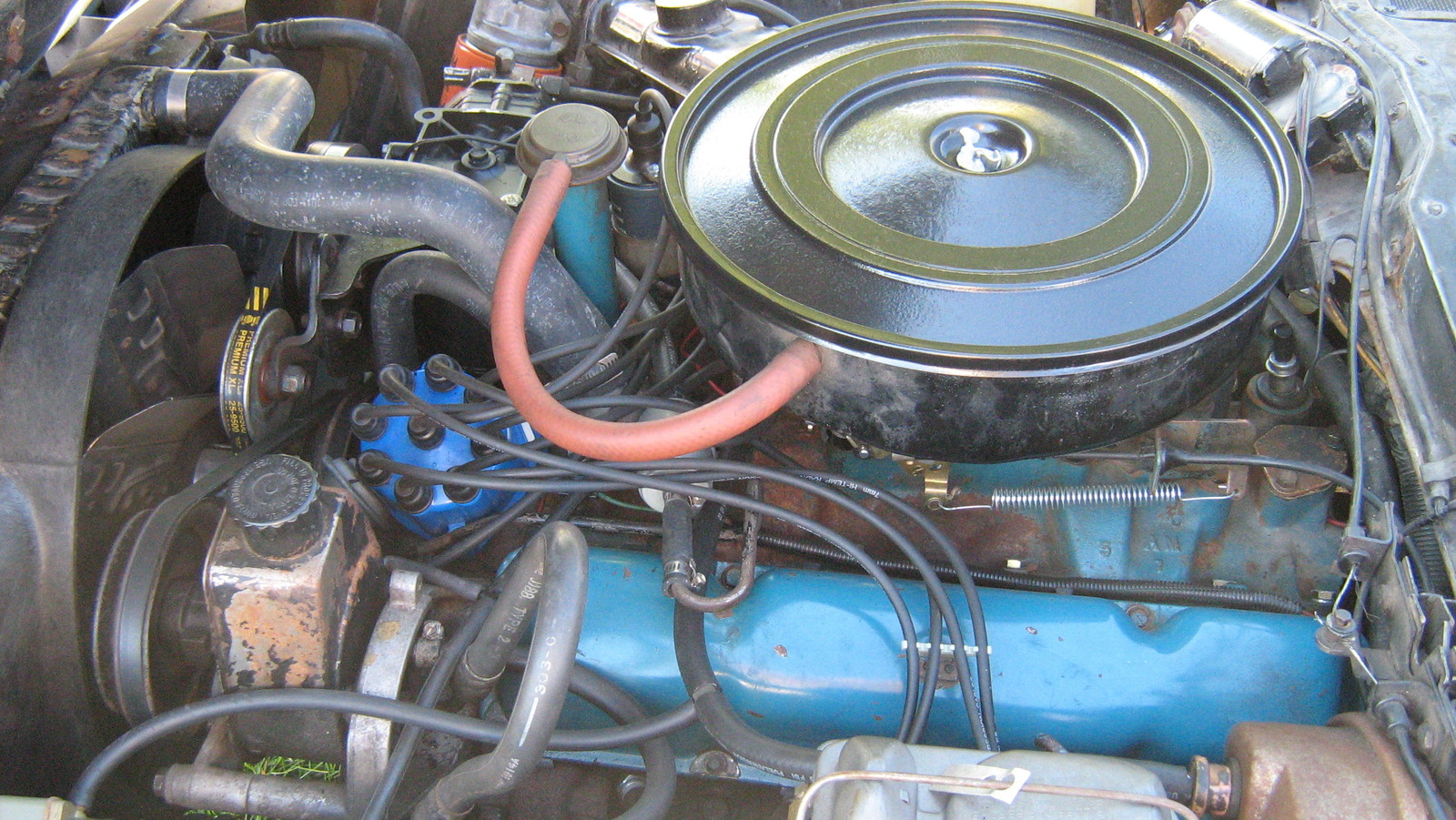
What made the 401 remarkable was its inherent honesty. AMC, lacking the marketing resources of the big three, had less incentive to inflate horsepower ratings for showroom appeal, and also less incentive to underrate them for insurance management.
The 255 horsepower SAE net rating for the 401 in the mid-1970s was a more or less accurate reflection of what the engine actually produced and in real-world driving, the torque of the 401 made it feel stronger than the numbers suggested.
The 401 also had the distinction of powering the Javelin AMX AMC’s pony car contender in its final years, giving that stylish but often-overlooked machine genuine performance credibility. When AMC withdrew from the Trans-Am racing series, the 401 had acquitted itself well against much better-funded opposition.
AMC continued to offer the 401 through the mid-1970s even as rivals were abandoning their large-displacement engines, making it a genuinely rare example of a manufacturer standing behind its performance heritage when the easy path would have been to retreat entirely.
7. Cadillac 500 V8
The Cadillac 500 cubic-inch V8 is one of the most extraordinary production engines ever fitted to an American passenger car extraordinary for its size, extraordinary for its ambitions, and, in the mid-1970s, extraordinary for the cruel gap between those ambitions and its actual performance output.
Introduced in 1970 in the Cadillac Eldorado, the 500 cubic-inch unit was the largest passenger car engine of the mass-market era, a 8.2-liter monument to a philosophy that believed displacement was the answer to every performance question.
In its early years, the 500 produced 400 horsepower not a figure that set the performance world alight, given the displacement involved, but more than adequate for the luxury land yachts it was designed to power.
Cadillac’s engineering priority was smoothness and torque delivery rather than peak horsepower, and the 500 excelled on those terms. The Eldorado with the 500 under the hood was an enormously capable high-speed cruiser, its massive torque output making light work of freeway miles.
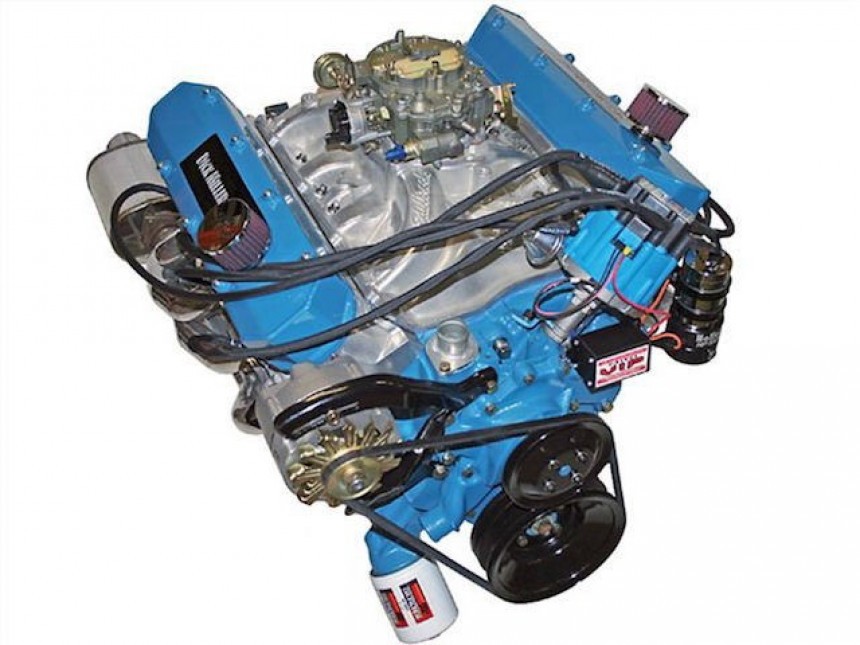
But the mid-1970s brought a reckoning that was particularly brutal for this engine. By 1975, the Cadillac 500 with all 8.2 liters of its displacement was producing just 190 horsepower.
The contrast between size and output had become almost a dark joke within the automotive press, a perfect symbol of everything that had gone wrong in the industry’s response to the emissions era. The engine’s compression ratio had been slashed, its breathing restricted, and its character essentially extinguished by regulatory compliance hardware.
And yet, the 500 still provided something valuable: smoothness and refinement. Even in its strangled state, the sheer size of the engine meant it operated at low stress levels, producing its modest output with an almost aristocratic ease.
Cadillac buyers were not drag racing they were crossing continents in climate-controlled comfort, and for that purpose, the 500 remained fit for purpose. It was retired after 1976, replaced by smaller but more efficient units, and its passing marked the effective end of the truly enormous American passenger car engine.
8. Ford 351 Cleveland / Modified V8
Of all the engines on this list, the Ford 351 Cleveland occupies perhaps the most intriguing position a genuinely advanced, technically sophisticated small-block V8 that arrived at precisely the wrong moment in automotive history and was never truly allowed to fulfill its considerable potential.
Introduced for the 1970 model year, the Cleveland was designed from the outset to breathe better than any small-block Ford that had come before it, featuring canted-valve, free-flowing cylinder heads that gave the engine outstanding airflow characteristics even before any modifications were applied.
The Cleveland designation came from the Ford engine plant in Cleveland, Ohio where the engine was manufactured. It shared its external dimensions with the 351 Windsor but was a completely different engine internally a point that enthusiasts debated endlessly and that still generates strong opinions today.
The bore, stroke, and combustion chamber geometry were all unique to the Cleveland, and the canted-valve heads gave the engine a profile more associated with purpose-built race engines than mainstream production units.
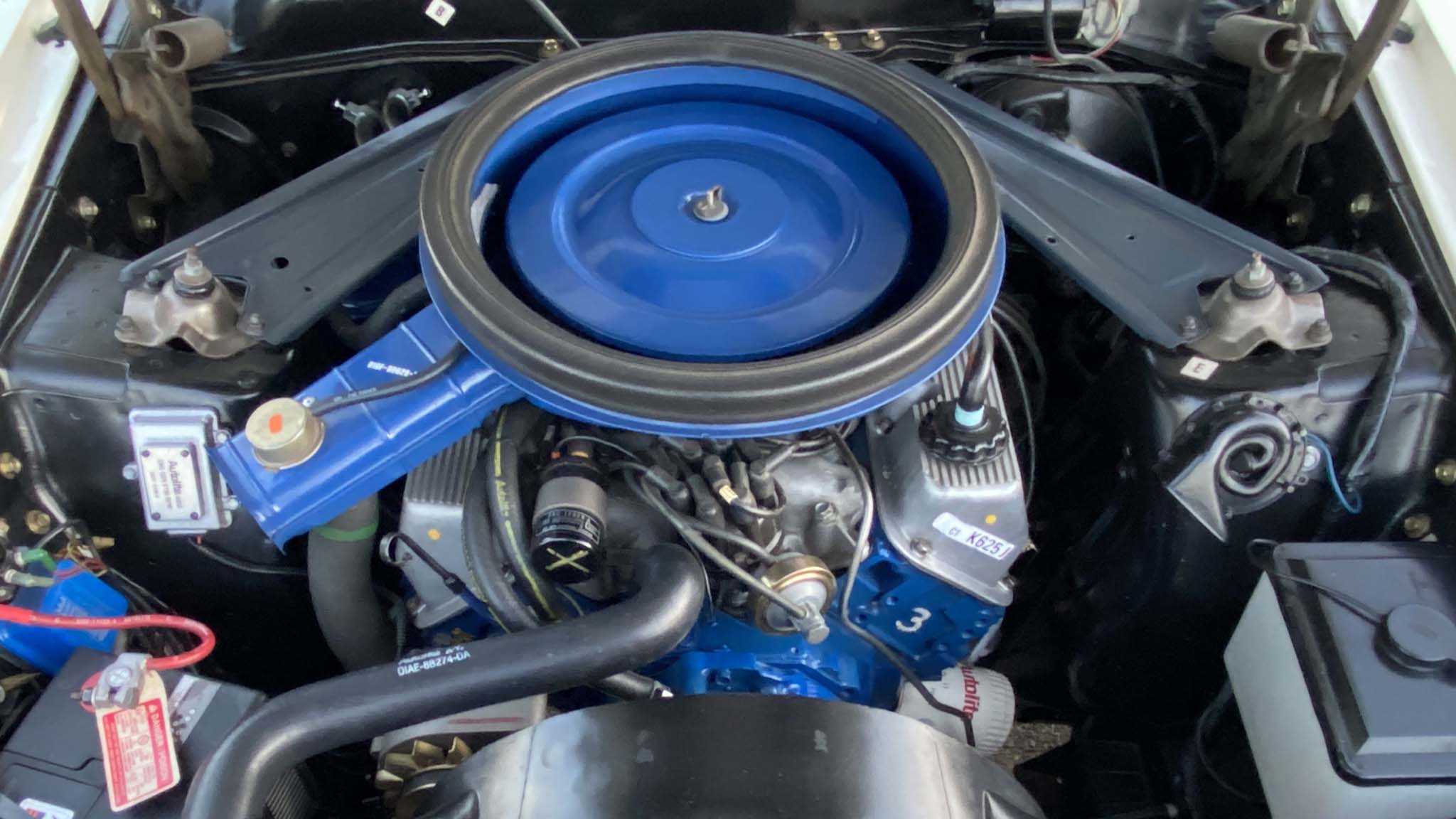
In its most powerful configuration the 351 CJ (Cobra Jet) and the rare Boss 351 the Cleveland produced 330 horsepower, a figure that placed it firmly in genuine performance territory.
The Boss 351 Mustang of 1971 was widely regarded as one of the best-handling, best-performing Mustangs ever built, a genuinely serious driver’s car rather than a straight-line specialist.
As emissions regulations tightened, Cleveland’s advanced head design was both an advantage and a disadvantage. The large ports that flowed so well at high rpm were less efficient at the lower compression ratios and reduced throttle openings that emissions compliance demanded.
Ford responded by introducing the Modified or “M” variant, which used slightly revised cylinder heads better suited to the new operating conditions.
Through 1973, 1974, and 1975, the 351M continued to serve in Ford and Mercury vehicles, including the Torino and the Mustang II’s platform relatives, providing a level of performance that, while diminished from the Cleveland’s peak, was still superior to many alternatives.
Ford eventually transitioned away from the Cleveland architecture, but the engine’s legacy, particularly the high-flowing cylinder heads, influenced performance thinking for decades.
The Cleveland remains one of the most hotly debated and enthusiastically rebuilt engines in American automotive history, its unfulfilled potential making it perennially fascinating to engineers and enthusiasts alike.
Also Read: 10 Best Vehicles for Digital Nomads With Built In High Speed WiFi
