
Off road driving is often associated with power, large tires, and aggressive suspension systems, but one of the most overlooked factors that determines how capable a vehicle is on difficult terrain is wheelbase length.
Wheelbase refers to the distance between the front and rear axles of a vehicle. When this distance is shorter, the vehicle becomes more maneuverable, especially in tight environments such as narrow forest trails, rocky switchbacks, and winding mountain paths.
Short wheelbase vehicles have a natural advantage when navigating confined terrain. They can turn more easily, clear obstacles with less risk of getting stuck on the underbody, and handle sharp trail bends that would challenge longer vehicles.
This makes them particularly valuable for off road enthusiasts who regularly explore technical trails where space is limited and terrain changes quickly.
Another benefit of a short wheelbase is improved breakover angle. The breakover angle determines how well a vehicle can drive over steep ridges or rocks without scraping the underside.
Vehicles with shorter wheelbases typically perform better in these situations because the distance between the axles is smaller, reducing the chance of the chassis contacting the ground.
Over the years, several manufacturers have produced off road vehicles designed with compact proportions specifically for trail performance.
These machines often combine short wheelbases with strong four wheel drive systems, solid axles, locking differentials, and durable suspension setups. The result is a group of vehicles that can tackle tight trails, dense forests, and rugged terrain with impressive agility.
This article highlights ten off road vehicles that stand out for having some of the shortest wheelbases among capable trail machines.
Each of these vehicles brings its own approach to off road engineering, whether through classic mechanical simplicity, modern technology, or a blend of both. What they all share is the ability to squeeze through challenging terrain where larger vehicles struggle.
Also Read: Top 8 Brands Leading the Way in Sustainable Interior Materials
1. Jeep Wrangler Two Door
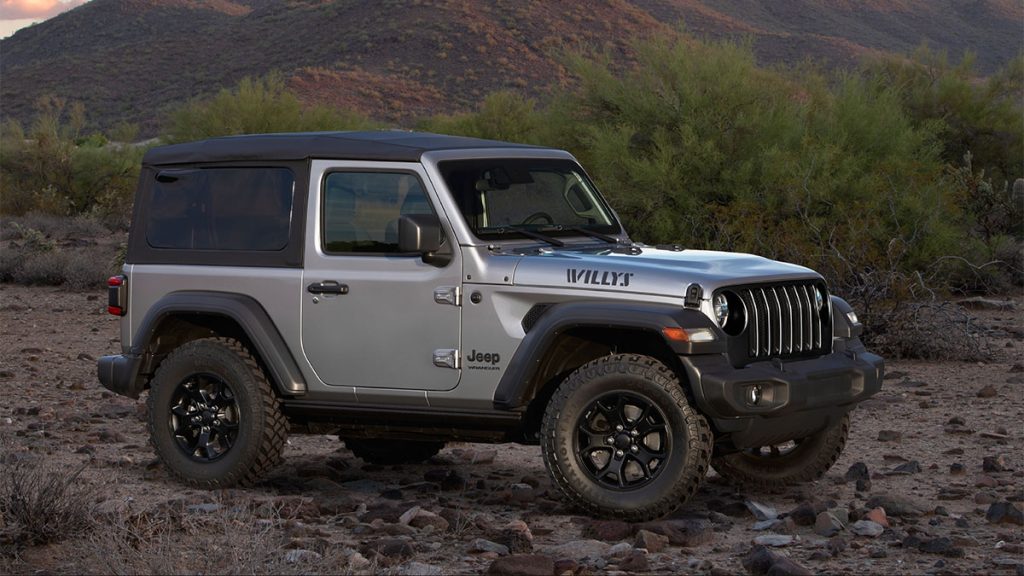
Among modern off-road vehicles, few machines represent short-wheelbase trail capability as clearly as the two-door version of the Jeep Wrangler. This compact configuration keeps the wheelbase around 96.8 inches, which makes it one of the most maneuverable factory off road vehicles currently available.
The shorter wheelbase significantly improves the vehicle’s turning radius, allowing drivers to navigate narrow forest trails and rocky canyon paths with much greater ease. When trails include tight switchbacks or obstacles that require precise steering, the two door Wrangler often feels far more agile than longer SUVs or pickup trucks.
Its compact size also contributes to excellent breakover angles. When climbing over rocks or crossing uneven ridges, the shorter distance between the axles helps reduce the chances of the vehicle scraping its underbody.
This characteristic is especially valuable in technical rock crawling environments where terrain changes quickly and unpredictably.
Jeep designed the Wrangler specifically for trail performance, and the two door model showcases that focus clearly. Solid front and rear axles provide durability and articulation, allowing the suspension to flex over uneven ground. This helps keep the tires in contact with the terrain, maintaining traction even when driving across large obstacles.
Another important element of the Wrangler’s off road capability is its advanced four wheel drive system. Many models include low range gearing, electronic locking differentials, and specialized off road drive modes.
These systems allow drivers to carefully control torque delivery when navigating mud, sand, rocks, or steep inclines.
The vehicle’s compact body also helps with visibility on the trail. Drivers can easily judge the placement of the tires relative to obstacles, making it easier to position the vehicle accurately when climbing over rocks or maneuvering through narrow gaps.
While longer wheelbase SUVs may provide more interior space and highway comfort, the two door Wrangler remains one of the most effective vehicles for tight trail environments.
Its combination of compact dimensions, durable mechanical design, and purpose built off road features continues to make it a favorite among serious trail drivers.
2. Suzuki Jimny
Compact off road vehicles have always occupied a unique space in the automotive world, and few models represent that philosophy better than the Suzuki Jimny.
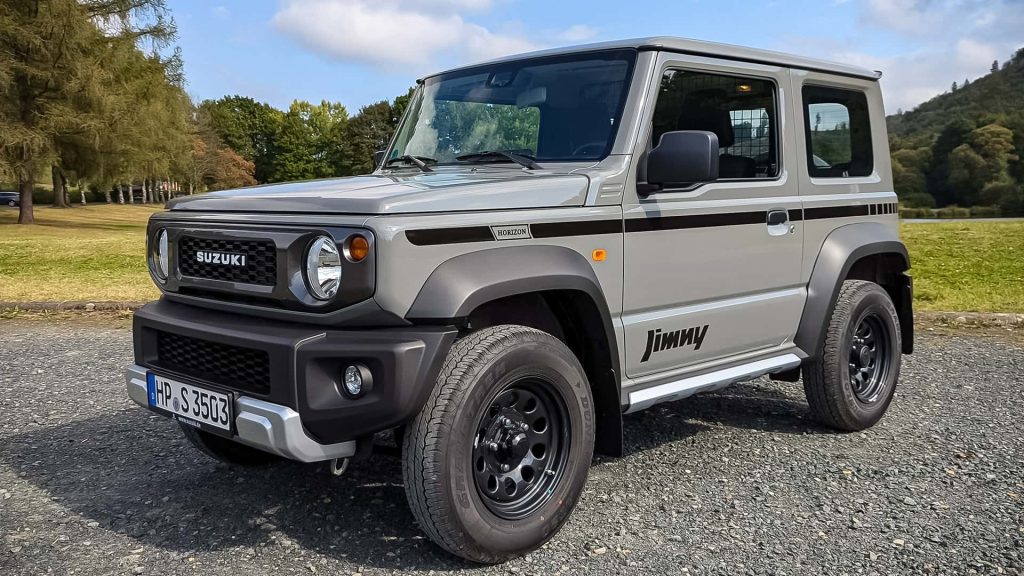
With a wheelbase measuring just under 89 inches, the Jimny stands among the shortest serious four wheel drive vehicles still produced in the modern era.
That extremely compact footprint gives it remarkable maneuverability on trails where larger vehicles simply cannot fit.
Drivers exploring dense forests or narrow mountain routes quickly discover how valuable the Jimny’s small size can be. Trails that wind through trees or squeeze between rock formations often require precise steering and tight turning circles.
The Jimny excels in these conditions because its short wheelbase allows the vehicle to pivot through tight corners without needing multiple adjustments.
The design philosophy behind the Jimny focuses heavily on mechanical simplicity. Instead of relying entirely on electronic systems, the vehicle uses a traditional ladder frame construction paired with solid axles and a low range transfer case. This setup improves durability and allows the suspension to handle challenging terrain with confidence.
Another strength of the Jimny comes from its favorable approach, departure, and breakover angles. Because the body is short and positioned high relative to the axles, the vehicle can climb over steep obstacles and uneven terrain without damaging the underside. This advantage becomes particularly noticeable on rocky trails or when crossing ridges.
Despite its modest engine size, the Jimny manages to maintain impressive off road performance thanks to its lightweight structure.
Lower overall weight means the engine does not need excessive power to keep the vehicle moving across sand, mud, or steep inclines. The reduced mass also helps minimize the risk of getting stuck in soft terrain.
The Jimny’s small proportions might limit cargo space and passenger room, but that compromise is exactly what gives the vehicle its unique off road character. In environments where agility matters more than size, the Jimny consistently proves that compact engineering can deliver serious trail capability.
3. Toyota Land Cruiser 70 Series Short Wheelbase
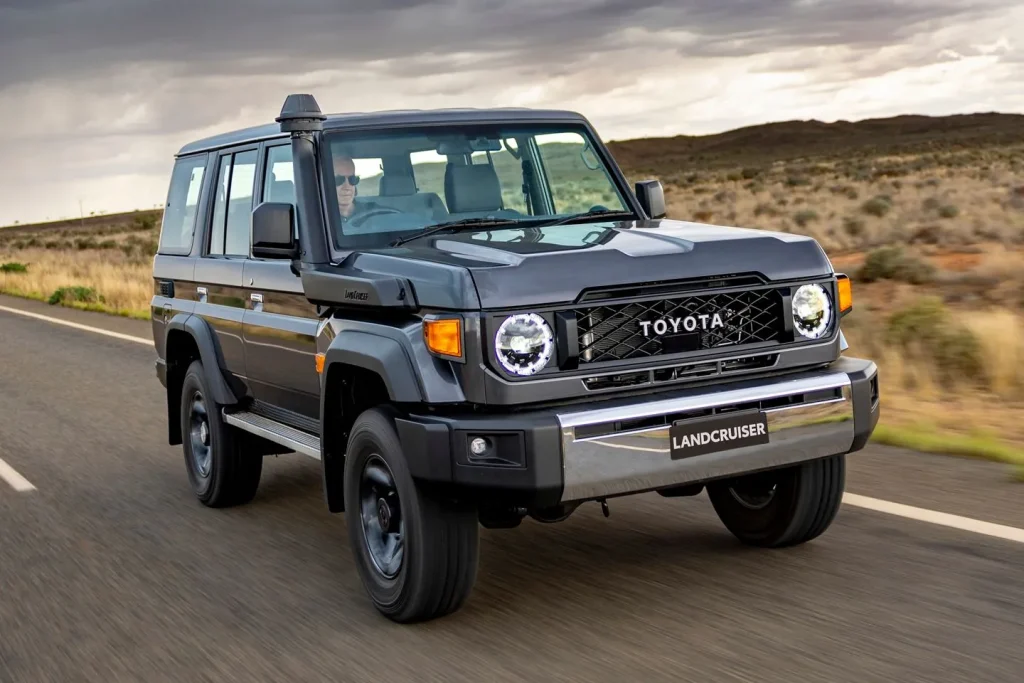
The Toyota Land Cruiser 70 Series has long been known for durability and endurance, but one particular configuration stands out for trail maneuverability. The short wheelbase variant of the Land Cruiser 70 is designed specifically for environments where rugged terrain and tight routes demand a more compact footprint.
Unlike many modern SUVs that prioritize comfort and technology, the Land Cruiser 70 Series remains focused on mechanical strength and reliability. Its wheelbase sits at roughly 90 inches in the short body configuration, giving it a noticeably more compact stance compared with many other full frame off road vehicles.
This shorter wheelbase plays a significant role when navigating narrow desert tracks or mountain trails. Drivers often encounter situations where sharp turns must be taken on uneven ground, and the compact axle spacing allows the vehicle to rotate through these bends with less effort.
In remote environments where reversing space is limited, this maneuverability becomes extremely valuable.
Another defining trait of the short wheelbase Land Cruiser is its durability under harsh conditions. Built on a heavy duty ladder frame, the vehicle is engineered to survive years of demanding use. Solid axles and long travel suspension allow the wheels to articulate over rough surfaces while maintaining traction.
The vehicle also benefits from a powerful torque focused engine lineup. Diesel powerplants commonly paired with this model provide strong low speed pulling ability, which is essential for climbing steep terrain or crawling through rocky sections. Rather than relying on speed, the Land Cruiser moves forward steadily and predictably.
Ground clearance and body proportions further enhance the vehicle’s off road potential. The short body design improves breakover angles, helping the vehicle clear ridges and obstacles that might challenge longer vehicles.
This feature becomes especially useful in environments filled with rocks, uneven surfaces, and sudden elevation changes.
Even though it was originally designed decades ago, the short wheelbase Land Cruiser 70 Series continues to prove its worth across deserts, forests, and remote expedition routes.
Its compact structure combined with legendary durability ensures it remains one of the most capable tight trail vehicles ever produced.
4. Ford Bronco Two Door
The return of the Ford Bronco brought back a classic formula that many off road enthusiasts had been waiting for. While the four door version offers greater passenger space, the two door Bronco represents the model in its most trail focused form.
With a wheelbase of about 100.4 inches, it sits firmly in the category of compact off road machines designed to handle tight terrain.
The shorter layout immediately affects how the vehicle behaves on technical trails. Drivers often notice that the two door Bronco can navigate narrow paths with far less effort than larger SUVs.
Trails that wind through thick forests or require sharp turns become easier to manage because the vehicle pivots quickly without needing wide turning space.
Ford designed the Bronco’s suspension system to complement this compact platform. Independent front suspension combined with a solid rear axle allows the vehicle to balance comfort with off road durability. The setup helps maintain tire contact on uneven surfaces, which improves traction when climbing rocks or crossing rutted trails.
Another element that supports tight trail driving is the Bronco’s steering response. Because the vehicle is relatively short, steering inputs translate quickly into direction changes. When navigating technical obstacles, this responsiveness allows drivers to place the wheels exactly where they want them.
The two door Bronco also benefits from specialized off road features developed specifically for challenging terrain. Many trims include locking differentials, low range gearing, and terrain management systems that adjust throttle response and traction control for different surfaces such as sand, mud, or rocks.
Ground clearance and body proportions further support its capability. The compact wheelbase improves the breakover angle, reducing the chances of the underbody scraping when crossing sharp ridges or large rocks.

Combined with strong skid plates and durable construction, the vehicle is built to handle repeated exposure to harsh trail conditions.
Although larger vehicles may offer more practicality for daily use, the two door Bronco stands out for drivers who prioritise manoeuvrability and trail agility. Its compact proportions and purpose built engineering make it one of the most effective modern vehicles for navigating tight off road environments.
5. Land Rover Defender 90
Among premium off road vehicles, the Land Rover Defender 90 occupies a special position. It represents the shortest and most maneuverable version of the modern Defender lineup, offering a wheelbase of approximately 101.9 inches.
While that measurement may appear modest compared to ultra compact trail vehicles, the design of the Defender 90 allows it to perform exceptionally well in confined off road environments.
One of the defining characteristics of the Defender 90 is its balanced engineering approach. Instead of relying purely on traditional mechanical systems, Land Rover integrates advanced technology to enhance the vehicle’s capability across different types of terrain.
Electronic traction systems constantly monitor wheel movement and adjust torque distribution to maintain grip. When driving across slippery mud, loose gravel, or uneven rocks, these systems allow the Defender 90 to maintain forward momentum without excessive wheel spin.
The vehicle’s compact wheelbase also contributes to improved agility on winding trails. Drivers navigating narrow mountain routes often benefit from the shorter body because it allows the vehicle to rotate more easily around tight corners.
This advantage becomes even more noticeable when maneuvering through rocky sections where careful positioning is required.
Air suspension technology further expands the Defender 90’s versatility. The system can raise the vehicle’s ride height when additional ground clearance is needed, helping the vehicle pass over obstacles without damaging the underside. At lower speeds on rough terrain, this added clearance can make a significant difference.
Another benefit of the shorter Defender configuration is improved breakover performance. The reduced distance between axles means the vehicle can crest steep ridges or uneven terrain with less risk of the chassis contacting the ground. This characteristic is particularly valuable on trails filled with sudden elevation changes.
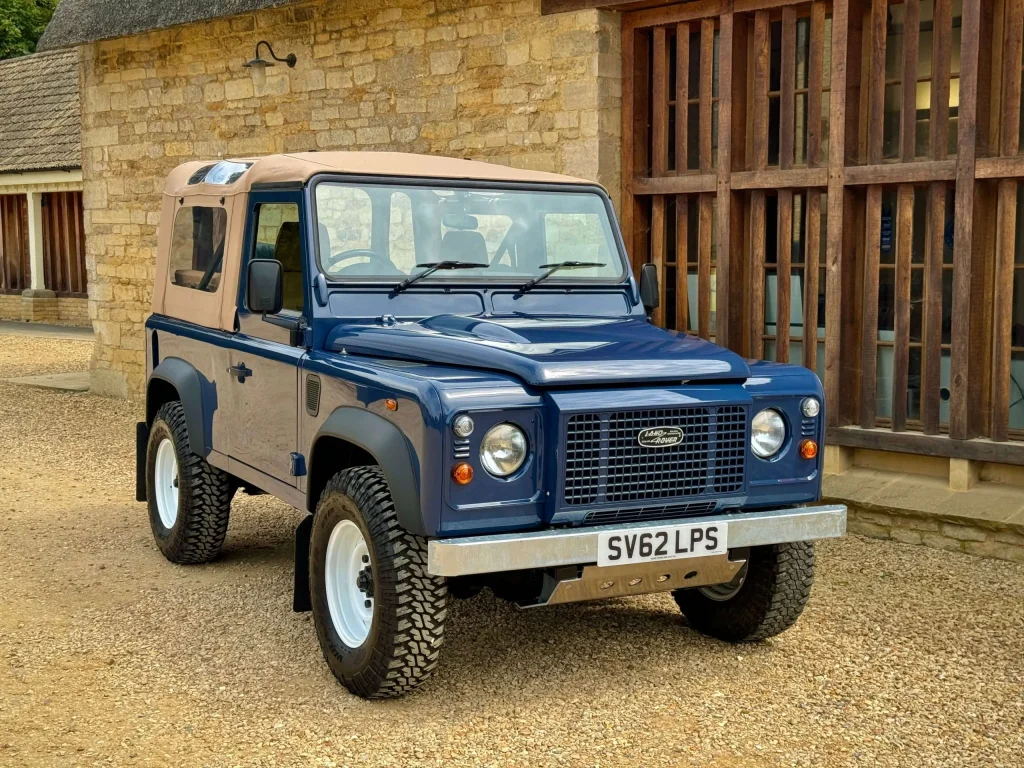
Inside the cabin, the Defender 90 balances luxury with practicality. Durable materials and thoughtfully designed controls ensure the vehicle remains comfortable while still capable of handling demanding off road environments.
The Defender 90 demonstrates how modern technology and compact proportions can work together to create a capable off road machine. Its combination of maneuverability, intelligent traction systems, and strong structural design allows it to tackle tight trails with confidence.
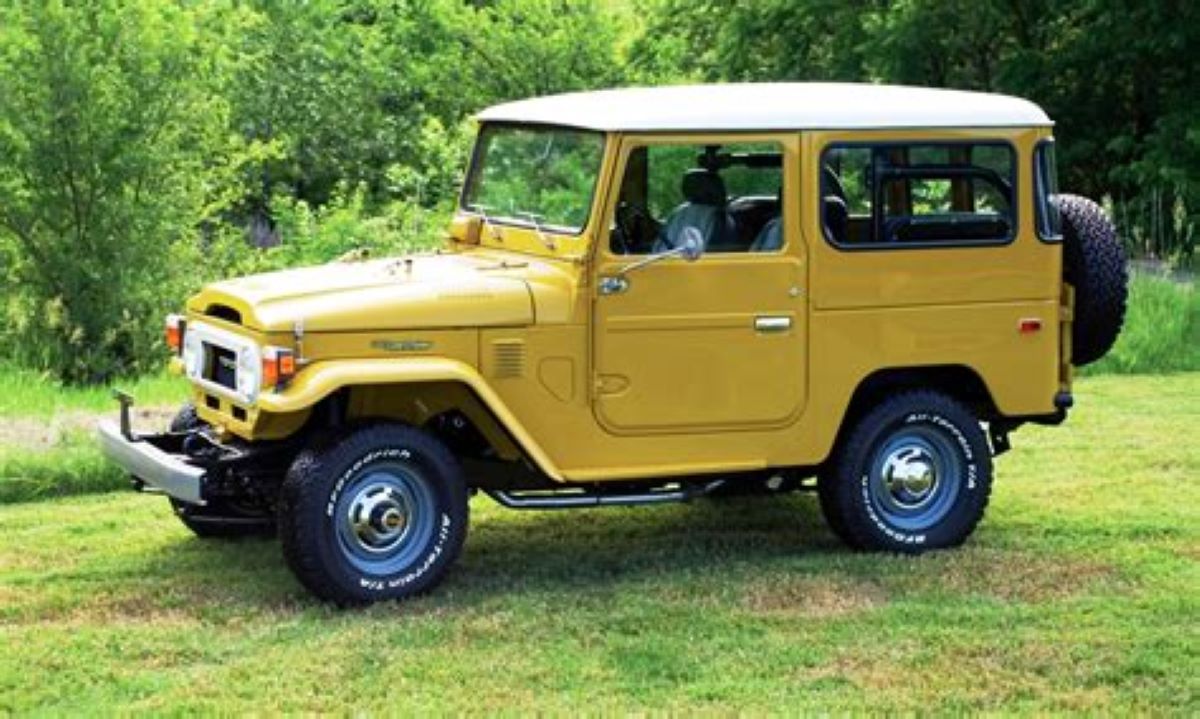
6. Toyota FJ40 Land Cruiser
Few off road vehicles have earned the legendary reputation of the Toyota FJ40 Land Cruiser. Introduced in the early 1960s, this compact utility vehicle quickly became known for its ability to travel through difficult terrain with remarkable reliability.
One of the key reasons behind its success was its short wheelbase, which measured roughly 90 inches depending on the production year.
In tight trail environments, that compact size proved extremely useful. Drivers working in forests, mountain paths, and rugged expedition routes often needed vehicles capable of navigating narrow spaces without difficulty.
The FJ40 handled these conditions with ease because the distance between its axles allowed the vehicle to change direction quickly while maintaining stability.
The overall design of the FJ40 focused heavily on durability. Toyota engineered the vehicle using a strong ladder frame paired with solid front and rear axles. This configuration provided the strength required for rough terrain while also allowing the suspension to flex when crossing rocks, ruts, or uneven surfaces.
Power came from a series of durable inline six engines that prioritized torque rather than high speed performance. This approach suited off road driving perfectly. When climbing steep hills or crawling through rocky trails, the FJ40 could move forward steadily without requiring excessive throttle input.
The short body structure also improved several key off road angles. Approach and departure angles were excellent due to the vehicle’s compact design and minimal overhangs. Breakover angle also benefited from the short wheelbase, allowing the FJ40 to cross sharp ridges or rocky ledges without scraping the undercarriage.
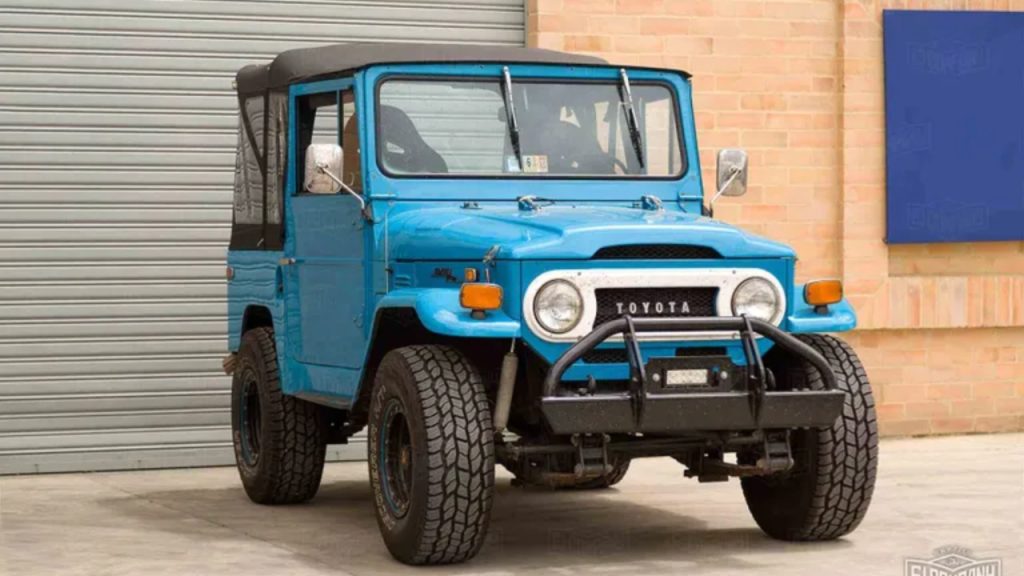
Another advantage of the vehicle was its straightforward mechanical layout. Owners working in remote areas often appreciated how easy it was to repair and maintain.
The absence of complicated electronics meant the vehicle could continue operating even in harsh environments where modern systems might struggle.
Decades after production ended, the FJ40 remains one of the most respected compact off road vehicles ever built. Its short wheelbase, rugged construction, and dependable engineering helped establish a legacy that continues to influence off road vehicle design today.
7. Jeep CJ-5
The Jeep CJ-5 represents one of the most compact and trail focused vehicles ever produced by Jeep. Introduced in the mid 1950s, the CJ-5 was designed to be small, lightweight, and capable of navigating terrain that would challenge much larger vehicles.
Its wheelbase measured just 81 inches, making it one of the shortest production four wheel drive vehicles ever built.
Such a compact dimension had a dramatic effect on how the vehicle performed off road. When drivers encountered tight trails, narrow rock passages, or dense forest routes, the CJ-5 could slip through spaces that were simply inaccessible to larger vehicles. This agility made it a favorite among early off road enthusiasts.
Another benefit of the extremely short wheelbase was the vehicle’s ability to maneuver around obstacles quickly. On trails filled with sharp turns or sudden elevation changes, the CJ-5 required minimal space to reposition itself. Drivers could adjust their path easily when approaching rocks, fallen trees, or steep climbs.
Despite its small size, the CJ-5 was built with rugged mechanical components. The vehicle used a sturdy body on frame design combined with solid axles and leaf spring suspension. This configuration allowed the Jeep to withstand repeated exposure to rough terrain while maintaining reliable traction.
Engine options varied across different production years, but many CJ-5 models featured torquey inline four or inline six engines. These powerplants were not focused on speed but instead delivered steady low end power that suited crawling across difficult terrain.
The lightweight nature of the vehicle also contributed to its off road capability. With less overall mass, the CJ-5 placed less strain on its drivetrain when climbing hills or crossing soft surfaces such as sand or mud. This helped maintain forward momentum even when traction conditions were poor.
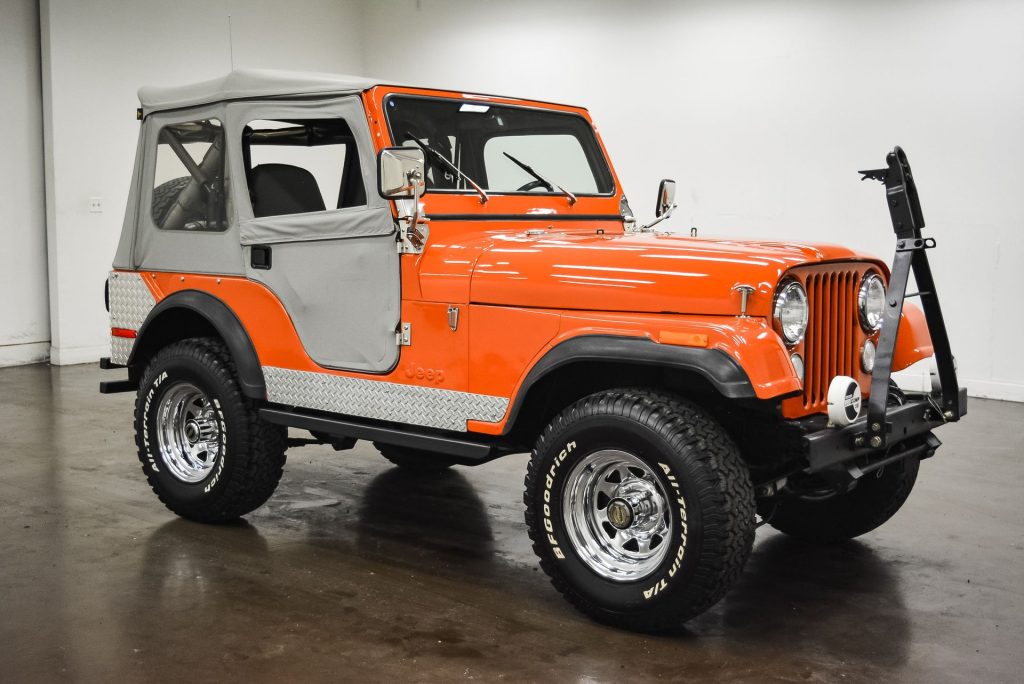
Although later SUVs introduced more comfort and technology, the CJ-5 remains a symbol of pure off road simplicity. Its extremely short wheelbase, lightweight construction, and rugged mechanical layout allowed it to navigate tight trails with a level of agility that few vehicles have matched.
8. Suzuki Samurai
When discussing compact off road vehicles designed for tight trails, the Suzuki Samurai often appears near the top of the conversation.
Introduced in the 1980s as a global off road vehicle, the Samurai gained a strong following among enthusiasts because of its remarkably short wheelbase and lightweight design.
Measuring roughly 80 inches between the axles, it became one of the smallest production four wheel drive vehicles sold in many markets.
The first thing drivers typically notice about the Samurai is how easily it navigates narrow environments.
Forest trails that weave between trees, rocky paths that require careful steering, and mountain routes with limited turning space are situations where the Samurai feels completely at home. Its compact proportions allow it to move through these areas with surprising confidence.
Another major advantage comes from the vehicle’s weight. Compared with many larger sport utility vehicles, the Samurai is significantly lighter. This characteristic helps the vehicle stay afloat on softer terrain such as sand or mud while also placing less stress on the drivetrain when climbing steep obstacles.
The engineering philosophy behind the Samurai was centered on simplicity and durability. A ladder frame chassis provides structural strength, while solid axles and leaf spring suspension help the vehicle handle uneven surfaces.
Although the suspension design is basic, it allows the wheels to move independently enough to maintain traction over rocks and ruts.
Equipped with a part time four wheel drive system and low range gearing, the Samurai can tackle challenging terrain despite its small engine size. Drivers often rely on low range to control wheel speed when climbing steep trails or navigating technical obstacles where precise throttle control is essential.
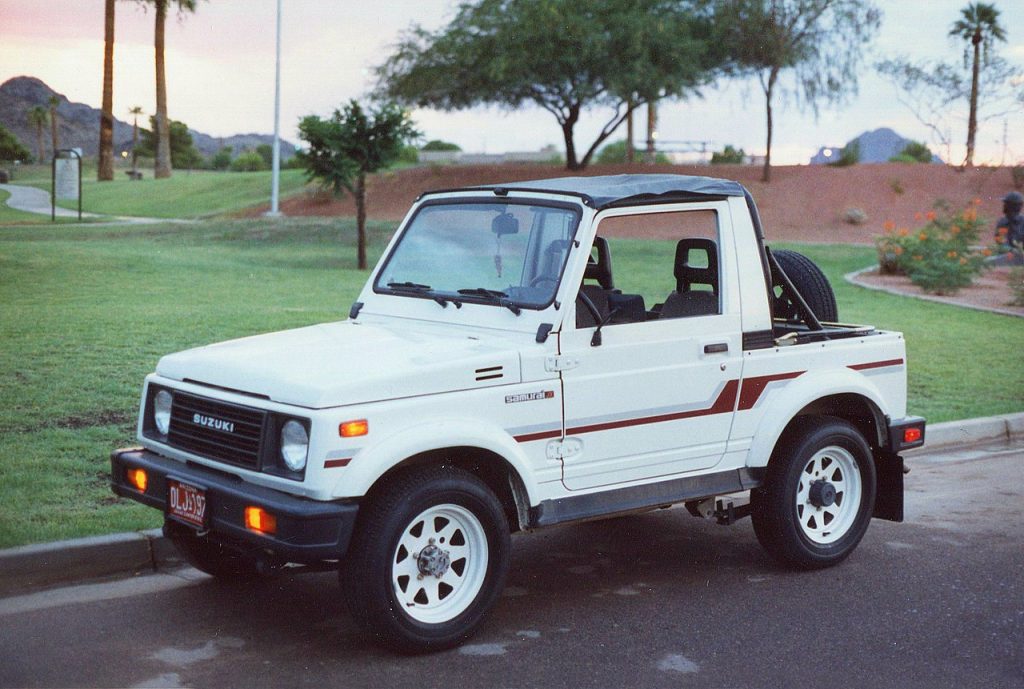
The short wheelbase also improves the vehicle’s breakover angle, making it easier to pass over steep ridges or uneven ground. Because the axles sit close together, the underside of the vehicle is less likely to contact rocks or ledges while crossing obstacles.
Although the Samurai is small in size, its reputation among off road enthusiasts is substantial. Its maneuverability, mechanical simplicity, and lightweight structure have made it a popular platform for trail driving and off road modifications for decades.
9. International Harvester Scout 80
The International Harvester Scout 80 played an important role in shaping the early sport utility vehicle market. Introduced in 1961, the Scout was designed as a compact utility machine capable of handling both work duties and off road exploration.
One of the defining elements of its design was a wheelbase measuring approximately 100 inches, which helped it maintain agility on challenging terrain.
At a time when many utility vehicles were large and heavy, the Scout 80 offered a more compact alternative. This shorter wheelbase gave drivers greater control when navigating narrow trails, especially in wooded areas or mountain environments where space was limited.
Off road drivers often appreciate vehicles that can handle sharp turns without requiring excessive maneuvering. The Scout 80 performed well in this regard because its proportions allowed the vehicle to pivot through tight bends more easily than longer trucks of the same era.
The vehicle’s construction reflected the rugged demands of its intended use. Built on a strong body on frame platform, the Scout was capable of handling rough terrain without compromising durability. Solid axles at both ends helped the suspension cope with rocks, ruts, and uneven ground.
Engine options included durable four cylinder and six cylinder units that delivered reliable torque for off road conditions. These engines allowed the Scout to move steadily across steep inclines and rough surfaces without requiring high engine speeds.
Short overhangs at the front and rear of the vehicle also contributed to its off road effectiveness. When climbing hills or descending steep slopes, the body design reduced the chances of scraping the bumpers or underbody.
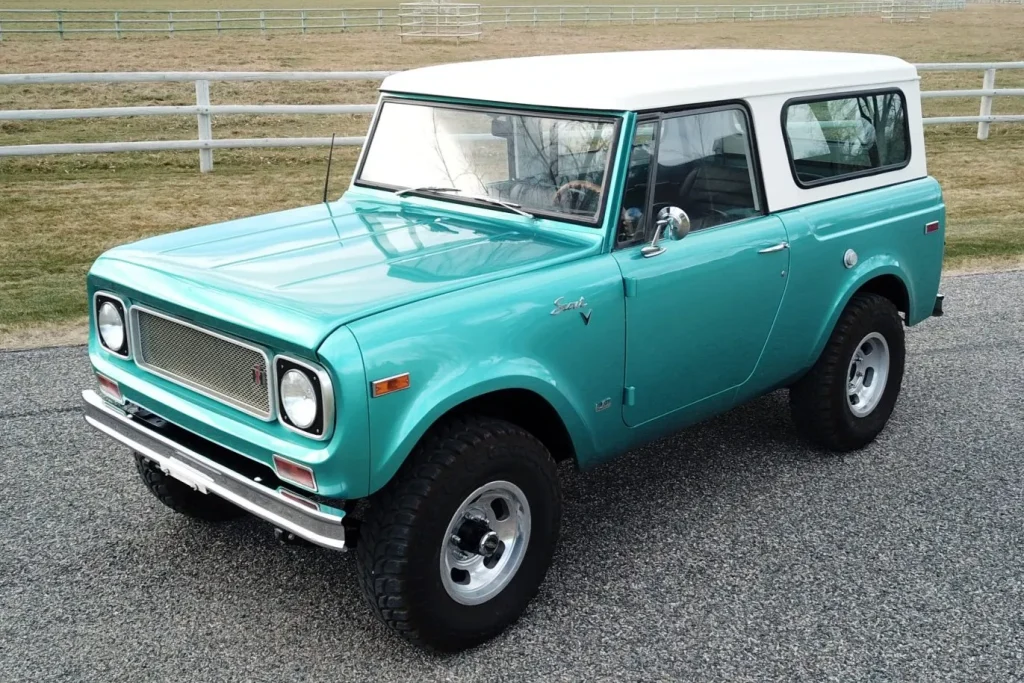
Although the Scout 80 was originally developed as a practical utility vehicle, its compact wheelbase made it well suited for trail driving. Drivers exploring remote landscapes discovered that the vehicle’s balanced proportions allowed it to tackle tight routes where larger vehicles struggled.
Today, the Scout 80 remains an important piece of off road history. Its compact design, sturdy construction, and trail friendly wheelbase helped establish the foundation for many of the sport utility vehicles that followed.
10. Daihatsu Rocky Short Wheelbase
Not every capable off road vehicle comes from a large manufacturer with global recognition. Some machines built for rugged terrain were developed by smaller companies that focused heavily on practical engineering.
The Daihatsu Rocky short wheelbase model is one such example, and it earned a reputation for being a compact yet highly capable off road vehicle.
The Rocky was designed with a wheelbase of roughly 87 inches in its shortest configuration, placing it among the more maneuverable off road vehicles produced during its time.
That compact distance between the axles created a vehicle that could navigate narrow and twisting trails without the limitations faced by longer trucks.
Drivers operating in mountainous regions or dense forest paths often found the Rocky particularly useful. On trails where sudden turns appear between rocks or trees, a shorter vehicle can adjust direction much more easily.
The Rocky’s compact proportions allowed it to negotiate these conditions without requiring repeated reversing or wide steering corrections.
Rather than focusing on luxury or modern technology, the Rocky prioritized mechanical strength and reliability.
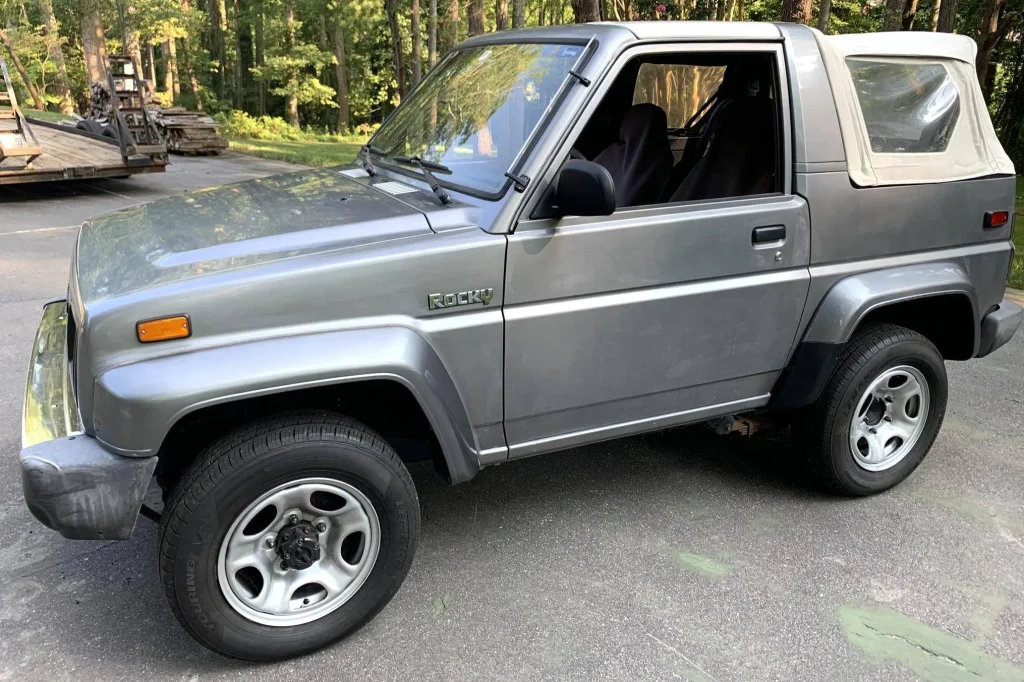
Its ladder frame construction provided a durable foundation that could handle the stress of uneven terrain and heavy off road use. This design allowed the vehicle to remain stable even when driving across rough surfaces.
The suspension system combined solid axles with durable leaf springs, a setup that was common among traditional off road vehicles. While this configuration may appear simple compared with modern suspension systems, it offered the strength needed to survive rocky trails and deep ruts.
Engine options typically emphasized torque and reliability rather than outright performance. When driving off road, steady power delivery is more valuable than speed, especially when climbing hills or crawling through rocky obstacles.
Another advantage of the Rocky’s compact dimensions was its strong breakover capability. With less distance between the axles, the vehicle could crest steep ridges or uneven terrain while reducing the risk of the underbody scraping against rocks.
Although it never reached the same global popularity as some larger off road vehicles, the Daihatsu Rocky remains respected among enthusiasts who appreciate practical engineering and trail friendly design.
Also Read: 8 Vehicles That Have Appeared in More Movies Than Any Other
