
The 1980s were a golden era of automotive experimentation, a decade when engineers and designers dared to push boundaries in ways that were equal parts brilliant and maddening.
Turbocharging was the technology of the moment a mechanical promise that small engines could breathe fire, that modest displacement could conjure monstrous power.
Manufacturers slapped turbos onto everything from sports coupes to family sedans, marketing them as the future of performance motoring. And in many ways, they were right.
But there was a catch. A very noticeable, very frustrating catch. Turbo lag that infamous pause between pressing the accelerator and actually feeling the engine respond was the defining flaw of 1980s forced induction.
Unlike today’s sophisticated twin-scroll turbos, electrically assisted compressors, and precisely tuned intercoolers, the turbos of the ’80s were crude, large, and sluggish to spool.
Drivers would mash the throttle, wait an agonizing second or two in near-silence, and then whoosh a violent wall of boost would arrive all at once, often catching them completely off guard.
This on/off, Jekyll-and-Hyde power delivery became the signature experience of an entire generation of turbocharged cars. Some drivers loved the drama. Most found it terrifying. All of them remembered it.
Here are five iconic turbocharged cars from the 1980s that became legends not just for their performance, but for the notorious lag that made them as unpredictable as they were unforgettable.
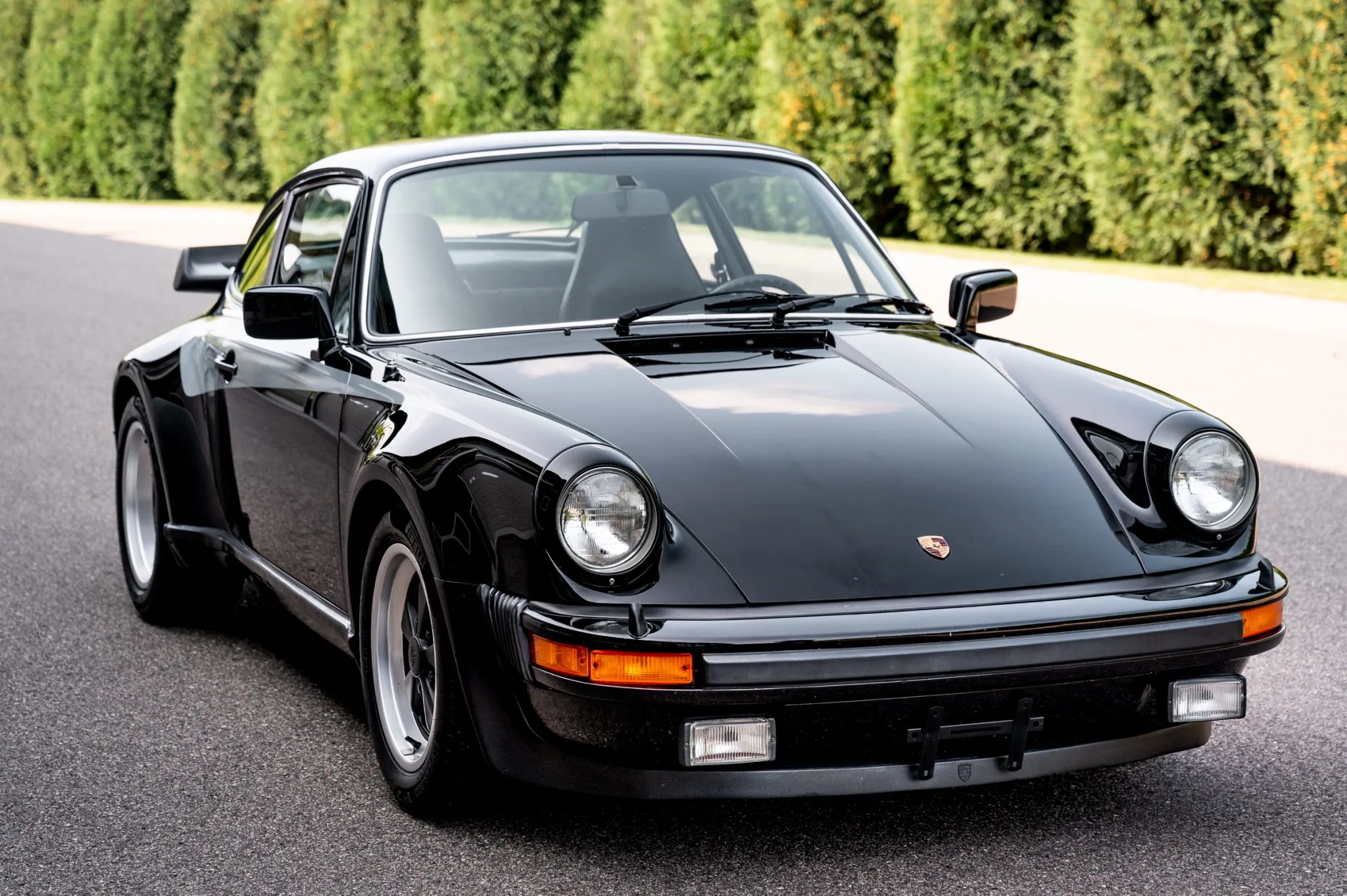
1. Porsche 930 Turbo (1975–1989)
Few cars in automotive history carry a nickname as chilling as the Porsche 930 Turbo. “The Widowmaker.” It wasn’t given that name by critics trying to be dramatic, nor by journalists looking for a punchy headline.
It was earned, lap by lap, corner by corner, by a turbocharged flat-six engine that behaved in the most treacherous way imaginable and a driving dynamic that punished inattention with brutal, unforgiving efficiency.
To understand the 930’s reputation, you first have to understand the context in which it was built. Porsche introduced the 911 Turbo in 1975 as a road-legal version of their racing machines.
The engine displacement grew over the years, eventually reaching 3.3 liters by 1978, producing 300 horsepower in an era when that number was genuinely extraordinary. For reference, a Ferrari 308 of the same period made around 255 horsepower. The 930 wasn’t just fast by comparison it was in a different universe.
But raw power numbers don’t tell the whole story. The 930’s turbocharger was a large, single KKK unit that required significant exhaust pressure to spin up. At low to mid RPMs, it sat dormant, contributing almost nothing to engine output. The throttle response felt normal almost gentle, in fact, by sports car standards. And then, somewhere around 3,500 RPM, everything changed.
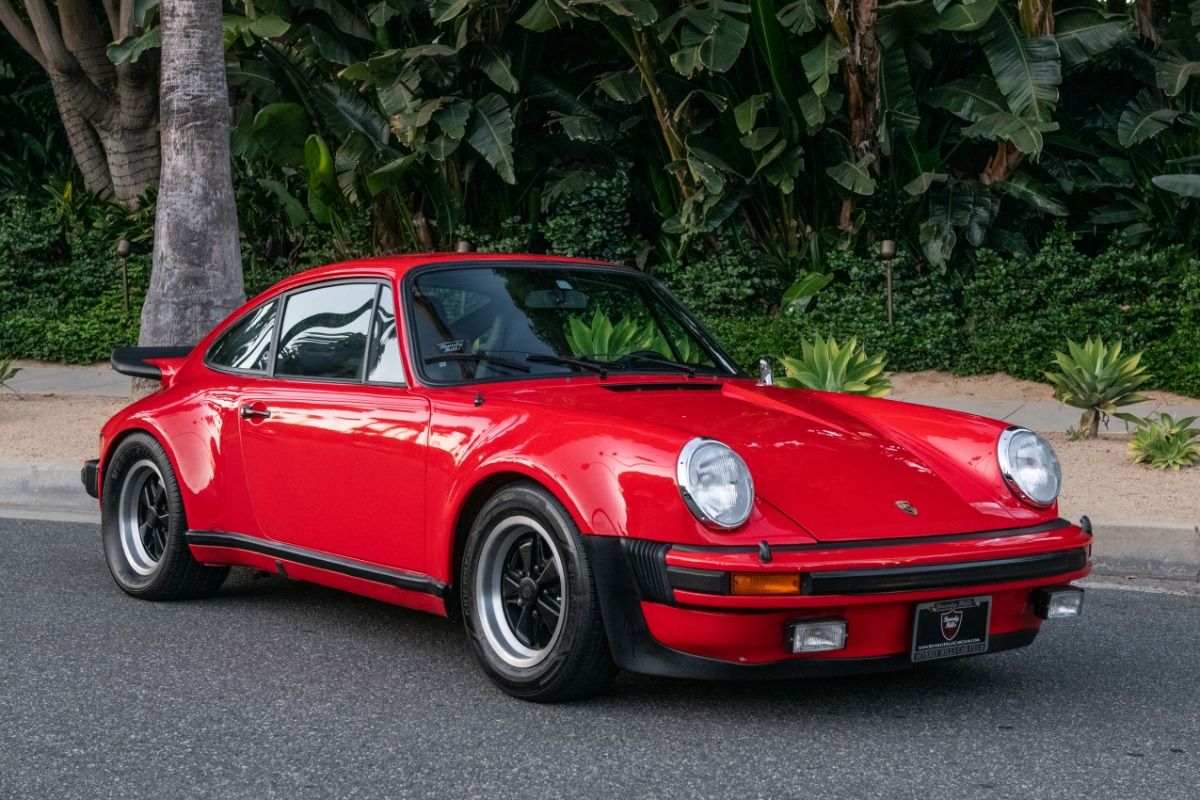
The boost arrived not as a gentle push but as a violent shove. Engineers of the era called it the “all or nothing” characteristic. You either had boost or you didn’t, and the transition between those two states was measured in fractions of a second. In a straight line, this was exhilarating. On a twisting mountain road or a wet corner, it was genuinely life-threatening.
The 930’s rear-engine layout made the lag-then-surge behavior particularly dangerous. With most of the car’s weight sitting behind the rear axle, sudden applications of power in a corner would overwhelm the rear tires and induce snap oversteer a rotation so sudden and so violent that even experienced drivers couldn’t catch it in time.
The car would rotate past the point of recovery before your hands could begin to correct the wheel. Porsche was aware of the issue. They addressed it in successive iterations with larger intercoolers, improved fuel management, and eventually better tires.
But the fundamental character of the car that savage, unannounced power delivery remained baked into its personality until the very end of production in 1989. Collectors today prize the 930 precisely because of this character. It demands respect, rewards skill, and never, ever lets you forget who’s in charge. The Widowmaker remains one of the most visceral, terrifying, and magnificent machines ever to carry the Porsche badge.
2. Buick Grand National / GNX (1984–1987)
There’s something almost mythological about the Buick Grand National. A large, black American muscle car powered not by a roaring V8 but by a turbocharged V6 it shouldn’t have worked.
By every expectation of the era, it should have been an also-ran, a compromise car for buyers who wanted presence without true performance. Instead, it became one of the most feared drag strip cars of the 1980s, a vehicle that humiliated Corvettes and Ferraris with equal indifference.
But it also became famous for something else: a turbo lag so pronounced, so theatrical in its timing, that it turned every stoplight grand prix into an exercise in faith and patience.
The Grand National was built on Buick’s Regal platform and powered by a 3.8-liter turbocharged V6 that produced 200 horsepower in base GN trim and a legendary 276 horsepower in the GNX variant a number that Buick’s engineers quietly admitted was significantly understated.
Real-world testing by automotive journalists repeatedly showed the GNX exceeding those figures, with some estimates placing actual output closer to 300 horsepower.
The turbocharger used on the Grand National was a Garrett T3 unit, a relatively large single turbo that took considerable time to build boost from idle.
When you pressed the accelerator from a standing start or low speeds, the engine would initially respond with the enthusiasm of a mildly disinterested bureaucrat. The V6 would pull, yes, but gently, almost apologetically. Veterans of the GN knew this phase well. They called it “waiting for the train.”
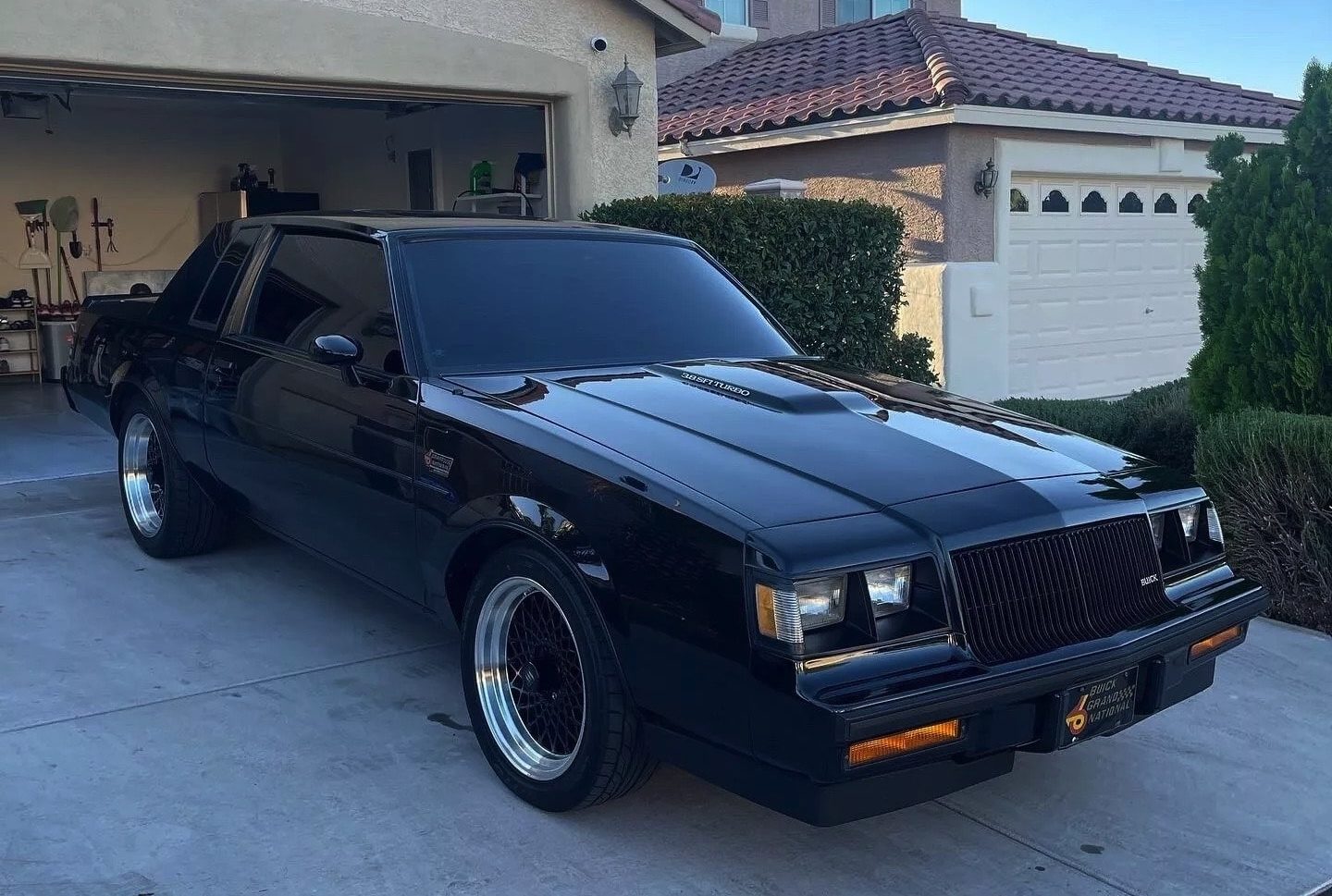
And then the train arrived. Around 2,500 to 3,000 RPM, the Garrett T3 would spool up and deliver boost with dramatic, sudden force. The rear wheels already managing 276 horsepower through a modest limited-slip differential would scramble for grip.
The car would lurch forward in a way that felt less like acceleration and more like being launched from a catapult. Quarter-mile times fell into the low 13-second range for the standard GN and deep into the 12s for the GNX numbers that put it in supercar territory for the era.
The trick to driving the Grand National fast was counterintuitive: you had to build boost before the launch, holding the car against the brakes and letting the turbo spool, and then release everything at once.
Driving it normally, without understanding the boost curve, meant experiencing the lag in its most frustrating form a soft, unimpressive pull followed by a violent, unsettling surge.
The GNX, produced only in 1987 with 547 units made, remains a holy grail of American automotive history. Its turbo lag is inseparable from its legend.
Also Read: 5 Classic Muscle Cars That Survived the Fuel Crisis vs 5 That Didn’t
3. Ferrari 208 GTS Turbo (1982–1989)
Ferrari is a name synonymous with passion, precision, and performance. The 208 GTS Turbo, however, represents one of the more unusual chapters in the company’s story a car born not from the desire to push performance boundaries, but from the peculiarities of Italian tax law.
In the early 1980s, Italy imposed a punishing luxury tax on engine displacements above 2.0 liters. Ferrari’s response was to take their beloved 308 GTB a 3.0-liter V8 masterpiece and shrink the engine to 1,991cc, creating the 208. In naturally aspirated form, this made for a very fast-looking but relatively slow car, producing only around 155 horsepower. Ferrari enthusiasts in Italy were not pleased.
The solution was forced induction. By adding a single IHI turbocharger to the diminutive V8, Ferrari pushed output to approximately 220 horsepower respectable if not spectacular and the 208 GTS Turbo was born.

The problem was that the turbocharger selected for this application was not well matched to the small-displacement engine. The IHI unit was sized in a way that required the engine to work hard before it began contributing meaningfully to power output.
At low RPMs, the 208 Turbo felt sluggish and almost lethargic a particularly jarring contrast given that this was, after all, a Ferrari with a mid-mounted V8 and all the visual drama that implied.
Throttle response below 3,000 RPM was soft and uninspiring. Experienced drivers would note a distinct hesitation when pulling out of tight corners, a moment where the car seemed uncertain, almost confused about what it was supposed to be doing.
Then, as RPMs climbed past the boost threshold, the turbo would engage with a surge that transformed the car’s character entirely. The exhaust note changed, the acceleration intensified, and something closer to the expected Ferrari experience would emerge.
But the transition between these two states was jarring enough that road testers of the era frequently criticized the car for its inconsistent power delivery. The 308 it was based on was praised for its linear, rev-happy naturally aspirated response. The 208 Turbo felt like a different and arguably less satisfying machine.
Ferrari eventually refined the setup, fitting an intercooler in later production years that smoothed out the delivery somewhat, but the fundamental compromise remained.
The 208 GTS Turbo is today a fascinating collector’s piece precisely because of its unusual history and its complicated, nuanced driving experience a Ferrari that punishes impatience and rewards those who understand its peculiar boost curve.
4. Saab 900 Turbo (1978–1994)
Sweden gave the world ABBA, flat-pack furniture, and the Saab 900 Turbo a car that defied every convention of automotive design and managed to be genuinely brilliant and genuinely maddening at the same time.
The 900 Turbo was not a sports car in the traditional sense. It was a front-wheel-drive, front-engine touring car with an unusually long hood, an ergonomic interior that looked like it had been designed by aerospace engineers, and a turbocharged four-cylinder engine that produced a respectable 143 horsepower in its most common form.
What made the 900 Turbo significant was not just that it had a turbocharger it was one of the earliest mass-market cars to feature one prominently as a selling point.
Saab marketed the turbo aggressively, positioning it as a sophisticated, driver-focused alternative to German sports sedans. The advertising was clever, the reputation quickly established.
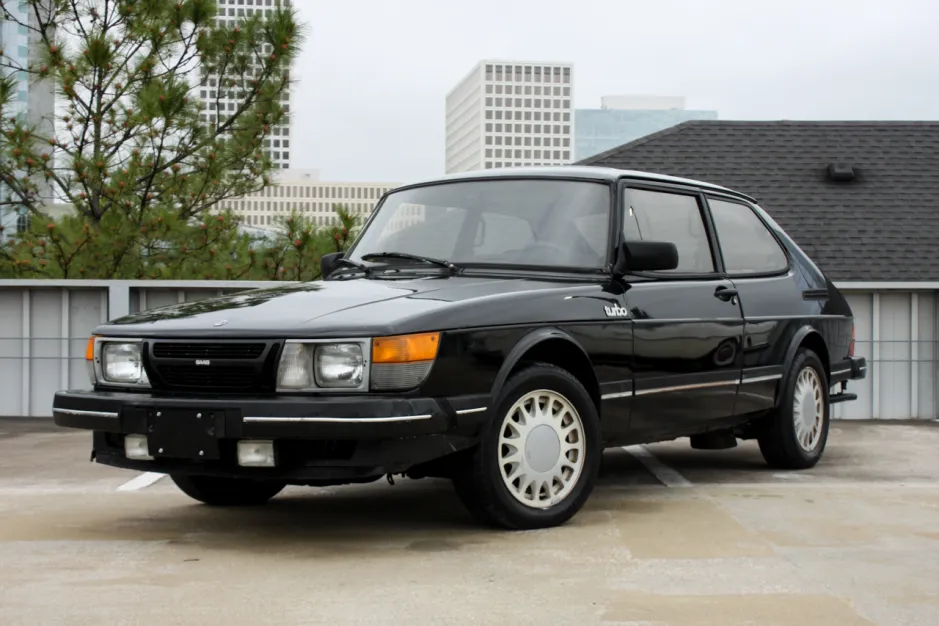
The reality of daily driving the 900 Turbo, however, was a lesson in managing expectations. Saab’s choice of turbocharger a Garrett AiResearch unit prioritized peak power over responsiveness.
At low RPMs and light throttle, the engine behaved like any ordinary four-cylinder: competent, but unremarkable. The turbocharger simply wasn’t spinning fast enough at these speeds to contribute meaningful boost.
Drivers who had purchased the car based on its turbocharged reputation would often find themselves confused at low-speed city driving, wondering where the performance had gone.
The secret was altitude, specifically RPM altitude. You had to climb the rev range deliberately, build momentum, and then commit to the throttle, at which point the Garrett unit would spin up and transform the 900 into something genuinely rapid and entertaining.
The lag in the 900 Turbo was particularly noticeable during overtaking maneuvers on two-lane roads exactly the situation where you most needed immediate, predictable response.
A driver would pull out to pass, apply full throttle, and encounter that agonizing half-second of nothing before the boost arrived. For a brief moment, you were committed to an overtake with insufficient power to complete it cleanly.
This characteristic actually contributed to a series of accidents in early ownership years and prompted Saab to refine the turbo mapping in successive model years. Later versions of the 900 Turbo were noticeably smoother in their boost delivery, but the early cars retained a reputation for the kind of on/off surge that made them exciting and exhausting in equal measure.
The Saab 900 Turbo remains a beloved cult classic quirky, intelligent, and deeply memorable. Its turbo lag is part of its personality, and enthusiasts today wouldn’t have it any other way.
5. Mitsubishi Starion ESI-R (1983–1989)
The Mitsubishi Starion is, in many respects, the forgotten hero of 1980s turbocharged performance. While the Nissan 300ZX Turbo and Toyota Supra collected magazine covers and public adoration, the Starion worked quietly in their shadow, offering a driving experience that was sharper, stranger, and in many ways more viscerally exciting than either of its more famous contemporaries.
It was also notorious among those who knew it for a turbo lag that defined the car’s character as completely as its wide-body bodywork or its bold, angular styling. The Starion was powered by a 2.6-liter turbocharged four-cylinder engine, a unit shared with the Mitsubishi Conquest in North America.
In ESI-R specification the wide-body, high-output variant most prized by enthusiasts this engine produced around 176 horsepower, delivered through a rear-wheel-drive layout with a limited-slip differential. On paper, these were impressive credentials for a Japanese sports car of the era.
The turbocharger used was a large Mitsubishi-sourced unit that proved deeply effective at generating peak boost but was notably slow to respond. This was partly a consequence of the engine’s displacement and partly a deliberate tuning decision Mitsubishi’s engineers prioritized top-end power over low-end responsiveness, reasoning that the Starion’s target audience wanted sprint performance over city driveability.

In practice, this meant the Starion was a car of two personalities. Below boost roughly below 3,000 RPM it felt heavy, almost reluctant, like a car carrying significantly more weight than it needed to.
The steering was sharp, the chassis communicative, but the engine responded to throttle inputs with an almost sullen patience. New drivers frequently found this frustrating, especially coming from naturally aspirated cars where throttle and acceleration maintained a direct, honest relationship.
Then, past the boost threshold, the Starion became a different machine entirely. The turbo would spool with an audible, satisfying rush of induction noise, the power would surge forward with the kind of enthusiasm usually reserved for V8 engines, and the rear tires would communicate their sudden workload through the seat and steering wheel. It was an intoxicating experience raw, mechanical, and deeply satisfying for drivers willing to learn the car’s rhythms.
The key was commitment. The Starion rewarded drivers who planned corners, who kept RPMs raised through technical sections, who understood that patience before the apex translated into explosive, rewarding exits. Drive it hesitantly and the lag would humiliate you. Drive it with conviction and it would thrill you.
Today, the Starion ESI-R is one of the most sought-after Japanese classics of its era. Its turbo lag maddening, dramatic, and entirely characteristic is as much a part of its identity as its iconic flared fenders.
For enthusiasts who appreciate the raw, unfiltered driving experience of an era before electronic intervention smoothed everything into predictability, the Starion remains one of the finest ambassadors of everything the 1980s turbocharged age had to offer.
Also Read: Top 10 Boxy 1980s Sedans That Are Now Considered Modern Classics
