
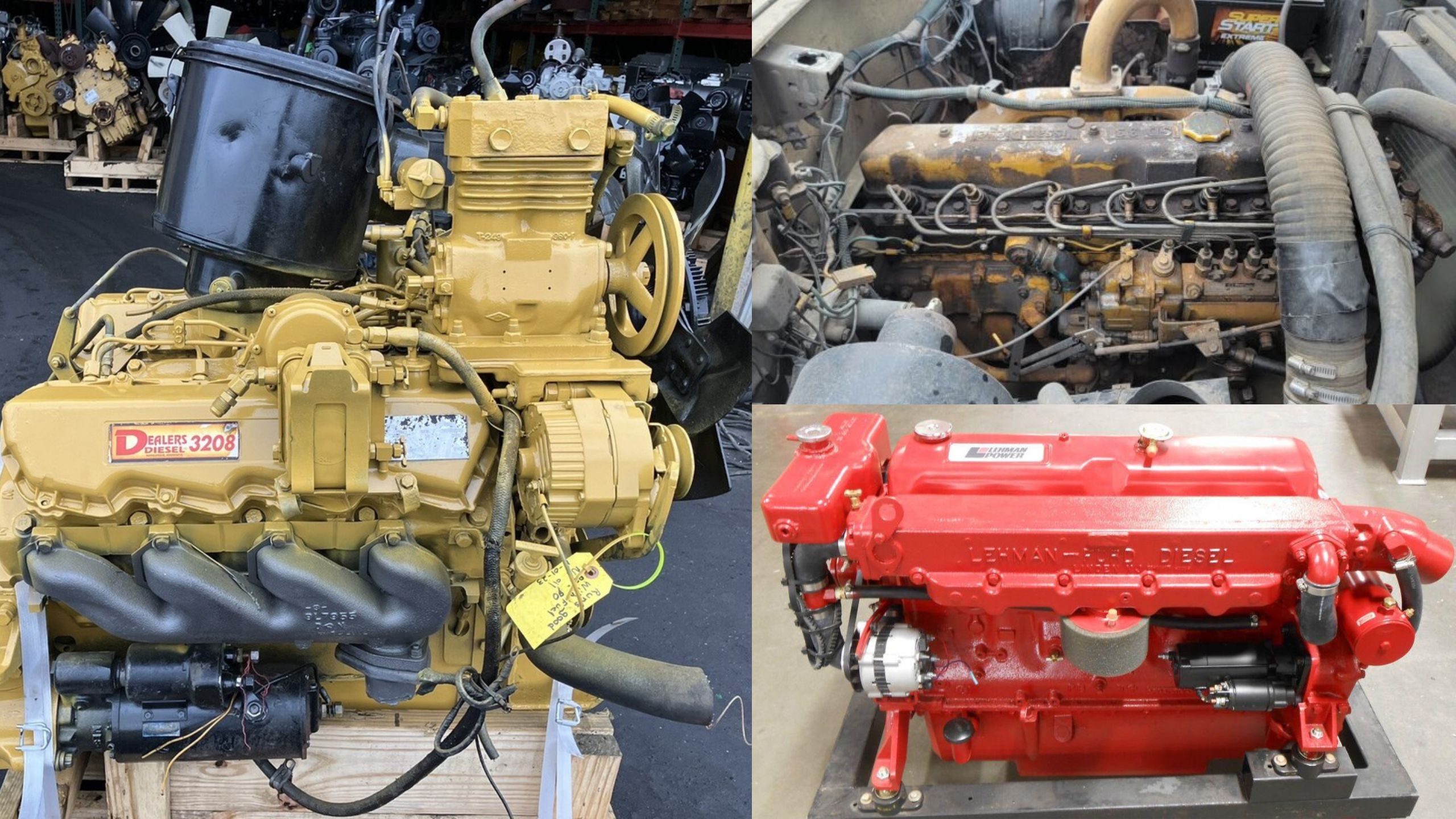
The late 1970s were a transformative period for diesel engine technology. Amid the chaos of the 1973 and 1979 oil crises, the world turned its eyes toward diesel power with renewed urgency. Gasoline prices skyrocketed, fuel lines stretched around city blocks, and governments began pressuring automakers to deliver better fuel economy.
Diesel, long considered the domain of trucks, ships, and farm equipment, suddenly looked like a very attractive alternative to gasoline-powered passenger vehicles and commercial machinery.
Engineers across Europe, Japan, and North America responded with remarkable innovation. This era produced some of the most legendarily durable powerplants ever built engines that racked up hundreds of thousands of miles with only basic maintenance, that powered taxis across Europe for decades, that pulled freight through the harshest climates on earth without complaint.
These were engines built with an older philosophy: over-engineered, under-stressed, and designed to last far longer than any warranty ever promised.
The ten engines highlighted in this article represent the pinnacle of late-1970s diesel engineering. They are machines that mechanics still talk about with reverence, that owners still drive today, and that set standards for reliability which modern turbocharged, emissions-laden engines struggle to match. These are the legends.
1. Mercedes-Benz OM617 (1974–1991)
If there is one diesel engine from the late 1970s that has achieved something approaching mythological status, it is the Mercedes-Benz OM617. Introduced in 1974 and refined throughout the late 1970s and 1980s, this inline five-cylinder naturally aspirated diesel became the gold standard by which all other diesel engines of its era are measured.
It powered the W123 sedan one of the most beloved and long-lived automobiles ever produced and its reputation for indestructibility was earned through millions of miles of real-world use across every continent on earth.
The OM617 displaced 3.0 liters and produced a modest 77 horsepower in its naturally aspirated form, rising to around 110 horsepower in its later turbocharged variant, the OM617A. Those numbers sound underwhelming by modern standards, but they were precisely the point.
The engine was never stressed. It operated well within its mechanical limits at all times, and that margin of safety translated directly into extraordinary longevity.
Taxi drivers in Germany, Greece, and across the Middle East ran these engines to 500,000 kilometers and beyond on nothing more than regular oil changes and the occasional filter replacement.
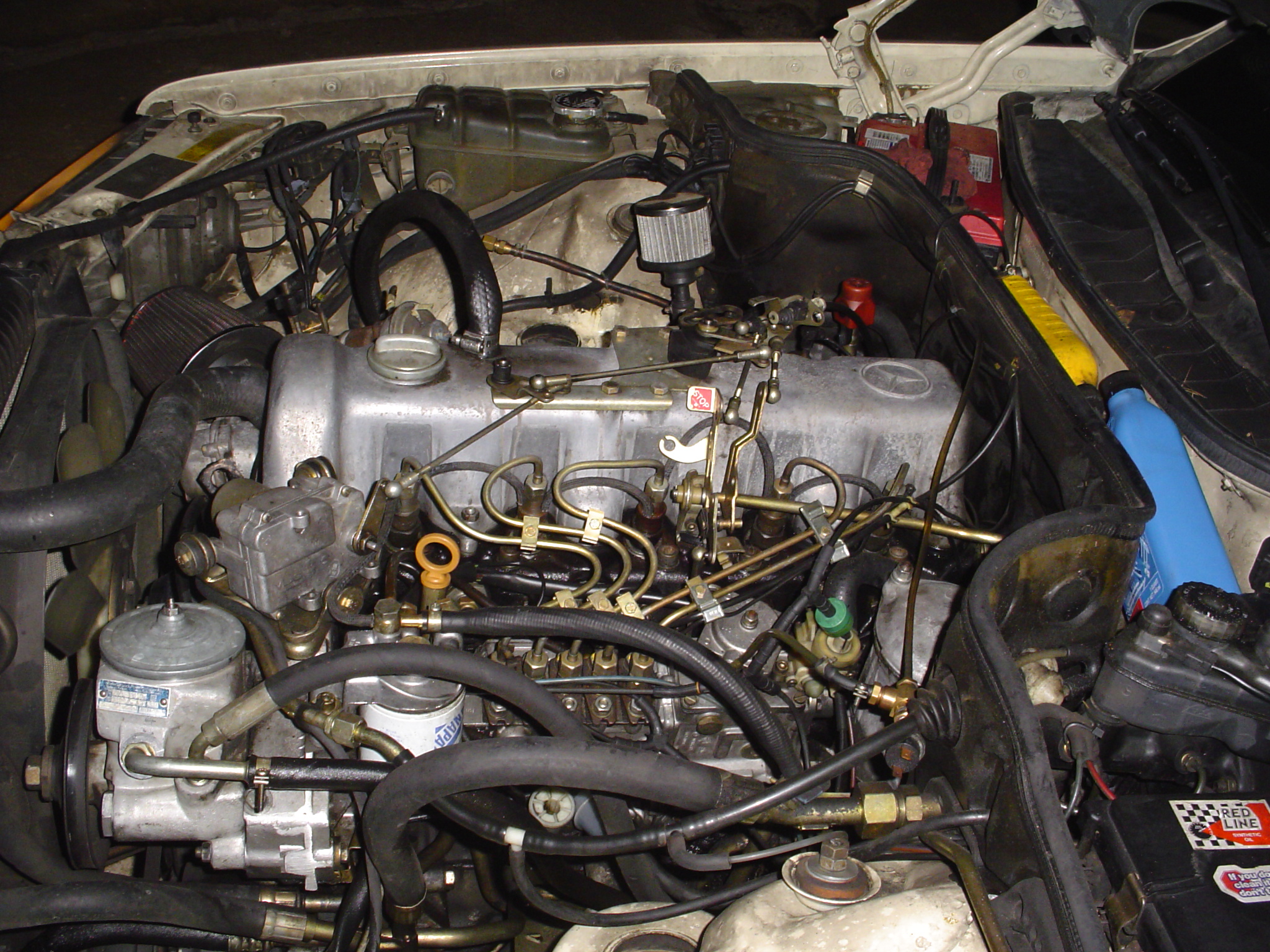
The construction of the OM617 was a masterclass in conservative German engineering. The cylinder head was cast iron, thick and robust. The crankshaft was forged steel, balanced with exacting precision.
The fuel injection system, supplied by Bosch, was mechanical and famously simple there were no computers to fail, no electronic actuators to corrode, no sensors to misread. When something wore out, it was almost always a part that any competent mechanic could source, diagnose, and replace without specialized training.
One of the OM617’s most celebrated characteristics was its tolerance for neglect and poor-quality fuel. Stories abound of these engines running on recycled cooking oil, off-spec diesel, and extended oil change intervals that would destroy a modern engine in short order.
While Mercedes never endorsed such treatment, the fact that the OM617 survived it says everything about the over-engineering philosophy baked into its design.
The turbocharged OM617A, introduced in 1978 for the 300SD in North America, was equally impressive. It added a Garrett turbocharger to the basic architecture and produced a meaningful increase in performance without sacrificing the base engine’s legendary durability.
The turbo variant became the first diesel passenger car sold in the United States in significant numbers and helped shift American consumer perception of diesel from something dirty and agricultural to something refined and practical.
Today, OM617-powered W123 Mercedes sedans are actively sought out by collectors and practical users alike. Running examples with 400,000 or 500,000 original miles are not unusual, and the global community of OM617 enthusiasts is large, active, and deeply knowledgeable.
Parts remain widely available, and the engines can still be rebuilt to factory specifications using off-the-shelf components. It is difficult to think of a higher compliment for any mechanical device than the fact that, nearly five decades after its introduction, people still go out of their way to own and drive one.
2. Toyota 2H (1980–1987)
Toyota’s 2H engine emerged at the very dawn of the 1980s and is technically a product of that decade, but its design philosophy and development roots it firmly in the engineering culture of the late 1970s.
It was the engine that turned the Toyota Land Cruiser 60 Series into one of the most trusted workhorses on the planet, particularly in Australia, Africa, and the Middle East, where roads were few and repair shops were even fewer.
The 2H was a naturally aspirated inline six-cylinder diesel displacing 3.98 liters and producing around 103 horsepower. Like the OM617, those modest power figures were entirely intentional.
Toyota’s engineers understood that the primary buyers of Land Cruisers equipped with this engine were not performance enthusiasts they were farmers, aid workers, military operators, and explorers who needed absolute, unconditional reliability in environments where a breakdown could be life-threatening.
The engine’s construction was enormously robust. The block was thick cast iron, the crankshaft was a forged unit running in seven main bearings, and the overhead valve design rather than an overhead cam meant there were fewer moving parts to wear or fail.
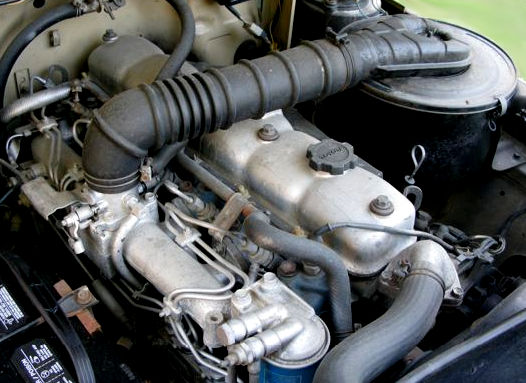
The pre-combustion chamber design for fuel injection was not the most efficient approach even by 1980 standards, but it was extremely forgiving of fuel quality variations, which mattered enormously in remote markets where diesel might sit in a drum for months before use.
What distinguished the 2H from many of its contemporaries was its attitude toward heat management. Toyota engineers gave the engine a large, carefully designed cooling system and specified generous oil passages throughout the block and head.
The engine ran cool under load, which directly contributed to its long service life. Operators who maintained the cooling system found that 300,000 to 400,000 kilometers was entirely achievable without major internal work.
The 2H became the standard of comparison for overlanding diesel engines in the 4×4 community, a status it retains to this day. Enthusiast forums dedicated to the FJ60 Land Cruiser regularly feature stories of 2H engines exceeding 500,000 kilometers with nothing more than consumables replaced.
The engine’s simplicity made field repairs genuinely feasible, and the global parts supply chain that Toyota established meant that replacement components were available even in developing markets.
3. Volkswagen 1.5/1.6 EA827 Diesel (1976–1993)
Volkswagen’s decision to offer a diesel engine in the Golf and Rabbit in 1976 was, in retrospect, one of the most consequential product decisions in automotive history.
The 1.5-liter naturally aspirated diesel, later enlarged to 1.6 liters, brought diesel power to mainstream European and North American compact cars for the first time at scale, and it proved to be magnificently reliable in the process.
The engine was a product of Volkswagen’s EA827 family, sharing its basic architecture with the gasoline engines of the same era but rebuilt from the ground up for diesel operation.
The block was strengthened considerably to handle the higher compression ratios inherent to diesel combustion ratios of 23:1 compared to the gasoline engine’s 8:1 and the rotating assembly was balanced to cope with diesel’s characteristic combustion pulses.
The result was an engine that felt and sounded very different from its gasoline cousins but shared the same underlying dimensional and manufacturing heritage.
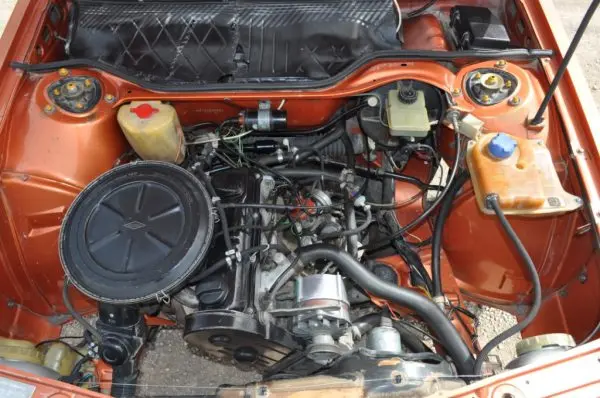
In naturally aspirated form, the 1.6-liter diesel produced just 54 horsepower, but fuel economy figures that seemed almost impossible to gasoline car buyers of the era.
European cycles regularly returned over 50 miles per gallon in the Golf, and American versions, though slightly less efficient due to emissions tuning, still achieved figures in the high 40s. For drivers traumatized by the 1979 oil crisis, these numbers were transformative.
Reliability was exceptional. The engine’s injection system, supplied by Bosch as in so many European diesel applications of the period, was a sturdy mechanical affair that responded well to basic maintenance.
Timing belt changes at the prescribed intervals were critical unlike the OM617 and 2H, this was an interference engine and belt failure was catastrophic but owners who followed the maintenance schedule found that the engines ran essentially forever. High-mileage examples routinely exceeded 250,000 to 300,000 miles, with many reaching far beyond that.
The turbocharged version, the 1.6 TD introduced in 1981, added meaningful performance without significantly compromising durability and laid the groundwork for the extraordinary turbodiesel engines Volkswagen would develop in subsequent decades.
4. Perkins 4.236 (1963–present)
The Perkins 4.236 predates the late 1970s by over a decade, but the engine was at the absolute peak of its production volume and global deployment during this period, making it impossible to exclude from any discussion of the era’s most reliable diesel engines.
Used in Massey Ferguson tractors, marine applications, generators, construction equipment, and light commercial vehicles, the 4.236 was one of the most widely distributed diesel engines by the end of the 1970s.
This inline four-cylinder naturally aspirated diesel displaced 3.86 liters and was, by any measure, built to outlast the machinery it powered. Perkins designed it with conservative power outputs typically around 65 to 80 horsepower depending on application and extraordinarily stout internal construction.
The iron block was thick enough to absorb decades of hard service, and the fuel injection equipment, like so many engines of this era, was mechanical and user-serviceable without specialized tooling.
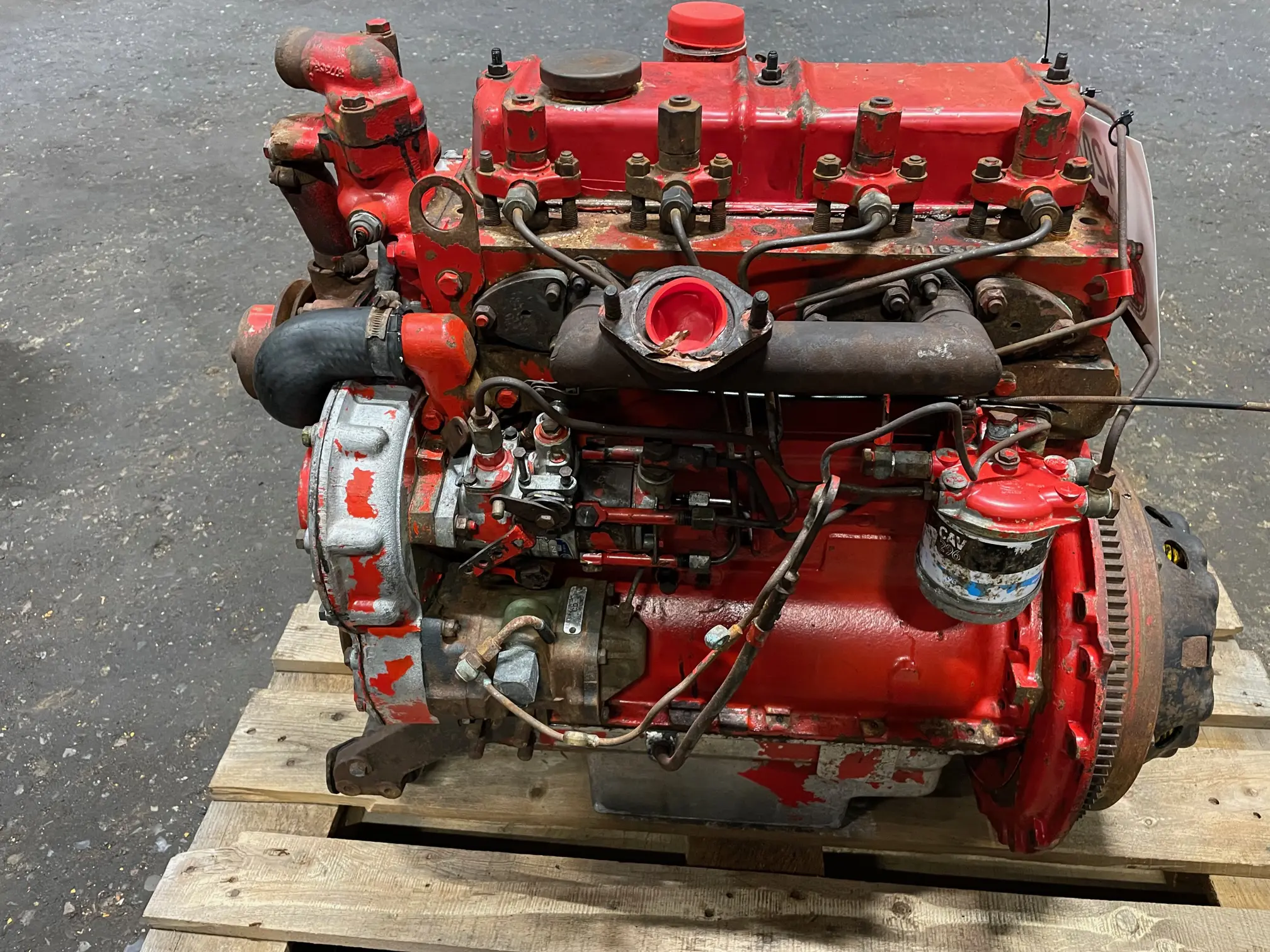
What made the 4.236 legendary was its ubiquity and the global support infrastructure that ubiquity created. Because the engine was installed in millions of machines across dozens of countries, parts were genuinely available everywhere.
A farmer in rural Kenya, a fishing boat operator in the Philippines, or a construction contractor in Brazil could source replacement injectors, bearings, gaskets, and seals through local suppliers.
That parts accessibility was not just a commercial advantage it directly contributed to the engines achieving extraordinary lifespans because timely, affordable maintenance was always possible.
Rebuild kits for the 4.236 were and remain straightforwardly available, and the engine’s architecture is simple enough that a competent machinist can perform a full overhaul with basic equipment.
Stories of 4.236 engines accumulating 20,000 to 30,000 operating hours before major work are common in agricultural and industrial circles. The engine continues in limited production today, making it one of the longest-lived diesel designs in history.
Also Read: 5 Vintage Turbocharged Cars From the 1980s That Are Notorious for Lag
5. Cummins B Series (1984, with 1970s roots)
The Cummins B Series, which entered production in the early 1980s but was developed throughout the late 1970s, became one of the most successful diesel engine families ever produced.
Its development roots in the 1970s engineering era give it a design philosophy firmly aligned with the conservative, over-engineered approach that characterized the best engines of that decade.
The B Series was available in both four and six-cylinder configurations, with the six-cylinder 5.9-liter variant becoming particularly famous in medium-duty truck applications.
Cummins designed it with an eye toward the commercial vehicle market, where uptime and total cost of ownership were the metrics that mattered most.
The result was an engine that operators trusted implicitly for long-haul trucking, agricultural use, and eventually light-duty pickup truck applications when Dodge began installing it in the Ram in 1989.
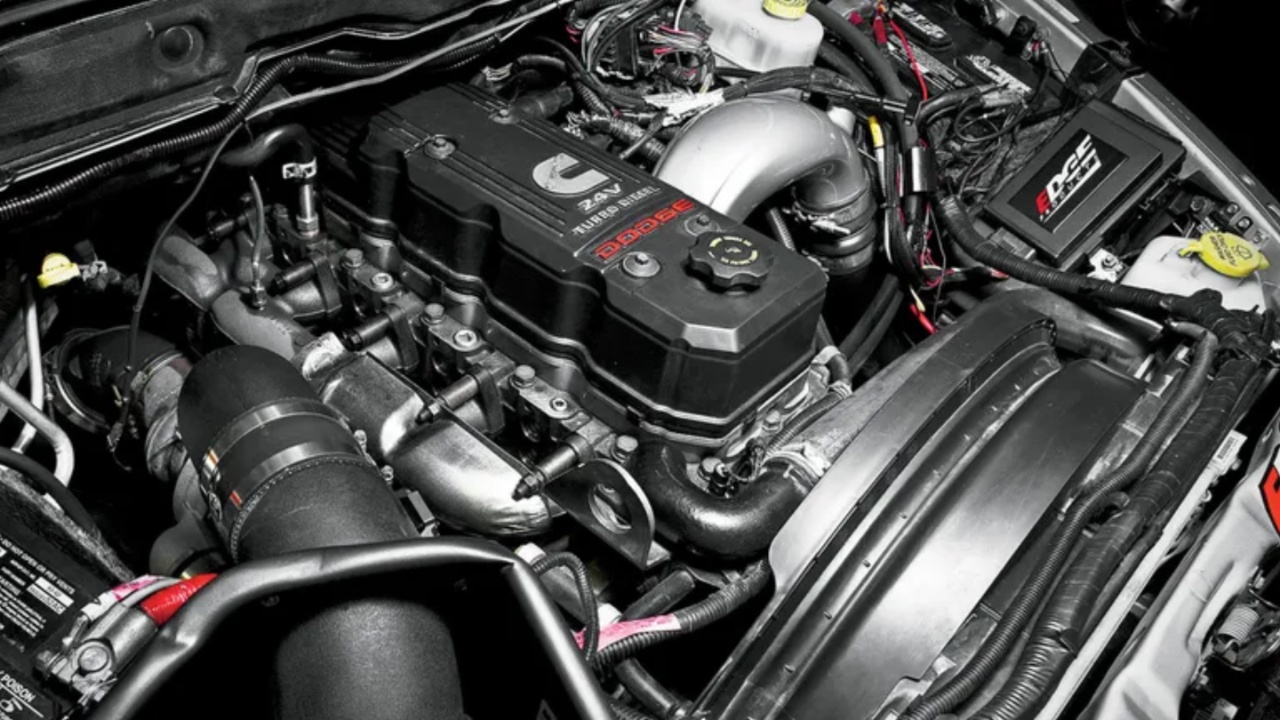
The naturally aspirated variants of the early B Series were already exceptionally reliable, but the turbocharged versions, which arrived as the engine matured through the 1980s, maintained that reliability while delivering substantially better performance and economy.
Cummins’ conservative approach to boost pressure and thermal loading meant that turbocharger failures were relatively infrequent compared to competitors, and the basic long block architecture proved capable of absorbing dramatically higher power outputs as the engine was progressively developed.
Mechanics appreciated the B Series for its accessibility and logical layout. Service points were well-positioned, the injection pump was a conventional mechanical unit from Bosch or Cummins’ own PT system, and the engine’s dimensional consistency across production years meant that many components were interchangeable across model years a practical advantage when sourcing parts for older examples.
6. Detroit Diesel Series 60 (developmental era late 1970s)
Detroit Diesel’s Series 60, though commercially introduced in 1987, was conceived and developed through the late 1970s and early 1980s in response to the trucking industry’s demand for a cleaner, more fuel-efficient heavy-duty diesel.
Its developmental heritage places it firmly in the engineering philosophy of the late-1970s era, and its subsequent reputation for reliability places it among the finest diesel engines ever built for on-highway use.
The Series 60 was a 12.7-liter inline six, later available in 11.1 and 14.0-liter displacements, and it was the first heavy-duty diesel to use electronic controls a significant departure from the mechanical injection systems that characterized its contemporaries.
Detroit Diesel’s engineers were confident enough in their electronics to commit to this architecture, and the DDEC (Detroit Diesel Electronic Controls) system proved both capable and durable in service.
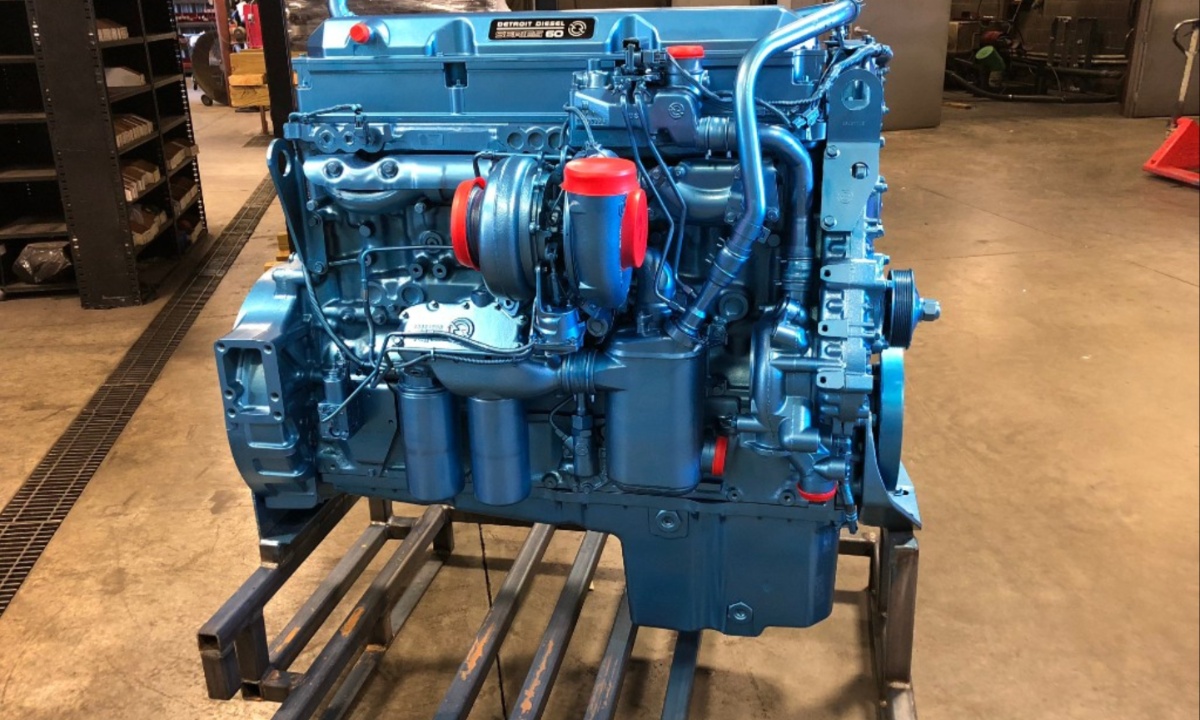
Fleet operators and owner-operators alike quickly recognized that the Series 60 was something special. Fuel economy was substantially better than competitive engines from Cummins and Caterpillar, and the engine’s reliability in severe-duty long-haul applications was extraordinary.
Million-mile examples were documented by Detroit Diesel and used extensively in marketing materials, and they were genuine not cherry-picked exceptions.
The engine’s overhead cam design contributed to its efficiency and power density, while the single-camshaft layout kept complexity manageable.
The wet liner construction made cylinder replacement straightforward, and the engine’s architecture allowed for in-frame rebuilds without removing the unit from the vehicle a significant practical advantage in commercial trucking where downtime was measured directly in lost revenue.
7. Caterpillar 3208 (1975–1995)
Caterpillar’s 3208 was a V8 diesel that occupied a unique position in the market: it was a relatively compact, high-output diesel that found applications ranging from school buses and medium-duty trucks to marine use and generator sets.
Introduced in 1975 and produced for two decades, it was at the height of its popularity and production during the late 1970s. The 3208 displaced 10.4 liters from its V8 architecture and was available in naturally aspirated and turbocharged configurations producing between 210 and 435 horsepower depending on specification.
This was considerably more powerful than most of the other engines on this list, reflecting its position in the medium and heavy commercial vehicle market rather than in passenger cars or agricultural equipment.
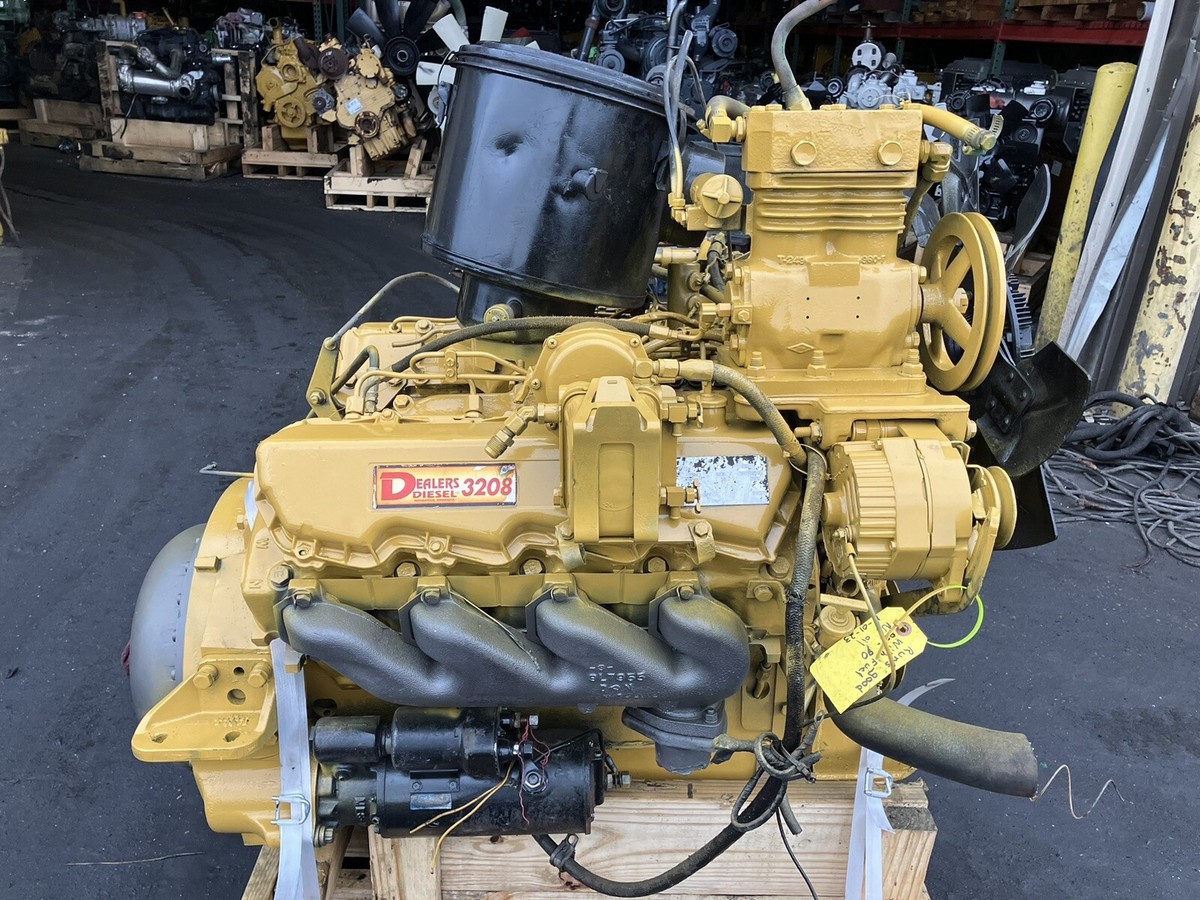
What distinguished the 3208 was Caterpillar’s legendary commitment to industrial durability. The company had been building heavy equipment engines since the early twentieth century and brought that accumulated expertise to the 3208’s design.
The block and rotating assembly were built to handle far more stress than the engine would ever be asked to produce in normal service, and the injection system a mechanical unit from Caterpillar’s own injection pump division was rugged and long-lived.
Marine versions of the 3208 became particularly celebrated in the boating community, where the engine’s reliability in the harsh saltwater environment helped establish Caterpillar’s reputation in a market segment that had previously been dominated by Detroit Diesel and Cummins.
Properly maintained marine 3208s regularly achieved 10,000 to 15,000 hours before major overhaul, a figure that would be considered acceptable even by modern marine diesel standards.
8. Isuzu 4BD1 (1981–present)
Isuzu’s 4BD1 was the engine that powered the company’s N-Series light commercial trucks through much of the 1980s and beyond, and it established Isuzu’s reputation for diesel reliability in the commercial vehicle segment that the company has never relinquished.
Though it entered production just after the decade boundary, its design and development are products of 1970s engineering thinking. The 4BD1 was a 3.9-liter naturally aspirated inline four-cylinder diesel producing around 95 horsepower.
Like all the best engines of its era, it was deliberately under-stressed, operating well within its mechanical limits even under sustained heavy loads. The design was conventional cast iron block and head, a robust crankshaft, mechanical fuel injection but executed with exceptional precision and quality control.
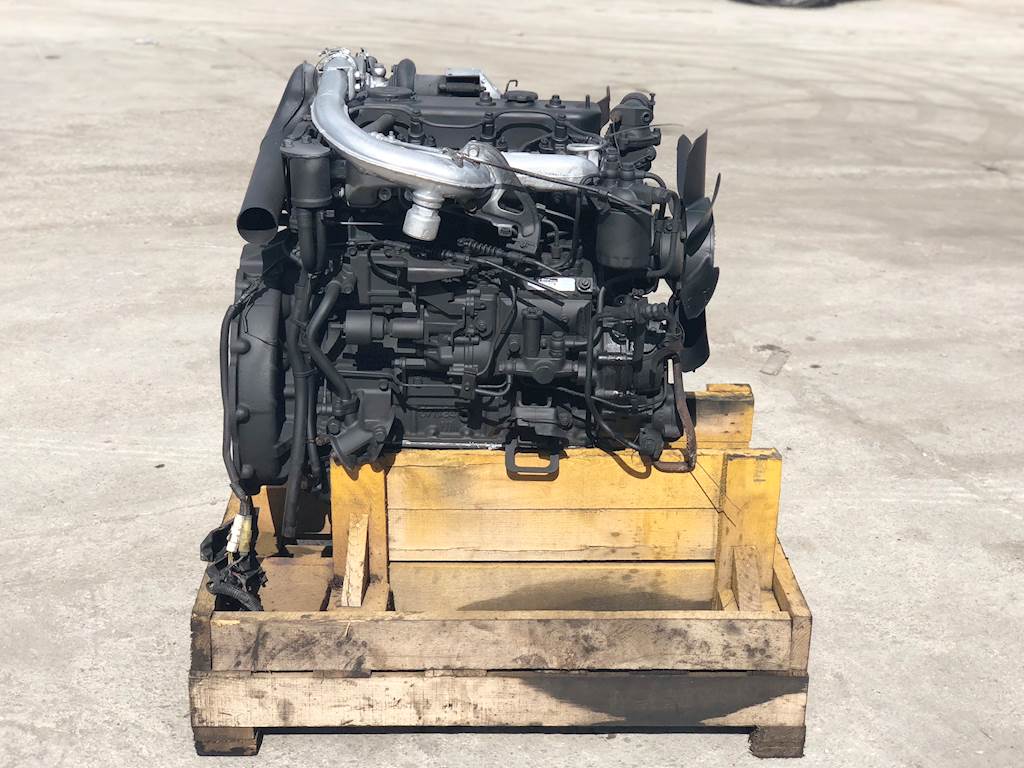
What made the 4BD1 remarkable was its behavior in tropical and developing-market conditions. Isuzu targeted the engine specifically at markets in Southeast Asia, Africa, and Latin America, where ambient temperatures were high, fuel quality was variable, and maintenance intervals were often extended beyond manufacturer recommendations due to remoteness or economic constraints.
The engine handled all of these stresses with equanimity, building a reputation in exactly the markets where reputations were hardest to earn. Japanese quality control in Isuzu’s manufacturing during this period was extraordinary even by international standards, and the 4BD1 benefited from that culture.
Dimensional tolerances were held to a precision that European and American manufacturers of the era rarely matched in commercial engine production, and that precision translated directly into longer service life and lower oil consumption over the engine’s lifespan.
9. Ford 2715E (York Diesel, 1970s–1980s)
Ford’s 2715E, commonly known as the York diesel, was the engine that powered the Ford Transit van through much of the late 1970s and 1980s and helped establish the Transit as the dominant commercial van in Europe.
It was not the most sophisticated diesel engine of its era, and it was not the most powerful, but it was one of the most practically reliable workhorses of the period.
The 2715E was a 2.4-liter inline four-cylinder naturally aspirated diesel producing around 60 to 65 horsepower. Those figures made it suitable primarily for light commercial use vans, minibuses, and light trucks where its modest power output was matched to the application’s needs
Ford specified it conservatively, ensuring adequate thermal and mechanical margins for the sustained urban and inter-urban use that characterized Transit operations in the hands of tradesmen, delivery services, and public transport operators.
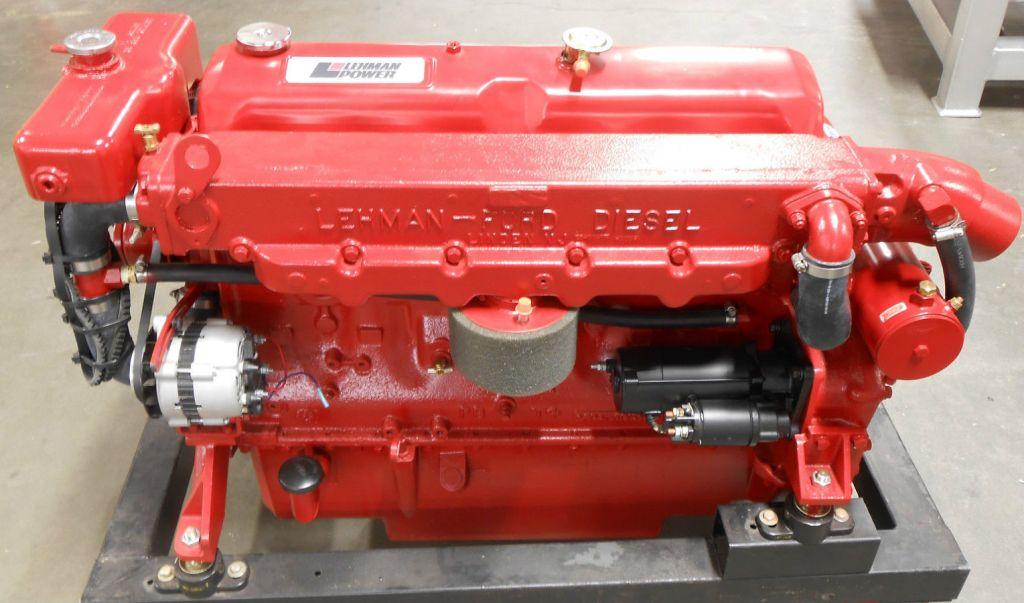
The engine’s durability in Transit applications was tested under conditions that would destroy less robust powerplants. Ambulance operators, who ran their vehicles continuously and brutally, found the York diesel to be one of the most reliable options available.
Police fleet operators across the United Kingdom reported extremely low rates of mechanical failure, and the engine’s simple construction made repairs quick and affordable even in municipal maintenance facilities without specialized diesel tooling.
Despite its unpretentious character, the York diesel earned genuine affection among mechanics and operators who worked with it throughout its production life.
Its passing, as the Transit was updated with more modern and efficient diesel units, was mourned by those who valued pure, unadorned reliability above all other attributes.
10. Nissan SD33 (1975–1990s)
Nissan’s SD33 was a 3.25-liter inline six-cylinder naturally aspirated diesel that powered the Nissan Patrol 4×4 through its most successful decades, and in so doing accumulated a following in the off-road and overlanding community that rivals the Toyota 2H for passion and loyalty.
The engine’s combination of smooth six-cylinder character, genuine mechanical robustness, and elegant simplicity made it one of the finest light-duty diesel engines of the late 1970s and early 1980s.
The SD33 produced around 95 horsepower adequate rather than exciting but its power delivery was notably smooth for a diesel of its era, the six-cylinder configuration providing better balance and less vibration than the four-cylinder units that powered most competing vehicles.
This smoothness was appreciated not just for comfort but for the reduced mechanical stress it imposed on the engine’s internal components, contributing directly to its long service life.
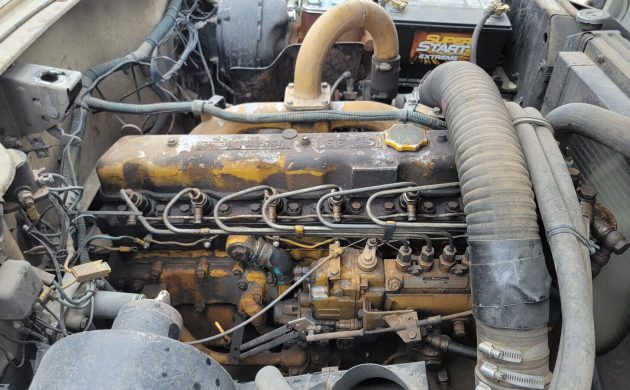
Like the Toyota 2H, the SD33 was designed with remote and developing-market use in mind. Nissan’s engineering team understood that Patrol buyers in the Middle East, Australia, and Africa needed engines that would run reliably on marginal fuel, in extreme heat, and with maintenance intervals that might be stretched due to circumstances beyond the owner’s control.
The SD33 met all of those requirements with reserves to spare, and in Australia particularly it became the engine of choice for serious overlanders who valued reliability above all else.
The turbocharged variant, the SD33T, added meaningful performance while maintaining the base engine’s excellent reliability record. Higher boost pressures than Nissan specified could cause problems, but the factory tune was conservative and the turbo units proved nearly as durable as the naturally aspirated originals in the hands of careful operators.
The SD33’s legacy endures in the 4×4 community, where original Patrol GQ and MQ models powered by this engine are actively maintained and respected. Parts continue to be manufactured by aftermarket suppliers to meet sustained demand, and the engine’s reputation for running long past the point where lesser powerplants would have surrendered remains fully deserved.
Also Read: Top 8 American V8 Engines That Still Produced Power in the Mid 1970s
