
Learning to drive in today’s vehicles can be surprisingly complicated. Modern cars often feature thick roof pillars, high beltlines, narrow windows, and complex dashboards filled with screens.
While safety technology has improved dramatically, visibility from the driver’s seat has actually declined in many contemporary models. This is one reason vintage cars continue to attract attention from enthusiasts and learners alike.
Many vehicles built from the 1950s through the 1980s were designed during a time when large windows, thin pillars, and upright seating positions were standard.
For new drivers, these features can make a significant difference in comfort, confidence, and situational awareness on the road.
Visibility is one of the most important factors for a beginner driver. Being able to clearly see pedestrians, cyclists, road signs, and surrounding traffic reduces stress and improves reaction time.
Vintage cars often excel in this area because their designs prioritized outward visibility before the era of strict rollover standards and complex structural reinforcements.
Wide windshields, generous rear windows, and slim body pillars give drivers a panoramic view of their surroundings. Some classic models almost feel like sitting in a glass bubble compared to modern crossovers.
For American drivers interested in classic vehicles, several vintage models stand out for their excellent sightlines.
These cars not only offer strong visibility but are also relatively straightforward to operate, with simple controls and intuitive layouts.
While older vehicles naturally lack some modern safety technologies, their design simplicity and clear road view can still make them approachable choices for learners who appreciate vintage style.
Below are eight vintage cars that are particularly known for offering excellent visibility, making them surprisingly practical for new drivers.
1. Volkswagen Beetle (1960s–1970s)
The Volkswagen Beetle of the 1960s and 1970s stands as one of the most approachable and user-friendly cars ever produced, qualities that made it particularly well suited for new drivers. By this time, the Beetle had already become a global automotive icon, known for its distinctive rounded shape, mechanical simplicity, and practical everyday usability.
In the United States, where large domestic sedans dominated the roads, the compact Beetle offered a completely different driving experience. Its manageable size, excellent outward visibility, and forgiving handling characteristics helped countless drivers gain confidence behind the wheel.
Although the Beetle’s roots date back to the late 1930s, its greatest popularity arrived during the postwar decades. The original design was developed by Ferdinand Porsche as an affordable “people’s car,” intended to provide simple transportation for the masses.
After World War II, production resumed in Germany and expanded rapidly as the car gained a reputation for reliability and practicality. By the 1960s, the Beetle had become one of the best-selling vehicles in the world, and it was widely embraced by American buyers seeking an economical and easy-to-drive alternative to the larger cars offered by domestic manufacturers.

Mechanically, the Beetle used an unconventional but effective layout. Power came from an air-cooled flat-four engine mounted behind the rear axle, driving the rear wheels through a manual transmission. Engine sizes gradually increased over the years, ranging from approximately 1.2 to 1.6 liters by the early 1970s.
While horsepower figures were modest, the lightweight construction of the car allowed it to deliver adequate performance for everyday driving. The rear-engine configuration also simplified the front structure of the vehicle, eliminating the need for a radiator and allowing designers to shape the front end in a way that improved forward visibility.
The Beetle’s design played a crucial role in making it an ideal car for inexperienced drivers. Its upright windshield and relatively thin roof pillars created wide sightlines that made it easy to see surrounding traffic. Large side windows and a generous rear window further improved visibility in all directions.
The short front hood also made it easier for drivers to judge the car’s position when maneuvering in tight spaces. Combined with the Beetle’s compact overall dimensions, these features helped drivers feel comfortable and in control even in crowded urban environments.
The Volkswagen Beetle became more than just a popular economy car; it evolved into one of the most recognizable automobiles in the world. Its practical design and excellent visibility made it especially appealing to new drivers learning the fundamentals of road awareness and vehicle control.
For this reason, the Beetle remains a fitting example of a vintage car whose thoughtful design provided exceptional visibility and confidence for drivers just starting their journey behind the wheel.
The driving position is upright, which helps beginners maintain a natural view of the road ahead.
Another advantage for learners is the Beetle’s small footprint. Parking and maneuvering in tight spaces are much easier than in larger classic cars.
Combined with its famously simple mechanical layout, the Beetle remains one of the most beginner-friendly vintage vehicles ever produced.
2. Volvo 240 (1974–1993)
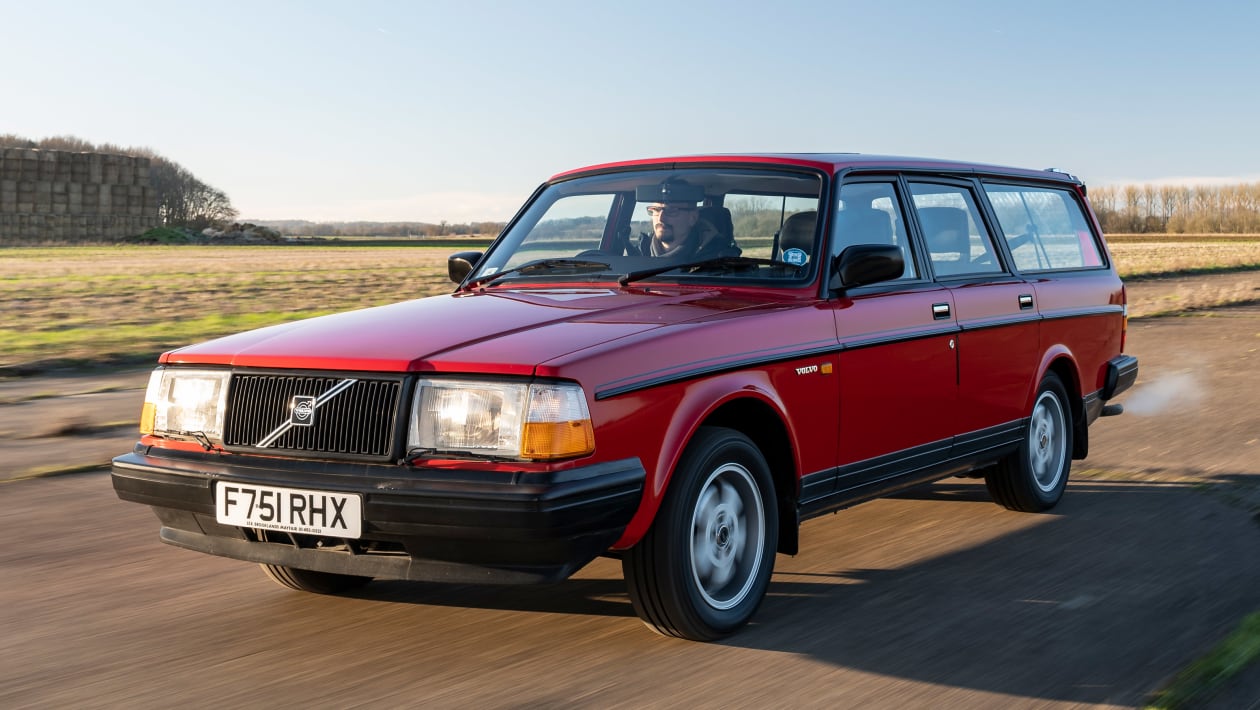
The Volvo 240, produced from 1974 to 1993, is widely regarded as one of the most sensible and confidence-inspiring cars ever built, qualities that made it especially suitable for new drivers.
Known for its boxy design, durability, and safety-focused engineering, the 240 became a common sight on American roads throughout the late twentieth century.
While the model earned its reputation primarily for safety and reliability, its excellent outward visibility also made it particularly easy to drive. For inexperienced motorists, the car’s upright greenhouse and clearly defined body lines provided a strong sense of spatial awareness, allowing drivers to judge distances and surroundings with ease.
The 240 was developed as the successor to Volvo’s earlier 140 series, with the goal of improving safety, durability, and everyday usability. During the early 1970s, Volvo had already built a strong reputation for producing vehicles that prioritized occupant protection and practical design over styling trends.
The company carried that philosophy forward when developing the 240, introducing structural reinforcements, improved crash protection, and refined suspension geometry. Despite these engineering upgrades, Volvo retained the straightforward, functional approach that had made earlier models so dependable.
Under the hood, the Volvo 240 typically used one of several versions of the B21 or B23 inline-four engines. These engines were mounted longitudinally at the front of the vehicle and drove the rear wheels through either a manual or automatic transmission. Displacement ranged from roughly 2.1 to 2.3 liters depending on the model year and configuration.
Some later versions included turbocharged variants that improved performance while maintaining the car’s reputation for reliability. The rear-wheel-drive layout contributed to balanced handling and predictable behavior, traits that helped new drivers feel comfortable learning vehicle control.
3. Mercedes-Benz W123 (1976–1985)
The Mercedes-Benz W123 is widely regarded as one of the most solid and well-built sedans of the 20th century. Beyond its durability, the car offers remarkably good visibility for a vehicle of its size.
The W123 features large glass panels and relatively thin roof pillars compared to modern luxury sedans.
Drivers benefit from a commanding seating position that provides a clear view over the hood and surrounding traffic. The long hood may seem intimidating at first, but the shape is easy to judge from the driver’s seat.

The rear window is also notably large, which makes backing up less stressful for inexperienced drivers.
Mercedes engineers focused heavily on ergonomics during the design of the W123, resulting in a cabin where mirrors, windows, and seating position work together to maximize driver awareness.
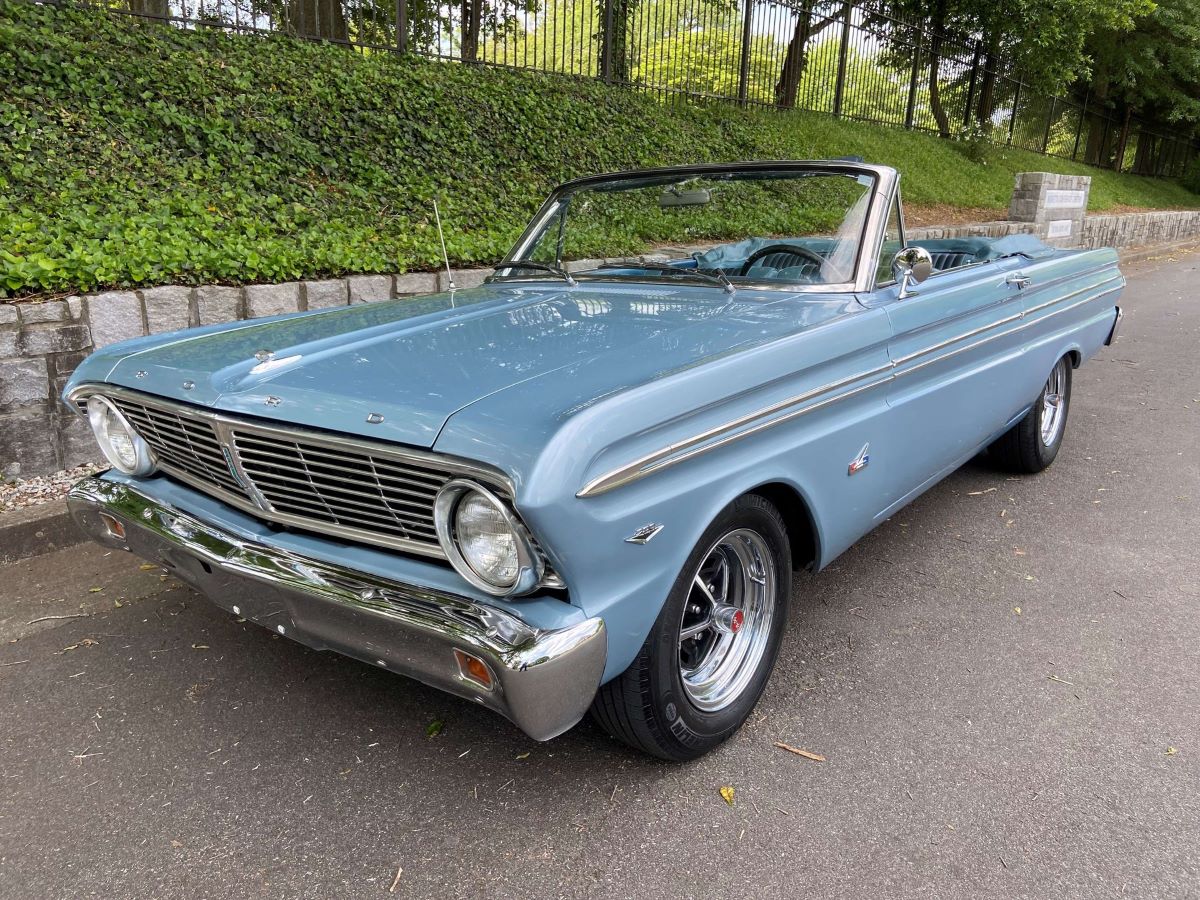
4. Ford Falcon (1960–1965)
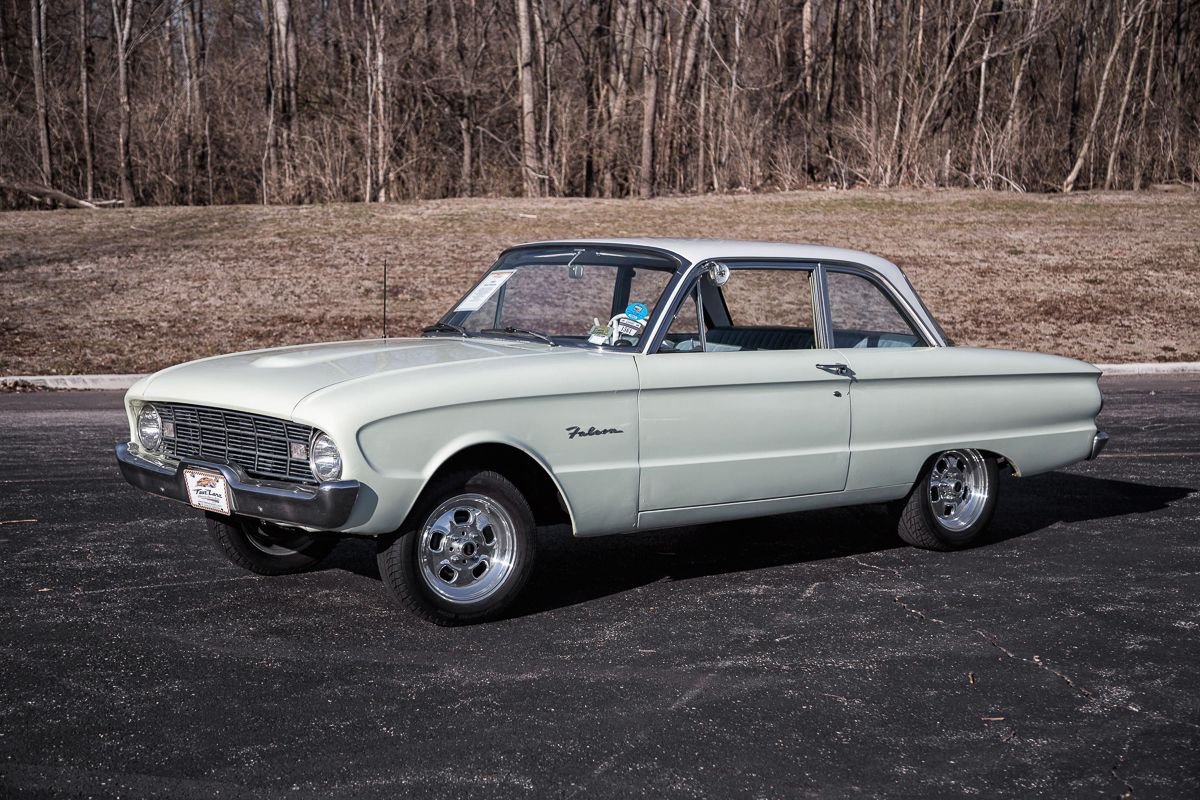
The Ford Falcon produced between 1960 and 1965 represents one of the most practical and approachable American cars of its era, particularly for drivers just learning the fundamentals of operating a vehicle. Introduced during a time when full-size cars still dominated American roads, the Falcon was designed as a compact alternative that emphasized simplicity, ease of use, and affordability.
Its manageable size and straightforward layout made it far less intimidating than the large sedans common at the time. Combined with excellent outward visibility and predictable handling, the Falcon became a popular choice for everyday drivers and a particularly friendly platform for newcomers behind the wheel.
Ford developed the Falcon in response to a growing market for smaller cars in the United States during the late 1950s. Imports such as the Volkswagen Beetle were gaining traction, and American manufacturers began to recognize the demand for compact, economical vehicles.
The Falcon was engineered as a lightweight and uncomplicated car that could be produced efficiently while still offering the comfort and familiarity expected from a domestic brand. When it debuted for the 1960 model year, it quickly found success with buyers seeking practical transportation without the size and fuel consumption of traditional full-size models.
Mechanically, the Falcon used a conventional and reliable configuration that contributed to its easy driving characteristics. Most versions were powered by Ford’s durable inline-six engines, typically displacing between 144 and 170 cubic inches.
These engines were mounted longitudinally at the front of the vehicle and delivered power to the rear wheels through either a manual or automatic transmission.
Later models also offered small V8 engines, but the majority of Falcons retained the smooth and dependable six-cylinder powerplants. The rear-wheel-drive layout and simple suspension design provided stable and predictable handling, making the car forgiving for inexperienced drivers.
The Falcon’s body design played a significant role in its strong visibility. The car featured a relatively upright windshield, large side windows, and slim roof pillars that allowed drivers to maintain clear sightlines in nearly every direction.
The hood and trunk lines were easy to judge from the driver’s seat, simplifying parking and maneuvering. Unlike many larger cars with long overhangs and bulky bodywork, the Falcon’s compact proportions made it easier for drivers to understand the vehicle’s dimensions and position on the road.
The Falcon became one of Ford’s most successful compact cars and served as the foundation for several other notable models, including the early Ford Mustang. Its reputation for reliability and practicality helped establish it as a dependable everyday vehicle during the early 1960s.
For new drivers, the Falcon’s excellent visibility, manageable size, and predictable road manners created a driving experience that was both comfortable and confidence-inspiring, making it a natural inclusion among vintage cars known for their driver-friendly design.
5. Toyota Corolla (1970s Models)
The Toyota Corolla built its reputation in the United States by being reliable, economical, and easy to drive. Early generations of the Corolla also happen to provide excellent visibility, which can be particularly helpful for beginners.
The design philosophy behind these cars emphasized practicality. Thin roof pillars and expansive glass areas create a bright interior with clear sightlines in every direction.
The dashboard is low and simple, allowing drivers to maintain a wide forward field of vision.
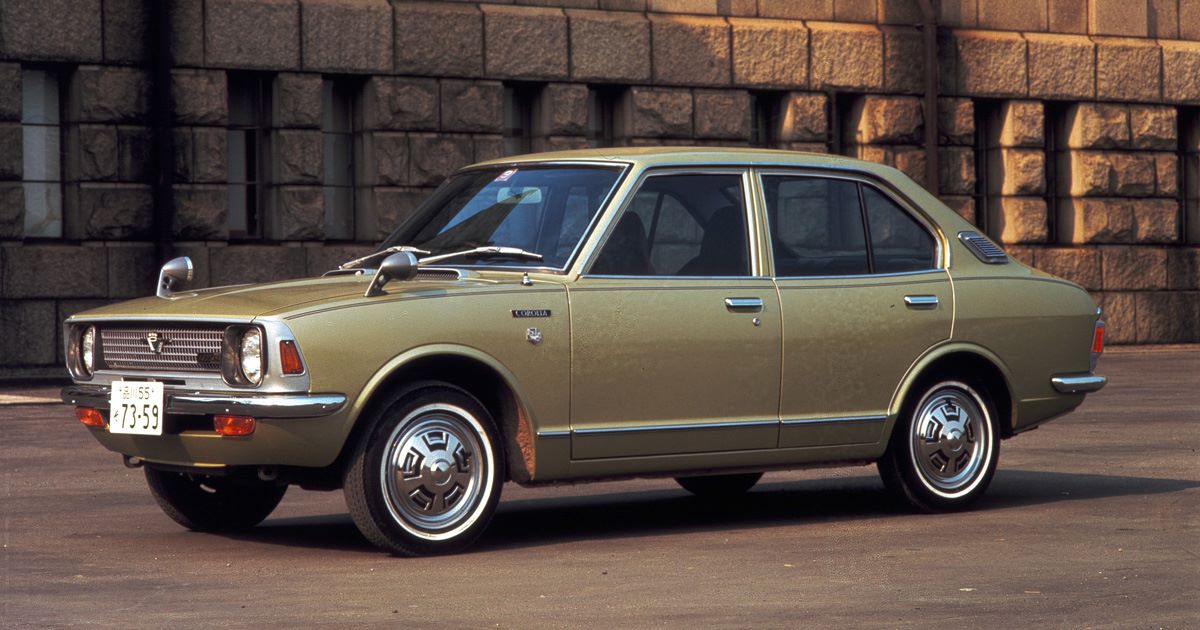
Another advantage is the Corolla’s compact body. New drivers often struggle with judging vehicle dimensions, but the Corolla’s modest size makes it easy to position on the road and in parking spaces.
Combined with its gentle handling and simple controls, it remains one of the most accessible vintage cars for learning drivers.
6. Chevrolet Bel Air (1955–1957)
The Chevrolet Bel Air produced between 1955 and 1957 remains one of the most celebrated American cars of the 1950s, combining stylish design with practical usability. While it is often remembered for its chrome-laden styling and powerful V8 engines, the Bel Air also offered something particularly valuable for drivers: excellent outward visibility.
At a time when car design emphasized upright glass areas and minimal pillar obstruction, the Bel Air provided drivers with a clear view of the road and surrounding traffic. This characteristic made it surprisingly approachable for inexperienced drivers despite its full-size proportions.
The mid-1950s Bel Air was part of Chevrolet’s redesigned lineup introduced in 1955, which marked a turning point for the brand. Chevrolet aimed to modernize its vehicles with updated styling, improved engineering, and more powerful engines to compete effectively with Ford and Plymouth.
The redesign introduced a cleaner, more contemporary look while maintaining the practicality that Chevrolet customers expected. The Bel Air served as the top trim level in the lineup, offering upgraded interiors and additional styling details while sharing the same fundamental platform as other Chevrolet models of the era.

Under the hood, the Bel Air offered several engine options, most notably Chevrolet’s newly introduced small-block V8. The 265-cubic-inch V8 debuted in 1955 and quickly earned a reputation for smooth performance and reliability. Later models expanded displacement to 283 cubic inches, delivering even stronger power.
These engines were mounted longitudinally at the front of the car and paired with either manual transmissions or Chevrolet’s Powerglide automatic transmission. Power was sent to the rear wheels through a conventional rear-wheel-drive layout, which provided balanced handling characteristics typical of American cars of the period.
Design characteristics played a major role in the Bel Air’s strong visibility. The car featured a relatively upright windshield, large side windows, and thin roof pillars that minimized blind spots. The expansive glass area created a bright and airy cabin environment while also giving drivers an unobstructed view of their surroundings.
In addition, the Bel Air’s clearly defined hood and trunk lines made it easier for drivers to judge the vehicle’s size and position when maneuvering or parking. Although the car was larger than many vehicles considered beginner-friendly today, its design allowed drivers to feel surprisingly aware of the road around them.
Historically, the 1955–1957 Bel Air became an icon of American automotive culture and remains one of the most recognizable cars ever built. Its blend of stylish design, reliable engineering, and practical usability helped it achieve lasting popularity among enthusiasts and collectors.
For new drivers of the era, the Bel Air’s generous glass area and clear sightlines made it easier to learn the fundamentals of driving, securing its place among vintage cars known for providing excellent visibility behind the wheel.
7. Saab 900 (Classic Generation, 1978–1993)
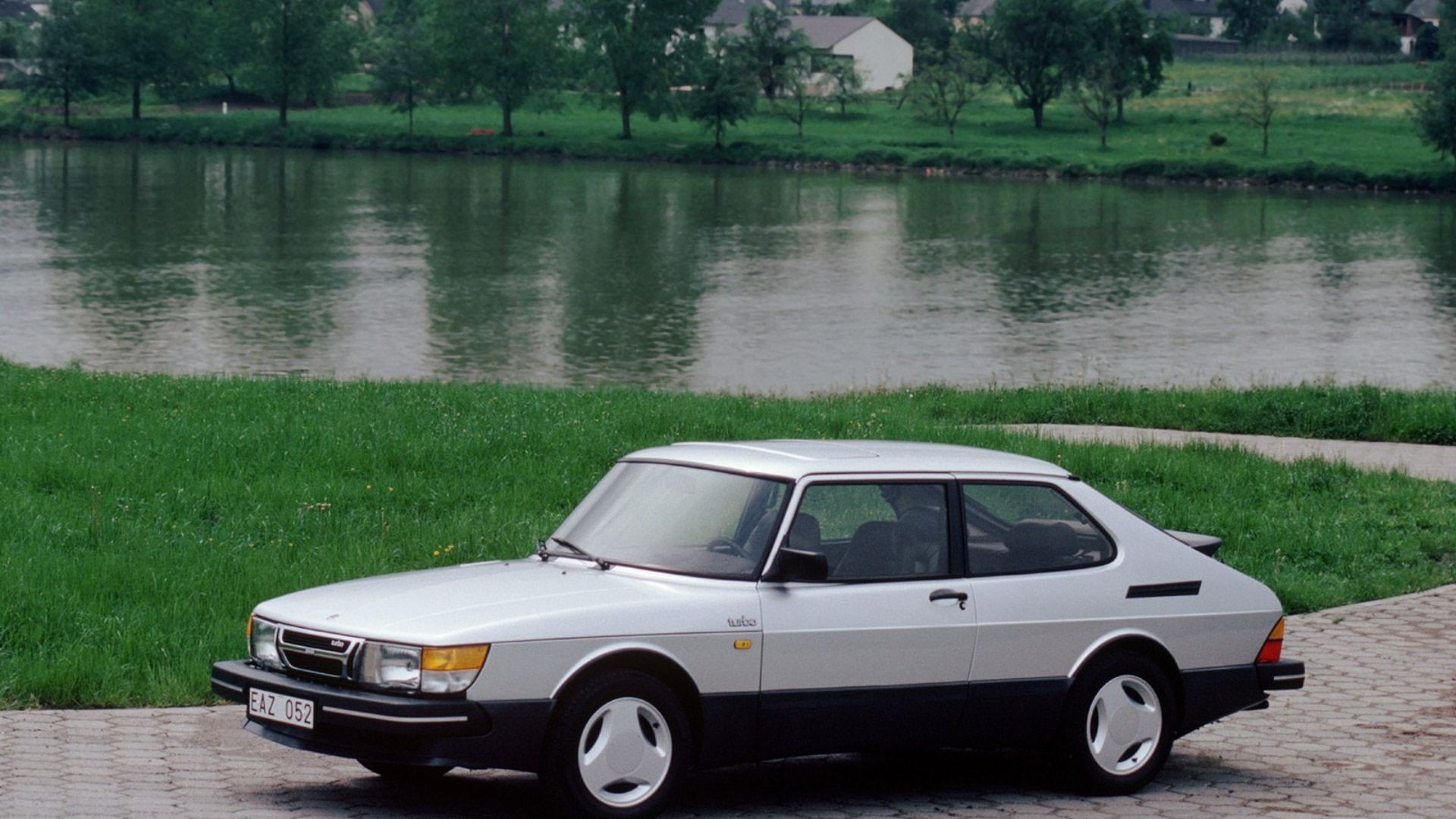
The classic Saab 900, produced from 1978 to 1993, earned a reputation as one of the most driver-focused and thoughtfully engineered cars of its era. Known for its distinctive Scandinavian design and aviation-inspired philosophy, the 900 placed a strong emphasis on visibility and driver awareness.
Saab engineers believed that clear sightlines were essential for both safety and driving confidence, and this philosophy shaped the car’s exterior and interior layout. As a result, the classic 900 offered exceptional outward visibility, making it particularly approachable for new drivers who benefited from a clear understanding of their surroundings on the road.
The Saab 900 was developed as an evolution of the earlier Saab 99, expanding on the company’s tradition of unconventional yet highly practical engineering solutions. During the late 1970s, Saab sought to create a vehicle that balanced safety, durability, and everyday usability while maintaining its reputation for distinctive design.
The resulting 900 retained many of the core mechanical elements of the Saab 99 but featured an extended front section, updated styling, and improved interior ergonomics. Over the years, the model became a defining product for Saab, particularly in North America and Europe.
Mechanically, the classic 900 used a unique drivetrain configuration. Most models were powered by Saab’s inline-four engines mounted longitudinally but driving the front wheels, an unusual layout compared with the transverse front-w
heel-drive systems used by many competitors.
Engine displacements typically ranged from 2.0 to 2.1 liters, with both naturally aspirated and turbocharged variants available. The turbocharged models became particularly well known for delivering strong performance while maintaining the practicality expected from a compact sedan or hatchback.
Power was transmitted through manual or automatic transmissions integrated with the front-wheel-drive system, providing stable and predictable handling in various driving conditions.
The design of the Saab 900 played a major role in its excellent visibility. The car featured a large, upright windshield and expansive side windows that allowed drivers to maintain clear sightlines in multiple directions. Thin roof pillars minimized blind spots, while the high seating position gave drivers a commanding view of the road.
The long, gently sloping hood was also carefully shaped so drivers could easily judge the car’s front corners when maneuvering or parking. Combined with the vehicle’s relatively compact size, these features made the 900 easy to place on the road, an important advantage for less experienced drivers.
8. Honda Civic (First Generation, 1972–1979)
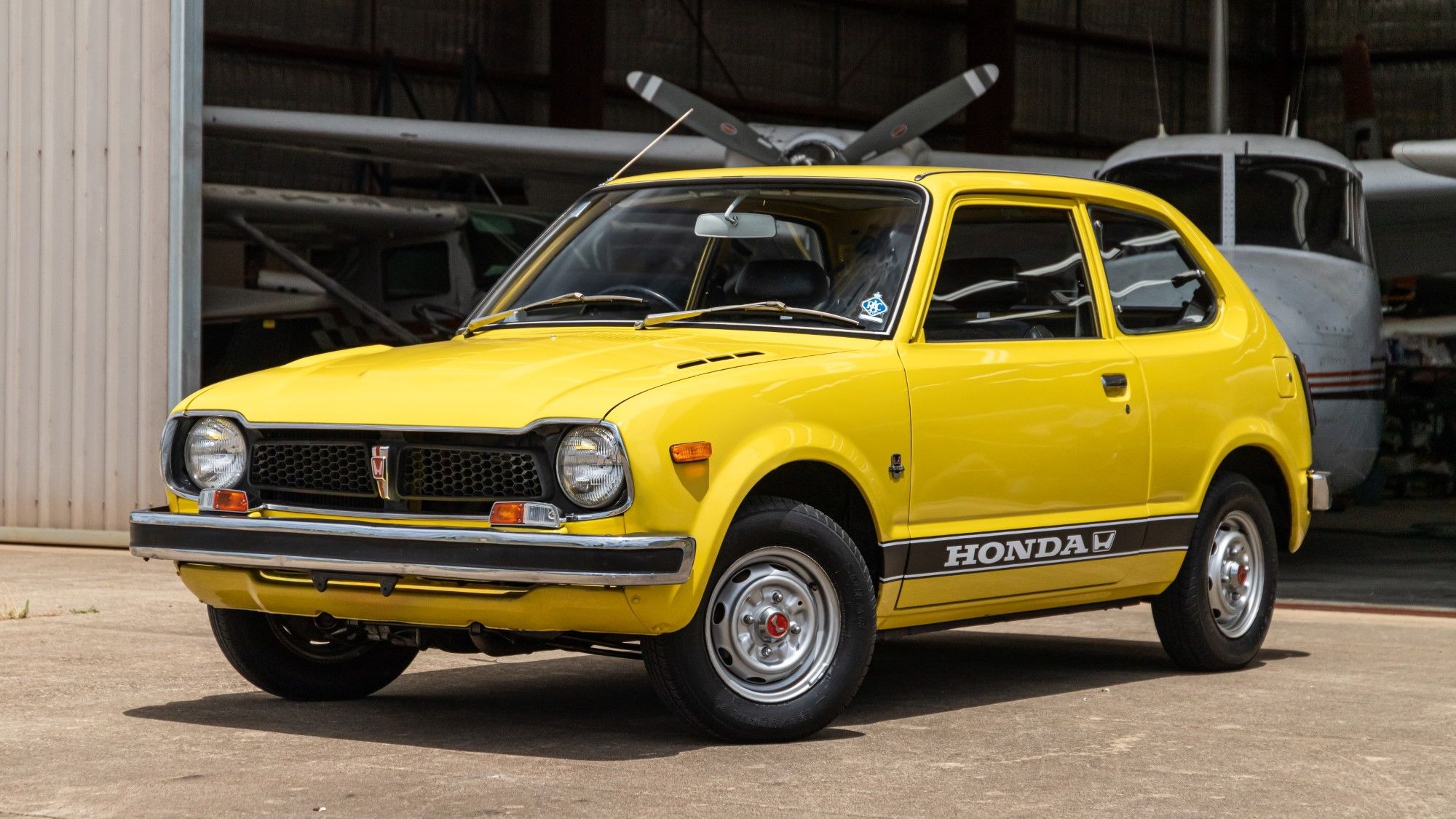
The first-generation Honda Civic helped establish Honda as a major player in the American automotive market. It was small, efficient, and surprisingly comfortable for its size. Importantly for new drivers, it also offered excellent outward visibility.
The Civic’s compact body and upright design create a driving environment where the road is clearly visible in all directions.
Large windows and thin pillars minimize blind spots, while the short hood allows drivers to easily judge the front of the car.
Because the Civic is lightweight and responsive, it feels very manageable even for someone with limited driving experience. The combination of clear visibility, simple controls, and compact dimensions makes it one of the most beginner-friendly vintage cars ever built.
Vintage cars offer a unique blend of character, simplicity, and design philosophies that are rarely seen in modern vehicles.
For beginner drivers, models with excellent visibility can make the learning process far less intimidating. Large windows, thin pillars, and upright seating positions provide a clear view of the road and surrounding traffic, helping drivers stay aware of their environment.
Vehicles like the Volkswagen Beetle, Volvo 240, and early Honda Civic demonstrate how thoughtful design can make a car approachable and easy to drive.
Even larger classics such as the Chevrolet Bel Air provide impressive sightlines thanks to the expansive glass used during their era.
While anyone considering a vintage car should be mindful of maintenance and safety differences compared to modern vehicles, the right classic model can still offer a rewarding and practical driving experience.
For learners who appreciate automotive history, these cars prove that sometimes the clearest view of the road comes from the past.
