
Automotive design has always reflected a balance between engineering innovation, safety, and driver experience.
While the vast majority of cars are built with the driver seated on either the left or right side of the vehicle, depending on the country, there have been a handful of rare and fascinating automobiles that experimented with a center seating position.
In these vehicles, the driver sits in the middle of the cabin, with passengers placed slightly behind or to the sides.
This layout offers several advantages: perfectly balanced visibility, a symmetrical driving perspective, and a cockpit-like experience that emphasizes driver engagement.
Although center-seat configurations are often associated with modern hypercars like the McLaren F1, the concept actually appeared in several vintage vehicles decades earlier.
Designers experimented with the idea for reasons ranging from improved road visibility to better weight distribution.
However, practical challenges, such as complex steering linkages, regulatory standards, and passenger comfort, prevented the layout from becoming mainstream.
Today, center-seating vintage cars are incredibly rare and highly sought after by collectors. They represent a moment when automakers were willing to break away from conventional design rules to rethink how drivers interact with their vehicles.
Some of these cars were experimental prototypes, while others saw limited production runs. Regardless, each remains an intriguing chapter in automotive history.
Below are six rare vintage cars that featured center seating positions, highlighting how engineers and designers approached this unusual layout long before it became a talking point in modern performance cars.
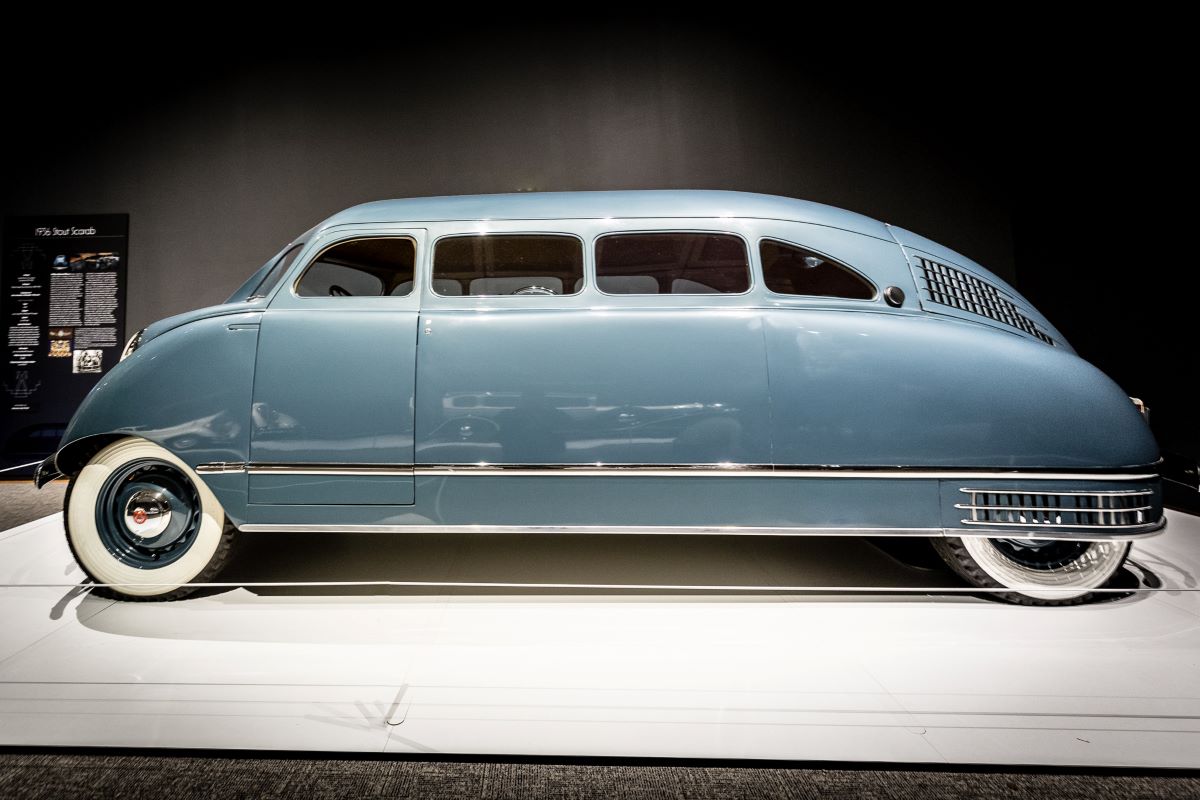
1. 1936 Stout Scarab
The 1936 Stout Scarab stands as one of the most radical and forward-thinking automobiles ever produced in the United States. Created by aviation engineer William Bushnell Stout, the Scarab emerged during an era when most cars still followed conventional front-engine, rear-drive designs with rigid interiors and traditional seating layouts.
Stout envisioned something entirely different: a streamlined vehicle that functioned more like a modern living space than a typical automobile. Built in extremely limited numbers during the mid-1930s, the Scarab introduced design ideas that would not become common until decades later, including its unusual interior layout featuring a centrally positioned driver’s seat.
The development of the Scarab was heavily influenced by Stout’s background in aircraft engineering. During the early 1930s he began experimenting with the idea of a “traveling office,” a vehicle that prioritized passenger comfort, flexibility, and aerodynamic efficiency. Rather than designing around the engine first, Stout focused on interior usability and structural efficiency.
The resulting vehicle used a tubular steel space frame rather than the traditional ladder frame common at the time. This allowed for a spacious, boxy passenger compartment that resembled what modern audiences would recognize as a minivan, a concept decades ahead of its time.
Engineering details further distinguished the Scarab from typical automobiles of the 1930s. The vehicle used a rear-mounted Ford V8 engine positioned behind the passenger compartment, driving the rear wheels through a conventional transmission. Placing the engine at the rear freed up interior space and helped create a more balanced weight distribution.
The suspension system employed independent front suspension and coil springs, which were advanced features for the period and contributed to improved ride comfort. By relocating mechanical components away from the front of the car, Stout was able to create an interior layout that placed the driver’s seat near the centerline of the cabin.
The Scarab’s design characteristics were perhaps its most remarkable feature. Instead of the fixed bench seats typical of the era, the interior used movable seating arrangements similar to those found in modern multipurpose vehicles.
The driver sat in a central position slightly forward of the passengers, giving excellent visibility and reinforcing the aircraft-inspired design philosophy. Large windows surrounded the cabin, creating a bright, open interior environment that contrasted sharply with the cramped cabins of most prewar automobiles.
The Stout Scarab is often regarded as one of the earliest examples of a minivan-like vehicle and a milestone in experimental automotive design. Only a handful were produced, making it one of the rarest American cars ever built.
Its center seating position for the driver was not merely a novelty but part of a broader vision that prioritized passenger space and functionality. That unconventional layout makes the 1936 Stout Scarab a perfect example of a rare vintage car that embraced center seating long before the idea gained wider attention in automotive design.
2. 1956 Aurora Safety Car
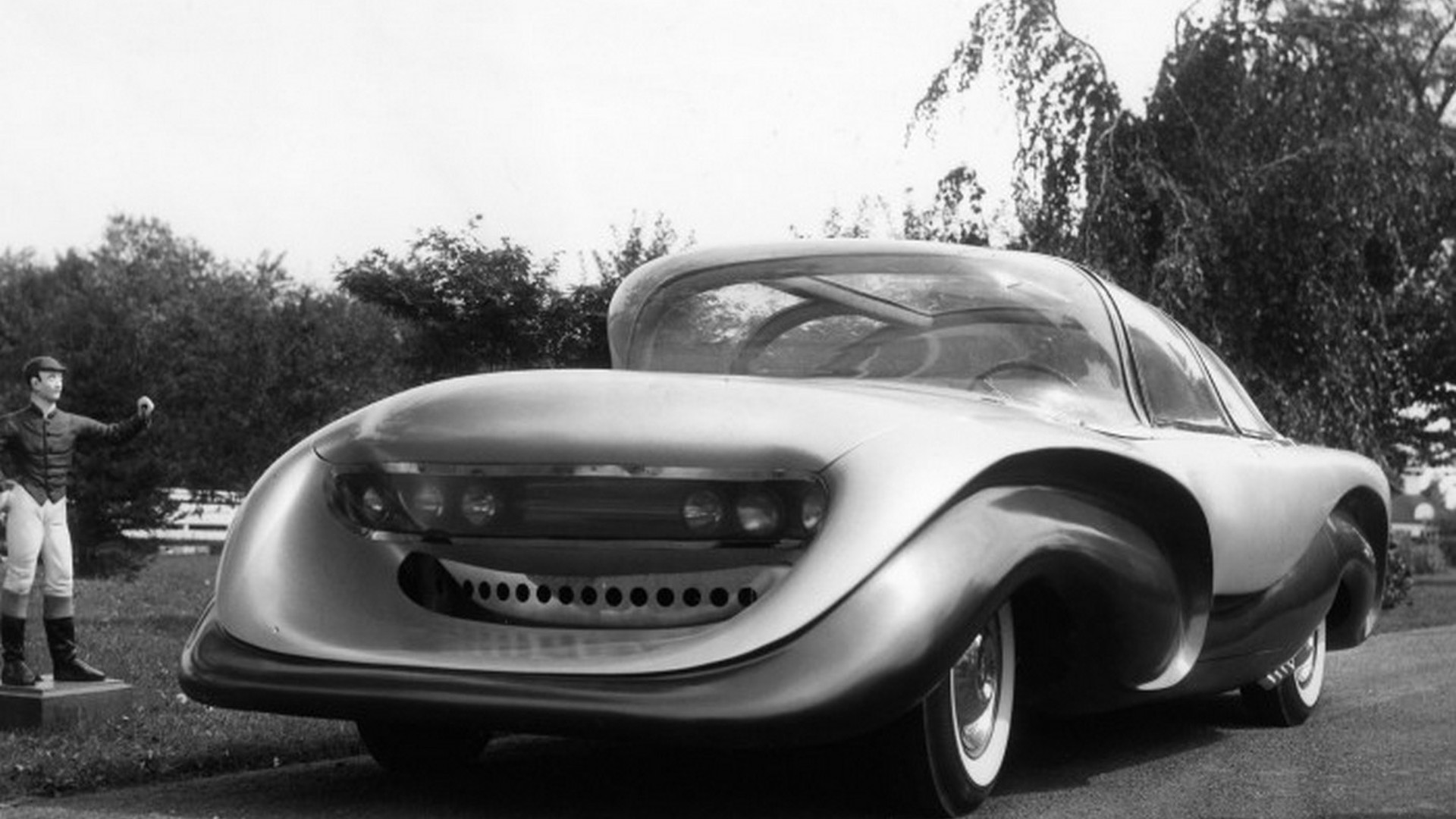
The 1956 Aurora Safety Car remains one of the most unusual and controversial automobiles ever created in the United States. Conceived during the mid-1950s by Catholic priest and automotive safety advocate Father Alfred A. Juliano, the Aurora was intended to demonstrate how thoughtful engineering could dramatically improve occupant protection in everyday vehicles.
At a time when styling excess often overshadowed safety considerations in Detroit’s design studios, Juliano envisioned a car built around crash protection, visibility, and driver control.
Although only a single prototype was completed, the Aurora incorporated several radical ideas, including a center-mounted driving position, that make it a fascinating entry in the history of experimental automobiles.
The Aurora’s development began with a production chassis from the Buick Roadmaster, one of General Motors’ largest and most robust vehicles of the period. Juliano believed the platform provided a strong mechanical foundation on which to build his safety-focused design.
Power came from Buick’s 322-cubic-inch “Nailhead” V8 engine, a durable overhead-valve engine mounted longitudinally at the front of the car. This engine was paired with Buick’s Dynaflow automatic transmission, which delivered power to the rear wheels.
While the mechanical components remained largely conventional, the Aurora’s body and interior layout were heavily modified to support Juliano’s experimental safety concepts.
Engineering choices in the Aurora focused almost entirely on crash survivability and driver awareness. The vehicle’s body incorporated padded exterior panels, reinforced structural elements, and deep protective bumpers designed to absorb impacts.
The windshield was deeply recessed and surrounded by a protective structure intended to reduce injury risk during collisions. Inside the car, Juliano introduced extensive interior padding and safety-focused controls. Many of these ideas were decades ahead of their time, anticipating features that later became standard across the automotive industry.
One of the most striking aspects of the Aurora Safety Car was its unconventional seating arrangement. Instead of placing the driver on the left or right side of the vehicle, the Aurora positioned the driver in the center of the cabin. This center seating layout was intended to improve visibility and spatial awareness, allowing the driver to better judge distances on both sides of the vehicle.
From this central position, the driver had a commanding view of the road, a concept that modern supercars would later revisit many decades later. The unusual seating arrangement also reflected Juliano’s belief that symmetrical driver placement could reduce certain types of driving errors.
Although the Aurora never reached mass production and the prototype itself faced financial and engineering challenges, its historical significance lies in its bold attempt to prioritize safety above styling or convention.
The center driving position, combined with its many experimental protective features, made the Aurora one of the most unconventional automotive designs of the 1950s. Its rarity and radical layout ensure its place among vintage cars that explored center seating positions long before the concept gained broader recognition in the automotive world.
3. 1964 Ferrari 512S Modulo (Concept Influence)
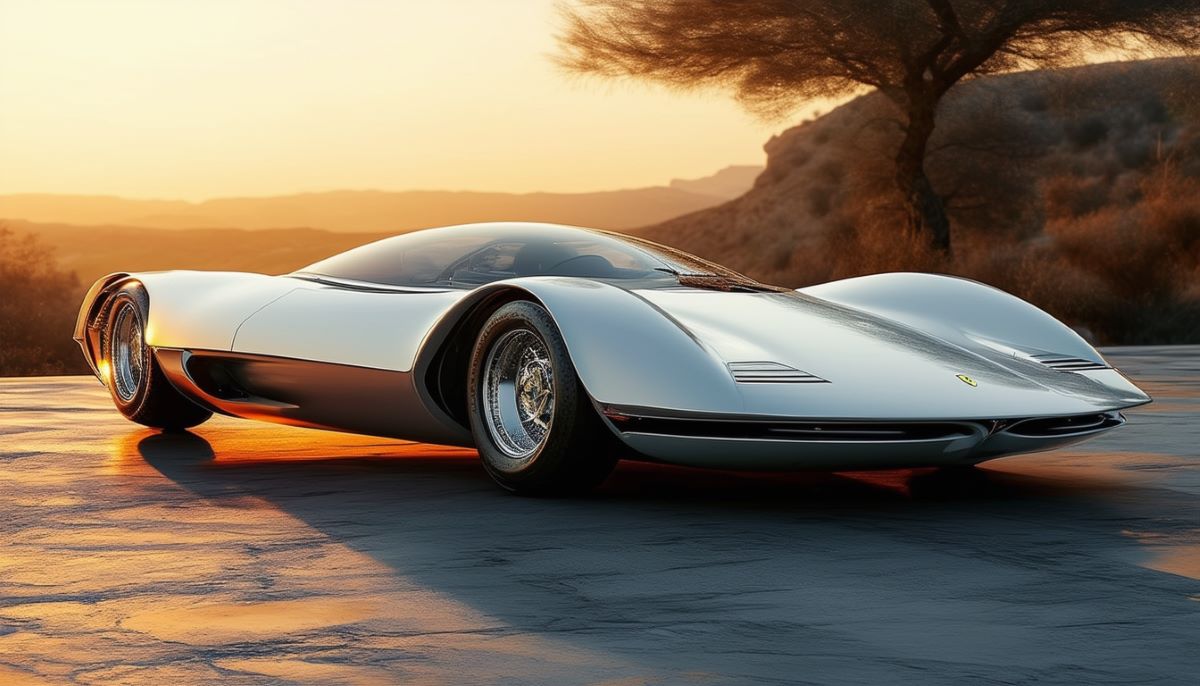
The Ferrari 512S Modulo stands as one of the most visually striking and unconventional automotive designs ever created, and although it began life as a concept, its radical ideas influenced later experimental vehicles that explored unusual seating configurations.
Designed by Paolo Martin at Pininfarina and unveiled at the 1970 Geneva Motor Show, the Modulo was built on the chassis of Ferrari’s 512S endurance racing car.
Its futuristic appearance and dramatic proportions captured global attention, representing the height of 1970s concept car experimentation. While not a production vehicle itself, the Modulo’s interior layout and engineering platform reflected design thinking that challenged traditional driver placement and helped inspire later center-seat supercar concepts.
The Modulo’s development began with Ferrari’s 512S racing chassis, originally engineered for endurance racing competition. This platform featured a powerful 5.0-liter V12 engine mounted longitudinally behind the cockpit in a mid-engine configuration. The naturally aspirated V12 used dual overhead camshafts and produced approximately 550 horsepower in racing specification.
Power was transmitted through a manual gearbox to the rear wheels, following the typical rear-wheel-drive layout used in Ferrari’s competition cars. By using an authentic racing chassis as the mechanical foundation, Pininfarina ensured the Modulo was more than a styling exercise; beneath the radical bodywork was genuine Ferrari performance engineering.
What made the Modulo extraordinary was its groundbreaking design philosophy. The car’s body was shaped like a low, wedge-like disc only about 37 inches tall, with partially covered wheels and a canopy-style roof that slid forward to allow entry into the cockpit.
This extreme design drastically reduced aerodynamic drag and gave the vehicle an appearance closer to a science fiction spacecraft than a conventional automobile. Inside the cockpit, the seating arrangement was compact and centrally oriented, emphasizing driver focus and symmetry within the extremely narrow cabin.
The concept of placing the driver near the centerline of the vehicle aligned with racing principles, where balanced visibility and equal spatial awareness on both sides of the car can improve driver control.
Although the Modulo itself was primarily a design study, its interior philosophy reflected ideas that later appeared in center-seat supercars such as the McLaren F1 decades later. By emphasizing a driver-focused layout rather than traditional side seating, the Modulo helped illustrate how unconventional seating arrangements could enhance the driving experience in high-performance vehicles.
Historically, the Ferrari 512S Modulo remains one of the most influential concept cars ever produced. It demonstrated how radical styling, advanced aerodynamics, and experimental interior layouts could redefine expectations for automotive design.
Even though it was never intended for production, its exploration of driver-centric and near-center seating concepts places it firmly within discussions of rare vintage vehicles that experimented with center seating long before the idea became widely recognized in modern supercar design.
4. 1965 GM Firebird II Concept
The 1965 GM Firebird II Concept was one of the most ambitious experimental vehicles of the mid-1960s, reflecting General Motors’ vision of a future shaped by advanced propulsion systems, automated highways, and unconventional vehicle layouts.
Revealed at the 1965 New York World’s Fair, the Firebird II was not intended for mass production but served as a rolling laboratory for technologies that engineers believed might define transportation in the decades ahead. Among its many futuristic elements was a center seating position for the driver, an idea intended to improve visibility and complement the car’s experimental automated driving concepts.
The Firebird II grew out of General Motors’ earlier turbine-powered concept program, which sought to explore alternatives to traditional piston engines.
At the heart of the vehicle was a gas turbine engine mounted behind the passenger compartment in a mid-engine configuration. This powerplant drove the rear wheels through a conventional transmission system, delivering smooth and continuous power with fewer moving parts than a typical internal combustion engine.
The turbine design also aligned with GM’s belief that future vehicles might rely on different fuel sources and propulsion technologies. Although turbine engines ultimately proved impractical for widespread automotive use, they represented an important phase in experimental automotive engineering.
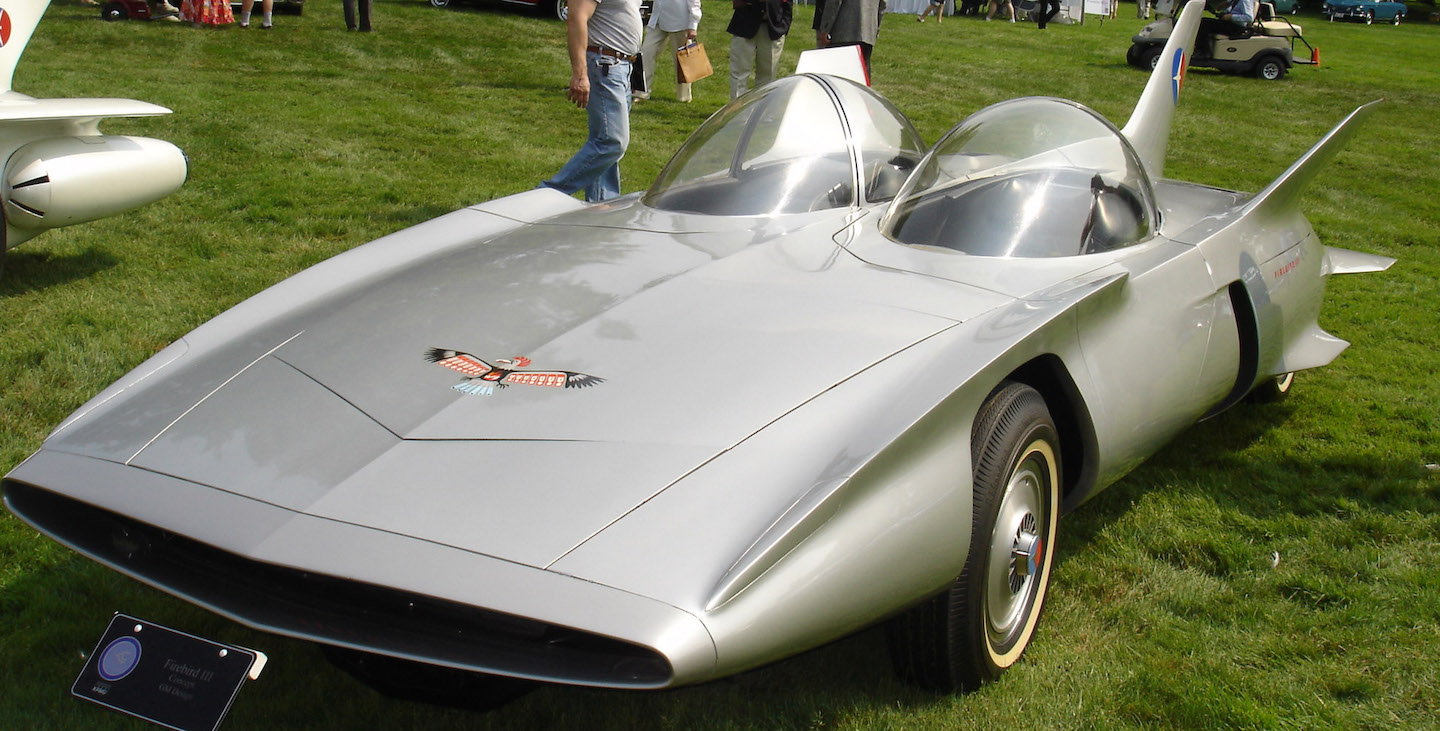
Engineering innovation extended well beyond the powertrain. The Firebird II featured a titanium body structure and advanced suspension technology intended to improve stability at high speeds. GM engineers also imagined a future “electronic highway” system that would guide vehicles automatically using embedded roadway sensors.
In this context, the interior layout was designed around the concept of a single driver overseeing automated operation rather than actively controlling the car at all times. This philosophy led to the adoption of a center-mounted driver’s seat positioned directly along the vehicle’s centerline.
The cockpit design reflected aerospace influences common in concept vehicles of the era. The driver sat in a centrally located seat with a wraparound instrument panel and aircraft-style controls.
This placement allowed equal visibility to both sides of the vehicle and emphasized the Firebird II’s experimental role as a technological showcase rather than a conventional passenger car. Additional passenger seating was positioned behind or around the central driving position, reinforcing the idea that the vehicle functioned more like a futuristic transport capsule than a traditional automobile.
Historically, the Firebird II represents a fascinating moment when automakers believed radical technologies could reshape the future of transportation. While the turbine engine and automated highway concepts never reached mainstream production, the car demonstrated how designers were willing to rethink even the most fundamental aspects of vehicle layout.
Its centrally positioned driver’s seat was a key part of that experimentation, illustrating how engineers explored new seating arrangements decades before center-seat supercars brought the idea back into the spotlight.
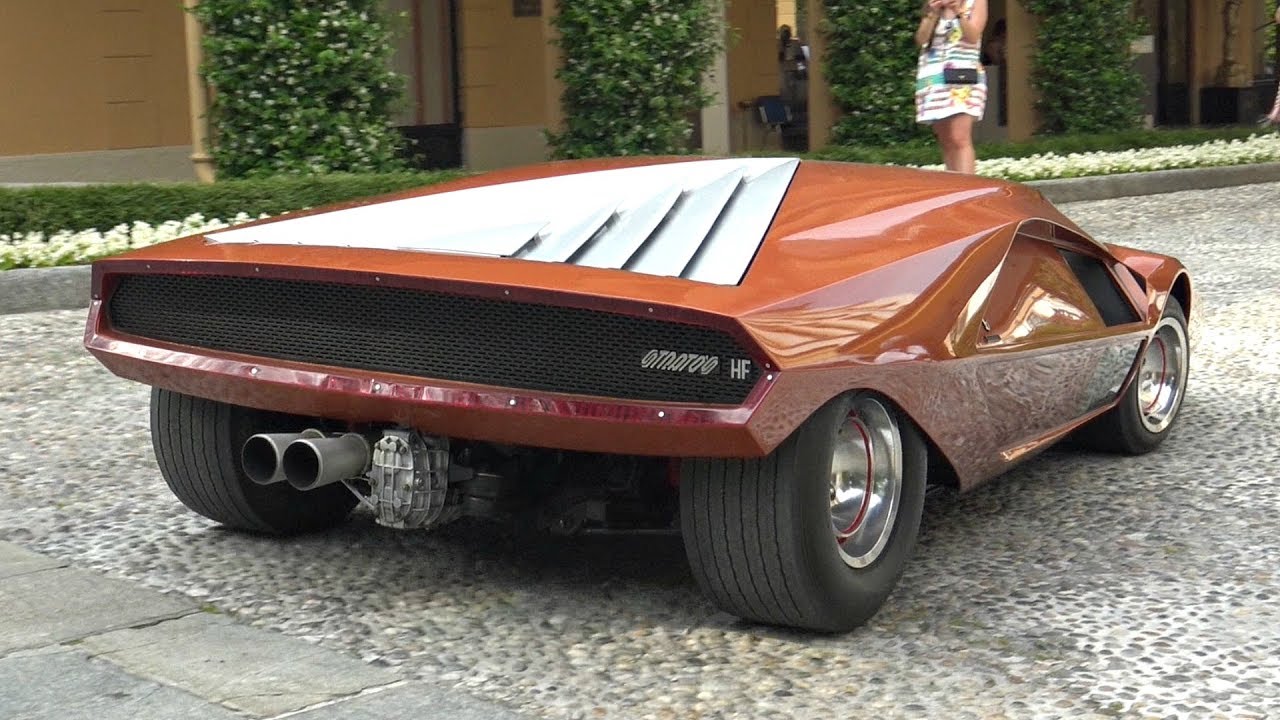
5. 1970 Lancia Stratos Zero Concept
The 1970 Lancia Stratos Zero Concept remains one of the most radical automotive designs ever created, embodying the bold experimentation that defined late-1960s and early-1970s concept cars.
Designed by Marcello Gandini at Bertone, the Stratos Zero was a dramatic exploration of ultra-low aerodynamic design and unconventional vehicle packaging.
Measuring barely over three feet tall, the wedge-shaped concept looked more like a futuristic sculpture than a traditional automobile. Beyond its striking appearance, the car also featured an unusual cockpit layout with a centrally positioned driver, placing it firmly among rare vintage vehicles that experimented with center seating positions.
The Stratos Zero was developed during a period when Italian design houses were pushing the boundaries of automotive form and engineering. Bertone used a modified Lancia Fulvia platform as the mechanical basis for the concept, ensuring that the vehicle retained real mechanical functionality despite its extreme styling.
Power came from a 1.6-liter V4 engine derived from the Fulvia, mounted longitudinally behind the cockpit in a mid-engine configuration. The engine delivered power to the rear wheels through a manual transmission, following the classic rear-drive sports car layout that emphasized balance and driver engagement.
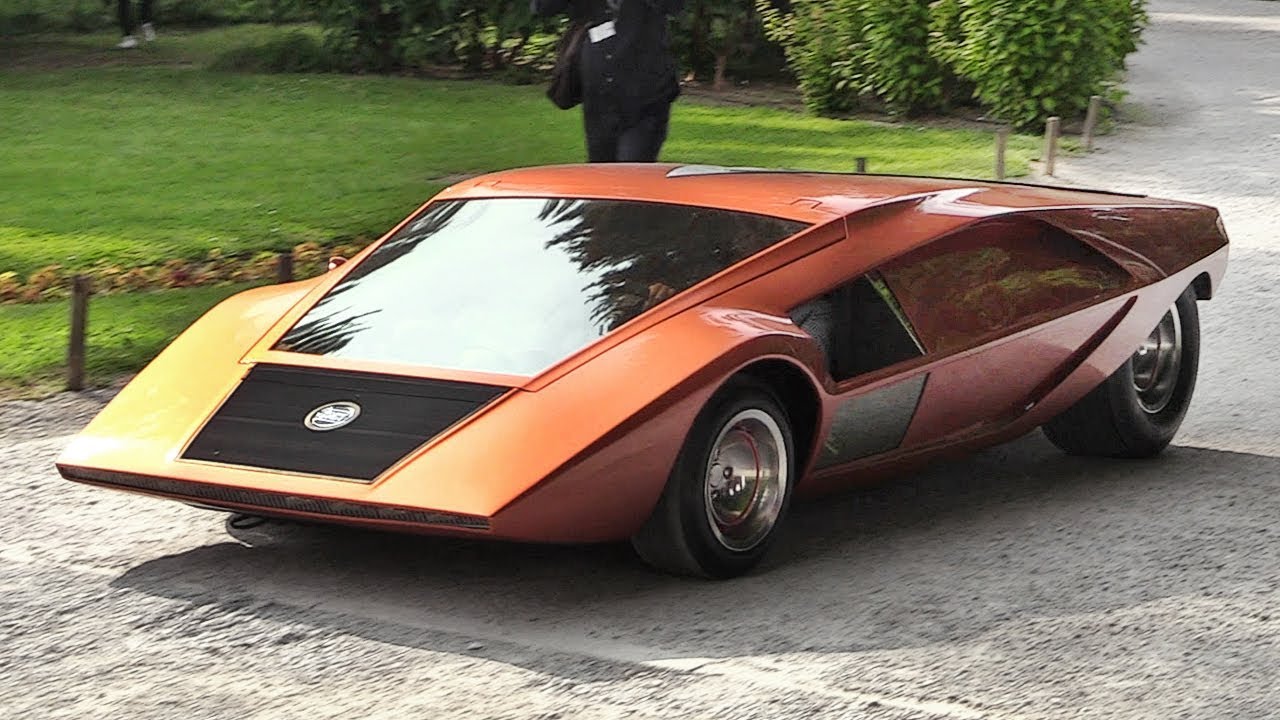
Engineering the Stratos Zero presented significant challenges because of its extraordinarily low profile. The car’s wedge-shaped body featured sharply angled panels and a nearly flat roofline, forcing designers to rethink traditional entry and seating arrangements. Instead of conventional doors, the windshield and roof panel hinged upward to allow the driver to climb into the cockpit.
Once inside, the driver sat in a central position along the vehicle’s centerline, with controls positioned symmetrically around the seat. This arrangement helped maximize the limited space inside the ultra-compact cabin while also reinforcing the car’s futuristic, aircraft-inspired design philosophy.
The design characteristics of the Stratos Zero played a major role in its influence on later sports car styling. Its dramatic wedge shape anticipated the design language that would dominate many exotic cars of the 1970s and 1980s.
The sharply pointed nose, concealed wheels, and low aerodynamic profile created an unmistakable visual identity that captured the imagination of both designers and enthusiasts. While the interior space was extremely limited, the central seating arrangement emphasized the concept’s focus on the driver as the focal point of the vehicle.
6. 1980 Aston Martin Bulldog Concept
The 1980 Aston Martin Bulldog Concept represents one of the most ambitious and visually dramatic concept cars of the late twentieth century. Developed during a period when Aston Martin sought to showcase its engineering potential and reaffirm its reputation as a maker of high-performance luxury machines, the Bulldog was conceived as a technological statement rather than a production vehicle.
Revealed in 1980, the car featured an aggressively low wedge profile, advanced electronic systems, and a unique cockpit arrangement that placed the driver in a central position.
This unusual layout, combined with the car’s rarity and experimental nature, makes the Bulldog a compelling example of a vintage vehicle exploring center seating concepts long before the idea gained broader recognition in high-performance automobiles.
The Bulldog project was developed under the leadership of Aston Martin chairman Victor Gauntlett, with the goal of building a car capable of exceeding 200 mph, an extraordinary ambition at the time. The vehicle was constructed around a bespoke chassis and powered by Aston Martin’s proven 5.3-liter V8 engine.
This aluminum V8, already used in the company’s road cars, was heavily modified with twin turbochargers to dramatically increase output. In concept form, the engine was capable of producing more than 600 horsepower, a remarkable figure for the early 1980s.
Mounted in a mid-engine configuration behind the cockpit, the V8 delivered power to the rear wheels through a manual transmission, reinforcing the car’s performance-oriented layout.
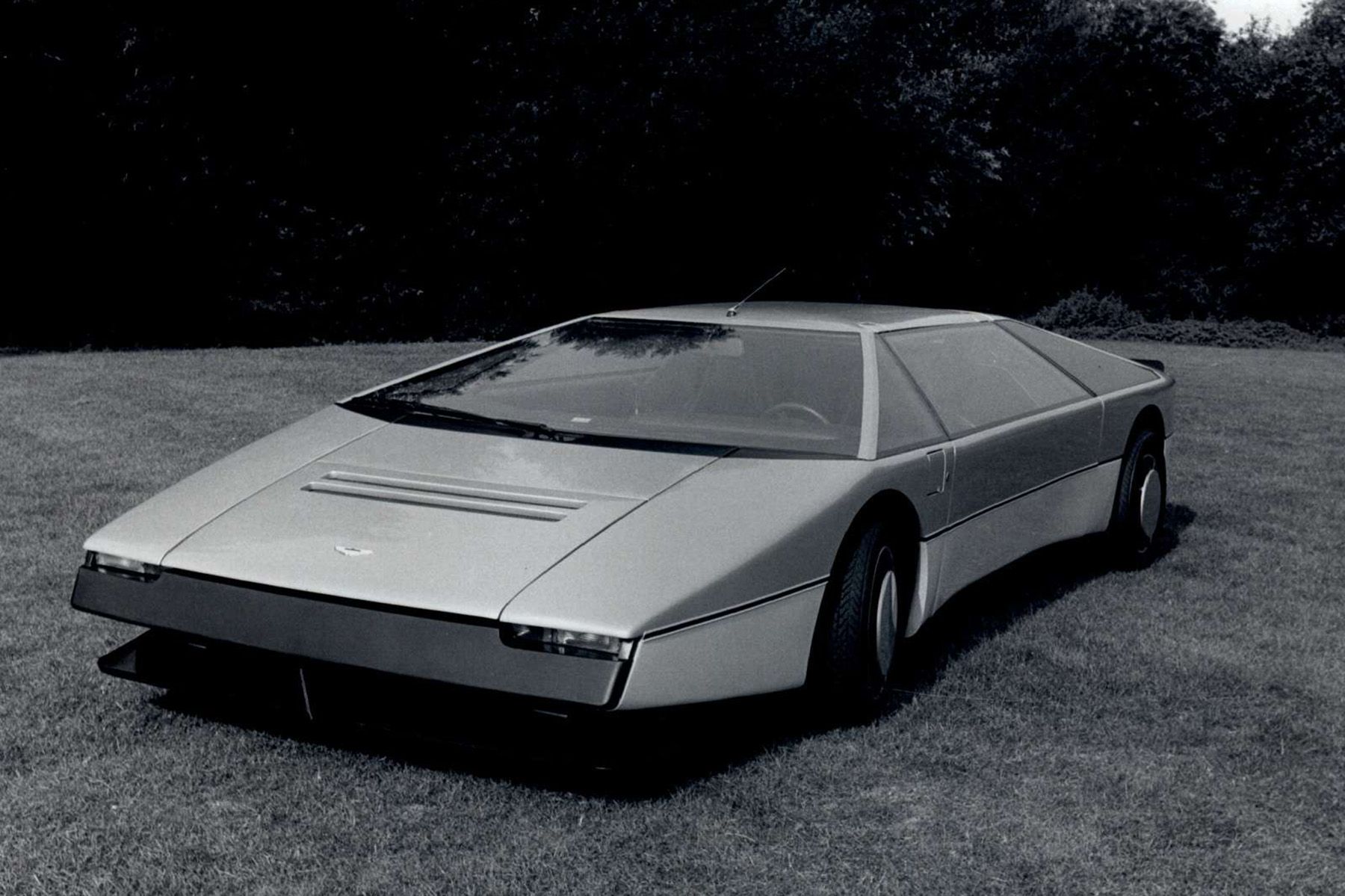
Engineering innovations extended beyond the powertrain. The Bulldog’s bodywork was crafted from aluminum and shaped into an extremely low wedge, measuring only about 44 inches in height.
This aerodynamic design was intended to minimize drag and support the car’s ambitious top-speed target. The car also featured futuristic elements such as digital instrumentation, touch-sensitive controls, and rear-view cameras, technologies that were decades ahead of their widespread adoption in production vehicles. These features reinforced the Bulldog’s purpose as a technological showcase rather than a conventional concept car.
Inside the cockpit, the Bulldog adopted a centrally positioned driver’s seat. This configuration placed the driver along the centerline of the vehicle, providing balanced visibility and emphasizing the driver-focused nature of the design.
Passenger seating was arranged slightly behind or to the sides of the central position, creating a cockpit environment reminiscent of aircraft design. The layout complemented the car’s futuristic interior controls and reinforced its experimental approach to vehicle ergonomics.
The Aston Martin Bulldog never entered production and only a single example was built, making it one of the rarest Aston Martins ever created. Despite its limited existence, the concept demonstrated how far designers and engineers were willing to push the boundaries of performance, technology, and interior layout.
The centrally positioned driver’s seat, combined with its radical styling and experimental engineering, firmly secures the Bulldog’s place among rare vintage vehicles that explored center seating configurations well before the concept appeared in later production supercars.
