
The automobile has always been a canvas for human ingenuity, and nowhere is that more evident than the of engine placement and configuration. For most of the car’s 130-plus year history, engineers and designers have followed a relatively predictable formula stuff a bunch of cylinders under a hood at the front, connect them to the driven wheels, and call it a day. But occasionally, a brilliant or brilliantly eccentric mind decided the rulebook was optional.
Whether driven by the relentless pursuit of performance, the demands of aerodynamics, the constraints of packaging, or simply the intoxicating freedom of thinking differently, certain automakers placed their engines in locations and orientations that made the rest of the industry do a double-take.
Some of these decisions were strokes of genius that rewrote the laws of automotive dynamics. Others were fascinating failures that cost their creators dearly. A few were so ahead of their time that the industry took decades to understand what they were trying to accomplish.
From minivans with engines buried beneath the driver’s seat to turbine-powered street cars that could run on perfume, from rear-engined luxury sedans that turned handling on its head to supercars packing jet-inspired powerplants, the following ten cars represent the absolute outer limits of what engineers dared to imagine.
These are not just unusual machines they are rolling monuments to the restless, rule-breaking spirit that makes automotive history so endlessly fascinating.
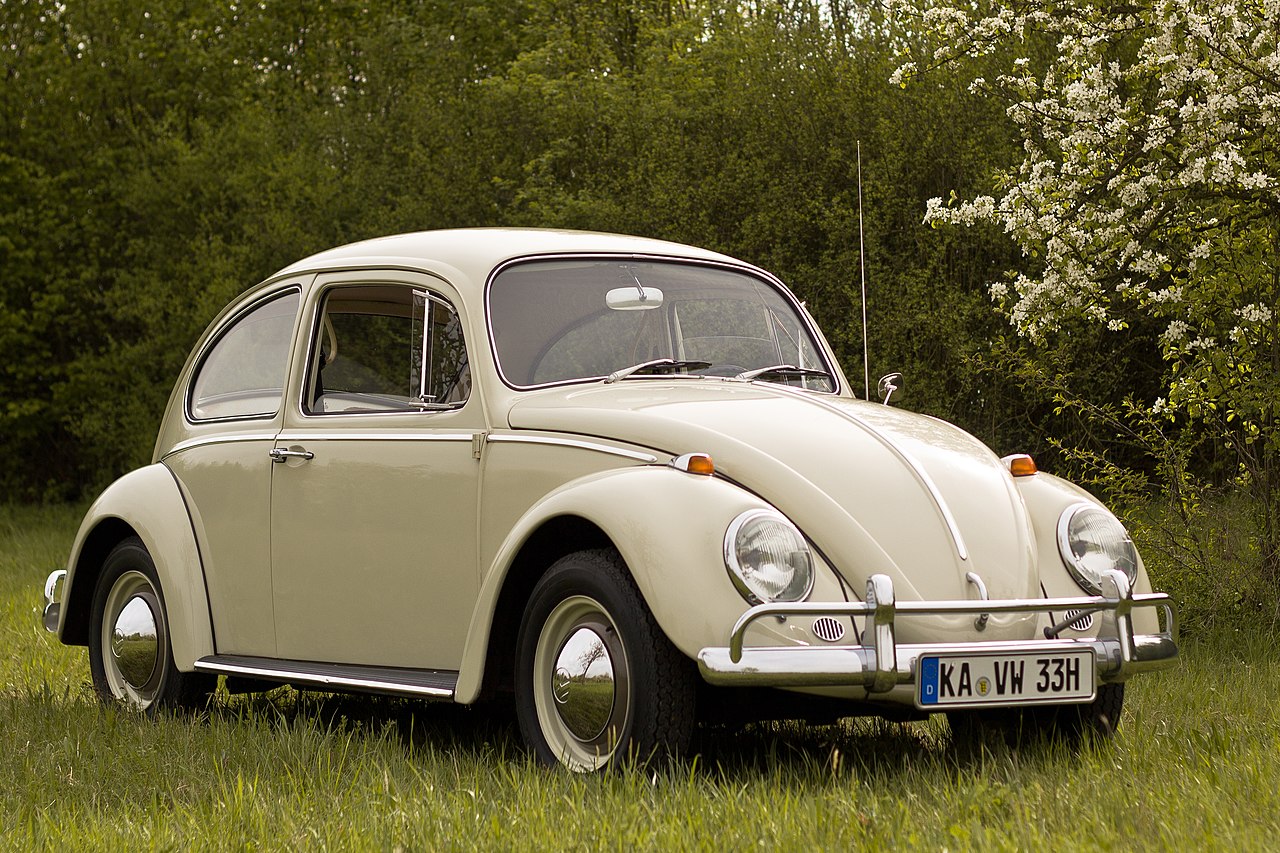
1. Volkswagen Beetle
Few cars in history have been as universally loved and as mechanically unconventional as the Volkswagen Beetle. Designed in pre-war Germany and refined across more than seven decades of continuous production, the Beetle placed its engine in perhaps the most counterintuitive location possible hanging off the rear axle, behind the passenger compartment, with no radiator whatsoever.
It was a decision that baffled conventional automotive wisdom and helped sell over 21 million units worldwide, making it the best-selling car of the 20th century by a considerable margin.
The Beetle’s air-cooled flat-four engine, derived from Ferdinand Porsche’s original concept, displaced just 1.1 litres in early form and grew modestly over the years, eventually reaching around 1.6 litres in later iterations.
The engine sat entirely behind the rear axle, with its weight cantilevered beyond the point where engineers of the era considered sensible. This arrangement had significant consequences for how the car handled.
With no engine weight at the front and substantial mass at the rear, the Beetle had a tendency toward oversteer particularly in corners taken at speed.
The rear end would swing wide if a driver lifted off the throttle mid-corner, a phenomenon known as lift-off oversteer, and in inexperienced hands this made the car genuinely treacherous in certain conditions.
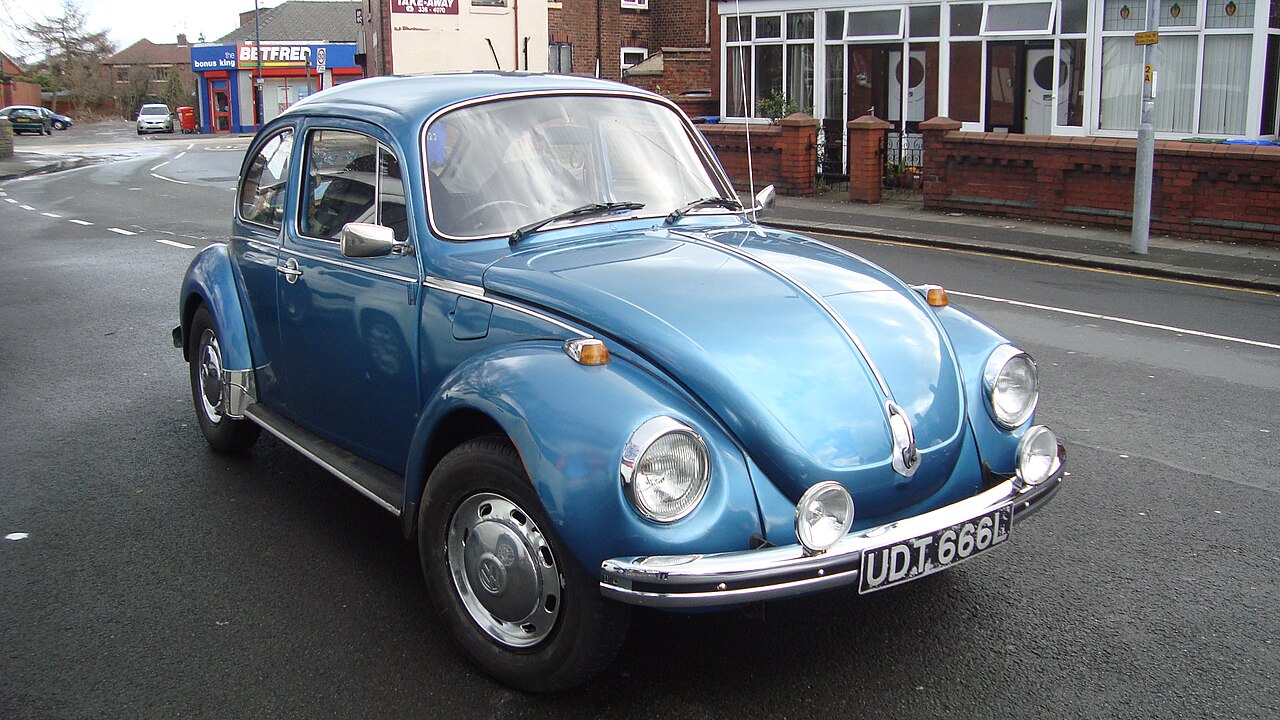
Yet the Beetle sold in extraordinary numbers precisely because, for the vast majority of driving situations commuting, city use, gentle country roads it was perfectly competent, charmingly simple, and remarkably cheap to maintain.
The air-cooled engine meant no radiator, no coolant, no water pump, and no freezing up in winter. It was light, accessible, and remarkably durable when not pushed beyond its limits.
The rear-engine layout also had a surprising advantage that Volkswagen’s engineers were happy to exploit: traction. With the weight of the engine pressing directly down on the driven rear wheels, the Beetle could pull itself out of soft ground, mud, and snow with a tenacity that front-engine, rear-drive cars of similar size struggled to match.
Farmers in developing countries and adventurous tourists in remote regions swore by it. The engine placement that looked like a mistake was, in many circumstances, a practical advantage no one had fully anticipated at the drawing board stage.
Beyond its mechanical peculiarities, the rear-engine Beetle helped establish an entire school of automotive design that influenced Porsche, Renault, Fiat, Simca, and Chevrolet all of whom produced rear-engine cars in the decades following the Beetle’s success. The lesson was clear: unconventional engine placement, when wrapped in a compelling package at an accessible price, could conquer the world.
2. Porsche 911
If the Volkswagen Beetle introduced the world to the rear-engine concept, the Porsche 911 took that concept, refined it to an obsessive degree, and turned it into arguably the most recognisable sports car on the planet.
Since its debut in 1963, the 911 has carried its flat-six engine behind the rear axle not just at the rear of the car, but hanging out beyond the rear axle line in a position that traditional chassis dynamics theory says should produce a car that is borderline undriveable at the limit.
Ferry Porsche and his engineering team inherited the rear-engine philosophy directly from the Beetle’s DNA, both companies sharing the genius of Ferdinand Porsche’s original thinking.
But while the Beetle used this layout for economy and simplicity, the 911 used it to create a sports car with a very particular character. The engine overhanging the rear axle acts like a pendulum, meaning that once the rear of the car begins to rotate in a corner, it wants to keep rotating.
Early 911s had a well-deserved reputation for sudden, snap oversteer a characteristic that sent more than a few drivers into hedges and barriers while the front of the car pointed helplessly in the wrong direction.
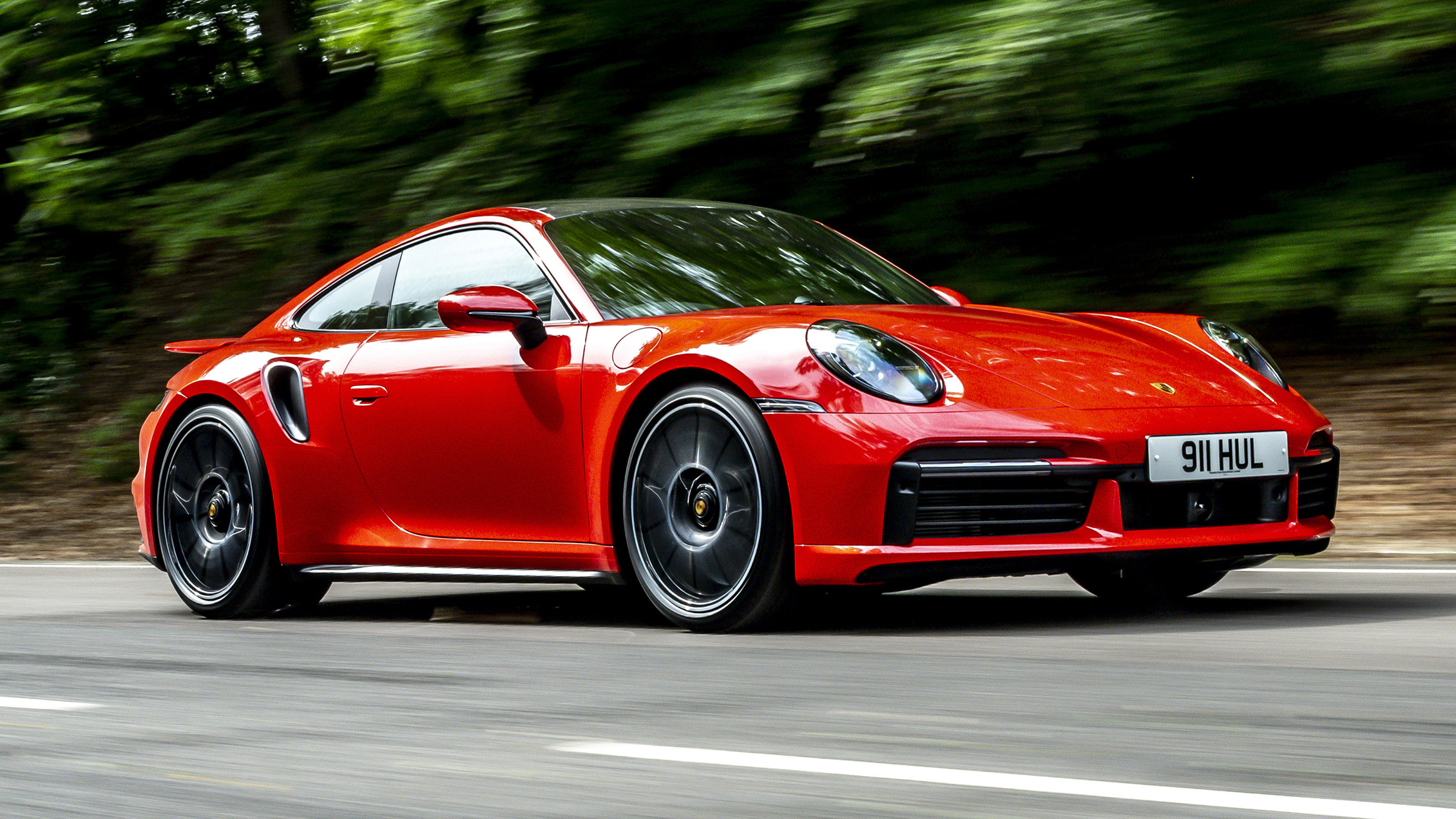
The genius of Porsche’s subsequent development story is how they systematically addressed this characteristic without ever moving the engine. Wider rear tyres, improved suspension geometry, the addition of the Targa rollbar, progressively more sophisticated electronics, and eventually the Programme Stability Control (PSC) system all worked together to tame the 911’s tendency without erasing the dynamic character that enthusiasts loved.
By the 1990s, the 911 had been transformed from a car that bit the unwary into one of the most exploitable and rewarding sports cars all while the engine sat in exactly the same place it always had. Today, the current 911’s turbocharged flat-six still hangs beyond the rear wheels, yet the car consistently tops road tests and lap records.
Porsche has proven over six decades that the unusual engine placement, managed with sufficient engineering skill and attention, produces a car with more rear-axle traction under acceleration than any front-engine rival, more immediacy of response than a mid-engine alternative, and a usable boot at the front where the engine would normally sit.
The 911 is the ultimate argument that unusual engine placement, when committed to with absolute conviction, can become not a weakness but a defining character trait.
3. Toyota Previa
The family minivans, engineering ambition is rarely celebrated. Sliding doors, cupholders, and third-row legroom tend to dominate the conversation.
But the first-generation Toyota Previa, produced from 1990 to 1997, hid one of the most audaciously placed engines in the history of mass-market motoring beneath its egg-shaped body literally underneath the front seats.
The Previa’s 2.4-litre inline-four engine was mounted at a 75-degree angle, stretching from the front of the vehicle to well under the front seats, sending its power to the rear wheels.
This was a genuine mid-engine layout in a people carrier a configuration you’d expect from a Ferrari or a Lamborghini, not a seven-seat family hauler designed to carry school runs and weekend camping trips.
Toyota’s reasoning was entirely practical. By eliminating the conventional front engine bay, designers could extend the passenger cabin forward, maximising interior space and giving the Previa its distinctive, aerodynamically slippery shape.
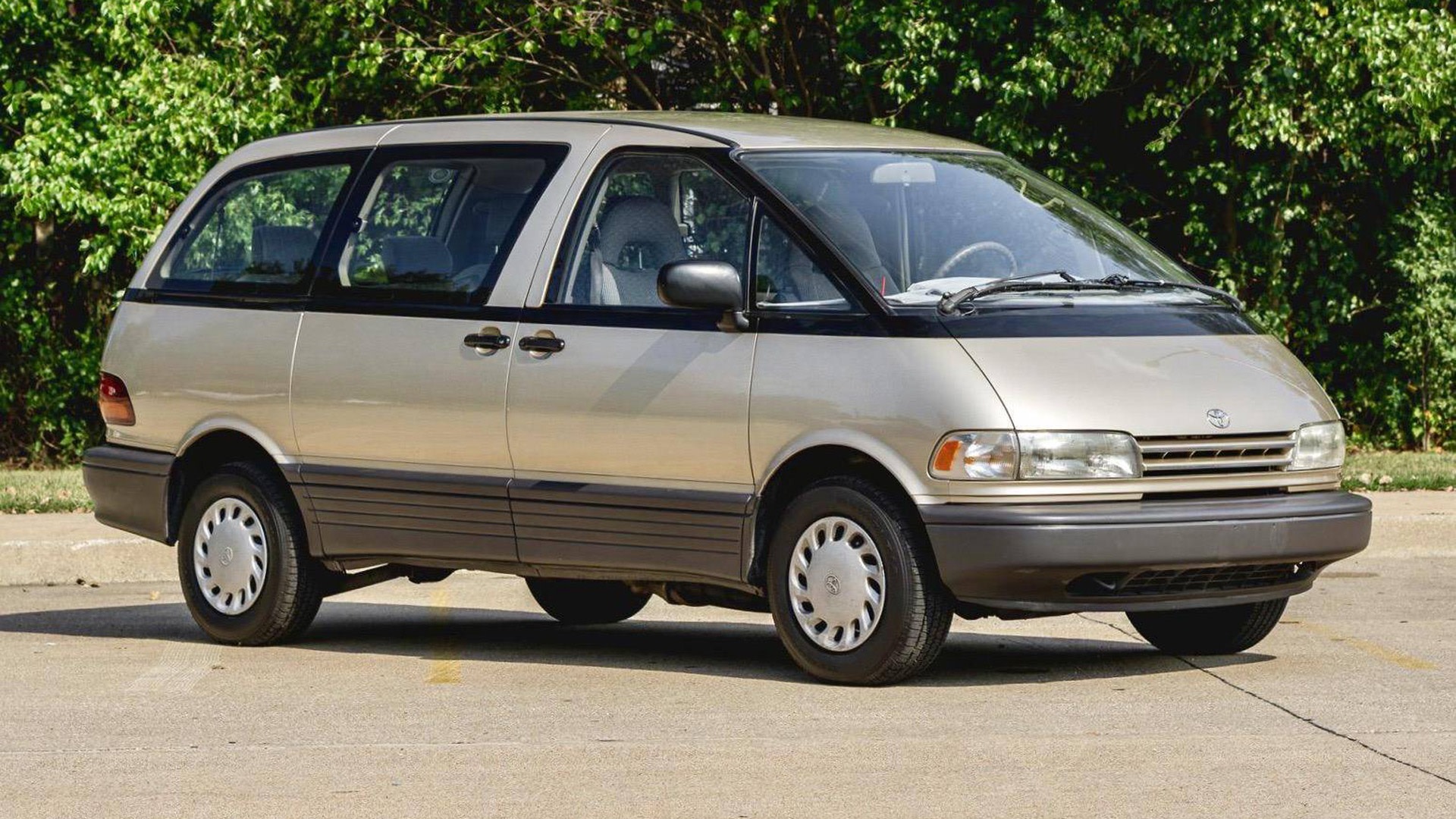
The engine’s severely canted installation angle nearly lying on its side meant that conventional servicing was a genuinely complex operation. Oil changes, spark plug replacements, and other routine maintenance tasks required either a special tool or the patience of a saint, since the engine was wedged tightly beneath the floor in a position that made even the most basic access awkward.
Toyota tried to address this by offering a special long-reach oil dipstick and redesigned service access panels, but mechanics who were unfamiliar with the Previa’s layout sometimes spent twice the time on jobs that would take minutes on a conventional vehicle.
Toyota also offered a supercharged version of the Previa, paired with an all-wheel drive configuration called All-Trac. In a supercharged, all-wheel drive minivan with its engine tucked under the floor, Toyota had created something that defied every expectation of what a family van could be.
The handling balance, with weight distributed centrally rather than hanging off the nose, was genuinely car-like by minivan standards, and the Previa earned a devoted following among enthusiasts who appreciated its quietly radical engineering.
The Previa was discontinued and replaced by more conventionally engineered successors, but its legacy endures among those who remember it as evidence that Toyota, when it chose to be, was one of the most daring engineering organisations in the automotive world.
No subsequent production minivan from any manufacturer has attempted anything remotely like the Previa’s under-seat engine arrangement, making it a genuinely singular moment in people-carrier history.
4. Chrysler Turbine Car
By 1963, the American automotive industry was locked in a horsepower war that seemed to have no ceiling. Chrysler decided that instead of simply adding more cylinders or more cubic inches, it would bypass the entire concept of a piston engine altogether and fit a jet turbine the kind of powerplant used in aircraft into a production-ready street car.
The result was the 1963 Chrysler Turbine Car, one of the most radical vehicles ever offered to the public by a mainstream manufacturer. At the heart of the Ghia-designed two-door coupe was a gas turbine engine dubbed A-831 that could run on multiple conventional fuels but also alcohol-rich substances like perfume or tequila.
Able to rev up to a whopping 36,000 rpm, the A-831 was rated at 130 hp and 425 lb-ft of torque. The turbine’s torque delivery was immediate and linear in a way that piston engines of the era could not match, and the absence of conventional engine vibration gave the Turbine Car a eerie, jet-age serenity on the move that its testers found deeply impressive.
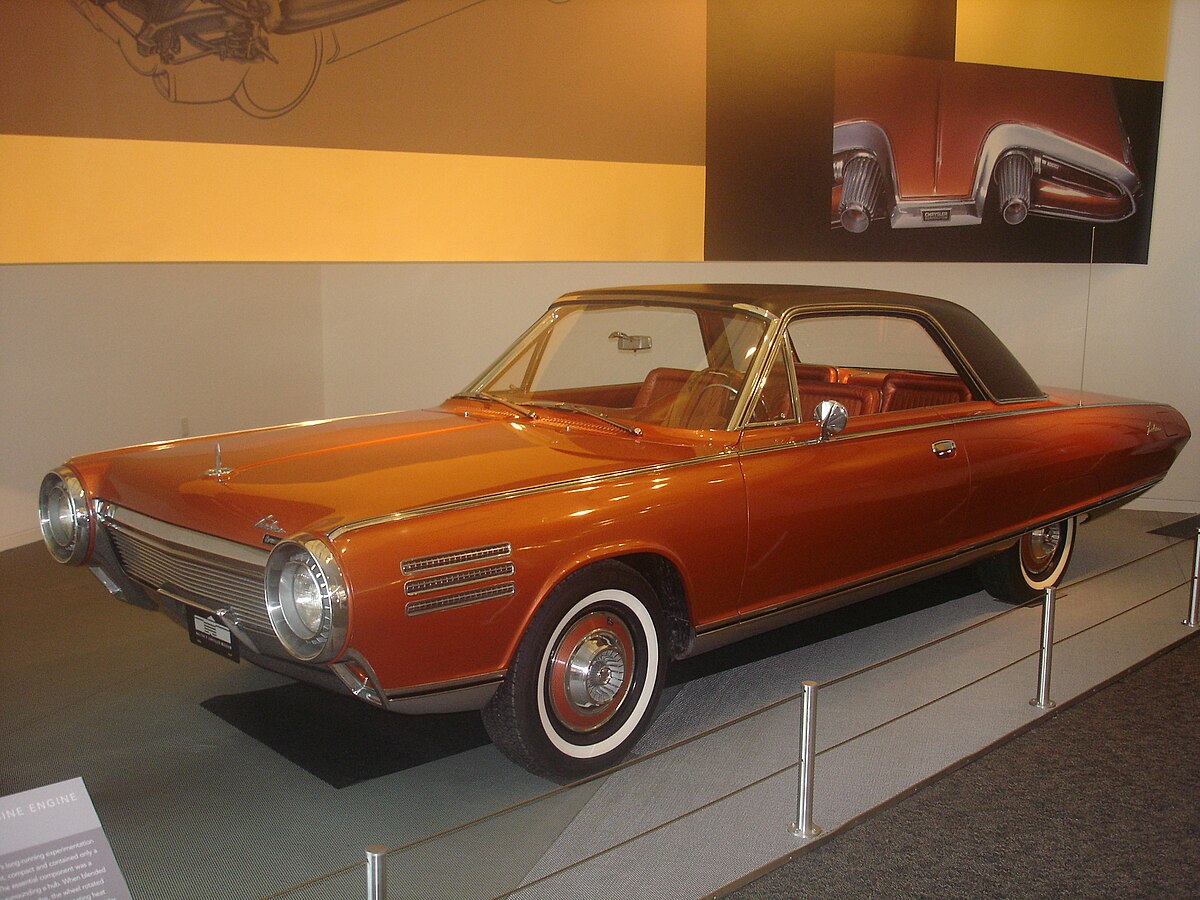
The Chrysler turbine team cited numerous advantages: reduced maintenance, longer engine-life expectancy, an 80-percent parts reduction, virtual elimination of tune-ups, no low-temperature starting problems, no warmup period, no antifreeze, no engine vibration, and negligible oil consumption a remarkable list that made the turbine sound like the obvious future of motoring.
In theory, the turbine was also simpler than a piston engine, with far fewer moving parts and the potential for dramatically extended service intervals. Chrysler produced 55 Turbine Cars in 1963 and 1964, but leased rather than sold them as part of a pilot program.
The program didn’t yield encouraging results, so the turbine program ended in 1964. The problems were fundamental. Turbine engines are deeply inefficient at low loads the kind of stop-start, low-speed operation that characterises everyday driving.
They also took several seconds to spool up to full power from idle, creating a throttle lag that felt alien to drivers accustomed to instant piston response. Fuel consumption was troubling, and the exhaust gases, while chemically clean, were extraordinarily hot a genuine hazard for pedestrians and other vehicles in close proximity.
Chrysler eventually crushed 46 of the 55 cars produced, and most of the nine survivors are in the custody of museums. The Turbine Car remains one of the most fascinating what-ifs in automotive history a machine that proved the jet age could theoretically be brought to the street, but also demonstrated with painful clarity why the piston engine was going to retain its dominance for decades to come.
Also Read: Top 8 European Luxury Coupes That Dominated the 1980s Executive Market
5. Tatra T77
While Volkswagen and Porsche often receive credit for popularising the rear-engine concept, the truth is that a Czechoslovakian company called Tatra was building rear-engined cars with genuine aerodynamic bodies long before Ferdinand Porsche had penned a single Beetle drawing.
The Tatra T77, introduced in 1934, was not only rear-engined but wrapped in a wind-cheating streamlined body that was decades ahead of mainstream automotive thinking.
Hans Ledwinka and his team at Tatra placed an air-cooled V8 engine at the extreme rear of the T77, behind the rear axle in a layout that would later be echoed by the Beetle and the 911.
But Tatra’s motivation was as much aerodynamic as it was mechanical. By eliminating the conventional front engine bay, Ledwinka could lower the nose dramatically and create a smooth, uninterrupted surface from the front of the car to the base of the windscreen.
The result was a drag coefficient that put contemporary American luxury cars to shame, and the T77 was capable of genuinely impressive high-speed cruising as a result.
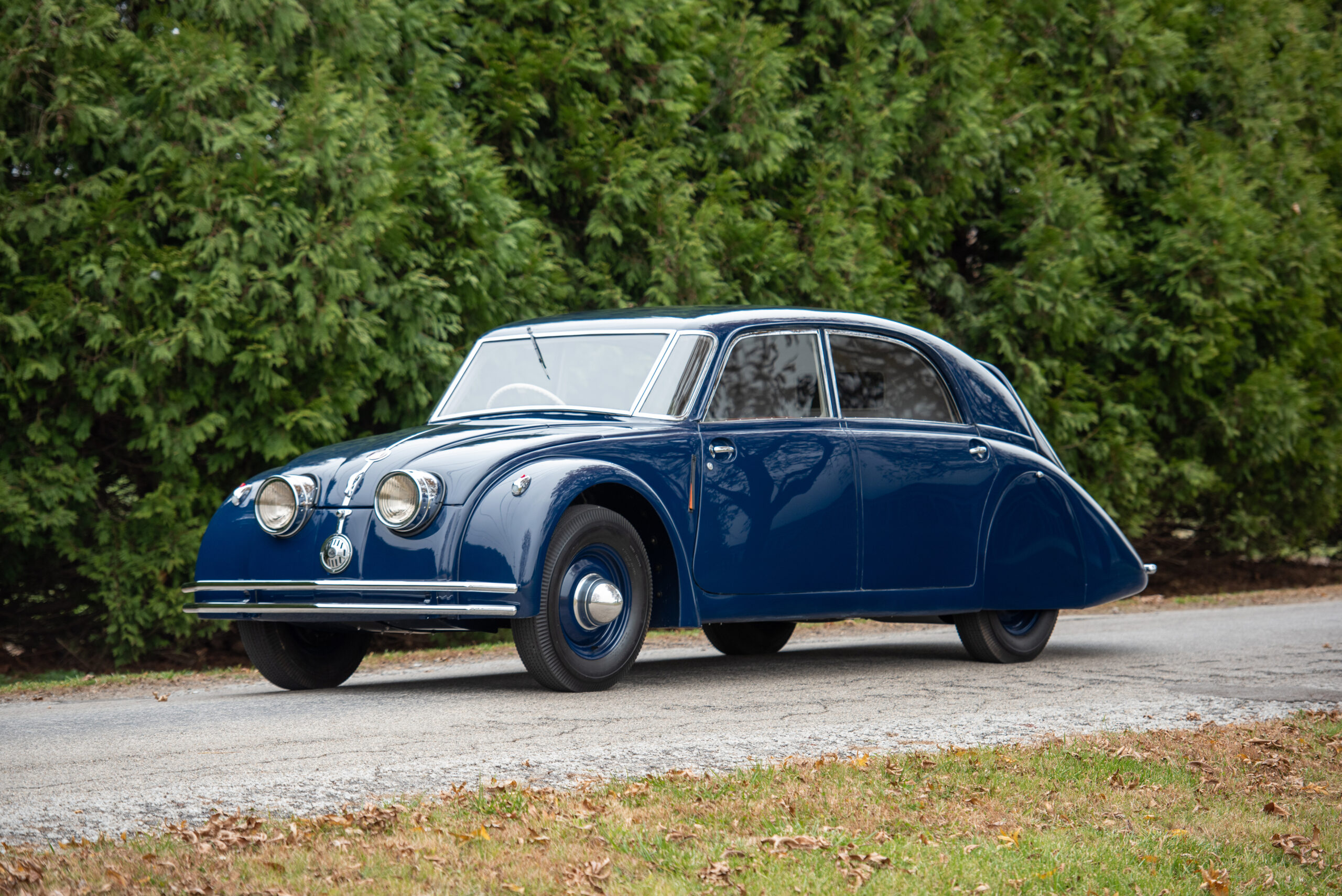
The rear-mounted V8 displaced around three litres and produced approximately 60 horsepower modest by American standards of the day, but deployed so efficiently through the T77’s slippery body that the car could reach speeds of 150 km/h.
On the long, straight roads of Central Europe, the Tatra was a genuine high-speed touring machine, and it attracted an enthusiastic following among Czechoslovakia’s professional classes and government officials.
The T77 and its successor, the T87, became so notorious for their handling quirks at the limits of adhesion that they are said to have caused significant casualties among German officers who commandeered them during World War II men who were accustomed to conventional front-engine handling and found the Tatra’s rear-heavy dynamics lethally unforgiving when pushed.
Whether completely accurate or partially apocryphal, the story underscores how dramatically the Tatra’s engine placement changed the way the car behaved compared to everything else on the road at the time.
Tatra’s contribution to automotive engineering was immense, yet the company rarely receives its due recognition outside of Central Europe. The T77 stands as proof that the most radical and influential ideas in automotive history do not always emerge from the most famous addresses.
6. Mazda RX-7
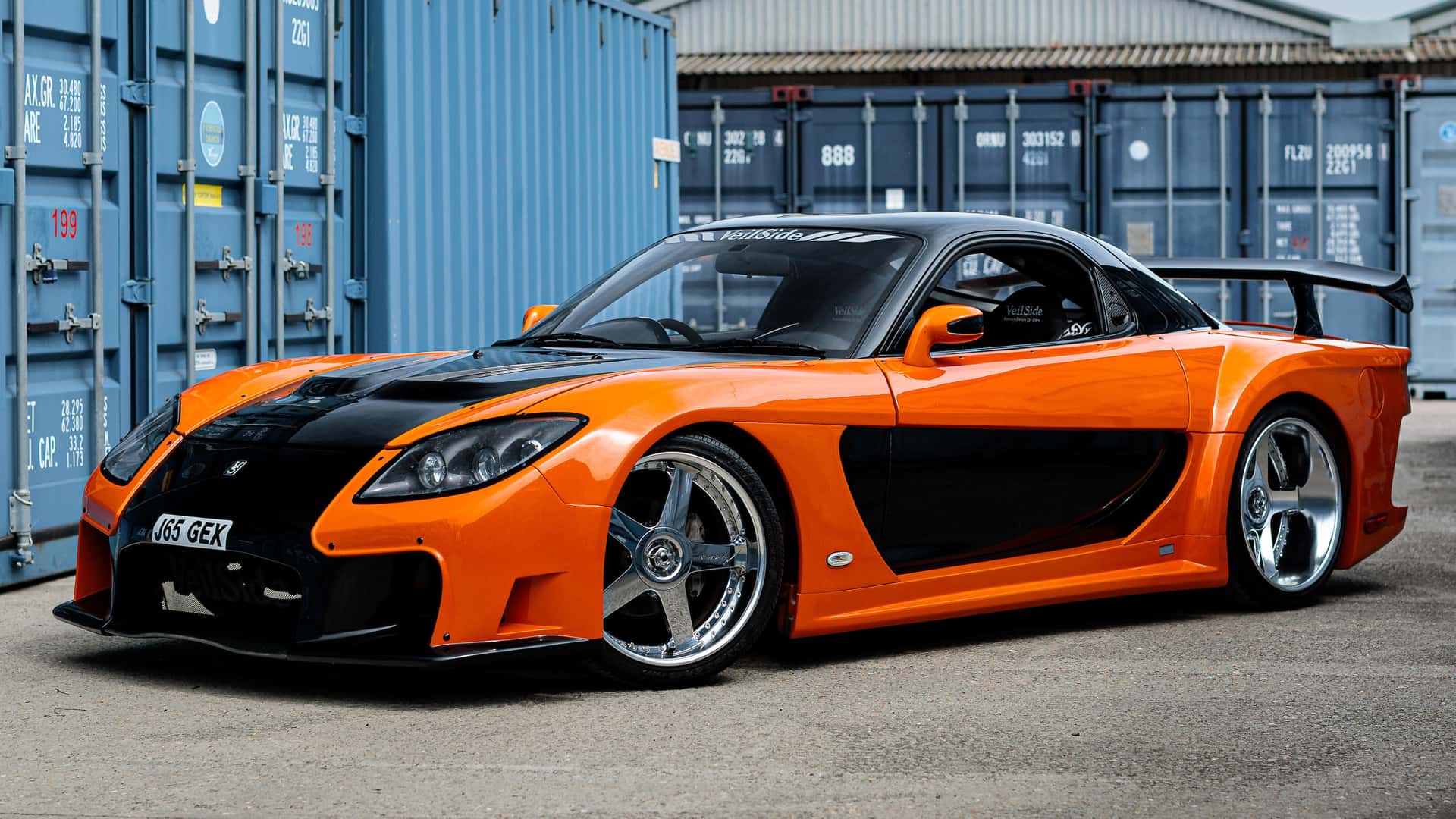
The Mazda RX-7 is celebrated primarily for its rotary engine a Wankel unit that replaced conventional reciprocating pistons with a triangular rotor spinning in a near-circular housing. But the RX-7’s brilliance was not simply that it used a rotary engine.
It was where and how Mazda chose to install that engine that made the RX-7 one of the most dynamically balanced sports cars of the 20th century.
German engineer Felix Wankel penned a compact design that could fit the four phases of the Otto cycle into one revolution of the rotor, with three combustion events per rotor rotation.
The rotary’s extraordinary compactness it was physically tiny compared to a piston engine of equivalent power allowed Mazda’s engineers to mount it far back in the engine bay, close to the firewall, in a position that pushed the car’s weight distribution toward the ideal 50/50 front-to-rear split.
In most front-engine sports cars, the engine’s bulk creates a front-heavy bias that the suspension must work to overcome. In the RX-7, the engine was so small and so far back that the car’s nose was almost unnaturally light.
The apex seals at the tip of the rotor had a shorter life expectancy than conventional piston rings, and oil consumption was significantly higher than in a reciprocating engine.
These weaknesses, combined with sensitivity to overheating, gave the RX-7 a reputation for mechanical fragility that followed it throughout its production life, from the first-generation FB series in 1978 through to the iconic twin-turbocharged FD series that ended production in 2002.
Yet among those who drove the RX-7 properly maintaining the engine correctly, not flogging a cold motor, and respecting its high-rev character the car was nothing short of revelatory.
The high-revving nature of the rotary, its unusually low centre of gravity (the rotor housing sat very low in the engine bay), and its weight distribution advantages combined to produce steering and handling of uncommon precision and balance. The RX-7 could be placed with surgical accuracy through fast corners in a way that heavier, more powerful cars simply could not match.
Mazda’s commitment to the rotary through multiple generations of sports car, against enormous commercial and regulatory pressure, represents one of the most courageous engineering commitments in automotive history.
The unusual engine placed in an unusual position made the RX-7 not just different but genuinely, measurably better in the ways that matter most on a winding road.
7. NSU Ro 80
If the Mazda RX-7 used the rotary engine brilliantly in a sports car context, the NSU Ro 80 attempted something even more ambitious: deploying Wankel technology in a front-wheel drive executive sedan aimed squarely at the conservative professional classes of late-1960s Europe.
The result was a car so advanced in concept that it effectively bankrupted its manufacturer and yet remains one of the most prophetic designs in automotive history.
The NSU Ro 80 was a four-door executive sedan produced from 1967 to 1977, powered by a 113bhp 995cc twin-rotor Wankel motor driving the front wheels.
This made it the second mass-production car in automotive history after the Mazda Cosmo to run this engine configuration. In placing a rotary engine driving the front wheels of an upmarket sedan, NSU had done something that no conventional wisdom of the period would have recommended.
The rotary was an unproven technology in production cars. Front-wheel drive in executive sedans was still a novelty. Combining the two in a single package aimed at conservative buyers was either visionary or reckless, depending on how events unfolded.
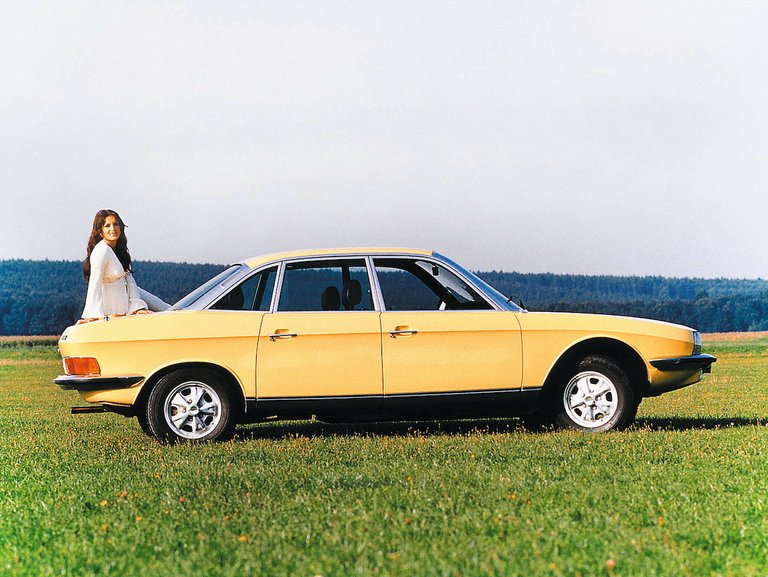
The Ro 80’s aerodynamic body, designed by Claus Luthe, was so advanced that its drag coefficient rivalled cars produced two decades later. The interior was spacious, refined, and intelligently laid out.
Drive the car when the engine was healthy and it was a genuinely outstanding experience quiet, smooth, effortlessly fast, and aerodynamically stable at the high speeds for which German roads were famous.
The engine would rev quietly and quickly to very high engine speeds, causing severe damage to the engine’s components. Whilst NSU resolved the problem on later models, the Ro 80’s unreliability saw the company haemorrhage its limited finances on fixing reliability issues and placating disgruntled buyers.
The apex seal failures that would later haunt Mazda as well were catastrophic in the Ro 80 context, where buyers expected the reliability of a conventional luxury car and received something dramatically less.
NSU was ultimately absorbed into Audi, and the Ro 80 was quietly discontinued a martyr to technological ambition and the harsh economics of premature innovation.
8. Ferrari Testarossa
The Ferrari Testarossa is one of the most iconic shapes in automotive history those dramatic side strakes, the vast rear haunches, the sense of barely contained excess.
But beyond the visual drama, the Testarossa contained an engineering arrangement as unusual as anything in this list: a massive flat-12 engine, mounted longitudinally in a mid-engine configuration, with the gearbox installed ahead of the engine rather than behind it.
This transaxle arrangement engine behind the cabin, gearbox in front of the engine, close to the cabin bulkhead was chosen to centralise mass as much as possible within the wheelbase, a critical consideration when you are installing twelve cylinders in a road car.
Ferrari’s engineers recognised that a conventional layout, with the gearbox behind the engine and thus hanging over the rear axle, would create too much rear-biased weight distribution. By inverting the traditional sequence, they could bring more weight toward the centre of the car.
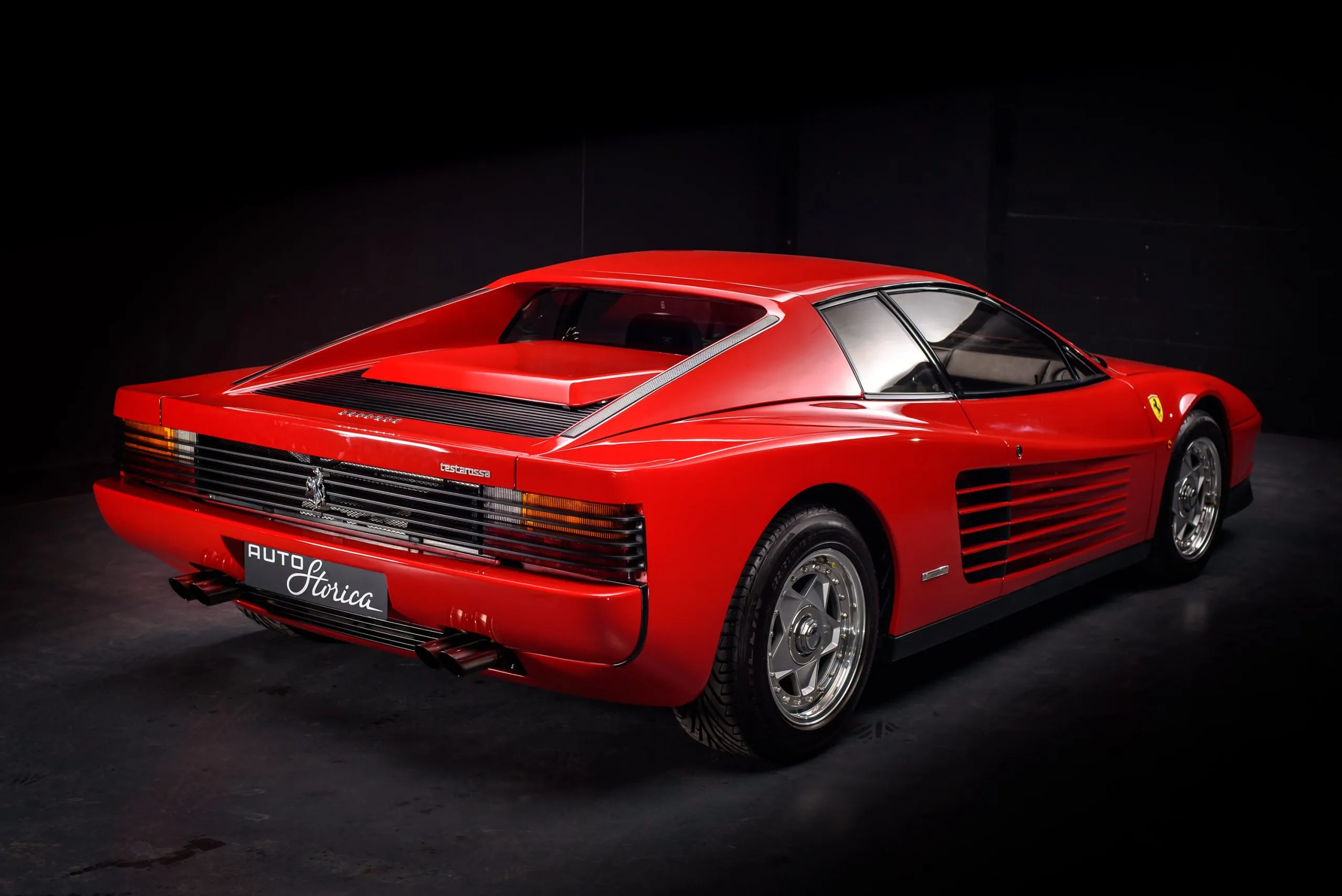
The flat-12 itself was a masterpiece of compact engineering twelve cylinders arranged in two opposing banks of six, with an extremely low profile that kept the engine’s mass close to the road and helped lower the car’s centre of gravity.
The engine produced up to 390 horsepower in its final form and delivered its power with a sonorous, mechanical wail that became one of the definitive sounds of 1980s supercar culture.
The wide, flat profile of the engine also necessitated the Testarossa’s enormous rear section those famous strakes on the flanks were functional cooling ducts feeding twin radiators mounted alongside the engine rather than at the nose.
The consequence of all this engineering was a driving experience that was simultaneously exotic and demanding. The Testarossa was wide, heavy by supercar standards, and required considerable commitment from its driver.
The rewards for those who engaged with it properly were extraordinary, however a car that felt genuinely mechanical, genuinely alive, and utterly unlike anything else available at the time. Its unusual engine placement was not incidental to this character. It was the foundation of it.
9. Volkswagen Passat W8
In the early 2000s, Volkswagen had developed a reputation for fitting unusual, technically ambitious engines into thoroughly ordinary cars. The Golf VR6 had placed a narrow-angle six-cylinder where a four would normally live.
The Phaeton would eventually offer a W12 to compete with Rolls-Royce. But arguably the most extraordinary engine-in-ordinary-car moment of that era came with the W8-powered Volkswagen Passat, a sensible German family saloon that hid eight cylinders in its conventional-looking engine bay.
The W8 engine was derived from the same architectural thinking as Bugatti’s W16 essentially two narrow-angle VR4 units sharing a common crankshaft, creating a W configuration.
The packaging was extraordinarily compact: eight cylinders in a space that barely accommodated a conventional V6. The engine displaced 4.0 litres and produced around 275 horsepower, which it sent to all four wheels through Volkswagen’s 4Motion all-wheel drive system.
In a Passat, this gave the car supercar-equivalent acceleration wrapped in the visual discretion of something you might see outside a Tesco supermarket.
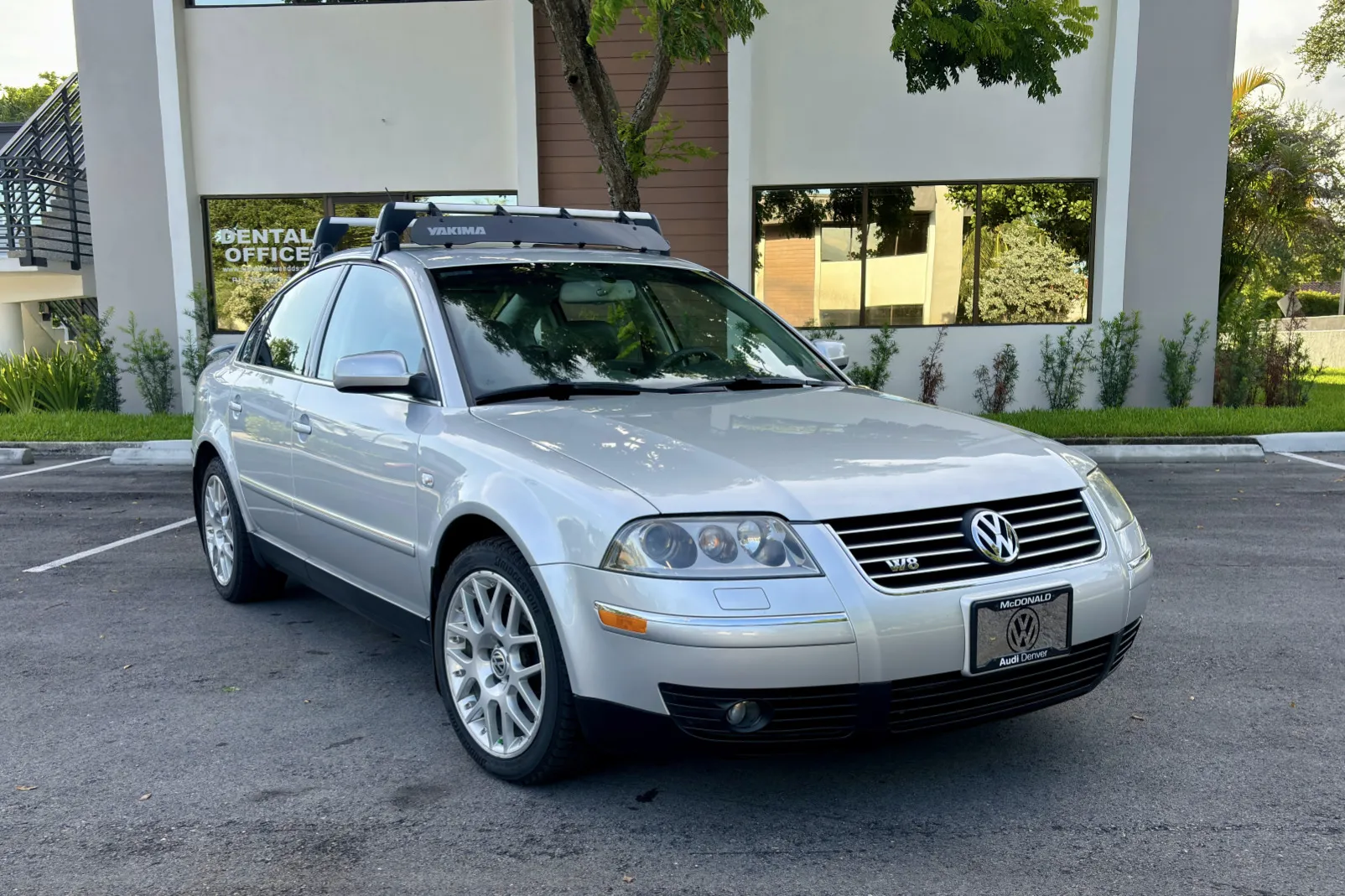
The W8 Passat wasn’t exactly a huge seller, but it’s certainly a unique piece of Volkswagen history an experiment in engineering excess that demonstrated VW’s technical capabilities without ever quite justifying its own existence commercially.
The car was complex, expensive to maintain, and suffered from the heat management challenges that tend to afflict very densely packaged engines. Cooling eight cylinders in a space designed for four required engineering solutions that were clever but occasionally inadequate under sustained high-load conditions.
What the W8 Passat represented, above all, was Volkswagen’s willingness in that era to treat its mainstream product range as a proving ground for technologies and engineering approaches that had no obvious commercial rationale.
It was the automotive equivalent of a research project that happened to be for sale in dealerships. For those who owned one, the knowledge that a W8 engine lurked beneath that utterly conventional bonnet was a source of quiet, knowing satisfaction that few other family saloons could provide.
10. Cadillac V8-6-4
The final entry on this list is unusual not because of where the engine sat in the car, but because of what the engine attempted to do with the cylinders it already had. In 1981, Cadillac introduced what it called the V8-6-4 system a 6.0-litre V8 engine fitted with the ability to deactivate cylinders on the fly, running as a six-cylinder or even a four-cylinder under light loads to conserve fuel, then reactivating all eight when performance was demanded.
The concept was decades ahead of its time but hampered by the limits of early computer technology. The transition between cylinder modes was jerky and unreliable, leaving many owners frustrated.
The system relied on solenoid-actuated rockers that could deactivate individual cylinder pairs, controlled by an early engine management computer that proved unequal to the complexity of the task.
In real-world use, the transitions between V8, V6, and V4 modes were often abrupt and disconcerting, accompanied by vibrations and hesitations that alarmed drivers who associated them with mechanical failure.
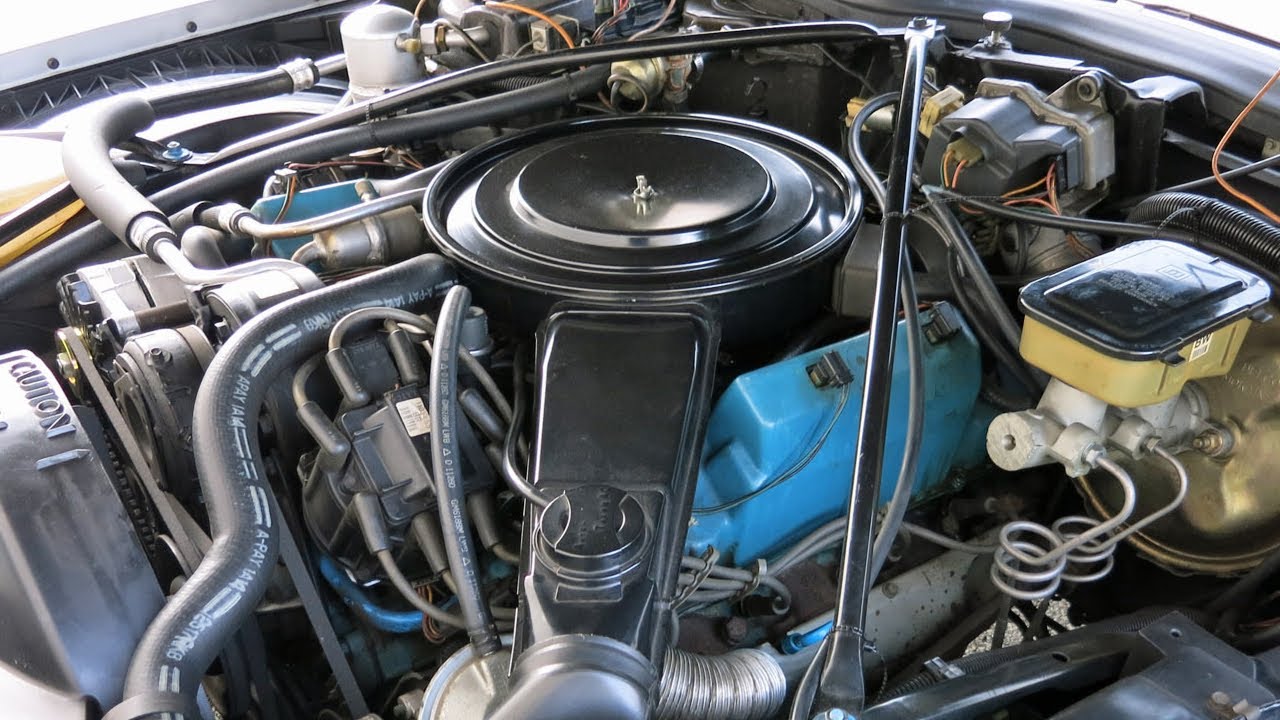
The Cadillac V8-6-4 was placed in the DeVille, Eldorado, and Seville for the 1981 model year, representing the full breadth of Cadillac’s luxury lineup.
Many owners quickly sought ways to disable the system entirely, preferring the straightforward consumption of a full V8 to the unreliable efficiency of active cylinder management. Dealers were soon inundated with complaints, and the system was quietly dropped after a single model year.
What makes the V8-6-4 historically significant is not its failure but its prescience. Every major manufacturer today offers cylinder deactivation systems on V8 engines Honda’s Variable Cylinder Management, GM’s Active Fuel Management, and Ram’s eTorque system are direct descendants of what Cadillac attempted in 1981.
The engine placement was conventional. The ambition embedded within it was anything but. Cadillac’s engineers had correctly identified the future of engine efficiency management forty years before the computing power existed to make it work reliably a reminder that being right too early, in the automotive industry as in life, is sometimes indistinguishable from being wrong.
Also Read: 5 Iconic 1980s Sports Cars With Pop Up Headlights vs 5 With Fixed Lights
