
The golden era of the sport utility vehicle produced some of the most characterful, rugged, and enduring machines in automotive history. Long before crossovers homogenized the segment into a sea of identical silhouettes, vintage SUVs wore their personalities boldly in boxy proportions, solid axles, and, perhaps most distinctively, in the architecture of their roofs. The roof of a vintage SUV tells you everything about its philosophy and intended purpose.
On one side of this great divide stand the removable hardtop SUVs open-air adventurers built for those who wanted the utility of an enclosed truck during the week and the freedom of the sky on weekends.
These vehicles catered to a particular breed of owner: someone who considered wind in the hair a standard feature, not an optional extra. The ritual of unbolting panels and stowing them away was not seen as a chore but as a ceremony of seasonal liberation.
On the other side stand the fixed steel roof SUVs sturdy, purposeful, and unapologetically permanent. These were the workhorses, the expedition vehicles, the family haulers that asked nothing more than to be loaded up and pointed at the horizon.
Their welded roofs gave them structural rigidity, insulation, and the kind of quiet confidence that comes from having nothing to remove and nothing to lose.
5 Vintage SUVs With Removable Hardtops
These exceptionally versatile vehicles feature detachable hardtop panels and convertible capability perfectly suited for enthusiasts seeking year-round utility with seasonal open-air driving, providing dual-purpose functionality through removable steel or fiberglass tops that transform enclosed SUVs into open-air machines while maintaining structural rigidity and weather protection during winter months.
Their flexible engineering includes bolt-on roof sections and reinforced body structures that resist the compromised rigidity found in permanent convertibles while delivering genuine versatility allowing summer top-off adventures, winter weather protection through secure hardtop installation, and characterful design where removable tops created instantly recognizable silhouettes defining iconic off-roaders.
1. Jeep CJ-7 (1976–1986)
Few vehicles in American automotive history carry the cultural weight of the Jeep CJ-7. Born from the military utility vehicles that helped win World War II and refined through decades of civilian production, the CJ-7 represented Jeep at its most elemental and most lovable.
It was honest transportation a collection of steel, rubber, and ambition that made no pretense of being anything other than what it was: a tool for going places other vehicles feared to tread.
The removable hardtop of the CJ-7 was central to its identity. Unlike the soft top that came standard, the optional fiberglass hardtop transformed the CJ-7 from a breezy summer toy into a legitimate all-season vehicle. It bolted on with a modest collection of fasteners, sealed reasonably well against rain and cold, and critically came back off just as easily when the weather turned friendly.
The process took perhaps thirty minutes with basic tools and a willing friend, and the reward was an open-air driving experience that no convertible sports car could truly replicate, because no sports car would then carry you across a rocky creek bed.
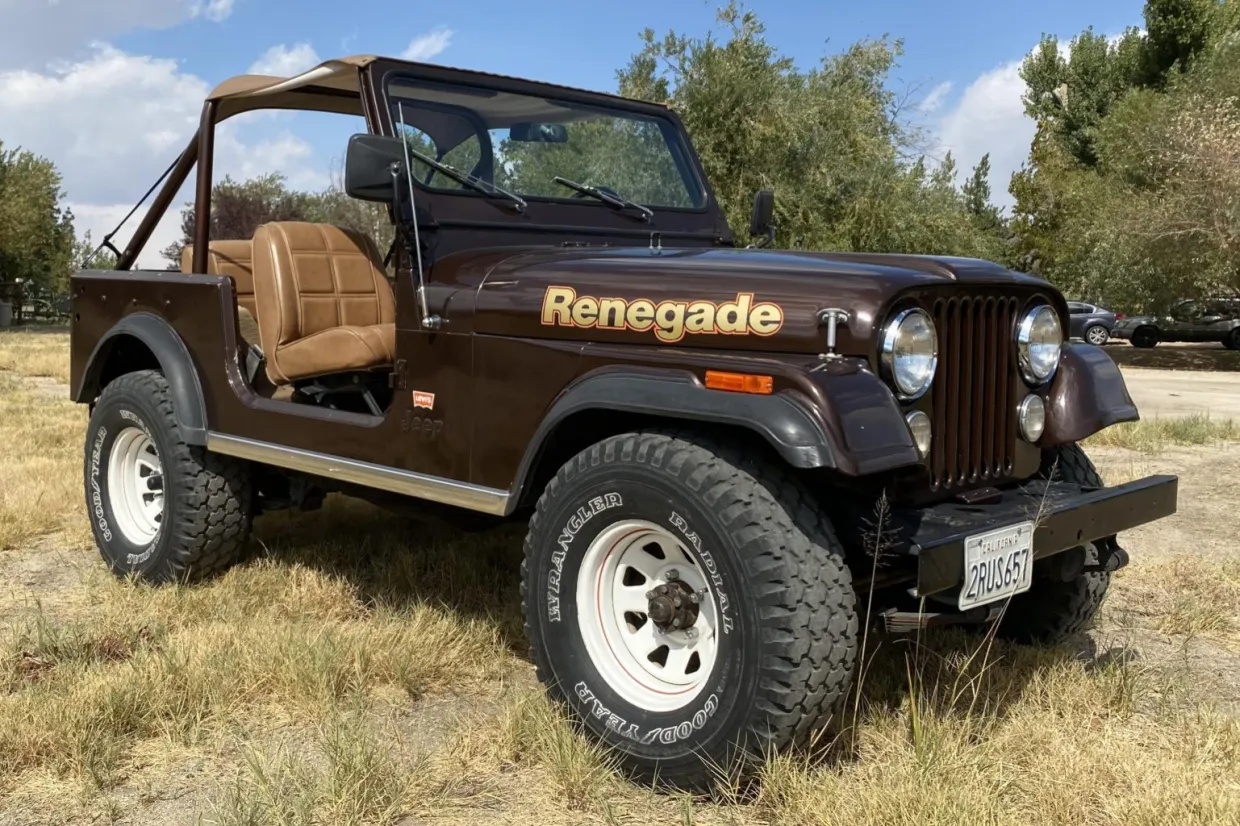
The CJ-7 was longer than its CJ-5 predecessor, which made it more practical without sacrificing much of the character that made Jeeps beloved. The wheelbase stretched to 93.4 inches, giving rear passengers actual room to exist, and the extended body allowed for the optional rear seat that transformed the CJ-7 into a genuine family adventure vehicle.
With the hardtop on, a family of four could load camping gear into the back and head into the wilderness with reasonable confidence that they would arrive dry.
Under the hood, buyers could choose from a range of engines including the robust AMC 304 V8 and later the fuel-injected 4.2-liter inline-six. Neither was particularly powerful by modern standards, but torque came early and the CJ-7’s light weight meant that modest horsepower figures translated into lively real-world performance on trails.
The Dana 30 front axle and Dana 44 rear axle were rugged and repairable, the transfer case gave genuine low-range capability, and the suspension while crude by any sophisticated measure was perfectly matched to the CJ-7’s cheerful approach to rough terrain.
Today, a well-preserved CJ-7 with its original hardtop commands serious collector attention. The combination of historical significance, mechanical simplicity, and that unique removable-top versatility makes it one of the most compelling vintage SUV purchases available at any price point.
2. Ford Bronco First Generation (1966–1977)
When Ford launched the first-generation Bronco in 1966, it was a direct answer to the Jeep CJ and International Scout a compact, purpose-built off-roader that wore its intentions on its squared-off sleeve. The original Bronco was small, tight, and ferociously capable, and its removable hardtop was one of its defining features from day one.
Ford engineered the first-gen Bronco with a full steel hardtop that could be unbolted from the body, transforming the enclosed wagon into a half-cab pickup of sorts, or with the additional removal of the front doors into something approaching an open-air tube of pure driving sensation.
The top itself was heavier than the fiberglass units found on Jeeps of the era, requiring two people and some planning to remove safely, but Ford compensated by making the attachment points robust and the sealing genuinely effective. In the winter months, a Bronco with its hardtop on was a credible daily driver. In the summer, with the top off and doors stowed, it was an event.
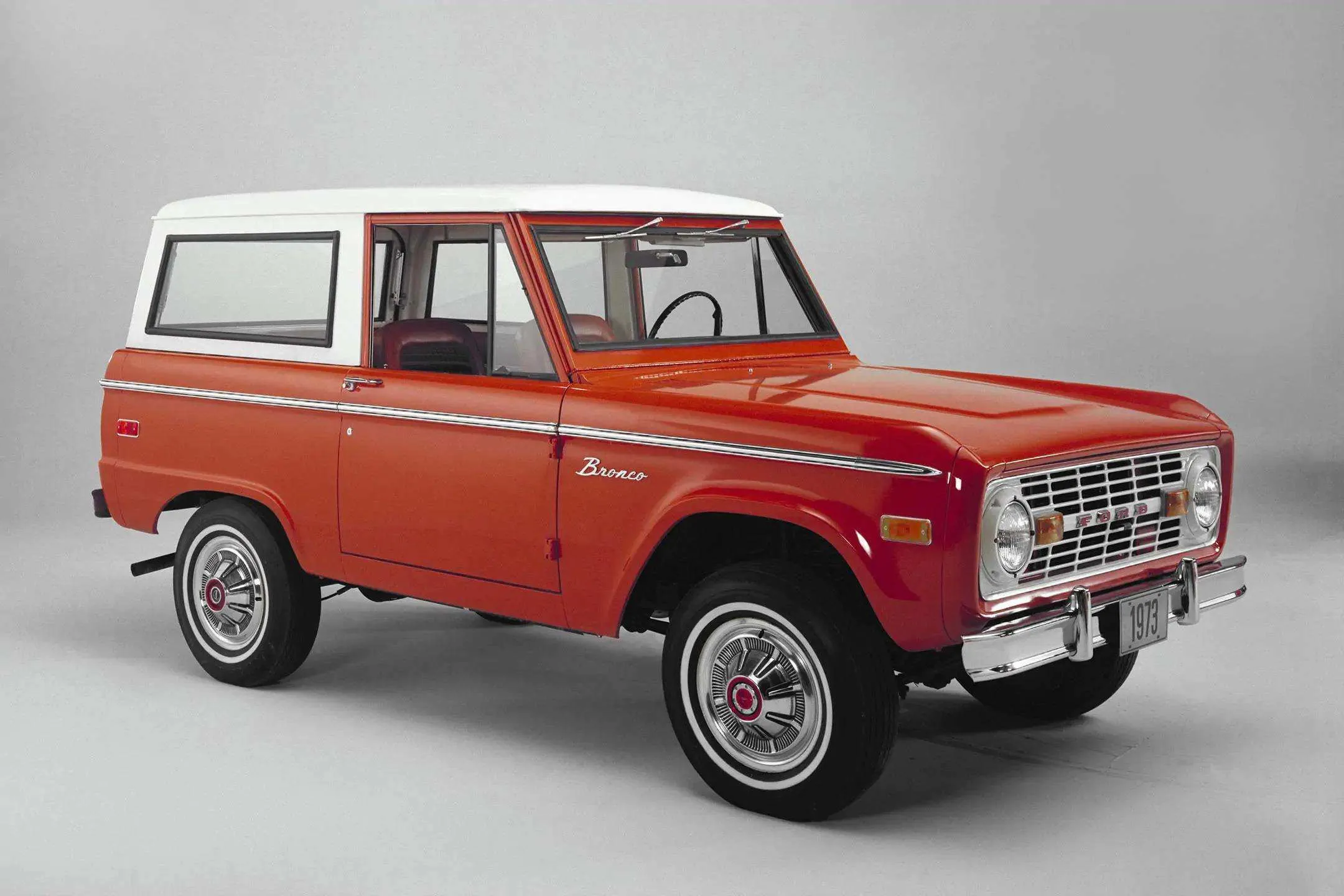
The Bronco’s mechanical layout was fundamentally sound. The front solid axle later replaced with a twin-traction beam independent setup in subsequent generations, though not here gave it excellent wheel travel over uneven ground, and the short 92-inch wheelbase made it agile in tight trail situations.
Engine options ranged from the base 170 cubic inch inline-six to the much more satisfying 302 V8, which transformed the Bronco from adequate to genuinely quick in off-road conditions.
The first-generation Bronco has become one of the most ferociously collectible American vehicles of any era. Prices for clean, original examples have climbed into the six-figure range, driven by genuine appreciation for the design and the celebrity restorations that brought the model back into public consciousness.
The hardtop especially in its original factory configuration is considered an essential part of the package by serious collectors, and examples that retain their original steel tops command a meaningful premium.
What made the first-gen Bronco special was its completeness of vision. Ford did not design it as a road vehicle with off-road pretensions but as a genuine dual-purpose machine, and the removable hardtop embodied that philosophy perfectly.
3. International Harvester Scout II (1971–1980)
International Harvester built farm equipment and trucks for a living, which meant that when the company decided to build an SUV, it did so with the no-nonsense pragmatism of a working farmer.
The Scout II, launched in 1971 as an evolution of the original 1961 Scout, was larger, more comfortable, and more powerful than its predecessor, but it retained the fundamental toughness that made International’s products worth trusting.
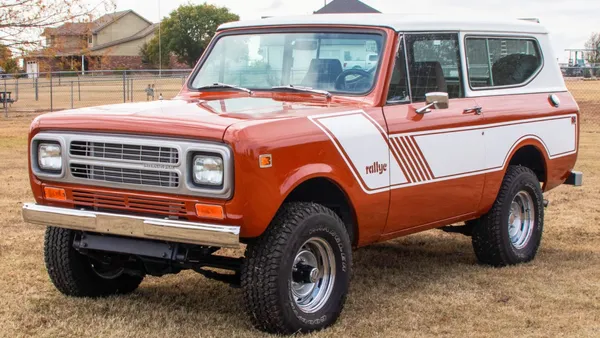
The Scout II offered both soft-top and hardtop configurations, and the removable steel hardtop was a serious piece of engineering. It did not feel like an afterthought or an accessory but like a legitimate structural component that happened to be unbolted.
The sealing was superior to most competitors, the interior headroom with the top in place was genuinely usable for adult passengers, and the visual proportions of the Scout II with its hardtop installed were handsome in a square-shouldered, purposeful way that has aged remarkably well.
Mechanically, the Scout II offered an embarrassment of riches by the standards of the era. International’s own engines including the 304 and 345 cubic inch V8s — were strong, torquey, and built for longevity in working conditions.
The chassis was robust, the axles were heavy-duty, and the four-wheel drive system was derived from the same components International used in its commercial truck lines. This was not a vehicle engineered to a price point but to a standard of durability.
The Scout II’s interior was spartan by modern standards but thoughtfully laid out, with durable materials and a straightforward instrument cluster that gave the driver the information needed without unnecessary decoration.
The seating was firm and supportive, and with the hardtop in place, wind and road noise were kept to levels that made long highway cruising genuinely comfortable something that could not be said for many competitors of the era.
Today the Scout II occupies a peculiar position in the collector market: deeply appreciated by those who know it, somewhat overlooked by the broader public that gravitates toward Ford and Jeep nameplates. That relative obscurity makes well-preserved examples both better value and more interesting conversation pieces than the more famous alternatives.
4. Toyota Land Cruiser FJ40 (1960–1984)
The FJ40 Land Cruiser is the Toyota that built the brand’s global reputation for indestructibility. Sold across six continents and deployed in conditions ranging from Antarctic research stations to Saharan oil exploration camps, the FJ40 proved itself in environments where failure meant genuine catastrophe.
Its removable hardtop was one of several body configuration options Toyota offered, and it remains one of the most sought-after variants among collectors worldwide.
Toyota engineered the FJ40’s removable top with characteristic precision. The fitment was tighter than most competitors, the sealing more effective, and the structural interaction between the top and the body more carefully considered.
Toyota understood that many FJ40 buyers would use their vehicles in genuinely remote locations where a leaking roof or a rattling top panel was not merely annoying but potentially dangerous, and the company engineered accordingly.
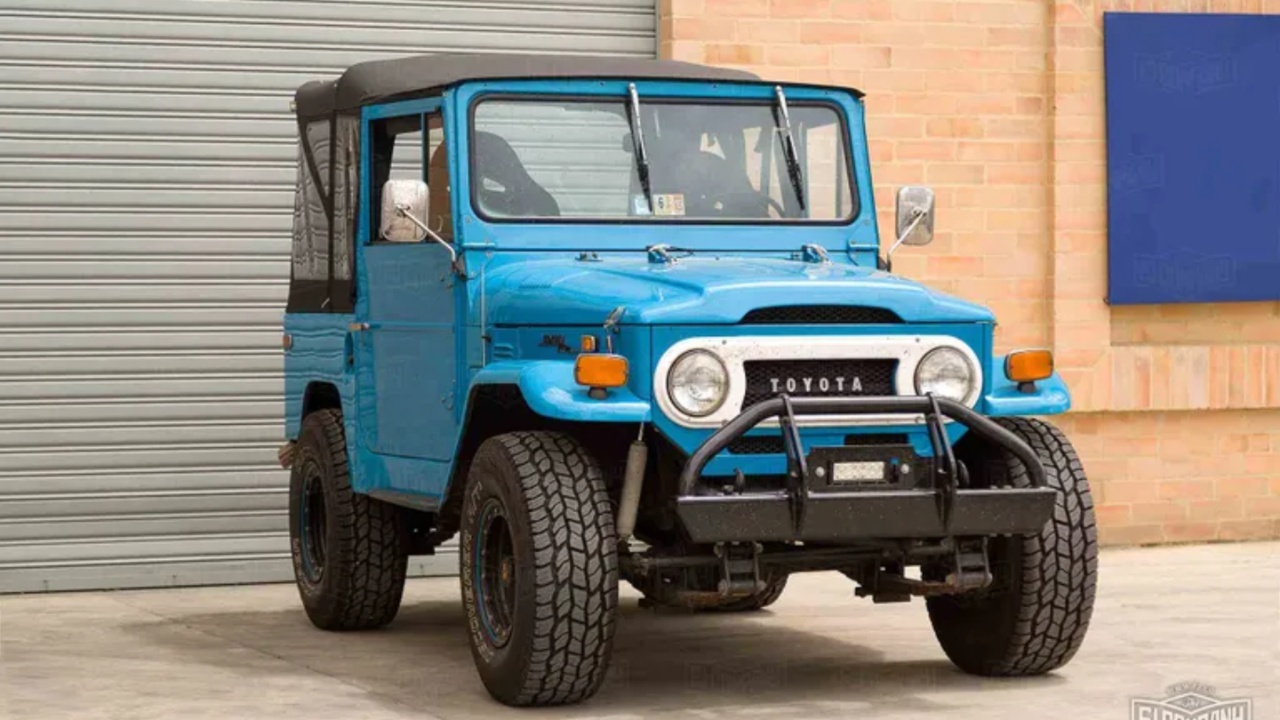
The FJ40’s mechanical specification was similarly thorough. The F-series inline-six engine a 3.9-liter unit producing modest power but exceptional torque and legendary durability was matched to a four-speed manual gearbox and a two-speed transfer case that gave the FJ40 a crawl ratio capable of handling nearly any terrain.
The solid axles front and rear, combined with the coil spring front suspension (a refinement introduced in the mid-1970s), gave the FJ40 ride quality and articulation that surprised those who expected nothing but brutality from a working off-roader.
Inside, the FJ40 was honest and efficient. The dashboard was simple, the controls were logical, and the materials while not luxurious were durable enough to survive decades of hard use and still present themselves with dignity.
The optional rear jump seats, accessible through a side door on the driver’s side, allowed the FJ40 to carry additional passengers in conditions that would have defeated lesser vehicles.
The FJ40’s collectibility is now fully established, with prices reflecting both genuine rarity and the vehicle’s extraordinary reputation. Clean examples with original hardtops are particularly valued, and the global collector community that has formed around the FJ40 is among the most knowledgeable and passionate in the vintage vehicle world.
Also Read: Top 8 American V8 Engines That Still Produced Power in the Mid 1970s
5. Suzuki SJ Series / Samurai (1981–1998)
The Suzuki SJ Series, sold in many markets as the Samurai, is the underdog of this collection smaller, lighter, and less powerful than every other vehicle on this list, yet possessed of a capability-to-size ratio that made it genuinely remarkable in off-road conditions.
The removable hardtop was available throughout much of the SJ’s production run, transforming this affordable compact off-roader into a surprisingly versatile machine.
Suzuki’s engineering for the hardtop was pragmatic and effective. The panels were lightweight a necessity given the SJ’s modest dimensions and the company’s cost constraints but they sealed adequately and provided meaningful weather protection when correctly installed.
The removal process was quick and manageable for a single person, making the SJ/Samurai one of the most user-friendly removable-top vehicles of its era. Where Bronco owners needed a helper and a plan, Samurai owners needed only an afternoon and a socket set.
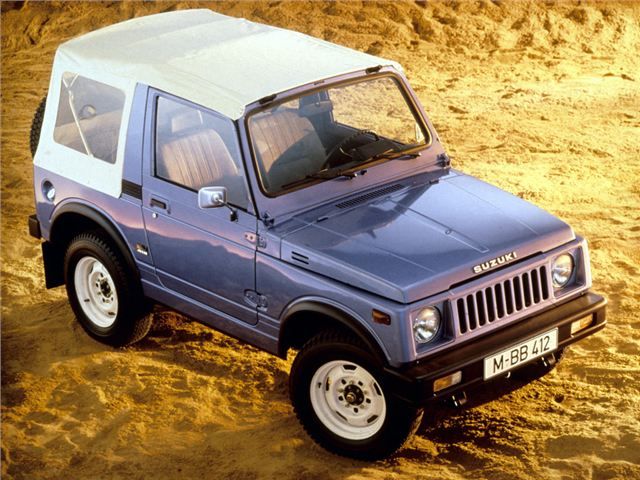
The SJ’s mechanical layout was simple to the point of elegance. The 1.0-liter and later 1.3-liter engines were basic, free-revving units that made acceptable power in a vehicle weighing barely 2,000 pounds.
The four-wheel drive system was a proper part-time setup with low range, giving the little Suzuki genuine off-road credentials that belied its modest stature.
The short wheelbase a very tight 79.9 inches made the SJ remarkably agile on tight trails, and the light weight meant it could often pick its way through situations that heavier vehicles found impossible simply by not sinking in.
The controversy surrounding the Samurai a Consumer Reports article in the 1980s raised stability concerns that Suzuki vigorously disputed — paradoxically enhanced its cult status.
Enthusiasts who had driven the vehicle knew its limits and respected them, and the loyal community that formed around the SJ/Samurai became one of the most dedicated in the off-road world. Today, a clean Samurai with its original hardtop is a charming and genuinely capable vintage off-roader at prices that remain accessible.
5 Vintage SUVs With Fixed Steel Roofs
These pragmatically designed vehicles feature permanently welded roof structures and conventional enclosed cabins perfectly demonstrating practical SUV philosophy, providing maximum rigidity through integrated roof panels that sacrificed seasonal versatility for superior crash protection, reduced noise intrusion, and elimination of the water leak concerns that plagued removable hardtop sealing systems as gaskets aged and hardware loosened.
Their straightforward construction includes unitized roof assemblies and reinforced pillars that resisted the structural compromises found in removable-top designs while delivering quieter highway cruising without wind noise from aging hardtop seals, improved rollover protection through permanent roof structures, and complete avoidance of the storage challenges and reinstallation struggles that removable hardtops required during seasonal transitions.
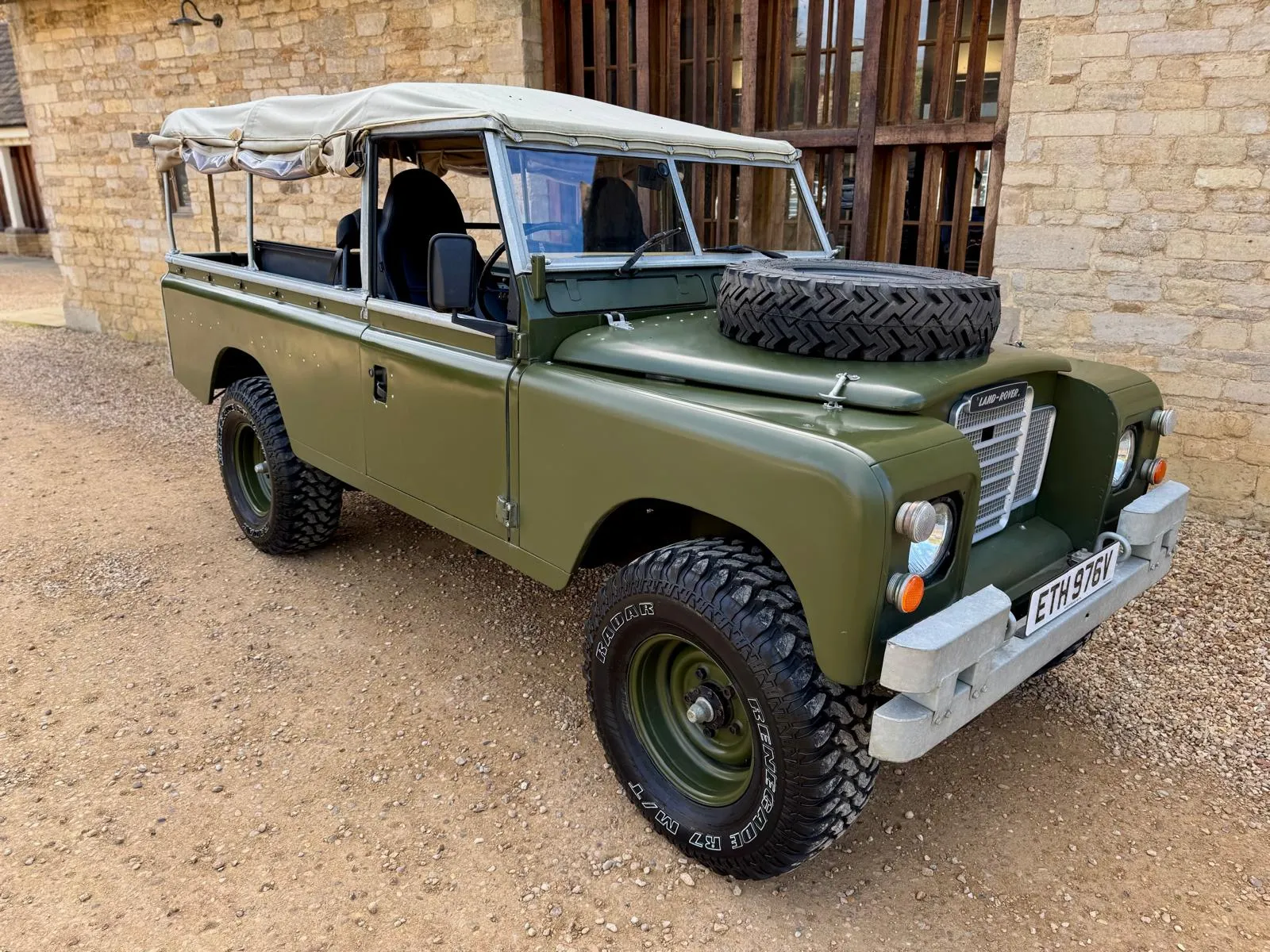
1. Land Rover Series III (1971–1985)
If the FJ40 built Toyota’s reputation for durability, the Land Rover Series III cemented Britain’s claim to have invented the serious off-road vehicle. The Series III was the culmination of more than two decades of development from the original 1948 Land Rover, and by the time it entered production in 1971, it had evolved into a machine of considerable sophistication wrapped in bodywork of uncompromising utility.
The fixed steel roof of the Series III was not a design choice born of aesthetics but of function. Land Rovers were working vehicles farmers’ tools, military transports, expedition platforms and the welded roof provided the structural integrity that the mixed-material body (aluminium panels over a steel frame) required to function cohesively.
The roof was not merely cover but contribution, tying the upper structure together and providing mounting points for roof racks, lights, and the extraordinary variety of expedition equipment that Land Rover owners routinely bolted to their vehicles.
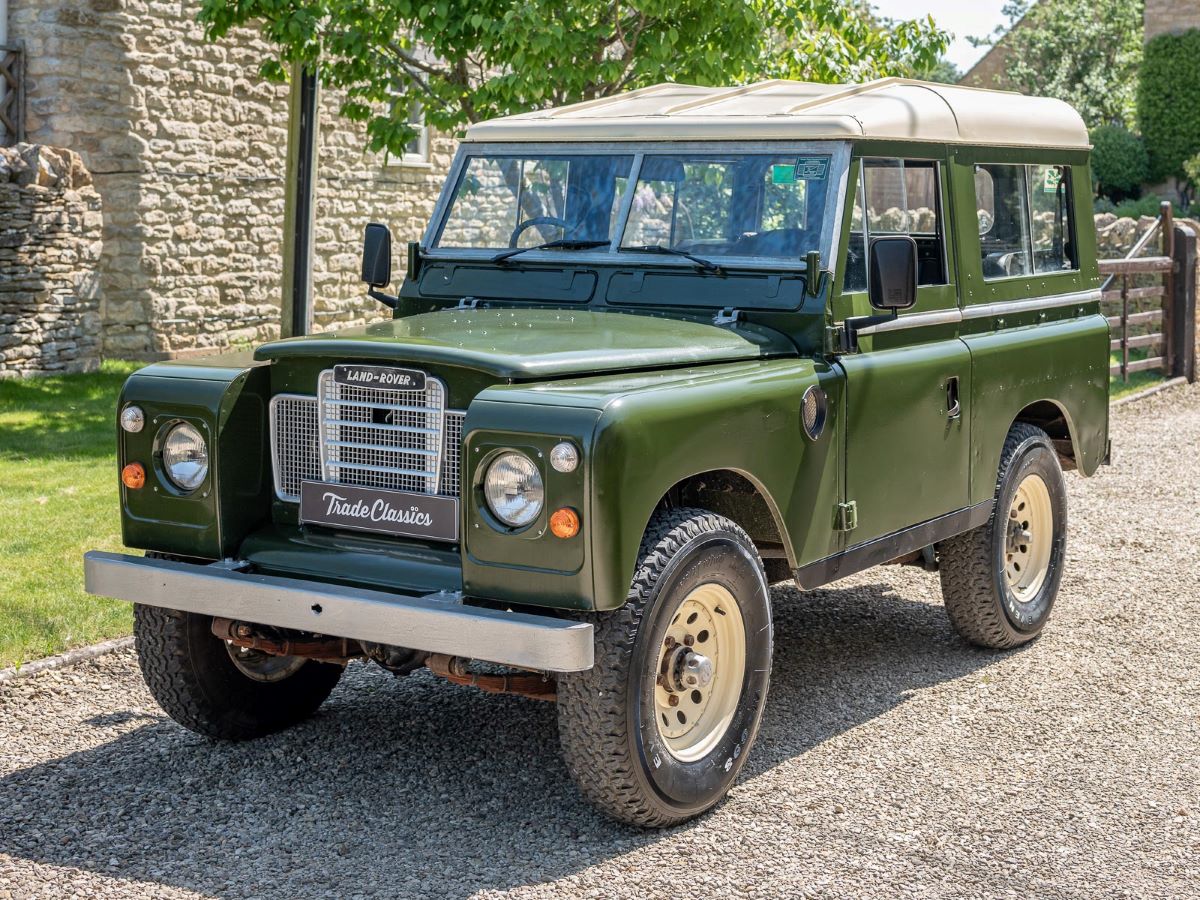
Inside the fixed steel roof, the Series III offered a cabin that was honest about its priorities. Heat came from a functional but not lavish system, the seats were firm and would support a working driver through a long day without complaint, and the visibility through the large glass areas was excellent in every direction.
The permanent roof allowed Land Rover to properly insulate the cabin, which meant that Series III owners in cold climates could reasonably expect to stay warm a feature that removable-top owners occasionally envied.
The drivetrain was thoroughly Land Rover. The 2.25-liter petrol and diesel engines were neither fast nor powerful, but they were torquey, reliable, and designed to be serviced in the field with basic tools.
The permanent four-wheel drive system on the Stage One models (with selectable four-wheel drive on standard versions) was sophisticated for its era, and the long-travel suspension gave the Series III outstanding cross-country ability despite its agricultural appearance.
The Series III remains the definitive working Land Rover a vehicle designed for purpose rather than pleasure that has transcended its origins to become a collector’s icon. A well-maintained example with its fixed steel roof intact is a slice of British engineering history at its most earnest.
7. Toyota Land Cruiser FJ55 Wagon (1967–1980)
While the FJ40 was Toyota’s sporting off-roader, the FJ55 was its family SUV a full-sized, five-door station wagon built on the same rugged platform but stretched to accommodate the needs of buyers who required genuine passenger and cargo capacity. The fixed steel roof of the FJ55 was integral to its identity as a serious long-distance touring machine.
Toyota built the FJ55’s roof as a structural member of considerable importance. The extended wheelbase of 107.5 inches and the station wagon body created lateral forces that demanded a stiff upper structure, and the welded steel roof provided exactly that.
Toyota reinforced the roof with internal bracing that was invisible from outside but contributed meaningfully to the FJ55’s impressive resistance to body flex over rough terrain a quality that owners discovered when tackling corrugated dirt roads that would loosen the joints of less carefully engineered vehicles.
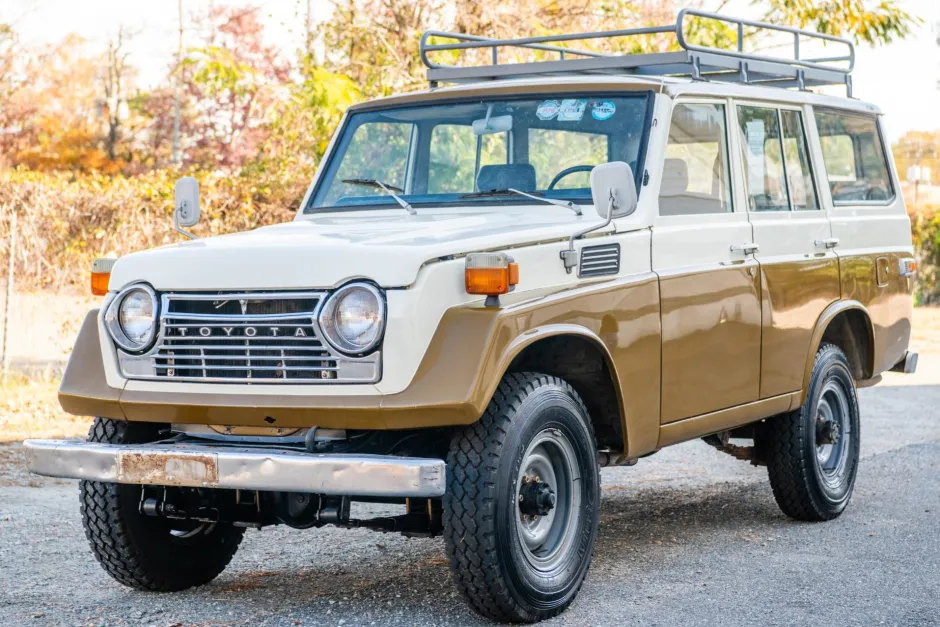
The fixed roof also allowed Toyota to install genuine headliner insulation, which transformed the FJ55’s cabin acoustics compared to the more spartan FJ40. Highway cruising in an FJ55 was a composed, comfortable experience that owners of contemporary American SUVs would have recognized as comparable to their own vehicles remarkable given the FJ55’s off-road credentials.
The FJ55’s interior was configured as a three-row vehicle in most markets, with the rearmost seat facing backward in traditional wagon fashion. This arrangement allowed the FJ55 to carry up to eight occupants while retaining space for a meaningful amount of luggage, making it genuinely suitable for family expedition use.
The fold-flat rear seats transformed the cargo area into a sleeping platform large enough for two adults a feature that Toyota owners in remote areas genuinely depended upon.
Mechanically, the FJ55 shared the F-series inline-six with the FJ40, tuned slightly differently to manage the heavier vehicle’s demands. The result was a relaxed, torque-rich driving experience perfectly matched to the FJ55’s character as a long-haul workhorse.
Today the FJ55 is cherished by a growing collector community that appreciates its combination of genuine capability and station wagon practicality.
8. Chevrolet Blazer K5 (1969–1994)
The full-sized K5 Blazer was General Motors’ answer to the Bronco and Scout a proper American truck-based SUV with a V8 under the hood and enough room inside to accommodate the expansive expectations of American family buyers.
While early K5 Blazers offered a removable fiberglass top, the fixed-roof versions that became standard from the mid-1970s onward represented the vehicle at its most complete and usable.
The welded steel roof of the fixed-top K5 Blazer changed the vehicle’s character fundamentally. Where the open-top versions were essentially trucks with seats, the fixed-roof Blazer was a proper SUV in the modern sense a vehicle that could serve as genuine daily transportation without compromise.
The roof allowed GM to install serious insulation, proper interior trim, and the kind of HVAC system that made American buyers comfortable on road trips across the vast distances their country demanded.
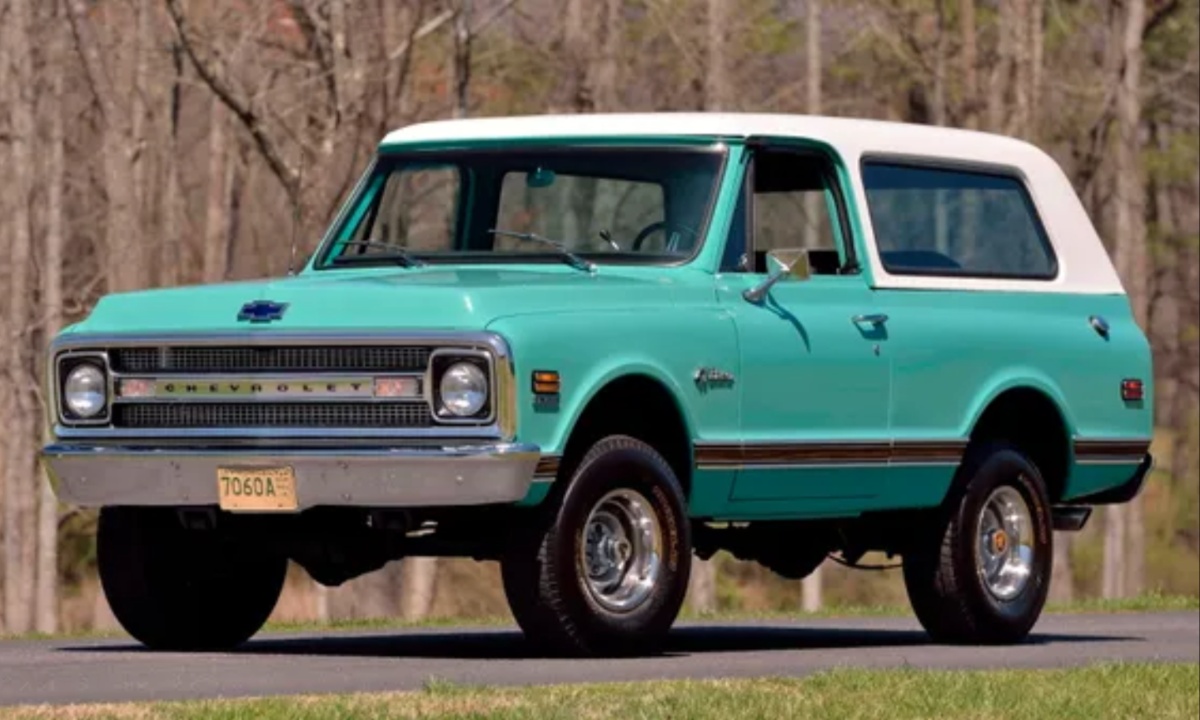
Under the hood, the K5 Blazer offered what American buyers demanded: displacement. The 350 cubic inch V8 was the default choice for most buyers, providing effortless torque delivery and a sound that satisfied in ways that smaller-displacement engines never could.
The 400 cubic inch unit offered even more of the same, and both engines were matched to GM’s competent three-speed and later four-speed automatic transmissions. The full-time four-wheel drive available on later models was a genuine advancement that allowed year-round engagement without the ritual of stopping to lock hubs.
The K5 Blazer’s chassis was derived from the full-sized Chevrolet pickup truck, which meant it was overbuilt for passenger use and nearly indestructible in anything short of extreme abuse.
The solid front axle, heavy-duty frame rails, and substantial differentials gave it a durability that buyers in rural America where a vehicle breakdown could mean genuine hardship genuinely valued.
The long production run of the K5 Blazer, stretching across 25 years with meaningful evolutionary updates, created a vehicle whose later examples benefited from decades of refinement while retaining the fundamental ruggedness of the original. Fixed-roof examples from the 1980s represent the model at its most polished and practical.
9. Range Rover Classic (1970–1996)
The original Range Rover redefined what a luxury SUV could be, and its fixed steel roof was central to that redefinition. Where other off-roaders wore their utility as a badge of honor that excused any number of comfort compromises, the Range Rover declared that there was no reason a vehicle capable of crossing a river should not also be comfortable enough for a theatre evening.
The Range Rover’s welded steel roof was engineered to standards that no removable-top vehicle could approach. It was double-skinned in key areas for thermal insulation, structurally integrated with the full-length Range Rover body to provide exceptional torsional rigidity, and finished inside with headliner materials of a quality that contemporary buyers found genuinely surprising in a four-wheel drive vehicle. The effect inside was of a refined, quiet cabin that happened to sit high above the road on long-travel coil springs.
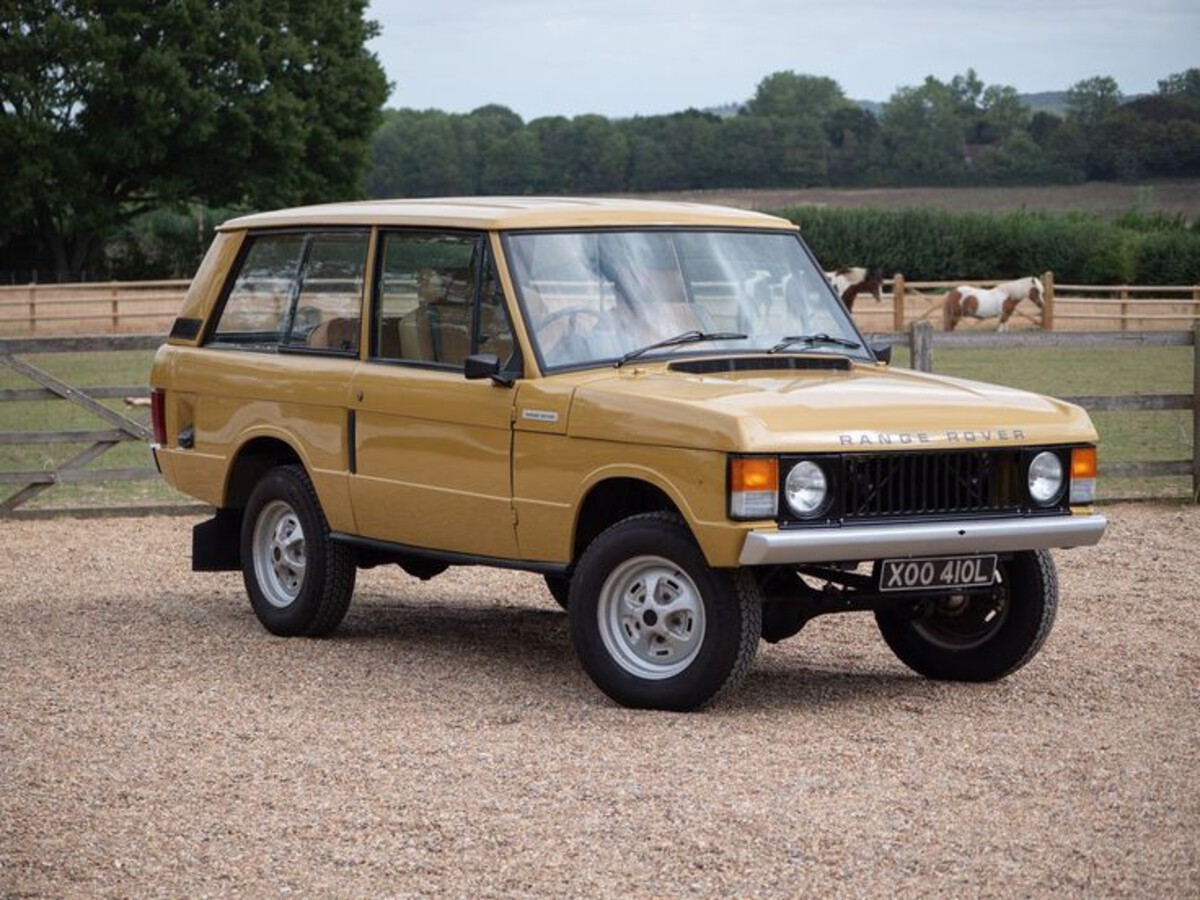
The Range Rover’s genius was its all-coil suspension a novelty among serious off-roaders when launched in 1970 and still impressive in its execution. The long coil springs gave wheel travel that matched dedicated off-road vehicles while providing on-road ride quality that matched luxury saloon cars.
The permanently engaged four-wheel drive with a center differential was another innovation that made the Range Rover genuinely easy to drive in mixed conditions without the cognitive burden of deciding when to engage and disengage front drive.
Inside, the Range Rover offered an interior that evolved from practical to genuinely luxurious over its 26-year production run. Early examples were spartanly furnished but thoughtfully designed; by the 1990s, the Range Rover Classic offered leather seating, wood trim, and equipment levels that competed directly with German luxury cars.
The fixed steel roof made all of this possible by providing the stable, weatherproof envelope that quality interior materials require. The Range Rover Classic’s combination of genuine off-road ability, on-road refinement, and evolving luxury makes it one of the most significant vehicles of the 20th century and one of the most compelling vintage SUV purchases for buyers who demand capability without apology.
10. Mercedes-Benz G-Wagen W460 (1979–1991)
The original Mercedes-Benz G-Wagen was not conceived as a consumer product but as a military and working vehicle a commission from the Shah of Iran and the West German Bundeswehr that Mercedes-Benz Geländewagen (terrain vehicle) executed with the company’s characteristic thoroughness.
When it became available to civilian buyers in 1979, the W460 brought military-grade construction standards to private ownership, and its fixed steel roof was among the most robustly engineered in the segment. Mercedes built the G-Wagen’s body with a rigidity that owed more to truck construction than passenger car practice.
The roof was welded into a body structure of considerable strength, contributing to a vehicle that could be subjected to extreme torsional loads as occurs when one wheel drops into a ditch while the opposite is raised without flexing enough to compromise door seals or window fitment. This was not merely a quality-of-life consideration but a safety and durability requirement for a vehicle expected to serve in active military roles.

The W460’s fixed roof allowed Mercedes to equip the G-Wagen with interior fittings appropriate to the company’s standards. Even the working-specification versions were better finished than most competitors’ luxury trims, and the civilian variants offered wood, leather, and equipment levels that reminded buyers they were purchasing a Mercedes-Benz despite the mud on the running boards.
The headliner in civilian models was properly fitted and insulated, the sun visors were substantial, and the overhead grab handles were mounted with the kind of fasteners that suggested someone had thought about the forces a passenger might apply during off-road use.
The mechanical specification was exemplary. Petrol and diesel engines from the Mercedes truck and passenger car ranges were installed with minimal adaptation, benefiting from the development and durability work done for their primary applications.
The permanent four-wheel drive with differential locks front, center, and rear gave the G-Wagen a locked-differential capability that professional off-roaders recognized as exceptional, while the power-assisted steering made the experience manageable for drivers without rally backgrounds.
The W460 G-Wagen is now firmly established as one of the most collectible vintage SUVs, with its military heritage, Mercedes engineering standards, and enduring model nameplate creating a convergence of desirability that pushes prices steadily upward. Its fixed steel roof is not merely a structural component but a statement of permanence this is a vehicle that was built to last indefinitely, and many examples are proving that intention correct.
Also Read: 5 Vintage Turbocharged Cars From the 1980s That Are Notorious for Lag
