
There is something undeniably magnetic about a classic car meet. The rumble of a vintage V8 idling in a sun-drenched parking lot, the gleam of chrome polished to a mirror finish, the smell of old leather and motor oil mingling in the morning air these are the sensory signatures of a gathering that transcends mere hobby and borders on cultural ritual.
Whether you are a seasoned collector with a pristine 1967 Mustang fastback tucked away in a climate-controlled garage, or a newcomer who simply fell in love with the curves of a vintage Porsche 356 at a roadside auction, finding your local classic car community is one of the most rewarding things you can do as an enthusiast.
Yet for all the passion that surrounds this world, getting plugged into the local scene is not always straightforward. Meets are not always widely advertised. Some are word-of-mouth affairs that have been running for decades without ever appearing in a newspaper or on a website.
Others are newer gatherings that live entirely on social media, invisible to those not already in the right circles. This guide breaks down eight practical, proven tips to help you find classic car meets near you so you can stop scrolling and start showing up.
Tip 1: Join Online Classic Car Forums and Communities
Long before social media algorithms and smartphone apps dominated our digital lives, classic car enthusiasts were already building thriving online communities in the form of dedicated forums.
These text-heavy, no-frills platforms became the backbone of the hobby’s information network and remarkably, many of them are still alive and extraordinarily active today. If you want to find local classic car meets, diving into these forums is one of the most reliable first steps you can take.
The beauty of classic car forums is their specificity. Unlike a general social media platform where automotive content is buried beneath vacation photos and political arguments, forums are purpose-built for people who care deeply about specific makes, models, and eras. Sites like the H.A.M.B. (Hokey Ass Message Board) cater to hot rod and traditional custom enthusiasts.
Vintage Mustang Forums brings together decades of Ford Mustang knowledge and community. Corvette Forum, Moparts, and Early Bronco are just a few of the dozens of marque-specific communities where passionate owners gather to discuss restoration challenges, mechanical solutions, and crucially upcoming events.
When you join one of these forums, one of the first things you should do is go through the regional or local subforums. Most large forums organize their communities geographically, so you can find threads specifically dedicated to meetups, cruises, and shows in your state, province, or city.
These threads are goldmines. You will often find recurring annual events that have been running for ten or twenty years, casual Saturday morning coffee-and-cars gatherings, and impromptu cruise nights organized by members on short notice.
Do not just lurk. The culture of classic car forums rewards participation. Introduce yourself, share what you drive or what you are working on, ask questions, and express genuine interest in connecting with local members.
Enthusiasts in these spaces are almost universally welcoming to newcomers who approach the community with humility and enthusiasm. Within a few weeks of active participation, you will likely have received more invitations to local events than you can handle.
Beyond regional subforums, keep an eye on the “Events” sections that many forums maintain. These are often updated by moderators and long-standing members who aggregate information about shows, swap meets, and cruise nights happening across the country.
You can filter by region and bookmark threads for upcoming events you want to attend. Some forums even have calendar integrations or email notification systems so you never miss an announcement for your area.
One final tip for getting the most out of forums: use the search function liberally. Before posting a question like “Are there any classic car meets near Dallas?”, search the forum first.
Chances are someone asked the same question three months ago and received a comprehensive list of answers that is still entirely relevant. Reading older threads also gives you a sense of which events have lasting staying power in your community versus one-off gatherings that may not recur.
Tip 2: Search Facebook Groups for Local Car Meets
While traditional forums laid the groundwork for online classic car communities, Facebook Groups have in many ways become the new town square for local automotive enthusiasts.
The platform’s combination of free membership, easy event creation, photo sharing, and location-based discoverability has made it a powerhouse for organizing and publicizing classic car meets and if you are not already using it as a discovery tool, you are almost certainly missing events happening right in your backyard.
The sheer volume of classic car groups on Facebook is staggering. A simple search for “classic cars” combined with your city, county, or region will often return dozens of results. You will find broad regional groups “Classic Cars of the Pacific Northwest” or “Midwest Vintage Auto Enthusiasts” as well as hyper-local groups organized around specific cities or even specific neighborhoods.
There are also marque-specific groups (“SoCal Tri-Five Chevy Owners”), era-specific groups (“Pre-War Automobiles Southeast USA”), and event-focused groups (“Cars & Coffee Atlanta”) that serve as ongoing hubs for recurring meets.
When you join a group, take a moment to turn on notifications so you do not miss time-sensitive posts. Many meets are announced only a few days or even a few hours in advance, particularly the informal weekday evening gatherings that spring up spontaneously in warmer months.
With notifications enabled, you can respond quickly, show up confidently, and build the kind of consistent presence that helps you become a recognized face in the community.
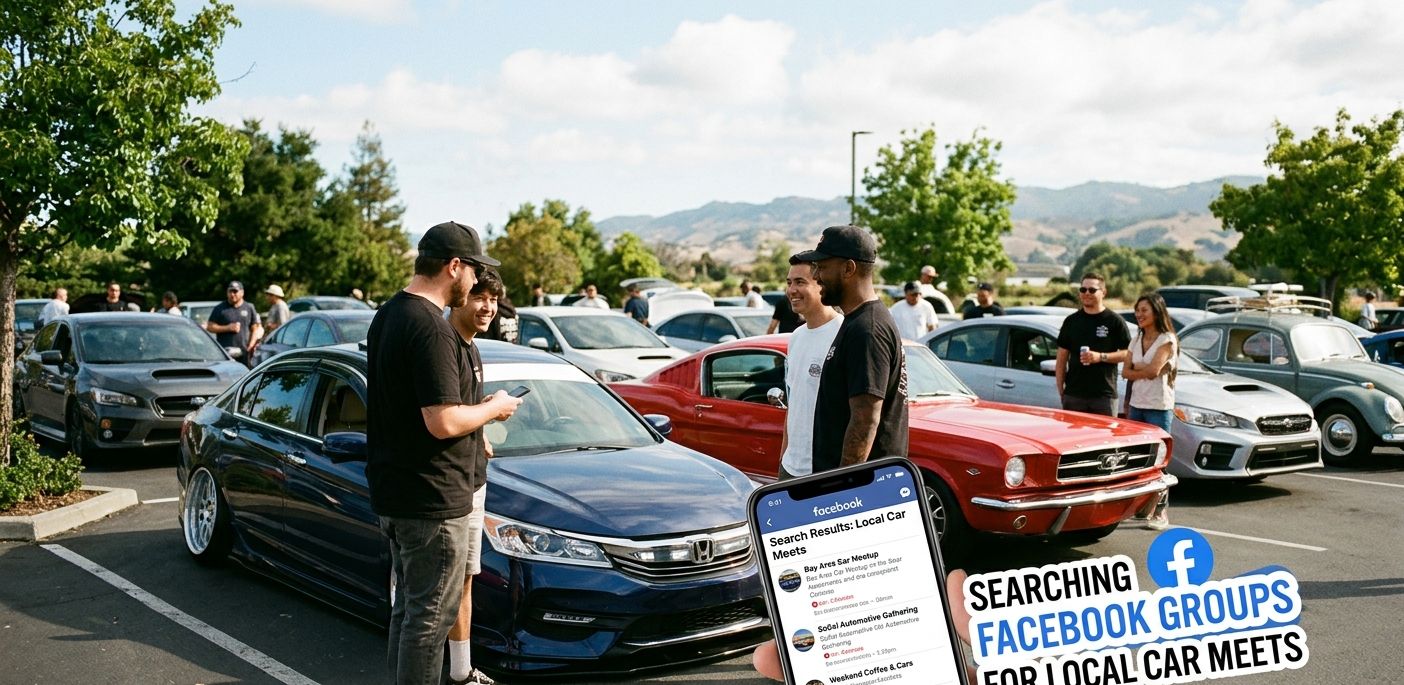
Facebook Events is another powerful feature to exploit. Within any group, members can create Events that show date, time, location, and expected attendance.
You can mark yourself as “Going” or “Interested,” which helps organizers gauge turnout and also sends you automatic reminders as the event approaches. The Events tab on a group’s page is often the fastest way to see what is coming up in the next few weeks without having to scroll through endless posts.
Beyond joining groups, consider using Facebook’s general Events search feature. Filter by “Events near you,” select a date range, and add keywords like “cars,” “classic cars,” “car show,” or “cruise night.”
This pulls from events across all public Facebook pages and groups in your geographic area, meaning you can discover meets organized by car clubs, restaurants, businesses, and municipalities that you might never have found otherwise.
One word of caution: not all Facebook groups are equally active or well-moderated. Some groups have thousands of members but are dominated by for-sale posts and spam.
Focus your energy on groups where genuine community conversations are happening where members are tagging each other, sharing event photos, asking mechanical questions, and building real relationships. Those are the groups where the best local event information lives.
Tip 3: Attend Cars & Coffee Events
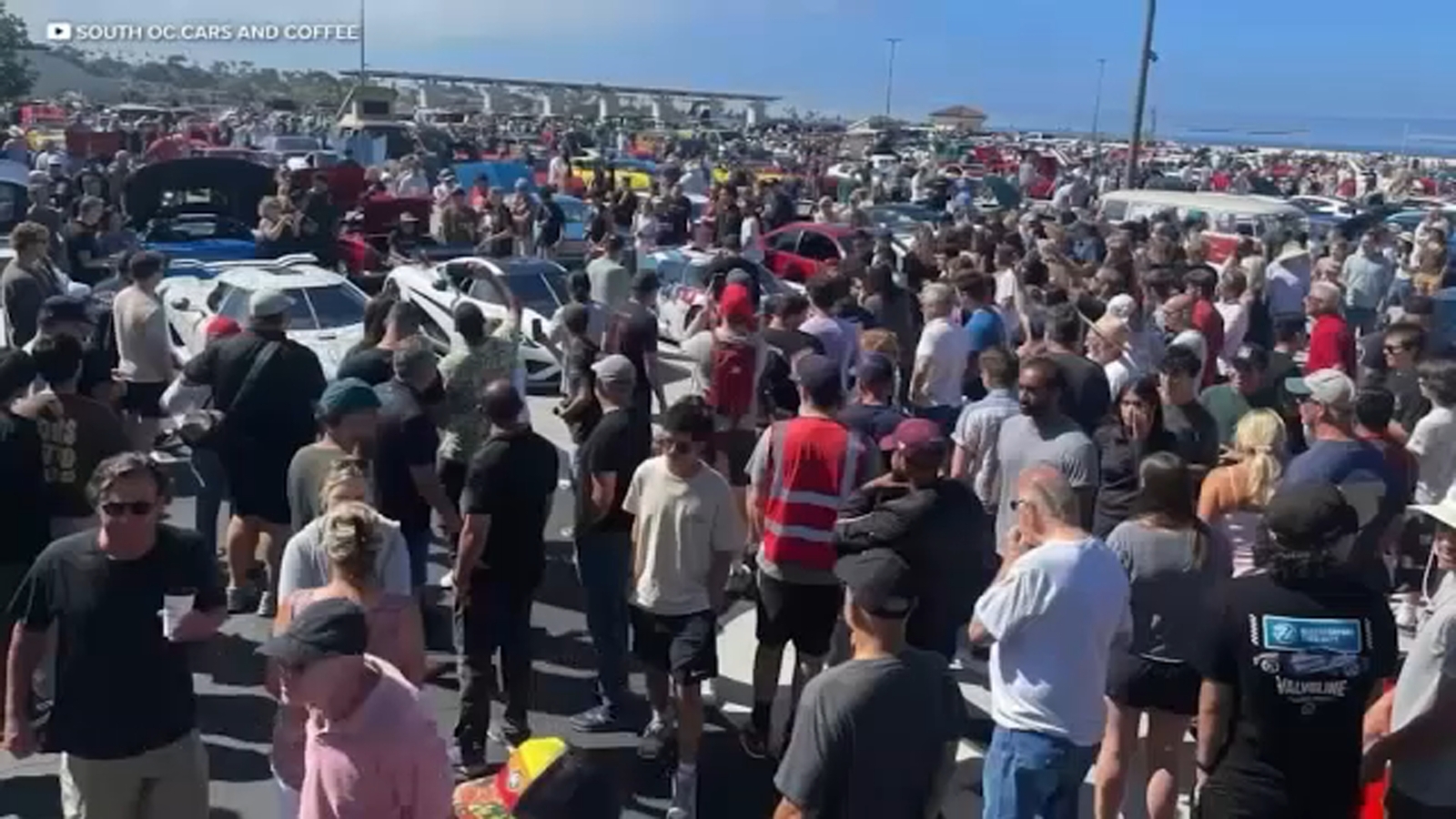
If you have spent any time in the classic and enthusiast car world online, you have almost certainly heard of Cars & Coffee. What started as a single informal gathering in Irvine, California in the early 2000s has since grown into a global phenomenon an informal, low-pressure format that has been replicated in hundreds of cities around the world.
Cars & Coffee events are typically held on weekend mornings, require no registration or entry fee, and welcome any interesting vehicle, from pre-war classics to modern exotics to meticulously restored muscle cars. They are, in many ways, the perfect entry point into your local enthusiast community.
The format is deliberately casual. Participants drive their cars to a designated location often a large parking lot outside a coffee shop, shopping center, or business park and the cars essentially become the attraction.
Owners and spectators wander around, strike up conversations, admire craftsmanship, ask questions about provenance and restoration, and drink coffee. There is no judging, no awards ceremony, and no pressure. The vibe is relaxed and the community is welcoming, making it an ideal environment for newcomers.
Finding Cars & Coffee events in your area is easier than ever. The website Caffeine & Octane maintains a comprehensive directory of Cars & Coffee-style events across the United States, searchable by state and city.
There is also a dedicated Cars & Coffee community on Facebook with regional groups for most major metropolitan areas. A simple Google search for “Cars & Coffee [your city]” will almost always return results if any organized events exist nearby.
What makes Cars & Coffee particularly valuable as a discovery tool is what happens at the events themselves. When you show up consistently not just once, but every few weeks you begin to meet the same faces.
These regulars are almost always plugged into the broader local enthusiast scene, and they will point you toward other events: the monthly club meets, the charity shows, the invitation-only drives through the countryside. Cars & Coffee functions as a social hub that connects you to a much larger network.
Even if you do not yet own a classic car, attending Cars & Coffee as a spectator is completely acceptable and worthwhile. You will make connections, learn about upcoming events, and absorb the culture of your local scene in a way that no amount of online research can replicate.
Bring business cards, ask questions, and show genuine enthusiasm and you will leave with more contacts and more event invitations than you arrived with.
Tip 4: Check with Local Car Clubs and Marque Clubs
Car clubs are the beating heart of the classic car community. They are the organizational structures through which enthusiasts coordinate regular meetings, technical seminars, group drives, charity fundraisers, and participation in major regional and national shows.
If you want to find classic car meets with consistency and depth, connecting with a local car club or a chapter of a national marque club is arguably the single most effective strategy available to you.
Every major make and model has at least one dedicated owners club, and most have multiple. The Antique Automobile Club of America (AACA) is one of the largest and most established, with chapters across the United States that host regular events at the local level.
The Classic Car Club of America (CCCA) focuses on full classic cars from the prewar era. The Specialty Equipment Market Association (SEMA) maintains connections to enthusiast clubs nationwide.
Beyond these umbrella organizations, you will find hundreds of marque-specific clubs: the Mustang Club of America, the National Corvette Restorers Society, the Packard Club, the Lincoln Owners Club, and on and on.
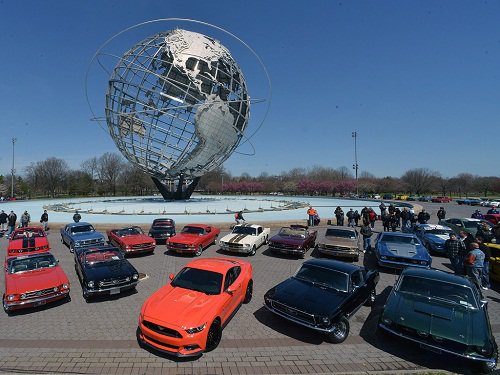
To find chapters near you, start by visiting the national club’s website and using their chapter locator tool most large clubs have one. Enter your zip code or city and you will be shown the nearest affiliated chapters along with contact information for their regional organizers.
Reaching out to a chapter president or secretary is usually all it takes to get on their mailing list and start receiving invitations to local events. Local independent clubs those not affiliated with any national organization are equally worth seeking out.
These can be harder to find because they often have minimal web presence, but they are frequently the most tightly-knit and active communities in any given area.
Ask at local auto parts stores, visit independent restoration shops, and strike up conversations at any car event you attend. Someone will inevitably know about a local club that meets at a diner on the second Tuesday of every month or organizes a spring cruise every April.
Joining a club does more than just give you access to events. It provides mentorship, technical knowledge, group buying power for parts, access to private storage facilities and workshops, and a social network of people who share your specific passion. The investment of dues usually modest returns enormous value for anyone serious about the hobby.
Also Read: Top 10 Most Recognizable Vintage Dashboard Clocks
Tip 5: Visit Local Auto Parts Stores and Independent Garages
This tip might seem old-fashioned in an era of digital connectivity, but do not underestimate the power of the physical world when it comes to finding classic car meets.
Your local auto parts stores, independent garages, and restoration shops are informal community bulletin boards and they are often where the most authentic, grassroots event information lives.
Walk into any independently owned auto parts store in a mid-sized American city and you will almost certainly find a corkboard near the register covered in flyers.
Classic car shows, swap meets, charity cruises, club meeting announcements these physical notices are posted by enthusiasts who may not have the time or inclination to manage an online presence.
The same is true of independent garages and restoration shops, which often serve as informal gathering places for local car guys who stop by to chat, pick up parts, and share news about upcoming events.
Building relationships with the staff at these places is an investment that pays consistent dividends. The guy behind the counter at your local NAPA or independent parts store often knows everyone in the local enthusiast community.
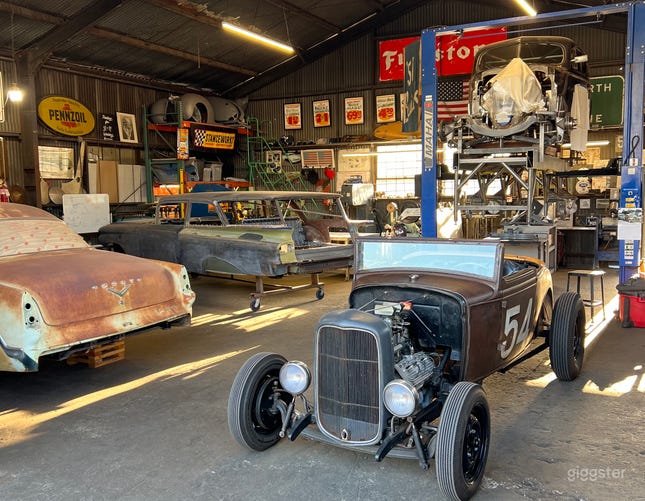
He can tell you which club is most active, which show is worth attending, and which cruise night draws the best cars on a Friday evening. This kind of insider knowledge is simply not available anywhere online.
Restoration shops deserve special mention. These businesses are, by their nature, immersed in the classic car community. Their staff and customers are exactly the kind of people who know about every local meet, show, and club gathering.
Stopping in for a conversation even without a specific mechanical need can open doors to event invitations and community connections that would take months to develop through online channels alone.
Do not overlook tire shops, radiator specialists, and upholstery shops that cater to classic car owners. These tradespeople often have a loyal clientele of enthusiasts who come to them specifically because they understand vintage vehicles, and those client bases form tight social networks that center around local events.
Tip 6: Use Dedicated Apps and Websites Like Motoroso and Bring a Trailer
The digital ecosystem for classic car enthusiasts has matured enormously in recent years, and there are now several dedicated platforms specifically designed to connect enthusiasts and publicize events. Learning to use these tools effectively can dramatically expand your awareness of local meets and shows happening in your region.
Motoroso is perhaps the most directly useful platform for event discovery. It functions as a social network and event aggregator specifically for automotive enthusiasts, allowing users to post events, join local communities, and follow specific makes and models.
Its event search function is searchable by location and vehicle type, making it a targeted tool for finding exactly the kind of classic car meets you are interested in. The platform is growing steadily, and in many metropolitan areas already has a critical mass of users posting and attending events regularly.
Bring a Trailer, while primarily known as a premium auction platform for collector cars, also maintains an active community and calendar of major events. Its editorial coverage of significant auctions, concours events, and major shows can help you identify the landmark gatherings in your region worth building your calendar around.
Similarly, Hemmings one of the oldest institutions in the collector car world maintains a comprehensive event calendar on its website that aggregates shows and meets from across the country, searchable by state.
The website ClassicCars.com and its associated community pages also list events alongside their classifieds. Google Maps deserves a mention as well: searching “car show near me” or “classic car meet [city]” on Google often surfaces events that have been listed by their organizers as Google Business events or that appear in local listings databases.
Setting up a Google Alert for “classic car show [your city]” will deliver relevant results directly to your inbox whenever new event information is indexed.
Eventbrite, while not automotive-specific, is used by many car show and club organizers to manage registrations for ticketed events. Searching “classic cars” on Eventbrite with your location filter active will often surface charity shows, judged concours events, and festival-scale gatherings that require registration in advance.
Tip 7: Follow Local Automotive Influencers and Enthusiasts on Social Media
Social media, used strategically, is one of the most powerful tools available for discovering local classic car events — and the key word is “strategically.”
Rather than passively scrolling your general feed and hoping car content appears, actively curate a network of local automotive voices whose content consistently points you toward real-world events and community activity.
Start with Instagram. Search hashtags that combine your city or region with classic car terms: #classiccarsDenver, #vintagecarsTexas, #musclecarChicago, #hotrodsLA.
Follow accounts that consistently post local content not just glamour shots of cars, but photos from actual events, meetups, and gatherings. These accounts are your radar for what is happening in the real-world local scene.
When someone posts a photo from a cruise night with forty cars in the background, that is an event you want to find. Comment on the post and ask where it was most enthusiasts are happy to share.
YouTube is an underutilized discovery tool in this context. Many local enthusiasts document their attendance at car shows and meets in video form.
Searching “[your city] car show” or “[your region] classic car meet” on YouTube often surfaces footage from recurring local events, complete with location information and descriptions in the video details. Subscribing to local automotive channels means their event coverage shows up in your feed automatically, keeping you informed about the local calendar.
TikTok has also become a surprisingly active platform for automotive content, with local enthusiasts posting clips from events and meets that serve as de facto advertisements for those gatherings. Following local accounts and engaging with their content often leads to direct messages with event details and invitations.
Twitter (now X) remains useful in some markets, particularly for real-time event announcements and last-minute meet-ups that come together quickly.
Following local car clubs, restoration shops, and automotive journalists in your area on the platform can keep you informed about impromptu gatherings that do not get announced anywhere else. The key across all platforms is to be proactive, consistent, and genuinely engaged not just a passive consumer of content.
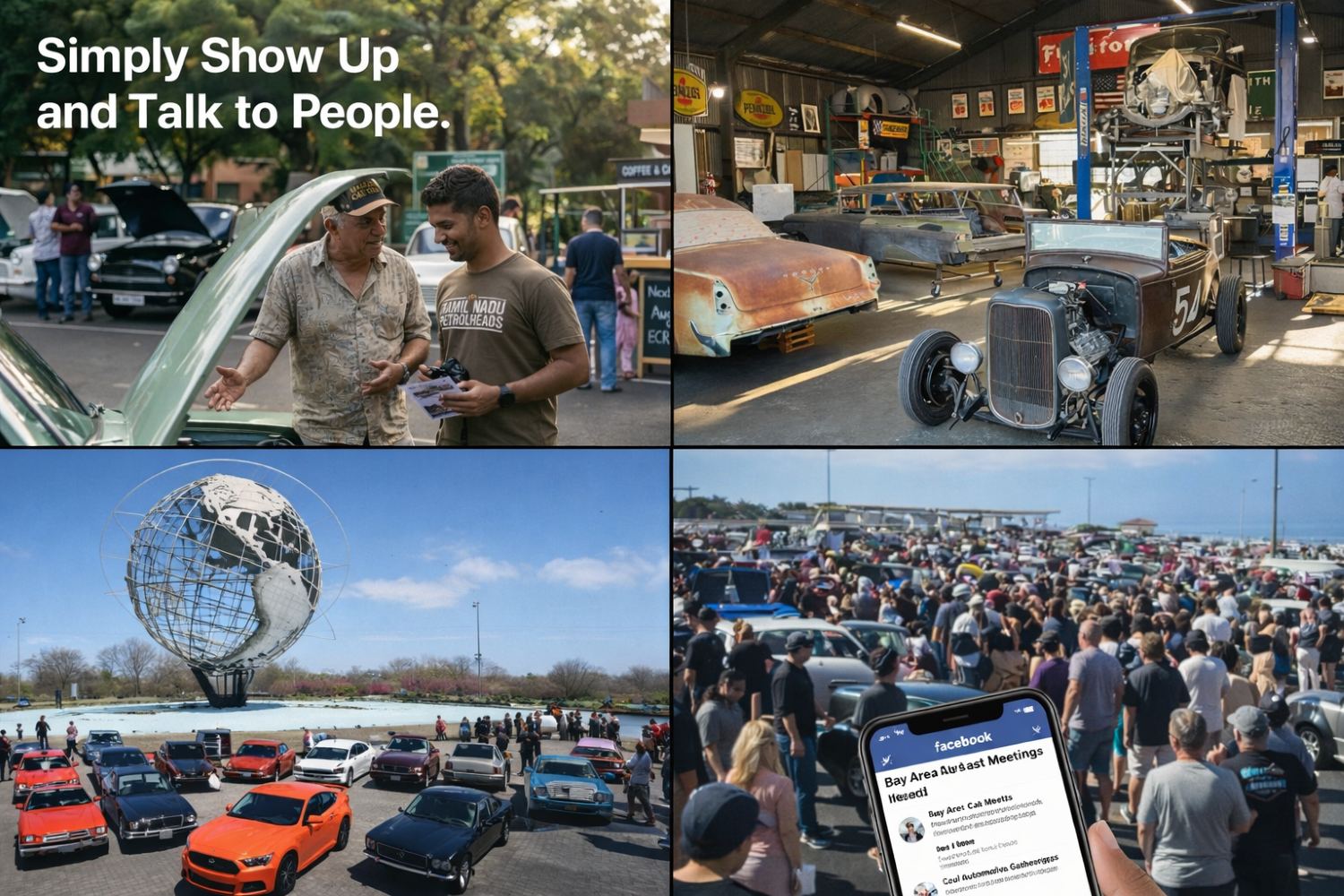
Tip 8: Simply Show Up and Talk to People at Any Car-Related Event
All seven of the tips above share a common thread: they are methods for finding information. But information is only useful when it leads to action, and the most powerful action you can take in pursuit of finding classic car meets is deceptively simple show up somewhere, anywhere, and start talking to people.
The classic car community is, at its core, a community of storytellers. Every car has a history, every restoration has a narrative arc, every owner has a reason they chose that particular make and model. People in this world love to share those stories, and they are almost universally welcoming of anyone who approaches them with genuine curiosity and respect.
You do not need a 10-point show car to participate. You do not need decades of mechanical knowledge. You need enthusiasm, a willingness to listen, and the confidence to introduce yourself.
Start at whatever car-related event is most accessible to you a Cars & Coffee if one exists locally, a Saturday swap meet at the fairgrounds, a classic car display at a local business, a cruise night at a drive-in restaurant. Walk up to an owner whose car catches your eye and pay them a compliment.
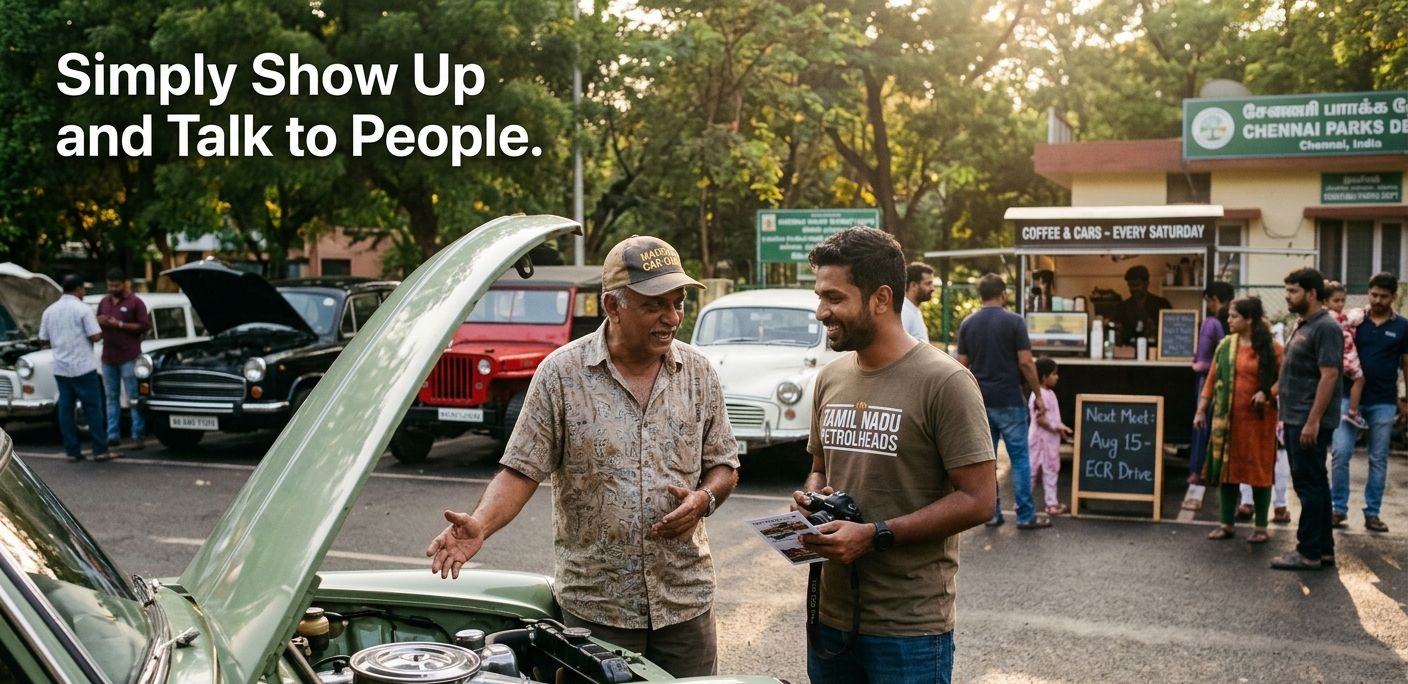
Ask how long they have had it. Ask if they did the restoration themselves. Ask what shows they have attended recently. These are not just conversation starters they are genuine inquiries into the network of events that person participates in, and a forthcoming answer will almost always include references to specific local gatherings you had no idea existed.
Exchange contact information with people you connect with. A business card with your name and what you drive is an incredibly effective networking tool in this community old-fashioned, yes, but perfectly suited to a world that still values the handshake and the face-to-face conversation. Follow up with the people you meet.
When someone mentions a meet they are planning to attend, ask if you can join them. Enthusiasts who show up together form bonds quickly, and being someone’s “+1” at a new event is one of the fastest ways to get introduced to an entire new circle of local contacts.
Over time, this approach compounds. Each event you attend, each person you meet, each conversation you have expands your personal map of the local classic car scene. Within a season of consistent showing up, you will likely find yourself receiving more invitations than you can accept which is, after all, exactly the problem you were hoping to have.
Also Read: Top 10 Best Ways to Diagnose a Weak Spark in a Points Ignition System
