
Classic automobiles often carry stories that go far beyond styling trends or consumer demand.
In some cases, the origins of famous vehicles can be traced directly to military engineering programs where durability, simplicity, and rugged performance mattered far more than comfort or appearance.
During the 20th century, especially around World War II and the early Cold War period, several vehicles were developed specifically to meet military needs.
Once these designs proved successful in harsh environments, manufacturers realized they could adapt them for civilian use.
Many of the world’s most recognizable classic vehicles actually started life as military machines. Engineers built them to handle rough terrain, minimal maintenance, and unpredictable conditions.
When the war ended or military contracts changed, companies reworked these vehicles for the public, sometimes adding comfort, sometimes simply keeping the rugged character that made them reliable in the first place.
The result is a fascinating group of classic cars whose DNA comes directly from the battlefield.
These vehicles helped shape off-road culture, influenced the SUV boom in the United States, and demonstrated how military innovation could transform civilian transportation.
Below are eight iconic classic cars that were originally designed with military purposes in mind.
1. Jeep Willys MB / CJ Series
The Jeep Willys MB and its civilian successor, the CJ series, represent one of the most recognizable vehicles ever developed for military service and later adapted for civilian life.
First produced during World War II, the Willys MB was created to meet the U.S. Army’s urgent need for a lightweight, highly mobile reconnaissance vehicle capable of operating in extremely difficult terrain.
The design proved so effective that it not only became an essential tool for Allied forces during the war but also laid the foundation for one of the most enduring off-road vehicle lineages in automotive history.
The story of the Willys MB began in 1940 when the U.S. military issued a request for proposals for a compact four-wheel-drive utility vehicle. Several manufacturers submitted designs, but Willys-Overland ultimately secured the primary production contract due largely to the strength and reliability of its engine.
The resulting Willys MB was a simple yet remarkably capable machine designed to function in a wide range of military roles, from reconnaissance and troop transport to communications support and light cargo duty. More than 600,000 units were produced during the war, including additional examples built by Ford under license as the GPW.
At the heart of the Willys MB was a 2.2-liter inline-four engine known as the “Go Devil.” This durable powerplant produced about 60 horsepower, a modest figure by modern standards but more than adequate for a vehicle weighing roughly 2,400 pounds.
The engine was paired with a three-speed manual transmission and a two-speed transfer case, sending power to all four wheels through a rugged four-wheel-drive system.
The vehicle followed a traditional front-engine layout with solid axles and leaf springs, creating a drivetrain and suspension combination designed to endure extreme conditions while providing excellent traction on rough terrain.
The MB’s design emphasized simplicity and durability above all else. Its flat body panels, upright windshield, exposed hinges, and minimal interior made the vehicle easy to repair and maintain in the field.
The compact dimensions and short wheelbase allowed it to maneuver through narrow trails, muddy fields, and mountainous terrain where larger vehicles would struggle. These qualities quickly earned the Jeep a reputation as one of the most versatile military vehicles of the war.
After World War II, Willys adapted the successful military design for civilian use, introducing the CJ, or “Civilian Jeep,” series.
These vehicles retained the MB’s rugged mechanical foundation while adding features more suitable for farmers, outdoor workers, and recreational drivers. The CJ models helped establish the Jeep brand as a pioneer of off-road capability.
Within the context of classic cars originally designed for the military, the Willys MB stands as one of the most influential examples ever produced. Its wartime development directly shaped the civilian CJ series and ultimately gave rise to the modern Jeep brand, making it one of the most enduring vehicles to emerge from military engineering.
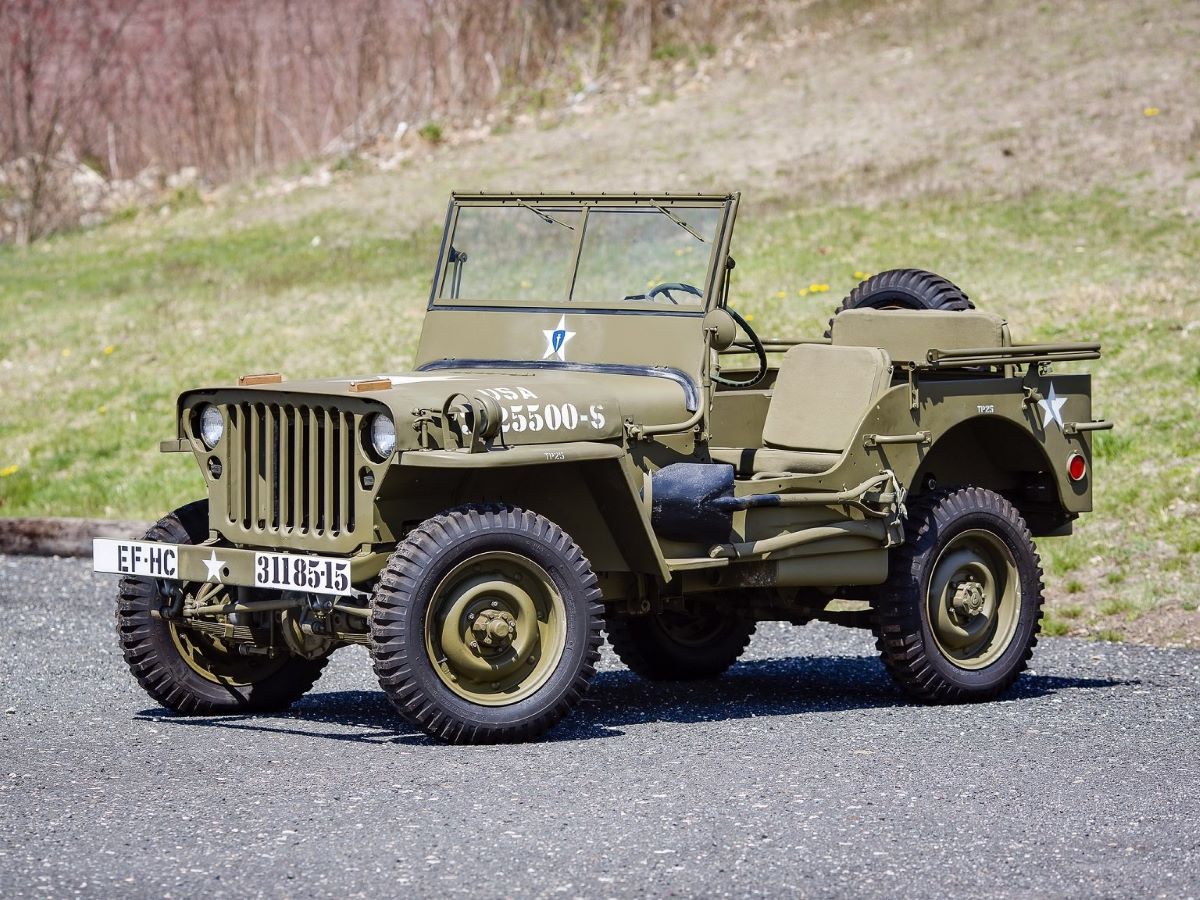
Its reliability and ability to climb steep terrain quickly earned it a legendary reputation among troops. After the war, Willys recognized that returning soldiers and farmers might appreciate the same rugged utility.
This led to the civilian CJ (Civilian Jeep) series beginning with the CJ-2A in 1945. The CJ models added tailgates, agricultural attachments, and minor comfort upgrades but kept the same durable design.
Over time, the Jeep evolved into one of America’s most recognizable automotive brands, laying the groundwork for modern SUVs.
2. Volkswagen Type 181 “Thing”
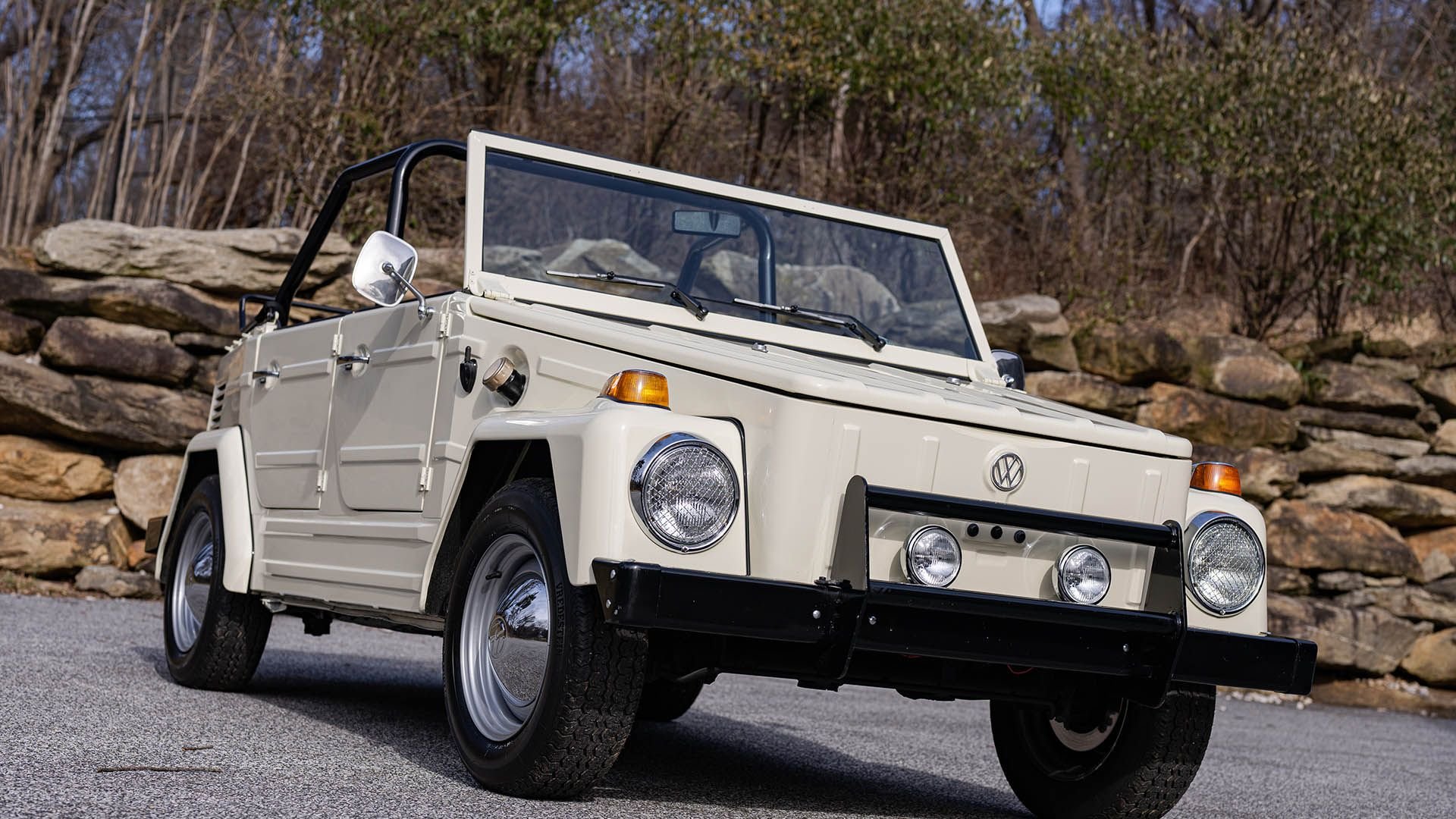
The Volkswagen Type 181, commonly known in the United States as the “Thing,” is a unique example of a vehicle originally developed for military use before finding a second life as a civilian utility car.
Produced from the late 1960s through the early 1980s, the Type 181 was designed primarily to meet the needs of the West German military.
Its simple construction, rugged mechanical components, and adaptable body made it well suited for military transport duties, while its unusual styling later helped it develop a cult following among civilian drivers.
The origins of the Type 181 can be traced to the late 1960s when the German military required a lightweight utility vehicle capable of transporting personnel and equipment across varied terrain.
Volkswagen responded by developing a design that relied heavily on existing components from its proven passenger car lineup.
By using parts from vehicles such as the Volkswagen Beetle and the Type 2 Transporter, engineers were able to create a durable and cost-effective platform that could be easily maintained in the field. The result was a vehicle that prioritized practicality and reliability over refinement or luxury.
Power for the Type 181 came from Volkswagen’s familiar air-cooled flat-four engine mounted at the rear of the vehicle. In most versions, the engine displaced around 1.6 liters and produced roughly 60 horsepower.
While modest in output, the engine was known for its durability and simplicity. The drivetrain followed a rear-engine, rear-wheel-drive layout, paired with a four-speed manual transmission. Some military versions incorporated improved off-road gearing and reinforced suspension components to enhance performance in challenging environments.
The chassis design of the Type 181 emphasized ruggedness and adaptability. Independent suspension derived from Volkswagen’s existing platforms provided reasonable off-road capability while maintaining relatively straightforward maintenance requirements.
The vehicle’s lightweight construction and relatively high ground clearance allowed it to handle rough terrain better than most passenger cars of the era, making it useful for military transport duties in remote or undeveloped areas.
3. Land Rover Series I
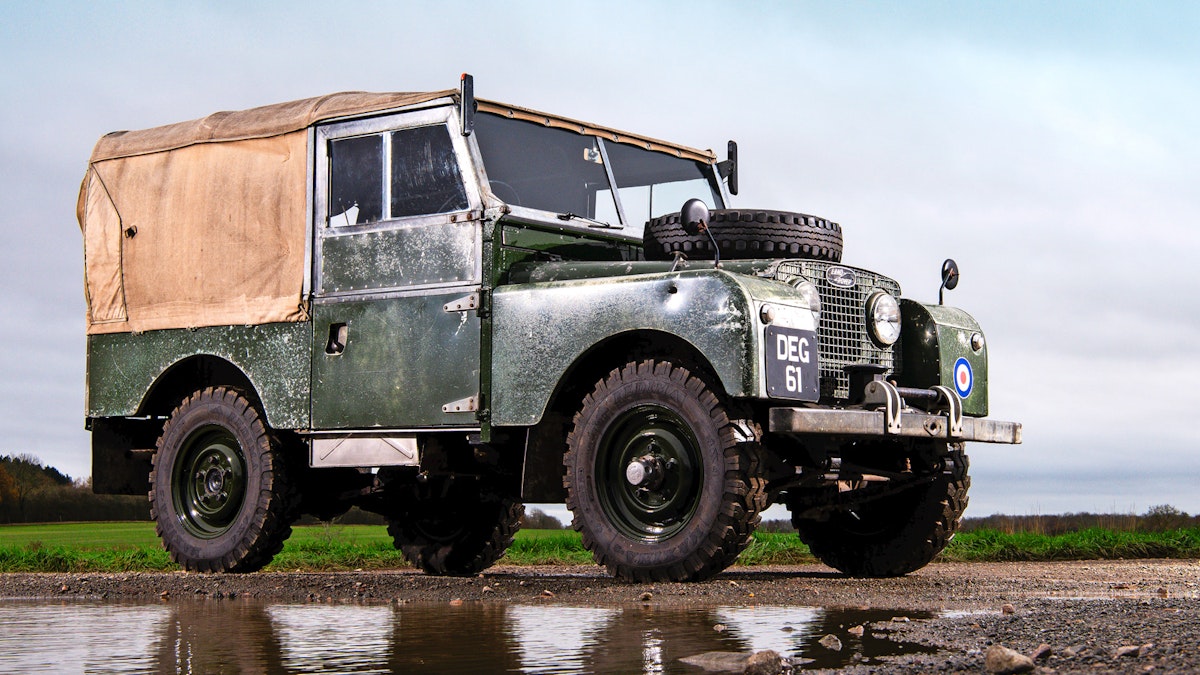
The Land Rover Series I, produced from 1948 to 1958, is one of the most influential off-road vehicles ever created and stands as a classic example of a vehicle originally designed with military-style utility in mind.
Developed in the immediate aftermath of World War II, the Series I was intended to serve both agricultural and military roles, combining rugged engineering with exceptional versatility.
Its design philosophy drew heavily from wartime vehicles such as the Jeep, but Land Rover engineers adapted the concept into a machine suited for both civilian work and military deployment. Over time, the Series I became widely used by armed forces and government organizations around the world.
The origins of the Land Rover began in 1947 when Rover engineers Maurice Wilks and Spencer Wilks sought to develop a practical utility vehicle that could help revive the British automotive industry after the war.
Inspired in part by the wartime Willys Jeep that Maurice Wilks used on his farm, the concept centered on creating a lightweight, highly capable four-wheel-drive vehicle that could function as a tool rather than simply a passenger car.
The resulting design was unveiled at the 1948 Amsterdam Motor Show and immediately gained attention for its simplicity and rugged capability.
Mechanically, the Series I featured a straightforward but highly durable drivetrain. Early models were powered by a 1.6-liter inline-four gasoline engine derived from Rover passenger cars, later enlarged to 2.0 liters to provide additional torque.
Power was delivered through a four-speed manual transmission connected to a dual-range transfer case, enabling drivers to select low gearing when tackling steep terrain or heavy loads.
The vehicle followed a front-engine, four-wheel-drive layout with solid axles and leaf springs at both the front and rear, creating a suspension system capable of handling rough ground while remaining relatively easy to maintain.
The design of the Series I emphasized function above all else. Its body panels were made from lightweight aluminum alloy rather than steel, a practical choice in postwar Britain where steel was in short supply.
The vehicle’s boxy shape, flat panels, and exposed hinges reflected its utilitarian purpose, while features such as a fold-down windshield and removable roof allowed it to adapt to different tasks.
The short overhangs, high ground clearance, and compact proportions gave the vehicle exceptional off-road capability, enabling it to traverse muddy fields, rocky paths, and steep mountain tracks.
The Land Rover Series I became a cornerstone of military and expedition vehicles throughout the mid-twentieth century. Armed forces in numerous countries adopted it for transport, reconnaissance, and logistical support, appreciating its reliability and adaptability.
In the context of classic vehicles originally designed with military-style utility in mind, the Series I stands out for transforming wartime engineering ideas into a practical multipurpose vehicle that would influence off-road design for decades.
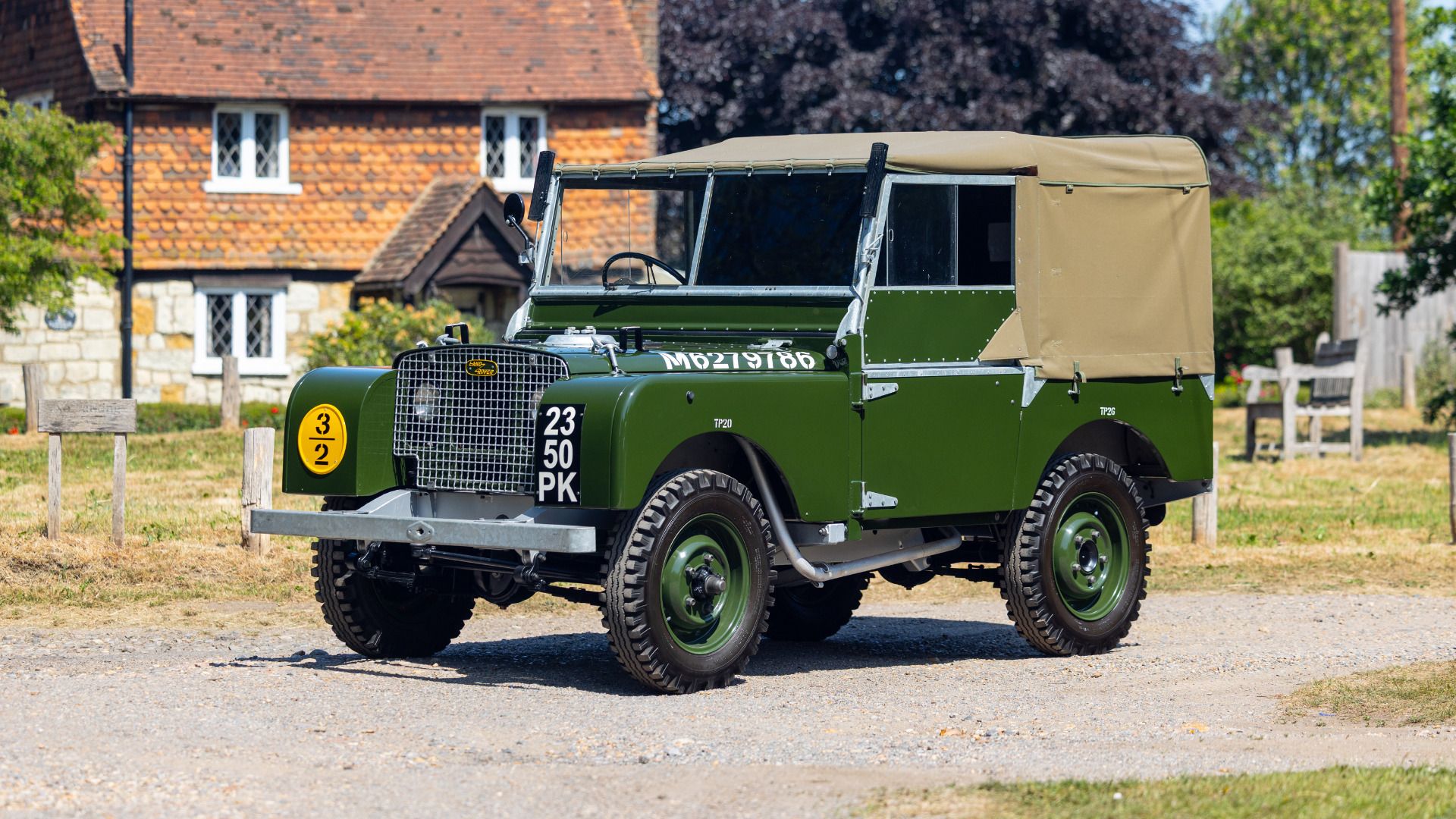
Although it was initially marketed to farmers, the British military quickly recognized its value. Land Rovers became widely used in military operations across the Commonwealth.
Their ability to travel through deserts, jungles, and rugged terrain turned them into one of the most respected off-road vehicles in the world.
Over time, the design evolved into the Series II, Series III, and ultimately the Defender. Yet the basic concept, a rugged, go-anywhere vehicle with minimal complexity, remained consistent with its military-inspired origins.
4. Dodge Power Wagon
The Dodge Power Wagon is another example of a military workhorse adapted for civilian life.
During World War II, Dodge produced the WC series of military trucks, which were designed for cargo hauling, troop transport, and battlefield support.
These trucks proved extremely tough, with strong frames, powerful engines, and dependable four-wheel-drive systems.
After the war, Dodge realized there was a civilian market for such a vehicle, especially among farmers, construction crews, and utility companies.
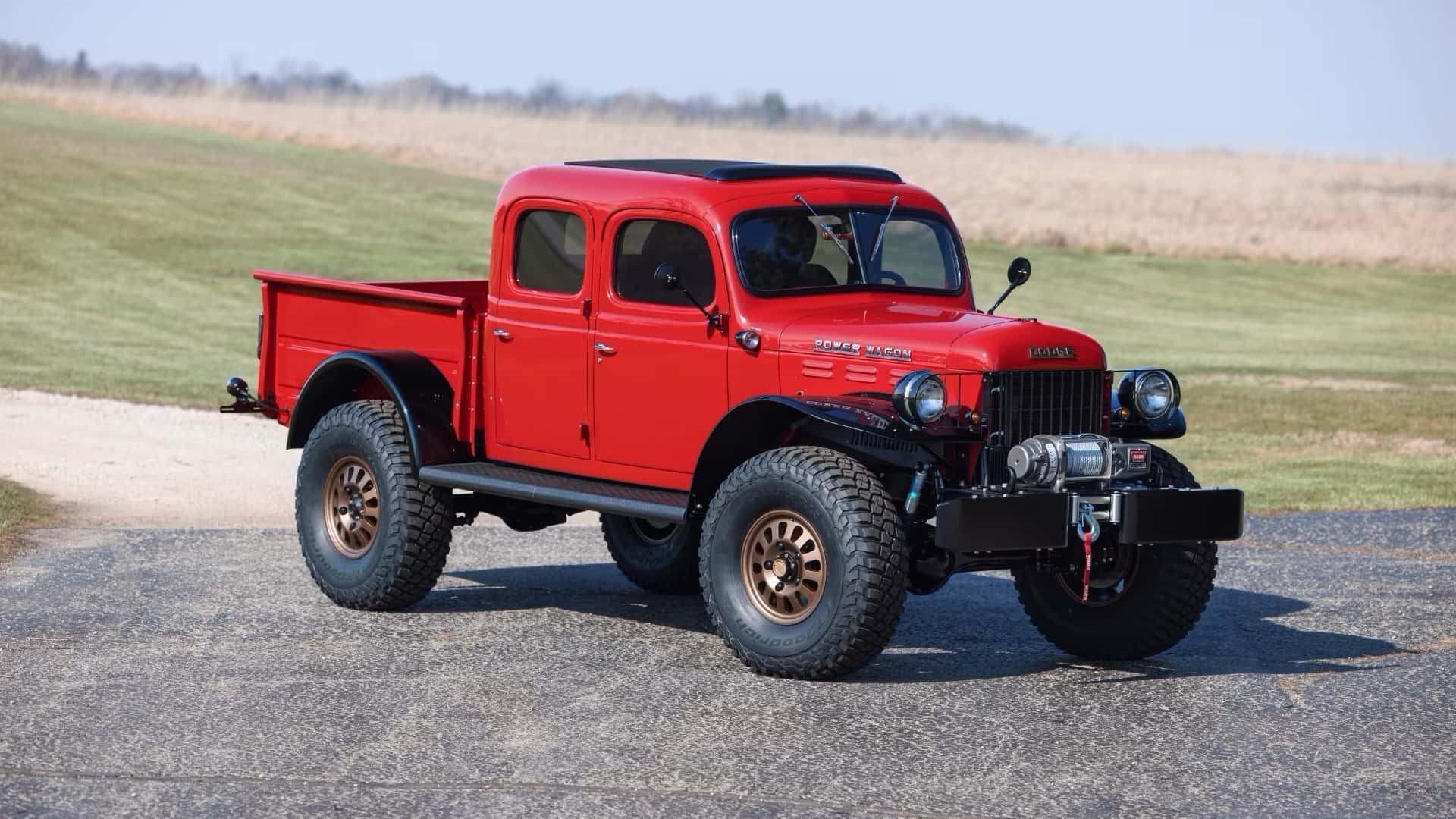
Introduced in 1945, the civilian Power Wagon retained much of the WC truck’s military hardware.
It offered impressive off-road capability, high ground clearance, and exceptional durability. For many Americans working in rural areas or difficult terrain, the Power Wagon became an invaluable tool.
Today, the original Power Wagon is considered one of the earliest mass-produced civilian four-wheel-drive trucks, helping to establish the heavy-duty pickup market in the United States.
5. Mercedes-Benz G-Class
The Mercedes-Benz G-Class, often referred to as the “G-Wagen,” is one of the most enduring examples of a vehicle originally developed for military use before evolving into a luxury off-road icon.
First introduced in 1979, the G-Class was engineered as a rugged utility vehicle capable of operating in some of the most demanding environments in the world. Although today it is widely recognized as a premium luxury SUV, its origins lie firmly in military engineering, and its basic structure still reflects the requirements that shaped its initial design.
The development of the G-Class began in the early 1970s through a collaboration between Mercedes-Benz and the Austrian manufacturer Steyr-Daimler-Puch. The project was initiated after requests from military and government organizations seeking a durable four-wheel-drive vehicle capable of performing reliably in harsh conditions.
Engineers focused on creating a platform that could withstand extreme terrain, heavy loads, and long-term operational use with minimal maintenance. The resulting vehicle debuted in 1979 and was immediately adopted by several military forces, including the armed forces of West Germany, Austria, and other European nations.
Mechanically, the G-Class was built around a traditional body-on-frame construction designed for strength and durability. Early models were offered with a variety of gasoline and diesel engines, typically inline-four or inline-six configurations that prioritized torque and reliability over high horsepower.
Power was delivered through a manual or automatic transmission to a permanent four-wheel-drive system.
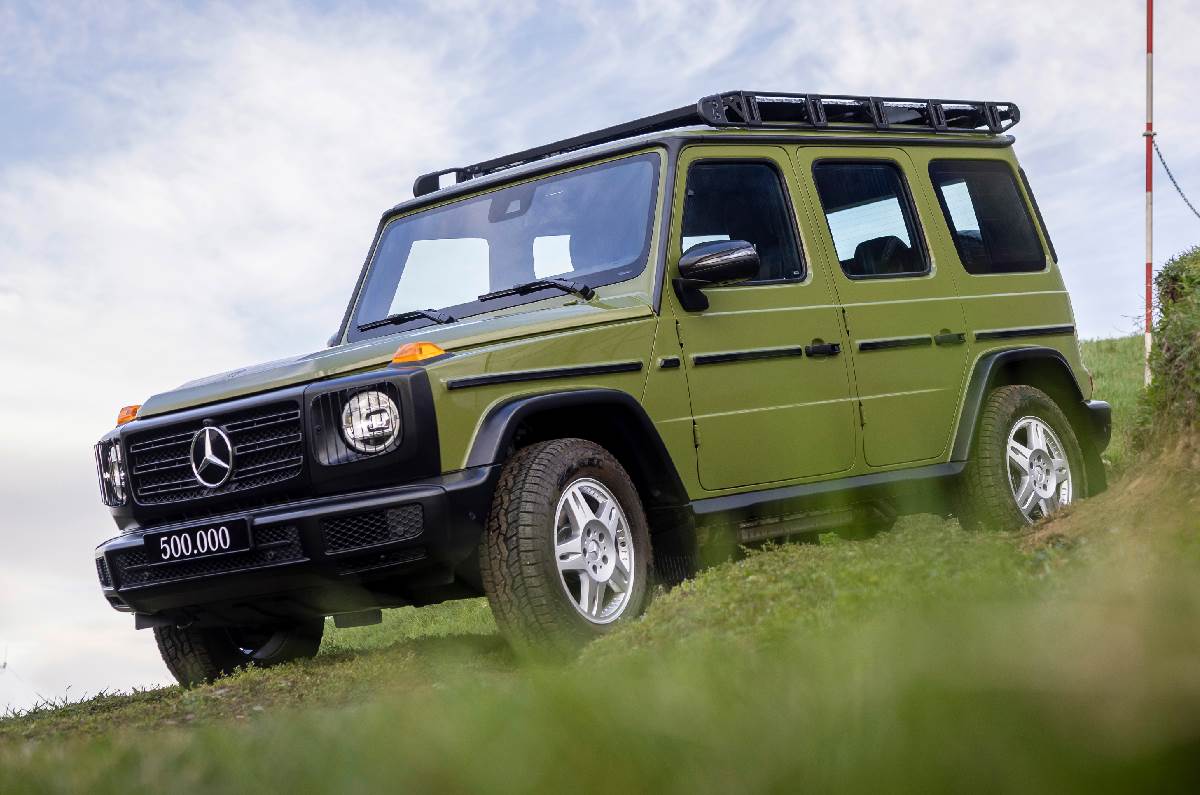
The design of the G-Class emphasized practicality and durability. Its boxy shape, flat body panels, and upright windshield were intentionally chosen to simplify manufacturing and field repairs.
The short overhangs, high ground clearance, and narrow body allowed the vehicle to navigate tight off-road trails and rugged landscapes. While the modern G-Class has gained a reputation for luxury and advanced technology, the original design was fundamentally a utilitarian machine built to meet strict military requirements.
Over time, the G-Class transitioned from a primarily military vehicle to a civilian off-road model, eventually becoming one of Mercedes-Benz’s most recognizable products. Civilian versions introduced improved interiors, more powerful engines, and advanced comfort features while retaining the vehicle’s distinctive exterior design and off-road hardware.
Within the context of classic vehicles originally designed for the military, the Mercedes-Benz G-Class stands out as a remarkable example of long-term evolution.
Its military origins shaped a vehicle capable of extreme durability and terrain capability, while its continued production for more than four decades demonstrates the strength of its original engineering concept.
6. HUMVEE and the Civilian Hummer H1
The High Mobility Multipurpose Wheeled Vehicle, commonly known as the HUMVEE, was developed in the 1980s for the U.S. military by AM General.
It replaced several older military vehicles, including the Jeep, by providing a more versatile platform capable of carrying heavy equipment and operating in extreme environments.
The HUMVEE gained widespread recognition during the Gulf War, where its large size, wide stance, and impressive off-road capability became highly visible in media coverage.
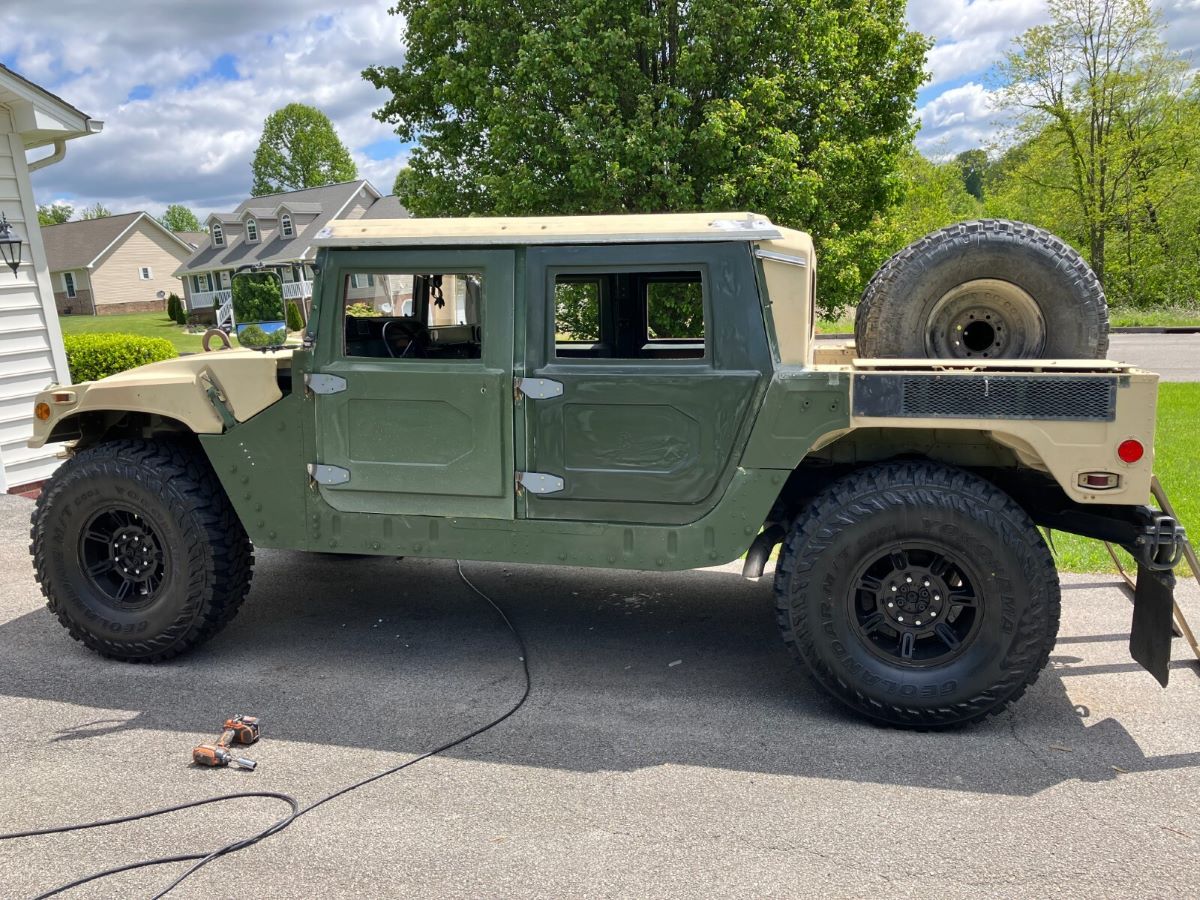
In the early 1990s, AM General introduced a civilian version called the Hummer H1. Unlike many military-derived vehicles that receive major comfort upgrades, the H1 remained extremely close to the original military design.
It featured massive ground clearance, a central driveline tunnel, and the ability to ford deep water or climb steep obstacles.
Though expensive and impractical for everyday driving, the H1 became a symbol of extreme off-road capability and military toughness.
7. Toyota Mega Cruiser
The Toyota Mega Cruiser stands as one of the most unusual and imposing vehicles ever developed by the Japanese manufacturer, and its origins lie squarely in military engineering. Introduced in the mid-1990s, the Mega Cruiser was designed primarily as a heavy-duty utility vehicle for the Japan Self-Defense Forces.
While a limited number of civilian versions were later produced, the vehicle’s design, mechanical layout, and capabilities were rooted in the strict operational requirements of military transport and tactical mobility. In many ways, the Mega Cruiser served as Japan’s answer to large military off-road vehicles such as the American Humvee.
Development of the Mega Cruiser began in the early 1990s when Toyota sought to create a vehicle capable of transporting personnel and equipment across difficult terrain while maintaining reliability in extreme environments.
The design focused heavily on durability and off-road capability, reflecting the needs of military units operating in remote areas.
The vehicle was officially introduced in 1995 and quickly entered service with the Japanese Self-Defense Forces. Only a small number of civilian versions were produced between 1996 and 2001, making it a rare sight outside military use.
At the heart of the Mega Cruiser was a 4.1-liter inline-four turbo-diesel engine designed to deliver strong low-end torque rather than high horsepower.
The engine produced approximately 153 horsepower but, more importantly, generated substantial torque for hauling heavy loads and climbing steep terrain. Power was delivered through a four-speed automatic transmission connected to a sophisticated full-time four-wheel-drive system.
The drivetrain included locking differentials and advanced traction control features, enabling the vehicle to maintain mobility in sand, mud, and rocky environments.
The Mega Cruiser’s chassis was designed specifically for extreme off-road performance. It used a robust ladder-frame construction paired with independent suspension at all four corners, an unusual feature for a military utility vehicle of its size.
The suspension allowed for significant wheel articulation and stability over uneven terrain. The vehicle also featured four-wheel steering, which greatly improved maneuverability despite its massive dimensions.
With nearly 17 inches of ground clearance and a wide track, the Mega Cruiser could traverse obstacles that would challenge most conventional off-road vehicles.
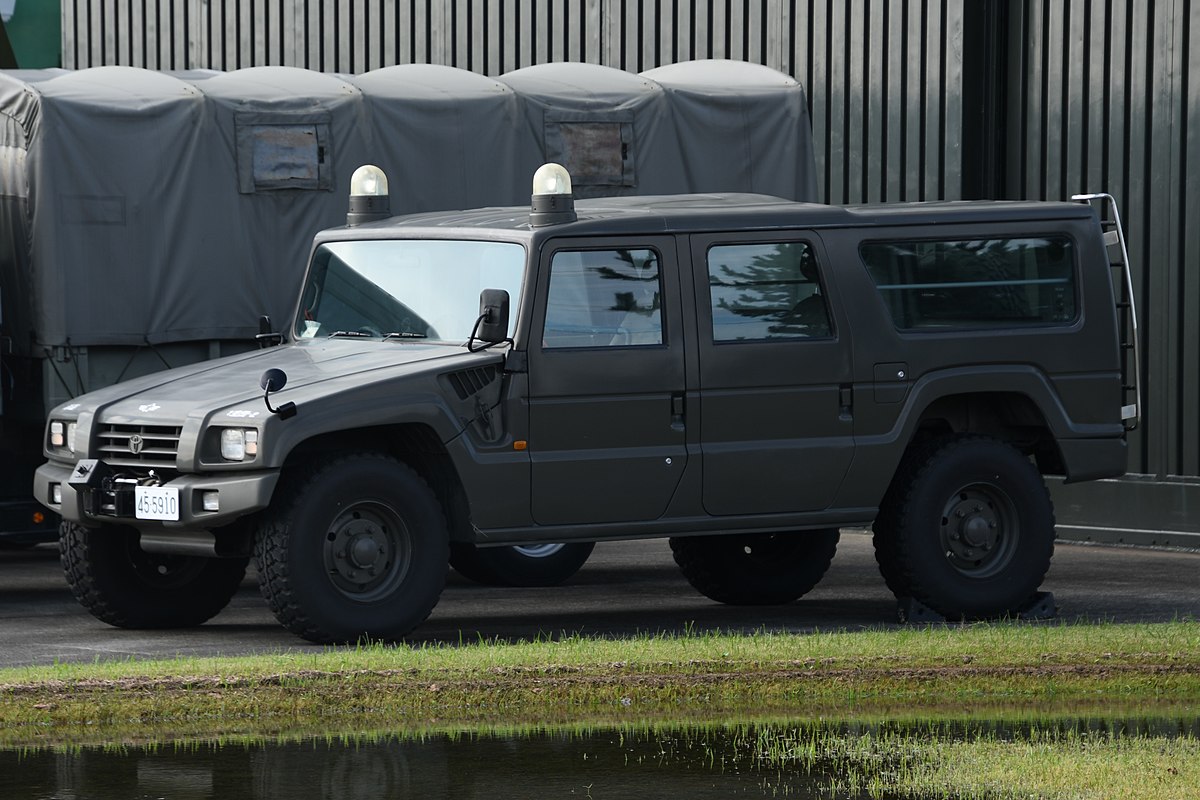
Toyota produced a limited number of civilian Mega Cruisers between 1996 and 2001. These models were extremely rare and expensive, making them one of the most unusual military-derived vehicles available to the public.
Today, the Mega Cruiser remains a fascinating example of how military engineering can influence civilian vehicles, even if production numbers remain small.
8. Lamborghini LM002
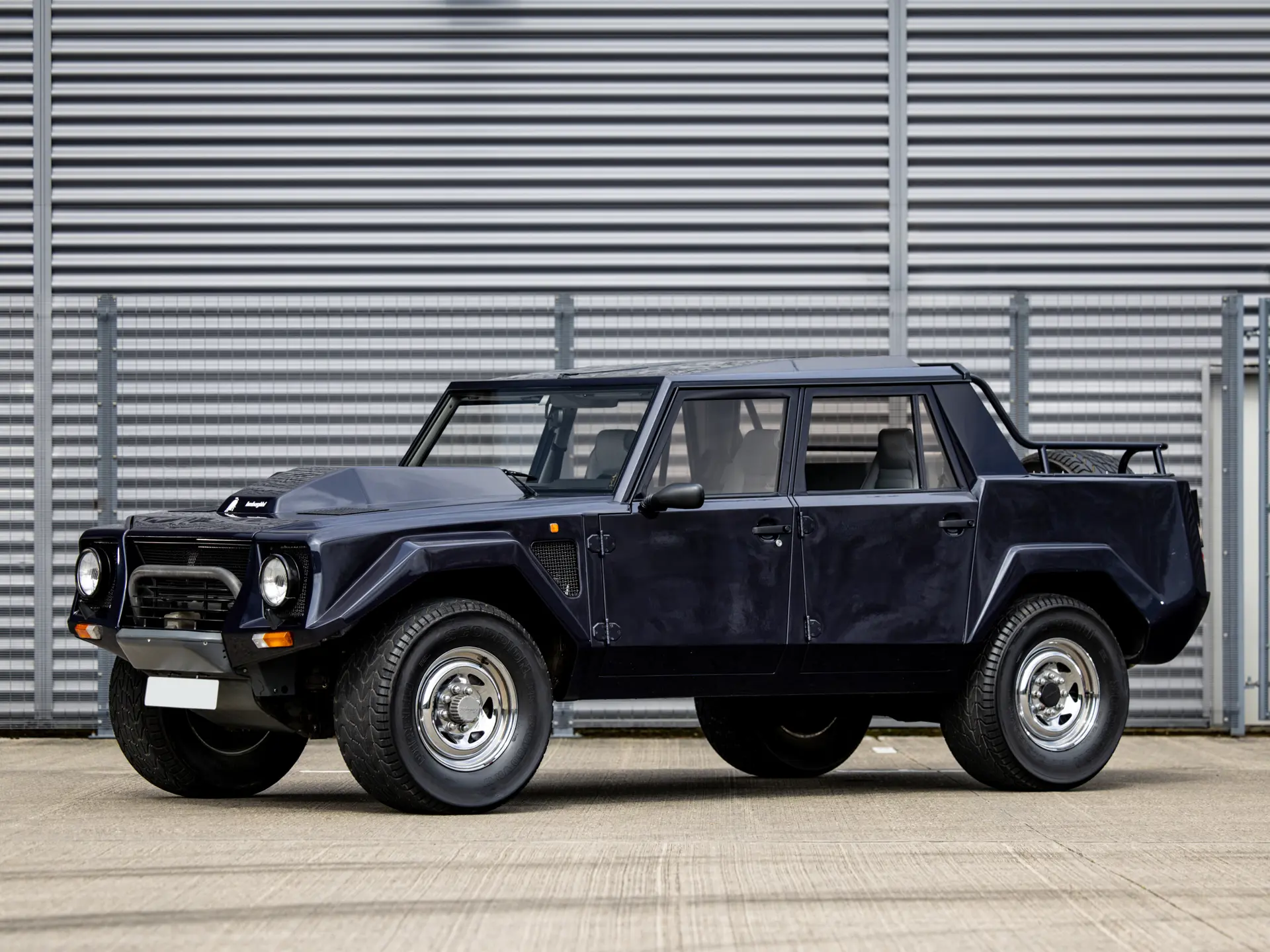
One of the most surprising vehicles with military origins is the Lamborghini LM002. In the late 1970s, Lamborghini attempted to secure military contracts by developing a series of off-road vehicles, including prototypes known as the Cheetah and LM001.
Although those early projects failed to win military contracts, the concept eventually evolved into the LM002. The production model, introduced in 1986, used a powerful V12 engine derived from Lamborghini’s Countach supercar.
Despite its luxury interior and exotic performance, the LM002 retained the rugged off-road engineering originally intended for military applications. Its large size, four-wheel-drive system, and heavy-duty suspension allowed it to traverse difficult terrain.
The LM002 earned the nickname “Rambo Lambo” because of its aggressive design and military roots. Though only a few hundred were produced, it remains one of the most unusual vehicles ever built by Lamborghini.
The connection between military vehicles and classic automobiles highlights how wartime innovation often influences civilian technology.
Military engineers focus on reliability, durability, and versatility, qualities that many drivers also value in everyday vehicles.
Several modern automotive trends can be traced back to these military-derived machines. The popularity of SUVs, the widespread use of four-wheel drive, and the emphasis on off-road capability all owe something to vehicles originally designed for combat or military logistics.
Today, collectors and enthusiasts appreciate these classic cars not only for their unique designs but also for the history behind them.
Each vehicle represents a moment when military necessity pushed engineers to create something extraordinary, machines that eventually found new life on civilian roads.
