
Italian speedsters from the golden age of automotive design were never just machines built for transportation. They were expressions of national identity, artistic philosophy, and mechanical passion.
During the 1950s and 1960s especially, Italian manufacturers worked closely with famous design houses to create cars that felt closer to moving artwork than industrial products. Some of these vehicles appeared delicate and flowing, shaped like sculptures formed by wind itself.
At the same time, another design language was developing. While some designers focused on elegance and flowing curves, others began experimenting with aggressive proportions, sharp noses, muscular fenders, and low stances that suggested speed even while standing still.
These cars looked intimidating, almost predatory, reflecting the growing competition in racing and performance engineering.
This contrast between beauty and aggression is what makes Italian speedsters particularly interesting to study. Some designs focused on harmony, proportion, and smooth visual balance. Others aimed to communicate power, danger, and dominance through their styling.
By examining five cars that look like rolling sculptures and five that project a more aggressive personality, we can better understand how Italian designers used shape and proportion to create emotional reactions. These cars were not just built to move quickly. They were built to make people feel something before the engine even started.
This comparison highlights how design alone can define a car’s character.
Also Read: Top 6 Automotive Batteries That Handle Extreme Summer Heat the Best
5 Classic Italian Speedsters That Look Like Sculptures
Italian automotive design has often been compared to fine art, and nowhere is this more obvious than in speedsters that appear shaped by artistic instinct rather than engineering necessity.
Many of these cars were designed by famous carrozzeria such as Pininfarina, Bertone, and Touring, where designers often approached their work like sculptors shaping clay models by hand.
What makes these cars worth discussing is not just their beauty but how they represent a design philosophy centered around proportion and flow.
The curves were not random decoration. They were carefully studied to create visual balance from every viewing angle. Even small details like headlight placement or roof curvature were treated like elements of a larger composition.
Another reason these cars deserve attention is because they represent a time when aesthetics were allowed to lead engineering decisions. Designers were sometimes given unusual creative freedom, resulting in shapes that still look timeless decades later.
These cars also helped establish Italy’s global reputation for design excellence. Their influence can still be seen in modern grand touring cars and exotic sports machines. The idea that a fast car should also be visually poetic became part of Italian automotive identity.
The following five examples were selected because each represents a different interpretation of beauty. Rather than repeating one design formula, they show how Italian designers could express elegance in completely different visual languages.
1. Ferrari 250 GT California Spyder
Some cars are admired. Others are displayed. The Ferrari 250 GT California Spyder belongs in the second category because its appearance feels intentional from every angle, as if it was meant to sit under gallery lighting as much as under sunlight.
Its long hood, gentle curves, and balanced proportions create a visual rhythm that feels closer to sculpture than transportation.
One reason this car deserves to be discussed is because it represents the perfect collaboration between engineering and artistic design.
Ferrari provided the performance foundation, but the body crafted by Pininfarina transformed it into something emotionally powerful. The smooth transitions between panels show how carefully the surfaces were shaped to avoid visual interruption.
Another perspective worth considering is how this car reflects the grand touring lifestyle of its era. It was not designed to look aggressive or intimidating. Instead, it suggested effortless speed and sophistication. This distinction is important because it shows how visual design can communicate intended use without any technical explanation.
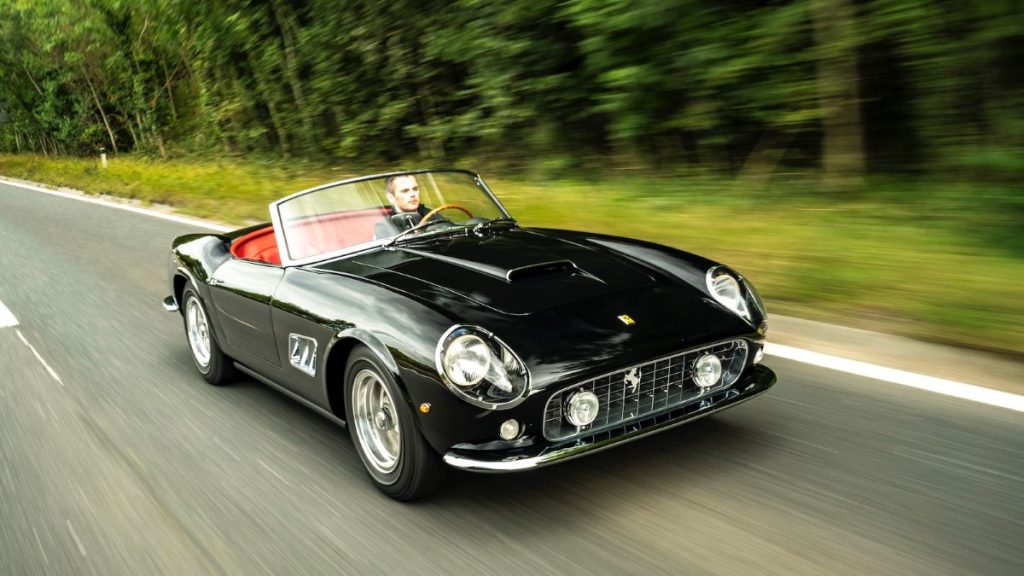
There is also value in writing about this car because it demonstrates how restraint can create beauty. There are no excessive vents or dramatic styling tricks. The elegance comes from proportion and simplicity. This is often harder to achieve than dramatic styling because it requires perfect balance.
This Ferrari is included here because it shows how Italian designers could make performance look graceful. It proves that speed does not always need to look violent. Sometimes it can look calm, confident, and artistically complete.
2. Alfa Romeo Giulietta Spider
If the Ferrari felt like a gallery sculpture, the Alfa Romeo Giulietta Spider feels more like a carefully crafted piece of jewelry. Its beauty does not come from dramatic size or overwhelming presence. Instead, it comes from precision, lightness, and the way every line seems intentionally softened to create harmony.
What makes this car especially interesting is how it proves that artistic design does not require extreme proportions. The Giulietta Spider is relatively small, yet its visual impact comes from how smoothly the body panels transition into one another.
The rounded fenders, delicate grille shape, and low beltline all work together to create a sense of friendliness rather than intimidation.
Another reason this car deserves discussion is because it shows how Italian design could make even an accessible sports car feel special. This was not an ultra exclusive machine. Yet the styling makes it feel like something much more significant. This reflects a national design culture where beauty was not reserved only for the most expensive products.

Looking at the car from another angle, it becomes clear how much emphasis was placed on human connection. The open top driving experience combined with the soft body contours creates an emotional appeal that goes beyond performance numbers. It feels personal rather than mechanical.
This Alfa Romeo earns its place here because it demonstrates how sculpture does not always mean dramatic presence. Sometimes it means careful shaping, emotional warmth, and a design that feels welcoming rather than overwhelming.
3. Maserati Mistral Spyder
Rather than focusing first on its overall shape, it is more revealing to start with how the Maserati Mistral Spyder handles surface tension. The metal appears stretched smoothly across the body like fabric pulled across a frame. This gives the car a refined smoothness that makes it appear almost aerodynamic even when standing still.
This car is worth writing about because it represents a quieter form of Italian beauty. Unlike some contemporaries that relied on dramatic curves, the Mistral uses subtle shaping. Its character comes from small details such as the slim greenhouse, the gentle taper of the rear, and the carefully controlled body lines that never feel exaggerated.
Another compelling reason for its inclusion comes from how it demonstrates maturity in design. This is not a youthful or flamboyant shape. It feels composed and confident. The designers trusted proportion instead of relying on styling drama. That confidence is part of what makes it feel sculptural.
Examining the car also reveals how Italian designers often thought about movement even while designing static forms. The side profile suggests forward motion through its slight forward lean and clean body sides. These details show how designers used visual tricks to suggest speed through form alone.
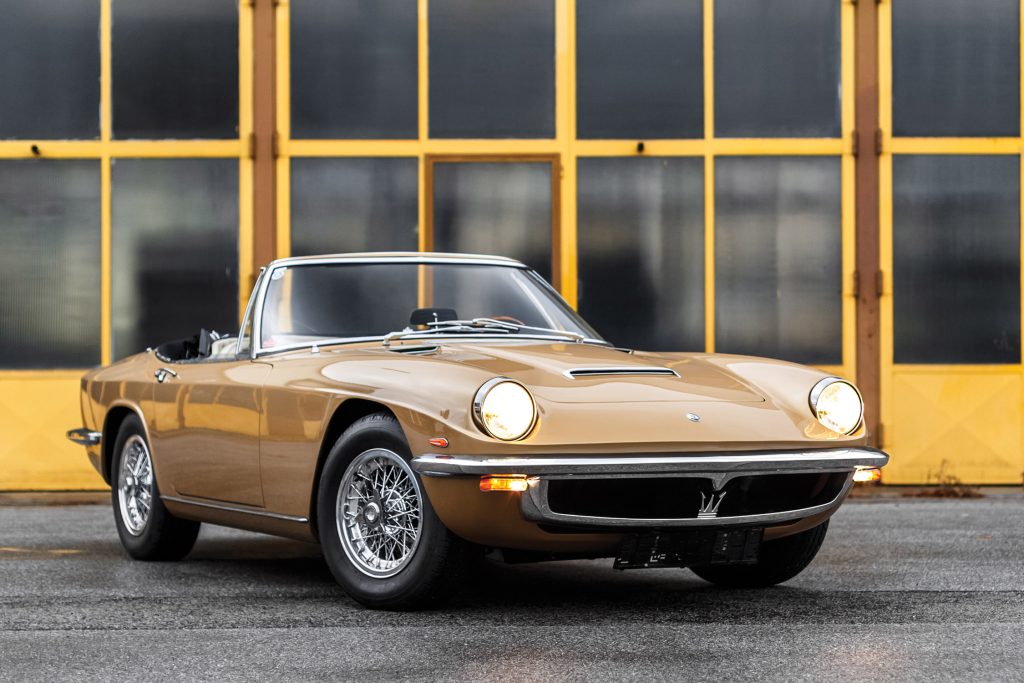
The Mistral Spyder belongs in this discussion because it represents design discipline. It shows that sculpture can also mean restraint, balance, and a refusal to over design. This philosophy helped many Italian cars age gracefully while more extreme designs became dated.
4. Lamborghini 350 GTS
Before Lamborghini became known for sharp and aggressive shapes, the company began with a very different design language.
The 350 GTS shows this early philosophy clearly. Instead of looking dangerous, it looks composed and almost architectural, with smooth surfaces that appear shaped by careful hand forming rather than wind tunnel obsession.
This car deserves attention because it reveals a lesser discussed side of Lamborghini history. Most people associate the brand with extreme styling, yet this early speedster shows how the company initially pursued elegance and proportion.
Its bodywork flows in a calm and controlled way, showing the influence of traditional Italian coachbuilding rather than radical experimentation.
Another interesting way to understand this car is by observing how the design avoids visual aggression. The front fascia feels balanced rather than sharp. The curves transition gently into the doors, and the rear avoids excessive decoration. This approach gives the car a timeless quality because it does not rely on trends that might fade.
There is also an important historical reason to include it. This car shows the foundation from which Lamborghini later evolved. Understanding this softer design language helps explain how dramatic the company’s later transformation really was. It represents the calm before the storm of more radical designs that followed.

The 350 GTS belongs in this list because it proves that Italian sculpture like automotive design did not always mean flamboyance. Sometimes it meant discipline, proportion, and the confidence to let form speak quietly instead of loudly.
5. Ferrari 275 GTS
To understand why the Ferrari 275 GTS belongs among sculpture like speedsters, it helps to imagine how a designer might approach it as a three dimensional study rather than a car. The body appears shaped with a focus on visual weight distribution. Nothing feels too heavy or too thin. Every section appears balanced against another.
This car is being highlighted because it represents how Ferrari balanced sportiness with visual calm. While some performance cars try to look fast through aggressive styling, this model communicates speed through posture. The slightly forward stance and low silhouette suggest motion without needing dramatic styling devices.
Another element worth discussing is how the design uses simplicity as a strength. There are no unnecessary styling interruptions. The sides remain clean, allowing the overall shape to define the personality. This shows how Italian designers often trusted proportion more than decoration.
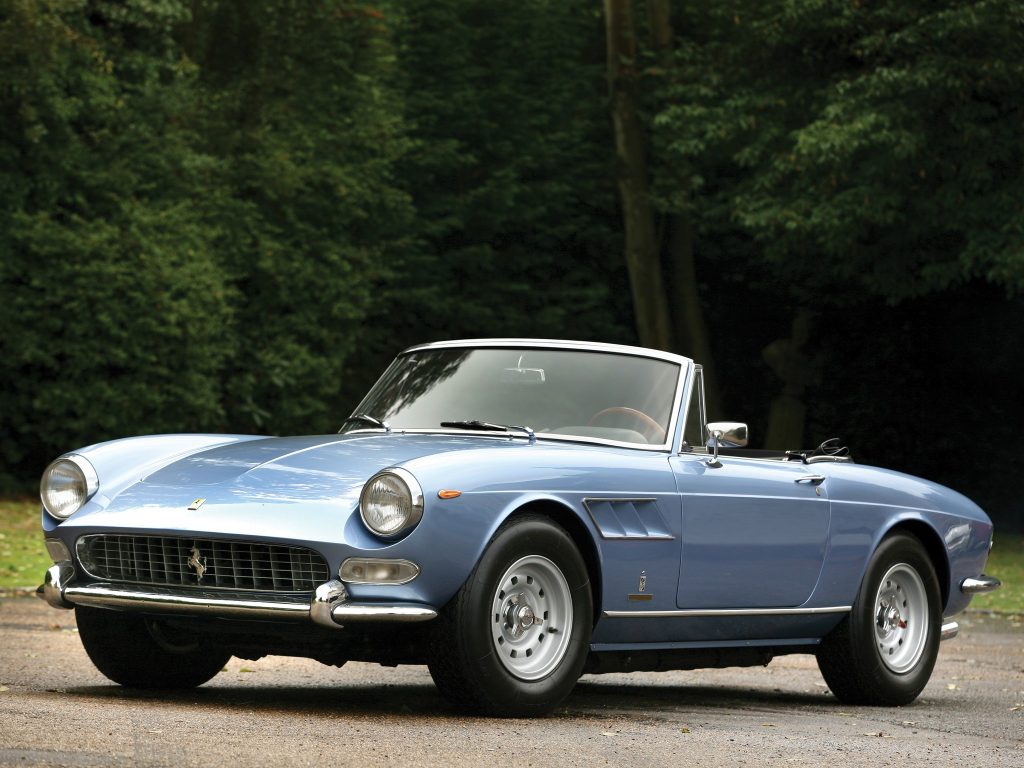
From another viewpoint, the car also demonstrates how open top design can enhance sculptural qualities. Without a fixed roof, the flowing beltline becomes more visible, making the shape easier to appreciate as a continuous form. This helps the car feel lighter visually even when stationary.
This Ferrari is included because it shows how Italian designers could make performance appear elegant rather than aggressive. It reinforces the idea that beauty and speed can exist together without conflict.
5 Classic Italian Speedsters That Look Mean
Not every Italian speedster was designed to look elegant or delicate. Some were intentionally styled to look intimidating, almost like mechanical predators waiting to attack the road. As racing competition intensified during the 1960s and early 1970s, designers began exploring shapes that communicated power, danger, and dominance rather than beauty alone.
What makes these cars fascinating is how designers used visual tension instead of harmony. Sharp noses, wide stances, low rooflines, and dramatic air intakes became tools to create emotional impact. These design choices were not accidental. They were meant to make the viewer feel excitement mixed with a slight sense of fear.
Another reason these cars are worth examining is because they show how automotive design began moving toward a more psychological approach. Designers understood that appearance could influence how people perceived performance. A car that looked aggressive often felt faster even before it moved.
These vehicles also represent a cultural shift. The smooth romantic curves of the 1950s slowly gave way to more technical and futuristic shapes. This reflected changing attitudes toward technology, speed, and competition.
The five cars selected here represent different interpretations of aggression. Some look sharp and technical. Others appear muscular and powerful. Each shows how Italian designers could express strength through completely different visual strategies without repeating the same formula.
1. Lamborghini Miura SV
Instead of introducing the Miura SV through technical specifications, it makes more sense to begin with the reaction it creates. Even today, when surrounded by modern supercars, it still manages to look dangerous. Its extremely low height, wide track, and forward leaning posture make it appear ready to leap forward like a wild animal.
One reason this car deserves to open this section is because it changed how performance cars looked. Before this era, many fast cars still looked refined or gentlemanly. The Miura helped introduce the idea that a supercar could also look intimidating. The wide rear section especially gives the impression of contained power.
Another interesting aspect is how the headlights and front fascia contribute to its personality. The way the front sits low to the ground gives it a focused expression. It almost appears to be staring at the road ahead. Designers achieved this effect through careful placement of curves and subtle surface tension rather than sharp edges.
Looking deeper into the design shows how aggression does not always require angles. The Miura uses curves, but those curves are stretched tightly across the body, creating a sense of muscular tension. This is very different from the relaxed curves seen on earlier Italian speedsters.
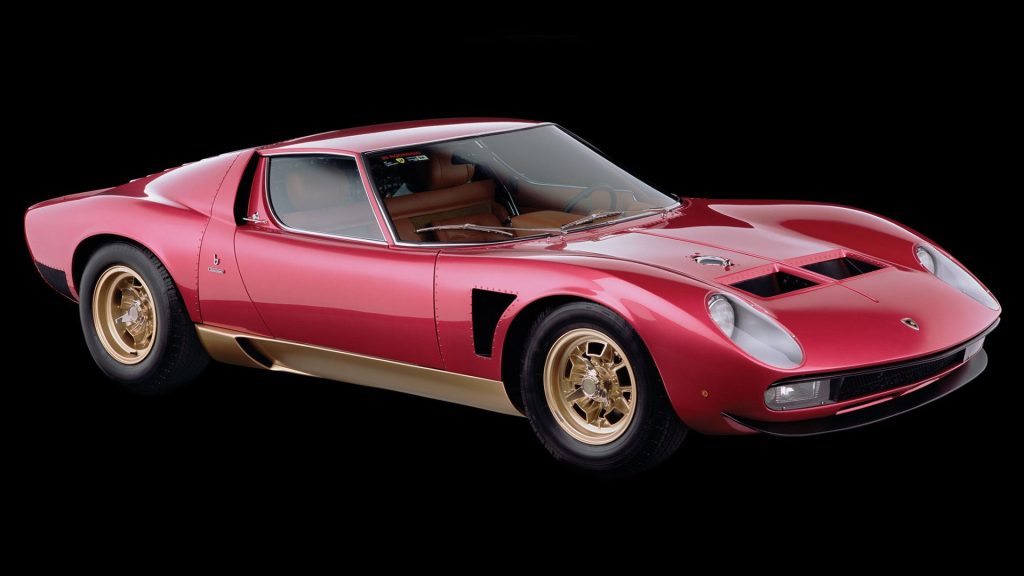
It also belongs here because it represents the birth of the supercar attitude. It was not just fast. It looked fast in a way that suggested it demanded respect. That visual confidence became part of Lamborghini’s long term identity.
This car earns its place because it demonstrates how design can make a machine look alive, powerful, and slightly intimidating without sacrificing beauty.
2. De Tomaso Mangusta
If the Miura looks like a predator in motion, the De Tomaso Mangusta looks like a weapon. Its design feels sharp, mechanical, and almost architectural. Where many Italian cars relied on flowing shapes, this one uses tension and contrast to create its aggressive personality.
The first thing worth noticing is how low and wide the car appears. The cabin seems compressed between the long front and rear sections, making the car look planted and serious. This visual compression gives the impression that the car was built for purpose rather than comfort.
There is also something worth discussing about how the Mangusta communicates strength through geometry. The lines are not soft. They feel intentional and controlled. Even the rear section, with its distinctive opening panels, adds to the impression that this is a machine designed with technical focus rather than emotional softness.
Another reason this car is important in this discussion is because it represents the growing influence of wedge era thinking. Designers were beginning to move away from organic shapes toward more futuristic forms. The Mangusta sits right at that transition point, combining curvature with emerging sharp design ideas.
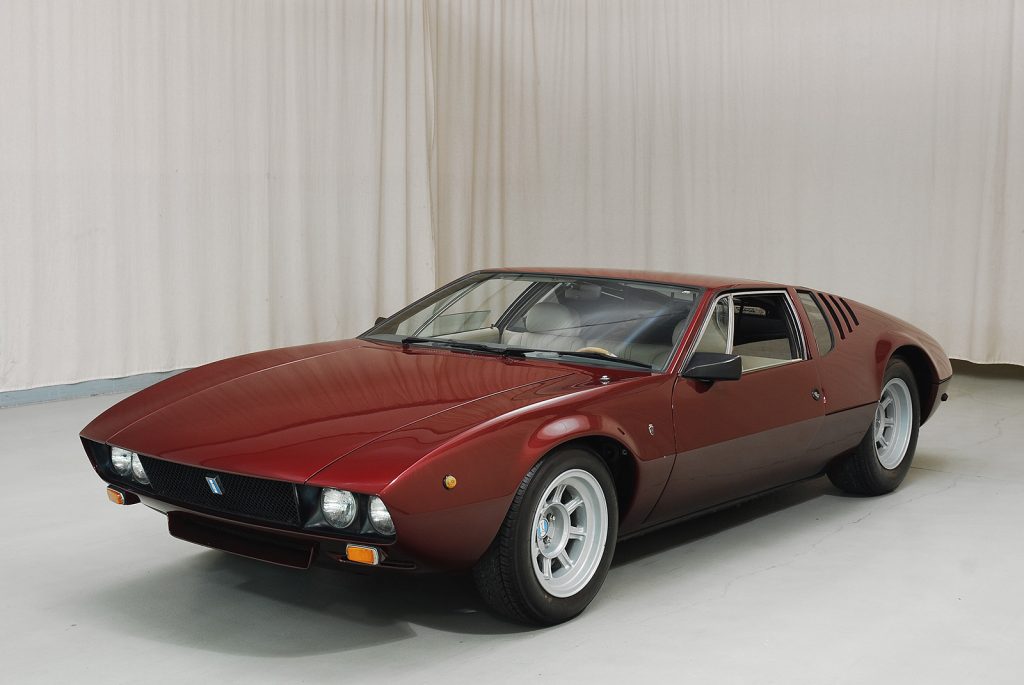
Examining this car also shows how aggression can come from stance alone. The way the wheels fill the arches and the way the body sits close to the road creates a visual message of grip and control. It looks like it was designed to challenge the driver rather than comfort them.
The Mangusta is included because it shows a different type of Italian aggression. Not emotional aggression, but calculated mechanical intensity. It looks less like art and more like engineered force.
3. Ferrari 365 GTS/4 Daytona Spyder
There is nothing subtle about the Ferrari Daytona Spyder. While earlier Ferraris often projected elegance first and performance second, this machine reversed the message.
Everything about its appearance suggests strength, purpose, and mechanical seriousness. Even at rest, it looks like it belongs on a starting grid rather than a coastal boulevard.
A useful way to understand its aggressive personality is to focus on its proportions. The extremely long hood dominates the visual experience, almost daring the observer to consider what kind of power sits underneath.
The passenger compartment appears pulled slightly backward, reinforcing the classic high performance formula where the engine is clearly the star.
This car deserves inclusion because it represents Ferrari at a moment when the company wanted its road cars to reflect racing credibility more directly. The wide stance and flat front treatment create a presence that feels confident rather than decorative. It is not trying to charm the viewer. It is trying to impress them.
Another interesting detail comes from how the design uses horizontal lines to communicate stability. The wide front grille and the strong shoulder line visually stretch the car, making it appear firmly planted. This technique is often used in performance design to suggest control and authority.
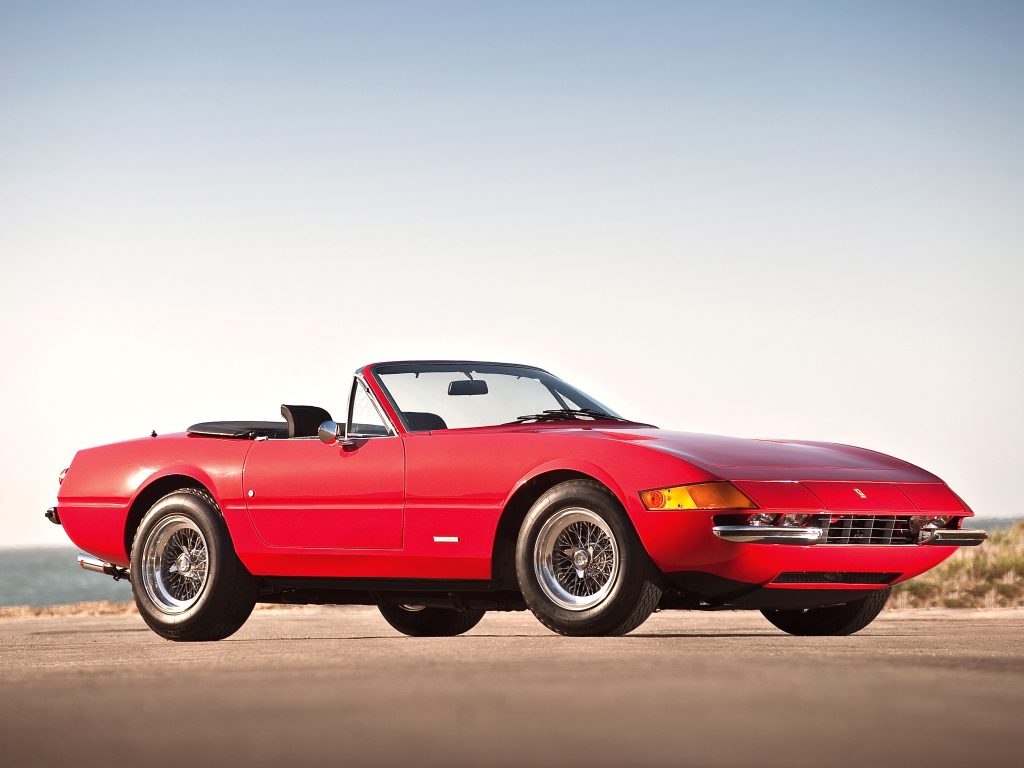
Instead of relying on extreme styling tricks, the Daytona uses visual discipline. Its aggression comes from its seriousness. There are no playful details. Everything feels engineered with intent. Even the open top version does not soften its personality. If anything, removing the roof makes the structure look even more purposeful.
The reason this car belongs here is because it shows Ferrari expressing power through confidence rather than decoration. It looks like a machine built for drivers who cared more about performance credibility than visual romance.
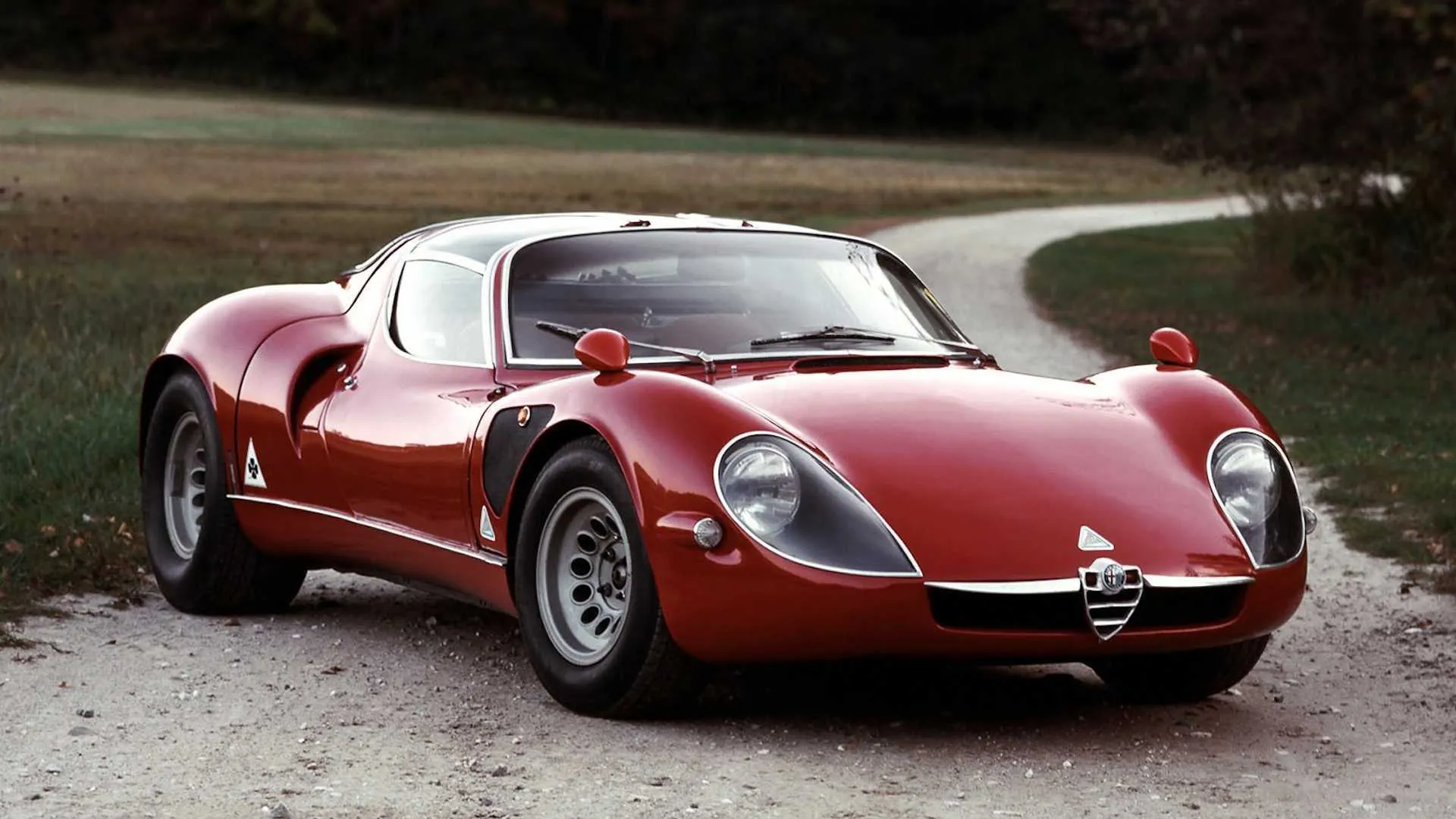
4. Alfa Romeo 33 Stradale
Some cars look aggressive because they appear sharp. Others achieve the same effect because they look intense and focused.
The Alfa Romeo 33 Stradale achieves this through dramatic proportions that make it appear almost unreal. Its extremely low height and dramatic curves create a visual impact that feels closer to a racing prototype than a road car.
This car is worth discussing because it shows how racing influence can transform design character. Derived from a competition machine, its shape feels purposeful in a way that ordinary sports cars rarely achieve.
Every intake, curve, and opening appears connected to function, which gives the car a serious and almost intimidating presence.
Another way to appreciate its mean appearance is by looking at its compact greenhouse. The small cabin compared to the wide body makes the car look like it was designed purely around performance priorities. This imbalance between driver space and mechanical presence gives the car a very focused personality.
There is also something psychologically powerful about how low the car sits. The reduced height alone changes how people perceive it. It feels closer to the ground, more intense, and more committed to speed. Designers often use this trick to make performance vehicles look more extreme without adding unnecessary styling features.
This Alfa Romeo is included because it shows how aggression can also come from purity. There is very little compromise visible in its design. It looks like a machine shaped entirely around speed.

Its presence in this list highlights how Italian designers could create intimidation not only through sharp edges but also through racing authenticity.
5. Bizzarrini 5300 Spyder SI
Some aggressive cars try to look futuristic. Others try to look elegant. The Bizzarrini 5300 Spyder SI takes a completely different path.
It looks raw, almost confrontational, as if design politeness was never part of the conversation. Its shape feels dictated by racing necessity rather than visual diplomacy, and that is exactly what gives it its intimidating character.
To understand why this car looks so mean, it helps to think about its origins. Giotto Bizzarrini was deeply involved in racing engineering, and this experience shows clearly in the car’s layout. The long, low body, the muscular rear haunches, and the aggressive front openings all suggest that airflow and cooling mattered more than visual softness.
Another reason this car stands out is how it communicates strength through mass distribution. The rear section appears powerful and loaded with energy, giving the impression that the car is built to deliver force to the road rather than simply travel across it. This visual weight makes the car feel serious even when viewed casually.
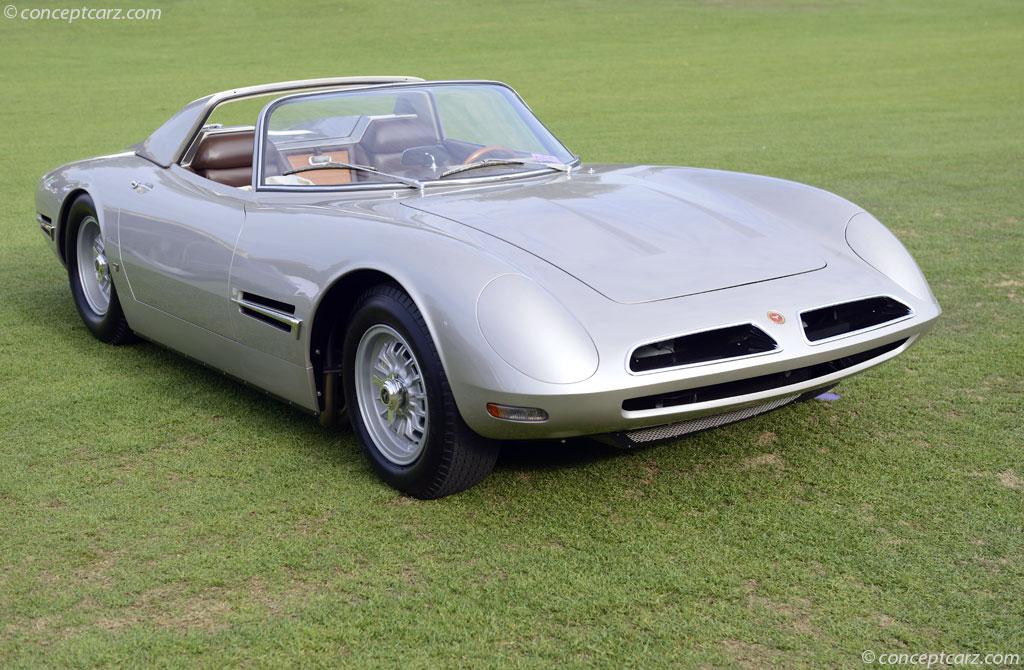
Looking at the front section reveals another interesting design decision. Instead of smooth transitions, the surfaces appear functional and direct. The openings feel like they exist purely to serve the engine. This lack of decorative intention adds to the car’s mechanical honesty and contributes to its intimidating personality.
This car is included because it shows how Italian design could also embrace brutality when necessary. Not brutality in a negative sense, but in the sense of mechanical truth. Nothing about it feels artificial.
The Bizzarrini represents a different kind of aggression. It does not try to impress through elegance or futuristic styling. It looks mean because it looks purposeful, and that purpose is speed.
Looking at these ten Italian speedsters together reveals how strongly design can influence emotional perception.
The five sculpture like cars show how Italian designers could treat automobiles as moving art. Their beauty came from proportion, flowing surfaces, and the idea that performance could look graceful rather than violent.
In contrast, the five aggressive speedsters show how the same country approached design from a completely different emotional direction. These cars were shaped to communicate strength, competition, and technical seriousness. Instead of harmony, they often used tension. Instead of softness, they used presence.
What becomes especially interesting is that both approaches came from the same design culture. This shows the depth of Italian automotive creativity. Designers were not limited to one visual philosophy. They could create romance or intimidation depending on what the machine was meant to represent.
Another important observation is how these design directions influenced future generations. Modern supercars often combine both ideas. They try to look beautiful and aggressive at the same time. This blending of philosophies can be traced back to experiments seen in these classic speedsters.
These cars also remind us that performance is not only measured by speed or engineering data. Visual identity plays a powerful role in how cars are remembered. Many of these vehicles became icons partly because of how they looked and the emotions they created.
Together, they show that Italian speedsters were never just fast machines. They were statements of personality shaped in metal.
Also Read: 6 Unique Ways That A Vintage Cars Managed Cabin Ventilation Before AC
