
The global fascination with off road vehicles did not begin with modern SUVs or high tech adventure trucks. It started with simple, mechanical, and incredibly tough 4×4 machines that proved a vehicle could go far beyond paved roads. These early pioneers created a culture that still influences automotive design today.
In the early days, four wheel drive was not about lifestyle or image. It was about survival, agriculture, military mobility, and exploration. Engineers focused on durability, repairability, and traction rather than comfort, which unintentionally created some of the toughest vehicles ever built.
What makes vintage 4x4s special is how they introduced the idea that a vehicle could be both a tool and an adventure companion. Farmers used them during the week, explorers trusted them in remote terrain, and families slowly began using them for travel where normal cars could not go.
Another important reason these vehicles matter is how they influenced modern SUVs. Features like solid axles, low range transfer cases, locking hubs, and ladder frames all became standards because of these early off road machines that proved what worked in the harshest conditions.
These classic 4x4s also helped shape the recreational off road movement. Trail driving, overlanding, and rock crawling all trace their roots to these early vehicles that demonstrated reliability in places where roads simply did not exist.
Today collectors and enthusiasts respect these machines not just for nostalgia but for their engineering honesty. They represent a time when capability mattered more than marketing, and when a vehicle’s reputation was built through real world performance rather than advertisements.
The following vintage 4x4s did more than just succeed commercially. They helped ignite a global off road culture that transformed how people thought about mobility, exploration, and what a vehicle could truly accomplish when the pavement ended.
Also Read: Top 8 Four Cylinder Engines That Feature Overbuilt Internal Components
1. Jeep CJ 5
The Jeep CJ 5 represents one of the clearest examples of how a military concept successfully transitioned into civilian adventure culture. Derived from wartime Jeep experience, it carried forward the same philosophy of toughness while becoming accessible to everyday buyers who wanted freedom beyond highways.
Unlike many later SUVs that focused on comfort first, the CJ 5 remained unapologetically mechanical. Its short wheelbase made it extremely maneuverable on tight trails, while its simple suspension allowed owners to repair it with basic tools even in remote locations.
One reason the CJ 5 became globally influential was its adaptability. Owners modified these vehicles endlessly. Some added winches for recovery work, others installed larger tires, while many simply removed the doors and roof to create a raw open air driving experience.
This flexibility helped establish the idea that a 4×4 could be personalized. Modern off road customization culture, including lift kits and aftermarket armor, owes much to the experimentation that CJ owners began decades ago.
The CJ 5 also helped popularize recreational trail driving. Before vehicles like this, four wheel drive was mostly practical. The CJ changed that by showing driving itself could become the adventure rather than just a means to reach a destination.
Another important factor was its global export success. The CJ series found homes in South America, Australia, and parts of Asia, where its simplicity made it ideal for rough environments where complicated vehicles would struggle to survive.
Its design also emphasized visibility and control. The upright windshield, flat hood, and minimal body overhang helped drivers place the vehicle precisely on rocks and narrow tracks, something that modern off road designers still try to replicate.
Interestingly, the CJ 5 also built the emotional connection people now associate with 4×4 ownership. Drivers often describe these vehicles as feeling alive because of their direct steering feel, mechanical sounds, and lack of electronic filtering.
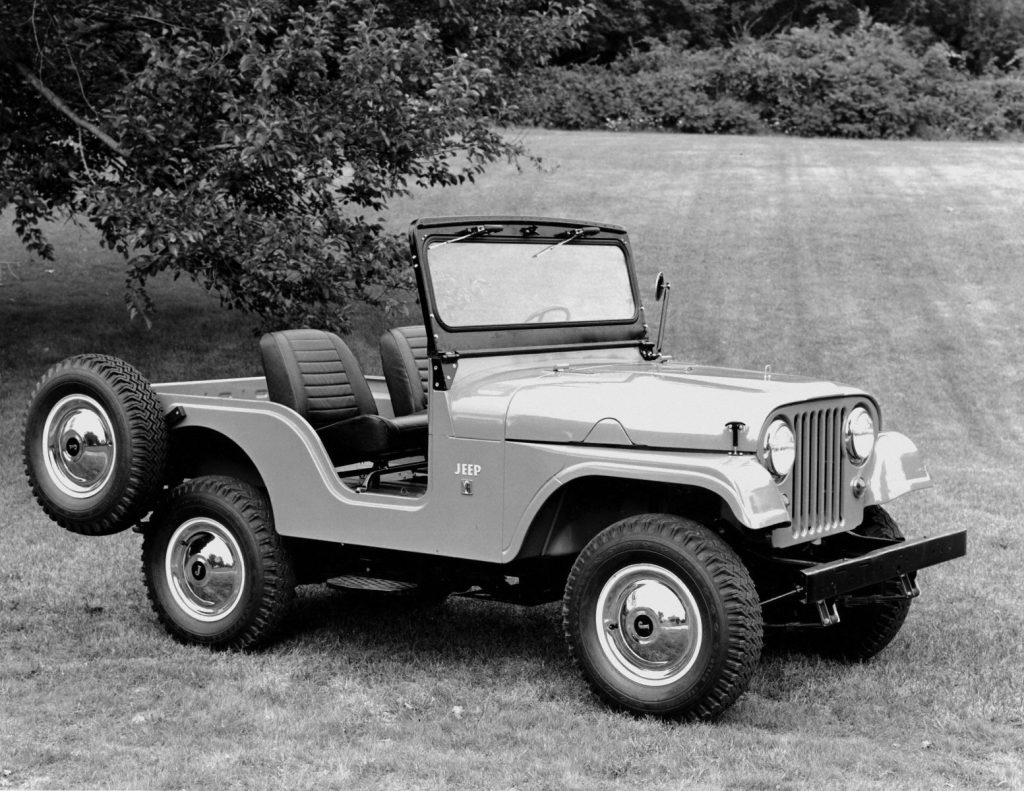
From a durability standpoint, the ladder frame construction played a major role. This type of chassis allowed the vehicle to flex without structural failure, something essential when driving across uneven terrain where one wheel might hang in the air.
The CJ 5 also normalized the idea of weekend adventure vehicles. Owners began using them for camping trips, hunting journeys, and mountain travel. This helped shift the perception of 4x4s from purely work machines into lifestyle vehicles.
Even today, many off road purists still consider the CJ series a benchmark for what a true 4×4 should be. Not because of power or luxury, but because of its honesty of purpose and mechanical dependability.
The biggest legacy of the CJ 5 may be that it proved capability creates culture. Without vehicles like it, modern off road communities, trail events, and global adventure driving trends might have developed much more slowly.
2. Land Rover Series I
If the Jeep helped define recreational off roading, the Land Rover Series I helped prove that a four wheel drive vehicle could become a global utility icon. Developed in post war Britain, it was designed as a tool first and a vehicle second.
The Series I approached off road design from a completely different philosophy. Instead of focusing on compact agility like the Jeep, it focused on versatility. It was expected to function as a farm machine, transport vehicle, and exploration platform all at once.
One of its most interesting engineering decisions was the use of aluminum body panels. Steel shortages after World War II pushed engineers toward alternative materials, but this decision accidentally created one of the most rust resistant utility vehicles of its time.
Farmers quickly adopted the vehicle because it could power equipment through a power take off system. This meant the Land Rover was not just transportation but also part of daily agricultural work, reinforcing the idea of a multi purpose off road machine.
Another area where the Series I changed the market was global expedition travel. British expeditions across Africa and Asia frequently relied on these vehicles. Their success helped establish trust in the idea that a properly built 4×4 could cross continents.
Unlike sport oriented 4x4s, the Land Rover built its reputation through endurance stories. Long distance reliability became its strongest marketing advantage, even when no advertising campaign was involved.
The interior design reflected pure function. Flat panels, simple gauges, and washable surfaces showed that durability mattered more than aesthetics. This design philosophy continues to influence modern expedition vehicles.
An overlooked impact of the Series I was how it shaped government and humanitarian mobility. These vehicles were used by forestry departments, medical teams, and infrastructure workers who needed reliable access to remote locations.
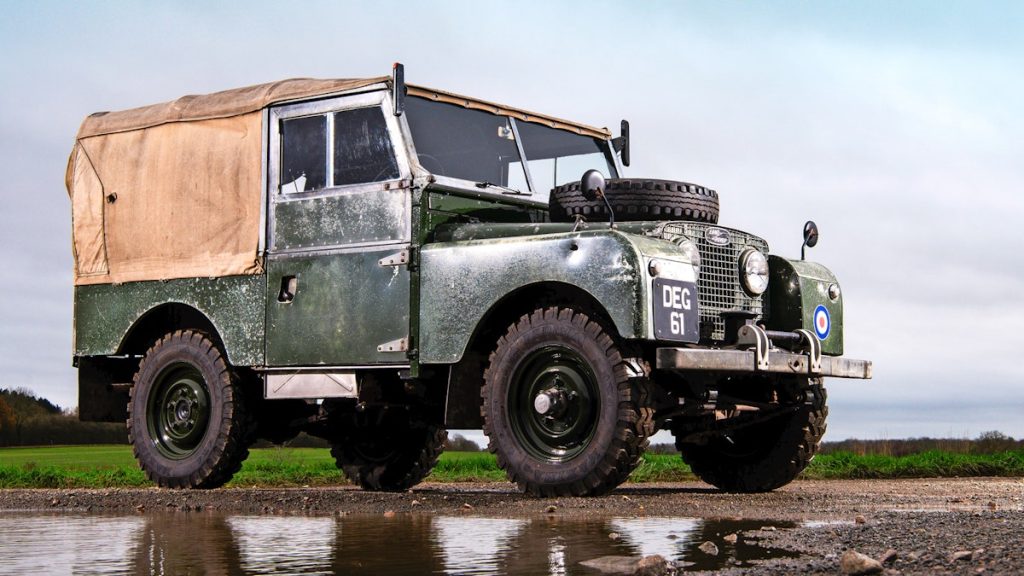
This helped define the humanitarian role of off road vehicles. Today disaster relief and remote medical transport still depend heavily on the foundation established by vehicles like the Series I.
Another subtle but important influence was its driving character. It encouraged patience. Slow crawling, careful throttle input, and mechanical sympathy were necessary skills. This created the early mindset of technical off road driving rather than aggressive driving.
Collectors today often point out that the Series I feels more like operating equipment than driving a car. That distinction is important because it shows how early 4x4s were viewed as tools of capability rather than consumer products.
The Land Rover Series I ultimately proved that a 4×4 did not need speed or aggressive styling to become legendary. Reliability, adaptability, and real world usefulness were enough to build a global reputation that still influences off road design today.
3. Toyota Land Cruiser FJ40
Some vehicles become famous because of marketing, while others earn their status through decades of surviving the kinds of environments that destroy ordinary machines. The Toyota Land Cruiser FJ40 belongs firmly in the second category, building its reputation through reliability stories that spread from one continent to another.
When Toyota developed the early Land Cruiser models, the goal was not to copy existing off roaders but to improve durability standards. Engineers focused heavily on drivetrain strength, cooling performance, and long term mechanical endurance rather than visual appeal.
What made the FJ40 different from many competitors was its reputation for starting and running in conditions where other vehicles failed. From desert heat to mountain cold, stories of its dependability slowly turned it into a trusted machine for remote operations.
In many developing regions, the FJ40 became the default solution for transportation where infrastructure was weak. Mining companies, survey teams, and construction groups often depended on it because it could handle heavy workloads without constant mechanical failure.
Its straight six engine became especially respected because of its low stress tuning. Instead of pushing performance limits, Toyota focused on longevity. This conservative engineering philosophy is one of the key reasons many FJ40s remained operational for decades.
Another major contribution of the FJ40 was how it established Toyota as a serious global competitor in the utility vehicle market. Before this, American and British brands dominated the rugged vehicle category. The Land Cruiser changed that perception permanently.
The vehicle also helped popularize the idea of overland reliability. Travelers crossing large regions often valued simplicity over features, and the FJ40 became known as a vehicle that could be repaired almost anywhere with basic mechanical knowledge.
Its boxy design was not created for style, yet it became iconic. The upright stance, round headlights, and simple grille gave it a purposeful look that communicated strength rather than luxury.
Unlike some early 4x4s that required frequent adjustment, the Land Cruiser built trust by reducing unexpected failures. Owners frequently described it as predictable, which is one of the most valuable traits in remote driving.
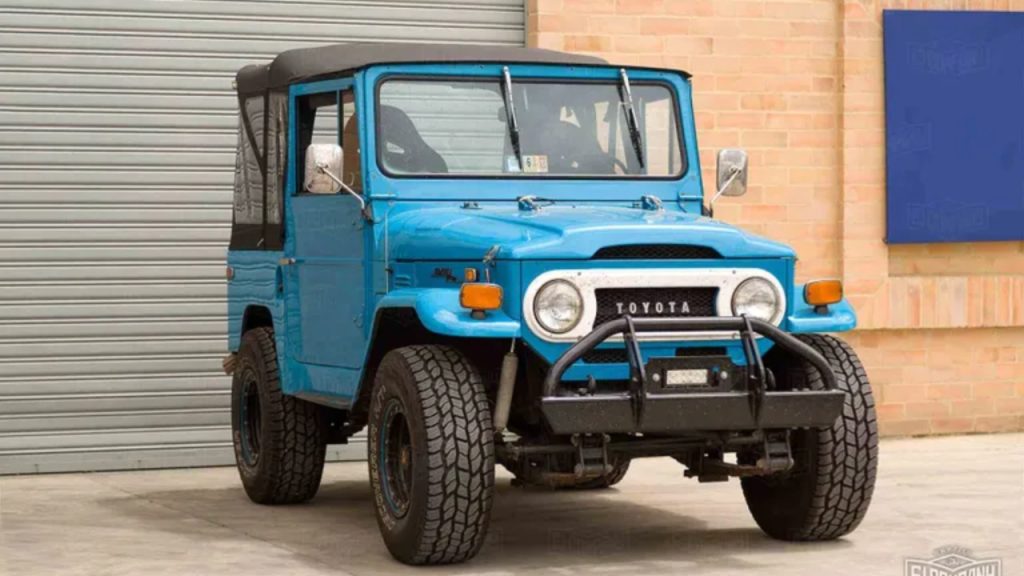
Another reason the FJ40 influenced global off road culture was its role in safari tourism. Tour operators began using these vehicles because they could carry passengers across rough landscapes with consistency. This helped introduce thousands of people to off road travel experiences.
The suspension design also played a role in its success. Leaf springs may not have offered comfort, but they provided load capacity and mechanical simplicity. This tradeoff showed how early 4×4 engineering always prioritized survival over refinement.
From a cultural perspective, the FJ40 also helped define Toyota’s long term brand identity. Even modern Land Cruisers still carry the reputation for reliability that began with these early models.
Today restoration communities continue to value the FJ40 not because it is rare, but because it represents a philosophy of engineering discipline. It shows what happens when a manufacturer prioritizes function over trend.
Perhaps its greatest legacy is the trust it created. In remote areas around the world, people often believed that if a Land Cruiser could not reach a location, very few vehicles could.
4. Ford Bronco (First Generation)
The first generation Ford Bronco approached the off road market from a completely different direction compared to earlier utility focused 4x4s. Instead of being purely a work tool, it was designed as a multipurpose recreational vehicle from the beginning.
Ford recognized something important during the 1960s. People were beginning to see outdoor travel not just as necessity but as recreation. The Bronco was created to serve this emerging audience that wanted both capability and everyday usability.
One of its biggest innovations was balance. It tried to combine off road ability with reasonable on road manners. This concept eventually became the blueprint for the modern SUV category.
The Bronco also introduced the idea that design personality mattered. While still simple, it had more attention to styling than many earlier 4x4s. This helped attract buyers who wanted both adventure and identity in their vehicle choice.
Another area where the Bronco influenced the industry was body configuration flexibility. Buyers could choose different roof styles and utility setups. This helped establish the concept of modular vehicle lifestyles.
Unlike the Land Rover which emphasized global utility, the Bronco helped build American recreational off road culture. Camping, desert driving, and outdoor sports all became closely associated with vehicles like this.
Its engineering also focused heavily on driver friendliness. Compared to some earlier 4x4s, it was easier to control, easier to enter, and more comfortable to operate daily. This helped expand the market beyond professionals into families.
The Bronco also played a major role in organized off road competition. Events such as desert races helped demonstrate the durability of these vehicles and inspired performance upgrades that would later become standard aftermarket products.
Another interesting impact was how it helped normalize 4×4 ownership in suburban environments. People began buying off road vehicles even if they did not constantly need the capability, simply because they liked the versatility.
This shift helped create the modern SUV boom. The idea that a vehicle could handle both city roads and wilderness travel became extremely attractive to buyers.
Mechanically, the Bronco also demonstrated the advantage of compact proportions combined with strong engines. This balance made it capable without feeling industrial, something that helped it appeal to a broader audience.
The vehicle also helped establish the emotional appeal of adventure branding. Advertisements began focusing on freedom, exploration, and independence rather than just specifications. This marketing style continues to dominate SUV advertising today.
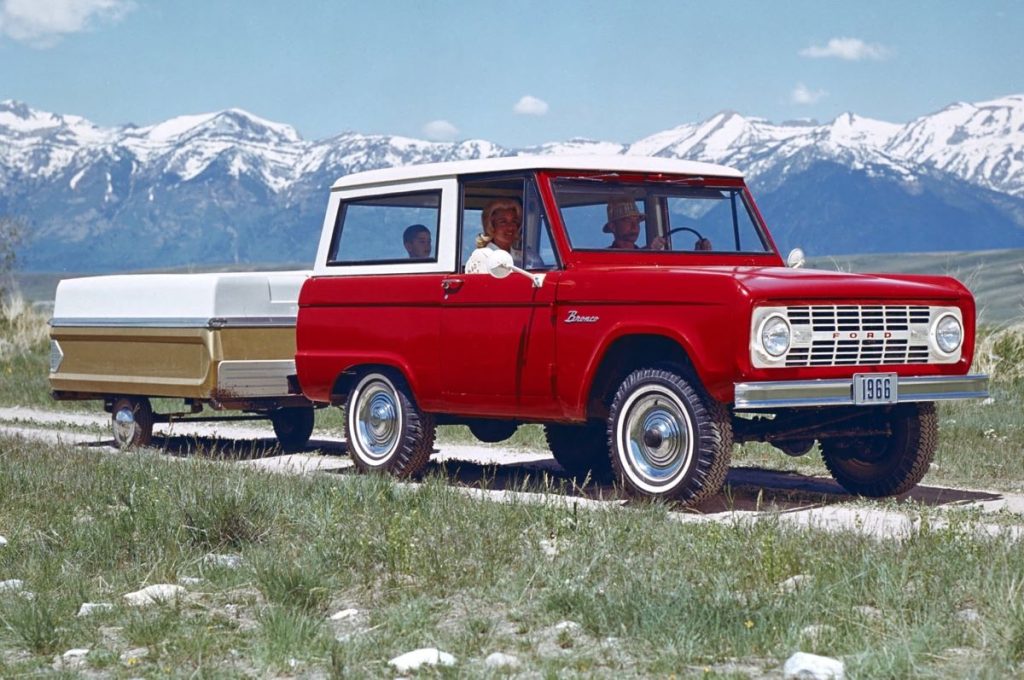
Enthusiasts often remember the early Bronco for its character. It was not the strongest or most advanced, but it had a balanced personality that made it enjoyable both on trails and normal roads.
Looking back, the first generation Bronco helped bridge two worlds. It connected the purely functional 4×4 era with the lifestyle SUV era, acting as one of the earliest examples of how off road vehicles could become part of everyday life.
5. International Harvester Scout 80
While some vintage 4x4s became famous through military origins or global expeditions, the International Harvester Scout 80 came from an entirely different background. It was born from a company known for agricultural and industrial equipment, and that heritage uniquely shaped its personality.
International Harvester approached the Scout with a practical mindset. Their experience building tractors and work machines influenced the way they engineered the vehicle. Strength and usability were treated as necessities rather than selling points.
What separated the Scout from many early off roaders was its focus on dual purpose ownership. It was intended to serve as both a work vehicle during the week and a personal transport vehicle on weekends. This concept helped influence the future direction of utility vehicles.
Instead of emphasizing extreme off road performance alone, the Scout tried to deliver balanced usefulness. It could carry tools, handle rough land access, and still function as daily transportation, something that was still a new idea at the time.
The design itself reflected this philosophy. Its shape was simple and squared, but the proportions suggested practicality rather than minimalism. Wide door openings, a functional cargo area, and straightforward controls made it approachable for ordinary drivers.
Another important contribution of the Scout 80 was how it helped inspire competition. Its arrival pushed other manufacturers to take the recreational utility segment more seriously. This competition ultimately accelerated innovation across the off road market.
The Scout also helped introduce the concept of user friendly ruggedness. Earlier 4x4s often felt intimidating or overly mechanical. The Scout attempted to make capability feel accessible, which helped attract first time off road vehicle buyers.
One interesting aspect of its legacy is how it influenced the concept of personal adventure vehicles. Buyers started seeing these machines not just as tools but as ways to escape routine life and explore beyond cities.
Its mechanical layout also emphasized straightforward maintenance. International Harvester understood that many buyers would use the vehicle in rural areas where dealership support was limited, so ease of servicing became part of the design logic.
Another overlooked influence of the Scout was how it contributed to the idea of brand diversification. A company known for farm machinery successfully entered the passenger vehicle market, proving that rugged engineering experience could translate into automotive success.
The Scout’s presence also helped build early enthusiasm for compact utility vehicles in North America. This segment would later explode into one of the most profitable automotive categories worldwide.
From a historical perspective, the Scout also deserves recognition for helping shape the identity of the early SUV. It blended truck durability with passenger vehicle usability in ways that were still experimental at the time.
Collectors today often describe the Scout as feeling honest. There was little attempt to hide its mechanical roots, and that transparency became part of its charm among enthusiasts.
The Scout 80 may not always receive the same recognition as some of its rivals, but its role in expanding the idea of what a 4×4 could be remains significant. It demonstrated that rugged vehicles could also be practical for everyday ownership.
The rise of global off road culture did not happen suddenly. It developed through the influence of a handful of tough, purpose built 4×4 vehicles that proved transportation could go far beyond paved highways. These machines showed the world that mobility was not limited by road infrastructure.
Each of these vintage vehicles contributed something different to the off road movement. Some introduced durability standards, others proved versatility, while a few demonstrated how four wheel drive vehicles could become part of everyday life rather than just specialized equipment.

The Jeep CJ 5 helped establish the recreational side of off roading. It showed that driving itself could be an adventure activity rather than just a way to reach remote workplaces. Its customization culture also helped start the modification trends that still define off road ownership today.
The Land Rover Series I proved that a 4×4 could become an essential global utility tool. Its use in farming, exploration, and humanitarian work demonstrated that off road vehicles could support entire industries and communities where reliable transportation was necessary.
Toyota’s Land Cruiser FJ40 strengthened the idea of mechanical trust. It built its global reputation through long term reliability rather than design trends. This helped establish the importance of engineering discipline in vehicles expected to operate in harsh environments.
The Ford Bronco introduced the idea that off road capability and everyday usability could exist together. This approach helped shape the modern SUV concept by showing buyers they did not need separate vehicles for work and adventure.
International Harvester added another important dimension through the Scout 80. It proved that companies outside traditional passenger car manufacturing could successfully create practical off road vehicles. Its balance of work utility and personal use helped grow the recreational vehicle market.
One major theme connecting all five vehicles is simplicity. These machines succeeded because they were easy to maintain, easy to understand, and built with mechanical strength as the main priority. This simplicity allowed them to operate where complex vehicles might fail.
Another shared contribution was how they shaped driver mindset. These vehicles taught patience, planning, and mechanical awareness. Early off road driving required skill and understanding rather than relying on electronic assistance.
These vintage machines also helped establish the emotional connection people now associate with off road vehicles. They created the idea that a vehicle could represent freedom, independence, and the ability to explore places others could not reach.
Modern SUVs may offer more comfort and technology, but many of their core engineering ideas still come from these early pioneers. Ladder frames, four wheel drive systems, and multi purpose design philosophies all trace back to these influential vehicles.
Their historical importance also comes from how they expanded automotive expectations. They showed that vehicles did not need to be limited by cities or highways. Instead, they could become tools of exploration capable of connecting people to remote landscapes.
The legacy of these 4x4s continues through restoration communities, collectors, and off road enthusiasts who still value their mechanical honesty. They represent a time when capability defined reputation more than branding or luxury features.
Ultimately, these five vintage 4x4s did more than succeed as products. They helped create a global movement centered on adventure travel, off road engineering, and the belief that the journey itself could be just as important as the destination.
Also Read: 8 Essential Safety Checks Before Driving a Trailer for the First Time