All wheel drive technology is often associated with modern vehicles, especially with the rise of SUVs and high-performance sports cars in recent decades. However, long before AWD became common, several automotive manufacturers were experimenting with all-wheel traction to improve performance, handling, and safety.
These vintage cars were often technical marvels for their era, combining innovation with style in ways that would influence automotive engineering for years to come. Many of them were born out of necessity, especially in regions with challenging road conditions, yet they also carried the spirit of experimentation and ambition that defined early automotive progress.
Their designs were not just functional; they incorporated advanced suspension systems, unique drivetrain layouts, and sometimes even futuristic aesthetics that seemed decades ahead of their contemporaries. Understanding these vehicles provides insight into how the principles of AWD, once considered niche, gradually shaped the modern automotive landscape.
They offered drivers the confidence to navigate diverse terrains while maintaining a sense of sophistication that only classic cars could offer. Furthermore, these vehicles highlight the creativity and engineering courage of manufacturers who dared to challenge conventional layouts and mechanical norms.
From rally-bred sedans to luxurious off-roaders, the influence of these cars extended beyond their immediate market. They often served as testbeds for technologies that later became standard, such as torque distribution, traction control, and independent suspensions.
Even today, collectors and enthusiasts regard these vintage AWD models as symbols of mechanical ingenuity and forward-thinking design. Their rarity adds to their allure, as many of them were produced in limited numbers or as special editions, making them highly sought after in the classic car community.
Examining their history, specifications, and impact not only celebrates the ingenuity of past engineers but also emphasizes the continuous evolution of automotive technology. For those interested in performance, handling, and design, vintage AWD cars present a fascinating narrative about how necessity, experimentation, and ambition converged to create vehicles that were remarkably ahead of their time.
In this article, we will highlight ten examples that left a lasting mark on the industry, exploring why each one was exceptional for its era and how it influenced subsequent automotive developments.
1. Audi Quattro
The Audi Quattro stands as one of the most iconic AWD pioneers, introduced in the early 1980s. Its combination of turbocharged engine and permanent all-wheel drive allowed it to dominate rally racing in ways that had never been seen before.
The Quattro’s drivetrain technology provided exceptional grip on loose surfaces, giving drivers the ability to corner at high speeds with confidence. Beyond performance, the Quattro introduced a design language that combined aggressive stance with refined styling, signaling that AWD vehicles could be both practical and visually appealing. Its impact extended to production cars, as Audi recognized the value of AWD in improving safety and traction on everyday roads.
The engineering behind the Quattro was advanced, featuring a center differential that distributed torque between the front and rear wheels. This allowed for more predictable handling and reduced understeer compared to traditional rear-wheel-drive vehicles.
The car’s suspension was tuned for both road and rally conditions, making it versatile despite its performance orientation. By bridging the gap between racing technology and consumer vehicles, Audi created a blueprint that many manufacturers would follow for decades. Its introduction marked a turning point, proving that AWD could be a desirable feature rather than just a functional necessity.
In rally competitions, the Quattro consistently outperformed competitors, demonstrating the advantages of AWD in adverse conditions. Snow, gravel, and rain no longer represented insurmountable challenges for drivers equipped with this technology. The car’s dominance was not solely mechanical; it also became a cultural symbol, representing innovation and engineering excellence.
The Quattro’s success helped establish Audi as a leader in performance technology, and its influence can be traced to modern models that continue to emphasize AWD capabilities. Enthusiasts continue to celebrate its handling characteristics and engineering brilliance, making it a staple of any discussion about groundbreaking AWD cars.
Collectors now value the Quattro not just for its rarity but also for its historical significance. Original models have become highly sought after, reflecting their status as milestones in automotive technology.
From the racetrack to the showroom, the Audi Quattro demonstrated that forward-thinking engineering could redefine expectations. Its combination of performance, safety, and style set a precedent for what AWD vehicles could achieve, making it an enduring symbol of innovation that remains relevant even decades after its introduction.

2. Subaru Leone 4WD
The Subaru Leone 4WD, introduced in the late 1970s, brought all-wheel drive to compact, affordable vehicles. Unlike the Quattro, which focused on performance, the Leone targeted everyday drivers who needed traction in snowy or wet conditions. Its practical design and relatively low cost made AWD accessible to a broader audience, which was revolutionary at the time.
The Leone demonstrated that all-wheel drive did not have to be limited to luxury or performance vehicles, and it paved the way for Subaru’s future reputation as a leader in AWD systems. Its success showed manufacturers that reliability and simplicity could coexist with innovative drivetrain solutions.
The Leone featured a simple yet effective AWD system, allowing power to be delivered to all four wheels as needed. This improved stability and safety in challenging conditions, particularly in regions with harsh winters.
The vehicle’s lightweight construction and front-engine layout contributed to balanced handling, making it a comfortable daily driver. Subaru’s decision to equip a small family car with AWD highlighted foresight, as it anticipated growing consumer demand for versatile vehicles capable of handling diverse environments.
Its design emphasized utility without compromising comfort, including spacious interiors and practical features. Drivers could rely on the Leone for both city commuting and rural travel, which broadened the appeal of all-wheel drive. The car’s reliability and durability further cemented its reputation, ensuring that even budget-conscious buyers could enjoy advanced drivetrain technology. In a market dominated by two-wheel-drive sedans, the Leone stood out as an innovative and pragmatic solution.
Today, the Leone is recognized for its historical significance and contribution to mainstream AWD adoption. Classic car enthusiasts value its simplicity, practicality, and pioneering role in automotive engineering. Its legacy lives on in Subaru’s continued emphasis on all-wheel drive across its entire lineup, demonstrating that an innovative idea introduced in a compact package can have lasting impact on the automotive world.

3. Lancia Delta Integrale
The Lancia Delta Integrale made its mark in the late 1980s and early 1990s as a small hatchback with an extraordinary rally pedigree. Its AWD system was paired with turbocharged engines and advanced suspension, allowing it to dominate World Rally Championship events.
The car’s compact dimensions and lightweight design made it agile, while the four-wheel drive system provided incredible grip on snow, gravel, and mud. Lancia engineered the Integrale with performance and handling in mind, giving drivers an experience that felt both precise and thrilling. This combination of speed and control highlighted how AWD could transform even modestly sized vehicles into formidable competitors on the track.
Technologically, the Integrale featured a permanent four-wheel-drive layout with a sophisticated center differential, which allowed torque to be adjusted between the front and rear axles. This innovation significantly improved traction and stability, especially during high-speed cornering on uneven surfaces.
The car’s suspension was tuned for both road and rally conditions, ensuring that it could handle daily driving while remaining race-ready. Its balance between road usability and rally performance demonstrated that AWD systems could enhance both safety and fun without compromise. Engineers paid meticulous attention to weight distribution, chassis rigidity, and drivetrain responsiveness, making the car feel connected to every surface it touched.
The Integrale’s rally success reinforced its reputation as an icon of AWD technology. Multiple championship titles proved that this system was not just an experimental novelty but a competitive advantage. Lancia’s ability to translate racing success into consumer models emphasized the practical value of AWD in high-performance vehicles.
Enthusiasts appreciated the car not only for its mechanical sophistication but also for its distinctive styling, which combined aggressive flares with compact proportions. The vehicle became a symbol of rally engineering excellence and remains highly collectible today, reflecting both its technical brilliance and cultural impact.
Inside, the Integrale maintained functionality without sacrificing driver engagement. Ergonomics, visibility, and control placement were carefully considered to maximize the driver’s connection to the car. Even though the car was built for performance, it remained accessible to everyday drivers who appreciated its practicality alongside its sportiness.
The dashboard, seating, and cabin materials were robust yet comfortable, reinforcing the Integrale’s dual nature as a rally-bred road car. This thoughtful design approach allowed the vehicle to excel in both competitive and consumer environments, highlighting the versatility of AWD systems.
The long-term influence of the Integrale is evident in modern rally and performance vehicles that continue to rely on sophisticated AWD systems. By proving that a small hatchback could outperform larger, more powerful competitors with the right drivetrain, Lancia set a benchmark for combining efficiency, control, and excitement.
Its legacy extends beyond racing statistics, inspiring engineers to refine AWD technology and incorporate it into a wide variety of vehicles. The Delta Integrale remains a testament to the creativity and ambition of engineers who pushed the limits of what a compact car could achieve.

4. Toyota Celica GT-Four
The Toyota Celica GT-Four was a high-performance coupe introduced in the late 1980s, equipped with an advanced all-wheel-drive system designed for rallying. Its turbocharged engine and lightweight chassis made it competitive on both road and track, while the AWD drivetrain ensured that power was delivered efficiently under all conditions.
Toyota aimed to produce a sports car that combined speed, agility, and control, challenging the notion that performance vehicles needed to be rear-wheel drive. The GT-Four’s engineering highlighted the benefits of distributing power to all four wheels, particularly in wet or loose surfaces where traction could make the difference between victory and defeat.
Mechanically, the GT-Four featured a sophisticated center differential with viscous coupling, allowing torque to shift between axles based on traction demands. This system gave drivers confidence when cornering aggressively, as the vehicle responded predictably to steering inputs.
Its suspension geometry and lightweight components were tuned for performance, providing stability at high speeds while maintaining responsiveness in tighter turns. By integrating these technologies, Toyota created a vehicle that could handle extreme conditions on rally courses and remain manageable for street use, demonstrating the versatility of AWD in sports applications.
In motorsport, the GT-Four proved to be formidable, competing successfully in World Rally Championship events and achieving multiple victories. Its AWD system allowed the car to tackle a variety of terrains, from muddy trails to snow-covered roads, making it a reliable choice for competitive drivers.
The Celica GT-Four’s balance of performance, reliability, and innovative drivetrain solutions reinforced the idea that AWD could enhance not just traction but also handling precision and driver confidence. Fans of rallying and performance vehicles recognized the car as a technical achievement and a symbol of Toyota’s commitment to innovation.
The design of the GT-Four balanced aesthetics with functionality. Wide fenders accommodated the car’s track-ready stance, while aerodynamic enhancements improved stability at high speeds. Interior features focused on driver engagement, with clear instrumentation and supportive seats that enhanced control during spirited driving.
Unlike many rally-derived vehicles, the GT-Four remained practical for daily use, offering comfort without sacrificing the mechanical advantages that made it competitive on the rally stage. This thoughtful combination of form and function contributed to its lasting appeal among collectors and enthusiasts alike.
The legacy of the Celica GT-Four extends beyond its rally achievements. Its AWD technology influenced subsequent Toyota models and reinforced the value of all-wheel-drive systems in sports cars, showing that performance, handling, and drivability could coexist.
Even decades later, the GT-Four is remembered as a vehicle that challenged expectations, proving that forward-thinking engineering could redefine what a compact sports coupe could accomplish. Its contribution to the development of AWD vehicles for both racing and consumer markets remains a benchmark in automotive history.
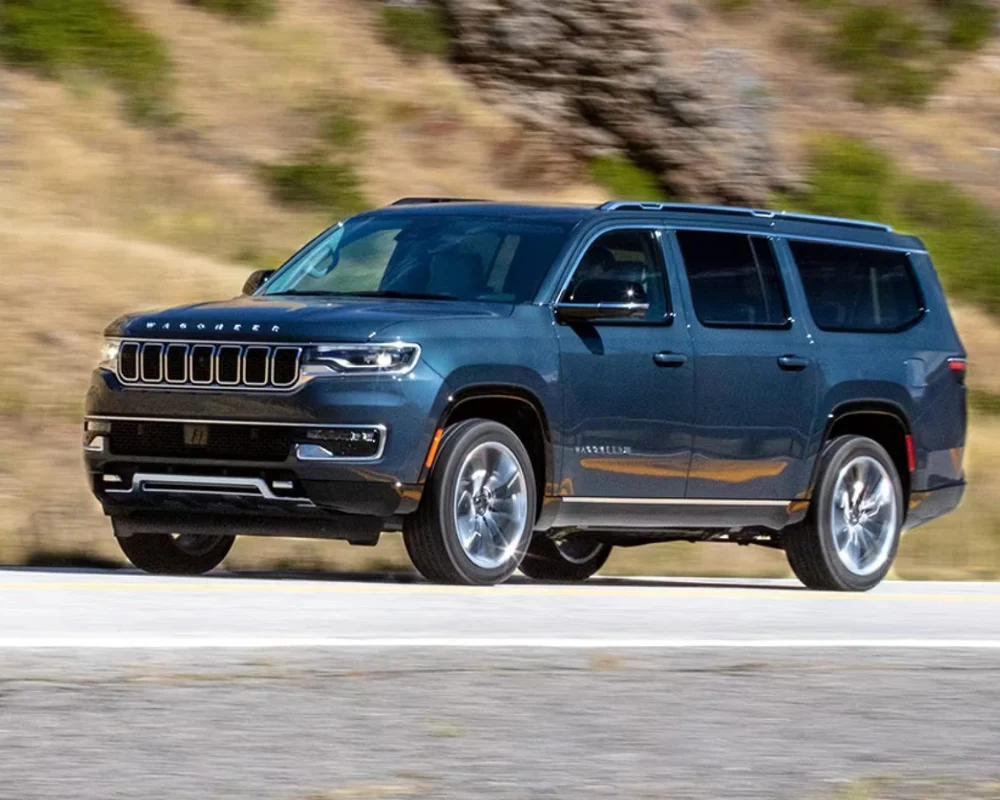
5. Jeep Wagoneer 4WD
The Jeep Wagoneer 4WD was introduced in the 1960s as one of the first luxury SUVs with full-time all-wheel drive, blending rugged capability with passenger comfort. Its solid construction and durable drivetrain made it ideal for off-road adventures, while the interior offered a level of refinement uncommon in vehicles of its class.
The Wagoneer combined functionality and style, demonstrating that all-wheel drive was not limited to small sports cars or rally vehicles. For many drivers, it represented the freedom to travel across diverse terrains without sacrificing everyday usability. Its long production run reflected both its popularity and the strength of its design philosophy, emphasizing reliability and versatility in an era when AWD was rare.
Mechanically, the Wagoneer used a full-time 4WD system that allowed power to be sent to all four wheels simultaneously, enhancing traction in mud, snow, and uneven surfaces. Its suspension was robust, capable of absorbing off-road shocks while maintaining comfort on paved roads.
The vehicle’s drivetrain was engineered for durability, supporting heavy loads and long-distance travel without compromising performance. By combining ruggedness with a degree of refinement, Jeep created a vehicle that appealed to both outdoor enthusiasts and families seeking a dependable all-weather vehicle.
The Wagoneer’s reputation was enhanced by its ability to handle extreme conditions without sacrificing driver control. On dirt trails, rocky paths, or icy roads, the AWD system provided confidence and stability. Its off-road capability set benchmarks for future SUVs, influencing the design of other full-size, luxury 4WD vehicles.
Jeep’s pioneering approach showed that AWD technology could be applied not only to sports and compact cars but also to larger, more utilitarian models, expanding the possibilities for vehicle design and consumer expectations.
The interior of the Wagoneer reflected its dual-purpose mission. Comfortable seating, wood-grain accents, and spacious cargo areas made it a suitable family vehicle while maintaining a rugged appeal. Controls were intuitive, and visibility was excellent, helping drivers navigate difficult terrains with ease.
The combination of comfort and capability established the Wagoneer as a versatile icon, proving that AWD technology could be integrated into vehicles designed for both leisure and practical use.
Collectors and enthusiasts continue to value the Jeep Wagoneer for its historical significance and timeless design. Original models remain sought after for their combination of luxury and off-road capability.
The Wagoneer’s legacy is evident in modern SUVs that emphasize all-wheel drive, ruggedness, and comfort, proving that early innovations in AWD technology laid the groundwork for the vehicles we rely on today. Its influence remains strong, bridging the gap between performance, utility, and lifestyle appeal.
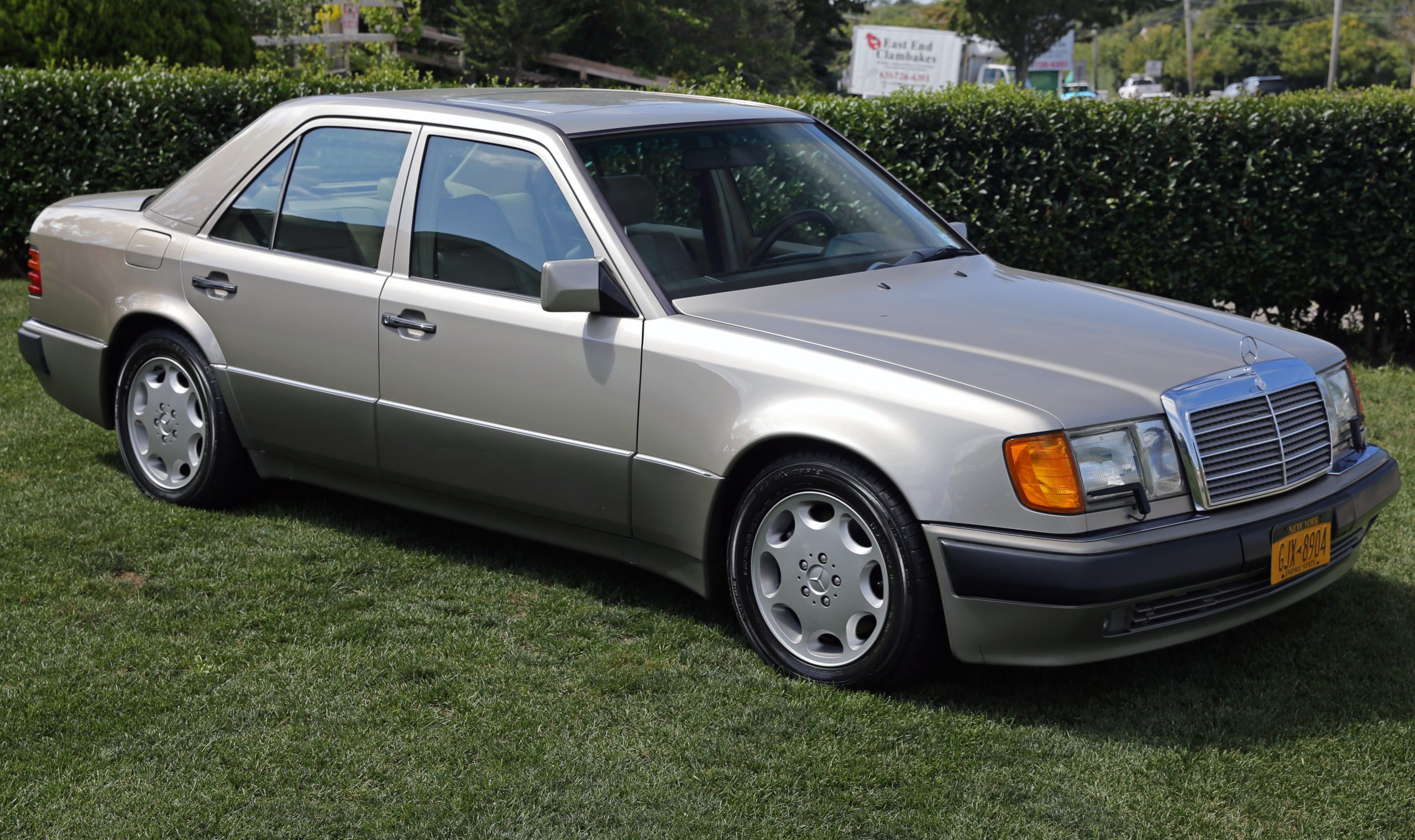
6. Mercedes-Benz 4MATIC W124
The Mercedes-Benz W124, equipped with the 4MATIC all-wheel-drive system, was introduced in the late 1980s as a combination of luxury, performance, and technological advancement. Mercedes aimed to improve handling and safety, particularly in adverse weather conditions, while maintaining the elegance expected of a premium sedan.
Its AWD system distributed power intelligently to maximize traction and stability, demonstrating that drivetrain innovation could enhance comfort and performance simultaneously. The W124 appealed to drivers who demanded both refinement and capability, proving that all-wheel drive could complement high-end luxury without compromise.
The W124 excelled in both urban and rural environments, offering a smooth, quiet ride while maintaining control over varied surfaces. Its AWD system proved particularly valuable in regions with snow or rain, highlighting the safety advantages of distributing power to all four wheels.
Drivers quickly recognized the benefits, as the car remained composed under conditions that might challenge rear-wheel-drive competitors. This combination of reliability, safety, and luxury elevated the W124 beyond its contemporaries, marking it as a forward-looking vehicle for discerning buyers.
The influence of the W124 4MATIC continues to shape luxury sedans and crossovers. Its successful integration of AWD into a high-end vehicle demonstrated that performance, comfort, and safety could coexist, encouraging other manufacturers to adopt similar systems.
Today, the W124 is celebrated as a landmark in automotive engineering, showcasing the value of innovation in drivetrain technology and solidifying Mercedes-Benz’s reputation as a leader in combining luxury with advanced performance features.

7. Porsche 959
The Porsche 959 is one of the most legendary supercars of the 1980s, combining extreme performance with groundbreaking all-wheel-drive technology. Porsche engineered the 959 to excel both on the track and off the beaten path, incorporating an advanced AWD system that distributed torque variably between the front and rear wheels.
This allowed for unmatched traction and stability during acceleration, cornering, and braking, even at very high speeds. The 959 represented a leap forward in automotive engineering, showcasing how AWD could transform supercar performance, handling, and drivability.
Its combination of innovation and speed captured the attention of enthusiasts worldwide, redefining expectations for what a high-performance vehicle could achieve.
The 959 featured an electronically controlled center differential, paired with a sophisticated suspension system, which adjusted automatically according to driving conditions. This system allowed the car to remain composed under extreme loads, providing remarkable agility and grip.
Porsche’s engineers also implemented lightweight materials, aerodynamic enhancements, and advanced braking systems, ensuring that the AWD technology could operate at the limits of the car’s capabilities. The result was a supercar that delivered both blistering acceleration and stability, unmatched by most contemporaries.
In motorsports, the 959 demonstrated its versatility by succeeding in both racing and rally events, including the grueling Paris-Dakar Rally. Its AWD system allowed the car to tackle challenging terrain without compromising speed or handling.
The 959’s ability to combine road performance with off-road competence highlighted the potential of all-wheel drive to enhance versatility in even the fastest vehicles. Porsche proved that AWD could be a performance advantage rather than a compromise, influencing the development of future sports cars and supercars.
The interior of the 959 emphasized driver engagement and ergonomics. Controls were designed to provide intuitive access to performance settings, while seating and instrumentation supported high-speed driving with precision.
Despite its rally-inspired capabilities, the car remained usable on public roads, offering comfort alongside extraordinary performance. This combination of practicality and technical brilliance contributed to the 959’s reputation as one of the most advanced supercars of its era, blending performance, innovation, and luxury in a way that few vehicles could match.
The Porsche 959’s legacy is immense, as it set new standards for AWD systems in high-performance cars. Its influence can be seen in modern Porsche models, including the 911 Turbo and 918 Spyder, which incorporate advanced AWD systems for enhanced handling.
Collectors continue to prize the 959 for its rarity, technological sophistication, and historical importance, recognizing it as a true milestone in automotive engineering. The car remains an enduring example of how forward-thinking design can shape the future of high-performance vehicles.

8. Toyota Land Cruiser FJ40 4WD
The Toyota Land Cruiser FJ40 is an iconic off-road vehicle from the 1960s and 1970s, celebrated for its ruggedness and pioneering four-wheel-drive capabilities. Built for durability, reliability, and versatility, it became a favorite among adventurers, military personnel, and explorers in challenging environments.
Its simple yet effective AWD system allowed drivers to tackle rough terrain with confidence, from rocky trails to muddy roads. The FJ40’s design prioritized mechanical toughness over luxury, but its utilitarian charm and exceptional capability made it one of the most influential 4WD vehicles of its era.
Mechanically, the FJ40 employed a part-time four-wheel-drive system with low-range gearing, allowing it to conquer steep inclines and treacherous surfaces. The suspension was engineered to maximize wheel travel and maintain traction under extreme conditions, while the drivetrain was robust enough to endure years of heavy use.
Its simplicity was part of its genius, as repairs could often be performed with basic tools even in remote locations. This practical approach to AWD technology demonstrated Toyota’s understanding of how mechanics and reliability intersected to create a vehicle built to last.
The FJ40’s off-road capability was complemented by a lightweight, boxy design that facilitated maneuverability in tight environments. The vehicle could traverse narrow paths, ford rivers, and navigate rocky terrain with relative ease, giving it legendary status among off-road enthusiasts.
Its AWD system ensured that power was delivered efficiently to wheels with grip, minimizing the risk of getting stuck. Drivers appreciated its straightforward controls and predictable handling, which emphasized function over style without diminishing appeal.
Despite its utilitarian focus, the FJ40 offered comfort and usability for daily driving in some regions. Seating was simple but effective, and visibility was excellent, making navigation on rough or uneven roads easier. The vehicle’s interior could be adapted for cargo or passenger transport, further enhancing its versatility.
Its reputation for toughness, combined with AWD capability, made it a benchmark for off-road vehicles, influencing both competitors and Toyota’s future designs.
The Land Cruiser FJ40’s legacy endures in the form of modern off-road vehicles that prioritize reliability, capability, and simplicity. Its all-wheel-drive technology demonstrated that mechanical ingenuity could achieve remarkable results without complex electronics, setting a standard for overlanding and off-road performance.
Collectors and enthusiasts continue to value the FJ40 for its historical significance, rugged charm, and unmatched versatility, cementing its place as a true pioneer in AWD vehicles.

9. Audi quattro
The Audi 80 quattro, introduced in the early 1980s, brought all-wheel-drive technology to the compact executive car segment. Unlike high-performance sports cars, the 80 focused on everyday usability while integrating advanced drivetrain systems that were typically reserved for larger or sportier models.
Its AWD system enhanced traction and stability, making it a reliable option for drivers facing variable road conditions. By combining performance, safety, and practicality, the Audi 80 quattro set a precedent for compact sedans, demonstrating that AWD was not just for extreme or specialized vehicles.
In addition to its drivetrain advantages, the Audi 80 quattro featured refined styling and interior comfort. Spacious seating, ergonomic controls, and quality materials enhanced the driving experience, making it competitive with luxury sedans in its class.
The AWD system complemented these attributes, providing peace of mind for drivers in rain, snow, or icy conditions. Its combination of safety, comfort, and mechanical sophistication made it a well-rounded vehicle that appealed to a wide range of consumers.
Collectors and enthusiasts appreciate the Audi 80 quattro for its historical significance and innovative design. The car represents a turning point in automotive history, when AWD began to move from niche applications to mainstream appeal.
Its combination of performance, safety, and everyday usability makes it a valuable example of early AWD technology, and it continues to be celebrated by those who value engineering foresight and practical innovation.

10. Mitsubishi Pajero 4WD
The Mitsubishi Pajero 4WD, introduced in the early 1980s, was designed to combine rugged off-road capability with family-friendly comfort. Its AWD system allowed it to traverse challenging terrains while providing stability and control for everyday driving.
The Pajero became popular in diverse markets, particularly where snow, sand, or rough roads demanded reliable traction. Mitsubishi engineered the vehicle to be versatile, capable of both long-distance travel and recreational off-roading, making it a pioneer in the SUV segment. Its design emphasized durability, practicality, and adaptability, demonstrating the full potential of AWD systems in multi-purpose vehicles.
Mechanically, the Pajero featured a selectable four-wheel-drive system with low-range gearing, allowing drivers to choose between part-time and full-time AWD depending on conditions. Its suspension and drivetrain were robust, capable of handling rough terrain while maintaining a comfortable ride.
The vehicle’s engineering focused on reliability and ease of maintenance, ensuring that even in remote locations, repairs could be performed efficiently. This combination of capability and practicality made the Pajero a benchmark in off-road vehicle design and demonstrated the advantages of AWD in diverse environments.
The vehicle’s interior and exterior design reflected its dual-purpose mission. The cabin offered space, comfort, and practical features for family travel, while the exterior maintained a rugged and functional appearance.
Ergonomic controls and seating allowed for long-distance travel without fatigue, making it a capable companion for both urban and off-road journeys. Its versatility contributed to its popularity, showing that AWD vehicles could be suitable for both work and recreation.
Today, the Mitsubishi Pajero 4WD is celebrated for its pioneering role in the SUV segment and its durable AWD technology. Its influence continues in modern SUVs, where all-wheel drive is often standard or highly valued. Collectors and enthusiasts appreciate the Pajero for its historical significance, reliability, and adaptability, recognizing it as a vehicle that demonstrated how AWD could transform both performance and everyday usability. Its legacy remains strong as a symbol of engineering foresight and practical innovation.