
Despite the widespread adoption of complex variable-displacement oil pumps in modern engines, many vehicles still rely on mechanical oil pumps for reliability and simplicity. The 10 Modern Cars With Mechanical Oil Pumps Instead of Complex Variable Units highlight engines that prioritize consistent oil flow, predictable pressure, and long-term durability.
From high-performance supercars like the Lamborghini Huracán and Audi R8 to practical daily drivers such as the Hyundai Tucson and Kia Soul, these engines demonstrate that traditional lubrication systems remain relevant. Mechanical pumps offer dependable performance under high stress and are easier to service, making them ideal for both enthusiasts and everyday drivers.
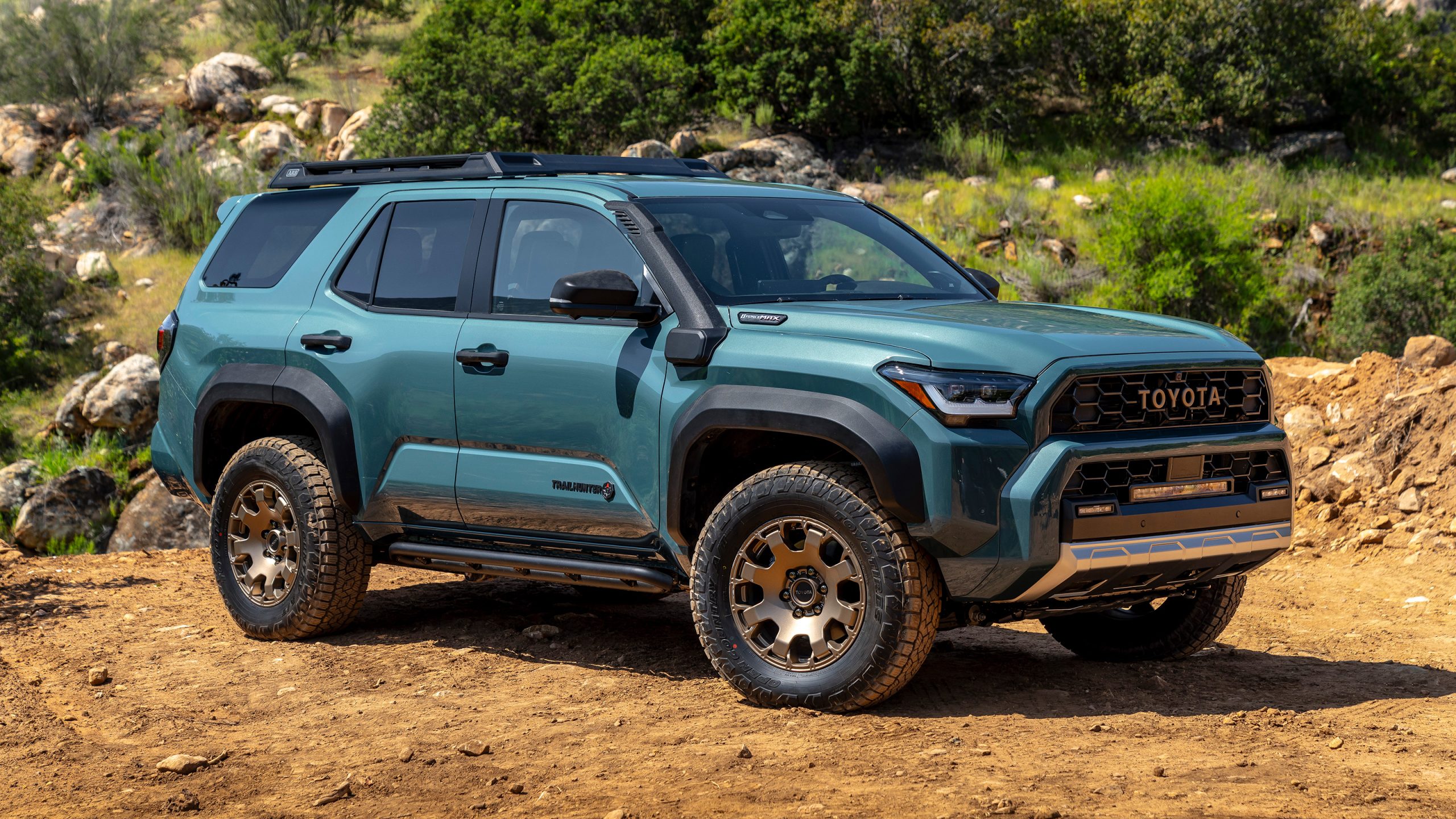
1. Toyota 4Runner 4.0L V6 (1GR-FE): Reliability and Simplicity in Engine Design
The Toyota 4Runner equipped with the 4.0-liter V6 1GR-FE engine is widely known for its durability and long service life. Built with a philosophy that favors reliability over modern efficiency features, the engine retains a traditional mechanical oil pump instead of the variable displacement pumps used in many newer engines.
This simple and proven design helps explain why many 1GR-FE engines regularly exceed 200,000 to 300,000 miles when properly maintained.
A major factor behind the engine’s reliability is its fixed displacement mechanical oil pump. Unlike variable oil pumps that depend on electronic solenoids, sensors, and actuator valves to control pressure, the 1GR-FE uses a robust trochoid rotor style pump that delivers steady lubrication throughout the RPM range.
Variable pumps can reduce parasitic load and improve fuel efficiency by a small margin, but they add complexity and additional failure points. By using a conventional pump, Toyota ensures predictable oil pressure and long-term durability, which is especially important for vehicles expected to operate in demanding conditions.
This approach also benefits the 4Runner’s off-road capability. Mechanical pumps maintain strong and consistent oil flow even during low-speed, high-load driving such as rock crawling, steep climbs, or towing.
These situations require reliable lubrication despite low engine speeds. Because the system relies less on electronics, there is also a lower chance of sensor failures triggering protective engine modes while traveling in remote areas. This makes the 4Runner particularly attractive to off-road enthusiasts and overlanders who prioritize dependability.
Another advantage of the 1GR-FE engine is ease of service and maintenance. The straightforward mechanical design makes diagnosing and repairing components simpler compared with modern engines that rely heavily on electronic control systems. This reduces long-term ownership costs and makes the vehicle easier to maintain during extended travel or remote use.
Despite its strengths, the engine does have some limitations. Fuel economy is relatively poor compared with newer turbocharged engines, and its power output is considered adequate rather than high-performance. Known issues include head gasket failures in some early models, water pump leaks, cracked exhaust manifolds, timing cover oil leaks, and worn idler pulleys.
The 1GR-FE V6 is valued for its proven durability and simplicity. By prioritizing reliability and consistent lubrication over small efficiency gains, Toyota created a dependable engine that matches the rugged purpose of the Toyota 4Runner.2. Ford 7.3L “Godzilla” V8: Heavy-Duty Performance with Modern Oil Pump Technology
The Ford Super Duty equipped with the 7.3-liter “Godzilla” V8 was introduced in 2020 as a powerful gasoline engine designed for demanding truck applications.
Built for towing, hauling, and commercial workloads, the engine produces about 430 horsepower and 475 lb-ft of torque. Ford developed the 7.3L using a philosophy that blends traditional V8 durability with select modern technologies to improve efficiency and meet current emissions standards.
A central component of the engine is its chain-driven variable displacement oil pump. Unlike older fixed-displacement mechanical pumps that deliver constant oil pressure, this modern pump adjusts its output depending on engine speed and load.
When the engine is operating at lighter loads or higher speeds, the pump reduces displacement to minimize parasitic losses. This helps reduce the amount of engine power required to operate the pump, slightly improving fuel efficiency and supporting compliance with modern fuel economy standards.
The variable pump also contributes to the engine’s heavy-duty lubrication system. The 7.3L includes piston-cooling oil jets that spray oil onto the underside of the pistons to control temperatures during intense towing or high-load conditions.
Maintaining proper lubrication for these components requires precise oil pressure management. The variable displacement pump allows the system to deliver oil exactly when and where it is needed, helping protect the engine during prolonged heavy workloads such as trailering or hauling.
Ford integrated the oil pump into the engine’s front cover assembly, where it is driven by a chain. This design allows for a compact layout and efficient packaging within the engine. The lubrication system also includes an 8-quart oil capacity and an integrated windage tray, which helps maintain stable oil pressure and temperature when the engine is operating under sustained heavy loads.
Despite the use of modern technology in the lubrication system, the 7.3L engine retains several traditional design features intended to improve durability and reduce complexity. It uses a pushrod cam-in-block architecture, port fuel injection rather than direct injection, and strong internal components such as a forged steel crankshaft and durable pushrods.
These design choices make the engine easier to maintain and appealing to truck owners who prefer simpler mechanical systems compared with more complex turbocharged engines or diesel powertrains.
The engine does have some limitations. Fuel economy is relatively low, with many drivers reporting 8 to 12 miles per gallon in real-world use. A small number of cases involving camshaft or lifter wear have also been reported, and some observers initially viewed the variable oil pump as a potential failure point, although significant issues remain rare.
The Ford 7.3L Godzilla V8 remains a popular choice for truck buyers seeking strong towing performance, durable construction, and the simplicity of a naturally aspirated gasoline engine.
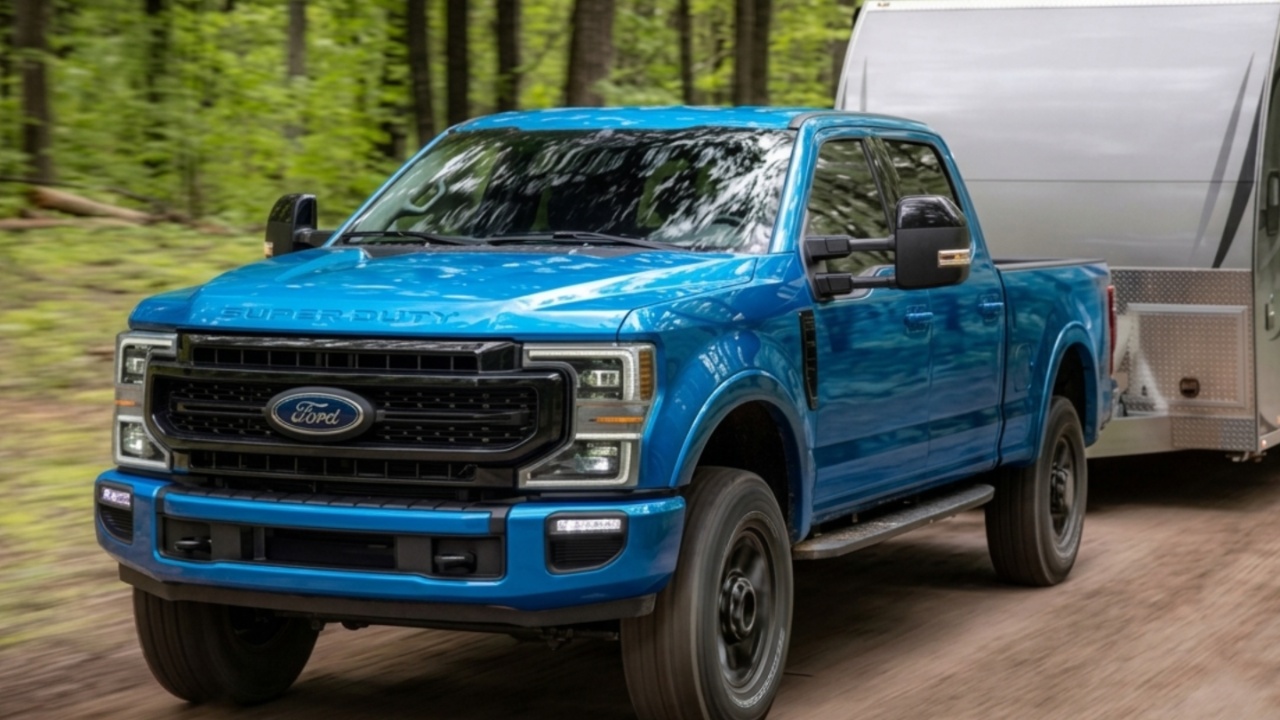
2. Ford 7.3L “Godzilla” V8: Heavy-Duty Performance with Modern Oil Pump Technology
The Ford Super Duty equipped with the 7.3-liter “Godzilla” V8 was introduced in 2020 as a powerful gasoline engine designed for demanding truck applications. Built for towing, hauling, and commercial workloads, the engine produces about 430 horsepower and 475 lb-ft of torque.
Ford developed the 7.3L using a philosophy that blends traditional V8 durability with select modern technologies to improve efficiency and meet current emissions standards. A central component of the engine is its chain-driven variable displacement oil pump.
Unlike older fixed-displacement mechanical pumps that deliver constant oil pressure, this modern pump adjusts its output depending on engine speed and load. When the engine is operating at lighter loads or higher speeds, the pump reduces displacement to minimize parasitic losses.
This helps reduce the amount of engine power required to operate the pump, slightly improving fuel efficiency and supporting compliance with modern fuel economy standards. The variable pump also contributes to the engine’s heavy-duty lubrication system.
The 7.3L includes piston-cooling oil jets that spray oil onto the underside of the pistons to control temperatures during intense towing or high-load conditions. Maintaining proper lubrication for these components requires precise oil pressure management.
The variable displacement pump allows the system to deliver oil exactly when and where it is needed, helping protect the engine during prolonged heavy workloads such as trailering or hauling. Ford integrated the oil pump into the engine’s front cover assembly, where it is driven by a chain.
This design allows for a compact layout and efficient packaging within the engine. The lubrication system also includes an 8-quart oil capacity and an integrated windage tray, which helps maintain stable oil pressure and temperature when the engine is operating under sustained heavy loads.
Despite the use of modern technology in the lubrication system, the 7.3L engine retains several traditional design features intended to improve durability and reduce complexity. It uses a pushrod cam-in-block architecture, port fuel injection rather than direct injection, and strong internal components such as a forged steel crankshaft and durable pushrods.
These design choices make the engine easier to maintain and appealing to truck owners who prefer simpler mechanical systems compared with more complex turbocharged engines or diesel powertrains. The engine does have some limitations. Fuel economy is relatively low, with many drivers reporting 8 to 12 miles per gallon in real-world use.
A small number of cases involving camshaft or lifter wear have also been reported, and some observers initially viewed the variable oil pump as a potential failure point, although significant issues remain rare. The Ford 7.3L Godzilla V8 remains a popular choice for truck buyers seeking strong towing performance, durable construction, and the simplicity of a naturally aspirated gasoline engine.
3. Lamborghini Huracán 5.2L V10: High-Performance Lubrication for Extreme RPM
The Lamborghini Huracán is powered by a 5.2-liter naturally aspirated V10 engine, producing between 602 and 631 horsepower and capable of revving up to 8,500 RPM. This high-revving engine is designed for extreme performance and track use, prioritizing reliability and consistent lubrication under demanding conditions.
A key feature is its mechanical oil pump paired with a dry-sump lubrication system, which ensures stable oil flow directly proportional to engine speed, protecting critical components such as the crankshaft, pistons, and valvetrain even at high RPM.
The dry-sump system stores oil in a separate reservoir and uses dedicated pumps to circulate it, preventing oil starvation during aggressive driving maneuvers like high-speed cornering, hard acceleration, and braking. This design maintains constant lubrication under strong lateral forces, a critical advantage over traditional wet-sump systems.
Mechanical pumps are preferred in the Huracán for their simplicity and durability. Unlike variable-displacement pumps that rely on electronic controls and actuators, mechanical pumps provide an immediate and predictable response, essential for high-performance track conditions. They are also capable of handling high-viscosity synthetic oils, ensuring thermal protection during prolonged high-speed operation.
Beyond its engine, the Huracán features a dual-clutch transmission, precise handling, and a striking design. Variants such as the EVO, Tecnica, STO, and Sterrato cater to both daily usability and track-focused performance.
The Huracán’s V10 engine, combined with its robust mechanical lubrication system, exemplifies an engineering philosophy that prioritizes precision, reliability, and consistent protection.
By focusing on durable, predictable oil delivery, Lamborghini ensures the engine can perform at extreme speeds while safeguarding vital components, making the Huracán a supercar that blends high performance with mechanical resilience.

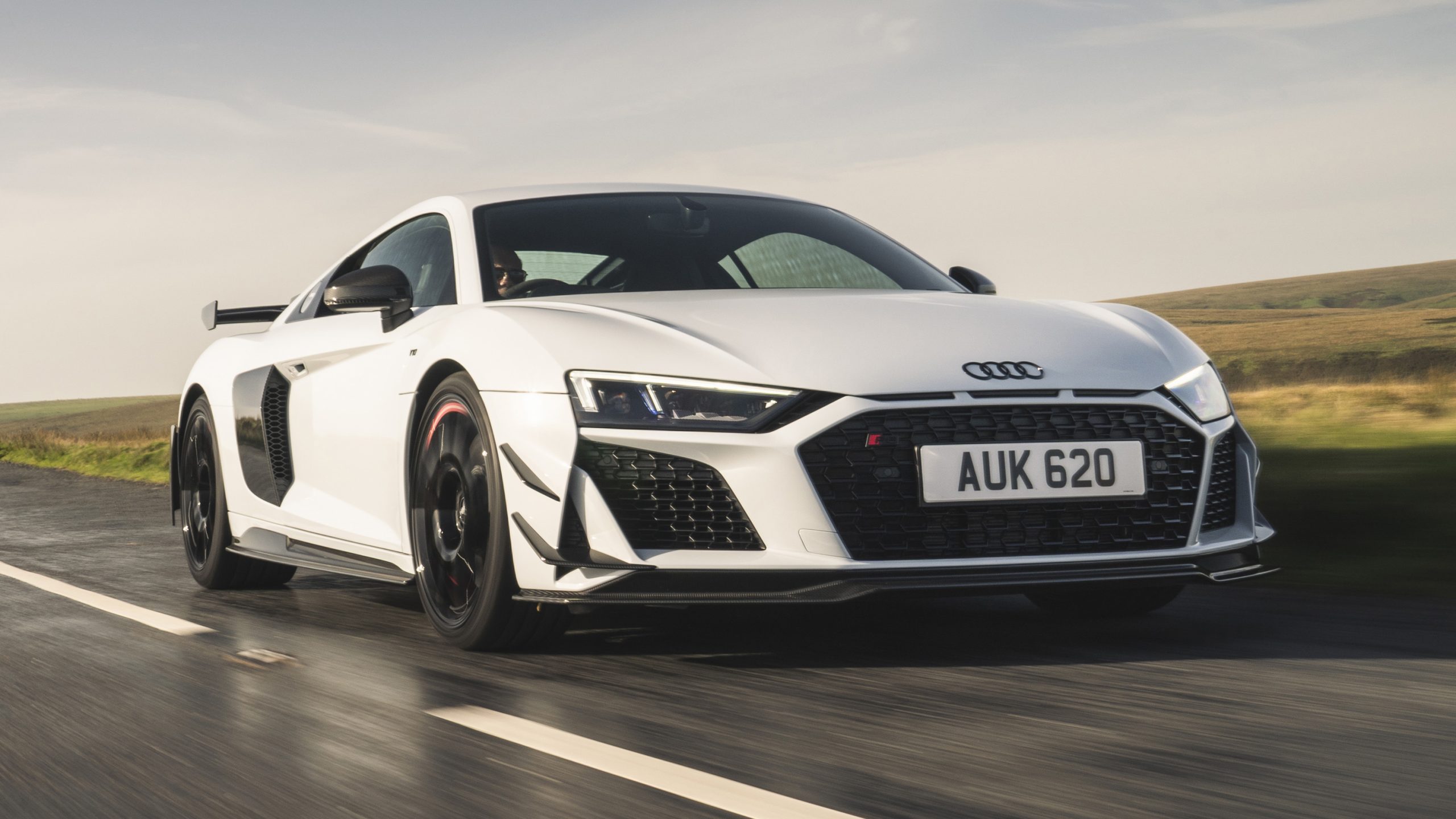
4. Audi R8 5.2L V10: Race-Derived Lubrication for High-Performance Driving
The Audi R8, powered by the 5.2-liter naturally aspirated V10, is one of the most celebrated modern supercars. Sharing its engine architecture with the Lamborghini Huracán, the R8 combines extreme performance with everyday usability. The V10 engine is capable of revving to about 8,700 RPM, producing supercar-level acceleration with 0–60 mph times under four seconds.
To ensure reliability under such demanding conditions, Audi designed the engine with a mechanical dry-sump lubrication system instead of a variable displacement oil pump commonly used in standard passenger vehicles.
The dry-sump system is essential for maintaining consistent oil pressure during aggressive driving. Unlike traditional wet-sump designs, where oil sits in a pan beneath the engine, the R8 stores oil in a separate reservoir. A dedicated suction pump removes oil from the crankcase while a pressure pump circulates it through the engine. This design prevents oil starvation during hard cornering, braking, or acceleration.
High-performance driving can generate strong lateral forces that cause oil to move away from the pickup point in a wet-sump system, which could damage the engine. The R8’s dry-sump setup ensures continuous lubrication regardless of driving conditions.
Another reason for using a mechanical pump system is the engine’s high-revving nature. A crank-driven pump produces oil pressure that increases directly with engine speed, ensuring that lubrication keeps pace with the engine’s rotational demands.
At very high RPM levels, components such as the crankshaft, pistons, and valvetrain require constant cooling and lubrication. The mechanical pump provides a predictable and immediate response without relying on electronic adjustments.
The dry-sump design also allows engineers to mount the engine lower in the chassis, eliminating the need for a deep oil pan. This lowers the vehicle’s center of gravity and improves handling and stability, both of which are critical for a mid-engine performance car.
Beyond its engineering, the R8 is widely praised for its balance of comfort and performance. It offers a refined interior, a driver-focused digital cockpit, and a smooth seven-speed dual-clutch transmission. The Quattro all-wheel-drive system provides strong traction, while rear-wheel-drive versions deliver a more playful driving experience.
With its race-inspired lubrication system and high-revving V10, the Audi R8 represents a rare combination of supercar excitement and everyday drivability.
5. Toyota Land Cruiser 70 Series 4.5L V8 Diesel: Built for Extreme Durability
The Toyota Land Cruiser 70 Series, powered by the 4.5-liter V8 diesel 1VD-FTV engine, is renowned for its toughness and ability to operate in extreme conditions. Popular in regions such as Australia, Africa, and the Middle East, the 70 Series is designed around durability, mechanical reliability, and ease of repair rather than modern efficiency or high-tech features.
A key aspect of its design is the fixed-displacement mechanical oil pump, which provides steady lubrication without relying on sensors, actuators, or electronic control systems.
Unlike variable-displacement pumps, the mechanical unit delivers constant oil pressure, ensuring critical engine components are protected during heavy loads, low-speed operation, towing, and rugged off-road driving.
This reliability is vital for vehicles operating far from service centers, where field serviceability is essential. The pump’s simple design allows for repairs using basic tools, making maintenance feasible in remote areas.
The 1VD-FTV V8 diesel itself is built for durability and strong torque output, supporting demanding off-road tasks, heavy hauling, and long-distance expeditions. The vehicle also includes robust four-wheel-drive components, such as locking differentials to enhance traction on difficult terrain.
While the 70 Series excels in rugged performance, it has some limitations. Fuel economy is relatively low, the ride can feel stiff on paved roads, and the cabin lacks the comfort and amenities of modern SUVs, although recent updates have added touchscreen infotainment and smartphone connectivity.
The Toyota Land Cruiser 70 Series represents a heavy-duty, dependable vehicle designed to thrive in challenging environments. Its combination of a durable V8 diesel engine, mechanical oil pump, and straightforward engineering makes it a trusted choice for industries like mining, agriculture, humanitarian work, and long-distance overland travel, prioritizing reliability and serviceability over luxury or efficiency.

Also read: 5 Cars With Excellent Air Conditioning for Hot Climates vs 5 That Struggle
6. Kia Soul 2.0L Nu Engine: Practical Design for Everyday Reliability
The Kia Soul, powered by the 2.0-liter Nu inline-four engine, is a compact vehicle designed for practicality, affordability, and everyday commuting. Producing around 147 horsepower, the naturally aspirated engine delivers sufficient performance for city driving and routine transportation rather than high-speed performance.
A notable feature of this engine is its traditional mechanical oil pump, which replaces the more complex variable-displacement units commonly found in turbocharged engines.
The mechanical oil pump is key to the engine’s reliability and cost-efficiency. Unlike variable pumps that rely on electronic controls and internal mechanisms to adjust oil pressure, the mechanical pump provides steady lubrication proportional to engine RPM.
This ensures consistent protection for essential components such as the crankshaft, camshafts, and valve train, particularly in the DOHC 16-valve configuration of the Nu engine. Its simplicity reduces potential failure points, eases manufacturing, and supports affordable ownership, making it ideal for a high-volume commuter vehicle.
The Kia Soul also benefits from its practical design. Its boxy shape maximizes interior space, providing comfortable seating and generous cargo capacity, while modern tech features like touchscreen infotainment, smartphone connectivity, and premium audio enhance usability.
Fuel economy is strong for its class, averaging 29 MPG in the city and 35 MPG on the highway, with later models equipped with an Intelligent Variable Transmission for smooth, efficient operation.
Some model years have reported oil consumption and issues with oil control rings, making regular maintenance and oil checks important. The Kia Soul 2.0L Nu engine balances mechanical simplicity, reliability, and practicality, offering a dependable, efficient, and accessible option for everyday driving without unnecessary complexity.

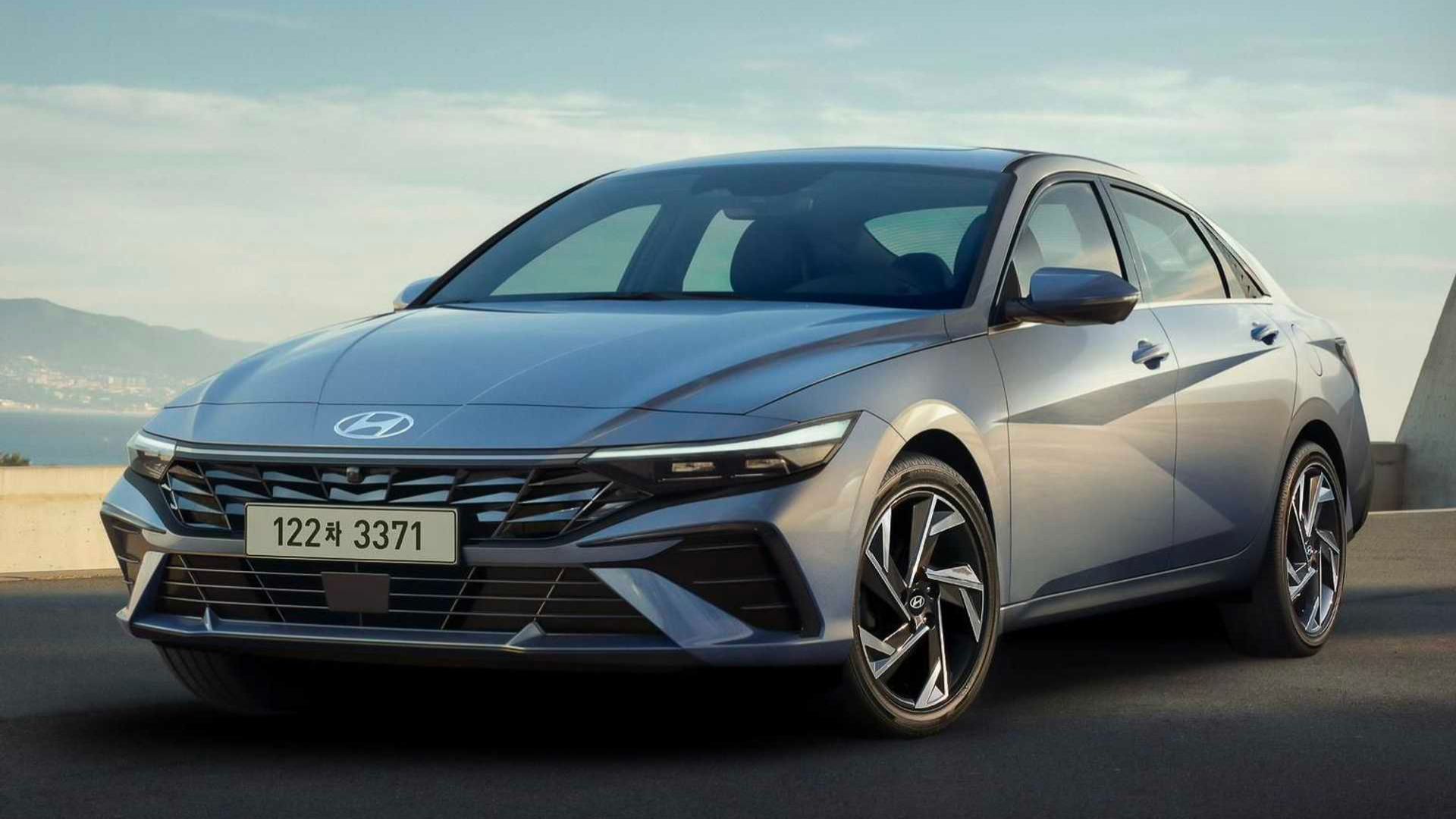
7. Hyundai Elantra 2.0L I-4: Mechanical Simplicity for Reliable Commuting
The Hyundai Elantra, equipped with the 2.0-liter naturally aspirated inline-four engine, is engineered for reliability, fuel efficiency, and cost-effective ownership. Sharing its engine lineage with the Kia Soul, the base 2.0L I-4 focuses on mechanical simplicity rather than high-end efficiency technologies.
A core feature of this engine is its traditional mechanical oil pump, often gear-driven or, in some recent generations, a rotary gerotor design, which ensures consistent oil flow across the operating range. Unlike variable-displacement pumps found in turbocharged or high-performance engines, the mechanical pump provides a straightforward, reliable lubrication system that rarely requires specialized diagnostic tools.
One key advantage of the mechanical oil pump is proven durability and consistent performance. Driven directly by the crankshaft or timing system, the pump delivers oil in direct proportion to engine RPM.
This guarantees steady lubrication for critical components such as the camshafts, pistons, and valvetrain throughout the engine’s lifecycle. Its simplicity reduces potential failure points, contributing to lower long-term maintenance costs and greater peace of mind for daily drivers.
The use of a mechanical pump also supports production efficiency and cost-effectiveness. Fewer moving parts and minimal reliance on electronics make the pump easier and cheaper to manufacture.
For the 2.0L Elantra, this aligns with Hyundai’s goal of delivering a dependable, low-maintenance engine for the value-conscious segment. Serviceability is also enhanced, as mechanical pumps are simpler to replace compared with electronic variable pumps that often require calibration and diagnostic equipment.
The 2.0L engine, combined with a Continuously Variable Transmission (CVT), provides a smooth, efficient driving experience. Fuel economy is strong, with EPA ratings around 31 MPG city and 41 MPG highway, making the Elantra an economical choice for commuting. Acceleration is adequate for everyday driving, though the engine prioritizes efficiency and comfort over sporty performance.
The Hyundai Elantra also features a modern interior, including digital displays, dual-screen options, and ergonomic space for passengers. Safety ratings are high, and the car is considered generally reliable with regular maintenance, though some owners report minor oil consumption or CVT-related issues.
By emphasizing mechanical simplicity, cost-effective design, and consistent lubrication, the 2.0L Elantra engine delivers dependable daily driving performance while keeping long-term maintenance straightforward for budget-conscious buyers.
8. Kia Telluride 3.8L V6 Lambda II: Mechanical Oil Pump for Reliability and Efficiency
The Kia Telluride, powered by the 3.8-liter Lambda II V6 GDI engine, is a midsize SUV celebrated for its comfort, spacious cabin, and towing capabilities. Producing 291 horsepower, the engine delivers smooth and dependable performance for family commuting and long highway drives.
A key factor in its durability is the mechanically driven oil pump, integrated into the timing system. This pump ensures consistent lubrication proportional to engine RPM, maintaining steady oil pressure during towing, high-load operation, or extended drives.
The Lambda II engine uses a variable-displacement vane-type mechanical oil pump, which adjusts oil flow based on engine demands. Unlike fully electronic systems, this chain-driven setup balances efficiency with reliability, reducing parasitic drag while providing robust high-RPM lubrication to protect bearings and critical components.
The direct-injection design generates higher internal temperatures, making the pump essential for consistent lubrication and cooling, contributing to long-term engine longevity.
Paired with a smooth 8-speed automatic transmission, the Telluride offers a comfortable, car-like ride and seats up to eight passengers. Its modern interior features a 10.25-inch touchscreen, premium materials, and optional Driver Talk technology. Fuel economy is average for the segment, with approximately 20 MPG city and 26 MPG highway, while towing capacity reaches 5,000 pounds, making it practical for family trailers or light recreational hauling.
The all-wheel-drive system enhances on-road safety and traction rather than extreme off-road performance. While some owners report moderate oil consumption, the sealed, calibrated mechanical pump is designed for longevity with minimal maintenance.
The Kia Telluride 3.8L V6 combines a durable mechanical oil pump, reliable engine output, and a versatile, well-appointed interior. This makes it a practical, dependable choice for families seeking a capable midsize SUV that balances performance, comfort, and long-term reliability.

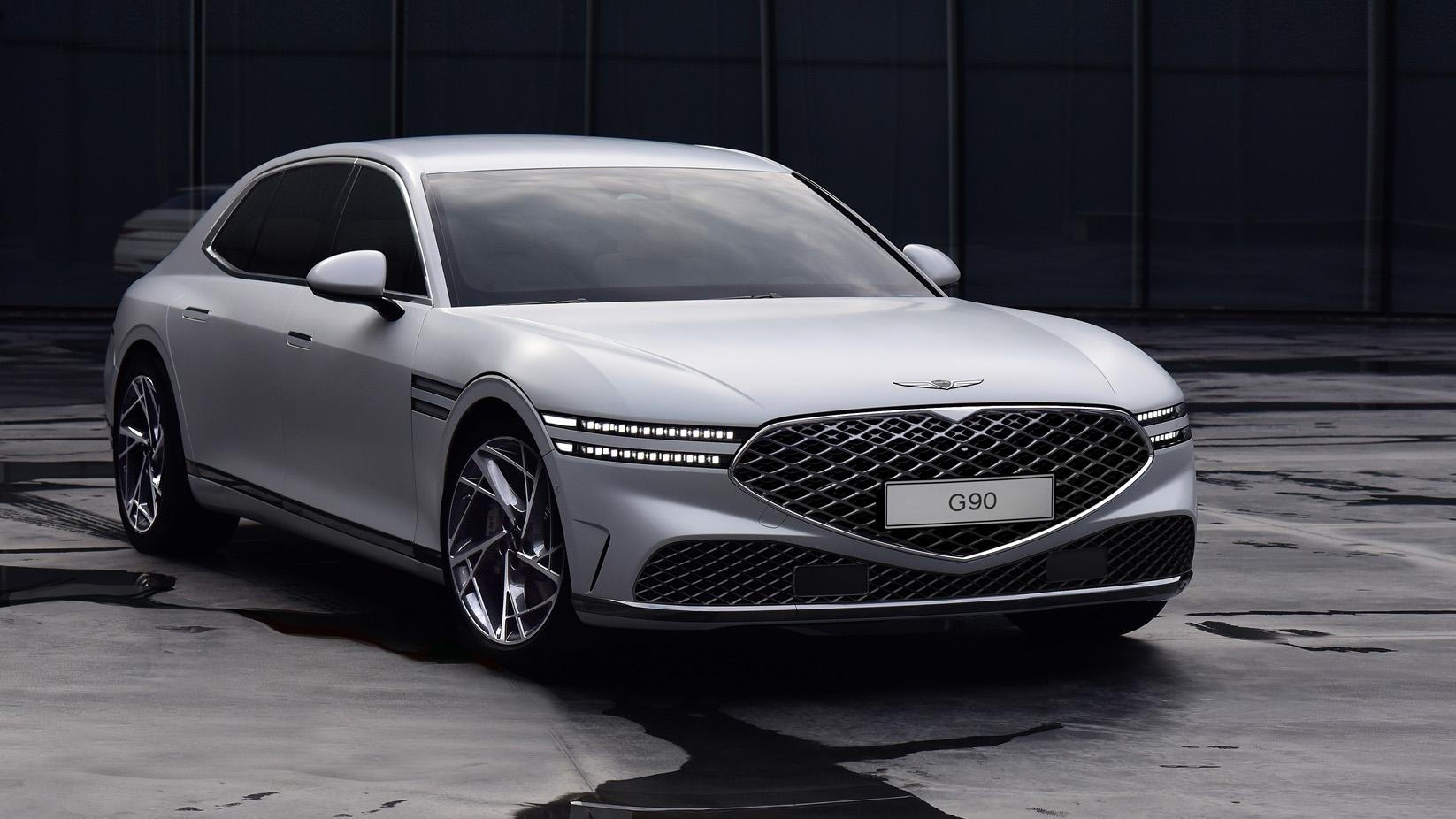
9. Genesis G90 5.0L V8 Tau Engine: Mechanical Oil Pump for Reliability and Performance
The Genesis G90, Hyundai’s flagship luxury sedan, is powered by the 5.0-liter Tau V8, an engine celebrated for its smoothness, refinement, and strong performance. Producing over 420 horsepower, the Tau V8 emphasizes reliability, high-RPM performance, and long-term durability rather than absolute fuel economy.
A key component enabling this balance is the mechanical gerotor oil pump, driven directly by the crankshaft, which ensures consistent high-pressure lubrication across all eight cylinders.
The mechanical oil pump is chosen over modern variable-displacement units for several important reasons. First, it provides high-RPM protection, delivering oil flow directly proportional to engine speed.
This ensures that the main bearings, camshafts, pistons, and hydraulic systems receive immediate, consistent lubrication, even under aggressive driving conditions. For a large V8 designed to be smooth and powerful, this predictable pressure is critical in maintaining engine longevity and preventing wear during sustained high-speed operation.
Second, the mechanical pump contributes to proven reliability and simplicity. Variable-displacement pumps rely on hydraulic controls and solenoids, which can fail and are more sensitive to oil quality.
In contrast, the Tau V8’s mechanical pump is robust and less prone to sudden or complex failures. This durability has helped the engine earn a reputation for reliability beyond 200,000 miles, supporting the G90’s role as a dependable executive sedan.
Third, the mechanical pump provides high-pressure consistency for auxiliary hydraulic systems, including dual continuous variable valve timing (D-CVVT) and chain tensioners. Consistent pressure ensures these systems function correctly, preventing tapping or knocking noises and maintaining smooth operation under all driving conditions.
Finally, maintenance is simpler and more forgiving. The mechanical pump, located at the front of the crankshaft with a straightforward pickup tube, is less sensitive to minor oil impurities and requires far less diagnostic effort in case of a pressure-related issue. This simplicity aligns with the G90’s design philosophy of delivering quiet, dependable performance without relying on complex electronic components.
The Genesis G90’s mechanical oil pump reflects a deliberate engineering focus on reliability, high-RPM performance, and long-term durability. While it may sacrifice a small degree of fuel efficiency compared to electronic variable pumps, it ensures the 5.0L Tau V8 remains a smooth, dependable, and luxurious powerplant for years of executive-level driving.
10. Hyundai Tucson 2.5L I-4 Smartstream G: Mechanical Oil Pump for Reliability and Efficiency
The Hyundai Tucson, equipped with the 2.5-liter Smartstream G naturally aspirated inline-four engine, delivers dependable, low-maintenance performance for daily driving. Producing 187 horsepower, the engine prioritizes smooth power delivery and durability over sporty acceleration, making it well-suited for commuting and family use.
A key component of this reliability is the mechanical oil pump. Unlike variable-displacement or electronically controlled pumps in turbocharged or hybrid engines, the Tucson’s pump delivers steady oil flow proportional to engine RPM. This ensures critical components such as pistons, camshafts, and bearings are consistently lubricated, reducing wear and enhancing long-term engine longevity. The mechanical design is simple, robust, and easy to service, minimizing failure points and costly repairs.
The pump complements the Smartstream platform’s focus on thermal efficiency and friction reduction, which includes piston coatings and optimized oil circulation. This approach maintains durability without relying on complex variable oil systems and allows Hyundai to allocate resources toward features like direct injection, variable valve timing, and an 8-speed automatic transmission for smooth, comfortable acceleration.
Fuel economy is moderate, with combined EPA ratings of 26–28 MPG, while the interior offers a spacious, tech-forward cabin with large touchscreens, wireless Apple CarPlay/Android Auto, and comfortable seating. Early models showed some oil consumption due to piston ring issues and occasional thermostat failures, but the Tucson remains highly regarded for its safe, compliant ride and modern safety features, including remote smart parking on higher trims.
The Hyundai Tucson 2.5L Smartstream G demonstrates a careful balance of mechanical simplicity, reliability, and everyday usability. Its mechanical oil pump underpins a durable, low-maintenance engine, making it an appealing choice for buyers seeking a conventional, non-hybrid powertrain in a stylish and practical compact SUV.

The 10 Modern Cars With Mechanical Oil Pumps Instead of Complex Variable Units illustrate how simplicity in engine design can coexist with modern performance and comfort. Mechanical oil pumps ensure steady lubrication, high-RPM reliability, and long-term durability while minimizing complexity and potential failure points.
From rugged off-road vehicles to luxury sedans and efficient daily drivers, these engines prioritize dependable operation over minor efficiency gains. By maintaining consistent oil pressure and flow, mechanical pumps contribute to engine longevity, making these vehicles reliable, low-maintenance, and capable across a variety of driving conditions.
Also read: 10 Cars With the Most Unusual Engine Placements in History