
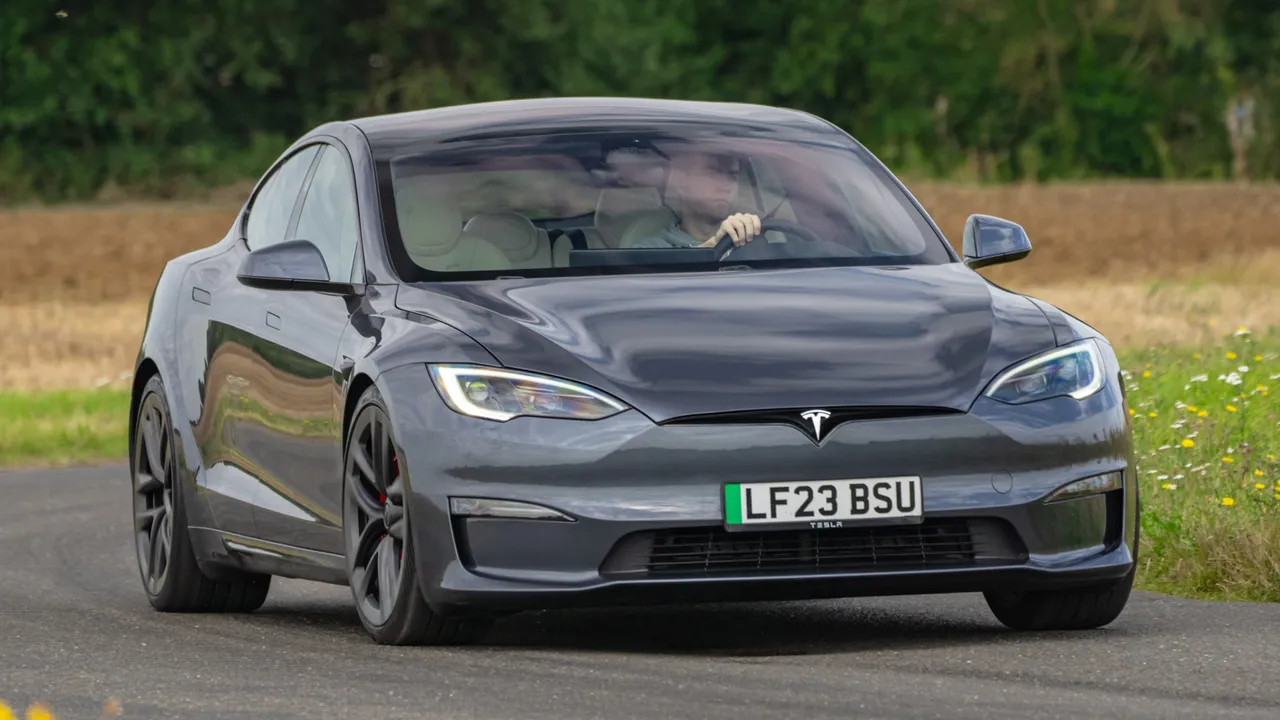
The automotive world is undergoing its most transformative era since the invention of the combustion engine. Hands-free driving, once the exclusive domain of science fiction, is now a tangible reality available to everyday consumers.
These systems can hold your lane, manage your speed, respond to traffic, and in some cases, even change lanes entirely on their own all without you touching the steering wheel. What was once reserved for prototype vehicles in controlled test environments is now available at dealerships across the country, in vehicles ranging from affordable electric hatchbacks to ultra-luxury sedans.
However, not all systems are created equal. Some require your hands on the wheel at all times, others monitor your eyes, and a select few allow you to look away from the road entirely.
The race toward greater autonomy is fierce, with Tesla, GM, Mercedes-Benz, Ford, BMW, Rivian, Volvo, Cadillac, Hyundai, and Nissan all competing fiercely to define what hands-free driving looks like for the next generation.
Safety features such as automatic emergency braking and lane-keeping assistance are now standard on nearly every new car, but the vehicles on this list go far beyond the basics. This list ranks the ten best cars you can buy right now for the most advanced, capable, and genuinely useful hands-free driving experience available on the market today.
1. Tesla Model S (with Full Self-Driving)
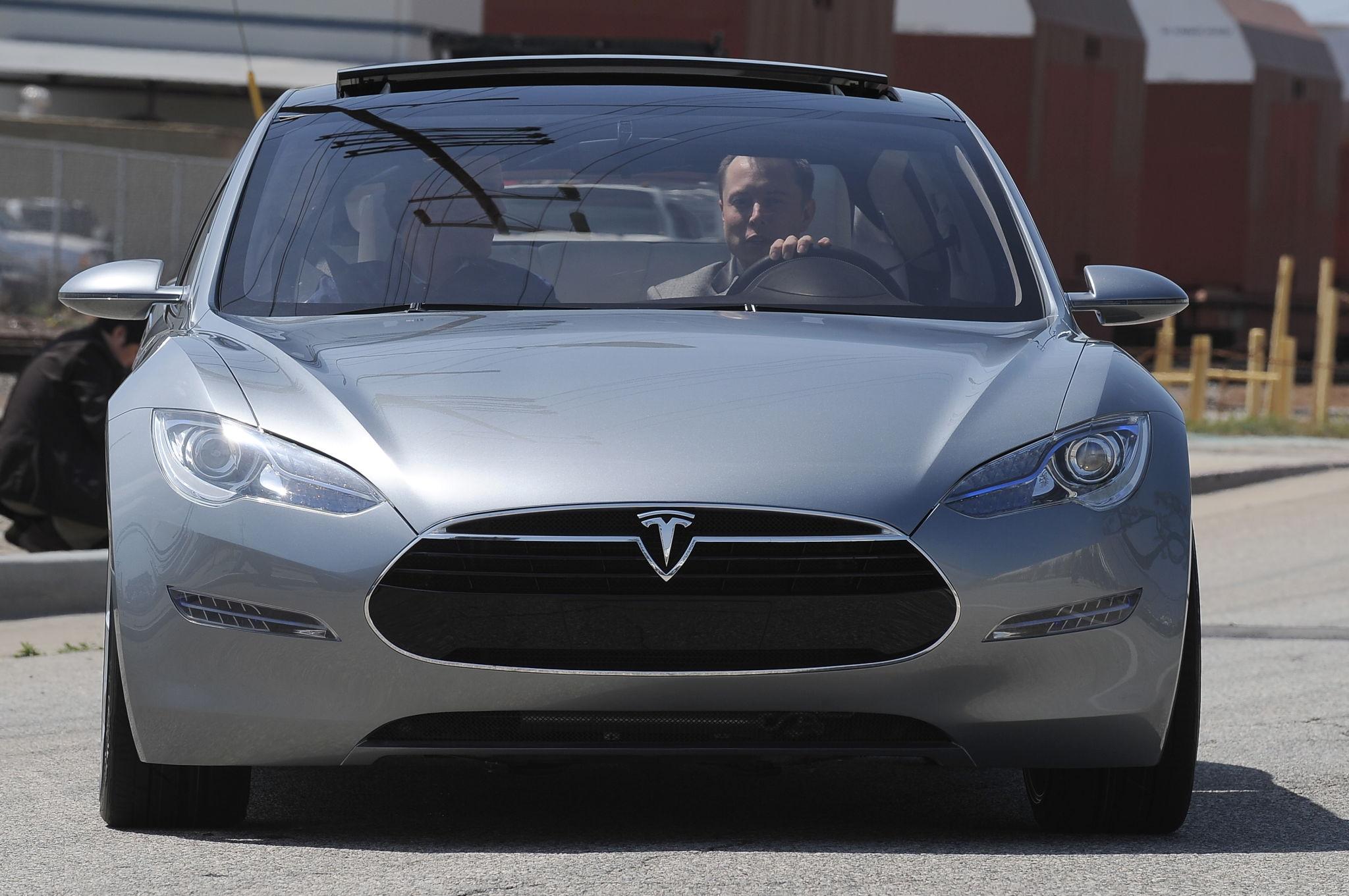
When it comes to hands-free and semi-autonomous driving, Tesla remains the most talked-about name in the industry, and the Model S is the crown jewel of its lineup. It is the vehicle that best Tesla’s dual ambition: building an extraordinary car and pushing the boundaries of what software-defined vehicles can do.
No other single brand has done more to shift public consciousness around autonomous driving than Tesla, and the Model S remains its most powerful statement of intent.
At the heart of the Model S’s autonomous capabilities is Tesla’s Full Self-Driving system, commonly known as FSD. Every new Tesla comes with standard Autopilot, which manages adaptive cruise control and lane centering on highways.
FSD, however, goes far beyond that foundation. The system includes city street navigation, traffic light and stop sign recognition, and automated lane changes, making it one of the few systems that attempts to operate not just on pre-mapped highways but also on ordinary urban roads. This is a fundamental distinction that separates Tesla from most rivals, whose hands-free systems are strictly limited to highway environments.
Tesla’s approach to building intelligence is equally distinctive. The company uses anonymous driving data from its entire global fleet to continuously train and improve the software using artificial intelligence and neural networks.
This means every mile driven by any Tesla owner around the world feeds back into a growing dataset, making the system smarter over time. The result is a system that improves through over-the-air software updates, meaning owners often wake up to a more capable car than the one they parked the night before.
No visit to the dealership, no hardware upgrade, just an improvement delivered overnight. The Model S is also exceptionally well-equipped in terms of hardware. Eight surround cameras provide 360-degree visibility around the vehicle, giving it a comprehensive view of its surroundings in all directions.
Radar and ultrasonic sensors complement the camera array, though Tesla has moved toward a more camera-centric approach compared to rivals who rely on LiDAR. Critics argue this creates challenges in low-visibility conditions, but Tesla’s defenders point to the sheer scale of real-world training data as a compensating factor that no LiDAR-equipped competitor can match.
The Model S Plaid version adds another dimension altogether with its extraordinary performance credentials. With three electric motors producing over 1,000 horsepower, it reaches 60 mph in under two seconds, making it one of the fastest production cars ever built.
This combination of hypercar performance and advanced driver-assistance technology in one vehicle is essentially unmatched anywhere in the automotive world. FSD is available as either a one-time purchase or a monthly subscription, making it accessible to a wider range of buyers.
For people who want the broadest possible hands-free capability across highways, city streets, and everything in between the Model S remains the benchmark.
2. Mercedes-Benz S-Class (with DRIVE PILOT)
If Tesla represents the ambitious, software-first approach to autonomy, the Mercedes-Benz S-Class represents the careful, certified, legally validated approach and in one critical way, it leads the entire industry.
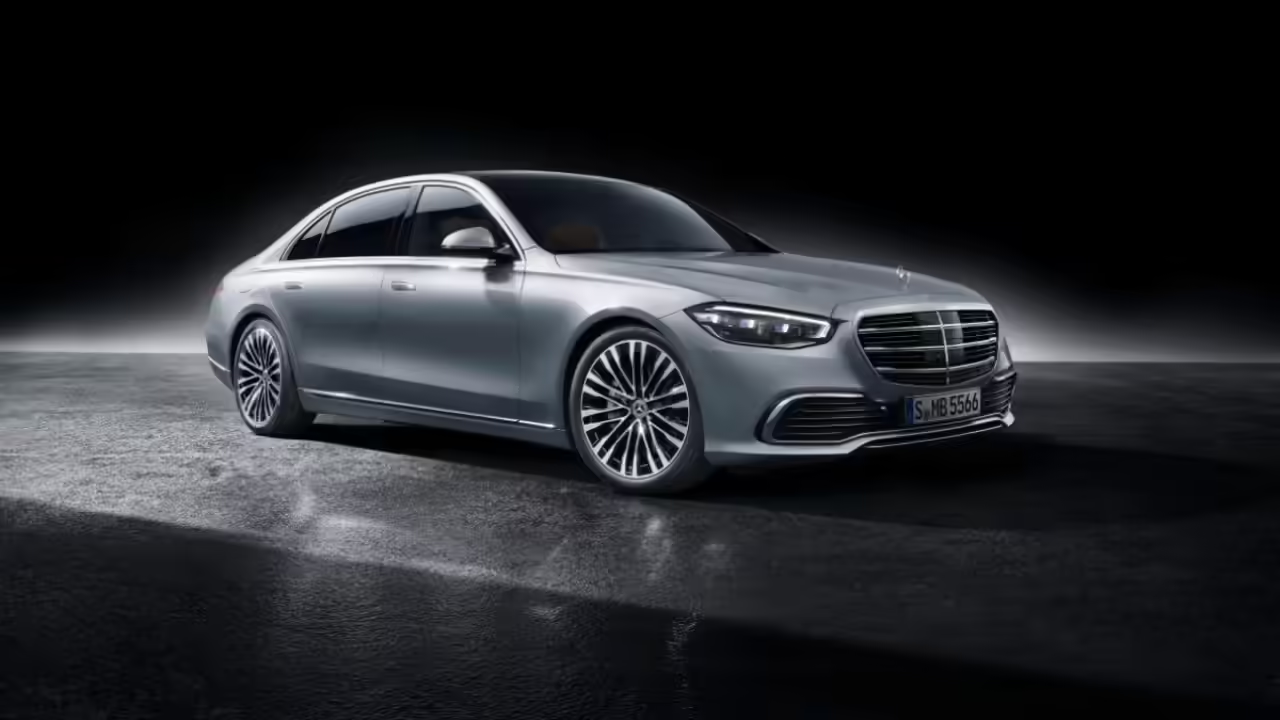
Mercedes-Benz is the first automaker to offer a self-driving system that meets SAE Level 3 autonomous driving standards with full regulatory approval. That is not a marketing claim. It is a certified, legally recognized distinction that carries profound real-world meaning for drivers and the industry alike.
The system in question is called DRIVE PILOT. Like other advanced driver assistance systems, DRIVE PILOT handles all the braking and accelerating for you when road and traffic conditions meet the system’s operational criteria.
What makes this system categorically different from anything else on this list is that drivers do not have to keep their eyes on the road while it is active.
In fact, in approved regions and road conditions, drivers can legally watch videos or use other applications on the car’s central display while DRIVE PILOT is in control. This is legally sanctioned, eyes-off driving something no other automaker currently offers at the consumer level with full regulatory backing.
The implications of Level 3 certification go far beyond convenience. Because DRIVE PILOT is legally recognized as an autonomous system under certain conditions, Mercedes-Benz not the driver accepts liability when the car is operating under DRIVE PILOT’s control.
This is a landmark and historic shift in automotive responsibility, and one that has been years in the making through extensive regulatory engagement in Germany and the United States. The system is currently approved in Germany and Nevada, with expansion to additional markets as regulators in those regions complete their review and certification processes.
The S-Class as a vehicle is, of course, one of the most luxurious automobiles ever built. Its cabin is a sanctuary of hand-stitched leather, Burmester high-fidelity audio, multi-zone ambient lighting, and the sweeping MBUX Hyperscreen infotainment display.
Placing DRIVE PILOT inside this vehicle makes perfect philosophical sense the entire point of the S-Class has always been that the driver or passenger should feel as relaxed and unstressed as possible. Being able to legally disengage from the act of driving entirely, even temporarily, is the ultimate expression of that ethos.
The system uses LiDAR, radar, cameras, and centimeter-precise HD mapping to build a comprehensive and redundant picture of the road at all times.
The combination of multiple sensing technologies working in parallel, together with regulatory certification and manufacturer liability acceptance, makes DRIVE PILOT arguably the most responsibly engineered hands-free system available to consumers today, even if its geographic availability remains limited for now. For buyers who prioritize safety certification over breadth of coverage, the S-Class is in a class entirely by itself.
3. Cadillac Escalade (with Super Cruise)
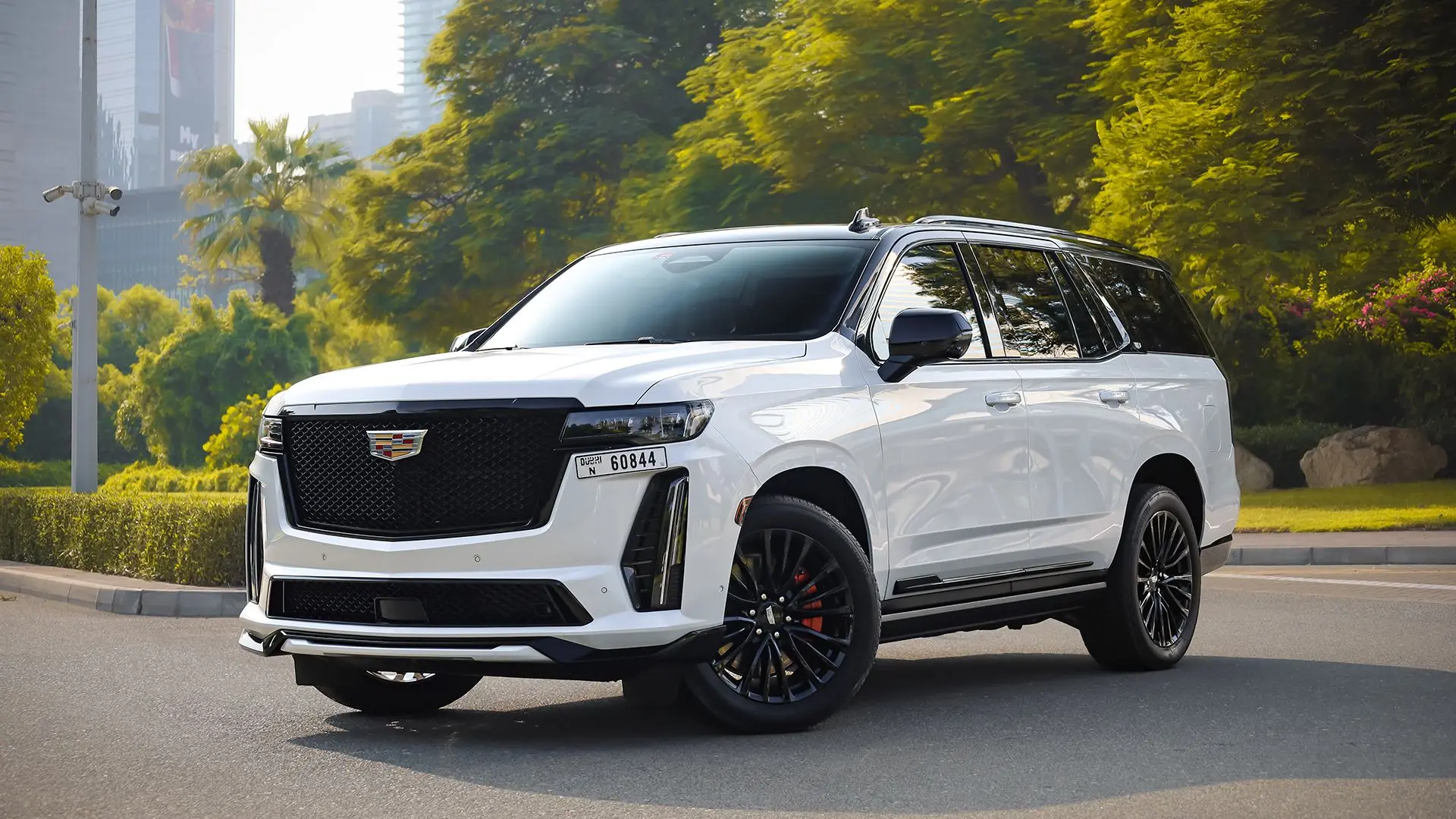
General Motors has quietly built one of the most capable and driver-friendly hands-free systems on the market, and the Cadillac Escalade is the most compelling vehicle in which to experience it.
Super Cruise was first launched on the Cadillac CT6 and has since evolved into a mature, well-refined, and genuinely impressive system that consistently receives top marks from independent automotive reviewers and safety organizations alike.
In the Escalade, surrounded by quilted leather, a 36-inch curved display, and a ride quality befitting the most expensive American luxury SUV, Super Cruise reaches its fullest and most satisfying expression.
The system is notable for an illuminated bar across the top of the steering wheel that changes color to communicate the system’s status. It turns blue when adaptive cruise control is active, green when Super Cruise hands-free mode is engaged, and red when the driver needs to take over.
This intuitive and immediately readable color-coding system makes it easy for drivers to understand exactly what the vehicle is doing at any given moment without having to divert attention to a screen or interpret complex visual indicators. It is one of the most elegantly designed user interfaces in the industry.
The geographic coverage of Super Cruise is genuinely impressive. The system works on highways that GM has pre-mapped for this purpose, and that network of compatible roads covers an extraordinary 750,000 miles of North American highways.
This is a vast and growing network that gives Super Cruise users consistent, reliable hands-free performance across an enormous proportion of the highways most drivers actually use.
In addition to adapting speed and maintaining lane position, the system can change lanes automatically or in response to a driver tapping the turn signal. It also has trailering capability, allowing trucks and SUVs to use hands-free driving even when towing a trailer or boat a feature that is practically unique in the market and enormously useful for Escalade owners.
Super Cruise uses a combination of technology including the Mobileye platform, precision GPS positioning, forward and side-facing cameras, radar, and critically, a driver-facing infrared camera that monitors eye gaze.
Super Cruise requires drivers to keep their eyes on the road even when their hands are off the wheel a deliberate and responsible safety philosophy. If the driver’s eyes are detected to be looking away from the road for too long, the system provides escalating alerts and ultimately disengages, handing control back to the driver.
For buyers who want hands-free highway capability in the most prestigious American luxury SUV ever made, the Escalade with Super Cruise is a definitive choice.
4. Rivian R1S (with Universal Hands-Free)
Rivian is a relative newcomer to the automotive world, but its approach to hands-free driving has rapidly become one of the most impressive and talked-about in the industry.
The R1S, Rivian’s all-electric three-row SUV, is the vehicle that best showcases what the company’s autonomy platform can do. With extraordinary off-road capability, a spacious and premium interior, and a rapidly expanding hands-free driving system, the R1S is making a compelling case to be considered among the very best in this category.
Rivian’s hands-free coverage network is one of its most significant competitive advantages. The system covers an expansive network of compatible roads, leading all rivals in sheer breadth of coverage.
This surpasses both GM’s Super Cruise and Ford’s BlueCruise in total miles of supported roads, and it works across a more varied range of environments than most competing systems.
For drivers who take mixed routes combining highways, rural roads, and suburban arterials, this broader coverage is enormously practical and distinguishes the R1S from rivals whose systems are strictly limited to divided-highway environments.
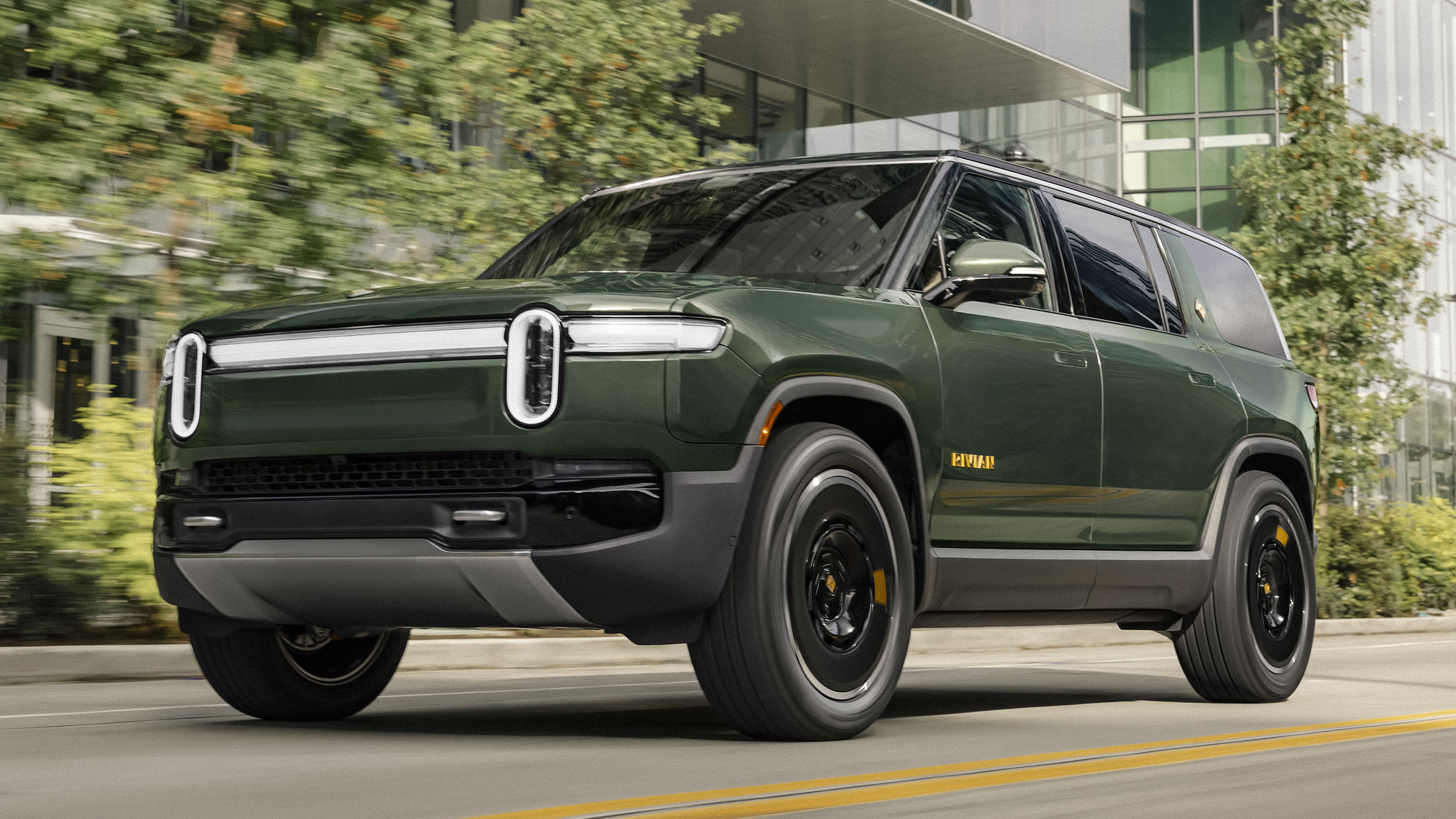
Rivian’s Autonomy Platform runs on second-generation hardware featuring eleven cameras, five radar units, twelve ultrasonic sensors, and a driver-facing infrared camera for attention monitoring.
This sensor-rich approach, which does not rely solely on pre-mapped highways, means the R1S can handle a more diverse range of driving situations with greater confidence.
The system manages steering, acceleration, and braking autonomously when conditions are appropriate, and it continuously monitors the driver to ensure appropriate attention is maintained at all times.
Rivian has also announced plans to roll out eyes-off capability, which would allow drivers to legally divert their gaze from the road during certain highway conditions.
If delivered as promised, this would place Rivian alongside Mercedes-Benz at the very top of the consumer autonomy hierarchy a remarkable achievement for a company that only began delivering vehicles in 2021.
The fact that the hands-free system comes standard on all second-generation Rivian trucks and SUVs, rather than locked behind expensive option packages, speaks volumes about the brand’s commitment to democratizing advanced driver assistance technology.
For adventure-focused electric SUV buyers who also want world-class autonomous driving capability, the R1S is an almost uniquely compelling vehicle.
Also Read: Top 10 Best Ways to Diagnose a Weak Spark in a Points Ignition System
5. Ford F-150 (with BlueCruise)
The Ford F-150 is the best-selling vehicle in the United States, and the integration of BlueCruise hands-free driving technology into America’s favorite truck is a development of genuine cultural and commercial significance.
It brings hands-free driving to millions of buyers who might never have considered a luxury sedan or a tech-forward electric vehicle, democratizing the technology in a way that no other single vehicle can match. When the most popular truck in the country comes with capable hands-free highway driving, it signals that this technology has moved firmly from novelty to mainstream reality.
BlueCruise allows drivers to take their hands completely off the wheel for extended periods of highway driving on pre-mapped divided highways known as Blue Zones. When the system is active, the driver’s display turns blue a clear and simple visual confirmation that hands-free mode is engaged.
The system handles adaptive cruise control, lane centering, and responds naturally to surrounding traffic, accelerating and decelerating smoothly to maintain safe following distances. A driver-facing camera monitors the driver’s eyes throughout, ensuring that attention is maintained even while hands are off the wheel.
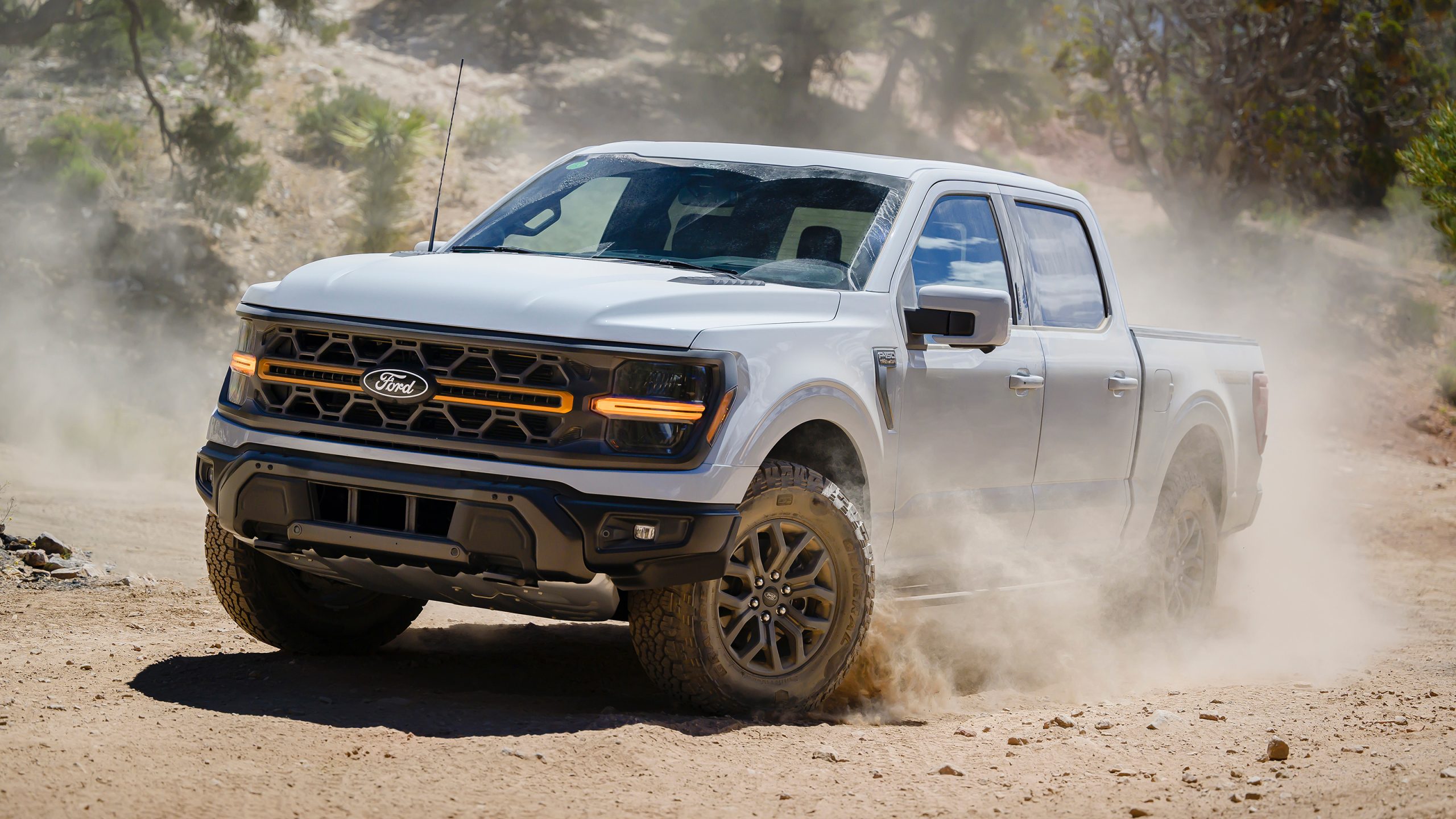
The system is available across a broad range of Ford’s lineup, including the F-150, the all-electric F-150 Lightning, the Mustang Mach-E, the Ford Expedition, and the Explorer. This breadth of availability means Ford has built an ecosystem of hands-free capable vehicles spanning trucks, electric SUVs, and family crossovers a more diverse portfolio than most competing automakers.
BlueCruise is typically offered as a trial period followed by a subscription, allowing Ford to continue expanding the Blue Zone map and refining system performance through ongoing over-the-air updates.
The F-150 Lightning, the electric variant of this iconic truck, takes the hands-free proposition further by pairing BlueCruise with strong towing credentials, a front trunk, and an impressively comfortable and refined interior.
For buyers who need a truck that can genuinely work hauling cargo, towing trailers, and covering long highway miles while also offering meaningful hands-free driving assistance, the F-150 with BlueCruise is a uniquely practical and characteristically American proposition that no rival from Europe or the luxury segment can quite replicate.
6. BMW iX (with Driving Assistance Professional)
BMW’s approach to semi-autonomous driving is characteristically precise, considered, and deeply informed by the brand’s performance-driving heritage.
The company that invented the concept of the ultimate driving machine is going through a fascinating philosophical balance: building cars that can drive themselves while preserving the engagement, dynamism, and driver-centricity that have defined the BMW experience for decades. The iX, BMW’s flagship all-electric SUV, represents the most advanced expression of that balance in the current lineup.
BMW’s Active Driving Assistance Professional package is the key technology here. It combines multiple driver assistance technologies and enables hands-free highway driving at speeds of up to 85 miles per hour.
The system can slow or completely stop the vehicle based on traffic conditions ahead, handle stop-and-go traffic on congested highways with smooth and natural responses, and for recent model years has added automatic lane change capabilities when the system determines conditions are safe. This package is available across BMW’s range including the 5 Series, 7 Series, X5, X7, and the iX.
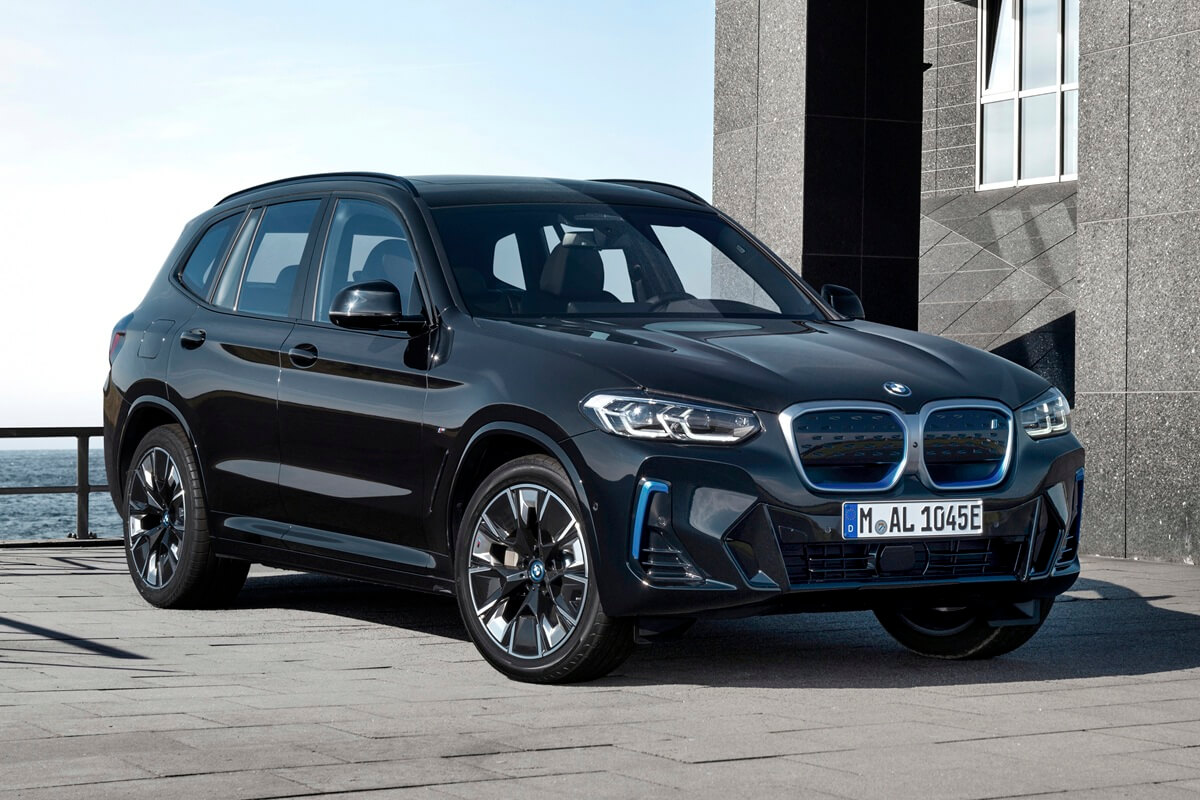
The iX specifically includes the Highway Assistant as part of this package, enabling hands-free highway driving under defined conditions. The system provides adaptive cruise control, precise lane centering, and automatic lane changes, all managed through BMW’s sensor suite of cameras and radar.
The iDrive 8 curved display provides clear and intuitive visualizations of the vehicle’s autonomous driving status at all times, and the steering wheel vibration and audio alert systems effectively communicate when the driver needs to re-engage. BMW’s philosophy emphasizes reliability and predictability over cutting-edge novelty, resulting in consistent, confidence-inspiring performance across a wide range of driving conditions.
BMW has announced plans to expand its driver-assistance capabilities further with its upcoming Neue Klasse platform, which will introduce more advanced features including fully automated parking and exit functions.
For drivers who appreciate a hands-free system that does exactly what it promises, integrates seamlessly with a world-class driving experience, and never delivers an unpleasant surprise, the BMW iX with Driving Assistance Professional is a deeply satisfying and technically accomplished choice.
7. Chevrolet Tahoe (with Super Cruise)
While the Cadillac Escalade represents the luxury pinnacle of GM’s Super Cruise lineup, the Chevrolet Tahoe brings that same remarkable hands-free technology to a significantly broader and more mainstream audience.
It is, in many ways, the most impressive demonstration of how capable and accessible Super Cruise truly is because it takes a large, heavy, family-hauling SUV and makes it feel surprisingly relaxed and effortless on the highway.
The Tahoe has long been a staple of American family life, school runs, and cross-country road trips, and Super Cruise transforms the experience of covering long interstate miles in one.
What makes the Tahoe with Super Cruise particularly compelling is the sheer contrast between the vehicle’s size and presence and the calm, confidence it projects on the highway when Super Cruise is engaged.
Watching a full-size SUV confidently go through a busy freeway with its driver’s hands resting calmly in their lap, the illuminated green bar on the steering wheel confirming the system’s engagement, is genuinely striking.
The system manages lane position with precision, changes lanes automatically or in response to a driver’s turn signal tap, and adjusts speed smoothly and naturally in response to surrounding traffic.
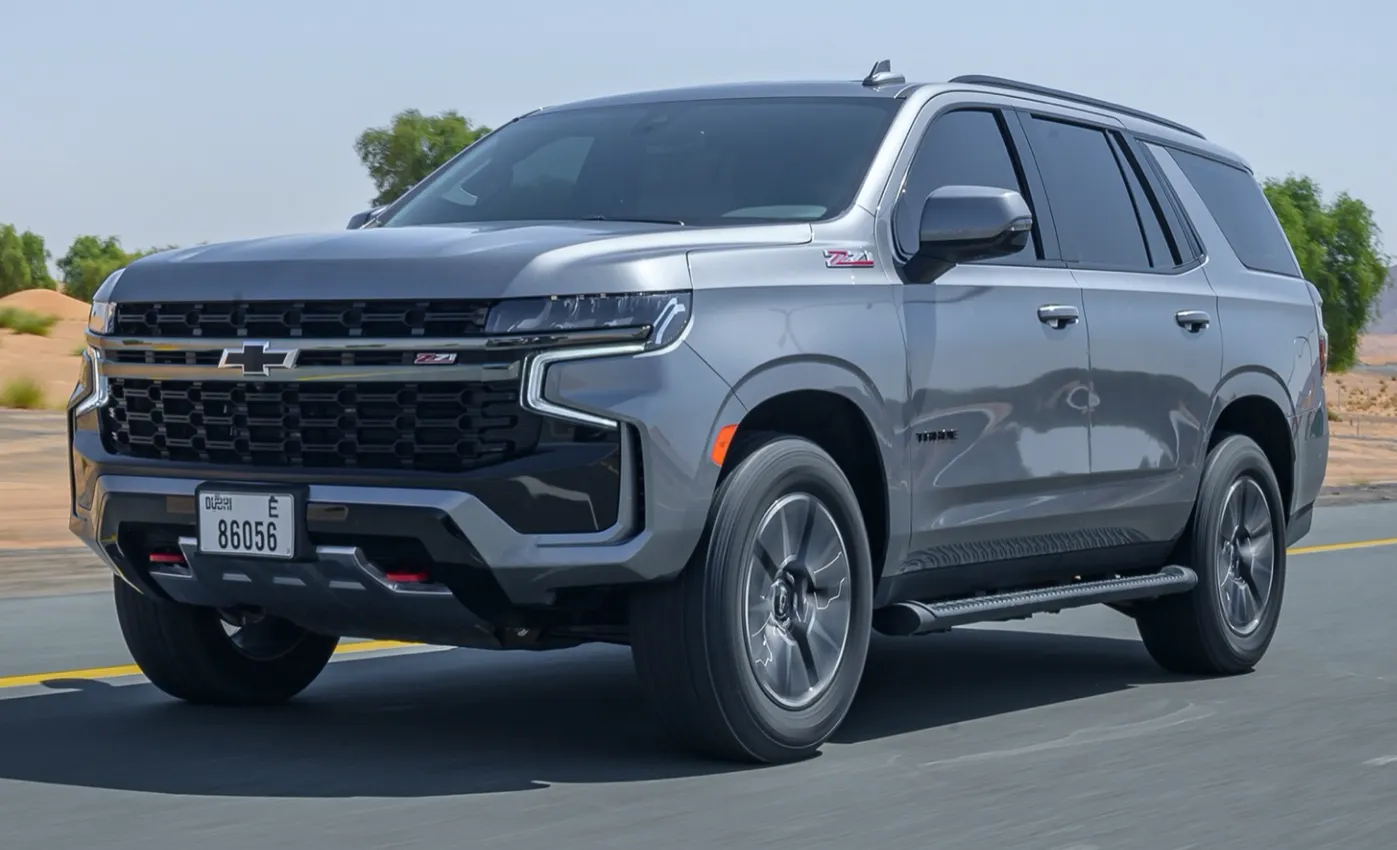
Super Cruise on the Tahoe offers the same 750,000 miles of pre-mapped North American highway coverage as it does in the Escalade, and the same eye-tracking driver monitoring system ensures that the driver’s attention remains on the road ahead at all times.
The trailering capability is also carried over, which is particularly relevant for Tahoe owners who regularly tow campers, boats, or horse trailers on long highway journeys exactly the kind of scenario where driver fatigue accumulates and the value of hands-free assistance is most tangible.
For large families, frequent road trip travelers, and anyone who regularly covers significant distances on the interstate without wanting to spend Escalade money, the Tahoe with Super Cruise available on select trims is a practical, spacious, and relatively accessible gateway into genuinely world-class hands-free driving technology. It is proof that advanced autonomous capability no longer requires a six-figure price tag.
8. Volvo EX90 (with Ride Pilot)
Volvo has always stood apart in the automotive world for its unwavering, principled commitment to safety above all else, and the EX90 extends that philosophy powerfully into the era of autonomous driving.
The Ride Pilot system, designed as a Level 3 hands-free driving solution, is one of the most technically sophisticated autonomous systems in development by any consumer automaker. Its arrival in the EX90 represents the culmination of decades of Volvo safety research applied directly to the challenge of vehicle autonomy.
Ride Pilot is designed for use on approved divided-highway routes and combines an extraordinary array of sensors to achieve its Level 3 ambitions. The system integrates LiDAR, five radar units, eight cameras, and sixteen ultrasonic sensors, all working together with advanced autonomous software to manage steering, speed, overtaking, and lane changes while engaged.
The sensor redundancy built into the EX90 is extraordinary even by the standards of this category. Sixteen ultrasonic sensors, five radars, eight cameras, and LiDAR operating in concert create a level of environmental awareness that is exceptionally robust and resilient to individual sensor failure or degradation a direct expression of Volvo’s safety-first philosophy.
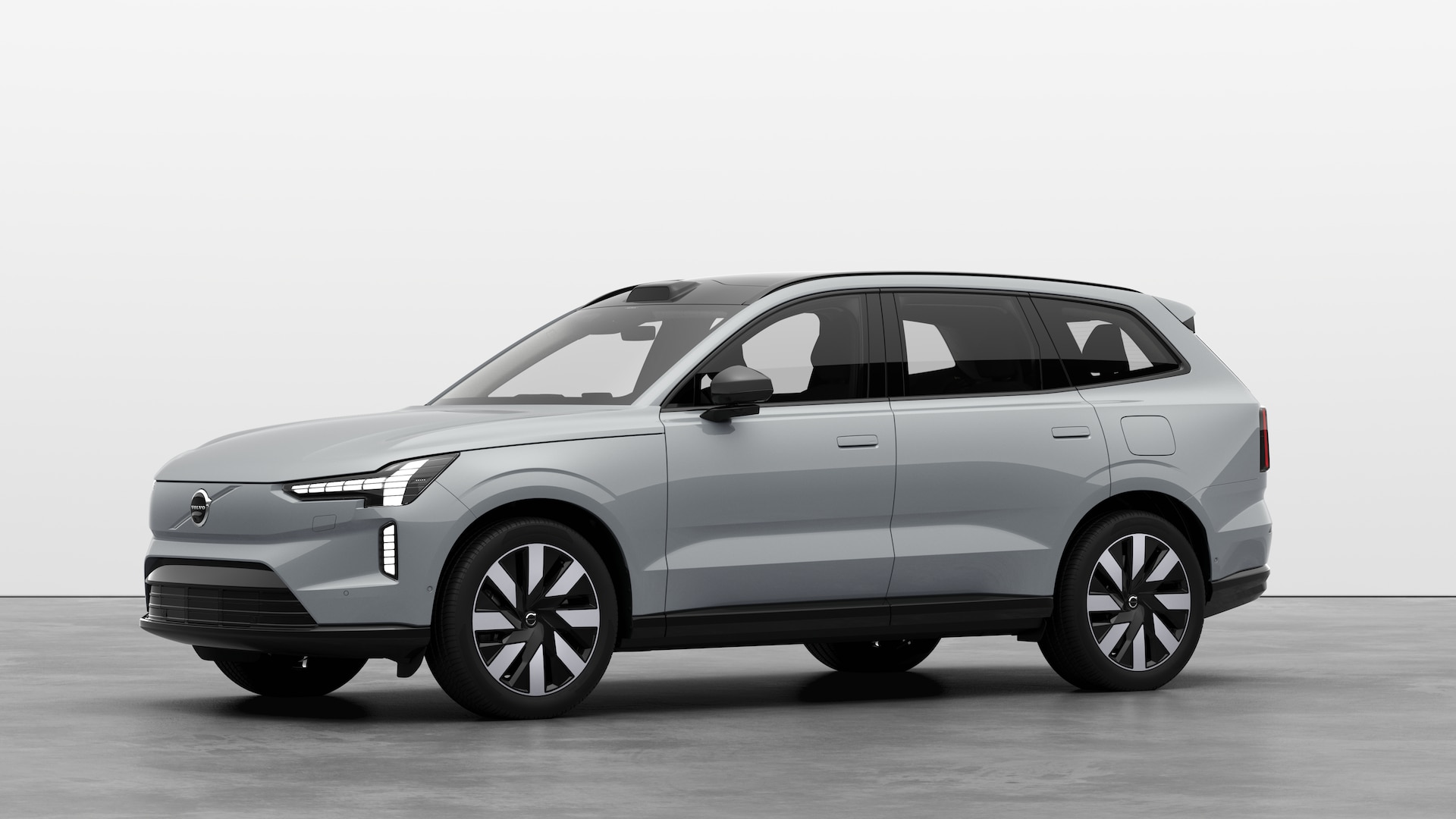
Crucially, Volvo has built this hardware into every EX90 from the factory floor, rather than making it an optional add-on or a feature reserved for higher trim levels.
This means the entire EX90 owner base will stand to benefit as Ride Pilot rolls out through over-the-air software activation once safety validation and regional regulatory approvals are complete.
Owners do not need to purchase a new vehicle or upgrade their hardware to access Ride Pilot when it becomes available in their market the technology is already physically present in their car, waiting to be unlocked.
This approach aligns perfectly with Volvo’s long-held and publicly stated goal of building a car that cannot kill you a vision the company has pursued since it invented the three-point seatbelt in 1959 and made it freely available to the entire industry.
The EX90 is a handsome, spacious, premium all-electric SUV that already impresses on every dimension. When Ride Pilot activates fully with eyes-off capability, it will represent one of the most complete and trustworthy autonomous driving experiences available in any consumer vehicle.
9. Hyundai IONIQ 6 / Kia EV6 (with Highway Driving Assist 2)
South Korean automakers Hyundai and Kia have emerged as surprisingly strong and increasingly respected competitors in the hands-free driving space.
They offer capable semi-autonomous technology at price points that significantly undercut European and American luxury rivals, bringing genuine driver assistance capability to a much wider audience.
Their shared Highway Driving Assist 2 system, known as HDA2, is available across a wide range of their models and represents one of the best value propositions in the hands-free driving market.
HDA2 combines adaptive cruise control with lane centering, automatic lane changing, and speed limit recognition into a cohesive and impressively well-integrated package.
The system uses cameras and radar to maintain lane position and safe following distances from surrounding vehicles, and it responds smoothly and naturally to traffic conditions accelerating and decelerating without the jerky or hesitant behavior that plagued earlier-generation systems from many brands.
The automatic lane change function, activated by the driver applying the turn signal, is particularly smooth and confidence-inspiring, executing changes with a naturalness that rivals far more expensive systems.
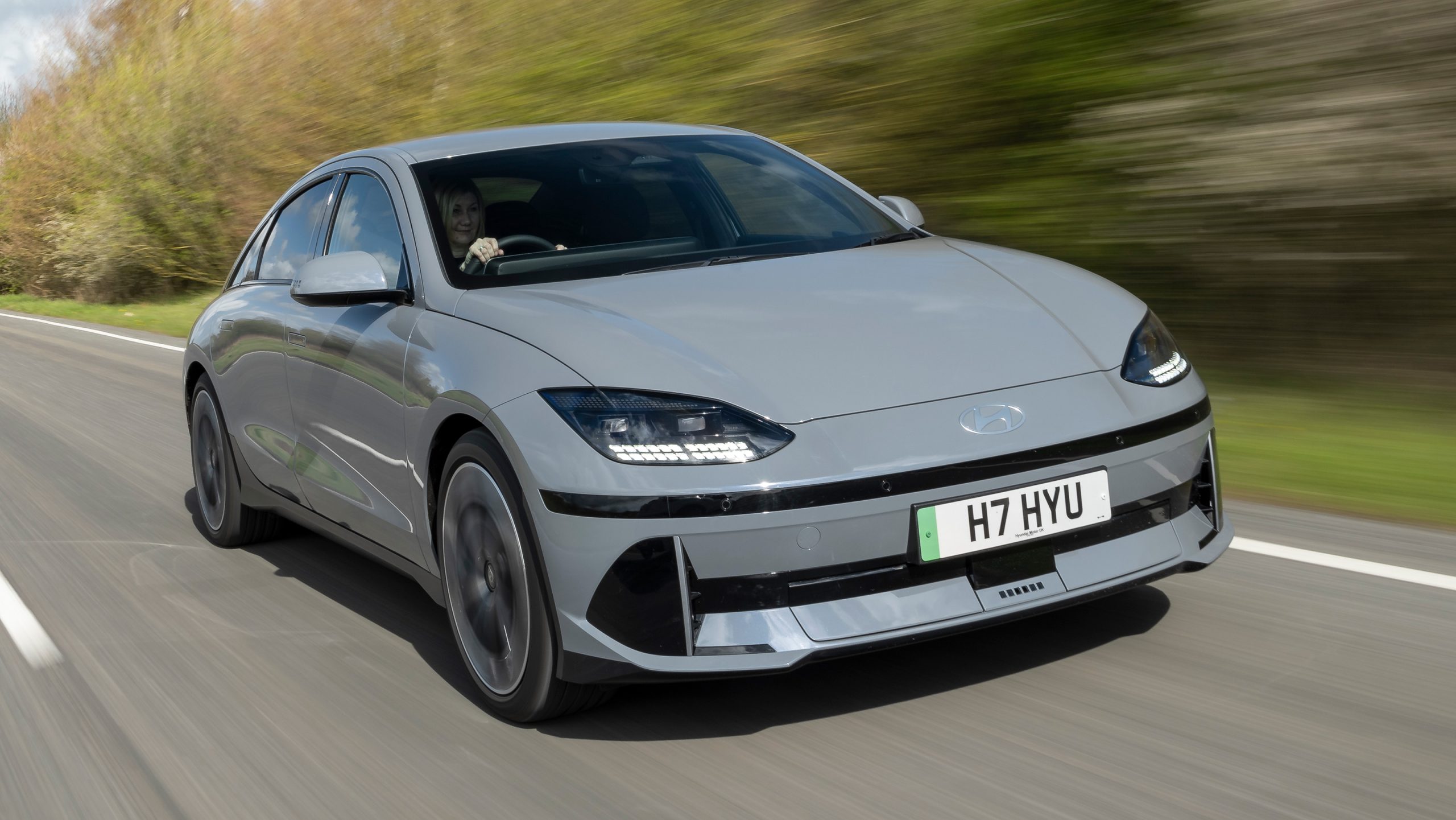
Hyundai and Kia’s use of the well-tested Mobileye platform gives their system a reliable and proven foundation, and the integration with their driver-monitoring systems keeps the experience safe and controlled at all times.
Both brands have also committed to expanding their autonomous driving capabilities in the coming model years, with plans for enhanced highway driving features and broader geographic coverage for their hands-free modes.
For buyers who want genuinely capable hands-free highway driving without paying luxury-car prices, a Hyundai IONIQ 6 or Kia EV6 equipped with HDA2 offers an extraordinary value proposition.
These vehicles are already impressive on their own merits the IONIQ 6 earned the World Car of the Year title for its outstanding efficiency, design, and technology, while the EV6 impresses with its fast charging and driving dynamics.
Adding HDA2 to that package makes them among the most comprehensively capable and affordable hands-free vehicles on the market. Hyundai and Kia have proven that advanced driver assistance technology does not have to come with a luxury price tag attached.
10. Nissan Ariya (with ProPILOT Assist 2.0)
Nissan rounds out this list as a brand that has been offering advanced driver assistance technology for longer than almost any other mainstream automaker. ProPILOT was introduced on the Nissan Leaf years before the term hands-free driving had entered the popular vocabulary, making Nissan a genuine pioneer in bringing semi-autonomous technology to affordable, everyday vehicles.
The Nissan Ariya, the brand’s flagship all-electric SUV, pairs the evolved ProPILOT Assist 2.0 system with a refined, thoughtfully designed vehicle that makes a compelling case for itself in this competitive field.
ProPILOT Assist 2.0 is a meaningful step forward from the original ProPILOT system. It adds hands-off capability in single-lane highway driving scenarios, allowing drivers to remove their hands from the steering wheel while the system manages lane centering and adaptive cruise control.
A driver-monitoring camera ensures that the driver’s eyes remain on the road ahead, maintaining the safety framework that is standard across this category.
The system handles stop-and-go traffic smoothly, maintains safe following distances, and adjusts speed in response to changing conditions ahead with commendable naturalness.
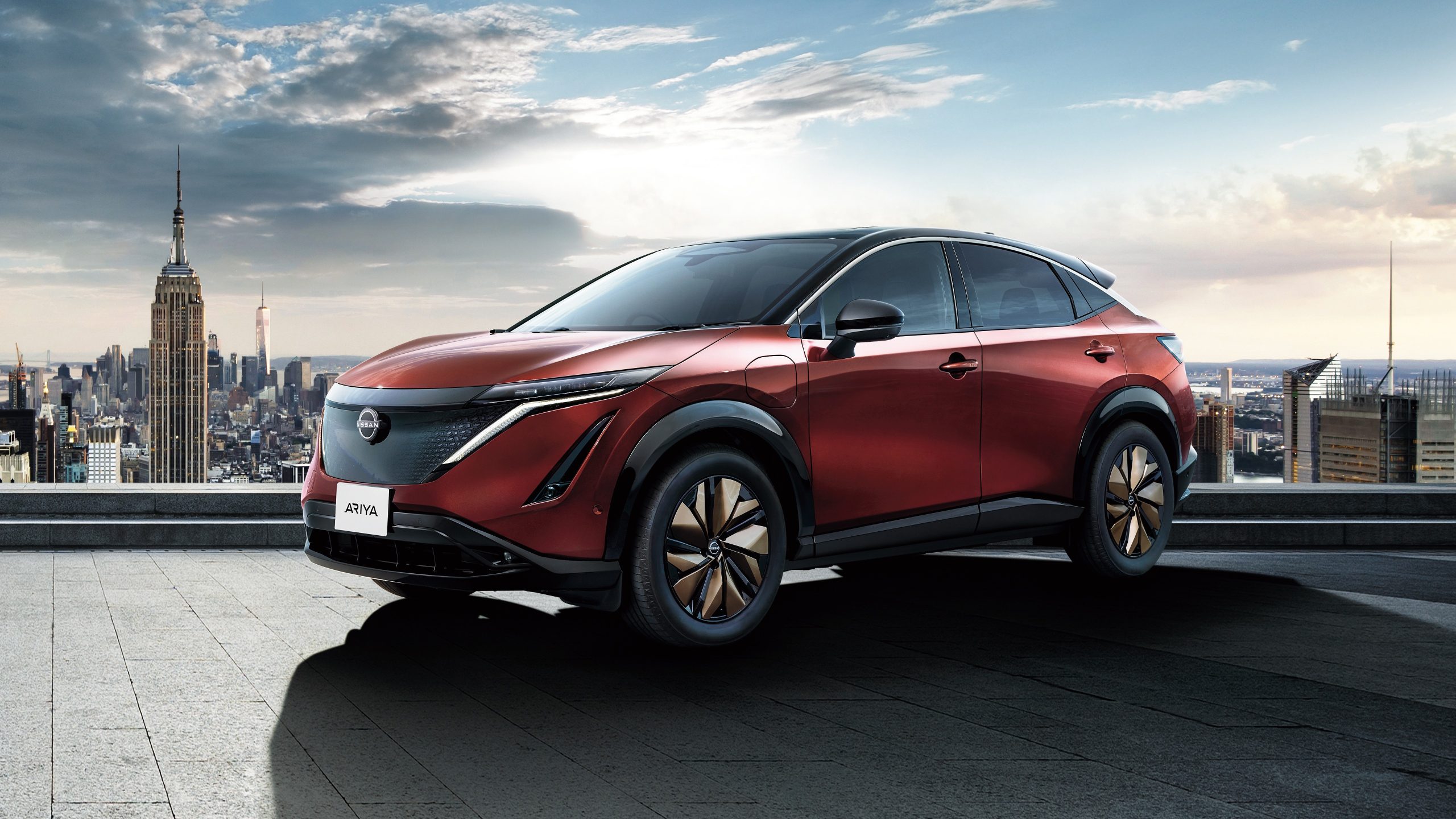
One of Nissan’s most important contributions to this space has been accessibility. ProPILOT technology has consistently been offered at more affordable price points than equivalent systems from luxury brands, making it possible for a significantly broader range of drivers to experience and benefit from semi-autonomous driving assistance.
This democratizing commitment is an important part of Nissan’s identity in this space and one that deserves recognition when evaluating which automakers are genuinely advancing the cause of safer, less stressful driving for everyone.
The Ariya itself is a well-rounded vehicle with a spacious interior, distinctive styling, strong electric range, and a premium feel that belies its price relative to European rivals. ProPILOT Assist 2.0 integrates naturally into the vehicle’s suite of technology features and is available on well-equipped trims without requiring buyers to stretch to the very top of the range.
For drivers who want a capable, comfortable, hands-free capable electric SUV from a brand with one of the longest track records in driver assistance technology, the Nissan Ariya is a thoughtful, well-considered, and genuinely capable choice to close out this list.
Also Read: Top 10 Most Recognizable Vintage Dashboard Clocks
